
Features of a Mountain Gorilla: Size, Behavior, Habitat & Conservation
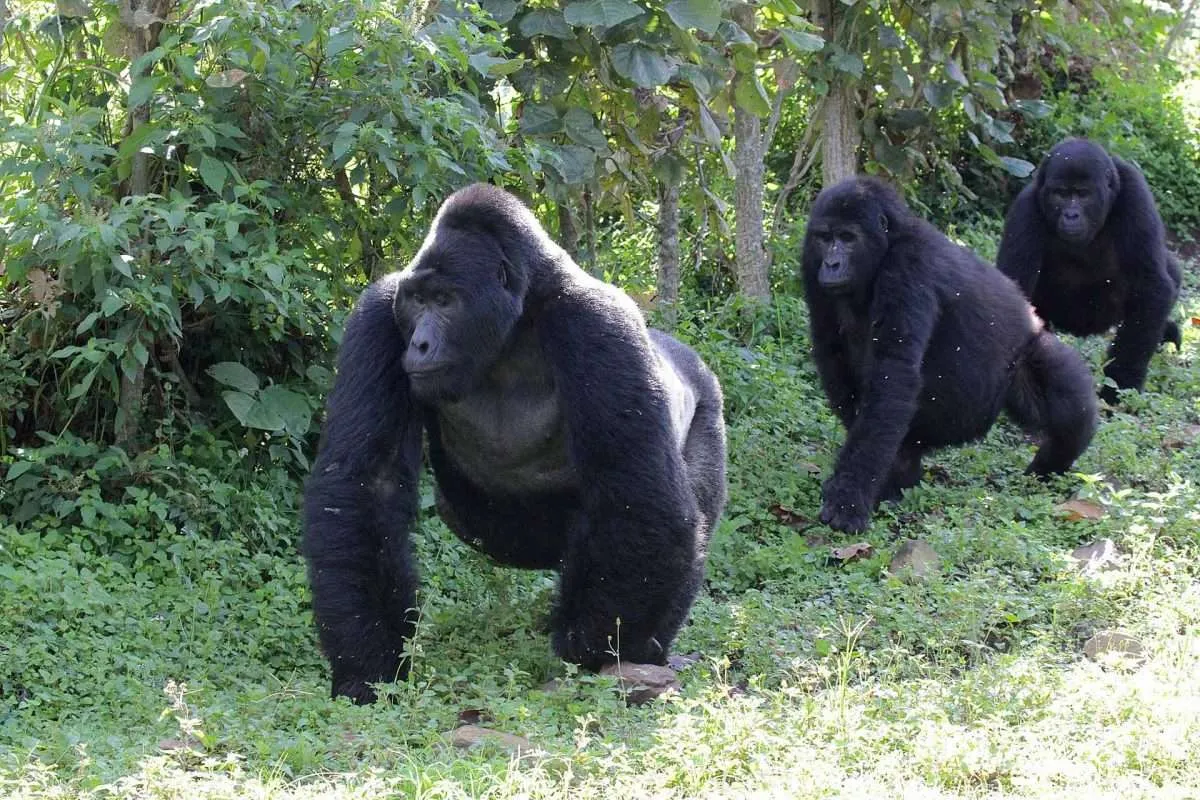
What are the key features of a mountain gorilla? Mountain gorillas are powerful, intelligent primates recognized by their large size, muscular bodies, thick black fur, broad chests, long arms, and distinctive facial features.
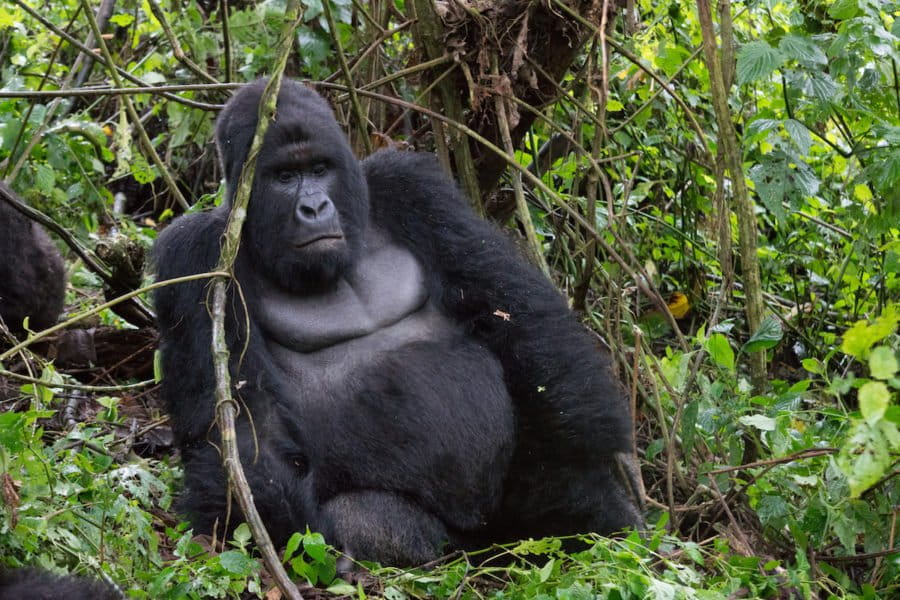
Adult males, known as silverbacks, can weigh over 150 kg and develop a characteristic silver-gray saddle across their back as they mature.
What do mountain gorillas eat? Their diet mainly consists of leaves, stems, shoots, fruits, and other vegetation.
Where do mountain gorillas live? They are found in the misty high-altitude forests of Uganda, Rwanda, and the Democratic Republic of Congo.
Their social groups, gentle behavior, and complex communication make mountain gorillas one of Africa’s most remarkable wildlife species.
Imagine locking eyes with a gentle giant in the misty, emerald canopy of an ancient African volcano. The mountain gorilla is a creature of immense power, startling intelligence, and profound rarity.
When exploring the features of a mountain gorilla, you uncover a species perfectly adapted to one of the world’s most extreme environments.
This comprehensive guide explores the gorilla’s physical features, complex family structure, specialized diet, high-altitude habitat, intricate communication, and critical conservation status.
Furthermore, we will detail the profound significance of gorilla trekking for both travelers and local communities.
Whether you are a primate enthusiast, a wildlife photographer, or an adventure traveler, understanding these magnificent apes will transform your safari experience.
Quick-Answer Box: Mountain Gorilla Facts
- Scientific name: Gorilla beringei beringei
- Where found: Uganda, Rwanda, and the Democratic Republic of Congo (DRC)
- Conservation Status: Endangered (IUCN)
- Notable feature: Large, muscular build with a dominant, silver-haired adult male (silverback)
Ready to witness these magnificent apes in their natural habitat? Book your gorilla trekking safari today and secure your permit before they sell out.
What Is a Mountain Gorilla?
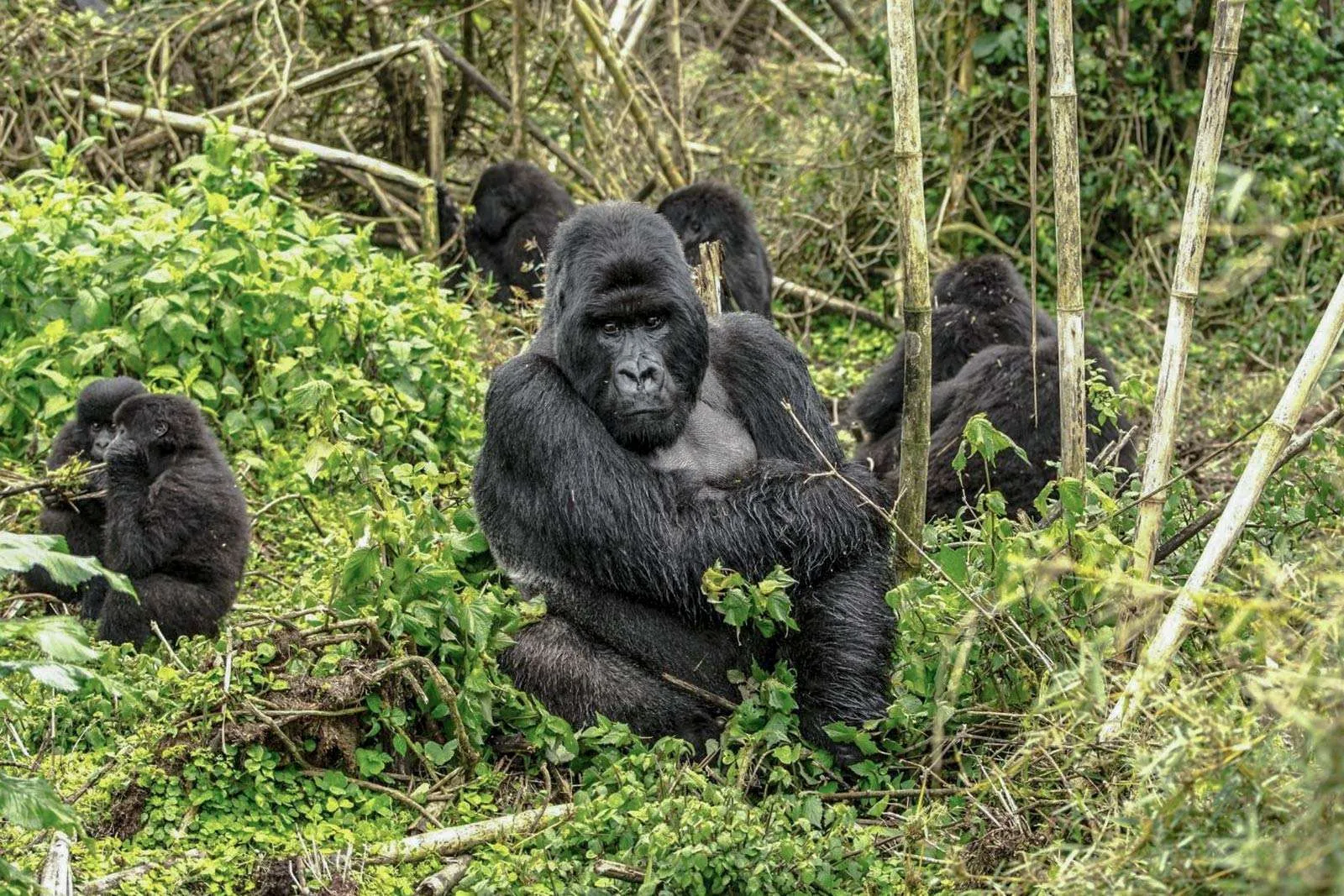
The mountain gorilla is a highly endangered subspecies of the eastern gorilla. Scientifically classified as Gorilla beringei beringei, they are one of the world’s most famous and critically studied primates.
Unlike their lowland cousins, mountain gorillas have evolved to survive in the harsh, freezing conditions of high-altitude volcanic forests.
There are two distinct subspecies of eastern gorillas: the eastern lowland gorilla (Gorilla beringei graueri) and the mountain gorilla.
The primary differences lie in their physical adaptations. Mountain gorillas possess longer, thicker fur, shorter arms, and a more robust body structure to retain heat in cold climates.
They are the ultimate flagship species for conservation in Africa. Because they are so charismatic and closely related to humans—sharing roughly 98.3% of our DNA—they draw global attention and vital funding to the Albertine Rift ecosystem.
Protecting the mountain gorilla inherently protects the entire montane forest, which acts as a crucial water catchment area for millions of people.
Today, tourists travel from across the globe to witness them. This eco-tourism is not just a bucket-list adventure; it is the primary financial engine that keeps anti-poaching patrols active and provides economic alternatives for local communities.
Physical Features of a Mountain Gorilla
To truly appreciate these primates, one must examine the specific gorilla physical characteristics that allow them to thrive in steep, misty forests.
Their anatomy is a masterclass in evolutionary adaptation.
1. Size and body structure
The mountain gorilla size is truly imposing. They are massive, powerful primates built for raw strength and navigating dense vegetation, not for speed. An adult male can stand up to 1.5 meters (5 feet) tall and weigh up to 220 kg (485 lbs).
Females are smaller, typically weighing around 100 kg (220 lbs). They possess a broad, barrel-like chest, incredibly thick muscle mass, and a prominent sagittal crest on their skull, which anchors the massive jaw muscles required for chewing tough vegetation.
2. Fur and adaptation to cold climate
Unlike lowland gorillas, mountain gorillas boast a dense, shaggy coat of black fur. This silverback gorilla features adaptation is crucial for survival.
Their fur is significantly longer and thicker, providing excellent insulation against the near-freezing temperatures of the high-altitude montane forests. This thick coat allows them to absorb the weak highland sun and retain body heat during cold, misty nights.
3. Hands, feet, and opposable thumbs
Their hands and feet are highly specialized. Like all African apes, they are knuckle-walkers. However, their hands feature fully opposable thumbs, allowing for incredible dexterity.
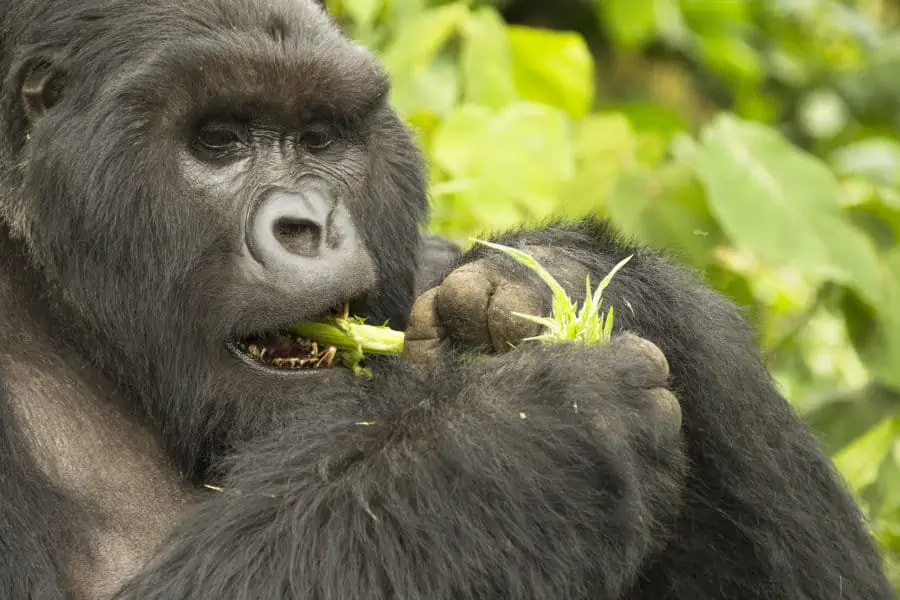
This adaptation is vital for gorilla feeding behavior, enabling them to carefully grasp, peel, and manipulate delicate shoots, leaves, and fruits without damaging them.
4. The silverback male
The most iconic of all gorilla physical characteristics is the silver saddle. When a male reaches sexual maturity at around 12 to 15 years of age, a distinct patch of silver or grey hair grows across his lower back and hips.
This silverback gorilla features visual signals of his maturity, dominance, and readiness to lead. The silverback is the undisputed leader of the troop, making all decisions regarding movement, feeding, and resting, while fiercely protecting the family from threats.
5. Facial expression and eyes
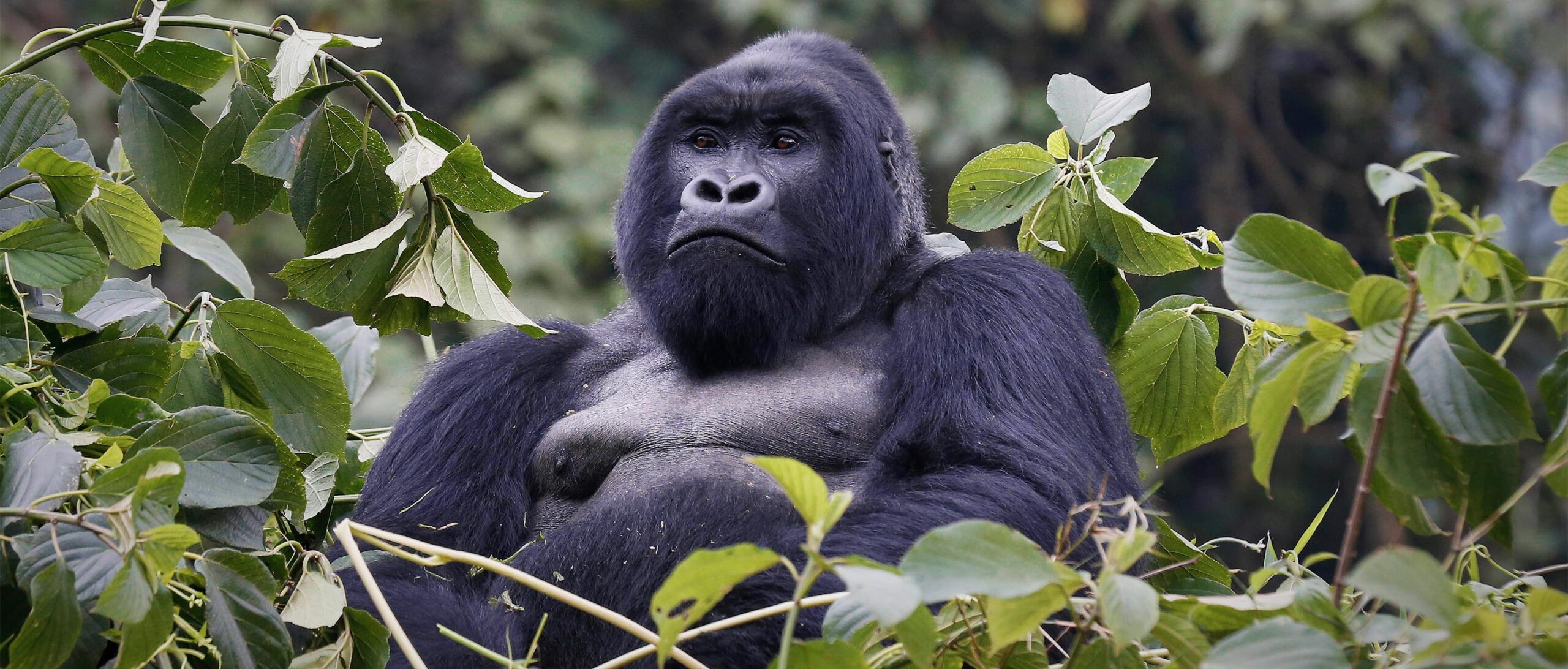
Despite their imposing size, their faces are remarkably expressive. They have dark, deeply set, human-like eyes framed by a hairless, dark face.
They use subtle facial expressions, lip movements, and ear positioning to communicate emotion, intent, and social hierarchy without resorting to physical conflict.
Related Read | Mountain Gorilla Behavior | Mountain Gorilla Trekking | Silverback Gorilla vs Human Strength | How Big Are Silverback Gorillas
Want to see these incredible physical traits up close? Contact our experts to plan your gorilla tracking adventure.
Mountain Gorilla Behavior and Social Structure
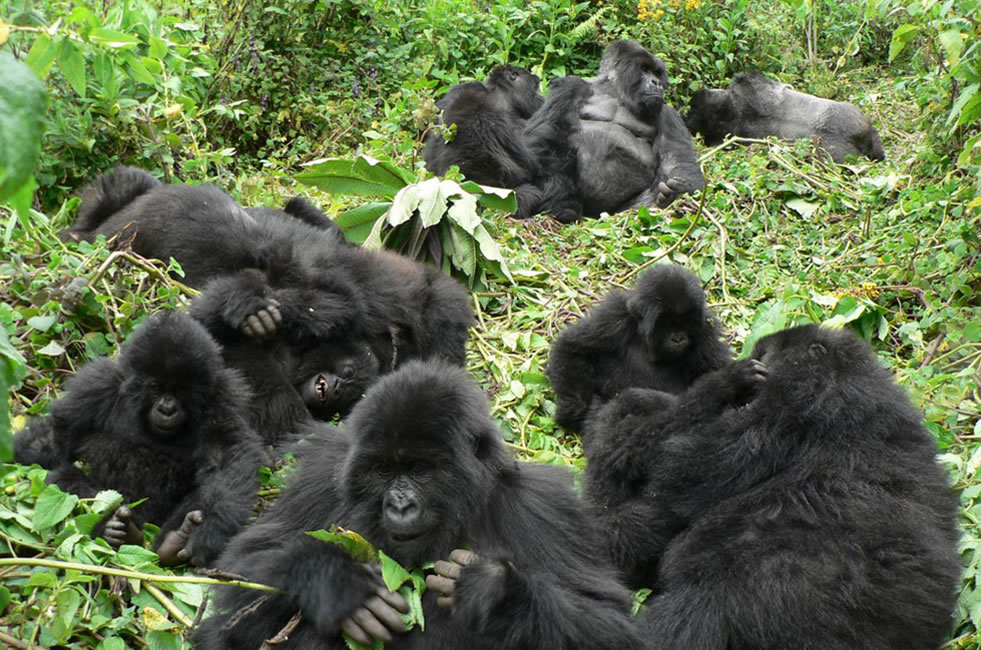
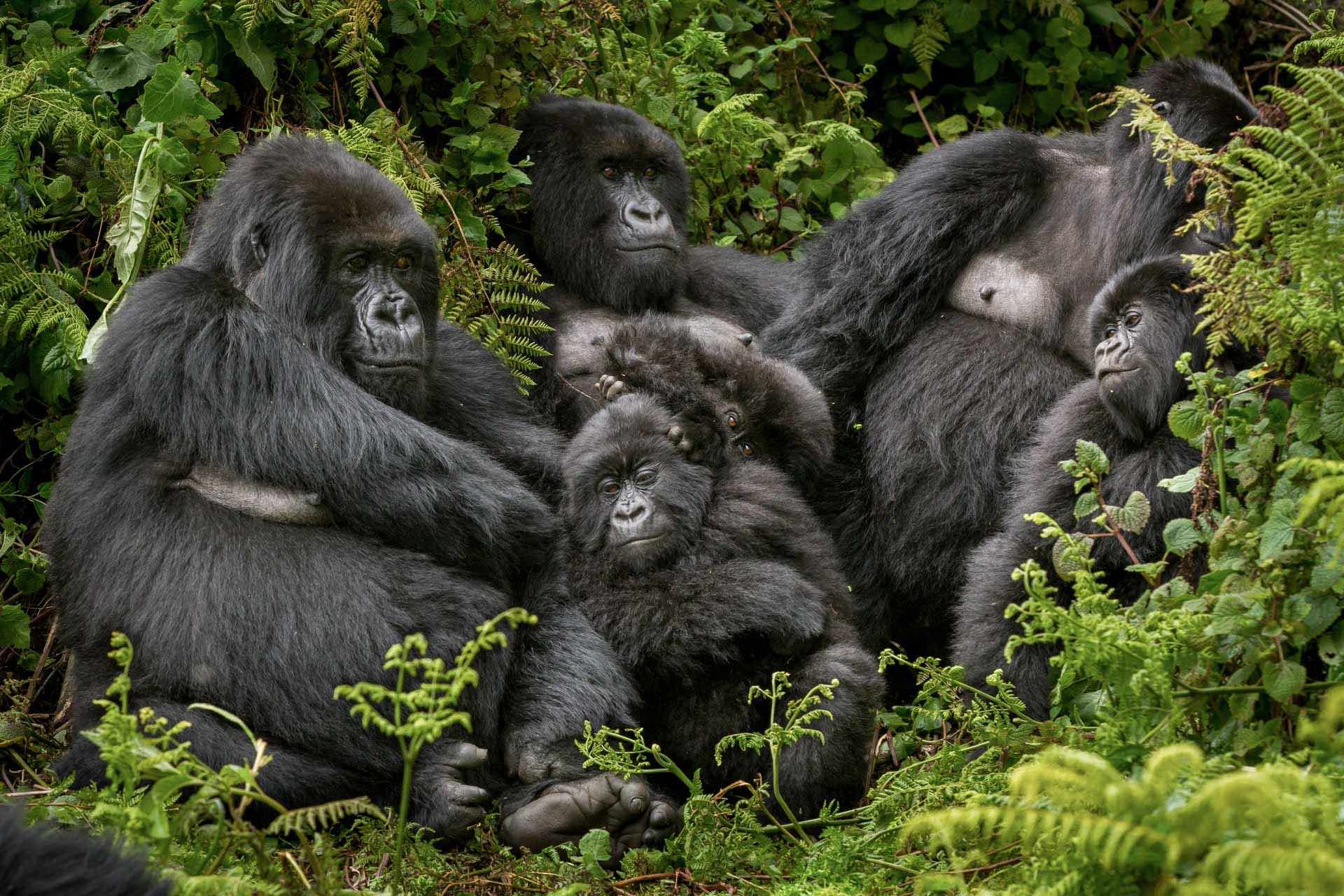
The social behavior is one of the most fascinating features of a mountain gorilla, showcasing deep cooperation, empathy, and intelligence. They live in close-knit, stable family groups known as troops, typically consisting of 10 to 40 individuals.
At the heart of the troop is the silverback, who acts as the protector, decision-maker, and primary arbiter of disputes.
He dictates the daily routine, leading the family to feeding sites and directing the construction of nightly nests. Beneath him are “blackbacks” (immature males aged 8-12), several adult females, and their offspring.
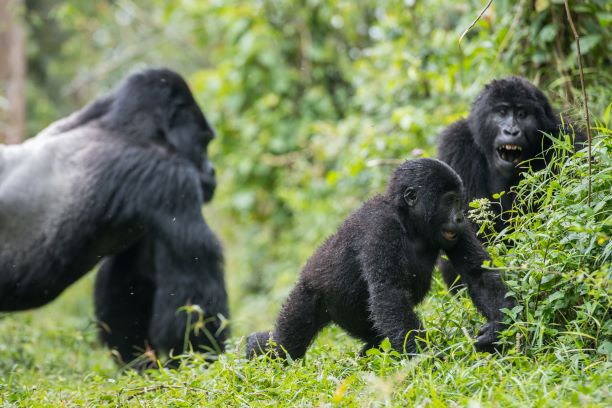
Mothers and infants share an incredibly tight bond. Infants cling to their mothers’ bellies for the first few months before riding on their backs. Mothers are fiercely protective, and the entire troop often helps watch over the young.
Juvenile play behavior is vital for development. Young gorillas spend hours wrestling, chasing, and playing, which helps them build the physical strength and social skills necessary for adulthood.
Daily life revolves around protection, grooming, and resting habits. Grooming is not just about hygiene; it is a critical social tool that reinforces bonds, reduces tension, and maintains the peaceful cohesion of the family.
They spend a significant portion of their day resting, digesting their massive food intake, and interacting peacefully.
Related Read | Mountain Gorilla Behavior | Gorilla Grooming Habits |
Experience this incredible social dynamic firsthand. Book your permit with GoSilverback Gorilla Safaris today.
Mountain Gorilla Habitat and Distribution
Mountain gorillas are strictly endemic to the Albertine Rift region, a biodiversity hotspot in Central and East Africa. They cannot survive in captivity; every mountain gorilla in the world lives free in the wild.
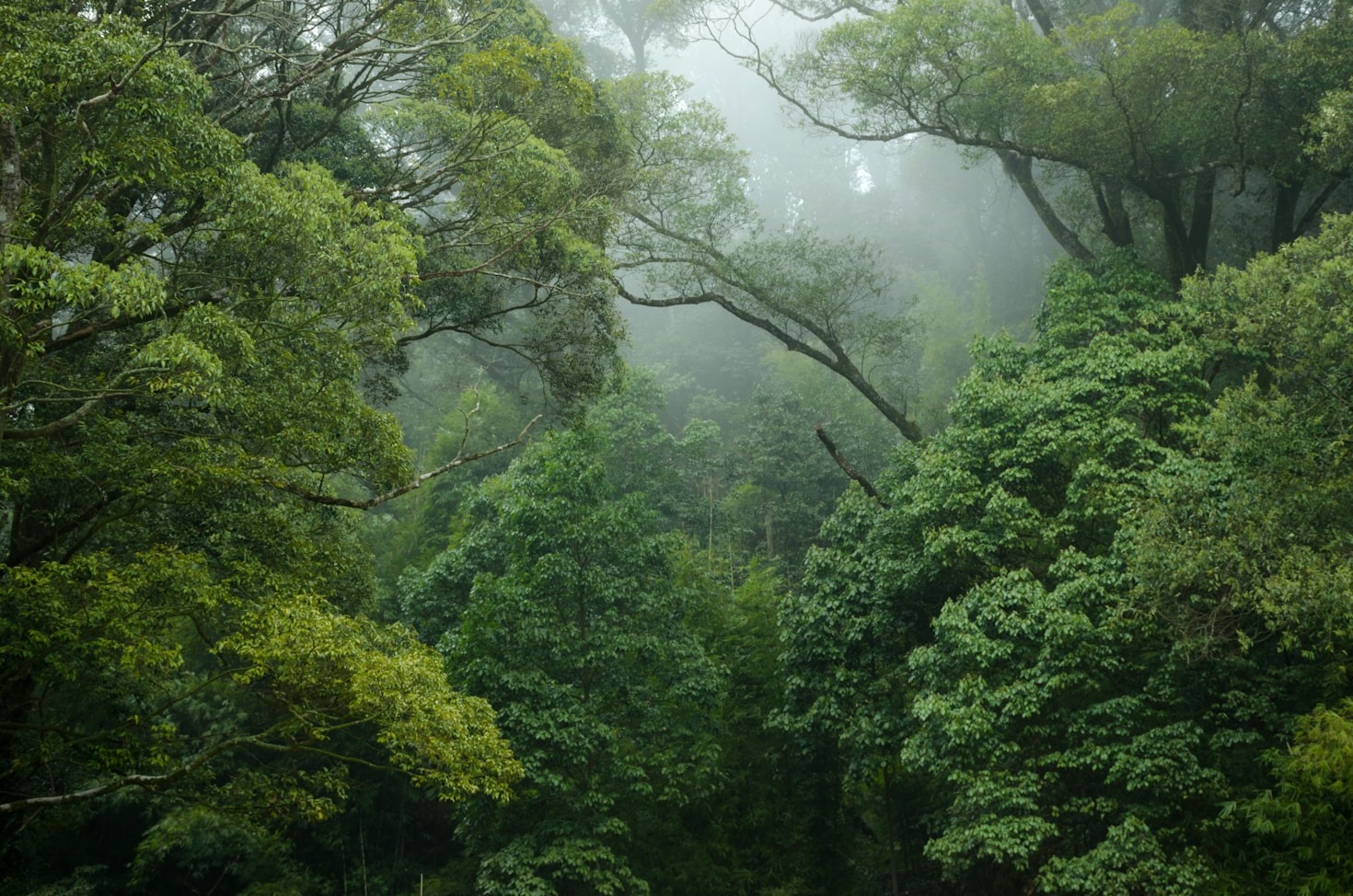
Their habitat is characterized by montane and bamboo forests situated at extreme altitudes, ranging from 2,200 to 4,000 meters (7,200 to 13,100 feet) above sea level.
This high-altitude environment is cool, heavily shaded, and frequently blanketed in thick mist and rain.
The dense vegetation provides both their primary food source and cover from predators. The ecosystem is rich in giant hagenia trees, lobelia plants, and wild celery, which thrive in the nutrient-rich volcanic soil.
Today, their distribution is limited to just two isolated populations:
- The Virunga Massif: A chain of eight volcanic mountains spanning Volcanoes National Park (Rwanda), Mgahinga Gorilla National Park (Uganda), and Virunga National Park (DRC).
- The Bwindi Impenetrable Forest: An ancient, rugged, and highly varied forest in southwestern Uganda.
Habitat loss and fragmentation remain the most critical threats to their survival.
Because they are confined to such specific, high-altitude zones, human encroachment for agriculture and settlement directly reduces their living space, making habitat conservation the absolute priority for their continued existence.
Related Read | Habitat Loss Affecting Gorillas | Mountain Gorilla Habitat Protection | Mountain Gorilla Habitat Restoration
What Do Mountain Gorillas Eat?
The mountain gorilla diet is strictly herbivorous. Because they live in a high-altitude environment where fruit is scarce for much of the year, they rely heavily on abundant, fibrous vegetation.
Understanding what mountain gorillas eat requires looking at the sheer volume of food they consume. Their diet is incredibly bulky and low in calories.
Consequently, gorilla feeding behavior dictates that they must spend a massive portion of their day eating. An adult silverback can consume up to 34 kg (75 lbs) of vegetation daily.
They forage continuously, using their dexterous hands to strip leaves, snap stems, and dig up roots. While they prefer leaves and shoots, their diet varies with the seasons and their specific habitat.
Favorite foods include:
- Leaves and shoots: Wild celery, thistles, and nettles.
- Stems and pith: Soft, nutrient-rich inner stalks of various plants.
- Bamboo: Highly sought after when fresh shoots emerge.
- Roots and bark: Dug up or stripped during dry seasons.
- Fruit and flowers: Eaten opportunistically when in season.
- Occasional insects: Ants or snails are sometimes consumed, though rarely.
Related Read | What Do Silverback Gorillas Eat | Mountain Gorillas Food Chain | Mountain Gorilla Food Web
Ready to track these gentle giants through their lush feeding grounds? Secure your trekking permit now.
How Mountain Gorillas Communicate
Gorillas maintain their complex social structure through a rich vocabulary of sounds, gestures, and physical contact.
Their communication is designed to maintain family cohesion, express emotion, and avoid unnecessary conflict.
- Vocalizations: They use a variety of sounds. Grunts and belches indicate contentment and are heard constantly while feeding. Barks signal alarm or excitement, while deep, guttural roars are used by the silverback to warn off intruders or express severe agitation.
- Chest Beating: The iconic chest beat is not just a show of aggression; it is a complex acoustic signal. By cupping their hands, silverbacks create a resonant sound that communicates their size, fitness, and dominance to rivals and potential mates.
- Eye Contact and Posture: Direct, prolonged eye contact is a challenge. Submissive gorillas will avert their gaze, crouch, or present their backs to the silverback to show deference.
- Grooming and Touch: Physical touch is their most frequent communication. Gentle grooming, hugging, and playing reinforce social bonds and pacify tense situations.
Mountain Gorilla Intelligence and Personality
Mountain gorillas possess remarkable cognitive abilities. In the wild, they demonstrate advanced problem-solving skills, such as navigating complex, steep terrain to find specific food sources or using vegetation to shield themselves from rain and stinging nettles.
They have excellent memory and learning capabilities, passing down knowledge of feeding grounds and safe nesting sites through generations.
Beyond intellect, they display deep emotional behavior. Researchers and guides have observed gorillas displaying curiosity, empathy, and even behaviors resembling mourning when a troop member passes away.
Every gorilla has a distinct individual personality; some are bold and playful, while others are shy and cautious, making every trekking encounter entirely unique.
Mountain Gorilla Conservation Status
The conservation story of the mountain gorilla is one of the greatest wildlife success stories of the modern era, though the battle is far from over.
Historically, they were pushed to the brink of extinction. In the 1980s, the population dropped to roughly 250 individuals due to rampant poaching, habitat destruction, and disease.
Key Threats:
- Habitat Loss: One of the most densely populated regions in Africa surrounds their habitat, leading to intense pressure for agricultural land.
- Human Encroachment: Illegal logging, charcoal burning, and livestock grazing degrade the forest.
- Disease: Because they share so much DNA with humans, they are highly susceptible to human respiratory illnesses.
- Poaching: While largely halted today, historical snaring for bushmeat and the illegal pet trade devastated populations.
Conservation Success:
Today, the mountain gorilla is classified as Endangered, a vital upgrade from “Critically Endangered.” The current population has grown to over 1,060 individuals.
This recovery is the direct result of intense, coordinated conservation efforts. Strictly protected national parks, heavily armed and trained ranger patrols, and veterinary interventions have stabilized the population.
Crucially, tourism revenue from gorilla trekking permits funds these protection efforts and provides a sustainable economic alternative to poaching.
Community revenue-sharing programs ensure that local communities benefit directly from the gorillas’ survival, transforming them from competitors into the species’ greatest protectors.
Related Read | Habitat Loss Affecting Gorillas | Human Gorilla Conflict | Diseases That Affect Gorillas | Gorilla Poaching Statistics
Your visit directly funds these life-saving conservation efforts. Book your safari with GoSilverback Gorilla Safaris to make a difference.
Where to See Mountain Gorillas
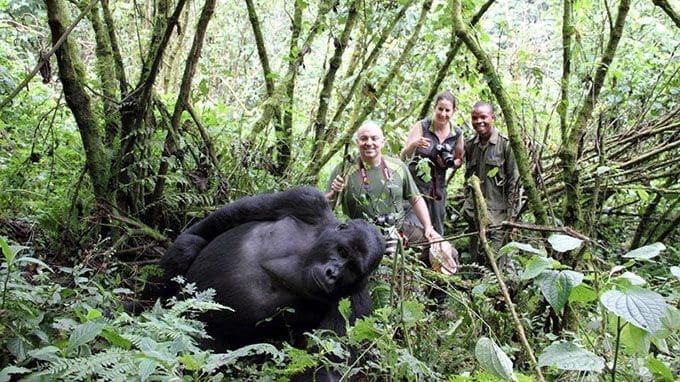
Gorilla trekking is a highly regulated, life-changing experience available in only three countries.
- Uganda: Home to over half the world’s population. Bwindi Impenetrable National Park offers diverse, steep terrain and multiple habituated families. Mgahinga Gorilla National Park offers a smaller, more intimate trekking experience in the Virunga foothills.
- Rwanda: Volcanoes National Park is the most accessible and luxurious trekking destination, featuring rolling bamboo forests and volcanic peaks.
- DRC: Virunga National Park offers a rugged, adventurous, and less crowded experience, though it requires careful security planning.
To ensure a seamless, ethical, and unforgettable experience, booking through a reputable operator is essential.
GoSilverback Gorilla Safaris specializes in crafting premium, responsible gorilla trekking itineraries that support local communities and maximize your chances of a successful encounter.
Related Read | Bwindi Impenetrable National Park | Mgahinga Gorilla National Park | Volcanoes National Park
Gorilla Trekking Tips for First-Time Visitors
Preparing for your trek ensures you are comfortable, safe, and respectful of the gorillas.
Follow these essential steps:
- Book Permits Early: Gorilla permits are strictly limited and sell out 6 to 12 months in advance. Secure yours as early as possible.
- Wear Appropriate Clothing: Dress in earth tones (greens, browns). Wear sturdy, broken-in hiking boots and long sleeves/pants to protect against stinging nettles and insects.
- Carry Rain Gear: The montane forest is unpredictable. A high-quality, lightweight rain jacket and pants are mandatory.
- Hire a Porter: For a small fee, hire a local porter. They will carry your daypack, help you navigate steep mud, and your money directly supports the local economy.
- Follow Ranger Instructions: Your guides are experts. Stay with the group, keep your voice down, and follow their movements exactly.
- Respect the Gorillas: Maintain a minimum distance of 7 meters (23 feet). Wear a mask to protect them from human diseases, and strictly avoid flash photography.
Related Read | How to Get Gorilla Permits | What to Wear for Gorilla Trekking
Frequently Asked Questions
What are the main features of a mountain gorilla?
The main features of a mountain gorilla include their massive, muscular build, thick black fur adapted for cold climates, and the distinct silver saddle on the back of mature males. They also possess highly expressive faces and dexterous hands with opposable thumbs.
How big is a mountain gorilla?
Adult males (silverbacks) can weigh up to 220 kg (485 lbs) and stand 1.5 meters tall. Females are roughly half that size, weighing around 100 kg (220 lbs).
What is a silverback?
A silverback is a mature male gorilla, typically over 12 years old, characterized by a patch of silver hair on his back. He is the dominant leader, protector, and decision-maker of the gorilla family.
Where do mountain gorillas live?
They live exclusively in the high-altitude montane forests of the Albertine Rift, specifically in Uganda (Bwindi and Mgahinga), Rwanda (Volcanoes), and the DRC (Virunga).
Why are mountain gorillas endangered?
They are endangered primarily due to historical poaching, severe habitat loss from human encroachment, and their vulnerability to human-transmitted respiratory diseases.
How long do gorillas live?
In the wild, mountain gorillas typically live for 35 to 40 years, though some individuals in protected, well-monitored groups have lived into their early 50s.
Can tourists see mountain gorillas safely?
Yes, gorilla trekking is highly regulated and safe when conducted with certified guides. Tourists must follow strict rules, including maintaining a 7-meter distance and wearing masks, to ensure the safety of both the humans and the gorillas.
Conclusion
The mountain gorilla is a masterpiece of evolution—a powerful, deeply intelligent, and profoundly rare species that captures the heart of everyone who encounters it.
Understanding the features of a mountain gorilla reveals not just a magnificent animal, but a vital keystone of the African montane ecosystem. By choosing to trek, you are directly funding the conservation efforts that keep this species from fading into history.
Do not leave this ultimate wildlife experience to chance. Permits are limited and in high demand. Contact GoSilverback Gorilla Safaris today to secure your gorilla permit, customize your luxury itinerary, and prepare for the adventure of a lifetime.

like this topic