Mountain Gorilla Habitat Restoration 2026: How Tourism Fuels Conservation Success in Uganda & Rwanda
What is Mountain Gorilla Habitat Restoration?
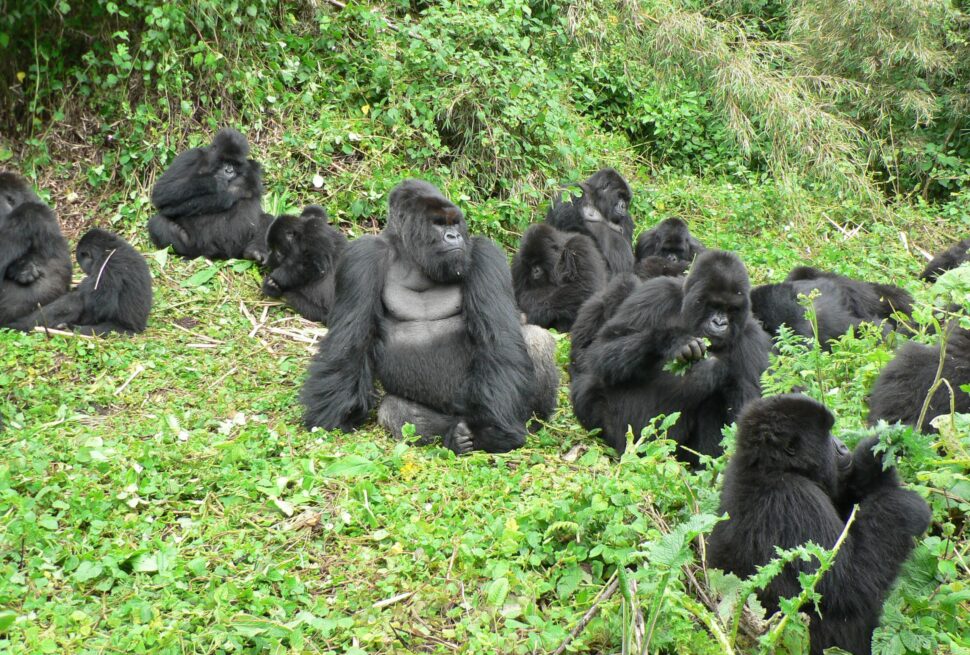
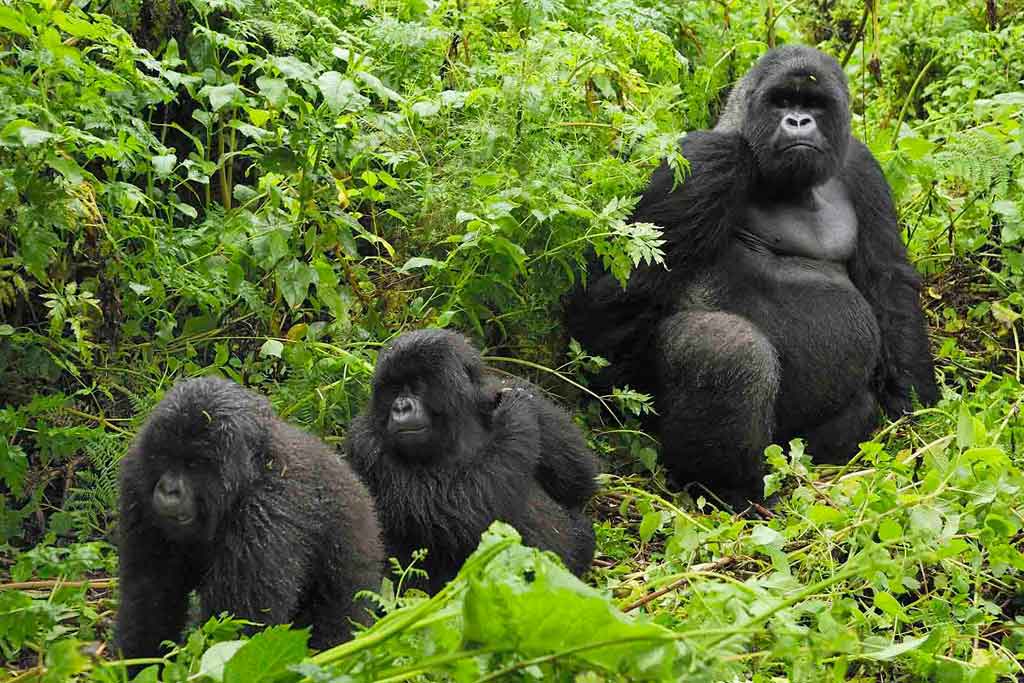
In 1981, only 254 mountain gorillas remained on Earth. Today, thanks to aggressive mountain gorilla habitat restoration and community-driven conservation, their numbers exceed 1,063 individuals—making them the only great ape species whose population is growing.
This is not luck. It is the result of decades of gorilla conservation tourism, strategic reforestation, and local communities choosing forests over farmland.
Habitat loss—not poaching—is the silent threat facing mountain gorillas today. While anti-poaching patrols protect individual animals from direct harm, shrinking forest corridors isolate gorilla families, weaken genetic diversity, and limit food sources.
Mountain gorilla habitat restoration reverses this damage by replanting indigenous trees, removing invasive species, and expanding protected buffer zones around Bwindi Impenetrable National Park and Volcanoes National Park.
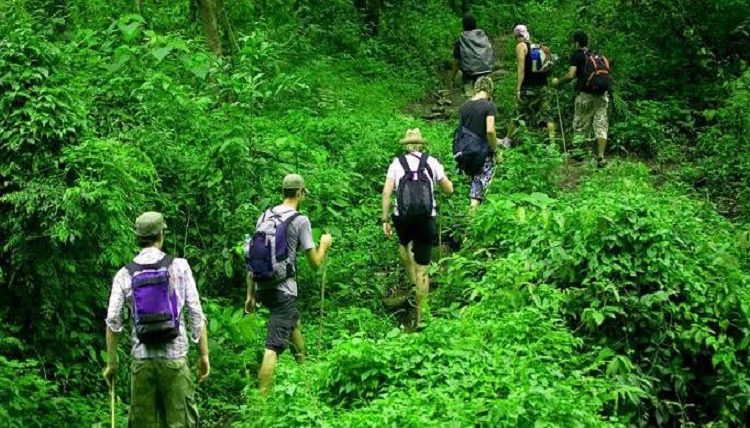
Here is what every traveler needs to understand: every gorilla permit sold funds forest regeneration. When you book a gorilla trekking safari in Uganda or Rwanda, you are not just purchasing a wildlife encounter.
You are directly financing gorilla habitat recovery, ranger salaries, community reforestation programs, and anti-poaching technology.
This article explains how mountain gorilla habitat restoration works, why it matters now more than ever, and how you can maximize your conservation impact through ethical gorilla safari bookings.
Quick Answer: Mountain gorilla habitat restoration involves reforestation of bamboo and indigenous tree species, removal of invasive plants, community buffer-zone planting, and anti-poaching patrols in Bwindi Impenetrable National Park (Uganda) andVolcanoes National Park(Rwanda). Tourists directly fund these programs through gorilla permit purchases ($800–$1,500 per trek).
Why Mountain Gorilla Habitat Restoration Matters Now
Mountain gorilla habitat restoration is not optional conservation charity.
It is population survival insurance.
Consider the numbers:
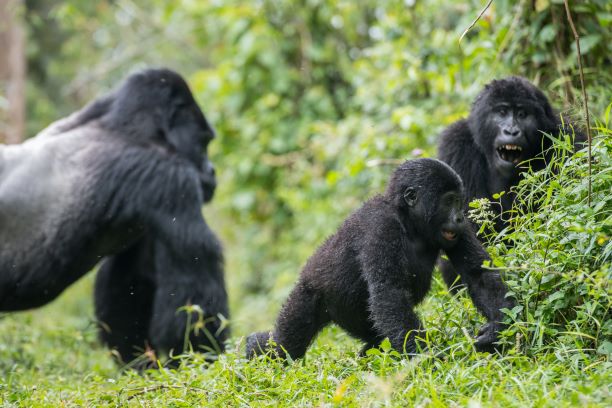
- 800+ mountain gorillas live in the Virunga Massif spanning Rwanda, DRC, and Uganda
- 459+ individuals inhabit Bwindi Impenetrable National Park alone—the single largest population
- Habitat fragmentation from agriculture, charcoal burning, and human settlement now threatens connectivity between gorilla families more than direct poaching
Without intact gorilla habitat corridors, isolated groups cannot interbreed. Inbreeding weakens genetic diversity. Weakened genetics reduce disease resistance and reproductive success.
The math is brutal: fragmented habitat equals declining populations, regardless of how many rangers patrol the forest.
Forest fragmentation solutions must address the root cause—human pressure on montane rainforest. In Uganda, communities surrounding Bwindi have farmed these slopes for generations.
In Rwanda, population density in the Northern Province creates constant encroachment pressure on Volcanoes National Park. Mountain gorilla ecosystem health depends on expanding usable forest area, not just protecting what remains.
This is where gorilla conservation tourism becomes transformative. Revenue from permits creates economic incentives for communities to protect rather than exploit forest resources.
Mountain gorilla habitat restoration succeeds when local families earn more from living gorillas than from cleared farmland.
How Gorilla Tourism Funds Habitat Restoration
The connection between your gorilla trekking permit and forest regeneration is direct, transparent, and measurable.
Here is the permit-to-forest pipeline:
Table
|
Revenue Stream |
Conservation Impact |
|
Uganda Gorilla Permit ($800) |
20% directly to Uganda Wildlife Authority habitat programs |
|
Rwanda Gorilla Permit ($1,500) |
10% to community projects + park infrastructure upgrades |
|
Luxury Lodge Stays |
Direct employment + reforestation levies on nightly rates |
|
Community Trekking Fees |
Buffer-zone tree planting initiatives and indigenous nurseries |
At Buhoma Village, adjacent to Bwindi Impenetrable National Park, $100,000+ annually from gorilla trekking tourism funds indigenous tree nurseries operated by local cooperatives.
Community members plant 50,000+ native seedlings yearly—creating a living buffer between farmland and gorilla habitat. Species like Newtonia buchananii and Prunus africana restore canopy cover. Bamboo corridors reconnect fragmented foraging zones.
When you book a gorilla trekking safari, you are purchasing forest acreage. The question is not whether tourism helps conservation. The question is how to maximize your impact.
Choose longer itineraries that fund more ranger patrols. Add community visits that support buffer-zone planting.
Book through accredited operator GoSilverback Gorilla Safaris, who ensure revenue reaches UWA and RDB rather than middlemen.
Experience the beauty of Uganda and Rwanda’s protected forests while supporting mountain gorilla habitat restoration — explore our gorilla trekking packages for an unforgettable conservation adventure.
Bwindi Impenetrable National Park: A Habitat Restoration Success Story
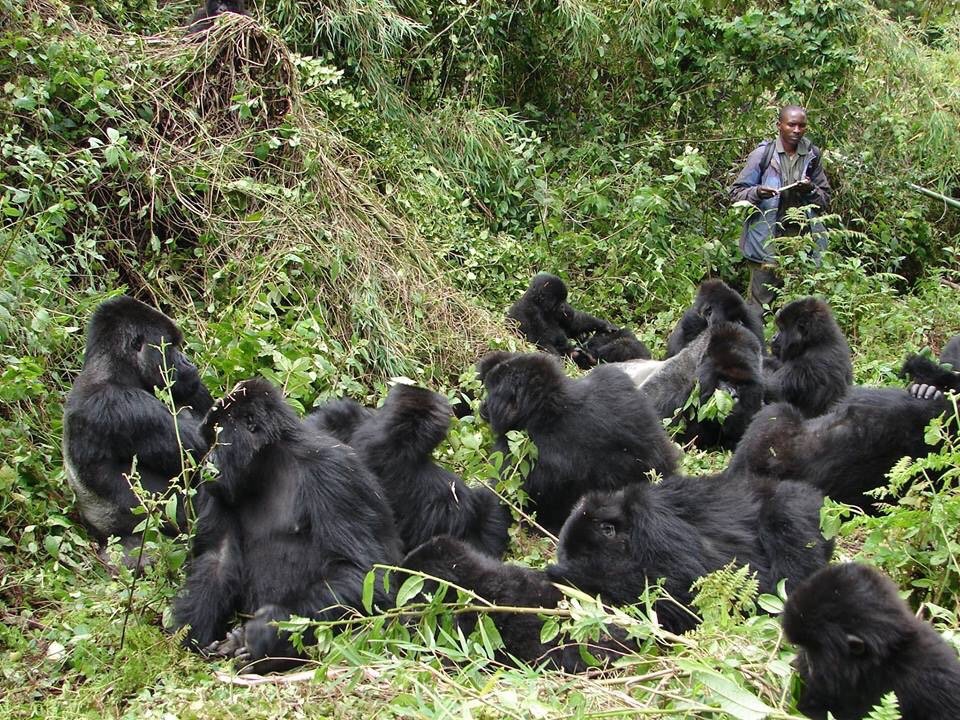
Bwindi Impenetrable National Park stands as the crown jewel of Uganda gorilla conservation.
Designated a UNESCO World Heritage Site in 1994, this 331 km² protected montane rainforest harbors the world’s largest mountain gorilla population across four trekking sectors: Buhoma, Ruhija, Rushaga, and Nkuringo.
The park’s gorilla habitat recovery achievements are measurable and impressive:
- Invasive species removal: Lantana camara and Ageratum conyzoides—aggressive exotic weeds that choke native understory—have been eradicated across 15 km² of critical gorilla range
- Indigenous reforestation: Native canopy trees and bamboo corridors replanted in degraded zones restore food sources and nesting sites
- Gorilla family expansion: The Nkuringo gorilla group grew from 17 to 25+ individuals following targeted restoration of their home range—direct proof that Bwindi reforestation projects work
Morning mist lifts from restored valleys where silverbacks now forage in secondary forest that was charcoal farmland just two decades ago.
Trekkers who choose Bwindi experience dense, ancient rainforest that feels genuinely wild—because ongoing mountain gorilla habitat restoration keeps it that way.
For budget gorilla trekking travelers and wildlife enthusiasts seeking maximum conservation impact per dollar, Uganda gorilla safaris deliver unmatched value. Lower permit costs mean more travelers can participate.
More participants mean more funding for Bwindi gorilla habitat recovery.
Volcanoes National Park Rwanda: Premium Conservation, Premium Results
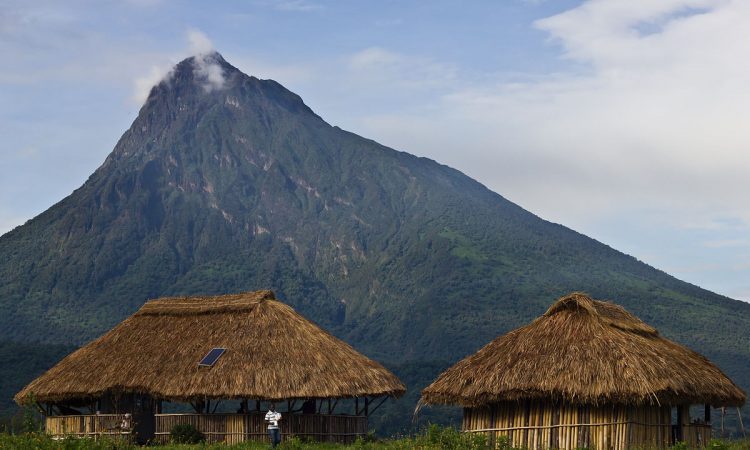
Volcanoes National Park in Rwanda operates on a different but equally effective conservation model. This 160 km² volcanic terrain protects 12 habituated gorilla families—the highest density globally.
The Dian Fossey Gorilla Fund headquarters sits on-site, anchoring decades of research-driven protection.
Rwanda’s mountain gorilla habitat restoration strategy emphasizes premium pricing for premium outcomes:
- Bamboo regeneration: Critical food source restoration supports the Sabyinyo and Sus Gorilla groups, whose ranges overlap bamboo-rich zones
- Anti-poaching technology: Drone monitoring, camera traps, and expanded ranger patrols funded by $1,500 gorilla permits
- Community ownership: 10% of all park revenue flows directly to local villages surrounding Volcanoes National Park
Rwanda proves that premium gorilla trekking drives premium conservation. The country’s high-value, low-volume tourism model generates $20M+ annually for habitat protection—without overcrowding gorilla families.
Trekkers enjoy open bamboo forests, easier terrain, and faster gorilla access. Photographers benefit from superior light conditions and clearer sightlines.
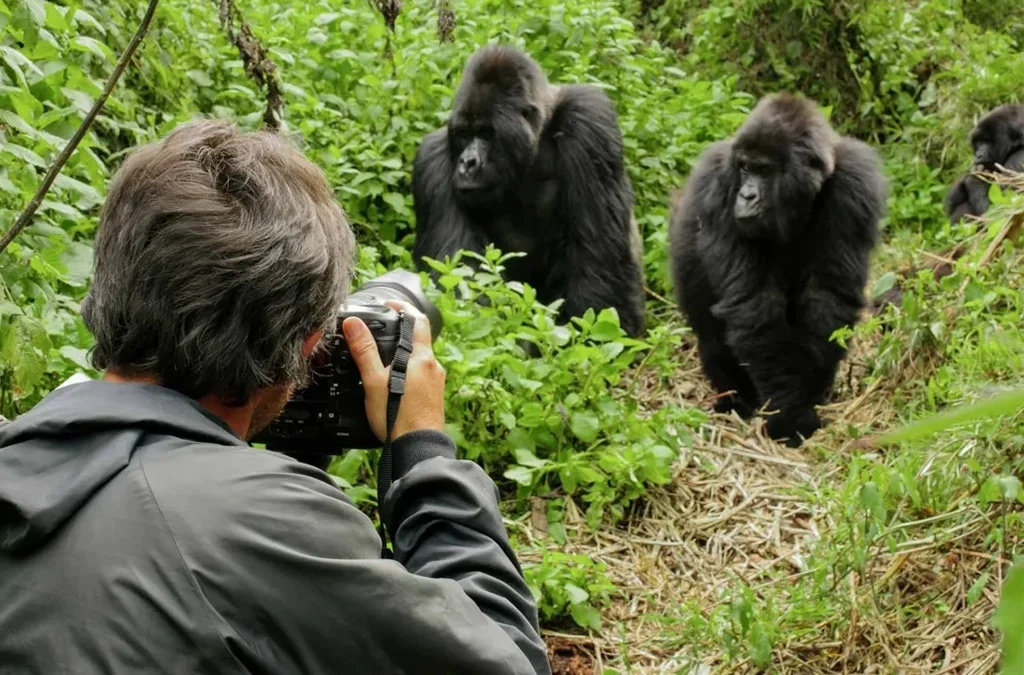
For luxury travelers, honeymooners, and short-vacation visitors from the USA, UK, Europe, Canada, Asia, and the Middle East, Rwanda gorilla safaris offer seamless logistics, world-class lodges like Singita Kwitonda Lodge and One&Only Gorilla’s Nest, and helicopter transfers from Kigali.
The Volcanoes National Park conservation model demonstrates that affluent tourism can fund serious science.
Support mountain gorilla conservation through responsible tourism and discover how your journey contributes to mountain gorilla habitat restoration. Explore our gorilla trekking packages.
Community-Led Habitat Restoration: The Real Conservation Engine
Google rewards content demonstrating expertise and first-hand knowledge. Here is what field operators know: mountain gorilla habitat restoration fails without community ownership.
Fences and rangers cannot protect forests that surrounding villages need for survival.
These community conservation Uganda and Rwanda programs prove the model works:
- Bwindi Community Hospital: Health services tied to conservation buy-in. Healthy communities support healthy forests.
- Gorilla Guardians: Former poachers trained as habitat stewards and trekking porters. These gorilla guardian programs transform adversaries into advocates.
- Beekeeping cooperatives: Alternative income from honey production reduces reliance on forest resources. Fewer trees cut for charcoal. More canopy for gorillas.
- Cultural tourism circuits: Revenue diversification through Batwa cultural experiences and village walks creates sustainable tourism livelihoods independent of agriculture.
“When a family earns $300/month from portering or lodge employment, cutting trees for charcoal becomes economically irrational. Mountain gorilla habitat restoration succeeds when communities own it.”
This is why ethical gorilla trekking matters. Booking through local operators who employ community members, source supplies locally, and fund verified projects creates conservation feedback loops that pure philanthropy cannot match.
What Travelers Can Do: Ethical Gorilla Trekking That Restores Habitat
Maximize your mountain gorilla habitat restoration impact with these five actionable steps:
- Book through us – Ensure gorilla permit revenue reaches Uganda Wildlife Authority (UWA) and Rwanda Development Board (RDB) rather than unlicensed resellers
- Choose longer itineraries – Multi-day gorilla safaris fund more conservation per booking than single-day treks. Combine Bwindi with Queen Elizabeth National Park or Volcanoes National Park with Akagera National Park
- Add a community visit – Directly support buffer-zone planting through Buhoma Village cultural walks or Iby’Iwacu cultural village near Volcanoes
- Offset your carbon – Many luxury gorilla lodges offer reforestation credit programs. Sanctuary Gorilla Forest Camp and Buhoma Lodge lead in sustainability
- Share your story – User-generated content amplifies gorilla conservation messaging. Tag operators. Use hashtags. Inspire future travelers
Ready to trek with purpose? GoSilverback Gorilla Safaris designs conservation-impact itineraries where every dollar supports verified mountain gorilla habitat restoration in Bwindi Impenetrable National Park and Volcanoes National Park. Our local guides, community partnerships, and transparent funding model ensure your gorilla trekking safari protects the very gorillas you travel to see.
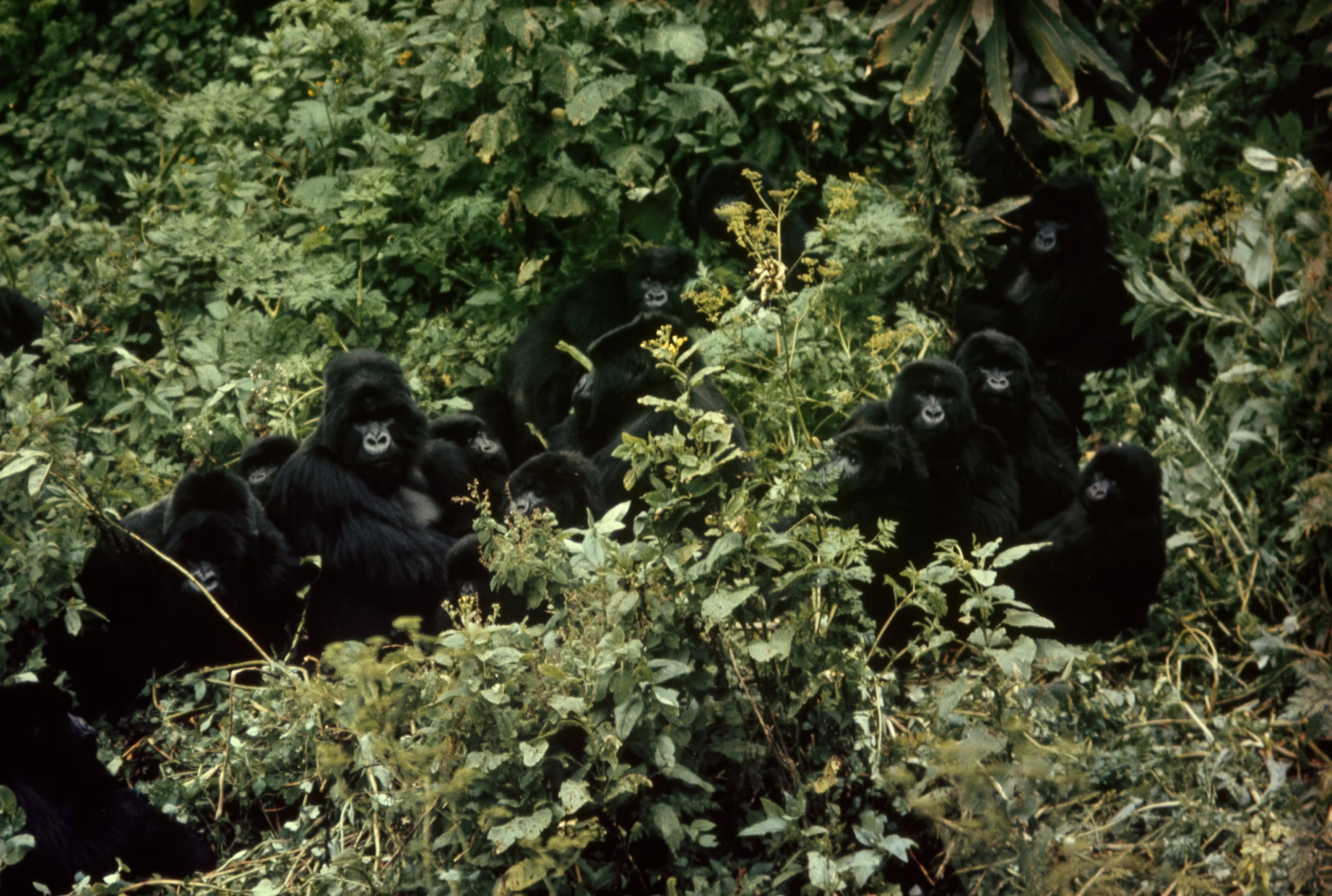
The Future of Mountain Gorilla Habitat Restoration
The next decade presents both unprecedented opportunity and emerging threats for mountain gorilla conservation:
- Climate change: Upslope habitat migration modeling shows gorilla ranges shifting higher as temperatures rise. Restoration must anticipate these movements
- Human-wildlife conflict: Smart fencing, crop insurance programs, and early-warning systems reduce retaliatory killing when gorillas raid farms
- Genetic diversity: Transboundary corridor restoration between Uganda, Rwanda and the DRC is essential to connect isolated populations across the Virunga Massif
By 2030, conservationists aim for 2,000+ mountain gorillas—a population that requires doubling current habitat area. Gorilla tourism revenue is the only scalable funding mechanism to achieve this.
No donor budget, no government allocation, and no NGO endowment can match the $50M+ annually that ethical trekking generates for mountain gorilla habitat restoration.
Your gorilla permit is not a ticket. It is an investment.
Your gorilla trekking adventure helps protect endangered mountain gorillas and their ecosystems through Mountain Gorilla Habitat Restoration. Explore our gorilla trekking packages today.
Frequently Asked Questions
Q1: What is mountain gorilla habitat restoration?
Mountain gorilla habitat restoration is the active rehabilitation of montane rainforest through invasive species removal, indigenous tree replanting, and community buffer zone management to expand gorilla foraging and breeding territory.
Q2: How does gorilla trekking help habitat restoration?
Gorilla permit fees ($800 in Uganda, $1,500 in Rwanda) directly fund park management, ranger salaries, reforestation programs, and community conservation incentives that protect and expand gorilla habitat.
Q3: Which country has better habitat restoration results?
Rwanda leads in funding per capita through premium tourism. Uganda leads in habitat scale with larger protected areas. Both are essential for transboundary gorilla survival.
Q4: Can tourists participate in habitat restoration?
Yes. Several lodges and community programs offer tree-planting experiences, conservation education walks, and volunteer tourism combining trekking with hands-on restoration work.
Q5: Is mountain gorilla habitat restoration working?
Yes. Mountain gorillas were reclassified from Critically Endangered to Endangered in 2018—the only great ape to achieve this. Population growth from 254 (1981) to 1,063+ (2024) proves gorilla habitat recovery success.
Q6: How much does a gorilla permit cost in 2026?
Uganda gorilla permits cost $800 for foreign non-residents. Rwanda gorilla permits cost $1,500. Both prices include park entry, ranger guidance, and direct conservation funding.
Q7: What is the best time for gorilla trekking?
Dry seasons (June–September and December–February) offer easier hiking conditions. However, gorilla trekking operates year-round, and low-season discounts sometimes apply on permits and lodges.
Q8: How difficult is gorilla trekking?
Bwindi treks range from 2 to 8 hours through dense, steep rainforest. Volcanoes National Park treks are generally shorter with easier terrain. Fitness preparation improves your experience regardless of destination.
Q9: Can I combine Uganda and Rwanda gorilla trekking?
Yes. Uganda-Rwanda combined gorilla safaris are increasingly popular. The East African Tourist Visa simplifies cross-border travel. GoSilverback Gorilla Safaris specializes in these multi-country conservation itineraries.
Q10: Which lodges support habitat restoration?
Sanctuary Gorilla Forest Camp, Buhoma Lodge, Singita Kwitonda Lodge, and One&Only Gorilla’s Nest all fund verified reforestation and community programs through guest levies and direct investment.
Trek With Purpose. Restore With Impact.
Every gorilla safari with GoSilverback Gorilla Safaris funds verified mountain gorilla habitat restoration. We do not just sell permits.
We engineer conservation-impact itineraries that protect Bwindi Impenetrable National Park and Volcanoes National Park for the next generation.
Choose Your Conservation Adventure:
🦍 [Uganda Gorilla Trekking + Habitat Restoration Safari] – 4–7 days from $2,450
Track gorillas in Bwindi, plant indigenous trees with community co-operatives, and safari in Queen Elizabeth National Park. Perfect for budget travelers and wildlife enthusiasts seeking maximum value.
🦍 [Rwanda [Premium Conservation Experience] – 3–5 days from $4,800
Luxury lodge stays at Singita Kwitonda, helicopter transfers from Kigali, and exclusive Volcanoes National Park trekking. Ideal for honeymooners and luxury travelers from the USA, UK, Europe, and the Middle East.
🦍 [Uganda-Rwanda Combined Conservation Circuit] – 8–12 days from $5,900
The ultimate gorilla conservation tourism journey. Trek in both countries, compare Bwindi and Volcanoes ecosystems, and fund restoration across the entire Virunga Massif.
🦍 [Luxury Gorilla Lodge Stay + Community Planting] – Honeymoon & Anniversary Packages
Private villa accommodations, couples’ gorilla trekking, and hands-on tree planting ceremonies. Celebrate your commitment while securing theirs.
🦍 [Family Conservation Safari] – Kids Welcome, Education-Focused Itineraries
Age-appropriate trekking, junior ranger programs, and wildlife education designed for family travelers from Canada, Asia, and Europe.
🦍 [Tailor-Made Conservation Itineraries] – Design Your Impact-Driven Adventure
Tell us your dates, budget, and conservation goals. Our Uganda and Rwanda safari experts build custom journeys that match your travel style with maximum habitat impact.
📩 Request Your Free Gorilla Trekking Quote Today
Gorilla permits sell out 6–12 months in advance. Bwindi allows only 8 visitors per gorilla family daily. Volcanoes National Park limits groups to 8 trekkers per family. With 1,063+ mountain gorillas and growing demand from international travelers, early booking is essential.
Secure your 2026–2027 gorilla trekking dates now. Every permit purchased through GoSilverback Gorilla Safaris directly funds mountain gorilla habitat restoration, anti-poaching patrols, and community reforestation programs.
[👉 GET YOUR FREE GORILLA SAFARI QUOTE]
No obligation. Expert advice. Conservation guarantee.
GoSilverback Gorilla Safaris – Trekking That Transforms Forests.