What Happens During Gorilla Trekking? A Complete Step-by-Step Guide & What to Expect (2026)
Discover Exact step-by-step of what happens during a gorilla trekking day in Uganda & Rwanda: briefing, hike, one hour with gorillas, rules & what to expect. Real insights + booking tips.
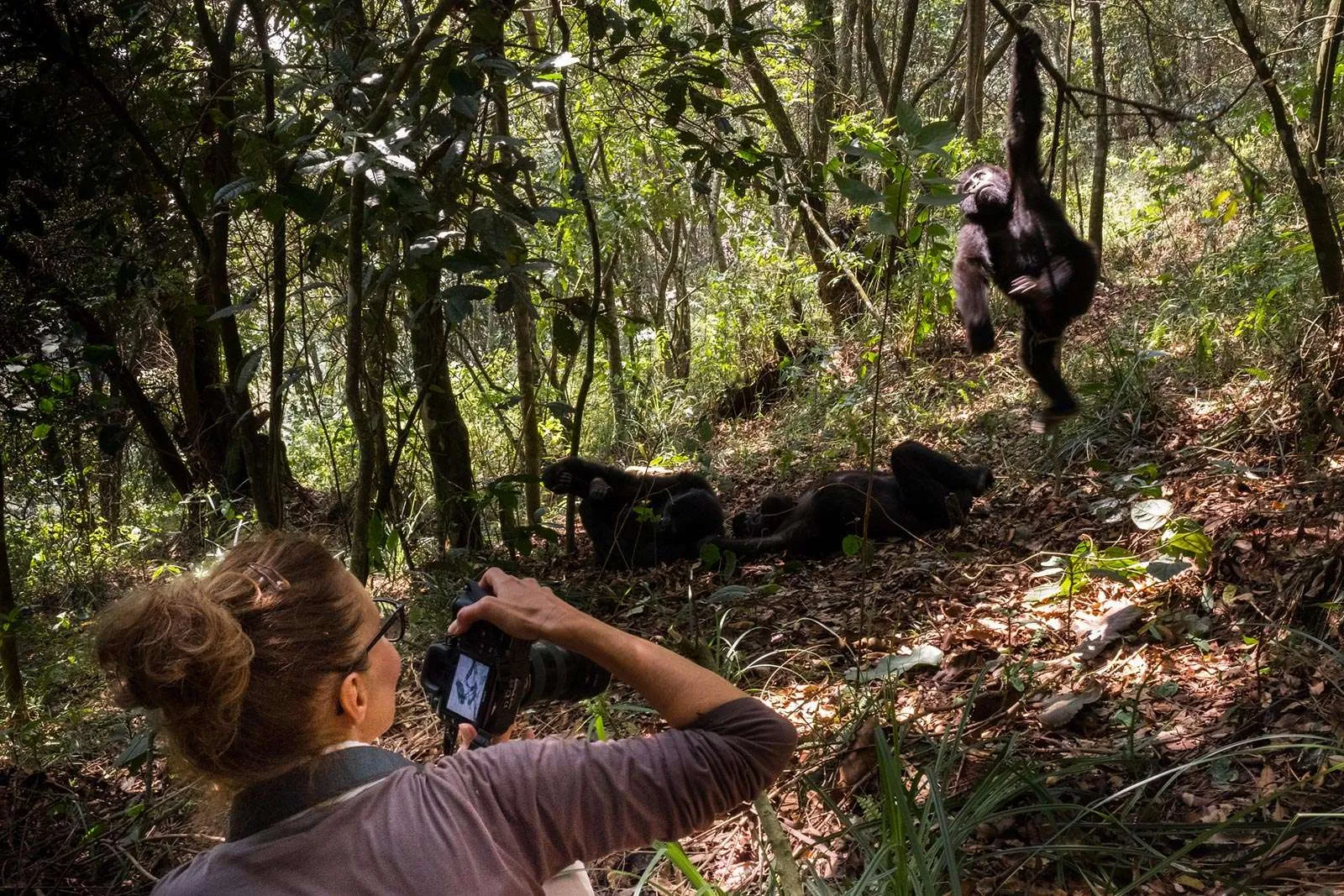
The forest is still dark and cool when you leave the lodge. Mist clings to the treetops, birds call from the canopy, and the air smells of damp earth and wild celery.
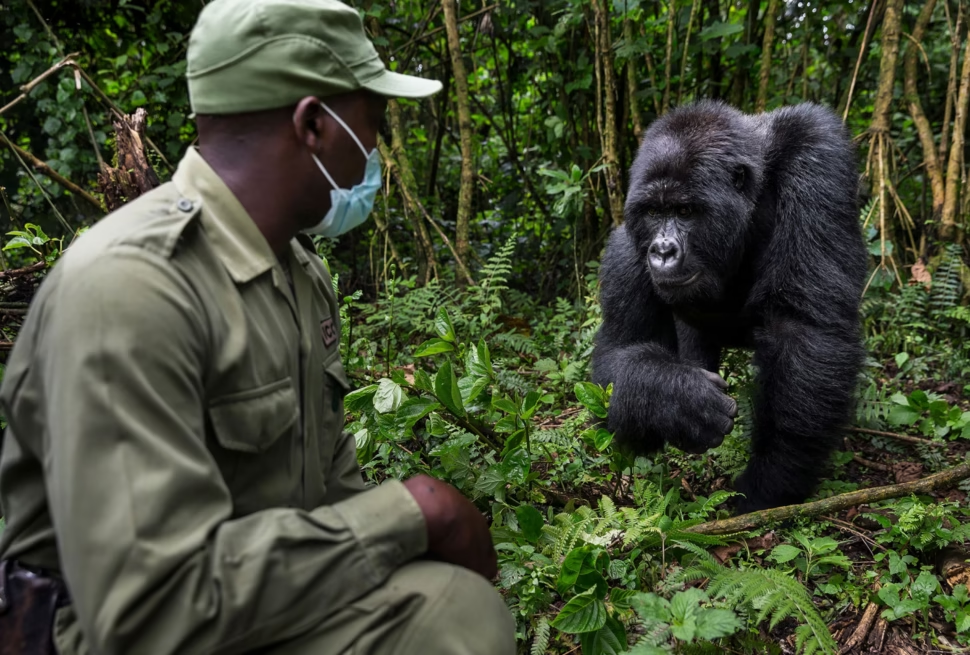
Hours later you are standing a few metres from a 200-kilogram silverback who looks straight into your eyes. That is the essence of gorilla trekking.
From the moment you leave your lodge until you return, the day follows a clear sequence: early transfer, official briefing, forest hike, one unforgettable hour with a habituated mountain gorilla family, and the walk back.
The day is physically demanding — steep, muddy and sometimes long — yet emotionally unmatched. Knowing exactly what happens removes most of the anxiety and lets you focus on the experience itself.
In this guide you will discover: The night-before preparation • Leaving the lodge • The official briefing • The hike to find the gorillas • The magical hour • Rules you must follow • The return • How long the day really takes • Uganda vs Rwanda differences • Fitness realities • Common surprises • Photography tips • Practical advice • and how to book with confidence.
Ready to turn this knowledge into your own trek? Contact GoSilverback Gorilla Safaris for permits, lodges and a seamless itinerary.
The Night Before – Preparation That Makes the Difference
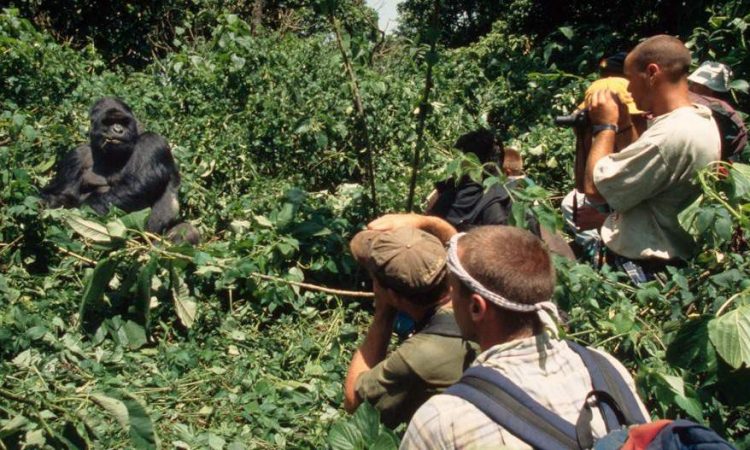
Lay out everything the evening before. Wear long trousers, a long-sleeved shirt, and sturdy waterproof hiking boots with good grip.
Pack a light rain jacket, gardening gloves (for grabbing vegetation), a small daypack, 2–3 litres of water, energy snacks, insect repellent, and your camera with extra batteries.
Decide in advance whether you will hire a porter — almost everyone should. Get to bed early.
Mental preparation matters as much as physical: accept that you will get muddy, that the hike length is unknown, and that the reward is worth every step.
05:30–07:00 – Leaving the Lodge and Arriving at the Trailhead
Most lodges serve an early breakfast from 5:30 or 6:00 a.m. You leave in a 4×4 for the sector headquarters.
Transfer times range from 10 minutes (if you stay very close) to over an hour.
At the trailhead the atmosphere is quiet but electric. Other trekkers arrive, porters wait with their sticks, and rangers begin organising groups. The air is cool, the forest looms, and anticipation is high.
The Official Briefing (7:00–8:00 a.m.)
Rangers gather everyone for the mandatory briefing. They check your gorilla trekking permit and passport details carefully.
Then they explain the non-negotiable rules: maintain a 7-metre distance, no flash photography, no food or drink near the gorillas, speak softly, and stay for a maximum of one hour.
They describe how gorilla families are allocated according to the fitness level of each group and deliver a short but powerful conservation message.
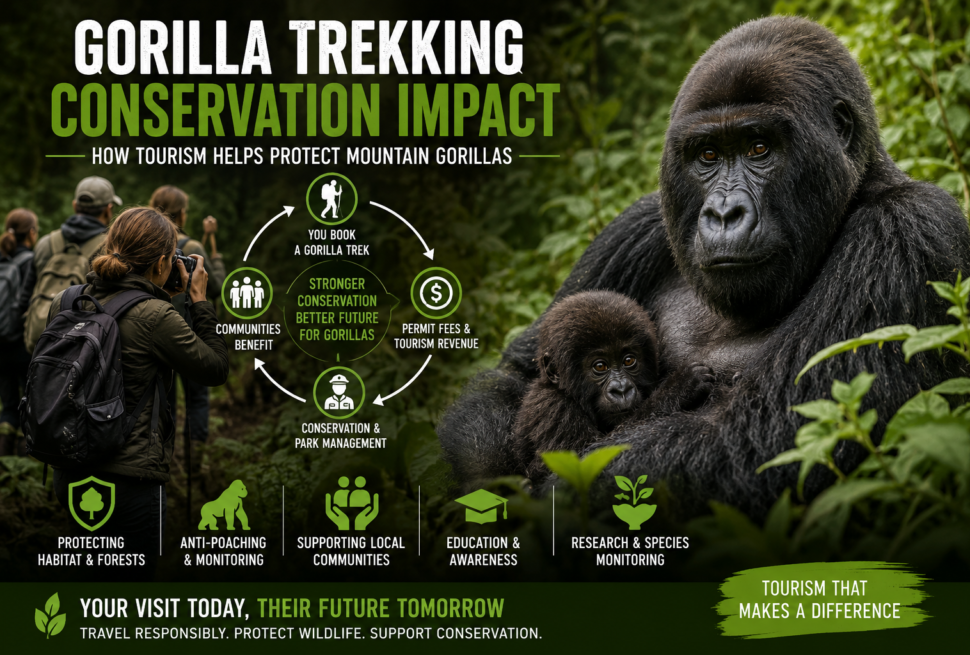
You are reminded that your presence funds protection of these endangered animals. After questions, groups set off.
The Hike – Finding the Gorillas
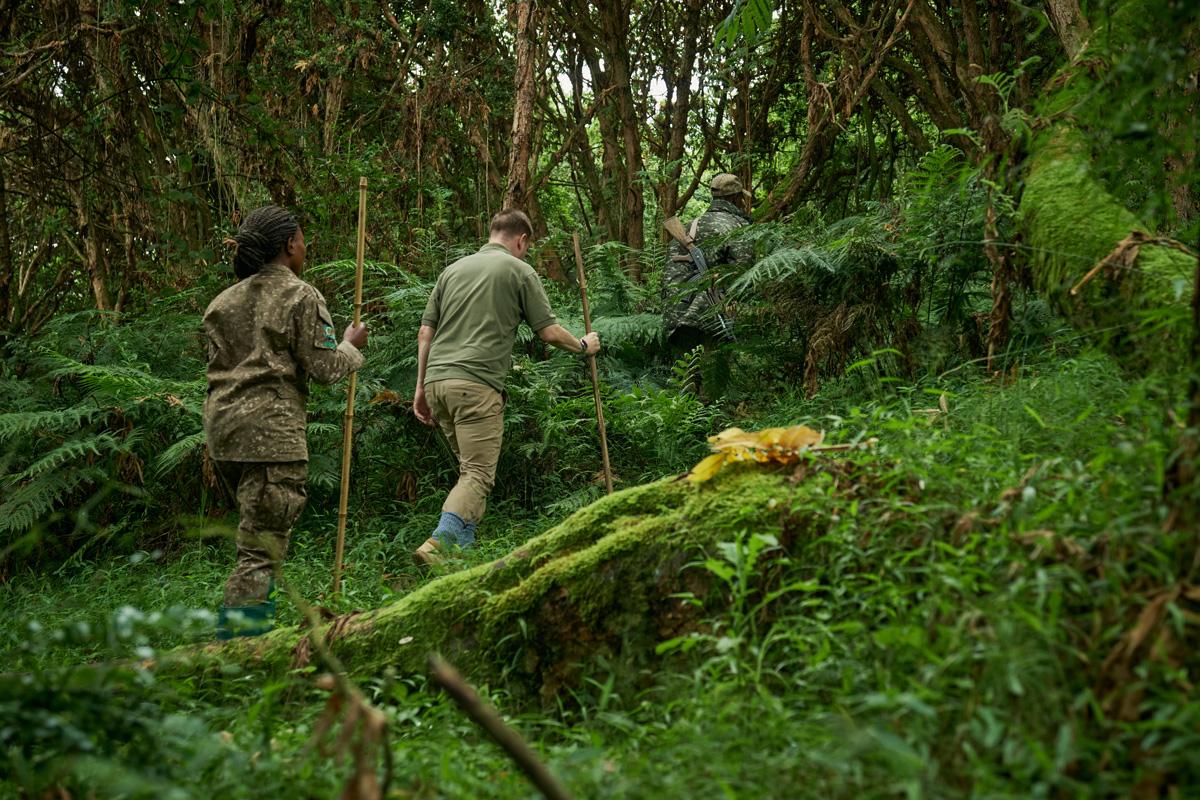
This is the most variable and physically demanding part of the day. Trackers leave early, following nests, dung, broken vegetation and vocalisations.
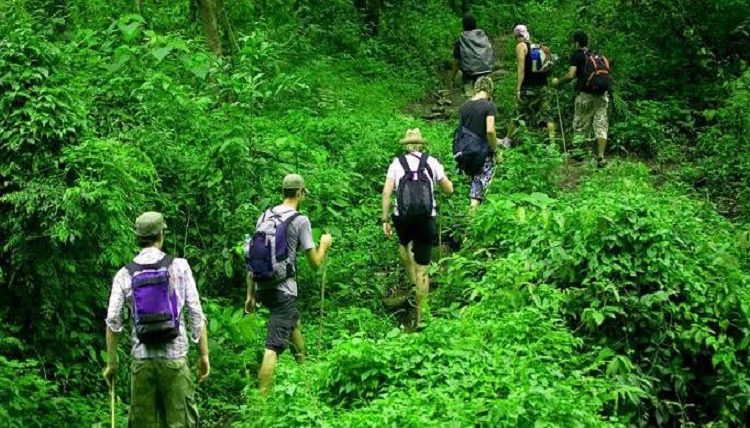
Your group follows the ranger along steep, narrow, often muddy trails through dense rainforest.
Walking sticks and porters make a huge difference. Altitude (1,400–2,500 m) can make breathing harder.
The hike can last anywhere from 30 minutes to five hours or more, depending on where the family moved during the night.
Suddenly the radio crackles — the gorillas have been located. The final approach is made in silence.
The Magical Hour – Face to Face with Mountain Gorillas
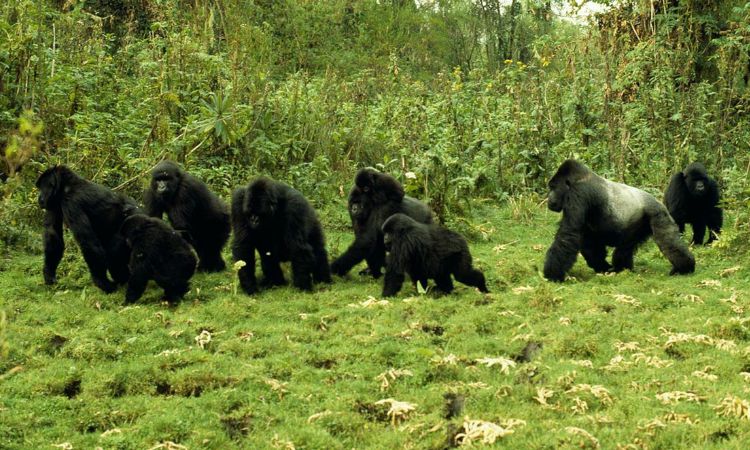
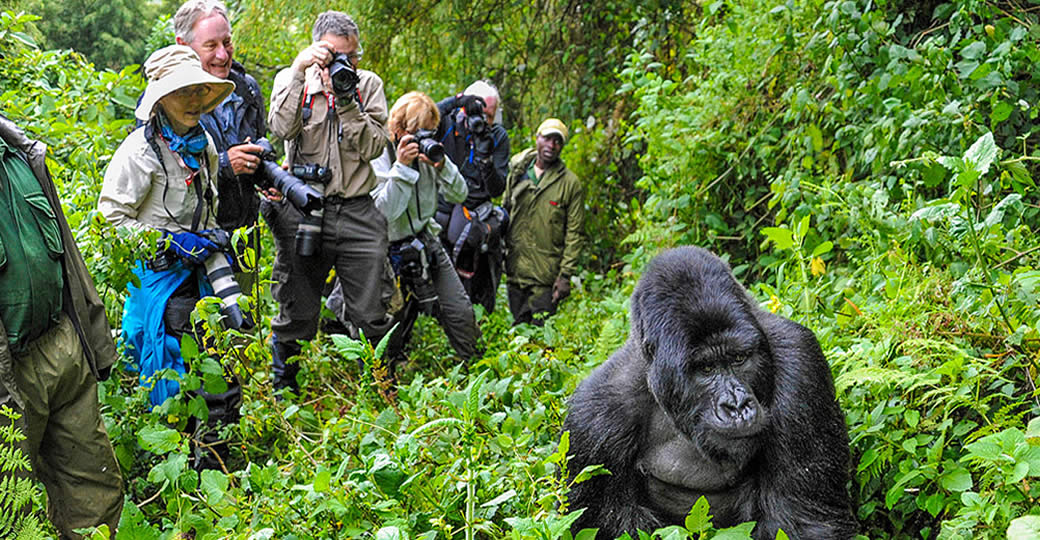
The vegetation parts and there they are. Youngsters play, females groom, and the silverback sits with quiet authority. You move slowly to within the allowed distance.
The next 60 minutes pass in a blur of feeding, chest-beating displays, curious glances and profound stillness.
Light is often low under the canopy, so photography is challenging without flash (which is forbidden). Most people feel a powerful mix of awe, humility and unexpected emotion.
When the ranger signals that time is up, you leave reluctantly.
Strict Rules You Must Follow During the Encounter
- Keep at least 7 metres away at all times
- No flash photography
- No eating, drinking or smoking near the gorillas
- Speak only in whispers
- Follow the ranger’s instructions instantly
- Maximum one hour with the family
These rules exist to prevent disease transmission, reduce stress on the animals, and ensure the long-term survival of mountain gorillas.
Related Read: What is Gorilla Trekking | Is Gorilla Trekking Safe?
The Return Walk and Back at the Lodge
The walk back is usually quieter and filled with conversation. You are tired, muddy and elated. At the headquarters you may receive a simple certificate.
Tipping the ranger, trackers and porters is customary and appreciated.
Most guests return to their lodge by early or mid-afternoon for a late lunch, a hot shower, and the chance to share the experience.
How Long Does the Whole Day Actually Take?
Most gorilla trekking days last 6–9 hours from the moment you leave your lodge until you return.
A typical timeline looks like this:
- Early breakfast and transfer to the trailhead
- Briefing (30–60 minutes)
- Forest hike to locate the gorillas (30 minutes to 5+ hours)
- One full hour with the family
- Return walk and transfer back to the lodge
Factors that affect the total duration include:
- How far the gorilla family moved overnight
- The specific sector (some have longer average hikes than others)
- Your group’s fitness level and walking pace
- Weather and trail conditions (heavy rain can slow progress)
- Time spent at the briefing and organising porters
While some lucky groups are back by early afternoon, others spend a full day in the forest.
Building flexibility into your schedule and choosing a lodge close to the briefing point are the best ways to manage the uncertainty.
Uganda vs Rwanda – Does the Experience Feel Different?
Both countries offer the same core privilege: one hour with a habituated mountain gorilla family.
Yet the overall feel of the day can differ in subtle but noticeable ways.
| Aspect | Uganda (Bwindi / Mgahinga) | Rwanda (Volcanoes National Park) |
|---|---|---|
| Terrain | More varied and often steeper dense, muddy rainforest with significant elevation changes | Generally more compact volcanic slopes; still steep and muddy but often shorter approaches |
| Group Size Feel | Maximum 8 visitors per gorilla family; can feel slightly busier in popular sectors | Maximum 8 visitors per family; often feels more intimate due to tighter organisation |
| Briefing Style | Practical, conservation-focused, sometimes more informal | Highly structured, polished, and consistently delivered |
| Overall Atmosphere | Wilder, more adventurous, greater sense of remote rainforest immersion | More refined and efficient, with excellent infrastructure and a premium feel |
Both destinations deliver the same core magic: one unforgettable hour with habituated mountain gorillas. The choice usually comes down to budget, preferred scenery, and the overall style of trip you want.
Related Read: Uganda vs Rwanda Gorilla Trekking | Uganda vs Rwanda Gorilla Trekking Comparison | Find our gorilla trekking itinerary here.
Physical Difficulty and Who Can Do It
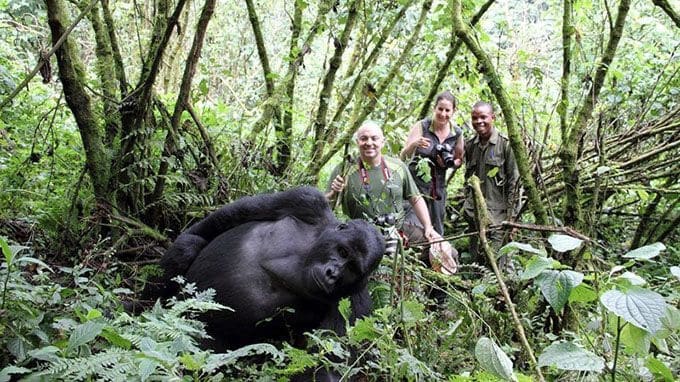
Gorilla trekking is a moderate to challenging physical activity. It is not a gentle nature walk. Trails are often steep, uneven, root-covered and muddy, and the length of the hike is never guaranteed.
1. Fitness required
You do not need to be an athlete, but a reasonable level of cardiovascular fitness and sure-footedness is important.
If you can walk continuously for 3–5 hours on hilly terrain and manage occasional short, steep climbs, you should cope.
People who are very sedentary or have serious joint, heart or respiratory conditions may struggle.
2. Age limits
The minimum age is strictly 15 years in both Uganda and Rwanda. There is no official upper age limit. We regularly take travellers in their 60s and 70s who complete the trek successfully.
3. Options for seniors and less-mobile travellers
Hiring a porter is the single most effective support. Porters carry your bag and provide a steadying hand.
In some sectors, sedan chairs (carried by a team of porters) can be arranged in advance for an additional fee.
These options make the experience accessible to many people who would otherwise find the terrain too demanding.
Common challenges
- Mud – especially after rain; trails can become slippery and energy-sapping
- Heat and humidity – the forest holds moisture and temperatures rise as the day progresses
- Altitude – most trekking areas sit between 1,400 m and 2,500 m, which can make breathing harder
- Variable duration – some hikes are short, others last five hours or more before the gorillas are reached
Honest self-assessment and proper preparation (good boots, porter, reasonable fitness) allow the majority of motivated adults to complete the trek and enjoy the reward.
If you have specific health concerns, discuss them with your doctor and your operator before booking.
What Most First-Timers Are Surprised By
Even travellers who have researched thoroughly are often caught off guard by the reality of the day.
Here are the surprises we hear most often after the trek.
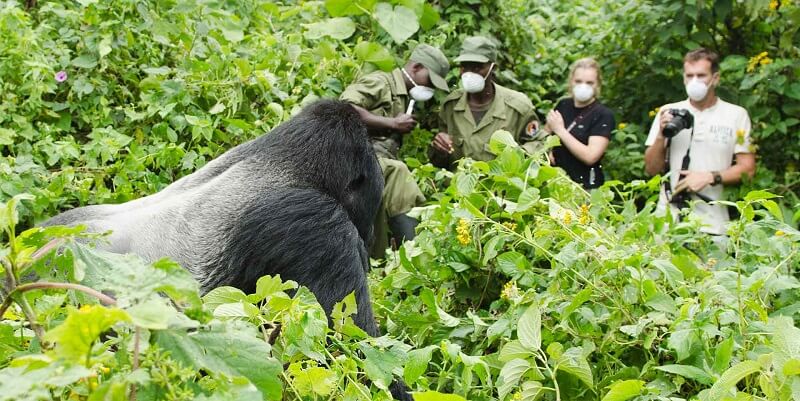
1. How close the gorillas sometimes come
The official rule is a 7-metre distance, but the gorillas did not attend the briefing.
Curious juveniles or relaxed adults may approach much closer of their own accord. The sudden proximity is thrilling and slightly unnerving.
2. How emotional the encounter feels
Many people expect excitement or awe. Fewer expect to feel a lump in the throat or even tears.
Eye contact with a silverback or watching a mother with her infant often triggers a surprisingly deep response.
3. How quickly the hour passes
Sixty minutes sounds generous until you are actually there. Most trekkers say the time disappears in a flash and they wish they could stay longer.
4. How muddy and physically demanding it becomes
Photos rarely show the full extent of the mud, the slippery roots, or how tired legs feel by the end. Even fit people are often surprised by the intensity of the hike.
5. The sounds of the forest and the gorillas
The crashing of vegetation as the family moves, the low rumbles of the silverback, and the sudden silence when the group settles are more powerful in person than any video conveys.
6. How varied the behaviour is
You might see intense feeding, playful wrestling, meticulous grooming, or simply peaceful resting.
No two encounters are the same, and the range of behaviour often exceeds expectations.
7. How controlled yet wild the experience remains
Rangers keep the situation calm and safe, yet you never forget you are in the animals’ territory. That balance of structure and raw wilderness surprises many first-timers.
These moments of surprise are part of what makes gorilla trekking unforgettable.
The best preparation is knowing they are coming — and then allowing yourself to be fully present when they arrive.
Photography During Gorilla Trekking – Realistic Expectations
Many travellers arrive hoping for National Geographic-style images. The reality is more challenging — and that is important to understand before you go.
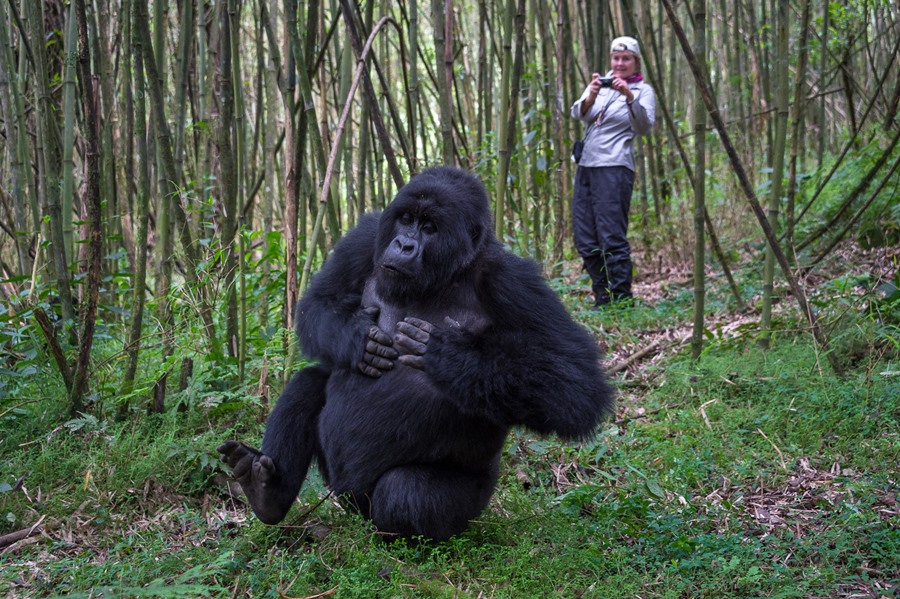
Low-light reality The forest canopy blocks much of the daylight. Even in the middle of the morning the light is often dim and green-tinted.
This forces higher ISO settings, which can introduce noise, and slower shutter speeds, which risk blur if the gorillas (or you) move.
Best camera settings
- Shoot in aperture-priority or manual mode
- Use the widest aperture your lens allows (f/2.8–f/5.6)
- Raise ISO as needed (often 1600–6400)
- Keep shutter speed at 1/250s or faster when possible
- Continuous autofocus and burst mode help capture behaviour sequences
- Expose for the gorilla’s face rather than the background
Lens recommendations: A versatile zoom is ideal. Many photographers favour a 70–200mm f/2.8 or a 100–400mm.
A shorter 24–70mm or 24–105mm is useful for environmental shots and wider forest context.
Prime lenses can deliver beautiful results but limit flexibility when the gorillas move quickly.
Flash is strictly forbidden Any artificial light is prohibited because it stresses the animals and is against park rules.
The bigger truth Some of the most powerful moments happen too fast or in light too poor for a perfect frame.
Many experienced travellers later say the memory of eye contact with a silverback, or watching a mother cradle her infant, mattered far more than the images they brought home.
Take the photos you can, but do not let the camera come between you and the experience. Put it down for a few minutes. Look. Breathe. That is the part you will never forget.
How to Make Your Gorilla Trekking Day as Smooth as Possible
A few smart decisions before you even leave home can turn a tough day into a great one. Here are the practical, operator-level tips we give every guest.
1. Choose the right sector for your fitness and goals
Buhoma is generally the most accessible. Rushaga offers the highest number of families and the habituation option. Nkuringo is more demanding but scenic.
Ruhija is quieter. Match the sector to your group’s ability and interests before the permit is issued.
2. Hire a porter
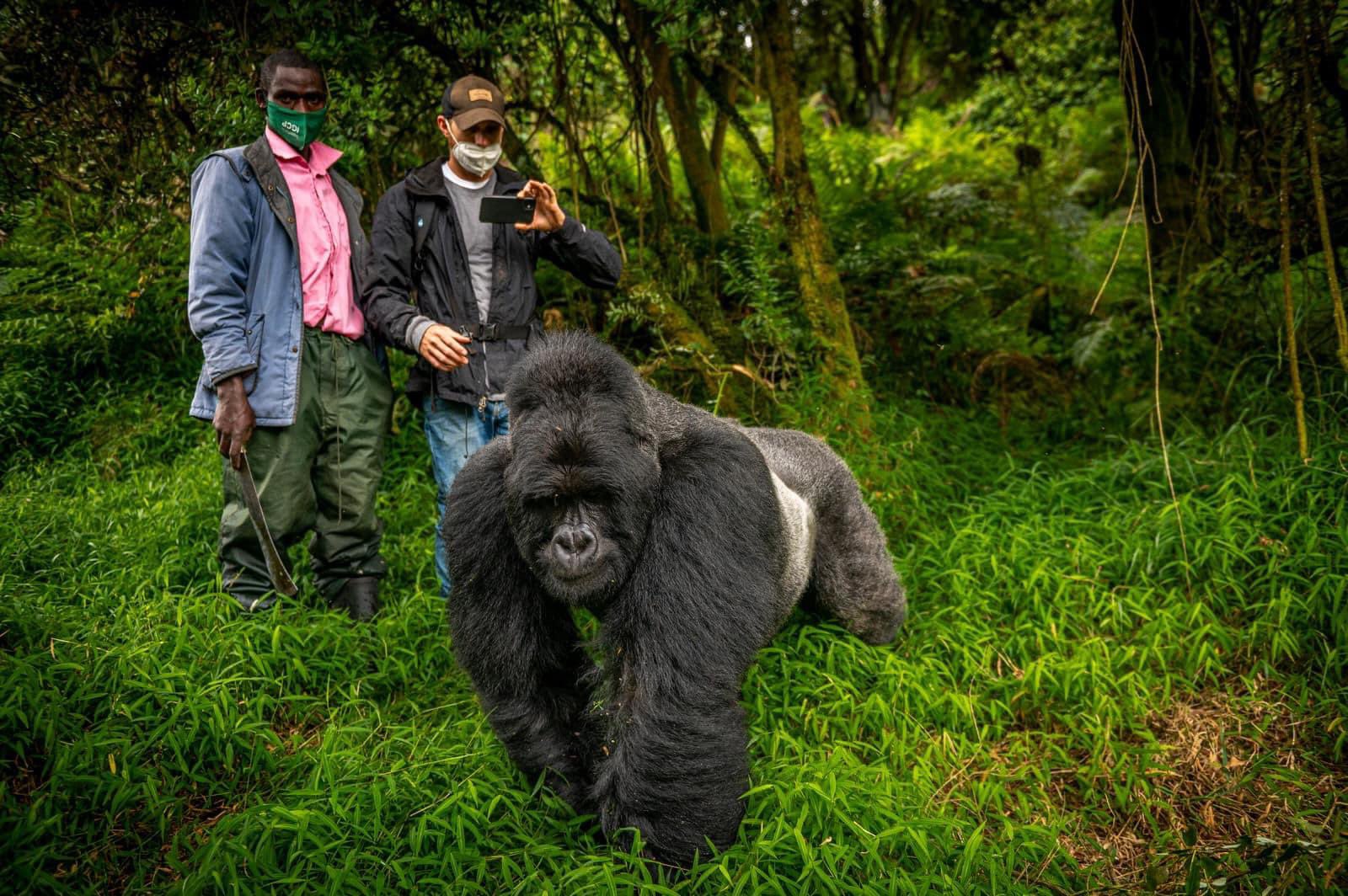
This is the single best decision most trekkers make. A porter carries your daypack, offers a steadying hand on slippery sections, and allows you to focus on the forest instead of your balance.
The cost is modest and the benefit is huge.
3. Wear proper footwear
Waterproof hiking boots with good ankle support and aggressive tread are essential. Trail runners or ordinary sneakers are not enough for the mud and steep slopes.
4. Stay close to the briefing point
Book a lodge within 20–40 minutes of your sector headquarters. Shorter transfers mean more sleep and less pre-dawn stress.
5. Carry the right gear
Long trousers, long sleeves, rain jacket, gardening gloves, 2–3 litres of water, and energy snacks.
A walking stick (usually provided free) also helps.
6. Book your permit early through a reputable operator
This guarantees the correct sector, accurate passport details, and proper coordination with rangers and lodges.
7. Listen carefully at the briefing and trust the rangers
They know the forest, the gorillas and the conditions that day. Following their instructions keeps the group safe and the encounter calm.
Follow these steps and you remove most of the avoidable difficulties. The forest will still be challenging — that is part of the experience — but you will be properly prepared to enjoy it.
Need help putting these pieces together? Contact GoSilverback Gorilla Safaris and we will match your sector, lodge, porters and permit so your trekking day runs as smoothly as possible.

Ready to Experience It Yourself?
Knowing what happens during gorilla trekking is one thing. Living it is another.
When you are ready to turn knowledge into your own encounter, the operator you choose determines how smooth, safe and memorable the day becomes.
At GoSilverback Gorilla Safaris, we specialise in making every stage of the trek seamless for travellers from the USA, UK, Europe, Canada, Australia, Asia and beyond.
- Permit security – We secure genuine Uganda Wildlife Authority (UWA) and Rwanda Development Board (RDB) permits and confirm your exact sector in advance.
- Briefing coordination – Our team ensures you arrive on time, with the right documents, and fully prepared for the ranger briefing.
- Porter arrangements – We organise reliable porters in advance so you can focus on the forest instead of your backpack.
- Lodge & transfer matching – We place you in the best-located accommodation and arrange early-morning transfers that minimise travel stress.
- Post-trek support – From certificates and tipping guidance to hot showers and celebration meals, we look after the details after you leave the forest.
- 24/7 assistance – Questions before, during or after your trek are answered quickly by people who know the parks intimately.
Hundreds of guests have told us the same thing: once they handed the logistics to us, they could simply enjoy the experience.
Ready to begin? Tell us your preferred dates, group size and budget.
Get your personalised gorilla trekking itinerary and permit quote today.
Contact GoSilverback Gorilla Safaris now and secure your place in the forest before the remaining 2026 and 2027 permits are gone.
Get your personalised gorilla trekking itinerary and permit quote today.
Frequently Asked Questions
How long do you spend with the gorillas?
You spend exactly one hour with the gorilla family once they are located. The hike to reach them can last anywhere from 30 minutes to several hours, but the viewing time itself is strictly limited to 60 minutes.
Is gorilla trekking dangerous?
Serious incidents are extremely rare. Experienced rangers and trackers control the encounter at all times. When visitors follow the rules (especially the 7-metre distance), the activity is considered very safe.
What if I can’t keep up with the group?
Porters are available and strongly recommended. They carry your bag and offer support on steep or slippery sections. Rangers also adjust the pace to suit the group’s overall fitness level.
Can I go to the toilet in the forest?
Yes. Step a short distance away from the trail and the group, dig a small hole if possible, and follow Leave No Trace principles. Rangers can advise on the best moment and location.
Do the gorillas ever charge?
Bluff charges can occasionally occur, especially with younger males or if the group feels crowded. Rangers are trained to manage these situations calmly, and actual contact is extremely rare with habituated families.
What is the minimum age for gorilla trekking?
The minimum age is 15 years in both Uganda and Rwanda. This rule is strictly enforced for safety and conservation reasons.
How fit do I need to be?
Moderate fitness is sufficient for most people, especially if you hire a porter. The terrain is steep and often muddy, so a basic level of stamina and sure-footedness is important.
Can I trek if it is raining?
Yes. Gorilla trekking operates in all weather conditions. Good waterproof clothing and boots are essential, as trails become more slippery when wet.
What should I wear on the day?
Long trousers, a long-sleeved shirt, waterproof hiking boots, a rain jacket, and gardening gloves. Neutral colours are best. Avoid shorts, open shoes, or camouflage patterns.
How close do you actually get to the gorillas?
The official minimum distance is 7 metres. In practice, gorillas sometimes approach closer of their own accord, but visitors must never move toward them.
Is photography allowed?
Yes, but flash is strictly prohibited. Low light under the forest canopy can make photography challenging, so a camera that performs well at higher ISO settings is helpful.
What happens if the gorillas are very far away?
You still receive your full one-hour visit once the family is found. Some days involve longer hikes, which is why fitness and a positive attitude matter.
Do I need to tip the rangers and porters?
Tipping is customary and greatly appreciated. Your operator will normally suggest appropriate amounts for the ranger, trackers and porters at the end of the trek.
Can seniors or less mobile travellers join?
Yes, provided they have reasonable mobility. Porters help significantly, and in some sectors sedan chairs can be arranged in advance for an extra fee.
How long does the entire day last?
Most trekkers leave the lodge between 5:30 and 6:30 a.m. and return between early and mid-afternoon. The full experience usually takes 6–9 hours door-to-door.
Final Thoughts
Gorilla trekking is not a polished zoo visit. It is a raw, physical, deeply moving day in one of Africa’s last great rainforests.
You will sweat, you may slip, and you will stand in the presence of one of the most powerful yet gentle animals on Earth.
The sequence is always the same — briefing, hike, one precious hour, return — yet every trek feels unique.
Stop only imagining it.
Contact GoSilverback Gorilla Safaris now to secure your gorilla trekking permit, choose the right lodge, and start planning the day you will talk about for the rest of your life.
Limited permits remain for 2026 and 2027 — book yours while availability lasts.