
Is Gorilla Trekking Safe? Complete 2026 Safety Guide for Uganda and Rwanda Gorilla Safaris
Is Gorilla Trekking Safe? Gorilla trekking is one of Africa’s most unforgettable wildlife experiences. Standing meters from a 200-kilogram silverback in his rainforest home is a moment that redefines what “wild” means.
But before travelers from the USA, UK, Europe, Canada, Asia, and the Middle East commit to this adventure, one question dominates their research: Is gorilla trekking safe?
Yes, gorilla trekking is considered safe when travelers follow park regulations, trek with trained guides, and choose experienced safari operators.
Mountain gorillas are peaceful, habituated families are monitored daily, and every trek is accompanied by armed park rangers and professional guides.
The safety systems in place across Uganda and Rwanda are among the most rigorous in African wildlife tourism.
This guide answers every safety question you have. We cover gorilla behavior, park security, health protocols, physical demands, and how to choose an operator that prioritizes your wellbeing.
By the end, you’ll understand why gorilla trekking is not just safe — it’s one of the most professionally managed wildlife experiences on Earth.
Bottom line: The greatest risk in gorilla trekking is not the gorillas. It’s poor preparation. Get the preparation right, and safety follows naturally.

Is Gorilla Trekking Safe?
The short answer is yes — unequivocally yes. But safety is not accidental. It is the result of decades of conservation investment, professional training, and strict regulatory frameworks.
Why Gorilla Trekking Is Safe
Mountain gorillas are peaceful animals. Unlike the aggressive depictions in Hollywood films, wild mountain gorillas are shy, gentle, and conflict-averse.
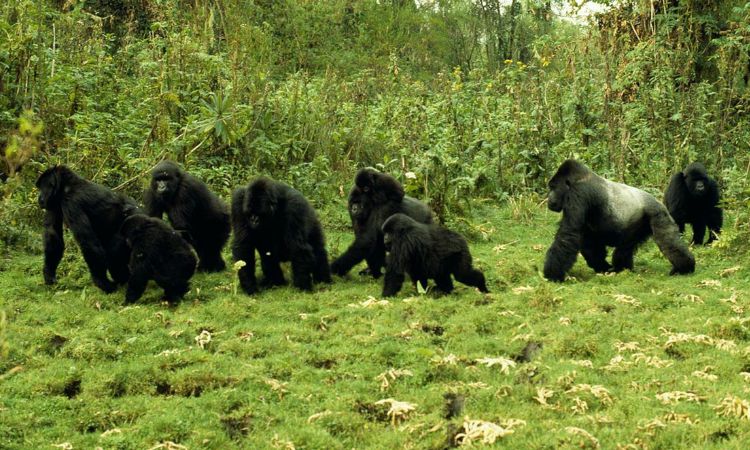
Their primary response to perceived threat is retreat, not attack. Habituated gorilla families — those accustomed to human presence through years of careful exposure — view tourists as neutral elements of their environment.
Habituated gorilla families are monitored daily. Trackers visit every habituated family before dawn to confirm their location, assess their health, and evaluate their mood.
If a family is stressed, ill, or in an inaccessible location, trekking is redirected to another group.
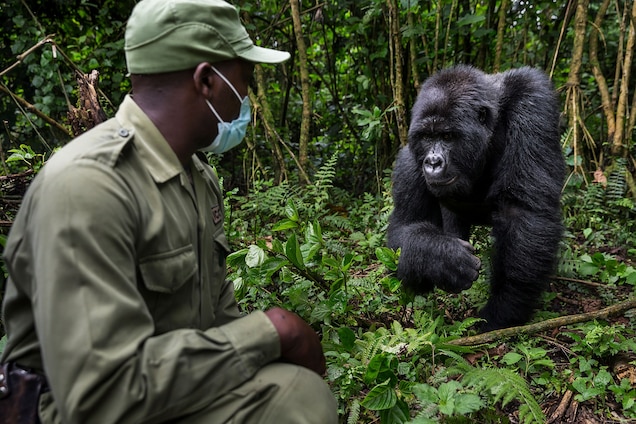
Tourists are accompanied by armed park rangers and guides.
Every trekking group includes:
- 1 lead ranger: Manages the trek, interprets gorilla behavior, and enforces rules
- 1–2 armed rangers: Carry firearms for emergency wildlife deterrence (not for gorillas — for buffalo, elephants, or poachers)
- 2–3 trackers: Locate the gorilla family and clear trails
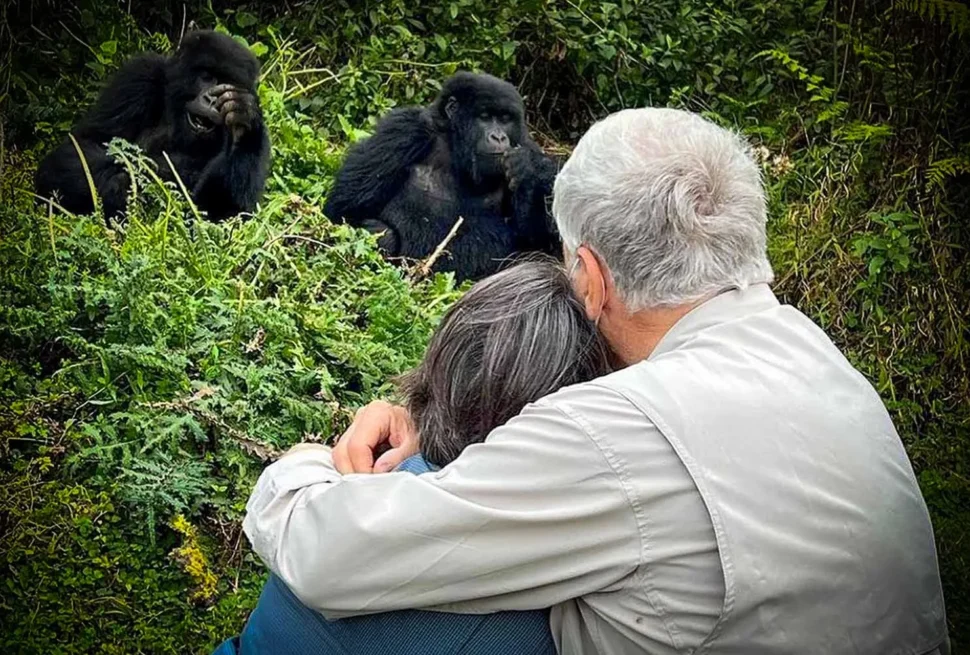
Strict rules protect visitors and gorillas. The 7-meter distance rule, no-touching policy, and health screening exist to protect both species.
Gorillas share 98% of human DNA and are vulnerable to our diseases. These rules keep gorillas healthy — and healthy gorillas are safe gorillas.
Bold fact: No tourist has ever been killed by a habituated mountain gorilla in Uganda or Rwanda. In over 40 years of commercial gorilla trekking, serious injuries to tourists are virtually unheard of.
Are Mountain Gorillas Dangerous to Humans?
Understanding gorilla behavior eliminates fear and replaces it with respect.
Gorilla Behavior: What You Need to Know
Silverback protection instincts: The dominant male silverback’s primary role is protecting his family.
He will display dominance — chest-beating, vocalizations, charging — to warn intruders. These displays are communication, not aggression. They are designed to intimidate without fighting.
Body language signals:
|
Behavior |
Meaning |
Your Response |
|
Chest-beating |
Warning display |
Stay calm, avoid eye contact, back away slowly |
|
Vocal hooting |
Alert call to family |
Freeze, wait for ranger instructions |
|
Ground slapping |
Dominance assertion |
Remain still, show submission |
|
Direct stare |
Challenge or curiosity |
Look down, avoid confrontation |
|
Yawn with teeth |
Stress or threat |
Back away immediately, follow ranger guidance |
How guides interpret behavior: Professional guides spend years studying specific gorilla families. They recognize individual personalities, family dynamics, and stress indicators.
If a silverback shows agitation, guides immediately adjust group positioning or end the encounter.
When Gorillas May React Negatively
Gorillas react defensively — not aggressively — in specific situations:
- Feeling threatened: Sudden movements, loud noises, or encroaching too close
- Loud noises: Shouting, camera clicks, or phone notifications startle gorillas
- Sudden movements: Running, jumping, or rapid gestures trigger defensive responses
- Ignoring distance rules: Getting closer than 7 meters invades the family’s comfort zone
- Direct eye contact: In gorilla culture, sustained eye contact is a challenge
Bold insight: Every negative gorilla-tourist interaction in history has been caused by human rule violations — never by unprovoked gorilla aggression.

How Gorilla Trekking Safety Is Managed
Safety is a system, not a single measure. Here’s how Uganda and Rwanda maintain world-class trekking security.
1. Professional Gorilla Guides
Experienced trackers: Senior trackers in Bwindi and Volcanoes have 10–20 years of experience with specific gorilla families.
They know each individual’s temperament, health history, and preferred ranging patterns.
Ranger escorts: All rangers undergo 6+ months of paramilitary training at wildlife colleges. They are proficient in first aid, emergency evacuation, wildlife behavior, and crisis management.
Daily monitoring: Before any tourist enters the park, trackers have already:
- Located the assigned gorilla family
- Assessed trail conditions and weather risks
- Evaluated family health and stress levels
- Radioed coordinates and status to park headquarters
2. Gorilla Habituation Process
Gorilla groups are not randomly selected for tourism. The habituation process takes 2–3 years of gradual, controlled exposure:
Phase 1 (Months 1–6): Researchers observe the wild family from 100+ meters, documenting behavior without interaction.
Phase 2 (Months 7–18): Gradual approach to 50 meters, then 30 meters, then 20 meters. Gorillas learn that humans are non-threatening.
Phase 3 (Months 19–30): Close observation at 10 meters. Family members become individually comfortable with human presence.
Phase 4 (Certification): Uganda Wildlife Authority or Rwanda Development Board evaluates the family for tourism readiness. Only calm, healthy families receive habituation certification.
Bold fact: Only 32 gorilla families across Uganda and Rwanda are certified for tourism. Each represents 2–3 years of careful, scientific preparation.
3. Strict Visitor Rules
|
Rule |
Purpose |
Enforcement |
|
7-meter minimum distance |
Prevents disease transmission and stress |
Rangers measure and correct positioning |
|
No touching gorillas |
Protects gorilla health and prevents defensive reactions |
Immediate trek termination for violations |
|
No flash photography |
Prevents startling gorillas |
Rangers inspect camera settings |
|
Speak quietly |
Minimizes stress and maintains natural behavior |
Rangers remind trekkers throughout |
|
Follow ranger instructions |
Ensures coordinated, safe group behavior |
Non-negotiable; rangers have absolute authority |
Is Gorilla Trekking Safe in Uganda?
Uganda hosts the world’s largest mountain gorilla population across two national parks. Safety standards are robust and continuously improving.
1. Bwindi Impenetrable National Park
A. Park security:
Bwindi is patrolled by armed Uganda Wildlife Authority rangers 24/7. Anti-poaching units operate across all four trekking sectors. The park has experienced no security incidents involving tourists in over a decade.
B. Ranger protection:
Every trek includes 2–3 armed rangers trained in wildlife management, first aid, and emergency response. Rangers carry satellite radios for immediate communication with park headquarters.
C. Tourism infrastructure:
Bwindi’s four sectors (Buhoma, Ruhija, Rushaga, Nkuringo) each have dedicated headquarters, medical supplies, and evacuation protocols.
Rural clinics near the park lack advanced facilities, so operators maintain partnerships with hospitals in Kampala and Kisoro for emergency transfers.
D. Experience of local guides:
Bwindi guides are predominantly local community members who have grown up in the forest’s shadow. Their knowledge of terrain, weather patterns, and gorilla behavior is unmatched.
2. Mgahinga Gorilla National Park
Smaller, more intimate: Mgahinga hosts one habituated gorilla family (Nyakagezi) and offers a less crowded alternative to Bwindi.
Security considerations: Mgahinga borders the Democratic Republic of Congo. While the park itself is secure, operators monitor regional stability closely.
GoSilverback Gorilla Safaris adjusts itineraries immediately if security conditions change. Explore our expert-crafted gorilla packages here.
Bold fact: Uganda’s Bwindi Impenetrable National Park has hosted over 500,000 tourists since commercial trekking began in 1993. Serious safety incidents involving tourists: zero.
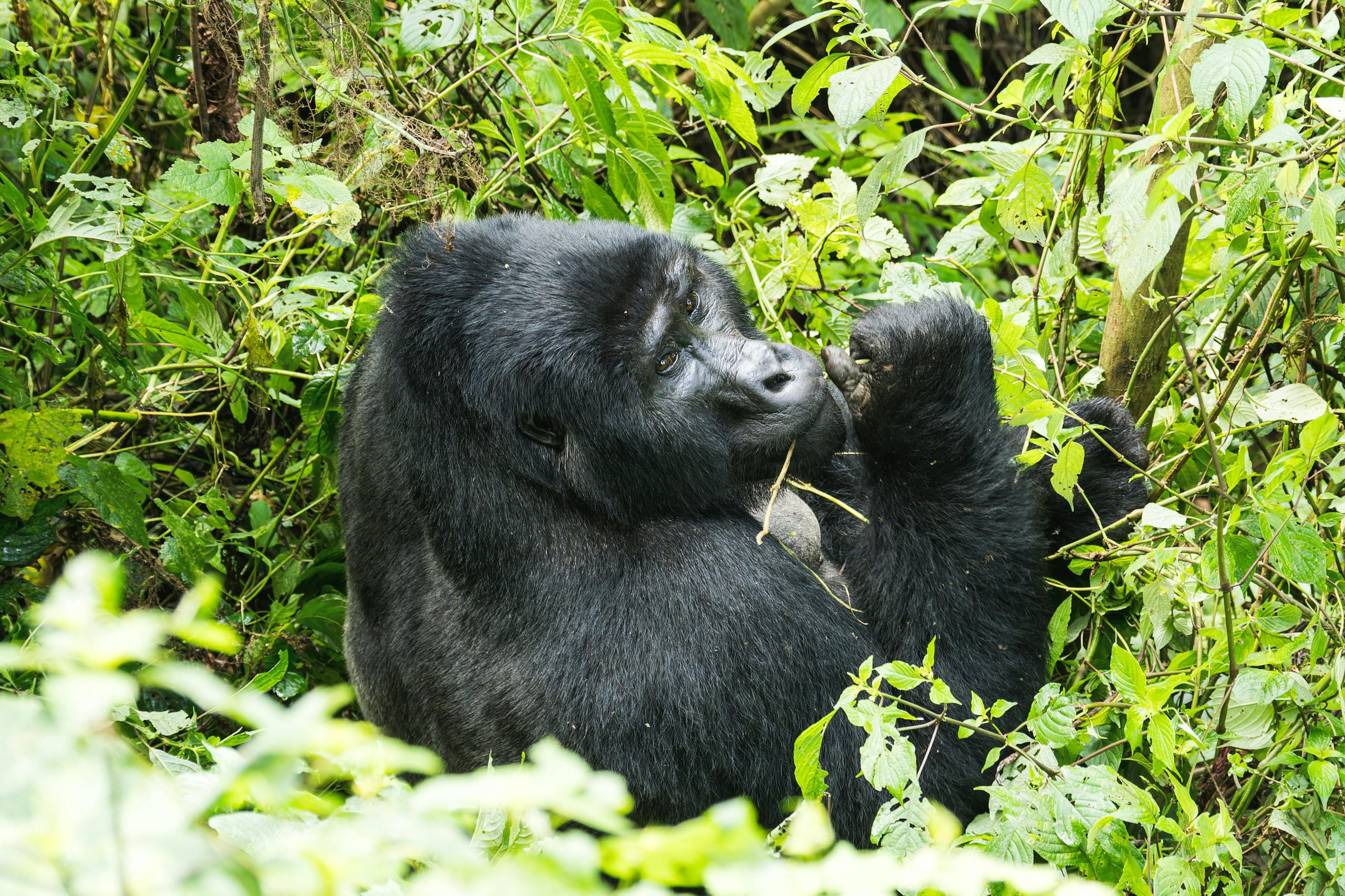
After understanding why gorilla trekking is a safe and well-managed wildlife experience, explore our carefully designed gorilla trekking packages for an unforgettable Uganda and Rwanda adventure.
Is Gorilla Trekking Safe in Rwanda?
Rwanda has positioned itself as Africa’s safest and most organized gorilla trekking destination.
The country’s investment in tourism infrastructure is visible in every aspect of the experience.
1. Volcanoes National Park
A. Accessibility:
Located just 2.5 hours from Kigali on paved roads, Volcanoes National Park is the most accessible gorilla destination in Africa. Emergency medical facilities in Kigali are reachable within 3 hours from any point in the park.
B. Organized tourism system:
Rwanda Development Board (RDB) manages tourism with Swiss precision. Permits are digital, rangers are centrally trained, and lodges meet international safety standards.
C. Safety standards:
Rwanda’s tourism police patrol park boundaries and lodge areas. Kigali International Airport has direct medical evacuation partnerships with European and South African hospitals.
D. Professional guides:
Volcanoes guides undergo 12 months of training at the Rwanda Tourism Institute, including primatology, first aid, emergency management, and multilingual communication.
Bold fact: Rwanda ranks among the top 5 safest countries in Africa for tourists. Volcanoes National Park has never experienced a tourist safety incident since commercial trekking began in 1979.
Common Gorilla Trekking Safety Concerns
Here are the questions that keep travelers awake at night — answered honestly.
Can Gorillas Attack Humans?
Attacks are extraordinarily rare and virtually always provoked. In 40+ years of commercial trekking across Uganda and Rwanda, no tourist has been seriously injured by a habituated gorilla. Wild (unhabituated) gorillas avoid humans entirely.
The only recorded incidents involve:
- Tourists who ignored distance rules
- Researchers who spent extended time with semi-habituated groups
- Local community members who encountered gorillas outside park boundaries (crop-raiding situations)
Rules minimize risks to near-zero. The 7-meter rule, no-touching policy, and ranger supervision create a safety envelope that has protected hundreds of thousands of tourists.
What Happens If a Gorilla Charges?
A “charge” is almost always a bluff display – the silverback runs toward you, stops short, and retreats. It is communication, not attack.
What to do:
- Stay calm. Panic triggers panic.
- Follow guide instructions. Rangers have trained for this exact scenario.
- Avoid running. Running triggers pursuit instinct in all great apes.
- Remain submissive. Crouch slightly, look down, and avoid direct eye contact.
- Let the silverback pass. He is asserting dominance, not seeking combat.
Bold reality: A silverback charge looks terrifying but is almost always a controlled warning. Guides have managed thousands of these displays without incident.
Is Gorilla Trekking Safe for Solo Travelers?
Yes — and in many ways, it’s safer than independent travel elsewhere.
- Group trekking system: You are never alone. Every trek joins 8 trekkers, 2–3 rangers, and 2–3 trackers.
- Professional support: From park arrival to lodge return, you are under professional supervision.
- No independent trekking allowed: Solo travelers cannot wander off-trail or trek without guides.
- Lodge security: Accommodations near Bwindi and Volcanoes have 24/7 security staff.
Solo travelers often report feeling safer on gorilla treks than in European or American cities. The structured nature of the experience eliminates the risks of independent exploration.
Is Gorilla Trekking Physically Difficult?
Physical difficulty is the most common concern after safety.
Here’s the honest assessment.
What Travelers Worry About
|
Concern |
Reality |
|
Hiking distance |
2–8 hours depending on gorilla location |
|
Mountain terrain |
Steep, muddy, uneven — especially in Uganda |
|
Humidity |
80–90% year-round; exhausting even for fit trekkers |
|
Forest conditions |
Dense vegetation, slippery roots, occasional stream crossings |
|
Altitude |
2,000–4,000 meters; altitude sickness affects 30% of trekkers |
Difficulty Depends On
- Gorilla location: Some families feed near park boundaries (30-minute trek). Others range deep in the forest (8-hour trek).
- Weather: Rain transforms manageable trails into exhausting ordeals.
- Fitness level: Cardiovascular fitness and leg strength determine your experience quality.
The Truth About Physical Difficulty
Gorilla trekking is moderately to highly physically demanding, but it is manageable for most travelers with preparation.
- Elderly travelers: Succeed with sedan-chair options in Rwanda and easier trail assignments in Uganda’s Buhoma sector.
- Fitness-limited travelers: Get assigned to gorilla families closer to park boundaries.
- Porters: At $20, they carry your bag and provide physical support on steep sections.
- Training: 8–12 weeks of cardio and leg-strength preparation dramatically improves your experience.
Bold fact: Over 90% of trekkers complete their assigned trek successfully. The 10% who turn back typically attempted without physical preparation or were assigned unexpectedly difficult families.

Gorilla trekking is a safe and life-changing experience when guided by professional trackers and experienced safari experts. Discover our affordable and luxury gorilla trekking packages designed for every traveler.
Who Can Go Gorilla Trekking?
Gorilla trekking is more accessible than many assume.
Here’s who can participate.
1. Older Travelers
Yes — with the right preparation and operator.
- Rwanda: Offers sedan-chair options where porters carry travelers in modified stretchers. Volcanoes’ gentler terrain also suits less mobile trekkers.
- Uganda: Buhoma sector has the easiest trails. Rushaga and Nkuringo are more demanding.
- Porters: Essential for all older travelers. They carry bags, provide stability, and assist on steep sections.
- Medical clearance: Consult your physician before booking, especially if you have heart conditions or mobility limitations.
2. Families
Children under 15 are prohibited from gorilla trekking. This is a strict, non-negotiable rule across Uganda and Rwanda. The reasons:
- Disease risk: Children are more likely to carry communicable illnesses
- Physical demands: Treks are too strenuous for most children
- Behavioral unpredictability: Children may shout, run, or act unpredictably near gorillas
Alternative activities for families with children:
- Batwa cultural experiences (Uganda)
- Nature walks and birding (both countries)
- Community village visits
- Junior ranger programs (some lodges)
3. First-Time Safari Travelers
No previous hiking or safari experience is required. Professional guides manage every aspect of the trek.
Your job is to:
- Follow instructions
- Maintain fitness
- Pack appropriately
- Respect the rules
Bold insight: Many first-time Africa visitors choose gorilla trekking as their introduction to the continent — and rank it as their most powerful travel experience ever.
Gorilla Trekking Health and Hygiene Safety
This is the most critical safety section — and the one most travelers overlook.
1. Gorilla Disease Protection
Mountain gorillas share 98% of human DNA. This genetic similarity makes them extraordinarily vulnerable to human diseases:
Table
|
Human Disease |
Gorilla Impact |
Prevention |
|
Common cold |
Can kill entire families |
Health screening before every trek |
|
Influenza |
Severe respiratory illness |
No trekking with flu symptoms |
|
COVID-19 |
Potentially fatal |
Testing and vaccination requirements |
|
Tuberculosis |
Devastating to populations |
Strict health declarations |
|
Measles |
High mortality in naive populations |
Vaccination requirements for park staff |
2. Human-to-Gorilla Illness Transmission
A single sick tourist can wipe out an entire gorilla family. This is not hyperbole — it is documented conservation biology.
In 1988, a measles outbreak in Rwanda’s Virunga Massif killed multiple gorillas and required emergency vaccination of entire families.
Prevention measures:
- Health screening at park headquarters: Temperature checks and symptom declarations before every trek
- Mandatory mask-wearing: During COVID-19 and other outbreak periods, masks are required near gorillas
- 7-meter distance rule: Reduces airborne and droplet transmission risk
- No trekking when sick: Even mild cold symptoms result in immediate exclusion — no exceptions, no refunds
3. Hand Hygiene and Park Health Guidelines
- Hand sanitizer: Required before and after the trek
- No eating near gorillas: Food smells attract attention and create disease vectors
- Waste management: All human waste must be buried 30cm deep, 100 meters from trails and water sources
Bold warning: If you are sick, you will be denied entry. No refunds. No exceptions. Gorilla health takes absolute priority over tourist convenience.
Gorilla Trekking Safety Rules Every Visitor Must Follow
These rules are not suggestions. They are survival protocols for both species.
✅ Keep 7-meter minimum distance from gorillas (10 meters if gorillas approach you — back away slowly)
✅ Do not touch gorillas — ever. Even if they touch you, remain still and let rangers manage the situation
✅ Do not use flash photography — flash stresses gorillas and can trigger defensive behavior
✅ Speak quietly — loud noises disturb gorilla communication and natural behavior
✅ Follow ranger instructions — rangers have final authority; their decisions protect you and the gorillas
✅ Do not eat or drink near gorillas — food smells attract unwanted attention and create disease risks
✅ Do not litter — leave nothing in the forest; pack out all waste
✅ Do not trek when sick — gorillas share 98% of human DNA and are vulnerable to our diseases
✅ No running or sudden movements — these trigger defensive responses in gorillas
✅ Avoid direct eye contact — in gorilla culture, sustained staring is a challenge
Bold fact: Violating these rules can result in immediate removal from the trek, permit forfeiture, and potential legal action. Rangers enforce strictly because the stakes are extinction-level for gorillas.
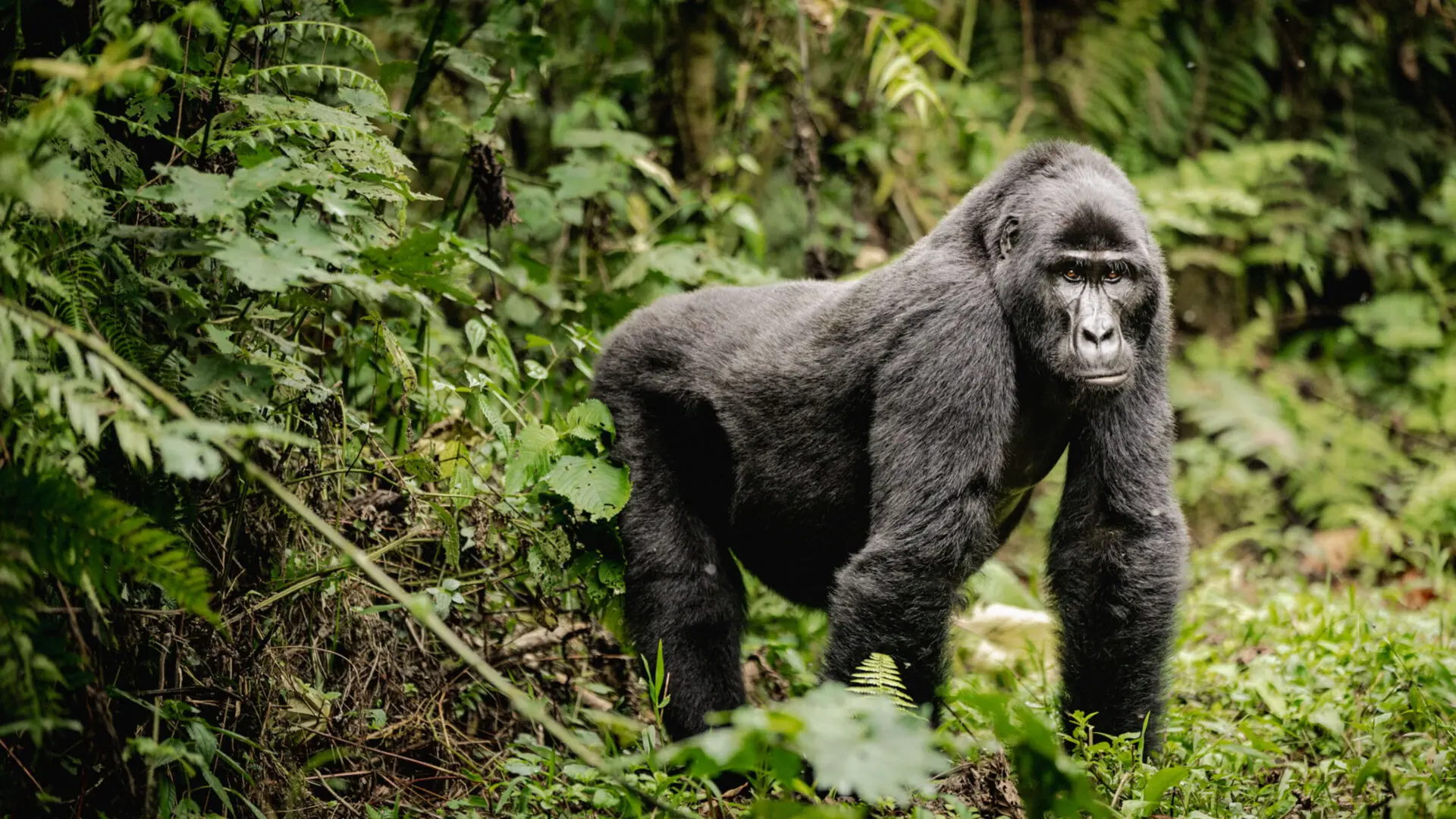
Ready to experience mountain gorillas in their natural habitat? Explore our luxury gorilla trekking packages featuring expert guides, comfortable accommodation, and seamless safari planning.
What to Pack for a Safe Gorilla Trekking Experience
Packing right is a safety measure, not just a comfort preference.
1. Clothing
Table
|
Item |
Specification |
Safety Purpose |
|
Hiking boots |
Waterproof, ankle-supporting, broken-in |
Prevents ankle injuries and blisters on uneven terrain |
|
Waterproof jacket |
Lightweight, breathable |
Hypothermia prevention in rainforest rain |
|
Long trousers |
Quick-dry, sturdy fabric |
Protection from vegetation, insects, and scratches |
|
Long-sleeved shirt |
Moisture-wicking |
Sun protection and insect bite prevention |
|
Gardening gloves |
Sturdy, grip-enhancing |
Essential for grabbing vegetation on steep, slippery trails |
|
Wide-brimmed hat |
UV protection |
Prevents sunstroke at altitude |
2. Equipment
Table
|
Item |
Safety Purpose |
|
Camera |
Document the experience; no flash allowed |
|
Water bottle (2 liters) |
Prevents dehydration at altitude |
|
Walking stick |
Stability on steep, muddy descents |
|
Daypack (20–30 liters) |
Carries emergency supplies and rain gear |
|
Power bank |
Emergency communication if phone battery dies |
3. Health Items
Table
|
Item |
Safety Purpose |
|
Insect repellent (DEET 30–50%) |
Malaria prevention; insect-borne disease protection |
|
Personal medication |
Altitude sickness tablets, pain relievers, anti-diarrheal |
|
First-aid kit |
Blister pads, antiseptic wipes, bandages |
|
Hand sanitizer |
Disease prevention for you and gorillas |
Bold tip: Pack two complete trekking outfits. After a muddy Bwindi trek, dry clothes prevent hypothermia and skin infections on day two.
Choosing a Safe Gorilla Safari Operator
Your operator is your safety net. Choose wrong, and risks multiply. Choose right, and safety becomes invisible—because it’s already handled.
1. The Safety Checklist
✅ Licensed safari company: Verify registration with Uganda Tourism Board or Rwanda Development Board
✅ Experienced guides: Guides with 5+ years of gorilla-specific experience handle crises better than newcomers
✅ Transparent pricing: Hidden costs signal operational shortcuts that may extend to safety
✅ Gorilla permit support: Professional booking eliminates the risk of counterfeit or invalid permits
✅ Emergency planning: Ask about medical evacuation protocols, backup vehicles, and 24/7 emergency contacts
✅ Good reviews: Check recent reviews (2024–2026) for mentions of safety management, crisis response, and guide professionalism
2. Red Flags
🚩 No physical address or registration number
🚩 Pressure to pay full amount upfront without contract
🚩 Refusal to provide guide credentials or emergency contacts
🚩 Quotes significantly below market rate (indicates permit fraud or substandard safety)
🚩 No health screening protocols mentioned
Bold insight: Working with a trusted African safari operator makes your gorilla trekking experience smoother, safer, and stress-free. The premium you pay for professionalism is insurance against the risks of cutting corners.

Why Gorilla Trekking Is One of Africa’s Safest Wildlife Experiences
Comparing gorilla trekking to other African wildlife activities puts its safety record in perspective.
1. Controlled Encounters
Table
|
Activity |
Risk Level |
Control Level |
|
Gorilla trekking |
Very low |
Extremely high — rangers, rules, habituation |
|
Walking safaris (Big Five) |
Moderate |
Moderate — armed guides, but open terrain |
|
Self-drive safaris |
Moderate to high |
Low — no professional supervision |
|
Swimming with sharks |
High |
Moderate — cage or free diving |
|
Hot air ballooning |
Low to moderate |
High — but weather-dependent |
2. Conservation Monitoring
Every habituated gorilla family is monitored daily by researchers and trackers. Their health, behavior, and location are known in real-time.
No other African wildlife experience offers this level of pre-visit intelligence.
3. Professional Tourism Management
Uganda Wildlife Authority and Rwanda Development Board are among Africa’s most professional park management agencies.
They invest in ranger training, medical infrastructure, and visitor safety systems that exceed regional standards.
4. Limited Visitors Per Gorilla Family
Maximum 8 trekkers per family per day.
This limit:
- Minimizes stress on gorillas
- Allows rangers to maintain close supervision
- Reduces disease transmission risk
- Ensures every tourist receives guide attention
Bold fact: Gorilla trekking has a better safety record than elephant-back safaris, walking safaris, and even some game drive experiences. The combination of habituation, professional guides, and strict rules creates an exceptionally safe wildlife encounter.
Gorilla Trekking Safety Tips for First-Time Visitors
Follow these 8 tips and your safety is virtually guaranteed:
- Train before your trip — Start cardio and leg-strength routines 8–12 weeks before departure. Fitness reduces injury risk and improves decision-making under stress.
- Listen to guides — Their instructions are not suggestions. They are safety protocols refined over decades.
- Respect wildlife rules — The 7-meter rule, no-touching policy, and quiet voices exist for reasons that transcend tourism.
- Prepare proper clothing — Waterproof boots, long layers, and gardening gloves prevent injuries that could compromise your trek and the group’s safety.
- Stay hydrated — Dehydration at altitude causes dizziness, poor judgement, and increased fall risk. Drink 2–3 liters before and during the trek.
- Use a porter — At $20, they carry your bag, provide stability, and reduce your physical load. This is safety equipment, not a luxury.
- Book with experts — Choose operators with proven safety records, not the cheapest quote. GoSilverback Gorilla Safaris prioritizes your wellbeing above all else.
- Disclose health conditions — Asthma, heart conditions, or mobility limitations are not disqualifying — but they require advance planning. Honesty with your operator ensures appropriate family assignments and emergency preparedness.
Now that you know gorilla trekking safety rules, risks, and preparation tips, take the next step by exploring our Uganda and Rwanda gorilla trekking packages created for a safe and memorable journey.
Is Gorilla Trekking Worth It Despite the Risks?
The risks are minimal. The rewards are immeasurable.
1. Lifetime Memory
No photograph captures the moment a silverback makes eye contact with you. No documentary conveys the sound of a juvenile beating its chest in play.
These moments belong only to those who make the trek.
2. Rare Wildlife Encounter
Only 1,063 mountain gorillas exist. Only ~30,000 tourists see them annually. You are joining an extraordinarily small group of humans who have shared space with these great apes.
3. Supporting Conservation
Your permit funds anti-poaching patrols, community schools, veterinary care, and habitat protection. You are not just observing conservation. You are participating in it.
4. Helping Local Communities
Tourism employs over 50% of adults in communities surrounding Bwindi and Volcanoes. Your visit funds schools, clinics, roads, and economic alternatives to poaching.
Bold reality: The “risks” of gorilla trekking are overwhelmingly manageable — poor fitness, unexpected weather, minor injuries. The risk of not going is far greater: missing one of the most profound wildlife experiences on Earth.
Planning your gorilla trekking adventure? Explore our expert guides on What to Pack for Gorilla Trekking, How Difficult Is Gorilla Trekking?, Uganda vs Rwanda Gorilla Trekking, and the Best Time for Gorilla Trekking Uganda to plan with confidence.
When you’re ready, browse our carefully crafted gorilla trekking packages and let our experienced safari specialists handle every detail of your unforgettable journey.
Frequently Asked Questions
Is gorilla trekking safe for tourists?
Yes. Gorilla trekking is one of Africa’s safest wildlife experiences when travelers follow park rules, trek with professional guides, and choose experienced operators. No tourist has ever been killed by a habituated mountain gorilla in Uganda or Rwanda.
Are mountain gorillas aggressive?
No. Mountain gorillas are shy, gentle, and conflict-averse. Habituated families view tourists as neutral. Aggressive displays are communication, not attacks, and are virtually always triggered by human rule violations.
Has a gorilla ever attacked a tourist?
No serious attacks on tourists have occurred in 40+ years of commercial trekking. Minor incidents (bumps, bluff charges) have happened when tourists ignored distance rules or made sudden movements. Rangers manage these situations immediately.
Is Uganda safe for gorilla trekking?
Yes. Bwindi Impenetrable National Park and Mgahinga Gorilla National Park are professionally managed with armed ranger escorts, daily gorilla monitoring, and established emergency protocols. Over 500,000 tourists have trekked safely in Uganda since 1993.
Is Rwanda safe for gorilla trekking?
Yes. Rwanda ranks among Africa’s top 5 safest countries for tourists. Volcanoes National Park has never experienced a tourist safety incident since commercial trekking began in 1979. Guides undergo 12 months of professional training.
How close do you get to gorillas?
Minimum 7 meters (23 feet). Rangers enforce this strictly. If gorillas approach you, back away slowly to maintain distance. This rule protects both gorilla health and tourist safety.
Do I need travel insurance?
Yes — mandatory. Most operators and parks require proof of medical evacuation insurance before trekking. Policies should cover helicopter rescue and repatriation. Rural clinics near Bwindi lack advanced facilities.
What happens during a gorilla encounter?
You spend exactly 1 hour observing the gorilla family. Rangers position the group for optimal viewing while maintaining 7-meter distance. You watch feeding, grooming, playing, and social interactions. Photography is allowed without flash.
Can beginners do gorilla trekking?
Yes. No previous hiking or safari experience is required. Professional guides manage every aspect. However, physical preparation (8–12 weeks of cardio) significantly improves your experience and reduces injury risk.
Should I hire a porter?
Yes — strongly recommended. At $20, porters carry your bag, provide physical support on steep sections, and reduce your load. They are local community members who depend on tourism income. This is safety equipment, not a luxury.
With professional guides, protected national parks, and carefully planned itineraries, your gorilla adventure can be safe and stress-free. Explore our gorilla trekking packages and start planning your safari today.
Book Your Safe Gorilla Trekking Adventure in Africa
You now know the truth: gorilla trekking is not just safe — it’s one of the most professionally managed, conservation-integrated, and life-transforming wildlife experiences on Earth.
The risks are minimal. The preparation is straightforward. The reward is incomparable.
GoSilverback Gorilla Safaris doesn’t just book permits. We engineer safety, comfort, and wonder into every aspect of your gorilla trekking adventure.
From health screening coordination to emergency evacuation partnerships, your wellbeing is our first priority.
What You Get When You Book With Us:
✅ Safety-first itinerary design — family assignments matched to your fitness, health, and comfort level
✅ Licensed, experienced guides — UWA and RDB certified with 5+ years of gorilla-specific experience
✅ Emergency protocols — 24/7 support, medical evacuation partnerships, backup vehicles on standby
✅ Gorilla permit management — legitimate permits, correct dates, proper sectors, zero fraud risk
✅ Health coordination — pre-trek health briefings, screening support, and hygiene protocol guidance
✅ Transparent pricing — no hidden costs, full safety investment breakdown before you pay
✅ Conservation commitment — every booking supports gorilla protection and community safety programs
Our Safe Gorilla Safari Packages:
- 3 Days Uganda Gorilla Trekking — from $1,300 per person
- 3 Days Rwanda Luxury Gorilla Safari — from $3,500 per person
- 3 — from $2,500 per person
- 7 Days Uganda Rwanda Gorilla Safari — from $4,000 per person
- Luxury Gorilla Safaris — Singita, One&Only, Sanctuary lodges from $5,000+
- Budget Gorilla Packages — affordable treks without safety compromise from $1,200
- Family Safaris — child-friendly options with age-appropriate activities
- Honeymoon Packages — private treks, romantic lodges, exclusive safety protocols
- Photography Safaris — extended time, specialist guides, optimal positioning
- Elderly-Friendly Safaris — sedan-chair options, easier trails, medical support
- Tailor-Made Itineraries — designed around your health, fitness, and safety requirements
Check this guide to explore all our gorilla trekking packages.
Ready to Trek with Confidence?
Your safety is our expertise. Your wonder is our reward.
📧 Email: info@gosilverbackgorillasafaris.com
🌐 Website: www.gosilverbackgorillasafaris.com
📞 Call/WhatsApp: +256-773-801934
Request Your Safe Gorilla Safari Quote →
[Check Gorilla Permit Availability →]
Don’t let fear hold you back from the experience of a lifetime. With GoSilverback Gorilla Safaris, safety is built into every step — so you can focus on the gorillas, not the risks.
About GoSilverback Gorilla Safaris:
A locally owned and operated East African safari company specializing in safe, conservation-focused gorilla trekking across Uganda, Rwanda, and Congo. With over a decade of experience, certified guides, and direct emergency partnerships, we transform gorilla dreams into secure, unforgettable reality. Licensed by Uganda Tourism Board and Rwanda Development Board.