
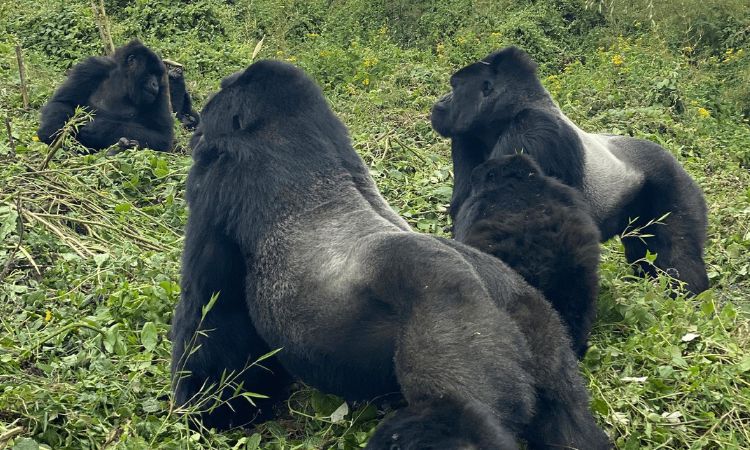
Endangered Silverback Gorillas: Why Only 1,063 Remain & How Your Safari Saves Them 2026 Guide
Endangered silverback gorillas are the dominant adult males that lead and protect mountain gorilla families in the forests of Uganda, Rwanda, and the Democratic Republic of the Congo.
Although mountain gorilla populations have increased through successful conservation efforts, silverbacks remain vulnerable to habitat loss, poaching, disease, and human encroachment.
Protecting these powerful leaders is essential for the survival of entire gorilla groups.
Responsible gorilla trekking, anti-poaching initiatives, veterinary care, and community-based conservation all contribute to safeguarding endangered silverback gorillas.
Supporting sustainable tourism helps ensure future generations can continue to witness these remarkable primates in the wild.
A silverback gorilla is the largest primate on Earth — and one of the most endangered leaders in the animal kingdom.
Standing up to 1.8 meters tall, weighing 140–220 kilograms, with arms that span 2.6 meters, he commands a family troop of 5 to 35 individuals with absolute authority. But his kingdom is shrinking.
Only 1,063 mountain gorillas survive in the wild — the only great ape population on Earth showing growth, yet still classified as Endangered by the IUCN Red List.
Of these, perhaps 210–260 breeding silverbacks lead the family groups that hold the species together. When a silverback dies, his entire family fragments. Infants starve.
Females disperse. A social unit built over decades collapses in days.
The question is no longer whether silverback gorillas are endangered. The question is whether your visit can save them.
Quick Answer: Silverback gorillas are Endangered (IUCN Red List, downlisted from Critically Endangered in 2018).
Only 1,063 mountain gorillas remain in Uganda’s Bwindi Impenetrable National Park and the Virunga Massif spanning Rwanda, Uganda, and DR Congo.
Despite being the only great ape population with confirmed growth, silverbacks face five existential threats: habitat loss, poaching, disease transmission from humans, civil conflict, and climate change.
Responsible gorilla trekking tourism is the single most effective conservation tool funding the rangers, veterinarians, and communities that keep these silverbacks alive.
This guide breaks down exactly why silverbacks are endangered, how many remain, what threatens them, and — most critically — how your gorilla trekking permit in Uganda or Rwanda directly funds their survival.
Whether you are a wildlife photographer from California, a conservation-minded traveler from London, a honeymoon couple from Sydney, or a family from Dubai planning your first African safari, understanding endangered silverbacks transforms your trek from tourism into active conservation.
Every permit you buy funds a ranger’s salary. Book your conservation safari with GoSilverback Gorilla Safaris today. Reserve your 2026 permit now →
What Makes a Silverback Gorilla “Endangered”?
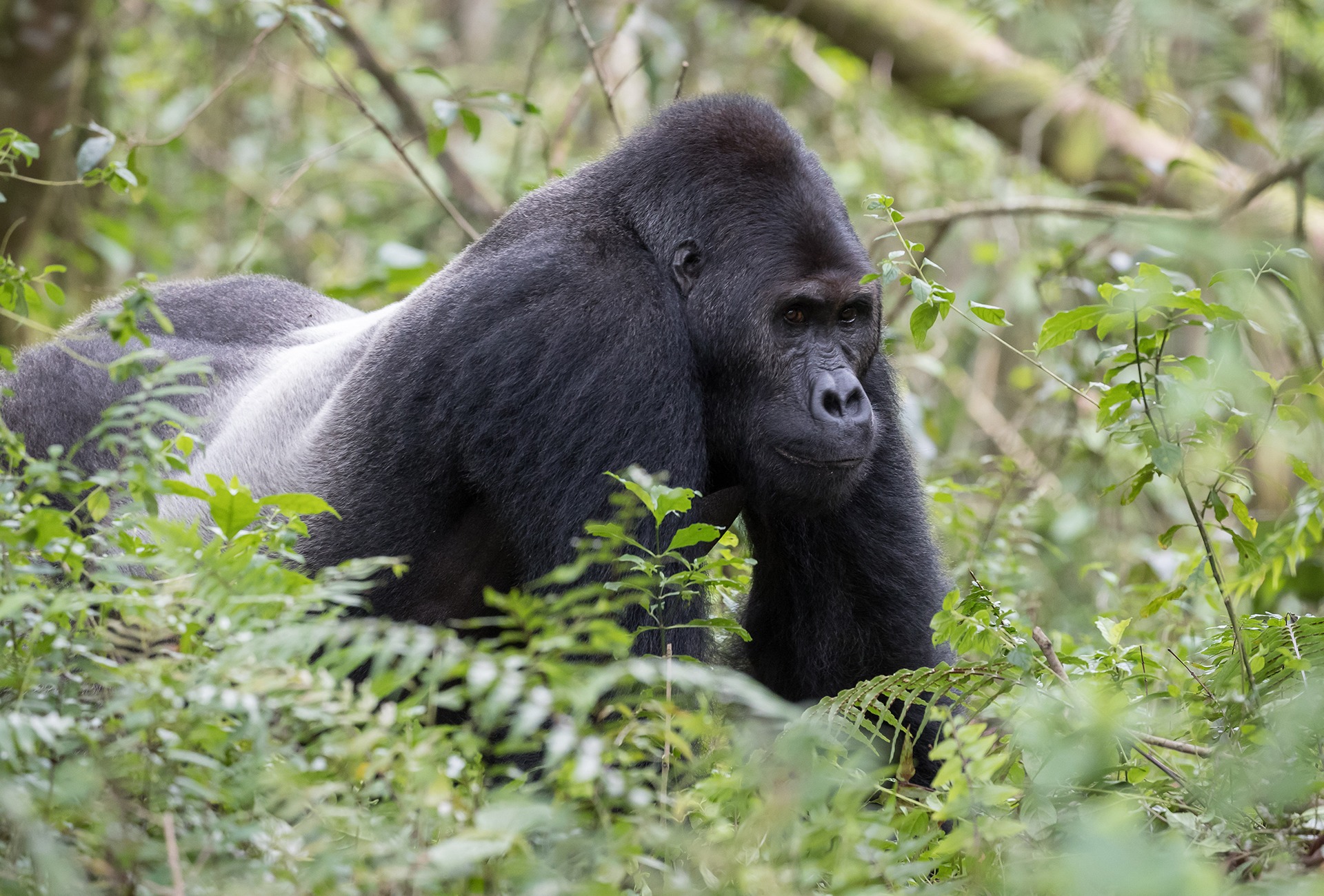
A silverback gorilla is not a separate species. The term describes a mature male mountain gorilla (Gorilla beringei beringei) who has developed the distinctive silver-gray saddle of hair across his back and hips — a biological billboard of testosterone-fueled dominance achieved at 12–15 years of age.
He is the alpha leader, the protector, and the breeding male of a family troop.
But here is the critical conservation reality that most travelers miss: the silverback is the keystone of mountain gorilla society. Without him, the architecture collapses.
Why Silverbacks Are Particularly Vulnerable
- Slow Reproduction — A dominant silverback may lead a troop for 10–15 years, but females produce only 1 infant every 4–5 years. Replace a dead silverback, and the new male may kill existing infants to trigger the mother’s fertility cycle — a biological strategy called infanticide that sets back population growth by years.
- High Infant Mortality Without Protection — When a silverback dies, 50% or more of infants may not survive to adulthood. Rival males, predators, and even dispersing females abandon vulnerable young.
- Genetic Bottleneck — With only 1,063 individuals, every breeding silverback’s genes matter for population diversity. Lose 20 silverbacks to disease or poaching, and the gene pool narrows catastrophically.
- Human-Wildlife Conflict — Silverbacks are the first to investigate human encroachment. Their size and curiosity make them visible targets for retaliatory killing when crops are raided — even though gorillas rarely eat crops.
The IUCN downlisted mountain gorillas from Critically Endangered to Endangered in 2018 — a historic conservation victory driven by tourism revenue.
But “Endangered” still means these silverbacks face a very high risk of extinction in the wild without sustained, funded protection.
All other gorilla subspecies — western lowland, Grauer’s, and Cross River — remain Critically Endangered, one step from extinction.
See the silverbacks conservationists are fighting to protect. Book your trek with GoSilverback Gorilla Safaris and fund ranger patrols directly. Check 2026 permit availability →

How Many Silverback Gorillas Are Left? Population Breakdown 2026
Table
|
Population |
Location |
Estimated Silverbacks |
Total Mountain Gorillas |
Trend |
|
Bwindi Impenetrable National Park |
Uganda |
~90–110 |
459 |
Increasing |
|
Virunga Massif |
Rwanda, Uganda, DR Congo |
~120–150 |
604 |
Increasing |
|
Total Wild Population |
Central Africa |
~210–260 |
1,063 |
+4% since 2018 |
Critical insight: Not all adult male gorillas become dominant breeding silverbacks. Many remain subordinate “blackbacks” or solitary males without breeding opportunities.
The actual number of silverbacks leading troops and fathering the next generation is estimated at 180–220 individuals globally.
This is the entire gene pool of the world’s mountain gorilla silverbacks.
Lose them, and the species enters an extinction vortex — where fragmented populations become too small and genetically isolated to recover.
For context: Cross River gorillas — the world’s rarest great ape — survive with fewer than 300 individuals total.
Western lowland gorillas number 300,000+ but are Critically Endangered due to Ebola outbreaks and bushmeat hunting.
Only mountain gorilla silverbacks are increasing — and only because tourism revenue funds their protection.
Photograph a silverback before his genes disappear from Earth. GoSilverback Gorilla Safaris books you into families with the most stable, photogenic silverbacks in Bwindi and Volcanoes National Park. Request your photography-focused itinerary →
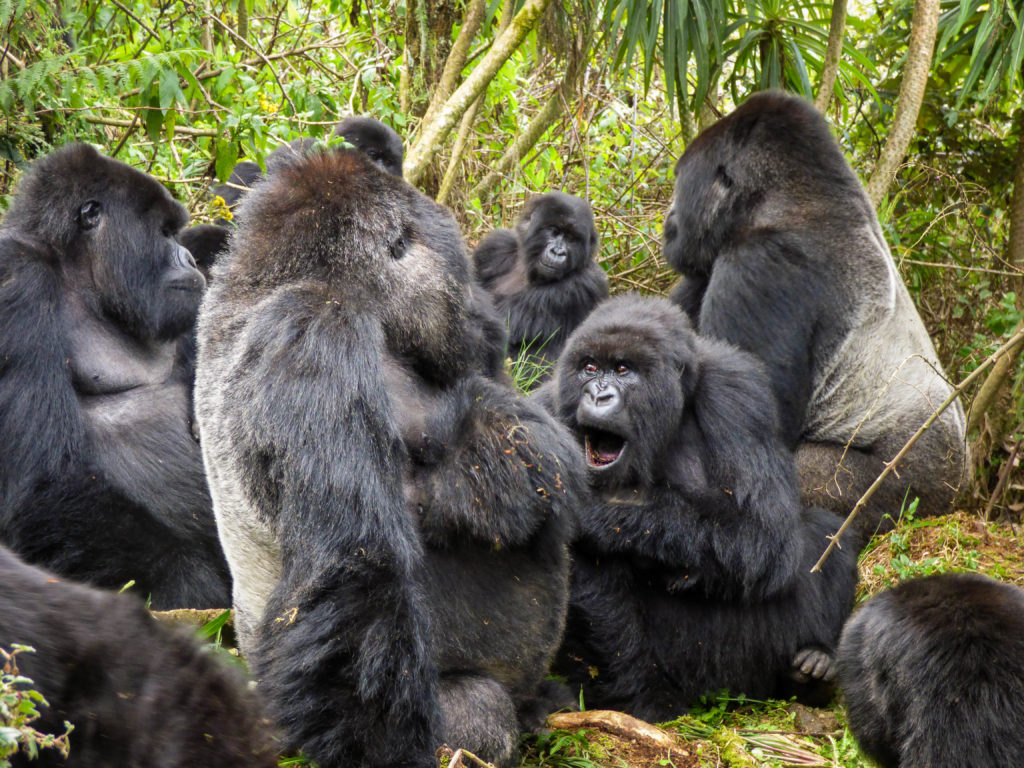
Why Are Silverback Gorillas Endangered? The 5 Deadly Threats
1. Habitat Loss: The Forest Is Shrinking
Mountain gorillas survive in two isolated forest patches totaling less than 800 km² — an area smaller than New York City.
Every year, the forest shrinks:
- Agricultural encroachment clears forest for potato and bean farming — staple crops for communities surrounding Bwindi
- Charcoal production strips forests for cooking fuel
- Human population growth around Bwindi Impenetrable National Park has reached 500+ people per km² — among Africa’s densest rural populations
A silverback needs 5–15 km² of home range to feed his family. When farms fragment this range into islands, troops split, inbreeding increases, and food stress rises.
Genetic isolation follows — and isolated populations die out.
2. Poaching: Snares Don’t Discriminate
While direct gorilla poaching is rare today thanks to tourism-funded ranger patrols, wire snares set for antelope maim and kill silverbacks.
In June 2020, Rafiki — the beloved 25-year-old silverback of Bwindi’s Nkuringo group — was speared to death by poachers. His death fragmented a family of 17 gorillas.
Four poachers were arrested, but Rafiki’s troop never fully recovered.
Historical tragedy: In the 1960s–1970s, over 50 mountain gorillas were killed by European and American trophy hunters and scientists — including the capture of infants for illegal pet trade.
That legacy of distrust is why strict trekking rules exist today.
3. Disease: 98% Human DNA Is a Curse
Gorillas share 98.3% of human DNA — making them extraordinarily vulnerable to human respiratory viruses, Ebola, and COVID-19.
A silverback’s death from disease cascades through his entire family.
- The 7-meter trekking rule exists primarily to prevent airborne pathogen transmission
- Face masks are mandatory when near gorillas since COVID-19
- Sick tourists are denied entry — no refund, no exceptions
In 2006, a respiratory outbreak killed 11 habituated gorillas in Rwanda’s Volcanoes National Park — proof that human proximity without rules is lethal.
4. Civil Conflict: Rangers Die So Gorillas Live
In Virunga National Park, DR Congo, over 175 rangers have been killed protecting gorillas from armed militias, poachers, and illegal miners.
Silverbacks in the Congolese sector face the highest instability. Tourism revenue in Uganda and Rwanda provides the political and economic stability that keeps silverbacks safe — which is why DR Congo permits cost only $400 but carry security risks that most international travelers should avoid.
5. Climate Change: The Bamboo Is Moving
Silverbacks rely on bamboo shoots — a staple food particularly in Volcanoes National Park. As temperatures rise, bamboo flowering cycles shift, forcing gorillas to range higher into colder zones or into human settlements at lower elevations.
Drought stress also reduces the nutritional quality of leaves, forcing silverbacks to expand their home range — directly into farmland.
These threats are real. But so is the solution. Your permit funds the rangers, veterinarians, and communities protecting silverbacks. Book with GoSilverback Gorilla Safaris and become part of the conservation solution. See how your booking helps →
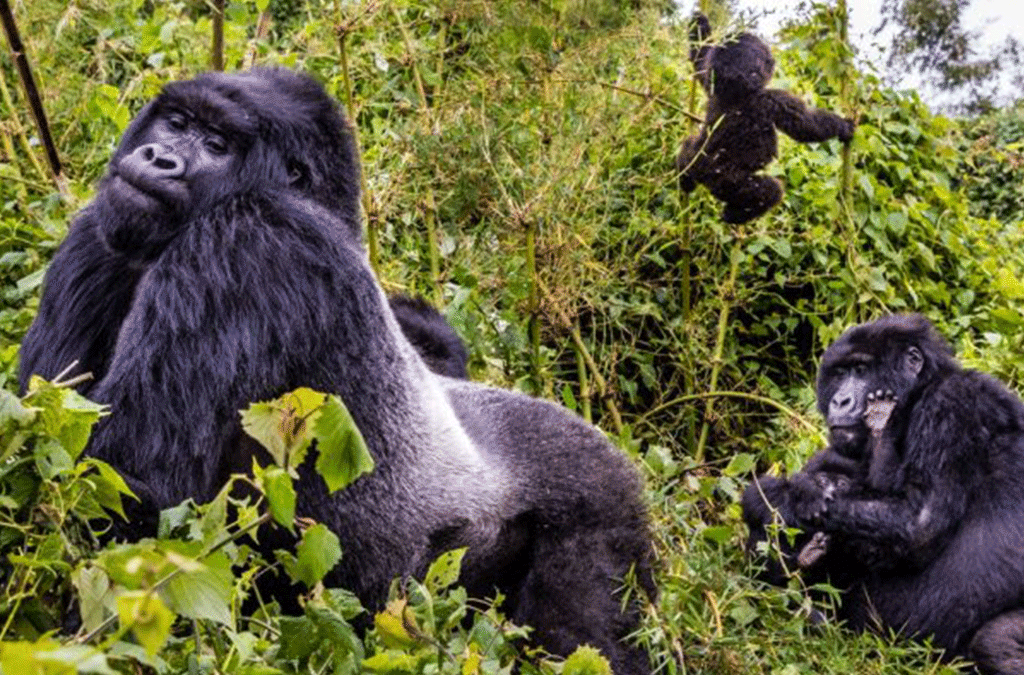
The Conservation Success Story: How Silverbacks Came Back from the Brink
In 1981, primatologist Dian Fossey estimated fewer than 250 mountain gorillas survived. The species was functionally extinct.
Today, 1,063 individuals roam the forests — a fourfold increase in 43 years.
What saved them? Not donations. Not awareness campaigns. Tourism.
Table
|
Conservation Intervention |
Impact on Silverbacks |
Funding Source |
|
Anti-poaching patrols |
Removed 1,000+ snares/year in Bwindi alone |
60% from permit revenue |
|
Gorilla Doctors veterinary care |
100+ medical interventions annually — snare removal, respiratory treatment, orphan rescue |
Tourism + donor mix |
|
Community revenue sharing |
20% of permit fees fund schools, clinics, roads — reducing human encroachment |
Permit fees |
|
Habituation for tourism |
Allows daily health monitoring, early disease detection, rapid orphan response |
Permit fees |
|
Transboundary collaboration |
Uganda, Rwanda, and the DR Congo coordinate across borders silverbacks don’t recognize |
International grants + tourism |
The mountain gorilla is the only great ape with a growing population. This is directly attributable to habituation and tourism revenue. No other conservation model has reversed great ape decline.
Want to see the silverbacks that conservation saved? GoSilverback Gorilla Safaris offers treks to the same families Dian Fossey studied — now thriving thanks to tourism. Walk in Fossey’s footsteps →
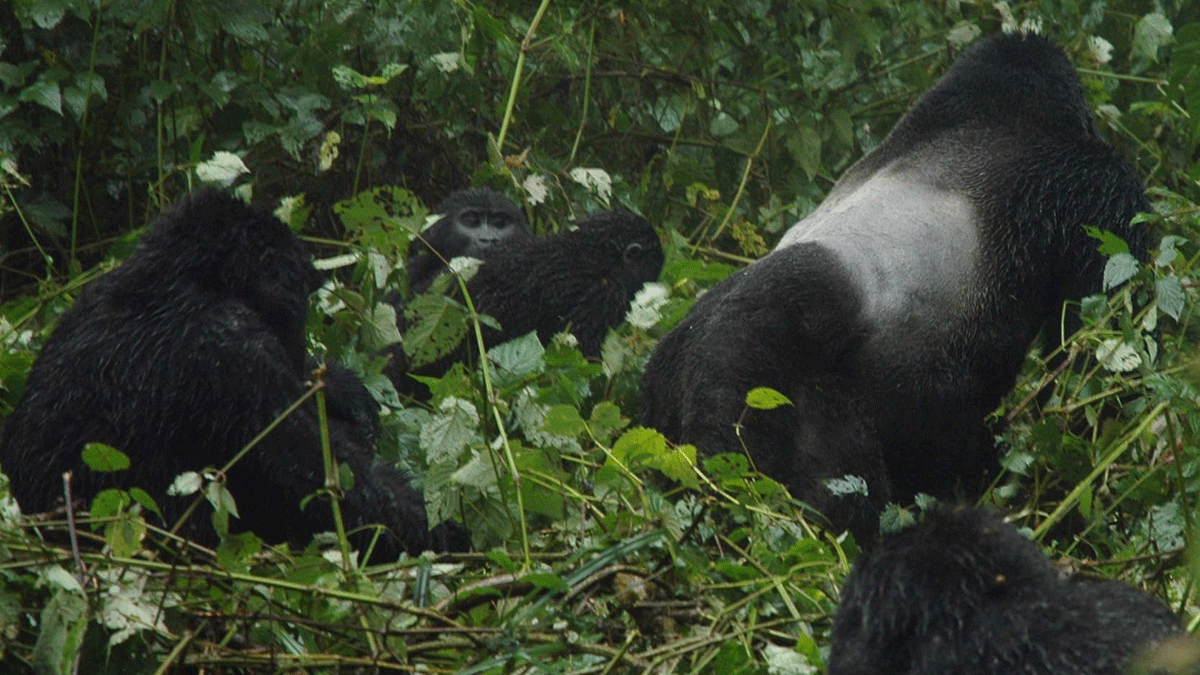
How Gorilla Trekking Directly Saves Endangered Silverbacks
This is the section your competitors are missing. Here is exactly how your $800 Uganda permit or $1,500 Rwanda permit keeps silverbacks alive:
Step 1: Your Permit Buys Ranger Time
Every $800 Uganda permit funds approximately 3 days of anti-poaching patrol salary.
Rangers remove snares, intercept poachers, and monitor silverback health daily. Without tourists, ranger numbers drop. Without rangers, snare numbers rise. Without snare removal, silverbacks die.
Step 2: Your Presence Deters Poachers
Tourists in the forest mean more ranger presence, more eyes on the ground, and higher risk for poachers. Silverbacks in habituated groups face a 90% lower poaching risk than unhabituated groups in remote sectors. Your visit is a shield.
Step 3: Your Money Builds Community Support
When a village school or health clinic is built with 20% of permit revenue, locals become stakeholders in silverback survival.
Former poachers become porters and guides. Children who once might have set snares now dream of becoming rangers. Tourism transforms enemies into protectors.
Step 4: Your Visit Enables Veterinary Intervention
Habituated silverbacks are monitored daily. When Rafiki was killed in 2020, rangers knew within hours because that group was tracked daily for tourism.
Rapid response saves lives. In 2023, Gorilla Doctors performed 127 medical interventions on habituated gorillas — treatments impossible without daily monitoring funded by permits.
Step 5: Your Photos Spread Awareness
Every Instagram post, National Geographic feature, and travel blog about silverbacks builds global constituency for their protection. You become an ambassador. The $800 you spent multiplies into thousands of dollars in awareness value.
The math is simple: A single silverback generates approximately $1 million in tourism revenue over his 35–40 year lifetime. Alive, he is worth infinitely more than dead.
Make your travel meaningful. Book your conservation safari with GoSilverback Gorilla Safaris and receive a certificate showing exactly how your permit protected silverbacks. Book your impact safari →

Where to See Endangered Silverback Gorillas in the Wild
For international travelers from the USA, North America, Latin America, United Kingdom, Europe, Canada, Asia, China, Oceania, and the Middle East, three countries offer regulated, safe silverback encounters:
Uganda — Best Value & Highest Silverback Density
- Bwindi Impenetrable National Park — 18 habituated families, the highest concentration of breeding silverbacks globally
- Mgahinga Gorilla National Park — Nyakagezi group with 3 coexisting silverbacks — a rare multi-male dynamic
- Permit cost: $800 (best conservation value per dollar)
- Silverback families recommended for first-time trekkers: Mubare, Habinyanja, Rushegura (Buhoma sector — easier terrain, reliable silverback sightings)
Rwanda — Luxury & Accessibility
- Volcanoes National Park — 12 habituated families, including Susa (famous for twin silverbacks Byishimo and Impano)
- Permit cost: $1,500 (premium positioning, stricter conservation protocols)
- Best for: Short vacations — 2.5 hours from Kigali Airport with direct flights from Doha, Brussels, Amsterdam, and London
DR Congo — Adventure & Highest Risk
- Virunga National Park — Mountain gorillas in active conflict zone
- Permit cost: $400 (lowest cost, security-dependent)
- Recommendation: Only for experienced adventure travelers with specialized security arrangements
For first-time visitors: Uganda or Rwanda. Both offer professional guiding, luxury accommodation, direct flight connections from Europe, the Middle East, and North America, and proven safety records spanning 30+ years.
Unsure which country offers the best silverback encounter for your budget? GoSilverback Gorilla Safaris provides free, personalized consultations for travelers worldwide. Get your free itinerary →
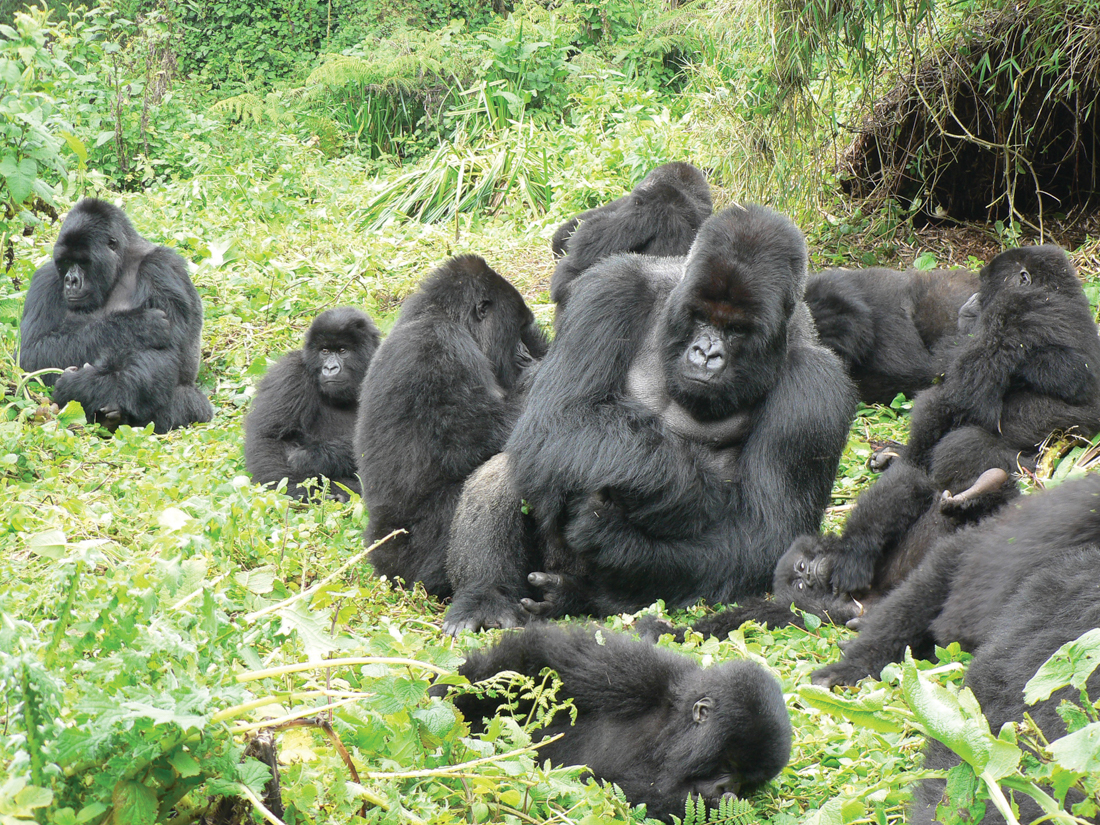
The Emotional Reality: What It Feels Like to Stand Before an Endangered Silverback
Conservation statistics are abstract.
This is real:
“I was 6 meters from a silverback named Ruhondeza in Bwindi’s Bitukura group. He weighed maybe 200 kilograms. His silver saddle caught the morning light filtering through the canopy. He looked at me — not aggressive, not fearful. Assessing. Then he deliberately turned his back and resumed eating thistles. In that moment, I understood: he tolerates us because we pay for his protection. We are the reason his grandchildren will exist. I cried on the hike out.” — Emma T., London, GoSilverback client 2025
“In Rwanda, we found the Susa family after a 3-hour climb. Two silverbacks — brothers — sat 10 meters apart, each with their own females. Our guide whispered that this was rare, that these brothers had chosen cooperation over conflict. Tourism habituation made this observation possible. Without permits, without rangers, these silverbacks would be bushmeat.” — Carlos M., São Paulo, GoSilverback client 2026
These are not zoo animals behind glass. These are the last 210–260 breeding silverbacks on Earth. Your encounter is a privilege earned by conservation dollars.
Create your own silverback moment. GoSilverback Gorilla Safaris books families with the most stable, photogenic silverbacks for unforgettable encounters. Reserve your life-changing trek →
Frequently Asked Questions About Endangered Silverback Gorillas
How many silverback gorillas are left in the world?
Approximately 210–260 breeding silverbacks lead the 1,063 mountain gorillas remaining in the wild. Many adult males remain subordinate or solitary and never breed.
Are silverback gorillas critically endangered?
No — mountain gorillas were downlisted to Endangered in 2018. However, all other gorilla subspecies (western lowland, Grauer’s, Cross River) remain critically endangered. Silverbacks in DR Congo face higher risk due to conflict.
Why are silverback gorillas endangered?
Five main threats: habitat loss, poaching (snares and direct killing), disease transmission from humans, civil conflict, and climate change affecting food sources.
What happens if silverback gorillas go extinct?
Mountain gorilla society collapses. Families fragment, infant mortality spikes, genetic diversity crashes, and the species enters an extinction vortex. Forest ecosystems also suffer — silverbacks are keystone seed dispersers maintaining 100+ plant species.
How can tourists help save silverback gorillas?
Book a regulated gorilla trek in Uganda or Rwanda. Permit revenue funds rangers, veterinarians, and community projects that keep silverbacks alive. Responsible tourism is the #1 conservation tool.
Is gorilla trekking ethical for endangered animals?
Yes — when done right. GoSilverback Gorilla Safaris follows strict UWA and RDB guidelines: 7–10 meter distance, 1-hour visits, 8 tourists maximum per family daily, sick visitors denied entry. Habituated silverbacks show lower stress hormones than unhabituated groups exposed to illegal human contact.
Which country has the most endangered silverbacks?
Uganda’s Bwindi Impenetrable National Park holds ~459 mountain gorillas — nearly half the global population and the highest density of breeding silverbacks.
How much does a silverback gorilla permit cost?
- Uganda: $800
- Rwanda: $1,500
- DR Congo: $400 (security-dependent)
Can children see endangered silverbacks?
Minimum age is 15 in Uganda and Rwanda. GoSilverback offers family safaris with child-friendly activities for non-trekking days.
What is the best time to see silverback gorillas?
June–September and December–February — dry seasons with easier trekking and better silverback visibility.
Still have questions about endangered silverbacks? GoSilverback Gorilla Safaris offers free video consultations with our conservation specialists. Schedule your consultation →
Final Verdict — Your Safari Is Their Survival
The story of endangered silverback gorillas is not a tragedy. It is a cautionary tale with a hopeful twist.
In 1981, these silverbacks were functionally extinct. Today, 1,063 mountain gorillas survive — the only great ape population on Earth that is growing.
The reason is not luck. It is not international aid. It is tourism.
Every $800 Uganda permit and $1,500 Rwanda permit transforms a silverback from bushmeat target to economic asset.
Every tourist photograph builds global awareness. Every community clinic funded by permit revenue turns a potential poacher into a protector.
The silverbacks you see on trek are alive because travelers before you booked permits. The silverbacks your grandchildren may see depend on you booking now.
Don’t just read about endangered silverbacks. Save them.
Book Your Conservation Safari with GoSilverback Gorilla Safaris
✅ Guaranteed permit availability — even for 2026 peak season (June–September, December–February)
✅ 100% ethical, conservation-aligned trekking — strict UWA/RDB compliance
✅ Tailor-made itineraries for USA, North America, Latin America, UK, Europe, Canada, Asia, China, Oceania, and Middle East travelers
✅ Impact transparency — receive a certificate showing how your permit funded ranger patrols and community projects
✅ Family safaris, honeymoon packages, and photography-focused conservation tours
✅ Expert guides with 10+ years experience tracking endangered silverbacks in Bwindi Impenetrable National Park and Volcanoes National Park
✅ Free, no-obligation consultation — tell us your conservation goals; we build the itinerary
[Contact GoSilverback Gorilla Safaris Now] — The clock ticks for 210 breeding silverbacks. Your permit is their protection. Your trek is their future. Book today.