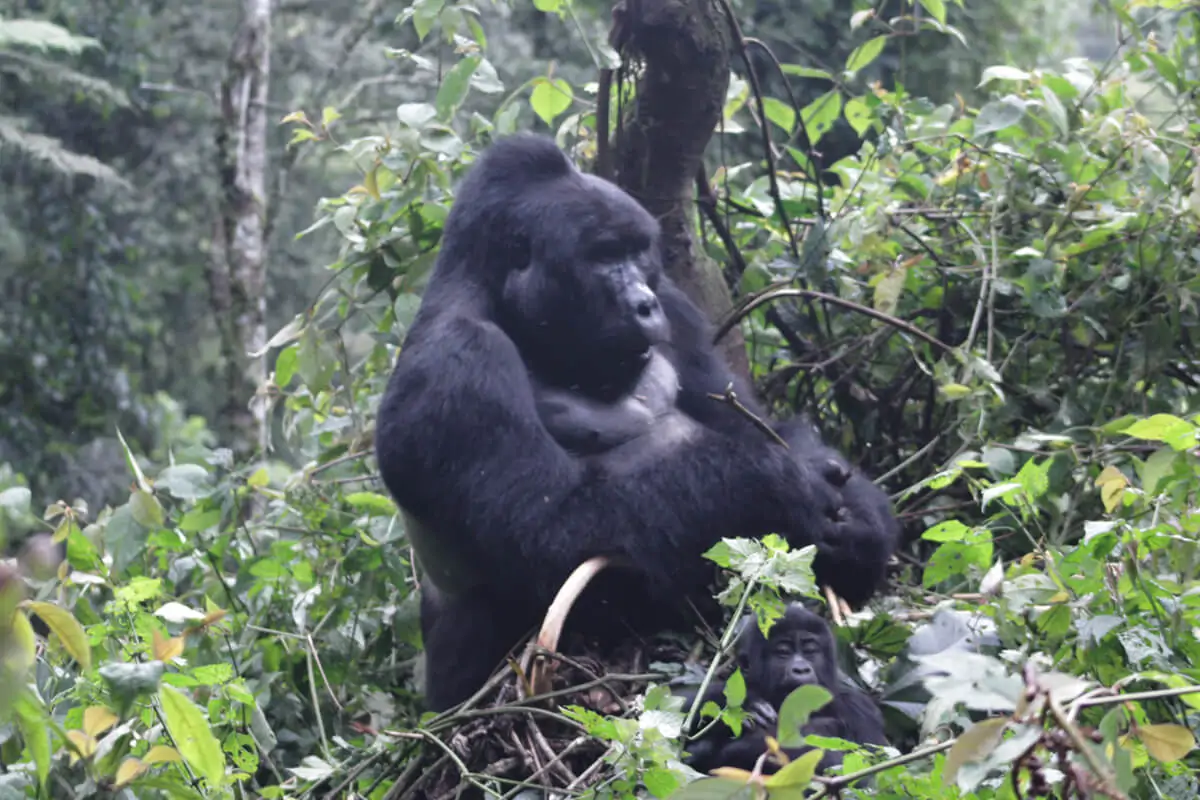
What Is a Blackback Gorilla? Age, Facts, Behaviour & Difference 2026 Guide
A blackback gorilla is a sub-adult male gorilla that has not yet developed the distinctive silver-grey saddle of a mature adult.
Rather than being a separate species, a blackback represents a crucial developmental stage in the life of a male gorilla, typically ranging from 8 to 12 years of age.
While the famous silverback gorilla leads the family, the blackback plays a vital role in group dynamics, social learning, and protection.
This comprehensive guide explores the age, physical characteristics, behaviour, and conservation importance of the blackback gorilla and explains how you can observe these magnificent primates in their natural habitat during a mountain gorilla trekking safari.
Want to see mountain gorillas in their natural habitat? Discover the fascinating social lives of blackback and silverback gorillas on a guided trekking adventure. Explore available itineraries with GoSilverback Safaris and choose the experience that suits your travel plans. [Explore Gorilla Safari Packages]
What Is a Blackback Gorilla?
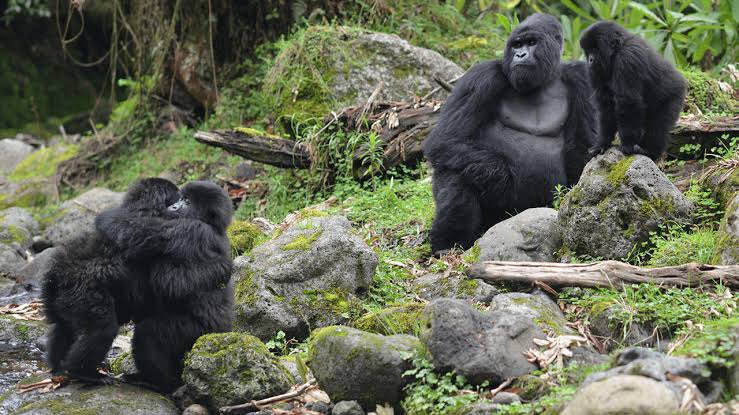
In primatology and wildlife biology, the term blackback gorilla does not refer to a distinct species or subspecies of gorilla. Instead, it is a descriptive classification used to identify a specific developmental stage in the life cycle of a male gorilla.
When a male gorilla reaches adolescence, it transitions from a juvenile into a sub-adult. During this phase, its body grows rapidly, its muscle mass increases significantly, and its coat remains entirely black or very dark brown.
The defining characteristic of a blackback is the absence of the silver-grey hair that eventually develops across the lower back and hips of a mature male.
This stage is a period of intense physical and social maturation. The young male is learning the complex social cues of the gorilla family, practicing dominant behaviours, and building the physical strength required to eventually compete for leadership or mating rights.
Understanding the blackback gorilla is essential for anyone studying gorilla behaviour, as these young males are the future leaders and breeding males of the next generation.
How Old Is a Blackback Gorilla?
The age of a blackback gorilla is generally estimated to be between 8 and 12 years old, though scientific classifications and individual development rates can vary.
Gorilla development is not governed by a rigid, universal biological clock; rather, it depends on genetics, nutrition, and social environment.
A male gorilla is considered an infant from birth to about 3 years old, a juvenile from 3 to 6 years, and enters the sub-adult blackback phase around 8 years of age.
During these years, the male experiences a massive growth spurt. By the time he reaches 12 to 13 years old, hormonal changes typically trigger the growth of silver hair on his back, marking his transition into a silverback gorilla.
It is important to note that some males may retain their black coats slightly longer, while others may develop silver hair earlier. Age is therefore a guideline rather than an absolute boundary when identifying a blackback in the wild.
What Does a Blackback Gorilla Look Like?
Spotting a blackback gorilla during a mountain gorilla trekking experience is a thrill for wildlife enthusiasts.
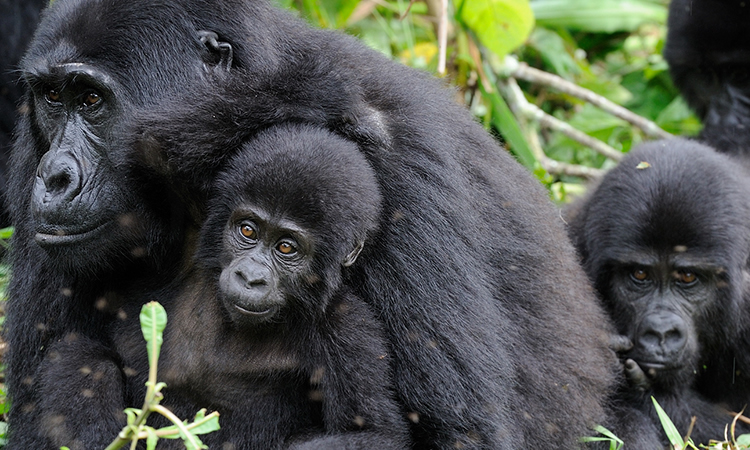
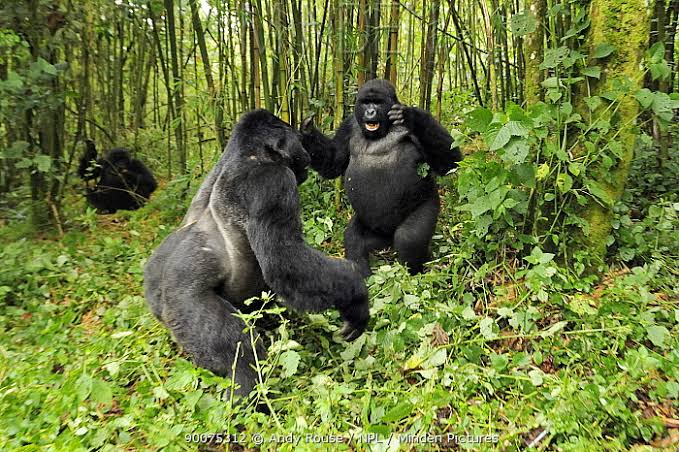
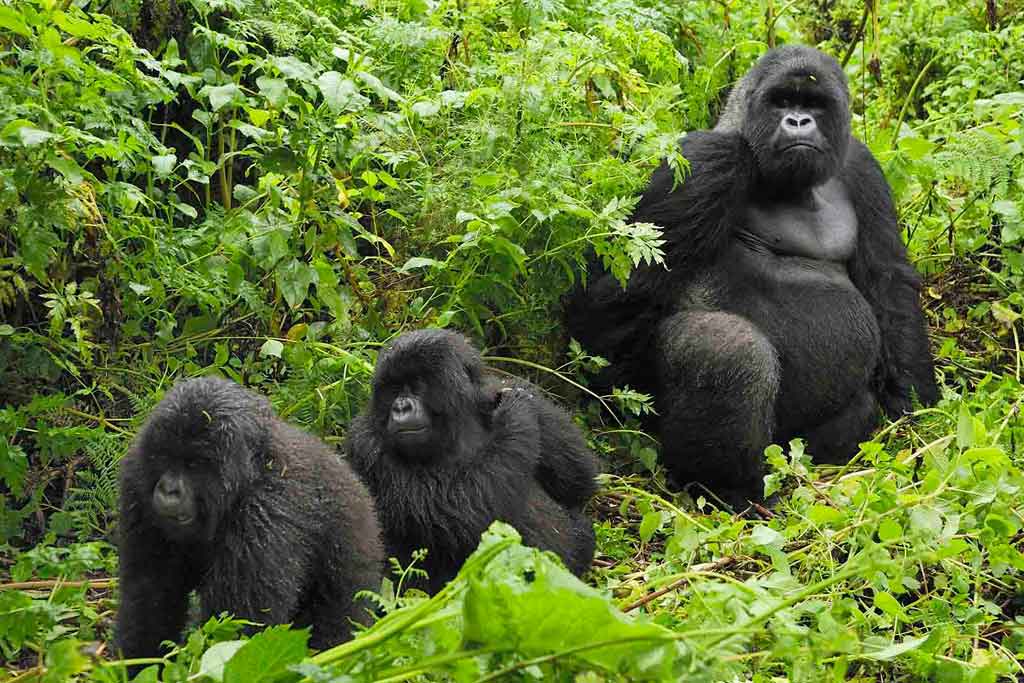
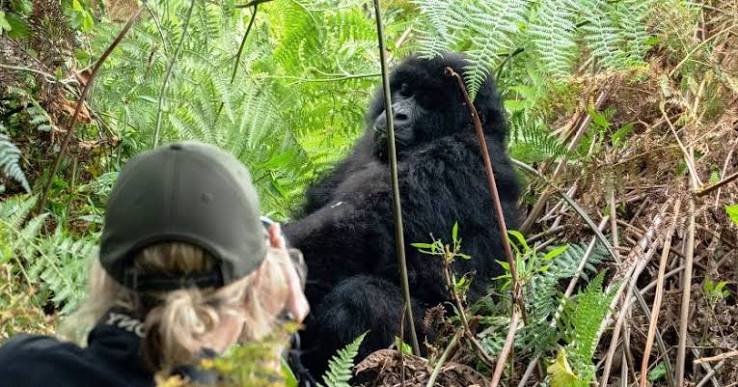
Physically, a blackback is a striking animal. It possesses a heavily muscled, robust build with a broad chest and incredibly powerful, long arms adapted for knuckle-walking through dense vegetation.
Its coat is uniformly dark—ranging from deep black to dark brown—covering its entire body, including its back, which sharply contrasts with the silver saddle of the dominant male.
Facially, a blackback’s features are becoming more pronounced. The brow ridge is prominent, casting deep shadows over its dark, intelligent eyes, and its canine teeth are large and sharply pointed, though not yet as massively elongated as those of a fully mature silverback gorilla.
The sagittal crest (the bony ridge on top of the skull that anchors massive jaw muscles) is developing but not yet fully formed.
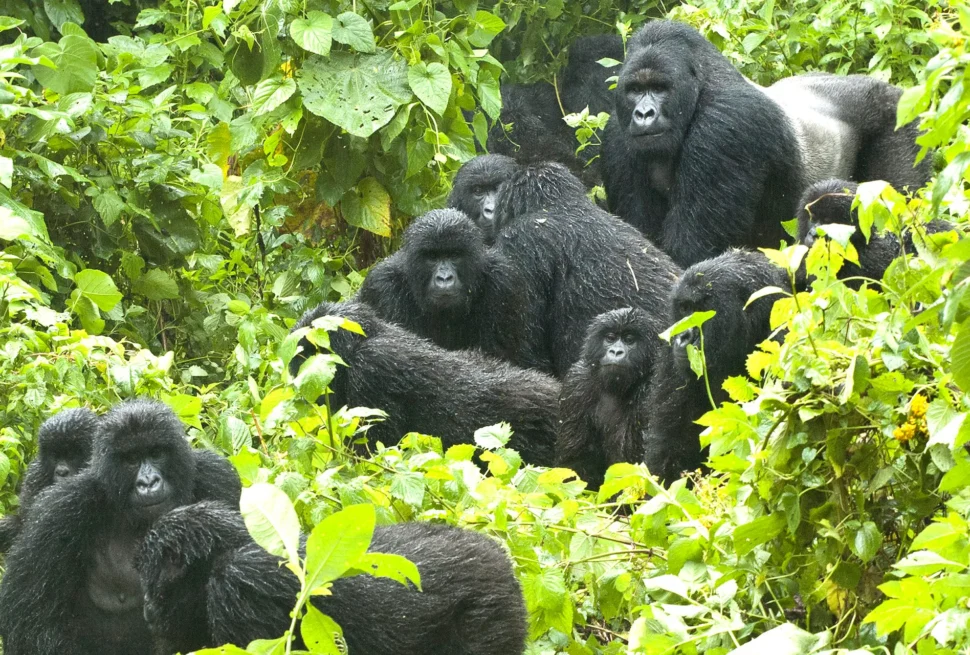
When observing a gorilla family, you can identify a blackback by its size: it is noticeably larger than the adult females and juveniles, but lacks the imposing, broad-shouldered bulk and the silver-backed pelage of the group’s dominant leader.
What Is the Difference Between a Blackback and a Silverback Gorilla?
The distinction between a blackback gorilla and a silverback gorilla is one of the most fundamental concepts in primate observation.
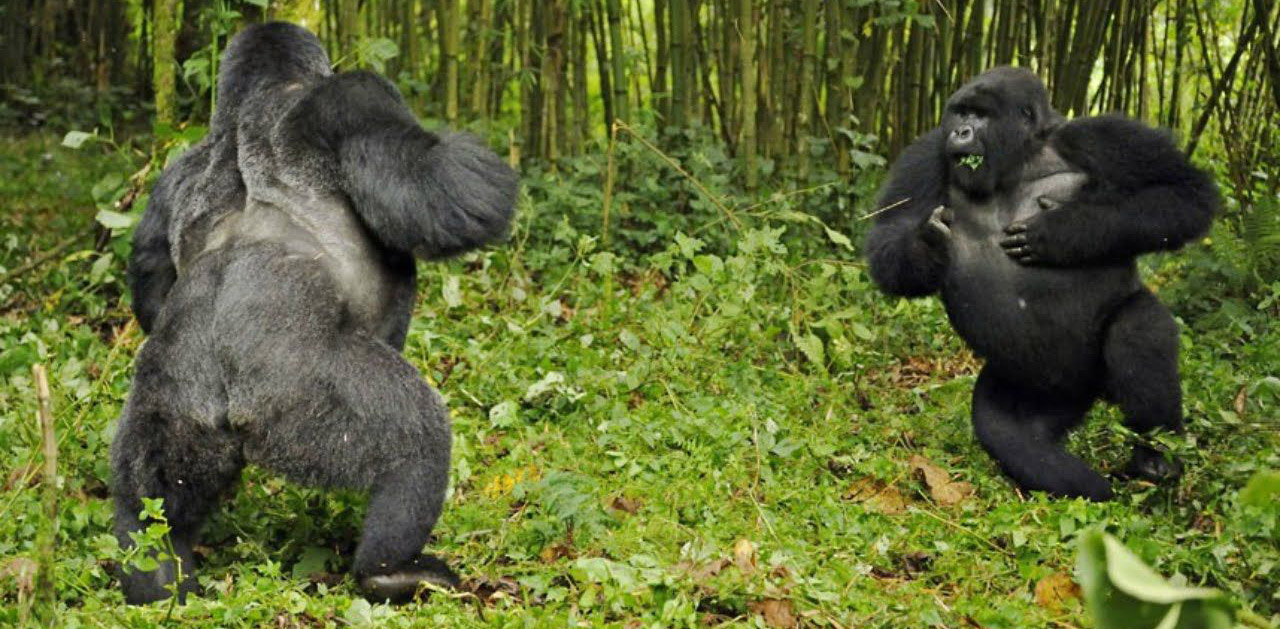
The primary difference lies in physical maturity, age, and social status. A silverback is a fully mature adult male, usually over 12 years old, characterized by the striking silver-grey hair on its lower back. This silver saddle is a visual signal of maturity, dominance, and reproductive fitness.
Socially, the silverback gorilla is the undisputed leader of the gorilla family. He makes all the decisions regarding movement, foraging, and resting, and he is the primary protector of the group. In contrast, a blackback is a subordinate male.
He may act as a secondary protector, an enforcer, or a playmate for the younger gorillas, but he does not hold the ultimate leadership role.
While both are incredibly strong and capable of fierce defence, the silverback commands the respect and submission of the entire group, including the blackbacks.
For a deeper dive into the apex males of the forest, read our guide on the Strongest Silverback Gorilla.
Blackback Gorilla vs Silverback Gorilla Comparison Table
|
Feature |
Blackback gorilla |
Silverback gorilla |
|
Meaning |
Younger male that has not developed a full silver saddle |
Mature male with a distinctive silver-grey saddle |
|
Common age range |
Approximately 8–12 years |
Often from around 12–13 years onward, depending on classification |
|
Back colour |
Mainly dark or black |
Silver-grey hair across the back |
|
Physical development |
Still developing adult size and build |
Generally more physically mature |
|
Social role |
May remain with its group or disperse |
May lead a family group or hold another social position |
|
Behaviour |
Varies by individual and circumstances |
Varies by individual and circumstances |
|
Species |
Occurs across gorilla species |
Occurs across gorilla species |
Note: Age ranges are approximate, not strict biological boundaries. The transition to silverback status involves physical development as well as the appearance of silver hair.
What Role Does a Blackback Play in a Gorilla Family?
Within the complex social structure of a gorilla family, the blackback gorilla plays a multifaceted and vital role. While the silverback is the ultimate authority, the blackback acts as a crucial lieutenant.
These sub-adult males often serve as secondary protectors. If a threat approaches the group, the blackback will position himself between the danger and the vulnerable females and infants, often initiating warning displays or bluff charges before the silverback intervenes.
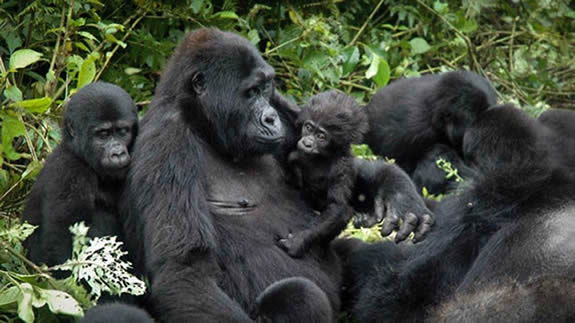
Furthermore, blackbacks are essential for social learning and group cohesion. They frequently interact with the juveniles and infants, engaging in vigorous play that helps the younger gorillas develop physical coordination and social skills.
For the blackback himself, this play is a rehearsal for adult life. He observes the silverback’s leadership, learning how to mediate disputes among females, how to forage efficiently, and how to project authority.
To understand more about the intricate social web of these primates, explore the Features of a Mountain Gorilla. The blackback is essentially an apprentice leader, preparing for the day he may either inherit a group or strike out on his own.
Do Blackback Gorillas Leave Their Families?
Yes, it is a natural and common behaviour for blackback gorillas to eventually leave their natal gorilla family. This process, known as dispersal, usually begins as the blackback reaches full physical maturity.
Because the dominant silverback gorilla monopolizes mating opportunities, sub-adult males face intense competition if they remain in their birth group.
When a blackback leaves, he may embark on a solitary journey through the forest, or he may associate with other dispersing males to form a temporary “bachelor group”.
Living in a bachelor group provides safety in numbers and allows young males to practice social and dominance hierarchies.
Eventually, the goal of a dispersed blackback is to attract solitary females or small groups of females away from their original families, allowing him to form his own gorilla family and become a silverback leader.
However, dispersal patterns vary; some males may stay with their natal group for years, acting as loyal subordinates to a particularly dominant or tolerant silverback.
Are Blackback Gorillas Aggressive or Dangerous?
A blackback gorilla is a wild, immensely powerful animal, and like all wild creatures, its behaviour is highly context-dependent.
While they are generally peaceful herbivores, blackbacks can exhibit aggressive displays if they feel threatened, if their group is disturbed, or during social disputes.
Because they are still developing their social confidence, blackbacks are sometimes more prone to bluff charges and vocal displays than a calm, experienced silverback gorilla.
If a blackback feels threatened, it may stand bipedally, beat its chest, tear at vegetation, and emit loud roars or grunts. These are usually warning displays meant to intimidate rather than attack.
However, they possess immense physical strength and large canine teeth. For tourists, the golden rule of mountain gorilla trekking is to remain calm, avoid direct eye contact, and slowly back away if a gorilla approaches aggressively.
For a comprehensive understanding of primate behaviour and safety, read our detailed guide on [Are Gorillas Dangerous to Humans?]. Respect their space, and they will remain peaceful.
What Do Blackback Gorillas Eat?
The diet of a blackback gorilla is overwhelmingly herbivorous, mirroring that of the rest of the gorilla family.
They consume a massive quantity of vegetation daily, often eating up to 30 kilograms (66 pounds) of plant matter to sustain their growing, muscular bodies. Their diet primarily consists of leaves, stems, shoots, pith, and roots.
Depending on their specific habitat and the season, they will also consume a variety of fruits, flowers, and bark. In the volcanic regions of Central Africa, they frequently feed on wild celery, thistles, and bamboo shoots.
While plant matter makes up the vast majority of their intake, gorillas, including blackbacks, may occasionally ingest small insects or invertebrates accidentally while feeding on foliage. Because a blackback is in a rapid growth phase, his caloric intake and foraging time are substantial.
To learn more about the specific flora that sustains these giants, see our article on What Do Silverback Gorillas Eat?.
Where Do Blackback Gorillas Live?
A blackback gorilla lives wherever its specific gorilla species resides, as “blackback” is a life stage, not a geographic distinct species.
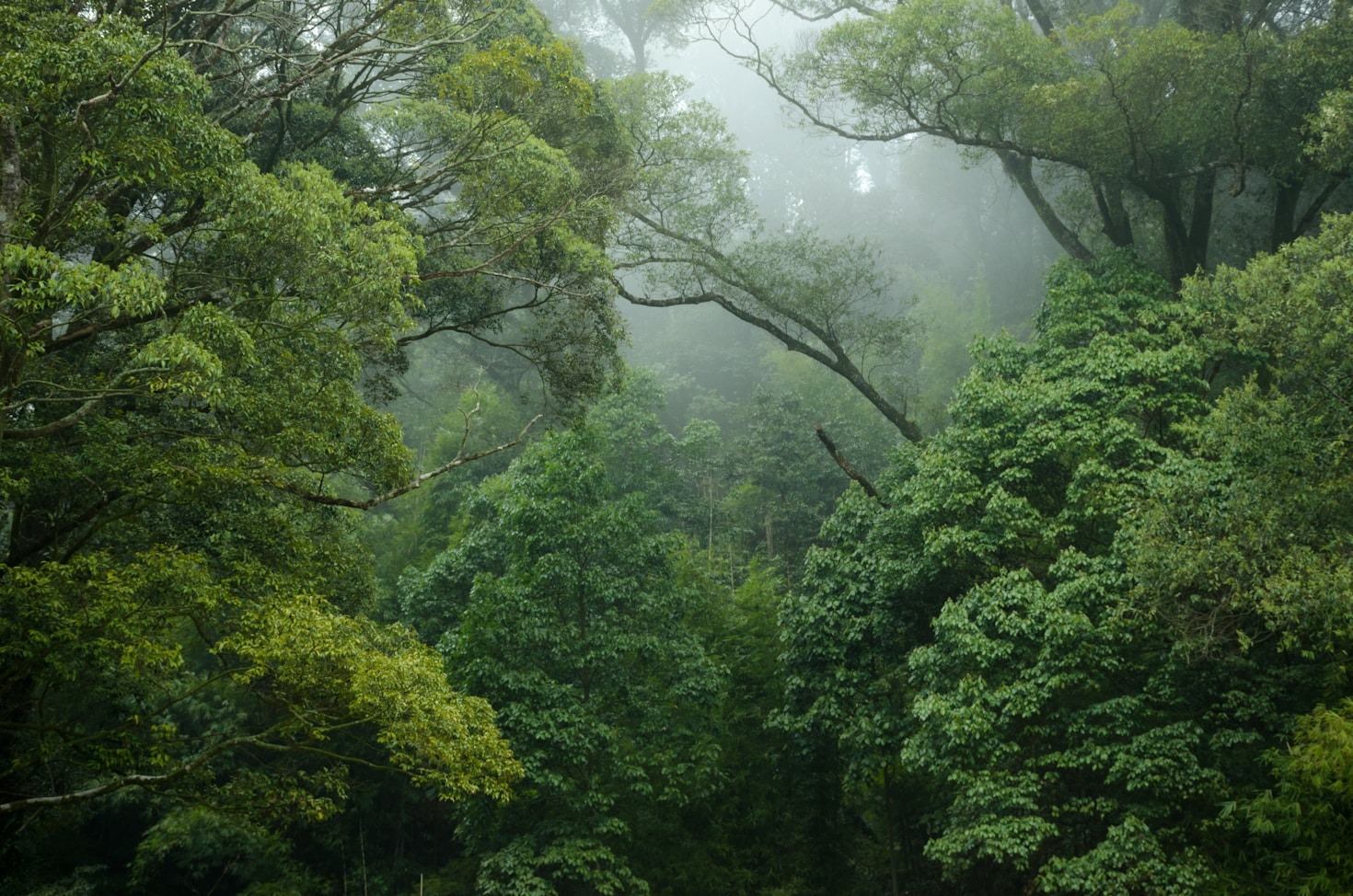
The most famous blackbacks belong to the endangered mountain gorilla (Gorilla beringei beringei). These populations are strictly confined to the mist-covered, high-altitude volcanic mountains of Central Africa.
Specifically, mountain gorillas inhabit the Virunga Massif, which spans Volcanoes National Park in Rwanda, Mgahinga Gorilla National Park in Uganda, and Virunga National Park in the Democratic Republic of the Congo.
They also live in the dense, ancient forests of Bwindi Impenetrable National Park in Uganda. It is crucial to distinguish these mountain-dwelling blackbacks from the eastern and western lowland gorillas, which inhabit the tropical forest swamps and lowland jungles of Central and West Africa.
When planning a safari, remember that not all blackbacks live in Bwindi; the volcanic slopes of the Virungas offer an entirely different, equally spectacular trekking environment.
Can You See Blackback Gorillas During Gorilla Trekking?
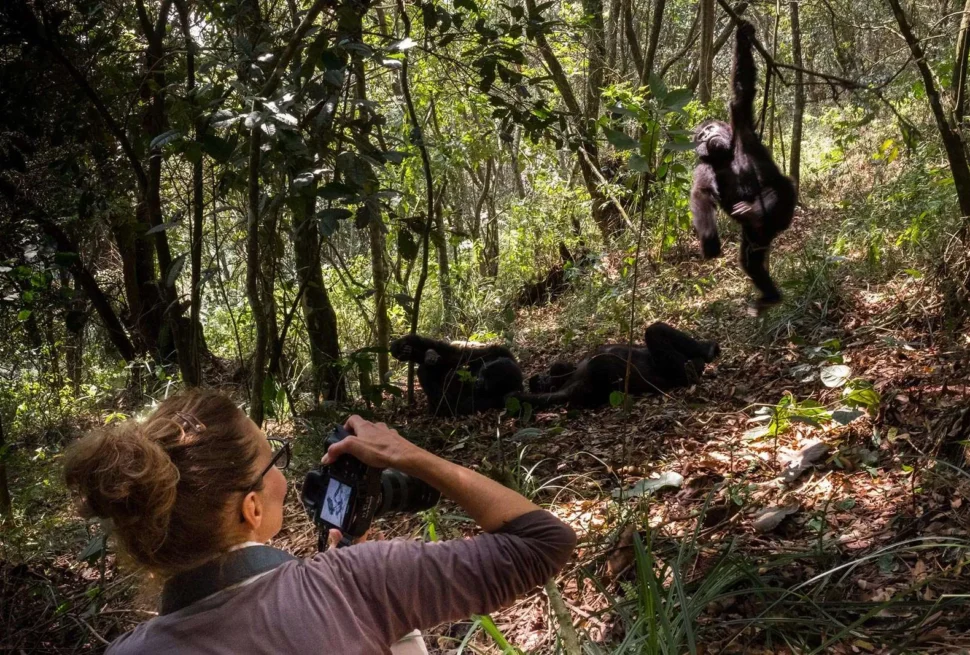
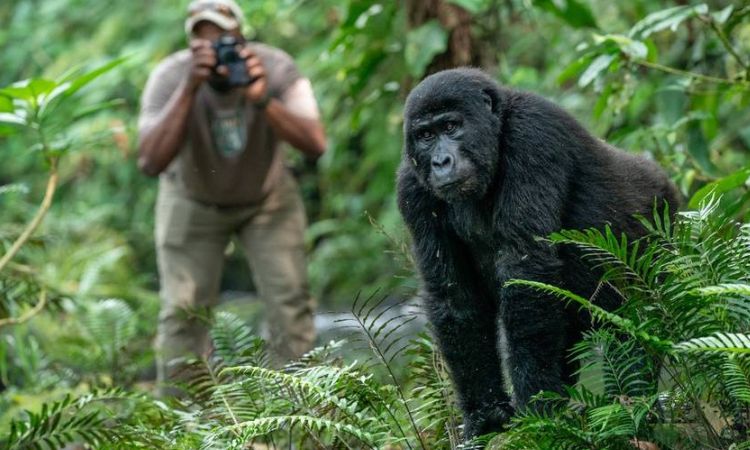
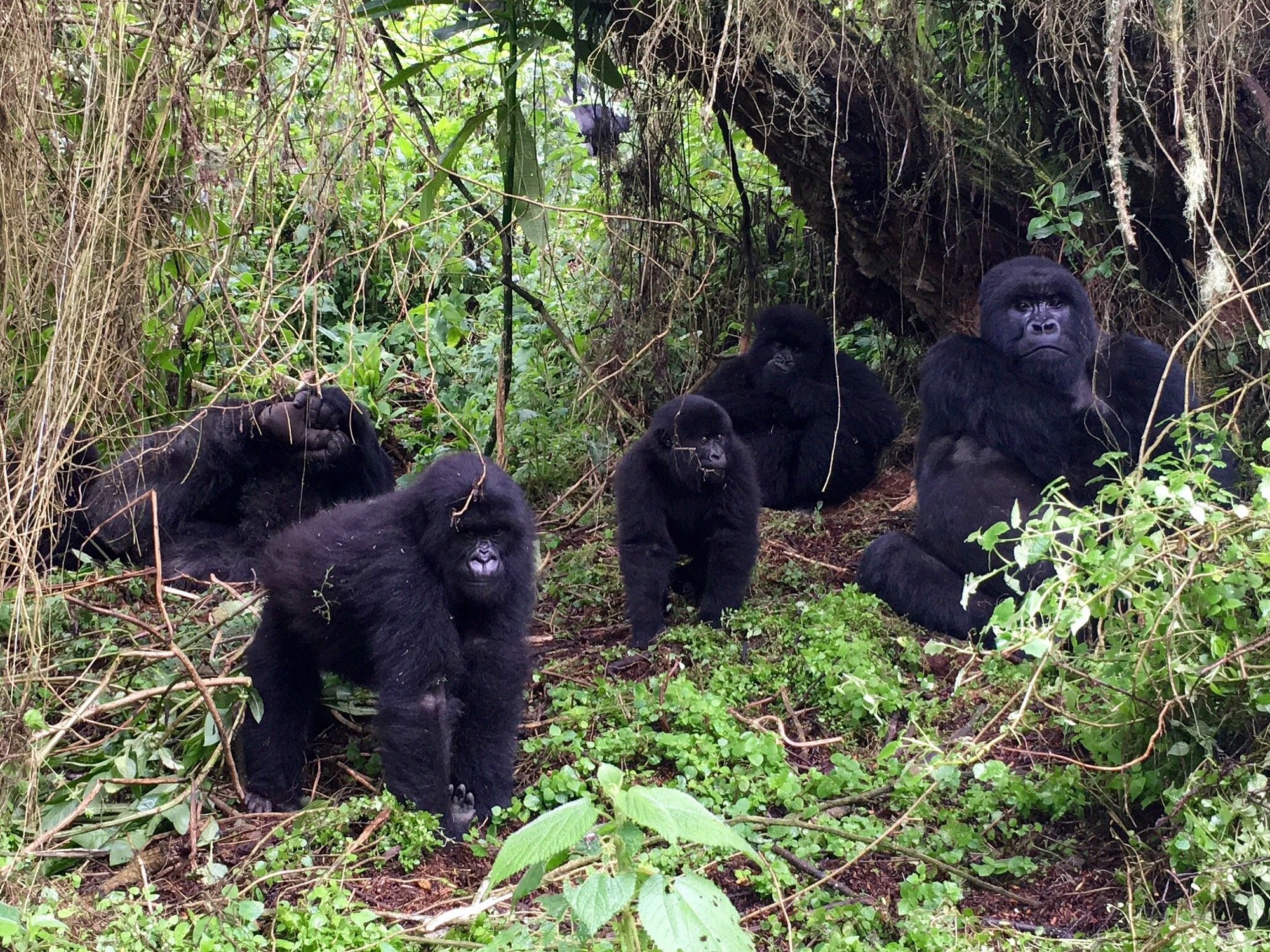
Absolutely yes. When you embark on a mountain gorilla trekking adventure in Bwindi, Mgahinga, or Volcanoes National Park, you are tracking a fully habituated gorilla family.
Because a healthy gorilla family is a multi-generational group, you are highly likely to encounter blackbacks during your trek.
You will see them foraging, playing with infants, resting in the vegetation, or standing guard near the perimeter of the group.
However, it is important to manage expectations: wildlife viewing is never scripted. Sightings depend entirely on the group’s daily movements, the weather, and the specific dynamics of the gorilla family on that given day.
No specific individual, age class, or behaviour is guaranteed. The magic of gorilla trekking lies in observing the raw, unscripted reality of the forest, whether you spend your hour watching a playful blackback or a nursing mother.
Ready to plan your gorilla trekking adventure? Let GoSilverback Gorilla Safaris help you organise your gorilla permit, transport, accommodation and guided trekking itinerary. Request a personalised quotation for your preferred dates and destination. [Request a Custom Quote]
Why Are Blackback Gorillas Important to Conservation?
Protecting the blackback gorilla is synonymous with protecting the future of the entire mountain gorilla species. These sub-adult males represent the future breeding population.
Without a healthy cohort of blackbacks surviving to maturity, the genetic diversity and population growth of the species would stagnate.
Conservation efforts by organizations like the International Gorilla Conservation Programme (IGCP) and the World Wildlife Fund (WWF) focus heavily on habitat protection, rigorous anti-poaching patrols, and veterinary interventions to prevent disease transmission.
Furthermore, responsible ecotourism plays a massive role. The revenue generated from gorilla permits funds community conservation partnerships, ensuring that local populations benefit directly from the survival of these primates.
By protecting the forest, we protect the blackback, ensuring he can mature, disperse, and eventually lead his own family.
Frequently Asked Questions About Blackback Gorillas
What is a blackback gorilla?
A blackback gorilla is a sub-adult male gorilla that has not yet developed the distinctive silver-grey hair on its back. It is a developmental stage, not a separate species, representing the transitional phase between juvenile and mature silverback.
How old is a blackback gorilla?
A blackback gorilla is typically between 8 and 12 years old. This is an approximate range, as physical development and the onset of silver hair can vary based on genetics and individual health.
What is the difference between a blackback and a silverback gorilla?
The main difference is maturity and social status. A blackback is a younger, subordinate male with a fully black coat. A silverback is a mature, dominant male over 12 years old with a silver-grey saddle, who leads the gorilla family.
Do blackback gorillas become silverbacks?
Yes, if they survive to maturity. As a blackback ages, usually around 12 years old, hormonal changes cause the hair on his back and hips to turn silver-grey, marking his transition into a silverback gorilla.
Are blackback gorillas fully grown?
They are still growing. While a blackback is larger than females and juveniles, he has not yet reached his maximum physical size, muscle mass, or skeletal maturity, which are hallmarks of a fully grown silverback.
Are blackback gorillas dangerous?
They are wild, powerful animals capable of inflicting harm if provoked or threatened. However, they are generally peaceful. During mountain gorilla trekking, maintaining a safe distance and following guide instructions ensures safe, non-threatening encounters.
Do blackback gorillas live with silverbacks?
Yes, blackbacks typically live in a multi-generational gorilla family led by a dominant silverback. The silverback acts as the leader and primary protector, while the blackback serves as a subordinate lieutenant and secondary protector.
Why do blackback gorillas leave their families?
They leave to avoid inbreeding and competition for mating rights with the dominant silverback. Dispersing allows them to find their own females, form a new group, and eventually become the silverback leader of their own gorilla family.
What do blackback gorillas eat?
They are primarily herbivores, consuming large quantities of leaves, stems, shoots, roots, and wild fruits. Their diet is heavily dependent on the seasonal availability of vegetation in their specific forest habitat.
Where can you see blackback gorillas in Uganda?
In Uganda, you can see them in Bwindi Impenetrable National Park and Mgahinga Gorilla National Park. These parks are home to several habituated mountain gorilla families that tourists can track.
Can tourists see blackback gorillas during gorilla trekking?
Yes, tourists frequently see blackbacks during guided treks. Because habituated families contain multiple age classes, encountering a sub-adult male foraging or playing is a common and exciting part of the experience.
Are blackback gorillas stronger than females?
Yes, even as sub-adults, blackback gorillas possess significantly more muscle mass, bone density, and physical strength than adult female gorillas, though they are not yet as strong as a fully mature silverback.
Do all male gorillas develop silver backs?
Almost all male gorillas that survive to adulthood will develop a silver back. However, males that leave their natal group and fail to attract females or establish a group may remain solitary and their silvering process might appear less pronounced.
What is the youngest age for a silverback gorilla?
The youngest age for a silverback is generally around 12 years old, though some exceptionally fast-developing males may begin to show silver hair as early as 11. It is a biological milestone, not a strict calendar date.
What role do blackback gorillas play in conservation?
They represent the future genetic viability of the species. Protecting blackbacks ensures population growth and stability, which is the primary goal of international habitat protection, anti-poaching, and ecotourism initiatives.
Plan a Mountain Gorilla Trekking Safari with GoSilverback Safaris
Witnessing the complex social dynamics of a gorilla family, from the playful blackbacks to the majestic silverback, is a profoundly moving experience.
At GoSilverback Safaris, we specialize in crafting seamless, luxury, and mid-range mountain gorilla trekking itineraries across Uganda and Rwanda.
Whether you choose the dense, ancient forests of [Uganda Gorilla Trekking Packages] or the stunning volcanic slopes of [Rwanda Gorilla Trekking Packages], our expert guides handle every logistical detail.
We secure your highly sought-after gorilla permit, arrange comfortable accommodation, and provide experienced 4×4 transport.
Trekking requires physical preparation and strict adherence to park rules, and our team ensures you are fully briefed and supported from the moment you arrive in East Africa.
Do not leave your once-in-a-lifetime primate encounter to chance. Let us design a safari that perfectly balances wildlife adventure with comfort and cultural immersion.
The misty forests are calling, and the silverbacks are waiting. Secure your spot in the wild and book your gorilla permit through GoSilverback Gorilla Safaris today.
Contact our expert team now to [Book Your Gorilla Trekking Safari] and begin your unforgettable journey into the heart of Africa!