Gorilla Trekking Permit Explained: 2026 Costs, Booking Process & Everything You Need to Know
Gorilla Trekking Permit Explained: What Does It Include? Why Do You Need One? And How Do You Get One?
A gorilla trekking permit is a mandatory pass that allows you to visit endangered mountain gorillas in their natural habitat in Uganda, Rwanda, or the Democratic Republic of Congo.
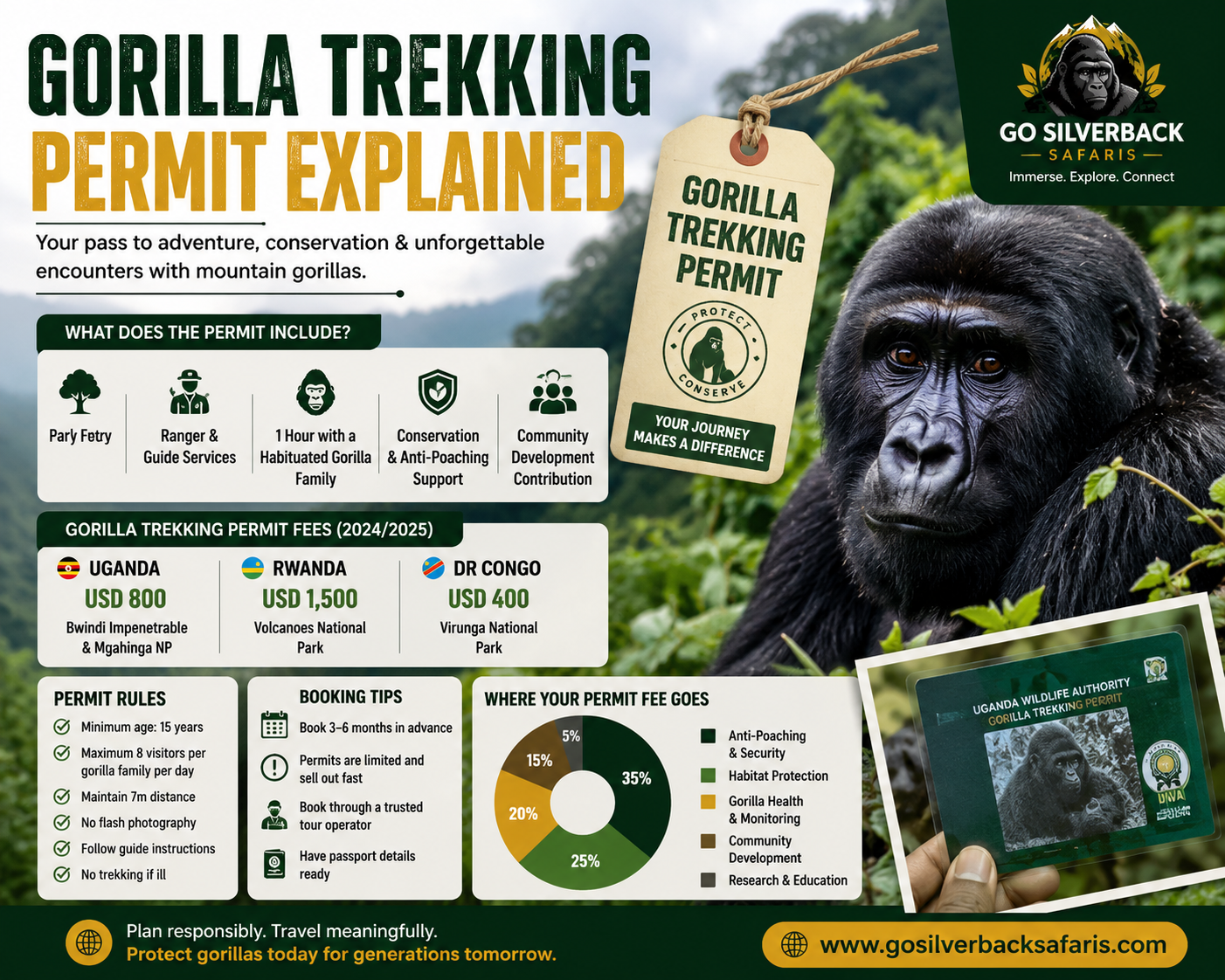
The permit covers park entry for the trek, ranger guidance, anti-poaching patrols, veterinary care by gorilla doctors, habitat protection and community revenue, conservation support, and one unforgettable hour with a habituated gorilla family.
Because permits are limited and sell out quickly, advance booking is essential.
Understanding permit costs, inclusions, and reservation procedures helps you plan a smooth and memorable gorilla trekking safari.
A gorilla trekking permit is the official document issued exclusively by the Uganda Wildlife Authority (UWA, RDB & DR Congo) that grants you legal access to spend one hour with a habituated mountain gorilla family.
Without it, you cannot enter the forest for trekking. In 2026, foreign non-residents pay $800 in high season or $600 during the low-season months of April, May and November.
The Gorilla Habituation Experience permits costs $1,500 (rising to $1,800 from January 2027).
These permits are strictly limited—approximately 152 standard permits plus 8 habituation permits daily in Bwindi and only 8 in Mgahinga—and peak-season dates routinely sell out 6–12 months in advance.
Standing face-to-face with a silverback mountain gorilla in the misty depths of Bwindi Impenetrable National Park, Volcanoes National Park and Virunga National Park is one of the most powerful wildlife encounters on Earth.
That moment is only possible with a valid gorilla trekking permit.
Ready to secure yours? Contact GoSilverback Gorilla Safaris for guaranteed gorilla trekking permits, expert sector advice and complete safari packages tailored to travellers from the USA, UK, Europe, Canada, Asia, Australia and beyond.
What Is a Gorilla Trekking Permit?
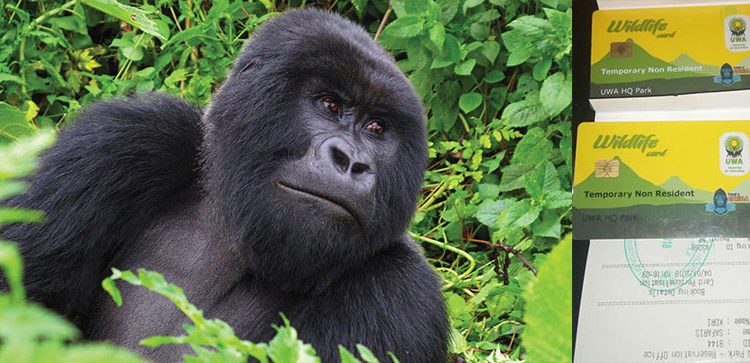
A gorilla trekking permit is the mandatory legal authorisation required to track and observe mountain gorillas in Uganda.
It is issued solely by the Uganda Wildlife Authority (UWA) and is valid for one specific date and one designated trekking sector.
The permit authorises a maximum of eight visitors to spend exactly one hour with a fully habituated gorilla family once the group is located.
It covers park entry for the activity, the services of UWA rangers and trackers, and a contribution to conservation.
Daily limits protect the gorillas: Bwindi issues roughly 152 standard permits plus 8 Gorilla Habituation Experience permits, while Mgahinga Gorilla National Park issues just 8 permits per day for its single habituated family.
Every permit fee directly funds anti-poaching patrols, veterinary care by gorilla doctors, habitat protection and community revenue-sharing programmes that have helped mountain gorilla numbers recover.
Gorilla Trekking Permit Cost in Uganda 2026–2027
Here are the official Uganda gorilla trekking permit prices for 2026 and the confirmed 2027 adjustments:
| Category | High Season | Low Season (Apr, May, Nov) |
|---|---|---|
| Foreign Non-Resident | $800 | $600 |
| Foreign Resident | $700 | $500 |
| Rest of Africa | $500 | $500 |
| East African Citizen | UGX 300,000 | UGX 300,000 |
| Gorilla Habituation | $1,500 | $1,500 (rises to $1,800 Jan 2027) |
These prices exist to fund long-term mountain gorilla conservation. By comparison, a Rwanda gorilla permit costs a flat $1,500 year-round, making Uganda the stronger value option—especially in low season.
Lock in 2026 low-season rates of $600 or secure 2027 dates before prices rise. Contact GoSilverback Gorilla Safaris for current availability.
Gorilla Trekking Permit Cost in Rwanda 2026–2027
| Category | Standard Rate (Peak Season) | Promotional / Low-Season Rate | Notes |
|---|---|---|---|
| Foreign Non-Residents | USD 1,500 | USD 1,050 (conditional) | 30% discount available in low season when combined with 2 nights in Akagera and/or Nyungwe |
| African Nationals / African Residents | USD 500 | USD 500 | Requires proof of residency |
| Rwandan & East African Community (EAC) Citizens | USD 200 | USD 200 | Valid ID or passport required |
- The standard permit price for international visitors remains USD 1,500 throughout 2026 and 2027.
- A conditional promotional rate of USD 1,050 applies in the low season (outside June–October) if you stay at least two nights across Akagera National Park and/or Nyungwe National Park.
- Peak season (June–October) uses the full USD 1,500 rate with no discounts.
- The permit covers one hour with a habituated gorilla family in Volcanoes National Park, park entry, and ranger services. It does not include accommodation, transport, porters, or tips.
Gorilla Trekking vs Gorilla Habituation Permit
| Feature | Standard Gorilla Trekking | Gorilla Habituation Experience |
|---|---|---|
| Time with gorillas | 1 hour | Up to 4 hours |
| Max group size | 8 visitors | 4 visitors |
| Family type | Fully habituated | Semi-habituated |
| Cost (FNR 2026) | $800 / $600 low season | $1,500 (rises to $1,800 in 2027) |
| Best for | First-timers, families, classic encounter | Photographers, deeper immersion, research interest |
| Location | All Bwindi sectors + Mgahinga | Rushaga Sector only |
How to Book a Gorilla Trekking Permit – Step-by-Step
Under 2026 UWA rules, the process is straightforward but strict:
- Decide your preferred dates and sector (Buhoma, Rushaga, Nkuringo, Ruhija or Mgahinga). Have alternative dates ready.
- Choose a licensed Ugandan tour operator (recommended for international visitors) or contact UWA directly if you are a resident.
- Submit passport details exactly as they appear on your passport—full name, number, nationality and date of birth.
- Pay in full immediately. The previous 7-day unpaid reservation hold has been abolished.
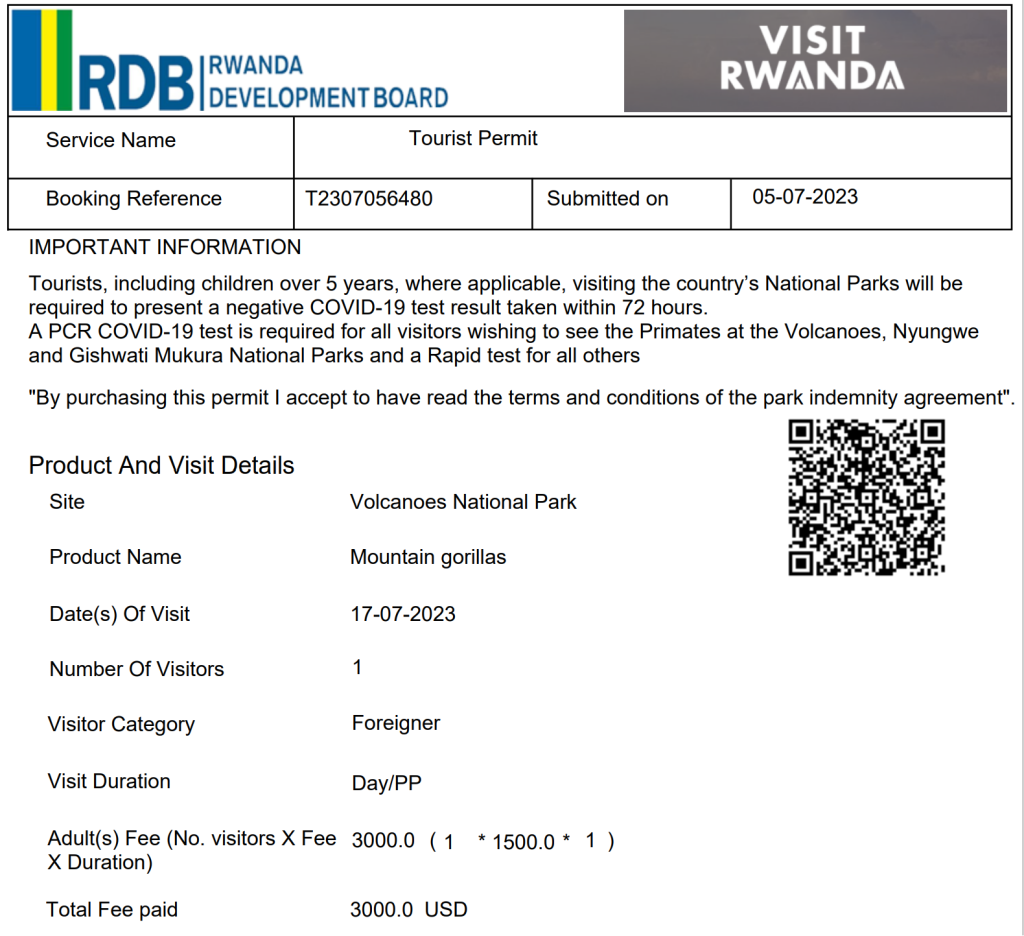
- Receive written confirmation, followed later by the physical permit card used at the park gate.
Using a trusted operator removes the risk of payment errors, name mismatches and last-minute unavailability.
GoSilverback Gorilla Safaris handles the entire process, confirms sector allocation, and matches you with the best nearby lodges.
Requirements & Rules You Must Know
Before you book or set foot on the trail, make sure you meet every official requirement. These rules protect both visitors and the mountain gorillas.
1. Minimum age is 15 years
The Uganda Wildlife Authority strictly enforces a minimum age of 15 years for all gorilla trekking and habituation experiences. No exceptions are routinely granted for younger children.
2. Passport validity and exact name match
Your passport must be valid for at least six months beyond your travel dates. The full name, passport number, nationality and date of birth printed on the gorilla trekking permit must match your passport exactly.
Even a small discrepancy can result in denied entry at the park gate.
3. Fitness expectations
Gorilla trekking involves walking on steep, muddy, uneven rainforest trails at altitudes between 1,400 m and 2,500 m. Hikes can last from 30 minutes to several hours.
You do not need to be an athlete, but a reasonable level of fitness and mobility is essential. Anyone with serious heart, respiratory or joint conditions should consult a doctor first.
Strict rules once with the gorillas
- Maintain a minimum distance of 7 metres at all times
- No flash photography
- No food or drink near the gorillas
- Maximum viewing time of one hour
- Speak quietly and follow the ranger’s instructions immediately
Breaking these rules can end the trek early to protect the animals.
Porter and sedan-chair options Porters are available at every trailhead and are strongly recommended — they carry your daypack and offer a steadying hand on slippery sections.
For seniors or travellers with limited mobility, sedan chairs (carried by a team of porters) can be arranged in advance in most sectors for an additional fee.
Meeting these requirements ensures a safe, legal and unforgettable encounter. If you have any doubts about fitness or documentation, contact GoSilverback Gorilla Safaris before booking — we will guide you through every detail.
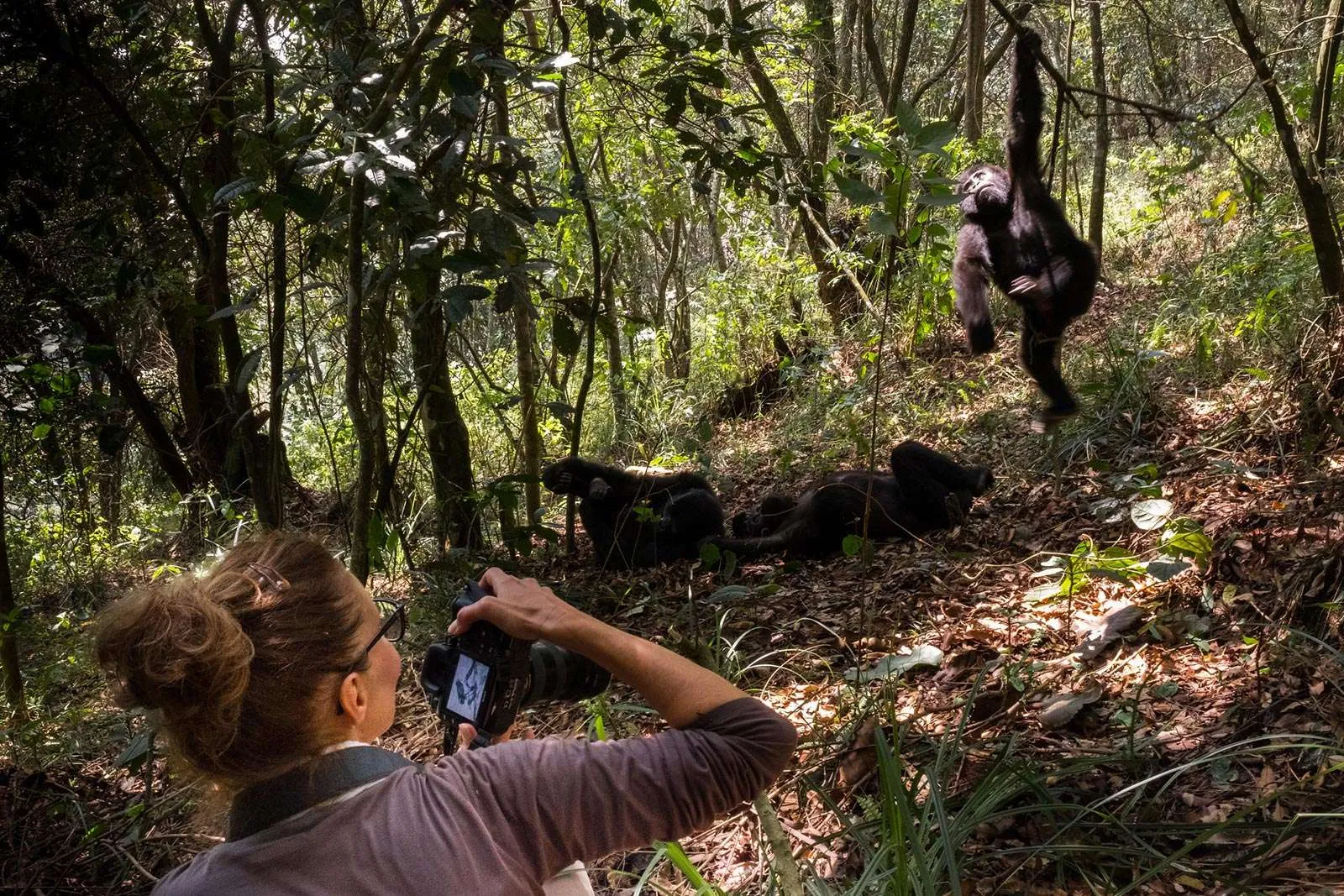
Failure to follow these rules can result in the trek being terminated to protect the gorillas.
Best Time to Book & When Permits Sell Out
Timing is everything when it comes to securing a gorilla trekking permit. Demand far exceeds supply on the best dates, and once a permit is sold it is gone.
1. Peak season (June–September and December–February)
These dry-season months offer the firmest trails, clearest views and highest success rates for photography. They are also the busiest.
Popular dates, especially July, August and the Christmas–New Year period, regularly sell out 6–12 months in advance. If these months are your only window, start the booking process as early as possible.
2. Low season (March–May and October–November)
April, May and November now carry official discounted permits at $600 for foreign non-residents.
Trails are muddier and rain is more likely, but the forests are lush, crowds are lighter and last-minute availability is better. These months suit flexible travellers and those looking for lower overall safari costs.
How far in advance should you book?
- Peak season 2026/2027: 9–12 months ahead for the best choice of date and sector
- Shoulder and low season: 4–6 months is usually sufficient, though early booking still secures preferred lodges
- Last-minute: possible through cancellations, but never guaranteed
Current availability reality for 2026 and 2027 As of mid-2026, many peak dates in the second half of 2026 and the first quarter of 2027 are already limited or fully booked in the most popular sectors (Buhoma and Rushaga).
Low-season discounted permits still have reasonable availability, but they are selling faster than in previous years.
The safest approach is simple: decide your travel month, contact a licensed operator, and secure the permit before you book flights or lodges.
Need to know what is still open? Contact GoSilverback Gorilla Safaris for real-time 2026 and 2027 availability and we will lock in your gorilla trekking permit before the remaining dates disappear.
Choosing Your Trekking Sector
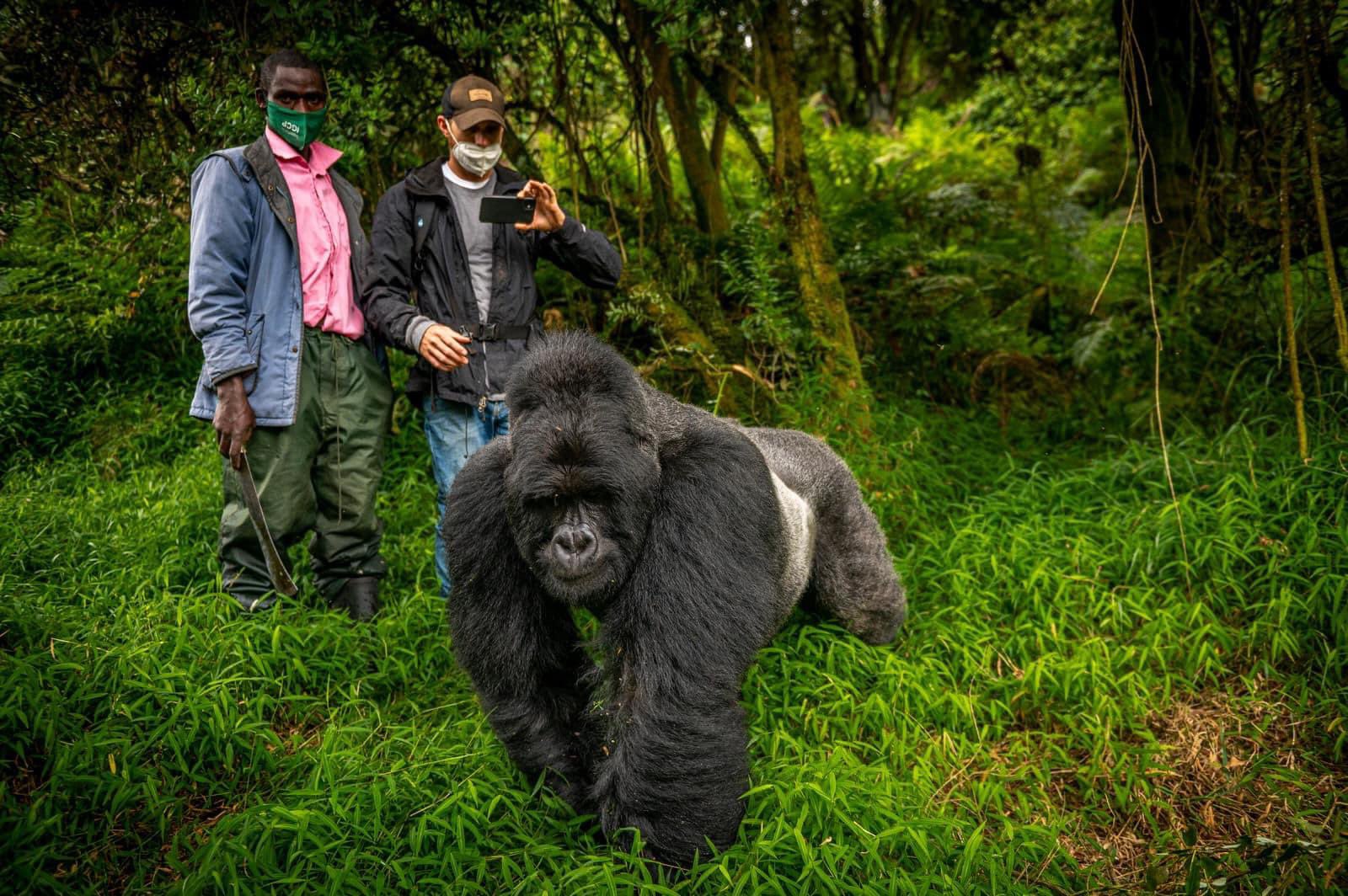
Your gorilla trekking permit is issued for one specific sector and cannot be used in any other.
Choosing the right location therefore affects the difficulty of the hike, the scenery, the lodges available, and even the style of your encounter.
1. Buhoma (Northern Bwindi)
The original and most accessible sector. Generally gentler terrain, excellent infrastructure, and the widest choice of lodges.
Ideal for first-time trekkers, families and anyone combining gorilla trekking with Queen Elizabeth National Park.
2. Rushaga (Southern Bwindi)
Home to the largest number of habituated gorilla families and the only sector offering the Gorilla Habituation Experience.
Good permit availability and a solid range of mid-range to luxury lodges. Popular with travellers coming from Rwanda via Kisoro.
3. Nkuringo (Southern Bwindi)
Dramatic ridge-top scenery and more physically demanding treks. Fewer crowds and outstanding views toward the Virunga volcanoes.
Favoured by honeymooners, photographers and those seeking a more adventurous experience.
4. Ruhija (Eastern Bwindi)
The quietest and highest sector. Excellent for birdwatching and travellers who prefer fewer people on the trail.
Lodge options are more limited, but the atmosphere is peaceful and authentic.
Mgahinga Gorilla National Park: A smaller, separate park on the slopes of the Virunga volcanoes. Only one habituated family and just eight permits per day.
Stunning volcanic landscapes and the chance to combine gorilla trekking with golden-monkey tracking.
Because the permit is sector-specific, always confirm the sector before you book accommodation.
For detailed lodge recommendations in each area, see our dedicated sector and lodge guides, or contact GoSilverback Gorilla Safaris — we will match your fitness level, group size and travel style to the best available sector and nearby lodges.
Confirm your sector before booking accommodation. We provide free sector guidance based on fitness, group size and preferred lodges.
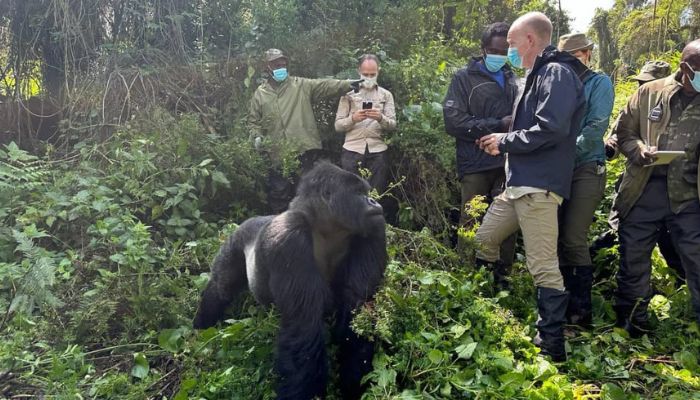
What Happens on Trekking Day
Knowing exactly what to expect removes most of the pre-trek nerves. Here is how a typical gorilla trekking day unfolds in Bwindi or Mgahinga.
1. Morning briefing (usually 7:00–8:00 a.m.)
You arrive at the sector headquarters (Buhoma, Rushaga, Nkuringo, Ruhija or Mgahinga).
Rangers check your permit and passport, give a safety and conservation talk, and allocate each group to a specific gorilla family based on fitness levels and current gorilla locations. This is also when you can hire a porter.
2. The hike
After the briefing you set off into the forest with your ranger, trackers and porter. The walk can last anywhere from 30 minutes to four or five hours depending on where the gorillas spent the night.
Trails are often steep, muddy and uneven. Trackers move ahead, following fresh signs—dung, nests, broken vegetation and vocalisations—and radio the location back to your group.
3. One hour with the gorillas
Once the family is located, the clock starts. You spend a magical one hour observing the gorillas at a minimum distance of seven metres.
You may watch them feed, play, groom or rest while the silverback keeps a watchful eye. Photography is allowed without flash. Rangers ensure the group stays calm and the time limit is respected.
4. The return walk
After your hour you retrace your steps (or follow a different path) back to the trailhead. Most people are back at the headquarters by early or mid-afternoon.
From there you return to your lodge, usually tired, muddy and completely exhilarated.
Total time in the forest is typically three to seven hours. Every trek is different because the gorillas move freely, but the structure—briefing, hike, one precious hour, return—remains the same.
Proper boots, a rain jacket, gloves and a positive attitude are the best preparation.

Common Mistakes That Cost Travellers Their Permits
Even experienced travellers lose their chance to meet mountain gorillas because of avoidable errors during the booking process.
Here are the four most common (and costly) mistakes we see every season — and exactly how to avoid them.
1. Submitting incorrect or mismatched passport details
The name, passport number, date of birth and nationality on your gorilla trekking permit must match your travel document exactly.
A single missing middle name, a transposed digit, or a nickname instead of the full legal name is enough for rangers to refuse entry at the park gate. Always double-check the details against your passport before payment is made.
2. Booking the wrong trekking sector
A permit issued for Buhoma cannot be used in Rushaga, Nkuringo, Ruhija or Mgahinga. Many travellers only discover the mismatch after they have already paid for lodges in the wrong area.
Confirm your preferred sector (and have a second choice ready) before the permit is secured, and only then book accommodation.
3. Waiting too long to book
Peak-season dates (June–September and December–February) regularly sell out 6–12 months in advance. Even low-season discounted permits at $600 disappear faster than most people expect.
Leaving booking until a few months before travel is the single biggest reason travellers end up with no permit or forced to change their entire itinerary.
4. Using unlicensed or unverified agents
Only the Uganda Wildlife Authority issues genuine permits. Some online sellers and overseas agents claim to have permits but cannot produce valid UWA documentation.
The result is cancelled bookings, lost money, and no trek. Always work with a licensed Ugandan operator who can show you the official permit confirmation and physical card.
Avoid these four pitfalls and your gorilla trekking permit will be secure.
Need help getting it right the first time? Contact GoSilverback Gorilla Safaris — we verify every detail, match the correct sector to your plans, and guarantee genuine UWA permits so you never risk losing your once-in-a-lifetime encounter.
Why Book Your Gorilla Trekking Permit Through GoSilverback Gorilla Safaris
When only a limited number of gorilla trekking permits are issued each day, the operator you choose makes the difference between a seamless adventure and a stressful one.
At GoSilverback Gorilla Safaris we specialise in securing genuine UWA permits and building complete, worry-free gorilla experiences for travellers from the USA, Canada, the UK, Europe, Asia, Australia, Latin America and the Middle East.
Here’s why hundreds of guests trust us with the most important part of their safari:
- Guaranteed permits – We work directly with the Uganda Wildlife Authority and maintain strong allocations, so your preferred dates and sector are secured with official confirmation.
- Competitive rates – You pay fair, transparent prices with no hidden mark-ups on the official $600–$800 permit fees.
- Free sector advice – We match you to the best sector (Buhoma, Rushaga, Nkuringo, Ruhija or Mgahinga) based on your fitness, group size, photography goals and preferred lodges.
- Lodge matching – From luxury forest camps to excellent mid-range and budget options, we reserve the right rooms close to your briefing point.
- Full safari packages – Permits, accommodation, private transport, experienced guides, chimpanzee tracking, wildlife safaris and cultural visits — all coordinated in one itinerary.
- 24/7 support – From the moment you enquire until you leave Uganda, our team is available for any change or question.
- Secure payments – Safe, traceable payment options and clear written confirmation at every step.
- Proven track record – Consistent five-star feedback from travellers who returned home with unforgettable gorilla memories and zero permit problems.
Travellers regularly tell us the peace of mind alone was worth it: “We handed everything over and simply showed up for the experience of a lifetime.”
Ready to lock in your dates? Tell us your preferred travel month, group size and budget.
Get your personalised 2026/2027 gorilla permit quote within 24 hours. Contact GoSilverback Gorilla Safaris today and let us secure your gorilla trekking permit the right way — so you can focus on the moment you lock eyes with a silverback in the wild. Limited permits remain. Book now.
Frequently Asked Questions
Can I buy a gorilla trekking permit last minute?
Last-minute permits occasionally become available through cancellations, especially in low season. However, peak dates (June–September and December–February) rarely have openings. Booking 6–12 months ahead remains the only reliable way to secure your preferred date and sector.
Are permits refundable?
Uganda Wildlife Authority refund policies are strict. Most permits are non-refundable once issued. Some licensed operators offer limited flexibility or travel-insurance options. Always confirm the exact cancellation terms in writing before you pay.
Can I change dates on my gorilla trekking permit?
Date changes are sometimes possible subject to availability and UWA approval, usually with an administration fee. Low-season discounted permits ($600) often cannot be rescheduled. Request any change as early as possible through your operator.
Do children under 15 ever get exceptions?
No. The minimum age of 15 years is strictly enforced by the Uganda Wildlife Authority for both safety and gorilla-conservation reasons. No exceptions are routinely granted.
Is the gorilla trekking permit transferable?
No. Each permit is issued in a specific person’s name and passport details. It cannot be transferred, sold or used by anyone else.
What if the gorillas are far away on the day?
Trackers locate the family every morning. You still receive your full one-hour visit once the gorillas are found, even if the hike takes longer than expected. Rangers manage the pace according to the group’s fitness.
Do I need a yellow fever vaccination?
Yes. A valid yellow fever certificate is required for entry into Uganda from many countries. Check the latest requirements for your nationality well before travel, as rules can change.
Uganda vs Rwanda permits – which is better value?
Uganda offers significantly better value: $600–$800 versus Rwanda’s flat $1,500. Uganda also has more daily permits and multiple sectors, giving greater flexibility and availability.
How many people can trek on one permit?
One permit equals one person. A maximum of eight permit holders are allowed to visit the same gorilla family on any given day.
Can seniors or less-fit travellers do gorilla trekking?
Yes, provided they have reasonable mobility. Porters are strongly recommended and sedan chairs are available in some sectors for an extra fee. Inform your operator in advance so rangers can assign a suitable family.
Is the permit valid for both Bwindi and Mgahinga?
No. You must specify the park and exact sector (Buhoma, Rushaga, Nkuringo, Ruhija or Mgahinga) at the time of booking. Permits are not interchangeable.
What documents do I need on trekking day?
Bring your passport and the physical permit card (or the official confirmation accepted by rangers). Details on the permit must match your passport exactly.
Can I book both a standard permit and the Gorilla Habituation Experience?
Yes. Many travellers combine a one-hour trek with the four-hour Gorilla Habituation Experience (available only in Rushaga) on longer itineraries.
Are there any extra park fees on top of the permit?
The permit covers the gorilla trek itself. Additional activities, multi-day park stays or certain guided walks may incur separate conservation fees.
What happens if I miss my trekking date?
The permit is normally forfeited. In rare compassionate cases UWA may consider a change, but this is never guaranteed. Travel insurance that covers unused activities is strongly advised.
How far in advance should I book for 2027?
For peak 2027 dates we recommend booking 9–12 months ahead. Low-season dates can sometimes be secured closer to travel, but early booking still gives the best choice of sector and lodges.
Do I need to tip the rangers and trackers?
Tipping is customary and greatly appreciated. Your operator will provide current recommended amounts. Budget for rangers, trackers and porters separately from the permit cost.
Can I use a drone during the trek?
No. Drones are strictly prohibited inside Bwindi and Mgahinga to protect the gorillas and other wildlife.
Final Thoughts
The gorilla trekking permit is the single scarcest and most important element of your mountain gorilla adventure. Prices, availability and rules are clear for 2026–2027, but the best dates disappear quickly.
Whether you choose a classic one-hour trek or the exclusive four-hour Gorilla Habituation Experience, securing your permit early guarantees the experience you came for.
Get Your 2026/2027 Gorilla Permit Quote in 24 Hours.
Contact GoSilverback Gorilla Safaris today. Tell us your preferred dates, group size and budget, and we will secure your gorilla trekking permits, recommend the ideal lodges, and design a seamless safari that turns your dream into reality.
Limited permits remain—book now before they are gone.