Silverback vs Blackback Gorilla: Key Differences Explained Guide 2026
When observing the magnificent mountain gorillas in Uganda and Rwanda, understanding the Silverback vs Blackback Gorilla dynamic is essential for any wildlife enthusiast.
The main differences between these two classifications involve their developmental stage, back colour, physical maturity, and social behaviour.
A silverback gorilla is a fully mature male gorilla, usually 12 years or older, with a distinctive silver-gray saddle of hair across its back and hips.
A blackback gorilla is a younger adult male, typically 8–12 years old, that is sexually mature but has not yet developed the silver saddle. The difference is not between species—it is a difference in age, physical maturity, dominance, and social role.
What You’ll Learn
-
The exact difference between a silverback gorilla and a blackback gorilla
-
How to identify each male during a gorilla trekking safari
-
Why blackbacks eventually become silverbacks
-
How gorilla troop hierarchy works
-
Whether silverbacks are stronger than blackbacks
-
Where to see both in Uganda, Rwanda, and the Democratic Republic of Congo
-
How to book a responsible gorilla permit with GoSilverback Gorilla Safaris
Silverback vs Blackback Gorilla
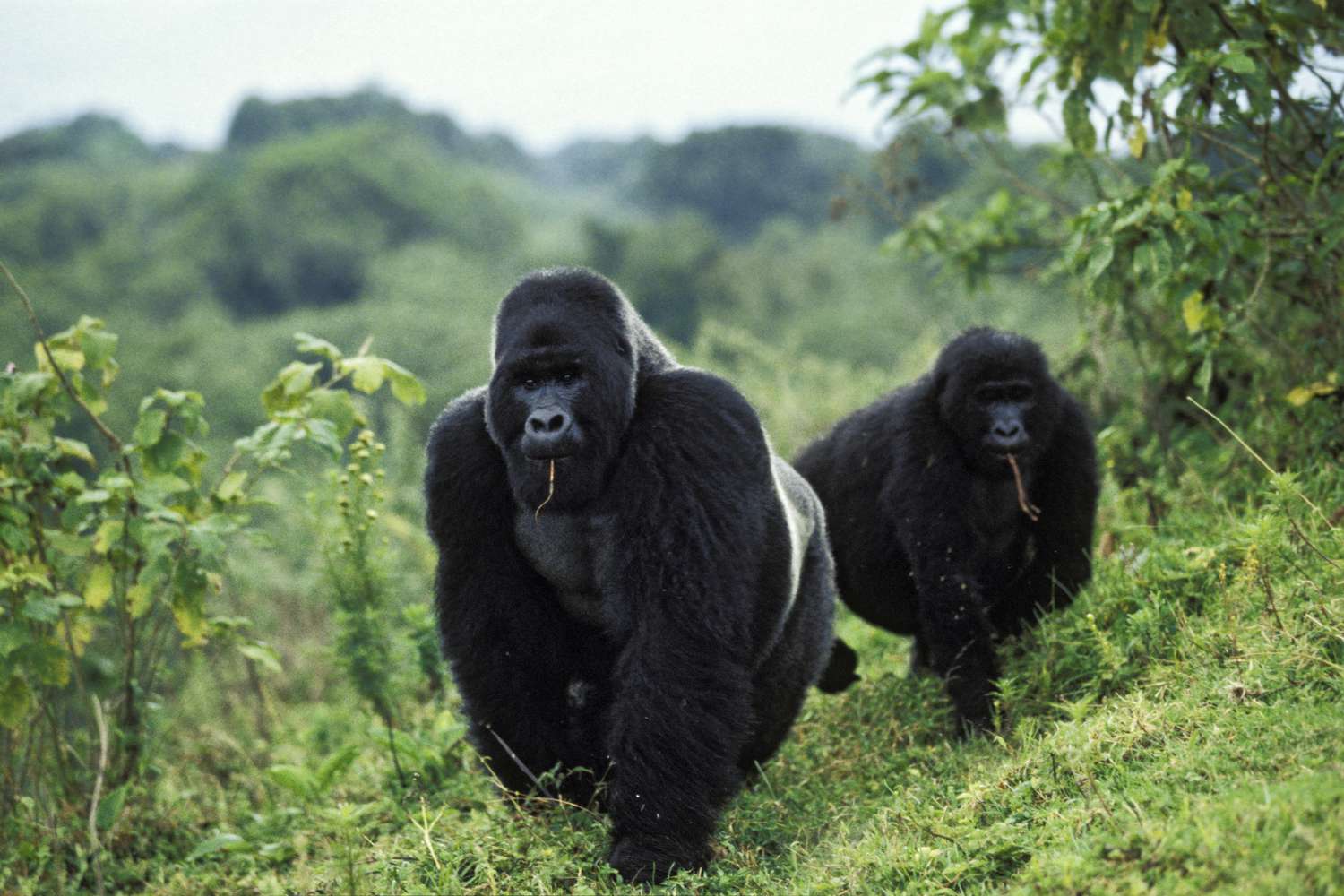
A silverback is the mature, dominant male leader of a gorilla family. A blackback is a younger adult male that remains subordinate to the silverback.
Silverbacks usually lead the troop, make travel and feeding decisions, protect the group, and have primary mating access.
Blackbacks may help defend the family but usually wait until they are older and stronger before challenging for leadership.
Silverback vs Blackback Gorilla at a Glance
| Feature | Blackback Gorilla | Silverback Gorilla |
|---|---|---|
| Age | About 8–12 years | Usually 12+ years |
| Back hair | Black fur; no silver saddle | Silver-gray hair on back and hips |
| Maturity | Sexually mature but not fully grown | Fully mature adult male |
| Troop role | Subordinate helper and future leader | Leader, protector, and decision-maker |
| Mating access | Limited or none | Primary breeding male |
| Build | Strong but still developing | Larger chest, head, sagittal crest, and body mass |
| Behavior | More cautious, playful, and subordinate | Calm, assertive, commanding |
| Conservation status | Same species and conservation status as its population | Same species and conservation status as its population |
A blackback is a young adult male gorilla, while a silverback is the fully mature male that has developed the characteristic silver-gray back hair.
Blackbacks are sexually mature but not yet physically strong enough to compete for dominance.
Planning a gorilla safari? Explore GoSilverback Gorilla Safaris’ guided Uganda and Rwanda gorilla trekking packages to see silverbacks and blackbacks in their natural forest habitat.
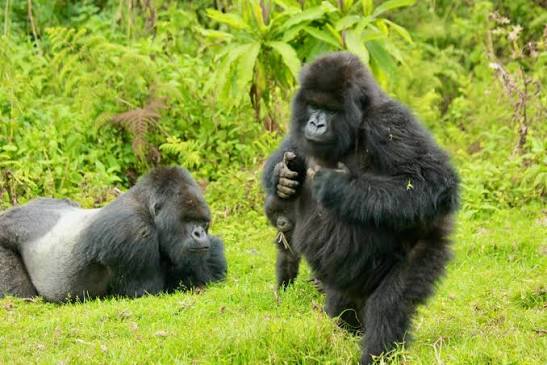
What Is a Blackback Gorilla?
A blackback gorilla is a young adult male gorilla—not a separate gorilla species. The term describes a developmental stage between a juvenile male and a fully mature silverback.
Most blackbacks are around 8 to 12 years old, although the transition can vary slightly between individuals and gorilla subspecies
At this stage, a blackback is sexually mature, but he is not yet fully grown or powerful enough to challenge an established silverback for control of the family. His coat remains largely black, without the silver-gray saddle that gives mature males their famous name.
1. Physical Traits of a Blackback
A blackback is already impressively strong, with broad shoulders, developing muscles, and growing canine teeth. However, compared with a silverback, he usually has:
-
A smaller body frame and less-developed chest
-
A less pronounced sagittal crest—the bony ridge along the top of the skull
-
Fully black back and hip hair
-
Less experience in troop leadership and conflict
2. Role in the Gorilla Family
Blackbacks often remain in their birth group, especially if they are sons or younger relatives of the dominant silverback.
They may help watch for danger, support the group during tense encounters, and learn the social skills required for future leadership.
Some blackbacks eventually inherit a family, leave to form their own troop, or spend time as solitary males before establishing dominance.
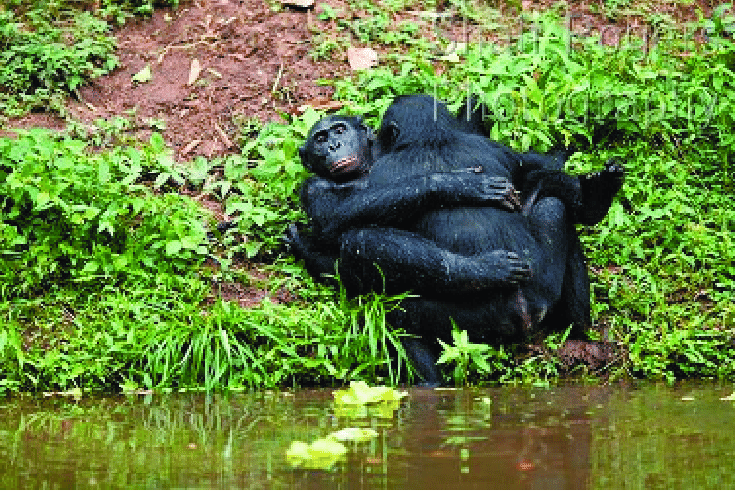
Can Blackbacks Mate?
Yes—blackbacks can be sexually mature, but their mating opportunities are usually limited. In a stable troop, the dominant silverback generally controls breeding access to adult females.
A blackback may occasionally mate outside the dominant male’s attention, but he rarely becomes the main breeding male until he becomes a silverback.
Read our detailed guide on What Is a Blackback Gorilla?
Want to identify a blackback in the wild? Book a guided trek with GoSilverback Gorilla Safaris, where expert ranger guides help you distinguish blackbacks, silverbacks, females, and infants safely and ethically.
What Is a Silverback Gorilla?
A silverback gorilla is a mature adult male gorilla named for the silver-gray saddle of hair that develops across his back and hips. The term does not refer to a separate species; it describes the dominant mature male stage in gorilla development.
Silverbacks are typically 12 years or older, although many sources place full maturity around 12–15 years. By this stage, the male has reached his greatest physical development and usually holds the highest rank in the troop.
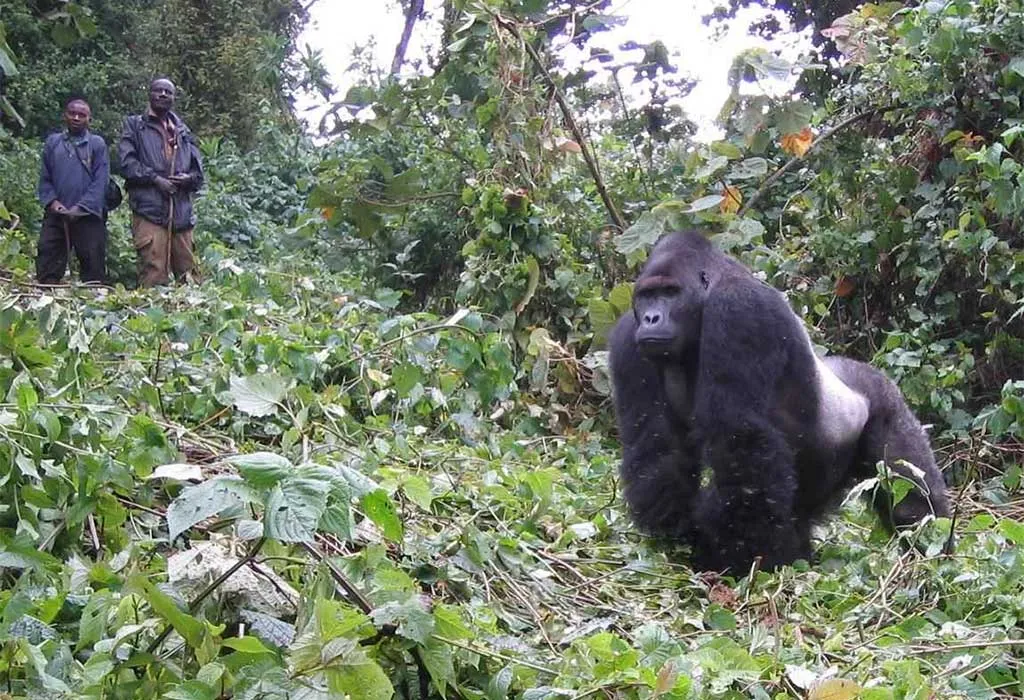
1. Physical Traits of a Silverback
A mature silverback is easy to recognize in the field:
-
Silver-gray hair across the back and upper thighs
-
A large, muscular chest and powerful arms
-
A pronounced sagittal crest
-
Large canine teeth
-
A broad head and commanding posture
These features reflect full maturity, not simply old age. A silverback may be in his prime for many years.
2. The Silverback’s Role in the Troop
The silverback is the center of gorilla family life. He decides when the group moves, where it feeds, how conflicts are handled, and how the family responds to danger.
His leadership creates stability for females, infants, juveniles, and younger males.
A typical gorilla family may include a dominant silverback, several adult females, their offspring, and sometimes one or more younger males.
In habituated families visited on gorilla treks, travelers may sometimes see more than one mature male, especially in larger groups.
Ready to meet a real silverback? Reserve your gorilla trekking permit through GoSilverback Gorilla Safaris for expert-led treks in Uganda, Rwanda, and the Democratic Republic of Congo.
Learn more about the Features of a Mountain Gorilla
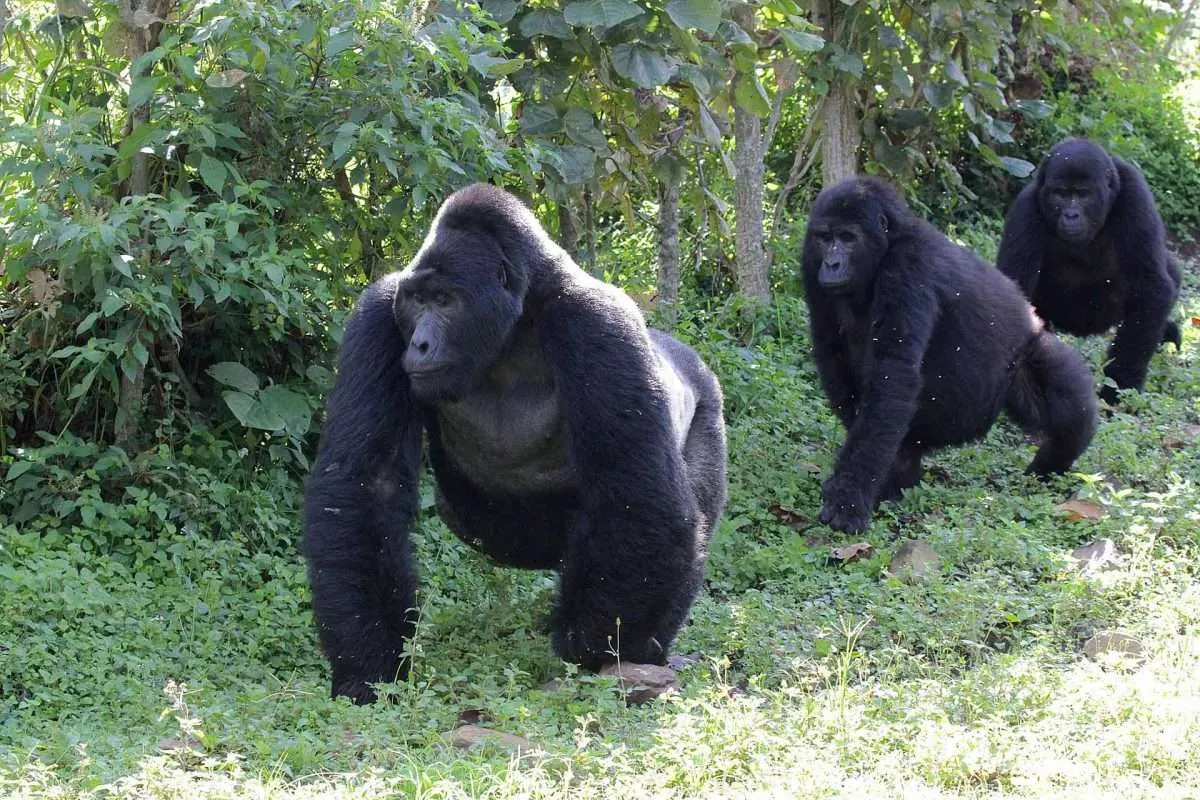
9 Key Differences Between Silverback and Blackback Gorillas
1. Age and Maturity
A blackback is usually between 8 and 12 years old. A silverback is generally 12 years or older and fully mature.
Field tip: Look at the back. Black fur suggests a blackback; a clear silver-gray saddle indicates a silverback.
2. Back Coloration and Appearance
The most obvious difference is color. A blackback retains black hair across his back, while a silverback develops a striking silver-gray saddle from the back toward the hips.
Field tip: In good light, the silver saddle is visible even at a distance, making silverbacks easier for guides and trekkers to identify.
3. Body Size, Muscles, and Crest
Silverbacks are usually larger, broader, and more heavily muscled than blackbacks. They also tend to have a more prominent sagittal crest, larger canines, and a deeper chest.
Field tip: A silverback often sits with a wide, grounded posture, while a blackback may appear leaner and more alert.
4. Troop Hierarchy
The silverback is dominant. The blackback is subordinate and usually ranks below the dominant male, adult females with infants, and other established group members.
Example: In a habituated family, a blackback may feed nearby but will usually yield space, food, or a resting spot if the silverback approaches.
5. Leadership and Decision-Making
The silverback decides when the troop travels, where it rests, and how it responds to threats. Blackbacks may participate in group defense, but they rarely direct the family.
Field tip: Watch which male moves first. The dominant silverback often initiates movement, and the rest of the family follows.
6. Mating and Reproduction
Silverbacks generally have primary breeding access to the adult females in their troop. Blackbacks may be sexually mature, but their breeding opportunities are limited while a strong silverback controls the group.
Example: A blackback may remain in his father’s group for years without becoming the main breeding male.
7. Temperament and Behavior
Blackbacks can be curious, energetic, and sometimes playful. Silverbacks tend to appear calmer and more deliberate, using posture, vocalizations, and controlled displays to maintain order.
Field tip: A silverback may simply stare, shift his body, or beat his chest to communicate authority—without needing to fight.
8. Relationship to Females and Juveniles
The silverback is the protector of females, infants, and juveniles. Blackbacks may interact with young gorillas, but they do not usually hold the same protective leadership role.
Example: When a group feels threatened, the silverback often positions himself between the danger and the family.
9. Future Role in the Troop
A blackback’s future depends on opportunity. He may inherit his birth group, challenge another male, leave to form a new family, or live alone for a period.
Field tip: A blackback with a developing silver saddle is approaching the next stage of his life—and potentially a future leadership role.
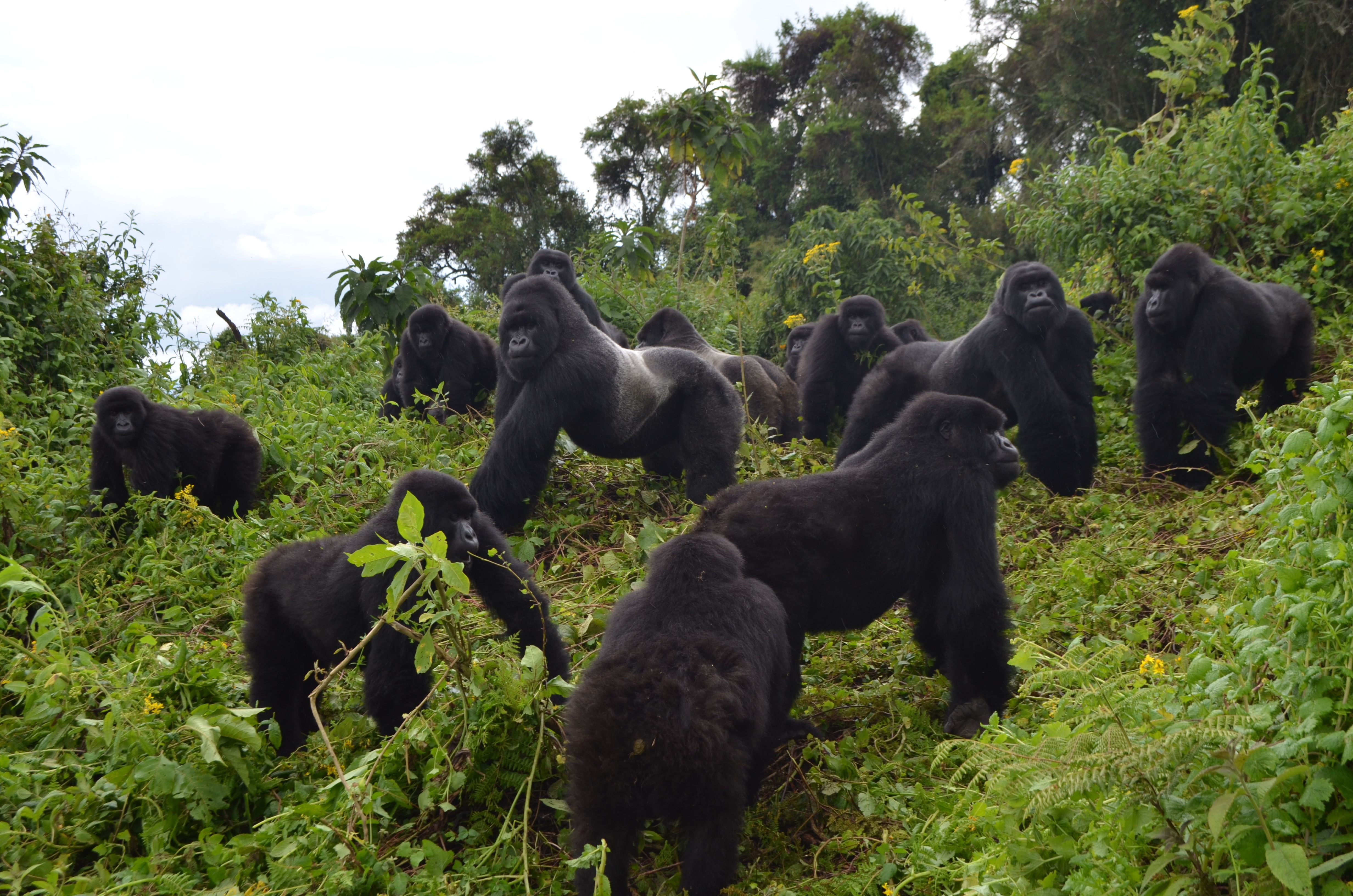
Gorilla Troop Hierarchy: Where Blackbacks Fit
Gorilla families are structured around a dominant silverback. The hierarchy commonly looks like this:
Dominant silverback → adult females and infants → blackbacks → juveniles
The silverback leads movement, feeding, conflict resolution, and protection. Adult females care for infants and maintain social bonds, while blackbacks occupy a transitional position: strong enough to defend the group, but not yet dominant enough to lead it.
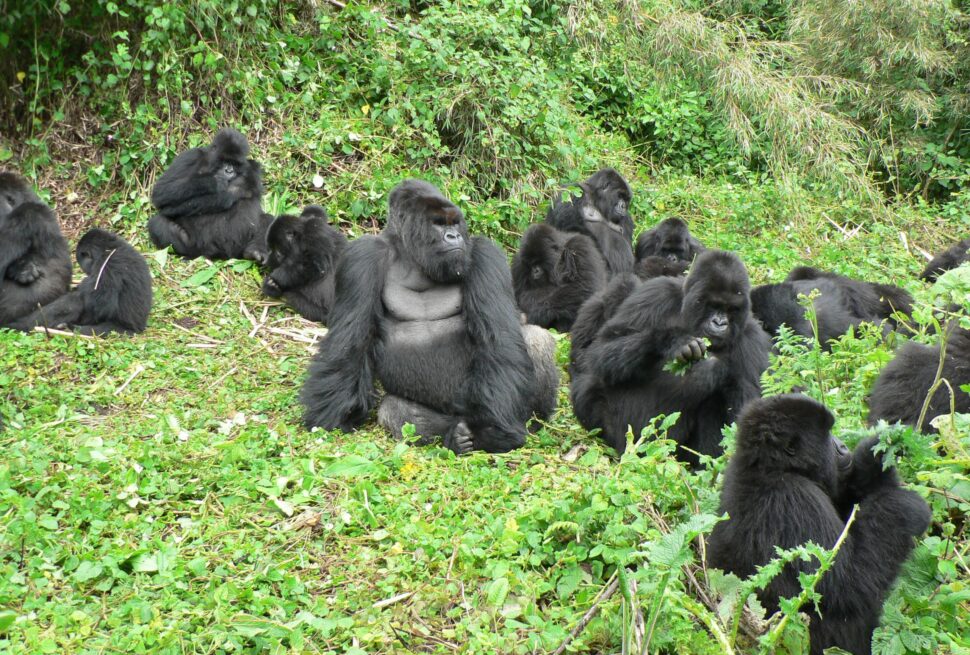
This structure is one reason gorilla trekking is so compelling. Visitors may witness a silverback calmly leading his family, while a blackback watches from the edge of the clearing or interacts with younger gorillas.
See a living gorilla hierarchy on a guided trek. Check availability for GoSilverback Gorilla Safaris’ small-group gorilla trekking tours.
Can a Blackback Become a Silverback?
Yes. Every silverback was once a blackback. The change usually occurs around 11–13 years of age, when silver-gray hair begins to develop across the male’s back and hips.
This transition marks a major developmental milestone. The male becomes physically mature, more confident, and increasingly capable of competing for dominance.
What Changes During the Transition?
-
Silver hair develops across the back and hips.
-
Body mass and musculature increase, especially in the chest, shoulders, and arms.
-
The sagittal crest becomes more pronounced.
-
Social confidence grows, allowing the male to challenge, disperse, or establish himself.
-
Breeding opportunities may increase if he gains control of a family.
Not every blackback becomes a dominant silverback immediately. Some remain subordinate for years, while others leave their birth group and eventually form or take over a troop.
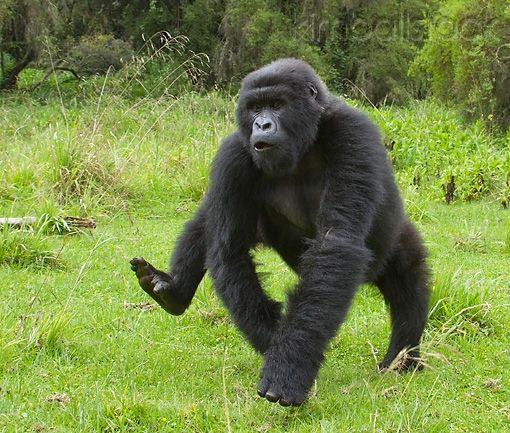
Are Silverbacks Stronger Than Blackbacks?
Generally, yes. A mature silverback is usually stronger than a blackback because he is older, larger, more heavily muscled, and more experienced in social conflict.
However, strength is not the only factor in gorilla dominance.
Silverbacks benefit from:
-
Greater body mass and chest development
-
A more pronounced crest and larger canines
-
Years of experience leading and defending a troop
-
Established relationships with females and group members
Blackbacks usually avoid direct challenges to a mature silverback because the cost of losing can be high. Dominance can shift, however, after injury, aging, illness, or changes in troop composition.
Traveler note: Never interpret a gorilla display as an invitation to approach. Always follow your ranger guide’s instructions and maintain the required distance. Related read | Things You Should Never Do Around Gorillas
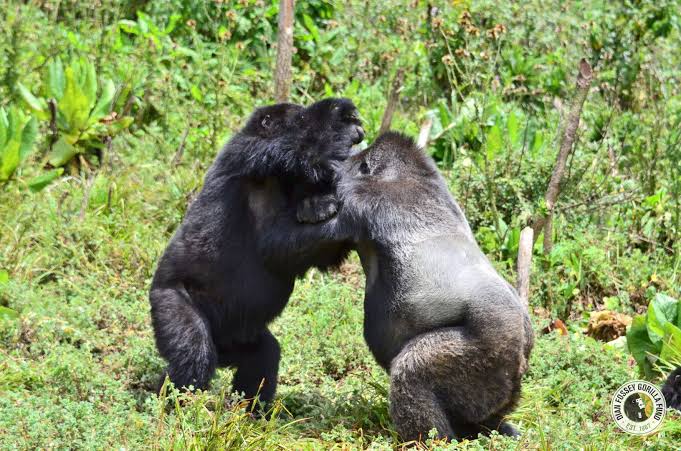
Which Is Bigger and Stronger: a Silverback or Blackback?
When comparing the physical power of a silverback vs blackback gorilla, the mature silverback is undeniably bigger and stronger.
An adult male silverback can weigh between 135 to 195 kilograms (300 to 430 lbs) in the wild, and when standing upright, they can reach a towering height of over 1.5 meters (5 feet).
Their arm span can stretch up to 2.3 meters (7.5 feet), and their muscle density is extraordinary, allowing them to effortlessly move heavy logs and display immense physical power.
A blackback gorilla, while still significantly stronger than any human, is noticeably smaller. They typically weigh between 100 to 150 kilograms (220 to 330 lbs).
Because they are still developing their adult skeletal structure and muscle mass, they lack the sheer bulk and heavy bone density of a prime silverback.
While it is tempting to assign exact strength ratios—such as claiming a silverback is “ten times stronger than a man”—these are unsupported claims.
What is biologically accurate is that the silverback’s fully developed sagittal crest allows for a much stronger bite force, and his fully matured musculature gives him a distinct physical advantage in any confrontation.
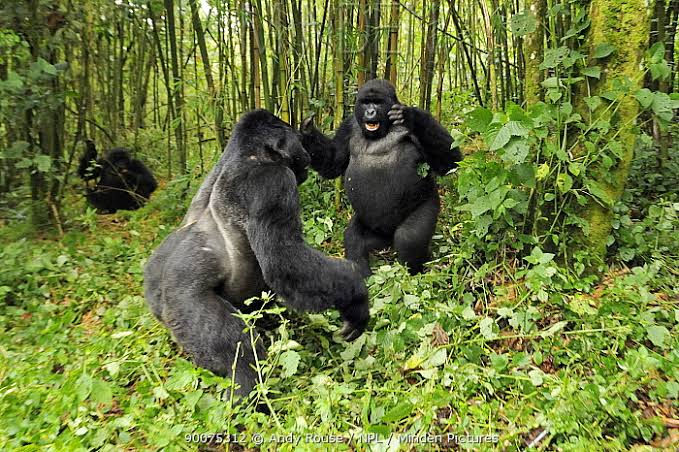
Do Blackbacks and Silverbacks Fight?
Conflict between blackbacks and silverbacks does occur, but it is not constant. Much gorilla communication is based on displays rather than physical fighting.
Common displays include:
-
Chest-beating
-
Hooting and vocal calls
-
Mock charges
-
Tearing or throwing vegetation
-
Staring and posture displays
These behaviors help males assess each other without immediate violence. Serious fights are more likely during takeover attempts, group fissions, or competition for females.
From a conservation perspective, it is important to remember that these are natural social behaviors—not entertainment.
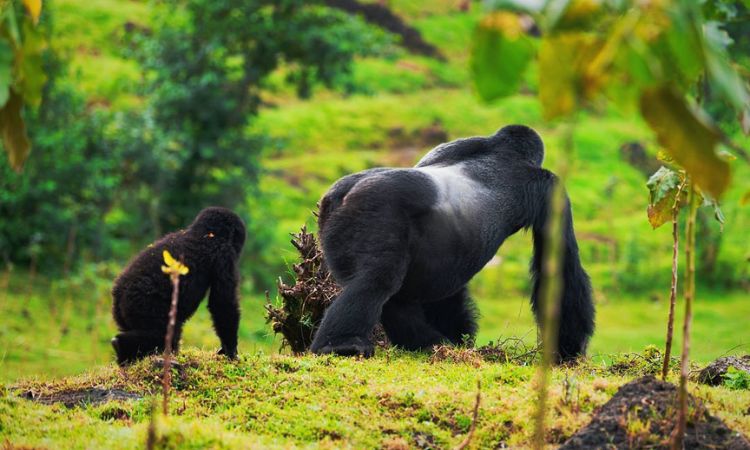
Behaviour and Social Roles: Silverback vs Blackback
The behaviour and social roles of a silverback vs blackback gorilla highlight the complex, deeply empathetic society of mountain gorillas. The dominant silverback is the undisputed decision-maker.
He dictates the daily routine, deciding when the family wakes, where they travel to forage, and when it is time to build their nightly nests.
He is the ultimate protector; if a threat is perceived, he will initiate a defensive display, which may include intense staring, hooting, chest-beating, and even a bluff charge to intimidate the intruder.
The blackback gorilla plays a vital supporting role. In a multi-male group, blackbacks (and younger silverbacks) act as secondary defenders, flanking the dominant male during a threat to present a united front.
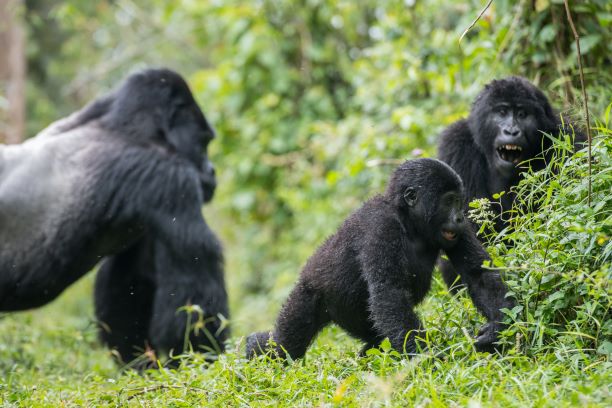
Within the daily peace of the family, blackbacks are often the “clowns” or playmates. They engage in energetic wrestling with juveniles, practice social grooming, and help maintain group cohesion.
They also act as enforcers, gently breaking up squabbles between younger gorillas. While the silverback commands respect through quiet authority and occasional displays, the blackback interacts with the group through high-energy socialization, preparing himself for the day he might lead his own family.
Understand gorilla safety in our guide: Are Gorillas Dangerous to Humans? | Are Gorillas Aggressive Towards Humans | Are Gorillas Friendly to Humans
How to Identify a Silverback and Blackback Gorilla
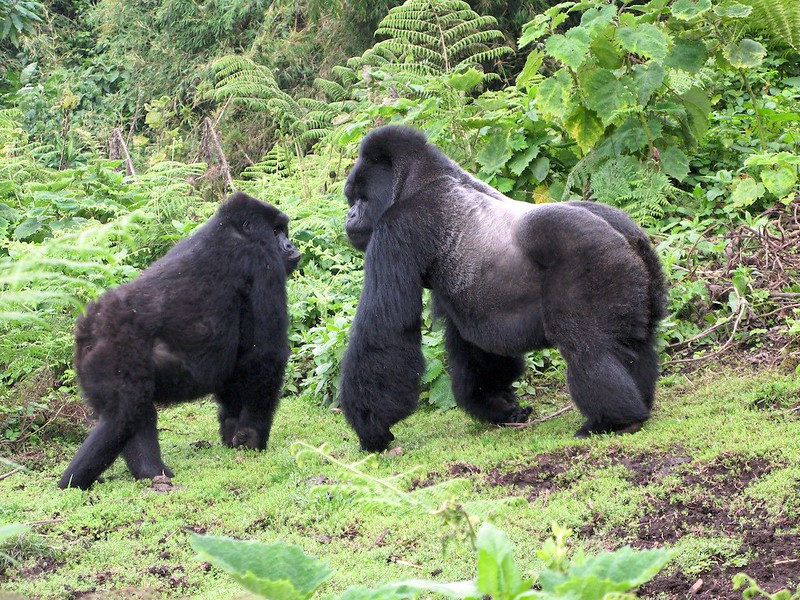
Identifying a silverback vs blackback gorilla in the dense, dappled light of the rainforest requires a keen eye. The most obvious visual cue is the silver saddle on the lower back.
In a silverback, this patch of silver-grey hair contrasts sharply with the black hair on the rest of his body. In a blackback, the back remains entirely black, blending seamlessly with the rest of his coat.
However, experienced trackers and guides look beyond just the back colour. A silverback gorilla possesses a broader, more imposing build, with a distinctly large, domed head caused by the sagittal crest.
His facial features are more pronounced, with deeper wrinkles and a more serious, commanding expression. A blackback gorilla, on the other hand, has a flatter head, a more youthful face, and a leaner, more agile physique.
When observing them in photographs or in person, look at the overall body language: the silverback often moves with a slow, deliberate, and confident swagger, while the blackback is more likely to be playful, energetic, and restless
Do Silverback and Blackback Gorillas Eat the Same Food?
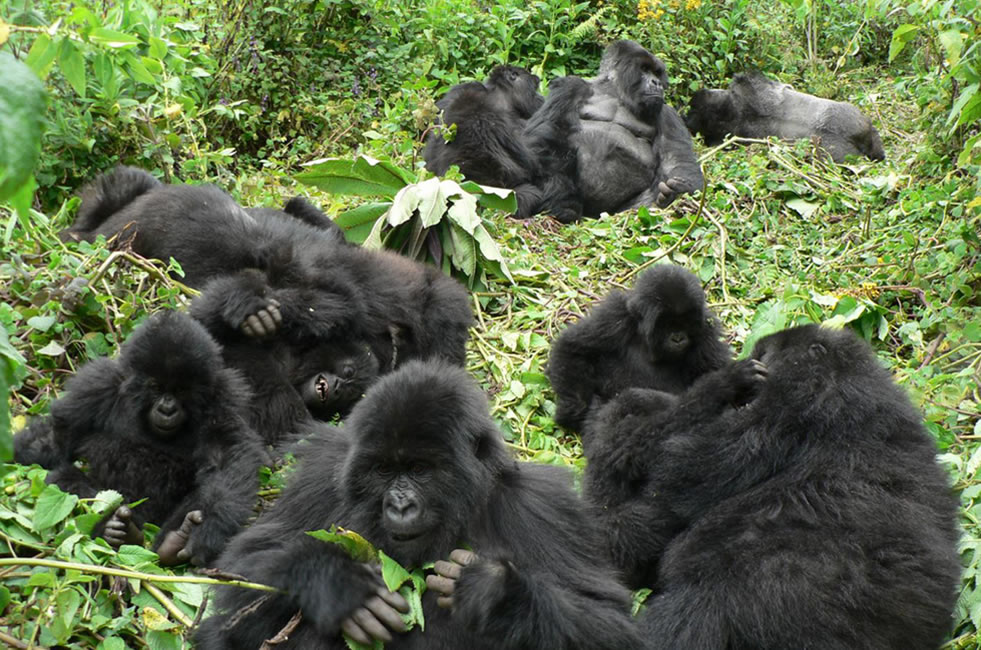
Yes, both the silverback and blackback gorilla share a remarkably similar, primarily herbivorous diet. They are opportunistic foragers, consuming a vast variety of plant material, including leaves, shoots, stems, pith, roots, and occasionally fruit.
Their diet changes with the seasons and the specific altitude of their habitat. For instance, in the high-altitude forests of the Virunga volcanoes, they heavily rely on nutrient-rich bamboo shoots and wild celery.
While their diet is overwhelmingly plant-based, both age classes have been observed consuming small insects, such as ants or termites, occasionally, usually incidentally while foraging for vegetation.
Discover more in our article: What Do Silverback Gorillas Eat?
Where Do Silverback and Blackback Gorillas Live?
To understand where you can see a silverback vs blackback gorilla, it is important to know the habitats of the four recognized gorilla subspecies.
The mountain gorilla (Gorilla beringei beringei) is the subspecies most tourists encounter, and they live exclusively in the high-altitude, mist-cloaked volcanic forests of the Virunga Massif (spanning Uganda, Rwanda, and the Democratic Republic of the Congo) and the Bwindi Impenetrable Forest in Uganda.
They thrive at elevations between 2,200 and 4,300 meters.
The other three subspecies inhabit different regions: the Eastern Lowland gorilla (Grauer’s gorilla) lives in the dense forests of the eastern DRC; the Western Lowland gorilla inhabits the swampy forests and clearings of Central and West Africa; and the critically endangered Cross River gorilla lives in the border region of Nigeria and Cameroon.
Both silverbacks and blackbacks of all these subspecies share the same geographical ranges as their respective family groups, adapting their foraging behaviors to their specific ecological niches.
Related Read | Discover more about Bwindi Impenetrable Forest Guide | Bwindi Impenetrable National Park
Can You See Both Gorillas During a Gorilla Trek?
One of the most exciting aspects of gorilla trekking is the opportunity to observe a complete, functioning gorilla family.
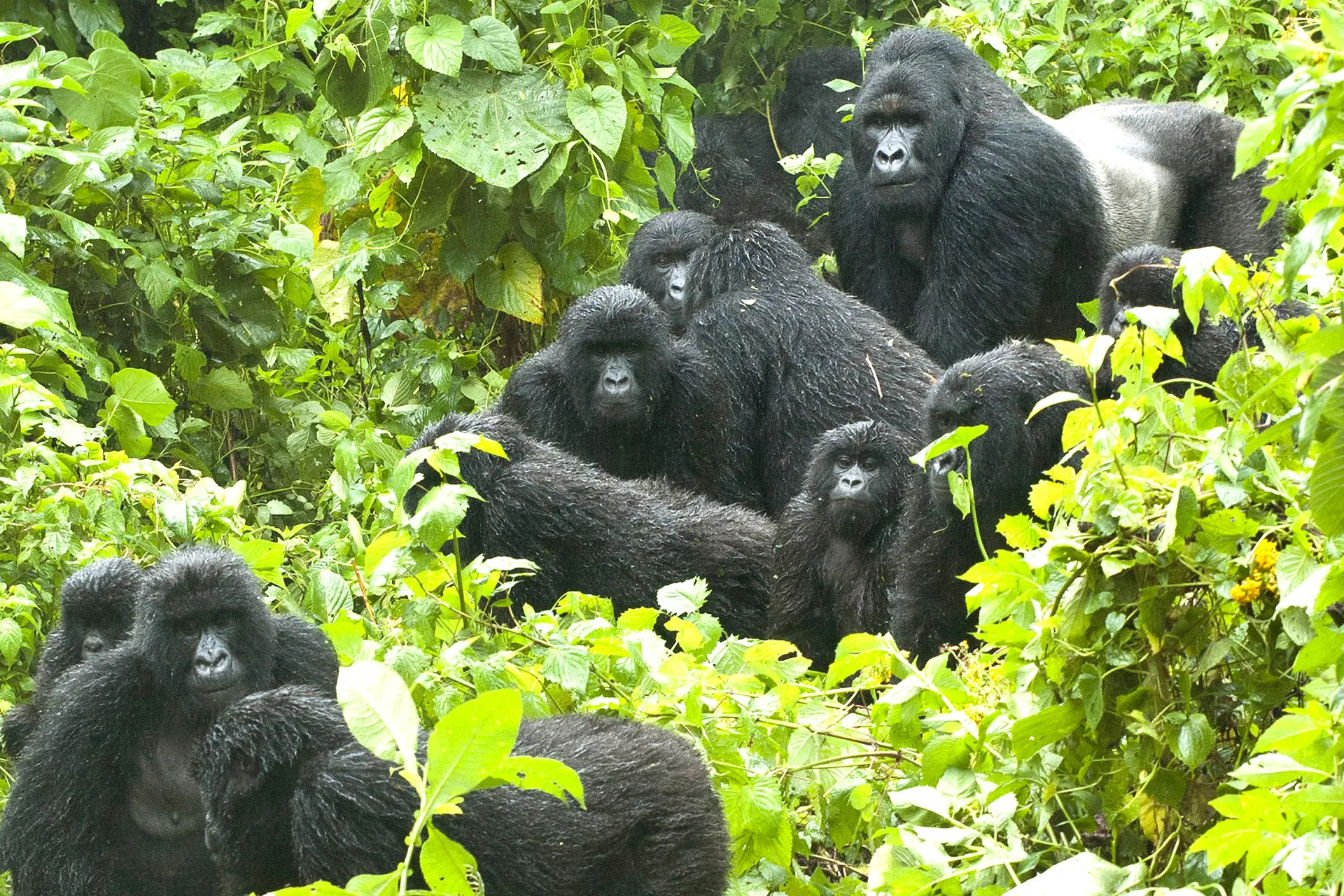
When you track habituated mountain gorillas in Uganda and Rwanda—whether in Bwindi Impenetrable Forest, Mgahinga Gorilla National Park, or Volcanoes National Park—you will almost certainly see both silverback and blackback gorillas during your trek.
A typical habituated family consists of one dominant silverback, several adult females, their dependent offspring, and often one or more sub-adult males (blackbacks) or younger silverbacks.
During your allocated hour with the family, you might watch the dominant silverback resting majestically while a playful blackback wrestles with a juvenile nearby.
However, it is important to manage your expectations: particular individuals and specific age classes cannot be guaranteed.
Gorillas are wild, free-roaming animals, and family dynamics change. A blackback might have recently dispersed, or a new silverback might have taken over a group. The beauty of the trek lies in observing the natural, unscripted reality of their daily lives.
Explore our Uganda Gorilla Safari Packages or Rwanda Gorilla Trekking Tours | Discover the differences between Bwindi vs Volcanoes National Park
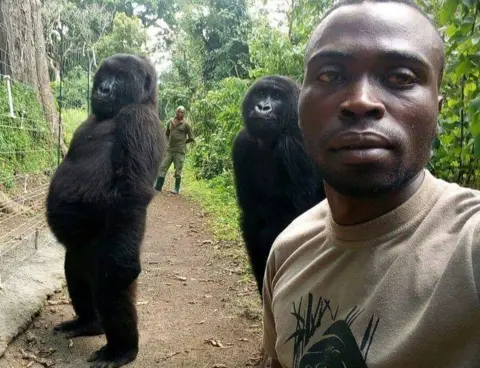
Are Silverback Gorillas More Dangerous Than Blackbacks?
A common myth fueled by pop culture is that the silverback gorilla is a ferocious, aggressive beast. In reality, both silverbacks and blackbacks are generally peaceful, gentle giants.
However, both are wild animals capable of causing serious injuries if they feel threatened, cornered, or if their family is in danger.
A silverback gorilla is more dangerous simply because of his massive size, strength, and his role as the primary defender of the troop. If a silverback initiates a defensive charge, it is a serious situation.
A blackback gorilla, while smaller, can also be unpredictable and may initiate a bluff charge or act aggressively if he is testing his boundaries or feeling stressed.
Ultimately, danger does not depend on whether the gorilla is a silverback or a blackback; it depends on the individual gorilla’s temperament and the specific situation.
This is why visitors must strictly follow ranger instructions, maintain a 7-meter distance, avoid direct eye contact, and never approach or provoke the gorillas.

Silverback vs Blackback in Gorilla Trekking
For travelers from the USA, Canada, UK, Europe, Asia, China, Oceania, Latin America, the Middle East, and local East African visitors, seeing both a silverback and a blackback is one of the most rewarding wildlife experiences in Africa.
The best gorilla trekking destinations are:
-
Uganda: Bwindi Impenetrable National Park and Mgahinga Gorilla National Park
-
Rwanda: Volcanoes National Park
-
Democratic Republic of Congo: Virunga National Park
Discover the best time and months to visit these National Parks, that will help you maximize your experience: Best Time to Visit Volcanoes National Park | Best Time to Visit Bwindi National Park | Best Time to Trek Gorillas
How Guides Identify Them
Ranger guides identify silverbacks by the silver-gray saddle, while blackbacks are identified by their black backs, smaller build, and subordinate position within the family
1. What You May See
On a single trek, you may observe:
-
A dominant silverback resting in a clearing
-
A blackback feeding nearby or watching the group
-
Mothers grooming infants
-
Juveniles playing under the silverback’s protection
-
Chest-beating, grooming, or a short display
2. Photography Tips
-
Use a zoom lens rather than approaching closer.
-
Focus on the silver saddle, facial expression, and family interactions.
-
Keep camera sounds and movements minimal.
-
Never use flash.
-
Follow your guide’s positioning instructions.
3. Ethical Gorilla Trekking Rules
-
Keep the required distance from the gorillas.
-
Do not touch or feed gorillas.
-
Do not use flash photography.
-
Stay with your ranger guide at all times.
-
Avoid trekking if you are ill, to protect gorillas from respiratory disease.
-
Choose operators that support local communities and conservation.
Book responsibly. Reserve your gorilla permit and trek with GoSilverback Gorilla Safaris for a conservation-focused, expert-guided gorilla experience.

Conservation Status and Threats
Silverbacks and blackbacks face the same conservation threats because they belong to the same gorilla populations. Major threats include habitat loss, poaching, disease transmission, human-wildlife conflict, and regional instability in parts of their range.
Gorilla tourism can support conservation when it is carefully managed. Permit fees, ranger employment, community projects, and responsible safari operations all help fund protection of gorillas and their forest habitats.
When you trek with a responsible operator, your trip becomes more than a photograph—it becomes direct support for the people and parks protecting these remarkable animals.
FAQs About Silverback and Blackback Gorillas
Is a silverback a different species of gorilla?
No. A silverback is not a separate species. It is a mature male gorilla that has developed silver-gray hair on its back and hips. Silverbacks can be mountain gorillas, eastern lowland gorillas, or western lowland gorillas.
At what age does a blackback become a silverback?
Most blackbacks begin developing silver hair and transitioning toward full maturity at around 11–13 years old. The exact timing varies by individual, subspecies, health, and environmental conditions.
Can there be more than one silverback in a group?
Yes. Some gorilla families include more than one mature male. However, one silverback is usually dominant, while other silverbacks or blackbacks hold subordinate roles within the troop.
Is a silverback always the leader of a gorilla family?
Usually, yes. The oldest, most dominant silverback leads the group. However, in multi-male groups, there can be subordinate silverbacks who follow the lead of the dominant, older silverback.
Are silverback gorillas stronger than blackbacks?
Yes. Because silverbacks are fully mature, they possess greater body mass, denser musculature, and a more powerful bite force compared to the still-developing blackback.
Do blackback gorillas leave their family groups?
Yes, many blackbacks eventually disperse. They may leave to live a solitary life, join a bachelor group, or attempt to poach females from another group to start their own family.
Can a gorilla family have more than one silverback in its group?
Yes, some families are multi-male groups. They will have one dominant silverback who leads, and one or more subordinate silverbacks (often his sons) who help protect the group.
Do silverback gorillas fight other males?
Physical fights are rare but can be fatal. Silverbacks usually rely on intimidating displays, such as chest-beating and bluff charges, to resolve conflicts with rival males without physical combat.
Are blackbacks dangerous?
Blackbacks are wild, powerful animals and should always be treated with caution. However, habituated gorillas observed on guided treks are accustomed to human presence. Safety depends on following ranger instructions, keeping distance, and avoiding sudden movements.
What do silverback gorillas eat?
They are primarily herbivores, eating a wide variety of leaves, stems, shoots, roots, and occasionally fruit. They consume up to 30 kilograms (66 lbs) of vegetation daily.
Do blackbacks mate?
Yes, blackbacks can be sexually mature and may mate occasionally. However, the dominant silverback usually has primary breeding access to the females in a stable troop.
Who is stronger: silverback or blackback?
A mature silverback is usually stronger because he is older, larger, and more experienced. But dominance also depends on confidence, alliances, health, and social circumstances—not size alone.
How long do gorillas live in the wild?
Mountain gorillas typically live for 35 to 40 years in the wild, though some individuals, particularly dominant silverbacks, can live into their late 40s or even early 50s.
Can tourists see blackbacks during gorilla trekking?
Yes. Many habituated gorilla families include blackbacks. Trekkers in Uganda, Rwanda, and the Democratic Republic of Congo may see blackbacks feeding, resting, playing, or interacting with the dominant silverback.
What is the main difference between a silverback and a blackback?
The main difference is maturity and dominance. A blackback is a younger adult male without a silver saddle; a silverback is a fully mature male with silver-gray back hair and, in most cases, leadership of the troop.
Final Thoughts: See the Difference for Yourself
The difference between a silverback and blackback gorilla comes down to age, maturity, appearance, and social rank. A blackback is a young adult male still developing toward full maturity, while a silverback is the powerful, experienced leader who guides and protects the gorilla family.
Seeing a silverback lead his family through the misty forests of Bwindi, Volcanoes National Park, or Virunga is one of Africa’s greatest wildlife encounters.
Whether you are traveling from North America, Europe, the UK, Asia, China, Oceania, Latin America, the Middle East, or within East Africa, a guided gorilla trek offers an unforgettable, conservation-positive adventure.
Ready to meet a silverback in the wild? Book your gorilla permit and guided trek today with GoSilverback Gorilla Safaris.
Our expert guides, responsible trekking practices, and carefully planned Uganda and Rwanda itineraries help you experience gorillas safely—while supporting the conservation of these extraordinary animals for future generations.
Contact GoSilverback Gorilla Safaris now to reserve your gorilla trekking permit.