Why Are Mountain Gorillas Endangered Species? Causes & Solutions Ultimate Guide 2026
Mountain gorillas are critically endangered due to severe habitat loss, poaching, disease transmission, and human-wildlife conflict.
With only 1,063 individuals left in the wild, they survive in just two isolated forest pockets: Bwindi Impenetrable National Park in Uganda and the Virunga Volcanoes spanning Rwanda, Uganda, and DRC.
Rapid human population growth has destroyed their habitat for farmland, while snares, respiratory diseases, and climate change continue to threaten their survival.
Despite a remarkable recovery from fewer than 250 in the 1980s, mountain gorillas remain highly vulnerable. Responsible gorilla trekking tourism now plays a vital role in funding their protection.
Why are mountain gorillas endangered species? This question echoes in the minds of travelers from the USA, UK, Europe, Canada, Asia, and the Middle East who dream of seeing gorillas in the wild.
With only 1,063 mountain gorillas left on Earth as of the 2025 census, these majestic primates remain critically endangered despite decades of conservation success.
At GoSilverback Gorilla Safaris, we have guided thousands of responsible travelers into the misty forests of Bwindi Impenetrable National Park and the Virunga Volcanoes.
Mountain gorillas are not just iconic wildlife; they are a symbol of hope and fragility. Their story is one of near-extinction followed by slow recovery, yet ongoing threats keep them on the IUCN Red List.
This authoritative 2026 guide examines the reasons mountain gorillas are endangered, their current status, and how responsible gorilla trekking tourism is playing a vital role in their survival.
Understanding these facts deepens your appreciation of every gorilla encounter and empowers you to become part of the solution.
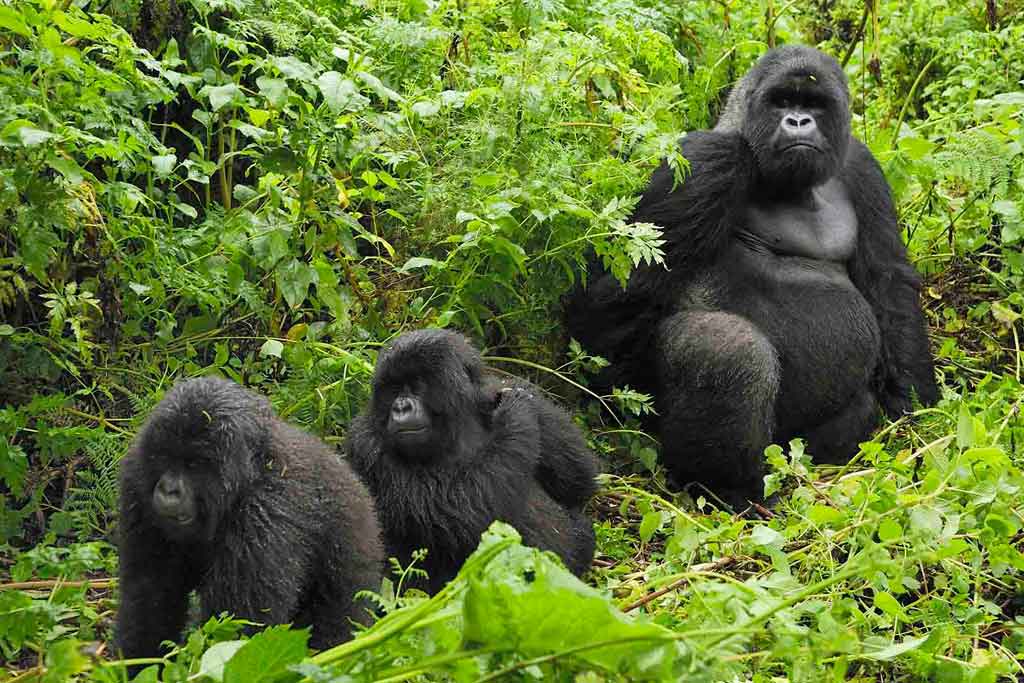
Where Do Mountain Gorillas Live?
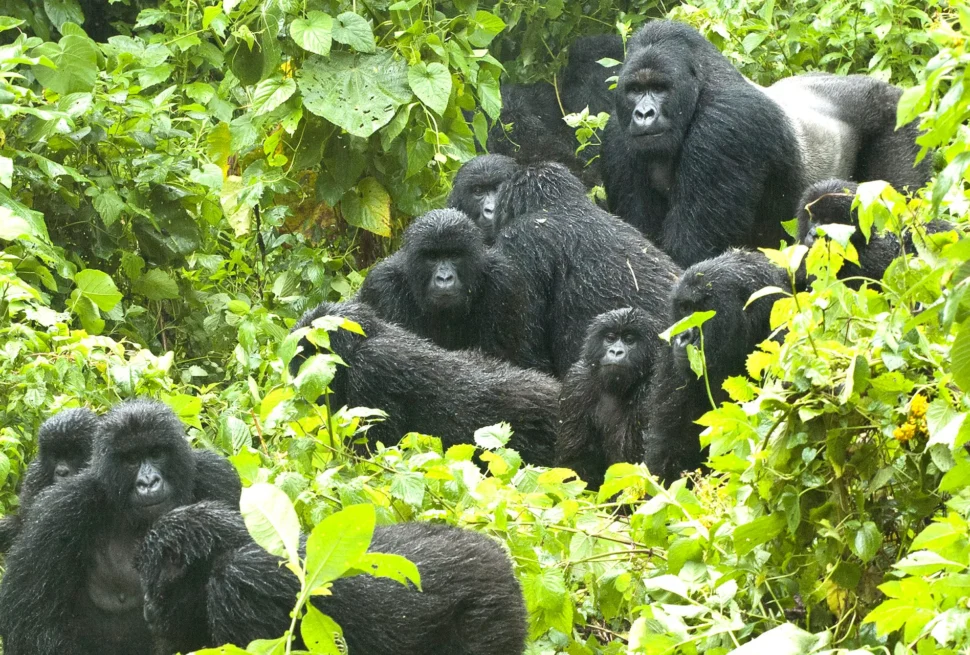
Mountain gorillas have one of the most restricted ranges of any great ape. They live exclusively in the high-altitude cloud forests of the Albertine Rift Valley in East and Central Africa.
The entire global population is confined to just two locations:
- Bwindi Impenetrable National Park, Uganda – home to roughly half the world’s mountain gorillas (over 400 individuals) across 331 km² of ancient rainforest.
- Virunga Massif – a chain of eight volcanoes shared by Rwanda (Volcanoes National Park), Uganda (Mgahinga Gorilla National Park), and the Democratic Republic of Congo (Virunga National Park).
These habitats sit between 2,200 and 4,300 metres above sea level. The cool, misty environment supports the dense vegetation that forms the gorillas’ diet — leaves, stems, bark, and fruit.
The steep terrain and thick undergrowth historically protected them from human encroachment, but today these same forests are under intense pressure from surrounding communities.
No mountain gorillas exist in captivity. Every individual you see on a gorilla trek lives in these two tiny, precious pockets of forest — making each sighting extraordinarily special.
Why Are Mountain Gorillas Endangered?
Why are mountain gorillas endangered? The reasons are complex, interconnected, and rooted in human activity around their shrinking habitat.
1. Habitat Loss and Fragmentation
The greatest threat remains habitat destruction. Rapid human population growth around the parks has turned former forest into farmland.
In the Virunga region, population density exceeds 700 people per square kilometre — one of the highest in Africa bordering a protected area. Farmers clear land for bananas, maize, and beans, crops that gorillas also find attractive, leading to increased crop raiding and conflict.
2. Poaching and Illegal Hunting
Although commercial poaching of gorillas has declined dramatically thanks to international pressure, snares set for other bushmeat (duiker, bushbuck) still injure or kill gorillas.
A single snare can trap a silverback’s hand or foot, causing severe infection or death. In the 1980s and 1990s, poaching and civil unrest in the Virungas pushed the population dangerously low.
3. Disease Transmission
Mountain gorillas share 98.4% of their DNA with humans, making them extremely vulnerable to our diseases. Respiratory infections, measles, and even the common cold can spread during close encounters or through contaminated water sources. Ebola outbreaks in the past have devastated gorilla populations elsewhere in Africa, and the risk remains real.
4. Climate Change
Rising temperatures and erratic rainfall patterns are shifting the bamboo and fruit cycles that gorillas depend on. Higher altitudes are warming faster, forcing gorillas into smaller, more crowded ranges and increasing competition between groups.
5. Human-Gorilla Conflict
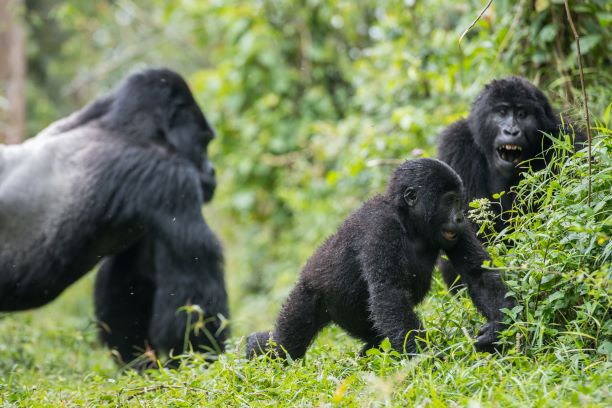
As gorillas expand their range or search for food outside park boundaries, they raid crops, causing economic losses for subsistence farmers. In retaliation, some communities set traps or poison fields, creating a dangerous cycle of mistrust.
6. Political Instability and Civil Unrest
The Virunga region has suffered decades of conflict, refugee movements, and resource exploitation. Armed groups have historically used the forests for hiding and resources, increasing pressure on gorilla habitat and making conservation patrols difficult.
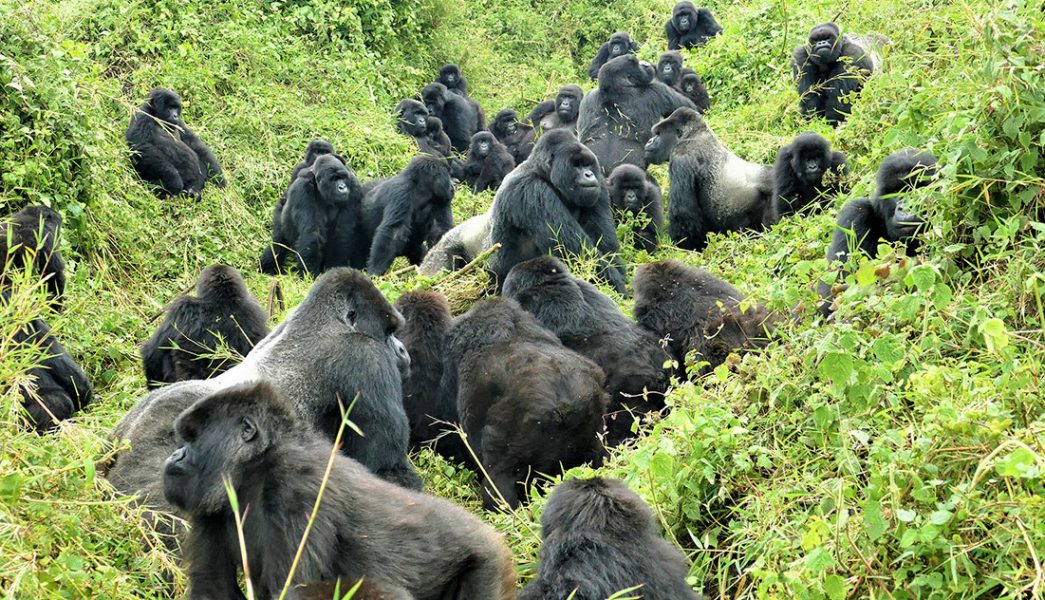
These threats have reduced the mountain gorilla population to a tiny fraction of its historical numbers. Even with the remarkable recovery from fewer than 250 individuals in the 1980s to 1,063 today, the species remains highly vulnerable because of its extremely small and isolated populations.
“After understanding why mountain gorillas are endangered, you can support their conservation directly by exploring our responsibly guided gorilla safari tour packages designed to protect their natural habitat.”
Impact of Endangerment on Gorilla Population
The endangerment of mountain gorillas has created a precarious genetic bottleneck. With only 1,063 individuals split between two isolated populations, inbreeding risks rise, potentially reducing disease resistance and reproductive success.
Low numbers also mean slower recovery from any single disaster — a disease outbreak, a bad bamboo flowering year, or increased poaching can wipe out years of progress in one season.
Infant mortality and inter-group aggression increase when groups are forced into overlapping territories due to habitat compression.
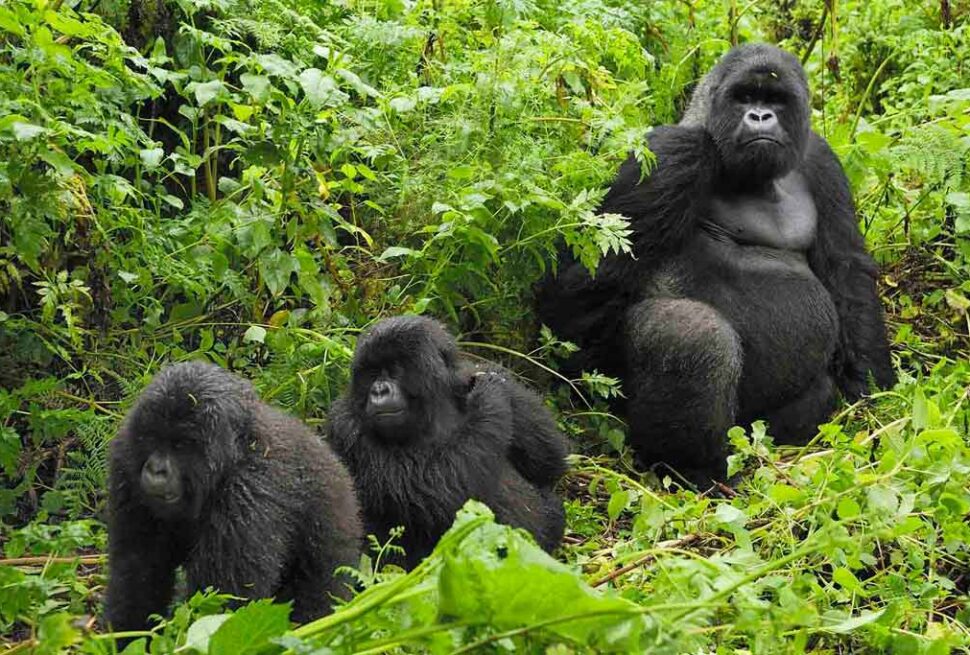
The loss of even a few silverbacks can destabilise entire family groups, affecting social structure and breeding rates. Every gorilla death in the wild is a significant blow to the species’ long-term survival.
Conservation Efforts Saving Mountain Gorillas
The survival of mountain gorillas stands as one of Africa’s most inspiring conservation success stories. From a low of fewer than 250 individuals in the 1980s to 1,063 today, decades of dedicated, multi-stakeholder efforts have reversed what once seemed like an inevitable decline.
This recovery demonstrates what is possible when science, local communities, governments, and responsible tourism work together.
The foundation of mountain gorilla conservation rests on strong protected area management.
Uganda Wildlife Authority (UWA) and Rwanda Development Board (RDB) manage Bwindi Impenetrable National Park and Volcanoes National Park with strict enforcement.
Highly trained ranger teams conduct daily foot patrols, removing thousands of snares each year and deterring illegal activities.
In the Virunga Massif, transboundary collaboration between Rwanda, Uganda, and the Democratic Republic of Congo has been essential, despite occasional political challenges.
One of the most effective tools has been the International Gorilla Conservation Programme (IGCP), a partnership between Fauna & Flora, WWF, and Conservation International.
Since 1991, IGCP has coordinated cross-border efforts, including joint ranger training, data sharing, and community engagement programmes that benefit all three countries. Veterinary care plays a life-saving role.
Gorilla Doctors, a pioneering wildlife veterinary programme, provides round-the-clock monitoring and medical intervention for habituated and unhabituated gorillas.
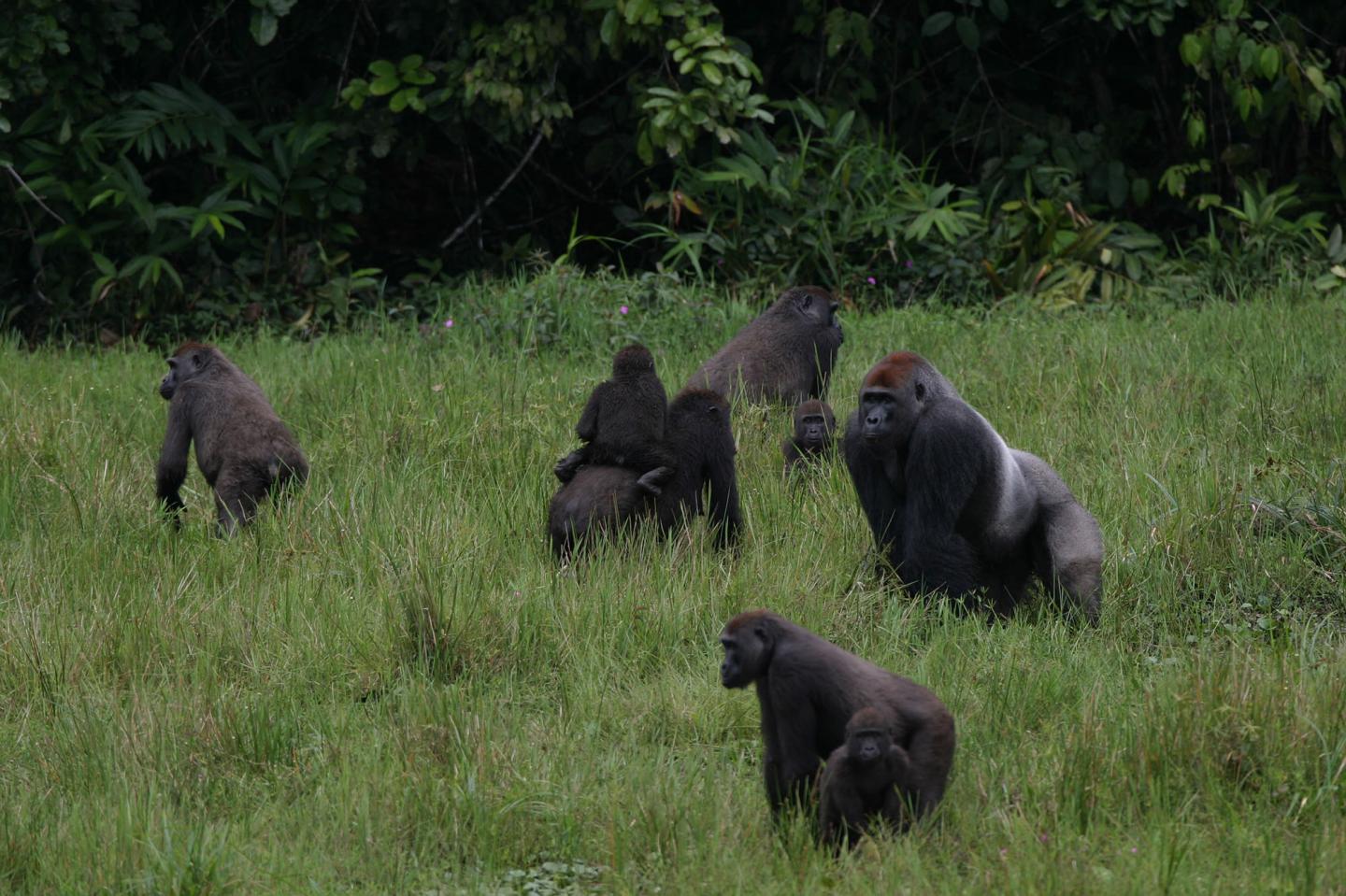
They have successfully treated snare wounds, respiratory infections, and injuries from inter-group conflicts. Their rapid-response teams have dramatically reduced mortality rates from preventable causes.
Community involvement has proven equally critical. Both Uganda and Rwanda direct 20% of gorilla permit revenue back to communities living adjacent to the parks.
This money funds schools, health clinics, roads, water projects, and alternative income initiatives such as beekeeping, handicrafts, and eco-tourism enterprises. When local people gain tangible benefits from protecting gorillas, tolerance increases and illegal activities decrease.
The Human-Gorilla Conflict Resolution (HuGo)
programme in Uganda is particularly innovative. Specially trained teams respond quickly to crop-raiding incidents using non-lethal methods such as noise makers, chili barriers, and herding techniques.
This approach has resolved over 85% of reported conflicts peacefully while building trust between communities and conservation authorities.
Habitat expansion and restoration efforts are gaining momentum. In Rwanda, the government has purchased private land to create buffer zones around Volcanoes National Park.
In Uganda, reforestation projects and corridor development help connect fragmented forest patches, giving gorillas more space and reducing edge effects.
Research and monitoring provide the scientific backbone for all conservation decisions.
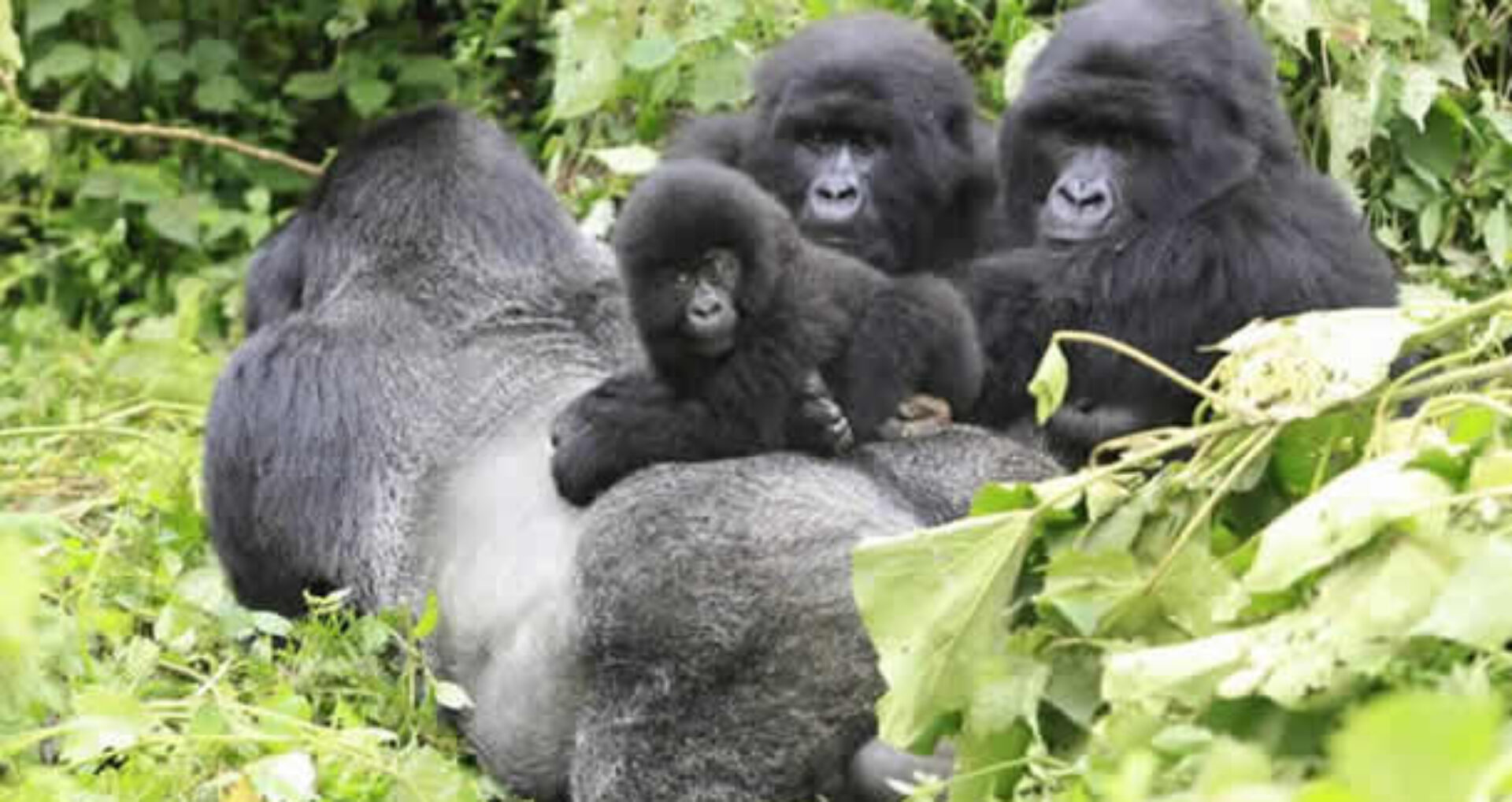
The Dian Fossey Gorilla Fund and various universities conduct long-term studies on gorilla behavior, genetics, health, and ecology. Regular population censuses — the most recent in 2025 — give accurate data on numbers, distribution, and threats, allowing conservationists to adapt strategies effectively.
“After understanding why mountain gorillas are endangered, you can support their conservation directly by exploring our responsibly guided gorilla safari tour packages designed to protect their natural habitat.”
Responsible gorilla trekking tourism has become a cornerstone of the recovery. Each $800 gorilla permit in Uganda and $1,500 in Rwanda generates substantial revenue that is reinvested directly into protection.
Tourism has created thousands of jobs and transformed local attitudes. Communities that once viewed gorillas as crop pests now see them as valuable economic assets.
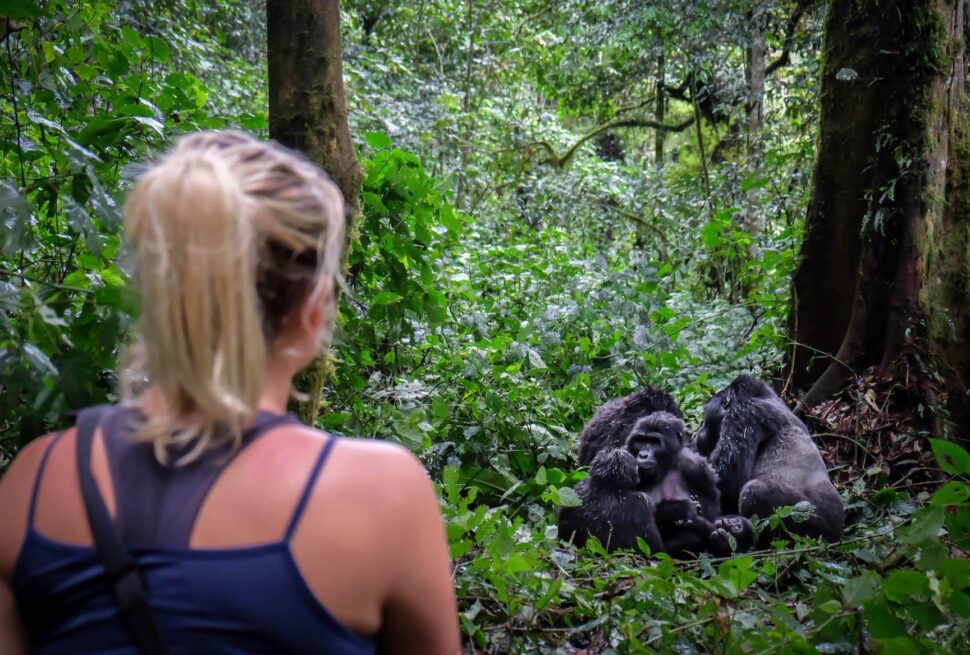
Strict rules — maximum 8 visitors per group, 7-metre distance, one-hour limit, and health screening — ensure that tourism itself does not become a threat.
Education programmes in schools and villages have been equally important. Children growing up near the parks now learn about gorilla ecology and the importance of conservation, creating a new generation of stewards.
Despite these impressive achievements, conservation remains an ongoing battle.
Climate change, emerging diseases, and continued population pressure mean that efforts must constantly evolve. The mountain gorilla population is still small and fragmented, leaving little room for error.
The success to date proves that mountain gorillas can be saved when conservation is well-funded, locally supported, and backed by responsible international tourism.
Every gorilla safari contributes directly to this effort, turning visitors into active participants in one of the most important wildlife recovery stories of our time.
Role of Gorilla Trekking Tourism
Gorilla trekking tourism has become the single most powerful financial tool for mountain gorilla survival. Each $800 gorilla permit in Uganda and $1,500 in Rwanda generates revenue that funds the entire conservation infrastructure.
Tourism creates thousands of jobs — guides, trackers, porters, lodge staff, and craftspeople — giving local communities a direct economic stake in protecting the gorillas.
Strict rules (maximum 8 trekkers per group, 7-metre distance, one-hour limit) minimise disease transmission while maximising revenue.
Responsible operators like GoSilverback Gorilla Safaris ensure that tourism remains a net positive force, turning potential conflict into coexistence and providing the economic incentive communities need to value living gorillas over short-term gains from poaching or farming.
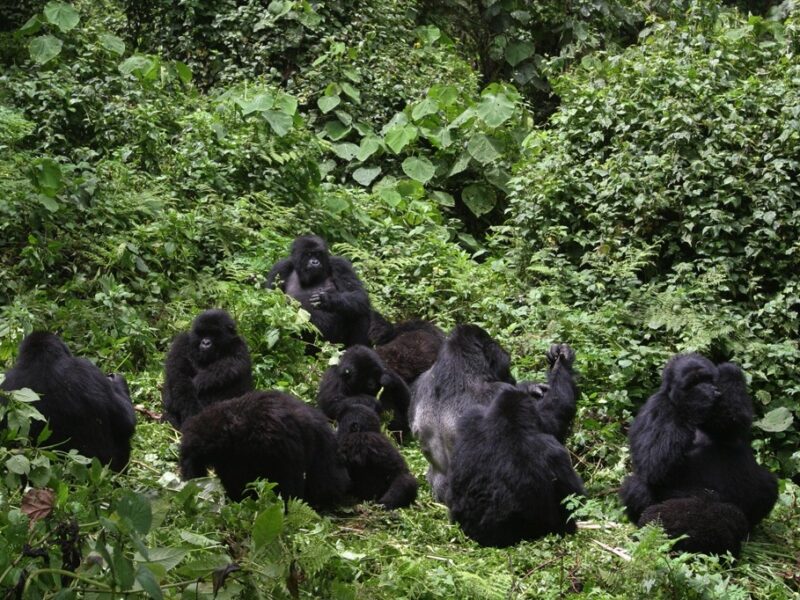
Are Mountain Gorillas Still Endangered Today?
Yes. Despite the population increase, mountain gorillas remain critically endangered. The IUCN Red List classification has not changed because the total number is still dangerously low and the threats have not disappeared.
Any major setback — a new disease, political instability, or climate-driven food shortage — could rapidly reverse the gains.
The species’ future depends on continued international support, strong local governance, and responsible tourism. The progress is encouraging, but the margin for error remains razor-thin.
How You Can Help Protect Mountain Gorillas
Every traveler can make a difference:
- Choose authorised operators who contribute directly to conservation.
- Follow all trekking rules to minimise disease risk.
- Support community projects by buying local crafts and staying in community-linked lodges.
- Consider sponsoring a gorilla through recognised programmes.
- Share your experience responsibly to raise global awareness.
Your decision to book a gorilla safari is itself an act of conservation.
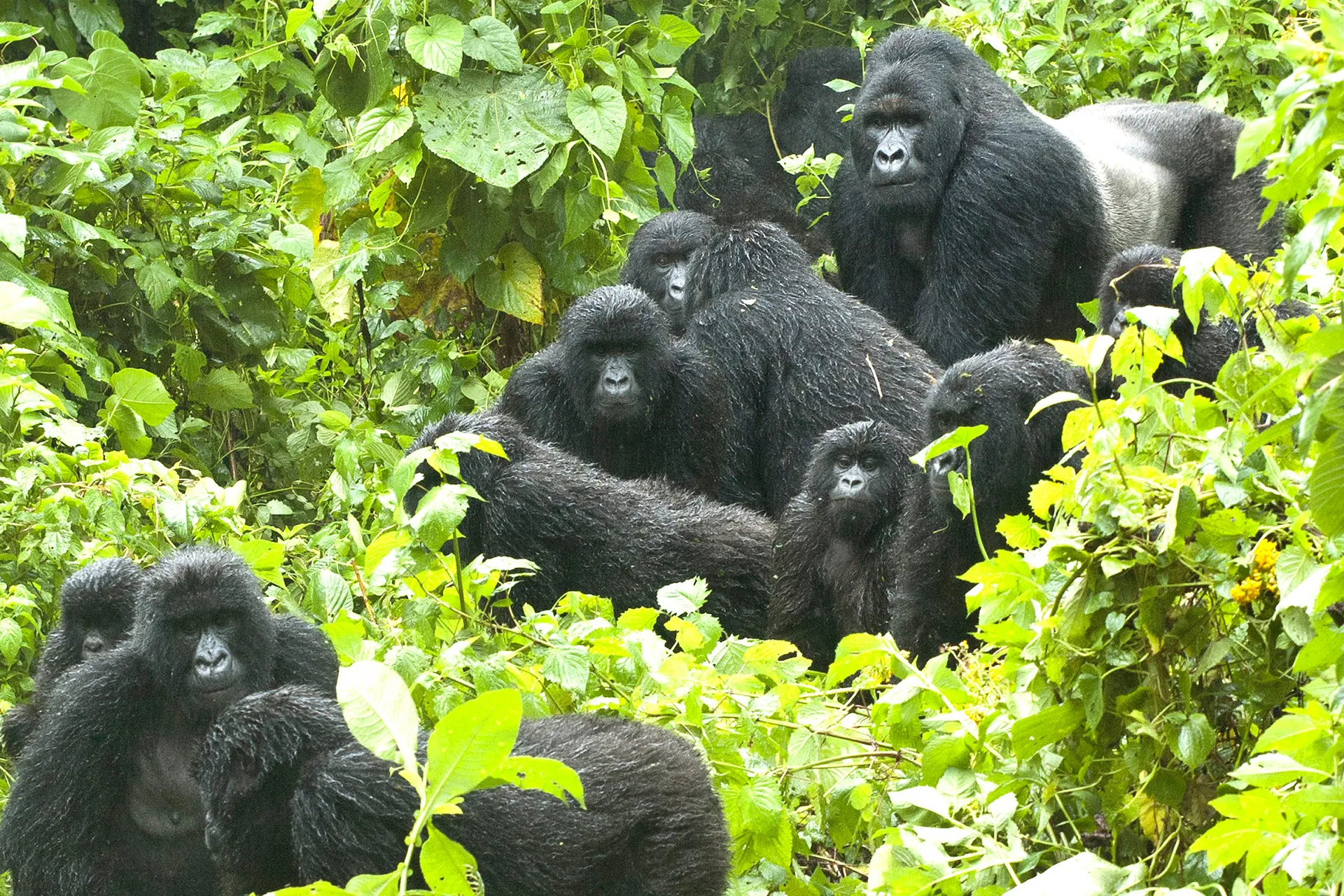
“After understanding why mountain gorillas are endangered, you can support their conservation directly by exploring our responsibly guided gorilla safari tour packages designed to protect their natural habitat.”
Gorilla Trekking Experience
The gorilla trekking experience transforms abstract concern into personal connection. After a briefing at the park gate, you trek through misty rainforest with expert trackers. When you first glimpse a silverback or a mother with her infant at seven metres, the emotional impact is profound.
You witness intelligence, family bonds, and gentle power that words cannot fully capture. This one hour becomes a lifelong memory and a powerful motivation to protect these animals.
Gorilla Trekking Tips for Travelers
- Book permits 6–12 months in advance.
- Train with hilly walks for fitness.
- Pack waterproof boots, rain gear, and layers.
- Follow ranger instructions strictly.
- Respect the 7-metre rule and quiet behaviour.
How to Book an African Gorilla Safari
Booking is simple: choose dates and sector, confirm fitness and health requirements, select your accommodation level, and let an authorised operator secure the permit. GoSilverback Gorilla Safaris handles all logistics and guarantees availability or a full refund.
Why Book with GoSilverback Gorilla Safaris
GoSilverback Gorilla Safaris offers 100% permit success, former UWA rangers as guides, private 4×4 vehicles, and direct conservation partnerships. Every booking supports the HuGo conflict teams, habitat expansion, and community projects that keep mountain gorillas safe.
“After understanding why mountain gorillas are endangered, you can support their conservation directly by exploring our responsibly guided gorilla safari tour packages designed to protect their natural habitat.”
FAQs About Why Are Mountain Gorillas Endangered Species?
Why did mountain gorillas become endangered?
Mountain gorillas became endangered primarily due to massive habitat loss from agricultural expansion, poaching for bushmeat and trophies, and civil unrest in the Virunga region. Human population growth around their forests destroyed their natural habitat, while diseases transmitted from humans further decimated their numbers. By the 1980s, fewer than 250 mountain gorillas remained in the wild. (60 words)
What is the biggest threat to mountain gorillas?
The biggest threat to mountain gorillas is habitat loss and fragmentation caused by rapid human population growth and agricultural encroachment. Farmers clear forests for crops right up to park boundaries, reducing available food and increasing human-gorilla conflict. Poaching with snares and disease transmission from humans are also major ongoing threats. (60 words)
How do you say “hi” in gorilla?
There is no spoken language like “hi” in gorilla. Gorillas communicate through body language, vocalizations, and gestures. A gentle grunt, soft chest beat, or relaxed approach signals friendliness. In habituated groups during gorilla trekking, a calm posture and avoiding direct eye contact is the best way to say “hello” peacefully. (60 words)
How many endangered mountain gorillas are left?
Only 1,063 mountain gorillas are left in the wild as of the latest 2025 census. This includes roughly 400 in Bwindi Impenetrable National Park, Uganda, and the rest in the Virunga Volcanoes across Rwanda, Uganda, and DRC. Despite slow recovery, they remain critically endangered due to their tiny, isolated population.
Why are mountain gorillas endangered?
Mountain gorillas are endangered primarily due to habitat loss, poaching, disease transmission from humans, climate change, and human-gorilla conflict. Their tiny population of just 1,063 makes them extremely vulnerable.
How many mountain gorillas are left in the wild?
As of the 2025 census, 1,063 mountain gorillas remain — roughly half in Uganda’s Bwindi and half in the Virunga Volcanoes.
What is the biggest threat to mountain gorillas?
Habitat loss from agricultural expansion around the parks is the greatest long-term threat, followed closely by disease and snares.
Can mountain gorillas be saved from extinction?
Yes. Their population has grown from fewer than 250 in the 1980s to 1,063 today thanks to conservation and tourism revenue. Continued support is essential.
How does gorilla trekking help save mountain gorillas?
Gorilla permit fees fund anti-poaching, veterinary care, and community projects, giving local people an economic reason to protect the gorillas instead of harming them.
Are mountain gorillas still critically endangered?
Yes. Although numbers are increasing, the species remains critically endangered because of its small, isolated population and ongoing threats.
Where is the best place to see mountain gorillas?
Bwindi Impenetrable National Park in Uganda offers the largest population and most varied trekking, while Volcanoes National Park in Rwanda provides luxury lodges and shorter transfers.
What diseases threaten mountain gorillas?
Respiratory infections, measles, and Ebola are the greatest risks. Gorillas share 98.4% of DNA with humans, making them highly susceptible to our illnesses.
How close can you get to mountain gorillas on a trek?
Exactly 7 metres minimum. Rangers strictly enforce this distance to protect both gorillas and visitors from disease transmission.
Can tourists help reduce human-gorilla conflict?
Yes. By choosing ethical operators and supporting community projects, travelers provide income that reduces the need for farmers to raid gorilla habitat.
Is gorilla tourism sustainable?
When done responsibly with strict rules and revenue sharing, gorilla tourism is one of the most successful models of sustainable conservation in Africa.
What can I do to help mountain gorillas?
Book with reputable operators, follow trekking rules, support community initiatives, and spread awareness about the threats they face.
Conclusion
Mountain gorillas are endangered because of habitat loss, poaching, disease, and human pressure — yet they also represent one of conservation’s greatest triumphs. From near-extinction to a slowly growing population of 1,063, their story proves that dedicated protection and responsible tourism can turn the tide.
Your visit to see gorillas in the wild is not just a bucket-list adventure — it is a direct investment in their future. Every gorilla permit purchased helps fund the rangers, veterinarians, and community projects that keep these magnificent animals alive.
Secure your gorilla permit today through GoSilverback Gorilla Safaris and become part of the solution. Whether you trek in Bwindi or the Virungas, our expert team will ensure your safari is safe, ethical, and genuinely impactful.
Contact GoSilverback Gorilla Safaris now to book your mountain gorilla trekking safari. Limited permits are released monthly — do not miss your chance to stand before a silverback and help write the next chapter of this extraordinary species’ survival.