Do Gorillas Eat Humans? The Truth About Gorilla Behaviour Toward Humans Guide 2026
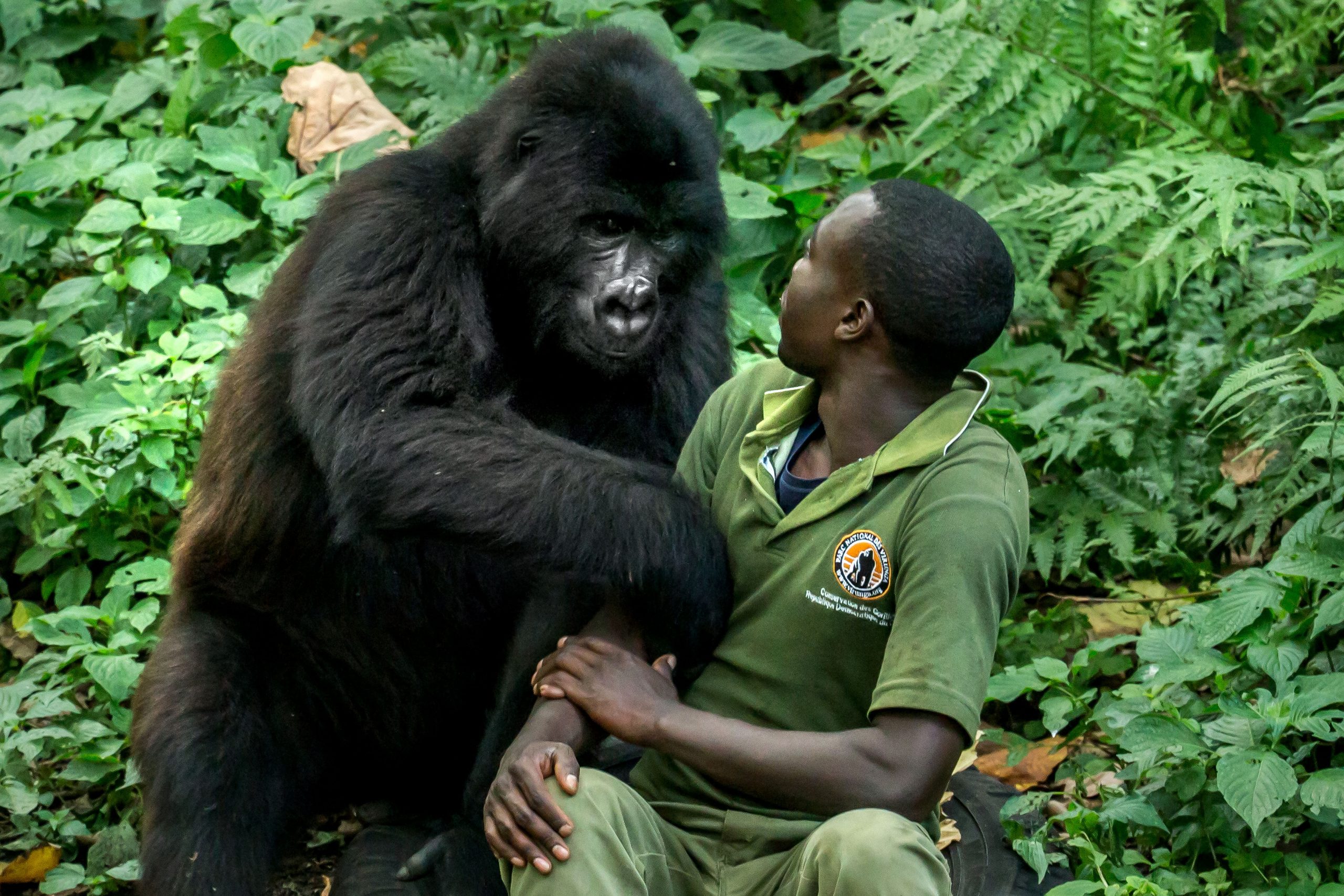
Do gorillas eat humans? No. Gorillas are strictly herbivores and do not prey on humans. Their diet consists entirely of plant material, and they have no biological drive to hunt or consume human flesh.
However, because of their massive size, immense muscular strength, and wild instincts, they must always be treated with profound respect.
It is crucial to understand the distinction between a gorilla eating a human (which does not happen), a gorilla defending its family, and a gorilla displaying aggressive gorilla behaviour.
Understanding these truths ensures both your safety and the ongoing conservation of these magnificent apes.
What Do Gorillas Eat in the Wild?
To understand gorilla behaviour, you must first understand what do gorillas eat. Gorillas are predominantly herbivores, and their massive bodies require a colossal amount of foraging.
A dominant male can consume up to 34 kg (75 lbs) of vegetation every single day.
The specific diet varies significantly by species, habitat, and seasonal food availability. Mountain gorillas (Gorilla beringei beringei) live in high-altitude forests where fruit is scarce.
Consequently, they rely heavily on leaves, stems, shoots, bark, and roots. Their favorite foods include wild celery, thistles, and bamboo shoots.
Eastern lowland gorillas (Grauer’s gorillas) inhabit lower elevations and consume a wider variety of herbs, bamboo, and occasional fruits.
Western lowland gorillas (Gorilla gorilla) live in dense tropical forests and swampy areas, where their diet is heavily supplemented by a wide variety of seasonal fruits.
While they are primarily herbivores, gorillas are not strictly vegan. They occasionally consume small invertebrates, such as ants, termites, or snails, usually accidentally while eating vegetation.
For a deeper dive into the massive dietary requirements of the troop leader, explore our comprehensive guide on what silverback gorillas eat and how they forage to sustain their enormous bulk.
Related Read | What Do Silverback Gorillas Eat? | How Long Do Gorillas Live?
Are Gorillas Dangerous to Humans?
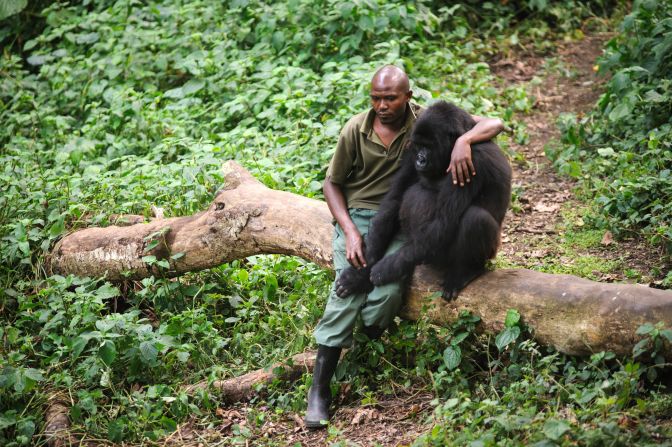
A common question among first-time trekkers is, ‘Are gorillas dangerous to humans? The honest answer is yes, they can be, but context is everything.
Gorillas are not domesticated pets; they are incredibly powerful wild animals. An adult silverback possesses an estimated strength that is 4 to 9 times greater than that of an average adult human.
However, gorillas are generally gentle, peaceful, and highly intelligent. They do not view humans as prey, nor do they hunt us. Dangerous situations almost exclusively arise when a gorilla feels its family is threatened.
Defensive gorilla behaviour is triggered if a silverback feels his group is cornered, if he is suddenly startled by a hiker stepping out of the dense foliage, or if a human violates the critical viewing distance and invades his personal space.
When a gorilla perceives a threat, its primary goal is to neutralize that threat, not to hunt. Because of their sheer size, a defensive swipe, grab, or bite can cause severe, life-altering injuries.
Therefore, while they are not mindless killers, their physical power means they must never be underestimated or disrespected in the wild.
Related Read | Are Gorillas Aggressive Toward Humans? | Are Silverback Gorillas Dangerous? | Silverback Gorillas vs human Strength
Do Gorillas Attack or Kill Humans?
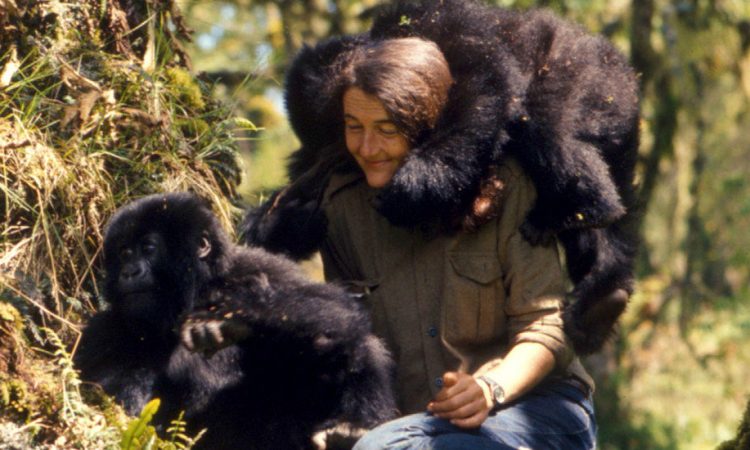
When discussing do gorillas attack humans, it is vital to distinguish between a warning display, a bluff charge, physical contact, and a serious, sustained attack.
Most aggressive encounters in the forest are bluff charges. The silverback will roar, beat his chest, throw vegetation, and charge directly at the intruder, only to stop or veer away at the last second. This is a warning, not an attempt to kill.
Actual physical contact attacks on humans are exceedingly rare. Documented cases of gorillas causing severe injury or death almost exclusively involve individuals who were not legitimate tourists.
These incidents typically involve poachers trespassing in the forest, individuals attempting to illegally capture infant gorillas, or people who severely provoked the animals outside of regulated tourism frameworks.
According to wildlife conservation organizations like the World Wildlife Fund (WWF) and the Smithsonian’s National Zoo, there are no verified records of a habituated gorilla family killing a tourist during a regulated, guided trek.
The risks are real, but they are heavily mitigated by strict park protocols and expert guide intervention.
Related Read | Why Gorillas Beat Their Chest? | What Happens During Gorilla Trekking?
Why Do Silverback Gorillas Beat Their Chests and Charge?
If you are trekking and witness a silverback gorilla charge accompanied by loud chest-beating, it can be a terrifying spectacle. But why do they do it?
Chest-beating is a complex form of non-violent communication. By cupping their hands and striking their chest, silverbacks create a highly resonant, acoustic sound that travels far through the dense forest.
Behavioral studies indicate that the pitch and resonance of the chest-beat correlate directly with the physical size of the male. It is a way for silverbacks to assess each other’s size and fitness without engaging in dangerous, energy-draining physical combat.
When a silverback beats his chest and charges in the presence of humans, he is executing a bluff charge. He is communicating dominance, establishing boundaries, and warning you that you have crossed a line.
It is a display of power designed to intimidate, not an indication that he wants to eat or physically maul you. Recognizing this display for what it is—a vocalized warning—helps tourists remain calm and follow their guide’s instructions to de-escalate the situation.
Related Read | Why Gorillas Beat Their Chest? | Endangered Silverback Gorillas | How Strong Is A Silverback Gorillas
What Happens If You Meet a Gorilla in the Forest?
Encountering a gorilla unexpectedly (outside of a guided trek) or having a gorilla approach you during a trek requires immediate, disciplined action.
If you find yourself face-to-face with a wild gorilla, follow these numbered steps:
- Stay Completely Calm: Control your breathing. Do not panic, and do not show fear.
- Do Not Run: Running triggers a predatory chase instinct in many animals. You cannot outrun a gorilla; they can move at speeds up to **40 km/h **(25 mph) through dense brush.
- Avoid Direct Eye Contact: In primate language, a direct, hard stare is a challenge or a threat. Look down at the ground or slightly away.
- Make Yourself Small: Crouch down slowly to reduce your physical profile and appear submissive.
- Do Not Reach Out: Keep your hands visible and close to your body. Never attempt to touch, feed, or push the animal.
- Follow Your Guide: If you are on a trek, listen instantly to your ranger. They are trained to read the gorilla’s body language and will tell you exactly when to move and where to step.
- Wait for the Gorilla to Move: Allow the animal to dictate the space. Once it loses interest or feels the threat is neutralized, it will move away.
Is Gorilla Trekking Safe in Uganda and Rwanda?
Is gorilla trekking safe? Yes, it is considered one of the safest and most highly regulated wildlife encounters in the world.
In Uganda’s Bwindi Impenetrable National Park and Mgahinga Gorilla National Park, and Rwanda’s Volcanoes National Park, safety is managed through rigorous, multi-layered protocols.
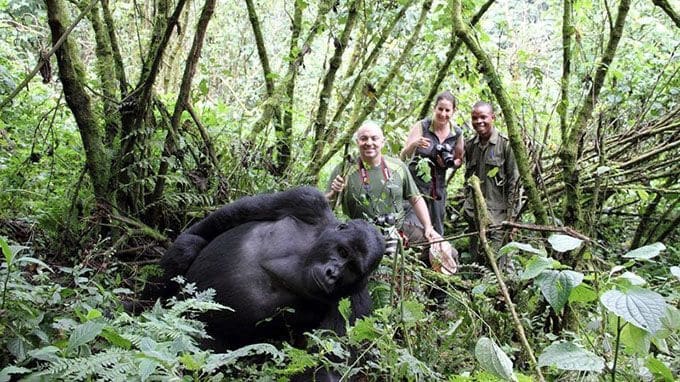
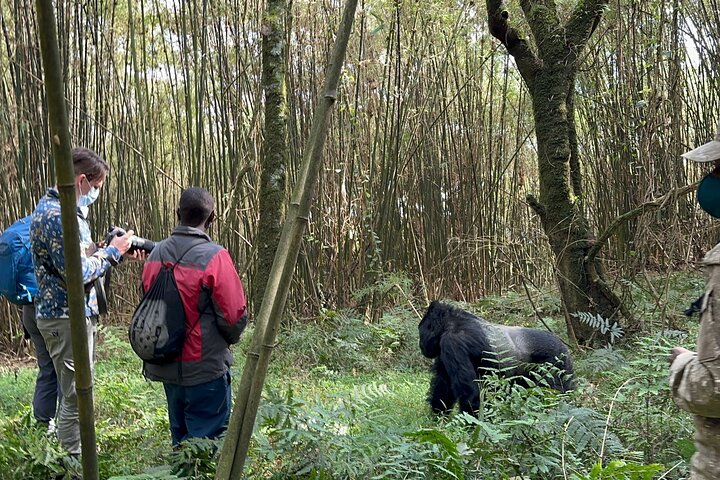
Before you even enter the forest, you undergo a comprehensive safety briefing. Park authorities strictly limit group sizes to a maximum of 8 visitors per habituated gorilla family per day.
This minimizes stress on the animals and prevents the humans from feeling like a threatening mob.
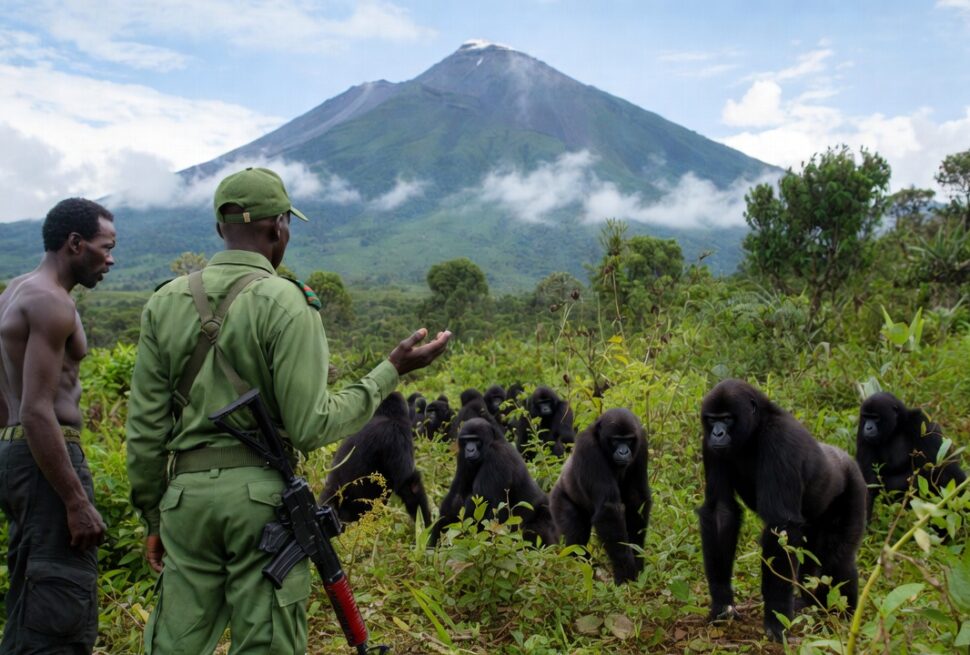
Once in the forest, you are led by highly trained, armed rangers and expert trackers. (Note: The rangers carry firearms strictly for protection against dangerous forest elephants or buffaloes, never to shoot the gorillas).
When the gorillas are located, the viewing period is strictly capped at one hour. The rangers continuously monitor the silverback’s mood and the body language of the troop, repositioning the tourists or cutting the visit short if the animals show signs of agitation.
While these extensive safety measures drastically reduce risks, it is important to remember that this is a wild environment. Safety protocols manage wildlife-related risks, but they cannot entirely eliminate the inherent unpredictability of nature.
Planning your first gorilla trek?
Discover the best time to visit, permit requirements, and guided trekking options with GoSilverback Safaris. Explore our Uganda and Rwanda gorilla safari packages to plan your safe, unforgettable encounter with mountain gorillas. [Explore our Gorilla Safari Packages]
Gorilla Trekking Rules Every Visitor Must Follow
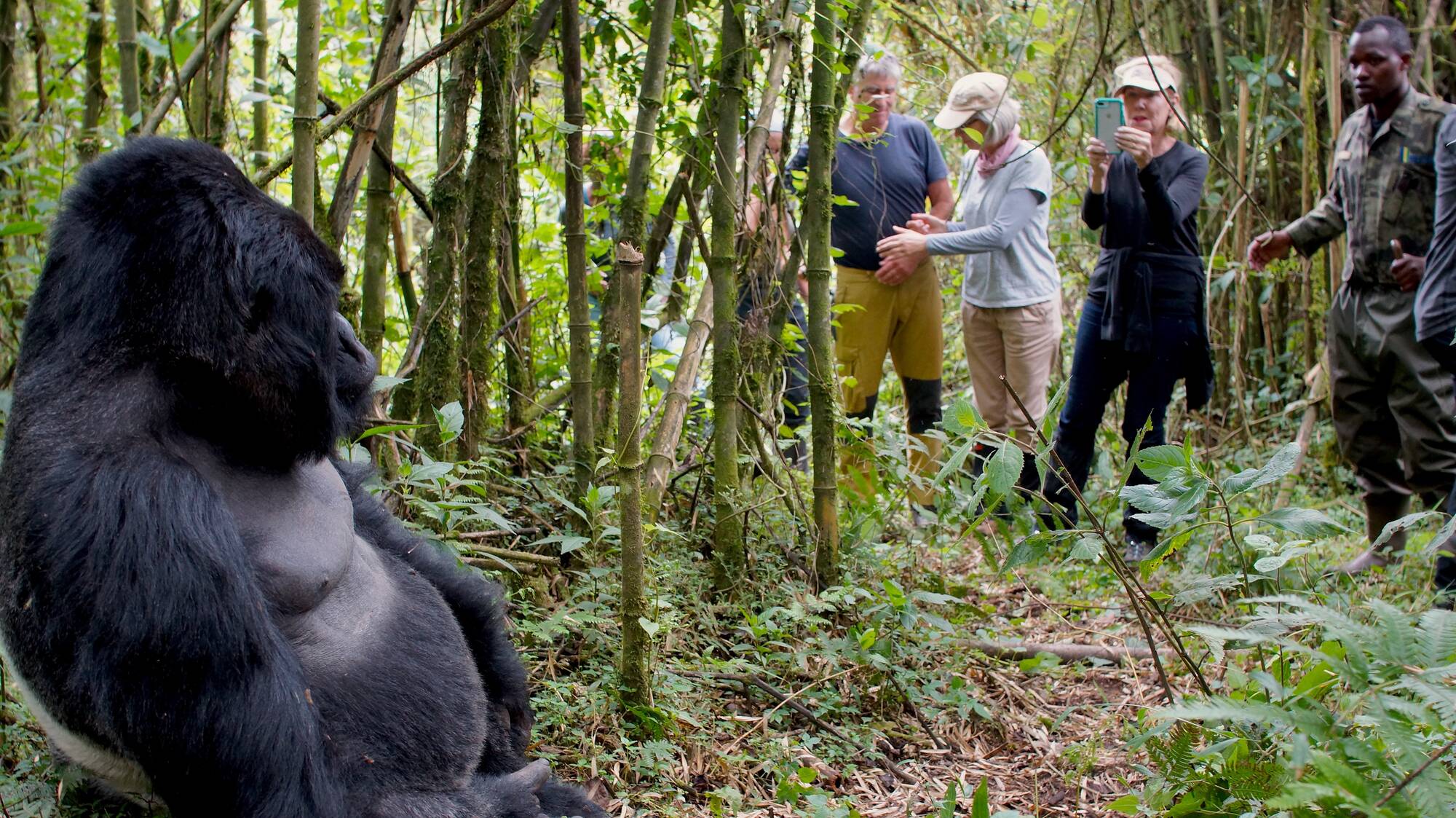
To ensure gorilla trekking safety and protect the animals, park authorities enforce strict rules.
While specific regulations may be updated by the Uganda Wildlife Authority (UWA) or the Rwanda Development Board (RDB), the core rules remain constant:
- Minimum Age: Visitors must be at least 15 years old to trek.
- Maintain Distance: Keep a minimum distance of **10 metres **(32 feet) in Uganda, and 7 metres (23 feet) in Rwanda. (If a gorilla approaches you, remain still and let the ranger guide you).
- No Flash Photography: Turn off all camera and phone flashes to avoid startling the animals.
- Keep Voices Low: Maintain a quiet, whispering tone to avoid stressing the troop.
- No Touching: Never attempt to touch a gorilla, even if they come within inches of you.
- Health Protocols: Never trek while ill. If you have a cold, flu, cough, or any contagious illness, you will be denied entry. Humans can transmit fatal respiratory diseases to gorillas.
- No Eating or Smoking: Do not eat, drink, or smoke in the presence of the gorillas.
- Leave No Trace: Carry out all your litter; do not leave anything in the forest.
Always listen to your pre-trek briefing, as rangers will provide the most current, localized guidance for that specific day.
Can Gorillas Become Aggressive Towards Tourists?
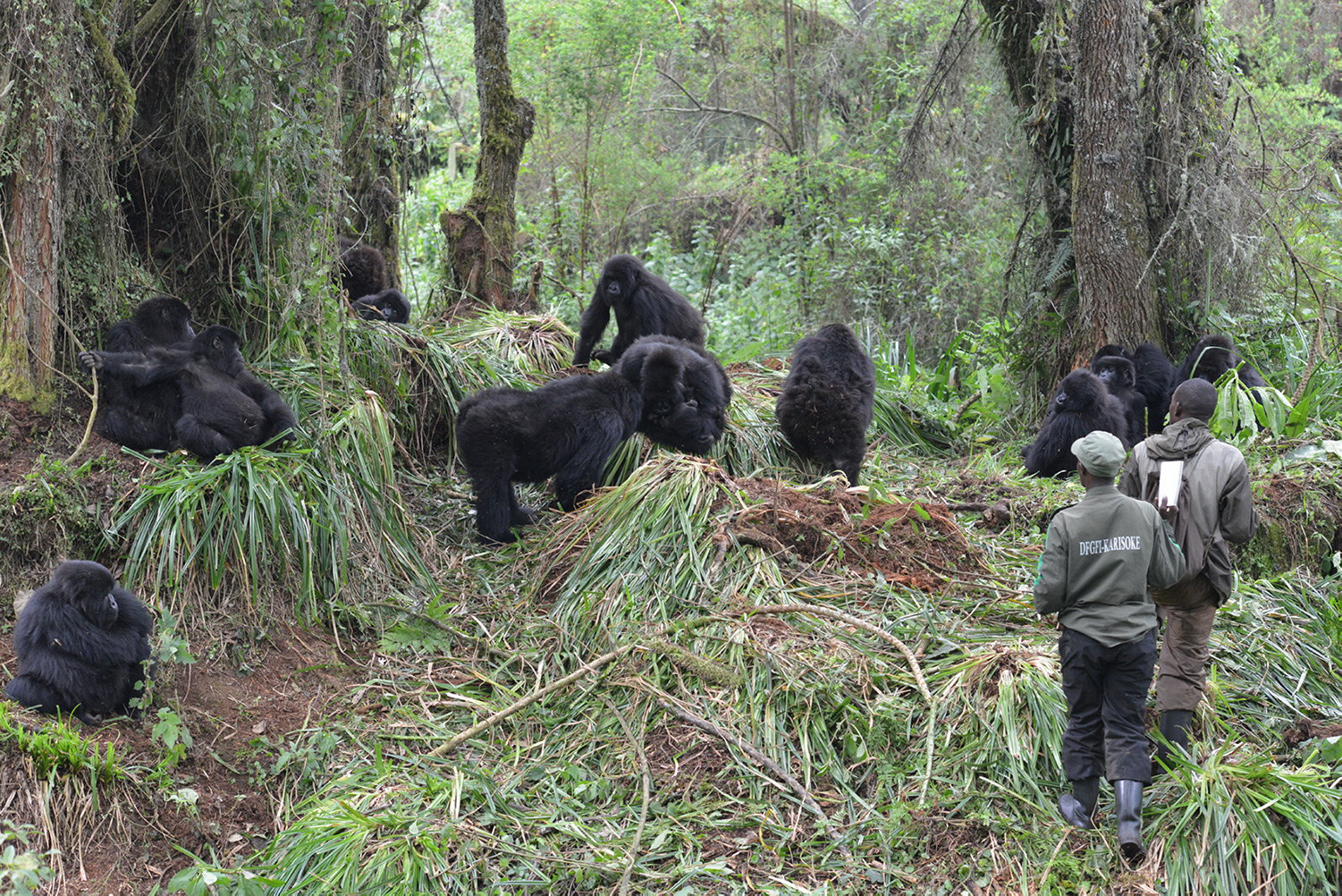
Can gorillas become aggressive towards tourists? It is possible, which is why the process of habituation is so critical.
Habituation is a years-long, carefully managed process where researchers and rangers gradually acclimate a wild gorilla family to the silent, passive presence of humans.
Habituated gorillas have learned to tolerate authorized human observers. However, habituation is not domestication. These are still wild, powerful animals with their own moods, social dynamics, and instincts.
A silverback might become agitated if a tourist makes a sudden movement, if a baby gorilla cries and startles him, or if two rival males in the troop are engaging in a tense social dispute.
In these moments, the gorillas may redirect their agitation toward the tourists. This is why constant vigilance, strict rule-following, and expert ranger guidance are non-negotiable.
Related Read | Gorilla Habituation Experience | Are Gorillas Aggressive Toward Humans?
Why Responsible Gorilla Tourism Matters
Responsible gorilla tourism is the financial lifeblood of mountain gorilla conservation. The high cost of a gorilla permit directly funds anti-poaching patrols, veterinary care for injured gorillas, and habitat protection.
Furthermore, a percentage of permit revenue is shared with the local communities living on the borders of the national parks. This funds the building of schools, health clinics, and clean water projects.
When local communities benefit economically from gorilla survival, the animals transform from perceived pests into protected, valuable assets.
Responsible visitor behaviour—specifically regarding disease prevention and maintaining distance—ensures that this tourism model remains sustainable.
By following the rules, you are directly participating in one of the most successful conservation stories in modern history, helping to ensure that mountain gorilla populations continue to grow.
Plan a Gorilla Trekking Safari in Uganda or Rwanda
Choosing between Uganda and Rwanda depends on your travel style, budget, and physical preferences.
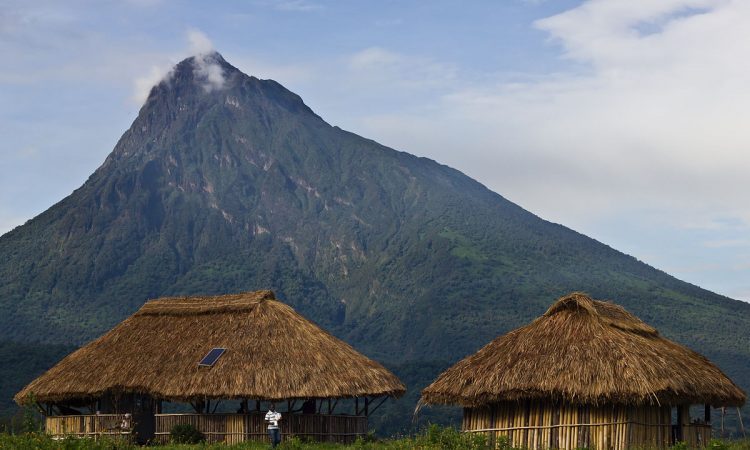
Uganda offers trekking in Bwindi Impenetrable National Park and Mgahinga. Bwindi is an ancient, dense, and incredibly steep rainforest.
The trekking here is physically demanding, often described as a true jungle expedition, but it offers the highest number of habituated gorilla families and the unique Gorilla Habituation Experience (allowing 4 hours with a semi-habituated family). Uganda permits currently cost $800 USD.
Rwanda offers trekking in Volcanoes National Park. The terrain consists of rolling bamboo forests and volcanic slopes, making the hikes generally more accessible and less physically grueling than Bwindi.
Rwanda is known for high-end, luxury lodge experiences and shorter drive times from Kigali airport. However, Rwanda permits are priced at $1,500 USD.
Both destinations offer world-class accommodation, from luxury lodges to budget-friendly options, and require careful logistical planning regarding permits, transport, and guide services.
Ready to see mountain gorillas in their natural habitat?
Let GoSilverback Safaris help you plan your gorilla trekking adventure, including securing hard-to-find permits, arranging seamless transport, booking premium accommodation, and building a tailored itinerary for Uganda or Rwanda.
Frequently Asked Questions About Gorillas and Humans
Do gorillas eat humans?
No. Gorillas are herbivores and do not eat humans. They subsist entirely on a diet of leaves, stems, shoots, and occasional fruits.
Are gorillas carnivores or herbivores?
Gorillas are predominantly herbivores. While their diet is 99% plant-based, they occasionally ingest small insects like ants or snails accidentally while foraging.
Do gorillas attack humans in the wild?
Actual physical attacks on humans are exceedingly rare. Most aggressive encounters are bluff charges designed to warn off perceived threats without making physical contact.
Can a silverback gorilla kill a human?
Due to their immense strength, a silverback is physically capable of causing fatal injuries. However, they do not view humans as prey, and fatal attacks on tourists during regulated treks are virtually non-existent.
Why do gorillas beat their chests?
Chest-beating is an acoustic communication tool. It allows silverbacks to demonstrate their physical size and dominance to rivals and warn off threats without engaging in dangerous physical combat.
What should you do if a gorilla charges?
Stay completely calm, do not run, avoid direct eye contact, crouch down to appear small, and follow your ranger’s instructions until the gorilla moves away.
Are mountain gorillas dangerous to tourists?
They are powerful wild animals, but they are not inherently aggressive toward tourists. When visitors follow park rules and maintain their distance, gorilla trekking is incredibly safe.
Is gorilla trekking safe in Uganda?
Yes, Uganda’s gorilla trekking in Bwindi and Mgahinga is highly regulated, heavily guided by expert rangers, and considered very safe for tourists who follow the rules.
Is gorilla trekking safe in Rwanda?
Yes, trekking in Volcanoes National Park is exceptionally safe, with strict group limits, expert guides, and rigorous health and safety protocols enforced by the RDB.
Can gorillas become aggressive towards humans?
Yes, if they feel threatened, cornered, or if their family is in danger, they can display defensive aggression. This is why strict viewing distances are enforced.
Do gorillas eat meat?
No, gorillas do not hunt or eat meat. They are herbivores, though they may accidentally consume small invertebrates while eating vegetation.
Do gorillas recognise humans?
Gorillas are highly intelligent and can recognize individual human faces and distinguish between rangers, tourists, and potential threats, though they do not view us as part of their social group.
Why are gorillas habituated before tourists visit them?
Habituation allows gorillas to become accustomed to the silent presence of humans, preventing them from fleeing in panic when tourists arrive, which ensures both human safety and natural gorilla behaviour.
How close can tourists get to mountain gorillas?
Tourists must maintain a minimum distance of 10 metres in Uganda and 7 metres in Rwanda to prevent disease transmission and avoid stressing the animals.
What are the rules for gorilla trekking in Africa?
Key rules include maintaining a 7-10m distance, never trekking while sick, turning off camera flashes, keeping voices low, never touching the gorillas, and limiting viewing to one hour.
Conclusion: Experience the Truth of Gorilla Behaviour Firsthand
Understanding gorilla behaviour transforms a simple wildlife sighting into a profound educational experience. Gorillas do not eat humans; they are gentle, highly intelligent herbivores that demand our respect and protection.
While they are powerful wild animals capable of defensive aggression, the rigorous safety protocols of regulated gorilla trekking ensure that your encounter is both secure and deeply moving.
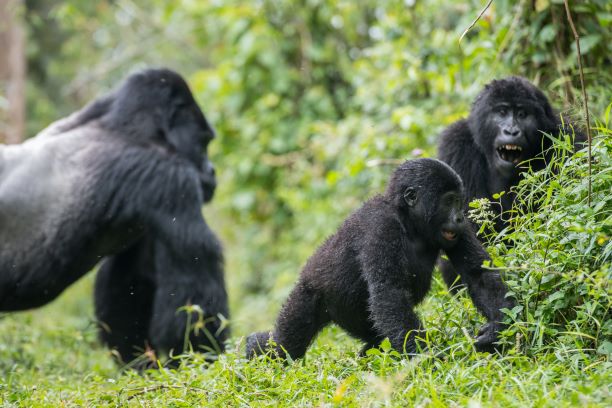
Witnessing a silverback protect his family, or watching juveniles play in the misty forest, is a privilege that few get to experience.
Do not leave this life-changing adventure to chance. Permits are strictly limited and sell out up to a year in advance.
Ready to witness the gentle giants of Africa in their natural habitat? Secure your spot today and experience the magic of the montane forest.
Book your gorilla permit and customize your luxury safari itinerary through GoSilverback Gorilla Safaris now!