
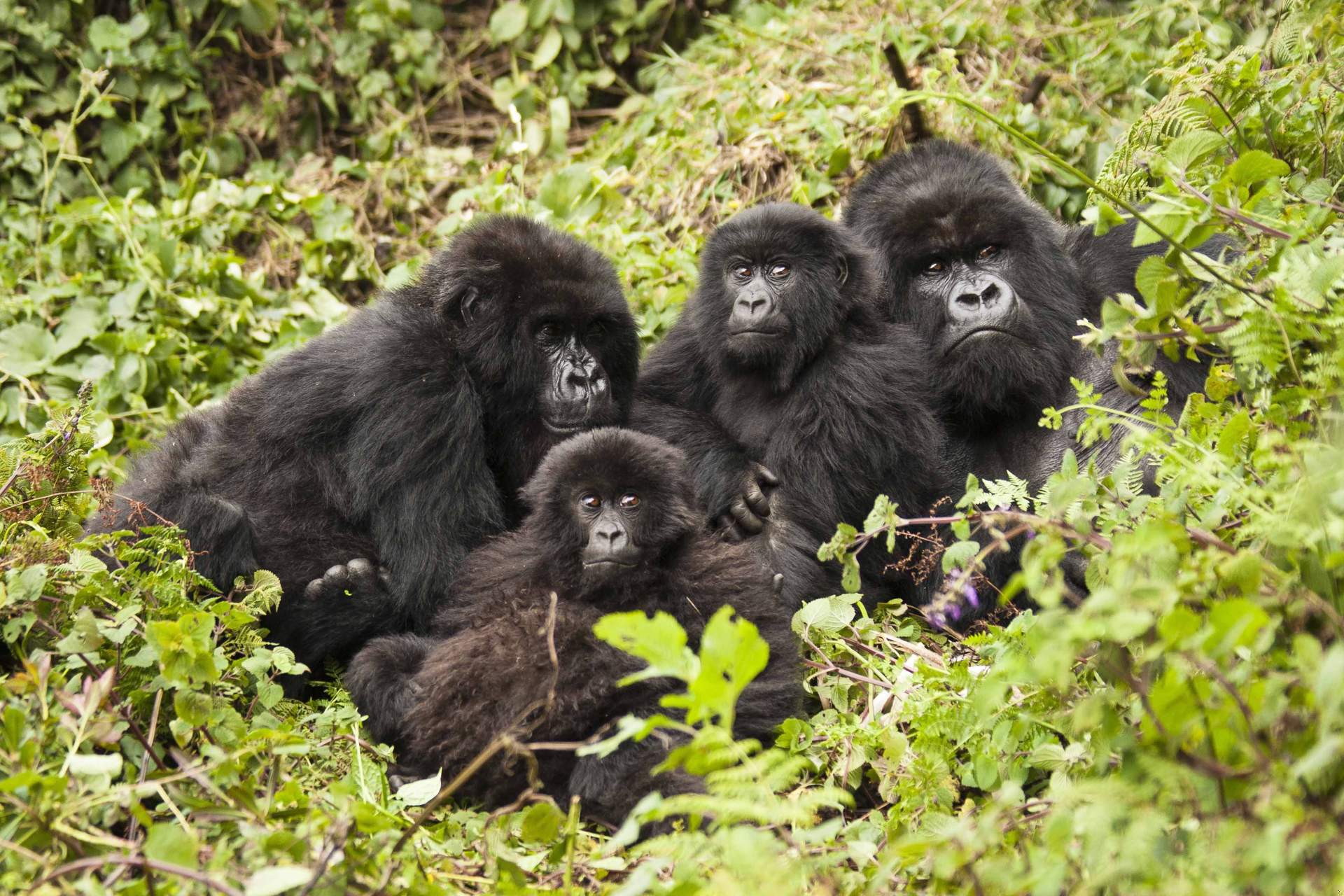
How Long Do Gorillas Live? Ultimate Complete 2026 Guide
How long do gorillas live? This question fascinates every traveler dreaming of an African gorilla safari.
Gorillas in the wild typically live 35 to 40 years. Mountain gorillas, the most famous species, have an average lifespan of 35–40 years, while some individuals in well-protected areas can reach 43 years. In captivity, gorillas often live much longer, with many reaching 50–60 years and the record being 68 years.
Factors such as disease, poaching, snares, and habitat loss significantly affect wild gorilla lifespan. Thanks to successful conservation efforts in Bwindi Impenetrable National Park and the Virunga Volcanoes, survival rates are improving. Understanding how long gorillas live highlights why responsible gorilla trekking tourism is so important for their future.
Gorillas are among the most intelligent, powerful, and emotionally complex primates on Earth, sharing up to 98% of their DNA with humans.
Found deep within the lush rainforests of Africa, they live in tight-knit family groups led by a dominant silverback. But one of the most frequently asked questions by wildlife enthusiasts and safari travelers is: how long do gorillas actually live?
At GoSilverback Safaris, we hear it constantly from clients arriving from the USA, UK, Europe, Canada, Asia, and the Middle East. The answer reveals both hope and urgency: mountain gorillas live an average of 35–40 years in the wild, while well-cared-for gorillas in captivity can reach 50–60 years.
With only 1,063 mountain gorillas remaining in the wild as of the 2025 census, understanding gorilla lifespan is far more than a biological curiosity. It explains why every gorilla permit you purchase matters.
Longer lifespans in stable, protected populations directly reflect successful conservation. This definitive 2026 guide explores the science, social dynamics, habitat, threats, and conservation victories behind how long gorillas live, while showing how responsible tourism helps extend their lives.
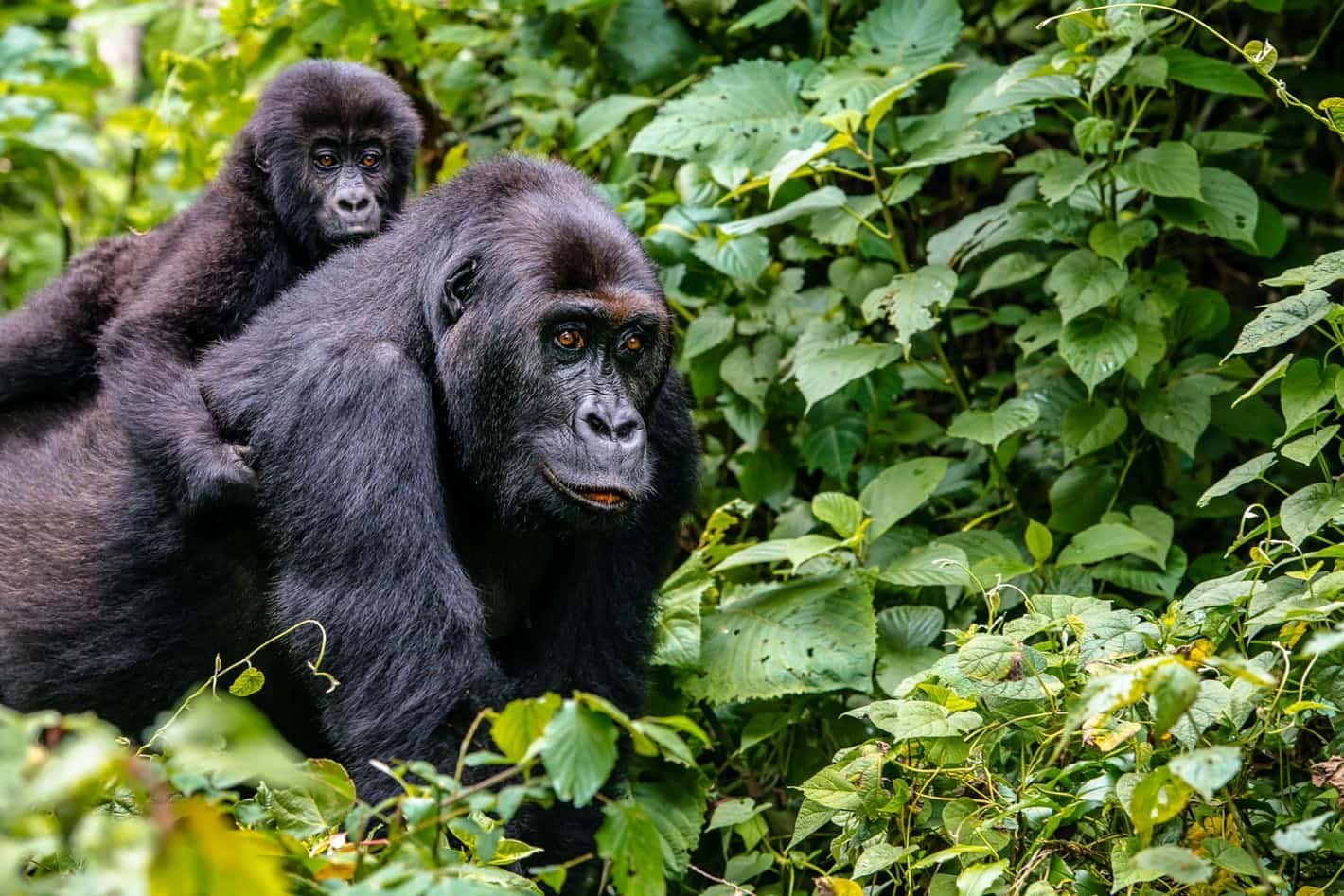
Average Lifespan of Gorillas in the Wild
Gorillas in the wild face a harsh reality that caps their average lifespan at 35–40 years.
Mountain gorillas (Gorilla beringei beringei) and western lowland gorillas (Gorilla gorilla gorilla) share similar life expectancies, though mountain gorillas in well-protected areas like Bwindi Impenetrable National Park and the Virunga Massif sometimes reach the upper end of this range.
Several factors limit wild gorilla longevity. High infant mortality (up to 30% in the first three years) is the biggest hurdle. Disease, particularly respiratory infections, claims many adults.
Injuries from falls, snares, or inter-group fights reduce mobility in older individuals, leading to malnutrition and arthritis. Silverbacks over 35 often show worn teeth and reduced foraging efficiency, making survival harder.
Field data from the Dian Fossey Gorilla Fund and Uganda Wildlife Authority confirm that a healthy silverback in a stable group can live into his early 40s.
Females, who face less physical combat, frequently outlive males by a few years. The oldest documented wild mountain gorilla reached approximately 43 years before natural causes ended her life.
These figures highlight why conservation matters. When threats like poaching and habitat loss decrease, gorilla lifespans improve.
Protected populations in Rwanda and Uganda now show slightly higher survival rates than those in less-monitored areas. Every additional year a silverback lives means more offspring and stronger group stability — directly benefiting the entire population.
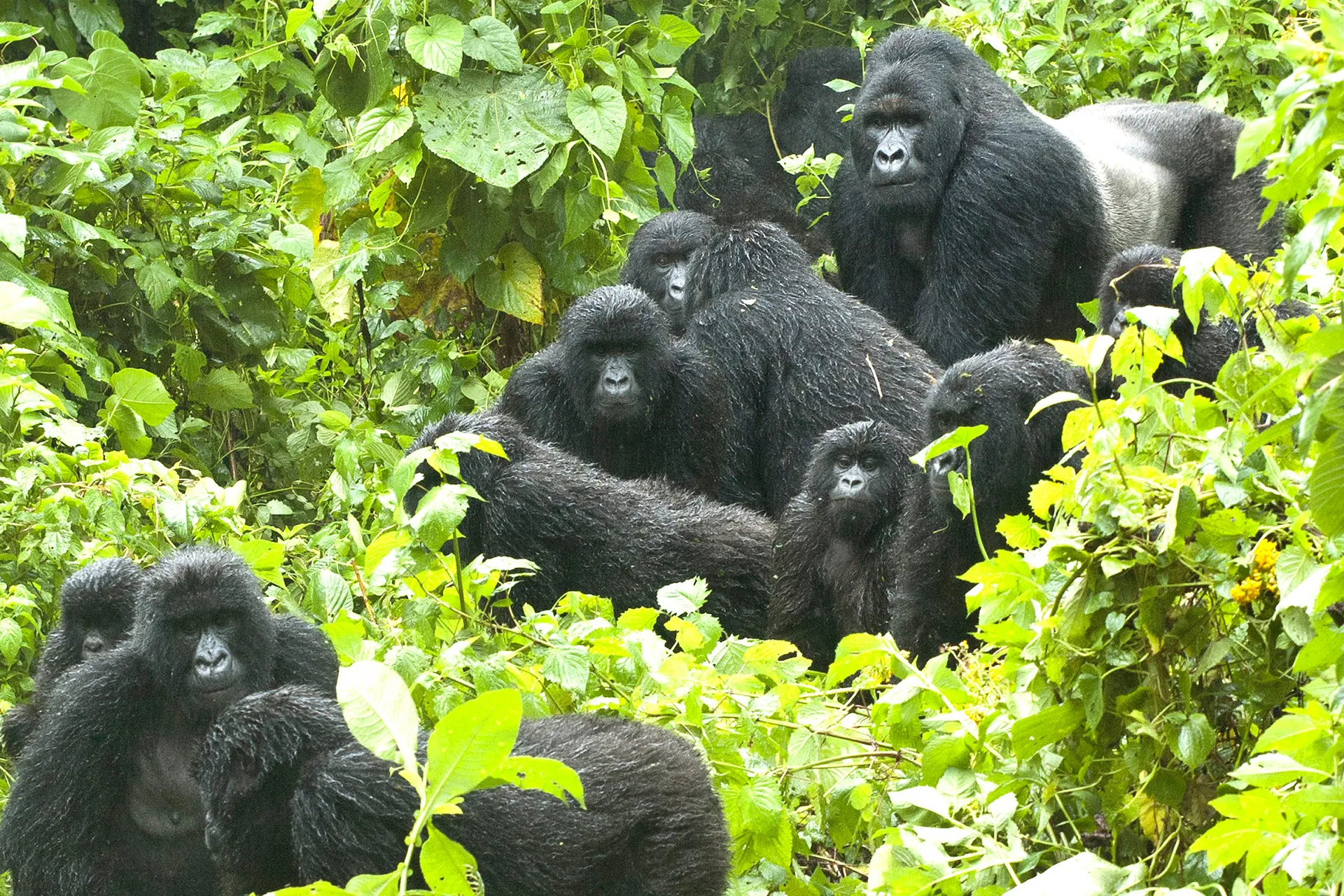
Lifespan of Gorillas in Captivity
Gorillas in captivity consistently outlive their wild counterparts, often reaching 50–60 years.
The record holder, a western lowland gorilla named Fatou at Berlin Zoo, lived to 68 years as of recent reports. Another famous individual, Colo at Columbus Zoo, reached 60 years before passing in 2017.
Captive gorillas benefit from consistent veterinary care, balanced nutrition, and protection from predators, snares, and human conflict.
Zoos and sanctuaries monitor health daily, treating conditions like arthritis or dental issues that would prove fatal in the wild. Modern facilities also provide enriched environments with climbing structures and social groups that mimic natural troop dynamics.
However, even in captivity, gorillas face challenges. Stress from inadequate housing or unnatural group compositions can shorten life.
The best sanctuaries, such as those managed by the Gorilla Doctors network partners, achieve the longest lifespans by prioritizing natural behaviors and large, complex enclosures.
The difference between wild and captive lifespans — roughly 15–25 extra years — underscores the impact of human intervention. It also reminds travelers that seeing gorillas in the wild is a rare privilege worth protecting.
Life Stages of a Gorilla
Gorillas progress through clearly defined life stages, each with unique physical and social milestones that influence survival and reproduction.
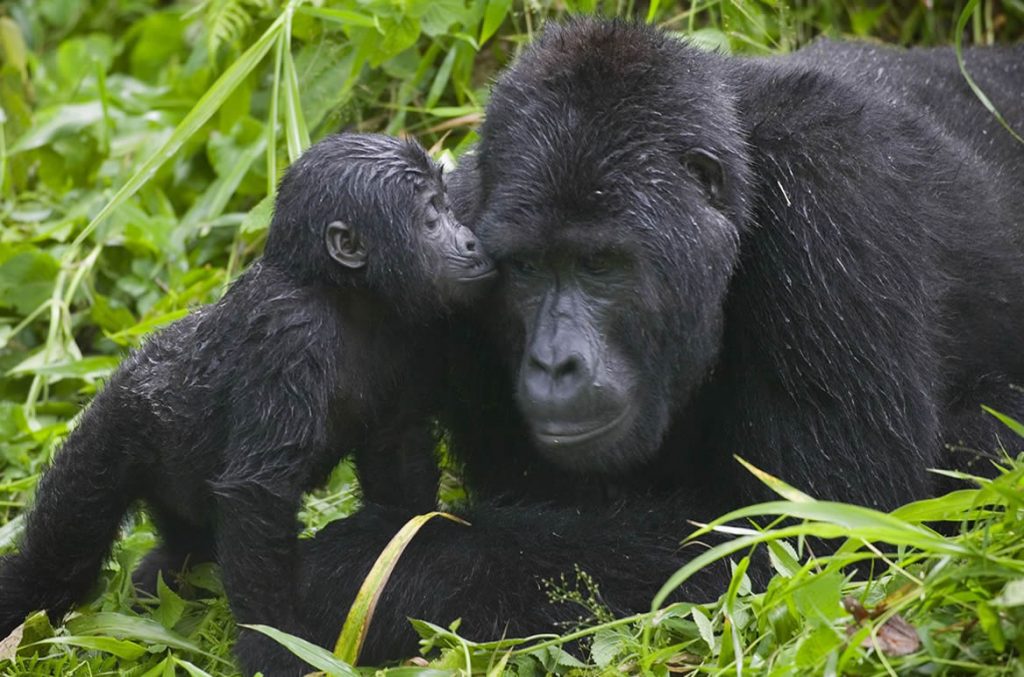
- Infant Stage (0–3.5 years) Newborn gorillas weigh about 2 kg and cling to their mother’s fur for the first few months. They nurse for 3–4 years and begin eating solid food around 6 months. Infant mortality is highest here due to disease and occasional infanticide during group takeovers.
- Juvenile Stage (3.5–8 years) Young gorillas become more independent, playing and learning social skills. They weigh 20–40 kg by age 8. Females start showing interest in group dynamics, while males practice displays.
- Sub-Adult / Blackback Stage (8–15 years) Males are called blackbacks until the silver saddle appears around age 12–15. They weigh 100–150 kg and may leave their natal group to live solitarily or join others. Females reach sexual maturity at 7–10 years and often transfer to new groups to avoid inbreeding.
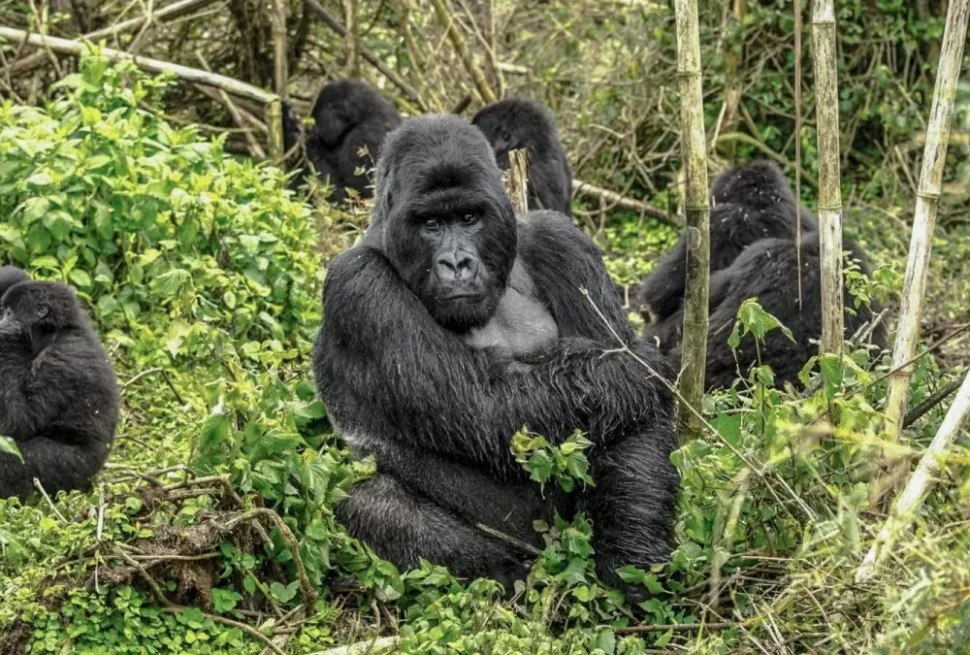
- Adult / Silverback Stage (15+ years) Mature silverbacks dominate groups, weighing up to 220 kg. They reach physical prime between 15–25 years, then slowly decline. A dominant silverback may lead for 10–15 years before younger males challenge him.
Females typically give birth every 4 years after age 10, producing only 3–6 offspring in a lifetime. This slow reproductive rate makes every extra year of gorilla lifespan critical for population recovery.
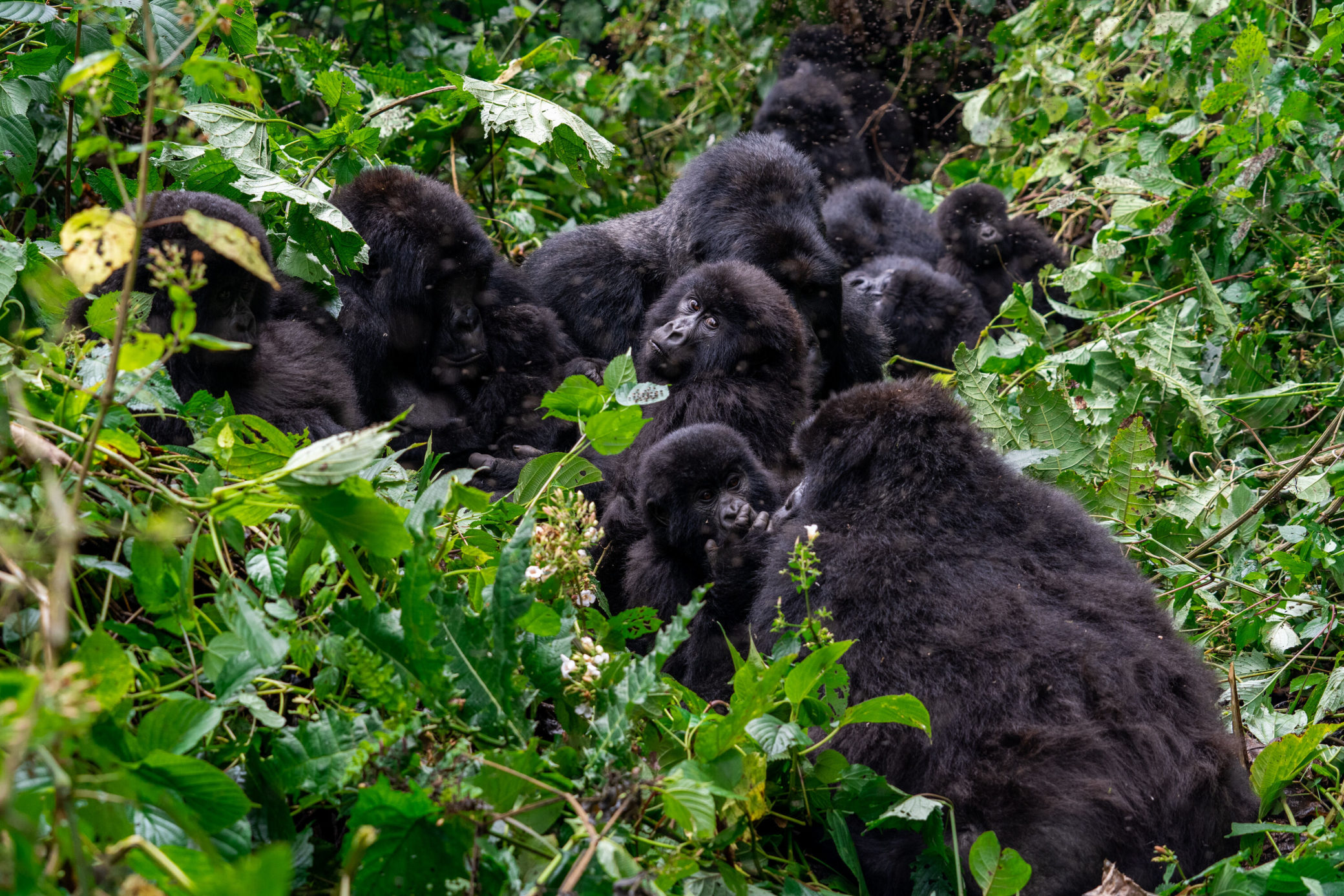
Understanding these stages helps trekkers appreciate the families they meet in Bwindi or the Virungas — from tiny infants on their mothers’ backs to wise old silverbacks guiding their groups
 .
.
Curious to experience these incredible primates in their natural habitat? Explore all our gorilla trekking packages and plan your unforgettable encounter with wild gorillas in Uganda and Rwanda.
Gorilla Families and Social Structure
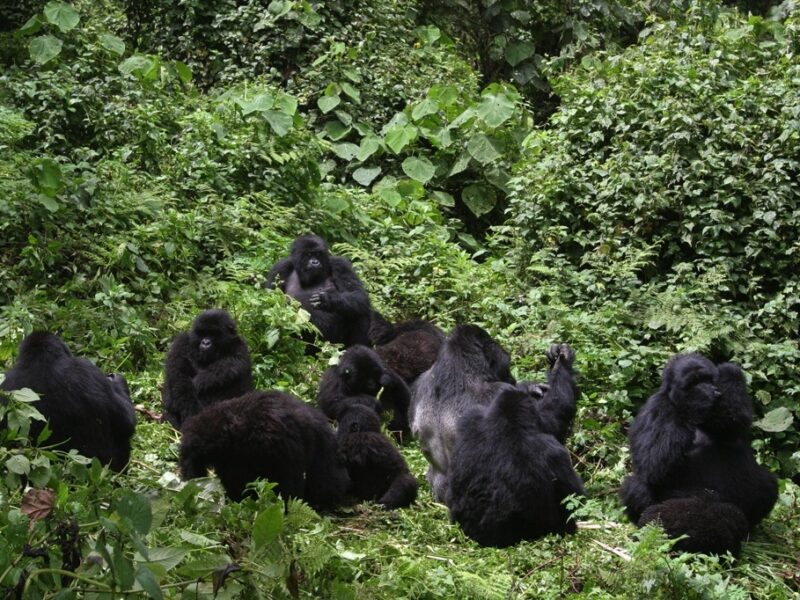
Gorilla families are built around a dominant silverback who protects and leads 5–30 individuals, including multiple females and their offspring. This structure directly influences lifespan by providing protection, shared foraging knowledge, and social stability.
The silverback makes all key decisions: where to feed, when to rest, and how to respond to threats. His presence dramatically improves infant survival rates.
Females form strong bonds with the silverback and each other, often staying in the same group for life unless they transfer during a leadership change.
When a silverback dies or is overthrown, the group may fragment. New silverbacks sometimes kill unrelated infants to bring females back into estrus — a harsh but natural behavior that shortens overall group lifespan if instability persists.
Stable, long-lived silverbacks produce more offspring and pass on valuable knowledge, creating healthier populations. This is why conserving entire family groups, not just individuals, is essential.
Where Gorillas Live in the Wild
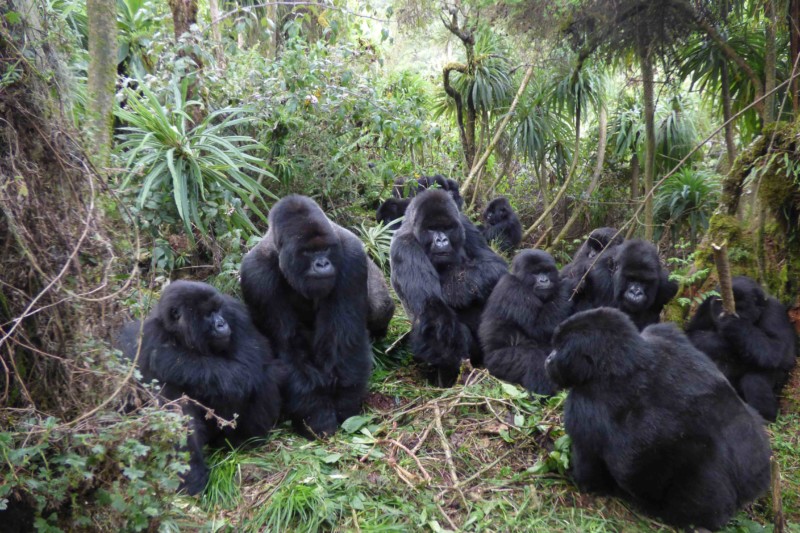
Where gorillas live in the wild is remarkably limited. Today, mountain gorillas survive in only two small, highly protected regions in East Africa: the Virunga Volcanoes and Bwindi Impenetrable National Park.
These areas represent less than 800 km² of habitat — roughly the size of New York City — making every hectare critical for the survival of the species.
1. Bwindi Impenetrable National Park, Uganda
Bwindi Impenetrable National Park in southwestern Uganda is home to nearly half the world’s entire mountain gorilla population — over 400 individuals.
This 331 km² UNESCO World Heritage Site is a true rainforest jewel, characterized by steep ridges, deep valleys, and dense vegetation that gave the park its name: “Impenetrable.”
Bwindi offers four distinct gorilla trekking sectors, each providing a unique experience:
- Rushaga Sector — Best for gorilla families with young infants and excellent photographic opportunities.
- Nkuringo Sector — Features dramatic landscapes and some of the most habituated groups.
- Buhoma Sector — The original and most accessible sector with comfortable lodges.
- Ruhija Sector — Higher altitude with cooler temperatures and beautiful views.
The park’s rich biodiversity supports 13 primate species, over 350 bird species, and countless butterflies. Its varied altitude (1,200–2,600 m) creates multiple vegetation zones that sustain the gorillas year-round.
2. The Virunga Volcanoes
The Virunga Massif straddles the borders of Rwanda, Uganda, and the Democratic Republic of Congo. This chain of eight volcanoes rises dramatically from the Albertine Rift Valley and hosts the remaining mountain gorillas.
- Volcanoes National Park (Rwanda) — Home to 10 habituated gorilla groups. It offers the most luxurious gorilla trekking experience with excellent infrastructure and shorter transfers from Kigali (just 2–3 hours).
- Mgahinga Gorilla National Park (Uganda) — The smallest sector but offers intimate treks and stunning views of the Virunga volcanoes.
- Virunga National Park (DRC) — Currently not recommended for international tourism due to security concerns.
The volcanic soil and high rainfall create incredibly fertile forests rich in bamboo, the gorillas’ favourite food during certain seasons. The dramatic landscape — with its mist-covered peaks — makes gorilla trekking here visually spectacular.
Why These Locations Matter
The extremely restricted range of mountain gorillas makes them highly vulnerable.
Unlike lowland gorillas that inhabit vast areas of Central Africa, mountain gorillas have adapted to high-altitude cloud forests. Climate change and human population pressure around these parks create constant tension at the forest edge.
This is exactly why responsible tourism is so powerful. Revenue from gorilla permits ($800 in Uganda, $1,500 in Rwanda) funds park management, anti-poaching patrols, and community projects that reduce pressure on the forest.
In Bwindi, 20% of gorilla permit income goes directly to surrounding parishes for schools, health clinics, and alternative livelihoods.
Curious to experience these incredible primates in their natural habitat? Explore all our gorilla trekking packages and plan your unforgettable encounter with wild gorillas in Uganda and Rwanda.
How Travelers Reach These Areas
Most international visitors fly into Kigali International Airport (Rwanda) or Entebbe International Airport (Uganda). From Kigali, Volcanoes National Park is only a 2–3 hour drive. Bwindi is reachable from Kigali in 5–6 hours via the Cyanika border or from Entebbe in 8–10 hours.
GoSilverback Safaris offers seamless transfers with comfortable 4×4 vehicles, experienced drivers, and border assistance, making the journey safe and enjoyable.
For travelers planning an African gorilla safari, choosing between Bwindi and the Virungas depends on priorities: Uganda offers better value and the chance to combine gorillas with chimpanzees and savanna wildlife, while Rwanda provides easier access and a more premium experience.
Wherever you choose to see gorillas in the wild, you will be stepping into one of the most important conservation stories on Earth — a story where tourism plays a vital role in helping these magnificent animals live longer, healthier lives.
Threats That Affect Gorilla Lifespan
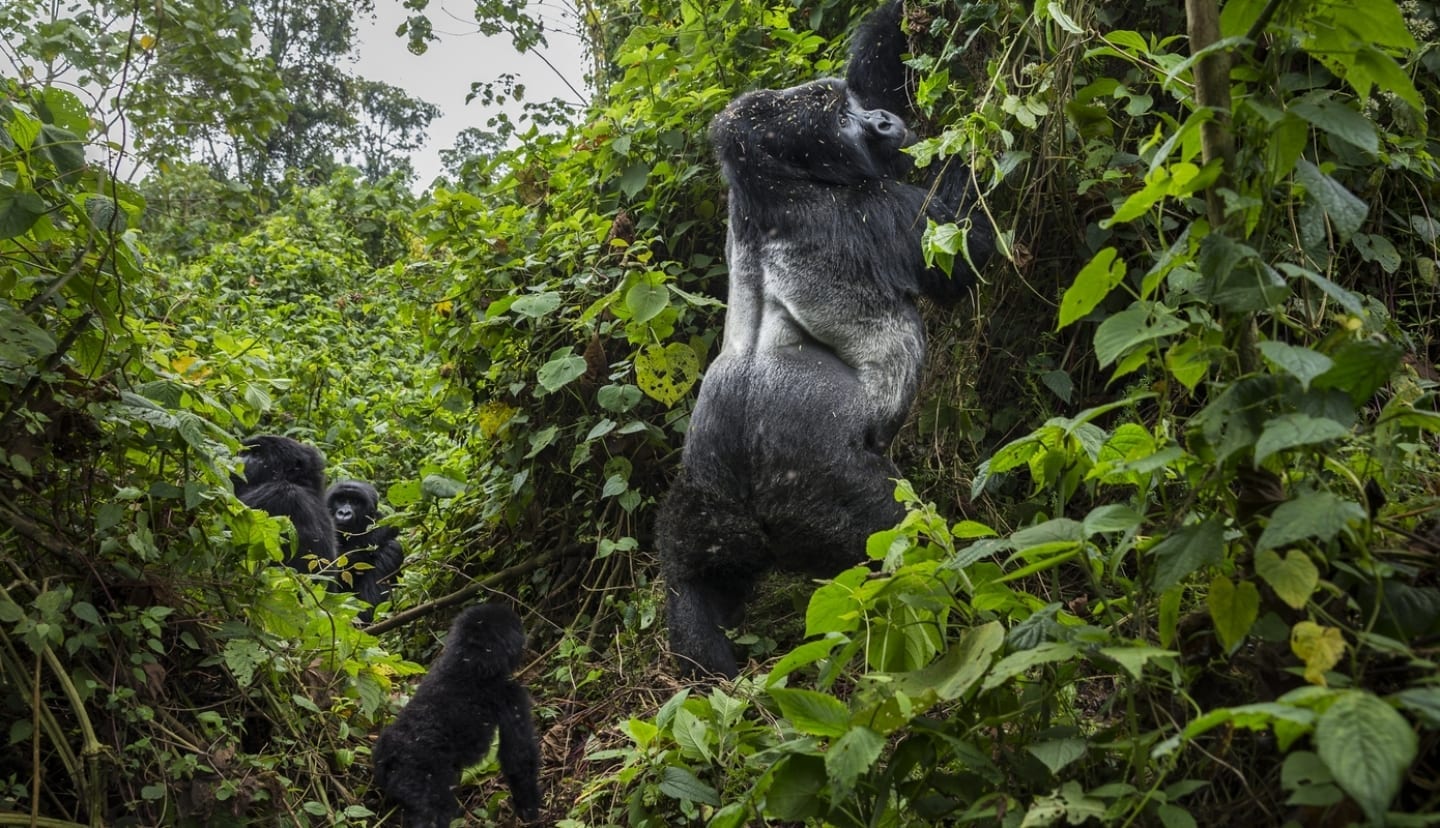
Several human-induced threats significantly shorten gorilla lifespan in the wild:
- Habitat Loss and Fragmentation — Agricultural expansion compresses gorillas into smaller areas, increasing disease transmission and in-fighting.
- Poaching and Snare Injuries — Wire snares set for bushmeat cause horrific wounds that lead to infection or permanent disability.
- Disease — Gorillas share 98.4% of human DNA, making them vulnerable to respiratory illnesses, measles, and Ebola. A single outbreak can wipe out 25% of a group.
- Climate Change — Shifting rainfall alters food availability and increases parasite loads.
- Human–Gorilla Conflict — Crop raiding leads to retaliatory actions that injure or kill gorillas.
Reducing these threats through tourism revenue and community support is the most effective way to help gorillas live longer, healthier lives.
Explore more about the major threats that affect gorilla lifespan, including habitat loss and fragmentation, poaching, disease that Affect gorillas, climate change that affect gorillas, and human–gorilla conflict, to understand the challenges these endangered primates face and how conservation efforts are protecting them.
Conservation Success Stories
The story of how long gorillas live is ultimately a story of hope and human determination. In the 1980s, mountain gorillas were on the brink of extinction, with fewer than 250 individuals remaining in the wild.
Today, the population has grown to 1,063 (2025 census) — one of the most remarkable conservation success stories in modern history.
This dramatic recovery is largely thanks to targeted conservation efforts in Bwindi Impenetrable National Park and the Virunga Volcanoes. Strict protection, community involvement, and responsible tourism have been the driving forces behind this turnaround.
In Bwindi, the introduction of gorilla tourism in the early 1990s generated significant revenue that funded ranger patrols and anti-poaching units. The establishment of the HuGo (Human-Gorilla Conflict Resolution) teams dramatically reduced retaliatory killings and snare injuries.
As a result, infant survival rates improved, and several gorilla groups now regularly exceed 35 years of age — pushing closer to their natural lifespan potential.
Rwanda’s Volcanoes National Park provides another inspiring example. After the 1994 genocide, the government made gorilla conservation a national priority. The increase of the gorilla permit fee to $1,500 was controversial at first but proved highly effective.
The higher revenue allowed for better-equipped rangers, expanded veterinary care through the Gorilla Doctors program, and the creation of buffer zones that reduced human encroachment. Today, several silverbacks in Rwanda’s habituated groups are thriving well into their late 30s and early 40s.
The International Gorilla Conservation Programme (IGCP) has played a pivotal role by coordinating cross-border efforts between Uganda, Rwanda, and the Democratic Republic of Congo.
Their work has helped establish transboundary monitoring, joint anti-poaching patrols, and community development projects that benefit over 100,000 people living near the parks.
These successes are clearly visible in the wild. Travelers on gorilla trekking safaris today frequently encounter large, stable family groups with multiple generations — something that was rare just three decades ago.
Healthy silverbacks leading strong groups and energetic infants playing in the trees are living proof that conservation works.
However, the battle is not yet won. While the population has increased, mountain gorillas remain critically endangered due to their tiny habitat and slow reproductive rate.
Continued support through responsible tourism remains essential to ensure that future generations of travelers can also witness gorillas in the wild living longer, healthier lives.
The recovery of the mountain gorilla is a powerful reminder that when local communities, governments, and visitors work together, even the most threatened species can be brought back from the edge.
Curious to experience these incredible primates in their natural habitat? Explore all our gorilla trekking packages and plan your unforgettable encounter with wild gorillas in Uganda and Rwanda.
Why Gorilla Lifespan Matters for Travelers
Understanding how long gorillas live transforms your African gorilla safari from a simple wildlife encounter into a deeply meaningful conservation experience.
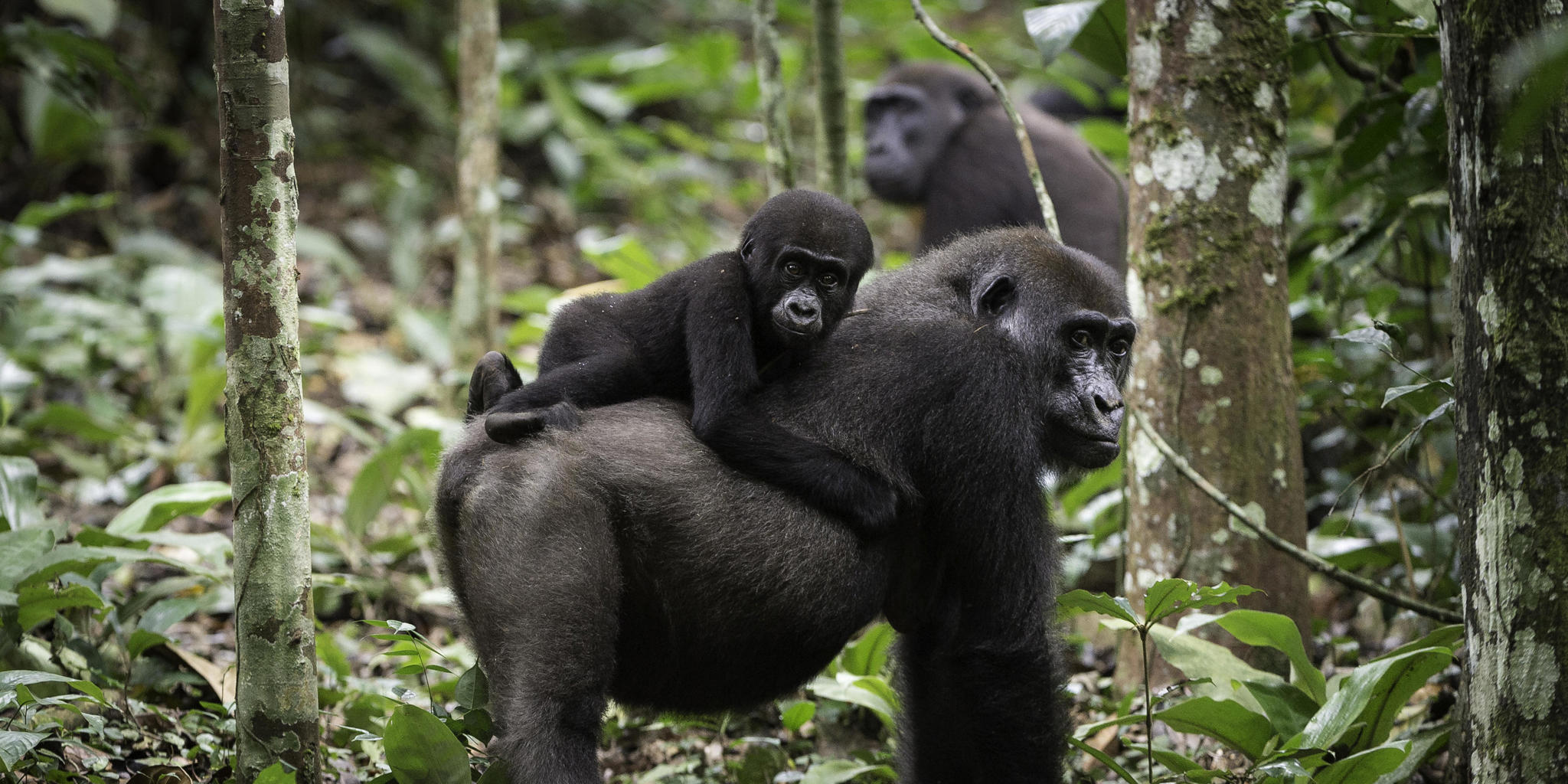
When you know that mountain gorillas in the wild typically live only 35–40 years, every silverback you observe, every infant riding on its mother’s back, and every family group you meet takes on greater significance.
Gorilla lifespan is a direct indicator of conservation success. Longer-lived gorillas produce more offspring, maintain stable family structures, and pass on vital survival knowledge.
A silverback that reaches 40 years can lead his group for over 15 years, significantly improving infant survival rates and group cohesion.
When travelers see healthy, long-lived gorillas during trekking, they are witnessing the positive results of effective protection in Bwindi Impenetrable National Park and the Virunga Volcanoes.
Your visit plays a crucial role in extending gorilla lifespan. Every gorilla permit you purchase directly funds:
- Anti-poaching patrols that reduce snare injuries
- Veterinary care through Gorilla Doctors
- Community revenue-sharing programmes that decrease human–gorilla conflict
- Habitat restoration and buffer zone creation
When local communities benefit economically from responsible tourism, they become active partners in protecting the forest. This cycle of benefit leads to fewer poaching incidents and healthier gorilla populations that can live closer to their natural lifespan.
For travelers, knowing how long gorillas live also adds emotional depth to the experience.
Standing just seven metres from a 30-year-old silverback with silvered back and wise eyes becomes more profound when you realise he is already in his twilight years.
Watching a young infant playing becomes even more precious knowing that only about 70% survive to adulthood in the wild.
Furthermore, understanding lifespan helps you appreciate the urgency of conservation. With only 1,063 mountain gorillas remaining, every extra year of life for these animals strengthens the entire population’s genetic diversity and resilience against disease and climate change.
Responsible travelers who choose authorised operators like GoSilverback Safaris know that their safari is not just about seeing gorillas in the wild — it is about actively helping them live longer, healthier lives.
Your decision to trek ethically directly contributes to a future where future generations can also witness these magnificent apes thriving in their natural habitat.
The next time you stand before a gorilla family in the misty forests of Bwindi or the Virungas, remember: your presence, when done responsibly, helps extend the very lives you have come to admire.
Curious to experience these incredible primates in their natural habitat? Explore all our gorilla trekking packages and plan your unforgettable encounter with wild gorillas in Uganda and Rwanda.
Gorilla Trekking Experience
The gorilla trekking experience is the undisputed highlight of any African gorilla safari — a rare, intimate encounter that travelers describe as life-changing.
Standing just metres from a wild mountain gorilla in its natural habitat creates a profound connection few other wildlife experiences can match.
Your day begins early with a briefing at the park headquarters. A maximum of eight trekkers (minimum age 15) gathers with experienced rangers and trackers.
After receiving clear instructions on etiquette and safety, you set off into the forest. Trekking time varies dramatically — from as little as 30 minutes to as long as 7 hours — depending on where the gorilla group spent the night.
The terrain is steep, muddy, and thick with vegetation, but the anticipation keeps every step exciting.
When the trackers finally locate the family, the moment is electric. You approach slowly and quietly. Suddenly, through the leaves, you see them: a massive silverback calmly feeding, mothers grooming their infants, and playful juveniles tumbling through the undergrowth.
For the next 60 precious minutes, you are allowed to observe at a strict 7-metre distance. No sudden movements. No loud talking. Just silent, respectful witnessing.
The experience is sensory and emotional. You hear the gentle grunts and chest beats, smell the earthy forest mixed with the gorillas’ musky scent, and feel the sheer presence of these powerful yet gentle giants.
A silverback may stand to display his size, or a curious juvenile may approach the invisible boundary before being gently called back by its mother. Time seems to slow down as you absorb one of nature’s most intimate wildlife moments.
What makes the gorilla trekking experience truly special is the knowledge that these are wild, unhabituated-to-human-contact animals living their natural lives.
The fact that they tolerate your presence is the result of decades of careful, respectful habituation work. Every trekker leaves with a deeper appreciation of why protecting how long gorillas live matters so much.
After your hour ends, the trackers lead you back through the forest. Most trekkers walk in reflective silence, processing what they have just witnessed. Later, at the lodge, the experience continues to resonate — often becoming the defining memory of an entire African journey.
This is not zoo viewing or staged entertainment. It is a privileged glimpse into the lives of one of our closest living relatives — a moment that connects you directly to the ongoing story of mountain gorilla conservation.
Many travelers return year after year because no other wildlife encounter creates the same emotional depth and sense of wonder.
The gorilla trekking experience is not just about seeing gorillas. It is about understanding our shared responsibility to ensure they continue to thrive in the wild for generations to come.
How to Book an African Gorilla Safari
Booking an African gorilla safari is straightforward when you work with an experienced, authorised operator.
Here’s exactly how to secure your gorilla trekking experience in 2026:
Step 1: Choose Your Dates and Destination
Decide between Uganda (Bwindi Impenetrable National Park) and Rwanda (Volcanoes National Park).
Uganda offers better value with the $800 gorilla permit, while Rwanda provides a more luxurious experience at $1,500. Peak dry seasons (June–September and December–February) book up fastest.
Step 2: Determine Your Budget and Style
Consider whether you want a short 3–5 day gorilla-focused trip or a longer 7–14 day Uganda safari that includes chimpanzees and wildlife. Decide on luxury, mid-range, or budget accommodation. Solo travelers can join small shared groups to reduce costs.
Step 3: Check Fitness and Health Requirements
Gorilla trekking requires moderate to good fitness due to steep, muddy trails. You must be at least 15 years old and cannot be pregnant. A yellow fever vaccination is mandatory for entry into Uganda and Rwanda.
Step 4: Secure Your Gorilla Permit
Permits are strictly limited and sell out months in advance. GoSilverback Safaris guarantees availability or a full refund. We handle all paperwork, including border crossings for Rwanda–Uganda combinations.
Step 5: Book Your Complete Package
A professional operator will arrange everything: airport transfers, comfortable 4×4 vehicles, English-speaking guides, full-board accommodation, park fees, and conservation contributions.
Recommended Booking Timeline
- 9–12 months in advance for peak dry season dates
- 4–6 months for shoulder seasons
Early booking not only secures your preferred dates and gorilla group but often provides better lodge rates and more personalised planning.
At GoSilverback Safaris, we make the process simple, transparent, and stress-free. From the moment you enquire until you return home, our team ensures every detail supports both your unforgettable experience and the long-term survival of the gorillas.
Ready to begin? Contact us today and let our experts design your perfect African gorilla safari.
Curious to experience these incredible primates in their natural habitat? Explore all our gorilla trekking packages and plan your unforgettable encounter with wild gorillas in Uganda and Rwanda.
Why Book with GoSilverback Safaris
When you choose GoSilverback Safaris, you are not just booking a tour — you are partnering with a team that has spent over a decade perfecting responsible gorilla and primate safaris across Uganda and Rwanda.
Here’s why thousands of travelers from the USA, UK, Europe, Canada, Asia, and the Middle East trust us every year:
- 100% Gorilla Permit Success Rate — We secure permits even during peak seasons when others cannot.
- Conservation-First Approach — A fixed percentage of every booking directly funds anti-poaching patrols, Gorilla Doctors veterinary care, and the HuGo human-gorilla conflict resolution teams.
- Experienced Guides — Our drivers and naturalist guides are former Uganda Wildlife Authority rangers and trackers with deep local knowledge and exceptional wildlife-spotting skills.
- Seamless Logistics — Private or shared 4×4 vehicles, comfortable lodges, and flawless cross-border arrangements (especially Kigali–Bwindi) ensure stress-free travel.
- Personalised Service — Whether you are a solo traveler, family, or group, we tailor every itinerary to your fitness level, interests, and budget.
- Transparent Pricing — No hidden fees. We clearly show what your gorilla permit, accommodation, and activities cost, with honest low-to-luxury options.
- Ethical Tourism Commitment — Strict adherence to trekking rules, small group sizes, and meaningful community support that turns local residents into active conservation partners.
Most importantly, when you book with GoSilverback Safaris, your safari becomes part of the solution. Your visit helps extend gorilla lifespans, protect habitats, and create sustainable income for communities living beside the parks.
Travelers return to us year after year because we deliver not only unforgettable gorilla encounters but also the peace of mind that comes from knowing your money is making a real, measurable difference.
Ready to experience mountain gorillas responsibly? Let GoSilverback Safaris handle the details while you focus on the magic of the forest.
Frequently Asked Questions About How Long Do Gorillas Live?
How long do gorillas live in the wild?
Gorillas in the wild live an average of 35–40 years. Mountain gorillas in protected areas like Bwindi and the Virungas sometimes reach the upper end of this range.
Can a gorilla live for 100 years?
No, gorillas cannot live for 100 years. In the wild, mountain gorillas typically live 35–40 years. In captivity, they can reach 50–60 years, with the record being 68 years. Their natural lifespan is much shorter than humans due to disease, injuries, and environmental pressures. (60 words)
What are the main causes of death for gorillas?
The main causes of death for gorillas in the wild are respiratory diseases, snare injuries from poaching, infanticide during group takeovers, and habitat loss. In captivity, age-related issues like heart disease and arthritis are common. Disease transmission from humans is a major threat due to their close genetic similarity.
What’s the oldest gorilla to ever live?
The oldest gorilla ever recorded was Fatou, a western lowland gorilla who lived to 68 years at Berlin Zoo. She passed away in 2024. In the wild, the oldest documented mountain gorillas have reached around 43–45 years. Captive gorillas generally live significantly longer than those in the wild.
How do you say “hi” in gorilla?
Gorillas do not have spoken language like humans. They communicate through body language, vocalizations, and gestures. A gentle chest beat, soft grunting, or a calm approach with averted eyes is the closest wild equivalent to saying “hi.” During gorilla trekking, staying quiet and following ranger instructions shows respect.
How long do gorillas live in captivity?
Gorillas in captivity often live 50–60 years. The record is 68 years for a western lowland gorilla in a well-managed zoo.
What is the oldest gorilla ever recorded?
The oldest known gorilla, Fatou, lived to 68 years in Berlin Zoo. Wild gorillas rarely exceed 45 years.
Do male or female gorillas live longer?
Females generally outlive males by a few years because they face less physical combat and risk during leadership changes.
How does gorilla lifespan compare to humans?
Gorillas reach physical maturity faster than humans but have shorter overall lifespans — roughly half as long as the average human in developed countries.
Can gorillas live longer with conservation efforts?
Yes. Reduced poaching, better healthcare, and habitat protection have already increased survival rates in Bwindi and Volcanoes National Park.
At what age do gorillas become silverbacks?
Males develop the silver saddle and become dominant silverbacks around 12–15 years of age.
How many offspring does a female gorilla have in her lifetime?
A female gorilla typically has 3–6 offspring over her lifetime, giving birth every 4 years after reaching maturity around age 10.
What is the biggest threat to gorilla lifespan?
Disease transmission from humans, snare injuries, and habitat loss are the primary threats that shorten gorilla lifespan in the wild.
Why should travelers care about gorilla lifespan?
Longer-lived gorillas strengthen family groups and population recovery. Your responsible visit directly supports the conservation work that helps them live healthier, longer lives.
How can I help gorillas live longer?
Book with authorised operators like GoSilverback Safaris. Your gorilla permit funds anti-poaching, veterinary care, and community projects that extend gorilla lifespans.
Do all gorilla species have the same lifespan?
Mountain gorillas, eastern lowland gorillas, and western lowland gorillas all average 35–40 years in the wild, with similar patterns in captivity.
Conclusion
How long do gorillas live? In the wild, the answer is 35–40 years — a fragile window that makes every protected day precious. Through dedicated conservation, we have already extended the lives of hundreds of individuals and secured a brighter future for the entire species.
Your gorilla trekking safari is not just a bucket-list adventure. It is a direct investment in longer, healthier gorilla lives and stronger wild populations.
Secure your gorilla permit today through GoSilverback Safaris and become part of this remarkable success story. Limited permits are released monthly — contact our expert team now to book your private or group African gorilla safari. The misty forests of Bwindi and the Virungas are calling. Answer with confidence and help ensure that future generations can still ask, and witness, how long gorillas live in the wild.

[…] Related Read | What Do Silverback Gorillas Eat? | How Long Do Gorillas Live? […]