

Do Gorillas Climb Trees? The Complete Guide for Trekking in Uganda & Rwanda (2026)
1. Introduction: The Surprising Truth About Gorillas and Trees
Do gorillas climb trees? Yes—gorillas absolutely climb trees. But not the way you’ve seen in cartoons, and not as often as you might expect.
Here’s the direct answer: Gorillas are primarily terrestrial primates, yet climbing is a normal, functional part of their daily behavior.
Females, infants, and juveniles climb far more frequently than adult silverbacks, whose massive body weight (up to 200 kg / 440 lbs) keeps them anchored to the forest floor.
They climb to reach ripe fruit, build nightly sleeping nests, rest, play, and occasionally survey their surroundings.
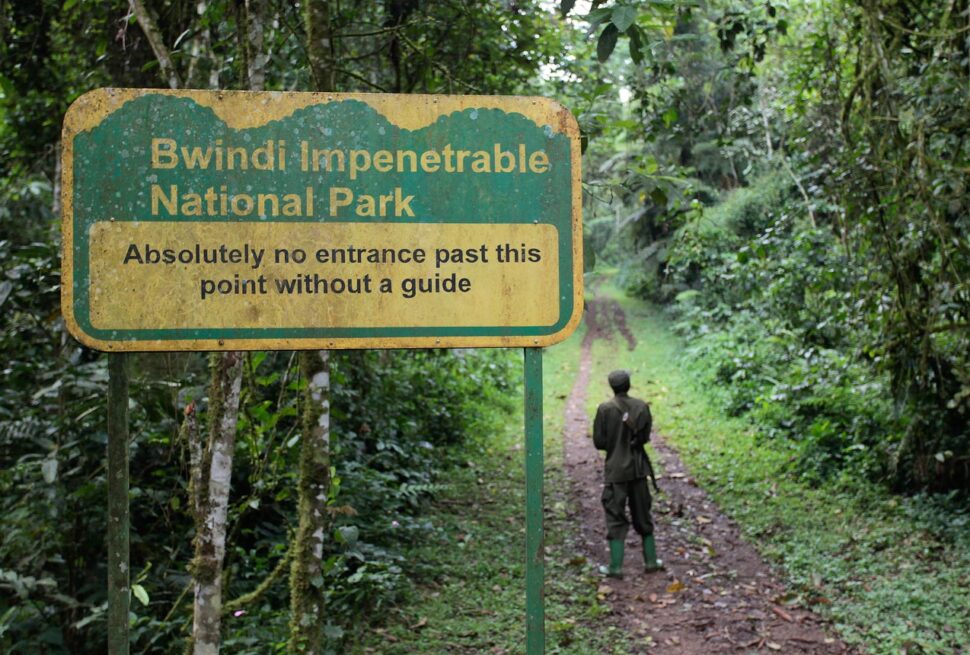
The myth that gorillas are purely ground-dwelling creatures ignores decades of field research from Bwindi Impenetrable National Park, Mgahinga Gorilla National Park, and Volcanoes National Park in Rwanda.
In reality, mountain gorilla behavior includes regular, purposeful tree use—especially among younger individuals.
Whether you’re planning gorilla trekking in Uganda, gorilla trekking in Rwanda, or simply curious about these magnificent apes, understanding their relationship with trees transforms what you see on the trail.
You’ll know where to look, when climbing is most likely, and how to position yourself for unforgettable photographs.
If you’re planning a gorilla trek, here’s what to expect—and how to increase your chances of witnessing arboreal behavior in the wild.
🦍 Ready to see gorillas in their natural habitat? [Check 2026 permit availability with GoSilverback Gorilla Safaris →]

Gorilla Species and Their Habitats: Why Tree Use Varies
Not all gorillas interact with trees the same way. The species you encounter—and the habitat they occupy—directly determines how often you’ll see climbing behavior on your trek.
Mountain Gorillas vs Lowland Gorillas: Who Climbs More?
Mountain gorillas (Gorilla beringei beringei) live in the volcanic highlands of Uganda, Rwanda, and the Democratic Republic of Congo. They inhabit steep, densely vegetated slopes between 2,200 and 4,300 meters elevation.
Their diet is heavily folivorous—leaves, stems, pith, and shoots—meaning they spend most of their time on the ground. Climbing occurs but is less frequent than in lowland populations.
Western lowland gorillas (Gorilla gorilla gorilla) and Eastern lowland (Grauer’s) gorillas (Gorilla beringei graueri) occupy flatter, denser tropical forests rich in fruiting trees.
Lowland gorillas climb significantly more because fruit constitutes a larger portion of their diet, and the forest canopy offers abundant food sources at height.
For safari travelers, the critical fact is this: Nearly all commercial gorilla trekking in Uganda (Bwindi, Mgahinga) and gorilla trekking in Rwanda (Volcanoes National Park) involves mountain gorillas.
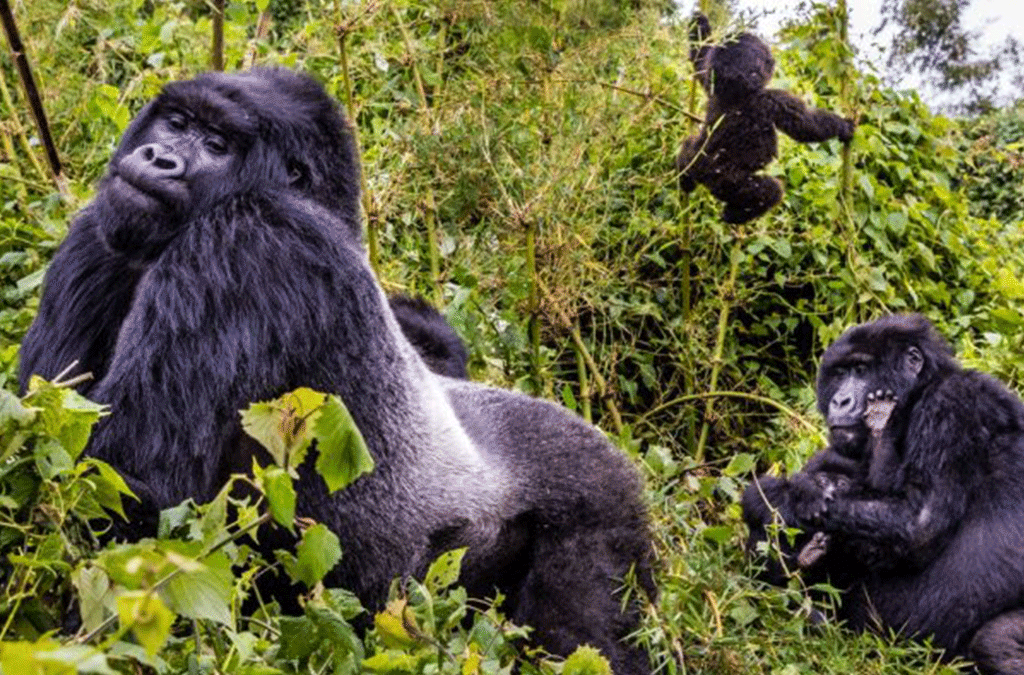
You will see moderate, functional tree use—juveniles playing in low branches, females nesting at mid-canopy, silverbacks resting against thick trunks—but not the frequent, high-canopy climbing typical of lowland species.
Habitat structure matters. Dense bamboo zones limit climbing opportunities. Mixed hardwood forests with tall fruiting species like Hagenia, Macaranga, and Ficus create more arboreal behavior.
🌿 Curious which park suits your travel style? [Compare Uganda vs Rwanda gorilla trekking packages with GoSilverback →]

Do Gorillas Climb Trees? The Direct Answer, Backed by Science
Do gorillas climb trees? Yes. Gorillas climb trees to forage for fruit, construct sleeping nests, rest during the day, play, and occasionally escape ground-level disturbances.
However, they are primarily terrestrial quadrupeds, and climbing is a supplementary—not dominant—locomotor behavior.
Here’s what the research confirms:
- Body mass is the primary constraint. Adult male silverbacks weigh 140–200+ kg (310–440 lbs). This limits them to sturdy, low-to-mid-level branches. They do not ascend to the upper canopy.
- Females (70–115 kg) and juveniles climb more freely and reach greater heights.
- Typical climbing heights range from 2 to 15 meters, with most activity in the lower to mid-canopy.
- Climbing is deliberate and four-limbed. Gorillas grip thick trunks and primary branches with hands and feet. They do not brachiate (swing arm-over-arm) like gibbons or spider monkeys.
- Climbing is functional and temporary. Gorillas return to the ground for feeding, resting, socializing, and traveling.
Why Gorillas Climb Trees – At a Glance
- ✅ Reach ripe fruit and tender leaves above ground level
- ✅ Build elevated sleeping nests for comfort and dryness
- ✅ Rest and observe surroundings from a vantage point
- ✅ Play, chase, and develop motor skills (juveniles)
- ✅ Avoid minor ground-level disturbances
This is mountain gorilla behavior documented across thousands of hours of field observation by the Dian Fossey Gorilla Fund, Uganda Wildlife Authority (UWA), and Rwanda Development Board (RDB).
📸 Want front-row access to these behaviors? [Book your gorilla habituation experience with GoSilverback Gorilla Safaris →]
Why Gorillas Climb Trees: Behavior and Ecological Reasons
Understanding why gorillas climb helps you anticipate when and where you’ll witness it on your trek.
1. Foraging for Fruit and Leaves
When fruiting trees like wild fig (Ficus), Dombeya, or Rubus are in season, gorillas climb to access ripe fruit patches beyond arm’s reach from the ground.
In Bwindi’s fruiting seasons (typically March–May and October–December), guides frequently observe females and juveniles ascending 5–12 meters to feed.
Mountain gorillas supplement their leaf-heavy diet with fruit whenever available, and climbing is the only way to reach it.
2. Nesting and Sleeping Behavior
Gorilla nesting behavior is one of the most fascinating sights on a trek. Every evening, each gorilla constructs a fresh nest from bent branches and foliage.
Ground nests are common for heavy silverbacks. Tree nests, built at heights of 2–8 meters, are preferred by females and juveniles for added comfort, drainage during rain, and mild predator deterrence.
On a Gorilla Habituation Experience in Uganda, you may observe nest-building in real time during the late-afternoon hours.
3. Resting and Observation
Gorillas occasionally rest in low tree forks during midday, particularly in wet conditions when the ground is muddy.
A female or juvenile may sit 3–5 meters up, chewing vegetation and watching the group below. Silverbacks sometimes lean against massive trunks but rarely elevate fully.
4. Play and Social Behavior
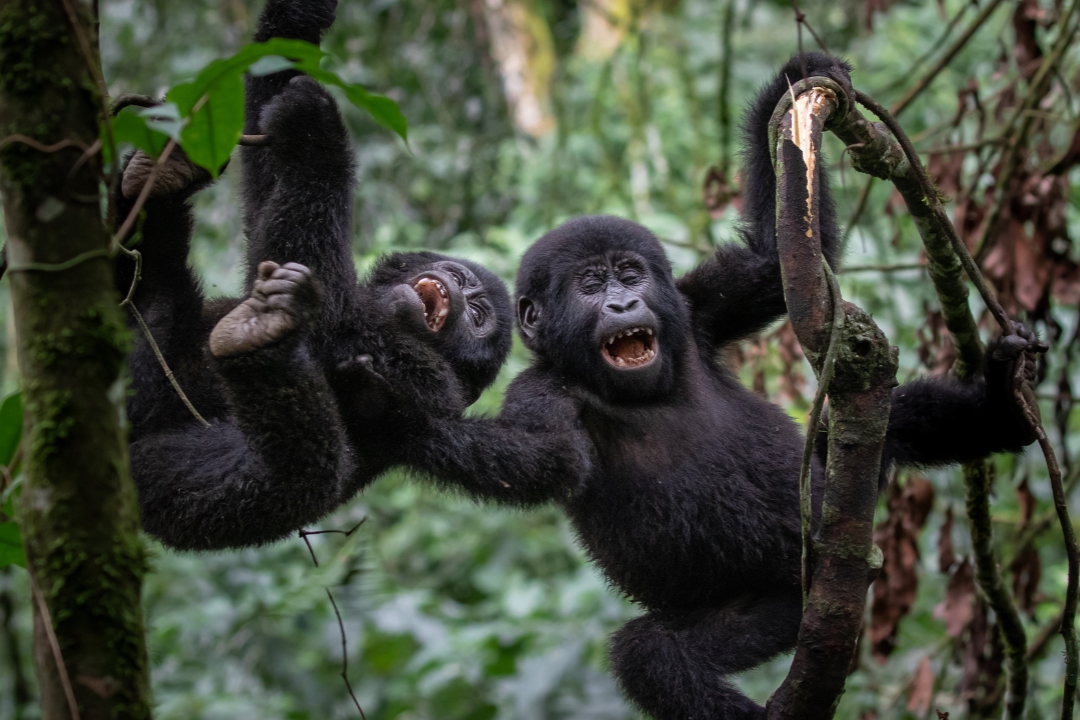
Do baby gorillas climb trees? Absolutely. Infants and juveniles (ages 1–8 years) climb constantly as part of play, social bonding, and motor development.
They chase each other through low branches, wrestle in tree forks, and practice the climbing skills they’ll need as adults. This is the most common arboreal behavior tourists witness on treks.
5. Safety and Elevation
While mountain gorillas face few natural predators (leopards historically, though extremely rare today), younger gorillas may climb to avoid ground-level disturbances—falling debris, insects, or unfamiliar noises. This is reflexive rather than habitual.
🌳 See all of this behavior up close. [Reserve your 2026 gorilla trekking permit through GoSilverback Gorilla Safaris →]

Who Climbs Most? Age, Sex, and Body Size Differences
This is the nuance most articles miss—and it directly shapes your trekking experience.
Silverback vs Female vs Juvenile: Climbing Frequency
|
Gorilla Type |
Body Weight |
Climbing Frequency |
Typical Height |
|
Adult Silverback |
140–200+ kg |
Rare; low branches only |
1–3 m |
|
Adult Female |
70–115 kg |
Moderate; nesting + foraging |
3–10 m |
|
Juvenile (3–8 yrs) |
25–60 kg |
Frequent; play + foraging |
5–15 m |
|
Infant (0–3 yrs) |
5–20 kg |
Very frequent; carried/climbing |
2–8 m |
What this means on your trek: Your guide will most often point out juveniles tumbling through low trees and females nesting at mid-canopy.
The dominant silverback will almost certainly be on the ground—resting, feeding, or watching his family. This contrast is part of what makes the encounter so powerful.
Mountain gorilla behavior varies by family. Some habituated groups in Bwindi’s Nkuringo sector or Rwanda’s Susa group show more arboreal activity than others, depending on home-range vegetation.
🔭 Want to know which gorilla family offers the best viewing? [Ask GoSilverback’s expert team for a personalized recommendation →]

How Gorillas Climb: Anatomy and Movement
How do gorillas climb trees? Slowly, deliberately, and with extraordinary strength.
Physical Adaptations for Climbing
- Arm span exceeds height (up to 2.6 m / 8.5 ft in large males), providing reach.
- Curved fingers and toes hook around branches securely.
- Opposable thumbs and big toes allow precision gripping.
- Massive forelimb musculature supports pulling body weight upward.
- Broad, flat chest stabilizes the torso during four-limbed ascent.
Climbing Style: Four-Limbed and Weight-Tested
Gorillas do not swing on vines. They do not brachiate. Instead, they climb using all four limbs simultaneously, testing each branch for load-bearing capacity before committing their full weight.
Movements are slow, controlled, and deliberate—a stark contrast to the acrobatic swinging seen in smaller apes.
On the ground, gorillas are knuckle-walkers. In trees, they shift to a quadrupedal climbing gait, gripping trunk surfaces with palms and soles. They prefer thick trunks (>20 cm diameter) and primary branches that can support their mass.
Vertical Mobility When Motivated
Despite their bulk, gorillas can ascend several meters quickly when driven by food or disturbance.
A juvenile spotting ripe fruit may scramble 6–8 meters up in under 10 seconds. A startled female may elevate rapidly to create distance from a perceived threat.
🦍 Witness this raw power in person. [Secure your gorilla trekking permit with GoSilverback Gorilla Safaris →]

What Tourists Actually See on Gorilla Treks in Uganda & Rwanda
Let’s connect the science to your actual safari experience.
Typical Trek Scenarios
Most gorilla trekking in Uganda and gorilla trekking in Rwanda involves hiking 1–6 hours through steep, densely forested terrain to reach a habituated gorilla family.
Once located, you spend one full hour within 7 meters of the group.
During that hour:
- Silverbacks are typically on the ground—feeding on vegetation, resting, or interacting with females.
- Females may be in low trees nursing infants or building nests.
- Juveniles are the most active climbers—chasing, playing, and swinging through branches 2–8 meters up.
- Infants cling to mothers or attempt short climbs on nearby trunks.
Where Climbing Is More Likely
- Bwindi Impenetrable National Park – Nkuringo & Ruhija sectors: Rugged terrain, mixed forest with tall fruiting trees.
- Volcanoes National Park – Karisoke and Susa ranges: Dense Hagenia woodland where gorillas use vertical space.
- Fruiting seasons (Mar–May, Oct–Dec): Increased arboreal foraging.
Gorilla Habituation Experience (Uganda)
The 4-hour Gorilla Habituation Experience in Bwindi’s Rushaga sector gives you extended time with a semi-habituated family.
This dramatically increases your chances of observing nesting behavior, tree climbing, feeding sequences, and social interactions that a standard 1-hour trek may miss.
Rwanda’s Volcanoes National Park
Gorilla trekking in Rwanda offers smaller group sizes and premium logistics. Guides in Volcanoes NP are exceptionally skilled at positioning visitors for optimal viewing—whether the gorillas are on the ground or elevated.
🎟️ Permits are limited to 8 visitors per gorilla family per day. [Check 2026 availability now with GoSilverback Gorilla Safaris →]
Related Read | Gorilla Trekking in Uganda | Gorilla Trekking in Rwanda | Gorilla Habituation Experience.
Myths vs Facts: Gorillas, Trees, and Popular Culture
Let’s correct the misconceptions that Hollywood and children’s books have embedded in popular imagination.
❌ Myth: Gorillas swing on vines like Tarzan’s apes.
✅ Fact: Gorillas do not brachiate. They climb deliberately on sturdy trunks and branches using all four limbs. Vine-swinging is a behavior of gibbons and spider monkeys, not great apes of this size.
❌ Myth: Gorillas live in trees like monkeys.
✅ Fact: Gorillas are primarily terrestrial. They spend the vast majority of their day on the ground—feeding, resting, traveling, and socializing. Climbing is temporary and purpose-driven.
❌ Myth: All gorillas climb the same way.
✅ Fact: Age, sex, species, and habitat strongly influence climbing frequency. A juvenile western lowland gorilla climbs far more than an adult mountain gorilla silverback.
❌ Myth: Gorillas are too heavy to climb at all.
✅ Fact: Even 200 kg silverbacks can ascend low, sturdy branches. Juveniles climb as high as 15 meters.
📖 Share these facts with your travel group. Better yet, [experience them live—book your trek with GoSilverback →]

Conservation and Responsible Trekking: Protecting Gorillas and Their Forest
Responsible gorilla trekking is not optional—it’s essential.
Why Forest Conservation Matters for Climbing Behavior
Healthy, old-growth forests with tall fruiting species and diverse canopy structure support natural arboreal behavior.
Deforestation fragments habitat, reduces fruit availability, and forces gorillas into smaller ranges with fewer climbing opportunities. Protecting forests protects behavior.
How Your Permit Fee Helps
Every gorilla trekking permit—whether $800 in Uganda or $1,500 in Rwanda—directly funds:
- Anti-poaching patrols and ranger salaries
- Veterinary care for injured or sick gorillas
- Community revenue-sharing programs (schools, clinics, roads)
- Habitat restoration and research
Responsible Trekking Guidelines
- Maintain a 7-meter (21-foot) distance at all times.
- Do not use flash photography, especially near nesting gorillas.
- Follow your guide’s instructions without exception.
- If gorillas are in trees or building nests, stay still and quiet—sudden movement causes stress.
- Carry out all waste. Leave no trace.
Choose Ethical Operators
Select safari companies that follow UWA and RDB regulations, limit group sizes, employ local guides, and contribute to community development.
GoSilverback Gorilla Safaris operates under full park authority licensing and channels a portion of every booking into conservation partnerships.
🌍 Travel responsibly. Trek purposefully. [Book with GoSilverback Gorilla Safaris and directly support gorilla conservation →]
Related Read | Gorilla Poaching Statistics | Gorilla Poaching Prevention | Gorilla Trekking Conservation Impact | Mountain Gorilla Habitat Restoration.
Planning Your Gorilla Trek: Permits, Best Time, and What to Expect
Ready to turn knowledge into experience? Here’s your step-by-step planning guide.
Step 1: Secure Your Gorilla Permit
- Uganda (Bwindi / Mgahinga): $800 per person per trek. Gorilla Habituation Experience: $1,500 for 4 hours.
- Rwanda (Volcanoes NP): $1,500 per person per trek. Premium experience, easier access from Kigali (2-hour drive).
- Permits sell out 3–6 months ahead in peak season (June–September, December–February). Book early.
Step 2: Choose Your Best Time to Visit
- Dry seasons (Jun–Sep, Dec–Feb): Easier trails, less mud, clearer photography.
- Wet/fruiting seasons (Mar–May, Oct–Nov): Lush scenery, fewer crowds, increased arboreal foraging behavior.
Step 3: Pack and Prepare
- Sturdy, broken-in hiking boots with ankle support
- Waterproof jacket and layered clothing (temperatures drop at altitude)
- Gardening gloves for gripping vegetation on steep slopes
- 2 liters of water, energy snacks, packed lunch
- Daypack (30 L), dry bag for camera/electronics
- Valid passport, printed permit, travel insurance with evacuation cover
- Moderate fitness required: treks involve steep, uneven terrain at 2,500–3,500 m altitude
Step 4: Maximize Your Wildlife Viewing
- Hire a porter ($10–$15) to carry your bag and assist on steep sections.
- Choose the Gorilla Habituation Experience for extended observation time.
- Travel with experienced guides who know family behavior patterns.
- Be patient. The best moments—juveniles climbing, nest-building, silverback displays—reward those who watch quietly.
🗓️ 2026 permits are limited. Peak-season dates are filling fast. [Get your free, no-obligation gorilla safari quote from GoSilverback Gorilla Safaris →]
Related Read | How to Get a Gorilla Permit | What to Wear for Gorilla Trekking | What Happens During Gorilla Trekking | Best Time for Gorilla Trekking Uganda.
Frequently Asked Question: Do Gorillas Climb Trees?
Do gorillas climb trees?
Yes. Gorillas climb trees for foraging, nesting, resting, and play. Females and juveniles climb most frequently; adult silverbacks climb rarely due to body mass.
Do mountain gorillas climb trees?
Yes, but less frequently than lowland gorillas. Mountain gorillas climb for fruit, nesting, and juvenile play, typically in the lower to mid-canopy (2–10 meters).
Do baby gorillas climb trees?
Yes. Infants and juveniles climb often as part of play, learning, and social development. This is the most common tree-climbing behavior tourists observe on treks.
Do gorillas sleep in trees?
Sometimes. Gorillas build fresh nests nightly. Adults often nest on the ground; females and juveniles frequently build tree nests at heights of 2–8 meters for comfort and dryness.
Do gorillas swing on vines?
No. Gorillas do not brachiate. They climb deliberately using all four limbs on sturdy trunks and branches. Vine-swinging is a behavior of smaller apes and monkeys.
How high can gorillas climb?
Juveniles can reach up to 15 meters. Adult females typically climb to 5–10 meters. Silverbacks rarely exceed 2–3 meters on sturdy, low branches.
Can I see gorillas climbing on my trek?
Yes—especially juveniles and females. Your chances increase during fruiting seasons, in dense forest sectors, and on extended Gorilla Habituation Experiences in Uganda.
Conclusion: See the Truth for Yourself
Gorillas do climb trees—not like monkeys, not like cartoon apes, but in a deliberate, powerful, deeply functional way shaped by age, species, body mass, and habitat.
On a well-guided trek through Bwindi Impenetrable Forest, Mgahinga’s volcanic slopes, or Rwanda’s Volcanoes National Park, you will witness juveniles tumbling through branches, females nesting above the forest floor, and the awe-inspiring presence of a silverback commanding the ground below.
This is not a zoo. This is not a documentary. This is one hour, seven meters, eye-to-eye with a wild mountain gorilla—and it changes you.
Permits are capped at 8 visitors per family per day. Peak-season 2026 dates are already selling out.
🦍 Book Your Gorilla Trekking Safari with GoSilverback Gorilla Safaris
Whether you’re traveling solo from New York, as a couple from London, with family from Toronto, or on a once-in-a-lifetime trip from Sydney, Beijing, Dubai, or São Paulo—GoSilverback Gorilla Safaris handles everything:
✅ Permit procurement (Uganda $800 / Rwanda $1,500)
✅ Airport transfers, accommodation, and full itinerary planning
✅ Expert local guides with 10+ years of trekking experience
✅ Gorilla Habituation Experience bookings for extended wildlife encounters
✅ 24/7 traveler support before, during, and after your trek
👉 [RESERVE YOUR 2026 GORILLA PERMIT NOW → GoSilverback Gorilla Safaris]
👉 [COMPARE UGANDA vs RWANDA PACKAGES →]
👉 [REQUEST A FREE CUSTOM SAFARI QUOTE →]
Don’t just read about gorillas climbing trees. Stand in the forest. Hear the branches crack. Watch a juvenile gorilla lock eyes with you from five meters up. This is the moment you’ll remember forever.
Your silverback is waiting. Book with GoSilverback Gorilla Safaris today. 🦍
Last updated: August 2026 | Author: GoSilverback Gorilla Safaris Editorial Team | Sources: Uganda Wildlife Authority (UWA), Rwanda Development Board (RDB), Dian Fossey Gorilla Fund International

[…] Related Read | Do Gorillas Climb Trees? […]