
Strongest Silverback Gorilla: How Powerful Is the World’s Largest Male Gorilla? Guide 2026
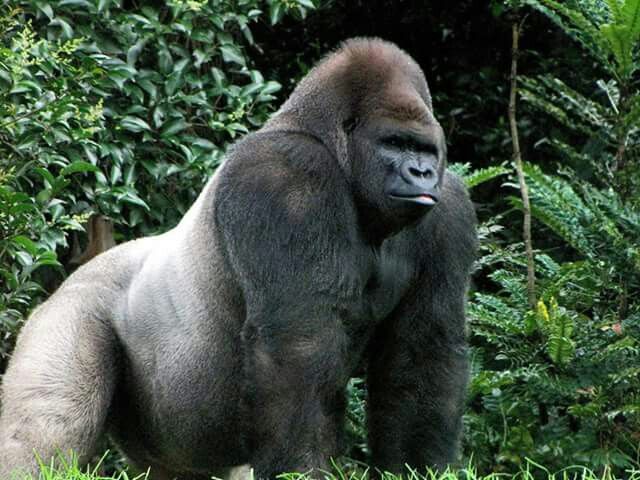
When asking which is the strongest silverback gorilla, the direct scientific answer is that there is no verified scientific record identifying one specific individual as the world’s strongest.
However, adult male silverback gorillas are exceptionally powerful primates, renowned for their immense muscular build, towering size, and complex dominance displays that secure their role as the undisputed leaders of their family groups.
While the internet is filled with exaggerated myths about gorilla lifting records, the true majesty of a silverback gorilla lies in its functional, evolutionary strength.
In this comprehensive guide, we provide evidence-based answers about silverback gorilla strength, average weight, fighting ability, and biomechanics.
Furthermore, we will explore how you can witness these magnificent creatures in their natural habitat through regulated gorilla trekking in Uganda and Rwanda.

Which Is the Strongest Silverback Gorilla in the World?
It is practically and scientifically impossible to name a proven “winner” for the title of the strongest silverback gorilla in the world.
Unlike human powerlifting, where athletes compete under standardized, controlled conditions with measurable weights, wild gorillas do not perform standardized strength tests.
Therefore, any claim naming a specific gorilla as the absolute strongest is based on anecdotal observation, not empirical data.
Conservation organizations, including the World Wildlife Fund (WWF) and Berggorilla & Regenwald Direkthilfe e.V., focus on tracking the health, genetics, and social dynamics of mountain gorilla families rather than measuring their physical lifting capacity.
While certain famous silverbacks—such as the legendary Pablo or the highly dominant Ugenda of Bwindi—were known for their massive size, intimidating presence, and successful defense of their families, their physical strength was never quantified in kilograms or pounds.
Dominance in the wild is determined by a combination of physical size, age, behavioral intelligence, and social alliances, rather than raw, measurable lifting power.
When researchers document notable individuals, they record their reproductive success, group size, and longevity, not their bench press.
Therefore, the “strongest” silverback gorilla is simply the one that successfully protects its family, secures resources, and passes on its genes in the dense forests of Africa.
How Strong Is a Silverback Gorilla?
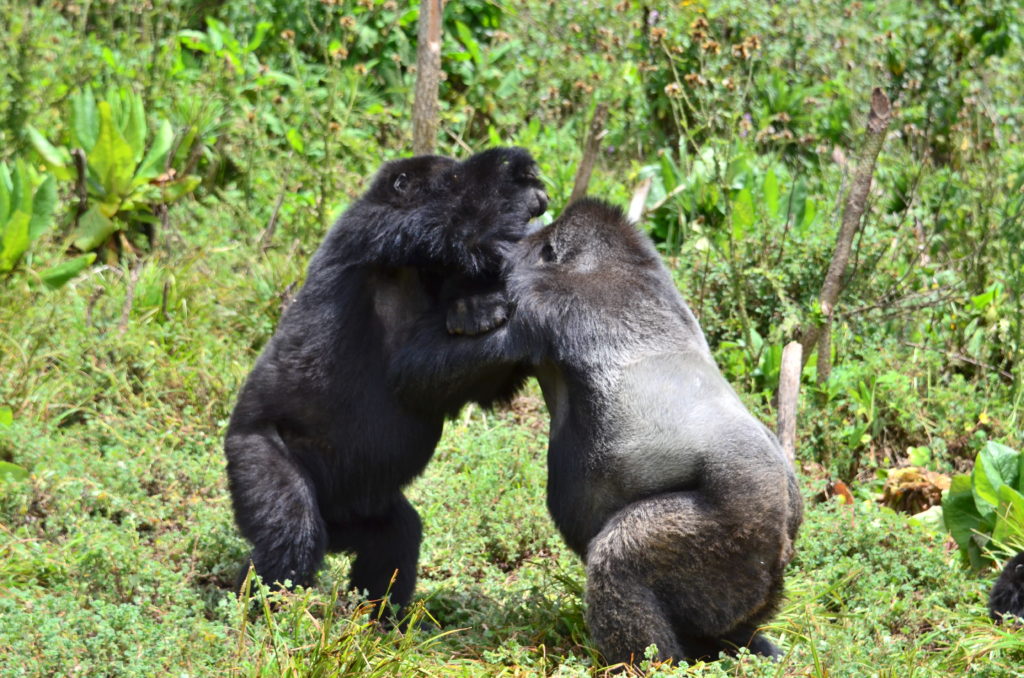
To understand how strong a silverback gorilla is, one must look at its extraordinary anatomy. An adult male silverback gorilla possesses broad, sloping shoulders, substantial muscle mass, incredibly powerful arms, and a robust, barrel-shaped chest.
Their physical strength is not just for show; it is a vital evolutionary adaptation that supports daily movement, heavy foraging, climbing, intimidating dominance displays, and the defense of their family group.
A silverback’s muscular density is significantly higher than that of humans. Their arms are remarkably thick, designed to support their massive body weight as they knuckle-walk through dense, uneven forest terrain.
The muscle fibers in their upper bodies and arms are built for explosive power and sustained endurance, allowing them to tear through thick bamboo, move heavy fallen logs, and navigate steep volcanic slopes with ease.
It is crucial to clarify that researchers have not established a reliable universal multiplier for how many times stronger a gorilla is than a human.
You will frequently see claims online stating a gorilla is “6, 10, or 20 times stronger than a man.” These are internet myths.
While a silverback gorilla is undeniably vastly stronger than an average human in absolute terms due to its sheer size and muscle mass, assigning a precise mathematical multiplier is scientifically inaccurate.
Their strength is highly specialized for their environment—optimized for grappling, climbing, and moving through dense vegetation, rather than performing the specific, isolated lifting movements used to test human strength.
For more on their physical traits, explore the Features of a Mountain Gorilla | How Big are Silverback Gorillas | How Strong Is A Silverback Gorilla

How Big and Heavy Is a Silverback Gorilla?
The physical dimensions of a silverback gorilla vary significantly depending on the species and subspecies. The two primary species are the Western Lowland Gorilla and the Eastern Gorilla (which includes the Mountain Gorilla and the Eastern Lowland Gorilla).
According to data from the WWF, a fully grown male mountain gorilla can weigh around 180 kg (approx. 400 lbs) in the wild, though individual variation is common.
Eastern Lowland gorillas (Grauer’s gorillas) are generally the largest subspecies, with males sometimes exceeding 200 kg (440 lbs).
Height is measured either standing upright or on all fours. On average, a silverback gorilla stands about 1.5 meters (5 feet) tall when standing on all fours but can reach up to 1.8 meters (almost 6 feet) when standing fully upright.
Their arm span is equally impressive, often exceeding their standing height, which provides immense leverage and stability.
Gorilla Size and Weight Comparison Table
|
Gorilla Subspecies |
Average Male Weight |
Average Standing Height |
Primary Habitat |
|
Eastern Lowland (Grauer’s) |
160 kg – 220+ kg |
1.7 m – 1.8 m |
Lowland forests of DRC |
|
Mountain Gorilla |
140 kg – 195 kg |
1.5 m – 1.7 m |
Volcanic slopes of Uganda/Rwanda/DRC |
|
Western Lowland |
140 kg – 180 kg |
1.5 m – 1.6 m |
Swamp and lowland forests of Central Africa |
Note: Weights and heights represent wild adult males. Captive gorillas may weigh more due to different diets and lower activity levels.
Related Read | Discover Silverback Gorilla Weight | Are Silverback Gorillas Dangerous? | Top 5 Physical Traits of Silverback gorillas
Silverback Gorilla Strength Compared With Humans
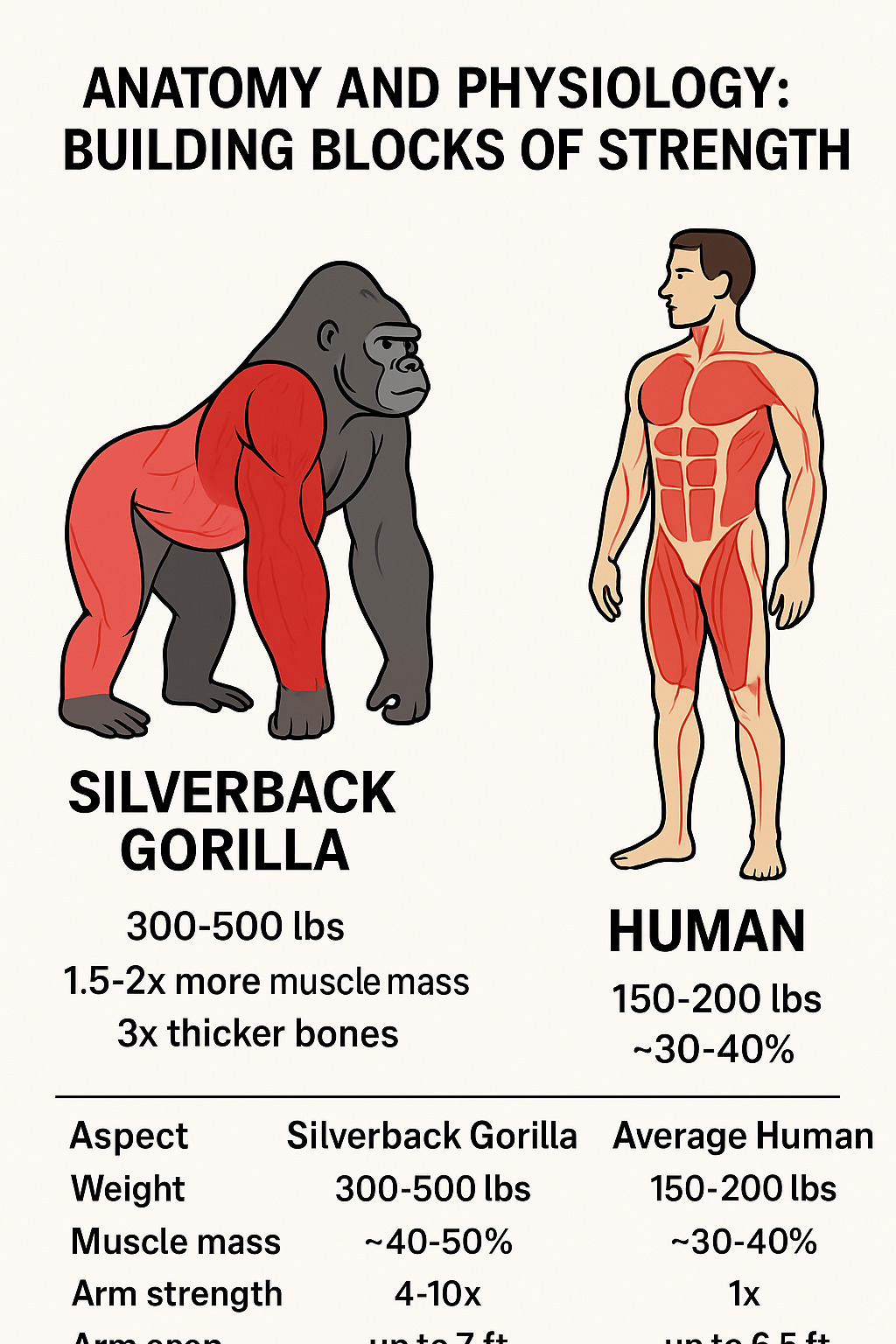
When comparing silverback gorilla strength to humans, the differences in body size, muscle mass, limb structure, and physical capabilities are staggering.
Humans are bipedal, evolved for endurance running and fine motor skills. Silverback gorillas, conversely, are quadrupedal knuckle-walkers, evolved for brute force, climbing, and navigating dense, obstructive forests.
A silverback’s bone density is significantly thicker than a human’s, providing a heavier, more robust framework to anchor their massive muscles.
Their center of gravity is lower, and their arms are disproportionately long and powerful compared to their legs. This limb structure allows them to generate immense torque and pulling force.
However, we must reiterate that popular claims such as “10 times stronger than a human” should not be treated as established scientific fact.
Human strength is usually measured in specific, isolated movements (like a deadlift or a bench press). A gorilla’s anatomy is not biomechanically suited for these specific human movements.
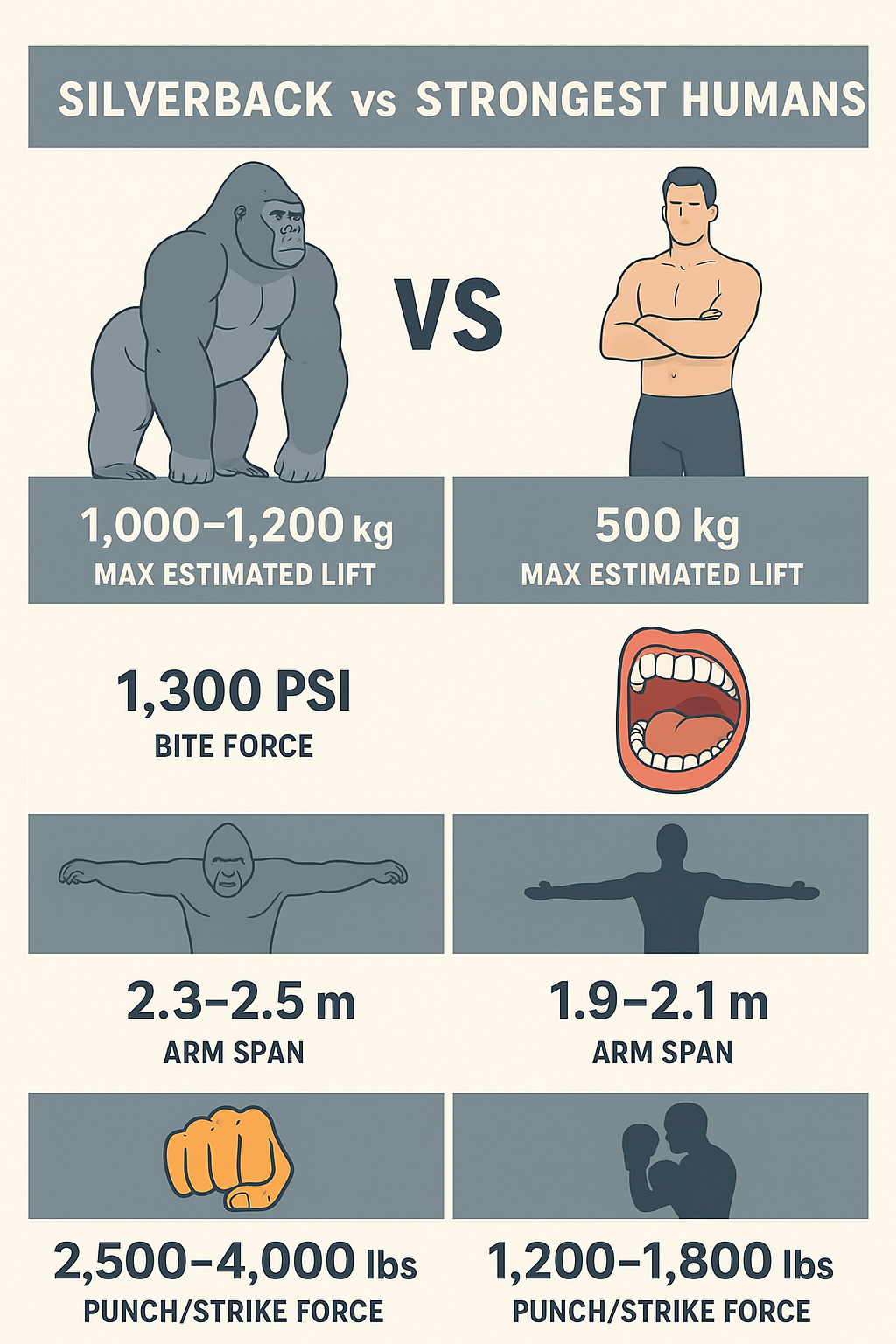
Therefore, do not invent or rely on a precise lifting, punching, or pulling score to compare the two species. A silverback gorilla can easily overpower a human in a physical confrontation due to its sheer mass, bite force, and muscular leverage, but quantifying that difference with a neat mathematical ratio is biologically misleading.
Related Read | Discover Silverback Gorilla vs Human strength | Are Silverback Gorillas Friendly To Humans?
How Much Can a Silverback Gorilla Lift?
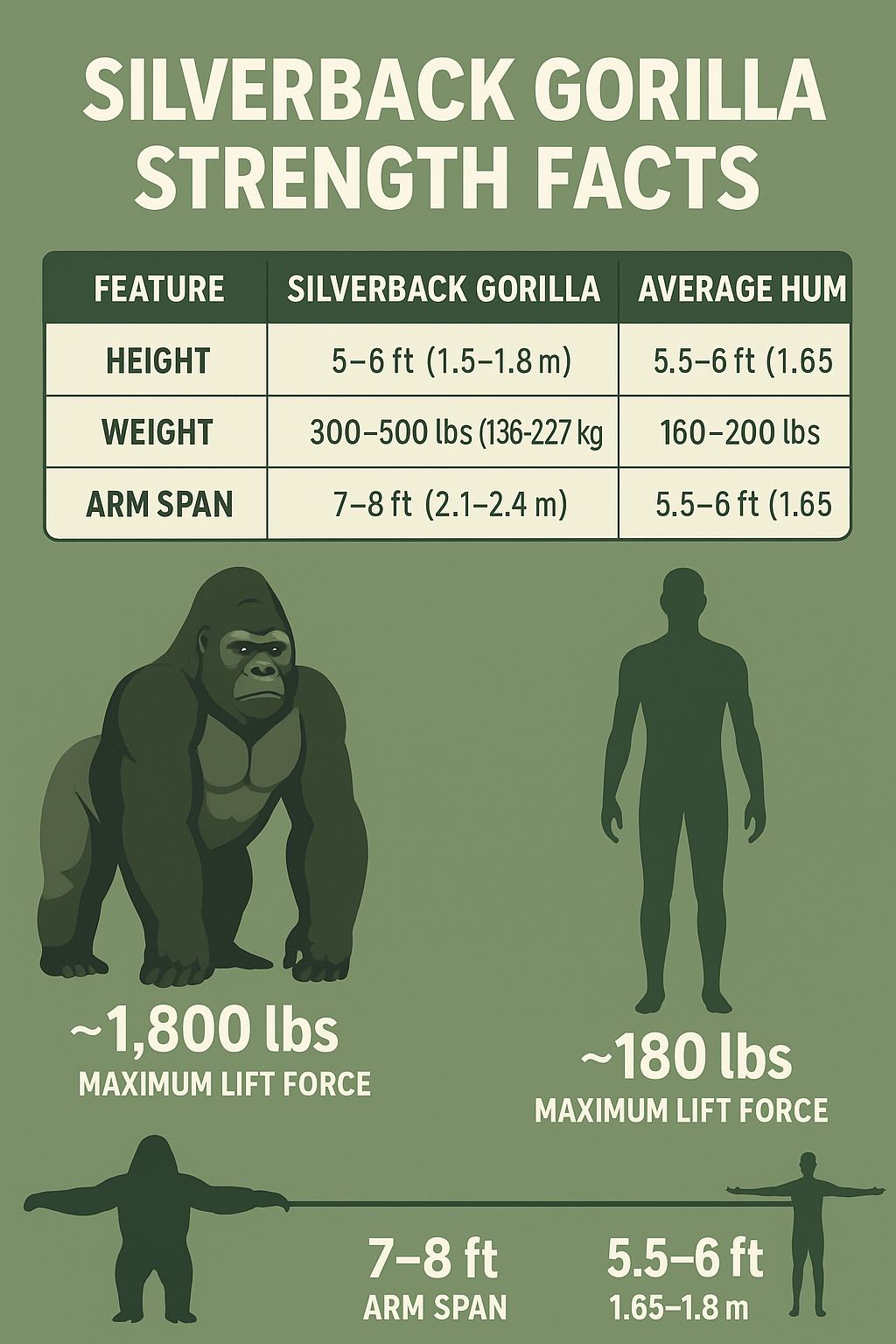
One of the most common searches regarding primate power is: how much can a silverback gorilla lift? The internet is flooded with viral, unverified figures claiming a silverback gorilla can lift 800 kg (1,760 lbs), 1,000 kg (2,200 lbs), or even more.
The reality is that no standardized maximum lift has been established through controlled scientific testing. It is logistically and ethically impossible to place a wild silverback gorilla in a gym and ask it to perform a maximum-effort deadlift or bench press.
Consequently, viral figures like 800 kg or 1,000 kg should not be presented as verified measurements. They are pure speculation.
What scientists can observe is the gorilla’s functional strength in the wild. Researchers have documented silverbacks effortlessly moving massive fallen tree trunks, tearing apart thick, tangled root systems, and carrying heavy loads of food.
This demonstrates immense observed physical power, but it is fundamentally different from a measured lifting record. The true lifting capacity of a silverback gorilla remains an impressive but scientifically unquantified mystery.
Related Read | Discover Silverback Gorilla Weight Guide
Why Are Silverback Gorillas So Powerful?
The immense power of a silverback gorilla is the result of millions of years of evolutionary adaptation.
Their physical capabilities are driven by their substantial body mass, dense skeletal structure, highly developed muscle fibers, and the specific demands of their forest habitat.
Mountain gorillas and other subspecies live in dense, rugged environments. Daily activities such as feeding, climbing steep volcanic slopes, wading through swampy vegetation, and walking on all fours through thick undergrowth require continuous, heavy resistance training. A silverback must literally push its way through the forest every single day.
Furthermore, their diet plays a crucial role. To sustain their massive bulk, silverbacks consume up to 30 kg (65 lbs) of vegetation daily.
Foraging for tough stems, bamboo shoots, and fibrous roots requires immense jaw and upper-body strength. To understand how their diet fuels this power, read our guide on What Do Silverback Gorillas Eat?
It is important to avoid simplistic claims that gorillas possess “uniquely superhuman muscles.” Their muscles are composed of the same basic biological materials as ours, but their genetic blueprint dictates a much higher ratio of fast-twitch muscle fibers, thicker bone structures, and a skeletal frame built to support and leverage extreme physical mass.
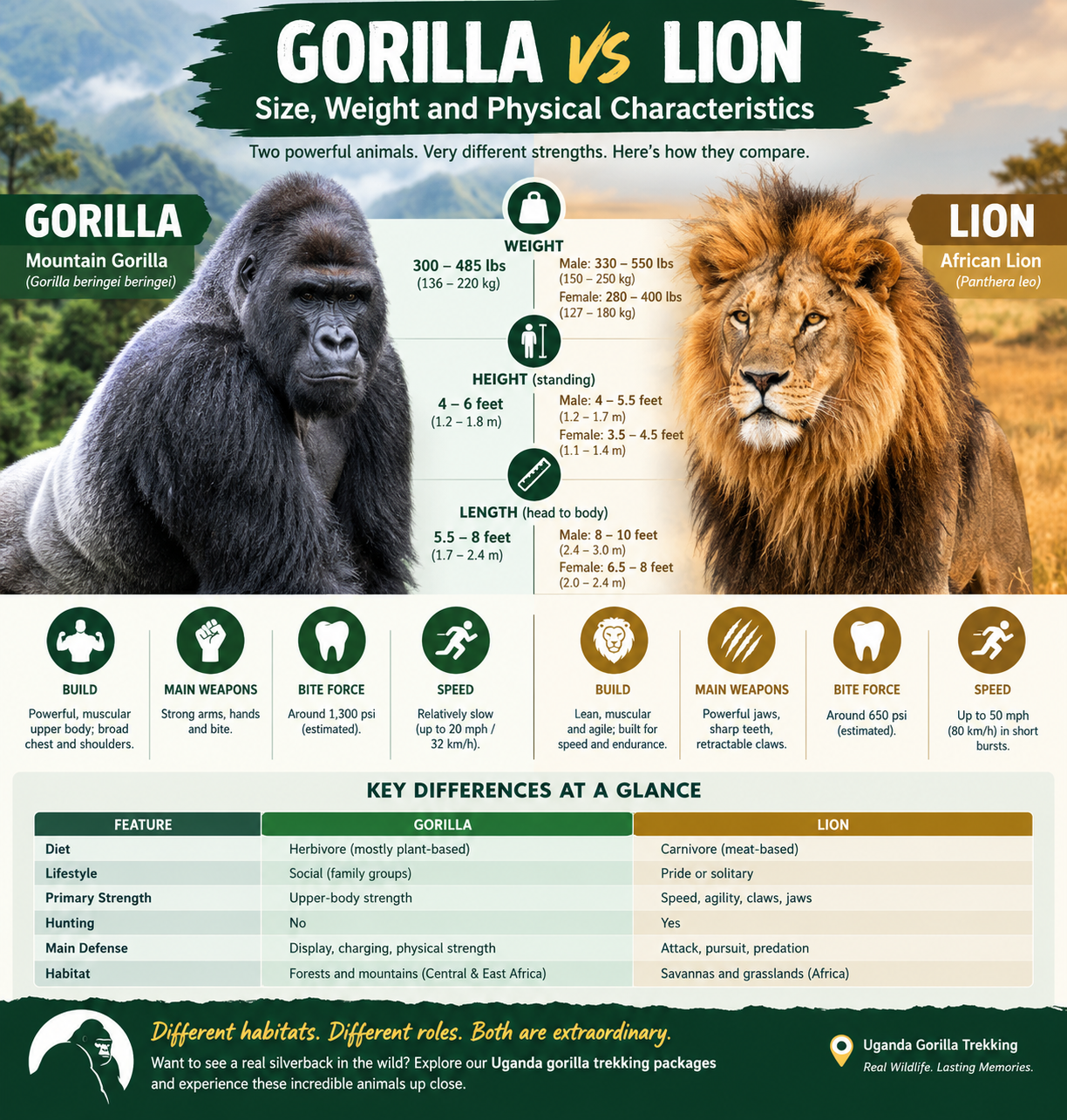
Can a Silverback Gorilla Defeat a Lion or Tiger?
The hypothetical question, “Can a silverback gorilla defeat a lion or tiger?” is a popular curiosity-driven query, but it must be addressed responsibly.
In the wild, gorillas, lions, and tigers have entirely different body structures, habitats, and behavioral adaptations.
Lions and tigers are hyper-carnivores, evolved with retractable claws, specialized killing bites, and predatory instincts.
Silverback gorillas are primarily herbivores, evolved with massive muscle mass, powerful arms for grappling, and a formidable bite force designed for crushing tough vegetation, not hunting prey.
More importantly, there is no reliable scientific test that establishes a universal winner in a hypothetical fight.
Gorillas and lions do not share the same natural habitats in the wild (gorillas live in dense Central/East African forests, while lions primarily inhabit savannas). Therefore, any attempt to declare a definitive winner is purely speculative.
Avoid presenting speculation as fact; in nature, these magnificent animals occupy entirely different ecological niches and do not cross paths in combat.
Related Read | Discover the Key Facts Can A Gorilla Fight a Lion? | Silverback Gorillas Eat Humans
How Does a Silverback Use Its Strength to Protect Its Family?
The primary purpose of a silverback’s immense strength is not to fight, but to lead and protect. The silverback gorilla is the undisputed leader of his family group, making all critical decisions regarding daily movement, foraging locations, and resting sites.
When a potential threat approaches—whether it is a rival male, a predator, or an unfamiliar human—the silverback uses his strength and presence to protect his family.
He initiates dominance displays to warn the threat away. These displays include intense staring, aggressive vocalizations (such as roars and barks), chest-beating, and bluff charges.
It is vital to understand that chest-beating, vocalisations and charging displays are forms of communication rather than proof that the gorilla is always looking for a fight.
These behaviors are designed to intimidate and assess the threat without resorting to physical violence, which could result in injury.
The silverback will only engage in physical combat as an absolute last resort to defend his offspring and females. His strength is a tool of deterrence and leadership, ensuring the survival and stability of his family unit.
Related Read | Discover Why Silverback Gorillas Beat Their Chest | Silverback Gorilla Behaviour | Silverback Gorilla Lifespan | Silverback Gorilla Facts Biology
Are Strong Silverback Gorillas Dangerous to Humans?
Given their immense size and power, it is natural to ask: are strong silverback gorillas dangerous to humans? The truth is nuanced.
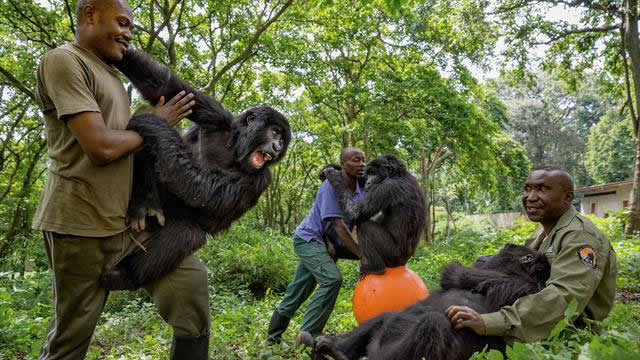
While gorillas can cause serious injuries due to their sheer strength and powerful bite force, they are generally peaceful, gentle giants that avoid unnecessary conflict.
During regulated gorilla trekking, tourists are kept at a safe distance (usually 7 meters or 23 feet) from the animals. The silverback is habituated to the presence of humans, meaning he accepts our presence but does not view us as food or a natural threat.
However, safety relies entirely on human behavior. It is critical to follow these rules:
- Keep a safe distance at all times.
- Follow ranger instructions implicitly.
- Avoid sudden approaches or loud noises.
- Never attempt to touch, feed, or provoke a gorilla.
- If a gorilla charges, crouch down slowly, avoid direct eye contact, and do not run.
For more detailed safety guidelines, review our articles on Are Silverback Gorillas Dangerous? and Do Gorillas Eat Humans? to ensure you are fully prepared for a safe and respectful encounter.
Where Can You See the Strongest Silverback Gorillas in Africa?
If you want to witness the awe-inspiring power of a silverback gorilla in its natural habitat, you must travel to the misty, volcanic mountains of Central Africa.
The mountain gorilla is entirely endemic to this region, and you can observe habituated gorilla groups through highly regulated gorilla trekking in two primary countries:
1. Uganda:
Uganda is home to over half of the world’s remaining mountain gorillas. You can trek in Bwindi Impenetrable National Park (which hosts nearly 20 habituated families) and Mgahinga Gorilla National Park.
Bwindi’s dense, ancient forest provides a dramatic backdrop for observing powerful silverbacks leading their families.
2. Rwanda:
Rwanda’s Volcanoes National Park (Parc National des Volcans) offers spectacular trekking experiences. The park’s bamboo forests and volcanic peaks are famous for the pioneering research of Dian Fossey and remain a premier destination for gorilla trekking.
It is important to note that while you will undoubtedly see a silverback gorilla leading his family, no destination guarantees sightings of a particular individual silverback. Each family is unique, and the experience is dictated by the movements of the gorillas on the day of your trek.
Want to see a powerful silverback gorilla in its natural habitat? Explore guided gorilla trekking experiences in Uganda and Rwanda with GoSilverback Safaris, and discover the forests where mountain gorillas live.
Explore Gorilla Safari Packages
Why Silverback Gorilla Conservation Matters
The survival of the mountain gorilla—and the powerful silverbacks that lead them—is a conservation success story, but the species remains vulnerable.
Silverback gorilla conservation matters because these animals are critical to the health of their ecosystems, acting as seed dispersers that maintain forest biodiversity.
Conservation efforts rely on four pillars: habitat protection, veterinary monitoring, responsible tourism, and community conservation.
Anti-poaching patrols, routine health checks by specialized vets, and securing forest corridors are vital. Furthermore, regulated tourism can contribute to conservation funding and local livelihoods without implying that tourism alone guarantees gorilla survival.
The revenue from gorilla trekking permits directly funds park management, ranger salaries, and community projects, giving local populations a vested interest in protecting these magnificent animals.
Frequently Asked Questions About Silverback Gorilla Strength
What is the strongest silverback gorilla in the world?
There is no scientifically verified individual strength ranking. Dominance is based on social leadership and behavioral intelligence, not measured physical lifting capacity.
How strong is the strongest silverback gorilla?
Immensely strong, capable of moving heavy logs and tearing through dense vegetation, but their exact physical strength has never been quantified in a controlled scientific test.
Is a silverback gorilla stronger than a human?
Yes, in absolute terms. A fully grown silverback gorilla possesses vastly more muscle mass, bone density, and physical power than an average human.
How many times stronger is a silverback gorilla than a man?
There is no scientific multiplier. Claims that they are “10 times stronger” are internet myths; their strength is specialized for their environment, not human lifting metrics.
How much can a silverback gorilla lift?
No standardized maximum lift exists. Viral claims of them lifting 800 kg or 1,000 kg are unverified and should not be treated as factual records.
What is the biggest silverback gorilla ever recorded?
Eastern Lowland gorillas are the largest subspecies, with some wild males exceeding 200 kg (440 lbs), but there is no single, universally verified “biggest ever” record holder.
How much does a fully grown silverback gorilla weigh?
A wild male mountain gorilla typically weighs between 140 kg and 195 kg (300 – 430 lbs), with an average around 180 kg.
Can a silverback gorilla break bones?
Yes. Their immense muscle power, leverage, and formidable bite force (around 1,300 PSI) are more than capable of breaking bones if they feel threatened and resort to physical defense.
Can a silverback gorilla defeat a lion?
There is no reliable scientific data to answer this. They occupy entirely different habitats and ecological niches, making a hypothetical fight purely speculative.
Why do silverback gorillas beat their chests?
Chest-beating is a non-contact vocalization and visual display used to communicate size, assert dominance, warn off rivals, and coordinate the group, not necessarily to initiate a fight.
Are mountain gorillas stronger than lowland gorillas?
Eastern Lowland gorillas are generally larger and heavier than mountain gorillas, but both possess immense, functional strength adapted to their specific forest environments.
Where can tourists see silverback gorillas in Uganda?
Tourists can see them in Bwindi Impenetrable National Park and Mgahinga Gorilla National Park through regulated Uganda Gorilla Safari Packages.
Can you visit silverback gorillas in Rwanda?
Yes, you can visit them in Volcanoes National Park via highly regulated Rwanda Gorilla Trekking Tours.
How dangerous is a silverback gorilla during trekking?
When tourists follow the strict rules (keeping distance, no sudden movements, following rangers), silverback gorillas are generally peaceful and not dangerous during habituated trekking.
What is the difference between a silverback and a blackback gorilla?
The difference is age and maturity. A “blackback” is a mature male (around 8-12 years old) that has not yet developed the distinctive silver hair on its back and hips, which appears when the male reaches full adulthood (around 12+ years) and becomes a silverback.
Experience Mountain Gorillas With GoSilverback Safaris
Witnessing the raw power, gentle intelligence, and majestic presence of a silverback gorilla in the misty forests of Africa is a life-changing experience. At GoSilverback Gorilla Safaris, we specialize in turning this dream into a seamless reality.
Whether you are traveling from the USA, Europe, Asia, or anywhere else in the world, our expert team handles every detail of your journey.
From securing highly sought-after gorilla trekking permits in Uganda and Rwanda, to arranging luxury accommodation, reliable 4×4 transport, and personalized itineraries, we ensure your safari is safe, comfortable, and unforgettable.
Don’t leave your primate encounter to chance. Trust the experts who know the forests, the families, and the logistics inside out.
Experience the unforgettable sight of a silverback gorilla in the wild. Book your gorilla trekking safari with GoSilverback Gorilla Safaris for personalised itinerary planning, permit guidance, accommodation options and transport arrangements in Uganda or Rwanda.