

Mountain Gorilla Behavior: Trekker’s Guide to Uganda & Rwanda 2026
Mountain gorilla behavior refers to the social, feeding, resting, and communication patterns of Gorilla beringei beringei.
They live in cohesive family groups led by a dominant silverback, follow a daily cycle of dawn feeding, midday rest, and afternoon foraging, and communicate through chest beats, vocalizations, grooming, and body postures.
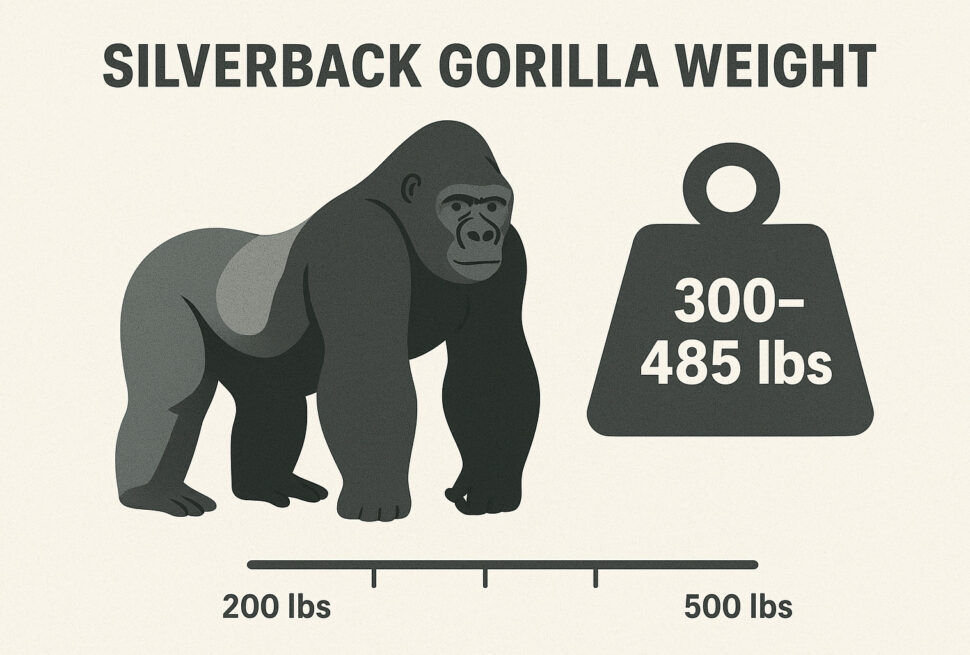
There is no wildlife encounter on Earth quite like locking eyes with a 400-pound silverback gorilla in the misty canopy of an East African rainforest.
Fewer than 1,063 mountain gorillas survive in the wild today, confined to two fragile ecosystems straddling Uganda, Rwanda, and the Democratic Republic of Congo.
Meeting them is rare. Understanding them transforms the experience from a photograph into a story you will retell for the rest of your life.
Mountain gorillas (Gorilla beringei beringei) are highly social, herbivorous primates living in stable family groups led by a dominant silverback.
Their days revolve around feeding, resting, grooming, and communicating through a rich vocabulary of chest beats, grunts, and body postures.
This guide decodes their social structure, daily routine, communication systems, diet, and reproductive habits, then translates every behavioral insight into practical knowledge for trekkers heading into Bwindi Impenetrable National Park (Uganda) or Volcanoes National Park (Rwanda).
Planning a trek? Here’s how mountain gorilla behavior shapes your experience—and how to book responsibly.
👉 Check Gorilla Permit Availability with GoSilverback Gorilla Safaris →

What Is Mountain Gorilla Behavior?
Mountain gorilla behavior refers to the social, feeding, resting, and communication patterns of Gorilla beringei beringei.
They live in cohesive family groups led by a dominant silverback, follow a daily cycle of dawn feeding, midday rest, and afternoon foraging, and communicate through chest beats, vocalizations, grooming, and body postures.
In plain terms: mountain gorillas are not solitary wanderers. They are deeply communal animals with a structured hierarchy, a predictable daily rhythm, and an emotional intelligence that becomes startlingly obvious the moment you sit three meters from a nursing mother or watch two juveniles wrestle over a celery stalk.
Understanding these patterns is not academic trivia—it directly determines where your guide will search, how close you can get, and how the gorillas will react to your presence.
Whether you are flying in from New York, London, Toronto, Sydney, Beijing, São Paulo, or Dubai, the behavioral knowledge in this guide will make your trek richer, safer, and more meaningful.
Social Structure and Family Dynamics
The Silverback: Leader, Protector, Decision-Maker
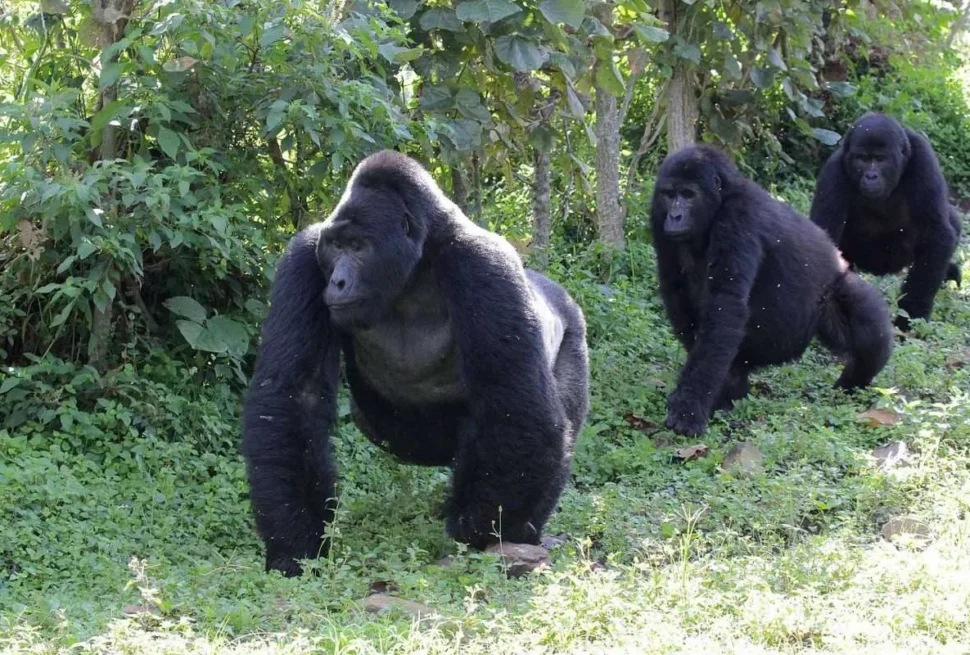
At the center of every mountain gorilla family sits the silverback—a mature male typically aged 12 years or older, identifiable by the saddle of silver-grey hair across his back.
He is not a dictator ruled by brute force. His authority rests on experience, reliability, and calm decision-making.
The silverback’s daily responsibilities include:
- Leading group movement to feeding and nesting sites.
- Mediating conflicts between adult females or between juveniles.
- Protecting the group from rival males, predators, or perceived threats.
- Deciding when to rest, feed, and build night nests.
Trekker insight: On trek, your ranger guide reads the silverback’s mood to gauge safety and proximity. A relaxed silverback feeding with his back to you signals calm.
A silverback facing you with a lowered head is a cue for your guide to slow the group or crouch. This is why licensed guides are mandatory for every gorilla trek in Uganda and Rwanda.

Females, Offspring, and Subordinate Males
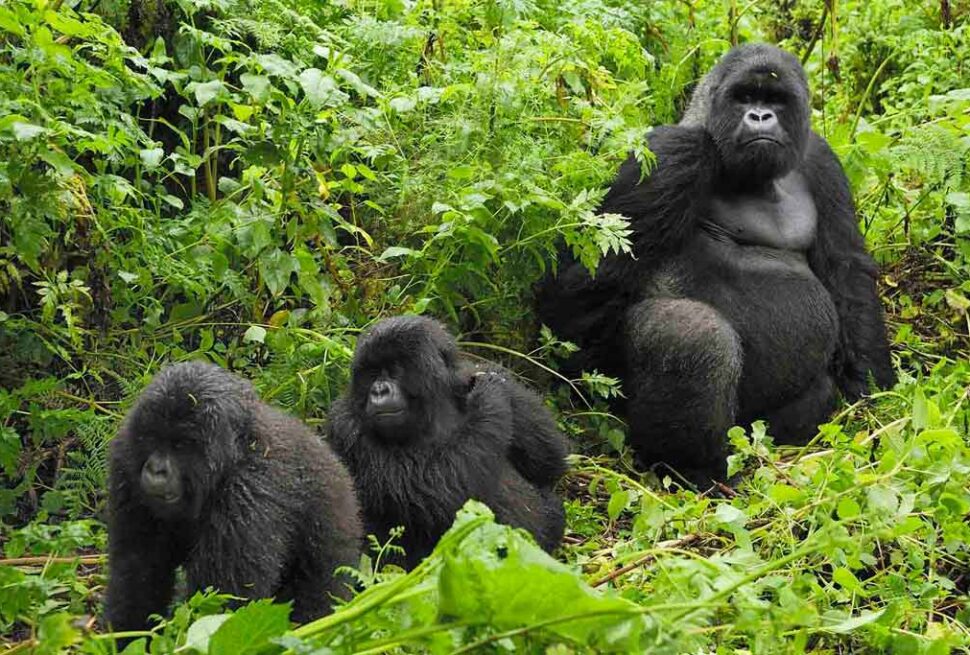
A typical mountain gorilla group contains 5 to 30 individuals; the average family in Bwindi Impenetrable Forest numbers 12 to 18.
Adult females form the social core, maintaining bonds through grooming, shared infant care, and coordinated movement. Infants are the emotional center of the group—every member interacts with them.
Blackbacks (subordinate males aged roughly 8–12) remain in the group until they either disperse to form a new family or, rarely, challenge the silverback for leadership.
Their presence adds a layer of social complexity that trekkers often witness during midday rest sessions.
Group Size, Stability, and Bonds
Unlike many primate species, mountain gorilla groups are remarkably stable. Long-term male–female bonds, daily grooming sessions, juvenile play, and post-conflict reconciliation reinforce cohesion.
Typical group roles at a glance:
- Dominant silverback – leads, protects, breeds
- Adult females (3–6) – social core, primary infant care
- Blackbacks (0–2) – subordinate males, future leaders
- Juveniles (3–8 years) – play, learn social skills
- Infants (0–3 years) – group focus, high survival priority
Understanding this hierarchy helps you interpret what you see during your one-hour encounter and gives your guide context for positioning the group safely.
👉 Book Your Gorilla Family Visit – Speak to a GoSilverback Safari Expert →

Daily Routine: What Gorillas Do All Day
Dawn Feeding and Morning Travel
Mountain gorillas are herbivores, and their mornings are dominated by intensive feeding. An adult consumes roughly 18 to 26 kilograms of vegetation per day—leaves, stems, shoots, bark, roots, and seasonal fruit.
Dawn is peak foraging time; groups spread across a feeding patch and eat almost continuously for 2 to 3 hours.
For trekkers, this matters: morning treks (starting around 07:30–08:00) often find gorillas in active feeding mode, meaning you will observe natural foraging behavior rather than a sleeping group.
Midday Rest and Social Time
Between roughly 10:30 and 14:00, the group enters its longest rest period. This is when social grooming peaks, juveniles tumble and wrestle, mothers nurse infants, and the silverback dozes with one eye open.
If your trek locates the family during this window, expect intimate, close-range observations of grooming, play, and infant care.
Afternoon Foraging and Night Nesting
Feeding resumes in the mid-afternoon as the group moves to fresh foraging patches. By late afternoon, gorillas begin constructing night nests—platforms of woven leaves and branches built fresh every single night. They do not reuse nests regularly.
Trekker tip: Guides track fresh nests, broken stems, and dung to locate families each morning.
The fresher the sign, the closer the gorillas. This is one reason treks vary from 1 to 6+ hours depending on the family’s overnight location.
Communication: Chest Beats, Vocalizations, and Body Language
Chest Beating: Signal, Not Just Aggression
The iconic gorilla chest beat is often misread as pure aggression. In reality, it is a multi-purpose acoustic signal used to announce location, assert status, deter rivals, or release tension.
A silverback may chest-beat after a group conflict is resolved, not before one begins. The sound can travel over one kilometer through dense forest.
Vocal Repertoire and Gestures
Researchers have documented at least 16 distinct vocalizations, including:
- Barks – alarm or excitement
- Roars – serious threat or inter-group warning
- Hoots – contact calls during travel
- Grunts – contentment, feeding satisfaction
- Screams and squeals – juvenile play or distress
These sounds are layered with facial expressions, body postures, and gestures—a raised arm, a direct stare, a deliberate yawn—creating a communication system far richer than most visitors expect.
What Trekkers Might Hear and See
During your encounter, expect low, rhythmic grunts as gorillas feed, sudden squeals from juveniles at play, and possibly a brief chest-beat display if the silverback is assessing your group.
Your guide will brief you on protocol: stay calm, crouch slowly, avoid direct eye contact during displays, and never run.
In over two decades of regulated trekking, no tourist has been seriously injured by a habituated mountain gorilla in Uganda or Rwanda.
Related Read | Why Silverback Beat Their Chest
👉 Reserve Your Guided Gorilla Trek – Permits Are Limited to 8 Visitors per Family per Day →
Diet and Foraging Behavior
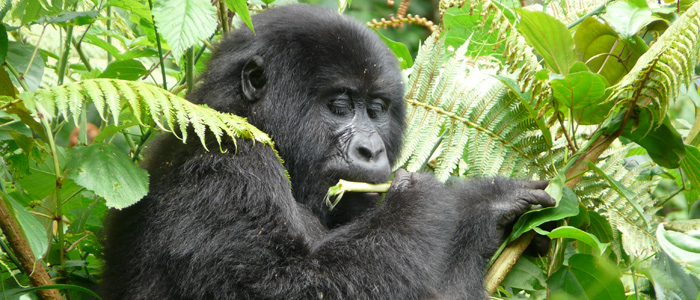
The mountain gorilla diet is approximately 85% foliage: leaves, stems, pith, and shoots from more than 140 plant species documented in Bwindi and the Virungas.
Seasonal shifts introduce wild fruit, fungi, and occasional insects (ants, larvae), but gorillas are overwhelmingly herbivorous.
Their foraging strategy is methodical: move through forest patches, sample a wide variety of plants, spend hours feeding, then move on. They rarely strip a single area bare, which helps sustain the forest ecosystem.
Why this matters on trek: Your guide uses feeding signs—half-eaten celery stalks, stripped bark, fresh dung—to predict the family’s location and movement direction, shortening your trek and increasing your observation time.
Related Read | Mountain Gorilla Food Web
Territory, Movement, and Habitat Use
Mountain gorillas are ground-dwelling. Unlike lowland gorillas, they rarely climb high into trees and do not swim.
Their home ranges (typically 6–20 km²) overlap with neighboring groups, but direct conflict is avoided through vocal signaling, chest-beat displays, and spatial spacing.
Their two global strongholds are:
- Bwindi Impenetrable National Park, Uganda – a 331 km² UNESCO World Heritage Site at elevations of 1,160–2,607 m.
- Volcanoes National Park, Rwanda – 160 km² of volcanic slopes in the Virunga Massif at 2,400–4,507 m.
Both parks face conservation pressures from habitat encroachment, human-wildlife conflict, and climate variability, making regulated, low-impact tourism essential to their survival.
Related Read | Why Silverback Beat Their Chest | Gorilla Habitat Destruction | Human Gorilla Conflict | Climate Change Effects on Gorillas.
Reproduction, Infants, and Life Cycle
Mating and Birth
The silverback holds primary breeding rights within his group, though subordinate males occasionally sire offspring.
Gestation lasts approximately 8.5 months, and births are almost always single infants weighing around 1.8 kg. Twins are exceedingly rare.
Infant Care and Juvenile Play
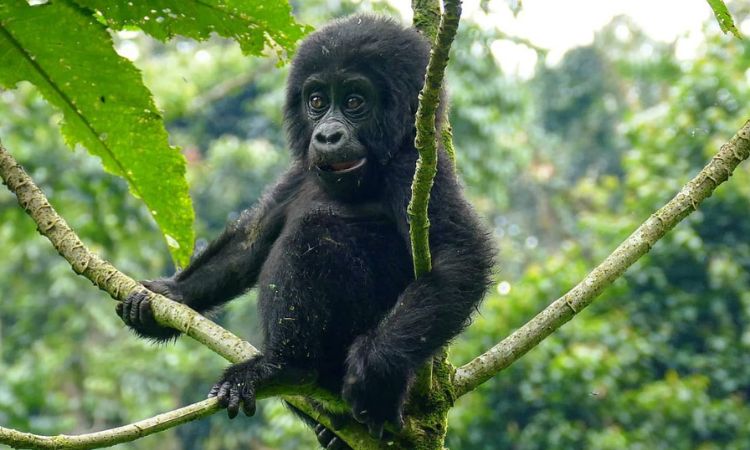
Maternal care is intensive: infants ride on their mother’s chest and back for the first 3–4 years. However, all group members interact with infants, a behavior called allomothering.
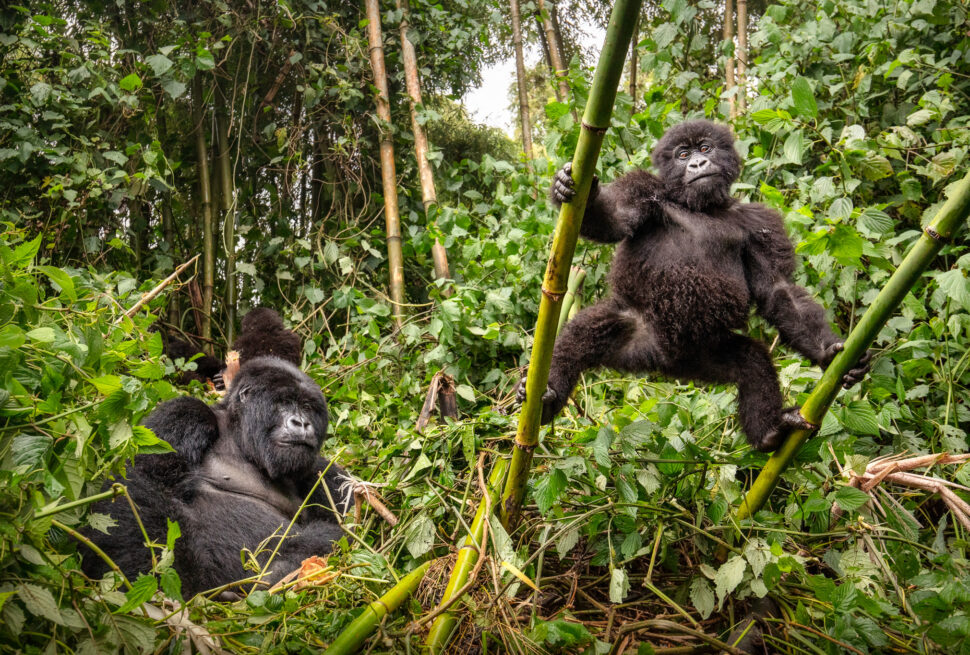
Juvenile play—wrestling, chasing, mock chest-beats—is frequent among gorillas aged 3 to 8 years and is critical for social learning.
Maturation and Dispersal
Young males mature into blackbacks by age 8–12, then either challenge the silverback or disperse to attract females and form a new group.
Females may transfer between groups, often during periods of social instability. Despite transfers, long-term social bonds remain a defining feature of mountain gorilla behavior.
Related Read | Gorilla Mating Behavior | Gorilla Parenting Behavior.
👉 See Infant Gorillas on Your Trek – Ask GoSilverback About Families with Newborns →

Human–Gorilla Interactions: Habituation and Trekking Etiquette
What Is Habituation?
Habituation is a carefully managed process lasting 2 to 3 years, during which a wild gorilla family is gradually exposed to human presence until they tolerate daily observation without stress.
Only fully habituated families are visited by trekkers. In Bwindi, roughly 20 families are open to tourism; in Volcanoes, 12 families receive visitors.
Trekking Rules That Protect Gorillas
Every park authority enforces strict protocols:
- Maintain a minimum distance of 7 meters (23 feet) from any gorilla.
- Visits are capped at 1 hour per group per day.
- No eating, drinking, or smoking near the gorillas.
- Wear a face mask where required (post-2020 health protocols).
- Crouch, speak softly, avoid sudden movements, and follow your guide at all times.
- Group size is limited to 8 visitors per gorilla family per day.
How Gorillas React to Trekkers
Most encounters are calm and curious. Juveniles may approach within a meter to inspect you.
If a silverback performs a bluff charge or chest-beat display, your guide will position the group safely—typically by crouching and averting gaze. These displays are deterrents, not attacks, and almost always de-escalate within seconds.

Where to Observe Mountain Gorilla Behavior: Uganda vs Rwanda
Bwindi Impenetrable National Park (Uganda)
Bwindi shelters nearly half the world’s remaining mountain gorillas—approximately 459 individuals across four trekking sectors: Buhoma, Ruhija, Nkuringo, and Rushaga.
Terrain is dense, steep, and genuinely impenetrable in places, making treks physically rewarding.
- Gorilla permit cost (2026): USD $800 per person per trek (foreign non-residents).
- Typical trek duration: 2–8 hours depending on family location.
- Permit booking: Through Uganda Wildlife Authority (UWA) or a licensed operator.
👉 Book Your Bwindi Gorilla Permit via GoSilverback Gorilla Safaris →
Volcanoes National Park (Rwanda)
Volcanoes National Park offers shorter average treks on volcanic slopes with well-maintained trails.
The park is smaller, more accessible from Kigali (≈ 2.5-hour drive), and benefits from Rwanda’s outstanding conservation infrastructure and community revenue-sharing model (10% of park revenue funds local projects).
- Gorilla permit cost (2026): USD $1,500 per person per trek.
- Typical trek duration: 1–5 hours.
- Permit booking: Through Rwanda Development Board (RDB) or a licensed operator.
👉 Secure Your Volcanoes NP Permit – Limited Daily Slots Available →
Which Destination Suits You?
|
Factor |
Bwindi (Uganda) |
Volcanoes (Rwanda) |
|
Permit Cost |
$800 |
$1,500 |
|
Avg. Trek Length |
3–6 hours |
1–4 hours |
|
Terrain |
Dense, steep, muddy |
Volcanic, moderate |
|
Families Available |
~20 |
~12 |
|
Add-on Safaris |
Chimps (Kibale), Queen Elizabeth NP |
Golden monkeys, Nyungwe Forest |
|
Best For |
Budget-conscious, adventure seekers |
Time-short, luxury travelers |
Travelers from the USA, UK, Canada, Europe, Australia, China, and the Middle East can combine either destination with broader East African itineraries. GoSilverback Gorilla Safaris arranges seamless multi-country packages.
👉 Compare Uganda & Rwanda Gorilla Packages – Get a Free Custom Quote →

Best Time to See Mountain Gorilla Behavior
Mountain gorillas are active year-round, but trekking conditions vary by season:
- Dry seasons (June–August, December–February): Firmer trails, easier hiking, clearer photography light. Peak demand—book permits 3–6 months ahead.
- Wet seasons (March–May, September–November): Lush, photogenic forest; fewer trekkers; occasional permit discounts in Uganda. Trails can be muddy and slippery.
Photography tip: Overcast skies during shoulder months produce soft, even light ideal for capturing gorilla facial expressions and fur detail without harsh shadows.
Budget tip: Travelers from Latin America, Asia, and Oceania can target shoulder-season windows for lower lodge rates and easier permit availability while still enjoying excellent gorilla sightings.
Conservation Status and Why Your Trek Matters
The IUCN Red List classifies mountain gorillas as Endangered.
Their population has grown from a low of roughly 620 individuals in 1989 to over 1,063 today—a recovery driven almost entirely by protected-area management, anti-poaching patrols, veterinary intervention, and tourism revenue.
When you purchase a gorilla trekking permit, a significant share funds:
- Ranger salaries and daily patrols
- Veterinary care through the Gorilla Doctors program
- Community development (schools, clinics, clean water)
- Habitat restoration and buffer-zone management
Choosing a conservation-minded operator like GoSilverback Gorilla Safaris ensures your trek directly supports the gorillas you came to see.

Planning Your Gorilla Trek: Permits, Costs, and Booking
Step-by-Step Permit Booking
- Choose your destination (Bwindi or Volcanoes) and preferred trekking date.
- Select a gorilla family if you have a preference (guides can advise on temperament and trek difficulty).
- Book through a licensed operator or directly with UWA/RDB.
- Pay the permit fee (non-refundable in most cases; confirm cancellation policy).
- Receive your digital permit and carry a printed copy plus a PDF on your phone.
- Confirm your briefing time (usually 07:00 at park headquarters the morning of the trek).
Critical note: Only 8 permits are issued per gorilla family per day. Peak-season dates sell out 3 to 6 months in advance. Do not wait.
👉 Secure Your Gorilla Permit Now – GoSilverback Handles Everything →
Typical Package Inclusions
- Gorilla trekking permit
- Park entrance fees
- Professional ranger guide
- Ground transfers from Kigali or Entebbe/Kampala
- Accommodation (budget to luxury)
- Pre-trek briefing and post-trek certificate

What to Pack and How to Prepare Physically
Fitness Preparation
Gorilla treks involve steep, uneven, often muddy forest trails at altitudes of 1,500–3,000 m.
You do not need to be an athlete, but moderate hiking fitness is essential. Start walking 5–8 km on inclines 4–6 weeks before your trek.
Essential Packing List
- Waterproof hiking boots (broken in before travel)
- Gaiters and thick gardening gloves (for nettles and thorns)
- Rain jacket (weather changes fast in montane forest)
- Long-sleeved shirt and trousers (neutral colors—avoid blue and black, which attract tsetse flies)
- 30-liter daypack with rain cover
- 2 liters of water, energy bars, packed lunch
- Sunscreen SPF 50, insect repellent, basic first-aid kit
- Passport, permit printout, USD cash in small denominations
- Trekking pole (hire at park gate for ~$5 if you prefer not to fly with one)
Health & Insurance
- Carry proof of yellow fever vaccination (required for Uganda and Rwanda entry from many countries).
- Purchase comprehensive travel insurance with emergency medical evacuation coverage.
- Consult a travel-medicine clinic 6–8 weeks before departure for any recommended vaccinations or malaria prophylaxis.
Related Read | What to Wear for Gorilla Trekking | What Happens During Gorilla Trekking
Frequently Asked Questions About Mountain Gorilla Behavior
How big is a mountain gorilla family?
Typically 5 to 30 individuals. The average family in Bwindi Impenetrable Forest numbers 12 to 18, including one dominant silverback, several adult females, juveniles, infants, and occasionally subordinate blackback males.
What does a silverback do all day?
The silverback leads group movement, selects feeding and nesting sites, mediates conflicts, and protects the family from threats. His authority is maintained through calm experience rather than constant aggression.
Do mountain gorillas attack humans?
Serious attacks on humans are extremely rare. Displays such as chest-beating, bluff charges, and roaring are deterrents designed to intimidate, not injure. Licensed guides manage positioning and distance to keep encounters safe. In over two decades of regulated tourism in Uganda and Rwanda, no tourist has been fatally injured by a habituated gorilla.
How long do gorillas feed each day?
Gorillas feed in two main sessions—dawn and afternoon—totaling several hours. Adults consume approximately 18 to 26 kg of vegetation daily, primarily leaves, stems, and shoots.
Can I touch mountain gorillas?
No. Strict no-touch rules and a minimum distance of 7 meters (23 feet) protect both gorillas and trekkers from disease transmission. These rules are non-negotiable and enforced by armed rangers.
Are mountain gorillas endangered?
Yes. Mountain gorillas are listed as Endangered on the IUCN Red List, with approximately 1,063 individuals surviving in the wild. Their recovery depends on protected habitats, anti-poaching enforcement, and responsible tourism revenue.
Ready to See Mountain Gorillas in the Wild?
You have just read the behavioral blueprint of one of Earth’s rarest and most emotionally compelling animals.
You now know why the silverback chest-beats, how families bond through grooming, what they eat, how they communicate, and how habituation makes your one-hour encounter possible without harming them.
Knowledge transforms a trek. Instead of simply pointing a camera, you will recognize a feeding grunt, interpret a juvenile’s play invitation, understand why the silverback positions himself between you and his family, and appreciate every second of that extraordinary hour in the forest.
The mountain gorillas of Bwindi Impenetrable National Park and Volcanoes National Park are waiting. But permits are capped at 8 visitors per family per day, and peak-season dates fill months ahead.
Your next step is simple.
🦍 TALK TO A GORILLA SAFARI EXPERT →
🦍 VIEW SAMPLE UGANDA & RWANDA ITINERARIES →
GoSilverback Gorilla Safaris has guided trekkers from the USA, Canada, the UK, Europe, Latin America, Australia, China, and the Middle East into the heart of gorilla country for years.
We handle permits, transfers, accommodation, and expert guiding so you can focus on the moment a silverback looks back at you and the forest goes silent.
Book your mountain gorilla trek with GoSilverback Gorilla Safaris today. Secure your permit. Pack your boots. Come meet the family.
👉 BOOK YOUR GORILLA TREK NOW →
Last updated: September 2026 | Permit prices verified with UWA and RDB. Always confirm current rates at booking.
[…] Read | Mountain Gorilla Behavior | Mountain Gorilla Trekking | Silverback Gorilla vs Human Strength | How Big Are Silverback […]
[…] you ever wondered whether the enormous, powerful mountain gorilla can behave like a playful child? During an Uganda gorilla trekking safari, visitors may witness […]
[…] It is crucial to understand the distinction between a gorilla eating a human (which does not happen), a gorilla defending its family, and a gorilla displaying aggressive gorilla behaviour. […]