
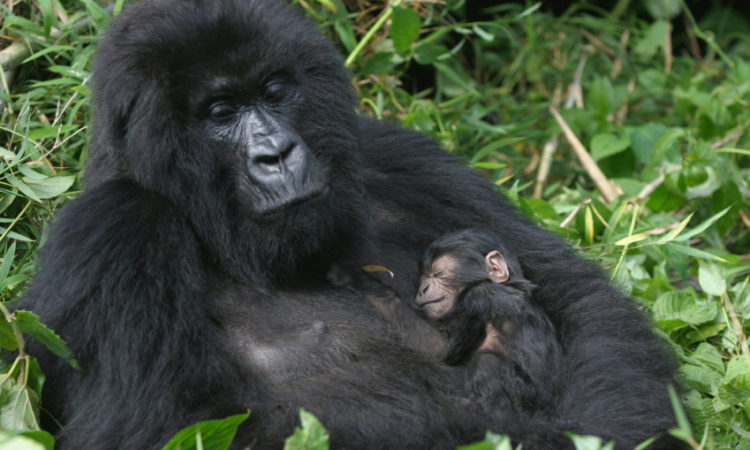
Gorilla Parenting Behavior Guide: How Gorillas Raise and Protect Their Young
Gorilla parenting behavior is one of the most sophisticated, emotionally rich, and biologically complex examples of infant care observed in the entire animal kingdom — rivaling, and in several ways mirroring, human parenting in its depth, tenderness, and structure.
For travelers undertaking a gorilla trekking safari in Bwindi Impenetrable National Park or Volcanoes National Park, witnessing a gorilla mother cradle her newborn, or a dominant silverback play gently with a juvenile, is an experience that permanently reframes the way you understand family, intelligence, and the natural world.
But to truly appreciate what you are seeing in the forest, it helps to understand the science and emotion behind it.
This comprehensive guide explores how gorillas raise their young, the critical role of family structure, the developmental milestones of baby gorillas, and why understanding gorilla parenting is essential to global conservation efforts.
Whether you are a first-time safari traveler, a wildlife researcher, or a conservation-minded adventurer, this article delivers authoritative, deeply researched answers that place you in the forest long before your boots ever hit the trail.
Understanding Gorilla Family Structure
Before examining gorilla parenting behavior in detail, it is essential to understand the social architecture within which it takes place.
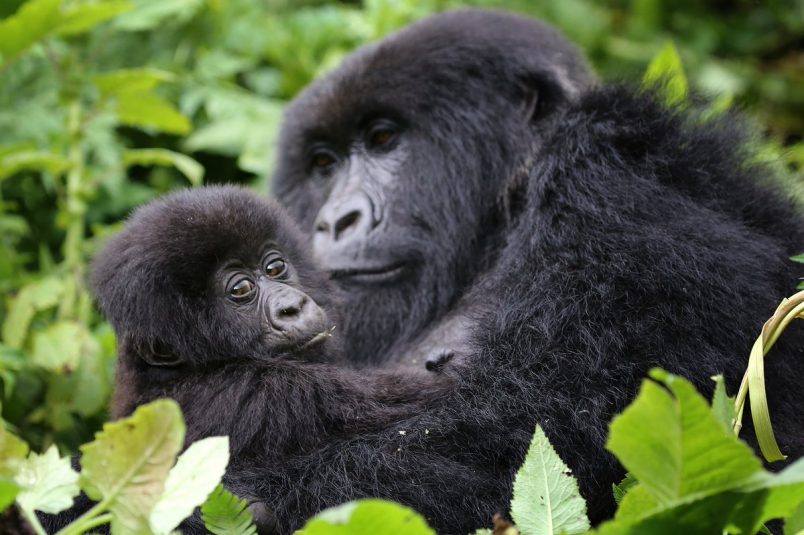
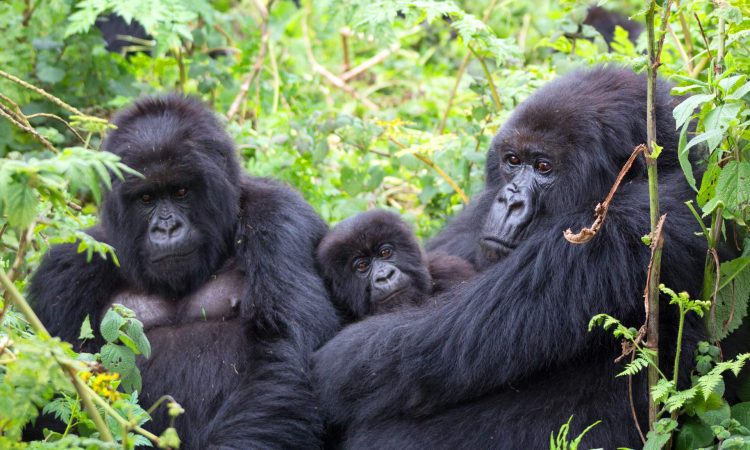
Gorillas live in cohesive, multigenerational family groups called troops or bands, typically consisting of one dominant silverback male, several adult females, juveniles, and infants.
Group size generally ranges from 5 to 30 individuals, though larger groups have been documented across the mountain gorilla populations of the Virunga Massif.
The social hierarchy within a gorilla troop is not the rigid, despotic structure found in some other primate species. Instead, it is built on a foundation of long-term bonds, trust, and shared history.
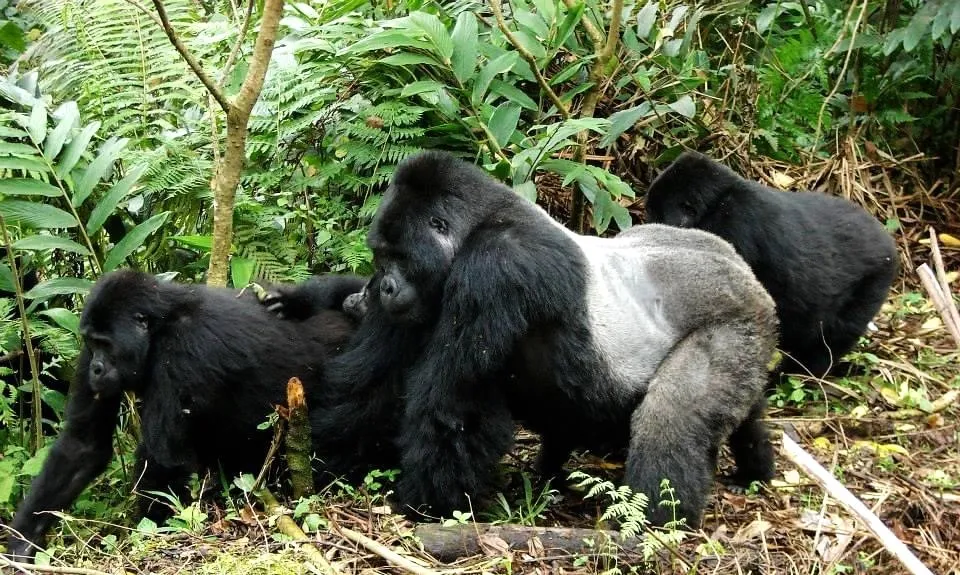
The silverback — named for the distinctive silver saddle of hair that develops across a mature male’s back around the age of 12 — serves as the undisputed leader, protector, and social anchor of the group.
His decisions dictate where the group travels, when they eat, and how conflicts are resolved. His authority, however, is maintained less through force than through the credibility he builds as a reliable protector and stable leader.
Female gorillas form the emotional core of the troop. Unlike many mammal species where females are merely subordinate to dominant males, gorilla females maintain meaningful social relationships with one another and with the silverback.
These relationships are central to how infants are raised, protected, and socialized. Allomothering — the practice of group members other than the biological mother participating in infant care — is commonly observed in gorilla troops and represents a sophisticated form of community parenting that distributes the demands of infant rearing across the social group.
Why Family Structure Matters for Gorilla Parenting
The stability of the gorilla family unit directly influences the quality of parenting an infant receives. Troops with stable leadership, low internal conflict, and adequate territory provide the safest environments for infant development.
Studies of mountain gorillas in the Virunga Massif have shown that infants born into stable, large troops with multiple experienced females have significantly higher survival rates than those born into smaller or recently disrupted groups.
This is why conservation organizations including the Dian Fossey Gorilla Fund and the International Gorilla Conservation Programme (IGCP) place such emphasis on monitoring group dynamics.
A change in silverback, the loss of a senior female, or increased human disturbance can cascade into disrupted parenting behaviors with consequences that reverberate across multiple generations. Conservation, at its core, is about protecting these families.
Gorilla Mothers and Infant Care
The Bond Between a Gorilla Mother and Her Newborn
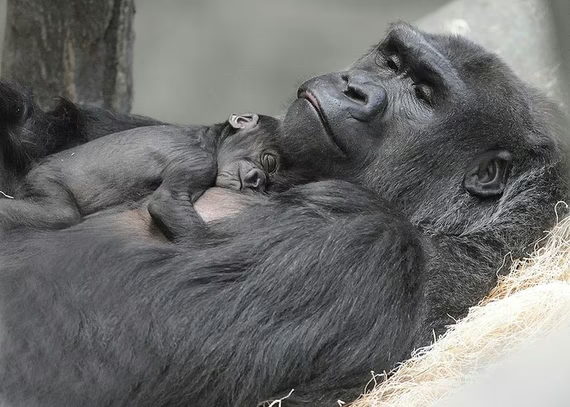
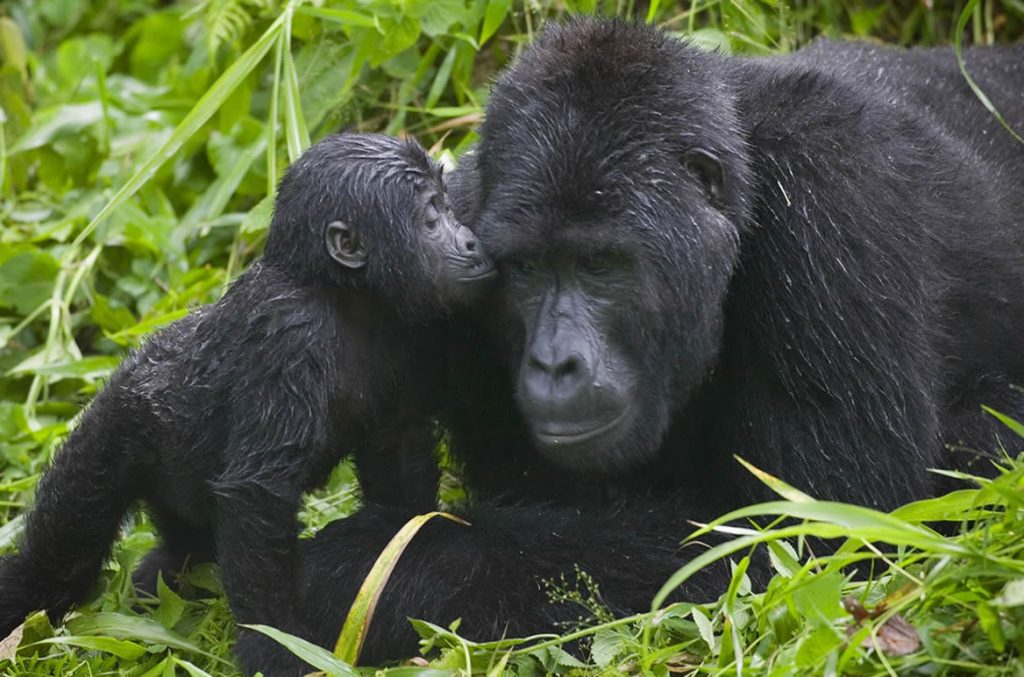
The relationship between a gorilla mother and her infant is one of the most powerful bonds observed in the natural world.
From the moment of birth, gorilla mothers demonstrate an instinctive, intense, and highly attentive form of caregiving that ensures infant survival through a period of extreme biological vulnerability.
Newborn gorillas are remarkably helpless. Born with limited motor coordination, poor vision, and no ability to grip independently for the first few weeks of life, infant gorillas rely entirely on their mothers for warmth, nutrition, physical safety, and emotional regulation.
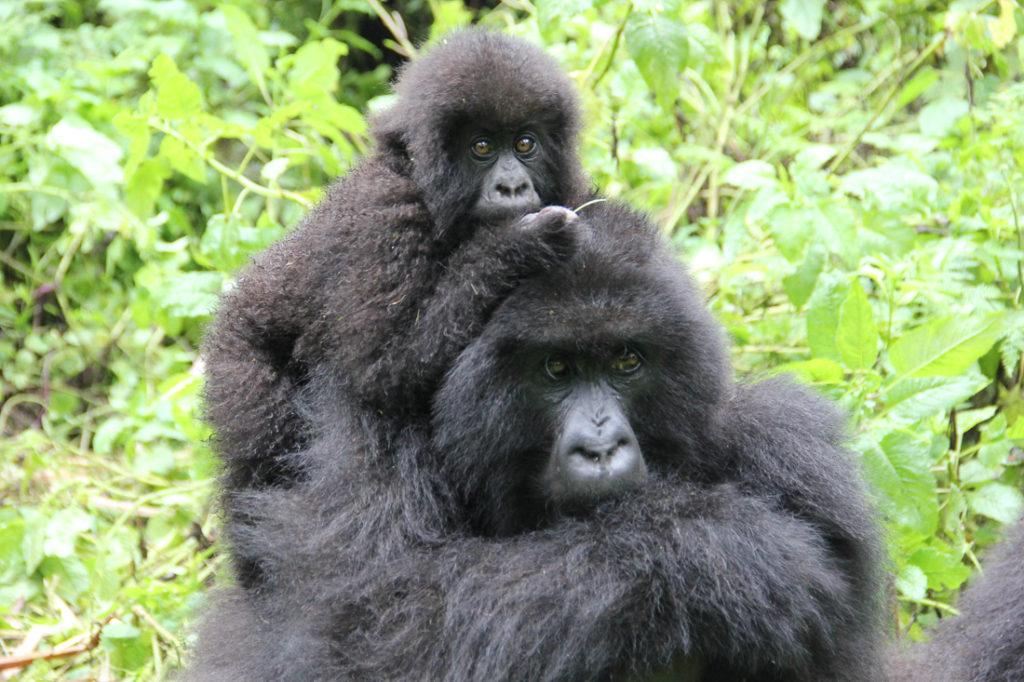
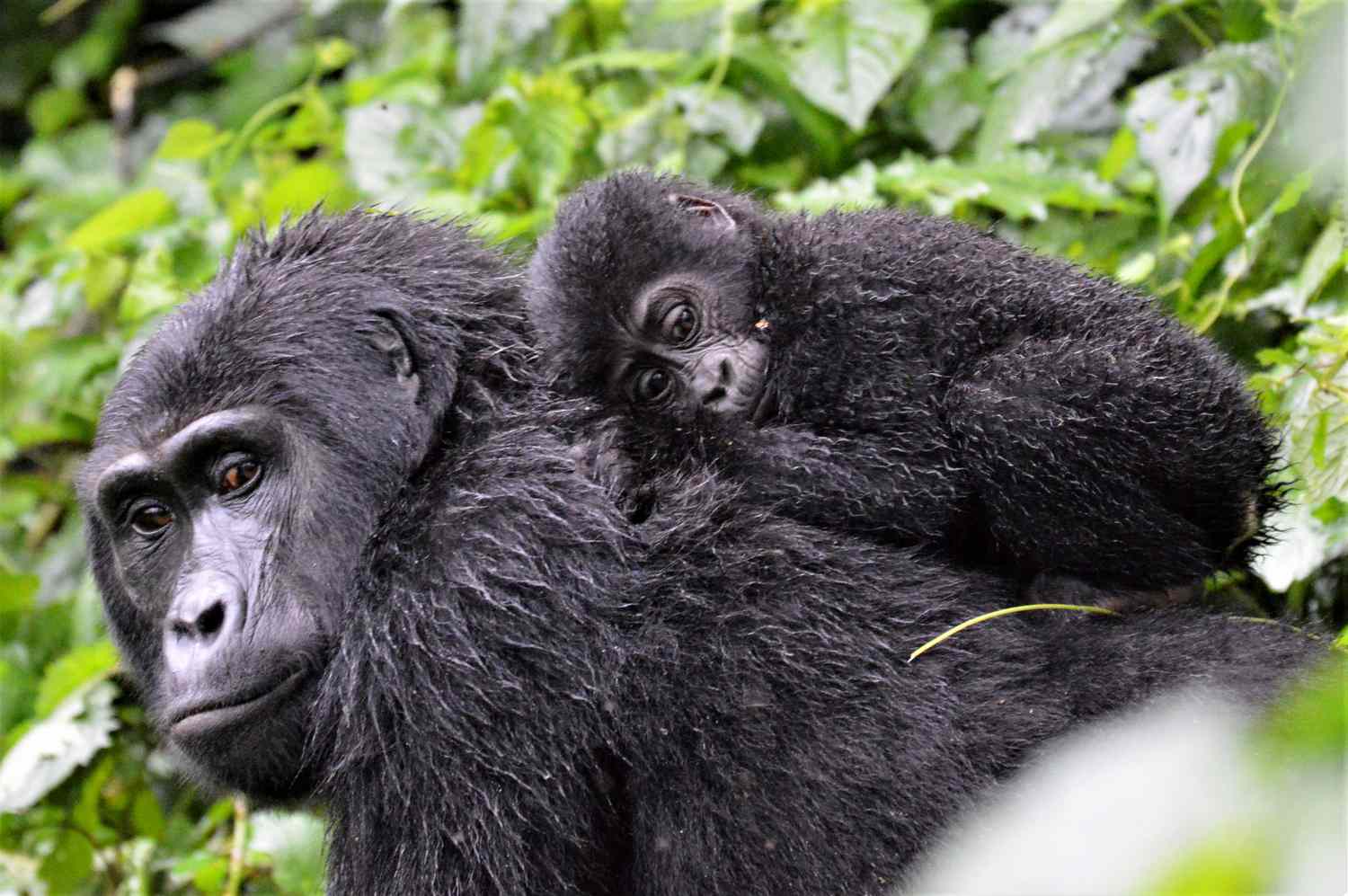
A mother gorilla carries her newborn continuously, cradling the infant against her chest during the first weeks and transitioning to a dorsal (back-riding) carry as the infant develops grip strength, usually around 3 to 4 months of age.
Gorilla mothers nurse their infants for an extraordinary duration — typically 3 to 4 years, though nursing continuing until age 5 has been recorded in mountain gorilla populations.
This extended nursing period is not merely nutritional. It plays a vital role in immune system development, psychological bonding, and the gradual introduction to solid food.
The mother’s milk adapts in composition over time, becoming progressively less calorie-dense as the infant begins supplementing its diet with vegetation.
How Gorilla Mothers Raise Their Babies
Gorilla maternal behavior involves a sophisticated choreography of protection, education, and emotional attunement that unfolds across the first several years of the infant’s life.
The following are the primary dimensions of gorilla maternal care:
1. Physical Protection:
Mothers hold their infants continuously for the first months, rarely allowing them more than arm’s reach of independence. Even during rest periods, a gorilla mother sleeps with her infant nestled against her body, building a custom sleeping nest each night using branches and leaves.
2. Thermoregulation:
In the high-altitude forests of the Virungas, nighttime temperatures can drop close to freezing. A mother’s body heat is literally life-saving for a newborn. Researchers have observed mothers adjusting their positioning to shield infants from rain, cold wind, and direct sun.
3. Feeding Education:
As infants grow, gorilla mothers actively guide feeding behavior. Juveniles observe and mimic their mothers’ foraging choices, learning which plants are edible, which have medicinal value, and how to process tough vegetation. This food knowledge is entirely culturally transmitted, not genetically encoded, making maternal teaching central to infant survival.
4. Emotional Regulation:
Gorilla mothers respond to infant distress calls immediately and consistently. Studies show that mothers who are more responsive to infant vocalizations raise offspring with lower cortisol (stress hormone) levels and better social integration as adults, directly paralleling findings in human developmental psychology.
5. Social Introduction:
Mothers carefully mediate their infants’ first social interactions within the troop, allowing trusted females and juveniles to interact with the infant while keeping potentially rough or unpredictable individuals at a cautious distance. This social scaffolding is critical to the infant’s psychological development.
6. Weaning and Independence:
The weaning process in gorillas is gradual and emotionally nuanced. Mothers do not abruptly terminate nursing but slowly reduce access over months, a process that often involves negotiation between mother and offspring that researchers describe as strikingly reminiscent of human parent-child boundary-setting.
The Role of the Silverback in Gorilla Parenting
The popular image of the silverback as a ferocious, unpredictable creature is profoundly misleading when it comes to his role within the family unit. In reality, dominant silverback males are among the most attentive and protective parents observed in the primate world.
Their contribution to infant development is multidimensional, encompassing physical protection, socialization, play, and the provision of the psychological security that underpins healthy gorilla development.
Protection as the Primary Parenting Function
The silverback’s most fundamental parenting role is protection. He positions himself between his family and any perceived threat, whether from rival gorilla groups, predators such as leopards, or human disturbance.
When danger is detected, he executes a choreographed sequence of intimidating behaviors including chest-beating, loud vocalizations, and charging displays designed to draw attention to himself and away from vulnerable infants and nursing mothers.
In the tragic event of a mother’s death, the silverback often assumes direct care of orphaned infants, allowing them to sleep in his nest, defending them from potential infanticide by other males, and facilitating their continued social integration within the troop.
Research published in the journal Behavioral Ecology found that orphaned gorilla infants raised by silverbacks showed social development comparable to those raised by their biological mothers, demonstrating the depth and flexibility of silverback parenting investment.
Play as Developmental Parenting
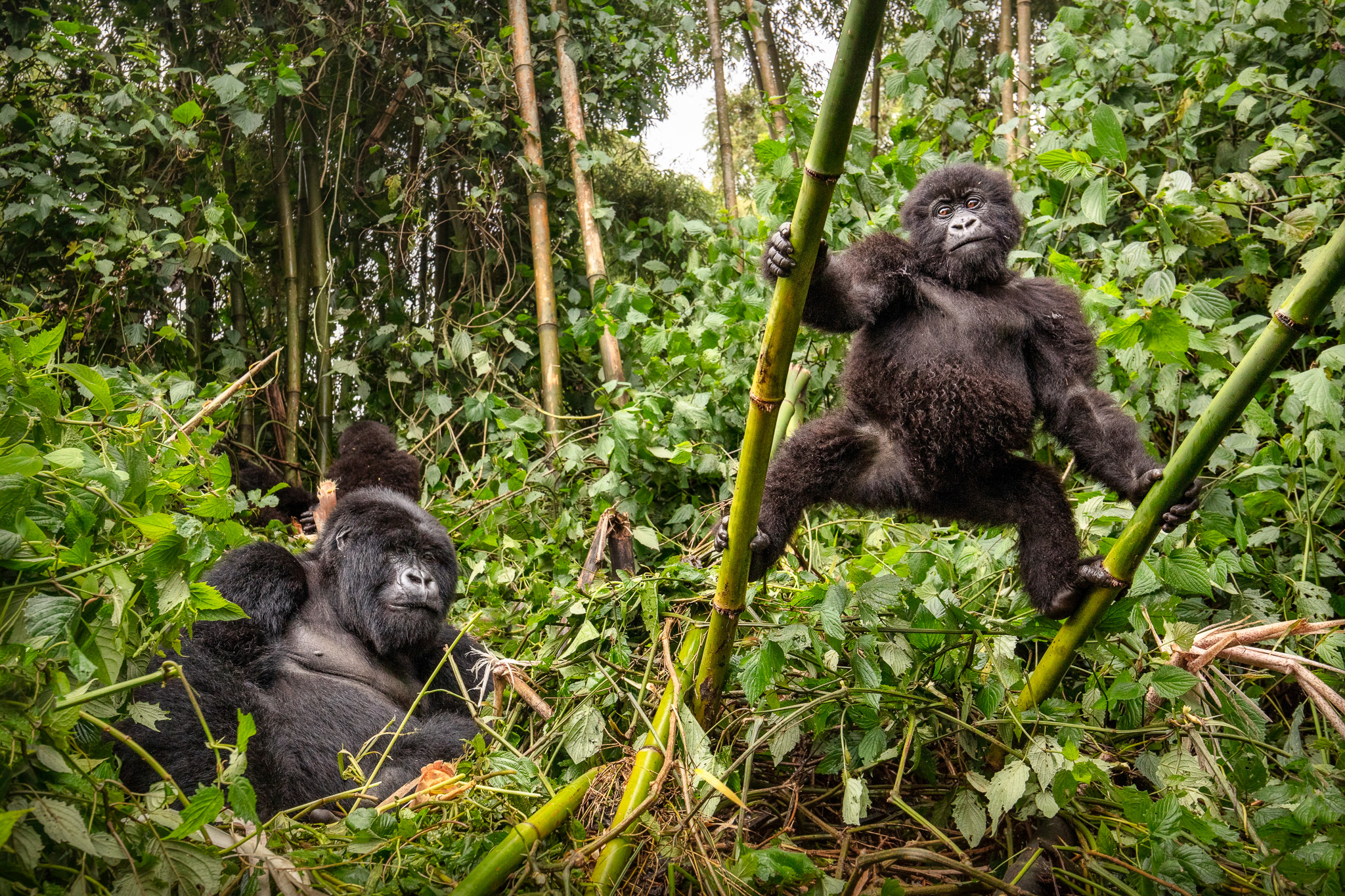
One of the most heartwarming behaviors observed during gorilla trekking encounters is silverback play behavior with juveniles.
Despite their imposing size — adult male gorillas can weigh up to 220 kilograms (485 pounds) — silverbacks regularly engage in extended play sessions with young gorillas, allowing juveniles to climb on them, pull at their fur, and roughhouse without retaliation.
This play is not merely entertaining. It serves critical developmental functions. Through physical play with the silverback, juveniles develop social confidence, learn group boundaries, and internalize the emotional security that comes from knowing the troop’s most powerful individual is benevolent.
This sense of secure attachment is foundational to healthy gorilla psychological development and has direct parallels in human child psychology research.
Development Stages of Baby Gorillas
Understanding the developmental stages of baby gorillas is essential both for conservation monitoring and for appreciating what you are witnessing during a trekking encounter.
Gorilla development follows a structured sequence that broadly parallels human developmental milestones, unfolding across a timeline that reflects the species’ extraordinary investment in each offspring.
Stage 1: Newborn (0–3 Months)
Gorilla infants are born after a gestation period of approximately 8.5 months — very close to the human gestation period. Newborns weigh approximately 1.8 to 2.3 kilograms (4 to 5 pounds) at birth.
During the first three months, infants have limited motor control, cannot support their own weight, and remain in near-constant physical contact with their mothers. Their primary behaviors are nursing, sleeping, and vocalizing to maintain maternal attention and proximity.
Stage 2: Early Infancy (3–12 Months)
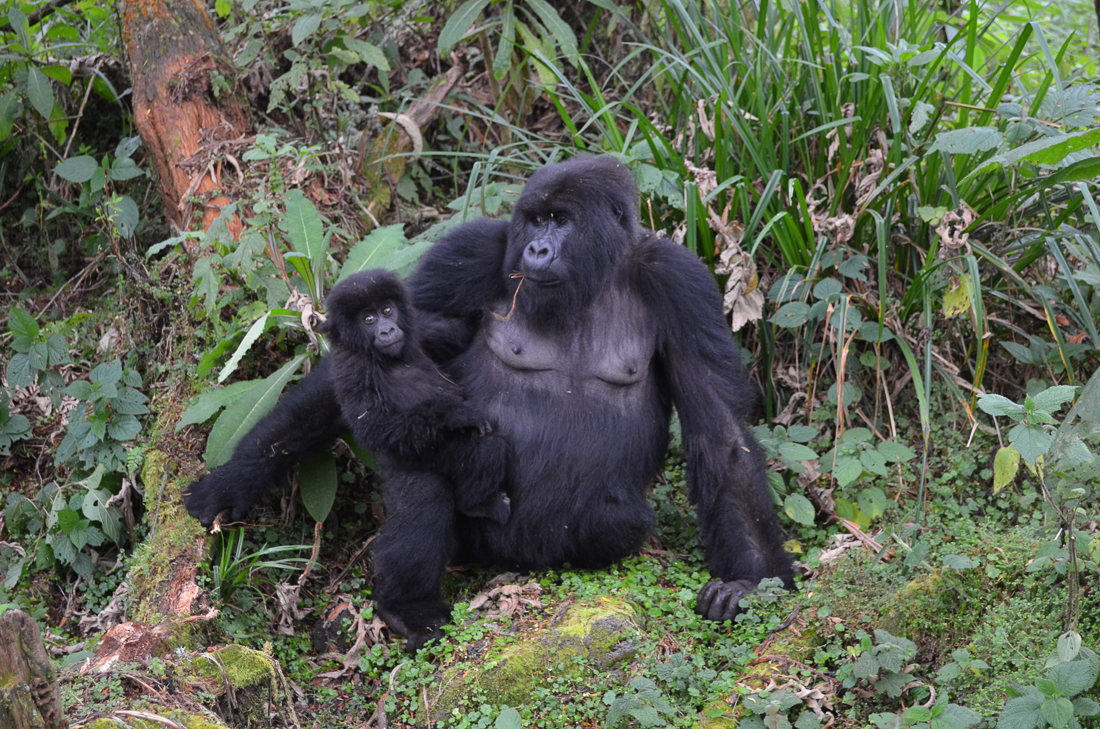
From three months onward, infants begin developing increasing motor capability. They graduate to back-riding, begin to visually track other troop members with curiosity, and start reaching out toward nearby objects and individuals.
By 6 months, most infants attempt their first independent crawling movements, though always within immediate proximity of their mother. By 12 months, many take tentative first steps, often to the evident delight of nearby troop members.
Stage 3: Late Infancy (1–3 Years)
This is the most behaviorally rich developmental period. During this stage, infants begin engaging actively with peers, forming play relationships, starting to eat solid vegetation, and exploring their environment with growing confidence.
The mother remains the primary attachment figure, but the infant’s social world expands dramatically. Nest-building behavior — the daily gorilla practice of constructing fresh sleeping platforms from branches and leaves — begins to be observed and mimicked by infants during this stage, often producing charmingly rudimentary results.
Stage 4: Juvenile (3–6 Years)
Following weaning, young gorillas enter the juvenile stage. They are now largely independent in locomotion and foraging, though they remain under the social protection of both their mother and the silverback.
Juveniles are highly playful, forming peer groups that engage in extended wrestling, chasing, social grooming, and what researchers describe as rudimentary games.
It is during this stage that critical social skills, dominance awareness, and group-specific behavioral traditions are consolidated through play and observation.
Stage 5: Subadult and Adolescent (6–12 Years)
As gorillas approach sexual maturity, social behavior becomes increasingly complex. Young females develop strong bonds that will define their adult social networks.
Young males go through a prolonged period of social positioning, and in larger groups, may eventually emigrate to form new groups or join bachelor bands.
Males begin showing the first signs of the silver saddle that will mark full silverback status around age 12, a transition that typically coincides with their peak physical and social development.
Social Learning in Young Gorillas
Gorillas are among the most socially intelligent animals on Earth, and social learning — the acquisition of knowledge and behavior through observation and interaction with others — plays a central role in gorilla development.
Unlike much of animal behavior, which is governed by genetic programming and instinct, gorilla behavior is substantially culturally learned and transmitted across generations, making mothers and senior troop members the primary educators of each new generation.
Young gorillas learn everything from which plants to eat and how to process them, to how to build sleeping nests, how to navigate dominance hierarchies, and how to use environmental tools (gorillas in some populations use sticks as depth-gauges when wading through water) through direct observation of their mothers, the silverback, and older troop members.
This social learning process is not passive. Juveniles actively experiment, imitate, and refine their behaviors over months and years of practice.
Researchers studying cross-population gorilla behavior have documented clear behavioral differences between gorilla groups living in adjacent territories with similar environments — differences that can only be explained by cultural transmission rather than environmental or genetic factors.
This is compelling evidence that gorillas possess genuine cultural traditions passed down through parenting and social learning, traditions as unique to each group as regional dialects are to human communities.
For a trekking visitor, recognizing this cultural intelligence transforms the experience fundamentally. What you are witnessing is not simply animals moving through a forest.
You are observing a society with its own knowledge systems, behavioral traditions, and family histories — a society shaped and transmitted by parenting.
Gorilla Parenting Compared to Human Parenting
The parallels between gorilla and human parenting are striking enough to have generated substantial academic literature and have been foundational to the field of comparative primatology.
Given that gorillas share approximately 98.3% of their DNA with humans, many of these parallels likely reflect genuinely shared evolutionary origins rather than mere behavioral coincidence.
Key Parallels Between Gorilla and Human Parenting
- Extended Infant Dependency: Both gorilla and human infants require years of intensive parental care before achieving independence, a life history strategy that distinguishes the great apes from virtually all other mammals and reflects the evolutionary premium placed on complex social and cognitive development.
- Emotional Bonding: Gorilla mothers demonstrate measurable hormonal responses including oxytocin surges during infant contact, suggesting neurobiological bonding mechanisms that are broadly homologous to those observed in human maternal bonding.
- Invested Fatherhood: Like human fathers in engaged family structures, silverback gorillas provide protection, play, and emotional security that goes far beyond simple genetic contribution, demonstrating that paternal investment in primate child-rearing has deep evolutionary roots.
- Cultural Transmission: Both species pass critical survival knowledge through behavioral observation and direct teaching, rather than relying solely on genetic programming. Both species can therefore be described as genuinely cultural animals.
- Grief and Loss: Gorilla mothers have been documented carrying deceased infants for days or weeks, a behavior interpreted as evidence of grief processing — one of the most deeply human-like emotional responses observed in any non-human animal.
- Weaning Conflict: The negotiated, sometimes contentious process of gorilla weaning mirrors the psychological dynamics of healthy boundary-setting in human parent-child relationships, including the offspring’s active resistance and the mother’s consistent management of that resistance.
These parallels do not make gorillas ‘almost human’ — a framing that does a disservice to the extraordinary nature of each species.
Rather, they reveal a shared evolutionary heritage of intensive parental investment that has been critical to the survival of both lineages, and that speaks to the deep biological continuity underlying what we sometimes imagine to be uniquely human experiences.
Parenting Challenges in the Wild
Gorilla parenting does not occur in a protected or predictable environment. In the wild, gorilla parents face extraordinary challenges that test the limits of even the most devoted caregiving.
Understanding these challenges is critical for conservation professionals, researchers, and responsible safari operators who seek to minimize human impact on gorilla family life.
Infanticide and Inter-Group Conflict
One of the most serious threats to gorilla infants is infanticide — the killing of infants by rival males, typically following the death or displacement of the resident silverback.
When a new male takes over a troop, he may kill nursing infants to bring females back into estrus more rapidly, eliminating offspring that are not his own and accelerating his own reproductive timeline.
This brutal dynamic has been documented across multiple gorilla populations and represents one of the most significant natural threats to infant survival.
Mothers facing this threat will sometimes emigrate with their infants to a rival group for protection, demonstrating a sophisticated cost-benefit calculation that prioritizes infant survival above troop loyalty.
The silverback’s protective presence remains the single most important natural barrier against infanticide, which is one reason why the loss of a silverback to poaching has consequences that cascade far beyond the loss of one individual.
Disease and Health Threats
Mountain gorillas and eastern lowland gorillas are susceptible to many of the same respiratory diseases that affect humans, including influenza, pneumonia, and various bacterial infections.
An infant gorilla with a compromised immune system has little resilience against even a moderate respiratory infection.
Gorilla mothers have been observed increasing grooming frequency during periods of infant illness, possibly to provide tactile comfort, reduce parasite load, and support the infant’s immune response through sustained physical contact.
Habitat Loss and Human Encroachment
As gorilla habitat continues to shrink due to agricultural expansion, illegal logging, artisanal mining, and human settlement, gorilla troops are increasingly forced into fragmented territories.
This leads to elevated inter-group conflict, reduced foraging diversity, chronically elevated stress hormone levels, and ultimately, compromised parenting quality.
Stressed gorilla mothers show measurably reduced responsiveness to infant signals and reduced nursing frequency, direct physiological consequences of the habitat pressures generated by human encroachment.
How Conservation Protects Gorilla Families
The survival of gorilla family groups — and by extension, the preservation of these extraordinary parenting behaviors for future generations to witness — depends directly on sustained, scientifically guided, and well-funded conservation intervention.
Several interconnected strategies have proven critical.
1. Habituation Programs:
The process of habituating wild gorilla groups to human presence — carried out over years by skilled trackers and primatologists — enables non-invasive research, health monitoring, and the gorilla trekking tourismthat generates the revenue underpinning conservation. Only habituated groups can be safely visited, protecting unhabituated families from all human contact.
2. Anti-Poaching Patrols:
Well-equipped ranger teams from the Rwanda Development Boardand Uganda Wildlife Authority patrol gorilla territories continuously, removing snares, deterring poachers, and responding to signs of human-wildlife conflict. Ranger programs in both countries are among the most effective wildlife law enforcement operations in Africa.
3. Veterinary Intervention:
In cases of snare injuries, serious illness, or medical distress, trained gorilla veterinarians from the Mountain Gorilla Veterinary Project (MGVP)are authorized to intervene. This program has saved dozens of gorilla lives, including silverbacks whose deaths would have destabilized entire family groups and disrupted parenting for years.
4. Community Conservation Programs:
Long-term conservation success is impossible without the active support of local communities. Revenue-sharing programs that direct a percentage of gorilla permit fees to local communities reduce poaching incentives, fund schools and healthcare, and build genuine conservation advocacy within the populations living alongside gorilla habitat. This is the conservation model that has driven mountain gorilla population recovery.
5. Research and Monitoring:
Continuous demographic monitoring by organizations including the Dian Fossey Gorilla Fund — now spanning over five decades in the Virunga Massif — provides the scientific foundation needed to understand gorilla parenting in depth, detect population trends, and respond to emerging threats before they become crises.
Fascinating Facts About Gorilla Parenting
- Gorilla infants develop gross motor skills at nearly twice the rate of human infantsduring the first year of life, yet take longer to reach full social and cognitive maturity, reflecting the species’ investment in extended social learning.
- A gorilla mother will carry a deceased infant for up to several weeks, a behavior researchers interpret as evidence of grief processing and the emotional difficulty of releasing a parenting bond.
- The intensive skin-to-skin contactmaintained between gorilla mothers and infants during the first months directly mirrors neonatal bonding practices now widely promoted in human obstetric care globally.
- Gorilla infants begin practicing nest-buildingby around age 3, constructing small, rudimentary platforms long before they need to build full-sized nests for independent sleeping.
- Silverback gorillas have been documented adopting unrelated orphan infantsand raising them with full parental investment, evidence of altruistic caregiving that extends beyond genetic self-interest.
- Gorilla mothers space their births approximately 4 years apart— one of the longest interbirth intervals in the primate world — reflecting the extraordinary energetic and behavioral investment required to raise each offspring to independence.
- Female gorillas raised in stable, attentive family structures are measurably better mothersthan those raised in disrupted groups, demonstrating that gorilla parenting quality is intergenerationally transmitted through experience, much as it is in humans.
- Mountain gorilla populations have grownfrom a low of approximately 620 individuals in the 1980s to over 1,000 today — a conservation success story driven directly by protecting gorilla family stability.
Why Gorilla Parenting Matters for Conservation
Understanding gorilla parenting behavior is not merely an academic exercise. It is a conservation imperative.
Gorilla populations are structured entirely around successful reproduction and infant survival, and with a global mountain gorilla population of approximately 1,063 individuals as of the most recent census data, every infant that survives to adulthood represents a meaningful and irreplaceable increase in a species with no demographic buffer for avoidable losses.
Conservation interventions that protect nursing mothers, stabilize silverback tenure, reduce stress from human encroachment, and maintain habitat integrity all directly improve parenting outcomes.
Conversely, any conservation failure that disrupts gorilla family structure — whether through poaching, disease outbreak, or habitat fragmentation — has cascading consequences for parenting quality and infant survival that can echo through multiple generations of a population that can barely afford to lose a single individual.
For gorilla trekking tourists, understanding this context transforms every moment spent in the presence of a gorilla family. You are not simply observing an exotic animal.
You are witnessing a family system of extraordinary sophistication, shaped by millions of years of evolution, and now dependent on sustained human commitment for its continued survival.
The gorilla trekking permit fee you pay is not merely an entrance ticket. It is a direct financial investment in the protection of the specific family you are watching, and in the parenting story that will determine whether the next generation of gorillas lives to tell its own story.
FAQs About Gorilla Parenting Behavior
How long do gorilla mothers carry their babies?
Gorilla mothers carry their infants almost continuously for the first three to four months, transitioning from chest-cradling to back-riding as the infant gains strength. Close physical contact continues in various forms until weaning, which occurs gradually between three and five years of age in most gorilla populations.
Do gorilla fathers help raise their young?
Yes. The silverback plays a vital role in infant development through protection, play, and emotional security. When mothers die, silverbacks often adopt and directly care for orphaned infants, allowing them to sleep in their nests and defending them within the group, demonstrating a genuine capacity for paternal investment.
What do baby gorillas eat?
Newborn gorillas feed exclusively on mother’s milk for the first several months. Around three to four months, infants begin observing and mimicking maternal foraging behavior. By one year, most consume small quantities of vegetation alongside continued nursing, transitioning to a full herbivorous diet by approximately three to five years of age.
How do gorillas teach their young?
Gorillas rely primarily on observational social learning. Young gorillas watch their mothers and senior troop members to acquire foraging skills, nest-building techniques, and appropriate social behavior. This cultural transmission means gorilla knowledge is passed across generations through parenting, much like human oral and behavioral traditions.
Are gorillas good parents?
Gorillas are exceptional parents by any scientific measure. They demonstrate sustained physical care, emotional attunement, careful social facilitation, and even grief responses following infant death. Parenting quality correlates strongly with family group stability, the mother’s own developmental history, and the protective presence of a reliable silverback.
What is the biggest threat to baby gorillas?
Infanticide by rival silverbacks following troop disruption is one of the most significant natural threats. Human-caused threats include habitat loss, respiratory disease transmission from humans, snare injuries, and poaching of silverbacks whose loss destabilizes entire family groups and leaves infants vulnerable to infanticide and developmental disruption.
How many babies do gorillas typically have?
Gorillas typically give birth to a single infant at a time. Twins are rare and have a lower survival rate than singletons. The interbirth interval is approximately four years, reflecting the extraordinary parental investment required to successfully raise each offspring to weaning and early independence.
At what age do gorillas become independent?
Gorillas achieve basic behavioral independence after weaning at three to five years, but remain within the family group and under social protection for many years thereafter. Full social maturity in females occurs around age eight. Males typically achieve full silverback status and reproductive seniority in their early to mid teens.
Do gorillas show affection to their young?
Gorillas display a rich repertoire of affectionate behaviors toward their young, including prolonged nursing, extensive grooming, chest-to-chest cradling, play-wrestling, and vocalizations used specifically in mother-infant communication. These behaviors reflect deep emotional bonds supported by measurable neurobiological processes homologous to human maternal bonding mechanisms.
Can gorilla babies survive without their mother?
Orphaned gorilla infants have improved survival prospects when integrated into a stable troop, particularly one with a protective silverback. The loss of a mother during nursing years remains a severe developmental challenge. Conservation programs that rapidly support orphaned infants have significantly improved survival and developmental outcomes in monitored populations.
What can gorilla parenting teach us about human child development?
Gorilla parenting research has reinforced the importance of secure physical attachment, extended breastfeeding, highly responsive caregiving, and stable social environments for healthy infant development — principles now central to modern human developmental psychology, pediatric medicine, and evidence-based early childhood intervention programs worldwide.
Where is the best place to observe gorilla parenting behavior in the wild?
Bwindi Impenetrable National Park in Uganda, Volcanoes National Park in Rwanda, and Virunga National Park in the DRC are the world’s premier destinations for observing gorilla family behavior in its natural setting. Expert-guided gorilla trekking with experienced trackers maximizes the likelihood of observing rich maternal and silverback parenting interactions.
Conclusion
Gorilla parenting behavior stands as one of nature’s most compelling testimonies to the power of evolutionary investment in offspring quality.
From the extraordinary devotion of gorilla mothers through years of nursing and careful social guidance, to the protective strength and surprising tenderness of silverback fathers, to the rich cultural transmission through which gorilla knowledge flows seamlessly across generations — these animals demonstrate a depth of family life that demands our respect, our wonder, and our committed protection.
Every observation made during a gorilla trekking safari in Rwanda, Uganda, or the DRC is a window into this family life.
To watch a silverback play with a juvenile, or a mother guide her infant’s first tentative steps through the forest undergrowth, is to witness something genuinely rare and irreplaceable — an evolutionary kinship that connects us to these animals across the gulf of species, and reminds us that the impulse to protect and nurture the young is among the most profound forces in the entire living world.
As mountain gorilla populations slowly recover — thanks to decades of conservation work and the revenue generated by responsible gorilla trekking tourism — the story of gorilla parenting continues to unfold.
It is a story being written in real time, in the ancient forests of Central and East Africa, by every infant born, every mother who carries her baby safely through another night, and every silverback who plants himself between his family and a world full of uncertainty.
You can be part of this story. And there is no better time to go than now.
Book Your Gorilla Trekking Permit with GoSilverback Safaris
Ready to witness gorilla parenting behavior firsthand?
GoSilverback Safaris specializes in exclusive, expertly guided gorilla trekking experiences in Rwanda, Uganda, and the DRC.
We handle your gorilla permits, luxury lodge bookings, airport transfers, and expert tracker arrangements — so that when you step into the forest, your only task is to watch, absorb, and be transformed.
✔ Genuine Gorilla Permit Allocation ✔ Expert Guides & Trackers ✔ Conservation-Certified Lodges
✔ Serving Travelers from USA • UK • Europe • Canada • Asia • Middle East
Visit www.gosilverbacksafaris.com to book your gorilla permit today
Permits are limited. Gorilla families are waiting. Your journey starts here.