What Is Gorilla Trekking? A Complete 2026 Guide to Africa’s Ultimate Wildlife Adventure
Gorilla trekking is a once-in-a-lifetime wildlife adventure that takes travelers deep into Africa’s tropical forests to observe endangered mountain gorillas in their natural habitat.
It is not a zoo visit. It is not a drive-by safari. It is a physically demanding, emotionally transformative expedition into some of the last untouched rainforests on Earth.
For travelers from the USA, UK, Europe, Canada, Asia, and the Middle East, gorilla trekking represents the pinnacle of African wildlife travel.
There are only 1,063 mountain gorillas remaining in the wild, and they live in just three countries: Uganda, Rwanda, and the Democratic Republic of Congo.
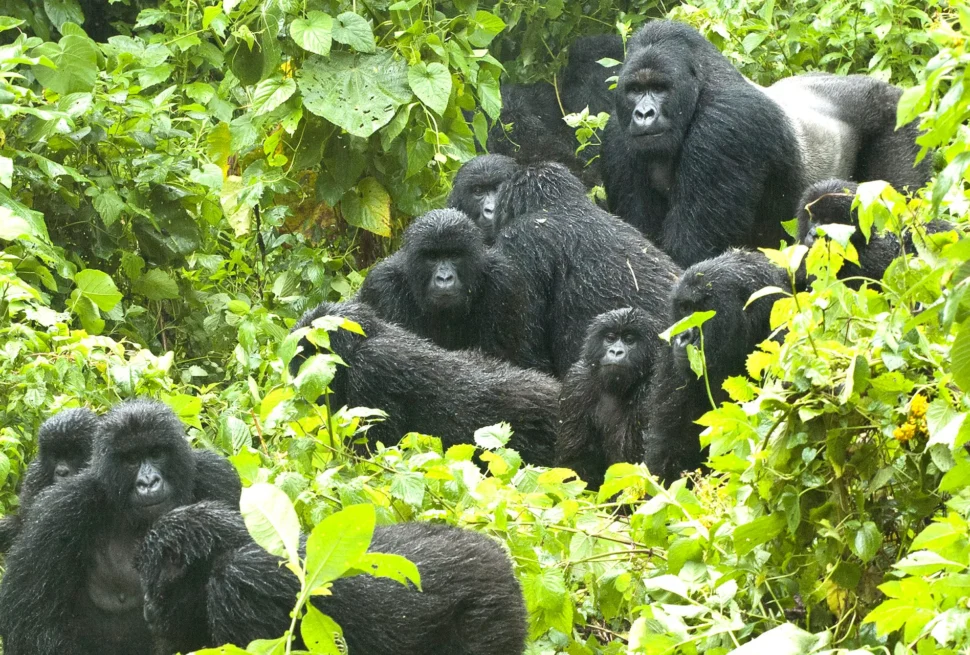
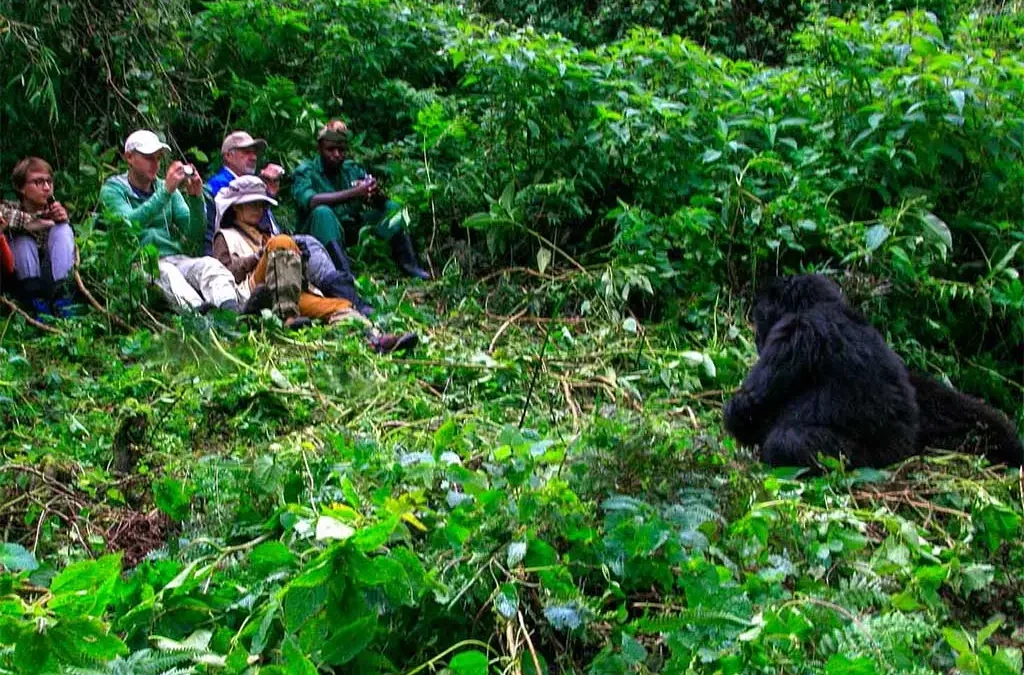
Standing meters from a 200-kilogram silverback as he watches his family is an experience that redefines what “wild” means.
This guide answers every question you have: what gorilla trekking actually is, how it works, where to do it, what it costs, and why it deserves a place at the top of your bucket list.
Whether you’re a first-time Africa visitor or a seasoned safari traveler, this is your definitive 2026 resource.
Bottom line: Gorilla trekking is not just wildlife watching. It is a conservation-powered, life-altering encounter with our closest living relatives.

What Is Gorilla Trekking?
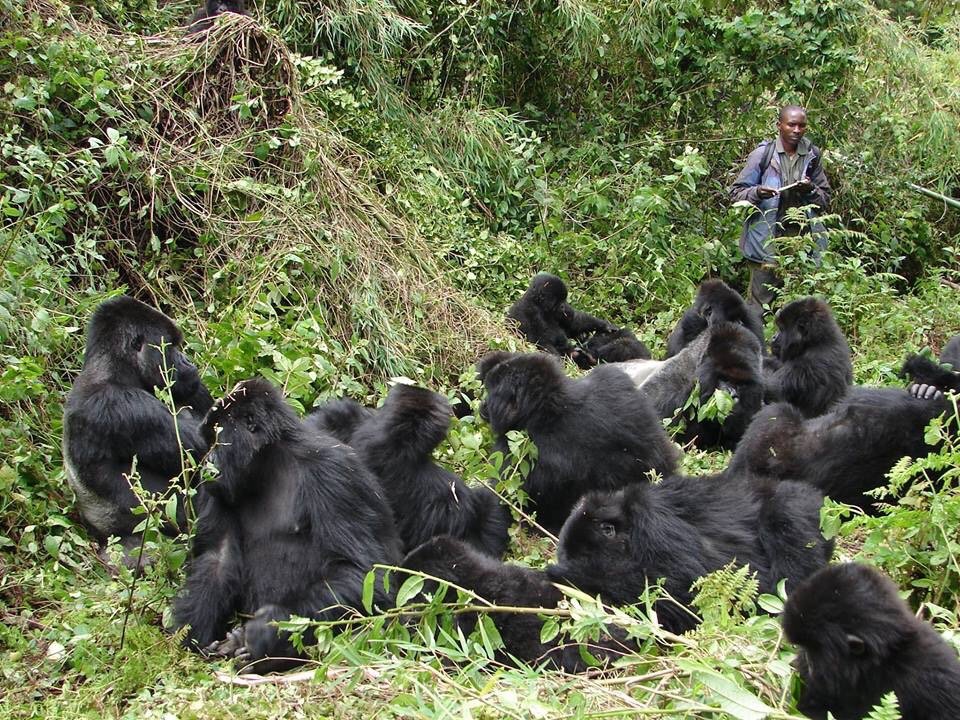
Gorilla trekking is the guided hike through dense tropical rainforest to locate and observe habituated mountain gorilla families in their natural environment.
Here’s what that actually means:
The Core Experience
You wake before dawn. You meet your ranger and tracker team at park headquarters. You receive a safety briefing and gorilla family assignment.
Then you hike 2 to 8 hours through steep, muddy, vegetation-choked terrain at altitudes of 2,000 to 4,000 meters until your trackers locate the gorillas.
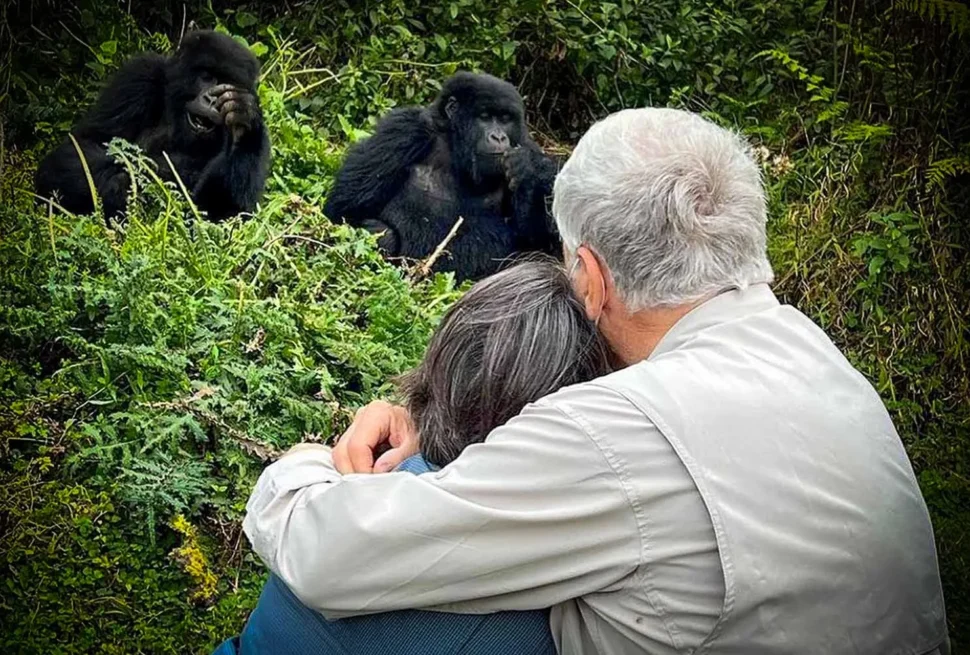
Once found, you spend exactly one hour in their presence—watching, photographing, and absorbing one of the rarest wildlife encounters on the planet.
Gorilla Trekking vs. Gorilla Tours
|
Gorilla Trekking |
Gorilla Tours |
|
Active hiking to find wild gorillas |
May include gorilla viewing plus other activities |
|
Guaranteed gorilla encounter (95%+ success) |
Broader itinerary, less focused |
|
Requires physical fitness |
Can be less physically demanding |
|
Permit required ($800–$1,500) |
Package pricing varies |
|
1 hour with gorillas |
May include multiple wildlife experiences |
Gorilla trekking is the specific act of hiking to find gorillas. A gorilla tour is the broader safari package that includes trekking plus transport, accommodation, and other activities.
Gorilla Trekking vs. Gorilla Habituation Experience
|
Feature |
Standard Trekking |
Habituation Experience |
|
Time with gorillas |
1 hour |
Up to 4 hours |
|
Cost |
Uganda $800 / Rwanda $1,500 |
Uganda $1,500 |
|
Experience |
Observation of habituated families |
Active participation in research |
|
Group size |
8 trekkers max |
4 participants max |
|
Availability |
Daily |
Limited days, advance booking |
|
Best for |
Most travelers |
Researchers, photographers, enthusiasts |
The gorilla habituation experience is available only in Uganda’s Bwindi Impenetrable National Park.
You join researchers and trackers as they gradually acclimate wild gorilla families to human presence. It is deeper, longer, and more immersive — but physically and financially demanding.
Bold fact: Only 1,063 mountain gorillas remain in the wild. Every gorilla trekking permit sold directly funds their protection.
Where Can You Go Gorilla Trekking in Africa?
Mountain gorillas live in a narrow strip of cloud forest spanning three countries. Each destination offers a distinct experience.
1. Uganda Gorilla Trekking
Bwindi Impenetrable National Park is the world’s premier gorilla trekking destination. A UNESCO World Heritage Site, Bwindi covers 331 square kilometers of ancient rainforest that has existed for over 25,000 years.
Why Uganda stands out:
- Largest gorilla population: Over 600 mountain gorillas — roughly half the global population
- Multiple trekking sectors: Buhoma, Ruhija, Rushaga, and Nkuringo — each with distinct terrain and gorilla families
- Gorilla habituation experience: The only place offering 4-hour research participation
- Budget to luxury options: Permits cost $800 – the best value in Africa
- Wildlife combinations: Combine with Queen Elizabeth National Park, Kibale chimpanzees, and Murchison Falls
Bold stat: Uganda issues over 160 gorilla permits daily across four sectors — more than any other country.
2. Rwanda Gorilla Trekking
Volcanoes National Park delivers Africa’s most accessible and luxurious gorilla experience. Located in the Virunga Massif, this is where Dian Fossey conducted her groundbreaking research.
Why Rwanda stands out:
- Luxury gorilla trekking destination: Singita Kwitonda, One&Only Gorilla’s Nest, Bisate Lodge — global benchmark lodges
- Easy access from Kigali: Just 2.5 hours on paved roads — no domestic flights, no rough transfers
- Famous gorilla families: 12 habituated groups including the legendary Susa family (Fossey’s original research group)
- Easier terrain: Open bamboo forests mean shorter, less strenuous treks
- Premium positioning: Permits cost $1,500 — reflecting luxury infrastructure and strict conservation
Bold fact: Rwanda’s Volcanoes National Park was where Dian Fossey lived and worked. The gorilla families she studied still thrive here today.
3. Congo Gorilla Trekking
Virunga National Park offers raw, uncrowded adventure in Africa’s oldest national park.
Why Congo stands out:
- Historic conservation area: Established in 1925, Africa’s first national park
- Unique adventure experience: Far fewer tourists, more exclusive encounters
- Dramatic landscapes: Active volcanoes, lava lakes, and pristine rainforest
- Lower costs: Permits significantly cheaper than Uganda or Rwanda
- Expert planning required: Political instability demands specialist operators
Best for: Experienced Africa travelers, adventure seekers, photographers wanting exclusivity.

How Does Gorilla Trekking Work? Step-by-Step Experience
Understanding the process eliminates anxiety and builds realistic expectations.
Here’s exactly what happens:
Step 1: Arrival at the Park
Time: 7:00–7:30 AM
- Registration: Present your passport and gorilla permit at park headquarters
- Permit verification: Rangers confirm your booking, sector assignment, and gorilla family allocation
- Safety briefing: 30-minute orientation covering trekking rules, gorilla behavior, and emergency protocols
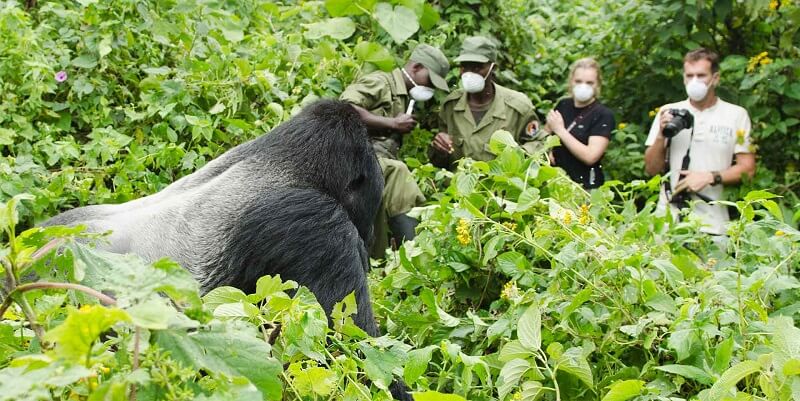
- Health screening: Temperature check and health declaration (no trekking if you have cold, flu, or COVID symptoms — gorillas share 98% of human DNA and are vulnerable to our diseases)
Bold warning: If you are sick, you will be denied entry. No refunds. Gorilla health takes absolute priority.
Step 2: Gorilla Family Assignment
Time: 7:30–8:00 AM
- Small trekking groups: Maximum 8 trekkers per gorilla family — strict limit enforced
- Tracker allocation: Each group assigned 2 armed rangers and 2–3 trackers who left hours earlier to locate the gorillas
- Choosing gorilla groups: Rangers match families to fitness levels. Elderly or less fit trekkers get families closer to park boundaries. Fit trekkers may be assigned families deeper in the forest.
Bold fact: Trackers leave camp at 5:00 AM — 2.5 hours before trekkers — to locate gorilla families and radio their positions to rangers.
Step 3: Trek Through the Forest
Time: 8:00 AM until gorillas are found
- Rainforest scenery: Ancient trees draped in moss, orchids, ferns, and vines; bird calls echoing through the canopy; occasional monkey sightings
- Wildlife encounters: You may spot colobus monkeys, chimpanzees, forest elephants, or rare birds like the African green broadbill
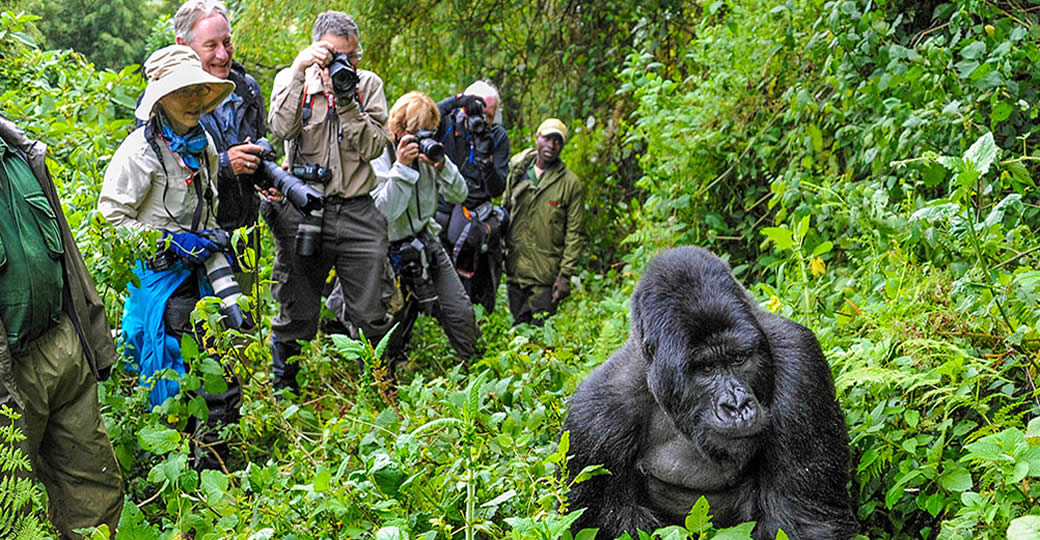
- Physical adventure: Steep ascents, muddy descents, vegetation so dense you sometimes crawl. Porters carry your bag and provide physical support.
Duration: 30 minutes to 8 hours. Most treks take 2–5 hours.
Step 4: Finding the Gorillas
The moment of discovery
- Trackers locate gorilla families: Using morning nest sites, vocalizations, and broken vegetation trails
- Travelers approach quietly: Rangers signal when to prepare cameras and silence phones
- First sighting: Often a juvenile playing in branches, or a silverback resting in a clearing. Your heart stops. Then accelerates.
Step 5: The Gorilla Encounter
Time: Exactly 1 hour
This is what you traveled across the world for:
- Watching feeding: Gorillas consume 18–20 kilograms of vegetation daily. Watch them strip leaves, crack bamboo, and share food
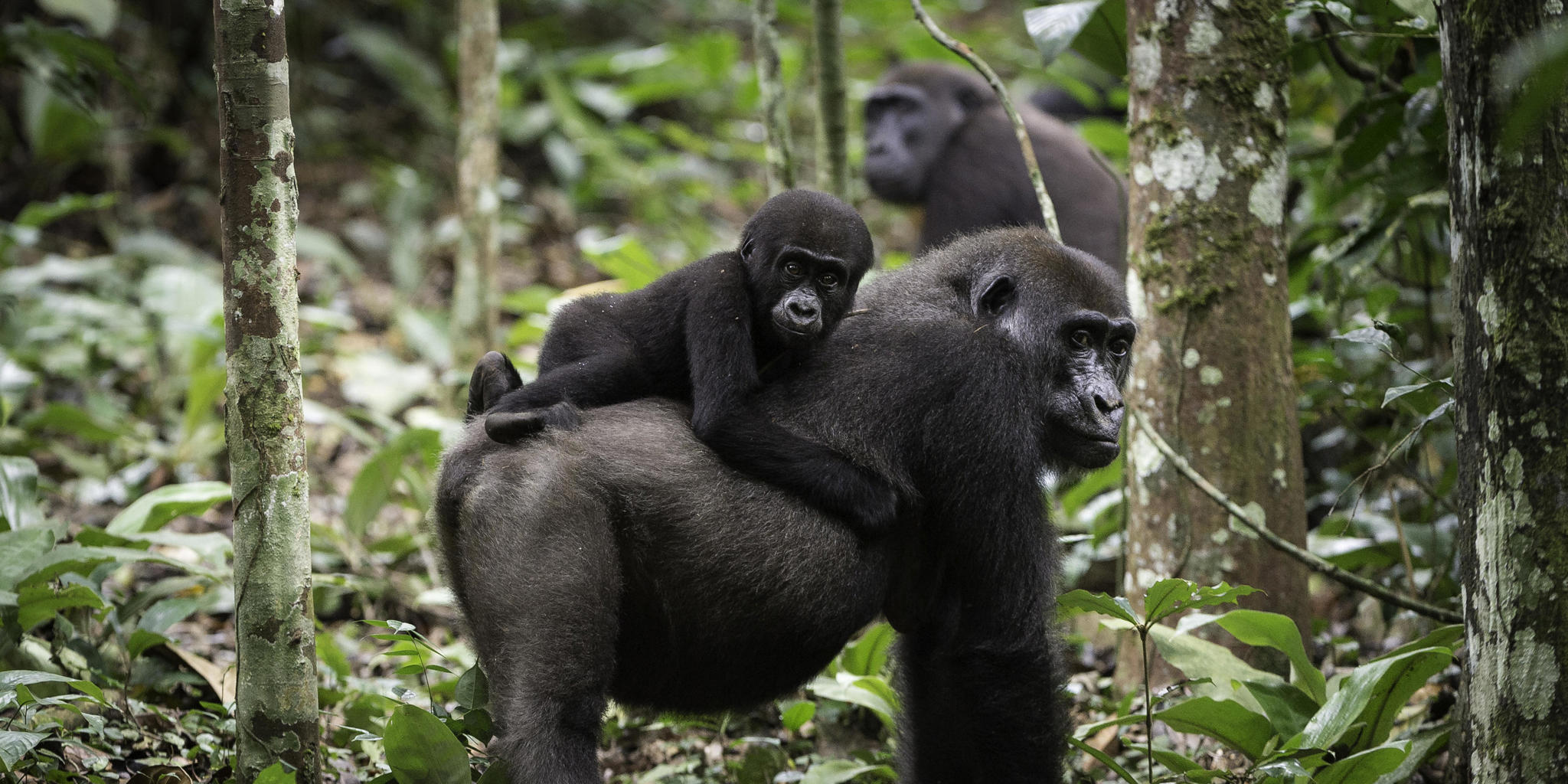
- Playing and grooming: Juveniles wrestle, mothers groom infants, silverbacks maintain order
- Social behavior: Family dynamics unfold in real time — dominance displays, affectionate touches, vocal communications
- Photography rules: No flash. No tripods. Keep 7 meters minimum distance. Move slowly. Speak in whispers
Bold reality: One hour feels like five minutes and five hours simultaneously. Time distorts when you’re meters from a wild mountain gorilla.
Why Is Gorilla Trekking So Special?
Gorilla trekking transcends typical wildlife tourism.
Here’s why:
1. Rare Wildlife Encounter
Mountain gorillas are critically endangered. They exist nowhere else on Earth except the Virunga Massif and Bwindi Impenetrable Forest.
Only 1,063 individuals remain. Seeing them in the wild is a privilege reserved for fewer than 30,000 tourists annually.
2. Emotional Connection
Gorillas share 98% of human DNA. The similarities are impossible to ignore:
- Family structures: Silverback fathers, protective mothers, playful juveniles, bickering siblings
- Intelligence and behavior: Tool use, grief displays, laughter-like vocalizations, strategic thinking
- Eye contact: When a gorilla looks at you, there is recognition. Not fear, not aggression — curiosity. That moment changes something fundamental in how you see the natural world.
Bold insight: Travelers consistently rank gorilla trekking as the most emotionally powerful wildlife experience on Earth — above the Serengeti migration, above Antarctic penguins, above Galápagos encounters.
3. Conservation Impact
Every gorilla permit is a conservation investment.
- Anti-poaching funding: Ranger salaries, patrol equipment, snare removal
- Community benefits: Revenue-sharing funds schools, clinics, and roads in surrounding villages
- Habitat protection: Park expansion and buffer zone management
- Research support: Veterinary care, population monitoring, habituation programs
Bold stat: Gorilla tourism has driven mountain gorilla population growth from 680 in 2008 to 1,063 in 2026 — the only great ape species whose numbers are increasing.
Gorilla Trekking Cost: How Much Does It Cost?
Gorilla trekking is not cheap — but its value extends far beyond the price tag.
Here’s the 2026 cost reality:
Gorilla Permit Costs by Destination
|
Destination |
Gorilla Permit Cost |
Daily Permits |
Best For |
|
Uganda |
$800 |
160+ |
Budget travelers, longer treks, more families |
|
Rwanda |
$1,500 |
96 |
Luxury travelers, easier access, premium lodges |
|
Congo |
$400–$500 |
Limited |
Adventure travelers, exclusivity, lower costs |
Total Safari Cost Breakdown (7-Day Mid-Range Trip)
|
Expense |
Uganda Estimate |
Rwanda Estimate |
|
Gorilla permit |
$800 |
$1,500 |
|
Accommodation (6 nights) |
$810–$1,000 |
$1,200–$5,000 |
|
Transport (private 4×4) |
$600–$1,000 |
$400–$800 |
|
Driver-guide |
$300–$400 |
$300–$500 |
|
Meals |
Included in most lodges |
Included in most lodges |
|
Park fees (additional parks) |
$200–$300 |
$200–$300 |
|
Visa |
$50 |
$50 |
|
Travel insurance |
$100–$150 |
$100–$150 |
|
Tips and extras |
$100–$120 |
$100–$120 |
|
Total (midrange) |
$2,650–$4,500 |
$4,450–$7,000 |
Bold fact: A 3-day Uganda gorilla safari with a midrange lodge costs less than Rwanda’s permit alone.

Gorilla Trekking Permit Explained
The gorilla permit is the golden ticket — and the most misunderstood element of the entire experience.
What Is a Gorilla Permit?
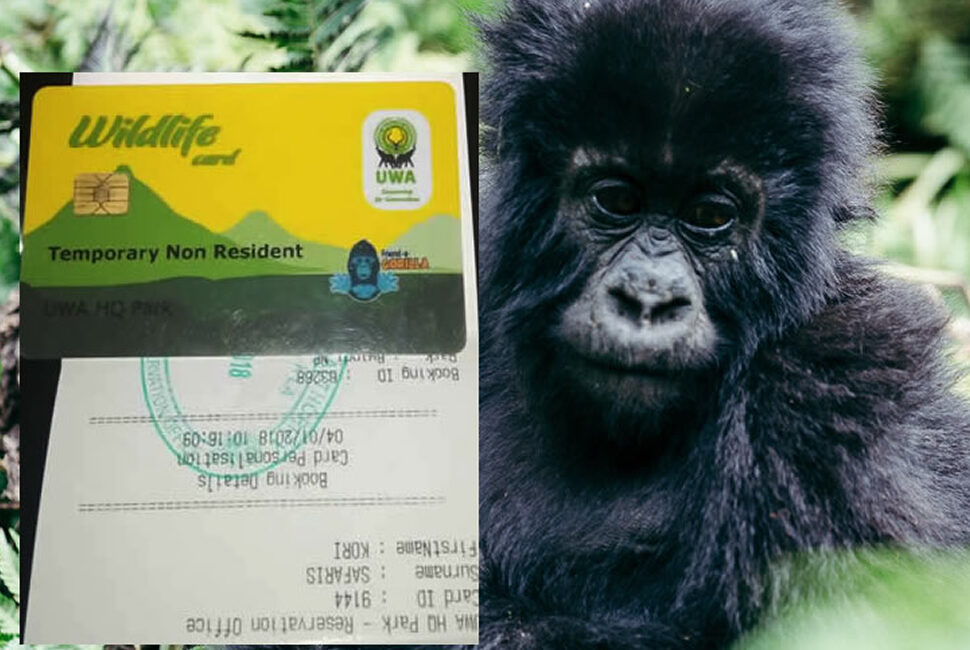
A gorilla permit is a government-issued license that grants one person one trek to one gorilla family for one hour.
It is:
- Non-refundable: Once purchased, no refunds for cancellation (unless the park cancels due to gorilla unavailability – rare)
- Non-transferable: Linked to your passport; cannot be sold or given to another traveler
- Date-specific: Valid only for the assigned date and sector
- Non-negotiable: No extensions, no exchanges, no exceptions
Why Permits Are Limited
Conservation necessity drives scarcity. Only habituated gorilla families can be visited, and each family tolerates human presence for just 1 hour per day.
With 8 trekkers maximum per family, daily capacity is fixed:
- Uganda: ~20 habituated families × 8 trekkers = ~160 permits daily
- Rwanda: 12 habituated families × 8 trekkers = 96 permits daily
Bold fact: Rwanda’s 96 daily permits sell out 6–12 months in advance during peak season. Uganda’s 160+ permits offer more flexibility but still sell out early for popular sectors.
How Permits Support Conservation
Every permit dollar flows directly into protection:
- 20% to park management and anti-poaching
- 20% to community revenue-sharing
- 15% to gorilla monitoring and research
- 10% to veterinary interventions
- 35% to government conservation programs
Why Early Booking Is Critical
- Peak season (June–September, December–February): Book 6–12 months ahead
- Low season (March–May, October–November): Book 3–6 months ahead
- Last-minute: Possible in Uganda during low season; nearly impossible in Rwanda year-round
Bold warning: A missed permit is a $800–$1,500 loss. Professional booking through GoSilverback Gorilla Safaris eliminates this risk.
How Difficult Is Gorilla Trekking?
This is the question that stops potential travelers cold.
Here’s the honest answer:
1. Fitness Requirements
Gorilla trekking is moderately to highly physically demanding.
You need:
- Cardiovascular fitness: Ability to hike uphill for 2–4 hours at altitude
- Leg strength: Steep descents on muddy, uneven terrain
- Balance: Navigating roots, rocks, and slippery vegetation
- Mental resilience: Patience when treks extend beyond expectations
2. Hiking Duration
|
Scenario |
Duration |
Fitness Level |
|
Short trek |
30 minutes–2 hours |
Suitable for most travelers |
|
Average trek |
2–4 hours |
Moderate fitness required |
|
Long trek |
4–8 hours |
Good fitness essential |
3. Terrain Challenges
- Uganda’s Bwindi: Steep, muddy, dense vegetation at 2,000–2,600m altitude. The name “Impenetrable” is not marketing.
- Rwanda’s Volcanoes: More open bamboo forests, gentler slopes, but altitude still affects 30% of trekkers at 2,500m+
- Weather impact: Rain transforms manageable trails into slippery, exhausting ordeals
4. Altitude Effects
At 2,000–4,000 meters, altitude sickness affects some trekkers:
- Symptoms: Headache, nausea, shortness of breath, fatigue
- Prevention: Arrive 2–3 days early, stay hydrated, avoid alcohol
- Management: Porters assist; rangers carry emergency oxygen
5. The Truth About Difficulty
Bold reality: Gorilla trekking is an adventure suitable for many travelers with preparation. Elderly trekkers succeed with sedan-chair options in Rwanda.
Fitness-limited travelers get easier gorilla family assignments. Children under 15 are prohibited (minimum age), but teenagers and adults of all ages complete treks daily.
The key is honest self-assessment and choosing the right destination and sector.
Best Time for Gorilla Trekking
Timing affects everything: trek difficulty, wildlife visibility, photography, and cost.
1. Dry Seasons (Peak Season)
June–September and December–February
Advantages:
- Easier hiking: Firmer trails, less mud, lower leech activity
- Better photography: Clearer skies, brighter light, less fog
- Reliable access: Roads and border crossings remain passable
- Wildlife visibility: Thinner vegetation makes gorillas easier to locate
Disadvantages:
- Higher costs: 20–30% premium on lodges and packages
- Crowded parks: More trekkers, less exclusivity
- Permit scarcity: Book 6–12 months ahead
2. Rainy Seasons (Low Season)
March–May and October–November
Advantages:
- Fewer visitors: More intimate encounters, easier permit availability
- Beautiful rainforest scenery: Lush green landscapes, dramatic skies
- Lower costs: Significant discounts on accommodation
- Birding peak: Migratory species arrive; birding exceptional
Disadvantages:
- Muddy trails: Steeper, slipperier trekking
- Variable weather: Rain can disrupt plans
- Photography challenges: Lower light, fog, wet equipment
Bold recommendation: For first-time trekkers, June or September offer the best balance — manageable weather, moderate crowds, and reasonable pricing.
Planning your gorilla trekking adventure? Explore our expert guides on What to Pack for Gorilla Trekking, How Difficult Is Gorilla Trekking?, Uganda vs Rwanda Gorilla Trekking, and the Best Time for Gorilla Trekking Uganda to plan with confidence.
When you’re ready, browse our carefully crafted gorilla trekking packages and let our experienced safari specialists handle every detail of your unforgettable journey.
What Should You Pack for Gorilla Trekking?
Packing right eliminates discomfort and maximizes your experience.
Here’s the essential checklist:
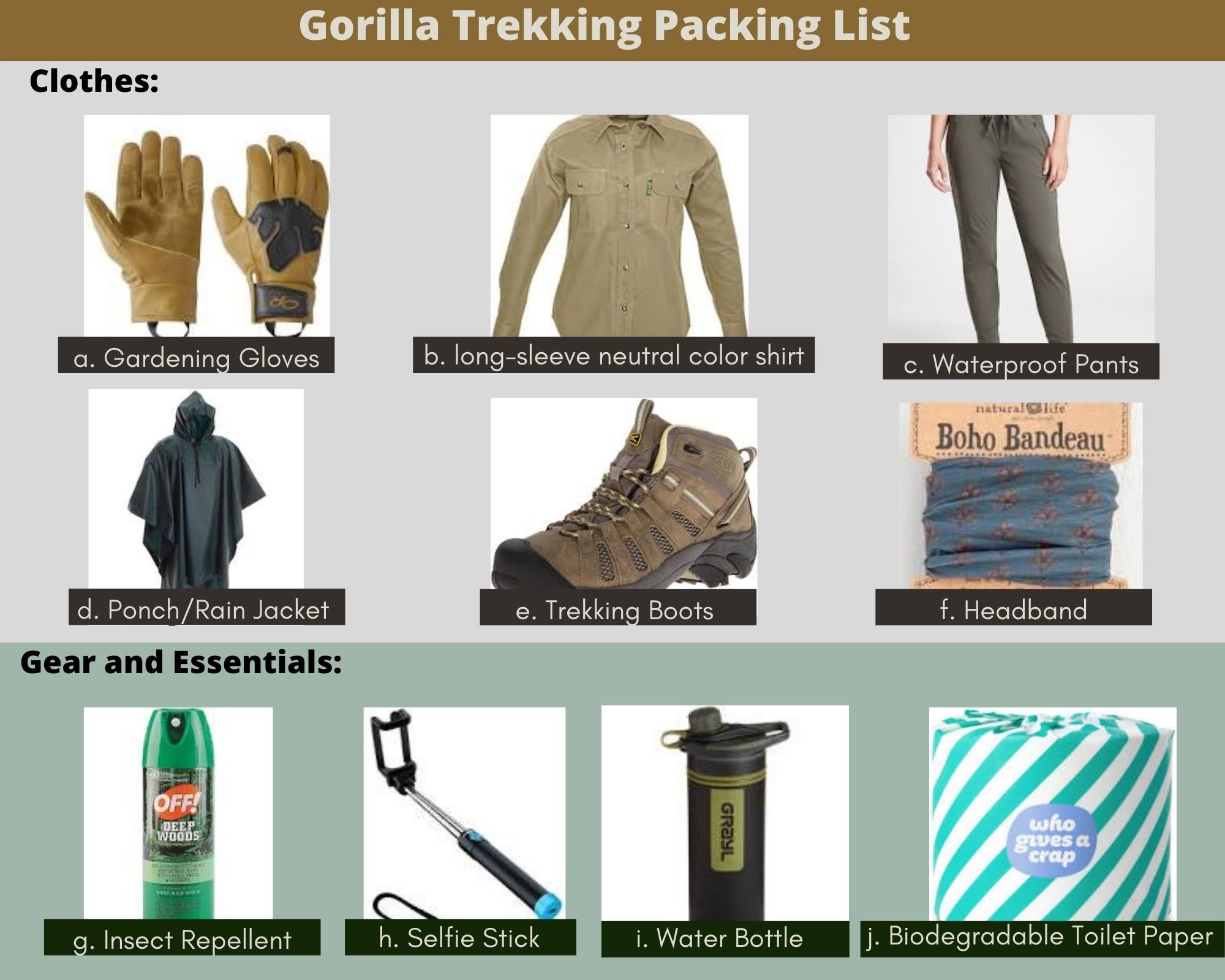
1. Essential Gear
|
Item |
Specification |
Why It Matters |
|
Hiking boots |
Waterproof, ankle-supporting, broken-in |
Blisters and wet feet ruin treks |
|
Waterproof jacket |
Lightweight, breathable |
Rain is unpredictable year-round |
|
Long trousers |
Quick-dry, neutral colors |
Protection from vegetation and insects |
|
Long-sleeved shirt |
Lightweight, moisture-wicking |
Sun and insect protection |
|
Gardening gloves |
Sturdy, grip-enhancing |
Essential for grabbing vegetation on steep trails |
|
Camera |
DSLR or mirrorless, 70–200mm lens |
No flash allowed; zoom essential |
|
Binoculars |
8×42 recommended |
Game drives and birding add-ons |
|
Daypack |
20–30 liters |
Water, snacks, camera, rain gear |
|
Insect repellent |
DEET-based (30–50%) |
Malaria is endemic; insects are relentless |
|
Water bottle |
1.5–2 liters |
Hydration critical at altitude |
|
Power bank |
10,000+ mAh |
Electricity unreliable in remote lodges |
|
Sunscreen & hat |
SPF 30+, wide-brimmed |
UV intensity high at altitude |
|
First-aid kit |
Blister pads, pain relievers, antihistamines |
Self-sufficiency in remote areas |
2. Clothing Strategy
- Layering is essential: Mornings are cold (10–15°C / 50–59°F); afternoons warm to 25°C (77°F)
- Neutral colors only: Khaki, olive, brown. No bright colors. No camouflage (illegal in some areas).
- Avoid cotton: It stays wet for days. Synthetic or merino wool dries overnight.
Bold tip: Pack two complete trekking outfits. After a muddy Bwindi trek, you’ll want dry clothes for day two.
Gorilla Trekking Rules and Guidelines
These rules exist for one reason: gorilla survival. Violations can end your trek and stress the animals.
The Non-Negotiable Rules
- Maintain 7-meter minimum distance from gorillas (10 meters if gorillas approach you — back away slowly)
- No touching gorillas — ever. Even if they touch you, remain still and let rangers manage the situation
- No flash photography — flash stresses gorillas and can trigger defensive behavior
- Follow ranger instructions — rangers have final authority; their decisions protect you and the gorillas
- Do not trek when sick — gorillas share 98% of human DNA and are vulnerable to respiratory diseases. A human cold can kill a gorilla family.
- Maximum 1 hour with gorillas — strictly enforced to minimize stress
- Maximum 8 trekkers per gorilla family — no exceptions
- No eating or drinking near gorillas — food smells attract unwanted attention
- Speak in whispers — loud noises disturb gorilla communication and behavior
- No littering — leave nothing in the forest
Bold warning: Violating these rules can result in immediate removal from the trek, permit forfeiture, and potential legal action. Rangers enforce strictly.
Gorilla Trekking vs. Gorilla Habituation Experience
Understanding the difference helps you choose the right experience:
|
Feature |
Standard Gorilla Trekking |
Gorilla Habituation Experience |
|
Time with gorillas |
1 hour |
Up to 4 hours |
|
Cost |
Uganda $800 / Rwanda $1,500 |
Uganda $1,500 |
|
Group size |
8 trekkers max |
4 participants max |
|
Experience type |
Observation of habituated families |
Active research participation |
|
Physical demand |
Moderate to high |
High — longer time, deeper forest |
|
Availability |
Daily |
Limited (2–3 days per week) |
|
Booking window |
3–12 months |
6–12 months (very limited) |
|
Best for |
Most travelers |
Photographers, researchers, enthusiasts |
|
Location |
Uganda, Rwanda, Congo |
Uganda only (Bwindi) |
Standard trekking suits most travelers — it delivers the iconic encounter without extreme demands. Habituation suits those who want deeper immersion, longer photography time, and involvement in conservation research.
Bold insight: The habituation experience is the closest most civilians will get to being a primatologist. It is worth the extra cost and effort for serious wildlife enthusiasts.
Gorilla Trekking and Other African Safari Experiences
Gorilla trekking is extraordinary on its own. Combined with other wildlife experiences, it becomes the centerpiece of an unforgettable East African safari.
1. Gorilla Trekking + Big Five Safari
Queen Elizabeth National Park (Uganda) and Akagera National Park (Rwanda) deliver classic African savannah game drives:
- Tree-climbing lions (Ishasha sector, Uganda) — a behavior seen almost nowhere else
- Elephants, buffalo, leopards, hyenas across open plains
- Boat cruises on the Kazinga Channel (Uganda) or Lake Ihema (Rwanda)
2. Gorilla Trekking + Chimpanzee Trekking
Kibale National Park (Uganda) and Nyungwe Forest (Rwanda) offer world-class chimpanzee encounters:
- Kibale: 95% success rate; habituated families of 50+ chimps
- Nyungwe: 500+ chimps in ancient montane rainforest; famous canopy walkway
3. Gorilla Trekking + Cultural Experiences
- Batwa pygmy community visits (Bwindi, Uganda): Learn from forest-dwelling indigenous people
- Iby’iwacu cultural village (Volcanoes, Rwanda): Traditional dance, crafts, and storytelling
- Kigali Genocide Memorial: Essential context for understanding modern Rwanda
Bold fact: A combined Uganda safari can include mountain gorillas, chimpanzees, tree-climbing lions, elephants, hippos, and 600+ bird species in under 10 days.
Is Gorilla Trekking Worth It?
This is the question every potential traveler asks.
Here’s the definitive answer:
1. It Is a Lifetime Memory
No photograph captures the moment a silverback makes eye contact with you. No documentary conveys the sound of a juvenile beating its chest in play.
No book describes the smell of rainforest vegetation crushed under 200 kilograms of gorilla. These moments belong only to those who make the trek.
2. It Is a Rare Wildlife Encounter
Only 1,063 mountain gorillas exist. Only ~30,000 tourists see them annually. You are joining an extraordinarily small group of humans who have shared space with these great apes in the wild.
3. It Is a Conservation Contribution
Your permit is not a ticket — it is an investment. Every dollar funds anti-poaching patrols, community schools, veterinary care, and habitat protection. You are not just observing conservation. You are participating in it.
4. It Is Adventure and Discovery
The trek itself is part of the reward. The physical challenge, the rainforest immersion, the anticipation, the discovery — these elements combine into an experience that transcends “tourism” and becomes “transformation.”
Bold reality: Travelers who complete gorilla trekking consistently rank it as the #1 wildlife experience of their lives — above the Serengeti migration, above Antarctic expeditions, above Galápagos encounters. It is worth every dollar, every hour of hiking, and every drop of sweat.
What You Get When You Book With Us:
✅ Gorilla permit secured — 6–12 months ahead, all sectors, all countries
✅ Handpicked accommodation — matched to your budget, fitness, and trekking sector
✅ Expert local guides — UWA and RDB certified, born in these forests, trained in conservation
✅ Seamless logistics — airport transfers, domestic flights, border crossings, emergency protocols
✅ Transparent pricing — no hidden costs, full breakdown before you pay
✅ Conservation commitment — every booking supports gorilla protection and community development
✅ 24/7 support — from first inquiry to final drop-off
Planning your gorilla trekking adventure? Explore our expert guides on What to Pack for Gorilla Trekking, How Difficult Is Gorilla Trekking?, Uganda vs Rwanda Gorilla Trekking, and the Best Time for Gorilla Trekking Uganda to plan with confidence.
When you’re ready, browse our carefully crafted gorilla trekking packages and let our experienced safari specialists handle every detail of your unforgettable journey.
Frequently Asked Questions About Gorilla Trekking
What is gorilla trekking?
Gorilla trekking is a guided hike through tropical rainforest to locate and observe habituated mountain gorilla families in their natural habitat. Trekkers spend 2–8 hours hiking with rangers and trackers, then spend exactly 1 hour in the gorillas’ presence. It is available in Uganda, Rwanda, and Congo.
Where is the best place for gorilla trekking?
Uganda offers the best value ($800 permits), largest gorilla population, and most trekking options. Rwanda offers the easiest access, luxury lodges, and gentler terrain. Congo offers exclusivity and lower costs. The “best” place depends on your budget, fitness, and travel style.
How much does gorilla trekking cost?
Gorilla permits cost $800 (Uganda), $1,500 (Rwanda), or $400–$500 (Congo). Total safari costs range from $1,500 (budget Uganda) to $10,000+ (luxury Rwanda). A midrange 3-day Uganda safari starts at $2,862 per person.
Is gorilla trekking safe?
Yes. Armed rangers escort every trek. Gorillas are habituated to human presence and rarely show aggression. The greatest risks are altitude sickness and minor injuries from terrain — both manageable with preparation. No tourist has ever been killed by a habituated mountain gorilla.
How long does gorilla trekking take?
The full experience takes 6–10 hours from park arrival to return. The trek itself ranges from 30 minutes to 8 hours depending on gorilla family location. The gorilla encounter is exactly 1 hour — strictly enforced.
Can children go gorilla trekking?
No. The minimum age is 15 years in Uganda and Rwanda. This protects both children (treks are physically demanding) and gorillas (children are more likely to carry communicable diseases). No exceptions.
What is the best country for gorilla trekking?
Uganda for value and diversity. Rwanda for luxury and accessibility. Congo for adventure and exclusivity. Most travelers who can afford it combine Uganda and Rwanda for the complete experience.
How close can you get to gorillas?
Minimum 7 meters (23 feet). If gorillas approach you, back away slowly to maintain distance. Rangers enforce this strictly to protect gorilla health and prevent disease transmission.
Do gorillas attack humans?
Habituated gorillas do not attack tourists. They have been gradually accustomed to human presence over 2–3 years. Wild (unhabituated) gorillas are shy and avoid humans. The only recorded incidents involve provoked wild gorillas or unhabituated groups — never tourist treks.
What clothes should I wear for gorilla trekking?
Wear long trousers, long-sleeved shirts, waterproof hiking boots, and a rain jacket. Choose quick-dry, neutral-colored fabrics. Avoid cotton. Bring gardening gloves for grabbing vegetation. Pack layers — mornings are cold, afternoons warm up.
Do I need a permit for gorilla trekking?
Yes — permits are mandatory and non-negotiable. You cannot enter the park or approach gorillas without one. Permits are limited, date-specific, and must be booked in advance through registered operators like GoSilverback Gorilla Safaris.
How early should I book gorilla permits?
6–12 months for peak season (June–September, December–February). 3–6 months for low season (March–May, October–November). Last-minute bookings are possible in Uganda during low season but risky. Rwanda permits sell out year-round.
What happens if it rains during gorilla trekking?
You trek anyway. Rain is common and expected. Rangers provide ponchos. Trails become muddier but remain passable. The gorillas don’t care about rain — they’re under the canopy. Waterproof gear is essential, not optional.
Can elderly travelers trek gorillas?
Yes. Rwanda offers sedan-chair options (carried by porters) for mobility-limited travelers. Uganda’s Buhoma sector has gentler terrain. Disclose fitness limitations when booking – rangers assign easier gorilla families accordingly.
Why are mountain gorillas endangered?
Mountain gorillas face threats from habitat loss (agriculture and logging), poaching (snares and bushmeat trade), disease (human respiratory viruses), and civil conflict (particularly in Congo). Conservation tourism is the primary reason their population is now increasing.
Book Your Gorilla Trekking Adventure in Africa
You now know what gorilla trekking is, how it works, where to go, and what it costs. The only question remaining is: when will you make it happen?
GoSilverback Gorilla Safaris transforms gorilla dreams into reality. We don’t just book permits — we craft transformative wildlife experiences that respect the gorillas, empower local communities, and exceed your expectations.
Our Gorilla Safari Packages:
- 3 Days Uganda Gorilla Trekking — Approx. from $1,300 per person
- 3 Days Rwanda Luxury Gorilla Safari — Approx. from $3,500 per person
- 5 Days Gorilla & Wildlife Safari — Approx. from $2,500 per person
- 7 Days Uganda Rwanda Gorilla Safari — Approx. from $4,000 per person
- Luxury Gorilla Safaris — Singita, One&Only, Sanctuary lodges Approx. from $5,000+
- Budget Gorilla Packages — affordable treks without compromising safety from $1,200
- Family Safaris — child-friendly options (minimum age 15 for trekking) and flexible pacing
- Honeymoon Packages — private treks, romantic lodges, exclusive experiences
- Photography Safaris — extended gorilla time, specialist guides, optimal lighting sectors
- Gorilla Habituation Experience — 4 hours with researchers in Uganda from $2,000
- Tailor-Made Itineraries — designed around your dates, interests, and fitness level
Contact us now for a live quote and get a 20% discount and for tailor-made safaris.
Explore our latest 2026 gorilla trekking packages here.
Ready to Meet the Mountain Gorillas?
1,063 mountain gorillas remain. One of them is waiting for you.
📧 Email: info@gosilverbackgorillasafaris.com
🌐 Website: www.gosilverbackgorillasafaris.com
📞 Call/WhatsApp: +256-773-801934
[Request Your Gorilla Safari Quote →]
Your mountain gorilla encounter is closer than you think. Start planning today — before permits sell out and someone else takes your place in the rainforest.
About GoSilverback Gorilla Safaris:
A locally owned and operated East African safari company specializing in gorilla trekking across Uganda, Rwanda, and Congo. With over a decade of experience, certified guides, and direct conservation partnerships, we transform gorilla dreams into reality. Licensed by Uganda Tourism Board and Rwanda Development Board.