
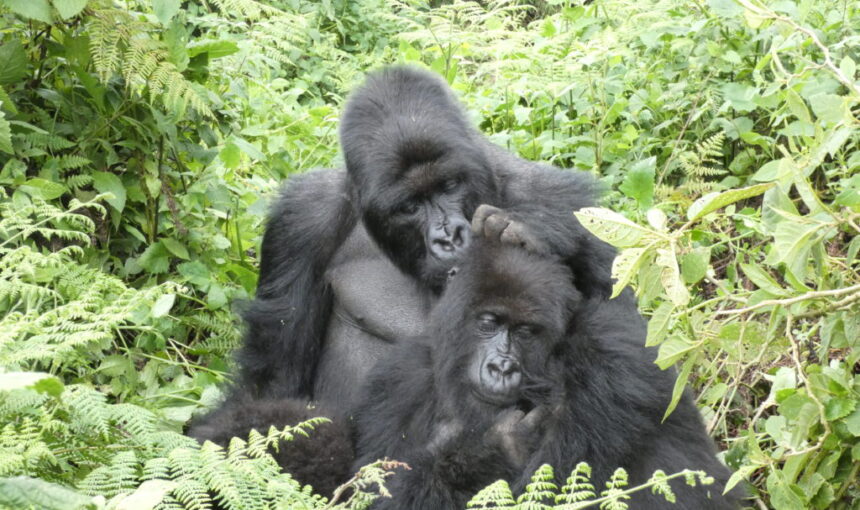
Mountain Gorilla Fun Facts: 25 Amazing Facts You Should Know 2026
Mountain gorilla fun facts reveal why these magnificent apes continue to captivate travelers from the USA, UK, Europe, Canada, Asia, and the Middle East. With only 1,063 mountain gorillas left in the wild as of the 2025 census, every fact about them carries both wonder and urgency.
As expert African safari tour operators at GoSilverback Gorilla Safaris, we have guided thousands of clients into the mist-shrouded forests of Bwindi and the Virunga Volcanoes.
Each trek proves that mountain gorilla fun facts are far more than trivia — they are the key to understanding one of our closest living relatives and the reason responsible gorilla tourism matters.
This authoritative 2026 guide delivers the most accurate, up-to-date mountain gorilla fun facts while answering every practical question about seeing them in the wild.
From their biology and behavior to conservation triumphs and responsible trekking etiquette, you will discover why a gorilla safari remains one of Africa’s most profound wildlife experiences.
What Are Mountain Gorillas?
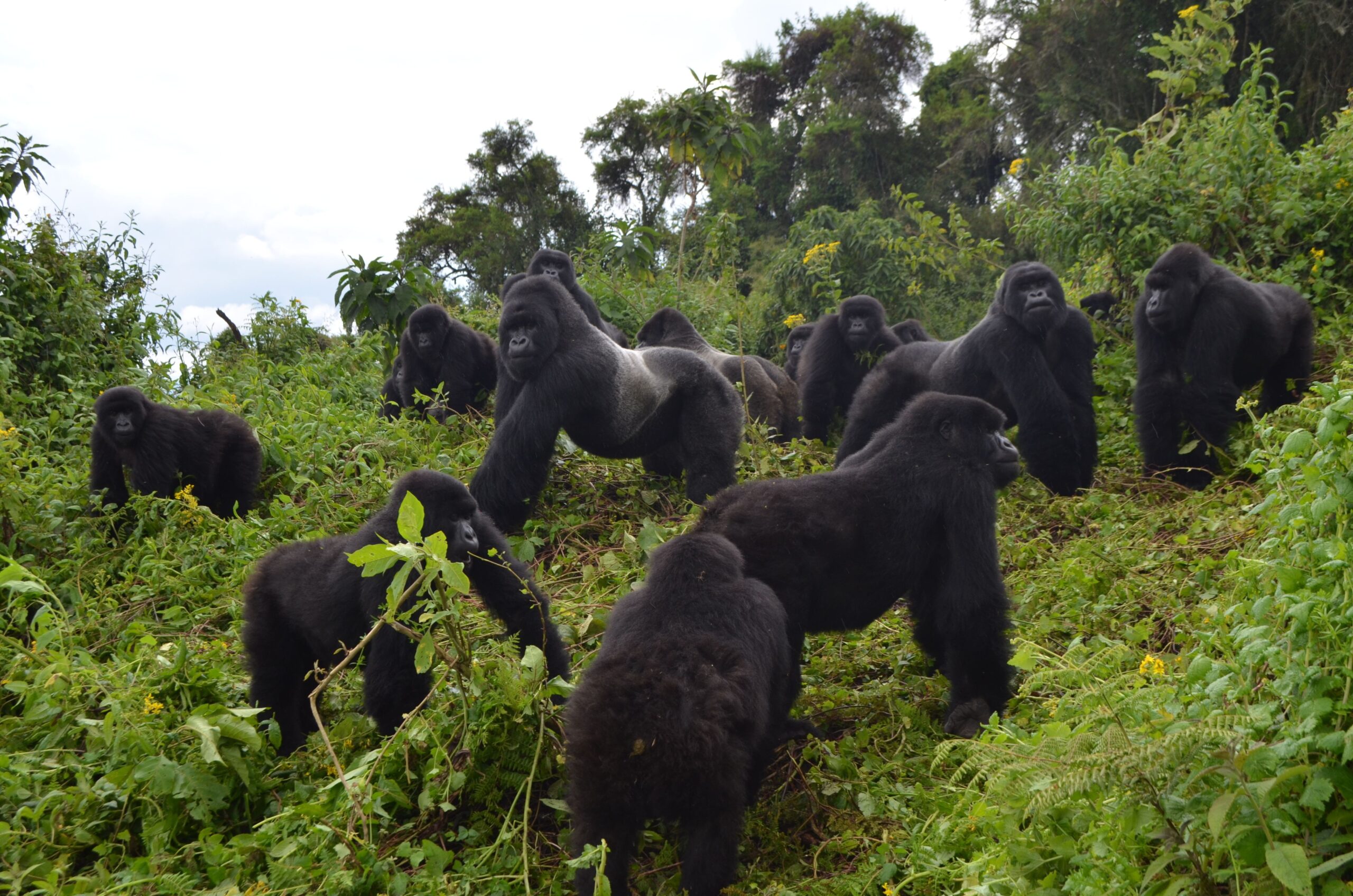
Mountain gorillas are one of two subspecies of eastern gorillas. They are larger, stockier, and more thickly furred than their western lowland cousins, an adaptation to the cold, high-altitude forests they call home.
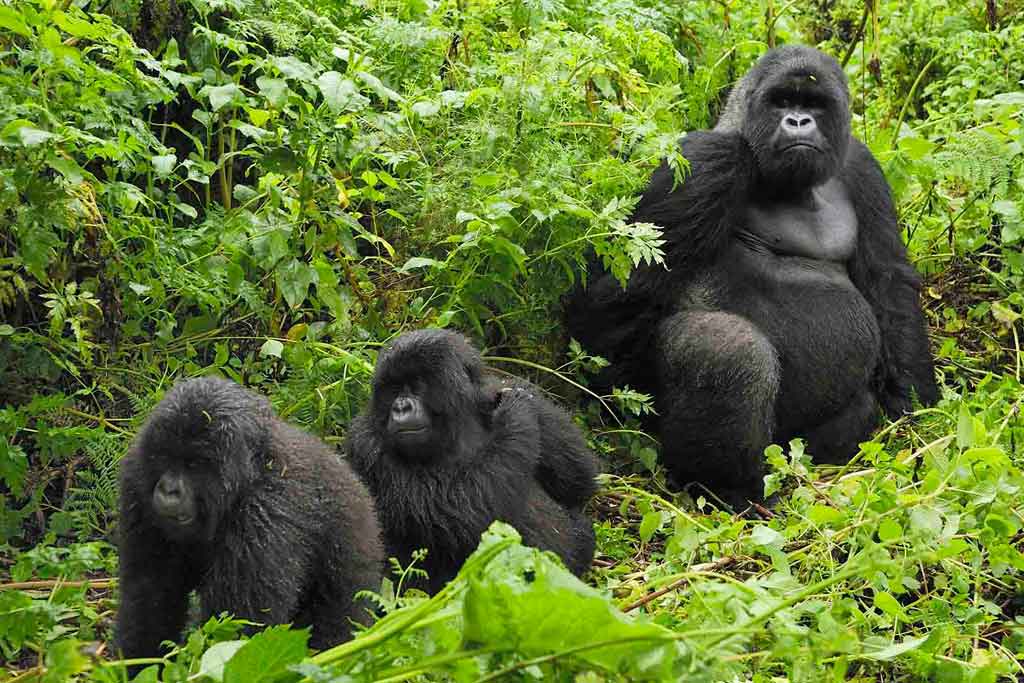
Adult males, known as silverbacks, stand up to 1.8 m (6 ft) tall when upright and can weigh 160–220 kg (350–485 lbs). Females are smaller, typically 70–100 kg.
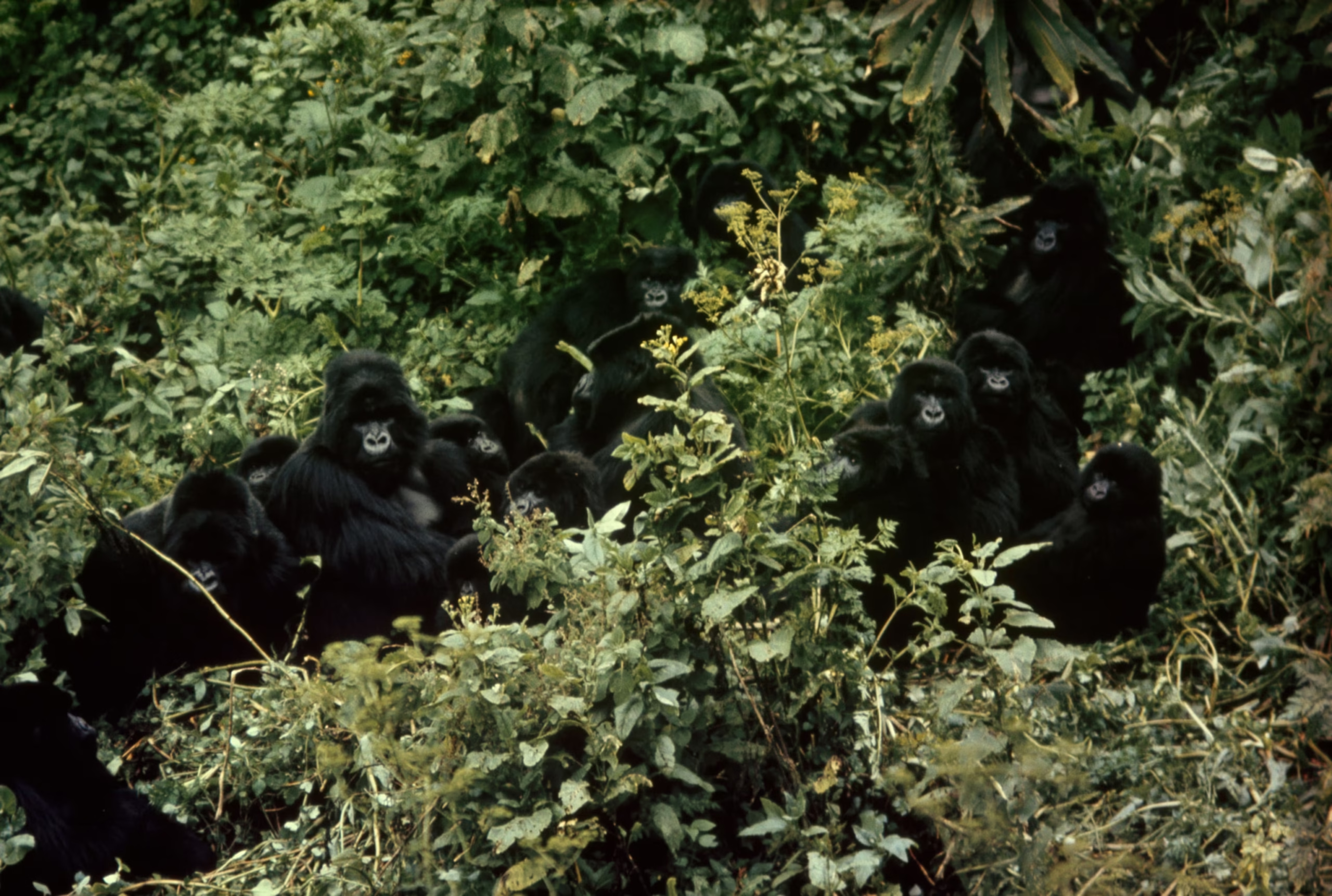
They live in stable family groups of 5–30 individuals led by a dominant silverback.
Unlike most primates, mountain gorillas are primarily herbivores, consuming up to 30 kg of vegetation daily, including leaves, stems, bark, and fruit. Their DNA is 98.4% identical to humans, making them one of our closest genetic relatives after chimpanzees.
Top 25 Mountain Gorilla Fun Facts
Here are the most fascinating and scientifically verified mountain gorilla fun facts that every traveler should know before embarking on a gorilla safari:
1. There are only 1,063 mountain gorillas remaining in the wild as of the latest 2025 census — making them one of the rarest large mammals on Earth.
2. Mountain gorillas are found in just two small, isolated populations: the Virunga Volcanoes (spanning Rwanda, Uganda, and DRC) and Bwindi Impenetrable National Park in Uganda. No other place on the planet is home to this subspecies.
3. A fully grown silverback can weigh up to 220 kg (485 lbs) and stand 1.8 m (almost 6 ft) tall when upright — yet they are remarkably gentle despite their immense size and power.
4. Mountain gorillas have a bite force of approximately 1,300 PSI, stronger than that of a lion, which they use primarily to chew tough bamboo stems and fibrous vegetation.
5. Every night, each gorilla builds a completely new nest using branches, leaves, and vines. Silverbacks often construct ground nests, while females and infants prefer tree nests for safety.
6. Chest-beating is not an act of aggression but a sophisticated form of communication used to display strength, warn rivals, or express excitement.
7. Infant mountain gorillas ride on their mother’s back for the first 3–4 years of life, learning how to navigate the steep, slippery slopes of the Albertine Rift.
8. Just like human fingerprints, every mountain gorilla has a unique nose print pattern that researchers use for individual identification.
9. Mountain gorillas can live up to 60 years in the wild. Some well-known silverbacks, such as the famous “Titus” of Rwanda, lived into their mid-50s.
10. They are capable of incredible strength — a silverback can easily uproot small trees, bend thick bamboo, or drag heavy logs weighing over 150 kg.
11. Mountain gorillas use more than 20 different vocalizations, including grunts, belches, barks, and screams to maintain group cohesion and warn of danger.
12. Unlike most primates, mountain gorillas are almost exclusively vegetarian. They consume up to 30 kg of vegetation per day, including leaves, shoots, stems, bark, and occasionally fruit.
13. The silver “saddle” on a male’s back appears around age 12, signaling sexual maturity and dominance within the group.
14. Because the high-altitude vegetation is so nutrient-dense, mountain gorillas have much smaller home ranges compared to western lowland gorillas.
15. Twins are extremely rare — only about 1 in 100 births results in twins, and survival rates for both are low in the wild.
16. Mountain gorillas share 98.4% of their DNA with humans, which makes them highly susceptible to human diseases such as colds, flu, and pneumonia.
17. Their hands are almost identical in structure to human hands, complete with opposable thumbs perfect for grasping and manipulating vegetation.
18. As seed dispersers, mountain gorillas play a critical role in forest regeneration across the Albertine Rift biodiversity hotspot.
19. Some habituated groups in Bwindi have been observed traveling nearly 8 km in a single day while foraging.
20. They are the only gorilla subspecies adapted to live at altitudes between 2,200 m and 4,300 m, enduring cold mist, rain, and occasional frost.
21. Female mountain gorillas usually give birth to their first infant between 10 and 12 years of age, with an inter-birth interval of about 4 years.
22. Silverbacks are incredibly protective — they have been documented carrying infants across rivers and difficult terrain on their backs.
23. Researchers have observed mountain gorillas using sticks as tools to test water depth before crossing streams — clear evidence of problem-solving intelligence.
24. Thanks to decades of dedicated conservation, the mountain gorilla population has increased from fewer than 250 in the 1980s to 1,063 today — one of Africa’s greatest conservation success stories.
25. Every single gorilla permit purchased directly funds anti-poaching patrols, veterinary care through Gorilla Doctors, and community development projects that reduce human–gorilla conflict.
Where to See Mountain Gorillas in Africa
Mountain gorillas can only be seen in two protected areas: Bwindi Impenetrable National Park in southwestern Uganda and the Virunga Massif shared by Rwanda, Uganda, and the DRC.
Bwindi protects roughly half the world’s population (over 400 individuals) across 16 habituated groups. The Virunga Volcanoes host the remaining families, with Rwanda’s Volcanoes National Park offering the most accessible and luxurious trekking options.
Both destinations deliver world-class experiences, but Bwindi offers greater variety and value, while Rwanda provides shorter transfers from Kigali and premium lodges.
Why Mountain Gorillas Are Endangered
Despite their recovery, mountain gorillas remain Critically Endangered.
Primary threats include habitat loss from agricultural encroachment, disease transmission from humans, and occasional poaching for bushmeat or snares set for other animals. Climate change is also shifting their food sources higher up the volcanoes, reducing available habitat.
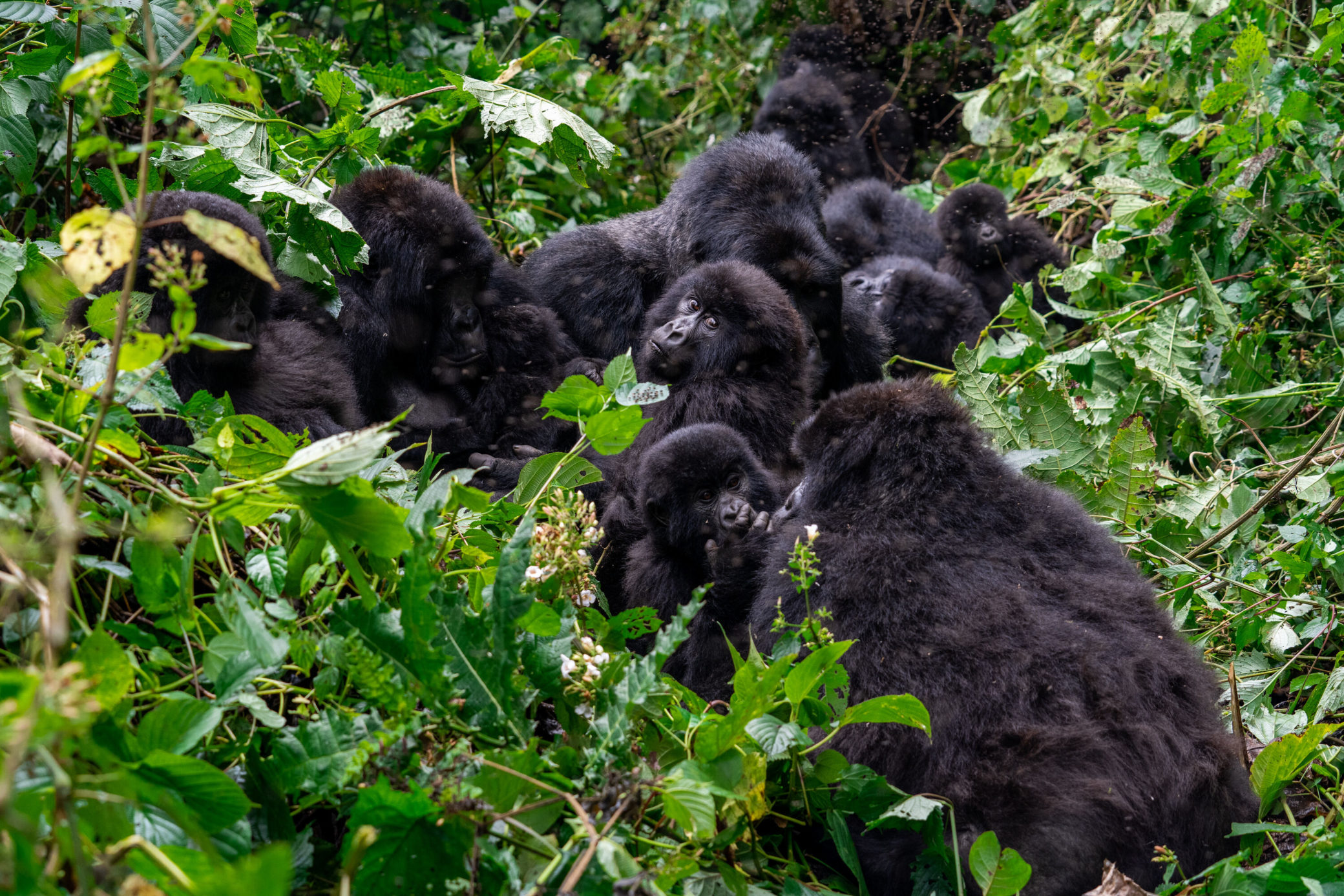
Conservation Success Story
The mountain gorilla population has grown from 250 in the 1980s to 1,063 today — one of Africa’s greatest conservation victories.
This success is driven by rigorous anti-poaching patrols, community revenue-sharing from gorilla permits, and veterinary intervention by Gorilla Doctors. 20% of every gorilla permit in Uganda and Rwanda goes directly back to local communities, turning former poachers into protectors.
Gorilla Trekking Experience
The gorilla trekking experience is unlike any other safari activity on Earth. After a briefing at the park gate, your small group of maximum 8 trekkers follows expert trackers through steep, misty rainforest.
The moment you first see a silverback feeding or a mother cradling her infant is unforgettable. You spend exactly one hour at a respectful 7-metre distance, absorbing the peaceful family dynamics and profound intelligence of these gentle giants.
Best Time to See Mountain Gorillas
The best time to see mountain gorillas is during the dry seasons: June to September and December to February. Trails are firmer, visibility is clearer, and the gorillas remain active.
Shoulder months (March, October–November) offer lower rates and fewer crowds, while the rainy seasons still allow excellent trekking but with muddier conditions.
Tips for First-Time Gorilla Trekkers
- Book your gorilla permit 6–12 months in advance.
- Train with hilly walks to prepare for steep terrain.
- Pack waterproof hiking boots, rain gear, long sleeves, and binoculars.
- Follow all ranger instructions — especially the 7-metre rule.
- Stay calm and quiet; sudden movements can startle the silverback.
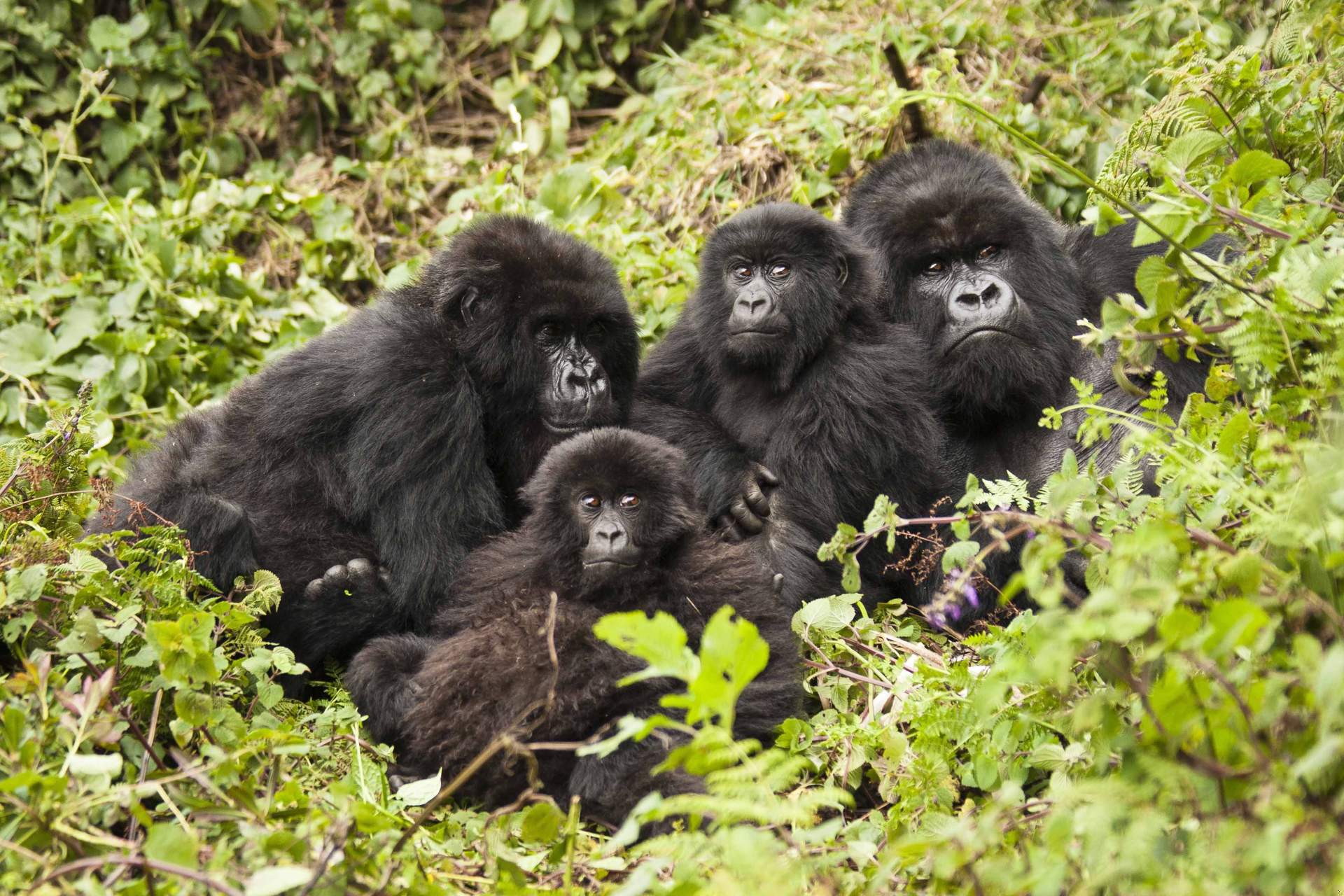
Ethical Gorilla Tourism Guidelines
Always choose authorised operators. Maintain distance, avoid flash photography, and never trek if you are unwell. Support lodges and communities that share revenue with local people. Responsible tourism is the single most powerful tool protecting mountain gorillas today.
Mountain Gorillas vs Other Gorillas
Mountain gorillas are larger, more muscular, and thicker-furred than western lowland gorillas. They live at higher altitudes and have smaller home ranges due to richer vegetation.
Lowland gorillas are more arboreal and have larger groups. Cross River gorillas are the rarest subspecies and remain extremely difficult to see.
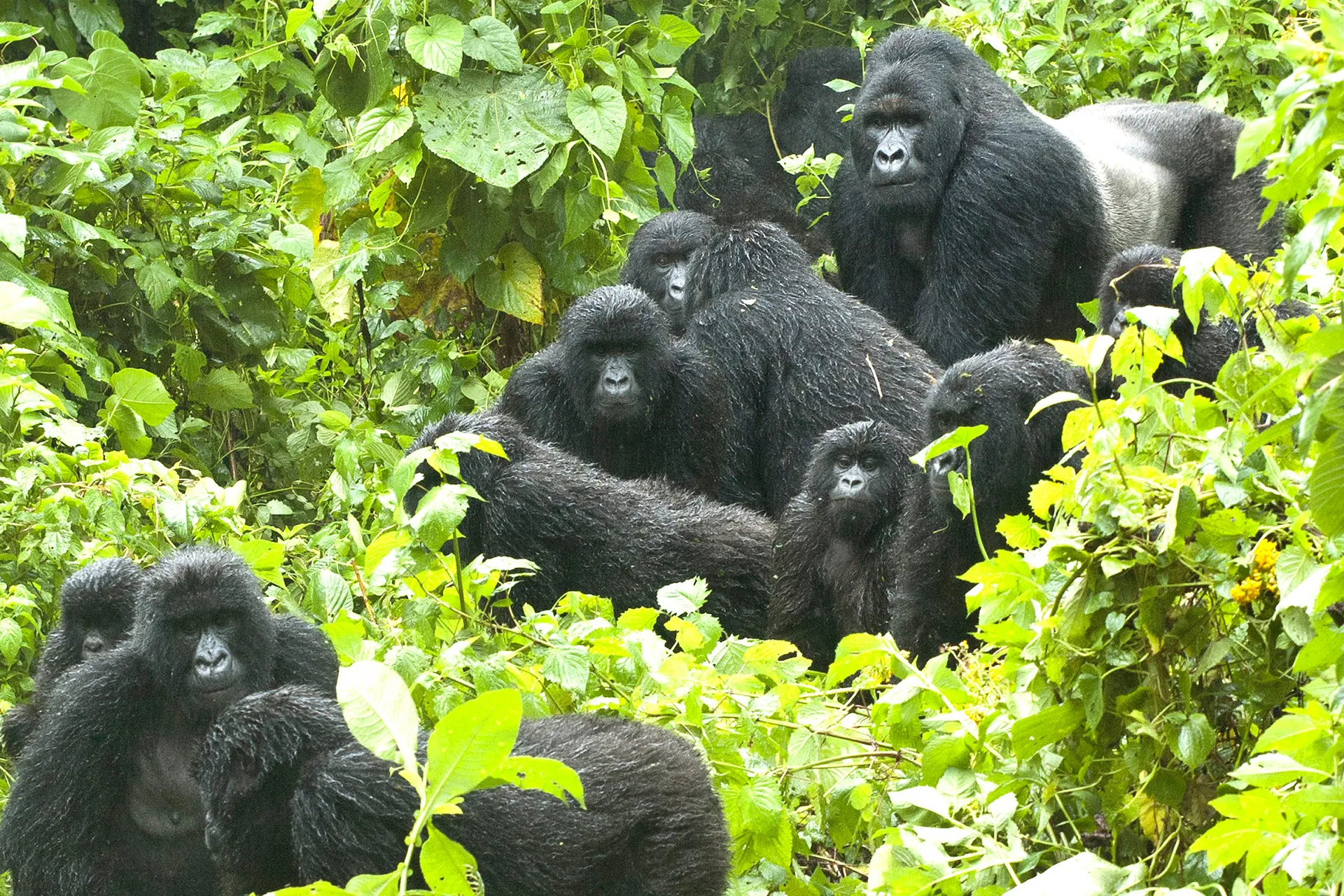
How to Book an African Gorilla Safari
Booking is simple in four steps. First, choose your dates and preferred country. Second, confirm your fitness and health requirements. Third, select your accommodation level and package.
Fourth, let an authorised operator secure your gorilla permit. GoSilverback Gorilla Safaris guarantees availability or a full refund. Peak season dates sell out 9–12 months ahead, so early booking is essential.
Why Book with GoSilverback Gorilla Safaris
GoSilverback Gorilla Safaris stands apart with a 100% permit success rate, former Uganda Wildlife Authority rangers as guides, and direct partnerships with conservation projects.
We plant trees with every booking, support the HuGo conflict-resolution teams, and ensure every client experiences authentic, low-impact gorilla trekking. Our clients return because we treat your safari as a shared responsibility to protect these endangered apes.
Frequently Asked Questions About Mountain Gorilla Fun Facts
What are some interesting facts about mountain gorillas?
Mountain gorillas are critically endangered with only 1,063 individuals left. They live at high altitudes in Uganda and Rwanda, build new nests every night, and share 98.4% of human DNA. A silverback can weigh up to 220 kg and has a bite force stronger than a lion’s. They are gentle giants known for their intelligence and strong family bonds.
How do you say “hi” in gorilla?
Gorillas don’t have spoken language like humans, but they communicate “hi” through body language. A gentle grunt, soft belch vocalization, or a calm chest-beat often serves as a friendly greeting. In habituated groups, direct eye contact with relaxed eyes and a slight head nod is interpreted as a non-threatening “hello.” Rangers and trackers use these signals during gorilla trekking.
What gorilla had the highest IQ?
Koko, a western lowland gorilla, is widely regarded as the gorilla with the highest recorded intelligence. She learned over 1,000 signs in American Sign Language and understood approximately 2,000 English words. While not a mountain gorilla, Koko demonstrated advanced cognitive abilities, self-awareness, and emotional depth unmatched by any other gorilla studied.
What are 10 interesting facts about gorillas?
Here are 10 fascinating facts: Gorillas share 98.4% DNA with humans. They build new nests daily. Silverbacks can weigh 220 kg. Mountain gorillas live only in Uganda and Rwanda. They are strictly vegetarian. Twins are extremely rare. They have unique nose prints. Gorillas use tools. They can live up to 60 years. Their population has quadrupled thanks to conservation.
How many mountain gorillas are left in the wild?
Only 1,063 mountain gorillas remain as of the 2025 census. They are found solely in Uganda, Rwanda, and the DRC.
What is the biggest mountain gorilla fun fact?
Their population has quadrupled since the 1980s thanks to conservation — one of the greatest wildlife recovery stories in Africa.
How strong is a mountain gorilla?
A silverback can be 6–10 times stronger than an average human, capable of lifting or pulling up to 1,800–2,000 kg equivalents.
Do mountain gorillas live in trees?
They build new nests in trees or on the ground every night, but spend most daylight hours on the forest floor.
Can you touch mountain gorillas on a trek?
No. Strict rules require a 7-metre distance at all times to protect both gorillas and visitors from disease.
What is the best place to see mountain gorillas?
Bwindi Impenetrable National Park in Uganda offers the largest number of habituated groups and the richest trekking experience.
How much does a gorilla permit cost in 2026?
Uganda: $800; Rwanda: $1,500. These fees directly fund conservation and community projects.
Are mountain gorillas aggressive?
No. They are gentle giants that use displays rather than violence. Habituated groups are calm around responsible trekkers.
How long do mountain gorillas live?
Up to 60 years in the wild, with some silverbacks reaching their mid-50s.
What do mountain gorillas eat?
They are strictly vegetarian, consuming up to 30 kg of leaves, stems, bark, and fruit daily.
Can children trek with mountain gorillas?
The minimum age is 15 years in both Uganda and Rwanda due to safety and health protocols.
How does gorilla tourism help conservation?
Every permit purchased funds anti-poaching, veterinary care, and community development, turning local people into gorilla protectors.
Conclusion
Mountain gorilla fun facts open a window into the extraordinary lives of one of our closest relatives. From their intelligence and gentle nature to their remarkable recovery story, these facts remind us why protecting them matters.
A gorilla trek is not just a safari — it is a personal connection to a species fighting for survival.
Secure your gorilla permit today through GoSilverback Gorilla Safaris and turn these fun facts into a life-changing memory. Our expert team guarantees permits, seamless logistics, and genuine conservation impact.
Limited permits sell out quickly — contact us now to book your mountain gorilla safari and become part of the solution.