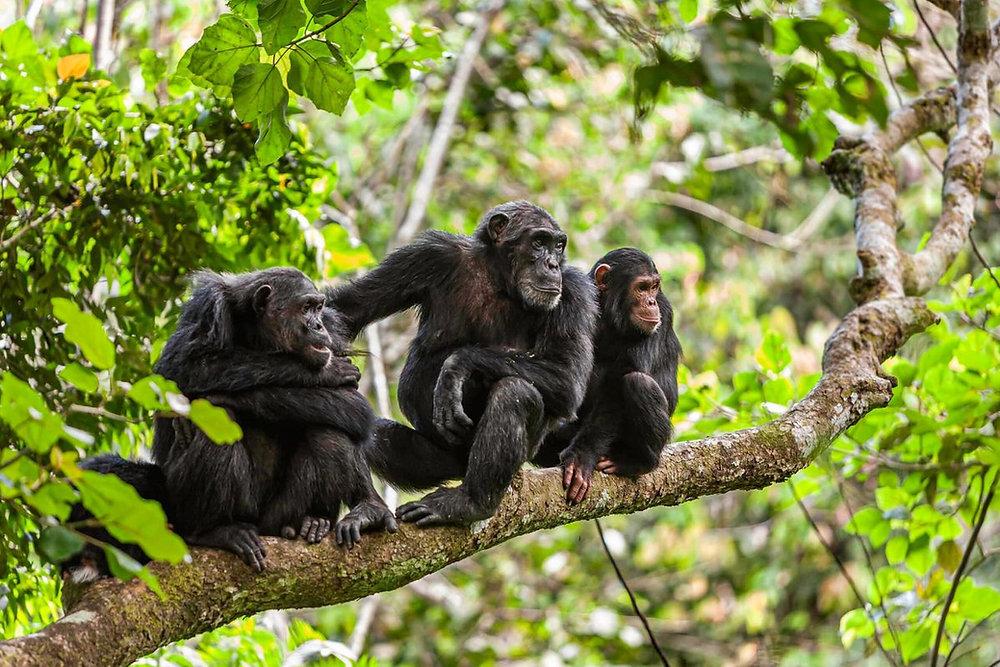
Is Chimpanzee Tracking Harder Than Gorilla Trekking? A Complete Comparison
Is chimpanzee tracking harder than gorilla trekking? Compare fitness, terrain, permits, trek time, sightings & cost to choose the right Uganda or Rwanda safari.
Chimpanzee tracking is usually less predictable, while gorilla trekking can be more physically demanding. Chimpanzees move quickly through the forest, making them sometimes difficult to follow and photograph while Mountain gorillas, on the other hand, tend to move more slowly and spend more time resting or feeding once they are found. However, reaching them can involve steep slopes, muddy trails and high-altitude conditions.
The difficulty of each experience depends on your fitness level, the weather, forest conditions and how far the animals have moved.
This guide compares chimpanzee tracking and gorilla trekking in Uganda and Rwanda, looking at hiking difficulty, costs, permits, time spent with the animals and what to expect during each experience.
Planning a primate safari in East Africa? We can help you arrange chimpanzee tracking, gorilla trekking permits, accommodation and tailor-made Uganda and Rwanda safari packages. [Contact our safari team to plan your trip and secure your permits.]
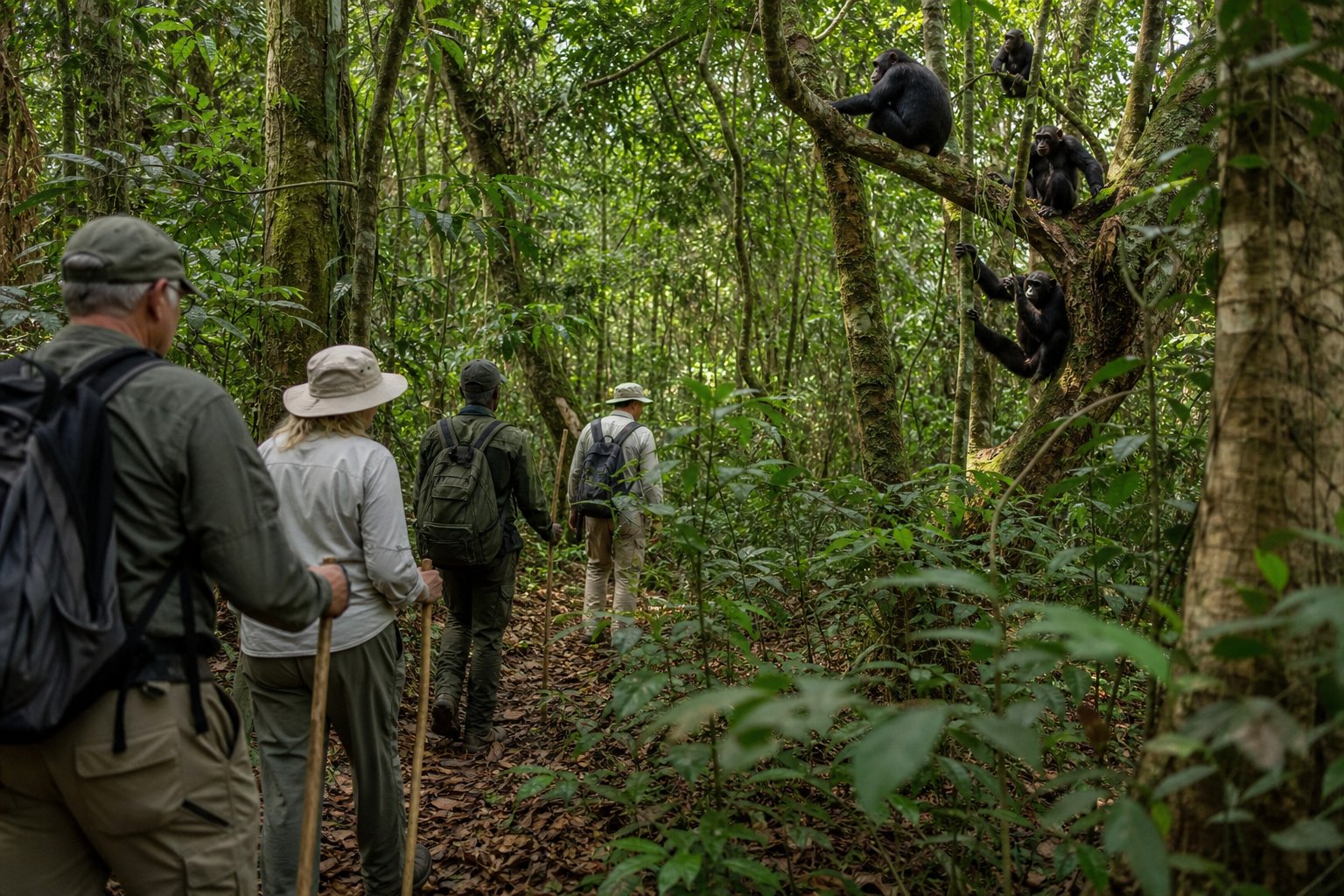
Which Is Harder, Chimpanzee Tracking or Gorilla Trekking?
Chimpanzee tracking is generally more unpredictable because chimpanzees move quickly through the forest and can be difficult to follow, while gorilla trekking can be more physically demanding because it often involves climbing steep slopes and walking through mountainous terrain.
Both experiences involve walking through natural forests with experienced guides and trackers. The distance and time required depend on where the animals are located and the condition of the trails.
In Uganda, visitors can spend up to one hour with habituated chimpanzees during standard tracking and up to one hour with mountain gorillas after locating them. Visitors must also follow the applicable wildlife viewing distance rules and instructions from their guides.
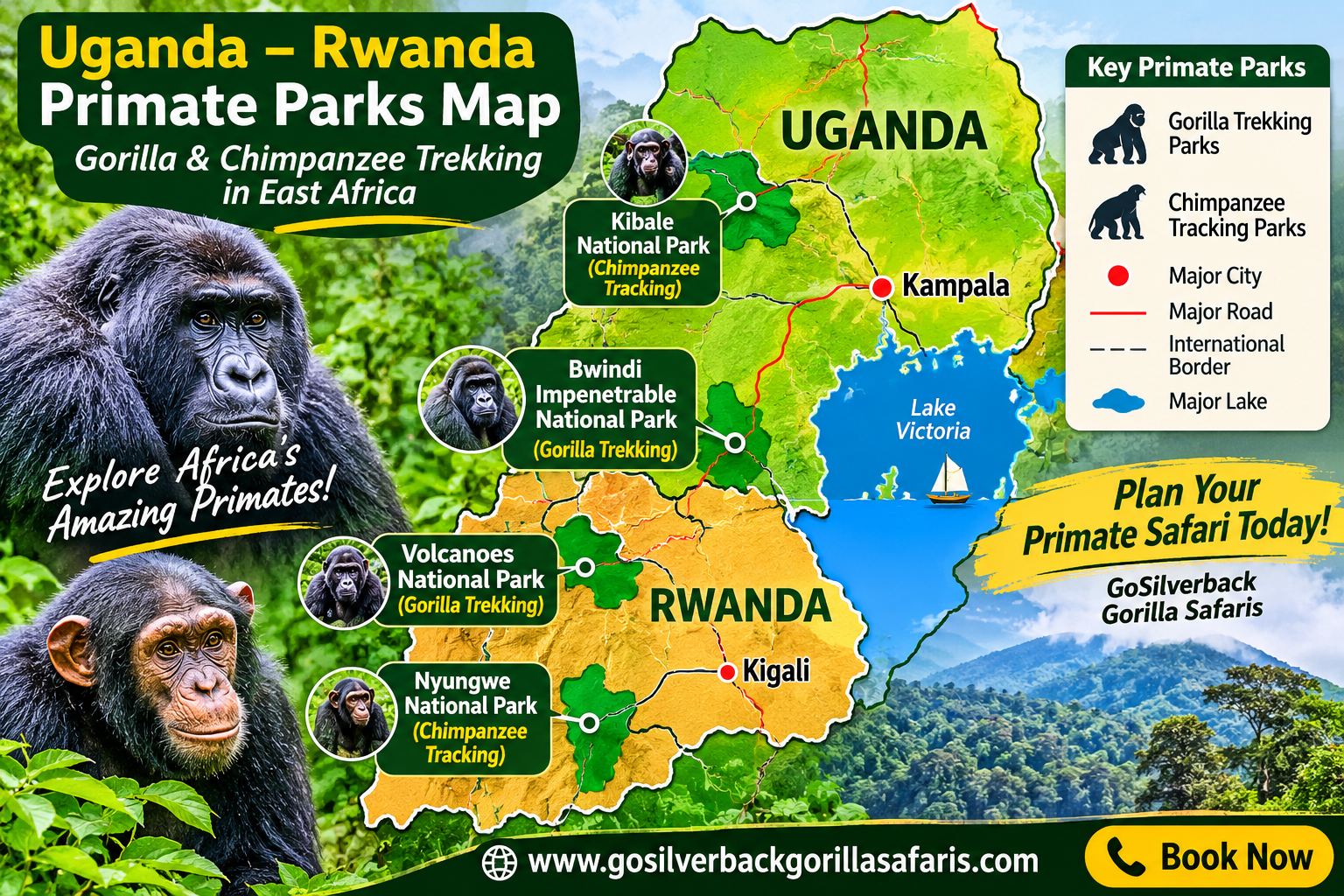
Want to experience both? Consider combining chimpanzee tracking in Kibale National Park with mountain gorilla trekking in Bwindi Impenetrable National Park for an unforgettable Uganda primate safari.
| If you want… | Better choice |
|---|---|
| A more predictable, close-range wildlife encounter | Gorilla trekking |
| A more dynamic, vocal, fast-moving primate experience | Chimpanzee tracking |
| Easier logistics and lower altitude | Chimpanzee tracking, especially Kibale |
| A high-altitude mountain adventure | Gorilla trekking |
| The fullest East Africa primate safari | Both |
Not sure which suits your fitness level and travel dates? [Ask us for a personalised chimpanzee-and-gorilla itinerary.]
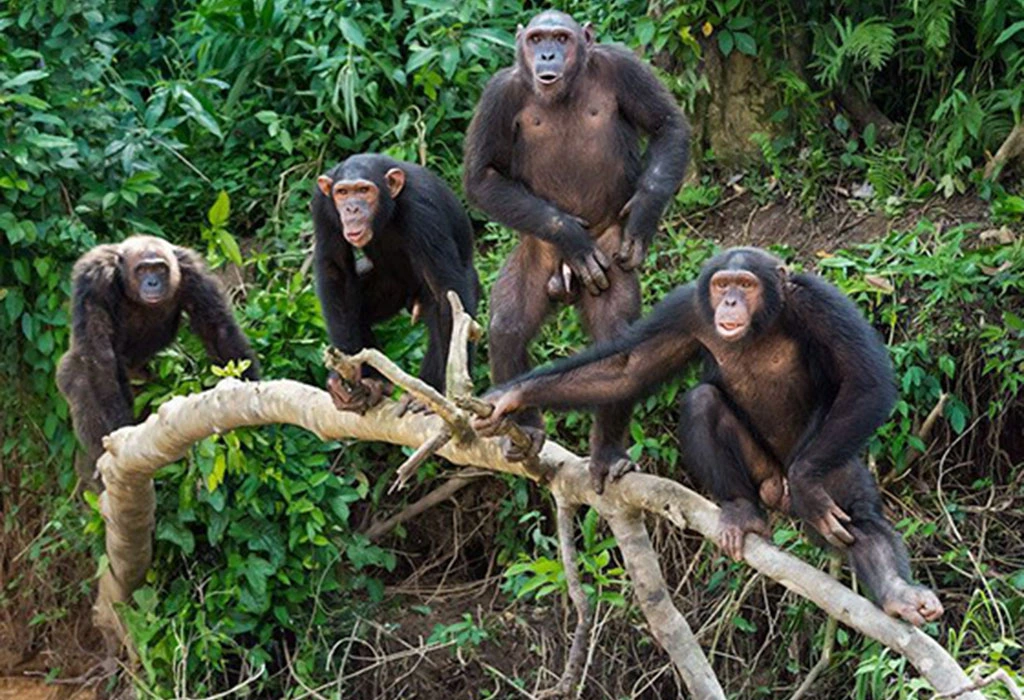
What Is Chimpanzee Tracking?
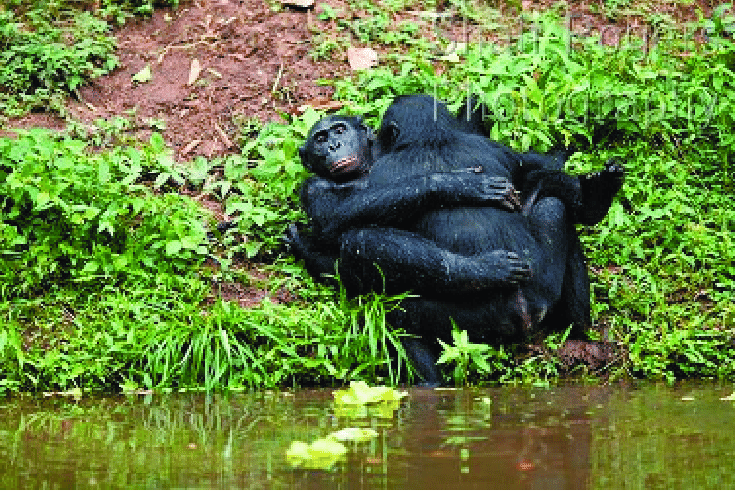
Chimpanzee tracking is a ranger-led search walking through the forest with an experienced guide to find a chimpanzee group that is already used to seeing people. Once you find them, you can spend up to one hour watching them feed, play, groom and move through the trees. Trackers locate the group using pant-hoot calls, fresh night nests, feeding signs, footprints, and radio communication.
“Habituated” does not mean tame. It means the chimpanzees have gradually become accustomed to carefully supervised human presence, allowing visitors to observe natural behaviour without significantly disrupting them.
The terms are often used interchangeably, but there is a difference:
-
Tracking focuses on following signs and sounds to locate chimpanzees.
-
Trekking describes the physical hike through forest trails to reach them.
-
Habituation experience is a longer, research-focused activity in which visitors spend more time with a chimpanzee community as it becomes accustomed to humans.
Chimpanzees are highly mobile. They may travel through the canopy, move quickly between feeding areas, and be heard before they are seen. That makes the experience energetic, vocal, and sometimes challenging.
Chimpanzee tracking is a guided, permit-based forest trek to find and observe a habituated wild chimpanzee community, usually for up to one hour.
Planning a Kibale chimpanzee trek? [Check chimpanzee permit availability with us.]
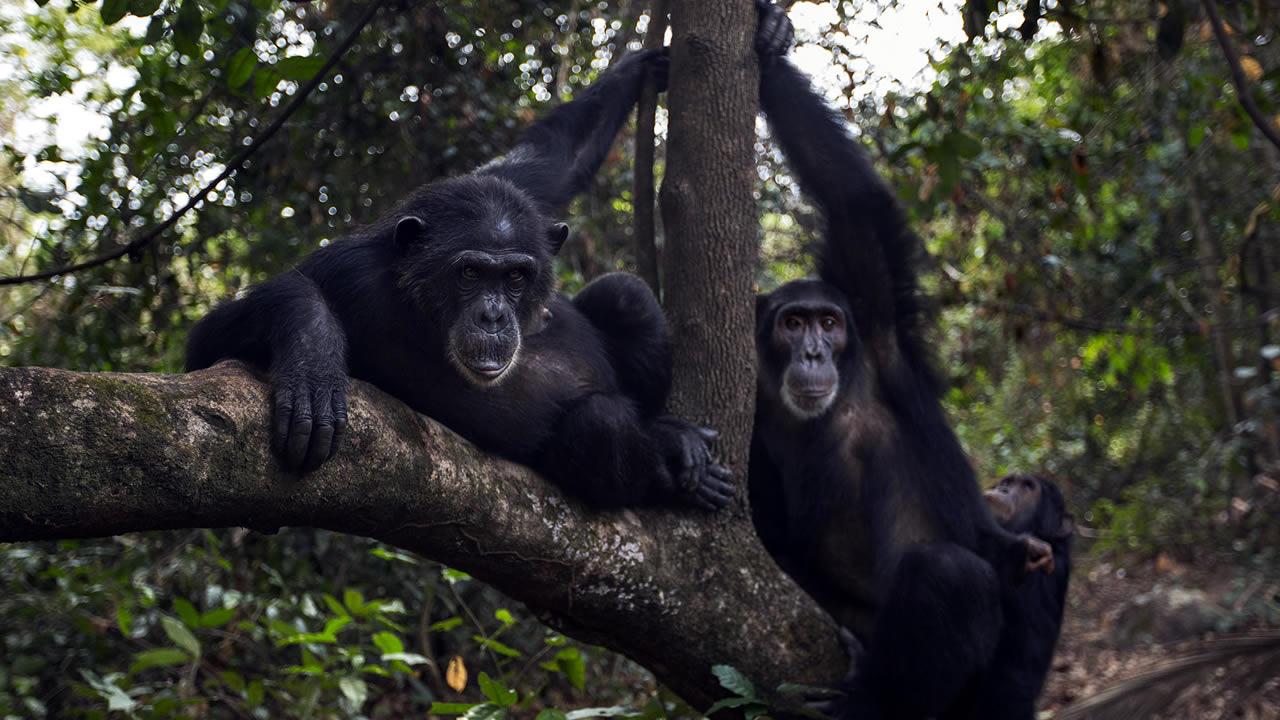
What Is Gorilla Trekking?
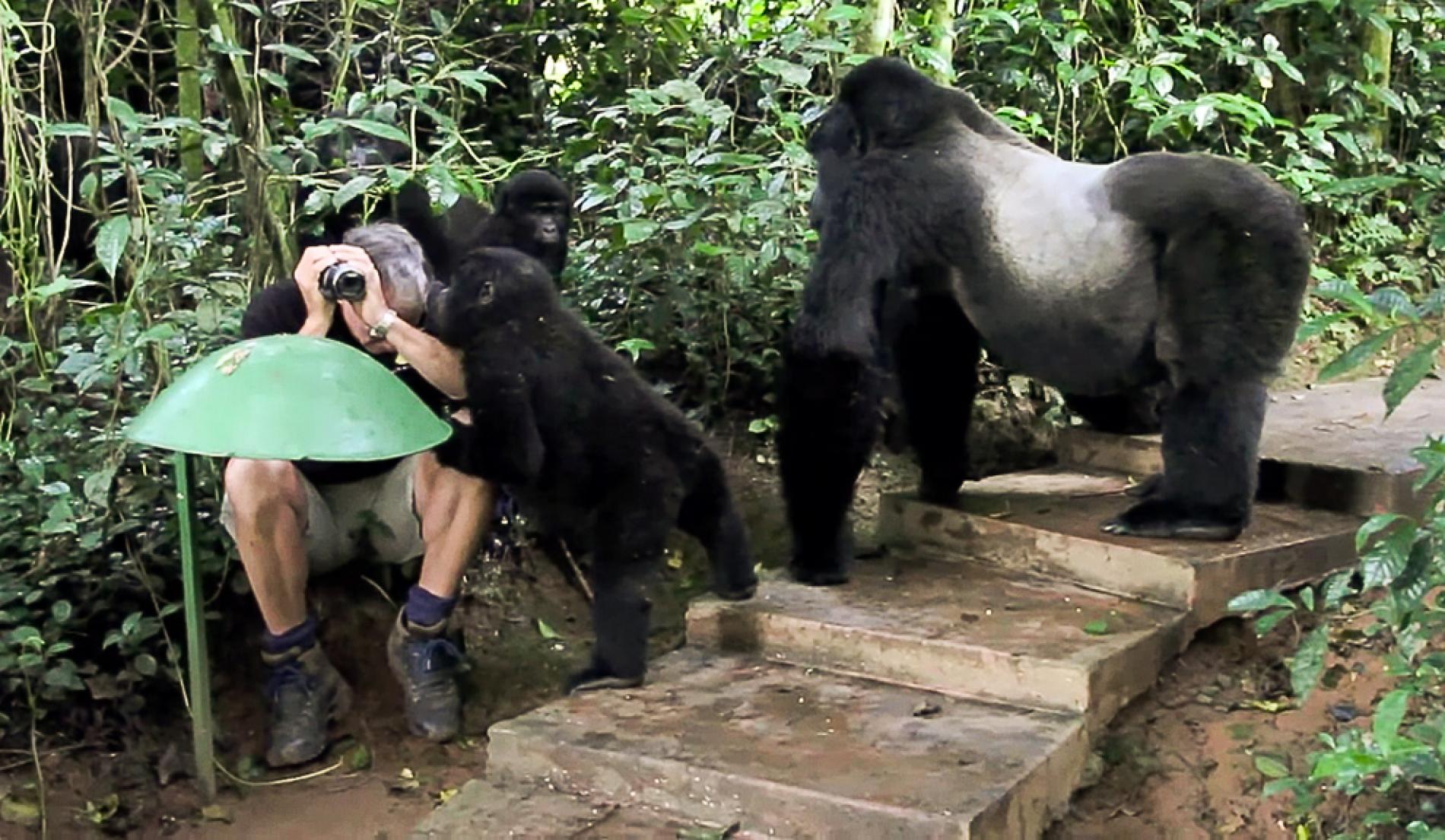
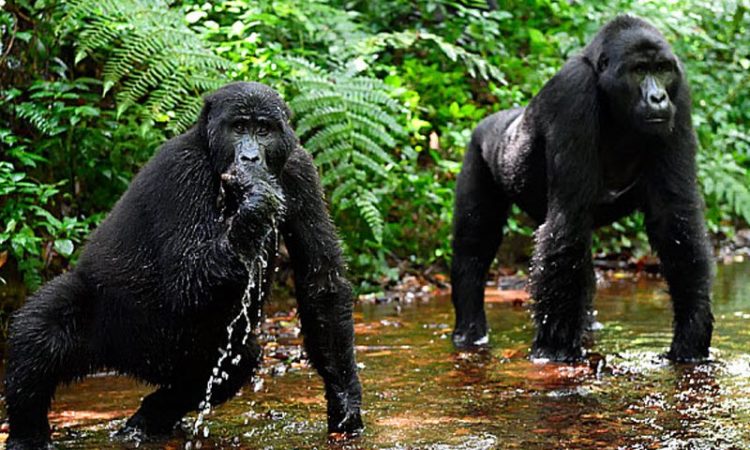
Gorilla trekking is a guided, permit-based hike through mountain or forest habitat to find a habituated gorilla family. Gorillas are usually more terrestrial than chimpanzees and may remain in one area for longer, making the viewing period more settled and predictable.
In Rwanda, gorilla trekking takes place in Volcanoes National Park, roughly 2.5 hours from Kigali. Treks begin at Kinigi, where rangers allocate visitors to a habituated gorilla family based on fitness levels.
Rwanda’s gorilla treks take place at approximately 2,500–4,000 metres (8,200–13,100 feet) altitude. Reaching a gorilla family can take from 30 minutes to more than four hours, and the return walk can take just as long.
Uganda’s Bwindi Impenetrable National Park and Mgahinga Gorilla National Park also involve forested, mountainous terrain. Both destinations offer exceptional gorilla encounters, but trails can be steep, muddy, and physically demanding.
Gorilla trekking is a guided, permit-based mountain-forest hike to find and observe a habituated gorilla family, usually for about one hour.
Related Read: How Long Is Gorilla Trekking | Is Gorilla Trekking Safe? | How Difficult Is Gorilla Trekking
Chimpanzee Tracking vs Gorilla Trekking: Key Differences
| Factor | Chimpanzee tracking | Gorilla trekking |
|---|---|---|
| Animal behaviour | Fast-moving, vocal, often in trees | Usually more settled on the ground |
| Trek predictability | More variable; chimps may move quickly | Often more predictable once located |
| Terrain | Forest paths, slopes, dense vegetation | Mountain forest, often steeper |
| Altitude | Usually lower, depending on park | Often higher, especially in Rwanda and southwest Uganda |
| Typical encounter | Up to one hour, subject to rules | Usually about one hour |
| Viewing style | Movement, sound, canopy viewing | Closer, more stationary observation |
| Best for | Active travellers and primate enthusiasts | Travellers seeking a more prolonged encounter |
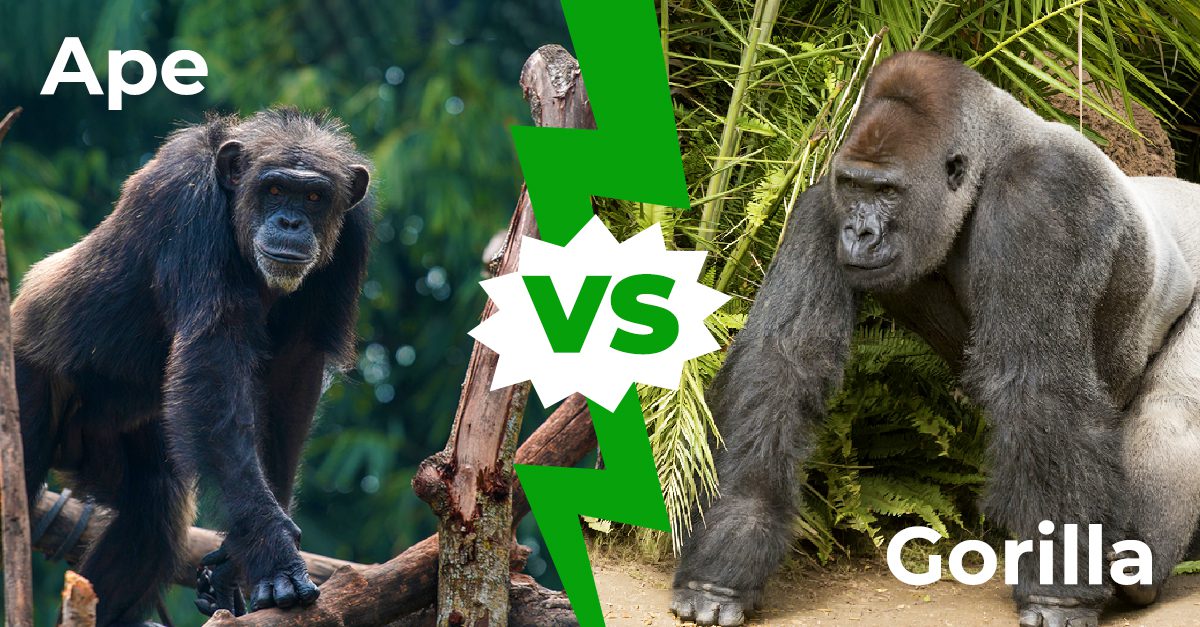
Chimpanzee tracking can feel harder because the animals may move rapidly and require a longer or faster pursuit. You may walk, climb, descend, and change direction repeatedly as trackers follow the community.
Gorilla trekking can feel harder because of altitude, steep gradients, mud, and longer hiking distances. Once the gorilla family is located, however, the encounter is often calmer and more predictable.
Want both experiences in one seamless itinerary? [Request a combined Uganda and Rwanda primate safari from our team.]
Is Chimpanzee Tracking Physically Harder?
Sometimes—but not always. Chimpanzee tracking is usually less predictable than gorilla trekking, but it is not automatically more physically demanding.
When chimpanzee tracking feels harder
Chimpanzee tracking may be harder when:
-
The chimpanzee community is deep in the forest.
-
The group is moving quickly between feeding areas.
-
Trails are wet, steep, or overgrown.
-
You need to keep pace with a fast-moving group.
-
You are tracking in a humid lowland forest.
When chimpanzee tracking feels easier
It may be easier when:
-
The chimpanzees are feeding near the trailhead.
-
The route is relatively flat.
-
The sighting occurs early.
-
You are tracking in Kibale National Park, where infrastructure and habituation are well established.
Chimpanzee tracking is less about sustained climbing and more about variable pace, agility, patience, and adaptability. You may need to stop, listen, move quickly, and adjust to changing conditions.
Related Read: Kibale National Park Location | How Does Chimpanzee Tracking Work | Where to See Chimpanzees In Uganda
Is Gorilla Trekking Physically Harder?
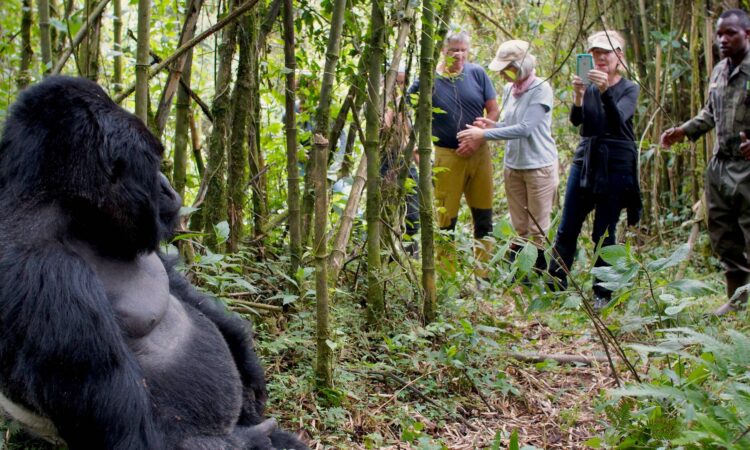
Often yes, particularly at altitude. Gorilla trekking is usually more physically demanding because it often involves sustained uphill hiking in mountainous terrain.
When gorilla trekking feels harder
Gorilla trekking may be harder when:
-
You trek in Rwanda’s Volcanoes National Park at high altitude.
-
The gorilla family is located far from the trailhead.
-
Trails are steep, muddy, or slippery.
-
You are not acclimatised to altitude.
-
Weather changes quickly.
Rwanda’s gorilla treks can occur at 2,500–4,000 metres, and hikes may last from 30 minutes to four hours or more. That makes cardiovascular fitness, sturdy boots, and a porter especially valuable.
Gorilla trekking is less about chasing moving animals and more about sustained uphill hiking, balance, endurance, and altitude tolerance.
Which Trek Takes Longer?
| Activity | Typical trek time | Viewing time |
|---|---|---|
| Chimpanzee tracking | Varies widely; can be short or several hours | Up to one hour, subject to rules |
| Gorilla trekking | Often 30 minutes to four hours or more, depending on family location | Usually about one hour |
Explanation: Chimpanzee tracking can be shorter in duration but is less predictable; you might walk for three hours only to get 20 minutes of viewing if the chimps move out of range.
Gorilla trekking can be a longer, more grueling hike, but it is more predictable and rewarding once the family is located, guaranteeing a full, stable hour with the gorillas.
Which Has a Better Chance of a Sighting?
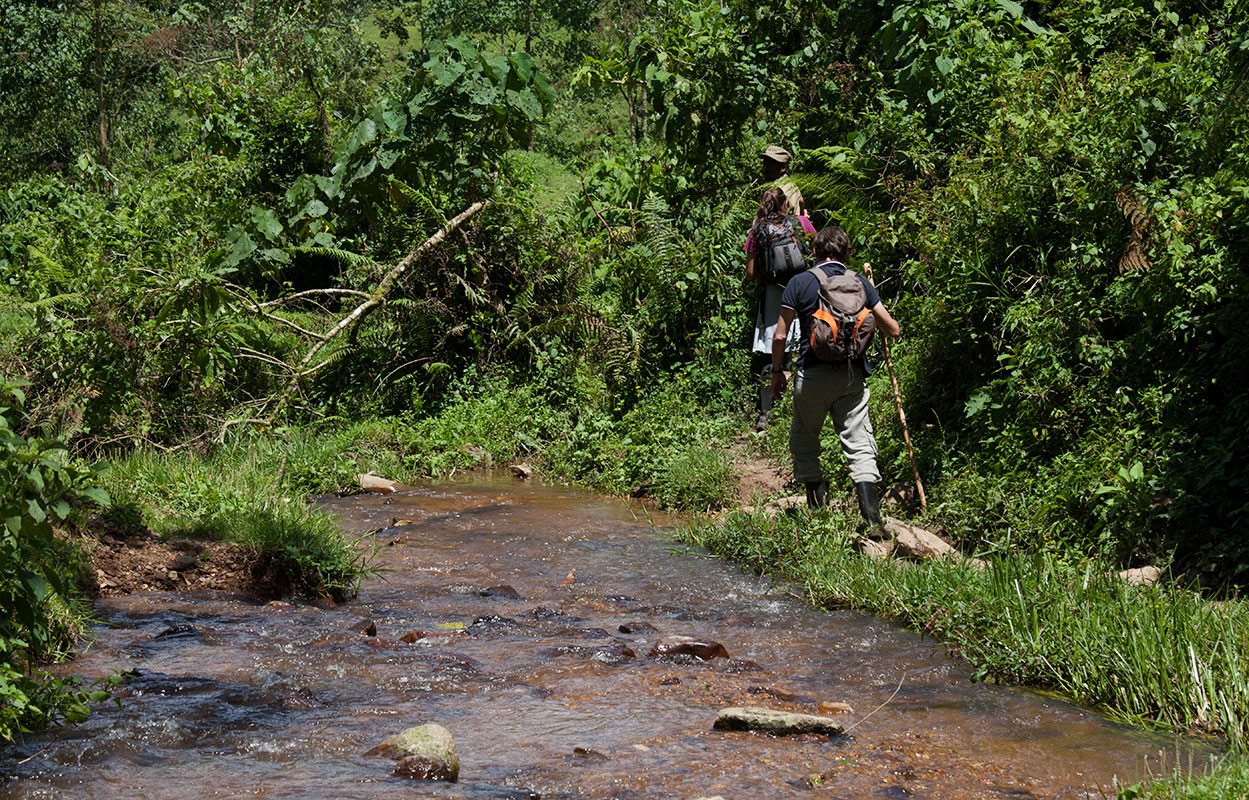
Both activities offer high sighting potential in well-managed destinations, but neither can guarantee a sighting.
Habituated communities, skilled trackers, early departures, and strong park management improve the odds. Kibale National Park is widely regarded as one of the most reliable chimpanzee-trekking destinations, with reported success rates around 90–95 percent.
For gorillas, Rwanda’s Volcanoes National Park has fully habituated families and a regulated permit system. Visit Rwanda’s guidance describes 12 habituated gorilla families, eight permits per family per day, and 96 permits per day.
Permit Rules and Visitor Limits
- Chimpanzee Rules (Uganda): Visitors must keep at least 10 metres (32.8 feet) away from the chimps, remain quiet, avoid sudden movements, never chase the animals, and limit visits to a strict one hour. If you are sick (even with a mild cold), you are prohibited from trekking to protect the chimps from human diseases.
- Gorilla Rules (Uganda & Rwanda): Uganda’s rules similarly require a 10-metre (32.8-foot) distance. Rwanda’s gorilla-trekking guidance strictly enforces groups of up to eight visitors, a minimum age of 15 years, and a one-hour encounter limit. Flash photography is universally banned.
Which Costs More: Chimpanzee Tracking or Gorilla Trekking?
Budget is a major deciding factor for international travelers. Here is a transparent breakdown of the cost dynamics.
| Cost element | Chimpanzee tracking | Gorilla trekking |
|---|---|---|
| Permit | Usually lower (e.g., ~$200 USD in Kibale for foreign non-residents) | Usually higher (e.g., $1,500 USD in Rwanda; $800 USD in Uganda) |
| Park entry | May be separate or bundled in tour packages | May be included or separate, depending on the operator |
| Transport | Varies by park and itinerary (often shorter drives from Entebbe/Kampala) | Varies by park and itinerary (often requires 4×4 vehicles and longer drives or domestic flights) |
| Accommodation | Lodge or forest camp (wide range of budget to luxury options) | Lodge or mountain camp (tends to be premium due to remote locations) |
| Porter | Optional but useful for carrying gear | Often highly recommended due to steep, muddy terrain |
| Total safari cost | Usually lower | Usually higher |
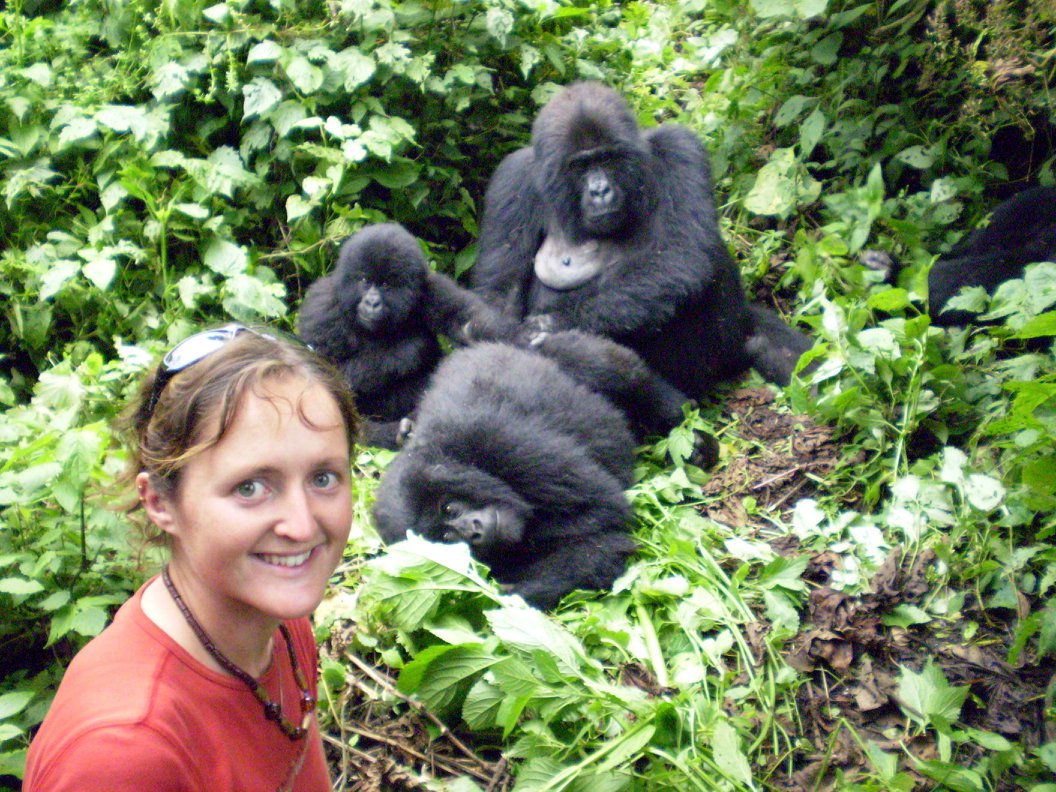
Gorilla permits are generally the bigger budget item, while chimpanzee tracking can be a more accessible entry point into primate trekking.
Rwanda’s foreign-visitor gorilla permit is reported at US$1,500, while Uganda’s gorilla permit is reported at US$800, or US$600 in April, May, and November.
Avoid publishing a single all-inclusive price unless it is current and transparent. Always confirm what is included: permit, park fees, transport, accommodation, meals, porter, tips, and insurance.
Want a transparent, all-inclusive chimpanzee-and-gorilla safari quote? [Get a tailored quote from us.]
Related Read: How to Book Gorilla Permits | Gorilla Trekking Permit Explained
Which Is Better for First-Time Trekkers?
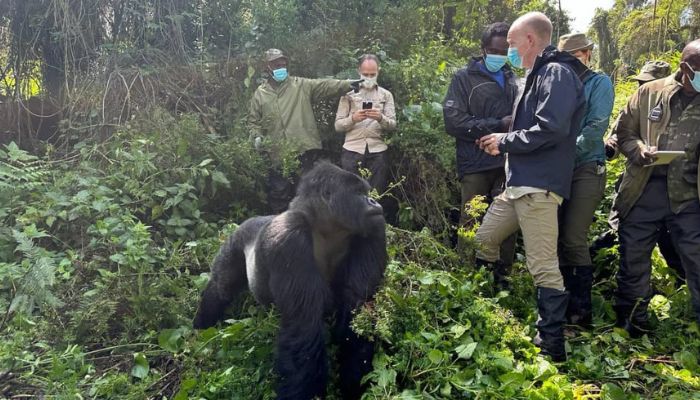
Chimpanzee tracking is often better for first-time forest trekkers who want a lower-altitude, flexible introduction to primate trekking.
Gorilla trekking is better for travellers who prioritise a more predictable, close-range encounter and are comfortable with mountain hiking.
For first-time chimpanzee trekkers, Kibale National Park is an excellent choice. For first-time gorilla trekkers who are reasonably fit, Bwindi or Volcanoes National Park are strong options.
Which Should You Choose?
-
Choose chimpanzee tracking if you want lower altitude, dynamic wildlife behaviour, and a more affordable primate experience.
-
Choose gorilla trekking if you want a more predictable, iconic, close-range encounter.
-
Choose both if you want the richest East Africa primate safari.
-
Choose Kibale + Bwindi for Uganda.
-
Choose Nyungwe + Volcanoes for Rwanda.
-
Choose Mahale or Gombe for a remote, specialist chimpanzee safari.
How to Prepare for Either Trek
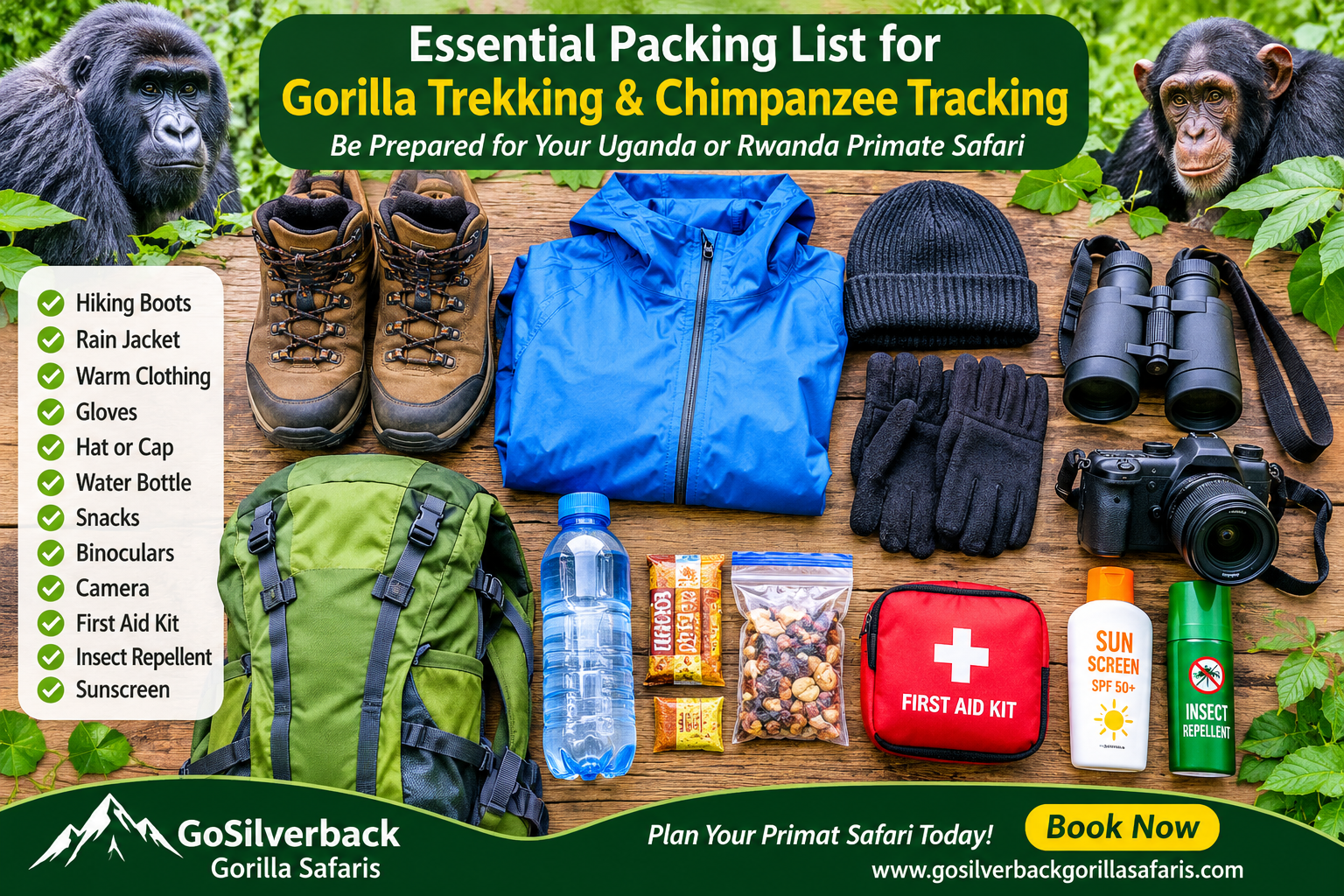
- Build Cardiovascular Fitness: Walk briskly for 30–60 minutes, 3–5 times weekly, ideally on inclined surfaces or stairs, for at least two months prior to your trip.
- Break in Your Footwear: Never wear new boots on a trek. Break in waterproof, ankle-supporting hiking boots to prevent blisters and sprains.
- Pack Strategically: Bring long-sleeved shirts, long trousers (to protect against stinging nettles and insects), a lightweight rain jacket, and gardening gloves (highly recommended for gripping vegetation in Bwindi).
- Essential Daypack Items: Pack 2 litres of water, high-energy snacks, sunscreen, insect repellent, and a basic first-aid kit.
- Hire a Porter: For $15–$25 USD, a local porter will carry your daypack and physically assist you up steep, muddy sections. This supports the local economy and drastically improves your trek.
- Medical Preparation: Book a travel-health consultation 6–8 weeks before departure for necessary vaccinations (e.g., Yellow Fever, Typhoid) and malaria prophylaxis.
- Secure Insurance: Buy comprehensive travel insurance with medical evacuation coverage, specifically ensuring it covers high-altitude trekking activities.
Frequently Asked Questions
Is chimpanzee tracking harder than gorilla trekking?
Which is more expensive?
Can beginners do chimpanzee tracking?
Can beginners do gorilla trekking?
Which has a higher chance of a sighting?
Can I do both in one trip?
Which is better for photography?
How far in advance should I book?
Plan Your Uganda or Rwanda Primate Safari
When deciding Is Chimpanzee Tracking Harder than Gorilla Trekking?, remember that “harder” is subjective. The right choice depends on matching the experience to your fitness level, budget, and travel style.
To ensure a seamless experience: secure your permits early, prepare your footwear and fitness, and book through a responsible, locally knowledgeable operator who prioritizes conservation and community impact. Do not leave your primate encounter to chance or last-minute logistics.
Ready to secure your place in the forest?
Speak to the safari specialists at GoSilverback Gorilla Safaris about chimpanzee permits, gorilla permits, and tailor-made Uganda and Rwanda itineraries designed for travelers from the USA, UK, Europe, Canada, Asia, and beyond.
We handle the complex logistics so you can focus on the life-changing moment of eye contact with a mountain gorilla or listening to the dawn chorus of the Kibale canopy.
👉 [Book your Uganda or Rwanda gorilla permit with us today.]