
Best Time to Visit Uganda Gorillas for Trekking, Expert Fied Tips, Weather & Costs Guide 2026
What Is the Best Time to Visit Uganda Gorillas?
The best time to visit Uganda for gorillas is during the two dry seasons: June to August and December to February.
These months offer the most predictable weather conditions, firmer trekking trails, and clearer photographic opportunities inside Bwindi Impenetrable National Park and Mgahinga Gorilla National Park — Uganda’s two gorilla trekking destinations that together protect more than half of the world’s remaining mountain gorillas.
During the peak dry season from June through August, rainfall is significantly reduced, the dense montane jungle is easier to navigate, and gorillas tend to forage at lower elevations, shortening your trekking time.
The December to February mini-dry season delivers similarly excellent conditions and is a popular choice for travellers from the USA, UK, Europe, Canada, and beyond who want to combine gorilla trekking with a festive season escape.
That said, Uganda’s equatorial climate means gorilla trekking is possible year-round.
The country straddles the equator and receives rainfall in two wet seasons — March to May (the long rains) and September to November (the short rains) — but even during these wetter months, serious wildlife enthusiasts and budget-conscious travellers still experience rewarding, emotionally transformative gorilla encounters.
Key facts at a glance:
- Best overall months: June, July, August, December, January, February
- Budget-friendly months: April, May, October, November
- Gorilla permit cost (Uganda Wildlife Authority): USD 800 per person
- Trekking duration: 2 to 8 hours depending on gorilla family location
- Minimum age for trekking: 15 years
- Park: Bwindi Impenetrable National Park & Mgahinga Gorilla National Park
- Year-round availability: Yes — gorillas are habituated and resident 365 days a year
Whether you are planning a luxury gorilla safari, a budget gorilla trekking Uganda experience, or a combined Uganda Rwanda gorilla tour, choosing the right travel month dramatically shapes your experience.
When Is the Best Time to See Gorillas in Uganda?
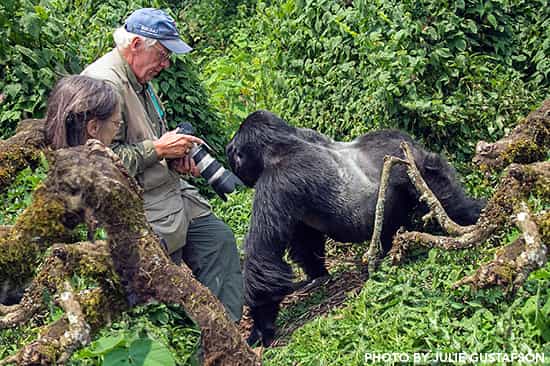
Uganda gorilla trekking does not have a single “closed season.” Unlike some East African wildlife parks that restrict access during rains, Bwindi Impenetrable Forest remains open throughout the year, and all habituated gorilla families receive visitors daily.
What changes across the seasons is not gorilla availability but trail conditions, weather comfort, permit demand, and overall trekking difficulty.
The dry seasons deliver the most popular windows because muddy trails are reduced, the risk of hypothermia from prolonged rain exposure is lower, and the forest canopy — while always dense — is somewhat less impenetrable, allowing occasional breathtaking sightlines of gorilla families feeding, playing, or resting.
The wet seasons bring lush, impossibly green jungle scenery, fewer tourists, lower accommodation rates in some lodges, and the same emotionally profound hour-long encounter with a habituated gorilla family.
For international travellers flying from New York, London, Amsterdam, Dubai, Toronto, or Sydney, the June–August window aligns well with Northern Hemisphere summer holidays, making it the most heavily booked period.
For Southern Hemisphere and Middle Eastern travellers, December–February is equally prized.
The bottom line: the best time for you depends on your priorities — ideal weather, low crowds, budget savings, photography, or family-friendly logistics.
👉 Planning your trip during the best time to visit Uganda for gorillas? 👉 Explore our Uganda gorilla safari packages designed for unforgettable trekking experiences.
Uganda Gorilla Trekking Seasons Explained
Understanding Uganda’s two trekking seasons in detail — and what they genuinely mean on the ground inside the forest — is the most important planning step you can take before booking your Uganda gorilla trek.
The Long Dry Season: June to August (Peak Season)
June through August is widely regarded as the single best time to trek gorillas in Uganda.
The long dry season brings:
- Reduced rainfall: Precipitation drops significantly across Bwindi’s four sectors — Buhoma, Ruhija, Nkuringo, and Rushaga — with July typically being the driest month of the year.
- Firmer, safer trail conditions: The steep, root-laced paths of Bwindi become far less treacherous without heavy rain. This is critical because some gorilla trekking trails involve elevation gains of 300–600 metres over rugged terrain.
- Lower-altitude gorilla sightings: In drier months, mountain gorillas tend to forage lower on the hillsides, attracted by more accessible vegetation. This often means shorter trekking times — sometimes as little as 2–3 hours for a round trip — and easier, more relaxed encounters.
- Superior wildlife photography: With lower ambient humidity, less steam rising from the forest floor, and better light penetration through the canopy, your gorilla photography in Uganda will yield sharper, more vibrant images.
- High permit demand: Because everyone wants to trek in June–August, this is the period when Uganda gorilla permits sell out fastest — sometimes 6–12 months in advance for the most popular gorilla families at Buhoma and Rushaga sectors.
Who should book June–August: First-time gorilla trekkers, photographers, elderly travellers or those with limited fitness, families with teenagers (15+), and anyone who wants the highest probability of a shorter, more comfortable trek.
The Short Dry Season: December to February (Second Peak)
December through February forms Uganda’s second major trekking window, and in many ways it rivals the main dry season. Christmas and New Year see a surge in high-net-worth travellers from Europe and North America seeking an extraordinary wildlife adventure to accompany the festive season.
- January is arguably the driest month in some parts of Uganda, offering conditions nearly as favourable as July.
- Temperatures remain mild — Bwindi sits at 1,160 to 2,607 metres above sea level — so expect cool nights (8–12°C) and comfortable daytime temperatures of 18–24°C during this period.
- Accommodation rates peak in late December and early January, so budget accordingly.
- Bird watching in Bwindi during this season benefits from the presence of migrant bird species, making a combined gorilla and birding safari Uganda particularly rewarding.
Who should book December–February: Travellers from the Northern Hemisphere seeking a warm-season escape, those combining Uganda with a Kenya or Tanzania safari, and those who missed the June–August window.
The Long Wet Season: March to May (Green Season)
March to May represents Uganda’s most challenging trekking period climatically, yet it remains one of the most rewarding for seasoned adventurers.
April is typically the wettest month, with rainfall sometimes exceeding 200mm across Bwindi’s higher elevations.
- Trails become extremely muddy and slippery. Gorilla trackers and UWA rangers are essential guides during this period. Gaiters, waterproof boots, and trekking poles become non-negotiable equipment.
- Gorilla families move to higher elevations in some parts of the park, potentially extending trek duration to 6–8 hours.
- The forest transforms into an otherworldly emerald cathedral. Waterfalls run full, mosses glow luminously green, and the biodiversity of the forest — already extraordinary — reaches its visual peak.
- Gorilla permit availability is high during the green season, and some lodges offer notable rate reductions.
Who should book March–May: Budget-conscious travellers, repeat visitors, photographers seeking dramatic atmospheric shots, and wildlife enthusiasts who have no fitness concerns.
The Short Wet Season: September to November
September through November delivers similar conditions to the long rains but is generally considered less extreme.
October is the wettest month of this window, while September and November can be relatively manageable.
- Wildlife viewing remains excellent. Habituated gorilla families are tracked and found daily regardless of season.
- Fewer international tourists means a more intimate experience at the park gate, along the trails, and at lodges.
- This is one of the best months for chimpanzee trekking in Kibale Forest, making September–November ideal for a combined Uganda chimp and gorilla safari at a lower total cost.

👉 Traveling in the best season for gorilla trekking in Uganda? 👉 browse our safari packages for expertly guided and fully organized tours.
Month-by-Month Guide to Gorilla Trekking in Uganda
Here is a detailed month-by-month breakdown to help you make an informed gorilla safari booking decision:
1. January ⭐⭐⭐⭐⭐
Conditions: Excellent. January is one of Uganda’s driest months.
Trails are firm, temperatures comfortable, and gorilla encounters often occur at lower forest elevations.
Gorilla permit availability is moderate-to-low due to New Year holiday demand from Western travellers.
Book permits and lodges at least 6 months in advance.
2. February ⭐⭐⭐⭐⭐
Conditions: Excellent. A continuation of the dry conditions, February is outstanding for gorilla trekking and increasingly popular with European travellers escaping winter.
Bird watching reaches a peak with migrant species still present.
One of the best months for gorilla trekking in Uganda.
3. March ⭐⭐⭐
Conditions: Mixed. The long rains begin in mid-to-late March, gradually making trails muddier.
The first two weeks of March are still very good for trekking. Permit availability begins to open up as the peak season ends.
4. April ⭐⭐
Conditions: Challenging. April is Uganda’s wettest month. Heavy rainfall can occur daily, sometimes for extended periods. Trekking is harder, but gorilla encounters are no less magical.
Budget safari prices are at their lowest. A rewarding choice for adventurous, physically fit travellers.
5. May ⭐⭐
Conditions: Challenging. Similar to April, though rainfall typically begins decreasing toward the end of May as the dry season approaches. Excellent for budget gorilla trekking Uganda — permits are available and lodge rates are competitive.
The forest is breathtakingly beautiful.
6. June ⭐⭐⭐⭐⭐
Conditions: Excellent. The main dry season begins. June is one of the most popular months for gorilla trekking, with conditions improving rapidly.
Book gorilla permits 6–9 months ahead. June marks the start of peak demand and fills up fast, particularly for Buhoma and Rushaga sectors.
7. July ⭐⭐⭐⭐⭐
Conditions: Exceptional — Peak Month. July is the single most popular month for gorilla trekking in Uganda.
Trails are at their firmest, rainfall is minimal, and the chance of a shorter, lower-elevation trek is highest. July gorilla permits sell out up to 12 months in advance. Lodges are at maximum occupancy. Book early.
8. August ⭐⭐⭐⭐⭐
Conditions: Excellent. August maintains the dry season’s excellent conditions and remains extremely popular.
Temperatures are mild, wildlife encounters are superb, and combining Bwindi with a Queen Elizabeth National Park safari for tree-climbing lions is highly recommended.
9. September ⭐⭐⭐⭐
Conditions: Good to Very Good. The short rains begin gradually in late September.
Early September is still dry and wonderful for trekking. Crowds begin thinning, offering a more personal experience. Good transitional month for value-seeking travellers.
10. October ⭐⭐⭐
Conditions: Mixed. October sees peak short-season rainfall.
Trails become slippery, but gorilla encounters remain reliable. Accommodation rates drop noticeably, and permit availability is strong. Chimpanzee trekking in Kibale National Park is excellent this month.
11. November ⭐⭐⭐
Conditions: Mixed, improving. Rainfall begins easing in the second half of November. An excellent month for combining Uganda gorilla trekking with Bwindi birding as migratory species begin arriving. Permits are readily available.
12. December ⭐⭐⭐⭐⭐
Conditions: Excellent (mid-month onward). December transitions from the short rains into a dry spell by mid-December.
The festive season drives premium lodge pricing, but trekking conditions are superb from mid-December through year-end. Book Christmas and New Year gorilla permits 9–12 months ahead.

👉 Now that you know the best time to visit Uganda for gorillas, 👉 explore our tailored safari packages and secure your gorilla trekking permit today.
Best Time for Gorilla Trekking Based on Your Travel Goals
Different travellers prioritise different elements of the gorilla trekking experience.
Here is how to match your travel goal to the ideal Uganda gorilla trekking season:
For the Best Trekking Conditions & Comfort
Choose: June, July, August, January, or February. If your primary goal is physical comfort — shorter hikes, dryer trails, cooler but not cold temperatures — the dry seasons deliver exactly that.
These months are ideal for travellers who are not seasoned hikers, those travelling with elderly family members, or anyone who wants the highest probability of a manageable trek duration.
For Wildlife Photography
Choose: June through August. Dry season mornings in Bwindi offer the most consistent natural light.
The reduced canopy moisture means less lens-fogging and cleaner shots.
Gorillas foraging at lower altitudes also means fewer obstructing layers of vegetation between you and the family.
Combine this with Uganda golden monkey trekking in Mgahinga for a diverse portfolio.
For Budget Gorilla Trekking Uganda
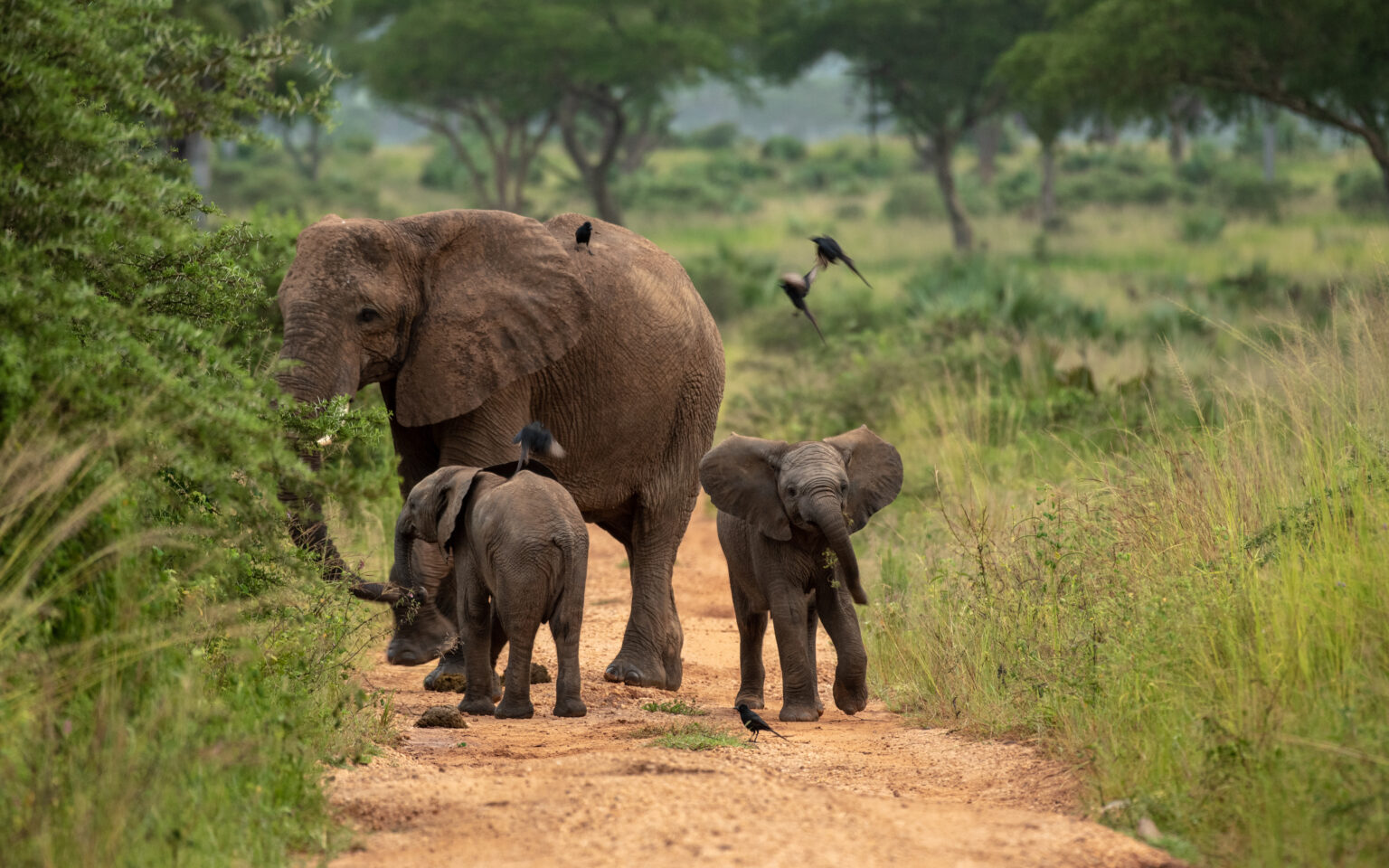
Choose: April, May, October, or November. While the Uganda Wildlife Authority gorilla permit costs USD 800 per person year-round — a fixed price that does not change by season — lodges and safari operators often offer significant discounts on accommodation, flights, and package rates during the green season.
A budget gorilla safari Uganda in April–May can cost 20–35% less than the equivalent peak-season trip.
For a Crowd-Free, Intimate Experience
Choose: October, November, or May. With international visitor numbers significantly lower during the wet seasons, your group at the park gate will be smaller, trails will feel more private, and the overall atmosphere at lodges and within the forest will be dramatically more intimate.
This suits travellers who value solitude and personal wildlife encounters over optimal weather.
For Combining with Other Uganda Safaris
Choose: June–August for a dual gorilla + game drive safari. The dry season is simultaneously the best time to visit Queen Elizabeth National Park (Kazinga Channel boat safaris, Ishasha tree-climbing lions) and Kibale Forest (chimpanzee trekking Uganda).
A 10-day Uganda safari combining gorillas, chimps, big game, and boat safaris is most efficiently and enjoyably done in the dry season.
For Birders
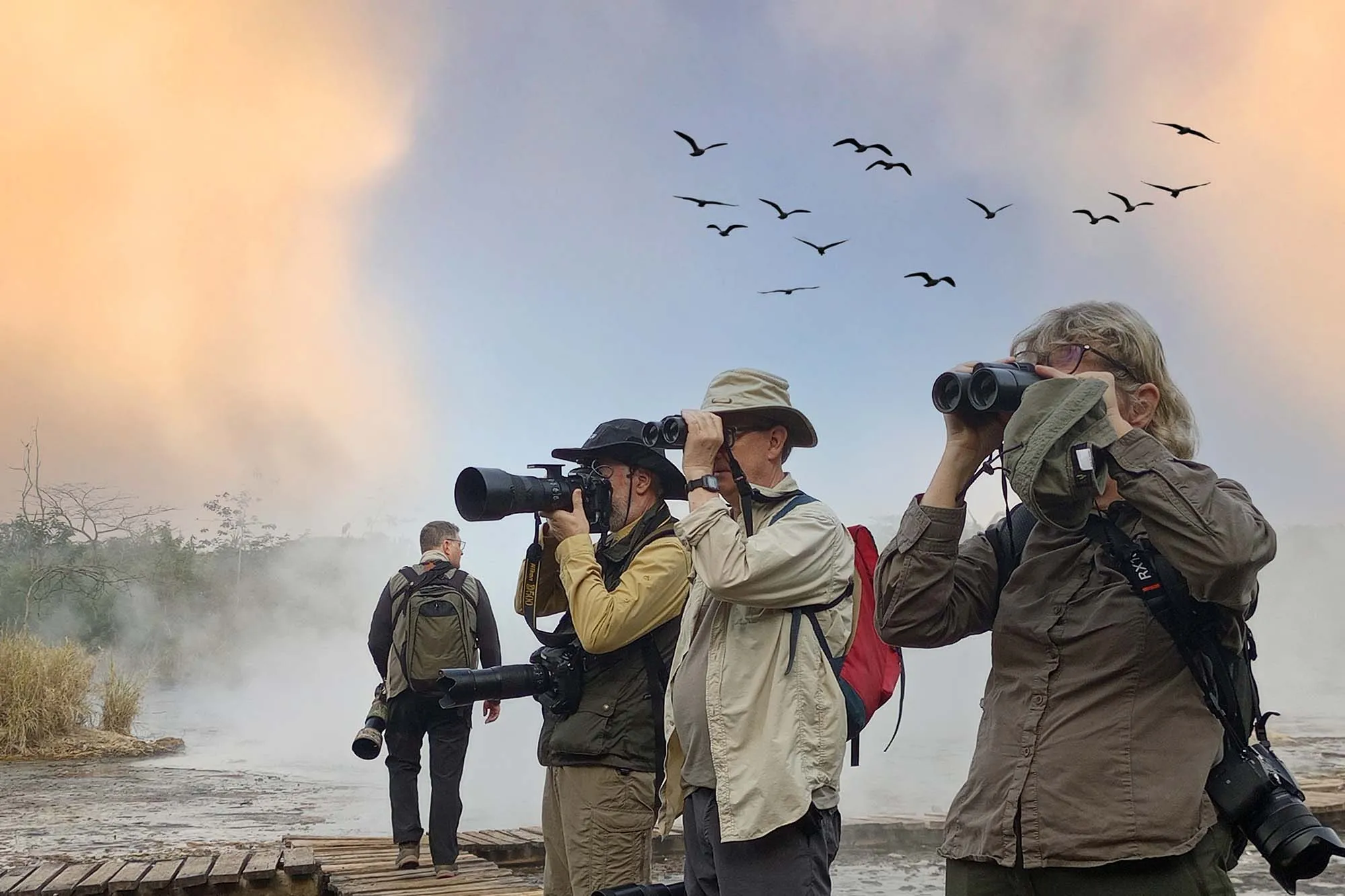
Choose: November through April. Bwindi Impenetrable Forest is an extraordinary birding destination year-round, housing over 350 bird species including 23 Albertine Rift endemics.
However, November to April brings Palearctic migrant species to Uganda, dramatically expanding the birding checklist and making a Uganda birding and gorilla safari particularly rewarding.
Gorilla Trekking Weather in Uganda
Uganda’s climate is driven by its equatorial position, high altitude, and the moderating influence of Lake Victoria and the Albertine Rift Valley.
Understanding the precise weather patterns at Bwindi Impenetrable National Park — the primary gorilla trekking destination — is essential for planning.
Altitude & Temperature
Bwindi sits at elevations ranging from 1,160 metres in the lowland zones to 2,607 metres at the summit of Rwamunyonyi.
The gorilla trekking sectors — Buhoma, Ruhija, Nkuringo, and Rushaga — all sit above 1,500 metres, meaning temperatures are consistently cooler than Uganda’s lowlands.
- Daytime temperatures: 18°C to 24°C year-round
- Night temperatures: 8°C to 14°C (can drop to 6°C in Ruhija, the highest sector)
- Rainfall: Heaviest in April (200mm+), lowest in July (40–60mm)
What Weather Means for Your Trek
Even during the “dry season,” Bwindi is a tropical montane rainforest and can receive afternoon showers year-round.
A dry-season morning in July might still greet you with a misty forest atmosphere or a brief midday shower.
Rain gear is always recommended.
Humidity runs consistently high inside the forest at 80–95%, regardless of season.
This is part of what makes the environment so lush — and so muddy in wet season.
Sweat management and appropriate moisture-wicking clothing are important for all trekkers, not just wet-season visitors.
Weather by Bwindi Sector
- Ruhija Sector (highest elevation): Coldest and often the cloudiest sector. The most challenging in wet season but spectacular in dry season.
- Nkuringo Sector (southern Bwindi): More exposed ridgeline terrain; wind can be a factor. Excellent gorilla families here.
- Buhoma Sector (northern Bwindi): Most established entry point, relatively accessible; slightly lower elevation than Ruhija.
- Rushaga Sector (southern Bwindi): Most gorilla families, great for habituation experience permits, and generally considered most accessible.

👉 Experience gorillas at the perfect time of year in Uganda — 👉 discover our luxury and mid-range safari packages for a seamless adventure.
Gorilla Permit Availability & Booking Tips
Understanding the Uganda Gorilla Permit System
The Uganda Wildlife Authority (UWA) issues gorilla trekking permits at USD 800 per person for international non-resident travellers, USD 700 for East African residents, and UGX 250,000 for Ugandan citizens.
Each permit grants a 60-minute encounter with a specific habituated gorilla family, with a maximum of 8 tourists per gorilla family per day.
Bwindi Impenetrable National Park currently has 19 habituated gorilla families spread across its four sectors, giving a theoretical daily maximum of 152 permits across the park. Mgahinga Gorilla National Park offers an additional 1 habituated gorilla family, providing up to 8 more daily permits.
How Far in Advance Should You Book?
This is the most frequently asked question by gorilla trekking first-timers.
The answer depends on your target travel month:
- July and August: Book 9–12 months in advance. These permits are the fastest to sell out, especially for the Buhoma and Rushaga sectors and popular families like the Mubare and Nkuringo groups.
- June and December–January: Book 6–9 months in advance. High festive and summer demand means these months fill almost as quickly as July–August.
- February and September: Book 3–6 months in advance. Solid demand but slightly more availability.
- March, October, November: Book 1–3 months in advance. Permits are generally available closer to travel dates, though popular families can still sell out.
- April and May: Book 1–2 months in advance for most families, though permits may be available even weeks before travel.
Which Gorilla Sector Should You Choose?
- Buhoma (North Bwindi): Most accessible from Kampala (via Kabale road or charter flight to Kihihi airstrip). Great for first-timers. Home to the iconic Mubare family — Uganda’s first habituated gorilla family, habituated since 1993.
- Rushaga (South Bwindi): Largest sector with the most gorilla families, including the option to book a Gorilla Habituation Experience (GHEX) — a 4-hour (instead of 1-hour) encounter with a semi-habituated family for USD 1,500 per person.
- Nkuringo (South Bwindi): Remote, dramatically scenic, and physically demanding. The Nkuringo group is well known for dramatic ridge-top encounters.
- Ruhija (East Bwindi): Highest and least visited sector. Excellent for birding alongside gorilla trekking. More adventurous and less crowded.
Booking Tips from GoSilverback Safaris Experts
- Always book through a licensed Uganda safari operator like GoSilverback Gorilla Safaris to secure permits, lodge combinations, and airport transfers seamlessly.
- Combine your gorilla permit with a multi-day safari for the best value — standalone single-day gorilla permit logistics from Kampala are expensive and exhausting.
- Request a specific gorilla family when booking — different families have different reputations for accessibility and sighting quality.
- Consider the Gorilla Habituation Experience at Rushaga if you want a longer, deeper encounter and have the budget.
Cheapest Time to Visit Uganda Gorillas
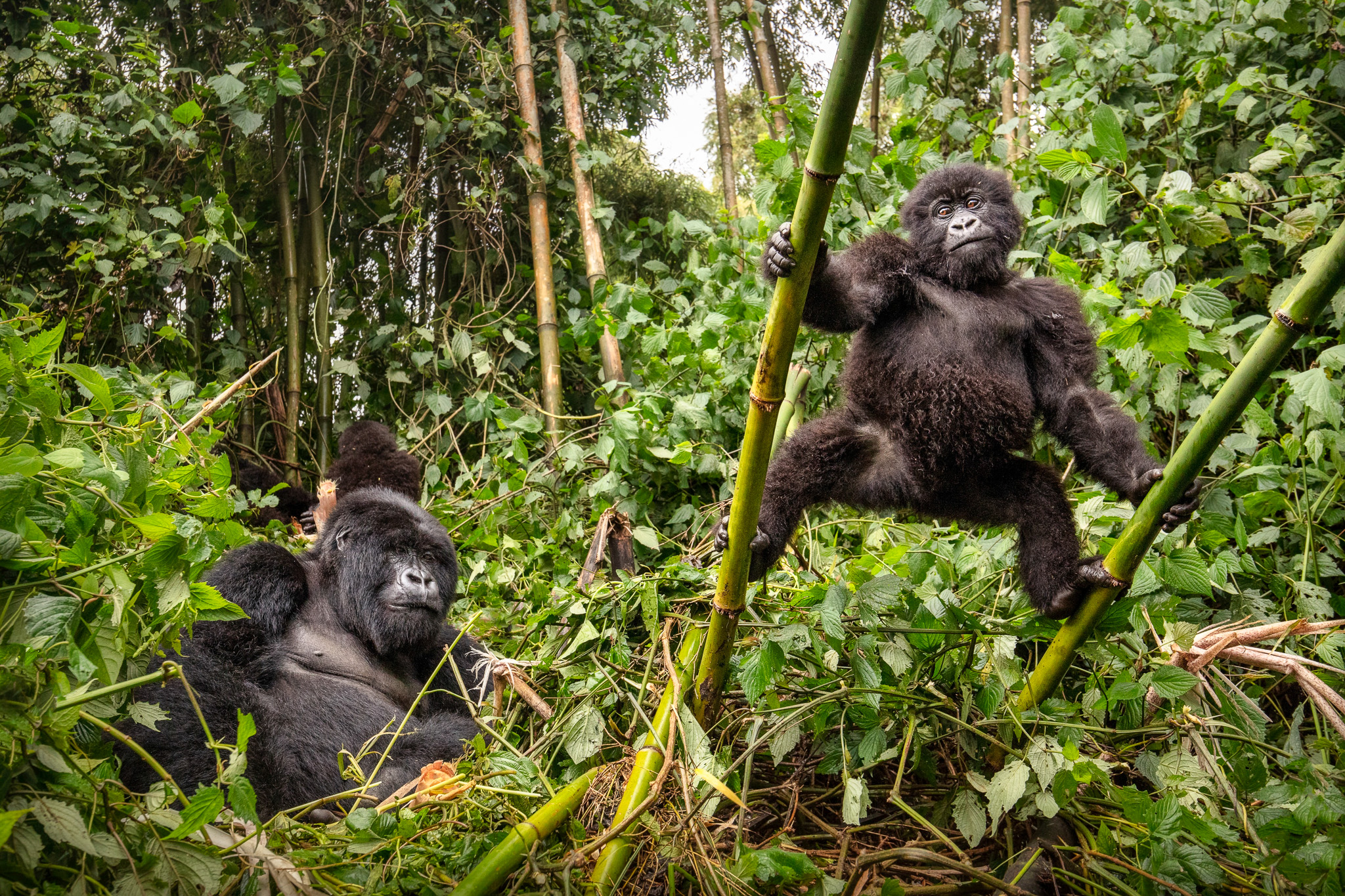
While the Uganda gorilla permit price of USD 800 remains fixed year-round by Uganda Wildlife Authority policy, the overall cost of a gorilla safari Uganda varies significantly depending on your travel month.
April and May are the cheapest months to visit Uganda gorillas in terms of total trip cost. During the long rains:
- Many Bwindi lodges reduce rack rates by 20–40%, including luxury properties like Sanctuary Gorilla Forest Camp, Bwindi Lodge, and Mahogany Springs.
- International flights to Entebbe (EBB) from London, New York, Dubai, and Amsterdam tend to be cheaper as overall East Africa tourism volumes drop.
- Safari package operators offer reduced rates on transportation, driver-guide services, and accommodation bundles.
- Gorilla permits are readily available without months of advance booking.
October and November offer similar savings during the short rains, though the discounts are typically slightly less dramatic than April–May.
Budget travellers’ tip: A well-planned budget gorilla trek Uganda in April or May, staying at mid-range lodges like Buhoma Community Lodge or Gorilla Heights Lodge, and booking through an efficient local operator like GoSilverback Gorilla Safaris, can total USD 2,000–2,800 per person (including permit, flights from Entebbe, accommodation, and guides) — a fraction of what the equivalent peak-season trip costs.
What to Pack for Gorilla Trekking (Season-Based)
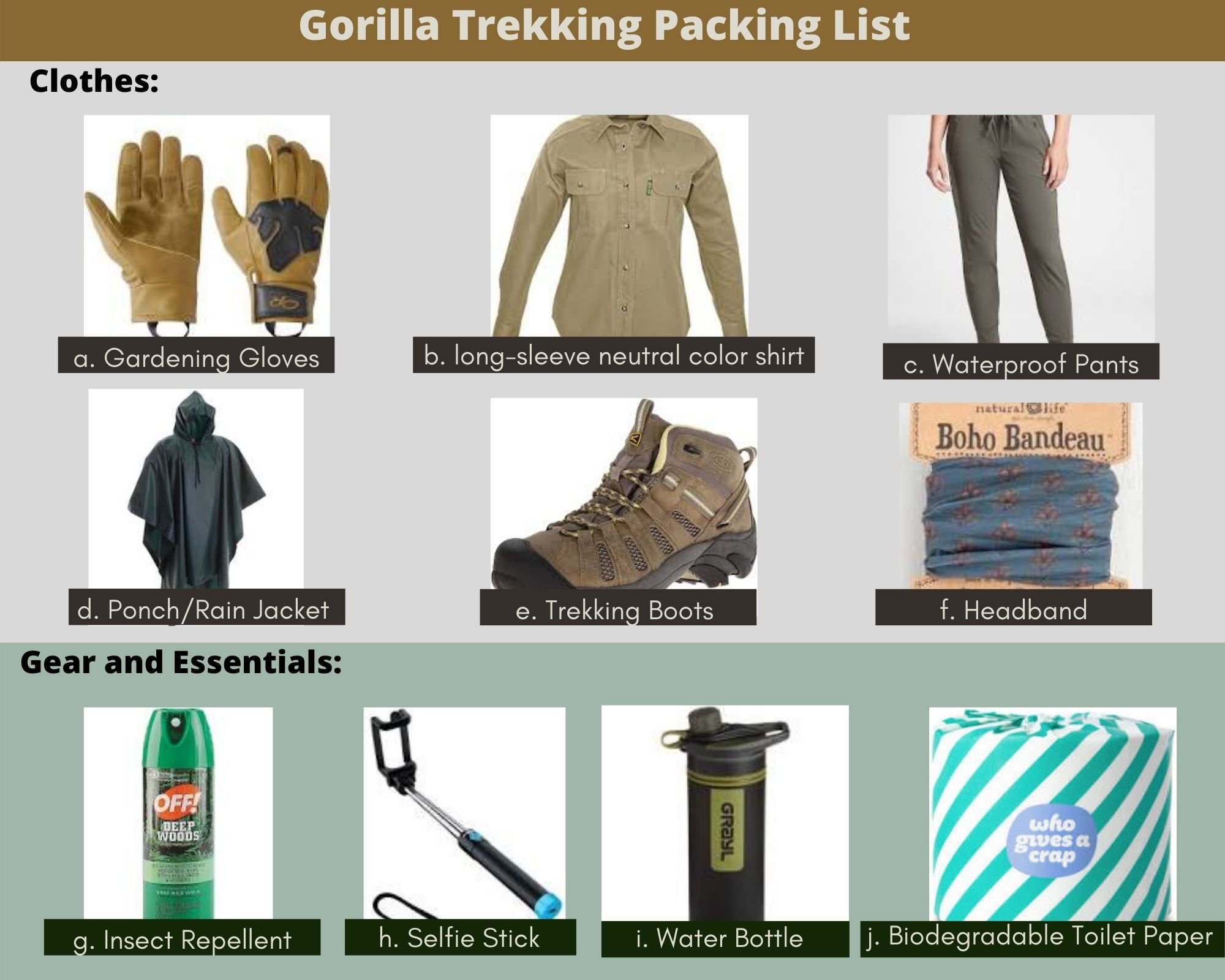
Universal Packing List (All Seasons)
- Waterproof hiking boots with ankle support — essential year-round inside Bwindi’s forest terrain
- Long-sleeved shirts and trousers — to protect against stinging nettles, ants, and forest vegetation
- Rain jacket / waterproof poncho — even in dry season, brief showers occur
- Gardening gloves — for grabbing vegetation and roots on steep ascents
- Trekking poles — particularly important for steep descents
- Small daypack (max 5kg) — for snacks, water, camera, and essentials
- 2 litres of water minimum
- High-calorie snacks — granola bars, dried fruit, nuts
- Camera with charged batteries and extra memory cards
- Insect repellent (DEET-based)
- Sunscreen SPF 50+
Additional Wet Season Packing (March–May, September–November)
- Waterproof gaiters — critical for keeping mud and insects out of boots
- Dry bags for camera equipment and electronics
- Extra pair of trousers — pack one in the car for post-trek comfort
- Moisture-wicking base layers — wool or synthetic, not cotton
- Plastic bags for wet or muddy clothing
- Trekking pole with mud baskets for better traction
Additional Dry Season Packing (June–August, December–February)
- Lightweight fleece or mid-layer — mornings at Bwindi are cool, especially in Ruhija sector
- Sun hat with brim — higher forest clearings can expose you to direct sun
- UV-filter lens protector for camera lenses — dust is more prevalent in dry season
Insider Tips from Safari Experts
After decades of organising Uganda gorilla trekking safaris for travellers from across the globe, our GoSilverback team has accumulated a wealth of on-the-ground insight that no guidebook fully captures.
Here are our most valuable insider tips:
- Start early. All gorilla trekking briefings begin at 7:30–8:00 AM at the respective sector headquarters. Arriving the night before your trek at a nearby lodge — rather than driving up on the morning of — dramatically reduces stress and fatigue before one of the most physically demanding days of your safari.
- Request a gorilla family matched to your fitness level. Be honest with your booking agent about your fitness. Some gorilla families (like Habinyanja in Buhoma) require less elevation gain than others (like Nkuringo). A mismatched family assignment can turn a dream experience into an ordeal.
- The one-hour encounter goes faster than you think. Many first-timers are shocked at how quickly 60 minutes passes. Arrive emotionally present and put your camera down for at least the first few minutes — just be with the gorillas.
- Porter hire is not optional. Hiring a local community porter from the UWA-sanctioned porter system costs approximately USD 10–15 and provides critical physical support on steep terrain. Porters carry your daypack, offer a steadying hand, and the fee goes directly to the local Bwindi community.
- Silently follow your tracker’s cues. When your ranger signals to crouch, crouch. When they signal silence, silence. Habituated gorillas are tolerant of human presence but their behaviour changes with sudden noise, flash photography, or rapid movement.
- Combine with a cultural village experience. The Batwa pygmies — forest-dwelling people who lived in Bwindi before its gazettement as a national park — offer extraordinary cultural encounters at villages adjacent to the park. GoSilverback incorporates this into many of our Bwindi itineraries.
- Carry small USD bills for tipping guides, porters, and lodge staff. ATM access near Bwindi is unreliable.
👉 Don’t miss the best time to visit Uganda for gorillas — 👉 explore our safari packages now and book your permit before availability runs out.
Why Uganda Is the Best Gorilla Trekking Destination
Uganda is home to approximately 460–480 mountain gorillas — more than half of the global mountain gorilla population estimated at around 1,063 individuals (2018 IUCN census, the most recent comprehensive count).
This makes Uganda the undisputed heartland of mountain gorilla conservation and ecotourism.
Uganda vs Rwanda vs DRC for Gorilla Trekking
| Feature | Uganda | Rwanda | DRC |
|---|---|---|---|
| Permit Cost | USD 800 | USD 1,500 | USD 400 |
| Number of Gorilla Families | 20+ (Bwindi + Mgahinga) | 12 (Volcanoes NP) | Limited access |
| Habituation Experience | Yes (USD 1,500) | No | No |
| Safety | High | High | Variable |
| Value for Money | ⭐⭐⭐⭐⭐ | ⭐⭐⭐ | ⭐⭐⭐ |
| Combined Safari Options | Extensive | Limited | Limited |
Uganda gorilla permits at USD 800 are significantly more affordable than Rwanda’s USD 1,500 permits, making Uganda the superior choice for travellers seeking maximum value without compromising on the quality or authenticity of the gorilla encounter.
Beyond gorillas, Uganda offers an unparalleled diversity of safari experiences: chimpanzee trekking in Kibale Forest National Park, big five game drives in Queen Elizabeth and Murchison Falls national parks, white-water rafting on the Nile at Jinja, boat safaris on the Kazinga Channel, and birding across 1,067 recorded bird species — more than all of Europe combined.
Uganda’s commitment to mountain gorilla conservation is evident in the steady population growth recorded in census data since the 1980s.
Revenue from gorilla permits directly funds anti-poaching patrols, community development programs, and habitat conservation — making your gorilla trek a direct act of conservation.
Sample Gorilla Safari Itinerary (Best Season)
10-Day Uganda Gorilla & Wildlife Safari — Dry Season (July/August)
Day 1: Arrival in Entebbe
Arrive at Entebbe International Airport (EBB). Meet your GoSilverback Gorilla Safaris driver-guide. Transfer to your lakeside hotel for an orientation dinner overlooking Lake Victoria.
Day 2: Entebbe to Kibale Forest National Park (Drive: ~5 hours)
Morning drive to Kibale Forest National Park — the primate capital of the world. Afternoon check-in at Primate Lodge Kibale or Turaco Treetops. Evening briefing.
Day 3: Chimpanzee Trekking in Kibale Forest
Full-day chimpanzee trekking permit with expert UWA guides. Kibale’s habituated chimpanzee communities are among the best researched in Africa. Encounter up to 150 chimps in their natural habitat.
Day 4: Kibale to Queen Elizabeth National Park (Drive: ~2 hours)
Drive south along the base of the Rwenzori Mountains to Queen Elizabeth National Park. Afternoon game drive targeting the famous Ishasha tree-climbing lions.
Day 5: Queen Elizabeth — Kazinga Channel Boat Safari
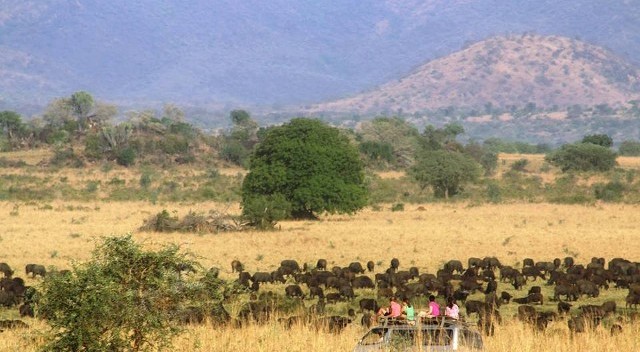
Morning game drive in the Kasenyi Plains (buffalo, elephant, hippo, Uganda kob). Afternoon 2-hour Kazinga Channel boat safari — one of Africa’s finest wildlife boat experiences, with hippos, crocodiles, and hundreds of water birds.
Day 6: Queen Elizabeth to Bwindi Impenetrable National Park (Drive: ~3 hours)
Scenic drive through rural Uganda, traditional villages, and dramatic Great Rift Valley views. Arrive at your Bwindi lodge — we recommend Mahogany Springs, Bwindi Lodge, or Gorilla Heights Lodge depending on budget. Afternoon at leisure. Evening gorilla trek briefing.
Day 7: Gorilla Trekking — Bwindi Impenetrable National Park
The centrepiece of your safari. Early breakfast, 7:30 AM briefing at the UWA sector headquarters. Trek with expert guides and trackers into the forest. One magical hour with a mountain gorilla family. Return to lodge for a celebration lunch. Afternoon at leisure or optional village walk.
Day 8: Second Day in Bwindi — Optional Golden Monkey or Cultural Experience
Optional: Trek to see golden monkeys in Mgahinga (for those based in southern Bwindi) or enjoy a Batwa cultural trail inside the forest. Afternoon forest walk with a naturalist guide.
Day 9: Bwindi to Entebbe (Drive + Flight or Full Drive)
Early morning drive toward Kampala/Entebbe. Option to take a charter flight from Kihihi or Kisoro airstrip back to Entebbe (highly recommended — saves 8+ hours of road travel). Afternoon at leisure in Entebbe — visit the Uganda Wildlife Education Centre or Ngamba Island Chimpanzee Sanctuary.
Day 10: Departure
Morning transfer to Entebbe International Airport for international departure. Depart with memories of a lifetime.
Planning your trip during the best time to visit Uganda for gorillas? 👉 Explore our Uganda gorilla safari packages designed for unforgettable trekking experiences.
Frequently Asked Questions (FAQs)
What is the best month to trek gorillas in Uganda?
July is widely considered the single best month for gorilla trekking in Uganda. It falls in the heart of the long dry season, offering the driest trail conditions, lowest rainfall, and the highest probability of shorter trekking times. Gorillas tend to forage at lower elevations during July, making encounters more accessible. However, July also has the highest permit demand — book 9–12 months ahead. January and February are close runners-up, particularly popular with European travellers escaping winter.
How much does a Uganda gorilla permit cost?
A Uganda gorilla trekking permit costs USD 800 per person for international visitors. This price is set by the Uganda Wildlife Authority and is consistent year-round — it does not increase or decrease by season. For East African Community residents, the permit costs USD 700. Ugandan citizens pay UGX 250,000. The permit includes the one-hour gorilla family encounter, UWA ranger guidance, and park entry fees for the day. A Gorilla Habituation Experience permit costs USD 1,500 and allows a 4-hour encounter with a semi-habituated family.
Can you trek gorillas in Uganda during the rainy season?
Yes — gorilla trekking in Uganda operates year-round, including during the rainy seasons. Mountain gorillas are habituated residents of Bwindi and Mgahinga and are tracked by UWA rangers daily regardless of weather. The rainy seasons (March–May and September–November) make trails muddier and trekking physically more demanding, but the gorilla encounter itself remains equally profound and emotionally transformative. Many expert travellers prefer the green season for its lush forest scenery, lower costs, and fewer crowds.
How difficult is gorilla trekking in Uganda?
Gorilla trekking difficulty ranges from moderate to very strenuous, depending on the location of the gorilla family on the day of your trek. Treks can last 2–8 hours and involve steep, uneven terrain with elevation gains of 200–600 metres. The dry season generally results in shorter treks as gorillas remain at lower elevations. Hiring a porter is strongly recommended for all fitness levels. There is no minimum fitness standard to participate, but trekkers should be mobile and capable of sustained walking over rough ground.
How far in advance should I book a Uganda gorilla permit?
For July and August (peak season), book 9–12 months in advance. For June, December, and January, book 6–9 months ahead. For February, September, and other shoulder months, 3–6 months is generally sufficient. For the wet season months of April, May, October, and November, permits are often available 1–3 months before travel. Working with a licensed safari operator like GoSilverback Gorilla Safaris simplifies the permit booking process significantly.
What is the difference between Bwindi and Mgahinga for gorilla trekking?
Bwindi Impenetrable National Park is the larger and more popular gorilla trekking destination, with 19+ habituated gorilla families across four sectors (Buhoma, Ruhija, Nkuringo, Rushaga) and a greater number of daily permits.
Mgahinga Gorilla National Park has only one habituated gorilla family (the Nyakagezi group) and fewer permits. Mgahinga is smaller but offers a compelling additional attraction: golden monkey trekking in the volcanic highland habitat shared with Rwanda’s Volcanoes National Park.
Is Uganda or Rwanda better for gorilla trekking?
Uganda offers significantly better value for gorilla trekking. Uganda permits cost USD 800 vs Rwanda’s USD 1,500 — a USD 700 saving per person. Uganda also has more habituated gorilla families (20+ vs Rwanda’s 12), offers the unique Gorilla Habituation Experience, and can be combined with a far wider range of safari experiences (big five, chimpanzees, Nile rafting). Rwanda’s Volcanoes National Park is closer to Kigali airport and offers a slightly more “luxury boutique” experience, but Uganda delivers superior value and biodiversity.
What should I wear for gorilla trekking in Uganda?
Wear long-sleeved shirts, long trousers (preferably quick-dry), waterproof hiking boots with ankle support, and gardening-style gloves for gripping vegetation. In dry season, add a lightweight fleece layer for cool morning starts. In wet season, add waterproof gaiters and a high-quality rain jacket. Dark or neutral earth tones (khaki, green, brown) are recommended — avoid bright colours. No special camouflage gear is needed.
How many people are allowed to see gorillas at one time?
A maximum of 8 tourists per gorilla family per day is permitted under Uganda Wildlife Authority regulations. This strict limit protects the gorillas from disease transmission and behavioural disturbance. The group will also include a UWA ranger guide, tracker, and optional porter — so the full group inside the forest is typically 12–15 people.
Do gorilla permits need a medical clearance?
No formal medical clearance is required to purchase a permit, but trekkers must be at least 15 years old and should be in general good health. Visitors with symptoms of cold, flu, COVID-19, or other communicable respiratory or infectious diseases will be denied access to the gorilla families on the day of their trek — UWA strictly enforces this policy to protect the immunologically vulnerable gorillas from human-transmitted diseases. Wearing a surgical mask in the presence of gorillas is now standard practice.
Can I combine gorilla trekking with other Uganda wildlife experiences?
Absolutely — and it is highly recommended. Uganda’s compact geography makes it easy to combine Bwindi gorilla trekking with chimpanzee trekking in Kibale Forest National Park, big game safaris in Queen Elizabeth or Murchison Falls national parks, and boat safaris on the Kazinga Channel or the Nile. A 10–14 day Uganda safari can realistically incorporate gorillas, chimps, big five game drives, birding, and cultural experiences.
What is the Gorilla Habituation Experience and is it worth it?
The Gorilla Habituation Experience (GHEX) is offered exclusively in Rushaga Sector, Bwindi Impenetrable National Park, and costs USD 1,500 per person. Unlike a standard gorilla trek (1-hour encounter), the GHEX allows you to spend 4 hours with a semi-habituated gorilla family alongside researchers and trackers actively habituating the group to human presence. The experience is rawer, less predictable, and far more intimate. It is absolutely worth the premium for wildlife enthusiasts, photographers, and travellers who want the deepest possible gorilla experience.
Conclusion: Your Gorilla Adventure Starts Here
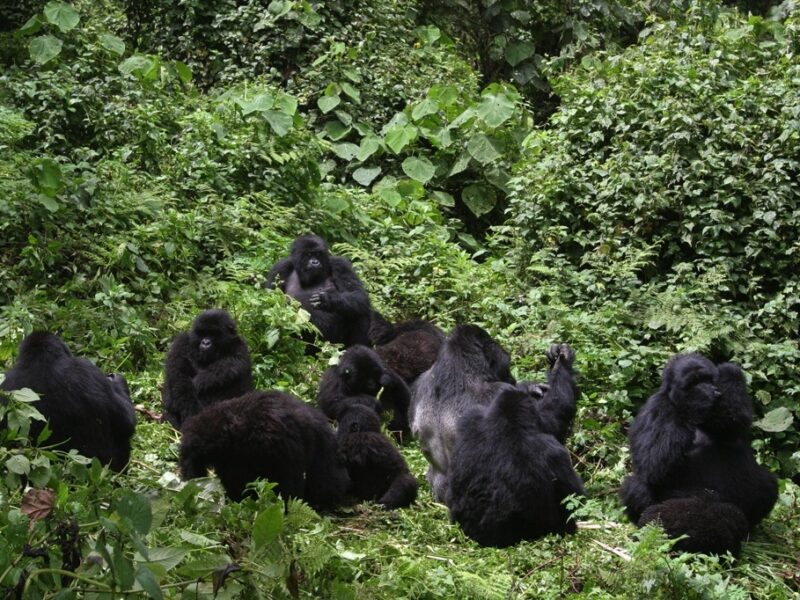
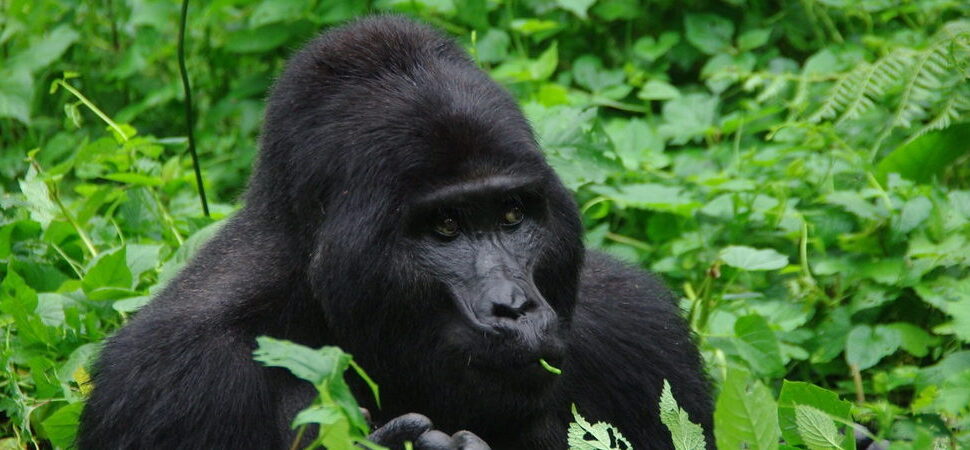
Standing silently in the primeval green cathedral of Bwindi Impenetrable Forest, watching a 200-kilogram silverback mountain gorilla groom his family with the same tender patience of a devoted parent — this is one of the most profoundly moving wildlife encounters on the planet. It is a moment that reorders your understanding of kinship, wildness, and what it means to share this Earth with other great primates.
Mountain gorillas were once on the brink of extinction. Today, thanks to Uganda’s visionary conservation policies and the direct revenue generated by gorilla tourism, their population is — slowly, miraculously — growing.
When you book a gorilla trek through GoSilverback Gorilla Safaris, you are not just buying a wildlife experience. You are directly funding the ranger patrols, community programs, and habitat protection that keep these magnificent animals alive.
The best time to visit Uganda gorillas is whenever you can go. The dry seasons (June–August and December–February) offer the most comfortable trekking conditions and are ideal for first-timers and photographers.
The green seasons (March–May and September–November) offer savings, solitude, and a different kind of wild beauty. Every single month, in every kind of weather, the gorillas of Bwindi are there — living, breathing, thriving proof that conservation works.
Do not wait for the perfect moment. The permits are limited. The forest is calling.
Book Your Uganda Gorilla Trek Today
GoSilverback Gorilla Safaris is a licensed Uganda safari operator specialising in expert-guided gorilla trekking experiences for international visitors from the USA, UK, Europe, Canada, Australia, Asia, and the Middle East.
We handle everything: gorilla permit procurement, lodge selection across all budget levels, airport transfers, multi-day safari itineraries, and 24/7 in-destination support.
📧 info@gosilverbacksafaris.com 📞 +256 773801934 🌐 www.gosilverbacksafaris.com
Book your gorilla permit today — and let us take care of everything else.