How Strong is a Silverback Gorilla? Expert Facts & Real Safari Insights 2026 Ultimate Guide
A silverback gorilla is 6 to 10 times stronger than an average adult human. Weighing up to 220 kg, he can lift or pull 800–1,810 kg (1,800–4,000 lbs) and has a bite force of 1,300 PSI. This immense strength is used mainly for protection and forest life, not aggression.
This question echoes in the minds of travelers from the USA, UK, Europe, Canada, Asia, and the Middle East as they prepare for an African gorilla safari.
At GoSilverback Gorilla Safaris, we hear it daily from clients who have just booked their gorilla permit and want to understand the true power of the animal they will soon meet in the wild.
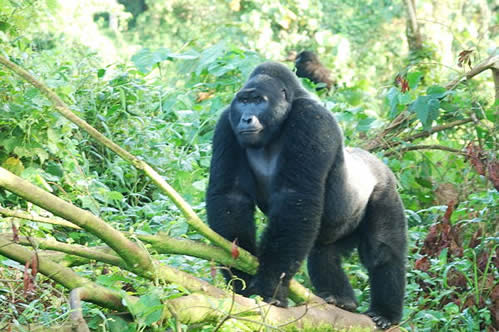
A mature silverback gorilla is one of the strongest land mammals on Earth. Weighing up to 220 kg (485 lbs), a silverback possesses 6 to 10 times the upper-body strength of an average adult human.
Scientific estimates place his lifting or pulling capacity at 800–1,810 kg (1,800–4,000 lbs) in short bursts, with a bite force of 1,300 PSI — double that of a lion.
Yet this extraordinary power is rarely used aggressively. Silverbacks are gentle giants whose strength serves protection, leadership, and daily forest life.
With only 1,063 mountain gorillas left in the wild as of the latest 2025 census, seeing a silverback in Bwindi Impenetrable National Park or the Virunga Volcanoes is one of the planet’s most profound wildlife experiences.
This authoritative 2026 guide explores every dimension of silverback gorilla strength — from anatomy and real-world feats to safe viewing on a responsible gorilla safari.
Whether you are planning your first trek or deepening your knowledge before departure, you will leave with a clear, science-based understanding of these magnificent animals and why your visit matters for their future.
What is a Silverback Gorilla?
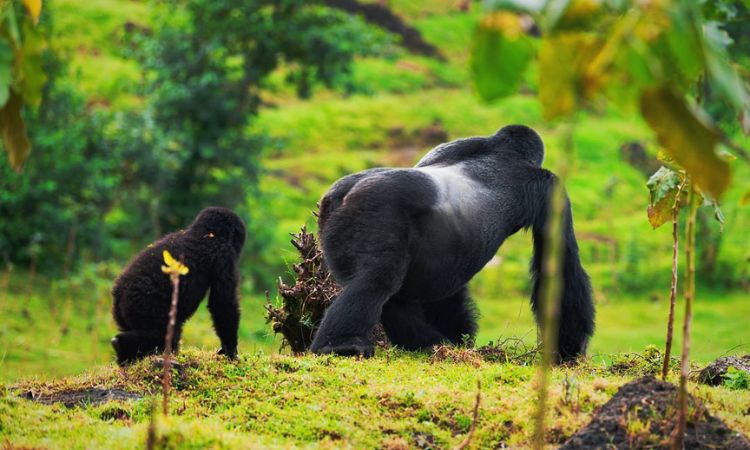
A silverback gorilla is an adult male mountain gorilla or eastern lowland gorilla that has reached full maturity, typically between 12 and 15 years old. The name comes from the distinctive silver saddle of hair that develops across his back as he assumes leadership of a family group.
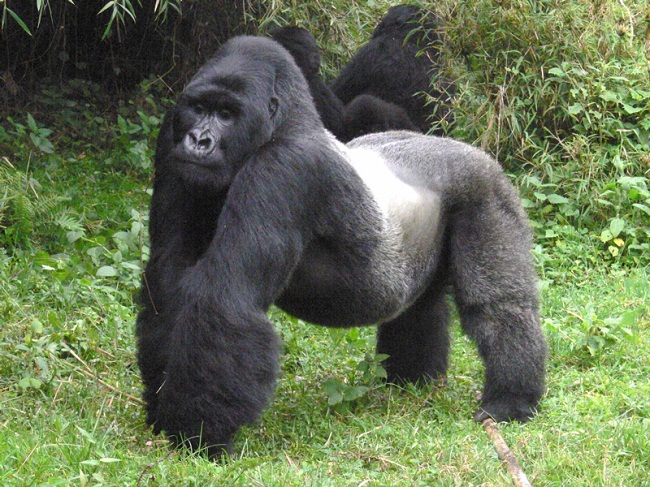
Silverbacks stand 1.7–1.9 metres (5 ft 7 in – 6 ft 3 in) tall when upright and weigh 160–220 kg (350–485 lbs). They are the largest primates on Earth.
Each troop usually contains one dominant silverback, several adult females, juveniles, and infants. The silverback is the protector, decision-maker, and father of most offspring in the group.
In Bwindi Impenetrable National Park, Uganda, and the Virunga Massif (shared by Rwanda, Uganda, and DRC), silverbacks lead stable, peaceful family units. They mediate conflicts, choose daily foraging routes, and defend the group from external threats.
Their physical presence alone — massive chest, powerful shoulders, and long, muscular arms — commands respect within the troop and deters rivals without constant fighting.
Understanding what defines a silverback helps travelers appreciate the calm authority they witness during a gorilla trek. These are not aggressive beasts but responsible leaders whose immense strength supports family survival rather than domination.
How Strong is a Silverback Gorilla?
How strong is a silverback gorilla? The numbers are staggering. Biomechanical studies and field observations consistently show a silverback is 6 to 10 times stronger than an average adult human male, with some estimates reaching 9 times for upper-body power.
A silverback can generate a pulling or lifting force equivalent to 800–1,810 kg (1,800–4,000 lbs) in short bursts. This is roughly 10 times what the strongest human powerlifters can deadlift.
Their arms, 30% longer relative to body size than a human’s, provide exceptional leverage. A single swipe or pull can snap thick bamboo stalks or uproot small trees — feats routinely observed by trackers in Bwindi and Virunga.
Bite force reaches 1,300 PSI, more than double a lion’s 650 PSI and far exceeding a great white shark’s. This power is used primarily for processing tough vegetation, not hunting.
Their dense, fast-twitch muscle fibres (type IIb) are optimised for explosive strength rather than endurance, giving them superior short-burst power.
In real-world terms, a silverback can drag a 200 kg log, bend iron bars in captivity (documented cases), and deliver chest-beating displays that produce sounds audible over a kilometre.
Yet this strength is precisely controlled. During 30+ years of habituated gorilla trekking in Uganda and Rwanda, serious incidents involving humans remain extremely rare precisely because silverbacks use their power for bluff displays rather than contact.
These figures come from combined sources: dynamometer tests on captive gorillas, biomechanical modelling, and decades of field data from the Dian Fossey Gorilla Fund and Uganda Wildlife Authority.
The silverback’s strength is not mythical — it is measurable, evolutionary, and perfectly adapted to life in steep, dense African rainforests.
| Feature | Silverback Gorilla | Average Human Male |
| Bite Force | ~1,300 PSI | ~160 PSI |
| Lifting Capacity | Up to 1,815 kg (4,000 lbs) | ~90 kg (200 lbs) |
| Muscle Density | 4x Higher than humans | Standard |
| Bone Thickness | 3x Thicker/More calcified | Standard |
“To witness the incredible strength and behavior of a silverback in its natural habitat, explore our expertly guided gorilla trekking safari packages designed for safe, ethical, and unforgettable encounters.”

Gorilla Strength vs Humans
Gorilla strength vs humans reveals a dramatic gulf. An average adult male human weighs 80–90 kg and can bench-press 100–150 kg with training.
A silverback of similar body mass generates 6–10 times more force due to superior muscle architecture, bone density, and leverage.
A silverback’s arms alone can curl 300–400 kg; elite human powerlifters max out around 140 kg. Pulling power exceeds 1,000 kg — enough to uproot saplings that a team of strong men could not bend.
Pound for pound, gorillas outperform humans because their muscle fibres are denser and their skeletal structure distributes force more efficiently.
Early 20th-century experiments by Dr. John Bauman estimated gorilla strength at 4–9 times human levels. Modern studies using dynamometers and motion-capture technology confirm the higher end of this range for upper-body tasks.
Humans excel in endurance and fine motor skills, but in raw short-burst power, the silverback has no equal among primates.
On safari, this comparison becomes visceral. Clients often remark that the calm silverback they observe could effortlessly overpower any human threat — yet he chooses peace.
Habituated gorillas in Bwindi and Volcanoes National Park respect the 7-metre rule, demonstrating remarkable self-control despite their overwhelming physical advantage.
Check this guide to learn more about Gorilla Strength, Size comparison Vs Human and Lion here.
“To witness the incredible strength and behavior of a silverback in its natural habitat, explore our expertly guided gorilla trekking safari packages designed for safe, ethical, and unforgettable encounters.”
Gorilla Strength vs Other Animals
Gorilla strength vs other animals depends on the metric. Against a lion, the silverback’s muscular build, powerful arms, and 1,300 PSI bite force give it a formidable defensive advantage in close quarters, though lions rely on speed and group tactics. A silverback’s grip and pulling power far exceed a lion’s.
Versus an elephant or hippopotamus, gorillas are outmatched by sheer mass. Against chimpanzees — their closest relatives — silverbacks win decisively; a mature male outweighs a chimp by three times and possesses vastly superior upper-body power.
Field observations in the Virunga region show silverbacks dominating leopards through sheer presence and occasional charges. Their strength evolved for forest navigation, foraging, and intra-species competition rather than open-savanna predation, making direct “versus” scenarios rare in nature.
Why Are Silverback Gorillas So Strong?
Why are silverback gorillas so strong? The answer lies in millions of years of evolutionary adaptation to life in steep, dense rainforests. Silverbacks need explosive power to climb vines, bend bamboo, carry infants during escapes, and defend their family groups.
Their muscle fibres are packed with fast-twitch type IIb cells optimised for short, powerful movements. Bone density is exceptionally high, and tendons are thicker, reducing injury risk during falls or charges.
Longer arms relative to body size create superior mechanical leverage. A plant-based diet of 30–40 kg of vegetation daily provides steady energy for muscle maintenance, while constant movement through rugged terrain acts as natural strength training.
Testosterone in dominant males further enhances muscle mass and bone strength during the silverback phase (12+ years). This combination produces a body built for power, not speed or endurance — perfectly suited to the Albertine Rift’s vertical landscapes in Bwindi and the Virungas.

Real Behavior: How Gorillas Use Their Strength
Silverback gorillas rarely use their full strength aggressively. In the wild, they rely on ritualised displays — chest beating, branch breaking, and short bluff charges — to resolve conflicts without injury. These displays communicate size and intent clearly, allowing rivals to retreat without escalation.
Strength is used daily for constructive tasks: building night nests, clearing paths through dense undergrowth, and carrying infants or vegetation.
During foraging, a silverback can bend thick stems to access tender shoots that smaller group members cannot reach. In family life, he gently disciplines juveniles and protects infants using controlled movements rather than raw force.
Trackers in Bwindi and Virunga consistently report that habituated silverbacks remain calm around visitors precisely because they have learned humans are not threats. Their strength serves leadership and protection, not domination.
Can a Gorilla Harm a Human?
Can a gorilla harm a human? In theory, yes — a silverback’s strength could cause serious injury. In practice, serious incidents are extremely rare.
Over 30 years of habituated gorilla tourism in Uganda and Rwanda, documented cases of gorillas harming visitors number fewer than five, and most involved tourists ignoring ranger instructions (running, sudden movements, or approaching too closely).
Habituated gorillas view humans as neutral observers. They maintain the 7-metre rule and use bluff charges — stopping short of contact in over 95% of cases.
Unhabituated gorillas avoid humans entirely. The greatest risk is disease transmission (human to gorilla), which is why strict health protocols exist.
Responsible operators and trained rangers ensure safety. Silverbacks are not aggressive toward visitors; they are calm, intelligent leaders.
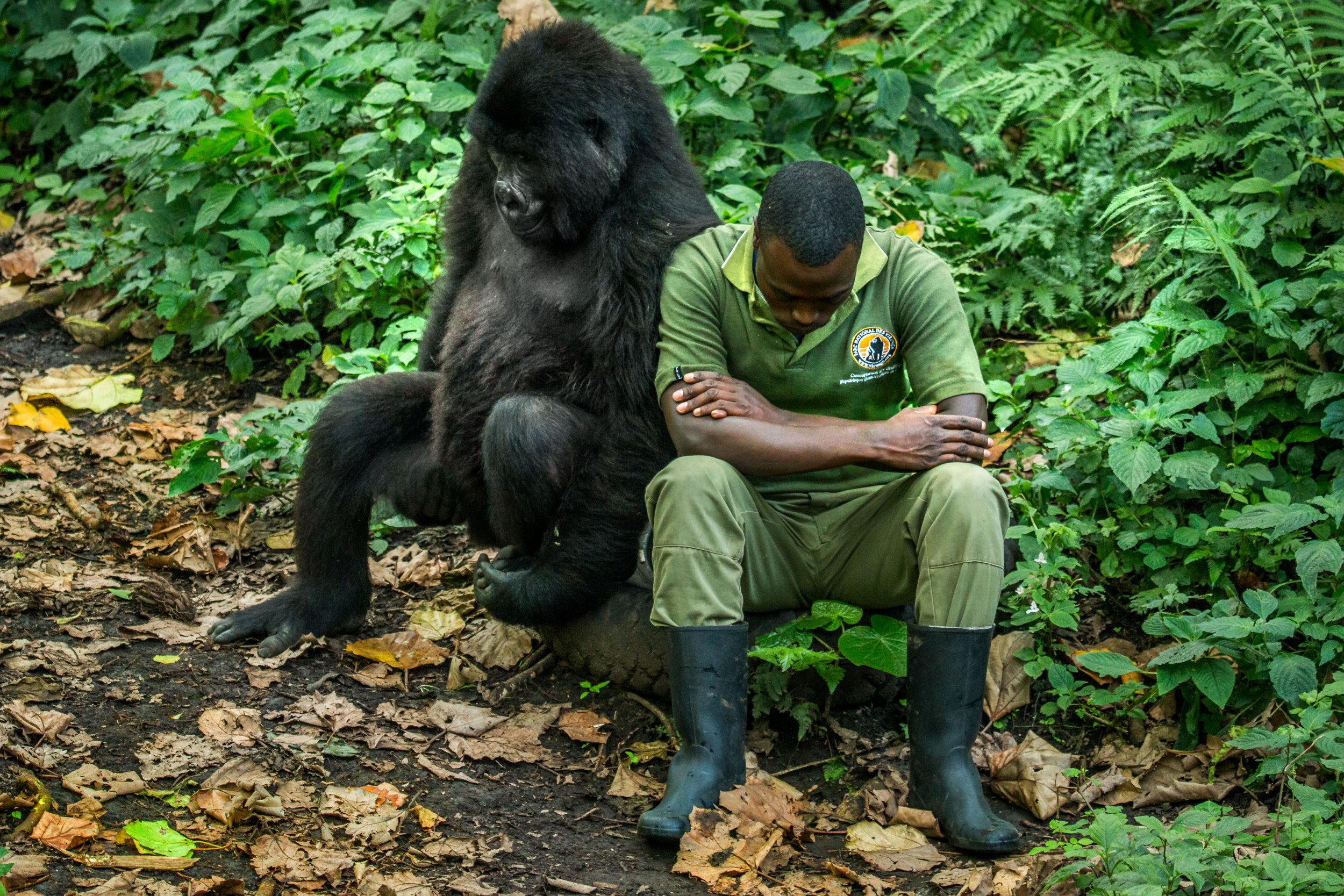
“To witness the incredible strength and behavior of a silverback in its natural habitat, explore our expertly guided gorilla trekking safari packages designed for safe, ethical, and unforgettable encounters.”
Seeing Silverback Gorillas in the Wild
Seeing silverback gorillas in the wild is the pinnacle of any African safari.
In Bwindi Impenetrable National Park, Uganda, 16 habituated groups await in four sectors, including the preferred Rushaga sector. The Virunga Volcanoes in Rwanda offer dramatic volcanic backdrops and 10 habituated groups.
During a trek, you follow trackers through misty rainforest until the moment the silverback appears. His calm authority and gentle interaction with his family create a profound, once-in-a-lifetime connection.
The experience is strictly controlled: maximum 8 trekkers per group, one hour at 7 metres distance, and full ranger supervision.
Check this guide to learn more about Gorillas In The Wild here.
Gorilla Trekking Tips for Travelers
- Book permits early — they sell out 6–12 months ahead.
- Train for moderate fitness — treks involve steep, muddy terrain; porters are available.
- Pack waterproof boots, rain gear, and layers.
- Follow rules strictly — no sudden movements, maintain distance, no eating near gorillas.
- Respect health protocols — do not trek if unwell.
How to Book an African Gorilla Safari
Booking an African gorilla safari requires careful planning because gorilla permits are strictly limited and highly sought after.
With only 8 trekkers allowed per gorilla group per day, availability sells out quickly — often 6 to 12 months in advance for peak dry seasons (June–September and December–February).
Follow these four essential steps to secure your gorilla safari successfully:
- Choose Your Dates and Destination Early Decide between Uganda (Bwindi or Mgahinga) and Rwanda (Volcanoes National Park). Uganda offers better value with $800 gorilla permits, while Rwanda provides a more luxurious experience at $1,500. Consider combining both countries for the ultimate trip.
- Confirm Your Fitness and Health Requirements Gorilla trekking demands moderate to good physical fitness due to steep, muddy trails. You must be at least 15 years old and cannot trek if pregnant or suffering from flu-like symptoms. A yellow-fever vaccination is mandatory for entry into Uganda and Rwanda.
- Select Your Package and Accommodation Level Choose from budget, mid-range, or luxury options. Packages typically include permits, 4×4 transfers, full-board accommodation, professional guides, and park fees. Decide whether you want a shared-group or fully private safari.
- Book Through an Authorised Operator Only licensed operators like GoSilverback Safaris can reliably secure permits. We handle all paperwork, border crossings (if combining countries), and logistics. Early booking guarantees your preferred dates and sector (e.g., Rushaga in Bwindi).
Pro Tip: Permits are non-transferable and non-refundable. Booking 8–12 months ahead for June–August or December–February is strongly recommended. Last-minute availability is limited and usually more expensive.
At GoSilverback Gorilla Safaris, we offer transparent pricing, 100% permit success rate, and full support from inquiry to your return home.
Whether you are a solo traveler, couple, or family, we will match you with the perfect itinerary that balances gorilla trekking with additional wildlife experiences.
Ready to meet the silverbacks? Contact us today to check real-time permit availability for your preferred dates.
Why Book with GoSilverback Safaris
When planning an African gorilla safari, choosing the right operator makes all the difference between a good trip and an unforgettable, responsibly managed experience. GoSilverback Gorilla Safaris stands out as one of Uganda and Rwanda’s most trusted and experienced gorilla specialists.
Here’s why thousands of travelers from the USA, UK, Europe, Canada, Asia, and the Middle East choose us every year:
1. 100% Gorilla Permit Success Rate
We secure gorilla permits for our clients with near-perfect reliability, even during peak seasons. Our long-standing relationships with Uganda Wildlife Authority and Rwanda Development Board give us priority access that individual travelers simply cannot match.
2. Conservation-First Approach
Every booking with GoSilverback Gorilla Safaris directly supports mountain gorilla conservation. A fixed percentage of revenue funds the HuGo human-gorilla conflict resolution teams, anti-poaching patrols, and Gorilla Doctors veterinary programmes. We also contribute to community projects through the 20% revenue-sharing scheme, ensuring local families benefit from tourism.
3. Expert Local Guides
Our team consists of former Uganda Wildlife Authority rangers and highly experienced trackers who have spent decades working with habituated gorilla groups. They provide deep insights into gorilla behaviour, safety protocols, and the conservation story behind every trek.
4. Flexible, Transparent Packages
Whether you want a private luxury safari, a shared mid-range experience, or a custom multi-country itinerary, we offer clear pricing with no hidden fees. All packages include private or shared 4×4 vehicles, full-board accommodation, and seamless logistics.
5. Personalised Service from Start to Finish
From the moment you enquire until you return home, our dedicated consultants tailor every detail to your fitness level, interests, and budget. We provide honest advice on the best sectors, dates, and combinations (Bwindi + Kibale, Volcanoes + Akagera, etc.).
6. Sustainable and Ethical Tourism
We operate with small group sizes, carbon-conscious practices, and strict adherence to international gorilla trekking guidelines to minimise environmental impact.
When you book with GoSilverback Safaris, you are not just buying a safari — you are becoming part of the solution for the long-term survival of mountain gorillas.
Ready to experience the power and gentleness of a silverback in the wild? Let our experts handle every detail with care and professionalism.
“To witness the incredible strength and behavior of a silverback in its natural habitat, explore our expertly guided gorilla trekking safari packages designed for safe, ethical, and unforgettable encounters.”
Frequently Asked Questions About How Strong is a Silverback Gorilla?
Can 100 humans beat a silverback gorilla?
Mathematically, 100 coordinated humans would eventually overwhelm a gorilla through sheer numbers and exhaustion. While a silverback possesses enough explosive power to incapacitate many individuals, it lacks the stamina for a prolonged battle against a literal “army.” However, in a confined, direct brawl, the initial casualties would be catastrophic.
How strong can a silverback gorilla punch?
A silverback gorilla’s punch is estimated to deliver between 1,300 and 2,700 pounds of force. For context, this is roughly 15 to 20 times the force of an average human male. Their massive upper body musculature is designed for breaking dense vegetation, making their strikes bone-shattering.
Could a grizzly bear defeat a silverback gorilla?
In an apex predator showdown, a grizzly bear is the likely victor. While gorillas are stronger pound-for-pound, grizzlies are significantly larger (up to 1,200 lbs) and possess lethal claws and a predatory instinct. Gorillas are defensive herbivores; a grizzly’s “armor” of fat and thick fur provides superior protection.
How strong is a gorilla compared to a human?
A silverback gorilla is approximately 6 to 10 times stronger than the average human. They can lift nearly 1,800 pounds—double the world record deadlift—and possess a bite force of 1,300 PSI. This disparity is due to their higher density of fast-twitch muscle fibers and robust skeletal structure
What is a silverback gorilla’s bite force?
A silverback’s bite force reaches 1,300 PSI, roughly double that of a lion and far stronger than a human’s 120–200 PSI.
How much can a silverback gorilla lift?
Estimates range from 800–1,810 kg (1,800–4,000 lbs) in short bursts, depending on the motion and study.
Can a silverback gorilla kill a human?
In theory yes, but in practice it is extremely rare. Habituated gorillas are calm and follow strict 7-metre rules during treks.
Are silverback gorillas aggressive?
No. They use strength for displays and protection, not aggression. Serious incidents with humans are exceptionally rare.
Where can I see the strongest silverbacks in the wild?
Bwindi Impenetrable National Park in Uganda and Volcanoes National Park in Rwanda host healthy silverback populations.
Why are silverbacks so much stronger than females?
Testosterone and leadership role drive larger muscle mass and bone density in males after age 12.
How does a silverback use his strength daily?
He builds nests, clears paths, carries infants, and protects the group through controlled displays rather than fighting.
Is gorilla trekking safe given their strength?
Yes. Strict rules, trained rangers, and habituation keep encounters peaceful and safe.
What is the population of mountain gorillas today?
1,063 individuals as of the latest 2025 census — a remarkable recovery thanks to conservation.
Can children trek with silverback gorillas?
No. Minimum age is 15 years in both Uganda and Rwanda due to safety and health protocols.
How does tourism help protect silverback strength and survival?
Gorilla permit revenue funds anti-poaching, veterinary care, and community projects that secure habitat for future generations.
Conclusion
How strong is a silverback gorilla? The answer is both awe-inspiring and reassuring: 6 to 10 times stronger than a human, with power shaped by evolution to protect and lead rather than destroy.
Standing before a silverback in the mist of Bwindi or the Virungas reveals not just physical might but intelligence, gentleness, and vulnerability.
Your visit to see silverback gorillas in the wild directly supports their survival. Every gorilla permit funds ranger patrols, veterinary programmes, and community benefits that keep these magnificent animals safe.
Secure your gorilla permit today through GoSilverback Safaris and experience the incredible strength and calm authority of a silverback gorilla in the wild.
Limited permits sell out months in advance — contact our expert team now for a personalised quote and let us craft your private African gorilla safari. The silverbacks are waiting. Will you answer their call?