

Wildlife in Uganda: The Complete Guide to Animals, Parks & Safaris 2026
Wildlife in Uganda offers remarkable safari experiences across diverse national parks, forests, wetlands, and savannahs.
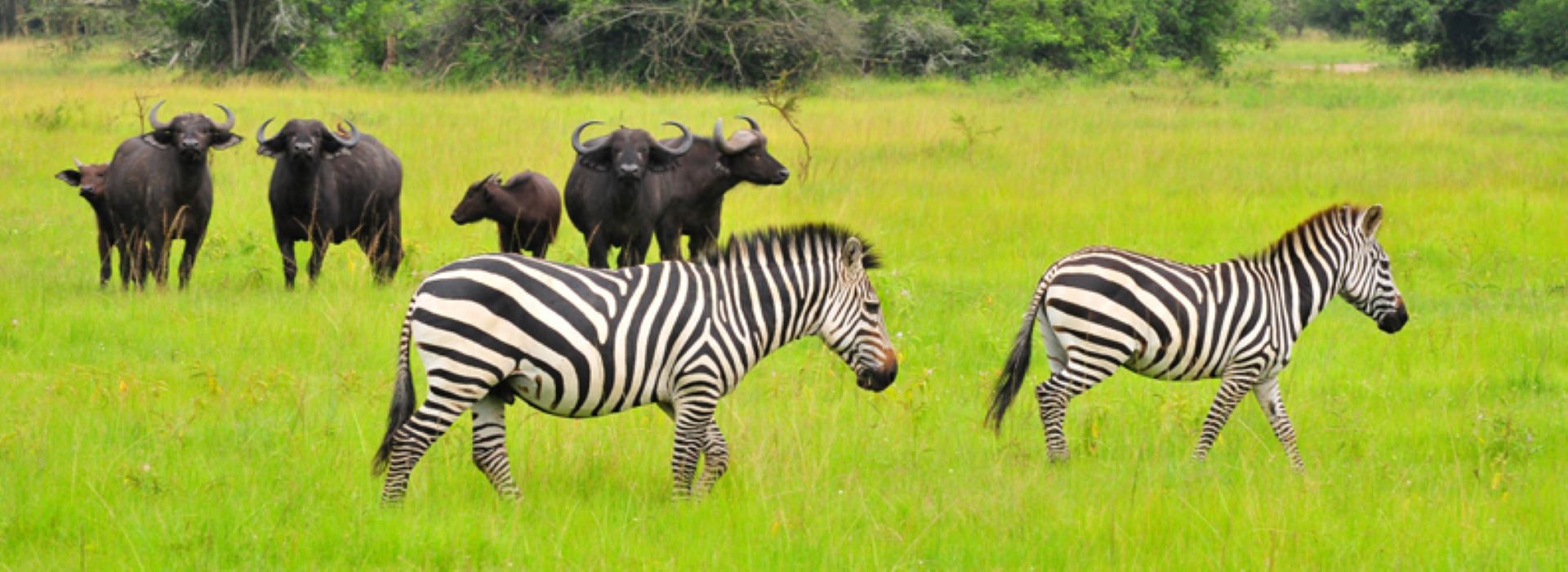
Travelers can encounter the Big Five—lions, leopards, elephants, buffaloes, and rhinos, alongside giraffes, zebras, hippos, chimpanzees, and endangered mountain gorillas.
Uganda’s top wildlife destinations include Murchison Falls, Queen Elizabeth, Kidepo Valley, Bwindi Impenetrable, and Kibale National Parks.
From thrilling game drives and boat safaris to gorilla and chimpanzee trekking, Uganda combines exceptional biodiversity, scenic landscapes, and authentic African wildlife adventures.
Uganda earned the nickname “Pearl of Africa” for a reason — no other country on the planet packs mountain gorillas, chimpanzees, tree-climbing lions, and the Big Five into one compact, drivable safari circuit.
If you’re planning a wildlife safari in Uganda, you’re choosing one of only three countries on Earth where you can trek wild mountain gorillas and the only one where you can pair that encounter with savannah game drives in the same week.
This guide covers exactly what animals you’ll see, which national parks in Uganda to visit, when to go, what it costs, and how to book responsibly — so you can plan a trip with confidence instead of guesswork.
Ready to start planning? Talk to a Uganda safari specialist at GoSilverback Gorilla Safaris →

Why Uganda Is One of Africa’s Top Wildlife Destinations
Uganda holds over 1,000 recorded bird species — more than any other African country — and is home to more than 20 primate species, including roughly half of the world’s remaining mountain gorillas.
That’s a staggering concentration of biodiversity for a country roughly the size of the UK.
Compared to Kenya and Tanzania, which are built around vast open savannahs, Uganda’s edge is variety in a small footprint. In Kenya or Tanzania, you’ll see the Big Five across sprawling plains.
In Uganda, you can trek gorillas in misty rainforest one day, track chimpanzees the next, and be on a game drive spotting lions and elephants by the third — all without long-haul domestic flights between parks.
For travelers from the USA, UK, Canada, Europe, Latin America, Asia, Oceania, and the Middle East, this means a shorter, richer itinerary and better value per travel day.
This is what makes Uganda wildlife safaris unmatched: primates, predators, and rare species — all in one trip.
Wildlife in Uganda The Big Five in Uganda
Uganda is one of the few East African countries where you can realistically see all of the Big Five — lion, elephant, buffalo, leopard, and rhino — while also trekking primates.
1. Lions
Uganda’s lions are the highlight for many first-time visitors, largely because of the rare tree-climbing lions of Ishasha, found in the southern sector of Queen Elizabeth National Park.
Scientists still debate exactly why this pride climbs fig trees — likely to escape heat and biting flies — but the sight of lions draped across branches is one of Uganda’s most photographed wildlife moments.
2. Elephants
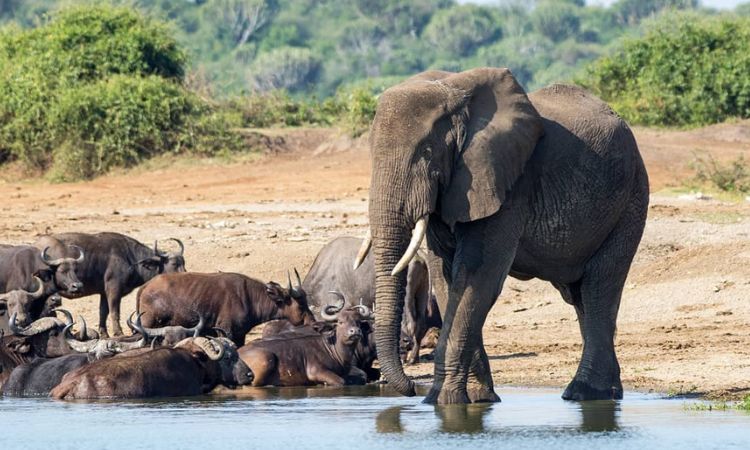
Large herds of African savannah elephants roam Murchison Falls and Queen Elizabeth National Park, often seen crossing roads or bathing along the Kazinga Channel.
3. African Buffalo
Buffalo herds numbering in the hundreds are common across Uganda’s savannah parks, and they’re considered one of the more unpredictable — and respected — members of the Big Five by ranger guides.
4. Leopards
Elusive and mostly nocturnal, leopards are present in Murchison Falls, Queen Elizabeth, and Kidepo Valley, though sightings require patience and a sharp-eyed guide.
5. Rhinos
Here’s an important accuracy point many blogs skip: wild rhinos are extinct in Uganda due to poaching in the 1980s.
Today, the only place to see them is Ziwa Rhino Sanctuary, a dedicated reintroduction and breeding site en route to Murchison Falls, home to a growing population of southern white rhinos under 24-hour ranger protection.
Want an itinerary that fits all five into one trip? Get a free custom safari plan →
Wildlife in Uganda: Primates You Can See in Uganda
Uganda’s primate diversity is arguably its single biggest draw for wildlife enthusiasts worldwide.
1. Mountain Gorillas
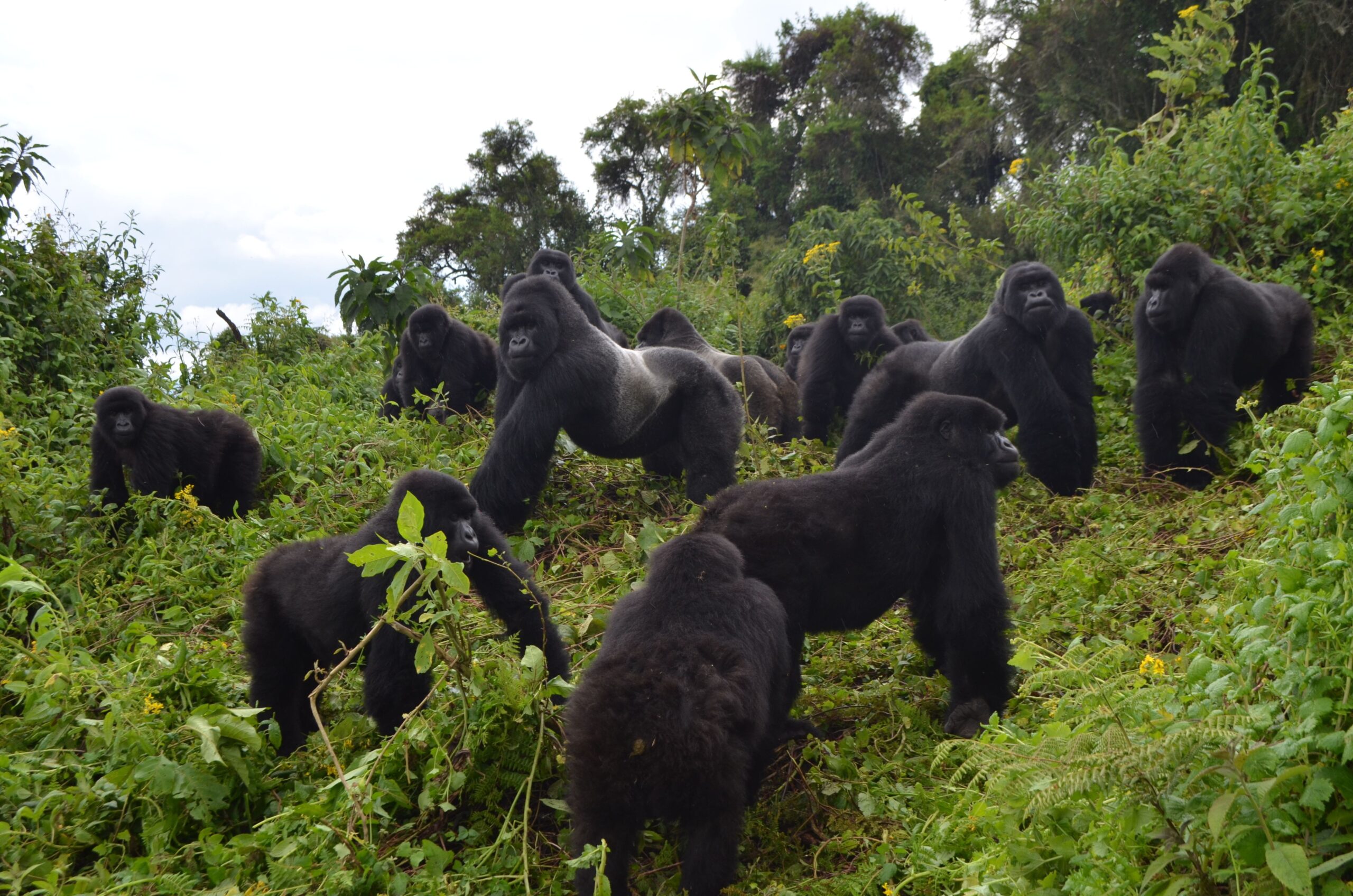
Found only in Bwindi Impenetrable National Park and Mgahinga Gorilla National Park, mountain gorillas are the reason most international travelers book a Uganda trip in the first place.
Roughly half of the world’s remaining wild mountain gorilla population lives in Uganda’s forests, and a gorilla trekking permit grants you one hour with a habituated family group, guided by an armed ranger and expert tracker.
2. Chimpanzees
Kibale National Park is widely known as the “primate capital of the world,” with the highest density and diversity of primates in East Africa.
Chimpanzee trekking here offers close encounters with habituated troops, often accompanied by their distinctive calls echoing through the forest canopy.
3. Golden Monkeys, Colobus & Baboons
Beyond gorillas and chimps, Uganda hosts golden monkeys (found almost exclusively in the Virunga region), black-and-white colobus monkeys, vervet monkeys, and large baboon troops — all easily spotted on forest walks and even from lodge verandas.
Rare & Unique Species in Uganda
Beyond the headline animals, Uganda rewards patient travelers with sightings found almost nowhere else:
- Shoebill stork — a prehistoric-looking bird best spotted in Mabamba Swamp near Lake Victoria.
- Giant forest hog — the world’s largest wild pig species, found in Bwindi and Kibale.
- Sitatunga antelope — a swamp-adapted antelope with splayed hooves, seen at Lake Mburo.
- Uganda kob — the country’s national symbol, featured on the coat of arms, commonly seen in Murchison Falls and Queen Elizabeth.
Best National Parks for Wildlife Viewing in Uganda
|
Park |
Signature Animal |
Best For |
Ideal Duration |
|
Bwindi Impenetrable NP |
Mountain gorillas |
Gorilla trekking |
2 days |
|
Queen Elizabeth NP |
Tree-climbing lions |
Big cats, boat cruise, hippos |
2–3 days |
|
Murchison Falls NP |
Elephants, giraffes |
Uganda’s largest park, waterfalls |
2–3 days |
|
Kibale NP |
Chimpanzees |
Primate trekking |
1–2 days |
|
Kidepo Valley NP |
Cheetahs, ostriches |
Remote, untouched wilderness |
2–3 days |
1. Bwindi Impenetrable National Park
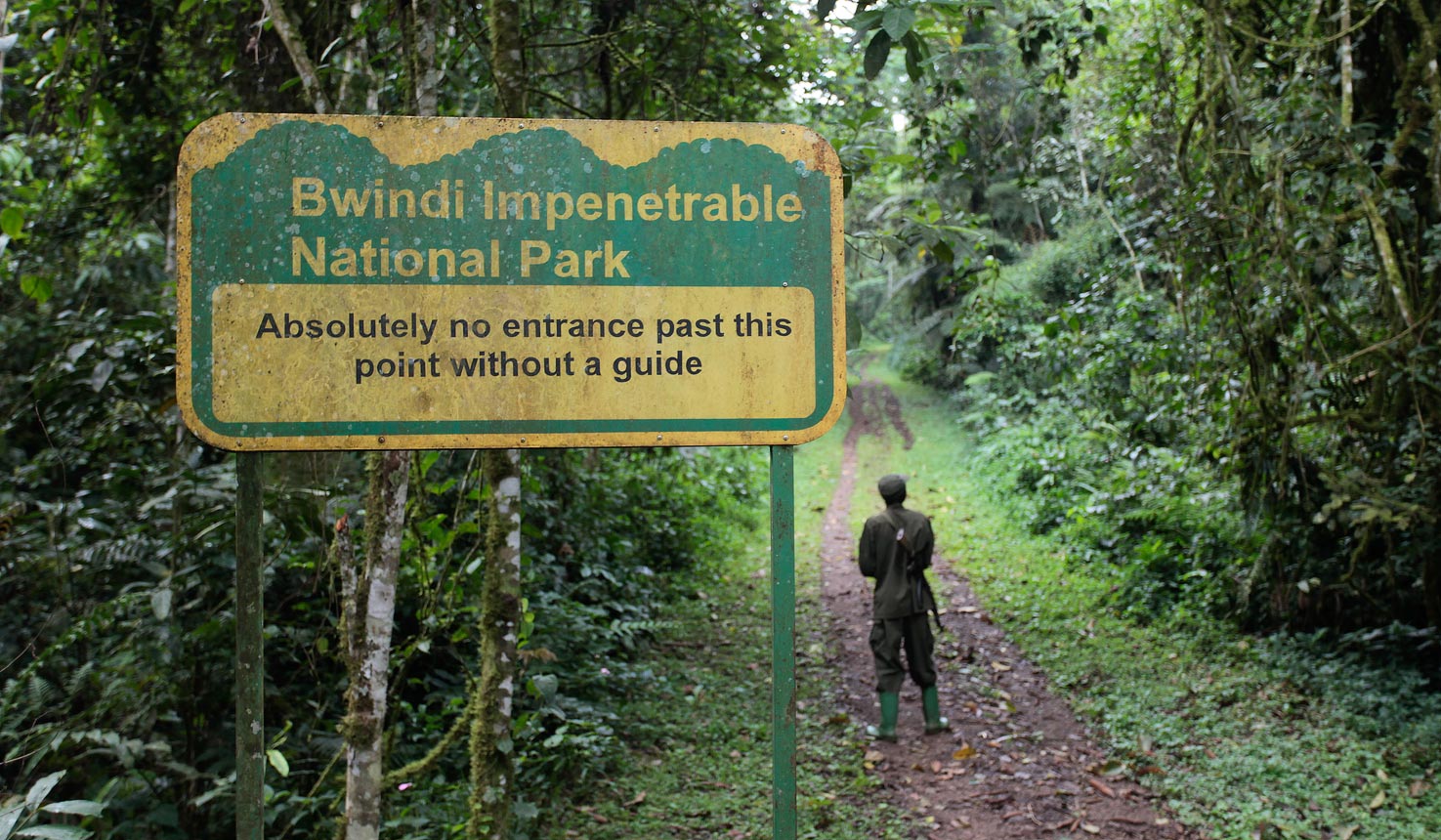
The world-famous home of gorilla trekking in Uganda, Bwindi’s dense rainforest hosts over 400 habituated and semi-habituated gorillas across multiple trekking sectors (Buhoma, Ruhija, Rushaga, Nkuringo).
2. Queen Elizabeth National Park
Known for its tree-climbing lions, hippo-filled Kazinga Channel boat cruise, and easy combination with chimp trekking in the nearby Kyambura Gorge.
3. Murchison Falls National Park
Uganda’s largest national park, centered on the dramatic point where the Nile River explodes through a narrow gorge. Expect elephants, giraffes, buffalo, and boat safaris to the base of the falls.
4. Kibale National Park
The top choice for chimpanzee trekking in Uganda, paired easily with the nearby Bigodi Wetland Sanctuary for birdwatching.
5. Kidepo Valley National Park
Uganda’s most remote and rugged park, often compared to the Serengeti for its raw wilderness — home to cheetahs, ostriches, and species found nowhere else in Uganda.
Not sure which parks fit your timeline? Let GoSilverback build your route →
Best Time to See Wildlife in Uganda
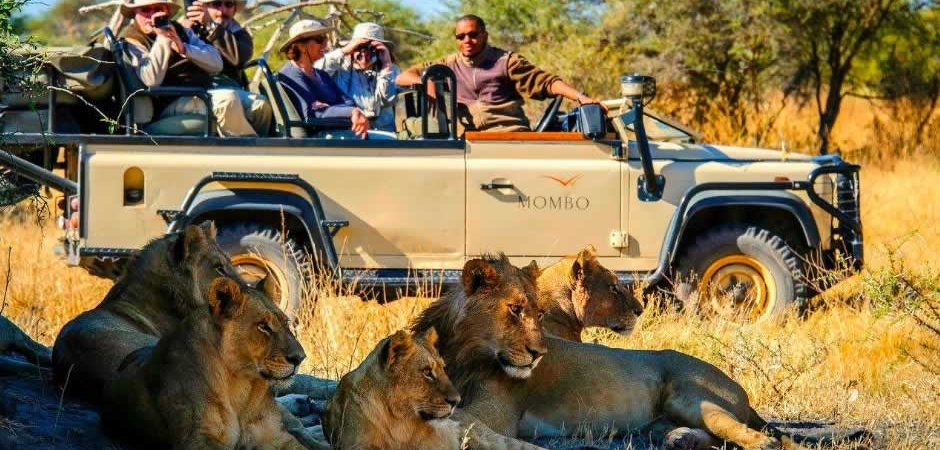
Uganda’s dry seasons — December to February and June to September — are the best months for game viewing, since animals cluster around water sources and trails are easier to navigate.
- Gorilla trekking is possible year-round, since gorillas live in rainforest regardless of season — but trails are less muddy and hiking is easier in the dry months.
- Birdwatching peaks from November to April, when migratory species from Europe and North Africa join Uganda’s resident birds.
- The wet seasons (April, May, November) bring lower prices and lush scenery, with the trade-off of muddier trekking conditions.
How Much Does a Uganda Wildlife Safari Cost?
The single biggest line item on any Uganda wildlife trip is the gorilla trekking permit.
As of 2026, a standard Uganda gorilla trekking permit costs $800 USD per person for foreign non-residents (visitors from the USA, UK, Canada, Europe, Asia, and Oceania), while foreign residents pay a reduced rate.
East African citizens pay a heavily subsidized local rate of around UGX 300,000.
Travelers visiting during Uganda’s low season — April, May, and November — can access a discounted permit rate, though these discounted permits are typically non-reschedulable, so book with confidence in your travel dates.
For travelers wanting a deeper encounter, the Gorilla Habituation Experience in Bwindi’s Rushaga sector allows up to four hours with a semi-habituated family instead of the standard one hour — priced at a premium above the standard permit.
Beyond the permit itself:
- Transport — private 4×4 transfers from Entebbe or Kampala to Bwindi typically take 8–10 hours by road, or you can fly domestically to save time.
- Accommodation — ranges from budget lodges to ultra-luxury safari camps.
- Meals, tips, and porters — modest additional costs that significantly improve the trekking experience.
Compared to Rwanda, where permits run substantially higher, Uganda remains the more budget-friendly gorilla trekking destination without compromising the quality of the encounter.
Want an accurate, all-in quote for your dates? Request a free Uganda safari quote →
Responsible & Ethical Wildlife Tourism in Uganda
Wildlife tourism in Uganda directly funds conservation. A significant share of every gorilla permit fee goes toward park management, ranger salaries, anti-poaching patrols, and community development projects — schools, clinics, and infrastructure in villages bordering the parks.
Key rules every visitor should know before booking:
- Trekking groups are limited to 8 visitors per gorilla family, minimizing stress on the animals.
- Visitors must stay at least 7 meters (about 21 feet) from gorillas at all times.
- Anyone feeling unwell (even a mild cold) should not trek, since gorillas are highly susceptible to human respiratory illnesses.
- Maximum trekking time with the gorillas is strictly one hour for standard permits.
Booking through a licensed, community-conscious operator like GoSilverback Gorilla Safaris ensures your permit fees and tourism spend genuinely support conservation and local communities — not just your itinerary.
Frequently Asked Questions
What animals can you see in Uganda?
Uganda is home to mountain gorillas, chimpanzees, lions (including tree-climbing lions), elephants, leopards, buffalo, rhinos (at Ziwa Sanctuary), giraffes, hippos, and over 1,000 bird species including the rare shoebill stork.
Is Uganda good for a safari?
Yes — Uganda combines primate trekking (gorillas and chimpanzees) with traditional Big Five game viewing in one country, offering more variety per travel day than most other African safari destinations.
Can you see gorillas and the Big Five in one trip?
Yes. A typical 7–10 day itinerary combines gorilla trekking in Bwindi with game drives in Queen Elizabeth or Murchison Falls National Park, covering both experiences comfortably.
What is the best month to visit Uganda for wildlife?
The dry months of December–February and June–September are best for general game viewing, though gorilla trekking is possible year-round.
Is Uganda safer than Kenya for safaris?
Uganda has a well-established, professionally managed safari industry with strict ranger-led protocols for gorilla trekking and game drives. Both Uganda and Kenya are considered safe, established safari destinations; the right choice depends on your specific itinerary and interests.
Start Planning Your Uganda Wildlife Safari Today
From tree-climbing lions in Ishasha to face-to-face encounters with mountain gorillas in Bwindi’s misty forests, Uganda offers one of the most diverse and rewarding wildlife experiences in Africa — all within a single, manageable itinerary.
Whether you’re chasing the Big Five, tracking chimpanzees through Kibale, or spotting the elusive shoebill stork in Mabamba Swamp, Uganda delivers world-class wildlife encounters at a fraction of the cost of neighboring destinations.
Don’t wait for permit availability to run out.
Book your gorilla trekking permit through GoSilverback Gorilla Safaris today and let our Uganda-based safari experts build you a custom, all-inclusive wildlife itinerary — from gorilla permits and park fees to lodges, transport, and guides.
Contact GoSilverback Gorilla Safaris now to secure your dates and start your Uganda wildlife adventure.