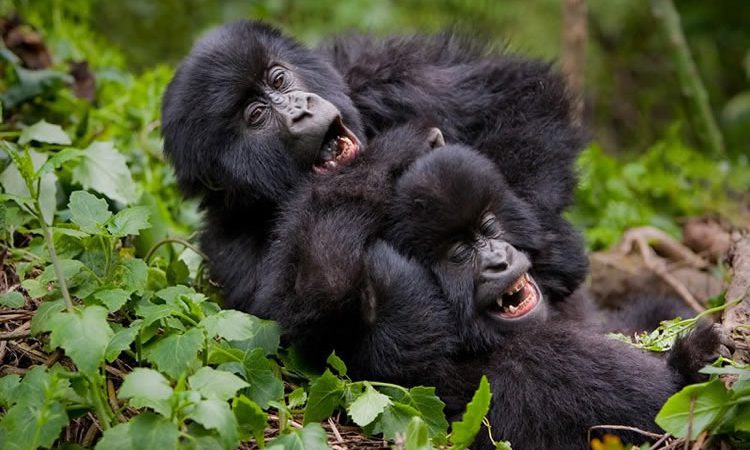
Mountain Gorilla Habitat Protection: How Ethical Tourism Saves the Virunga Forests 2026 Guide
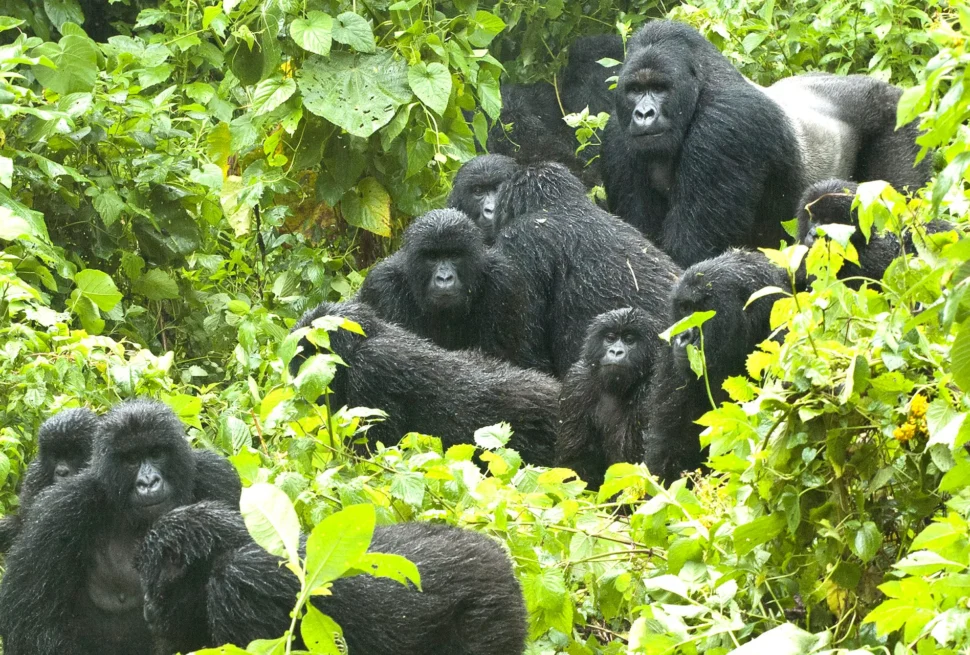
Deep in the mist-shrouded Virunga Massif, where volcanic peaks pierce the clouds and ancient afromontane forests cling to steep slopes, mountain gorilla habitat protection has become one of conservation’s greatest success stories — and one of its most urgent battles.
Just four decades ago, fewer than 250 mountain gorillas remained on Earth. Today, thanks to relentless habitat protection, anti-poaching patrols, and ethical gorilla tourism, their numbers have climbed to approximately 1,063 individuals.
Yet this fragile recovery faces a paradox: the very tourism that funds their survival also risks the diseases and disturbance that could unravel it.
For travelers from the USA, UK, Europe, Canada, Asia, and the Middle East, choosing where and how to trek isn’t just about adventure – it’s a direct vote for mountain gorilla habitat protection.
Every gorilla permit purchased channels critical funds into ranger patrols, community incentives, and forest restoration.
In this guide, you’ll discover exactly what threatens gorilla habitats, how Bwindi Impenetrable National Park and Volcanoes National Park are fighting back, and how booking through GoSilverback Gorilla Safaris transforms your journey into conservation impact.
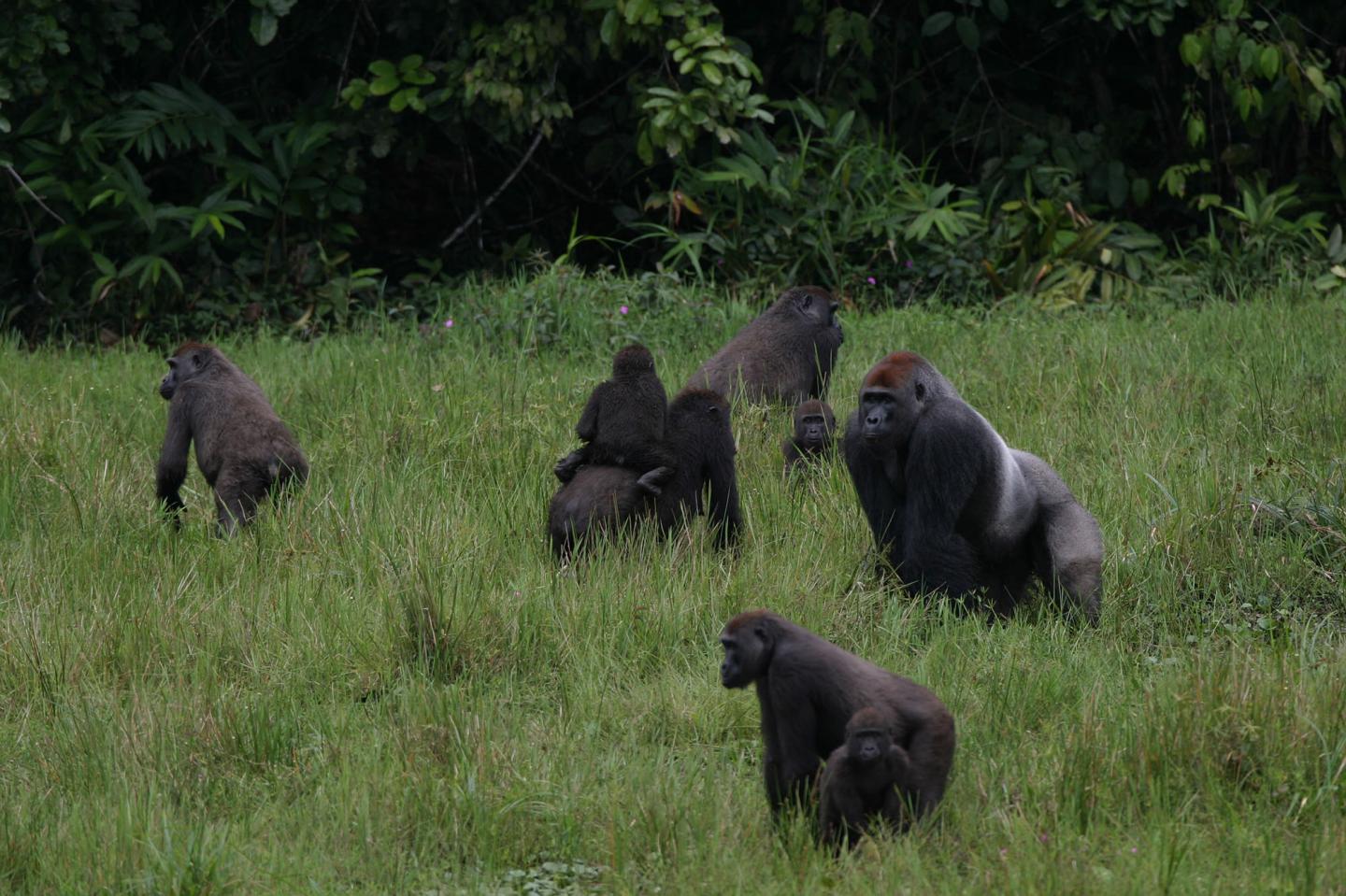
What Is Mountain Gorilla Habitat Protection?
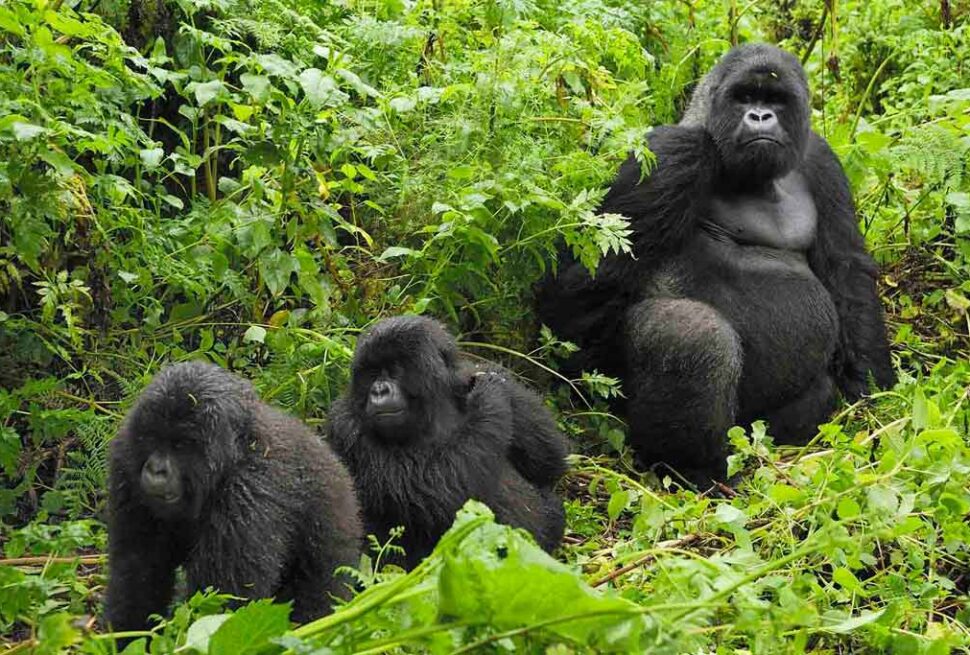
Mountain gorilla habitat protection refers to the coordinated conservation of the Afromontane forests and bamboo zones that sustain Mountain Gorilla – the world’s most endangered great ape subspecies.
These efforts span three countries: Uganda, Rwanda, and the Democratic Republic of Congo (DRC).
The protected landscape is extraordinarily compact. The Greater Virunga Landscape covers just 777 square kilometers — a habitat smaller than many cities — yet holds the entire global population of mountain gorillas.
This extreme concentration makes habitat protection non-negotiable.
Table
|
Protected Area |
Country |
Gorilla Population |
Key Habitat Feature |
|
Bwindi Impenetrable National Park |
Uganda |
~459 individuals |
Ancient rainforest, UNESCO World Heritage Site |
|
Mgahinga Gorilla National Park |
Uganda |
1 habituated family |
Virunga volcanoes, bamboo forests |
|
Volcanoes National Park |
Rwanda |
~604 individuals in Virunga Massif |
Volcanic slopes, open terrain |
|
Virunga National Park |
DRC |
Part of Virunga Massif |
Active volcanoes, conflict zone |
Unlike their lowland cousins who roam across vast Central African rainforests, mountain gorillas are habitat specialists.
They require dense montane forests between 2,200 and 4,300 meters elevation, where temperatures remain cool, bamboo shoots provide year-round food, and thick vegetation offers shelter.
Remove even a fraction of this habitat, and the entire population faces collapse. This is why mountain gorilla habitat protection isn’t merely about saving trees — it’s about preserving a precisely calibrated ecosystem that cannot be replicated elsewhere.
Why Mountain Gorilla Habitat Protection Matters
Mountain gorillas are keystone species in the afromontane ecosystem. As large-scale herbivores, they regulate vegetation growth, disperse seeds across kilometers of forest floor, and maintain the structural complexity that countless other species depend upon.
Remove gorillas, and the entire ecological web destabilizes — affecting water cycles, carbon storage, and biodiversity that local communities rely upon for survival.
The forests they inhabit are equally critical for climate regulation. The Bwindi Impenetrable Forest and Virunga Massif act as massive carbon sinks, absorbing atmospheric CO₂ while releasing water vapor that sustains regional rainfall patterns.
When these forests degrade, the consequences extend far beyond gorilla populations — they trigger drought, soil erosion, and agricultural collapse for millions of people in the Great Lakes Region.
Beyond ecology, habitat protection drives human prosperity in measurable ways:
1. Revenue Sharing:
Park entrance fees and gorilla permit sales fund schools, clinics, and roads in communities bordering Bwindi and Volcanoes National Parks.
In Uganda, 20% of park revenue is mandated for community projects — turning conservation from an imposed restriction into a shared economic engine.
2. Employment:
Over 1,000 local guides, porters, trackers, and rangers depend directly on gorilla tourism. Each trekking group requires a lead guide, armed escorts, and porters — creating a multiplier effect where one tourist supports multiple families.
3. Land Value Shift:
When forests generate tourism income, communities stop seeing them as land to clear for agriculture. A hectare of intact gorilla habitat generates exponentially more income through ecotourism than through subsistence farming or charcoal production.
This is conservation through commerce — and the data proves it’s working.
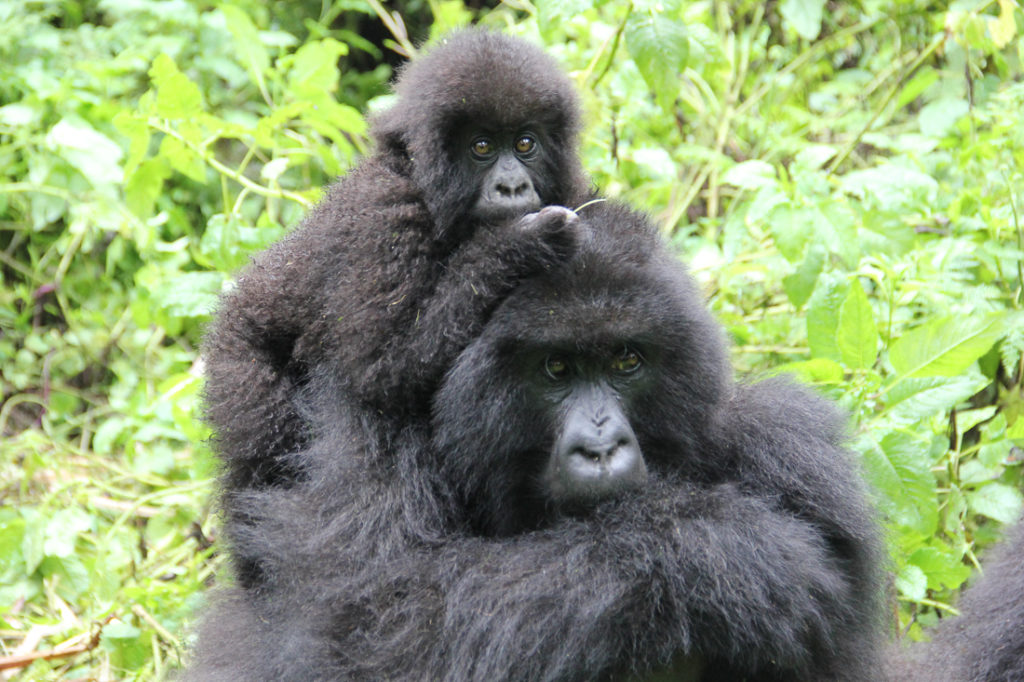
The 5 Biggest Threats to Mountain Gorilla Habitat
Despite conservation gains, mountain gorilla habitat protection faces relentless pressure from human activity, climate change, and geopolitical instability.
Here are the five critical threats every traveler should understand before booking their gorilla trekking safari.
1. Habitat Loss and Forest Fragmentation
Habitat loss is the primary threat to mountain gorillas. As human populations expand around Bwindi and the Virunga Massif, forests are cleared for agriculture, charcoal production, and livestock grazing.
Even within protected areas, illegal settlers have cleared thousands of acres for farming and settlement. This fragmentation isolates gorilla families, restricting gene flow and increasing inbreeding risk — a genetic time bomb for a species with already limited diversity.
The problem is most acute around Bwindi Impenetrable National Park, where some of Africa’s highest rural population densities press against park boundaries.
Without active habitat restoration and buffer zone management, gorilla groups become trapped in shrinking forest islands, unable to migrate, find mates, or access seasonal food sources.
2. Disease Transmission from Humans
Mountain gorillas share 98% of their DNA with humans, making them extraordinarily vulnerable to our diseases — even the common cold can be fatal to a gorilla with no immunity to human pathogens.
Tourism, while economically vital, brings this risk into the forest every single day.
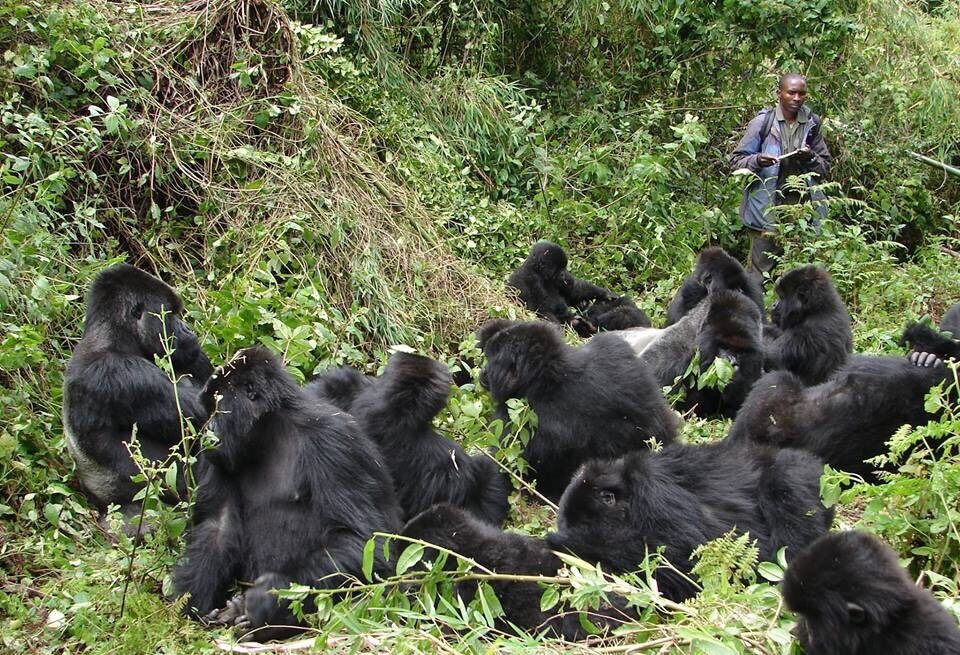
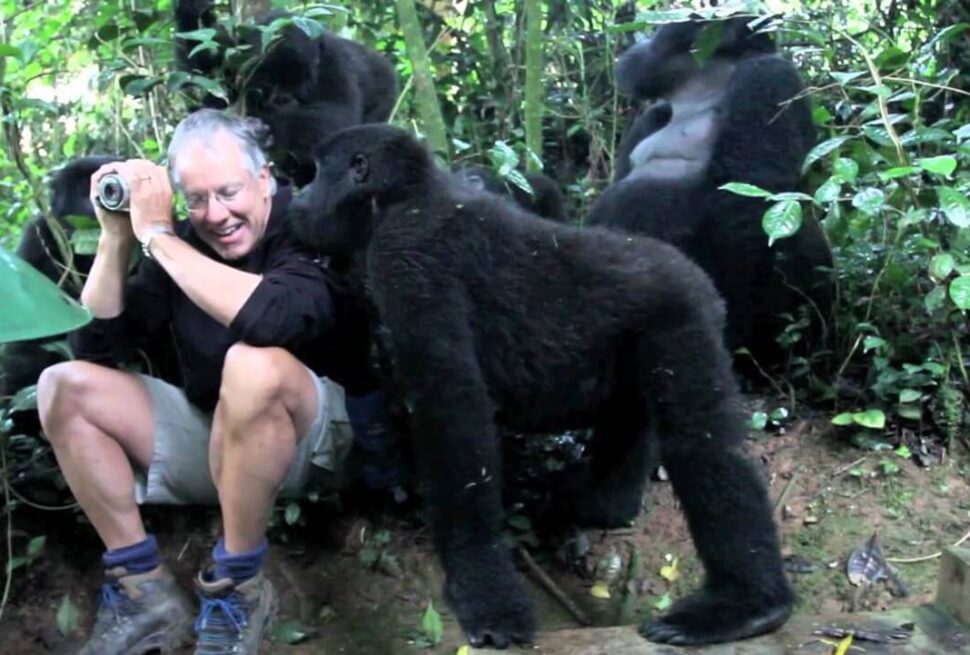
That’s why strict 7-meter distance rules, mandatory health screenings, and limited group sizes (8 tourists maximum per gorilla family) are enforced at both Bwindi and Volcanoes National Parks.
During the COVID-19 pandemic, these protocols were tested like never before. Rwanda pioneered enhanced distancing measures, mandatory face masks, and reduced group sizes — proving that ethical gorilla tourism can adapt to protect both humans and apes.
Today, any visitor showing cold or flu symptoms is barred from trekking — no exceptions.
3. Poaching and Snares
While direct gorilla poaching is rare — gorillas have no commercial value on bushmeat markets — snares set for antelope and bush pigs maim and kill gorillas indiscriminately.
A wire snare around a wrist or ankle causes infection, amputation, or death. In 2020, Rafiki, the silverback of Bwindi’s famous Nkuringo group, was killed by poachers — a devastating loss that underscored the ever-present danger and galvanized anti-poaching efforts across Uganda.
Ranger patrols remove thousands of wire snares annually from Bwindi and Volcanoes National Park, but the threat persists as long as poverty drives local communities to hunt forest animals for protein and income.
4. Civil Unrest and Militia Activity
The Greater Virunga Landscape has been a conflict zone for decades.
The Rwandan genocide, successive DRC civil wars, and ongoing militia presence in Virunga National Park have killed over 220 rangers since 1925 and made conservation work among the most dangerous jobs on Earth.
Armed groups use the forest as cover, illegal charcoal production funds insurgencies, and park infrastructure is regularly attacked.
This instability doesn’t just threaten rangers — it disrupts habitat monitoring, displaces gorilla groups, and deters tourism revenue that funds protection. When conflict spikes, conservation funding dries up precisely when it’s needed most.
5. Climate Change
Rising temperatures are pushing suitable gorilla habitat higher up mountain slopes.
As forests warm, gorillas must retreat to colder elevations to maintain their thermal comfort and food sources — but there’s only so far up they can go before hitting barren volcanic rock.
Climate models predict that by 2050, significant portions of current gorilla range may become climatically unsuitable, forcing populations into ever-smaller refugia.
The solution requires corridor creation — restoring forest connections that allow gorillas to migrate to cooler, higher elevations as climate zones shift. This is expensive, long-term work that depends entirely on sustained tourism funding.
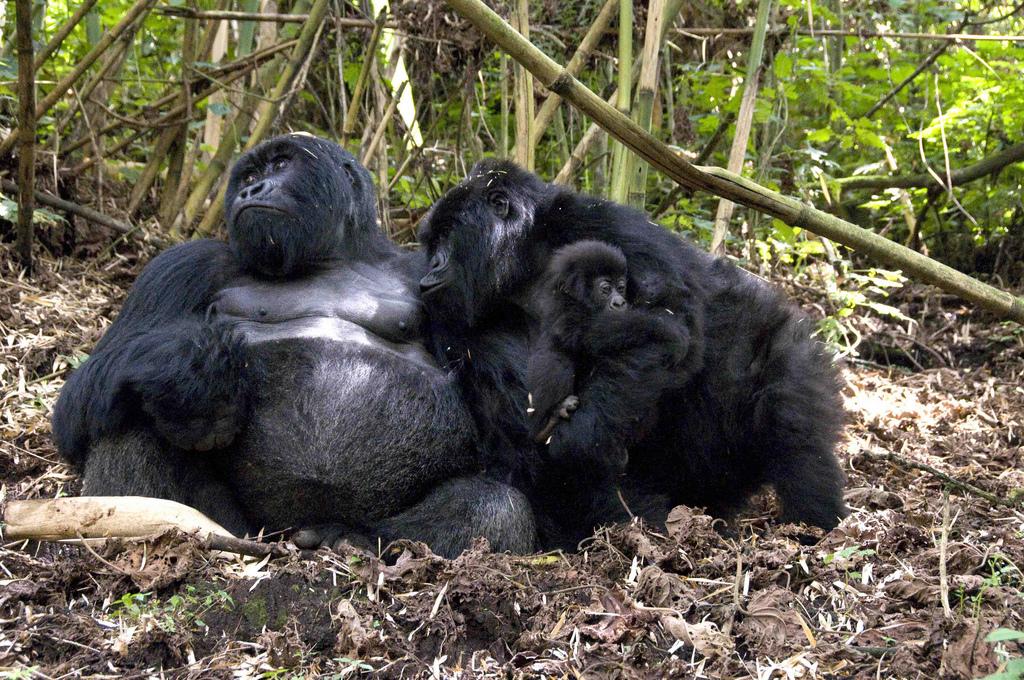
How Uganda Protects Mountain Gorilla Habitat
Bwindi Impenetrable National Park is the crown jewel of mountain gorilla habitat protection.
This 331-square-kilometer UNESCO World Heritage Site shelters approximately half the world’s mountain gorilla population — making Uganda the single most important country for species survival.
Uganda’s Protection Strategies
1. Gazetting and Law Enforcement:
Bwindi was designated a national park in 1991, giving it the highest protection status under Ugandan law.
The Uganda Wildlife Authority (UWA) conducts daily anti-poaching patrols using the SMART monitoring system — a mobile-based platform that maps threats, tracks ranger movements, and analyzes patrol data in real time.
Rangers cover thousands of kilometers annually on foot, often in treacherous terrain, removing snares and intercepting poachers before they reach gorilla groups.
2. Community Conservation:
The revenue-sharing scheme channels 20% of park entrance fees to local communities.
This has funded schools, health centers, clean water projects, and sustainable agriculture initiatives — turning former poachers into conservation advocates.
When a community sees tangible benefits from intact forests, the incentive to encroach disappears.
3. Controlled Tourism:
Uganda enforces strict trekking protocols: only 8 visitors per gorilla family per day, for a maximum of 1 hour.
This limits stress, reduces disease exposure, and prevents habituated groups from becoming overly dependent on human presence.
The UWA also rotates which families are visited, ensuring no single group bears excessive tourist pressure.
4. Habitat Restoration:
Tree-planting initiatives and buffer zone management are expanding forest corridors, allowing gorilla families to interact and maintain genetic diversity.
Native species are replanted along park edges, creating transitional zones that absorb human-wildlife conflict while extending usable habitat.
Why Uganda Wins for Conservation-Minded Travelers
- Lower permit costs ($800 vs. Rwanda’s $1,500) mean more tourists can participate, generating broader conservation funding from a larger visitor base
- More habituated families (20+ in Bwindi alone) distribute tourist pressure across wider habitat areas, reducing stress on any single group
- Diverse safari combinations: Pair gorilla trekking with Queen Elizabeth National Park (famous for tree-climbing lions), Murchison Falls National Park (Nile River drama), or Kibale National Park (chimpanzee tracking) — extending your conservation impact across multiple ecosystems
For travelers asking “Which country is better for gorilla trekking?” — Uganda answers with unmatched biodiversity, superior value, and conservation funding that reaches more communities.
How Rwanda Protects Mountain Gorilla Habitat
Volcanoes National Park in northwestern Rwanda represents the gold standard of premium conservation tourism.
Here, mountain gorilla habitat protection is woven into a luxury tourism model that generates maximum revenue per visitor while maintaining world-class protection standards.
Rwanda’s Protection Strategies
1. Premium Pricing, Maximum Impact:
At $1,500 per permit, Rwanda’s gorilla tourism is the world’s most expensive — and deliberately so.
This high barrier reduces tourist volume while generating enormous per-capita conservation revenue.
The funds support ranger salaries, veterinary interventions, rapid response teams, and community projects at scale that lower-priced models cannot match.
2. Volcanoes National Park Management:
The park’s open bamboo forests and volcanic terrain make monitoring easier than Bwindi’s dense jungle.
Rangers can track gorilla movements more efficiently, respond faster to threats, and maintain visual contact with groups for longer periods.
The terrain is also more forgiving for trekkers, reducing the physical barrier to participation.
3. Strict Health Protocols:
Rwanda pioneered COVID-19 era adaptations for gorilla tourism, including mandatory masks, enhanced distancing, and reduced group sizes during peak pandemic periods.
These protocols have become permanent fixtures, setting the global standard for disease-safe wildlife tourism.
4. Community Integration:
While critics note that revenue sharing hasn’t always reached local communities directly, Rwanda has invested heavily in luxury lodge employment and cultural tourism (Iby’Iwacu village visits) that channel income locally.
High-end properties like Singita Kwitonda Lodge and One&Only Gorilla’s Nest employ hundreds from surrounding villages and reinvest profits into reforestation and community health programs.
Why Rwanda Excels for Impact-Focused Luxury Travelers
- Shorter trekking times (often 1-2 hours vs. Uganda’s 3-6 hours) reduce gorilla disturbance while maximizing visitor satisfaction
- Helicopter transfers from Kigali minimize road traffic, carbon footprint, and travel fatigue
- Luxury lodges with direct conservation partnerships ensure that premium spending translates into premium protection
For honeymooners, short vacation travelers, and luxury seekers from Dubai, London, New York, and Singapore, Rwanda offers the most polished gorilla trekking experience on Earth — with conservation impact built into every dollar spent.
The Role of Gorilla Tourism in Habitat Protection
Here’s the truth most travelers don’t realize: without gorilla tourism, mountain gorilla habitat protection would collapse.
The Tourism-Conservation Pipeline
Step 1: Permit Revenue → Ranger Patrols
Every $800 Uganda permit and $1,500 Rwanda permit funds the anti-poaching patrols that remove snares, intercept poachers, and monitor gorilla health.
In Uganda, permit revenue constitutes the majority of UWA’s operational budget for Bwindi. In Rwanda, it underwrites one of Africa’s best-equipped ranger forces.
Step 2: Park Fees → Community Incentives
When local families earn income from portering, guiding, and lodge employment, they become habitat stewards rather than forest encroachers.
A porter earning $20 per trek supports a family that might otherwise clear forest for subsistence farming. Multiply this by 1,000+ tourism workers, and the economic case for conservation becomes undeniable.
Step 3: Visitor Presence → Deterrence
Tourists in the forest act as human shields. Militias and poachers avoid areas with daily trekking activity because ranger presence is highest where tourists go.
Your presence literally pushes threats away from gorilla groups.
Step 4: Global Awareness → Funding
Every Instagram post, every travel blog, every dinner-party story about gorilla trekking generates donations and political will for conservation.
International pressure — fueled by travelers who’ve witnessed these magnificent apes — keeps governments accountable for protection funding.
The Data Proves It
Mountain gorillas in habituated groups (those visited by tourists) have higher survival rates than unhabituated groups.
They receive veterinary care from organizations like the Gorilla Doctors, constant monitoring, and protection from the greater ranger presence that tourism demands.
The Mountain Gorilla Veterinary Project has treated hundreds of gorillas for snare wounds, respiratory infections, and trauma — interventions impossible without tourism-funded infrastructure.
Your trek is not extraction. It is investment.
SMART Technology and Modern Habitat Monitoring
Conservation has gone digital. The Spatial Monitoring and Reporting Tool (SMART) is revolutionizing mountain gorilla habitat protection across the Greater Virunga Landscape.
How SMART Works
- Rangers carry smartphones loaded with GPS-enabled patrol apps that record their routes, observations, and threat encounters in real time
- Real-time data maps snare locations, illegal activity hotspots, and gorilla group movements across the entire protected area
- Analytics identify threat patterns, optimizing patrol routes so rangers spend less time walking empty forest and more time intercepting poachers
- Evidence collected supports poacher prosecutions in court, creating deterrence through enforcement
Since SMART’s 2012 launch, it has been deployed at 1,000+ conservation sites across 70 countries — but the Virunga Massif remains its most critical African application.
In Bwindi alone, SMART has helped rangers increase patrol coverage by 40% while improving threat detection accuracy.
Other Tech Innovations
- Drone surveillance for boundary monitoring, especially in conflict-prone DRC sectors where ground patrols are dangerous
- eDNA sampling to track gorilla health and population genetics without physical contact or disturbance
- Satellite imagery with AI-powered change detection to identify illegal forest clearing within 24 hours of occurrence
These technologies don’t replace rangers — they multiply ranger effectiveness. And they are funded overwhelmingly by gorilla tourism revenue.
How Travelers Can Support Mountain Gorilla Habitat Protection
You don’t need to be a biologist to save mountain gorillas.
Here’s how every traveler becomes a conservationist through intentional choices.
1. Book an Ethical Gorilla Trekking Safari
Choose operators who:
- Employ local guides and porters at fair wages
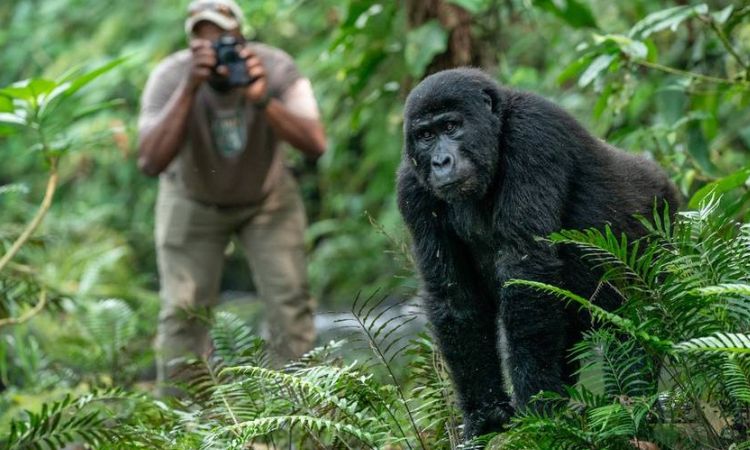
- Follow the 7-meter distance rule rigorously, even when gorillas approach
- Contribute to conservation funds beyond permit fees
- Provide pre-trek briefings on ethical behavior and ecological context
GoSilverback Gorilla Safaris partners directly with UWA and the Rwanda Development Board to ensure every booking supports ranger patrols, community projects, and habitat restoration.
We don’t just sell permits — we sell conservation impact.
2. Choose the Right Destination for Your Impact
Table
|
Your Priority |
Best Choice |
Why |
|
Maximum conservation funding per dollar |
Uganda |
Lower permit cost = more accessible = broader funding base |
|
Premium conservation with luxury |
Rwanda |
High revenue per visitor funds intensive protection |
|
Extended wildlife impact |
Uganda |
Combine with Queen Elizabeth, Murchison Falls, Kibale chimpanzee tracking |
|
Short, high-impact visit |
Rwanda |
2-day itinerary from Kigali, minimal footprint |
|
Family-friendly trekking |
Rwanda |
Easier terrain, shorter hikes, luxury amenities |
|
Adventure + budget combination |
Uganda |
Multi-day safaris, diverse landscapes, lower overall cost |
3. Follow Trekking Rules Rigorously
- Stay 7 meters from gorillas — even if they approach you. Back away slowly. Never touch.
- Wear masks when required — respiratory droplets travel farther in humid forest air
- Never trek if you have cold/flu symptoms — no refund is worth risking a species
- Stay with your group — wandering spreads disturbance across wider habitat areas
- Silence your phone — sudden noises stress gorillas and disrupt natural behavior
4. Extend Your Stay
The longer you stay in gorilla-range communities, the more your tourism dollars circulate locally.
Add a cultural visit to Batwa pygmy communities in Uganda – Africa’s oldest forest dwellers displaced by park creation – or the Iby’Iwacu cultural village in Rwanda, where former poachers demonstrate traditional crafts and share conservation success stories.
These experiences deepen your understanding while directing revenue to those who need it most.
Mountain Gorilla Habitat Protection: Success Stories
The numbers tell a remarkable story of what focused conservation can achieve:
- 1989: ~680 mountain gorillas remaining — classified as Critically Endangered
- 2018: ~1,063 individuals counted — downlisted to Endangered (still rare, but no longer on the brink)
- 2026: Population continues growing, with Bwindi’s population alone increasing steadily through successful habituation and protection
Key Victories
- Virunga Massif population: Grew from 480 (2010) to 604 individuals — a 26% increase in one decade
- Snare removal: Thousands of wire snares removed annually by ranger patrols, with zero snare-related gorilla deaths in habituated groups since 2020
- Community buy-in: Former poachers now lead anti-poaching teams, using forest knowledge to protect what they once exploited
- Transboundary cooperation: Uganda, Rwanda, and DRC rangers coordinate patrols across borders, sharing intelligence and responding to threats as a unified force
- Rafiki’s legacy: The silverback’s tragic death triggered a $50,000 reward fund, increased penalties for poaching, and renewed international attention to ranger funding
This is proof that mountain gorilla habitat protection works – when funded, staffed, and supported by conscious travelers who understand that their vacation choices shape conservation outcomes.
The Future of Mountain Gorilla Habitat Protection
The next decade will determine whether this recovery sustains or reverses.
The challenges ahead are formidable:
Critical Threats on the Horizon
1. Climate displacement: As forests warm, gorillas need corridors to higher elevations — requiring expensive land purchases, reforestation, and decades of growth before new habitat becomes usable.
2. Human population growth: Communities around Bwindi are among Africa’s most densely populated rural areas. Without alternative livelihoods, pressure on park boundaries will intensify.
3. Disease vigilance: The next pandemic — whether COVID-23, avian flu, or an unknown pathogen — could devastate a species with no natural immunity to human viruses. Preparedness requires constant investment.
4. Funding gaps: SMART technology, ranger equipment, veterinary supplies, and satellite monitoring require sustained international investment that fluctuates with global economic conditions and travel trends.
The Solution: More Ethical Tourism, Not Less
Every traveler who chooses a GoSilverback Gorilla Safari directly funds the protection infrastructure these apes need to survive.
Gorilla tourism isn’t the problem — it’s the solution. The question isn’t whether to visit, but how to visit responsibly.
Frequently Asked Questions
Q: What is the biggest threat to mountain gorilla habitat?
A: Habitat loss from agricultural expansion, charcoal production, and human settlement encroachment is the primary threat. This fragmentation isolates gorilla populations, restricts genetic diversity, and forces families into smaller, less viable ranges.
Q: How many mountain gorillas are left in 2026?
A: Approximately 1,063 individuals in the wild, all living in the Greater Virunga Landscape spanning Uganda, Rwanda, and DRC. This is up from ~680 in 1989, but still perilously few for long-term genetic health.
Q: Does gorilla tourism really help conservation?
A: Yes. Habituated gorilla groups (visited by tourists) have higher survival rates due to increased ranger protection, veterinary care, and monitoring. Permit revenue funds anti-poaching patrols and community projects that reduce human-wildlife conflict.
Q: Which country is better for conservation-focused gorilla trekking?
A: Uganda offers the best value and broader community impact through lower permit costs ($800). Rwanda provides premium conservation funding per visitor through luxury tourism ($1,500). Both are excellent choices; the right answer depends on your budget, timeline, and travel style.
Q: What is SMART technology in gorilla conservation?
A: The Spatial Monitoring and Reporting Tool — a mobile-based platform that helps rangers map threats, track patrols, and analyze conservation data in real time. It has been deployed at 1,000+ sites globally but remains most critical in the Virunga Massif.
Q: Can I visit mountain gorillas ethically?
A: Absolutely. Book through licensed operators like GoSilverback Gorilla Safaris, follow all park rules (7-meter distance, health screenings, no touching), and choose community-integrated itineraries that direct revenue to local populations.
Q: How difficult is gorilla trekking?
A: Rwanda offers easier terrain with shorter hikes (1-3 hours). Uganda’s Bwindi involves steeper, denser forest with treks ranging from 2-6 hours. Both require reasonable fitness, but porters are available to assist. The reward — standing meters from a wild silverback — justifies every step.
Q: What should I pack for gorilla trekking?
A: Essential items include waterproof hiking boots, long trousers and sleeves (stinging nettles), gardening gloves for vegetation, rain gear, insect repellent, packed lunch, and 2 liters of water. A porter carries your bag so you can focus on the trek.
Book Your Gorilla Trekking Safari — Protect What Matters
Your gorilla trek is not a vacation. It is a conservation act.
Every gorilla permit you purchase through GoSilverback Gorilla Safaris funds the rangers, veterinarians, and community programs that keep mountain gorillas alive.
Whether you choose Uganda’s value-packed adventure or Rwanda’s luxury conservation model, your journey protects what matters most — the last 1,063 mountain gorillas on Earth.
🦍 Uganda Gorilla Trekking Safaris
From approx. $1,200 per person | 3-5 day itineraries
- Bwindi Impenetrable National Park gorilla trekking
- Combine with Queen Elizabeth National Park (tree-climbing lions)
- Murchison Falls National Park extension available
- Perfect for budget travelers, wildlife enthusiasts, and extended East Africa adventures
🦍 Rwanda Gorilla Trekking Safaris
From $2,800 per person | 2-4 day itineraries
- Volcanoes National Park premium trekking
- Singita Kwitonda Lodge & One&Only Gorilla’s Nest luxury options
- Helicopter transfers from Kigali
- Perfect for honeymooners, luxury travelers, and short vacations
🦍 Customize Your Conservation Safari
Tailor-made itineraries for families, photographers, multi-generational groups, and extended Uganda-Rwanda combination tours.
Add chimpanzee tracking in Kibale, Big Five safaris in Akagera, or cultural immersion with Batwa communities.
📧 Email our safari specialists: info@gosilverbacksafaris.com
📞 Call/WhatsApp: +256-773-801-934
🌐 Visit: www.gosilverbacksafaris.com
GoSilverback Gorilla Safaris — Where Adventure Meets Conservation. Every trek saves a forest. Every permit protects a family. Book today and become part of the greatest conservation success story on Earth.