What Is the Mountain Gorilla Food Web and How Does It Work? and Why It’s Important: 2026 Guide
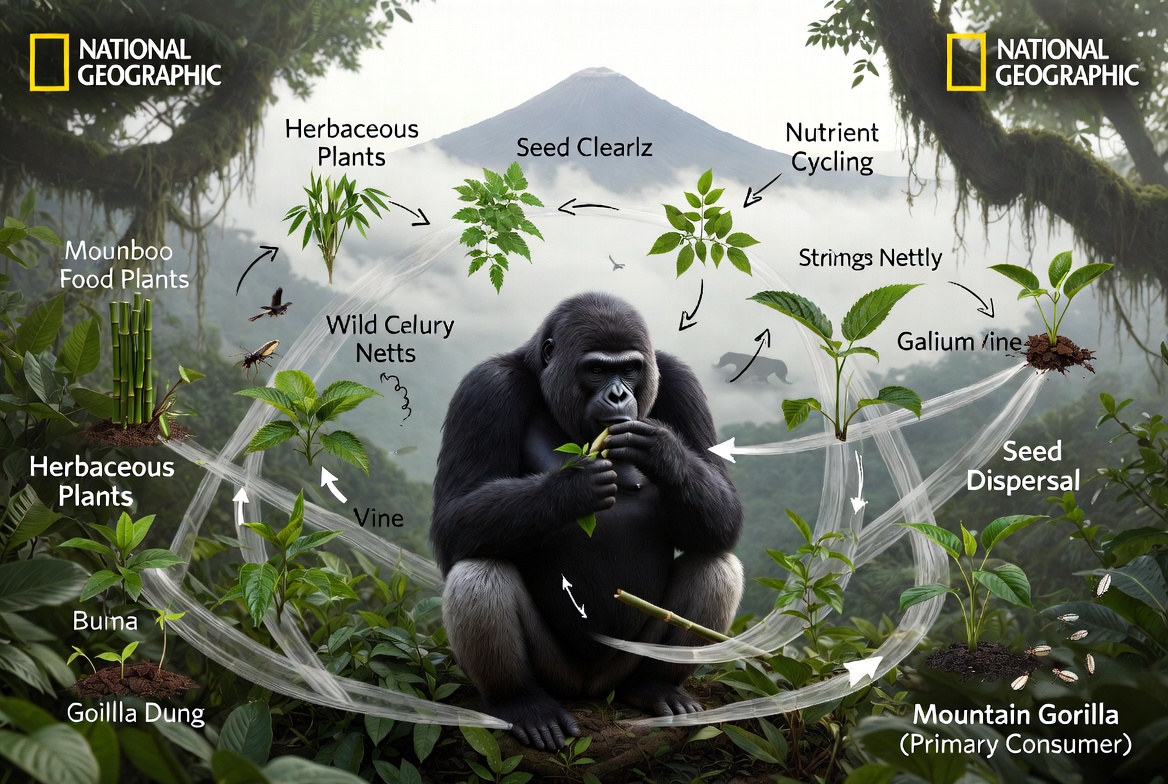
The mountain gorilla food web shows how gorillas interact with plants, animals, and decomposers in the rainforest ecosystem. Mountain gorillas are mainly herbivores that feed on leaves, bamboo shoots, fruits, roots, and wild celery.
They play a major role in seed dispersal and forest regeneration in the forests of Uganda, Rwanda, and DR Congo. Predators are rare, but leopards and human activities threaten their survival.
The mountain gorilla food web is essential for maintaining biodiversity and ecological balance in African rainforests.
Mountain gorillas stand as one of Africa’s most iconic and endangered species, thriving in the misty highlands of the Virunga Mountains and Bwindi Impenetrable Forest.
Their food web reveals a complex interplay of herbivory, seed dispersal, nutrient cycling, and ecosystem engineering in high-altitude rainforests.
As a leading African safari tour operator specializing in gorilla trekking safaris in Uganda, Rwanda, and the Democratic Republic of Congo, we witness daily how these gentle giants shape their environment.
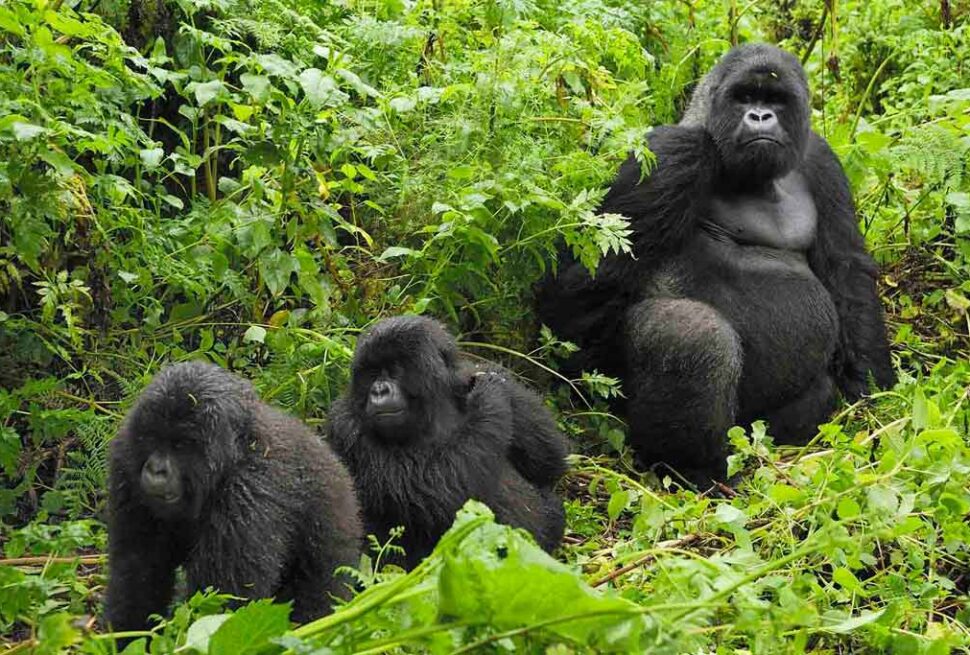
An adult silverback consumes up to 18–30 kg of vegetation daily, influencing plant diversity and forest structure across elevations of 2,500–4,000 meters.
The mountain gorilla food web extends far beyond simple consumption. Gorillas act as primary consumers in a trophic system where lush montane vegetation supports herbivores, which in turn sustain decomposers and predators.
Their foraging promotes regeneration, while dung disperses seeds and enriches soil. This web remains fragile, threatened by habitat loss and human pressures, yet resilient through dedicated conservation.
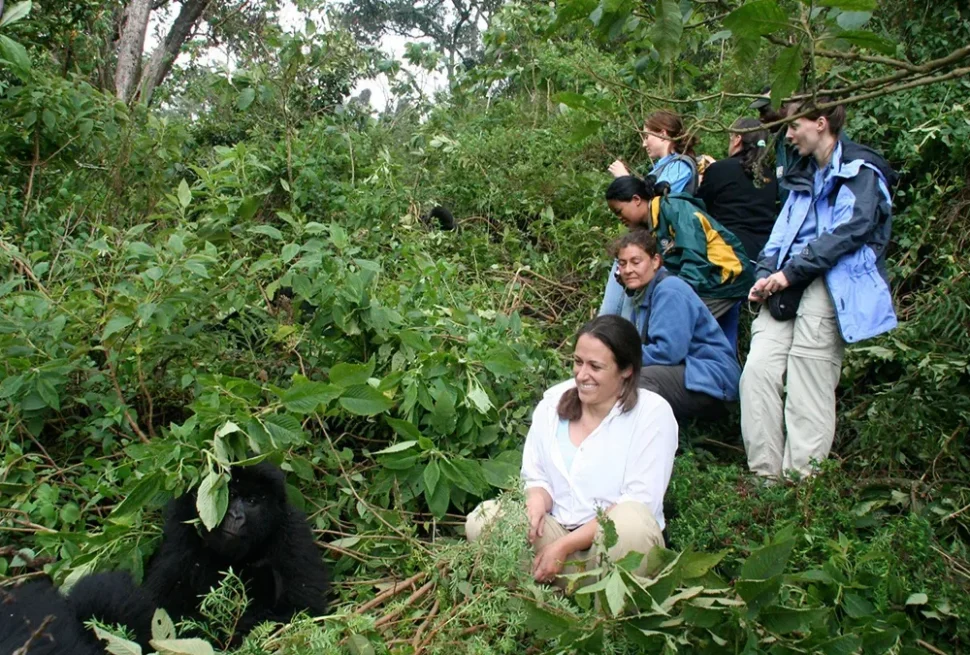
Understanding this food web deepens appreciation for gorilla trekking experiences. As you trek through Bwindi or the Virungas, you observe not just gorillas but an entire living system where every bite maintains balance.
Bold facts: Mountain gorilla numbers have risen from under 300 in the 1980s to over 1,000 today, thanks to tourism-funded protection—a testament to how responsible travel safeguards this intricate web.
This article explores the mountain gorilla food web in depth for travelers from the USA, UK, Europe, Canada, Asia, and the Middle East planning unforgettable gorilla safaris.
Discover their habitat, diet, ecological role, threats, and how joining a guided trek contributes to their survival.
What is a Mountain Gorilla Food Web?
A food web represents interconnected feeding relationships in an ecosystem, more complex than a linear food chain.
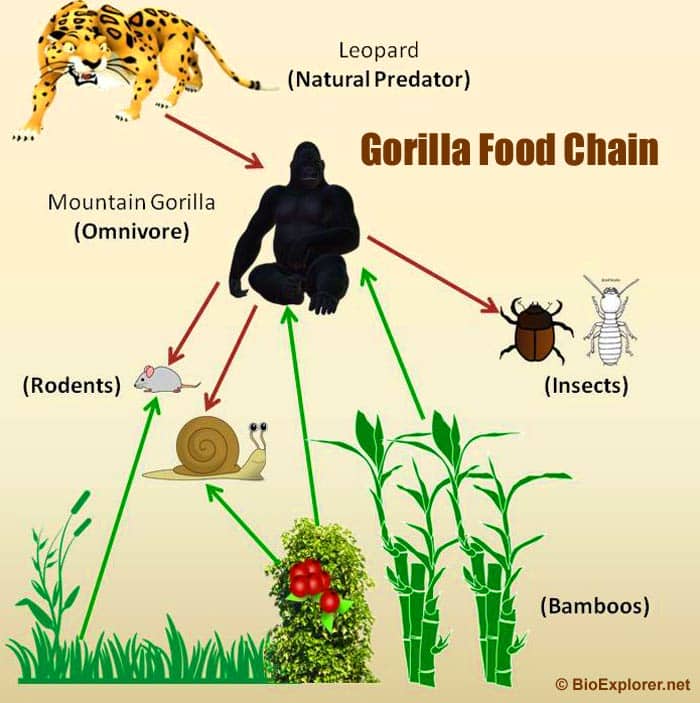
In the mountain gorilla context, it illustrates how these great apes interact with producers (plants), consumers (insects, smaller herbivores), and decomposers, while facing limited predation.
Mountain gorillas function primarily as herbivores and secondary consumers in a high-altitude montane ecosystem.
They consume vast quantities of fibrous vegetation, processing it through a specialized digestive system with symbiotic gut bacteria that break down cellulose—similar to ruminants but without rumination.
This allows efficient nutrient extraction from tough leaves, stems, and pith.
Key components of the mountain gorilla food web include:
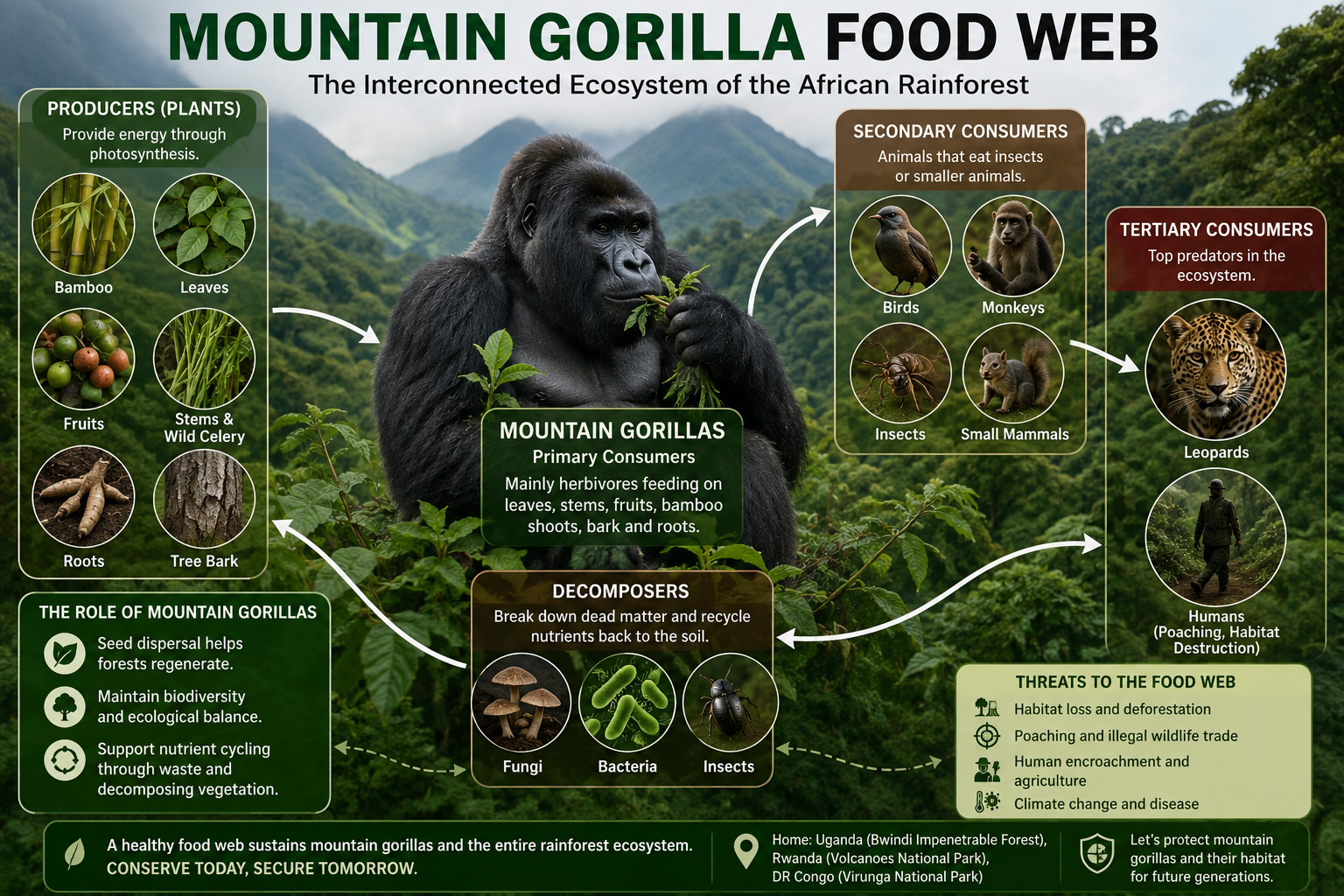
- Producers: Diverse herbaceous plants, bamboo, trees, and vines at high elevations provide the foundation. Species like Galium, wild celery, thistles, and Aframomum dominate.
- Primary Consumers: Gorillas, along with duikers, bushbuck, and various insects and rodents, feed directly on plants.
- Secondary Consumers: Occasional insectivory by gorillas (ants, termites, snails) plus predators like leopards targeting young gorillas or smaller mammals.
- Decomposers: Fungi, bacteria, and invertebrates break down gorilla dung and uneaten plant matter, recycling nutrients back to the soil for new growth.
Gorillas engineer the ecosystem through selective foraging. By preferring certain plants, they create gaps that allow light penetration and promote diverse regrowth.
Their dung, rich in partially digested fibers, seeds, and microbes, acts as a natural fertilizer, enhancing soil fertility in nutrient-poor volcanic soils.
Unlike lowland gorillas, mountain gorillas eat fewer fruits (only about 2–3% of diet) due to limited availability at altitude, relying instead on 86% leaves, shoots, and stems. This shifts the food web toward folivory, with seasonal bamboo shoots providing energy bursts.
The web interconnects with human elements through tourism and conservation. Revenue from gorilla permits funds ranger patrols, directly protecting the habitat that sustains the entire chain.
Disruptions—such as poaching snares or agricultural encroachment—ripple through the web, affecting not just gorillas but hundreds of co-dependent species.
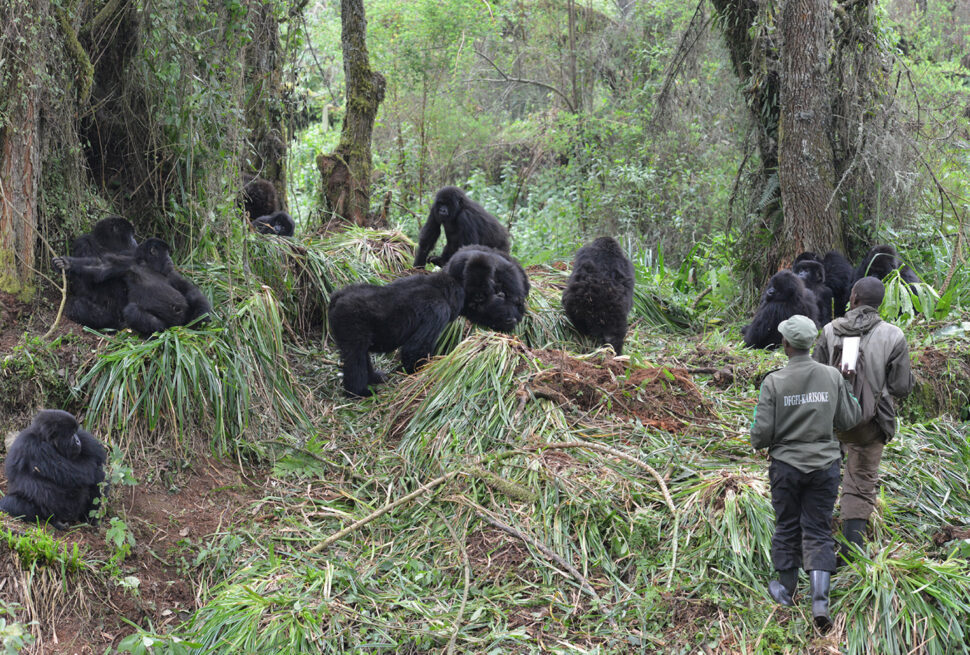
For safari enthusiasts, grasping this web transforms a gorilla trek from wildlife viewing into an immersive ecological journey. Tracking fresh trails reveals bite marks on nettles, silverback nests, and dung piles teeming with life, illustrating the dynamic balance.
Discover the fascinating Mountain gorilla food web and experience these incredible primates in their natural rainforest habitat through our exciting Gorilla Safaris Package tours across Uganda and Rwanda.
Where Do Mountain Gorillas Live?
Mountain gorillas inhabit two isolated populations in the Albertine Rift: the Virunga Massif (shared by Uganda, Rwanda, and DRC) and Bwindi Impenetrable National Park in southwestern Uganda.
These areas feature steep volcanic slopes, dense bamboo zones, and cloud forests at 2,200–4,300 meters elevation.
The Virunga Mountains comprise eight volcanoes, some active, creating a dramatic landscape of misty peaks, lava flows, and fertile soils.
Habitats range from lower montane forests with fruiting trees to higher bamboo and subalpine zones with herbaceous undergrowth ideal for gorillas.
Bwindi offers a more varied, ancient rainforest with over 1,000 flowering plant species, supporting slightly different foraging patterns.
Climate and adaptations: Temperatures drop to near-freezing at night with frequent rain and fog. Gorillas adapt with thick fur (hence “mountain”), large bodies for heat conservation, and flexible ranging behavior.
Groups move daily within home ranges of 3–15 km², following seasonal food availability—lower altitudes in wet seasons for herbs, higher for bamboo.
This habitat supports exceptional biodiversity: over 200 bird species, forest elephants (in Virunga), golden monkeys, and countless insects.
Volcanic soils enrich plant growth, sustaining the high biomass gorillas require. Yet, the terrain challenges conservation—steep slopes and cross-border politics demand coordinated efforts.
For international travelers, these locations offer premier gorilla trekking. Rwanda’s Volcanoes National Park provides shorter, accessible treks with luxury lodges.
Uganda’s Bwindi suits immersive forest experiences with multiple habituated groups. DRC’s Virunga offers raw adventure amid dramatic scenery. Permits are limited, emphasizing exclusivity and sustainability.
The restricted range makes mountain gorillas vulnerable. Only about 1,075 individuals exist, split between populations, underscoring the need for habitat integrity across borders.
What Do Mountain Gorillas Eat?
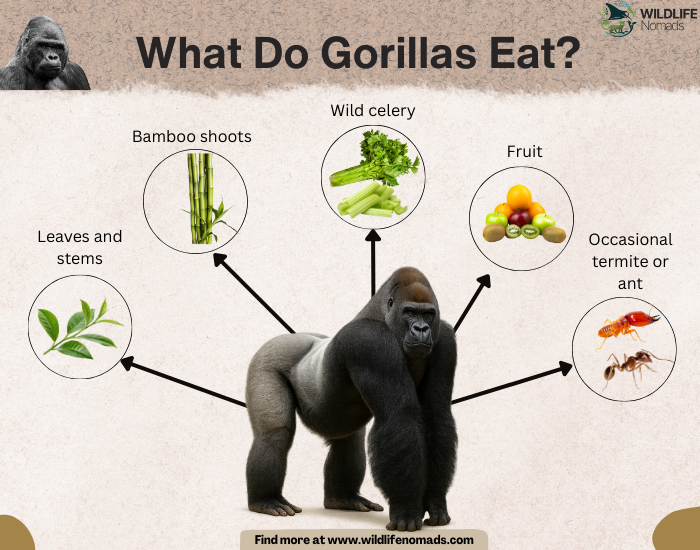
Mountain gorillas are predominantly herbivorous, with a diet finely tuned to high-altitude availability. An adult male consumes 18–30 kg (40–66 lbs) of vegetation daily, spending up to a quarter of daylight hours foraging.
Females and juveniles eat less but follow similar patterns.
Explore our Gorilla Safaris Packages and witness the forests, plants, and biodiversity that support mountain gorillas in Africa.
Breakdown of the mountain gorilla diet:
- Leaves, stems, and shoots (~85–86%): Core staples include wild celery (Peucedanum), nettles, thistles, and Galium vines. These provide fiber, proteins, and minerals.
- Pith and roots (~7%): Nutritious inner stems and underground parts offer hydration and energy.
- Bamboo shoots: Seasonal favorites, especially Arundinaria alpina, rich in sugars during growth periods.
- Fruits and flowers (~2–3%): Limited but relished when available; mountain gorillas consume far fewer fruits than lowland relatives.
- Bark and wood: Scraped for nutrients, especially in scarcity.
- Invertebrates (~2%): Ants, termites, snails, and grubs—opportunistic protein sources. Gorillas raid termite nests skillfully.
They rarely drink water, obtaining moisture from succulent plants and dew. Diet varies seasonally and by location: Bwindi groups eat more fruit and tree leaves, while Virunga gorillas rely heavily on herbs.
Foraging involves selective, mindful choices. Silverbacks lead, with the group following. They avoid over-exploiting areas, allowing regrowth—a sustainable strategy.
Dental adaptations (large molars) and powerful jaws process tough fibers efficiently. Their tannin-rich diet even stains teeth dark, a unique marker.
This specialized diet supports massive body size and energy needs for travel and social behavior in a cool climate. Understanding it enhances trekking: guides point out preferred plants, explaining why gorillas linger in certain clearings.
Mountain Gorilla Food Web Explained
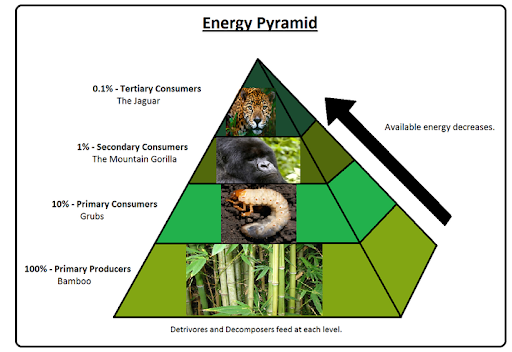
The mountain gorilla food web operates as a dynamic network. At the base, sunlight powers photosynthesis in diverse flora. Gorillas, as bulk feeders, transfer energy upward while facilitating downward nutrient flows.
Trophic levels and interactions:
- Level 1 (Producers): Herbs, bamboo, and trees convert solar energy.
- Level 2 (Primary Consumers): Gorillas dominate biomass consumption. Smaller herbivores and insects compete or complement.
- Level 3+ (Secondary/Tertiary): Leopards occasionally prey on infants. Scavengers and decomposers process remains.
Gorillas connect levels through seed dispersal—swallowing and excreting viable seeds across wide areas, aiding forest regeneration. Dung inoculates soil with microbes, boosting decomposition rates and plant productivity.
Seasonal dynamics: Wet seasons bring abundant herbs; dry periods push reliance on bamboo and pith. This mobility prevents localized depletion, maintaining web stability.
Human integration appears via tourism: habituated groups allow close study without major disruption, while permit fees support anti-poaching that protects the entire web.
Disruptions like climate change (altering plant phenology) or habitat fragmentation can cascade, reducing food availability and increasing human-wildlife conflict. The web’s resilience stems from gorilla adaptability and robust conservation frameworks.
On safari, trackers demonstrate this by interpreting signs—nibbled stems indicate recent feeding, linking you directly to the web’s pulse.
Explore our Gorilla Safaris Packages and experience the rainforest ecosystem where mountain gorillas survive and thrive in the wild.
Role of Mountain Gorillas in the Ecosystem
Mountain gorillas serve as ecosystem engineers and umbrella species. Their feeding reshapes vegetation structure, promoting heterogeneity that benefits myriad species.
By consuming large volumes of biomass, they control undergrowth density, allowing light to reach smaller plants and preventing monocultures. Selective browsing favors certain species’ regeneration.
Nutrient cycling stands paramount. Gorilla dung returns nitrogen, phosphorus, and organic matter to soils, accelerating decomposition in cool, high-altitude environments. This supports the soil food web—fungi, bacteria, earthworms—foundational to forest health.
Seed dispersal enhances plant diversity. Large-seeded fruits travel farther via gorillas than smaller dispersers, maintaining genetic flow across fragmented slopes.
As prey (rarely) and through carcasses, they contribute to scavenger and predator diets. Their presence deters some illegal activities, indirectly protecting habitat for sympatric species like chimpanzees (in Bwindi) or elephants.
Economically and culturally, gorillas drive ecotourism, generating funds for community development, education, and alternative livelihoods—reducing pressure on forests. This socio-ecological role proves vital for long-term stability.
In essence, protecting gorillas safeguards the entire Albertine Rift biodiversity hotspot.
Learn more about the mountain gorilla food web and explore our Gorilla Safaris Packages for close encounters in Africa’s rainforests.
Predators and Threats to Mountain Gorillas
Natural predators remain limited. Leopards occasionally target infants or weakened individuals, but adult silverbacks’ size, strength, and group defense deter most attacks. Crocodiles pose minor risk near water.
Humans represent the primary threat. Poaching (for bushmeat or snares), habitat loss to agriculture, charcoal production, and mining fragment forests.
Disease transmission—gorillas share ~98% DNA with humans—includes respiratory illnesses from tourists or locals. Civil unrest has historically impacted populations.
Climate change alters vegetation zones, potentially reducing suitable habitat. Inbreeding in small populations adds genetic risks, though current numbers mitigate this.
Conservation counters these via daily monitoring, veterinary interventions, and community engagement. Bold statistic: Population increased ~73% since 1989 through transboundary efforts.
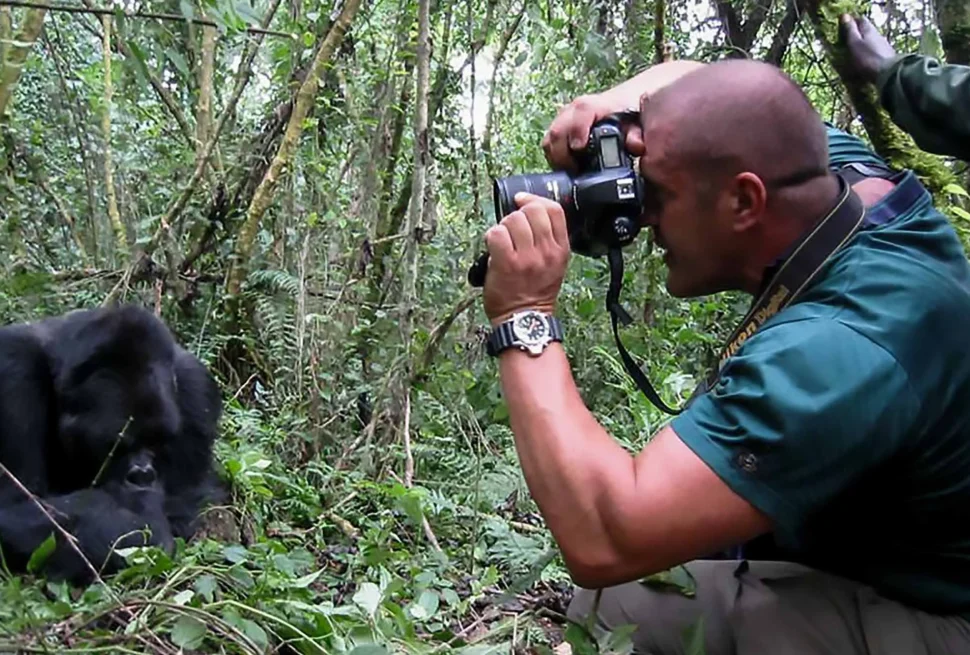
Responsible tourism minimizes disease risk with strict rules (e.g., 7-meter distance, masks when required).
Rainforest Ecosystem Around Mountain Gorillas
The montane and bamboo forests form a unique, biodiverse ecosystem. Canopy layers include afro-montane trees, mid-story shrubs, and dense herbaceous ground cover. Epiphytes and vines add complexity.
High rainfall and fog maintain humidity, fostering lush growth. Volcanic soils provide minerals, while steep topography creates microhabitats. This supports orchids, ferns, medicinal plants, and fauna from golden monkeys to forest hogs.
The ecosystem regulates water—forests act as watersheds for surrounding communities. Carbon sequestration combats climate change. Interconnected food webs link gorillas to insects, birds (pollinators/dispersers), and large mammals.
Threats like invasive species or logging disrupt this. Protection preserves not just gorillas but regional ecological services.
Conservation and Protection Efforts
Success stories abound. The International Gorilla Conservation Programme (IGCP), national parks authorities, Dian Fossey Gorilla Fund, and others coordinate monitoring, anti-poaching, and research. Over 1,000 rangers patrol daily.
Gorilla tourism generates revenue shared with communities for schools, health, and infrastructure—creating local stewards. Kwita Izina naming ceremonies in Rwanda boost awareness. Veterinary projects like Gorilla Doctors provide healthcare.
Transboundary collaboration (Greater Virunga Transboundary Collaboration) manages shared populations effectively. Community-led enterprises, from beekeeping to handicrafts, reduce forest dependence.
Your safari directly funds these—each permit contributes to patrols and habitat security. Mountain gorillas remain Endangered but increasing, a rare conservation victory.
Interesting Facts About Mountain Gorilla Diet
- High-volume eaters: Silverbacks devour more than their body weight in vegetation weekly.
- Tannin teeth: Their diet stains teeth dark, like heavy tea drinkers.
- No drinking needed: Succulent plants and dew suffice.
- Over 140 plant species: Documented, showcasing adaptability.
- Seasonal specialists: Bamboo feasts provide quick energy.
- Tool use in feeding: They bend stems or use hands dexterously.
- Nutritional balancing: Instinctively select plants for minerals or fiber.
- Dung detectives: Scientists analyze feces for diet insights and health.
- Minimal fruit: Unlike fruit-loving lowland cousins.
- Social learning: Young learn preferred foods from elders.
These facts highlight evolutionary sophistication, enriching every trek observation.
After understanding the mountain gorilla food web, explore our Gorilla Safaris Packages for an authentic wildlife adventure.
Frequently Asked Questions About Mountain Gorilla Food Web
How much time do gorillas spend eating each day?
Mountain gorillas dedicate 6–8 hours daily to foraging. This extensive feeding supports their large body mass and energy needs in a cooler climate, while their movement patterns prevent overbrowsing in any single area.
Why is the mountain gorilla diet different from lowland gorillas?
Higher altitudes limit fruiting trees, forcing mountain gorillas into a folivorous (leaf-based) diet rich in fibrous herbs and bamboo, unlike the fruit-heavy diet of lowland gorillas in denser equatorial forests.
How does tourism support the gorilla food web?
Gorilla trekking permits generate essential revenue for habitat protection, anti-poaching patrols, and community development. This funding preserves the plants and forests that sustain the entire food web.
Can climate change affect the mountain gorilla food web?
Yes. Rising temperatures and shifting rainfall patterns may alter the distribution and availability of key food plants like bamboo and herbs, potentially forcing gorillas into smaller or less suitable habitats.
Do gorillas have predators?
Adult mountain gorillas have few natural predators due to their large size and powerful silverback defenders. Leopards may occasionally target infants or weakened individuals, but successful attacks are rare.
Humans remain the greatest threat through poaching, habitat destruction, and disease transmission. In the food web, gorillas sit near the top as dominant herbivores with minimal predation pressure, allowing them to focus energy on foraging and social dynamics rather than constant vigilance.
What plants do mountain gorillas eat?
Mountain gorillas have a highly selective diet featuring more than 140 plant species. Key staples include wild celery (Peucedanum), stinging nettles, thistles, bedstraw (Galium), and bamboo shoots (Arundinaria alpina). They also eat pith from banana-like plants, roots, bark, and occasional fruits or flowers.
In Bwindi, they enjoy more tree leaves and fruits, while Virunga groups rely heavily on herbaceous ground plants. Their foraging is seasonal, shifting with availability to maintain nutritional balance in the cool, misty highlands.
How do gorillas help forests?
Mountain gorillas act as vital ecosystem engineers. Through selective foraging, they create light gaps that promote plant diversity and forest regeneration. Their dung acts as a natural fertilizer, returning nutrients and seeds to the soil, which accelerates decomposition and supports new growth.
By dispersing large seeds across wide areas, they enhance forest connectivity and genetic diversity. This role benefits countless other species, from insects to birds and small mammals, making gorillas an umbrella species whose protection safeguards the entire Albertine Rift biodiversity hotspot.
What is the main food in the mountain gorilla diet?
Primarily leaves, stems, shoots, and pith from herbaceous plants (~85%), with seasonal bamboo. They eat up to 30 kg daily.
Do mountain gorillas have natural predators?
Leopards rarely target infants; adults face little threat. Humans pose the greatest danger via poaching and habitat loss.
How does the gorilla food web support the rainforest?
Through seed dispersal, nutrient cycling via dung, and vegetation management that promotes plant diversity.
Where can I see mountain gorillas in the wild?
Bwindi and Mgahinga (Uganda), Volcanoes (Rwanda), and Virunga (DRC) National Parks.
How much does a gorilla permit cost and why?
Permits range $800–$1,500, funding conservation, rangers, and communities for sustainable protection.
What do gorillas eat in different seasons?
Wet seasons favor herbs; dry seasons increase bamboo and pith reliance.
Are mountain gorillas omnivores?
Primarily herbivores with minor insect intake, classifying them as omnivores technically.
How does climate change affect their food web?
It shifts vegetation zones, potentially reducing food plants and forcing range changes.
What role does tourism play in the food web?
It provides funding for habitat protection, ensuring plants and gorillas thrive.
Can gorillas survive without their specific food plants?
No—diet specialization ties them to intact montane forests.
How long do gorillas spend eating daily?
Up to 6–8 hours, integral to their social and ranging behavior.
What makes Bwindi’s gorilla food web unique?
Greater fruit availability and tree diversity compared to Virunga’s herbaceous focus.
Conclusion
The mountain gorilla food web embodies the delicate balance of Africa’s highland ecosystems—where massive herbivores sustain forests through consumption and renewal.
From their specialized vegetarian diet to their role as seed dispersers and nutrient recyclers, mountain gorillas prove indispensable. Despite threats, their story inspires hope through conservation triumphs and community benefits.
Witnessing this web firsthand on a gorilla trek transforms understanding into connection. As your trusted safari partner, GoSilverback Gorilla Safaris crafts personalized journeys with expert guides, ethical practices, and seamless logistics for travelers worldwide.
Book your gorilla permit today through GoSilverback Gorilla Safaris. Secure your spot in Uganda, Rwanda, or DRC for an adventure supporting conservation.
Experience the majesty of silverbacks in their natural food web while contributing to their future. Contact us now—limited permits ensure exclusivity. Your journey protects these gentle giants and their intricate ecosystem for generations