Gorilla Trek Africa – Where, When & How to Trek Gorillas, Permits, Best Time & Expert Tips Guide 2026
Gorilla Trek in Africa is one of the planet’s most profound wildlife experiences, offering intimate encounters with endangered mountain gorillas in their natural rainforest habitat.
With only approximately 1,063 mountain gorillas remaining in the wild, this bucket-list adventure combines raw adventure, emotional connection, and meaningful conservation impact.
Whether you’re traveling from the USA, UK, Europe, Canada, Asia, or the Middle East, gorilla trekking in Africa delivers a transformative journey across three countries: Uganda, Rwanda, and the Democratic Republic of Congo (DRC).
A gorilla trekking in Africa is the pursuit of wild mountain gorillas through equatorial rainforests, guided by expert trackers who have spent decades reading the signs of these magnificent primates.
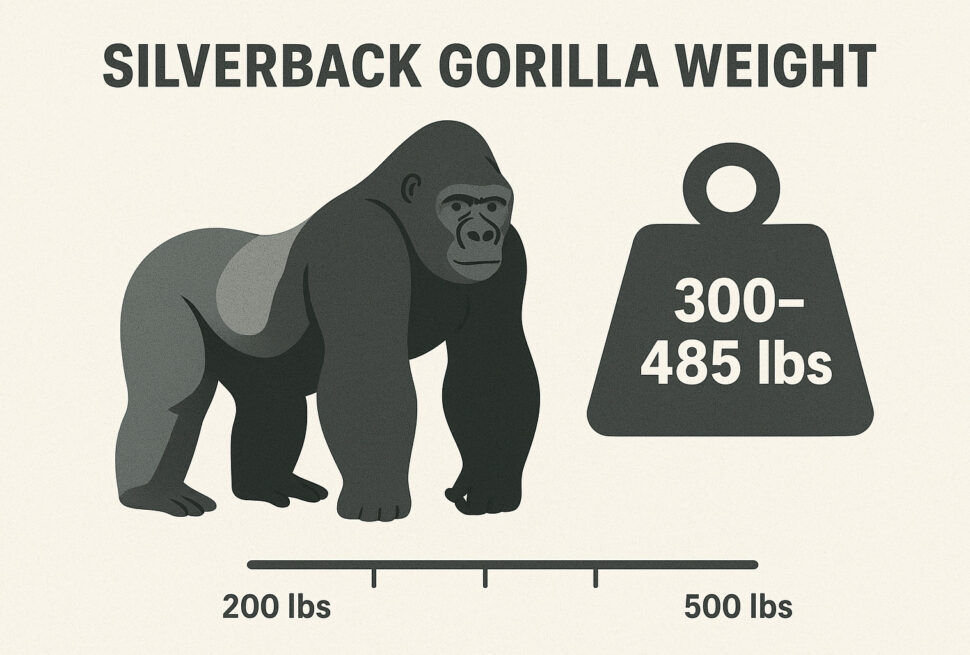
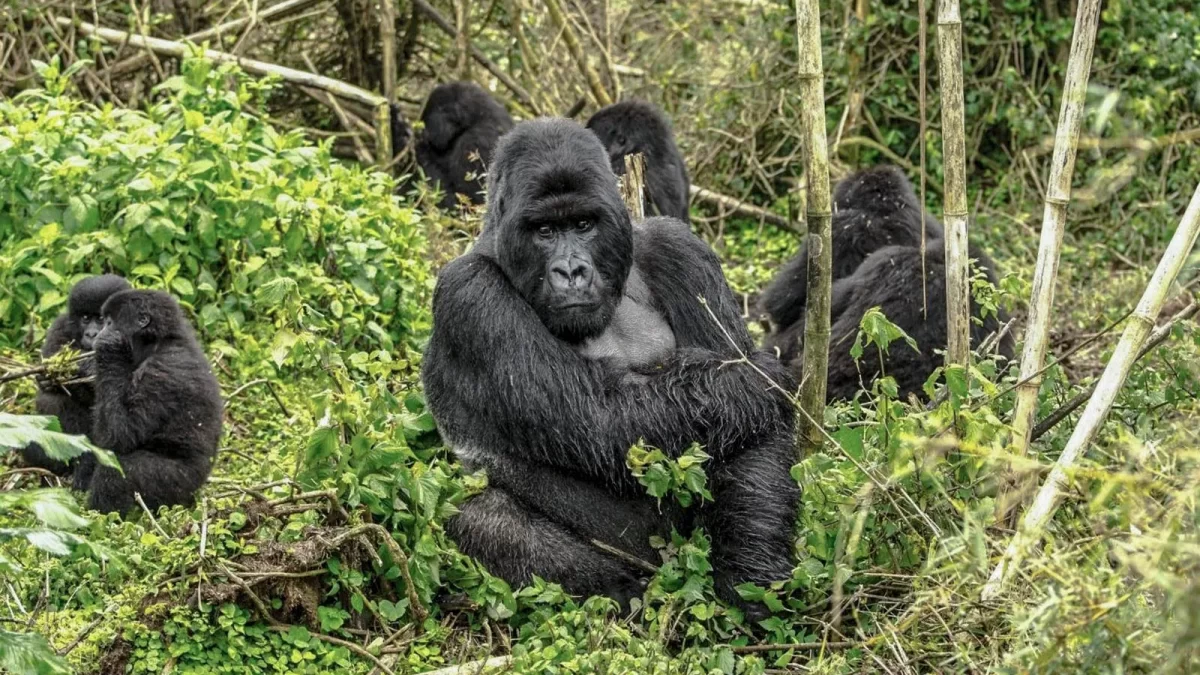
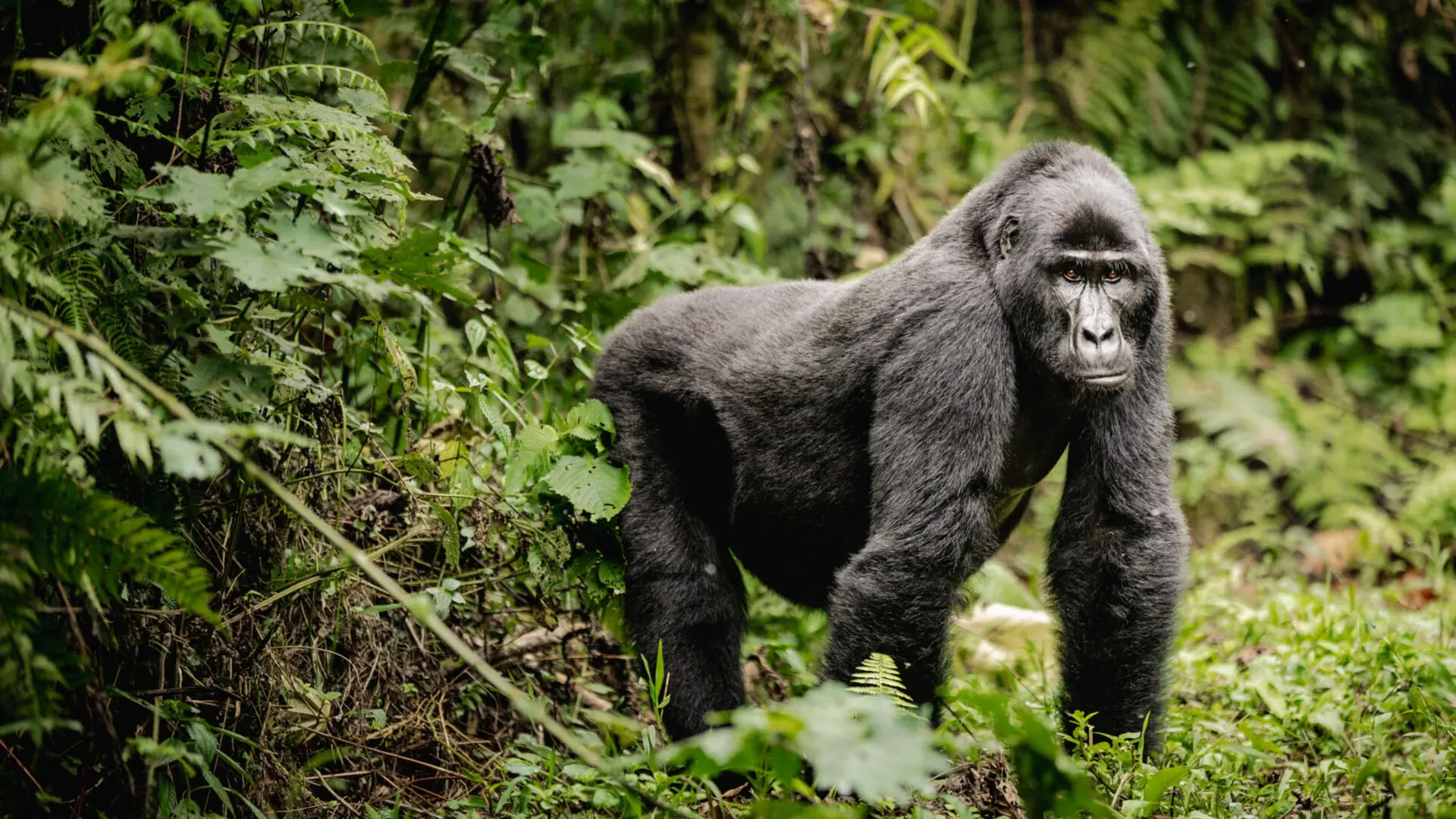
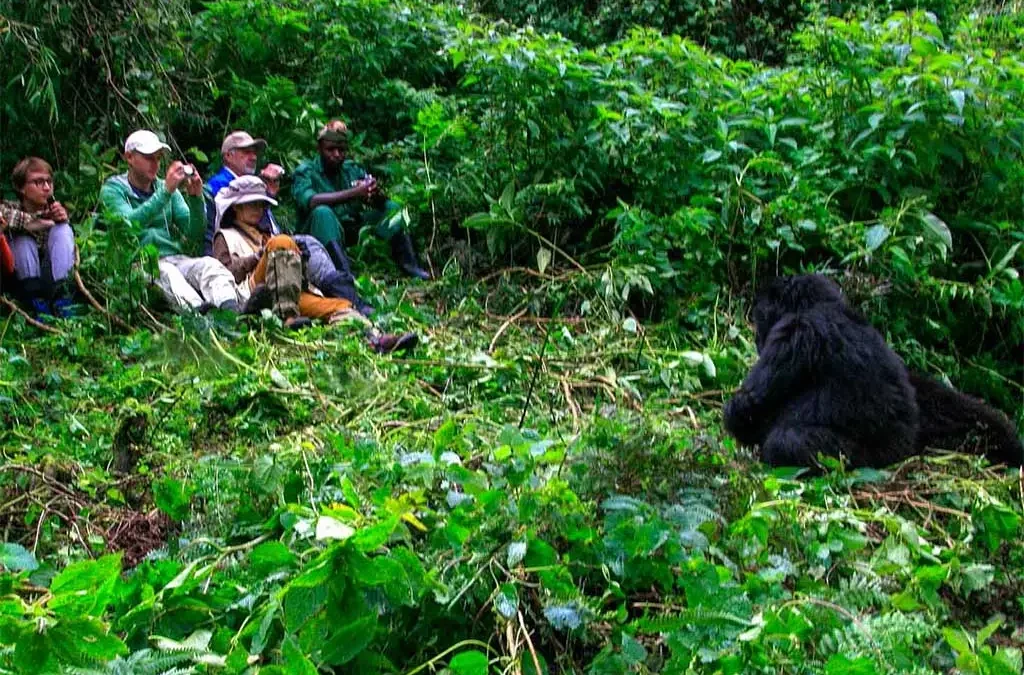
When you finally push through the last veil of bamboo and meet the gaze of a 200-kilogram silverback at a distance of just seven meters, the sheer gravity of the moment is impossible to prepare for.
Time slows. Breathing steadies. You are, in that instant, standing at the edge of what it means to be human.
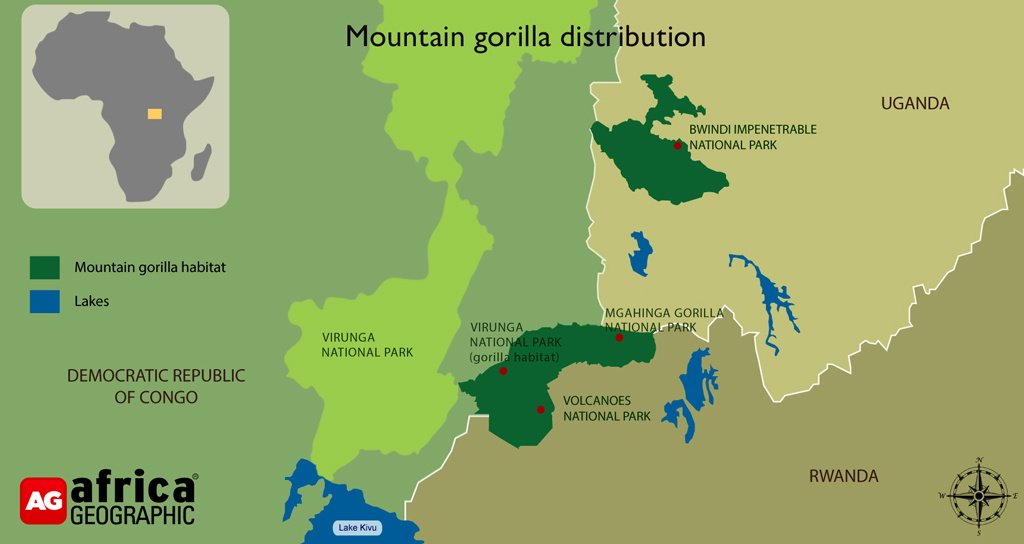
Mountain gorillas are critically endangered, with only approximately 1,063 individuals remaining in the wild — all of them confined to the Virunga Massif shared by Uganda, Rwanda, and the Democratic Republic of Congo, and the Bwindi Impenetrable Forest in Uganda.
Thanks to decades of concerted conservation, their numbers have grown from fewer than 620 in 1989. Gorilla trekking tourism is the single biggest driver of that recovery, funding ranger patrols, veterinary care, and community development across all three nations.
This definitive guide covers everything you need to plan a gorilla trekking safari: where to go, what to expect, gorilla permit costs and availability, the best time to trek, packing lists, fitness requirements, why your visit matters for gorilla conservation and why booking through a specialist operator like GoSilverback Safaris makes all the difference.
Read on — your journey to Africa’s most transformative encounter begins here.
As GoSilverback Safaris, we guide hundreds of international travelers each year through these once-in-a-lifetime treks.
Where to Go for Gorilla Trekking in Africa
Gorilla trekking in Africa is possible in only three countries: Uganda, Rwanda, and the Democratic Republic of Congo (DRC). Each destination offers a distinct experience in terms of cost, accessibility, landscape, and atmosphere.
Understanding the differences is essential to choosing the right base for your gorilla safari.
1. Uganda — Bwindi Impenetrable National Park & Mgahinga Gorilla National Park
Bwindi Impenetrable National Park in southwestern Uganda is the world’s most premier gorilla trekking destination, protecting over half of the world’s entire mountain gorilla population across four sectors: Buhoma, Ruhija, Rushaga, and Nkuringo.
Each sector is home to multiple habituated gorilla families and offers a different trekking terrain and atmosphere. Bwindi’s ancient forest — over 350 million years old — is a UNESCO World Heritage Site of extraordinary biological richness, home to over 120 mammal species and 350 bird species in addition to its gorillas.
Mgahinga Gorilla National Park, also in Uganda, sits within the Virunga Massif and is the country’s smallest national park. It offers a more intimate trekking experience and is also excellent for golden monkey trekking.
Uganda’s gorilla permit costs $800 per person — the most affordable option globally — making it the top choice for budget-conscious travellers and those combining gorilla trekking with a broader Uganda safari including chimpanzee tracking, Queen Elizabeth National Park, or Murchison Falls.
2. Rwanda — Volcanoes National Park
Volcanoes National Park in northwestern Rwanda is the country’s flagship gorilla destination and arguably the most prestigious.
Made famous by the late primatologist Dian Fossey, whose work at Karisoke Research Centre catalysed global gorilla conservation, the park sits among the dramatic Virunga volcanoes and offers a visually stunning trekking backdrop.
Rwanda positions itself as a luxury gorilla safari destination — permits cost $1,500 per person — but the Kigali gateway, excellent lodge infrastructure, and relatively short treks make it extremely popular with time-limited travellers from the USA, Europe, and the Middle East.
Rwanda’s gorilla trekking experience is polished, efficient, and unforgettable.
3. DR Congo — Virunga National Park
Virunga National Park in the DRC is Africa’s oldest national park and a UNESCO World Heritage Site. Gorilla trekking here is offered out of Bukima and is the most adventurous and remote of the three options.
Permits cost approximately $400, making this the most affordable option, but the DRC requires careful security assessment before travel and robust logistics planning.
For intrepid travellers, Virunga delivers an incomparable combination of gorilla trekking, active volcanoes, and frontier-Africa atmosphere.
GoSilverback Safaris monitors the security situation regularly and advises clients accordingly.
Uganda
Bwindi & Mgahinga. Most gorilla families. Most affordable permits ($800). Best for extended safaris. All budgets welcome.
Rwanda
Volcanoes NP. Luxury experience. $1,500 permits. Fast Kigali access. Combines well with Dian Fossey Tomb visits.
DR Congo
Virunga NP. Most affordable ($400). Remote. Adventure travel. Requires careful planning and current security advice.
Comparison table
| Country | Permit Cost (2026) | Habituated Groups | Accessibility | Best For |
|---|---|---|---|---|
| Uganda | USD 800 | 20+ | Excellent from Kampala | Value & variety |
| Rwanda | USD 1,500 | 10–12 | Premium from Kigali | Luxury & ease |
| DRC | USD 400–500 | 8–10 | Adventurous | Budget & raw experience |
Choosing the right destination depends on your budget, fitness, and desired luxury level. GoSilverback Safaris helps match your preferences to the perfect location.
What to Expect on a Gorilla Trek
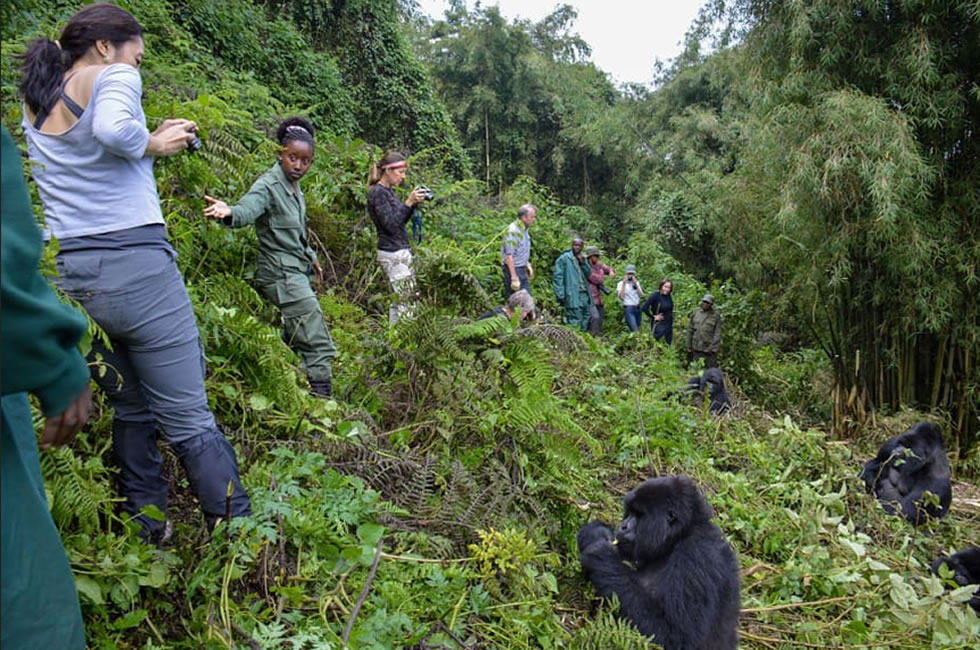
A gorilla trek in Africa follows a structured yet thrilling routine designed to protect both you and the gorillas.
Knowing exactly what happens during a gorilla trekking experience helps you prepare mentally, physically, and practically. The structure is similar across Uganda and Rwanda, with minor logistical variations depending on the park and sector.
1. Pre-Trek Briefing (6:30–7:00 AM)
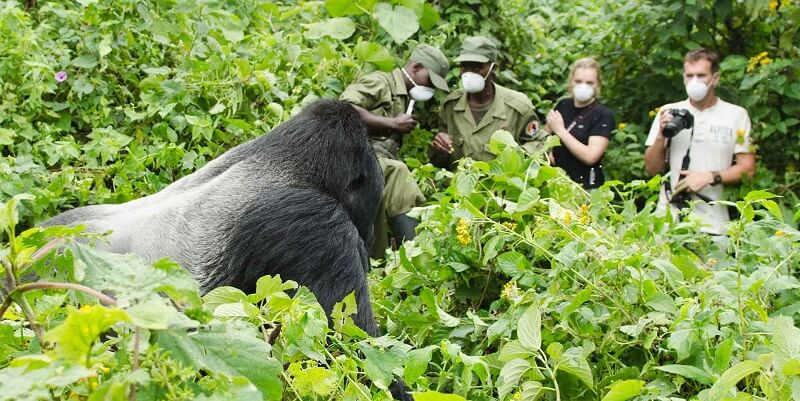
Trekkers gather at the park headquarters or designated briefing point where park rangers provide a mandatory safety and conduct briefing. You are assigned to a gorilla family group (typically 8 trekkers per group) and given your lead guide and armed escort.
This is when you can arrange optional gorilla trekking porters — strongly recommended — for a fee of approximately $15–20 that directly supports local communities.
2. The Trek Begins (7:00 AM onwards)
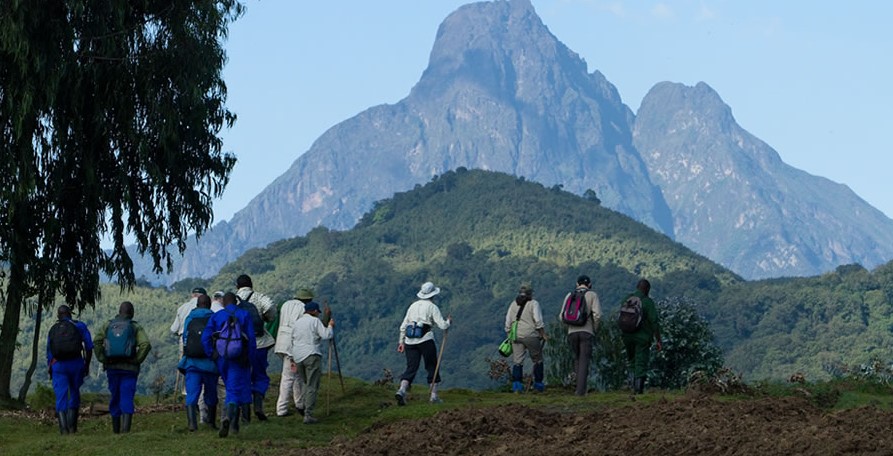
Your guide leads you into the forest following the previous day’s data on the gorilla family’s location. Trek distances and durations vary enormously — from 1 to 8+ hours depending on the family’s movement.
Forest terrain ranges from well-maintained trails to steep, root-tangled, muddy slopes. Your tracker communicates ahead by radio with field trackers who have been following the gorillas since dawn.
3. First Contact
When you are within 200 metres of the gorilla family, your guide gives final instructions: cameras ready, voices hushed, bags lowered. The last push through dense vegetation is charged with anticipation.
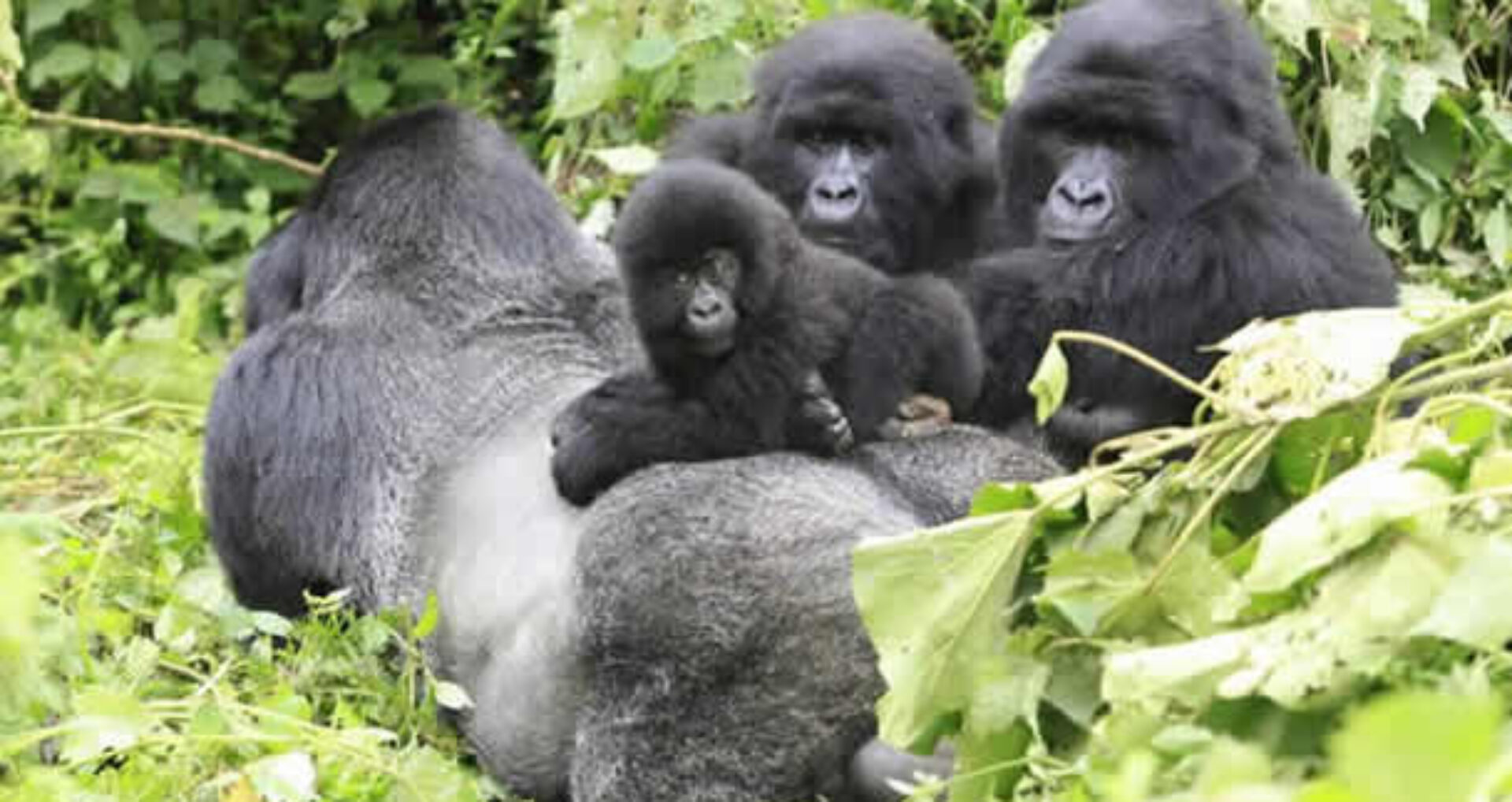
Then — suddenly — you see them. A silverback feeding in a shaft of forest light. You’ll witness natural behaviors: silverbacks chest-beating, juveniles playing, tumbling over each other.
A mother nursing an infant. The gorilla habituation process means these families are accustomed to human presence and behave naturally around visitors.
4. The One-Hour Encounter
You have exactly one hour in the presence of the gorilla family. This is strictly enforced to protect the animals’ wellbeing. During this time you may photograph, observe, and absorb.
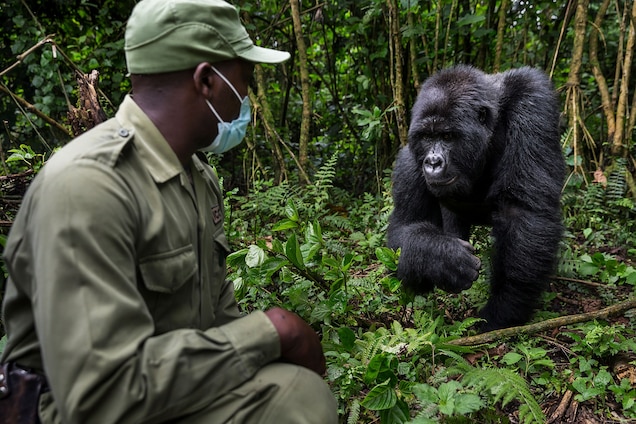
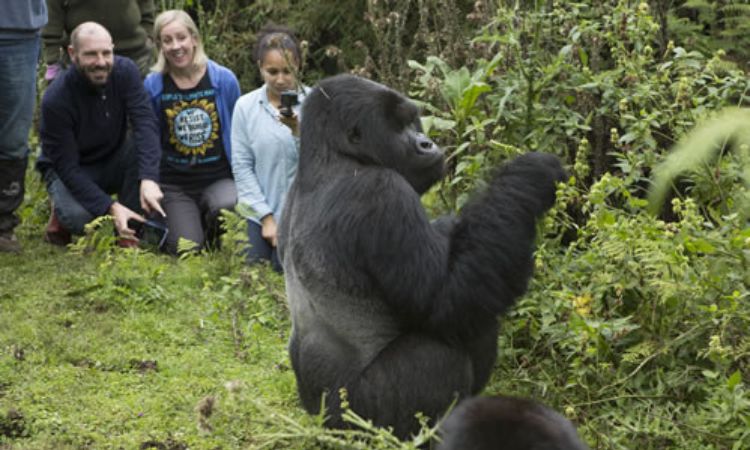
Gorillas may come extremely close — as near as three to five metres — particularly curious juveniles. You must remain calm, avoid direct eye contact with the silverback, and follow your guide’s instructions at all times.
5. The Return Trek & Certificate
After the one-hour encounter, you trek back to the briefing point. At the headquarters, you receive a gorilla trekking certificate commemorating your visit — one of the most prized souvenirs in African travel.
Afternoon is typically free for lunch, lodge relaxation, or a cultural community visit.

Gorilla Trekking Permits & Costs
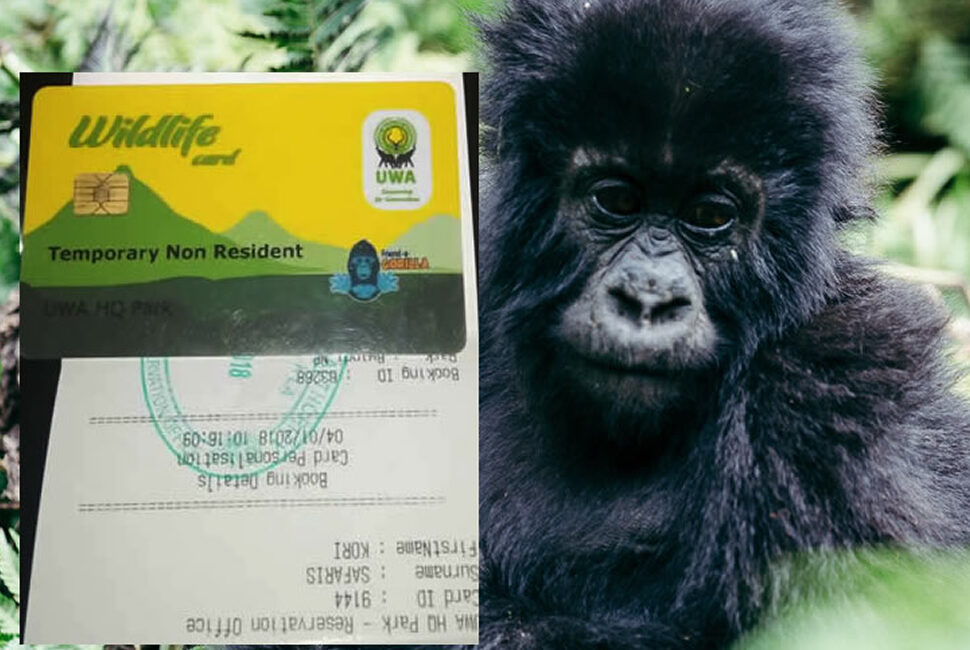
A gorilla trekking permit is the single most important thing to secure for your African gorilla safari — without it, there is no trek.
Permits are issued by the respective national park authority of each country and are strictly limited in number, with only 8 people per gorilla family group per day.
Understanding the permit system is critical because high season demand can mean permits sell out months in advance.
| Country / Park | Permit Cost | Gorilla Families | Best For |
|---|---|---|---|
| Uganda — Bwindi Impenetrable NP | $800 USD | 22+ habituated families | Value seekers, extended safaris, all budgets |
| Uganda — Mgahinga NP | $800 USD | 1 habituated family | Quieter, combined with golden monkey trek |
| Rwanda — Volcanoes NP | $1,500 USD | 12 habituated families | Luxury travellers, short itineraries, US/EU visitors |
| DR Congo — Virunga NP | ~$400 USD | 8+ habituated families | Adventure travellers, budget-conscious |
How to Book a Gorilla Trekking Permit
Permits can be purchased directly from the Uganda Wildlife Authority (UWA) or the Rwanda Development Board (RDB), but in practice, booking through a licensed tour operator like GoSilverback Safaris is far simpler, more reliable, and often faster.
We maintain direct quota allocations, especially for peak-season dates, and handle all permit logistics — removing the administrative burden from your planning entirely.
Booking process (step-by-step):
- Choose dates and country.
- Book through a licensed operator (highly recommended for availability).
- Submit passport details and deposit.
- Receive confirmation and final payment 30–60 days prior.
Full cost breakdown 2026 (per person, mid-range, 3-day trip):
- Permit: USD 800–1,500
- Accommodation: USD 200–2,500/night
- Transfers & meals: USD 400–1,200
- Total package: USD 1,800–8,000+
Ways to save: Shoulder seasons, group travel, or bundling with other parks. Permits fund conservation directly—your investment protects the gorillas you meet.
Gorilla habituation experience permits in Uganda (a four-hour encounter with a semi-habituated family) cost $1,500 and offer a uniquely extended and intimate engagement.
This is for travellers who want to go beyond the standard one-hour visit and truly observe gorilla family dynamics at length. These permits are rarer and book out far in advance.
It is important to understand that gorilla permits are non-refundable and tied to a specific date and family group. Travel insurance that covers gorilla permit costs is strongly recommended and available through GoSilverback Safaris as an add-on to any booking.

Best Time for Gorilla Trek Africa
One of the most common questions we receive is about the best time to go gorilla trekking in Africa. The honest answer: gorilla trekking is rewarding year-round, because gorillas are always present in the forest.
However, weather conditions significantly affect the comfort and logistics of your trek.
1. June – September
Uganda and Rwanda’s long dry season. Drier trails, clearer skies, better photography. Peak tourist season — book permits and lodges 6–12 months ahead. Most popular with USA and European travellers.
2. December – February
The shorter dry season. Excellent trekking conditions, lower permit availability competition, and gorgeous vegetation. Perfect for travellers from the UK, Australia, and those wanting festive-season Africa experiences.
3. March – May
The long rainy season. Trails are muddy and slippery, but forests are lush and atmospheric. Fewer tourists, easier permit access, and some lodges offer discounts. Waterproof gear essential.
4. October – November
Short rains. Still very hikeable with proper gear. Lower prices and fewer crowds make this a hidden gem for gorilla trekking. Gorilla families are active and the forest is alive with birdlife.
Regardless of season, always carry waterproof gear. Even in the dry season, Bwindi’s 1,700m+ altitude means morning mist and unexpected showers are common. The gorillas, of course, trek every day — and so should you.

Why Gorilla Trekking Is Worth It
Gorilla trekking in Africa is worth every effort and dollar. The emotional connection with these intelligent, family-oriented primates sharing 98% of our DNA is unmatched. Beyond the thrill, your visit directly supports conservation, funds anti-poaching, and creates local jobs.
Travelers consistently rank it as life-changing—far more meaningful than traditional safaris. The exclusivity, stunning landscapes, and conservation impact make it an investment in both personal growth and the planet’s future.
At $800 to $1,500 per permit, gorilla trekking is undeniably a premium experience. But consider what that investment actually represents — and why virtually every traveller who completes a gorilla trek says it is the best money they have ever spent.
First, the encounter itself is unmatched in the natural world. You are not viewing gorillas through binoculars at distance or from a safari vehicle.
You are standing in their habitat, breathing the same forest air, observing their family dynamics, their intelligence, their play, and their profound similarity to our own species.
The 98% DNA overlap between humans and mountain gorillas becomes viscerally real when a juvenile reaches towards your boot, or a silverback locks eyes with you for a fleeting, electric moment.
Second, your permit fee is direct conservation finance. In Uganda, 20% of permit revenue is redistributed to communities adjacent to Bwindi and Mgahinga.
In Rwanda, 10% goes to community development programmes. This revenue model has transformed gorilla conservation from a charity-dependent effort into a financially sustainable one — and travellers are the engine of that sustainability.
Third, the rarity cannot be overstated. With only ~1,063 mountain gorillas alive and just a fraction of those in habituated families, every gorilla trek is one of the most exclusive wildlife experiences on the planet.
These are not animals bred in captivity or semi-wild in a reserve — they are truly wild, in their ancestral habitat, and you are a privileged, temporary guest.
1. 🦍 Unmatched Wildlife Encounter
Face-to-face with wild mountain gorillas. 98% DNA match with humans. Nothing else compares in African wildlife.
2. 🌱 Your Visit Funds Conservation
Permit fees fund ranger patrols, veterinary care, and community livelihoods — directly protecting gorilla populations.
3. 🏔️ Ancient Forest Immersion
Trek through 350-million-year-old Bwindi — a UNESCO World Heritage forest of extraordinary biodiversity.
Gorilla Trekking Rules & Guidelines
The rules governing gorilla trekking behaviour exist to protect both the animals and trekkers.
Mountain gorillas share approximately 98% of human DNA, which means they are highly susceptible to human respiratory diseases. A single cold or flu transmitted to a gorilla family could be catastrophic.
These rules are non-negotiable, universally enforced, and central to the ethics of responsible gorilla tourism.
- Minimum age is 15 years — children under 15 are not permitted on gorilla treks in Uganda or Rwanda. This protects both younger visitors from the physical demands and the gorillas from potential unpredictability.
- Maximum 8 trekkers per gorilla family per day — this strict limit protects the gorillas from habituation overload and ensures each trekker has an intimate, meaningful encounter.
- Maintain a 7-metre distance at all times — you must not approach closer than 7 metres to any gorilla. If a gorilla approaches you — which they sometimes do — stand still, lower your gaze, and follow guide instructions.
- Do not trek if you have cold, flu, or any infectious illness — the park reserves the right to deny access to unwell trekkers. Your permit will be rescheduled or refunded in most cases if you are visibly sick. This rule saves lives.
- No flash photography — flash can startle and distress gorillas. Natural-light photography only. Modern mirrorless cameras with fast lenses perform exceptionally well in forest light.
- Eat and drink behind the gorilla’s line of sight — food odours can attract gorillas or alter their behaviour. If you need to eat or drink, step back and do so discreetly.
- No litter in the forest — carry out everything you carry in. This is basic conservation ethics and non-negotiable on GoSilverback guided treks.
- Keep voices low — speak only when necessary and at minimal volume. Noise disturbs the gorillas and diminishes the experience for all trekkers.
- Follow guide instructions at all times — your lead guide has years of experience managing gorilla encounters. In the rare event of a gorilla charge (almost always a bluff display), crouching, averting your gaze, and remaining still is the correct and safest response.
- Do not touch the gorillas — this protects them from disease and you from injury. The fact that some gorillas come close enough to touch is all the more reason to exercise restraint and discipline.
What to Pack for Gorilla Trekking
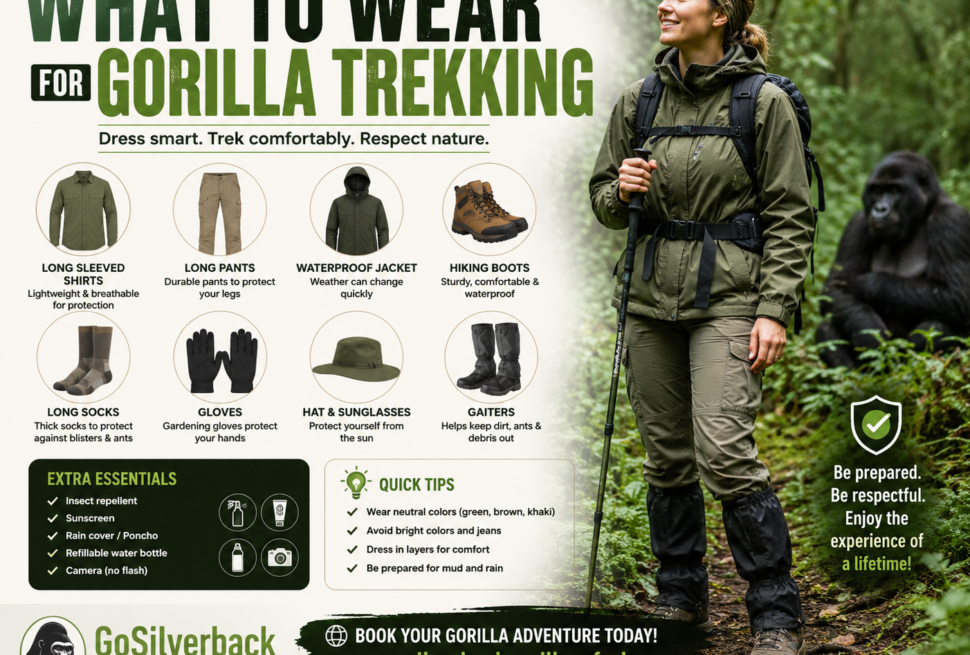
Packing correctly for a gorilla trekking safari is critical to your comfort and enjoyment. The forest environment is unpredictable — warm and muggy at lower elevations, cool and misty at higher altitude — and the terrain is physically demanding.
Invest in your kit and your trek will be exponentially more enjoyable.
Clothing & Footwear
- Sturdy waterproof hiking boots (ankle support essential)
- Long trousers — thick fabric, not leggings
- Long-sleeved shirt (stinging nettles in Bwindi)
- Light waterproof jacket or poncho
- Warm fleece layer (mornings are cold at altitude)
- Gaiters to protect legs and boots
- Comfortable camp clothes for evenings
- Thick hiking socks (at least 2 pairs)
Gear & Accessories
- Daypack (20–30L) — lightweight and waterproof
- Camera — mirrorless preferred, no flash
- Binoculars for forest birdlife en route
- Trekking poles (collapsible) — highly recommended
- Insect repellent — DEET-based
- Sunscreen and sun hat (forest clearings)
- Reusable water bottle (2 litres minimum)
- Energy snacks — nuts, bars, dried fruit
- Garden gloves for holding trail vegetation
- Small first-aid kit and personal medications
Pro tip from GoSilverback Safaris: Hire a local porter at the briefing point. Porters carry your daypack, assist you on steep terrain, and the fee you pay goes directly to a community member adjacent to the park.
It is arguably the best $20 you will spend on your entire Africa trip.

Gorilla Trekking Difficulty & Fitness Level
A very common concern among first-time gorilla trekkers is whether they are fit enough. The good news: gorilla trekking is accessible to most reasonably healthy adults.
It is not mountaineering or ultramarathon running — it is determined hiking in complex tropical forest terrain, and with the right preparation and attitude, the vast majority of trekkers complete the experience successfully.
Trek difficulty ranges from moderate to strenuous depending on the sector, season, and the location of the gorilla family on any given day.
The most straightforward treks in Bwindi’s Buhoma sector or Rwanda’s Volcanoes park can take as little as 1–2 hours round trip. The most challenging, particularly in Bwindi’s Rushaga or Nkuringo sectors during the rainy season, can demand 5–8 hours of sustained trekking over steep, muddy, root-covered slopes at elevations of 1,600–2,500 metres above sea level.
Our honest fitness recommendation: prepare with 6–8 weeks of cardio training before your trip. Daily walking, light jogging, stair climbing, or hillwalking will build the cardiovascular and muscular endurance you need.
If you have knee issues, trekking poles and hiking gaiters are essential investments. Altitude is a minor factor — most trekkers who experience difficulty attribute it to dehydration, not altitude sickness.
GoSilverback Safaris works with clients of all fitness levels and ages. We assess your fitness profile during booking and recommend appropriate sectors and family groups accordingly.
Our expert guides and porters ensure that no client is left behind, and that the experience remains safe and rewarding regardless of pace.
We have successfully guided trekkers aged 15 to 78 — including clients with prosthetic limbs and mobility challenges, through careful advance coordination with park authorities.
Conservation & Gorilla Protection
The story of the mountain gorilla’s recovery is one of the most remarkable conservation achievements of the 20th and 21st centuries — and responsible tourism has been central to it. Understanding this context adds profound meaning to every gorilla trek.
“In 1989, fewer than 620 mountain gorillas remained. Today, approximately 1,063 individuals exist in the wild — the only great ape whose population is currently increasing.
This is not a coincidence. It is the result of sustained conservation investment, much of it funded by gorilla trekking permits.”
The International Gorilla Conservation Programme (IGCP), a coalition of WWF, Fauna & Flora International, and African Wildlife Foundation, coordinates tri-national conservation efforts across Uganda, Rwanda, and the DRC.
Their work includes anti-poaching patrols, community revenue-sharing, gorilla health monitoring, and the ongoing process of habituating new gorilla families to human presence.
The gorilla habituation process takes 2–3 years and involves rangers spending daily time with a gorilla family until the animals accept human presence without stress.
Only fully habituated families are open for tourism, and even then, strict protocols protect their health and behavioural integrity.
GoSilverback Safaris is proud to operate as a carbon-offset safari company.
We donate a portion of every booking to verified forest conservation projects in the Bwindi region, and we partner with community-based organisations that employ former poachers as rangers and trackers — transforming potential adversaries of gorilla conservation into its most committed defenders.

Why Book with GoSilverback Safaris
There is no shortage of safari companies offering gorilla trekking packages.
What separates GoSilverback Safaris from the rest is a combination of genuine local expertise, ethical operating principles, an unmatched permit allocation network, and a commitment to delivering the most meaningful gorilla trekking experience in Africa — for every single client, regardless of budget.
1. 🦍 Unmatched Permit Access
We hold pre-allocated quota permits for peak-season dates across Bwindi and Volcanoes NP — ensuring your preferred date is secured even when individual bookings are closed.
2. 🌍 Local-Born Expert Guides
All our lead guides are East African-born naturalists with 10+ years of gorilla trekking experience. Their knowledge of gorilla behaviour, local ecology, and forest navigation is unrivalled.
3. 🏨 Curated Lodge Portfolio
From budget guesthouses to luxury eco-lodges, we represent the finest accommodation adjacent to every gorilla trekking sector — vetted annually by our team for sustainability and quality.
4. ✈️ Full Logistics Handled
We manage airport transfers, internal flights, vehicle hire, visa assistance, permit bookings, and on-ground support — so your only job is to show up and experience Africa.
5. 💚 Conservation-First Operator
IGCP-certified and carbon-offset. We donate to ranger salary programmes and community conservancies that keep gorillas and their habitat protected.
6. 🌐 Global Client Base
Serving travellers from the USA, UK, Europe, Canada, Australia, the Middle East, and Asia. 24/7 client support before, during, and after your safari.
Our team has collectively led over 5,000 gorilla treks. We know which gorilla families offer the most reliable encounters. We know which sectors of Bwindi are best in which season.
We know which lodges sit closest to the forest edge and serve the best post-trek meals. This knowledge is yours when you book with GoSilverback — and it makes all the difference between a good safari and an extraordinary one.
Sample Gorilla Trekking Itinerary
Below is a sample 5-day Uganda gorilla trekking itinerary based out of Bwindi Impenetrable National Park. This can be extended, modified, or combined with wildlife drives in Queen Elizabeth National Park or chimpanzee tracking in Kibale Forest for a comprehensive Uganda safari.
Meet and greet at Entebbe International Airport. Scenic overland drive (8–9 hrs) or short charter flight (45 min) to Bwindi. Afternoon lodge check-in, briefing, and welcome dinner. Overnight at a forest-edge lodge in the Buhoma sector.
Early morning briefing at park HQ. Trek into the forest with your lead guide and rangers. Encounter your assigned gorilla family. Return for a celebratory certificate presentation and post-trek lunch. Afternoon: optional nature walk or community visit.
Morning forest walk with our expert birding guide (Bwindi has 350+ bird species including 23 Albertine Rift endemics). Afternoon: Batwa Cultural Trail — an immersive experience with the indigenous Batwa people, the original forest custodians of Bwindi.
Morning transfer to Queen Elizabeth National Park (3 hrs). Afternoon launch cruise on the Kazinga Channel — one of Africa’s finest wildlife experiences, with hippos, crocodiles, buffalo, and over 100 bird species.
Morning game drive in the Ishasha sector, famous for tree-climbing lions in the fig trees. Transfer to Kasese for your connection flight back to Entebbe. Farewell dinner and departure transfer.
This is a template — every GoSilverback itinerary is tailor-made. Contact us to discuss your specific dates, group size, budget, and travel interests.
Frequently Asked Questions About Gorilla Trek Africa
How much does it cost to go gorilla trekking in Africa?
Gorilla trekking in Africa costs between USD 400 and USD 1,500 per person for the permit alone in 2026. Uganda offers the best value at USD 800, Rwanda costs USD 1,500, while DRC is the cheapest at around USD 400–500. Full safari packages range from USD 1,800 to USD 10,000+ depending on duration and luxury level.
Which is better: gorilla trekking in Uganda or Rwanda?
Uganda is better for most travelers seeking value and variety (USD 800 permit, more gorilla groups, easier to combine with chimps). Rwanda is better for those wanting premium luxury, shorter hikes, and easier access from Kigali (USD 1,500 permit). Choose Uganda for budget and adventure; Rwanda for comfort and exclusivity.
How long is a gorilla trek in Uganda?
A gorilla trek in Uganda typically lasts 2 to 8 hours round trip, depending on the gorilla family’s location that day. The actual time spent observing the gorillas is strictly 1 hour. Treks involve steep, muddy trails through dense rainforest. Porters are highly recommended to make the hike more manageable.
Is there gorilla trekking in Uganda?
Yes, Uganda offers world-class gorilla trekking in Bwindi Impenetrable National Park and Mgahinga Gorilla National Park. It is one of the best and most affordable destinations for mountain gorilla trekking in Africa, with over 20 habituated gorilla families and a permit cost of USD 800 per person in 2026.
Is gorilla trekking in Africa worth the cost?
Yes. The emotional impact, conservation contribution, and exclusivity make it one of travel’s most rewarding experiences.
Which country is best for gorilla trekking?
Uganda offers best value; Rwanda offers luxury and ease; DRC offers adventure on a budget.
How hard is a gorilla trek?
Moderate. Porters help; most fit adults manage 2–8 hour hikes comfortably.
What is the minimum age for gorilla trekking?
15 years in most parks (12 for some chimpanzee treks).
How far in advance should I book?
6–12 months for peak dry seasons; 3–6 months for shoulder periods.
Can I trek if over 60?
Yes, if reasonably fit. Many seniors complete the trek successfully with porters.
Is photography allowed?
Yes—no flash. Natural light and zoom lenses work best.
What happens if I get sick?
You cannot trek. Honesty protects gorillas; rescheduling may be possible.
Are there discounts on permits?
Yes—bundled multi-park packages or shoulder-season offers reduce costs.
Is it safe?
Extremely safe with licensed operators. All parks have strong security protocols.
Can children participate?
No—minimum age 15 due to physical demands and health risks.
How does my visit help conservation?
Permit fees directly fund anti-poaching, habitat protection, and community projects.
Conclusion
Gorilla trekking in Africa is more than a safari—it is a privilege that connects you to one of our planet’s most extraordinary species while actively supporting their survival.
From misty Bwindi forests to the volcanic slopes of Rwanda and Virunga, every trek leaves you changed and contributes to a brighter future for mountain gorillas.
Ready to make this dream a reality? Contact GoSilverback Safaris today. We secure your gorilla permit, craft your perfect itinerary, and handle every detail so you focus on the magic of the encounter. With limited daily slots and high demand, early booking is essential.
Book your gorilla permit with GoSilverback Safaris now—email us, call, or message today. Your adventure—and the gorillas’ future—starts here. Let’s create memories that matter.
Book Your Gorilla Trek Africa Experience Today
There are wildlife safaris, and there is gorilla trekking. The moment you stand before a mountain gorilla family in the ancient forests of Africa — watching a silverback move through the undergrowth, a mother cradle her infant, juveniles tumble in play — you understand why every traveller who has done this calls it the defining experience of their life.
But gorilla permits are finite. The most sought-after dates in Uganda and Rwanda sell out months in advance. The window to see one of Earth’s rarest and most magnificent creatures is precious, and it is not guaranteed. Now is the time to secure your permit.
At GoSilverback Safaris, we have been guiding travellers to gorilla families in Uganda and Rwanda for over a decade. We handle every permit, every lodge, every transfer, and every local detail — so that when you step into Bwindi or Volcanoes National Park, all you need to do is breathe, observe, and remember.