
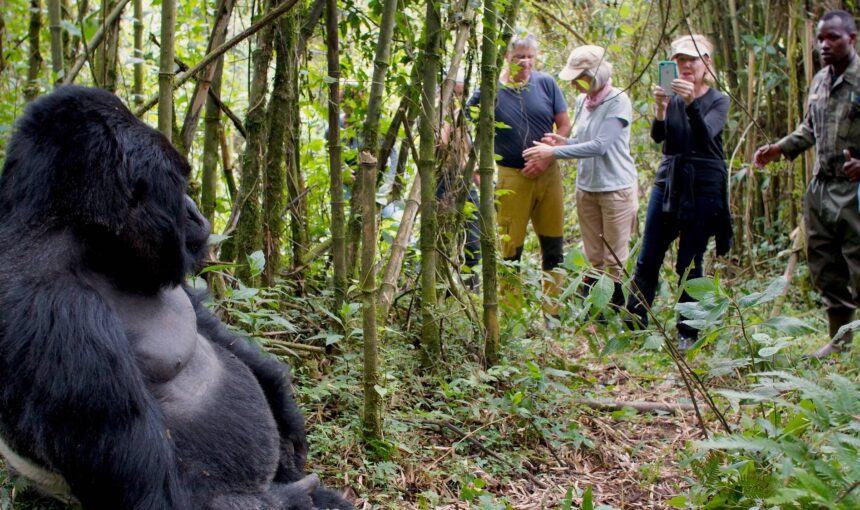
How Close Can You Get to Gorillas? Official 2026 Distance Rules & What Happens When They Come Closer
How Close Can You Get to Gorillas? During gorilla trekking in Uganda and Rwanda, visitors must stay at least 7 meters (23 feet) from mountain gorillas to protect both humans and these endangered primates from disease transmission. Occasionally, curious gorillas may approach on their own.
Always remain calm, follow your ranger’s instructions, and never attempt to touch or approach the gorillas.
Standing in the misty undergrowth of an African rainforest, watching a 200-kilogram silverback gorilla feed just meters away, is the kind of moment that stays with you for life.
It’s quiet. It’s humbling. And for most travelers researching this trip for the first time, one question comes up before any other: how close can you actually get to a gorilla?
The short answer is 7 meters — but the real answer is more nuanced, and it matters for your safety, the gorillas’ health, and the future of one of the world’s most endangered great apes.
Fewer than 1,063 mountain gorillas remain on the planet, split between the forests of Uganda, Rwanda, and the Democratic Republic of Congo. Every visitor rule that exists — the distance, the mask, the one-hour limit — is designed to keep it that way.
This guide covers everything you need to know before you book: the official viewing distance, what happens when a gorilla approaches you, how rangers keep encounters safe, the difference between trekking in Uganda and Rwanda, and how to prepare for the single most rewarding hour of wildlife viewing on Earth.
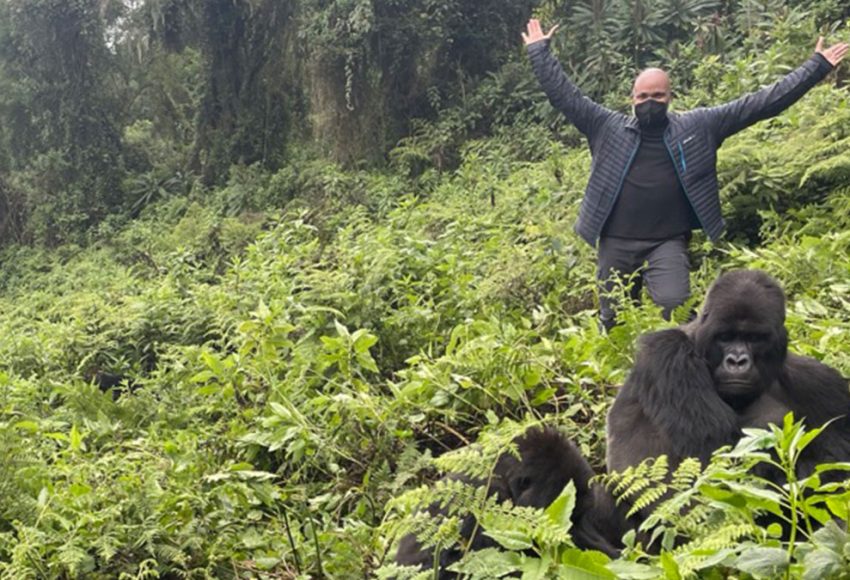
Quick Answer
During gorilla trekking in Uganda and Rwanda, visitors are required to stay at least 7 meters (23 feet) away from mountain gorillas.
This distance is set by wildlife authorities to prevent disease transmission between humans and gorillas, who share close to 98% of human DNA.
However, gorillas are wild, free-roaming animals — not zoo exhibits — and they sometimes choose to walk toward visitors or cross a trail.
If this happens, stay calm, avoid sudden movements, do not make direct eye contact with a silverback, and follow your ranger’s instructions immediately. The gorilla is in control of the interaction, not you.
Why Is There a 7-Meter Rule?
The 7-meter rule isn’t arbitrary — it’s grounded in decades of primatology and conservation science.
1. Disease transmission is the primary risk.
Because gorillas share roughly 98% of human DNA, they are biologically vulnerable to many of the same respiratory illnesses that affect people.
A common cold that’s mild for a human can become pneumonia in a gorilla, and outbreaks have killed habituated individuals in the past. The 7-meter buffer reduces the chance of airborne droplets, coughs, or sneezes reaching the animals.
2. It’s written into international conservation guidelines.
The distance is enforced under the International Gorilla Tourism Guidelines, developed by the International Gorilla Conservation Programme (IGCP) and adopted by the Uganda Wildlife Authority (UWA) and the Rwanda Development Board (RDB).
These same guidelines cap group sizes, group visits per day, and time spent with each gorilla family.
3. It protects the long-term viability of tourism.
Gorilla trekking permits fund anti-poaching patrols, veterinary care, and community development.
A disease outbreak or a habituation setback doesn’t just harm the gorillas — it threatens the entire conservation-tourism model that has helped mountain gorilla numbers grow over the past 20 years.
What Happens If a Gorilla Comes Closer?
This is one of the most common questions trekkers ask before their trip — and the honest answer is: it happens more often than people expect, especially with habituated families used to daily visitors.
Here’s what experienced guides recommend:
- Stay calm and still. Sudden movement can be interpreted as a threat.
- Do not touch the gorilla, even if it brushes past you or a juvenile gets curious.
- Avoid direct eye contact with a silverback. In gorilla body language, a sustained stare can read as a challenge.
- Never run. Running triggers a chase instinct in most wild animals, gorillas included.
- Follow your ranger’s instructions immediately — they will often tell you to crouch, back away slowly, or simply hold your position.
Rangers who’ve spent years with habituated families describe most close encounters as driven by curiosity, not aggression — particularly from juveniles who haven’t yet learned to keep their distance the way adults do.
A young gorilla might approach a trekking group simply to investigate, then wander off just as quickly. The gorillas set the terms of the encounter; your job is to stay predictable, quiet, and calm.
Can You Touch a Gorilla?
No — touching a gorilla is not permitted under any circumstances, even if the animal initiates contact.
Here’s why this rule is non-negotiable:
- It’s illegal. Physical contact with a mountain gorilla violates park regulations in both Uganda and Rwanda and can result in fines or expulsion from the park.
- It’s dangerous. A silverback can weigh over 180 kilograms and is many times stronger than a human. Even an unintentional shove during a bluff charge can cause serious injury.
- It stresses the gorilla family. Physical contact disrupts natural behavior and can unsettle the group dynamic within the family.
- It raises disease transmission risk far more than distance alone.
- It conflicts with conservation ethics. Responsible tourism treats gorillas as wild animals to be observed, not props for a photo.
If a gorilla brushes against you while passing on a narrow trail, remain still and let your ranger guide the group’s response.
How Do Rangers Keep Visitors Safe?
Every gorilla trek is led by trained park rangers and trackers, and the safety systems behind a single one-hour visit are more extensive than most visitors realize:
- Gorilla habituation — years of controlled exposure so the family tolerates human presence without stress.
- Daily monitoring — trackers locate the family each morning before trekking groups arrive.
- Armed ranger escorts — present for protection against forest wildlife such as buffalo or elephants, not the gorillas themselves.
- Veterinary teams — Gorilla Doctors and park vets monitor the health of habituated families year-round.
- Family tracking — each habituated group is followed and documented daily, so rangers know individual gorillas by name and temperament.
- Safety briefings — every trekking group receives a briefing on distance, behavior, and etiquette before entering the forest.
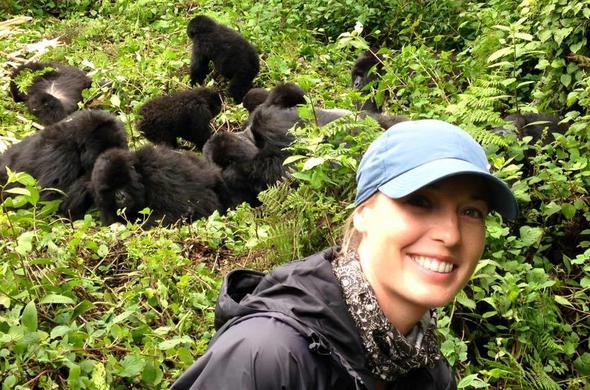
What Is Gorilla Habituation?
Habituation is the process of gradually accustoming a wild gorilla family to the presence of humans, so they behave naturally instead of fleeing or becoming aggressive.
- Definition: A structured, slow introduction of human observers into a gorilla family’s daily life.
- Time required: Habituation typically takes 2 to 3 years of near-daily visits by trackers and researchers.
- Research teams spend this period recording behavior, health, and group dynamics before a family is ever opened to tourism.
- Building trust happens gradually — trackers maintain consistent distance and behavior so the gorillas learn humans are predictable and non-threatening.
- Why habituated gorillas tolerate visitors: They’ve learned, through repeated safe exposure, that humans keeping a respectful distance pose no danger — but they remain wild animals with wild instincts.
Understanding Gorilla Behavior
Recognizing gorilla body language helps visitors stay calm and read situations correctly:
- Silverback leadership — the dominant adult male leads, protects, and makes decisions for the entire family.
- Family structure — groups typically include one or two silverbacks, several adult females, and juveniles, often ranging from 5 to 30 individuals.
- Feeding behavior — gorillas spend much of the day foraging for vegetation, occupying up to half their waking hours eating.
- Grooming — reinforces social bonds within the family unit.
- Communication — includes vocalizations, gestures, and posturing.
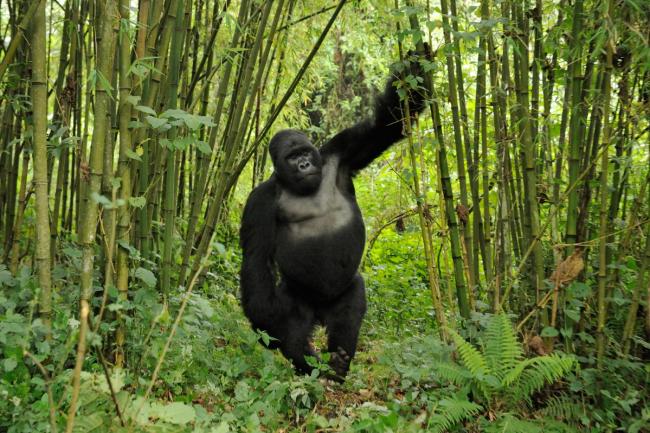
- Chest beating — a display of strength, often by the silverback, and not necessarily a sign of imminent aggression.
- Bluff charges — a warning display meant to test a perceived threat, rarely followed by actual contact if the visitor stays calm.
- Playful juveniles — young gorillas are often the most active and curious members of the group during a visit.
Understanding these behaviors in advance helps visitors interpret what they’re seeing instead of reacting with fear.
What Happens During Your One-Hour Gorilla Encounter?
Once trackers locate the family, your group’s visit unfolds in a fairly consistent sequence:
- Arrival — Bags, walking sticks, and extra gear are left with porters just outside the 7-meter zone; masks go on if required.
- Observation — Your ranger positions the group for the best sightline while maintaining distance.
- Photography — A window for photos, typically without flash.
- Behavior — You’ll likely see feeding, grooming, resting, or juveniles playing.
- Questions — Rangers often answer questions quietly during natural pauses.
- Departure — At the one-hour mark, the group exits the area calmly, and the family is left undisturbed.
Gorilla Trekking Rules You Must Follow
- Maintain the 7-meter minimum distance at all times.
- Wear a mask if required by park regulations.
- No flash photography.
- Stay quiet — no loud talking during the encounter.
- No eating or drinking near the gorillas.
- Do not litter in the park.
- Keep the group together; do not wander off.
- Visits are capped at a maximum of one hour per group.
- Minimum age is 15 for gorilla trekking permits.
Can You Take Photos Up Close?
Yes — with the right gear, you can capture striking, intimate portraits even from 7 meters away.
- Camera lenses: A 70–200mm zoom is ideal for portrait-style shots without needing to close the distance.
- Smartphones: Modern phone cameras with digital zoom or portrait mode can still capture strong images, especially when the gorilla is at rest.
- Flash restrictions: Flash photography is prohibited — it can startle or stress the gorillas.
- Portrait opportunities: Low light in dense forest canopy makes eye-level, close-crop portraits some of the most striking wildlife images you’ll ever take.
- Best camera settings: Prioritize a fast shutter speed and higher ISO to compensate for the low forest light without flash.
Is Gorilla Trekking Safe?
Yes — gorilla trekking has an excellent safety record, thanks to several overlapping safeguards:
- Habituated gorillas are accustomed to calm, predictable human behavior.
- Experienced rangers accompany every group and know each family’s temperament.
- Low incident rates — serious injuries to trekkers are extremely rare across decades of regulated tourism.
- Safety briefings prepare every visitor before entering the forest.
- Visitor compliance with distance and behavior rules is the single biggest factor in keeping encounters incident-free.
How Many Miles Do You Walk to See the Gorillas?
The distance you walk to see mountain gorillas varies depending on the location of the assigned gorilla family. Most gorilla treks cover 1 to 6 miles (2 to 10 kilometers) round trip, although some may be shorter or longer. Trekking can take 30 minutes to 6 hours, depending on the terrain, altitude, and gorillas’ movements.
Trails pass through dense forests, steep hills, and uneven ground, making a moderate level of fitness helpful. Experienced ranger guides lead every trek, ensuring a safe and rewarding journey to observe mountain gorillas in their natural habitat.
Why Gorillas Sometimes Approach Tourists
Close encounters usually stem from natural gorilla behavior rather than any provocation:
- Curiosity — especially in young or sub-adult gorillas.
- Juvenile behavior — playful youngsters often break from the group to investigate visitors.
- Feeding — a family may simply be foraging in the direction of the trekking path.
- Natural movement — gorillas travel through their home range regardless of where visitors are standing.
- Family interactions — a family on the move may cross a trail as a unit.
Visitors must never approach the gorillas to close the distance themselves — any narrowing of the gap should happen only on the gorilla’s terms, with your ranger managing the group’s response.
Gorilla Trekking in Uganda vs Rwanda
| Uganda | Rwanda |
|---|---|
| More habituated gorilla families | Easier access from the capital |
| Better overall value for permits and lodging | More luxury lodge options |
| Longer drives to trekking regions | Short transfer from Kigali |
| Dense, varied rainforest terrain | Volcanic bamboo forest terrain |
Both destinations offer world-class trekking — the choice often comes down to budget, travel time, and whether you’re combining the trip with other safari destinations like Uganda’s savannah parks or Rwanda’s Akagera National Park.
Best Places to See Mountain Gorillas
- Bwindi Impenetrable National Park (Uganda) — home to nearly half the world’s mountain gorilla population, spread across four trekking sectors with dense, ancient rainforest.
- Mgahinga Gorilla National Park (Uganda) — part of the Virunga Massif, smaller and quieter, ideal for travelers wanting fewer crowds.
- Volcanoes National Park (Rwanda) — the most accessible option from Kigali, with a strong luxury lodge scene and the setting for Dian Fossey’s original research.
- Virunga National Park (DR Congo) — Africa’s oldest national park, offering gorilla trekking alongside active volcano hikes, though travel logistics and security conditions require careful planning.

Health Rules Before Trekking
- No trekking when sick. Anyone showing symptoms of a cold, flu, or respiratory illness may be barred from trekking that day to protect the gorillas.
- Vaccinations — Yellow fever vaccination is typically required for entry into Uganda and Rwanda; check current requirements before you travel.
- Respiratory illnesses pose the single greatest health risk to habituated gorilla families.
- Hygiene standards are enforced throughout the trek.
- Mask requirements may apply depending on current park policy.
- Hand sanitation stations are typically available at trailheads.
Gorilla Conservation and Responsible Tourism
Every gorilla trekking permit does far more than grant you an hour with a gorilla family — it directly funds the systems keeping the species alive.
- Permit fees support conservation programs across Uganda, Rwanda, and the wider region.
- Anti-poaching patrols operate daily in gorilla habitat.
- Veterinary care, including organizations like Gorilla Doctors, monitors habituated families for illness and injury.
- Community development programs channel tourism revenue into villages bordering the parks, reducing incentives for poaching or habitat encroachment.
- Ranger salaries are funded in large part by trekking tourism.
- Habitat protection efforts help maintain the forest corridors gorillas depend on.
Tips for Your Best Gorilla Encounter
- Wear neutral-colored clothing — earth tones blend into the forest environment.
- Stay quiet throughout the trek and the encounter itself.
- Hire a porter — it supports the local community and makes steep, muddy terrain far more manageable.
- Carry enough water — treks can last anywhere from 30 minutes to several hours each way.
- Respect wildlife at every stage of the trek, not just during the gorilla encounter.
- Listen to your guides — their instructions are based on years of experience reading gorilla behavior.
- Bring binoculars for spotting forest birds and other wildlife along the trail.
- Prepare physically — trails can be steep, muddy, and high-altitude, so moderate fitness makes for a far more enjoyable day.
Frequently Asked Questions
How close can you get to mountain gorillas?
The official minimum viewing distance is 7 meters (23 feet), though gorillas may occasionally approach closer on their own.
Why is the limit 7 meters?
To reduce the risk of disease transmission between humans and gorillas, who share roughly 98% of human DNA, and to comply with international conservation guidelines.
Can gorillas touch you?
A gorilla may occasionally brush past a visitor, but touching a gorilla back is never permitted.
Are gorillas aggressive?
Habituated gorillas are generally calm and tolerant of visitors. Displays like chest-beating or bluff charges are warnings, not typically followed by attacks, especially when visitors stay calm.
Can you hug a gorilla?
No. Physical contact of any kind is prohibited for legal, safety, and conservation reasons.
What if a gorilla charges?
Stay still, avoid eye contact, and follow your ranger’s instructions — most charges are bluffs meant to assert dominance, not genuine attacks.
Is flash photography allowed?
No, flash photography is banned to avoid startling the gorillas.
Can children trek?
No — the minimum age for gorilla trekking permits is 15 years old.
How long do you spend with gorillas?
Visits are capped at one hour once your group locates the family.
Can gorillas smell humans?
Yes, gorillas have a strong sense of smell and can detect human presence well before visual contact.
Do gorillas recognize people?
Habituated gorillas can become familiar with regular trackers and rangers, though they don’t distinguish between individual tourists.
Is gorilla trekking ethical?
When conducted under regulated guidelines — with capped visitor numbers, enforced distances, and permit fees funding conservation — gorilla trekking is widely regarded as a responsible, high-value form of eco-tourism.
What happens if I sneeze?
Turn away from the gorillas and cover your mouth; a single sneeze isn’t cause for alarm, but chronic coughing or illness may require you to sit out the trek.
Can I trek if I have a cold?
No — park authorities may deny entry to visitors showing signs of respiratory illness to protect the gorilla population.
What should I do if a gorilla approaches me?
Stay calm, remain still, avoid direct eye contact with a silverback, never run, and follow your ranger’s instructions.
Conclusion
The official gorilla viewing distance is 7 meters (23 feet) — a rule grounded in shared DNA, disease prevention, and decades of conservation science.
Gorillas may occasionally choose to close that gap themselves, but visitors should never approach or touch them under any circumstances.
Every rule, from the one-hour time limit to the minimum trekking age, exists to protect a species that numbers just over a thousand individuals in the wild.
Responsible tourism isn’t just a guideline here — it’s the reason mountain gorillas still exist for future generations to see.
By trekking with a licensed operator (GoSilverback Gorilla Safaris), following ranger instructions, and respecting the distance, you become part of the system keeping these animals alive.
Ready to see mountain gorillas in the wild for yourself? Book your gorilla trekking permit through GoSilverback Safaris and let our expert local guides handle the permits, logistics, and lodging — so all you have to do is show up and experience the encounter of a lifetime.
Reach out today to secure your spot before permits sell out for your travel dates.