Gorilla Trekking in Rwanda: The Ultimate 2026 Guide to Volcanoes National Park
Rwanda is Africa’s premier luxury gorilla trekking destination. Home to 12 habituated mountain gorilla families in Volcanoes National Park, Rwanda offers the most accessible, secure, and high-end gorilla safari experience on the continent.
A gorilla permit costs $1,500 per person but delivers unmatched proximity, shorter hiking times, and world-class lodges within minutes of the park.
Quick Answer: Rwanda is ideal for luxury travelers, short vacations, honeymooners, and first-time Africa visitors seeking premium gorilla trekking with minimal logistics.
Why Choose Rwanda for Gorilla Trekking?
Rwanda transformed mountain gorilla conservation into luxury ecotourism long before most African nations recognized the potential of sustainable wildlife tourism.
Unlike other destinations that require multi-day overland journeys or complicated domestic flight connections, Rwanda’s Volcanoes National Park sits just 2.5 hours from Kigali International Airport — no domestic flights, no grueling road transfers, no uncertainty.
You land in Kigali in the morning, and by afternoon, you are sipping sundowners on the forested slopes of the Virunga Mountains, preparing for your gorilla encounter the following dawn.
The key advantages of gorilla trekking in Rwanda are substantial and immediately apparent to any traveler who has experienced both Rwandan and Ugandan operations.
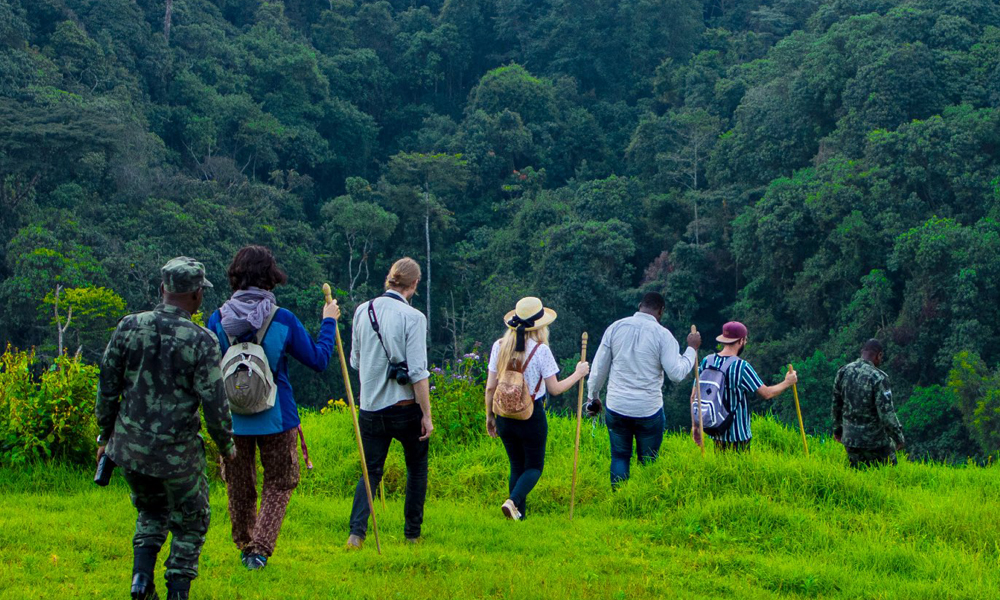
1. Shorter trekking times mean that most gorilla encounters occur within 1 to 3 hours of hiking, compared to the 4 to 8 hours often required in Uganda’s denser, more challenging terrain.
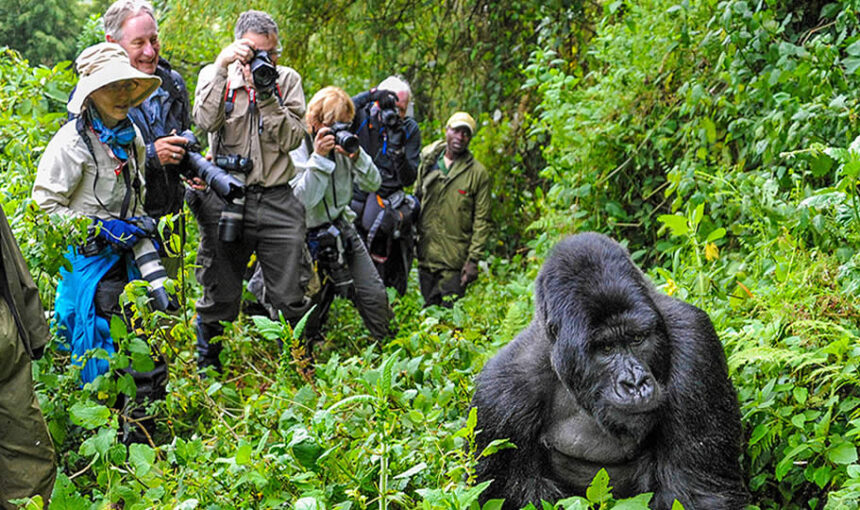
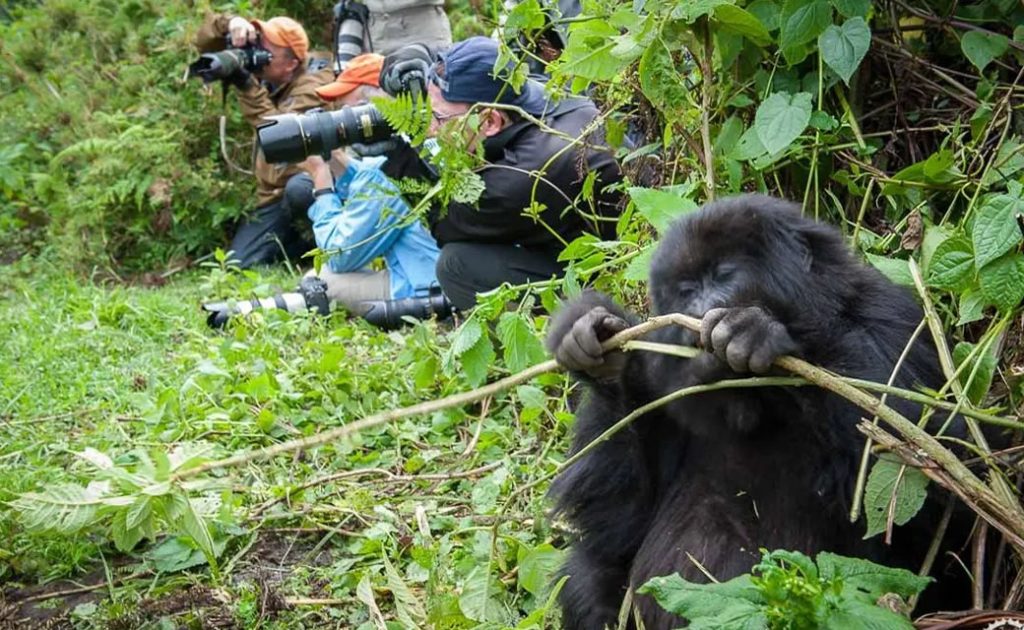
2. Open bamboo forests provide dramatically better visibility, which translates directly into superior gorilla photography and more intimate, unobstructed viewing of silverback gorillas, mothers, and playful juveniles.
3. Premium infrastructure — including fully paved roads from Kigali to the park gate, professional ranger services, and internationally accredited luxury lodges — ensures that every element of your Rwanda safari operates with Swiss precision wrapped in African warmth.
Perhaps most importantly, Rwanda’s conservation excellence is not marketing hyperbole. 30% of all gorilla permit revenue flows directly into community projects and anti-poaching programs, meaning that every dollar you spend on your gorilla trekking permit strengthens the very ecosystem you have traveled thousands of miles to witness.
Rwanda’s gorilla population has grown to 604 individuals according to the most recent 2024 census, proving beyond doubt that sustainable gorilla tourism works.
When you book gorilla trekking Rwanda, you do not merely observe conservation — you directly fund it.
Volcanoes National Park: Rwanda’s Gorilla Sanctuary
Volcanoes National Park — known locally as Parc National des Volcans — spans 160 square kilometers of volcanic terrain in northwestern Rwanda, forming the Rwandan sector of the broader Virunga Conservation Area.
This transboundary protected area also encompasses Uganda’s Mgahinga Gorilla National Park and the Democratic Republic of Congo’s Virunga National Park, together protecting the world’s entire population of endangered mountain gorillas in the wild.
The park’s geography is dominated by five of the eight Virunga volcanoes: Karisimbi (4,507 meters, the highest), Bisoke, Muhabura, Gahinga, and Sabyinyo.
These dormant and active volcanoes create a dramatic, mist-shrouded backdrop that has become iconic in National Geographic and BBC wildlife documentaries.
The terrain ranges from bamboo forests at lower elevations to alpine meadows and volcanic rock at higher altitudes, creating a mosaic of habitats that support not only mountain gorillas but also golden monkeys, buffalo, bushbuck, and over 200 bird species.
What to Expect During Your Gorilla Trek
Rwanda currently maintains 12 habituated gorilla families available for daily gorilla trekking, with each family allocated a maximum of 8 visitors per day.
This strict 96-visitor daily cap ensures minimal stress on the gorillas and guarantees an exclusive, uncrowded experience.
The altitude range of trekking routes spans from approximately 2,400 meters to 4,507 meters at the summit of Mount Karisimbi, though most treks operate between 2,500 and 3,500 meters.
The terrain is notably more forgiving than Uganda’s Bwindi Impenetrable National Park. Bamboo forests and open volcanic slopes replace the dense, thorny undergrowth that characterizes Ugandan treks, meaning you spend less energy fighting vegetation and more energy observing wildlife.
The daily limit of 8 visitors per gorilla family is strictly enforced by the Rwanda Development Board (RDB), and rangers monitor gorilla health continuously to ensure that tourism never compromises welfare.
Best Sectors for Gorilla Trekking in Volcanoes National Park
Kinigi Park Headquarters serves as the primary base for all gorilla treks in Rwanda. Every morning, trekkers gather here for registration, briefing, and family assignment.
The Bisate Lodge area offers premium access to multiple gorilla families and is favored by luxury travelers staying at properties like Bisate Lodge itself.
Musanze — formerly known as Ruhengeri — functions as the gateway town, offering mid-range accommodation and services for budget travelers and those seeking a more local experience.
Pro Tip: Book your Rwanda gorilla permit at least 6 months in advance. The high season months of June through September and December through February sell out months ahead, and last-minute permits are virtually impossible to secure.
Rwanda Gorilla Permit Cost & Booking Guide 2026
Understanding gorilla permit costs is essential for planning your Rwanda gorilla safari, as the permit represents the single largest fixed expense of your trip.
Rwanda positions itself firmly in the premium gorilla trekking market, and its pricing reflects that positioning unapologetically.
Table
|
Permit Type |
Cost (USD) |
Best For |
|
Standard Gorilla Permit |
$1,500 |
Single-day trekking, most travelers |
|
Gorilla Habituation Experience |
$1,500+ |
Extended 4-hour visits, researchers, photographers |
|
Private / VIP Permit |
Custom pricing |
Exclusive family access, helicopter transfers, celebrities |
What Is Included in Your $1,500 Gorilla Permit?
Your $1,500 Rwanda gorilla permit includes several critical components that justify the investment:
- One full hour with a habituated mountain gorilla family in their natural habitat
- Professional park ranger and experienced tracker guide who know the gorilla families intimately
- Armed security escort for protection against any wildlife encounters
- Conservation fee that funds anti-poaching patrols, veterinary care for gorillas, and community development projects
What Is NOT Included in Your Gorilla Permit?
Many first-time travelers are surprised to learn that the gorilla permit does not cover ancillary services.
These additional costs must be budgeted separately:
- Accommodation — ranging from $80 budget guesthouses to $2,500+ ultra-luxury lodges
- Transport to Kinigi — private 4×4 transfers from Kigali typically cost $150–$300 per day
- Porter hire — highly recommended at $15 to $20 per trek; porters carry your bag and assist on steep sections
- Tips for guides and rangers — customary and appreciated, typically $10–$20 per person
How to Book Your Rwanda Gorilla Permit: A Step-by-Step Guide
Booking a Rwanda gorilla permit requires precision and timing. Follow these steps to secure your place:
- Contact GoSilverback Gorilla Safaris — we maintain direct partnerships with the Rwanda Development Board (RDB) and secure permits before they reach public availability.
- Provide your passport details — gorilla permits are non-transferable and linked to your passport number. Any discrepancy will result in denial of entry.
- Pay 100% upfront — the RDB requires full payment to confirm. Permits are strictly limited to 96 visitors per day across all families.
- Receive your permit confirmation — print this document and carry it with your passport on trek day. Digital copies are not accepted at Kinigi.
Money-Saving Tip: Combine Rwanda gorilla trekking with Uganda gorilla trekking in a multi-country itinerary. GoSilverback Gorilla Safaris offers cross-border gorilla safari packages that optimize your budget while maximizing your wildlife encounters across both countries.
Best Time to Go Gorilla Trekking in Rwanda
Rwanda’s equatorial climate means that gorilla trekking operates year-round, but seasonal variations significantly impact trail conditions, photography opportunities, and permit availability.
Table
|
Season |
Months |
Conditions |
Permit Availability |
|
Dry Season (Peak) |
June – September |
Best trails, clear skies, minimal mud |
Book 6+ months ahead |
|
Short Dry Season |
December – February |
Excellent visibility, comfortable temperatures |
High demand |
|
Wet Season (Low) |
March – May, October – November |
Lush forests, fewer crowds, muddy trails |
Easier to secure |
Best Months for Gorilla Photography
June through August and January offer the optimal combination of clear skies, dry trails, and excellent natural light filtering through the bamboo canopy.
For wildlife photographers seeking that perfect silverback portrait or tender mother-infant interaction, these months provide the most reliable conditions.
Best Months for Budget Travelers
March through May represents Rwanda’s long rainy season. While trails become muddy and afternoon thunderstorms are common, luxury lodges often offer seasonal discounts of 20% to 40%, and gorilla permits are easier to secure on shorter notice.
The forests are at their most lush and photogenic during this period, and the gorillas often descend to lower elevations where food is abundant, potentially shortening your trek.
Important: Rain or shine, gorilla trekking in Rwanda operates daily. Rwanda’s equatorial climate means rain is possible even during the “dry” season — pack waterproof gear regardless of when you travel.
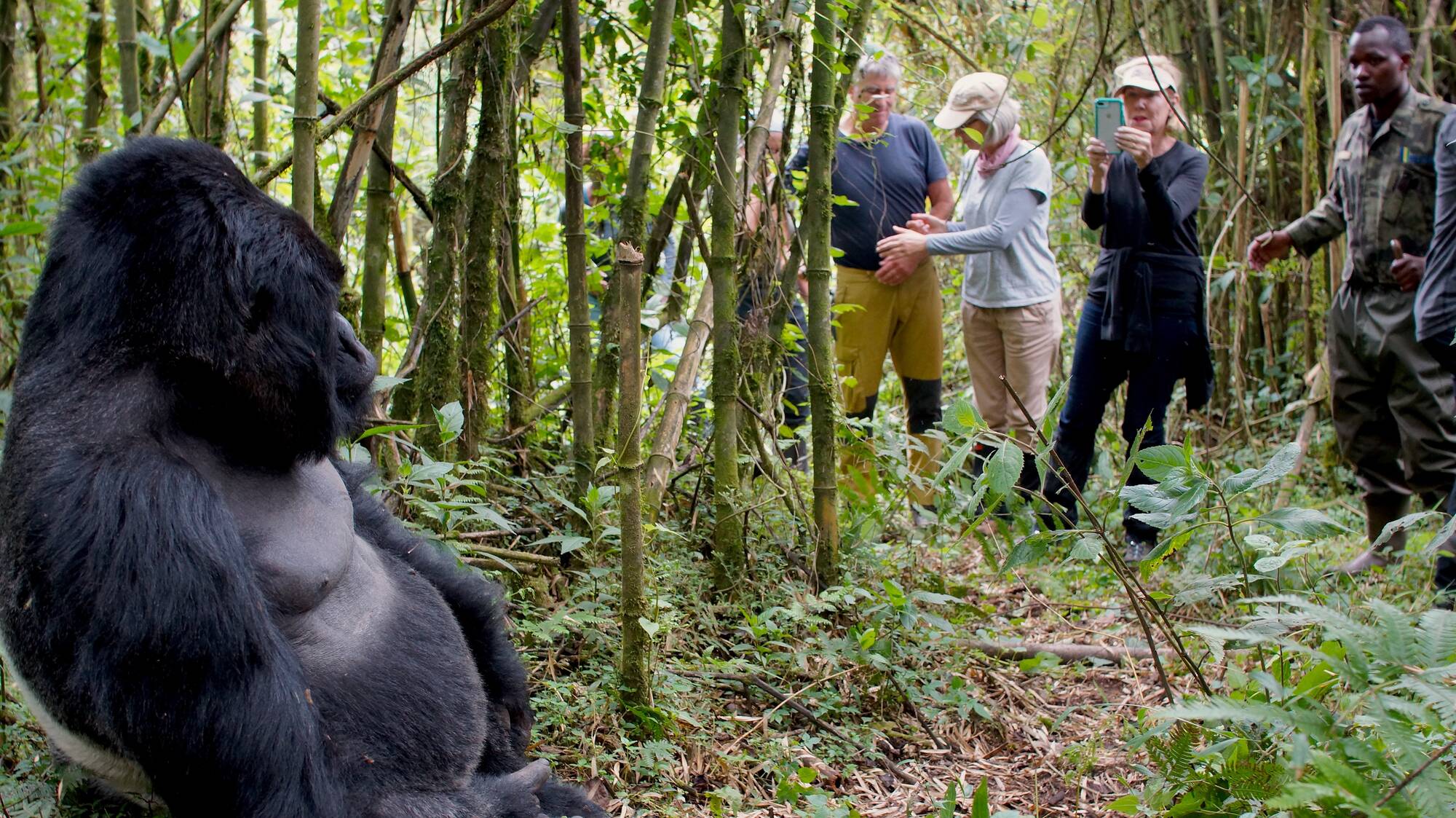
Rwanda Gorilla Trekking Experience: What Happens on Trek Day
Understanding the precise sequence of a gorilla trek day eliminates anxiety and helps you prepare mentally and physically.
Here is exactly what unfolds from dawn to certificate:
1. 05:30 AM — Pre-Dawn Departure from Your Lodge
Your lodge prepares an early breakfast – typically coffee, tea, fresh fruit, eggs, and pastries – before your 05:30 AM departure.
The drive from most lodges to Kinigi Park Headquarters takes 20 to 45 minutes on paved roads. Your GoSilverback driver-guide ensures you arrive with time to spare.
2. 07:00 AM — Registration and Safety Briefing at Kinigi
At Kinigi, you present your printed gorilla permit and passport to RDB officials. After registration, all trekkers gather for a comprehensive safety briefing conducted by senior park rangers.
Rangers assign you to a gorilla family based on several factors: your stated fitness level, personal preferences (some families have infants, others have multiple silverbacks), and the previous evening’s tracker reports on family locations.
3. 08:00 AM — Transfer to Trailhead and Begin Trekking
You board a park vehicle for the 10 to 45-minute drive to your assigned trailhead. Here, you meet your armed ranger escort and porter (if hired).
The trek begins immediately. Your guides maintain radio contact with trackers who departed at dawn to locate the gorilla families.
4. Trek Duration and Gorilla Encounter
Trek duration ranges from 1 to 4 hours depending on which gorilla family you are assigned and where they moved overnight.
Some families, like the Sabyinyo group, often graze close to the park boundary, while others, like the Hirwa group, range deeper into the forest.
Upon locating your assigned gorilla family, you leave your backpack with the porters and approach with only your camera.
You are granted exactly one hour with the gorillas, maintaining a 7-meter distance (approximately 23 feet) at all times. This rule protects both gorilla health and visitor safety.
5. Post-Trek: Certificate and Return
After your hour expires, you trek back to the trailhead. At Kinigi, you receive an official gorilla trekking certificate — a meaningful keepsake that also supports conservation awareness.
Your driver transfers you back to your lodge for a well-earned hot lunch, massage, or afternoon rest.
6. Physical Requirements and Accessibility
Moderate fitness is required for Rwanda gorilla trekking. The volcanic slopes are steep but not technical.
Porters are available for $15 to $20 and are invaluable for carrying your daypack and providing a steadying hand on slippery sections.
Walking sticks are provided free of charge. The minimum age is strictly 15 years old — no exceptions are made, even for mature younger teenagers.
Best Luxury Lodges for Gorilla Trekking Rwanda
Rwanda’s luxury lodge portfolio rivals anything in South Africa’s Sabi Sands or Botswana’s Okavango Delta.
These properties are not merely places to sleep — they are integral components of your gorilla safari experience, offering gourmet cuisine, spa treatments, conservation education, and seamless logistics.
Table
|
Lodge |
Location |
Price Per Night |
Standout Feature |
|
Singita Kwitonda Lodge |
Volcanoes NP edge |
$2,500+ |
Ultra-luxury, private heated pools, deep conservation ethos |
|
One&Only Gorilla’s Nest |
Volcanoes NP |
$2,000+ |
Treehouse suites, world-class spa, helicopter access |
|
Bisate Lodge (Wilderness Safaris) |
Volcanoes NP |
$1,800+ |
Iconic pod architecture, active reforestation program |
|
Sabyinyo Silverback Lodge |
Volcanoes NP |
$1,200+ |
Community-owned, closest proximity to Kinigi |
|
Virunga Lodge |
Volcanoes NP |
$900+ |
Panoramic Virunga views, exceptional mid-luxury value |
Why Your Lodge Choice Matters
The right luxury lodge enhances every aspect of your gorilla trekking Rwanda experience.
Properties like Singita Kwitonda and One&Only Gorilla’s Nest offer early breakfast service before your 05:30 AM departure, ensuring you are fueled without rushing. They prepare packed lunches for post-trek dining in the forest or at scenic viewpoints.
After strenuous hiking, hot showers, deep-soak tubs, and in-lodge massage therapists restore your body.
Most importantly, lodge staff include expert naturalists who brief you on gorilla behavior, conservation history, and photography tips before you ever reach the park gate.
GoSilverback Gorilla Safaris we secures preferential rates at all listed lodges and can bundle accommodation with permits and transfers into seamless gorilla trekking packages.
How to Get to Volcanoes National Park
Accessibility is where Rwanda gorilla trekking truly distinguishes itself from competitors. The journey from international arrival to park gate is remarkably streamlined.
1. By Air: Kigali International Airport (KGL)
Kigali International Airport receives direct flights from major hubs including London (Heathrow), Brussels, Amsterdam, Nairobi, Dubai, Doha, and Istanbul.
For travelers from the USA, Canada, and Asia, connections through Nairobi (Jomo Kenyatta International) or Addis Ababa (Bole International) are efficient and frequent.
2. By Road: Kigali to Volcanoes National Park
The road journey is where Rwanda’s infrastructure advantage becomes tangible:
- Kigali to Musanze: 2 hours via a fully paved, well-maintained highway
- Musanze to Kinigi Park Headquarters: 20 minutes on sealed roads
- Total transfer time from Kigali International Airport to park gate: 2.5 hours
Compare this to Uganda, where the journey from Entebbe International Airport to Bwindi Impenetrable National Park requires either an 8-to-10-hour overland drive or expensive domestic charter flights followed by additional road transfers.
GoSilverback’s Included Services
Every GoSilverback gorilla safari includes:
- Private 4×4 vehicle with English-speaking driver-guide
- Airport meet-and-greet with cold towels and bottled water
- En-route stop at the Kigali Genocide Memorial (optional but highly recommended for cultural context)
- Helicopter transfers available for luxury clients — 15 minutes from Kigali to Bisate, bypassing road travel entirely
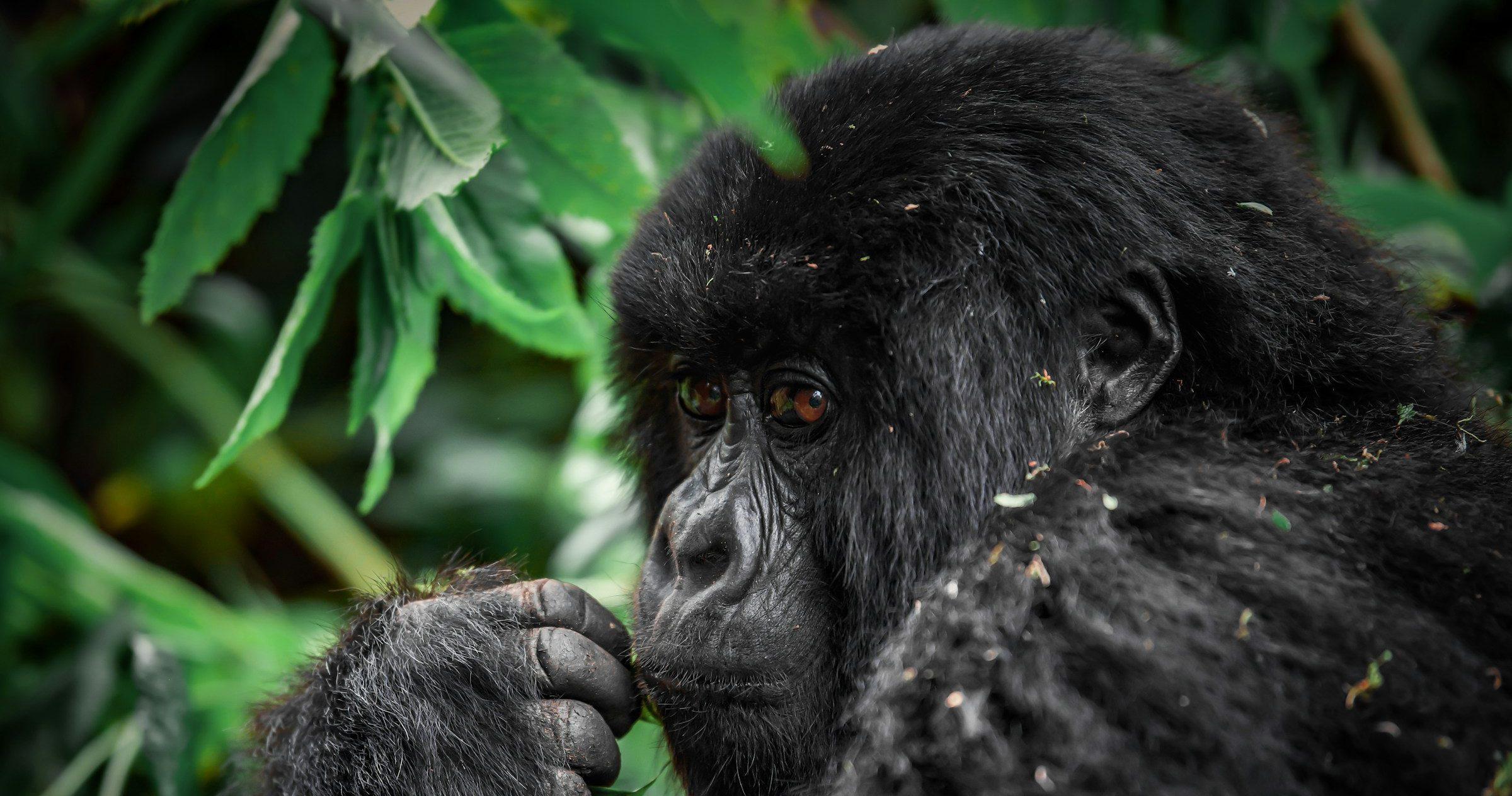
What to Pack for Rwanda Gorilla Trekking
Proper preparation prevents discomfort and maximizes your gorilla encounter quality.
This packing list is field-tested by GoSilverback guides across thousands of treks.
Essential Gear for Gorilla Trekking
- Hiking boots — waterproof with ankle support; the volcanic slopes are steep and often muddy
- Long-sleeved shirt and long pants – protect against stinging nettles, thorns, and insect bites
- Rain jacket or poncho — essential year-round; afternoon rain is common even in dry season
- Gardening gloves — invaluable for gripping vegetation and steadying yourself on slopes
- Wide-brimmed hat and high-SPF sunscreen — equatorial sun is intense at altitude
- Insect repellent — DEET-based formula recommended
- Camera with zoom lens — 70–200mm ideal; no flash photography is permitted under any circumstances
- Binoculars — useful for birdwatching and spotting distant gorilla movement
- 2 liters of water — provided by your lodge; dehydration at altitude is a real risk
- Energy snacks — nuts, chocolate, or energy bars for mid-trek fuel
Prohibited Items
- Flash photography — strictly forbidden; flashes disturb gorillas and can trigger aggressive responses from silverbacks
- Trekking poles with sharp metal tips — blunt-tipped poles are permitted and recommended for older trekkers
Rwanda Gorilla Trekking Safety & Health Regulations
Safety is not a concern you should dismiss when planning gorilla trekking in Rwanda — it is a guarantee that Rwanda delivers consistently.
1. Tourist Safety in Rwanda
Rwanda ranks among the top 10 safest countries globally according to the World Economic Forum’s Travel & Tourism Competitiveness Report.
Kigali is widely regarded as Africa’s cleanest, most orderly capital. Violent crime against tourists is virtually unheard of, and the country’s commitment to visitor security is evident at every level.
2. Park Safety Measures
Within Volcanoes National Park, multiple layers of protection ensure your wellbeing:
- Armed rangers escort every trek – not because gorillas are dangerous, but as a precaution against the park’s occasional buffalo and elephant encounters
- Trackers monitor gorilla families 24/7 — they know each family’s location, composition, and mood before you ever lace your boots
- Emergency evacuation protocols are established and practiced regularly; serious medical issues can be helicopter-evacuated to Kigali within 45 minutes
3. Health Requirements for Gorilla Trekking
- Minimum age: 15 years old. No exceptions exist, even with parental consent or doctor’s notes. This rule protects both young trekkers and gorilla health.
- No trekking if ill: Mountain gorillas share 98% of human DNA. Respiratory infections, colds, flu, or even mild coughs can be fatal to gorillas. If you are sick, you will be denied entry — and rightly so. GoSilverback can reschedule your trek at no additional permit cost if illness arises.
- COVID-19 protocols: Mask requirements during close encounters may apply depending on current RDB guidelines. Your GoSilverback consultant will brief you on current protocols before departure.
- Fitness consultation: If you have heart conditions, respiratory issues, or mobility limitations, consult your physician before booking. Rwanda offers easier terrain than Uganda, but it is still high-altitude hiking.
4. Travel Insurance Requirements
Comprehensive travel insurance is mandatory for all GoSilverback clients. Your policy must include:
- Emergency medical evacuation (helicopter rescue from the park if necessary)
- Trip cancellation coverage (permits are non-refundable within 30 days of trekking)
- Medical expenses in Rwanda
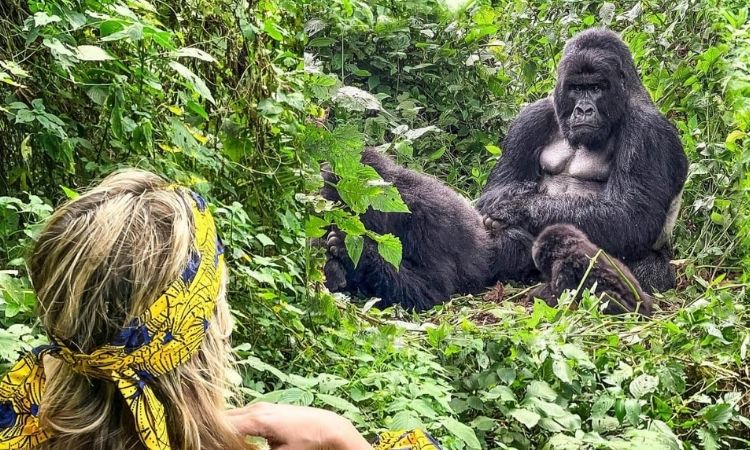
Rwanda Gorilla Trekking vs Uganda: A Detailed Comparison
Savvy travelers often research both destinations before committing. Here is an honest, data-driven comparison to guide your decision.
Table
|
Factor |
Rwanda |
Uganda |
|
Gorilla permit cost |
$1,500 (premium positioning) |
$800 (better value for budget travelers) |
|
Trek difficulty |
Easier terrain, bamboo forests |
More challenging, dense jungle |
|
Access from capital city |
2.5 hours from Kigali |
8–10 hours from Entebbe, or charter flights |
|
Luxury lodge quality |
World-class (Singita, One&Only) |
Limited luxury options |
|
Habituated gorilla families |
12 families |
20+ families across Bwindi and Mgahinga |
|
Best suited for |
Luxury travelers, short vacations, honeymooners |
Budget travelers, extended wildlife safaris |
The Verdict
Choose Rwanda gorilla trekking if you prioritize luxury, convenience, shorter hiking times, and premium lodges. Choose Uganda gorilla trekking if you seek lower costs, more gorilla family options, and the ability to combine your trek with extended Big Five safaris in Queen Elizabeth National Park or Murchison Falls.
GoSilverback offers both destinations — and our most popular itinerary is the 7-day Rwanda-Uganda Ultimate Gorilla Safari, which delivers the best of both countries in one seamless journey.
Who Should Book Gorilla Trekking in Rwanda?
Rwanda is not the right destination for every traveler — but for specific traveler profiles, it is unmatched.
Rwanda Is Perfect For:
- Honeymooners seeking a once-in-a-lifetime wildlife experience combined with romantic luxury lodges, private dinners, and helicopter arrivals
- Luxury travelers who expect Singita-level service, spa treatments, and gourmet cuisine after a day in the forest
- Short vacationers with limited time — a 2-day gorilla trip from Kigali is entirely feasible
- First-time Africa visitors who value safety, English-speaking guides, and seamless logistics over raw adventure
- Wildlife photographers who need open forest canopies, excellent natural light, and close proximity to subjects
- Families with teenagers (minimum age 15) seeking an educational, transformative experience that builds conservation awareness
Rwanda Is NOT Ideal For:
- Strict budget travelers with total trip budgets under $3,000 — Uganda offers significantly better value at lower price points
- Travelers seeking multi-week, multi-park safari circuits — Rwanda’s compact size limits extended wildlife combinations compared to Kenya or Tanzania
Frequently Asked Questions About Gorilla Trekking in Rwanda
How much does gorilla trekking in Rwanda cost in total?
Total trip cost ranges from approximately $3,000 per person for budget packages (shared transport, mid-range lodges) to $8,000+ per person for luxury gorilla safaris with private vehicles, Singita Kwitonda, and helicopter transfers. The $1,500 gorilla permit is the fixed cost; everything else varies by comfort level.
Is Rwanda or Uganda better for gorilla trekking?
Rwanda wins on luxury, accessibility, and ease of trekking. Uganda wins on price and variety of gorilla families. There is no objectively “better” destination — only the destination that aligns with your priorities, budget, and travel style.
How difficult is gorilla trekking in Rwanda?
Moderate. Most Rwanda gorilla treks last 1 to 3 hours on volcanic slopes with established trails. Porters assist with gear and provide physical support. The altitude (2,400–3,500 meters) can cause mild breathlessness for unacclimatized travelers, but the pace is slow and accommodating.
What is the best month for gorilla trekking in Rwanda?
June through September offers the best combination of dry trails, clear skies, and reliable gorilla locations. December through February is also excellent. March through May and October through November are wetter but offer lush scenery, fewer crowds, and occasional lodge discounts.
Can I do gorilla trekking in one day from Kigali?
Yes. GoSilverback arranges express gorilla trekking day trips departing Kigali at 04:30 AM, trekking by 07:00 AM, and returning to Kigali by evening. This is physically demanding but ideal for business travelers or those with tight schedules.
Are there age restrictions for gorilla trekking?
Yes. Minimum age is 15 years old. No exceptions are made. This protects both young visitors and gorilla health.
How close can I get to the mountain gorillas?
7 meters (approximately 23 feet) is the mandated minimum distance. Rangers enforce this strictly. Occasionally, curious juvenile gorillas approach closer — remain still and allow them to pass without reaching out.
What happens if I do not see gorillas on my trek?
Rwanda offers a 50% refund on permits if no gorillas are located (extremely rare, as trackers monitor families continuously). GoSilverback clients also receive priority rebooking for the following day if availability permits.
Do I need a visa for Rwanda?
Most travelers require a Rwanda tourist visa, obtainable online via the Rwanda Immigration website or on arrival for many nationalities. The East African Tourist Visa ($100) covers Rwanda, Uganda, and Kenya — ideal for multi-country itineraries.
Is tipping expected on gorilla treks?
Yes. Tipping is customary and appreciated. Budget $10–$20 per person for your lead ranger, $5–$10 for assistant rangers, and $15–$20 for your porter. Lodge staff tipping follows standard hospitality norms.
Can I combine gorilla trekking with other wildlife safaris in Rwanda?
Absolutely. Rwanda offers excellent combination safaris:
- Akagera National Park — Big Five safari with lion, leopard, elephant, buffalo, and rhino
- Nyungwe Forest National Park — chimpanzee trekking and canopy walkway
- Lake Kivu — beach relaxation and water sports between wildlife experiences
GoSilverback specializes in tailor-made Rwanda safari itineraries that combine these destinations seamlessly.
Book Your Rwanda Gorilla Trekking Safari with GoSilverback Gorilla Safaris
GoSilverback Gorilla Safaris is your trusted Rwanda gorilla trekking specialist, combining decades of East African safari expertise with a deep conservation commitment.
We do not merely sell tours — we craft transformative wildlife experiences that honor the mountain gorillas you travel to meet.
When you book with GoSilverback, every detail is handled with precision:
✅ Gorilla permit procurement — direct RDB partnerships ensure priority access even during peak season
✅ Luxury lodge reservations — preferential rates at Singita Kwitonda, One&Only Gorilla’s Nest, Bisate Lodge, and more
✅ Private 4×4 transfers — from Kigali International Airport to Volcanoes National Park in comfort and safety
✅ Expert safari guides — 10+ years of experience in gorilla behavior, conservation, and East African logistics
✅ Tailor-made itineraries — combine your gorilla trek with Akagera National Park (Big Five), Nyungwe Forest (chimpanzees), or Lake Kivu (relaxation)
✅ 24/7 in-country support — from your first inquiry to your departure from Kigali, we are with you every step
Our Most Popular Rwanda Gorilla Safari Packages
Table
|
Package |
Duration |
Starting Price Approx |
Highlights |
|
2 days / 1 night |
From $2,400 |
Perfect for short vacations; one gorilla trek, luxury lodge |
|
|
4 days / 3 nights |
From $5,500 |
Gorilla trek + golden monkey trekking + Kigali city tour |
|
|
7 days / 6 nights |
From $6,800 |
Trek in both countries; Big Five in Akagera; chimpanzees in Kibale |
|
|
5-Day Rwanda Honeymoon Gorilla Safari |
5 days / 4 nights |
From $7,200 |
Private vehicle, spa treatments, romantic lodge dinners, helicopter option |
Explore more packages here.
Why Wait? Secure Your 2026 Gorilla Permit Today
Here is the reality that every prospective gorilla trekker must understand: only 96 gorilla permits are available per day in Rwanda.
That is fewer than the seating capacity of a single regional aircraft. Demand from American, British, European, Canadian, Asian, and Middle Eastern travelers exceeds supply year-round, and 2026 permits are already selling for June through September.
Every day you delay your booking is a day someone else secures your place in the forest. The mountain gorillas of Volcanoes National Park are waiting. The bamboo forests are ready. The question is: will you be there?
🦍 Contact GoSilverback Gorilla Safaris today for your free, no-obligation quote. Our safari consultants will design a Rwanda gorilla trekking itinerary matched precisely to your dates, budget, and dreams.
Your mountain gorilla encounter — one of the most profound wildlife experiences on Earth — is closer than you think.
📩 Email us at info@gosilverback.com | 🌐 Visit www.gosilverback.com | 📞 Call +256 773 801 934.
GoSilverback Gorilla Safaris — Where Conservation Meets Adventure.