
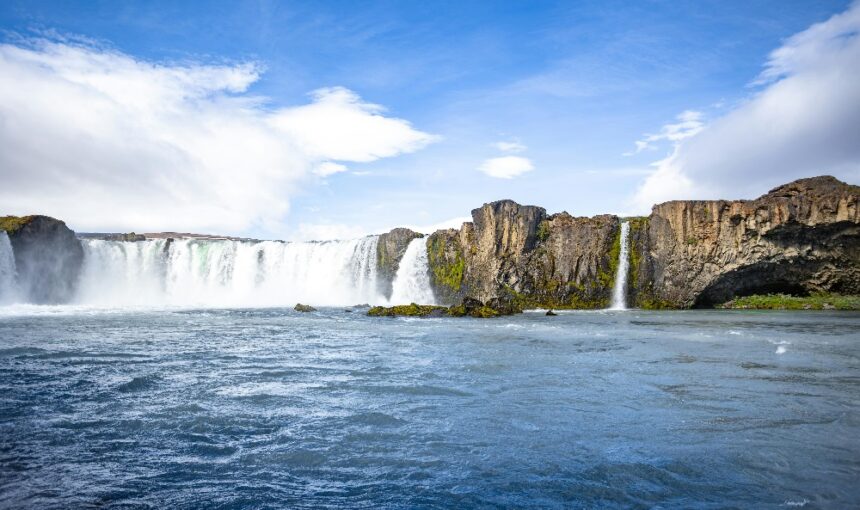
Murchison Falls Waterfall – Uganda’s Most Powerful Natural Wonder
Discover Murchison Falls Waterfall in Uganda—location, boat cruises, wildlife, best time to visit, safari tips, and how to experience the world’s most powerful waterfall.
Deep in the heart of Murchison Falls National Park, one of Africa’s most dramatic natural spectacles unfolds where the mighty Nile River explodes through a narrow rocky gorge and plunges into a thunderous cascade known as Murchison Falls.
Often described as the most powerful waterfall in the world, this breathtaking natural wonder is among the most iconic attractions in Uganda and a highlight of any classic African safari.
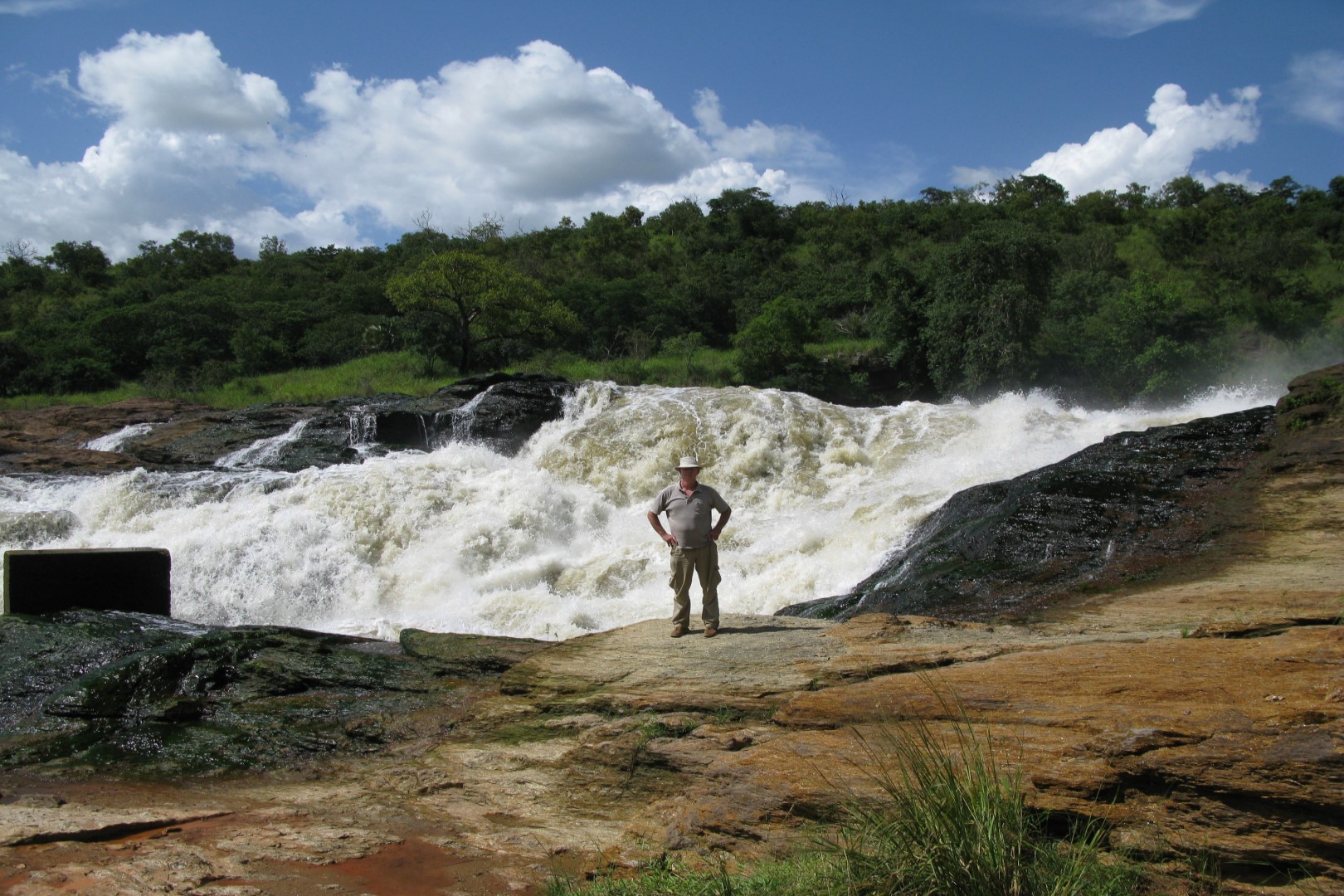
At Murchison Falls, the Nile squeezes through a gorge only 7 meters wide before dropping approximately 45 meters into the swirling Devil’s Cauldron below.
The immense pressure forces millions of liters of water through the narrow gap every second, creating a roaring explosion of spray, mist, and rainbow-filled clouds that can be seen from far across the savannah.
The sheer force of the water and the dramatic geological setting make this waterfall one of Africa’s most impressive landscapes.
For travelers seeking authentic wildlife experiences, breathtaking scenery, and unforgettable adventure, visiting Murchison Falls Waterfall offers far more than simply admiring a waterfall.
The surrounding national park is home to lions, elephants, giraffes, hippos, crocodiles, and hundreds of bird species, making it one of the most rewarding safari destinations in East Africa.
From boat cruises along the Nile to hiking to the top of the falls, every moment here is filled with awe-inspiring encounters with nature.
Whether you are a wildlife enthusiast, photographer, nature lover, or first-time safari traveler, Murchison Falls Waterfall stands as a must-see highlight of Uganda’s incredible natural heritage.
Where Is Murchison Falls Waterfall Located?
Murchison Falls Waterfall is located inside Murchison Falls National Park, in northwestern Uganda. Covering an area of approximately 3,840 square kilometers, the park is Uganda’s largest protected conservation area and forms part of the greater Murchison Falls Conservation Area.
The park lies roughly 305 kilometers (190 miles) north of Kampala, the country’s capital. By road, the journey typically takes 5–6 hours, passing through scenic countryside, traditional villages, and the famous Ziwa Rhino Sanctuary, where visitors can track endangered white rhinos on foot.
Murchison Falls is strategically located along the course of the Victoria Nile, a major section of the Nile River that flows from Lake Victoria northward toward Lake Albert.
Within the national park, the waterfall marks the dramatic point where the river breaks through the Rift Valley escarpment before continuing westward into Lake Albert.
The surrounding landscape consists of open savannah, riverine forests, wetlands, and rolling grasslands, creating ideal habitat for diverse wildlife species.
Because of its central location in Uganda’s northern safari circuit, Murchison Falls is often included in longer itineraries that combine wildlife safaris with chimpanzee trekking in Kibale National Park or gorilla trekking in Bwindi Impenetrable National Park.
History of Murchison Falls Waterfall
While the falls have existed for thousands of years and have been known to local communities — particularly the Acholi and Langi peoples — for generations, they entered the consciousness of European exploration in 1864, when the Anglo-Irish explorer Sir Samuel Baker and his wife Florence became the first Europeans to document them.
Baker named the waterfall after Sir Roderick Murchison, the then-president of the Royal Geographical Society in London, in recognition of the Society’s support for exploration in Africa.
Baker described his first sight of the falls with awe, writing of a wall of water so powerful it seemed to shake the very earth. His accounts captivated Victorian England and brought Murchison Falls to international attention.
In the decades that followed, the wider region became one of the most storied areas of colonial-era African exploration, later serving as a backdrop for the 1951 film The African Queen, starring Humphrey Bogart and Katharine Hepburn, parts of which were filmed on the Nile near the falls.
The area was first gazetted as a protected area in 1952, initially as Murchison Falls National Park, making it one of Uganda’s earliest formal conservation areas.
The park was briefly renamed Kabalega National Park after independence, in honor of the legendary Bunyoro King Kabalega, though the original name was later restored.
Today, Murchison Falls National Park is managed by the Uganda Wildlife Authority (UWA) and is a centerpiece of Uganda’s thriving ecotourism industry.
Why Murchison Falls Is the Most Powerful Waterfall in the World
The Nile River and the Formation of Murchison Falls
Understanding why Murchison Falls is so exceptionally powerful requires understanding the geological story of the Victoria Nile and the forces that shaped this region over millions of years.
The East African Rift System — one of the great tectonic features of the planet — created the dramatic escarpments, valleys, and lake basins of this region as tectonic plates slowly pulled apart.
Over vast timescales, the Nile carved its course through this evolving landscape, eventually finding itself funneled through a narrow rock cleft that formed as the Rift Valley escarpment eroded.
At Murchison Falls, the entire flow of the Victoria Nile — which at this point drains a catchment area of over 250,000 square kilometres — is forced through a gorge just 7 metres wide.
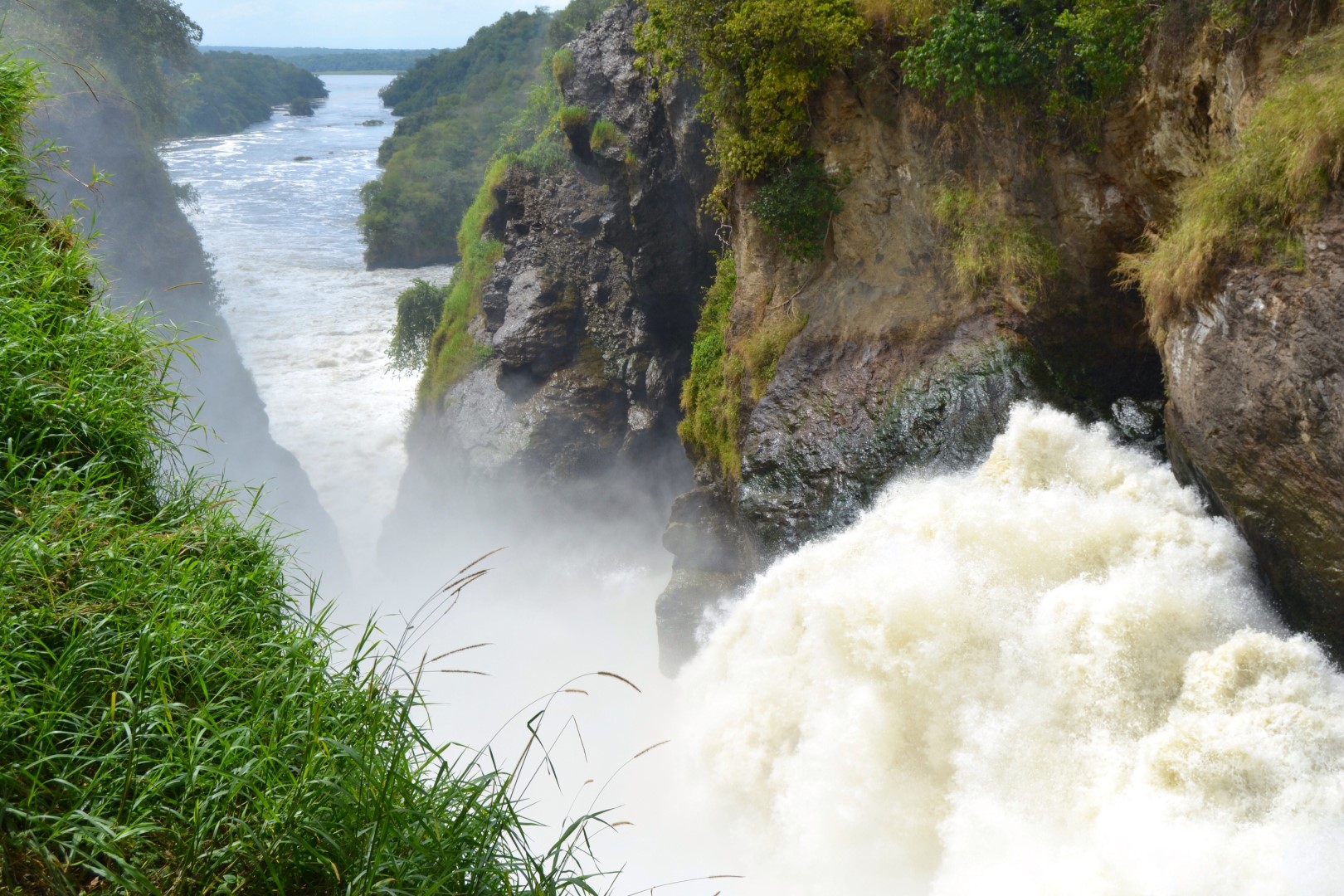
The volume of water passing through this gap at peak flow is estimated at up to 300 cubic metres per second. When this volume is divided by the width of the channel, the resulting hydraulic force per unit width is greater than any other waterfall on Earth.
The water plunges approximately 43 metres (141 feet) in total across the falls system, before emerging into a churning pool and continuing downstream as the Albert Nile.
What makes the spectacle even more dramatic is the Devil’s Cauldron — the boiling, mist-filled pool directly below the main drop — and the permanent rainbow that arches above the gorge for most of the day when sunlight is present.
The roar of the water can be heard from several kilometres away, and the spray reaches the surrounding cliff tops, creating a perpetually damp microhabitat where unique ferns, mosses, and vegetation cling to the rock faces.
Top Things to Do at Murchison Falls Waterfall
A visit to Murchison Falls National Park offers far more than simply viewing the waterfall. The combination of activities available here makes this destination one of the most versatile safari experiences in East Africa, suitable for wildlife enthusiasts, adventure travelers, birdwatchers, photography lovers, and families alike.
Below are the essential experiences that every visitor should plan to include.
1. The Nile Boat Safari to the Base of the Falls
Without question, the boat cruise to the base of Murchison Falls is the single most iconic activity in the entire park and one of the most extraordinary wildlife experiences in Africa.
Departing from Paraa — the main tourism hub — boats travel upstream along the Nile for approximately 17 kilometres, arriving at a rocky landing point just below the falls.
The journey takes roughly two to three hours each way and is filled with remarkable wildlife encounters at close range. The riverbanks are lined with hundreds of hippos and Nile crocodiles, while elephants, buffaloes, and waterbuck drink at the water’s edge.
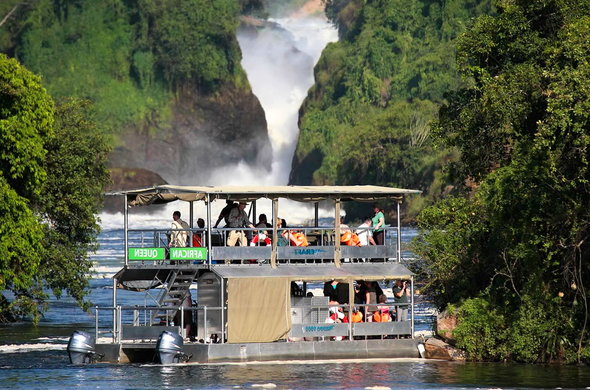
African fish eagles perch overhead, and a remarkable diversity of waterbirds — including the prehistoric-looking shoebill stork — can sometimes be spotted in the papyrus beds.
Upon reaching the base of the falls, the full power of Murchison is revealed as water crashes down from above, drenching everything nearby in a cool, refreshing mist.
2. Hiking to the Top of the Falls
After the boat safari, most visitors make the short but steep hike from the boat landing up to the top viewpoint of the falls. The trail climbs approximately 200 metres in elevation over about 45 minutes to one hour, offering progressively improving views of the gorge, the mist, and the surrounding savannah.
At the summit, you stand at the very point where the Nile compresses through the 7-metre cleft — a visceral, thundering experience that no photograph can fully convey. Uganda Wildlife Authority rangers accompany all hikers for safety.
3. Game Drives in Murchison Falls National Park
The northern sector of the park offers outstanding game drives across open savannah and woodland habitats that support one of the most impressive wildlife concentrations in Uganda.
The park is home to 76 mammal species, including lions, leopards, elephants, buffaloes, hippos, Rothschild’s giraffes, Uganda kob, oribi, waterbuck, and warthogs.
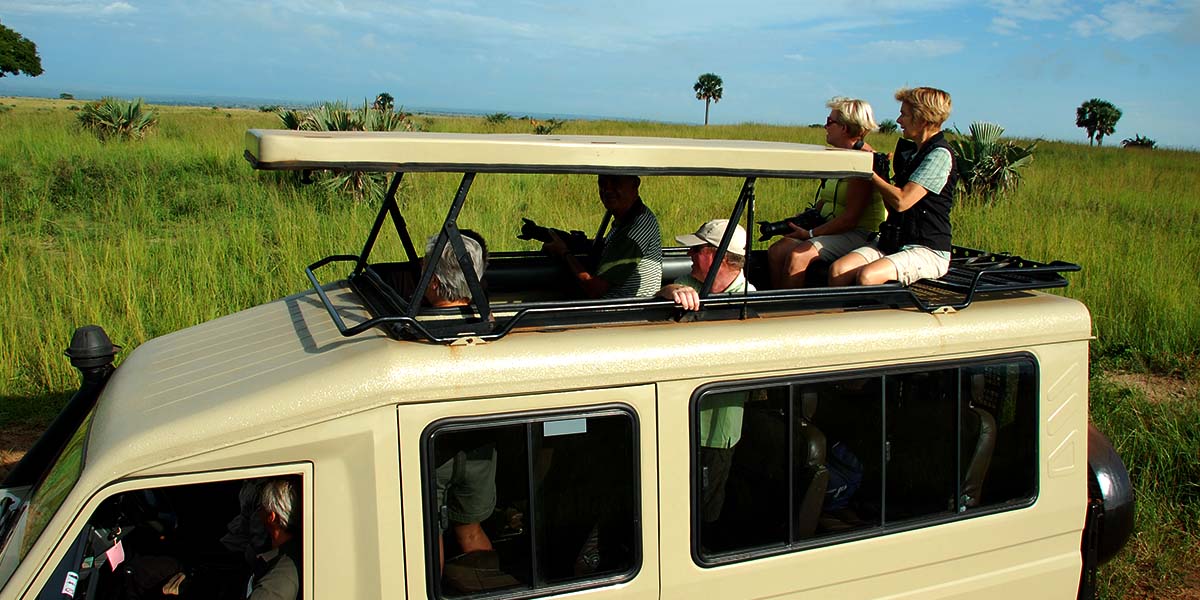
Game drives are typically conducted in the early morning or late afternoon, when animals are most active. The Buligi Circuit and the Albert Delta area are particularly productive, often yielding sightings of large elephant herds and resident lion prides.
4. Birdwatching — Over 450 Species
Murchison Falls National Park is a world-class birdwatching destination, with over 450 recorded bird species across its diverse habitats of riverine forest, savannah, wetland, and escarpment.
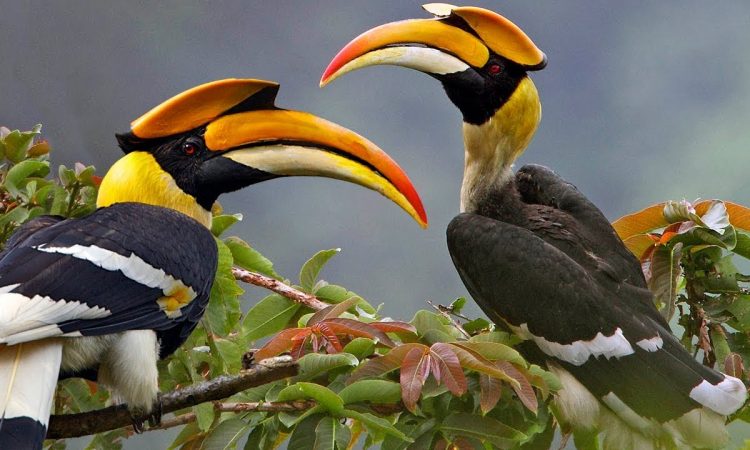
Key target species include the extraordinary shoebill stork — one of the most sought-after birds in Africa — as well as the African finfoot, Goliath heron, grey crowned crane, swamp flycatcher, bat hawk, and numerous bee-eater and kingfisher species.
The Nile Delta at the park’s western edge, where the river empties into Lake Albert, is particularly productive for shoebill sightings.
5. Chimp Trekking at Kaniyo Pabidi
Adjacent to the park’s eastern boundary, the Kaniyo Pabidi Forest and nearby Budongo Forest Reserve offer one of the best chimpanzee trekking experiences in Uganda.
Budongo harbors one of the largest and best-studied chimpanzee populations in East Africa, with habituated communities that researchers have monitored for decades.
Half-day and full-day chimp trekking permits are available, offering intimate encounters with these remarkable great apes in their natural forest habitat.
6. Sport Fishing on the Nile
The Nile River below Murchison Falls offers exceptional Nile perch fishing, and the waters here regularly produce specimens in excess of 100 kilograms.
Sport fishing is permitted in designated sections of the river with the appropriate UWA fishing permits, and several lodges offer guided fishing packages. The catch-and-release ethos is increasingly promoted to support the long-term health of the fishery.
Wildlife Around Murchison Falls
Murchison Falls National Park supports a staggering diversity of wildlife, making it one of Africa’s premier safari destinations.
The park’s diverse habitats — ranging from open savannah and woodland to riverine forest, wetland, and escarpment — create ecological conditions capable of supporting an extraordinary range of species.
Wildlife viewing here rivals that of the far more visited parks of Kenya and Tanzania, yet with a fraction of the tourist crowds, offering a genuinely intimate and authentic safari experience.
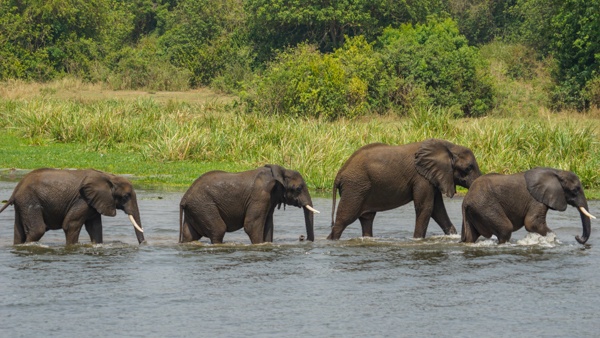
The park’s elephant population numbers in the hundreds and is one of the most thrilling features of any visit — large herds are frequently encountered on game drives and on the boat safari, often approaching the water’s edge at very close range.
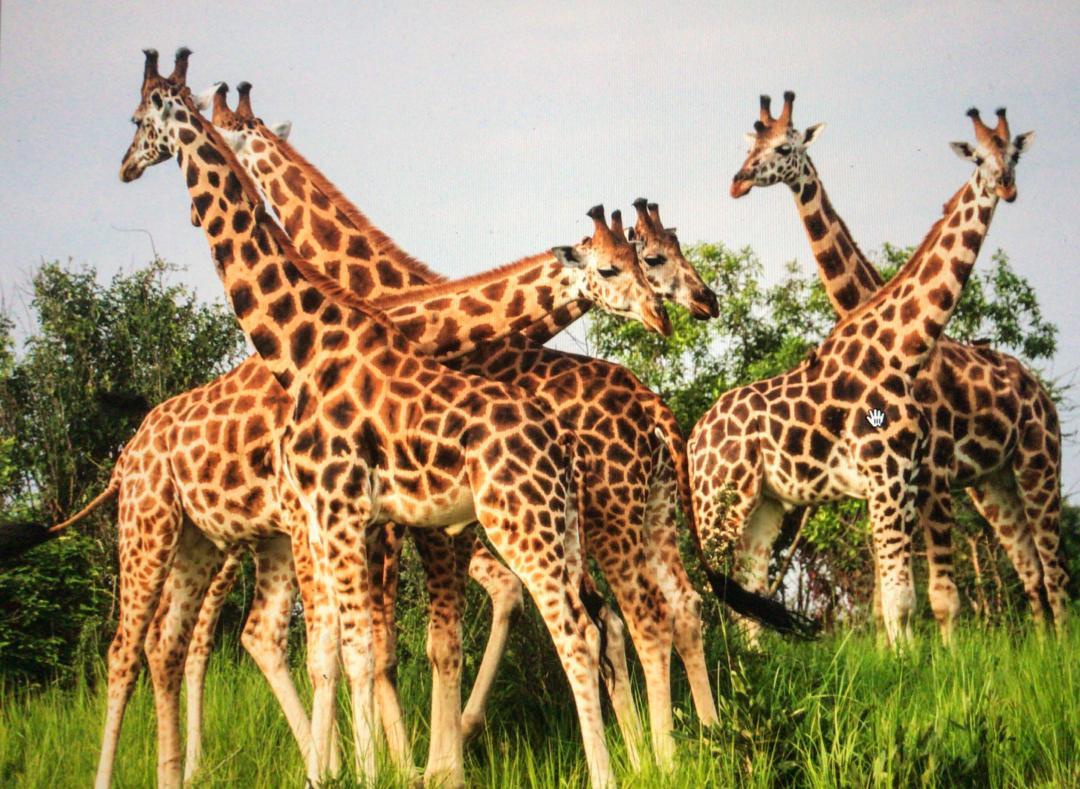
The Rothschild’s giraffe — one of the world’s most endangered giraffe subspecies — has a significant population here, making Murchison Falls one of the most important sites globally for this iconic animal.
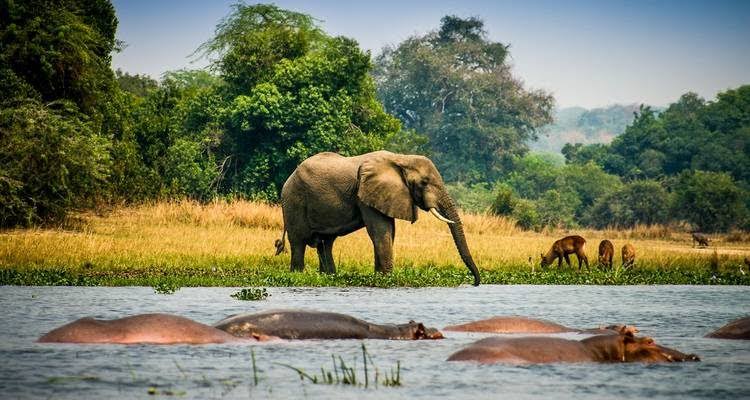
Lions, leopards, and spotted hyenas are present throughout the northern sector, with lions particularly visible in the Buligi area. The Nile itself teams with Nile crocodiles and pods of hippos numbering in the thousands — the boat safari brings visitors within metres of both species, creating photographic opportunities that are difficult to match anywhere else in Africa.
Best Time to Visit Murchison Falls Waterfall
Murchison Falls National Park is a year-round destination, but understanding the seasonal patterns will help you choose the timing that best matches your priorities — whether that is peak wildlife viewing, optimal waterfall conditions, photography opportunities, or simply avoiding the heaviest rains.
Dry Season (December to February & June to September) — Best Overall
The two dry seasons are widely regarded as the best time to visit Murchison Falls for wildlife viewing and general travel comfort.
During these periods, reduced vegetation makes animals easier to spot, and the concentration of wildlife around permanent water sources — including the Nile — increases dramatically.
Roads within the park are in their best condition, boat safaris run most reliably, and the weather is generally sunny and pleasant. The June to September dry season is particularly popular with international travelers and is considered the absolute peak safari season.
Wet Season (March to May & October to November) — Best for Birdwatching
The two wet seasons bring lush green landscapes and significantly increased bird activity, as migratory species arrive and breeding plumage is on full display.
The falls themselves are at their most powerful during the wet season, when the Nile is running at full capacity — a truly awe-inspiring spectacle for those willing to contend with occasional rain and muddier tracks.
Accommodation rates are often lower during this period, offering excellent value for budget-conscious travelers. The wet season is highly recommended for serious birdwatchers
How to Get to Murchison Falls National Park
Reaching Murchison Falls National Park from Kampala involves approximately 4 to 6 hours of road travel depending on your route and the condition of the roads, or approximately 1 hour by chartered flight.
Most visitors to Murchison Falls combine the park with other Uganda safari destinations including Bwindi Impenetrable National Park for gorilla trekking, or Queen Elizabeth National Park for the famous tree-climbing lions of Ishasha.
Primary routes to Murchison Falls National Park:
- By Road via Gulu Highway: The most commonly used route from Kampala travels north via Gulu Highway through Masindi town, entering the park via the Kichumbanyobo Gate. Total driving time is approximately 4 to 5 hours in a well-maintained 4WD vehicle.
- By Road via Karuma: An alternative northern route approaches via Karuma Falls and is often used for visitors combining Murchison with the northern circuit. Total journey time is approximately 5 to 6 hours.
- By Chartered Flight: Aerolink Uganda and other charter operators offer scheduled and private flights from Entebbe International Airportto Pakuba Airstrip inside the park, with a journey time of approximately 60 minutes. This is the preferred option for guests at premium lodges and those on shorter itineraries.
- Self-Drive: Experienced self-drive travelers can reach Murchison Falls in a properly equipped 4WD vehicleusing detailed offline maps and GPS, though we strongly recommend guided travel for the best wildlife viewing experience.
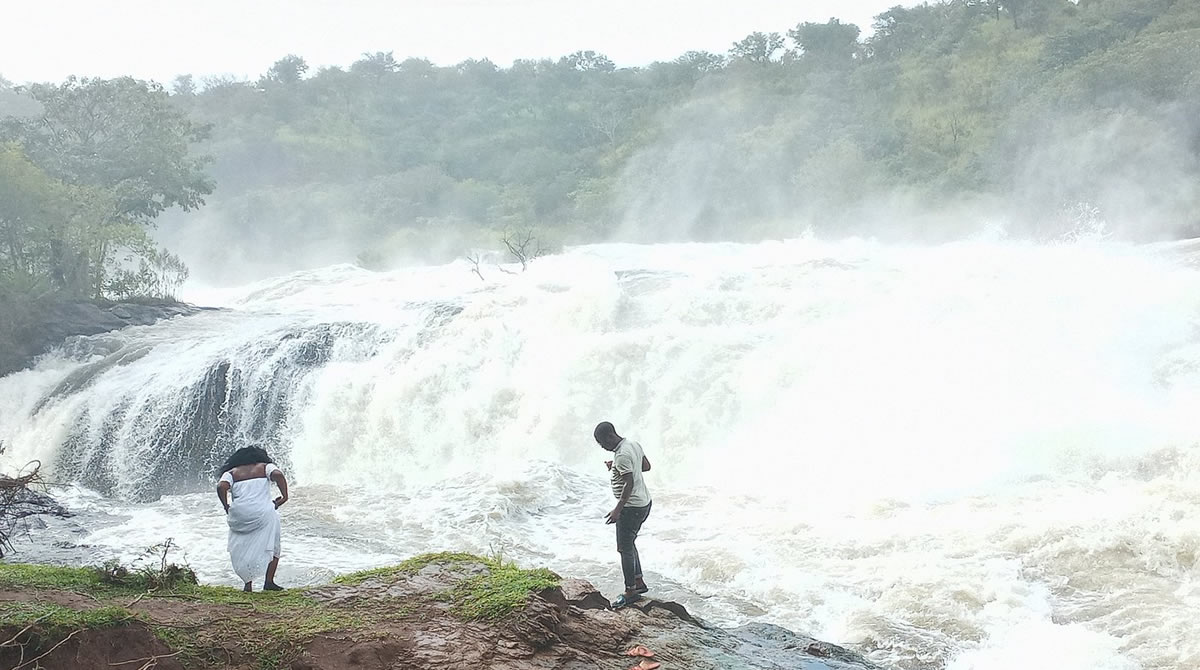
Top Viewpoints of Murchison Falls Waterfall
Experiencing Murchison Falls from multiple vantage points reveals different facets of its extraordinary character. There are three principal viewpoints, each offering a completely different perspective on the falls and each worthy of a dedicated visit.
1. The Top of the Falls Viewpoint
Standing at the top of Murchison Falls and looking directly into the 7-metre cleft as the entire Nile compresses through it is one of the most viscerally powerful natural experiences available anywhere in Africa. The viewing platform at the top is fenced for safety and staffed by Uganda Wildlife Authority rangers.
The roar is deafening, the spray is cooling, and the view downstream into the gorge is spectacular. This viewpoint is reached either by hiking up from the boat landing below, or by driving directly to the top car park from Paraa.
2. The Base of the Falls (Boat Safari Landing Point)
Approaching the falls by boat and viewing them from the pool directly below the main drop offers a completely different — and arguably even more dramatic — perspective.
From the base, the full height and power of the falls is visible, the mist envelops everything, and the rainbow effect is at its most vivid. This is the finest position for wide-angle photography of the complete falls system.
3. The Nile Delta & Rabongo Forest Viewpoints
For a broader landscape perspective, the Nile Delta area on the western edge of the park — where the river enters Lake Albert — offers sweeping panoramic views of the river corridor, the escarpment, and on clear days, views into the Democratic Republic of Congo across the lake.
This is also the finest area for shoebill stork sightings and is highly recommended for photographers seeking dramatic wide-angle landscape compositions.
Safari Lodges Near Murchison Falls
The accommodation options around Murchison Falls National Park range from luxurious riverside lodges to comfortable mid-range camps and budget bandas, ensuring that travelers at every price point can experience this extraordinary destination.
The most strategically located properties cluster around Paraa, on the northern bank of the Nile, placing guests in the center of the park and within easy reach of all activities.
Luxury Lodges
For those seeking the finest experience, Paraa Safari Lodge — the park’s flagship property — sits directly on the Nile bank and offers beautifully appointed rooms, a swimming pool, and outstanding game drive and boat safari access.
Chobe Safari Lodge on the southern bank of the Nile at Wanseko is another premium option, with luxury cottages overlooking the river and a strong community conservation ethos.
Baker’s Lodge — named after the falls’ European discoverer Sir Samuel Baker — is an intimate boutique property on the river’s edge, offering some of the most exclusive accommodation in the park.
Mid-Range & Budget Options
Budget-conscious travelers are well served by Pakuba Safari Lodge, Murchison River Lodge, and Red Chilli Rest Camp — a long-established and highly regarded backpacker and budget lodge offering bandas, camping, and dormitory accommodation with reliable facilities and a strong sense of community.
The UWA-managed bandas at Paraa represent the most affordable option for independent travelers and self-drive safari-goers.
Conservation Importance of Murchison Falls
Murchison Falls National Park plays a critical role in the conservation of some of Africa’s most iconic and threatened wildlife species.
The park forms the northeastern anchor of the Albertine Rift biodiversity hotspot — a region recognized globally as one of the most biodiverse places on Earth and a priority area for international conservation investment.
The park’s Rothschild’s giraffe population is of particular global significance. This subspecies — also known as the Nubian giraffe — is classified as Critically Endangered by the IUCN Red List, with a total wild population estimated at fewer than 3,000 individuals.
Murchison Falls National Park holds one of the largest remaining wild populations and is a primary site for the Giraffe Conservation Foundation’s ongoing monitoring and protection programs.
The park’s elephant population, which was severely depleted during Uganda’s political instability of the 1970s and 1980s, has made a remarkable recovery under the stewardship of the Uganda Wildlife Authority and its conservation partners.
Today, the herd numbers several thousand and is considered one of Uganda’s great conservation success stories. Anti-poaching patrols, community engagement programs, and the revenue generated by ecotourism — including the safari bookings made through operators like GoSilverback Safaris — play a direct and critical role in funding this protection work.
The proposed Ayago Hydroelectric Dam on the Nile has been a source of significant conservation concern in recent years, with environmental groups and conservation organizations arguing that the project could dramatically reduce the water flow over the falls and irreversibly damage the extraordinary ecosystem that the Nile corridor supports.
This debate underscores the critical importance of sustainable tourism and continued advocacy for the long-term protection of this irreplaceable natural heritage.
Why Murchison Falls Is a Must-Visit Safari Destination
For international travelers evaluating their African safari options, Murchison Falls National Park offers a combination of natural spectacle, wildlife abundance, and authentic wilderness experience that is genuinely difficult to match.
Unlike the heavily visited parks of the Masai Mara or Serengeti, Murchison Falls receives a fraction of the tourist numbers — meaning you will enjoy game drives, boat safaris, and waterfall views without the convoys of vehicles and the crowds that characterize East Africa’s most marketed destinations.
The boat safari to the base of the falls is, in the assessment of many experienced safari travelers, among the finest single wildlife experiences available anywhere in Africa.
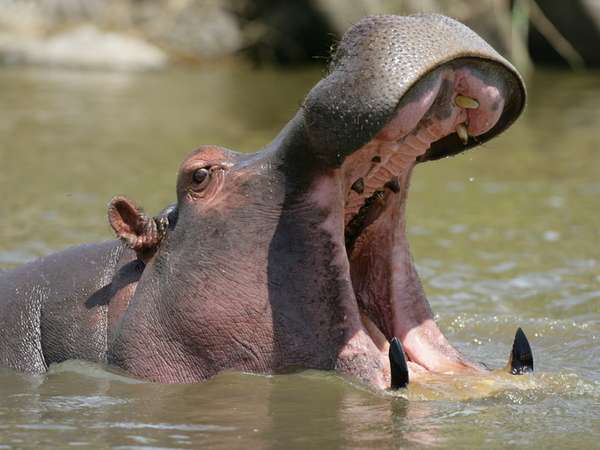
The ability to approach elephants, crocodiles, hippos, and extraordinary birdlife from a boat on the world’s longest river, with the thundering falls growing closer with every minute, creates a layered sensory experience that stays with visitors for life.
When combined with gorilla trekking in Bwindi, chimpanzee tracking in Kibale, and a Queen Elizabeth National Park safari, Murchison Falls becomes the northern highlight of what is arguably Africa’s finest multi-destination safari circuit — all within a single country.
Uganda’s compact geography, friendly people, excellent English-speaking guides, and extraordinary biodiversity make it a destination that consistently exceeds the expectations of first-time and returning safari travelers alike.
Frequently Asked Questions About Murchison Falls Waterfall
What makes Murchison Falls the most powerful waterfall in the world?
Murchison Falls is considered the most powerful waterfall on Earth due to its extraordinary hydraulic force per unit width. The entire volume of the Victoria Nile — up to 300 cubic metres per second — is compressed through a rock cleft just 7 metres (23 feet) wide, generating a force greater than any other waterfall globally. It is not the tallest, but in raw hydraulic power per unit width, nothing compares.
How far is Murchison Falls from Kampala?
Murchison Falls National Park is approximately 305 kilometres (190 miles) from Kampala, translating to a road journey of around 4 to 6 hours depending on the route. By chartered flight from Entebbe Airport to Pakuba Airstrip inside the park, the journey takes approximately 60 minutes, and is the most convenient option for luxury and time-conscious travelers.
What wildlife can I see at Murchison Falls National Park?
The park supports 76 mammal species including elephants, lions, leopards, buffaloes, hippos, Nile crocodiles, Rothschild’s giraffes, Uganda kob, warthogs, oribi, and waterbuck. It is also home to over 450 bird species, including the iconic shoebill stork. Chimpanzees can be tracked in adjacent Budongo and Kaniyo Pabidi forests.
How high is Murchison Falls?
Murchison Falls has a total drop of approximately 43 metres (141 feet) across the entire falls system. The main compression through the 7-metre-wide gorge accounts for a drop of around 35 to 40 metres, with additional cascades above and below. The height is secondary to the extraordinary hydraulic force generated by the volume of water passing through the narrow opening.
When is the best time to visit Murchison Falls?
The dry seasons from June to September and December to February are ideal for wildlife viewing, road accessibility, and overall comfort. The wet season — March to May and October to November — offers lush scenery, powerful falls, lower rates, and excellent birdwatching, but some tracks may become difficult. The park is a worthwhile destination throughout the entire year.
How long should I spend at Murchison Falls?
A minimum of 2 to 3 nights is required to experience the boat safari to the base of the falls, a top viewpoint hike, and at least two game drives. To fully explore the park — including the Albert Nile Delta, chimp trekking in Budongo, and multiple game drives — 4 to 5 nights is the recommended duration for an unhurried, comprehensive Murchison Falls safari experience.
Is Murchison Falls safe to visit?
Yes. Murchison Falls National Park is considered safe for international travelers and is visited by thousands of tourists each year without incident. The Uganda Wildlife Authority maintains ranger presence throughout the park. All boat safaris and waterfall hikes are conducted with UWA-qualified guides. As with any safari destination, sensible precautions and following guide instructions are essential at all times.
Can I visit Murchison Falls without a guide?
While self-drive entry to the park is technically possible, visitors are strongly advised to use experienced safari guides for the best wildlife viewing results and for safety during hikes to the falls. GoSilverback Safaris provides expert registered guides with deep local knowledge of animal behaviour, bird identification, and safe wilderness navigation — significantly enhancing the quality and safety of your visit.
What should I pack for a Murchison Falls safari?
Key items include lightweight, neutral-coloured clothing (khaki, olive, beige), a quality waterproof rain jacket, sturdy closed-toe shoes or boots, a wide-brimmed hat, high-SPF sunscreen, insect repellent containing DEET, a quality pair of binoculars, and a camera with a telephoto lens. For the boat safari and waterfall hike, a waterproof bag or dry bag is highly recommended to protect electronics from spray.
Can I combine Murchison Falls with gorilla trekking?
Absolutely — and this combination is one of the most popular and rewarding itineraries in East Africa. A combined Murchison Falls and gorilla trekking safari typically runs for 7 to 10 days, covering the falls in the north and Bwindi Impenetrable National Park in the southwest. GoSilverback Safaris specializes in precisely this type of comprehensive Uganda safari circuit and handles all logistics seamlessly.
How do I book a gorilla permit for Uganda?
Uganda gorilla trekking permits are issued by the Uganda Wildlife Authority and cost USD 800 per person (subject to change). Permits must be booked in advance — often months ahead for peak season — through a licensed safari operator. GoSilverback Safaris handles permit procurement, full itinerary design, accommodation, and ground logistics, ensuring a seamless experience from arrival to departure.
What is the entrance fee for Murchison Falls National Park?
As of the most recent Uganda Wildlife Authority tariff, non-resident adult entry fees are approximately USD 40 per person per day. Boat safari fees, launch hire, and ranger guide fees are additional. Vehicle entry fees also apply. GoSilverback Safaris includes all park fees transparently within our comprehensive safari packages — no hidden costs, no surprises.
Conclusion
Murchison Falls Waterfall is more than a landmark on a map — it is a visceral, unforgettable encounter with the raw power of the natural world. Where the mighty Victoria Nile compresses through a 7-metre rock cleft with the force of a hydraulic engine, where ancient elephants drink from the river’s edge as Nile crocodiles bask in the equatorial sun, where the shoebill stork haunts papyrus swamps and the roar of the falls echoes across the savannah — this is a place of extraordinary beauty, irreplaceable ecology, and profound adventure.
Whether you are a first-time Africa traveler or a seasoned safari veteran, Murchison Falls National Park will surprise you, challenge your expectations, and leave you with memories that endure for a lifetime.
It is, without reservation, one of the finest safari destinations on the African continent — and it remains, remarkably, one of the least crowded. Now is the time to discover it.
At GoSilverback Safaris, we have built our reputation on crafting exceptional, detail-perfect Uganda safari experiences — from the thundering falls of Murchison to the misty gorilla forests of Bwindi.
Our expert team handles every element of your journey: gorilla and chimpanzee permits, park fees, expert guides, premium accommodation, and seamless logistics. When you travel with us, you travel with confidence.
BOOK YOUR MURCHISON FALLS SAFARI TODAY
Experience the World’s Most Powerful Waterfall with Expert Safari Guides
Gorilla Permits | Chimpanzee Trekking | Nile Boat Safaris | Full Luxury Itineraries
Contact us Today.
Uganda’s Gorilla & Safari Specialists — Trusted by Travelers from 50+ Countries