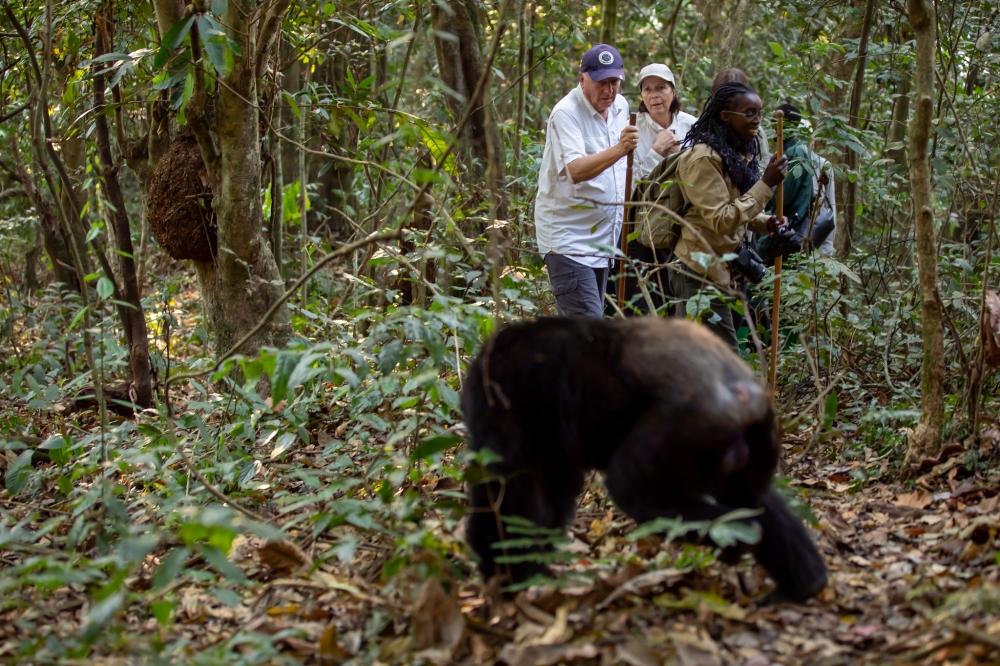
Can You See Chimpanzees in Rwanda? Best Places, Costs and Tips
Yes—you can see wild chimpanzees in Rwanda, primarily in Nyungwe National Park, a vast montane rainforest in southwestern Rwanda home to several habituated chimpanzee communities.
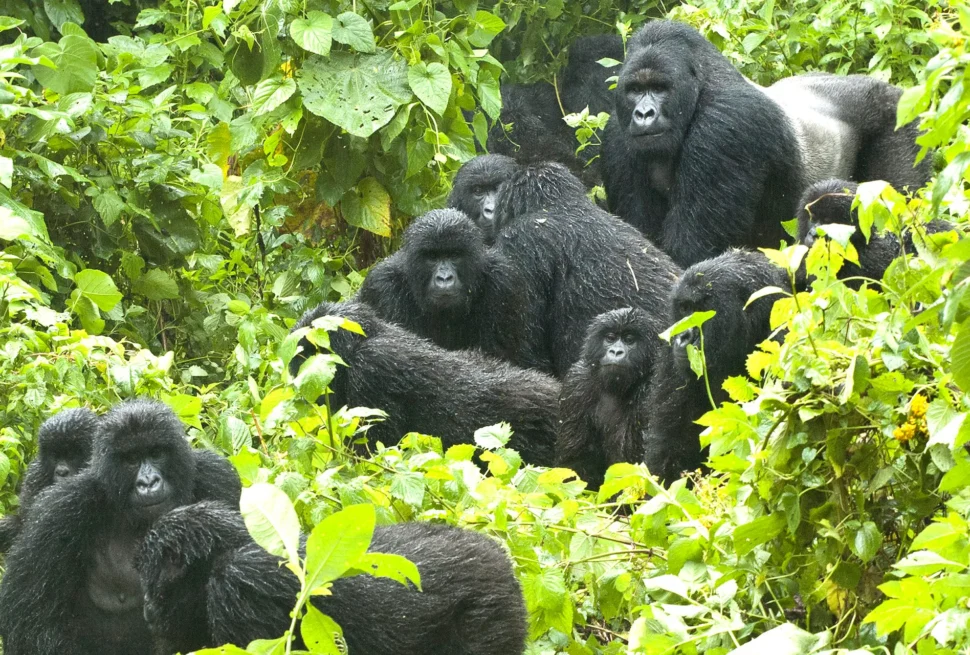
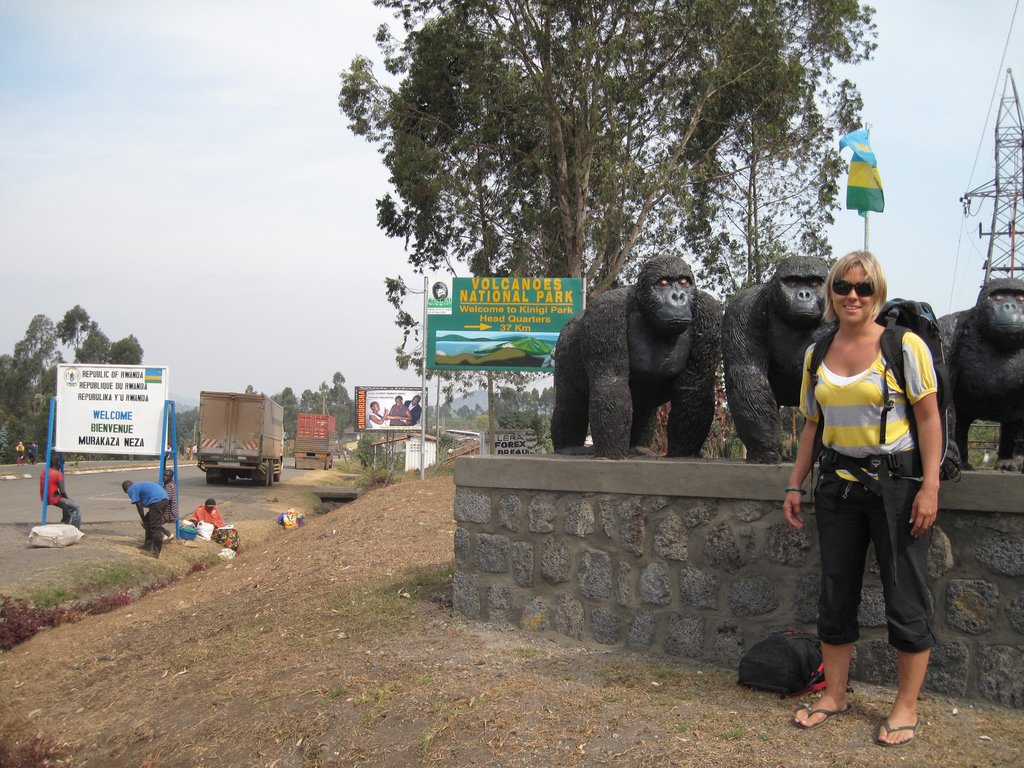
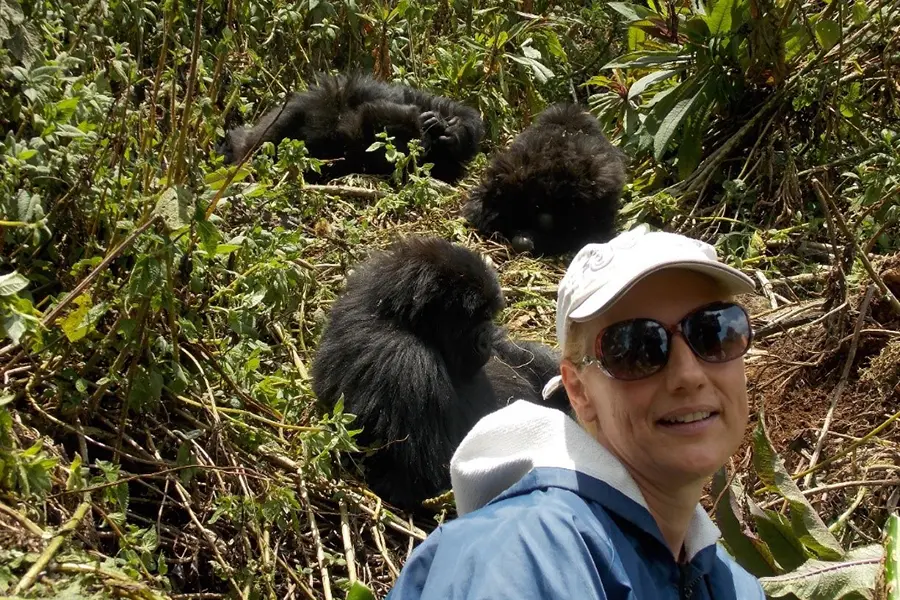
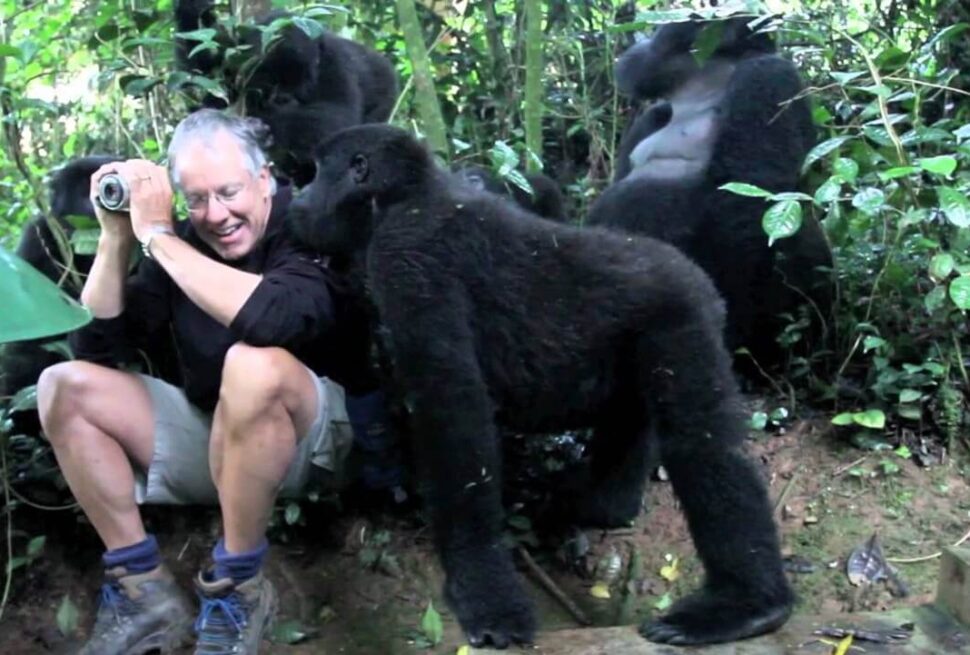
Visitors can also witness inspiring conservation efforts at Gishwati-Mukura National Park. A Rwanda chimpanzee trekking safari offers a thrilling, immersive experience in their natural habitat, and it pairs seamlessly with the world-renowned mountain gorilla trekking in Volcanoes National Park, making Rwanda a top-tier destination for serious primate enthusiasts.
Chimpanzee trekking takes visitors into one of Africa’s largest montane rainforests, where experienced rangers and trackers help locate habituated chimpanzee communities.
Rwanda is also world-famous for mountain gorilla trekking, making it an exceptional destination for travellers who want to combine chimpanzees and gorillas in one East African primate safari.
| Feature | Chimpanzee trekking in Rwanda | Gorilla trekking in Rwanda |
|---|---|---|
| Main destination | Nyungwe National Park | Volcanoes National Park |
| Main wildlife | Wild chimpanzees | Mountain gorillas |
| Experience | Following chimpanzees through dense rainforest | Trekking to a habituated gorilla family |
| Terrain | Montane rainforest, steep and often slippery trails | Mountain and bamboo forest |
| Trekking difficulty | Can be demanding; chimps move quickly. | Varies by gorilla family and location |
| Viewing experience | Chimpanzees may move quickly through the canopy. | Visitors observe a gorilla family under ranger guidance. |
Both are guided wildlife experiences, but they differ in terrain, animal behaviour, and tracking conditions. Chimpanzees are highly mobile and often vocal, while mountain gorillas tend to remain in a more predictable family area once located.
Planning a Rwanda primate safari? Contact GoSilverback Gorilla Safaris for help arranging chimpanzee permits, gorilla permits, accommodation, private transport, and expert guiding.
Where Can You See Chimpanzees in Rwanda?
The best place to see chimpanzees in Rwanda is Nyungwe National Park, a vast montane rainforest in southwestern Rwanda.
It is the country’s principal chimpanzee-trekking destination and offers the strongest combination of chimpanzee tracking, forest walks, birdwatching, and the famous Nyungwe canopy walkway.
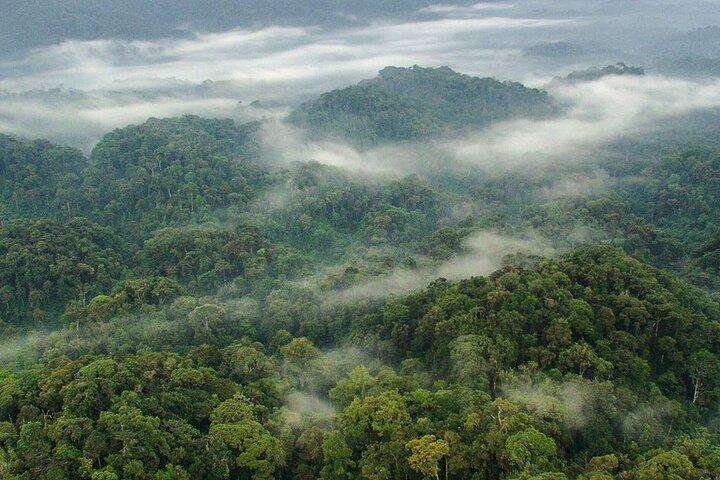
1. Nyungwe National Park: Rwanda’s main chimpanzee trekking destination
Nyungwe National Park lies in southwestern Rwanda, near the border with Burundi and close to Lake Kivu. It protects an extensive high-altitude rainforest ecosystem and is one of Central Africa’s most important primate habitats.
Nyungwe is home to more than 500 chimpanzees, according to the park’s chimpanzee-tracking information.
Chimpanzee trekking is available in two main areas:
-
Uwinka area: The main starting point for chimpanzee trekking inside Nyungwe Forest. Tracking begins at 5:30 AM, and the chimpanzee community here may include around 60 individuals.
-
Cyamudongo Forest: A smaller, isolated forest patch outside the main Nyungwe block. Tracking starts at 5:00 AM from the Gisakura Park Office, and the forest is home to a group of around 30 chimpanzees.
Cyamudongo often offers a better chance of finding chimpanzees because the forest is smaller and easier to cover on foot.
However, the main Nyungwe Forest provides a more expansive rainforest experience and can be combined with other activities such as the canopy walkway, guided nature walks, and birdwatching.
For travellers seeking a Rwanda chimpanzee trekking safari, Nyungwe is the clear priority destination. It allows visitors to experience chimpanzees in a genuinely wild forest setting while also enjoying one of East Africa’s most atmospheric rainforest landscapes.
Ready to plan your chimpanzee trek? Request a personalised Nyungwe chimpanzee trekking quotation from GoSilverback Gorilla Safaris.
2. Gishwati-Mukura National Park: another important conservation landscape
Gishwati-Mukura National Park is another important chimpanzee conservation landscape in Rwanda. It consists of restored forest corridors and plays a valuable role in connecting fragmented habitats and supporting chimpanzee conservation.
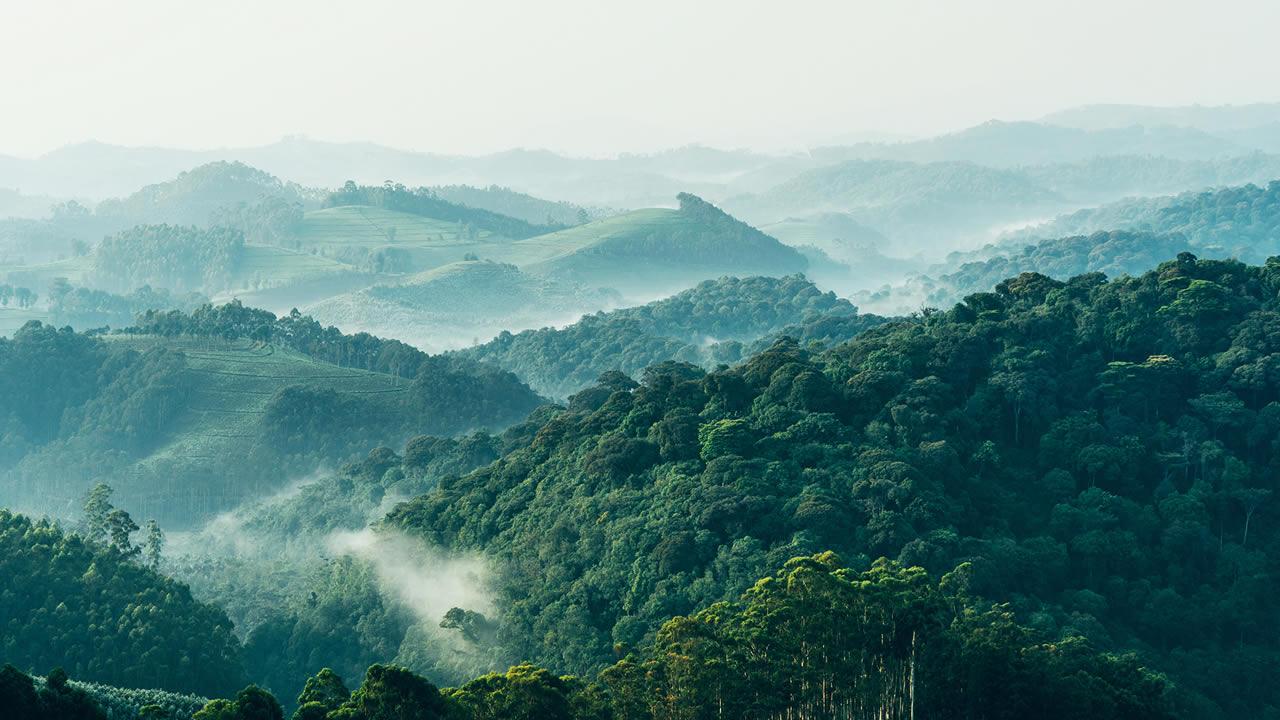
However, visitors should not assume that a standard chimpanzee trek is automatically available there.
Before booking, confirm directly with park management or a reputable operator whether chimpanzee tracking, guided forest walks, or other primate-focused activities are currently offered and bookable.
Conservation activities and visitor access can change, so accurate, up-to-date confirmation is essential.
For most international travellers planning a dedicated chimpanzee trekking Rwanda itinerary, Nyungwe National Park remains the practical and established choice.
What Is Chimpanzee Trekking in Rwanda Like?
Chimpanzee trekking in Rwanda is an early-morning, high-energy forest adventure. Unlike gorilla trekking, where visitors often find a relatively settled family group, chimpanzee tracking can involve following fast-moving primates through steep, humid rainforest.
Your day typically begins before sunrise. After registration and a ranger briefing, you enter the forest with a guide, ranger, and tracker. Trackers move ahead to locate fresh signs, listen for chimpanzee calls, and communicate the group’s likely direction.
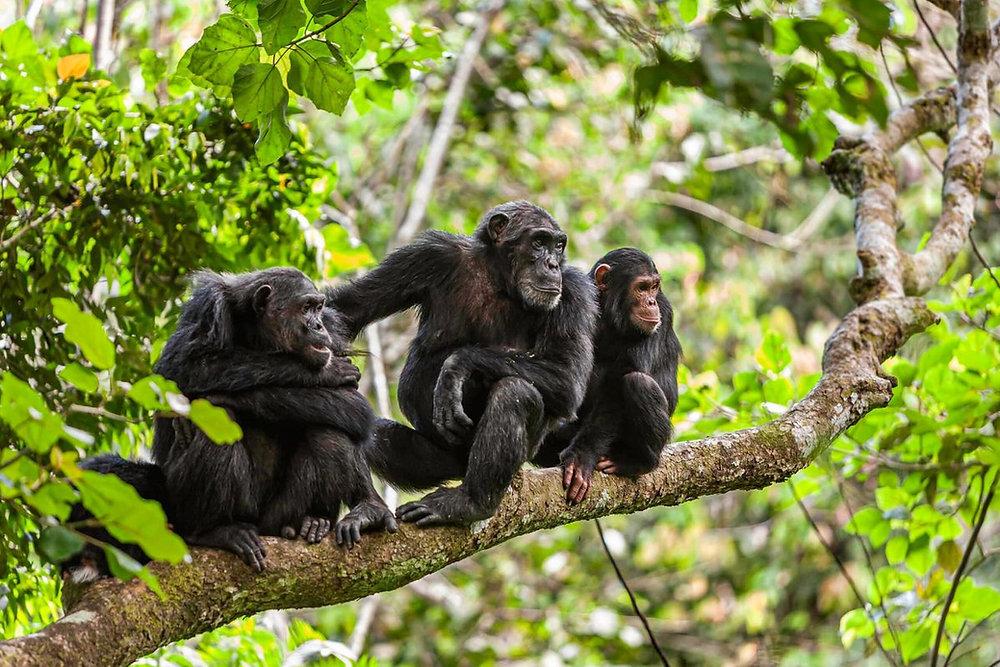
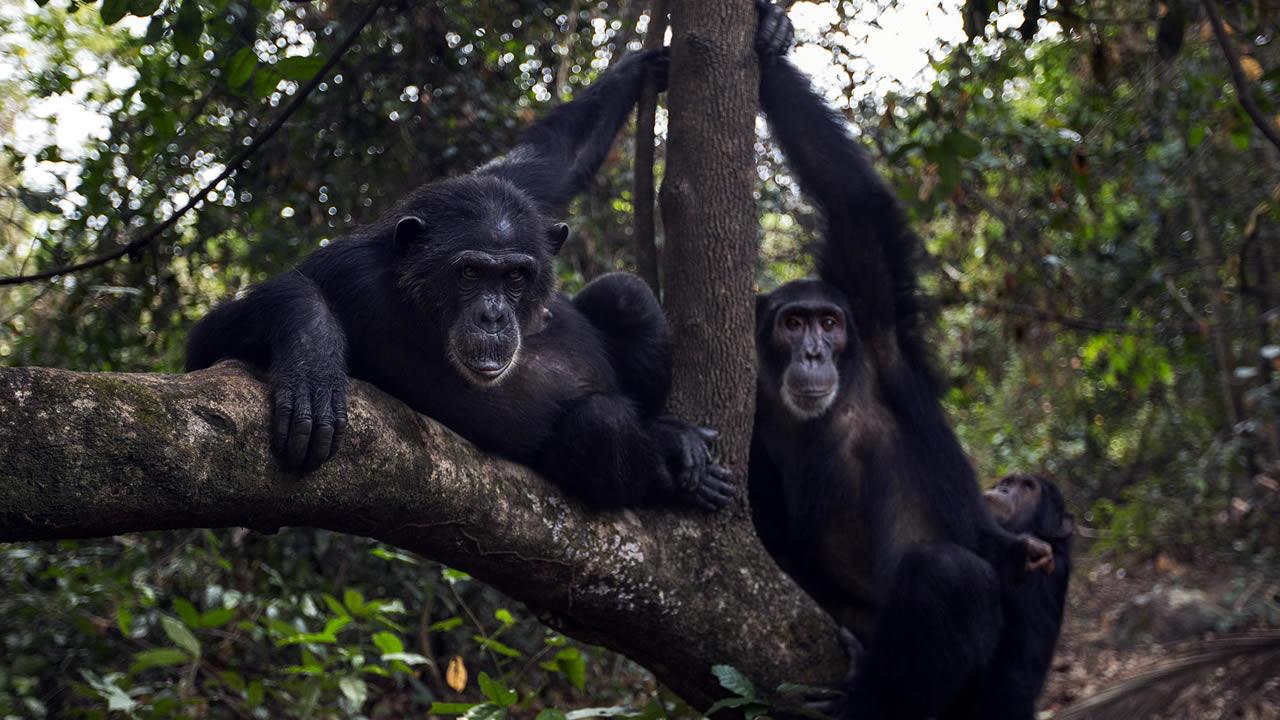
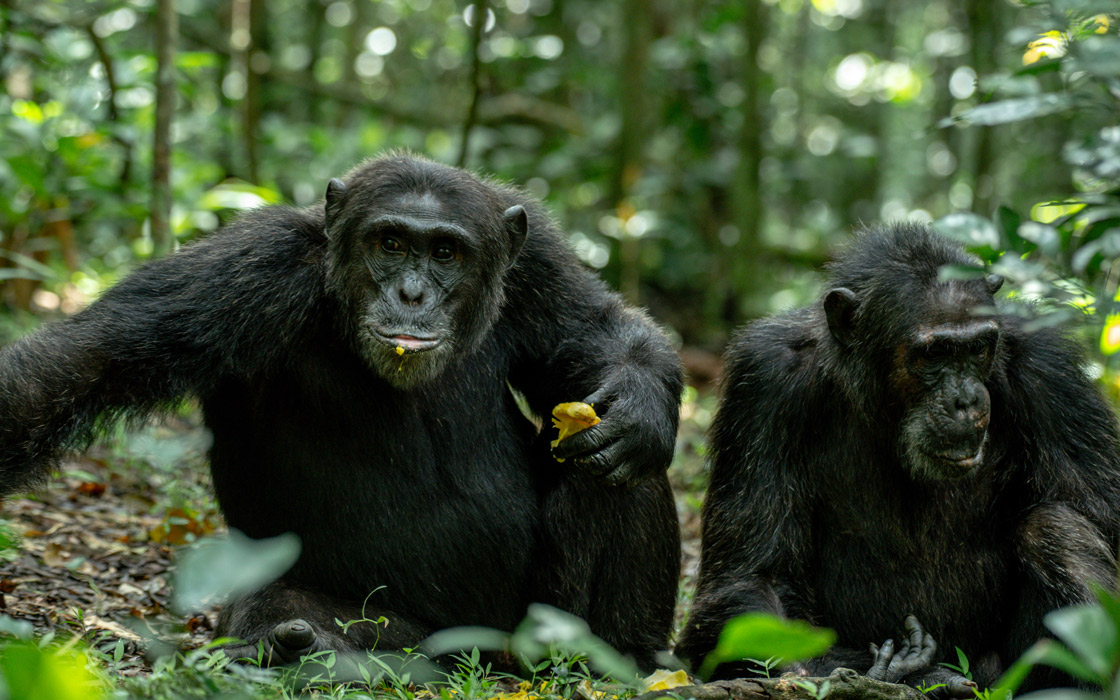
Once the chimpanzees are found, you may observe them feeding, grooming, playing, climbing, calling, resting, or moving through the trees.
Chimpanzees are highly social animals, and their behaviour can be dramatic: group members may groom one another, squabble, play, or display excitement.
The experience is unpredictable by design. Chimpanzees are wild, mobile animals, and they may travel deep into the forest. That unpredictability is part of what makes a successful sighting so rewarding.
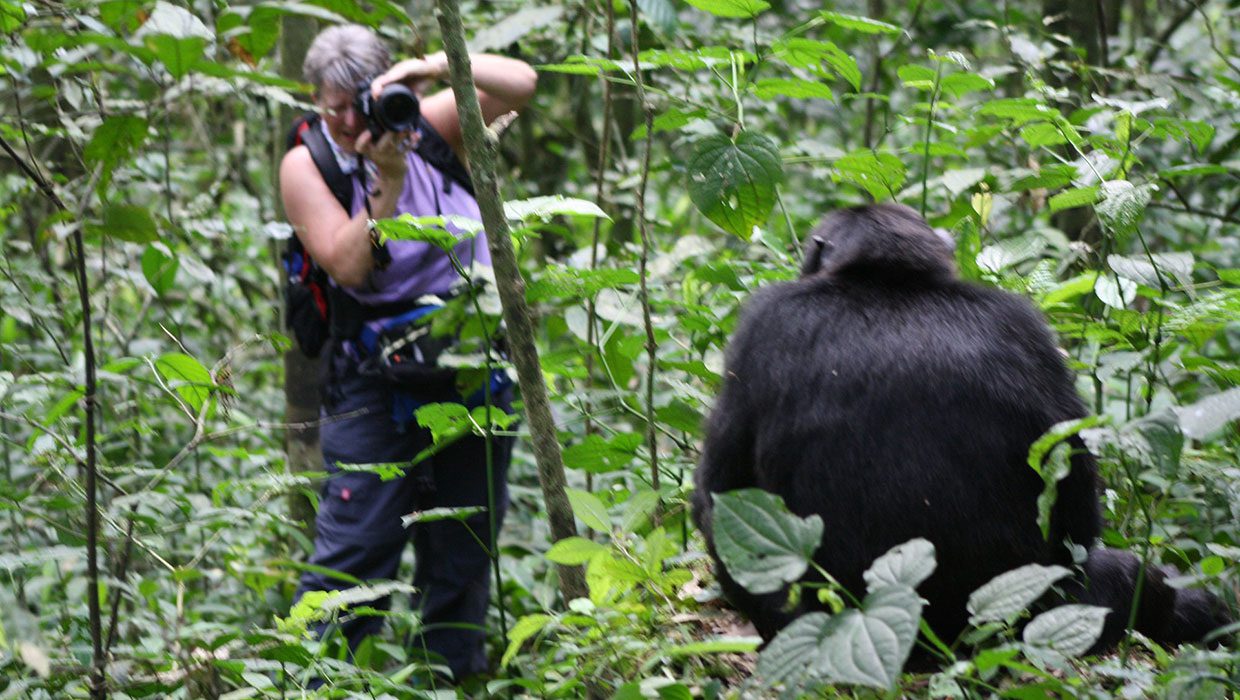
How Does Chimpanzee Tracking in Nyungwe Forest Work?
Chimpanzee tracking in Nyungwe follows a structured, conservation-focused process designed to protect both visitors and wildlife.
1. Early-morning briefing and preparation
Chimpanzee trekking begins very early. Visitors should arrive ahead of the official start time to register, receive a briefing, and be assigned to a tracking group.
-
Uwinka tracking: Begins at 5:30 AM.
-
Cyamudongo tracking: Begins at 5:00 AM.
-
Registration and payment: Must be completed no later than the day before, although earlier booking is strongly recommended.
During the briefing, rangers explain safety rules, forest etiquette, expected trail conditions, and how to behave around chimpanzees. This is also the time to confirm that you have suitable footwear, rain protection, water, and any required permits.
2. Following the chimpanzees through the forest
After the briefing, trackers move ahead of the group to locate the chimpanzees. They use knowledge of recent feeding areas, nesting sites, vocalisations, and movement patterns to guide the trek.
Nyungwe is a large forest, and chimpanzees can move quickly across the ground and through the canopy. Treks can take 2 to 6 hours or longer, depending on where the chimpanzees are feeding and resting that day.
3. Observing chimpanzees in their natural habitat
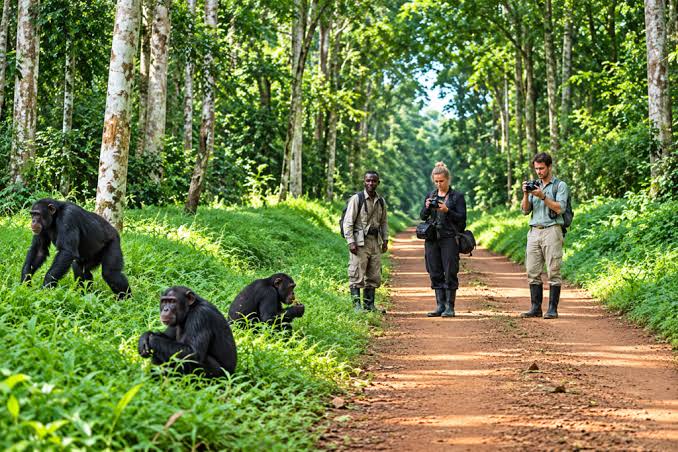
Once trackers locate the chimpanzees, your guide will manage the viewing experience. Maintain the required distance, follow ranger instructions, keep noise low, and never attempt to touch or feed a chimpanzee.
Chimpanzee sightings are not guaranteed. The animals are wild, mobile, and sometimes difficult to find in dense forest. Cyamudongo can offer a higher likelihood of a sighting because of its smaller size, but no responsible operator should promise a guaranteed encounter.
Want a guide-led chimpanzee trekking itinerary? GoSilverback Gorilla Safaris can arrange permits, transport, lodges, and experienced local guiding for your Rwanda primate safari.
How Much Does Chimpanzee Trekking Cost in Rwanda?
How much is a chimpanzee trekking permit in Rwanda? The published 2025–2026 Nyungwe activity tariff lists chimpanzee tracking at US$150 per person for international visitors.
The chimpanzee habituation experience is listed at US$200 per person. Confirm the current 2026–2027 rate directly with Nyungwe management or your tour operator before making payment, as tariffs can change.
| Activity | International visitor rate | Group limit | Minimum age |
|---|---|---|---|
| Chimpanzee tracking | US$150 per person | Maximum 8 adults per chimpanzee community | 15 years |
| Chimpanzee habituation experience | US$200 per person | Maximum 4 adults | 15 years |
The tariff also states that children under 15 are not permitted for these activities. Nyungwe’s own chimpanzee-tracking page similarly lists a minimum age of 15, a maximum group size of eight, and early-morning start times at Uwinka and Gisakura.
Be aware that the chimpanzee activity fee does not include the general Nyungwe National Park entry fee, which is charged separately.
Additionally, accommodation, private transport from Kigali, meals, and guide tips are not included in the permit price. The permit fee covers the activity itself, not the total cost of a Rwanda chimpanzee safari.
What does the chimpanzee tracking fee include?
The chimpanzee activity fee generally includes the guided tracking experience and the ranger, guide, and tracker support assigned to your group.
It does not automatically include:
-
Park entry fees
-
Accommodation
-
Meals
-
Transport from Kigali or between destinations
-
Porter services
-
Travel insurance
-
Optional activities such as the canopy walkway
-
Visa fees and international flights
Nyungwe is approximately five to six hours by road from Kigali, and park entry fees may be charged separately from the chimpanzee activity fee. Therefore, the permit price is not the total cost of a Rwanda chimpanzee safari.
How to book a Rwanda chimpanzee trekking permit
Follow these steps to secure your permit:
-
Choose your travel dates and allow at least one full night near Nyungwe before the trek.
-
Select your tracking area—Uwinka or Cyamudongo—based on your accommodation and fitness level.
-
Request permit availability through an authorised booking channel or a reputable tour operator.
-
Confirm the visitor category, date, tracking location, and final price in writing.
-
Complete registration and payment no later than the day before the trek.
-
Arrive early on trekking day with your passport, booking confirmation, suitable hiking gear, and water.
Chimpanzee tracking can be arranged through the Uwinka Visitor Centre, the Gisakura Park Office, or a private tour operator. In every case, an official permit must be booked.
Need help securing a Rwanda chimpanzee permit? Contact GoSilverback Gorilla Safaris to check availability and receive an itemised safari quotation.
What Is the Best Time to See Chimpanzees in Rwanda?
The best time to visit Rwanda for chimpanzee trekking depends on what you value most: easier hiking conditions or potentially stronger chimpanzee-tracking conditions.
Rwanda has two main drier periods:
-
June to September
-
December to February
These months are popular for forest hiking because trails are generally less muddy and conditions are more comfortable. However, rain can occur at any time of year in Nyungwe, and drier trails do not necessarily mean easier chimpanzee sightings.
Interestingly, Nyungwe’s chimpanzee-tracking guidance notes that the wet season can be favourable for chimpanzee tracking because more food is available in the forest, which may limit chimpanzee movement.
During drier periods, chimpanzees may travel deeper into the forest in search of fruit, making them harder to locate.
For most travellers, the best approach is to choose dates based on the wider itinerary, then remain flexible about chimpanzee sightings and trekking duration.
How Difficult Is Chimpanzee Trekking in Nyungwe?
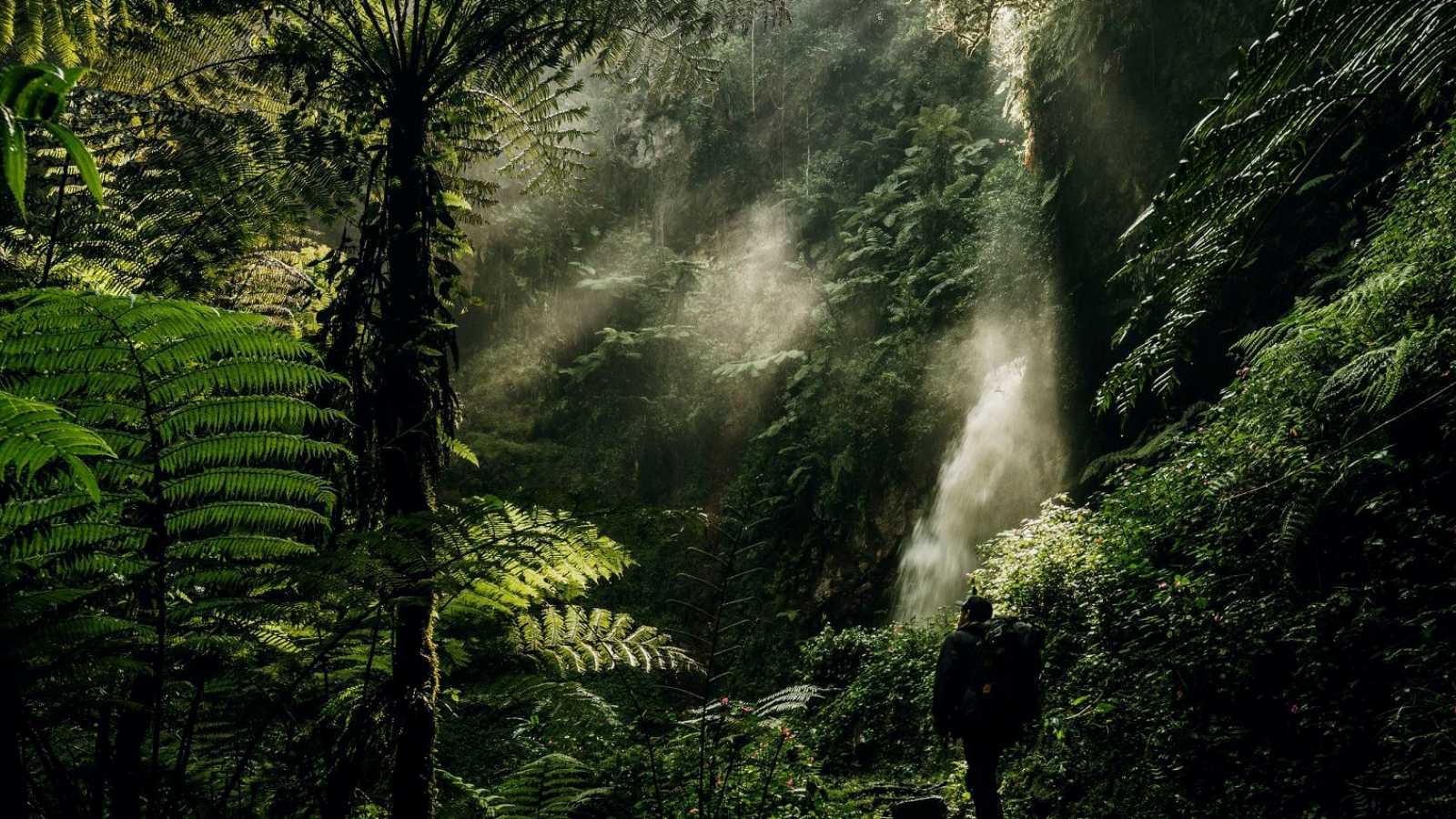
Chimpanzee trekking in Nyungwe can be physically demanding. The forest is steep, humid, muddy, and densely vegetated, and chimpanzees may move quickly through difficult terrain.
Visitors should be prepared for:
-
Steep ascents and descents
-
Slippery forest paths
-
High humidity and rain
-
Dense vegetation
-
Several hours of walking
-
Early starts and uneven ground
Nyungwe’s official visitor information classifies chimpanzee tracking as a difficult activity and advises visitors to have a reasonable level of fitness.
If you have mobility concerns, knee problems, or limited hiking experience, discuss your needs with your tour operator before booking.
Can You See Chimpanzees Every Time You Visit Nyungwe?
No—chimpanzee sightings in Nyungwe are not guaranteed. Chimpanzees are wild and highly mobile, and they may move deep into the forest, particularly during periods when fruit is scarce.
Trackers and rangers improve the chances of a sighting by monitoring chimpanzee movements and using local knowledge of feeding areas and nesting sites.
Cyamudongo Forest may offer a greater chance of finding chimpanzees because it is smaller and more contained, but sightings remain wildlife-dependent rather than guaranteed.
For the best experience, allow at least two nights near Nyungwe where possible. This gives you flexibility if weather, road conditions, or chimpanzee movement affect your first trek.
What Other Wildlife Can You See in Nyungwe Forest?
Chimpanzee trekking is only one part of the wider Nyungwe wildlife experience. The forest is also an outstanding destination for primates, birds, butterflies, and rainforest scenery.
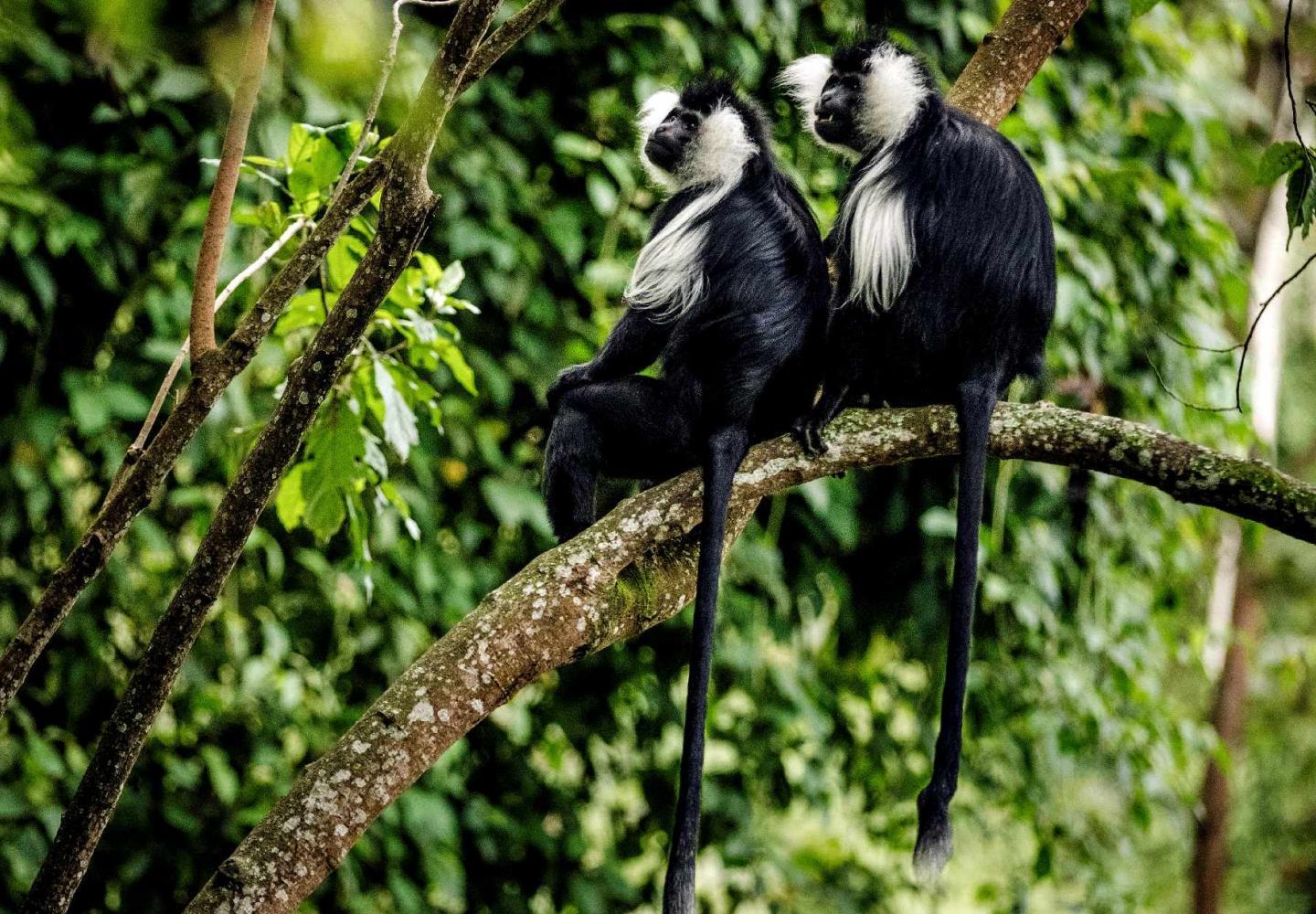
Visitors may encounter:
-
Angolan colobus monkeys, often seen in large troops
-
L’Hoest’s monkeys, a distinctive forest primate
-
Other forest-dwelling primates and small mammals
-
More than 300 bird species, including forest and Albertine Rift specialists
-
The Nyungwe canopy walkway, a suspended forest walk offering a elevated view of the canopy
The canopy walkway is a particularly popular addition to a chimpanzee trekking itinerary. GoSilverback’s Rwanda itinerary describes it as a 160-metre suspension bridge offering views over the rainforest and its birdlife.
Add a canopy walk to your Rwanda safari. Ask GoSilverback Gorilla Safaris to include chimpanzee trekking, the Nyungwe canopy walk, and gorilla trekking in one seamless itinerary.
Can You Combine Chimpanzee Trekking with Gorilla Trekking in Rwanda?
Yes. Combining chimpanzee trekking in Nyungwe with mountain gorilla trekking in Volcanoes National Park is one of Rwanda’s most rewarding safari experiences.
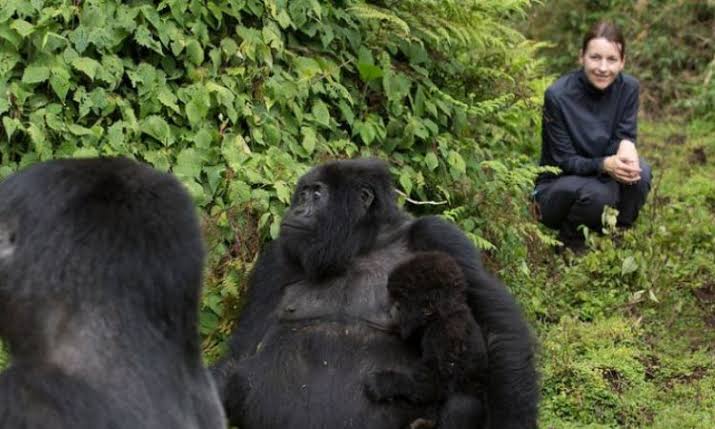
It allows travellers to see two of Africa’s most extraordinary great apes in very different forest environments.
A well-planned combined itinerary should include:
-
Enough time for road transfers between Kigali, Nyungwe, and Volcanoes National Park
-
Confirmed chimpanzee and gorilla permits
-
Comfortable accommodation near each park
-
A professional driver-guide
-
Buffer time for weather, road conditions, and flight schedules
-
Travel insurance and appropriate fitness preparation
Sample Rwanda chimpanzee and gorilla itinerary
| Day | Suggested activity |
|---|---|
| Day 1 | Arrive in Kigali and transfer towards Nyungwe National Park |
| Day 2 | Chimpanzee trekking in Nyungwe Forest; optional canopy walkway |
| Day 3 | Transfer to Volcanoes National Park |
| Day 4 | Mountain gorilla trekking in Volcanoes National Park |
| Day 5 | Return to Kigali for departure or extend your safari |
GoSilverback Gorilla Safaris offers Rwanda itineraries that combine mountain gorillas, chimpanzees, golden monkeys, Akagera wildlife, and the Nyungwe canopy walkway.
Its seven-day Rwanda itinerary includes chimpanzee trekking in Nyungwe, gorilla trekking in Volcanoes National Park, and a Lake Ihema boat cruise in Akagera National Park.
Planning a combined Rwanda primate safari? Explore Rwanda and Uganda safari packages and request a tailor-made itinerary.
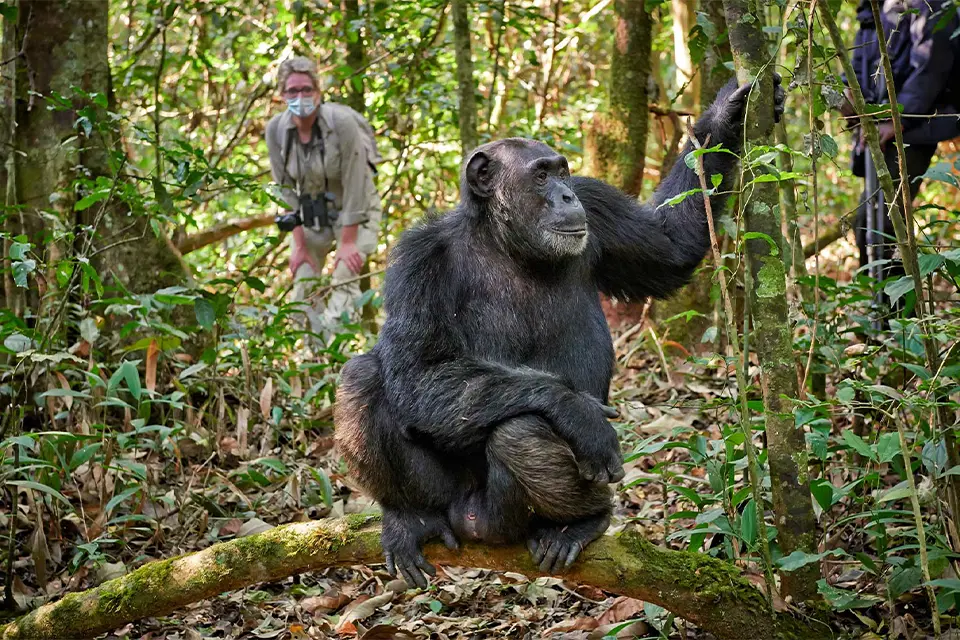
Rwanda vs Uganda: Where Is Better for Chimpanzee Trekking?
Both Rwanda and Uganda offer excellent chimpanzee trekking, but they suit different travel styles, budgets, and itineraries.
| Factor | Rwanda | Uganda |
|---|---|---|
| Main chimpanzee destination | Nyungwe National Park | Kibale National Park and other forests |
| Forest landscape | Montane rainforest and canopy walkway | Tropical forest, crater lakes, and savannah combinations |
| Trekking difficulty | Can be steep, humid, and demanding | Varies by forest and chimpanzee community |
| Gorilla combination | Easy to combine with Volcanoes National Park | Easy to combine with Bwindi Impenetrable National Park |
| Travel time | Nyungwe is roughly 5–6 hours from Kigali | Kibale is typically reached from Kampala or Entebbe |
| Overall safari budget | Often higher due to Rwanda gorilla permit pricing | Can offer more flexible mid-range and budget options |
Rwanda is ideal for travellers who want a compact, well-organised primate safari combining Nyungwe chimpanzees with Volcanoes gorillas.
Uganda offers more chimpanzee-tracking choices, including Kibale National Park, and can suit travellers seeking a broader Uganda–Rwanda itinerary. At GoSilverback Kibale chimpanzee permits is at US$250 per person.
Neither country is universally better. The right choice depends on your preferred forest experience, available time, budget, and whether you want to combine chimpanzees with gorillas, golden monkeys, savannah wildlife, or cultural experiences.
What Should You Pack for Chimpanzee Trekking in Rwanda?
Pack for wet, steep, and humid forest conditions—even if you travel during a drier month.
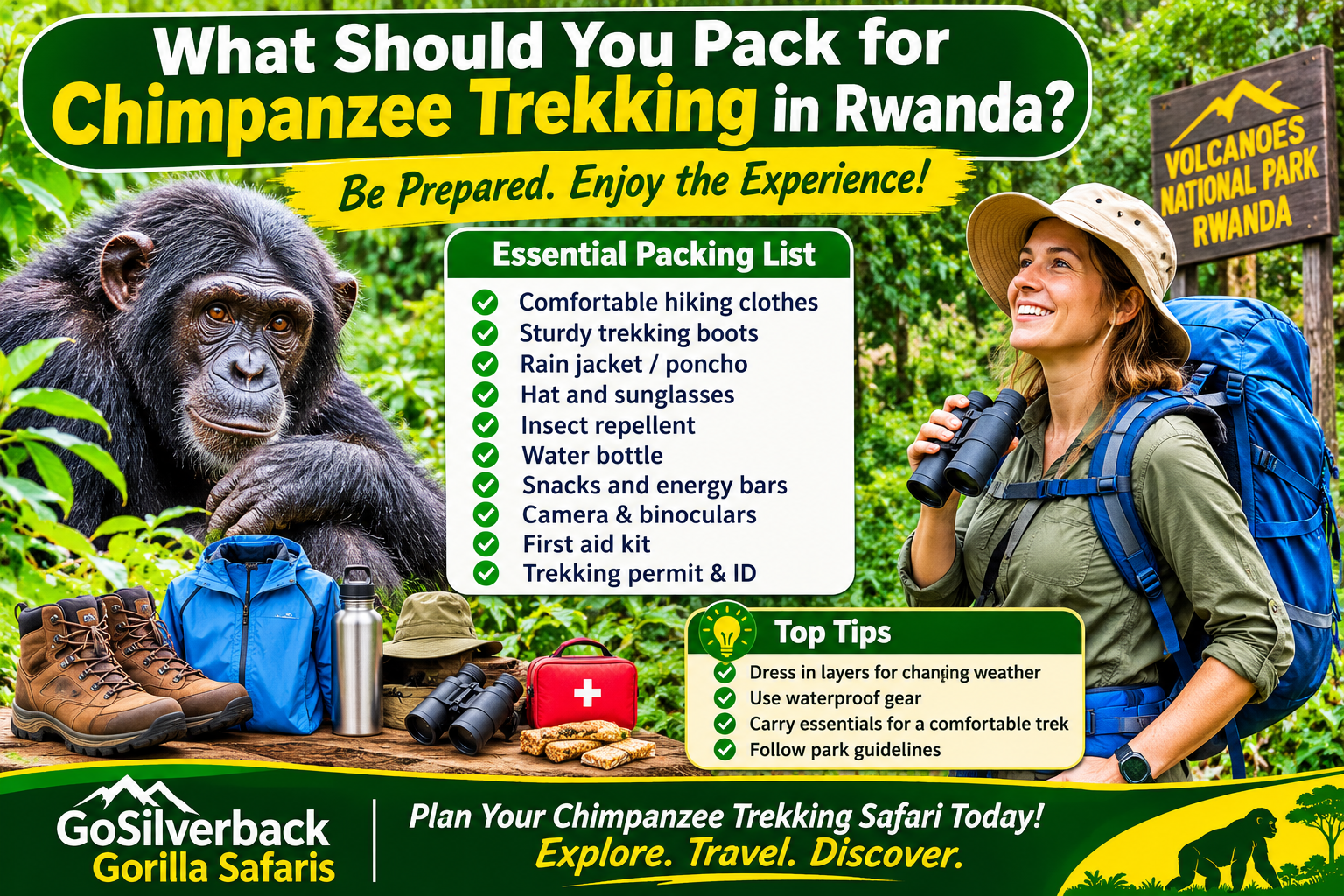
Bring:
-
Sturdy, waterproof hiking boots with excellent ankle support and grip.
-
Long trousers and long-sleeved shirts (lightweight, breathable fabrics) to protect against stinging nettles, thorns, and insects)
-
Lightweight waterproof jacket or poncho (forest conditions can be wet even in drier months).
-
Gardening gloves (highly recommended for gripping vegetation and protecting hands from nettles).
-
Insect repellent and a basic personal first-aid kit.
-
Drinking water and highly-energy snacks.
-
Binoculars
-
Camera with spare batteries (with a silent shutter mode if possible, and extra batteries).
- A small, waterproof daypack to carry your essentials hands-free.
-
Personal medications and travel insurance details
Nyungwe’s visitor information specifically recommends raincoats, boots, walking sticks, water, snacks, long-sleeved clothing, sunglasses, insect repellent, a camera, and binoculars.
Responsible Chimpanzee Trekking and Conservation in Rwanda
Responsible chimpanzee trekking protects both wildlife and the forest communities that depend on conservation tourism.
Follow these rules:
-
Follow your ranger’s instructions at all times.
-
Keep a respectful distance from chimpanzees.
-
Never feed, touch, or attempt to attract chimpanzees.
-
Keep noise low and avoid sudden movements.
-
Do not trek if you are ill, especially with a contagious respiratory illness.
-
Carry out all rubbish.
-
Support licensed operators and community-based tourism where possible.
Permit revenue supports protected-area management and communities living around Nyungwe. Responsible travel helps ensure that chimpanzee habitats, forest corridors, and local livelihoods remain protected for future generations.
Frequently Asked Questions About Seeing Chimpanzees in Rwanda
Can you see wild chimpanzees in Rwanda?
Yes. Wild chimpanzees can be seen in Rwanda, mainly through guided chimpanzee trekking in Nyungwe National Park. Cyamudongo Forest, part of the wider Nyungwe conservation area, is another important tracking location.
Where is the best place to see chimpanzees in Rwanda?
Nyungwe National Park is the best place to see chimpanzees in Rwanda. The main forest tracking begins at Uwinka, while Cyamudongo Forest offers a smaller, more contained tracking experience.
Is Nyungwe Forest famous for chimpanzees?
Yes. Nyungwe is one of Rwanda’s best-known primate destinations and is home to more than 500 chimpanzees, alongside colobus monkeys, L’Hoest’s monkeys, forest birds, and other rainforest wildlife.
How many chimpanzees live in Nyungwe Forest?
Nyungwe National Park is home to more than 500 chimpanzees, according to the park’s chimpanzee-tracking information.
How much is a chimpanzee trekking permit in Rwanda?
The published 2025–2026 Nyungwe tariff lists chimpanzee tracking at US$150 per person for international visitors. The chimpanzee habituation experience is listed at US$200 per person. Reconfirm current rates before booking.
How long does chimpanzee trekking take?
Chimpanzee trekking in Nyungwe can take 2 to 6 hours or longer, depending on chimpanzee movement, weather, trail conditions, and the tracking location.
What time does chimpanzee trekking start?
Tracking begins at 5:00 AM from Gisakura for Cyamudongo and 5:30 AM from Uwinka for the main Nyungwe Forest.
What is the minimum age for chimpanzee trekking in Rwanda?
The minimum age is 15 years. Children under 15 are not permitted to participate in chimpanzee tracking or the chimpanzee habituation experience under the published activity rules.
Is chimpanzee trekking difficult in Nyungwe?
Yes. It can be physically demanding because of steep trails, humidity, mud, dense vegetation, and the fast movement of chimpanzees. A reasonable level of fitness is recommended.
Are chimpanzee sightings guaranteed?
No. Chimpanzee sightings are not guaranteed because the animals are wild and mobile. Cyamudongo may offer a higher chance of a sighting because the forest is smaller, but no ethical operator should promise a guaranteed encounter.
Can you combine chimpanzee and gorilla trekking in Rwanda?
Yes. Travellers can combine Nyungwe chimpanzee trekking with mountain gorilla trekking in Volcanoes National Park. A minimum of about five days is recommended to allow for transfers, permits, and a relaxed pace.
Is Rwanda or Uganda better for chimpanzee trekking?
Rwanda is excellent for a compact chimpanzee-and-gorilla itinerary centred on Nyungwe and Volcanoes National Park. Uganda offers additional chimpanzee destinations, including Kibale National Park, and can suit travellers seeking a longer or more varied primate safari. The best choice depends on your budget, itinerary, and preferred travel experience.
Book Your Rwanda Chimpanzee Trekking Safari with GoSilverback Gorilla Safaris
A Rwanda chimpanzee trekking safari is more than a forest walk—it is a chance to encounter one of humanity’s closest wild relatives in one of Africa’s most biodiverse rainforests.
GoSilverback Gorilla Safaris can help organise chimpanzee permits, accommodation, private transport, experienced guides, and a combined Rwanda primate itinerary, subject to availability.
The company arranges gorilla trekking, chimpanzee tracking, golden monkey trekking, wildlife safaris, and cultural experiences across Uganda, Rwanda, and the wider East African region.
Its Rwanda itineraries combine Nyungwe chimpanzee trekking with Volcanoes National Park gorilla trekking, Akagera wildlife viewing, and the Nyungwe canopy walkway.
Ready to see wild chimpanzees in Rwanda? Let GoSilverback Gorilla Safaris organise your Nyungwe Forest chimpanzee trekking adventure, from permit arrangements and comfortable accommodation to private transfers and expert local guiding.
Whether you are planning a dedicated chimpanzee safari or combining chimpanzee tracking with mountain gorilla trekking in Volcanoes National Park, we can help create an itinerary around your travel dates, budget, and interests.
Contact GoSilverback Gorilla Safaris today for a personalised Rwanda chimpanzee trekking quotation and start planning an unforgettable primate safari in East Africa.
-
Website: GoSilverback Gorilla Safaris
-
WhatsApp: +256 773 801 934
-
Email: info@gosilverbacksafaris.com
Book Your Gorilla Permit with GoSilverback Gorilla Safaris
Your chimpanzee trek becomes even more extraordinary when paired with a mountain gorilla trekking permit in Volcanoes National Park.
Gorilla permits are limited, highly sought after, and should be secured well in advance—particularly for peak-season travel from North America, Europe, the UK, Asia, and the Middle East.
Let GoSilverback Gorilla Safaris arrange your Rwanda gorilla permit, chimpanzee permit, private 4×4 transport, lodge reservations, and professional guiding in one seamless itinerary.
Contact GoSilverback Gorilla Safaris today to book your gorilla permit, secure your Nyungwe chimpanzee trek, and create the ultimate Rwanda primate safari.