
Endangered Mountain Gorillas: A 2026 Guide to Population, Conservation & Gorilla Trekking
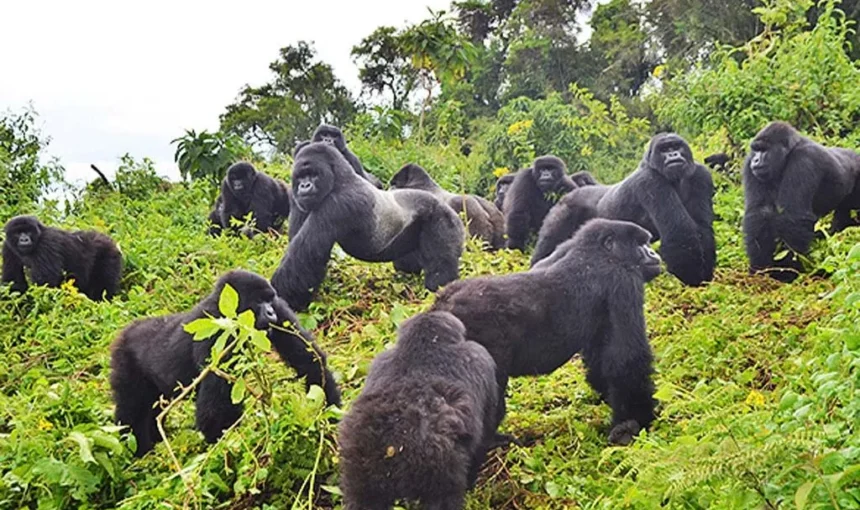
Only 1,063–1,080 endangered mountain gorillas survive in the wild today. These magnificent great apes live exclusively in the misty high-altitude forests of Uganda, Rwanda, and the Democratic Republic of Congo.
As the only great ape species with a growing population, mountain gorillas represent one of conservation’s greatest success stories — but they remain critically vulnerable.
This comprehensive 2026 guide covers everything you need to know about endangered mountain gorilla populations, where to see them, how gorilla trekking tourism saves their future, and how to book your once-in-a-lifetime gorilla safari with GoSilverback Gorilla Safaris.
What Are Mountain Gorillas?
Endangered Mountain Gorillas are one of the world’s most remarkable wildlife species, found only in Uganda, Rwanda, and the Democratic Republic of Congo.
These gentle giants face threats from habitat loss, human activity, and disease, but conservation efforts have helped increase their population.
Gorilla trekking in destinations like Bwindi Impenetrable National Park and Volcanoes National Park supports protection programs and local communities.
Visiting mountain gorillas offers travelers a rare chance to experience these incredible primates while contributing to their survival.
Protecting endangered mountain gorillas ensures future generations can witness this unforgettable African wildlife experience.
How Many Endangered Mountain Gorillas Are Left in 2026?
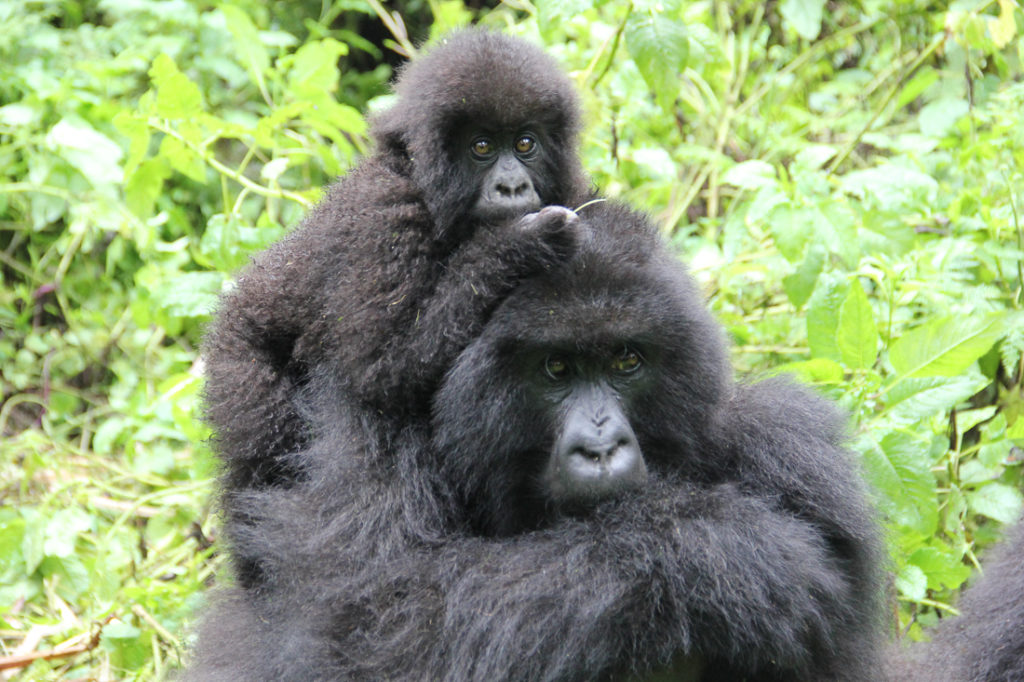
1,063 to 1,080 endangered mountain gorillas remain in the wild as of 2026. This makes them one of the rarest mammals on Earth — yet they are the only great ape species whose population is actually increasing.
The total population breaks down across two distinct habitats:
- Virunga Massif: ~604 individuals spanning Rwanda’s Volcanoes National Park, Uganda’s Mgahinga Gorilla National Park, and the Democratic Republic of Congo’s Virunga National Park
- Bwindi Impenetrable Forest: ~459+ individuals in Uganda’s Bwindi Impenetrable National Park
Mountain Gorilla Population Timeline
Table
|
Year |
Population |
IUCN Status |
|
1980s |
~254 |
Critically Endangered |
|
2010 |
~786 |
Critically Endangered |
|
2018 |
1,004 |
Endangered |
|
2026 |
1,063+ |
Endangered |
In 2018, the International Union for Conservation of Nature (IUCN) officially downgraded mountain gorillas from Critically Endangered to Endangered — a historic first for any great ape.
This milestone reflected decades of intensive conservation effort, community engagement, and the rise of sustainable gorilla trekking tourism.
Mountain gorillas are the only great ape whose population is increasing — but with just over 1,000 left, every individual matters.
Despite this progress, mountain gorillas remain highly vulnerable. A single disease outbreak, habitat loss event, or political crisis could reverse decades of gains. That is why responsible gorilla trekking — where your permit directly funds protection — matters more than ever.
Where Do Endangered Mountain Gorillas Live?
Endangered mountain gorillas inhabit just four national parks across three East African countries. Nowhere else on Earth can you see them — not in zoos, not in wildlife sanctuaries, only in these ancient cloud forests.
1, Uganda: The Gorilla Trekking Value Destination
Bwindi Impenetrable National Park hosts nearly half the world’s endangered mountain gorillas — approximately 459+ individuals divided into multiple habituated gorilla families.
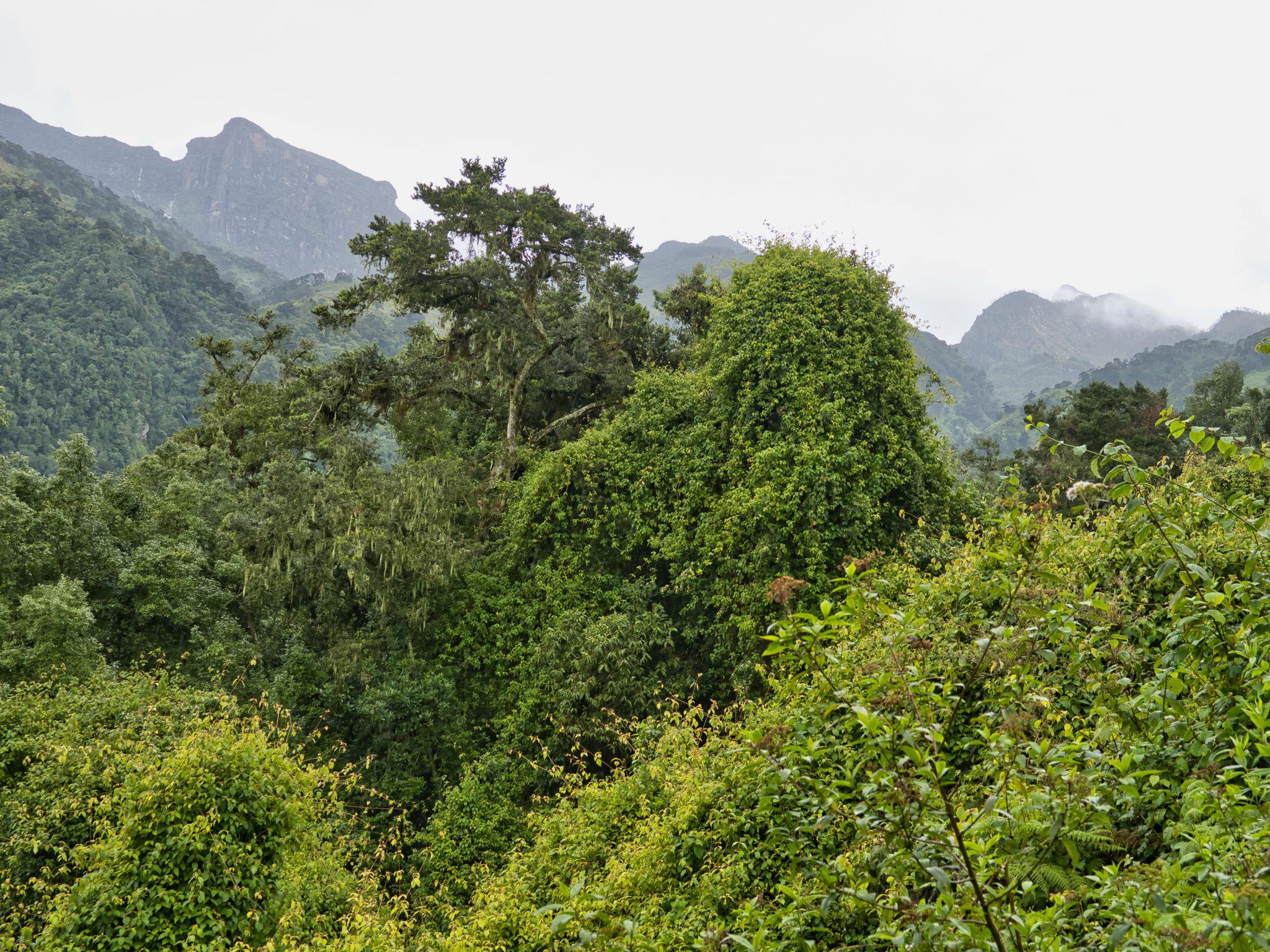
This UNESCO World Heritage Site is a 331-square-kilometer ancient rainforest draped across steep ridges and misty valleys.
Mgahinga Gorilla National Park, Uganda’s smallest national park, forms part of the Virunga Massif and offers gorilla trekking alongside golden monkey tracking and volcano climbing.
Why choose Uganda for gorilla trekking?
- Lower gorilla permit cost: $800 USD for foreign non-residents
- More gorilla families: Over 20 habituated groups in Bwindi alone
- Multiple trekking sectors: Buhoma, Ruhija, Rushaga, and Nkuringo
- Diverse safari combinations: Pair gorillas with chimpanzee tracking, Big Five game drives, and Nile River cruises
2. Rwanda: The Luxury Gorilla Trekking Capital
Volcanoes National Park is Rwanda’s premier gorilla trekking destination, home to approximately 300–350 mountain gorillas.
This is where Dian Fossey conducted her groundbreaking research, and where luxury gorilla safaris reach their peak.
Why choose Rwanda for gorilla trekking?
- Easier terrain: Open bamboo forests with gentler slopes
- Shorter transfers: Just 2.5 hours from Kigali International Airport
- World-class luxury lodges: Singita Kwitonda Lodge, One&Only Gorilla’s Nest, Bisate Lodge
- Premium service: Seamless logistics, high-end hospitality
3. Democratic Republic of Congo: The Adventurous Option
Virunga National Park holds approximately 200 mountain gorillas and offers the most affordable gorilla permits at $400–$450 USD.
However, political instability and security concerns make this option suitable only for highly experienced adventure travelers.
Bwindi Impenetrable National Park hosts nearly half the world’s endangered mountain gorillas.
Why Are Mountain Gorillas Endangered?
Understanding the threats facing endangered mountain gorillas helps explain why your visit — and your gorilla trekking permit — is so critical to their survival.
1. Habitat Loss
Human population growth around Bwindi and the Virunga Massif drives agricultural expansion, logging, and settlement into gorilla habitat. Forest fragmentation isolates gorilla families, reducing genetic diversity and increasing human-wildlife conflict.
2. Poaching
While mountain gorillas are rarely targeted directly, wire snares set for antelope and other bushmeat severely injure gorillas — especially infants and juveniles. The bushmeat trade also depletes prey species and brings hunters into gorilla territory.
3. Disease
Mountain gorillas share 98% of their DNA with humans, making them extremely susceptible to human respiratory viruses. A common cold can kill a gorilla. COVID-19 protocols — including mandatory masks, 10-meter distance rules, and health screenings — remain in place to protect endangered mountain gorilla populations.
4. Climate Change
Rising temperatures are shifting bamboo zones upward in the Virunga Massif, forcing gorillas to move higher or compete for shrinking food patches. Unpredictable rainfall patterns also disrupt fruiting cycles and water availability.
5. Civil Conflict
The Democratic Republic of Congo’s instability disrupts ranger patrols, creates refugee movements into gorilla habitat, and diverts conservation funding. Even in stable Uganda and Rwanda, regional insecurity poses background risks.
These threats are real — but so is the recovery. Here is how gorilla trekking tourism turned the tide.
How Gorilla Trekking Saves Endangered Mountain Gorillas
Gorilla trekking tourism is the single most powerful conservation tool for endangered mountain gorillas.
When you book a gorilla safari, your permit fee does not disappear into a government black hole — it flows directly into protection, community development, and anti-poaching operations.
The Economics of Gorilla Conservation
- Rwanda generates $25 million+ annually from $1,500 gorilla permits alone
- Uganda earns significant revenue from $800 permits, with 80% of park budgets funded directly by trekking fees
- 10,000+ local jobs have replaced poaching with legitimate employment
- 80% of national park operating budgets in gorilla-range states come from tourism revenue
Community Impact: Conservation Through Livelihoods
Rwanda’s revenue-sharing model dedicates 10% of all gorilla permit revenue to local communities surrounding Volcanoes National Park. This funds:
- Schools and educational infrastructure
- Health clinics and clean water projects
- Beekeeping cooperatives and handicraft associations
- Agricultural extension services
Uganda’s Bwindi Mgahinga Conservation Trust employs 1,000+ rangers and community conservation staff, while supporting buffer-zone farmers with sustainable agriculture training.
Anti-Poaching Success
In monitored zones, poaching has been reduced by 70–90% since gorilla trekking tourism expanded. Why? Because communities now see living gorillas as more valuable than dead ones.
Every gorilla trekking permit you buy funds approximately 30 days of ranger patrols.
When you book a gorilla trekking safari with GoSilverback Gorilla Safaris, you are not just buying an unforgettable wildlife experience — you are directly investing in the survival of endangered mountain gorillas.
Gorilla Trekking Permit Costs: Uganda vs Rwanda 2026
Gorilla permit cost is one of the most searched queries for travelers planning an African gorilla safari.
Here is the definitive 2026 comparison.
Table
|
Feature |
Uganda |
Rwanda |
|
Permit Cost (Foreign Non-Resident) |
$800 USD |
$1,500 USD |
|
Permit Cost (Foreign Resident) |
$700 USD |
N/A |
|
Permit Cost (East African Citizen) |
$500 USD |
$200 USD (citizens only) |
|
Trekking Terrain |
Dense rainforest, steeper slopes |
Open bamboo, moderate gradients |
|
Transfer Time from Capital |
8–10 hours from Entebbe / 1-hour domestic flight |
2.5 hours from Kigali |
|
Luxury Lodge Options |
Good (Sanctuary Gorilla Forest Camp, Buhoma Lodge) |
Excellent (Singita Kwitonda, One&Only Gorilla’s Nest, Bisate Lodge) |
|
Number of Gorilla Families |
20+ habituated groups |
12+ habituated groups |
|
Best For |
Budget travelers, adventure seekers, longer safaris |
Luxury travelers, short trips, honeymooners |
What Does the Permit Include?
Both Uganda and Rwanda gorilla permits include:
- Park entrance fees for the day
- Guided gorilla trek with experienced rangers
- 1 hour with a habituated gorilla family
- Ranger escort for security
Permits exclude transport, accommodation, meals, porters, and tips.
Permits are limited to 8 visitors per gorilla family per day. Book your 2026 gorilla trekking permit early — peak seasons (June–September, December–February) sell out 3–6 months in advance.
What to Expect During a Gorilla Trek
Gorilla trekking is not a zoo visit. It is a wilderness expedition into the habitat of the world’s largest primates.
Here is exactly what happens, step by step.
Step 1: Pre-Trek Briefing at Park Headquarters
Your day begins at 7:00 AM at the park headquarters. Rangers divide trekkers into groups of 8 maximum based on fitness level and preference.
You will receive a detailed briefing on:
- Gorilla behavior and safety protocols
- Photography rules (no flash, maintain distance)
- Health regulations (masks mandatory, no trekking if ill)
- Group allocation to specific gorilla families
Step 2: Hire a Porter (Highly Recommended)
For $15–$20 USD, local porters carry your daypack, assist on steep sections, and provide invaluable support. This directly supports community employment.
Step 3: The Hike to Find the Gorillas
Hike duration: 1 to 8 hours depending on where your assigned gorilla family is located that morning. Rangers track the gorillas from dawn, so your group follows their radio signals.
- Uganda (Bwindi): Dense rainforest, steep ascents, muddy trails. More physically demanding.
- Rwanda (Volcanoes): Open bamboo zones, gentler slopes. Generally easier access.
Step 4: The Gorilla Encounter
When you reach the gorilla family, you have exactly 1 hour to observe, photograph, and absorb the experience. You must maintain 7–10 meters distance at all times.
What you will witness:
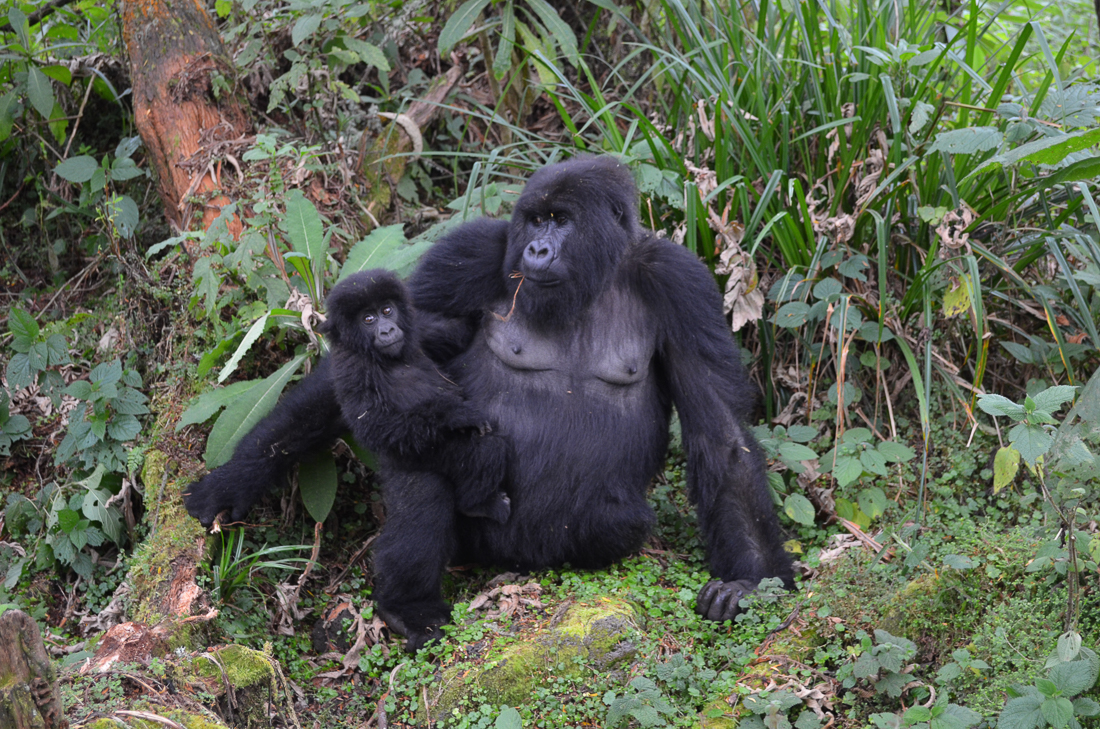
- Silverbacks — dominant males weighing up to 400 pounds — monitoring their family
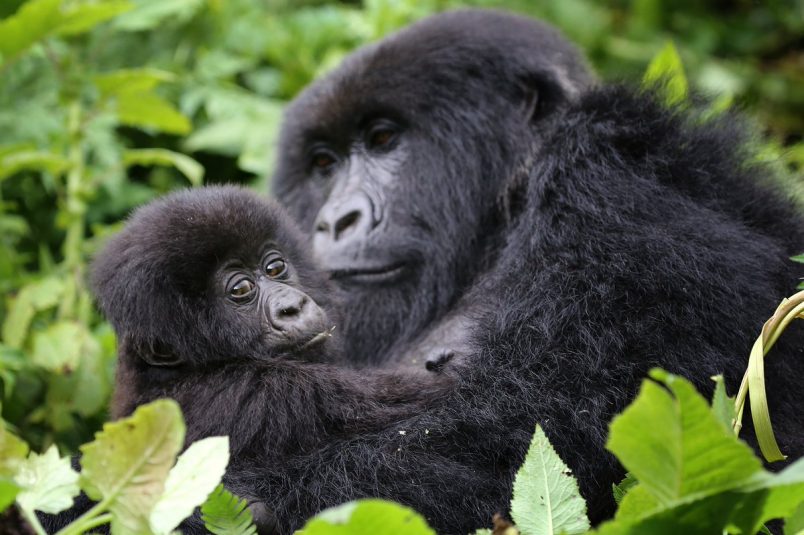
- Mothers nursing infants and juveniles playing in the undergrowth
- Gorilla communication — grunts, chest-beating, and social grooming
- Feeding behavior — stripping bamboo, eating wild celery, foraging for fruits
Step 5: Return Trek and Certificate
After your hour, you hike back to the trailhead. Most parks issue a gorilla trekking certificate — a keepsake of your contribution to endangered mountain gorilla conservation.
The moment a 400-pound silverback makes eye contact with you is unforgettable — and it directly funds his protection.
Best Time to See Endangered Mountain Gorillas
Gorilla trekking operates year-round in both Uganda and Rwanda. However, seasonal conditions significantly affect your experience.
Table
|
Season |
Months |
Weather Conditions |
Trekking Experience |
Recommendation |
|
Dry Season (Peak) |
June–September, December–February |
Less rainfall, firmer trails, clearer skies |
Easier hiking, better photography, higher demand |
Book 3–6 months in advance |
|
Wet Season (Low) |
March–May, October–November |
Heavy rains, muddy trails, lush vegetation |
Fewer crowds, greener forests, lower lodge rates |
Best for budget travelers |
Dry Season Gorilla Trekking (Peak)
- Trail conditions: Firmer underfoot, less mud, easier river crossings
- Photography: Better light penetration through forest canopy
- Availability: Permits sell out months ahead; book early
- Prices: Peak-season lodge rates apply
Wet Season Gorilla Trekking (Low)
- Trail conditions: Muddy, slippery, more challenging
- Photography: Misty atmosphere creates dramatic shots; gorillas often stay lower in the forest
- Availability: Last-minute permits often available
- Prices: Significant discounts on accommodation; some lodges offer 30–50% off
Gorilla trekking operates year-round. The dry season offers easier hiking; the wet season offers greener forests and discounted lodge rates.
Conservation Success Stories: From 254 to 1,063
The recovery of endangered mountain gorillas from ~254 in the 1980s to 1,063+ today is one of conservation’s most remarkable achievements. Here are the organizations and programs that made it possible.
1. Dian Fossey Gorilla Fund
For over 50 years, the Dian Fossey Gorilla Fund has conducted continuous research and protection in Rwanda and the DRC. Their Karisoke Research Center in Volcanoes National Park monitors gorilla health, behavior, and population dynamics daily.
2. International Gorilla Conservation Programme (IGCP)
IGCP coordinates transboundary conservation across Uganda, Rwanda, and the DRC. Their work includes:
- Habitat corridor protection
- Community conservation education
- Sustainable tourism standards
- Anti-poaching patrol coordination
3. Gorilla Doctors
This unique veterinary team provides life-saving medical interventions in the wild. They treat gorillas injured by snares, combat respiratory outbreaks, and conduct health monitoring — all in the forest, without removing animals from their habitat.
4. Anti-Poaching Patrols
24/7 ranger patrols remove wire snares, deter poachers, and monitor gorilla family movements. In Bwindi alone, rangers patrol over 331 square kilometers of dense forest year-round.
5. Habituation Programs
Gorilla families that undergo habituation — gradual, gentle exposure to human presence — show higher reproduction rates and receive more intensive protection. Habituated gorillas are also the families you visit during trekking.
Mountain gorillas are the only great ape to have their IUCN status improved — from Critically Endangered to Endangered in 2018.
Photography Tips for Endangered Mountain Gorillas
Capturing memorable images of endangered mountain gorillas requires preparation, respect for the animals, and understanding of forest conditions.
Best Light Conditions
- Early morning: Diffused forest light creates soft, even illumination
- Avoid midday: Harsh overhead sun creates dappled shadows in the canopy
- Overcast days: Ideal for gorilla photography — no harsh contrast, no blown highlights
Recommended Camera Settings
Table
|
Setting |
Recommendation |
Reason |
|
Shutter Speed |
1/500 second or faster |
Gorillas move quickly; prevents motion blur |
|
ISO |
1600–3200 |
Low light under forest canopy |
|
Aperture |
f/2.8 to f/4 |
Shallow depth of field isolates subjects |
|
Lens |
70–200mm minimum |
7–10 meter distance requires telephoto reach |
|
Flash |
Strictly prohibited |
Disturbs gorillas and violates park rules |
Photography Etiquette
- No flash photography — ever
- No sudden movements when positioning for shots
- Silence during the encounter — whispered communication only
- Do not approach closer than 7 meters for a better angle
- Respect the 1-hour time limit — no exceptions
Frequently Asked Questions About Endangered Mountain Gorillas
How many endangered mountain gorillas are left in 2026?
1,063 to 1,080 endangered mountain gorillas survive in the wild, split between Uganda’s Bwindi Impenetrable Forest and the Virunga Massif spanning Rwanda, Uganda, and the DRC.
Are mountain gorillas still endangered?
Yes. Mountain gorillas are classified as Endangered by the IUCN. They were downgraded from Critically Endangered in 2018 due to population growth, but they remain highly vulnerable.
Where is the best place to see mountain gorillas?
Bwindi Impenetrable National Park in Uganda offers the best value and largest gorilla population. Volcanoes National Park in Rwanda offers the most luxurious and accessible experience.
How much is a gorilla permit in 2026?
- Uganda: $800 USD for foreign non-residents
- Rwanda: $1,500 USD for foreign non-residents
- DRC: $400–$450 USD (security situation permitting)
Is gorilla trekking safe?
Yes. Armed rangers accompany every gorilla trekking group. The main risks are physical exertion and altitude — not wildlife aggression. Gorillas are habituated to human presence and generally ignore trekkers.
How difficult is gorilla trekking?
Moderate to strenuous. Bwindi trekking involves steep, muddy rainforest terrain. Volcanoes National Park offers easier bamboo forest hikes. Porters are available for hire.
What is the minimum age for gorilla trekking?
15 years old. No exceptions. This rule protects both young trekkers and gorillas from disease transmission.
Can you see mountain gorillas in zoos?
No. Mountain gorillas survive only in the wild — specifically in Bwindi Impenetrable National Park, Mgahinga Gorilla National Park, Volcanoes National Park, and Virunga National Park. They have never survived in captivity.
How long do you spend with the gorillas?
Maximum 1 hour. This strict limit minimizes stress on gorilla families and reduces disease transmission risk.
What should I wear for gorilla trekking?
- Waterproof hiking boots with ankle support
- Long-sleeved shirt and long trousers (protection from stinging nettles)
- Garden gloves (for grabbing vegetation on steep sections)
- Waterproof rain jacket
- Wide-brimmed hat
- Insect repellent
Which country is cheaper for gorilla trekking?
Uganda is significantly cheaper — $800 permits versus Rwanda’s $1,500, plus lower accommodation and transport costs.
Can I combine gorilla trekking with other safaris?
Absolutely. Uganda offers exceptional combinations with Queen Elizabeth National Park (Big Five), Murchison Falls National Park (Nile River cruises), and Kibale National Park (chimpanzee tracking). Rwanda pairs well with Akagera National Park (savannah wildlife) and Nyungwe National Park (primate tracking).
How far in advance should I book a gorilla permit?
3–6 months ahead for peak season (June–September, December–February). Last-minute permits are sometimes available in low season.
Do I need a visa for Uganda or Rwanda?
- Uganda: Visa on arrival or e-visa ($50 USD) for most nationalities
- Rwanda: Visa on arrival ($50 USD) for most nationalities
- East African Tourist Visa: $100 USD, valid for Uganda, Rwanda, and Kenya
Are there any health requirements for gorilla trekking?
- Yellow fever vaccination certificate required for entry
- COVID-19 protocols may still apply — check current regulations
- No trekking if you have cold, flu, or respiratory symptoms — this protects gorillas
- Travel insurance with medical evacuation cover strongly recommended
How You Can Help Save Endangered Mountain Gorillas
Every traveler has the power to contribute to endangered mountain gorilla conservation.
Here is how:
- Book an ethical gorilla trek — your permit directly funds ranger patrols, anti-poaching units, and habitat protection
- Choose a responsible tour operator — GoSilverback Gorilla Safaris follows strict sustainability and community-benefit guidelines
- Follow all trekking rules — masks, distance limits, and health screenings protect gorillas from human disease
- Donate to conservation organizations — the Dian Fossey Gorilla Fund, IGCP, and WWF all accept direct contributions
- Avoid products driving deforestation — palm oil, illegal timber, and unsustainable agriculture threaten gorilla habitat
- Advocate against oil drilling in Virunga National Park — this UNESCO World Heritage Site faces persistent threats from extractive industries
Book Your Gorilla Trekking Safari Today
Your visit is their future. Every gorilla trekking permit purchased directly funds anti-poaching patrols, ranger salaries, and community projects that keep endangered mountain gorillas alive.
At GoSilverback Gorilla Safaris, we specialize in crafting unforgettable, conservation-focused gorilla safaris for travelers from the USA, UK, Europe, Canada, Asia, and the Middle East.
What We Offer:
✅ Uganda Gorilla Tours — from budget camping adventures to luxury lodge experiences
✅ Rwanda Gorilla Safaris — premium lodge stays at Singita Kwitonda, One&Only Gorilla’s Nest, and Bisate Lodge
✅ Combined Uganda-Rwanda Itineraries — see the best of both countries in one seamless journey
✅ Family Gorilla Safaris — tailored for families with children 15+ (the minimum trekking age)
✅ Honeymoon Gorilla Packages — romantic luxury lodges, private guides, and exclusive experiences
✅ Tailor-Made Gorilla Adventures — customized to your fitness level, budget, and travel dates
✅ Budget Gorilla Trekking Packages — affordable permits, midrange lodges, shared transfers
✅ Photography-Focused Gorilla Safaris — extended time, specialist guides, prime lighting conditions
Why Book With GoSilverback Gorilla Safaris?
- Licensed Uganda Tourism Board operator with 10+ years of gorilla safari expertise
- IGCP-affiliated — we support transboundary conservation
- 500+ five-star reviews from travelers across six continents
-
Member of Uganda Tour Operators Association (UTOA)
- 100% permit guarantee — we secure your gorilla permit before you travel
- 24/7 in-country support — our team is on the ground when you need us
Limited permits available for 2026. Only 8 visitors per gorilla family per day. Peak season slots are filling fast.
Contact GoSilverback Gorilla Safaris today to secure your once-in-a-lifetime encounter with endangered mountain gorillas.
Whether you choose Uganda’s wild rainforests or Rwanda’s luxury bamboo slopes, we will craft a gorilla trekking safari that changes your life — and saves theirs.
📧 Email: info@gosilverbacksafaris.com
🌐 Website: www.gosilverbacksafaris.com
📱 WhatsApp: +256 773801934
Book now. Trek soon. Protect forever.