Habituated Gorilla Families: The Complete 2026 Guide to Uganda & Rwanda.
What Are Habituated Gorilla Families?
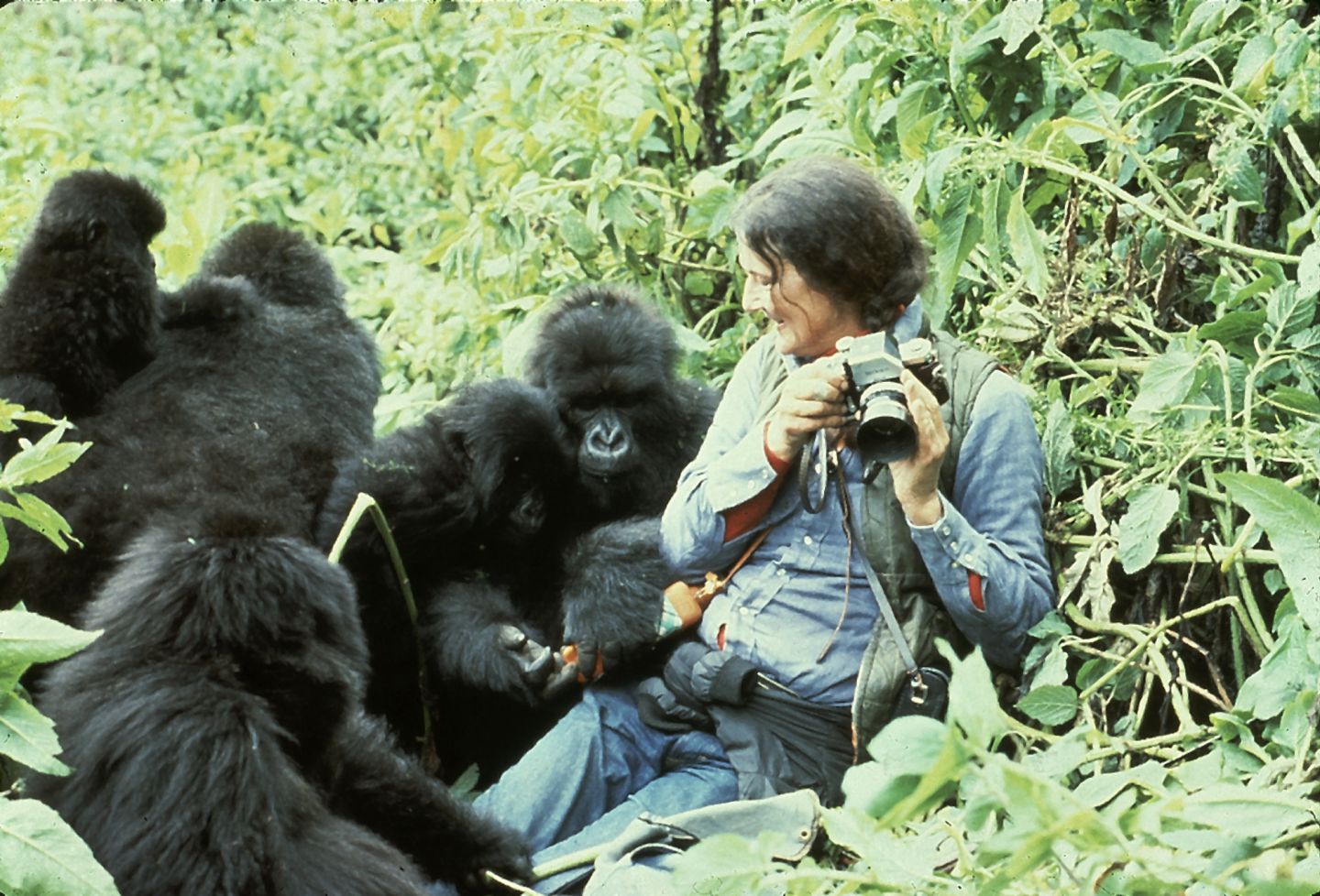
A habituated gorilla family is a wild mountain gorilla group that has undergone a carefully managed 2- to 3-year process of gradual human exposure, allowing safe, close-range observation without altering natural behavior.
This process involves daily visits by rangers, researchers, and veterinarians who slowly acclimate the gorillas to human presence while preserving their wild instincts.
Why it matters: Only habituated gorilla families can be visited by tourists. Without habituation, approaching wild gorillas would trigger aggressive defensive behavior.
This makes habituation the gateway to gorilla trekking – the greatest wildlife experience on Earth.
The conservation impact is direct and measurable. Revenue from gorilla trekking permits funds anti-poaching patrols, ranger salaries, and habitat protection across the Virunga Massif and Bwindi Impenetrable National Park.
With mountain gorilla numbers rebounding from fewer than 250 individuals in the 1980s to over 1,063 today, habituation programs are central to this conservation miracle.
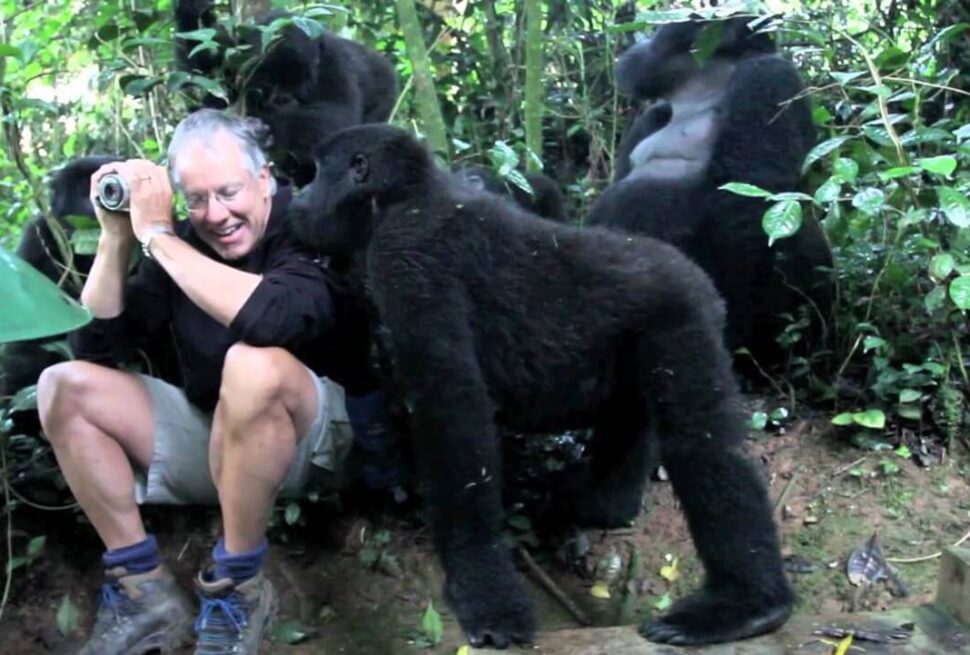
The 7-meter rule remains non-negotiable. Even fully habituated gorillas require a respectful distance to prevent disease transmission — a critical protocol given that gorillas share 98.3% of human DNA and are vulnerable to human illnesses.
But where exactly can you find these habituated gorilla families — and which country offers the best experience for your 2026/2027 safari?
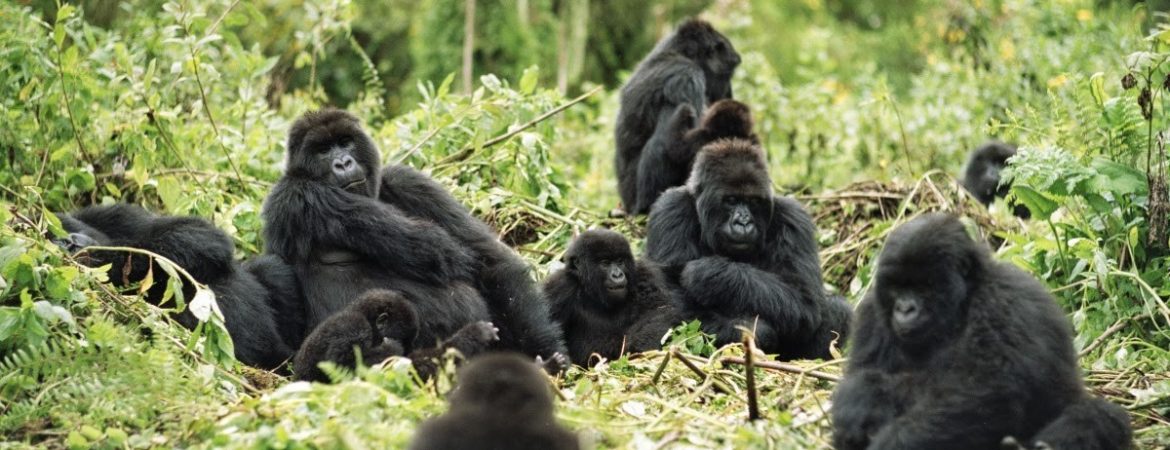
Habituated Gorilla Families in Uganda
1. Bwindi Impenetrable National Park — The Gorilla Capital
Bwindi hosts over 20 habituated gorilla families across four trekking sectors, making it the world’s premier gorilla trekking destination.
With 459+ mountain gorillas counted in the latest census, Bwindi protects nearly half the global population.
Sector-by-Sector Breakdown:
Table
|
Sector |
Habituated Families |
Trek Difficulty |
Best For |
|
Buhoma (North) |
Mubare, Habinyanja, Rushegura |
Easy to Moderate |
First-time trekkers |
|
Ruhija (East) |
Bitukura, Oruzogo, Kyaguliro |
Moderate to Hard |
Birders & adventurers |
|
Rushaga (South) |
Nshongi, Mishaya, Bweza, Kahungye, Busingye |
Moderate |
Gorilla habituation experience |
|
Nkuringo (Southwest) |
Nkuringo, Christmas |
Hard |
Photographers & luxury travelers |
Featured Snippet Answer: How many habituated gorilla families are in Bwindi? Over 20 fully habituated families across four sectors — more than any other park on Earth.
The Gorilla Habituation Experience — Exclusive to Uganda
This is your unique selling proposition. Unlike standard trekking (1 hour), the Gorilla Habituation Experience allows 4 hours with semi-habituated gorilla families in Rushaga — an experience available nowhere else in Rwanda or the DRC.
Current habituation families include:
- Bikyingi Family: ~22 members, led by silverback Bikyingi — known for being unusually friendly and tolerant of observers
- Bushaho Family: 8 members, led by silverback Bahati — originally from Nkuringo group, now fully habituated after years of careful exposure
Critical details for conversion:
- Only 4 permits per day — extreme exclusivity that sells out 6+ months ahead
- Permit cost: $1,500 per person (vs. $800 standard trek)
- Available only in Rushaga sector, southern Bwindi — book accommodation accordingly
2. Mgahinga Gorilla National Park — The Nyakagezi Family
Uganda’s second gorilla destination. The Nyakagezi family is the sole habituated group here, famous for crossing into Rwanda and the DRC — adding adventure unpredictability that thrill-seekers crave.
With volcanic backdrops and golden monkey neighbors, Mgahinga offers a multi-species experience Bwindi cannot match.
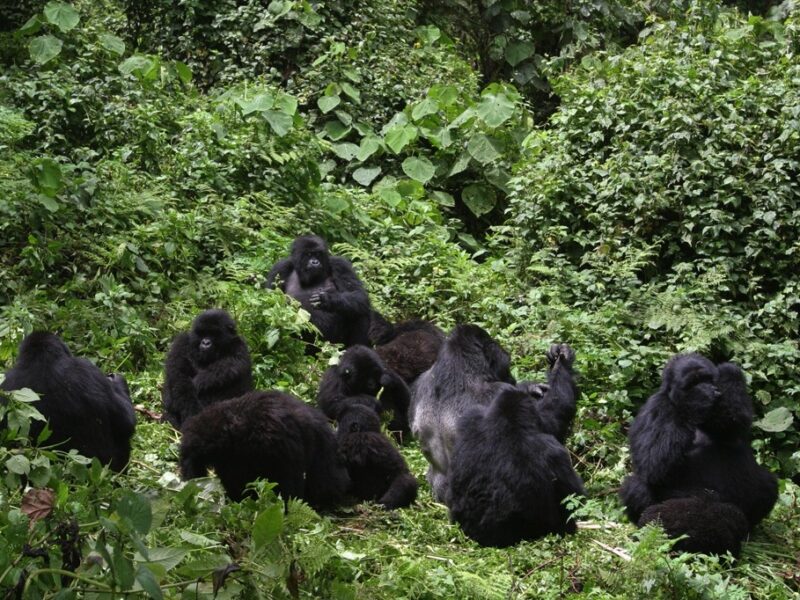
Habituated Gorilla Families in Rwanda
Volcanoes National Park — 13+ Habituated Groups
Rwanda delivers the most accessible gorilla trekking in Africa. All habituated families reside in Volcanoes National Park, just 2.5 hours from Kigali by paved road — a logistical advantage that transforms a multi-day commitment into a seamless day trip.
Complete Family Profiles:
Table
|
Family Name |
Size |
Silverback |
Trek Difficulty |
Special Feature |
|
Susa |
38+ |
N/A |
Hard |
Largest group; famous twins Byishimo & Impano |
|
Sabyinyo |
17 |
Guhonda |
Easy |
Most accessible; powerful silverback |
|
Amahoro |
21 |
Ubumwe |
Medium |
“Peace” — calm, family-friendly |
|
Agashya (ex-Group 13) |
22 |
Isano |
Easy-Medium |
Rapid growth success story |
|
Kwitonda |
20 |
Akarevuro |
Medium |
Originally habituated in DRC |
|
Umubano |
14 |
Charles |
Easy-Medium |
Broke from Amahoro in 2002 |
|
Hirwa |
13 |
Uburanga |
Medium |
Crossed to Uganda in 2019 |
|
Bwenge |
11 |
Bwenge |
Hard |
Karisoke slopes trek |
|
Muhoza |
19 |
Marambo |
Medium |
Newest large group (2015) |
|
Isimbi |
16 |
Muturengere |
Hard |
Bamboo zone specialists |
|
Kwisanga |
16 |
Kigoma |
Medium |
Split from Kwitonda 2021 |
|
Noheli |
7 |
Noheli |
Easy |
Smallest group; intimate encounters |
|
Igisha |
Varies |
N/A |
Medium |
Recently habituated |
Key Rwanda advantage: All families are fully habituated — no semi-habituated experiences available. Every trek guarantees a polished, predictable encounter with professional ranger teams.
Only 96 permits are issued daily across 12+ families, maintaining exclusivity.
Uganda vs Rwanda Habituated Gorilla Families Compared
Table
|
Feature |
Uganda (Bwindi + Mgahinga) |
Rwanda (Volcanoes) |
|
Total Habituated Families |
20+ |
13+ |
|
Gorilla Habituation Experience |
✅ Yes (4 hours) |
❌ No |
|
Permit Cost (Foreign Non-Resident) |
$800 standard / $1,500 habituation |
$1,500 |
|
Low-Season Discount |
$600 (Apr, May, Nov) |
30% off with multi-park visit (Nov–May) |
|
Trek Difficulty Range |
Easy to Extreme |
Easy to Hard |
|
Travel Time from Airport |
8–10 hrs (Kampala) / 4 hrs (Kigali) |
2.5 hrs (Kigali) |
|
Family Size Variety |
Small to Very Large |
Medium to Very Large |
|
Best For |
Adventure seekers, budget travelers, researchers |
Luxury travelers, short vacations, first-timers |
The verdict is clear: Choose Uganda for value, variety, and the exclusive 4-hour habituation experience. Choose Rwanda for luxury, accessibility, and polished logistics.
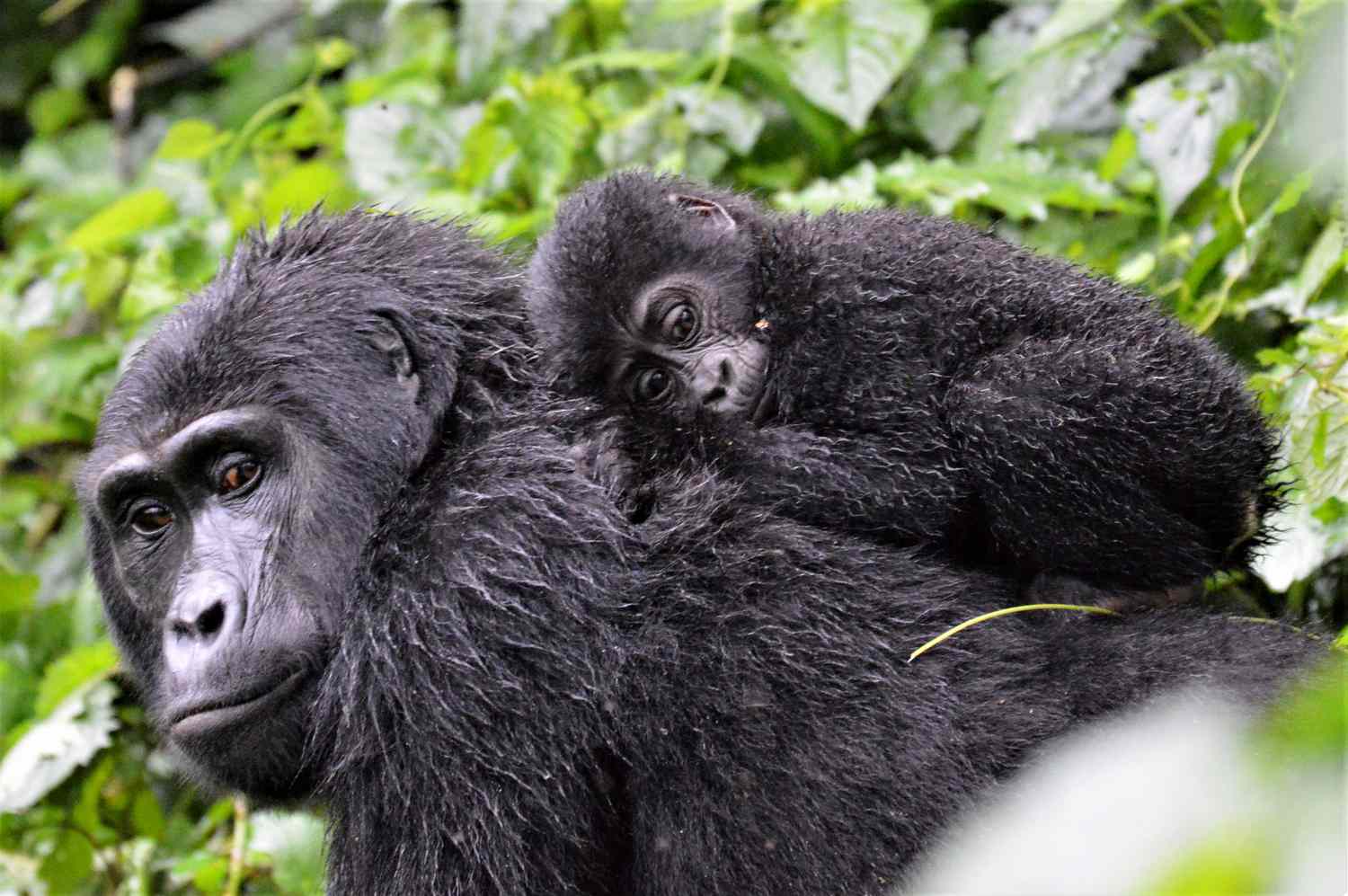
How to Choose the Right Habituated Gorilla Family
Follow this 5-step decision framework:
- Assess Your Fitness Level — Easy treks: Sabyinyo, Amahoro, Rushegura. Hard treks: Susa, Nkuringo, Bwenge. Request an “easy group” if concerned.
- Choose Your Group Size — Large families (Susa 38+, Agashya 22) deliver more action and social dynamics. Small families (Noheli 7, Bushaho 8) offer intimate, uncrowded encounters.
- Decide Your Time Budget — Only Uganda’s Gorilla Habituation Experience offers 4 hours. Standard treks everywhere allow 1 hour.
- Match Photography Goals — Open bamboo forests in Rwanda = better natural light. Dense rainforest canopy in Uganda = dramatic, moody atmosphere.
- Set Your Budget — Uganda wins on permit cost ($800 vs. $1,500) and accommodation range. Rwanda’s premium model commands higher investment.
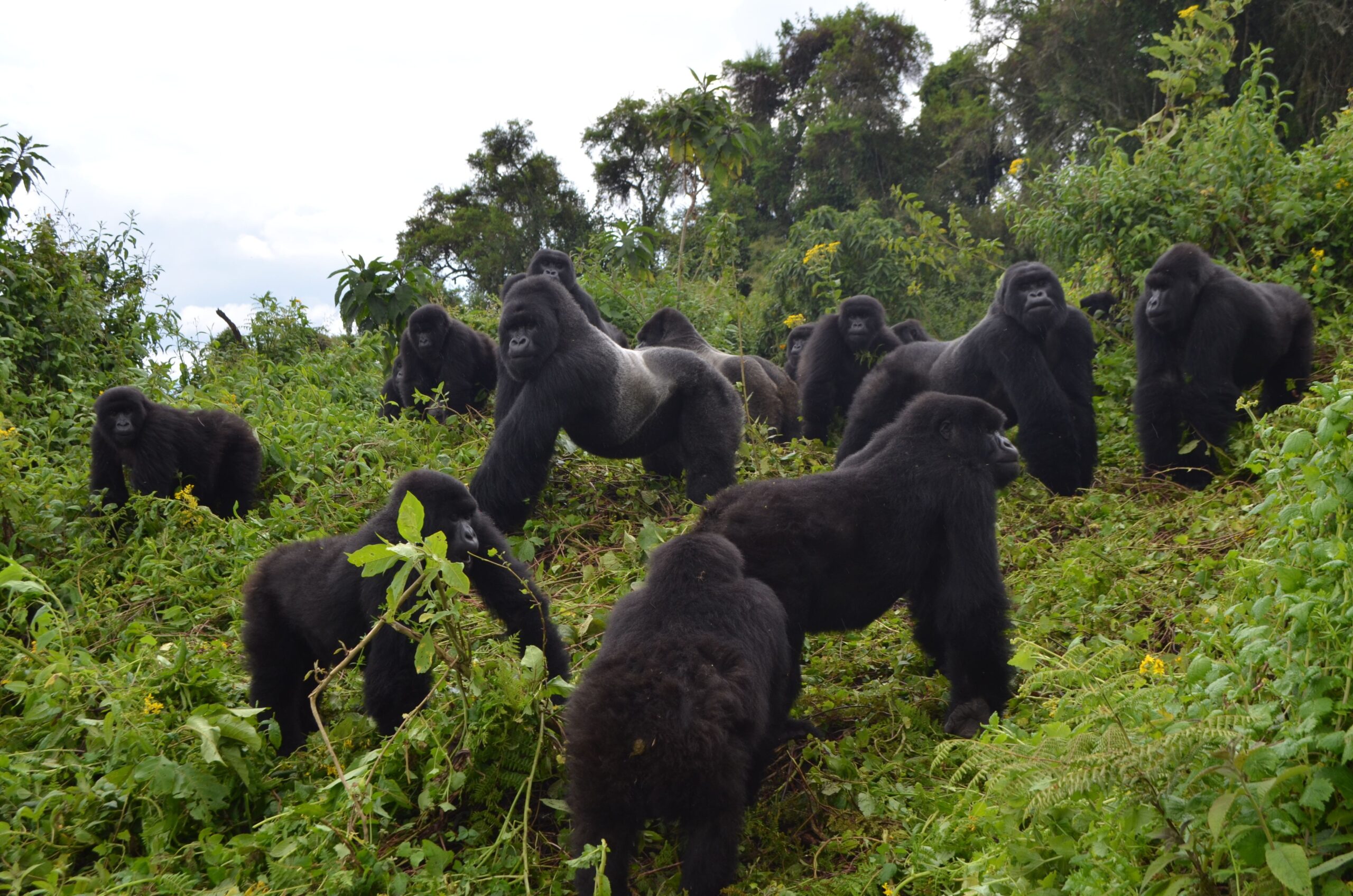
Booking Your Gorilla Permit: Step-by-Step Guide
Step 1: Decide your destination — Uganda or Rwanda (use the comparison table above).
Step 2: Choose your sector or family preference — We recommend Rushaga for habituation, Buhoma for first-timers, Volcanoes for luxury.
Step 3: Check permit availability — Only 8 permits per family per day. Book 3–6 months ahead for peak season (June–September, December–February).
Step 4: Secure your permit through GoSilverback Gorilla Safaris, the Uganda Wildlife Authority (UWA) or Rwanda Development Board (RDB). Important 2026 update: UWA eliminated the 7-day reservation window — all permits must be paid in full at booking.
Step 5: Book accommodation near your trekking sector — Reduces early morning transfer time.
Step 6: Confirm fitness preparation — Hire a porter ($15–$20) for steep terrain. Essential for Nkuringo, Susa, and Bwenge treks.
Conservation Impact: Why Habituated Families Matter
Every gorilla permit directly funds measurable conservation outcomes:
- Anti-poaching patrols and ranger salaries across the Virunga Massif
- Gorilla Doctors veterinary care for injured and sick gorillas
- Community projects — schools, health centers, clean water, and alternative livelihoods
- Habitat protection spanning 1,000+ km² of critical rainforest
The numbers prove the model works. Mountain gorillas shifted from Critically Endangered to Endangered in 2018 — the only great ape to improve its IUCN status.
Revenue-sharing programs in Rwanda alone fund 50+ community projects, slashing poaching by 70%.
Your visit is not just a safari. It is active conservation.
Frequently Asked Questions
How many habituated gorilla families are there in total?
Over 33 habituated gorilla families across Uganda and Rwanda — 20+ in Bwindi/Mgahinga and 13+ in Volcanoes National Park.
What is the difference between habituated and semi-habituated gorillas?
Habituated families are fully comfortable with humans after a 2–3 year process. Semi-habituated families are still learning — only available via Uganda’s 4-hour Gorilla Habituation Experience in Rushaga.
Which habituated gorilla family is easiest to trek?
Sabyinyo in Rwanda and Rushegura in Uganda’s Buhoma sector offer the gentlest terrain and shortest hiking times.
Can I request a specific gorilla family?
Yes, during permit booking — but final assignments depend on family location, weather, and your fitness level on the trekking day.
How much does it cost to visit habituated gorilla families in 2026?
Uganda: $800 standard / $1,500 habituation. Rwanda: $1,500. Uganda low-season discount: $600 (April, May, November). Rwanda 30% discount available with multi-park itineraries (November–May).
Are habituated gorilla families safe to visit?
Yes. No serious incidents in decades. Armed rangers accompany every trek. Gorillas perceive humans as neutral after habituation — they simply continue foraging while you observe.
Which country has more gorilla families?
Uganda — Bwindi alone has over 20 habituated families vs. Rwanda’s 13+.
What is the best time to trek habituated gorilla families?
June–September and December–February (dry seasons) offer easier trails. But trekking runs year-round, and gorilla encounters are equally profound in rain or shine.
Do gorilla permits sell out?
Yes. Rwanda’s 96 daily permits and Uganda’s limited sector allocations sell out 4–6 months ahead during peak season. Book early.
Can I combine Uganda and Rwanda in one safari?
Absolutely. Cross-border itineraries are increasingly popular. Start in Kigali (2.5 hrs to Volcanoes), then drive 4 hours to Bwindi for Uganda’s habituation experience.
Book Your Gorilla Safari With GoSilverback Gorilla Safaris
Ready to meet a habituated gorilla family face-to-face?
GoSilverback Gorilla Safaris specializes in tailor-made gorilla trekking experiences across Uganda and Rwanda.
Whether you want the exclusive 4-hour Gorilla Habituation Experience in Bwindi’s Rushaga sector or a luxury Rwanda trek to the legendary Susa family, we handle every detail so you focus on the encounter.
✅ Gorilla permit procurement — We secure hard-to-get permits before they sell out
✅ Expert guide matching — Rangers who know each family personally
✅ Sector-specific lodges — Stay minutes from your trekking point, not hours away
✅ Cross-border itineraries — Combine Uganda + Rwanda in one seamless safari
✅ All fitness levels welcome — We match you to the right family and terrain
🦍 [BOOK YOUR GORILLA TREKKING SAFARI TODAY]
Limited permits available. Secure your 2026/2027 dates now — peak season fills 6 months ahead.
📧 Email: info@gosilverbackgorillasafaris.com
📱 Call/WhatsApp: +256-773-801934
Your permit directly funds ranger patrols, veterinary care, and community schools. Trek with purpose. Trek with GoSilverback.