

Western Gorilla Population 2026: Numbers, Status & Trekking
Introduction: Why the Western Gorilla Population Matters
Western Gorilla Population is estimated in the hundreds of thousands, making western lowland gorillas the most numerous gorilla subspecies.
However, western gorillas remain Critically Endangered due to poaching, habitat loss, disease outbreaks, and the Ebola virus.
Protecting Central Africa’s rainforests, strengthening conservation programs, and combating illegal wildlife trade are essential to securing the future of western gorilla populations.
Deep within the emerald canopies of Central and West Africa, the western gorilla population faces a paradoxical reality. They are the most numerous of all gorilla subspecies, yet they remain officially classified as Critically Endangered.
These magnificent “forest engineers” and vital seed dispersers are the architects of their ecosystem, shaping the biodiversity of the Congo Basin.
Despite their vast numbers compared to their mountain cousins, the western gorilla population is in severe trouble, declining by an alarming 2.7% per year.
This relentless drop is driven by devastating Ebola outbreaks, relentless poaching, and rapid habitat loss.
In this comprehensive 2026 guide, you will discover the latest western gorilla population figures, understand their true conservation status, and explore the primary threats they face.
More importantly, you will learn how responsible gorilla tourism in Uganda, Rwanda, and the DRC directly funds the survival of these great apes.
Whether you are planning a luxury safari or researching primate conservation, this is your ultimate resource.

Western Gorilla Species & Subspecies Overview
To understand the conservation landscape, we must first distinguish between the different types of gorillas.
1. Western Gorilla (Gorilla gorilla) at a Glance
The Western Gorilla (Gorilla gorilla) roams the dense tropical forests of Central and West Africa.
It is crucial to distinguish this species from the Eastern Gorilla (Gorilla beringei), which inhabits the high-altitude volcanic regions of East Africa. The western species is divided into two distinct subspecies, each facing unique survival challenges.
2. Western Lowland Gorilla (Gorilla gorilla gorilla)
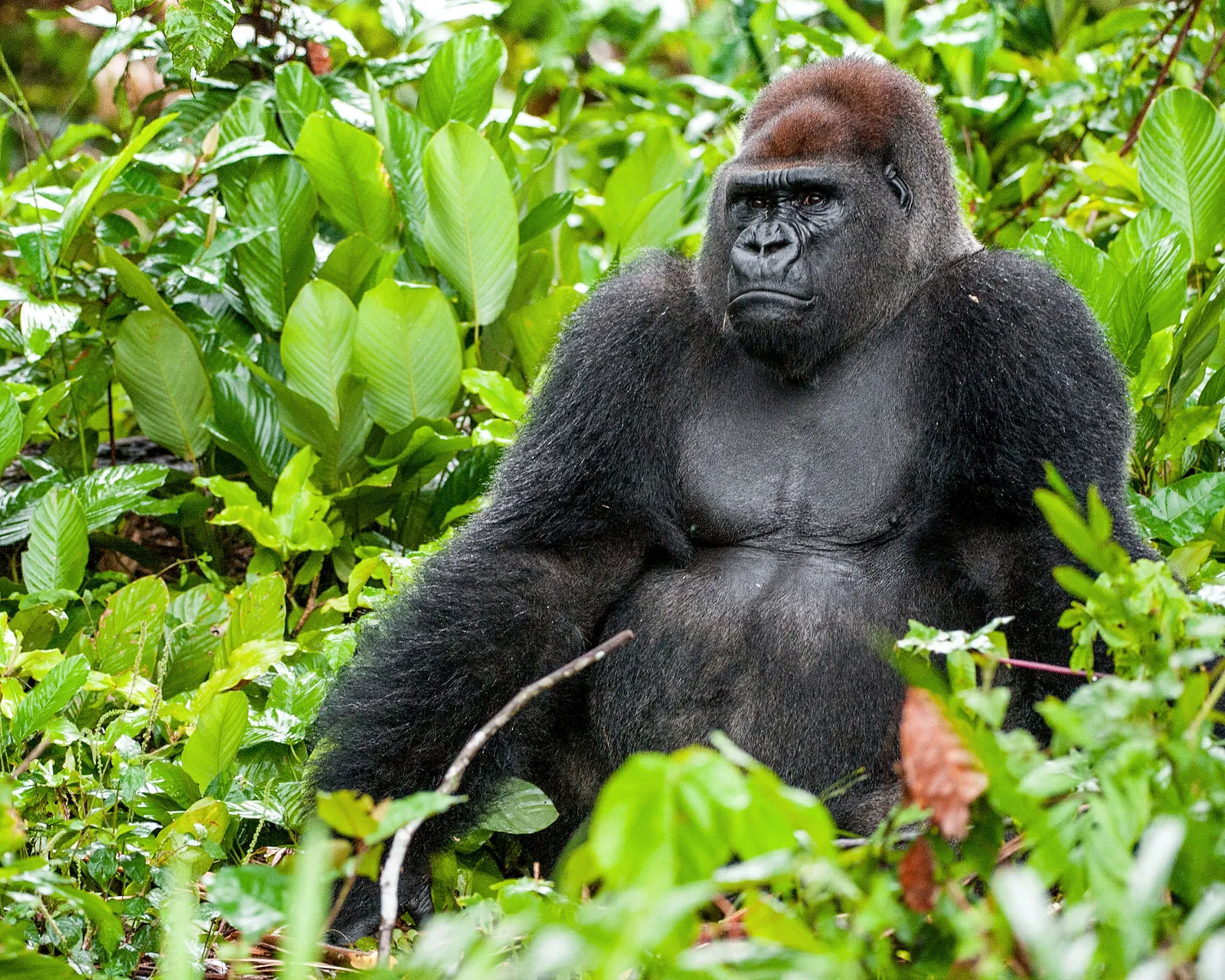
The western lowland gorilla is the most numerous gorilla subspecies on the planet. Current western lowland gorilla population estimates range between 300,000 and 316,000 individuals.
They are widely distributed across the Republic of Congo (holding roughly 60% of the population), Gabon, Cameroon, the Central African Republic, and Equatorial Guinea.
Despite their high numbers, the IUCN has classified them as Critically Endangered since 2007 due to their rapid, ongoing decline.
3. Cross River Gorilla (Gorilla gorilla diehli)
In stark contrast, the Cross River gorilla is the rarest great ape on Earth. Only 200 to 300 individuals remain, clinging to fragmented forest habitats along the remote Cameroon–Nigeria border.
With fewer than 250 mature individuals left in the wild, this subspecies is also Critically Endangered and teeters on the brink of extinction.
Related Read | Western Lowland Gorillas.

Latest Western Gorilla Population Statistics (2025–2026)
Understanding the exact numbers is vital for conservationists and eco-tourists alike.
Here is the most credible data for the western gorilla population 2026.
1. Global Population Estimates
The most widely cited figure for the western lowland gorilla population is approximately 316,000 (based on the IUCN assessment, still utilized in 2025–2026 reports).
While some newer landscape analyses suggest numbers closer to 330,000, experts emphasize the critical context: the population is shrinking at a rate of 2.7% annually.
When reports describe the population as “stable” in specific zones, it simply means the decline has slowed, not that the species is recovering. The Cross River gorilla population remains precariously low at 250–300 total individuals.
2. Population by Country (Where They Live)
The distribution of these apes is highly concentrated:
- Republic of Congo: Home to roughly 60% of all western lowland gorillas.
- Gabon: Contains approximately 27% of the population.
- Cameroon: Holds about 10%, including the entirety of the Cross River gorilla population on its border with Nigeria.
- Crucial Note: The vast majority of western gorillas live outside officially protected areas, making them highly vulnerable to human encroachment.
3. How These Numbers Are Estimated
Calculating the western lowland gorilla population in dense, impenetrable jungles is incredibly complex. Researchers rely on nest counts, camera traps, genetic sampling (from feces), and advanced landscape modeling.
Older sources often cited massive uncertainty ranges (e.g., 95,000–316,000), but newer, tech-driven surveys provide much more robust, albeit sobering, data.
Western Gorilla Population 2026 at a Glance
- Western Lowland Gorilla: ~316,000 individuals (Declining at 2.7% per year).
- Cross River Gorilla: 200–300 individuals (Highly fragmented).
- Primary Habitats: Republic of Congo, Gabon, Cameroon.
- IUCN Status: Critically Endangered (Both subspecies).
Ready to witness these gentle giants?
Don’t just read about them—experience them. [Explore our 2026 Western Gorilla Safari Packages] and book your adventure in the Congo Basin today.
Conservation Status: Why “Critically Endangered” Still Applies
1. IUCN Red List Classification
It often confuses travelers: How can an animal with over 300,000 individuals be Critically Endangered? Under IUCN criteria, a species is classified as Critically Endangered (just one step from Extinct in the Wild) if it faces an extremely high risk of extinction in the wild.
This is triggered by a documented ≥80% decline over three generations, or if the population is very small and highly fragmented. Both western gorilla subspecies meet these dire criteria.
2. Historical Decline
The historical data is staggering. Western lowland gorillas lost approximately 19.4% of their global population in just a single decade (2003–2013).
Over the past 20 to 25 years, localized estimates suggest up to a 60% decline in specific regions, driven primarily by the dual hammer-blows of Ebola and commercial hunting.
3. Comparison with Mountain Gorillas
Contrast this with the mountain gorilla (Gorilla beringei beringei). Thanks to intensive, tourism-funded conservation, the mountain gorilla population has actually increased to roughly 1,063–1,100 individuals today.
This proves a vital point: conservation and eco-tourism work. If targeted tourism revenue can save the mountain gorilla, it holds the key to helping the western gorilla, too.

Main Threats to Western Gorilla Populations
1. Ebola Virus Outbreaks
Ebola is a devastating threat. Past outbreaks have killed up to one-third of western lowland gorillas in affected zones. In 2026, new human Ebola cases in the DRC raise fresh fears for neighboring gorilla groups.
Transmission occurs through shared habitats and close contact. Vaccinating wild apes or monitoring them in remote, dense forests remains a massive logistical challenge.
2. Poaching and Bushmeat Trade
Commercial hunting for bushmeat is the leading driver of the western gorilla population decline.
Gorillas are frequently caught in wire snares originally set for antelope, or they are directly targeted for traditional medicine and the illegal wildlife trade.
3. Habitat Loss & Fragmentation
Industrial and artisanal logging, mining, and agricultural expansion are rapidly shrinking their range. As logging roads carve through pristine forests, they open previously inaccessible areas to poachers and settlers.
Because ~80% of western gorillas occur outside protected areas, this habitat fragmentation is exceptionally lethal.
4. Climate Change (Emerging Threat)
Shifting rainfall patterns and changing forest compositions threaten to alter food availability. Furthermore, climate stress can weaken gorilla immune systems, making them more susceptible to disease outbreaks like Ebola.
Support Conservation Through Travel
Every safari booked funds anti-poaching efforts. [Talk to a Safari Expert] about how your trip directly protects gorilla habitats.

Where to See Western Gorillas in the Wild (Safari Focus)
Best Countries for Western Gorilla Trekking
- Republic of Congo: The undisputed king of western gorilla trekking. Parks like Odzala-Kokoua and Nouabalé-Ndoki offer prime habitat and fully habituated gorilla groups for tourism.
- Gabon: An emerging destination for gorilla safaris in Congo basin neighbors. Parks like Loango and Ivindo offer incredible, though less developed, gorilla trekking experiences.
- Cameroon & Nigeria: Home to the Cross River gorilla. However, tourism here is highly restricted and virtually non-existent to protect the fragile, tiny population.
Gorilla Permits & Costs (2026)
Planning a gorilla safari Congo style is often more affordable than East Africa, but logistics are more rugged.
- Republic of Congo: Permits typically range from $400 to $600 per person, depending on the lodge and operator.
- Gabon: Similar or slightly higher, usually bundled into exclusive lodge packages.
- For Comparison: Rwanda permits are $1,500, Uganda is $800, and DRC (Virunga mountain gorillas) is $400 when open.
Note: Your permit fee directly funds anti-poaching patrols, ranger salaries, and vital community projects.
Best Time to Visit & What to Expect on a Trek
The best time for western gorilla trekking is during the dry seasons (December–February and June–September).
Treks can last anywhere from 1 to 5 hours.
Group sizes are strictly limited (usually 4 to 6 visitors) to minimize stress on the animals. Post-pandemic and post-Ebola, strict health protocols, including mask-wearing and distance rules, are rigorously enforced.
How Gorilla Tourism Supports Conservation
The Rwanda & Uganda Model (Proof That Tourism Works)
The success of East African gorilla tourism is undeniable. In 2025, Rwanda’s gorilla tourism generated a massive $685 million in total tourism revenue, with gorilla trekking accounting for an incredible 71.4% of Q4 2025 leisure spending.
This influx of capital directly funded the conservation efforts that raised the mountain gorilla population from roughly 430 in the early 2000s to over 1,100 today.
Direct Benefits to Western Gorilla Range States
When you book a gorilla safari Congo or Gabon, your money goes directly to the frontlines. Permit fees and lodge taxes fund:
- Ranger patrols and specialized anti-poaching units.
- Community health and education programs, which reduce local reliance on the bushmeat trade.
- Habitat restoration and the protection of vital wildlife corridors.
How to Choose a Responsible Gorilla Tour Operator
To ensure your money helps, look for operators that feature:
- Verified partnerships with recognized conservation NGOs.
- Strict, transparent policies on group size, viewing distance, and health screening.
- Proven financial contributions to local communities and protected areas.
Browse our vetted western gorilla safari packages
Travel with purpose. [Click here to view our responsible gorilla tours] and make a direct impact.

Western Gorilla vs Eastern Gorilla: Key Differences
Understanding the difference between western and eastern gorillas is essential for planning your safari.
Here is a quick comparison:
|
Feature |
Western Gorilla (G. gorilla) |
Eastern Gorilla (G. beringei) |
|
Subspecies |
Western lowland, Cross River |
Mountain, Eastern lowland (Grauer’s) |
|
Population (2025–26) |
~316,000 (lowland), 200–300 (Cross River) |
~1,063 (mountain), <5,000 (Grauer’s) |
|
IUCN Status |
Critically Endangered |
Critically Endangered |
|
Main Range |
Central & West Africa (Congo, Gabon) |
East Africa (Uganda, Rwanda, DRC) |
|
Tourism Access |
Congo, Gabon (Remote, exclusive) |
Uganda, Rwanda, DRC (Highly developed) |
Frequently Asked Questions (FAQ)
Q1: What is the current western gorilla population?
A: The western lowland gorilla population is estimated at around 316,000 individuals, alongside 200–300 Cross River gorillas. Despite these large numbers, the species is Critically Endangered due to a continuous 2.7% annual decline.
Q2: Are western gorillas endangered?
A: Yes. Both the western lowland and Cross River subspecies are classified as Critically Endangered by the IUCN. This severe status is driven by devastating Ebola outbreaks, heavy poaching, and rapid habitat loss.
Q3: Where can I see western gorillas on safari?
A: The best destinations for western gorilla trekking are the Republic of Congo (Odzala-Kokoua, Nouabalé-Ndoki) and Gabon. The Cross River gorillas in Cameroon and Nigeria are too rare and heavily protected for regular tourism.
Q4: How does gorilla tourism help conservation?
A: Permit fees and tourism revenue directly fund ranger patrols, anti-poaching operations, and community development. For example, gorilla tourism in Rwanda helped increase the mountain gorilla population from roughly 430 to over 1,000.
Q5: What is the difference between western and mountain gorillas?
A: Western gorillas (lowland and Cross River) inhabit the dense forests of Central and West Africa and number in the hundreds of thousands (lowland) or a few hundred (Cross River). Mountain gorillas are an eastern subspecies living in the high-altitude volcanoes of Uganda, Rwanda, and the DRC, with a total population of just over 1,000.
Conclusion: Protecting the Western Gorilla Through Informed Travel
The western gorilla population may be vast compared to their mountain relatives, but they are disappearing at an alarming rate.
They are the undisputed giants of the Congo Basin, yet they face an existential threat from disease, poaching, and deforestation.
Informed, responsible tourism is not just a way to see these incredible animals; it is one of the most effective, proven tools to protect them and their habitats for generations to come.
Ready to see western gorillas in the wild?
Explore our exclusive 2026 gorilla safari packages to the Republic of Congo and Gabon, or combine your trip with world-class mountain gorilla trekking in Uganda and Rwanda.
Take the next step with GoSilverback Gorilla Safaris:
Let GoSilverback Gorilla Safaris handle the permits, the logistics, and the luxury, so you can focus on the magic of the forest. Book your permit today, and join us in protecting the wild heart of Africa!