
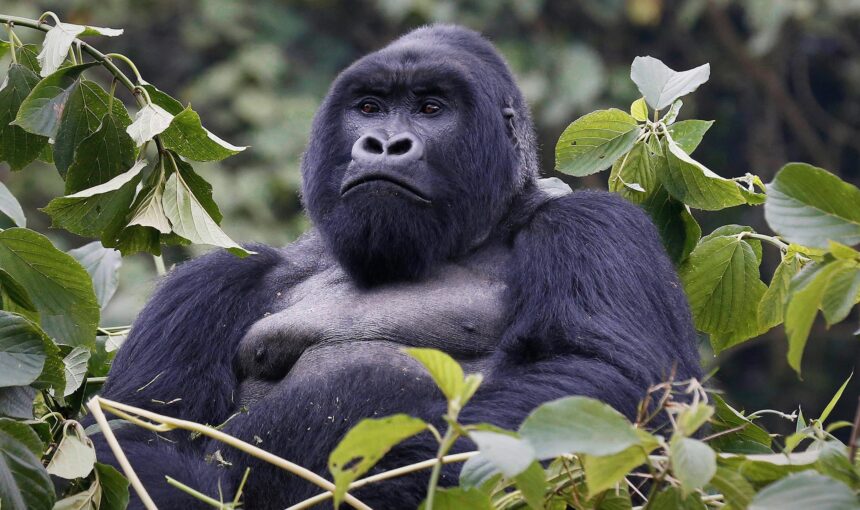
Which Country Is Better for Gorilla Trekking: Uganda or Rwanda? Ultimate 2026 Guide
Quick Answer: Uganda offers the best value for money and the most diverse wildlife safari combinations. Rwanda delivers the most luxurious, accessible, and streamlined gorilla trekking experience.
Gorilla trekking is Africa’s most sought-after wildlife experience – a bucket-list encounter that draws thousands of travelers from the USA, UK, Europe, Canada, Asia, and the Middle East every year.
Two countries dominate this experience: Uganda and Rwanda. Both share the misty Virunga ecosystem and Albertine Rift forests. Both offer life-changing encounters with endangered mountain gorillas.
Yet choosing between them is a decision that shapes your entire safari. Your ideal destination depends on your budget, travel style, and how much time you have.
This guide breaks down every factor — permit costs, accessibility, gorilla families, lodges, scenery, safety, and conservation — so you can book with complete confidence.
Overview of Gorilla Trekking in East Africa
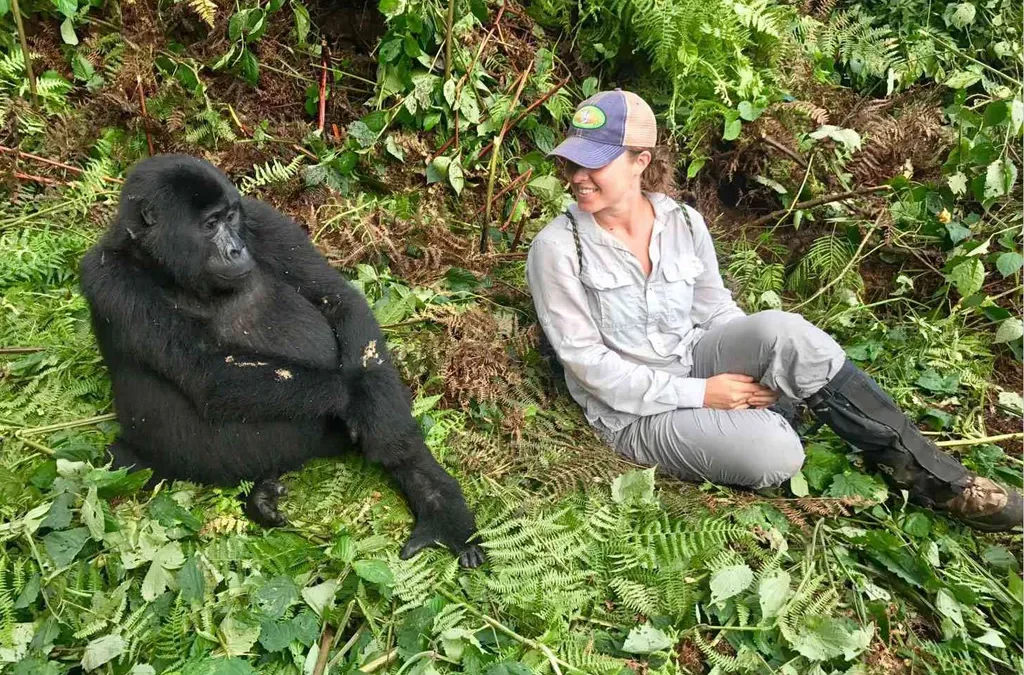
Mountain gorillas exist in only three countries on Earth: Uganda, Rwanda, and the Democratic Republic of Congo. Uganda and Rwanda are by far the safest, best-managed, and most visited destinations for gorilla safaris.
The mountain gorilla population has grown from just 620 individuals in 2008 to over 1,063 today — a conservation triumph driven largely by gorilla tourism revenues.
Every gorilla trekking permit you purchase funds ranger salaries, anti-poaching patrols, community development, and veterinary care for habituated gorilla families.
Both Uganda and Rwanda are politically stable, tourism-friendly nations with professional park management.
The Uganda Wildlife Authority (UWA) manages trekking in Uganda, while Rwanda’s Rwanda Development Board (RDB) oversees Volcanoes National Park.
Both agencies maintain world-class safety standards and employ experienced tracking rangers.
Why does gorilla tourism matter? Because without it, mountain gorillas might not exist. Permit fees directly fund the conservation infrastructure keeping these great apes alive.
Where Can You See Mountain Gorillas?
1. Uganda — Two Parks, Dozens of Gorilla Families
Uganda is home to the largest mountain gorilla population in the world, spread across two national parks:
- Bwindi Impenetrable National Park — a UNESCO World Heritage Site and the heartland of gorilla trekking. Bwindi hosts more than 20 habituated gorilla families across four trekking sectors: Buhoma, Ruhija, Rushaga, and Nkuringo. The ancient rainforest here is one of Africa’s oldest and most biodiverse ecosystems.
- Mgahinga Gorilla National Park — a smaller, volcanic park bordering Rwanda and the DRC. Home to one habituated gorilla family, Mgahinga also offers golden monkey trekking and the iconic Virunga volcano landscape.
Uganda’s multiple trekking sectors mean more flexibility in scheduling, less crowding, and the option to choose your terrain — from relatively accessible trails at Buhoma to challenging high-altitude routes at Ruhija.
2. Rwanda — One Park, Premium Access
Rwanda concentrates all its mountain gorilla tourism in a single iconic destination:
- Volcanoes National Park (Parc National des Volcans) — a dramatic, photogenic park set against the backdrop of six volcanoes, including the famous Mount Karisimbi and Mount Bisoke. This is where Dian Fossey conducted her legendary gorilla research and where the modern conservation movement was born.
Rwanda currently has 12 habituated gorilla families available for trekking.
While fewer than Uganda’s total, the logistics are tightly managed — transfers from Kigali to the park headquarters take just 2–2.5 hours, making Rwanda one of the most time-efficient gorilla destinations in Africa.
Gorilla Permit Cost Comparison
The permit cost is often the deciding factor for travelers choosing between Uganda and Rwanda.
| Destination | Gorilla Trekking Permit Cost |
|---|---|
| Uganda | USD 800 per person |
| Rwanda | USD 1,500 per person |
Rwanda’s gorilla trekking permit costs nearly double that of Uganda — a significant difference, particularly for couples or families.
However, Rwanda justifies this premium through well-maintained trails, shorter trekking distances, luxury lodge access, and an exceptionally managed trekking experience.
Key points on permit costs:
- Uganda permits at USD 800 represent exceptional value. They fund UWA conservation programs, ranger training, and community benefit schemes across Bwindi and Mgahinga.
- Rwanda permits at USD 1,500 come with a strong conservation premium. The RDB channels funds into gorilla health monitoring, veterinary programs, and the Volcanoes National Park buffer zone.
- Seasonal discounts: Uganda periodically offers discounts for low-season travel (April–May and November). Rwanda has historically been firm on pricing.
- Family or group travel: The permit cost gap becomes substantial — a group of four saves USD 2,800 by choosing Uganda over Rwanda.
Bottom line on permits: For budget-conscious travelers, Uganda wins decisively. For those for whom price is secondary to experience, Rwanda’s premium is justifiable.
Accessibility: Which Destination Is Easier to Reach?
1. Getting to Uganda for Gorilla Trekking
International arrivals land at Entebbe International Airport (EBB), approximately 40 km from Kampala. From Entebbe or Kampala, travelers reach Bwindi Impenetrable National Park via the following:
- Domestic flights — charter flights to Kihihi (for Buhoma/Ruhija) or Kisoro (for Rushaga/Nkuringo) airstrips take approximately 60–75 minutes. This is the most comfortable option.
- Road transfers — the drive from Kampala to Bwindi takes 8–10 hours on paved and murram roads through Uganda’s scenic southwestern highlands.
Uganda’s trekking sectors are spread across a larger geographic area, which means transfer times vary depending on your chosen sector.
Buhoma is the most accessible sector; Nkuringo involves the steepest terrain.
2. Getting to Rwanda for Gorilla Trekking
Rwanda’s logistics are streamlined and efficient. Kigali International Airport (KGL) is the arrival hub, and Volcanoes National Park is just 2–2.5 hours by road — a remarkably short transfer for an African safari destination.
Many Kigali hotels offer same-day arrival and departure-day trekking itineraries, making Rwanda ideal for travelers with limited time.
Helicopter transfers are also available for ultra-luxury itineraries, cutting park travel to under 30 minutes.
Accessibility verdict: Rwanda wins on convenience. Uganda requires more travel time but rewards it with deeper wilderness immersion.
Gorilla Trekking Experience Comparison
1. The Uganda Gorilla Trekking Experience
Trekking in Bwindi Impenetrable Forest is a genuinely wild adventure. The name says it all — ancient, mist-draped, and dense with biodiversity.
Trails wind through tangled undergrowth, over roots and steep ridges, and through forest so old it predates the last Ice Age.
What to expect:
- Trek duration: 1–8 hours depending on gorilla family location (average 3–4 hours)
- Terrain: Variable — from moderate at Buhoma to steep and challenging at Ruhija and Nkuringo
- Gorilla viewing: 1 hour with the gorilla family, guaranteed once found
- Forest environment: Dense equatorial rainforest with towering fig trees, mahogany, and impenetrable undergrowth
- Wildlife encounters en route: Forest elephants, chimpanzees, red colobus monkeys, L’Hoest’s monkeys, and hundreds of bird species
The Uganda experience rewards adventurous, physically fit travelers with an authentic deep-forest immersion that feels genuinely wild.
2. The Rwanda Gorilla Trekking Experience
Volcanoes National Park offers a more open, visually dramatic trekking environment.
Gorilla families roam through bamboo forests on the volcano slopes, with sections of open meadow and moorland that provide different photography opportunities to Uganda’s dense canopy.
What to expect:
- Trek duration: 1–5 hours (average 2–3 hours — shorter than Uganda)
- Terrain: Bamboo forest slopes, more open and less technically challenging
- Gorilla viewing: 1 hour with the gorilla family (same as Uganda)
- Forest environment: Bamboo groves, hagenia-hypericum forests, open volcanic slopes
- Wildlife encounters: Golden monkeys also available for trekking permits
Rwanda’s gorilla families have been habituated for longer on average, meaning they often exhibit more relaxed, observable behavior — silverbacks chest-beating, juveniles playing, mothers nursing infants.
Experience verdict: Uganda delivers the ultimate wilderness adventure. Rwanda delivers a more refined, comfortable, and predictable trekking experience. Neither is inferior — they are genuinely different.
Which Country Has More Gorillas?
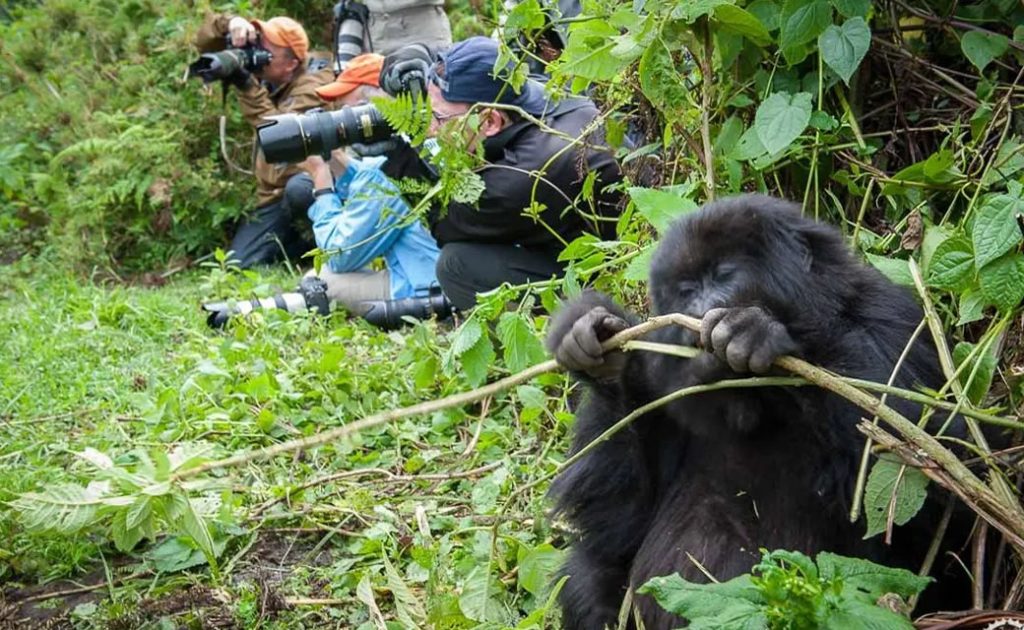
Uganda has the larger mountain gorilla population. Current figures from the IUCN and Gorilla Doctors estimate:
| Metric | Uganda | Rwanda |
|---|---|---|
| Total Mountain Gorillas | Approx. 460–480 | Approx. 200–220 |
| Habituated Families for Trekking | 22+ families | 12 families |
| Gorilla Habituation Experience (GHEE) | Available in Bwindi | Not available |
Uganda’s Gorilla Habituation Experience (GHEE) is a unique offering — a USD 1,500 permit that allows you to spend 4 hours (instead of 1 hour) with a gorilla family still in the habituation process.
This is one of Africa’s most exclusive wildlife encounters and is available only in Uganda’s Rushaga sector.
Rwanda has smaller but very well-managed gorilla families. The Susa group — once habituated by Dian Fossey herself — is one of the largest mountain gorilla groups in existence, with more than 40 individuals.
Gorilla numbers verdict: Uganda wins on volume. Rwanda wins on heritage and family name recognition.
Best Scenery for Gorilla Trekking
1. Uganda’s Landscape
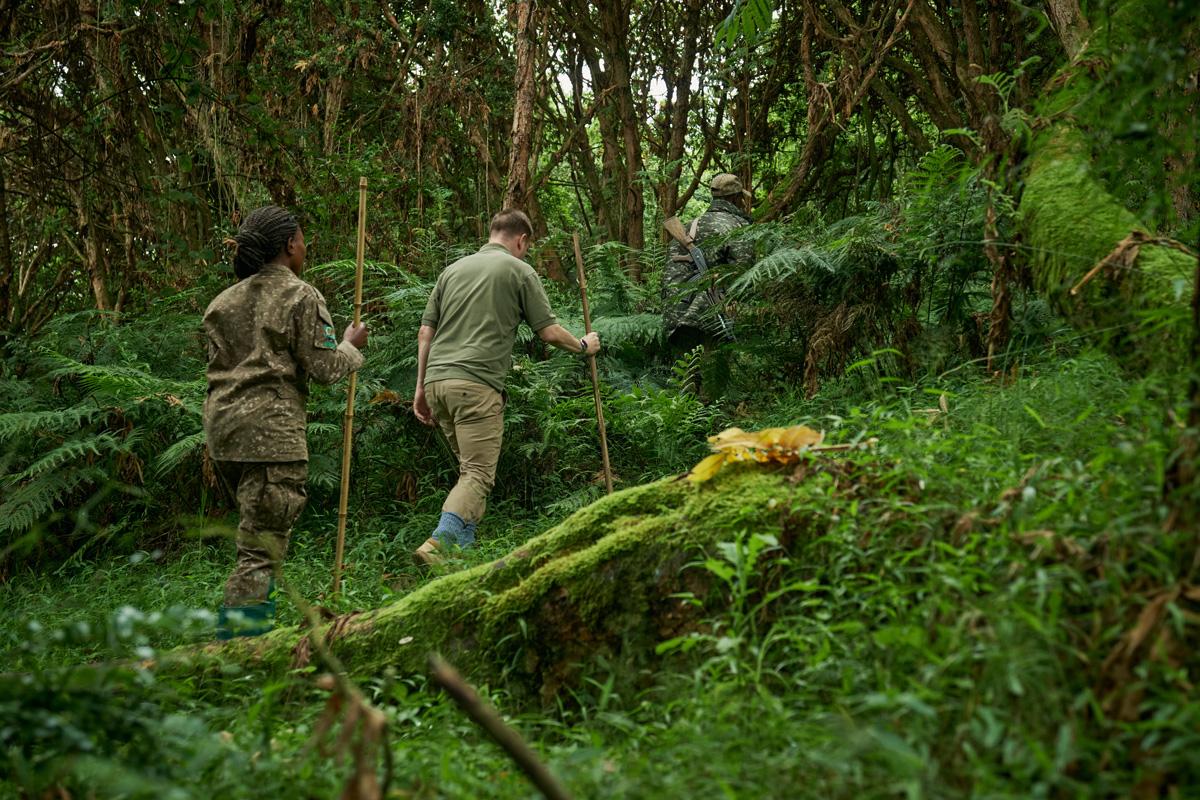
Bwindi Impenetrable Forest is one of Africa’s most ancient and biologically rich rainforests, estimated to be over 25,000 years old.
The scenery is wild, primordial, and atmospheric:
- Ancient canopy of giant figs, Prunus africana, and Podocarpus trees
- Mist-filled valleys that glow gold in early morning light
- Rolling Kigezi highlands visible from park boundaries — Rwanda’s “Switzerland of Africa” moniker applies equally to Uganda’s southwest
- Waterfalls and rivers running through the forest floor
The aesthetic is one of raw, untamed wilderness — exactly what Africa’s remote forests should feel like.
2. Rwanda’s Landscape
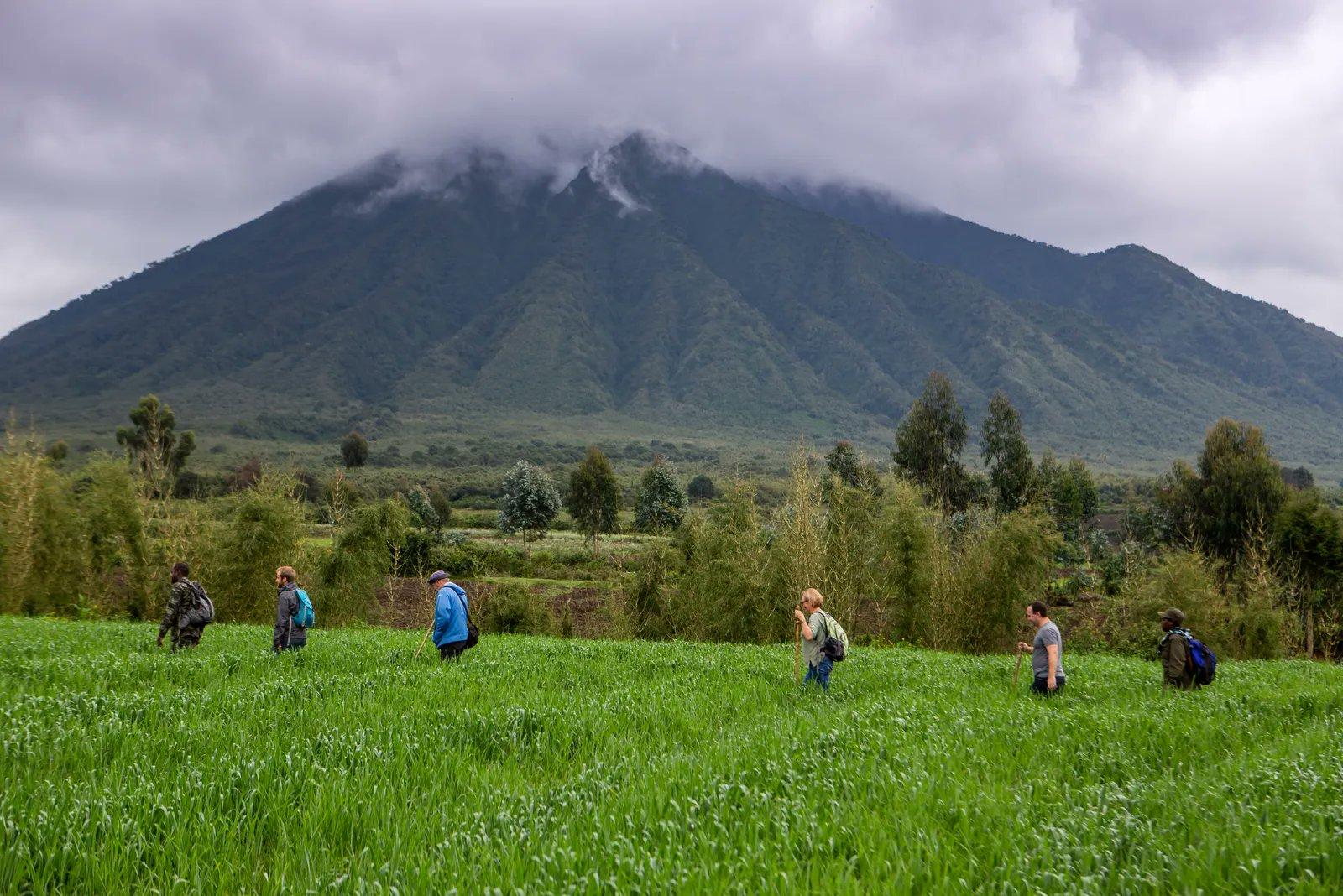
Volcanoes National Park offers visually stunning, photogenic scenery of a completely different kind:
- Six volcanic cones — including Karisimbi (4,507m), Bisoke (3,711m), and Sabyinyo — rising dramatically above the forest
- Rolling hills and tea plantations extending to the park boundary
- Open bamboo forest slopes catching morning light beautifully
- Dian Fossey Research Station and memorial — a deeply moving historical site
Rwanda’s “Land of a Thousand Hills” lives up to its reputation. Every viewpoint offers a vista of green terraced hillsides and volcanic silhouettes.
Scenery verdict: Uganda for ancient forest atmosphere. Rwanda for dramatic volcanic landscapes. Both are extraordinary.
Accommodation Comparison
1. Luxury Lodges in Rwanda
Rwanda has arguably the finest collection of luxury safari lodges in East Africa, positioned within minutes of gorilla trekking trailheads:
- Singita Kwitonda Lodge — ultra-luxury, Relais & Châteaux–affiliated, with just eight suites and extraordinary views of the Virunga volcanoes. Rates from USD 2,500+ per person per night.
- One&Only Gorilla’s Nest — elegantly appointed forest suites with gourmet dining, a spa, and guided gorilla trekking as a core offering. Rates from USD 1,800+ per person per night.
- Bisate Lodge — an award-winning, eco-luxury lodge with volcanic-cone views and strong community conservation credentials.
- Sabyinyo Silverback Lodge — community-owned luxury, directly supporting local revenue-sharing programs.
2. Luxury and Mid-Range Lodges in Uganda
Uganda offers excellent value across all price brackets, from world-class luxury to comfortable mid-range lodges:
Luxury:
- Sanctuary Gorilla Forest Camp (Buhoma) — eight exclusive tents perched within the forest boundary, with gorillas occasionally passing through camp.
- Clouds Mountain Gorilla Lodge (Nkuringo) — stunning ridge-top location with panoramic views across the DRC border valleys.
- Mahogany Springs Lodge (Buhoma) — beautifully appointed cottages with exceptional food and forest views.
Mid-Range:
- Buhoma Lodge — comfortable, well-located, and excellent value for money.
- Gorilla Safari Lodge (Buhoma) — solid mid-range option with good facilities and friendly service.
- Rushaga Gorilla Camp (Rushaga) — popular budget-to-mid-range option near multiple gorilla families.
Accommodation verdict: Rwanda wins for ultra-luxury. Uganda wins for variety and value across all budgets.
Budget Travelers — Which Country Wins?
Uganda is the clear winner for budget-conscious gorilla trekkers.
Here’s why:
- Gorilla permit: USD 800 vs. Rwanda’s USD 1,500 — a saving of USD 700 per person
- Accommodation: Budget options start from USD 50–80 per night in Uganda; Rwanda’s options near Volcanoes NP start from USD 150.
- Safari add-ons: Uganda’s diverse national parks mean you can extend your safari affordably — chimp tracking at Kibale costs USD 200; a Big Five game drive at Queen Elizabeth costs USD 40
- Food and transport: Generally more affordable in Uganda
Sample Budget for 5-Day Uganda Gorilla Safari (per person):
| Item | Estimated Cost |
|---|---|
| Gorilla Permit | USD 800 |
| Mid-range accommodation (4 nights) | USD 400–600 |
| Domestic flights (Entebbe–Bwindi return) | USD 350–450 |
| Park fees, meals, guides | USD 200–300 |
| Total Estimate | Approx.USD 1,750–2,150 |
A comparable Rwanda itinerary at mid-range accommodation easily exceeds USD 3,000–4,000 per person including the permit.
Luxury Travelers — Which Country Wins?
Rwanda is the gold standard for luxury gorilla safaris. The combination of short transfers from Kigali, world-class lodges, helicopter options, and immaculate park management makes it the premier choice for high-end travelers.
Rwanda luxury advantages:
- Helicopter transfers from Kigali to Volcanoes NP — available through select operators and lodges
- Gorilla Naming Ceremony (Kwita Izina) — Rwanda’s iconic annual gorilla naming event, typically held in September, is a major conservation and tourism highlight
- Private gorilla trekking — Rwanda allows private group permits, ensuring your family or party treks alone
- Spa and wellness facilities — lodges like Singita Kwitonda and One&Only offer spa treatments, yoga, and curated dining that match top international resort standards
- Seamless logistics — from Kigali arrival to gorilla sighting, Rwanda’s safari infrastructure is Africa’s most polished
For honeymoon gorilla safaris, Rwanda is unrivaled. The combination of romantic lodges, dramatic volcanic scenery, and the emotional power of a gorilla encounter creates an unforgettable experience.
Wildlife Safari Combinations
Uganda — Africa’s Most Diverse Safari Destination
Uganda’s true competitive advantage is biodiversity. No other country of its size offers such a concentration of primates, birds, and megafauna:
- Kibale National Park — the primate capital of Africa. Home to 13 primate species including chimpanzees, red colobus, and L’Hoest’s monkeys. Chimp tracking permits cost USD 200.
- Queen Elizabeth National Park — tree-climbing lions, massive elephant herds, hippo channels, and the famous Kazinga Channel boat cruise.
- Murchison Falls National Park — the world’s most powerful waterfall, plus lions, giraffes, elephants, and exceptional Nile crocodile viewing.
- Kidepo Valley National Park — remote, wild, and spectacular. One of Africa’s least-visited and most authentic savannah parks.
- Ssese Islands (Lake Victoria) — for relaxation between wildlife encounters.
A Uganda gorilla and chimp trekking combo at Bwindi + Kibale is one of Africa’s most complete safari itineraries.
Rwanda — Compact but Diverse
Rwanda’s compact geography means safari combinations are achievable within a short trip:
- Akagera National Park — Rwanda’s only savannah park, home to lions, elephants, giraffes, hippos, and rhinos. The Big Five are present.
- Nyungwe National Park — montane rainforest with habituated chimpanzees, colobus monkeys, and the spectacular canopy walk above the forest.
- Lake Kivu — one of Africa’s most scenic lakes, ideal for relaxation between treks.
Wildlife variety verdict: Uganda wins comprehensively. For the most diverse African wildlife safari, Uganda is unmatched at its price point.
Photography Opportunities
Both Uganda and Rwanda offer extraordinary gorilla photography, but with different character:
| Factor | Uganda | Rwanda |
|---|---|---|
| Light Conditions | Filtered canopy light, challenging but atmospheric | More open terrain, better natural light |
| Forest Density | Dense — requires fast lenses (f/2.8) | More open, standard zoom lenses work well |
| Background | Natural forest, immersive | Bamboo and volcanic, more structured |
| Gorilla Behavior | Natural, sometimes more active foraging | Often relaxed, approachable |
| Gorilla Habituation Experience | 4 hours of shooting time available | Not available |
| Landscape Photography | Ancient forest and misty valleys | Dramatic volcanoes and rolling hills |
Photography tip: For serious wildlife photographers, Uganda’s Gorilla Habituation Experience (GHEE) at USD 1,500 provides four hours of access versus the standard one hour — the most productive gorilla photography opportunity in Africa.
Safety and Security
Both Uganda and Rwanda are among the safest safari destinations in Africa. Travelers from the USA, UK, Europe, and beyond visit with confidence year-round.
Uganda:
- Politically stable, with a well-established tourism industry
- UWA rangers escort all trekking groups — armed escorts are standard
- Bwindi and Mgahinga are remote but professionally managed
- UK Foreign Commonwealth Office and US State Department rate Uganda as safe for tourism with standard precautions
Rwanda:
- One of Africa’s most stable and well-governed nations
- Kigali is consistently ranked one of Africa’s cleanest and safest cities
- Zero reported security incidents in gorilla trekking areas
- Rwanda’s national police maintain a strong presence in tourist zones
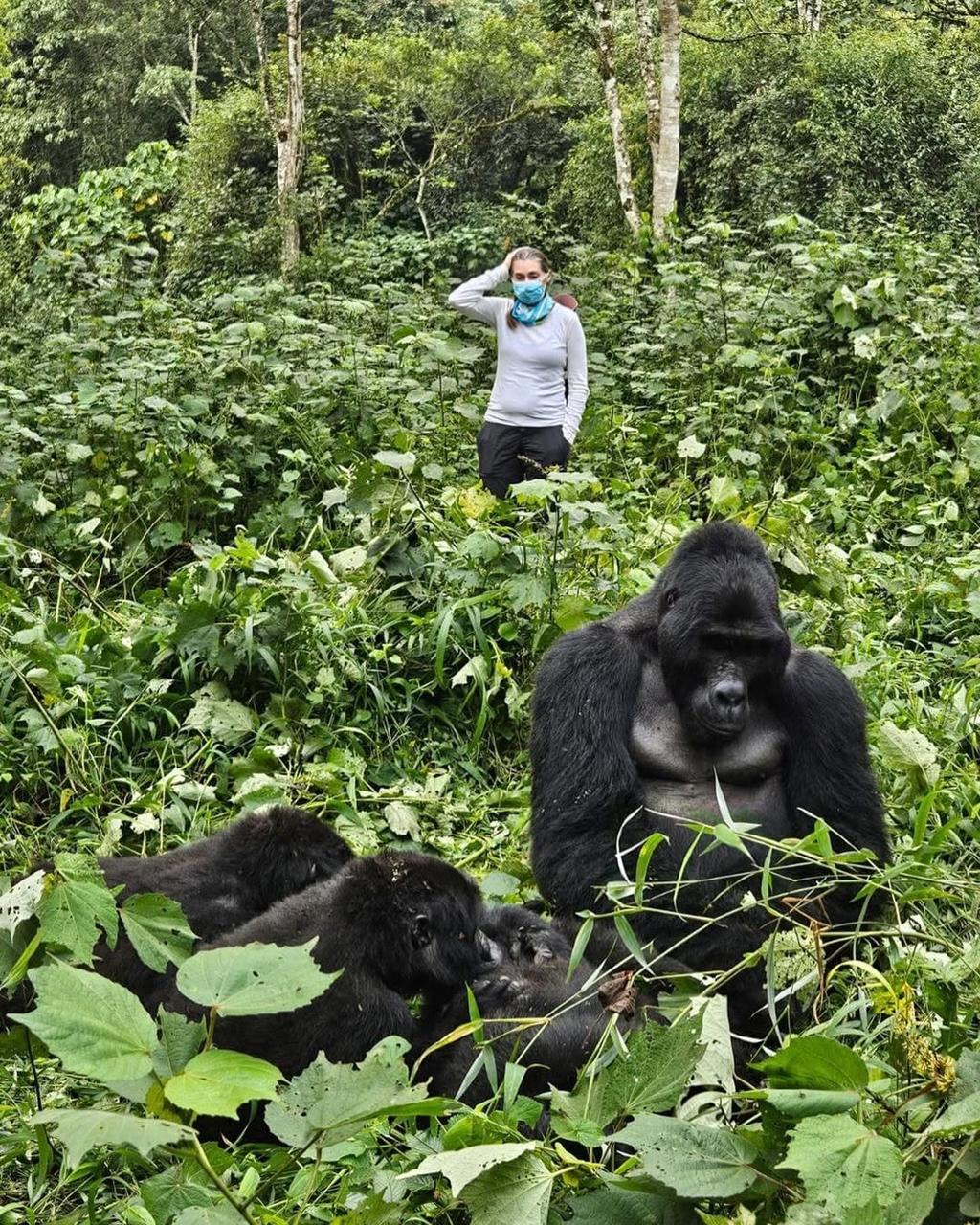
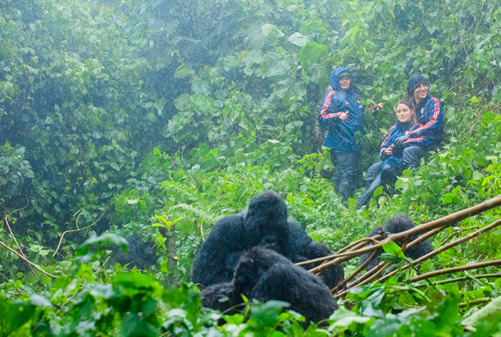
Health regulations: All gorilla trekking visitors must maintain a 7-meter distance from gorillas and wear face masks if symptomatic.
You must be healthy on the day of your trek — if you have a cold, fever, or symptoms, you will be asked not to trek to protect gorilla health. Travel insurance covering medical evacuation is strongly recommended for both destinations.
Conservation Impact
Every gorilla trekking permit you purchase is an act of conservation.
Here’s how your money works:
Uganda Conservation Impact
- UWA Revenue Sharing: 20% of park entrance fees go directly to communities bordering Bwindi and Mgahinga — funding schools, health clinics, and infrastructure
- Anti-poaching: UWA ranger teams conduct daily forest patrols; gorilla snare removal is ongoing
- Gorilla Doctors: A joint conservation initiative providing veterinary care to mountain gorillas in Uganda and Rwanda
- IGCP (International Gorilla Conservation Programme): Cross-border collaboration between Uganda, Rwanda, and DRC
Rwanda Conservation Impact
- RDB Tourism Revenue: Funds national park management, ranger salaries, and community programs
- Kwita Izina (Naming Ceremony): Annual event celebrating new gorilla births — a global conservation communications platform
- Dian Fossey Gorilla Fund: Active research and protection programs based in Volcanoes National Park
- Buffer zone management: Rwanda has successfully expanded the Volcanoes park buffer zone, increasing gorilla habitat
The bottom line: Choosing gorilla trekking over any other safari activity is the single most impactful conservation choice a traveler can make.
The mountain gorilla’s recovery from near-extinction is a direct result of tourism-funded conservation.
Who Should Choose Uganda?
Uganda is the ideal gorilla trekking destination for:
- Budget travelers seeking maximum value — at USD 800 per permit, Uganda delivers Africa’s best gorilla experience per dollar spent
- Wildlife enthusiasts who want to combine gorilla trekking with chimp tracking, Big Five game drives, and birding
- Adventure travelers who prefer wild, challenging terrain over polished luxury
- Photographers seeking the raw beauty of ancient rainforest and extended time with gorillas via the GHEE
- Long-haul safari travelers spending 10–21 days exploring multiple parks
- Repeat Africa visitors who have done Rwanda and want a more rugged alternative
Example Uganda itinerary: 10 days — Bwindi gorilla trekking + Kibale chimp tracking + Queen Elizabeth game drives + Kazinga Channel boat cruise. Total cost from USD 3,500–5,500 per person.
Who Should Choose Rwanda?
Rwanda is the ideal gorilla trekking destination for:
- Luxury travelers seeking the finest lodges, seamless logistics, and premium service
- Short-break travelers — Rwanda’s 2-hour transfer from Kigali means you can trek gorillas on a 3-day weekend
- Honeymooners — romantic lodges, dramatic scenery, and an unforgettable shared experience
- First-time Africa visitors who want a structured, comfortable introduction to the continent
- Business travelers adding a gorilla trek to a Kigali conference trip
- Travelers with mobility concerns — shorter, better-maintained trails on average
Example Rwanda itinerary: 4 days — Kigali city tour + Volcanoes NP gorilla trekking (2 days) + Lake Kivu. Total cost from USD 4,000–8,000 per person depending on lodge choice.
Uganda vs Rwanda Gorilla Trekking: Full Comparison Table
| Feature | Uganda | Rwanda |
|---|---|---|
| Gorilla Permit Cost | USD 800 | USD 1,500 |
| Habituated Gorilla Families | 22+ | 12 |
| Gorilla Habituation Experience | Available (4 hrs) | Not Available |
| Accessibility from Capital | 8–10 hrs road / 75 min flight | 2–2.5 hrs road |
| Trekking Terrain | Challenging, dense forest | Moderate, bamboo forest |
| Average Trek Duration | 3–4 hours | 2–3 hours |
| Luxury Lodges | Good | Exceptional |
| Budget Options | Excellent | Limited |
| Wildlife Combinations | Exceptional | Good |
| Photography (Gorillas) | Excellent (GHEE available) | Excellent |
| Scenery | Ancient forest | Volcanic landscape |
| Best For Budget | Uganda | — |
| Best For Luxury | — | Rwanda |
| Best For Wildlife Variety | Uganda | — |
| Best For Short Trips | — | Rwanda |
| Conservation Value | Excellent | Excellent |
| Safety | Excellent | Excellent |
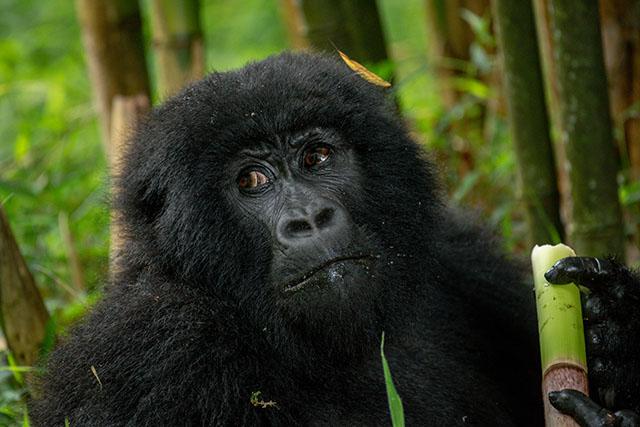
Expert Verdict — Which Country Is Better for Gorilla Trekking?
After analyzing every dimension — cost, access, gorilla families, scenery, lodges, wildlife combinations, and conservation — here is our expert verdict:
Choose Uganda If:
- ✅ Value for money is your priority — USD 800 vs USD 1,500 is a decisive difference
- ✅ You want the most gorilla families and trekking options — 22+ habituated families gives maximum permit availability
- ✅ You want to combine gorilla trekking with diverse wildlife — no other country matches Uganda’s primate and savannah safari combination
- ✅ You want the Gorilla Habituation Experience — 4 hours with gorillas is available only in Uganda
- ✅ You’re planning a longer safari — 7–21 days exploring multiple parks
Choose Rwanda If:
- ✅ Luxury and comfort are non-negotiable — Rwanda’s lodge portfolio is Africa’s finest
- ✅ You have limited time — 3–5 days from Kigali is entirely feasible
- ✅ You’re on a honeymoon or special occasion trip — Rwanda’s romanticism is unmatched
- ✅ Easy logistics matter — the 2-hour transfer from Kigali is a genuine advantage
- ✅ It’s your first time in Africa — Rwanda’s seamless infrastructure eases first-timers in gently
The honest truth: There is no wrong answer. Both countries offer encounters with mountain gorillas that will permanently alter your understanding of what it means to share this planet with other beings.
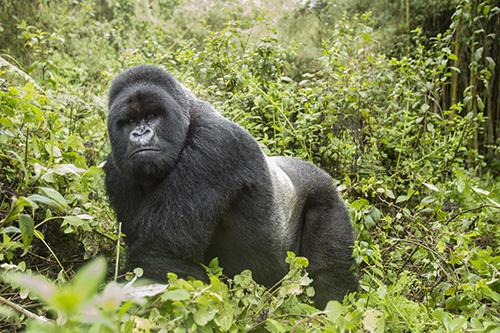
A silverback holding your gaze for a silent moment in Bwindi or Volcanoes National Park is an experience that transcends tourism — it is, quite simply, one of the greatest privileges available to the modern traveler.
Frequently Asked Questions
Is Uganda or Rwanda cheaper for gorilla trekking?
Uganda is significantly cheaper. Gorilla permits cost USD 800 in Uganda compared to USD 1,500 in Rwanda. Accommodation, food, and safari add-ons are also generally more affordable in Uganda.
Which country has more mountain gorillas?
Uganda has the larger mountain gorilla population — approximately 460–480 individuals — compared to Rwanda’s 200–220. Uganda also has more habituated gorilla families available for trekking: 22+ vs. Rwanda’s 12.
Which destination is better for families with children?
Rwanda is generally better for families with children due to shorter treks, more open terrain, and proximity to Kigali. Children must be at least 15 years old to trek gorillas in both countries.
Which is safer — Uganda or Rwanda?
Both are safe. Rwanda is often cited as one of Africa’s safest nations, with exceptionally low crime rates and well-maintained infrastructure. Uganda is safe for tourists in gorilla trekking areas, with armed ranger escorts mandatory.
Which country offers better luxury lodges?
Rwanda wins for ultra-luxury. Properties like Singita Kwitonda Lodge and One&Only Gorilla’s Nest rank among Africa’s finest safari properties.
Can I combine both Uganda and Rwanda gorilla trekking in one trip?
Yes — a combined Uganda and Rwanda gorilla safari is entirely possible and increasingly popular. Trek gorillas in Bwindi (Uganda), then cross to Volcanoes National Park (Rwanda) for a second trek. The border crossing at Cyanika takes approximately 1–2 hours.
Which is best for wildlife photographers?
Uganda, primarily because of the Gorilla Habituation Experience (GHEE) — four hours with a gorilla family gives far more shooting time than the standard one hour. Uganda’s forest light is challenging but extremely atmospheric.
How difficult is gorilla trekking?
Difficulty varies. Rwanda’s Volcanoes NP treks average 2–3 hours on relatively open terrain — moderate fitness required. Uganda’s Bwindi treks average 3–4 hours on steeper, denser terrain — good fitness recommended. Neither requires mountaineering skills.
Which has shorter hiking times to reach the gorillas?
Rwanda consistently has shorter average hiking times due to smaller park area and better-maintained approach trails.
What is the best time to visit for gorilla trekking?
Both countries offer year-round gorilla trekking. Dry seasons — June–September and December–February — offer better trail conditions and photography. Wet season trekking (March–May, October–November) can be muddy but permits are more available and vegetation is lush.
What should I wear for gorilla trekking?
Long-sleeved shirts, long trousers, sturdy waterproof hiking boots, gardening gloves (to grip vegetation), a rain jacket, and gaiters. Neutral/dark colors are recommended — avoid bright patterns.
Do I need a visa for Uganda or Rwanda?
Both countries offer e-visas for most nationalities. The East Africa Tourist Visa (USD 100) covers Uganda, Rwanda, and Kenya — excellent value for combination itineraries.
Are gorilla permits easy to get?
Permits can sell out months in advance, particularly for peak season (June–September). Book your gorilla permit at least 3–6 months ahead through a licensed safari operator.
Is gorilla trekking ethical?
Yes — when managed correctly, gorilla trekking is a model of conservation through tourism. The revenue directly funds the anti-poaching programs and veterinary care that have enabled the mountain gorilla population to grow from 620 (2008) to 1,063+ today.
Can I do gorilla trekking more than once?
Yes. In Uganda, you can purchase multiple permits across different gorilla families. Uganda’s GHEE permit (USD 1,500) offers an extended 4-hour experience. Many travelers trek twice during a single visit to maximize their gorilla time.
Book Your Gorilla Trekking Safari with GoSilverback Gorilla Safaris
You’ve done the research. Now it’s time to make it real.
GoSilverback Gorilla Safaris specializes exclusively in East African gorilla trekking and primate safaris, with deep expertise in both Uganda and Rwanda.
Our team has guided thousands of international travelers from the USA, UK, Europe, Canada, Australia, Asia, and the Middle East to life-changing gorilla encounters.
What we offer:
- 🦍 Uganda Gorilla Trekking Tours — Bwindi Impenetrable Forest and Mgahinga, all budgets
- 🦍 Rwanda Gorilla Trekking Tours — Volcanoes National Park, luxury and premium experiences
- 💎 Luxury Gorilla Safaris — exclusive lodges, private permits, helicopter transfers
- 💰 Budget Gorilla Packages — maximum gorilla access at minimum cost
- 🌍 Combined Uganda + Rwanda Gorilla Safaris — the ultimate dual-destination experience
- 📸 Photography-Focused Gorilla Safaris — including Gorilla Habituation Experience
- 💑 Honeymoon Gorilla Packages — romantic, unforgettable, and expertly curated
- 👨👩👧 Family Gorilla Safaris — tailored for families with teenagers
- 🗓️ Tailor-Made Itineraries — designed around your dates, budget, and interests
Mountain gorilla permits sell out fast. Peak season (June–September) availability is limited months in advance.
Contact GoSilverback Gorilla Safaris today to secure your permit, design your itinerary, and book the wildlife experience of a lifetime.
Our safari specialists are ready to answer every question — from packing lists to lodge comparisons to border crossing logistics.
Because this is more than a holiday. This is the kind of moment that stays with you forever.
Content accurate as of 2024–2025. Gorilla permit prices and availability are subject to change. Always verify current pricing with your safari operator.