
Where to See Gorillas in Africa: Best Gorilla Trekking Destinations and Why in 2026 Ultimate Guide
Where to See Gorillas in Africa?: You can only see wild mountain gorillas in three African countries — Uganda, Rwanda, and the Democratic Republic of Congo (DRC).
The best place for gorilla trekking is Bwindi Impenetrable National Park in Uganda, home to the largest population of habituated mountain gorillas on Earth.
Permits cost from $800 (Uganda) to $1,500 (Rwanda) and $400 (Congo) and must be booked in advance. The experience — coming face-to-face with a wild silverback — is widely considered the most profound wildlife encounter on the planet.
Gorilla trekking in Africa stands apart from every other safari experience. There is no vehicle between you and the wildlife. There is no fence, no distance, and no zoom lens needed.
You stand — heart pounding — metres away from one of our closest genetic relatives, watching a wild silverback gorilla move through the ancient mist of an equatorial forest unchanged for millions of years.
It is, by every measure, the most extraordinary wildlife encounter available to travellers on Earth.
With only approximately 1,063 mountain gorillas remaining in the wild — spread across the highland forests of Uganda, Rwanda, and the Democratic Republic of Congo — this is also one of the rarest wildlife encounters possible.
Conservation-controlled trekking permits are strictly limited each day, and demand consistently exceeds supply. Planning ahead is not optional; it is essential.
This guide was written by the expert field team at GoSilverback Safaris to give you everything you need: the right destination for your budget and travel style, honest permit pricing, month-by-month seasonal advice, safety rules, and sample itineraries.
Whether you are travelling from the USA, UK, Europe, Canada, Asia, or the Middle East, consider this your authoritative starting point for booking the gorilla trek of your life.

Where Can You See Gorillas in Africa?
Mountain gorillas exist in only two isolated mountain ranges on Earth: the Virunga Massif — shared by Uganda, Rwanda, and the DRC — and Bwindi Impenetrable Forest in southwestern Uganda.
There are no mountain gorillas anywhere else in the world. You cannot see them in a zoo. Every single individual lives wild in these cloud forests, at elevations between 1,500 and 4,000 metres above sea level.
1. 🇺🇬 Uganda
Home to over half of all mountain gorillas. Bwindi Impenetrable NP and Mgahinga Gorilla NP are both accessible and afford the most gorilla families to visit.
Permit: $800 USD
2. 🇷🇼 Rwanda
Volcanoes National Park is Africa’s most prestigious gorilla destination — luxury lodges, dramatic volcanic scenery, and a seamless visitor experience.
Permit: $1,500 USD
3. 🇨🇩 DR Congo
Virunga National Park offers the most adventurous gorilla trekking on the continent — for experienced travellers seeking true wilderness off the beaten track.
Permit: $400 USD
Each destination offers a meaningfully different experience.
- Uganda is the best all-round choice — it combines the largest number of habituated gorilla families with excellent infrastructure, wildlife diversity, and the best value permits on the continent.
- Rwanda is the world’s most premium gorilla experience, priced accordingly, and favoured by luxury travellers who want to combine gorilla trekking with a short-haul trip from Europe.
- DRC remains a frontier destination for seasoned adventure travellers — breathtakingly beautiful, politically complex, and offering the lowest-cost permits globally.
There is also a fourth gorilla species to consider: the western lowland gorilla, found in the rainforests of Central and West Africa — notably in the Central African Republic, Cameroon, and Gabon.
While trekking to see these gorillas in places like Dzanga-Sangha is increasingly possible, the infrastructure is far less developed than in East Africa, and logistics are considerably more complex.
Uganda — The Best Place to See Gorillas
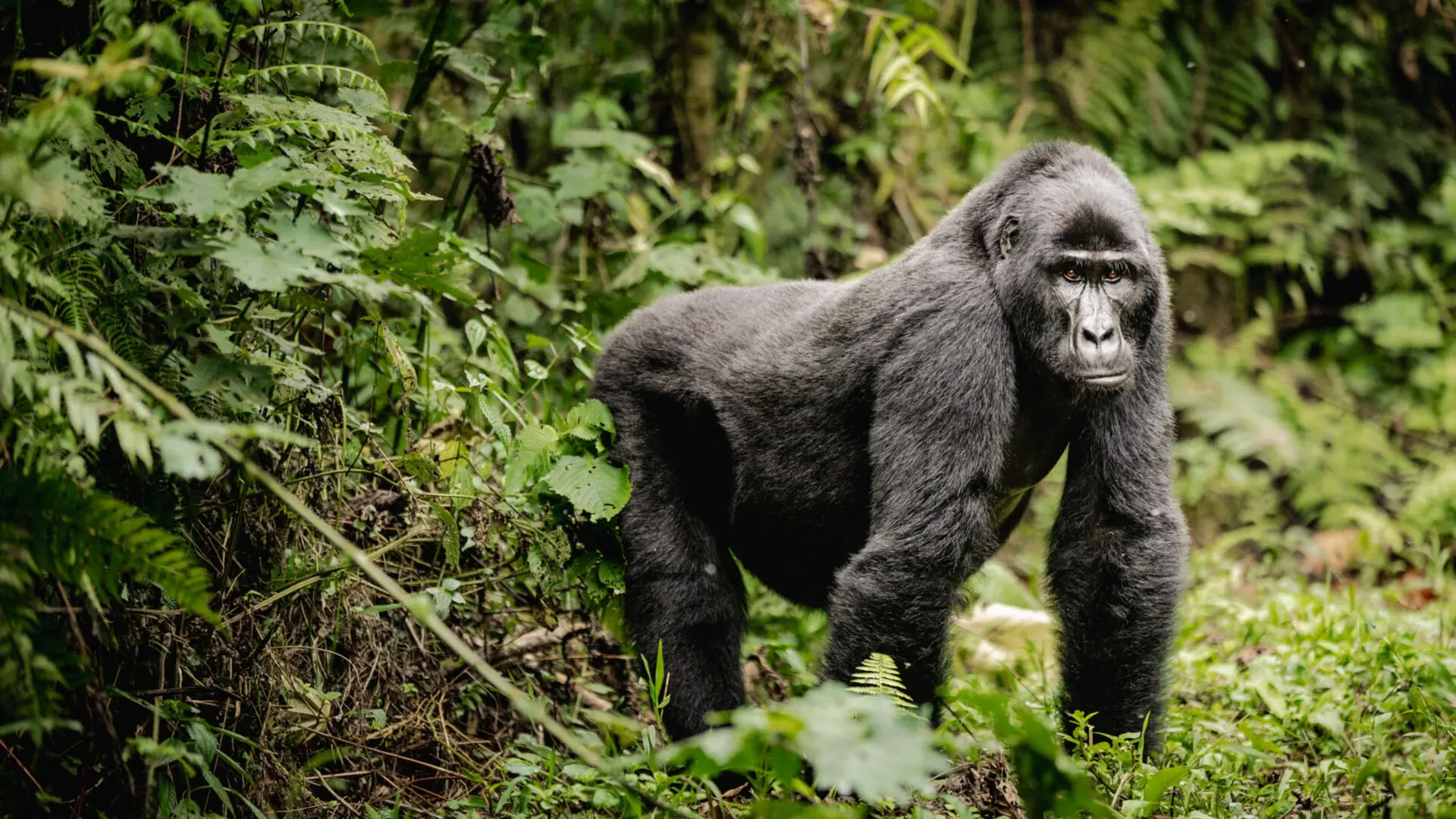
Uganda is, without question, the world’s premier gorilla trekking destination. The country hosts more than half of the world’s entire mountain gorilla population, spread across two protected areas: Bwindi Impenetrable National Park and the smaller Mgahinga Gorilla National Park.
With 22 habituated gorilla families approved for trekking in Bwindi alone, Uganda offers more daily gorilla permits than Rwanda and DRC combined — and at a significantly lower cost per permit.
“Uganda’s Bwindi Impenetrable Forest is the world’s single most important gorilla habitat — a UNESCO World Heritage Site sheltering nearly half of all mountain gorillas alive today.”
1. Bwindi Impenetrable National Park
Bwindi Impenetrable National Park is a UNESCO World Heritage Site covering 331 square kilometres of ancient montane and lowland forest in southwestern Uganda.
The park is managed across four trekking sectors: Buhoma (the oldest and most established), Ruhija (highest elevation, harder trek), Rushaga (most gorilla families, best for gorilla habituation experience), and Nkuringo (most dramatic scenery, steep terrain).
Each sector offers a slightly different trekking experience, and choosing the right one for your fitness level and schedule is an important part of trip planning.
The Buhoma sector is ideal for first-time trekkers. It is the most accessible — located in the north of the park, closest to the main road — and historically the most visited.
Families like the well-known Mubare family, the first to be habituated for tourism in Uganda in 1993, call this sector home. The terrain here ranges from moderately challenging to steep, with treks averaging two to five hours depending on the day’s gorilla location.
The Rushaga sector in the southern part of Bwindi is now the most popular thanks to its extraordinary concentration of gorilla families.
It also offers the unique Gorilla Habituation Experience (GHEX) — a premium permit that allows four visitors to spend up to four hours with a semi-habituated gorilla family, rather than the standard one hour.
This extended encounter, which includes participation in the habituation process itself, costs $1,500 per person in Uganda — premium pricing for a truly extraordinary experience that Rwanda and DRC cannot match.
Check this guide to learn more about different gorilla families and groups.
2. Mgahinga Gorilla National Park
Mgahinga Gorilla National Park, Uganda’s smallest national park at just 33.7 square kilometres, sits in the far southwest, sharing borders with both Rwanda and the DRC on the slopes of the Virunga volcanoes.
The park shelters the Nyakagezi gorilla family — a habituated family of approximately 10 individuals, including multiple silverbacks.
Because Mgahinga hosts only one trekking family, permits are far fewer and availability is limited. Book at least six months in advance for this park.
What makes Mgahinga especially compelling is the dramatic volcanic backdrop — three cone volcanoes (Muhavura, Gahinga, and Sabyinyo) rise above the forest canopy, and the trekking experience feels more remote and wild than the more frequented Bwindi sectors.
Mgahinga also offers the rare opportunity to combine a gorilla trek with golden monkey trekking on the same visit.
Uganda Gorilla Permit — Key Facts
A Uganda gorilla trekking permit costs $800 USD per person, purchased through the Uganda Wildlife Authority (UWA). Each permit is valid for one trek with one specific gorilla family, on one specified date.
No more than eight visitors per gorilla family per day are allowed — a conservation rule that protects the gorillas from disease transmission and behavioural disruption.
Uganda permits are available through licensed tour operators like GoSilverback Safaris and can also be purchased directly from UWA, though operator booking provides far more logistical support and flexibility.
Uganda’s combination of permit affordability, gorilla family diversity, world-class associated wildlife (the country also has the Big Five, chimpanzees, and over 1,000 bird species), and the option to add a Rwenzori Mountains trek or Queen Elizabeth safari makes it, overwhelmingly, the best value gorilla destination on Earth.

Rwanda — Luxury Gorilla Trekking Destination
Rwanda has deliberately and brilliantly positioned itself as Africa’s most premium gorilla trekking destination.
Volcanoes National Park, located in the northwestern corner of the country in the Virunga mountain range, is home to 12 habituated gorilla families available for trekking.
The park occupies 160 square kilometres of Afromontane forest at elevations between 2,400 and 4,507 metres above sea level — dramatic, mist-shrouded terrain of extraordinary beauty.
The Rwanda gorilla trekking permit costs $1,500 USD per person — the highest permit fee for any wildlife experience in Africa. Yet Rwanda’s parks are consistently booked out months in advance, particularly during peak season.
The reason is straightforward: Rwanda has invested heavily in the gorilla tourism ecosystem, and the experience is genuinely superb.
Trekking groups are small, the gorilla families are extremely well-habituated, and the surrounding infrastructure — including some of Africa’s finest wilderness lodges — is world-class.
1. Volcanoes National Park — What to Expect
All trekking for Volcanoes National Park departs from the park headquarters near Kinigi, a 90-minute drive from Kigali International Airport.
This proximity to an international hub is one of Rwanda’s greatest logistical advantages — you can land in Kigali in the evening, be at the trailhead by 7:30 AM the following morning, and return to Kigali for an evening flight.
For travellers who cannot dedicate two weeks to a full East African safari, Rwanda offers a concentrated, high-impact gorilla experience within a 3–4 day visit.
Treks in Volcanoes National Park range from relatively short (one to two hours hiking through forest to reach the gorillas) to half-day expeditions, depending on which family you are assigned and where they have moved overnight.
Well-known trekking families include the Susa Group — one of the largest in the Virungas — and the Amahoro Family, popular for their gentle, relaxed demeanour with visitors.
2. Rwanda’s Premium Lodges and Broader Experience
Rwanda’s gorilla trekking is best understood as part of a curated luxury experience.
The ridges above Volcanoes National Park are lined with some of the finest properties in Africa: Bisate Lodge, Singita Kwitonda, and One&Only Gorilla’s Nest sit within minutes of the trailhead, offering extraordinary architecture, cuisine, and conservation immersion.
Many visitors combine gorilla trekking with a visit to the nearby Dian Fossey Gorilla Fund’s Karisoke Research Center, the world’s most important gorilla research station, established by the legendary primatologist in 1967.
Rwanda also offers golden monkey trekking in Volcanoes National Park — an under-appreciated experience that fits perfectly into a 4-day Rwanda programme.

DR Congo — Adventure Gorilla Safaris
For the experienced wilderness traveller, the Democratic Republic of Congo offers the most visceral, frontier gorilla trekking experience on earth.
Virunga National Park — Africa’s oldest national park, established in 1925, and a UNESCO World Heritage Site — is the centrepiece.
Virunga spans over 7,800 square kilometres of extraordinary biodiversity, encompassing savannah, lava plains, tropical forest, the continent’s most active volcano (Nyiragongo), and critically, several habituated mountain gorilla families on the Congolese slopes of the Virunga Massif.
Gorilla trekking permits in Virunga National Park cost $400 USD per person — the lowest permit price among the three gorilla countries and a fraction of Rwanda’s price.
Several gorilla families are habituated for trekking near the Bukima patrol post in the northern sector of the park. The trekking experience is comparably wild and deeply memorable.
1. Safety and Practical Considerations for DRC
Honesty matters here. The eastern DRC has experienced significant armed conflict over decades, and Virunga National Park has been partially closed to tourists at various points due to security concerns.
At the time of writing, portions of the park remain off-limits, and travellers must conduct thorough research and consult their government’s current travel advisories before planning a DRC gorilla safari.
When the park is open and stable, the security situation is actively managed by a dedicated team of park rangers — the most decorated conservation rangers in Africa — who have given their lives to protect the gorillas.
For adventurous, well-informed travellers, the DRC offers an unmatched sense of authentic wilderness adventure. The gorillas here are wild, the forests are undisturbed, and the profound isolation of the experience is incomparable.
Virunga also offers the extraordinary opportunity to summit the active Nyiragongo volcano and camp on the rim of the world’s largest persistent lava lake — one of the most surreal overnight adventures in Africa.
Types of Gorillas You Can See in Africa
Not all gorillas are the same species, and understanding the differences matters when planning your safari.
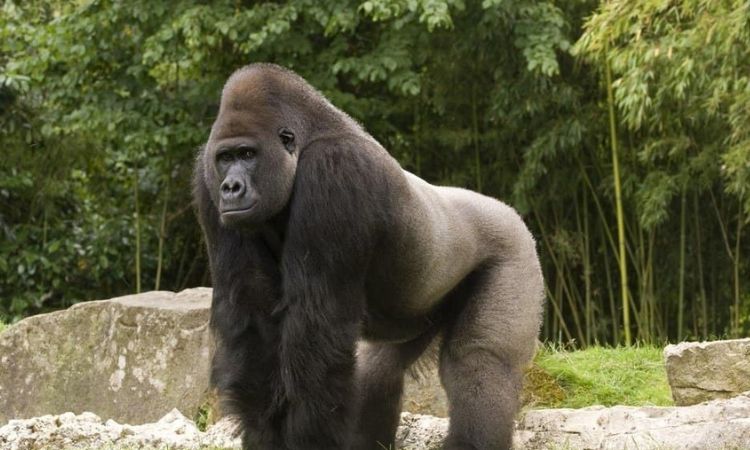
There are two gorilla species — the Eastern gorilla and the Western gorilla — each divided into two subspecies. Only certain subspecies are accessible for guided trekking.
1. Mountain Gorilla
Gorilla beringei beringei — Found only in Uganda, Rwanda, and DRC. Approximately 1,063 individuals survive. The primary target of gorilla trekking safaris. Distinguished by longer, thicker fur to cope with high-altitude cold.
2. Eastern Lowland Gorilla
Gorilla beringei graueri — Also called Grauer’s gorilla. Found only in the DRC. The world’s largest gorilla subspecies. Critically endangered; trekking opportunities are extremely limited and rarely available.
3. Western Lowland Gorilla
Gorilla gorilla gorilla — The most numerous subspecies (~100,000 remaining), found across Central and West Africa. Trekking available in the Central African Republic (Dzanga-Sangha) and Gabon, though very limited.
4. Cross River Gorilla
Gorilla gorilla diehli — The rarest great ape subspecies on Earth, with fewer than 300 individuals in Nigeria and Cameroon. No trekking available; extremely shy and elusive even to researchers.
For the vast majority of gorilla trekking travellers, the target species is the mountain gorilla.
What makes encountering mountain gorillas so profound is not just their size — a fully grown silverback male can weigh up to 220 kilograms — but their extraordinary behavioural complexity.
During your one-hour permitted encounter, you may witness feeding, play, infant care, grooming, territorial chest-beating, and moments of startling eye contact that feel entirely mutual.
These are beings of unmistakable intelligence, and the weight of that realisation stays with every visitor long after the trek ends.
The Gorilla Trekking Experience Explained
Understanding exactly what happens on a gorilla trek helps you prepare properly and sets realistic expectations.
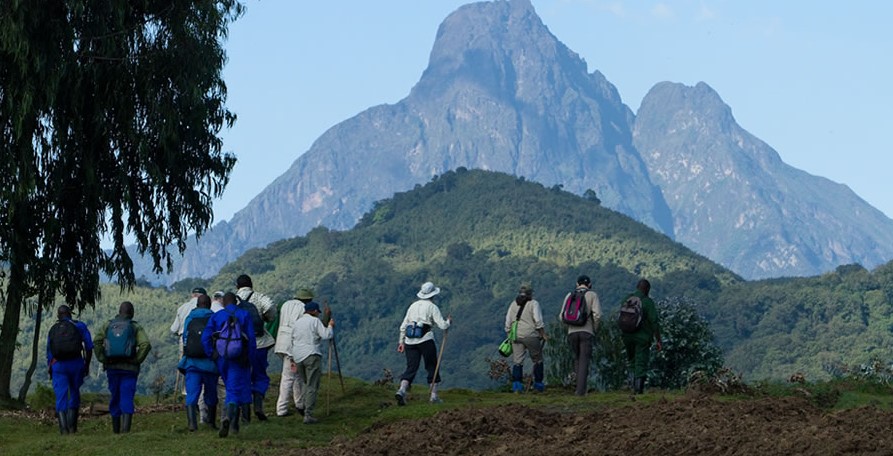
Here is a step-by-step breakdown of what the experience involves, from arrival at the trailhead to your return.
1. Morning Briefing (7:00–7:30 AM):
All trekkers gather at the national park headquarters or sector trailhead. Rangers assign your group to a specific gorilla family based on your permit. A lead ranger and armed security escort brief the group on rules, distances, and what to expect on the trail.
2. Hiking In:
Trek times to reach gorillas range from 30 minutes to 6 hours, depending on the family’s overnight location. Rangers radio ahead to trackers who have been monitoring the gorillas since dawn.
The forest environment — ancient, cathedral-like, dripping with moss and birdsong — is itself extraordinary, and the hike alone justifies the journey.
3. Sighting:
You will hear the gorillas before you see them — snapping branches, low vocalisations, the heavy movement of large bodies through undergrowth. Your lead ranger will signal the group to stop and move quietly into position.
4. The One-Hour Encounter:
Once located, the one-hour timer begins. You observe the gorillas at a minimum distance of 7 metres, moving slowly and calmly as directed by your guide. Photography is allowed without flash. Speaking quietly is permitted. No sudden movements, no eating, no smoking.
5. Departure:
When the hour ends, your group retreats from the gorillas and begins the hike back to the trailhead. The return journey typically takes less time than the ascent.
Back at headquarters, your trek certificate is issued — a keepsake that marks one of the most significant experiences of your life.
Physical fitness requirements vary by sector. The easiest treks (Buhoma, Rwanda’s shorter families) require only basic fitness — the ability to hike for 2–4 hours on uneven forest terrain.
The most demanding (Ruhija, Rwanda’s Susa Group on higher slopes) require good cardiovascular fitness and comfort with steep gradients.
A porter — typically a local community member — can be hired for a modest fee at all trailheads and is highly recommended for carrying daypacks and assisting on difficult terrain.
Check this guide to learn more about gorilla trekking rules and regulations.
Best Time to See Gorillas in Africa
Gorilla trekking is possible year-round — gorillas do not migrate and are available in all seasons. However, conditions vary significantly by month, and choosing the right season meaningfully improves your experience.
1. 🌤 Best Seasons (Dry Months)
June–September and December–February are the peak dry seasons. Trails are firmer, less slippery, forest visibility is better, and photography conditions are superior. These are the busiest periods — book permits 6–12 months in advance.
2. 🌧 Shoulder Seasons (Wet Months)
March–May and October–November bring heavier rainfall. Trails become muddy and slippery. However, the forest is lushly green, crowds are thinner, and permit availability improves. The gorillas are still fully accessible and encounters are equally meaningful.
June to September is considered the single best period for gorilla trekking across all three countries. Uganda and Rwanda both experience their long dry season during these months, trails are at their best, and the highland forests are cool and comfortable for hiking.
This peak season coincides with school summer holidays in the Northern Hemisphere, making advance booking especially critical. For the month of August in particular, permits sell out as much as 12 months in advance — plan accordingly.
The December–January window is an excellent secondary dry season, particularly popular with travellers from Europe and North America taking advantage of the holiday period.
Permit availability is better than August but still limited, and this period offers excellent value from many Ugandan lodges.
Gorilla Trekking Permits & Costs
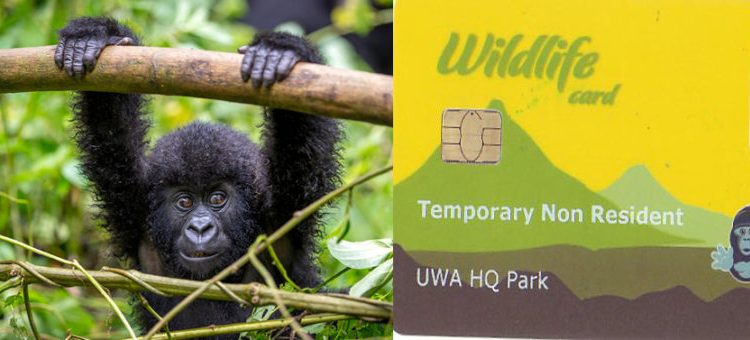
The gorilla trekking permit is the single most important logistical element of your safari — and the most time-sensitive.
Permits are non-refundable, non-transferable, and strictly limited by daily quota.
Understanding the permit system in each country is essential before you start planning.
| Country | Park | Permit Cost | Daily Permits | Trek Time | Booking Lead |
|---|---|---|---|---|---|
| Uganda | Bwindi / Mgahinga | $800 USD | ~176/day (Bwindi) | 1 hour | 3–6 months |
| Uganda (GHEX) | Bwindi (Rushaga) | $1,500 USD | 4 per family | 4 hours | 6–12 months |
| Rwanda | Volcanoes NP | $1,500 USD | ~96/day | 1 hour | 6–12 months |
| DR Congo | Virunga NP | $400 USD | Limited | 1 hour | 2–4 months |
The gorilla permit fee does not include national park entrance fees, ranger guide fees, or porter fees, all of which are separate. In Uganda, the park entrance fee is $40 USD per day.
Porter fees are typically $15–30 USD and represent an important direct income transfer to local communities surrounding the parks.
It is important to note that permit prices are subject to revision. Uganda increased its permit price from $700 to $800 in 2020, and Rwanda has adjusted prices upward multiple times since introducing tourism in Volcanoes National Park.
These increases reflect both inflation and the conservation philosophy that limiting demand through pricing protects the gorillas while funding ranger salaries and community benefits.
For travellers on tighter budgets, Uganda’s standard $800 permit combined with mid-range lodge accommodation makes a gorilla safari achievable for under $2,500 USD for a 5-day trip when planned carefully.
Rwanda’s equivalent, staying at luxury lodges, routinely costs $4,000–$10,000 per person for a 3–4 day visit.
Safety & Rules for Gorilla Trekking
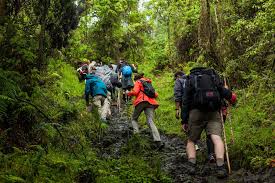
The rules governing gorilla trekking exist for two equally important reasons: protecting the gorillas from human-transmitted disease, and protecting trekkers from potentially dangerous animal behaviour.
These are wild animals of immense strength, and habituation does not mean domestication. Your ranger guides are trained professionals; follow their instructions without hesitation.
1. Do not trek if you are ill.
Gorillas are highly susceptible to human respiratory viruses. If you have flu, cold symptoms, or COVID-19, you must inform rangers and step aside. Most operators can arrange a permit transfer to another date.
2. Maintain the 7-metre distance rule at all times.
3. No flash photography.
Camera flash is prohibited as it distresses the gorillas. Use a camera with excellent low-light performance; fast lenses (f/2.8 or wider) and high ISO settings are recommended. Mirrorless cameras with silent mode are ideal.
4. No eating, drinking, or smoking
5. Maximum 8 trekkers per group.
One hour with the gorillas — no exceptions.
7. Age minimum is 15 years.
8. Leave no trace.
Why Responsible Tourism Matters for Gorilla Conservation
Every gorilla trekking permit purchased is a direct investment in mountain gorilla conservation.
This is not a marketing statement — it is a documented, measurable fact that has driven the gorilla population to grow from approximately 620 individuals in 1989 to over 1,063 today.
Mountain gorillas are the only great ape species whose population is currently increasing, and responsible tourism is the primary economic engine behind that recovery.
In Uganda, 20% of all national park revenue — including gorilla permit fees — is distributed directly to communities surrounding the parks through the Uganda Wildlife Authority’s revenue sharing programme.
This funding builds schools, health centres, and water infrastructure, and has been instrumental in converting former poachers and farmers into the most committed conservation advocates in the region.
Communities that earn income from gorilla tourism are communities that protect gorillas.
Choosing a responsible, licensed operator like GoSilverback Safaris compounds this impact.
We partner exclusively with community-owned lodges, hire local guides and porters, source food from community farmers, and donate a portion of each booking to the International Gorilla Conservation Programme (IGCP).
Responsible gorilla tourism is the single most effective conservation tool available, and every visitor who takes this trek becomes part of a 35-year conservation success story.

How to Choose the Best Gorilla Safari for You
With so many options across three countries, narrowing your choice requires honest self-assessment.
The following checklist will guide you to the right destination and experience type for your specific needs and travel style.
- Budget: If budget is a primary consideration, Uganda’s $800 permit combined with quality mid-range lodges offers the best gorilla experience per dollar spent. Rwanda is the premium choice if budget is secondary to luxury and convenience.
- Time available: Short on time? Rwanda, with its proximity to Kigali airport, is achievable in 3 days from arrival. Uganda benefits from a 5–7 day trip to justify the longer travel distances and add complementary wildlife.
- Second trek desire: Want to trek gorillas twice? Uganda’s permit system makes double trekking (on consecutive days with different families) logistically straightforward and highly recommended for photography and deeper experience.
- Combining wildlife: Uganda is unmatched for combining gorilla trekking with chimpanzee tracking (Kibale Forest), Big Five safaris (Queen Elizabeth, Murchison Falls), and birding (Bwindi has 350+ species). Rwanda’s wildlife additions are more limited.
- Luxury preference: Rwanda’s lodge ecosystem is Africa’s finest near a gorilla park. If sleeping in an extraordinary lodge steps from the trailhead matters more than any other factor, Rwanda is your destination.
- Adventure appetite: Experienced wilderness travellers seeking an off-grid, frontier experience with the lowest permit cost and the most untamed environment: research DRC when the security situation allows.
- Licensed, experienced operator: Regardless of destination, book through a licensed, experienced operator with in-country presence. Permit procurement, logistical support, and emergency handling require local expertise that online booking platforms cannot provide.
Sample Gorilla Safari Itineraries
5-Day Uganda Gorilla & Wildlife Safari
- Day 1: Arrive Entebbe / Kampala. Transfer to lodge. Welcome briefing and safari orientation with your GoSilverback guide.
- Day 2: Morning drive or flight to Bwindi. Afternoon forest walk and community visit. Overnight: Bwindi forest lodge.
- Day 3: Gorilla trekking — morning permit, one-hour encounter with a habituated mountain gorilla family. Certificate presentation. Afternoon: rest or birding walk.
- Day 4: Transfer to Queen Elizabeth National Park. Afternoon game drive — lion, elephant, buffalo, and hippo in the Kazinga Channel area.
- Day 5: Morning boat safari on Kazinga Channel. Drive to Entebbe. Overnight in Entebbe before departure.
8-Day Uganda Gorilla + Chimp Double Trekking Safari
- Days 1–2: Arrive Entebbe. Drive to Kibale Forest National Park. Afternoon chimp trekking briefing.
- Day 3: Chimpanzee tracking in Kibale Forest — up to 4 hours with wild chimps in their natural habitat.
- Days 4–5: Queen Elizabeth NP — big game drives, Kazinga Channel boat cruise, tree-climbing lions in Ishasha sector.
- Day 6: Transfer to Bwindi. Evening arrival, overnight at forest-edge lodge.
- Days 7–8: Back-to-back gorilla treks with two different gorilla families. Morning treks; afternoons free for community walks and birdwatching. Return to Entebbe.
4-Day Rwanda Luxury Gorilla Safari (Short Break)
- Day 1: Fly into Kigali International Airport. 2-hour drive to Volcanoes NP. Arrive at luxury lodge; afternoon Dian Fossey Museum visit.
- Day 2: Full gorilla trek day — morning briefing, 1-hour encounter with habituated Volcanoes family. Afternoon golden monkey trekking.
- Day 3: Optional second gorilla trek or guided volcano hike (Mount Bisoke or Sabyinyo). Farewell dinner at lodge.
- Day 4: Return to Kigali. City tour option (Kigali Genocide Memorial, Kimironko Market). Depart.
Frequently Asked Questions About Gorilla Trekking
Where is it best to see gorillas in Africa?
The best places to see gorillas in Africa are Bwindi Impenetrable National Park in Uganda and Volcanoes National Park in Rwanda. These two destinations host the world’s only mountain gorillas. Bwindi offers a more immersive rainforest experience with higher success rates, while Rwanda provides shorter treks and better infrastructure. Both guarantee close encounters with habituated groups. For the ultimate gorilla safari, Uganda edges out due to more available permits and lower costs.
Is it easier to see gorillas in Uganda or Rwanda?
It is easier to see gorillas in Uganda. Bwindi Impenetrable National Park has more habituated gorilla groups (over 15) and a higher daily permit allocation than Rwanda. Treks in Uganda often feel more adventurous with varied terrain, while Rwanda offers shorter, steeper hikes with superior lodges. Uganda is also more affordable ($700 vs $1,500 gorilla permit). Success rate is excellent in both countries, but Uganda gives more flexibility and availability.
Can you see gorillas in Uganda?
Yes, you can see gorillas in Uganda. Bwindi Impenetrable National Park is home to nearly half the world’s mountain gorillas (over 400 individuals). Habituated groups are visited daily by small groups of trekkers. Uganda also offers chimpanzee trekking in Kibale and gorilla viewing in Mgahinga Gorilla National Park. With proper permits booked in advance, gorilla trekking in Uganda is one of Africa’s most rewarding wildlife experiences.
Which country in Africa has the most gorillas?
Uganda has the most mountain gorillas in Africa. The latest 2025 census shows Uganda is home to approximately 460–500 mountain gorillas, mainly in Bwindi Impenetrable National Park (over 400) and a smaller population in Mgahinga. This represents nearly half the global total of 1,063 mountain gorillas. Rwanda has around 350–380, while the Democratic Republic of Congo holds the remainder in Virunga National Park.
Where is the best place to see gorillas in Africa?
Bwindi Impenetrable National Park in Uganda is the best place to see gorillas in Africa. It hosts the world’s largest population of habituated mountain gorilla families (22+), offers the most daily permits, charges the most affordable permit fee ($800), and can be combined with diverse wildlife safaris across Uganda.
How much does a gorilla trekking permit cost?
Gorilla trekking permits cost $800 USD in Uganda, $1,500 USD in Rwanda, and $400 USD in the DRC. Uganda’s Gorilla Habituation Experience (GHEX) costs $1,500 and allows a 4-hour extended encounter. All permits must be booked well in advance through licensed operators.
How long do you spend with gorillas on a trek?
Standard gorilla trekking permits allow exactly one hour with the gorilla family — strictly enforced by your ranger. Uganda’s Gorilla Habituation Experience (GHEX) in the Rushaga sector of Bwindi permits up to four hours with a semi-habituated family at a premium cost of $1,500 per person.
What is the best time of year to go gorilla trekking?
The best time for gorilla trekking is June to September (long dry season) and December to January (short dry season). Trails are firmer and photography is better. Gorilla trekking is possible year-round, but the rainy seasons (March–May, October–November) bring muddy trails and require advance permit booking regardless.
Is gorilla trekking safe?
Yes — gorilla trekking is considered very safe when conducted within the regulated rules enforced by national park rangers. Mountain gorillas are habituated to human presence and rarely display aggression toward trekkers. Armed rangers accompany all treks. Serious incidents are extremely rare in decades of regulated tourism.
How fit do you need to be for gorilla trekking?
You need moderate fitness for most gorilla treks — the ability to hike 2–6 hours on uneven, sometimes steep forest terrain. Easy-sector treks (Buhoma, Rwanda’s shorter families) suit travellers of average fitness. Porters are available at all trailheads for a small fee and are strongly recommended for older travellers or those with joint concerns.
Is Uganda or Rwanda better for gorilla trekking?
Uganda is better value (permits $800 vs $1,500), has more gorilla families, and pairs brilliantly with other wildlife. Rwanda is better for luxury — superb lodges, proximity to Kigali, and a 3-day turnaround. Both offer equally profound gorilla encounters. Your budget, travel time, and style preference should drive the decision.
How many people are allowed on a gorilla trek?
A maximum of 8 trekkers per gorilla family per day is allowed — a strictly enforced conservation rule in all three countries. This quota limits the stress and disease transmission risk to each gorilla family. Larger travelling groups must be split and assigned to different families, sometimes on different days.
Can children go gorilla trekking?
The minimum age for gorilla trekking is 15 years in both Uganda and Rwanda. This rule protects both young children (from a demanding physical experience) and the gorillas (children may behave unpredictably). Families travelling with children under 15 should plan alternative activities on trek days.
How far in advance should I book gorilla permits?
Book 6–12 months in advance for peak season (June–September) and December. Rwanda permits in particular sell out extremely early. Uganda’s broader permit supply offers slightly better short-notice availability outside peak months, but even off-peak, 3–4 months advance booking is strongly advised through a licensed operator.
What should I pack for a gorilla trek?
Essential items include long-sleeved shirts and long trousers (for forest vegetation), waterproof hiking boots, garden gloves (to grip vegetation), insect repellent, a rain jacket, sun protection, 2 litres of water, energy snacks, and a camera with a good low-light lens. Gaiters are strongly recommended for all wet-season treks.
What vaccinations do I need for gorilla trekking?
Recommended vaccinations include Yellow Fever (required entry document for Uganda and Rwanda), Typhoid, Hepatitis A and B, Tetanus, Meningitis, and Rabies for longer stays. Malaria prophylaxis is strongly advised for all travellers. Consult a travel medicine clinic at least 6–8 weeks before departure for personalised advice.
Conclusion: Book Your Gorilla Trek with GoSilverback Safaris
Of all the wildlife experiences available to travellers across the African continent — and there are extraordinary ones, from the Great Migration to white rhino tracking, from whale sharks to desert-adapted lions — nothing compares to standing in an ancient mountain forest, face to face with a wild silverback gorilla.
It is a meeting of species, a moment of profound recognition, and an encounter that fundamentally shifts your understanding of life on this planet.
You now have everything you need to plan it properly.
Uganda offers the best all-round gorilla experience for value-conscious travellers.
Rwanda delivers the world’s most premium gorilla safari for those who want luxury alongside their wildlife.
And the DRC offers the most adventurous frontier encounter for the truly intrepid.
All three are bookable through GoSilverback Safaris, and all require careful advance planning to secure the permits and accommodation that make the difference between a good trip and an unforgettable one.
GoSilverback Safaris has been placing travellers in front of wild mountain gorillas for years — with unmatched permit access, in-depth local knowledge, and a commitment to conservation that puts your tourism fee to work protecting these extraordinary animals for future generations.
Don’t leave the most important wildlife experience of your life to chance.
Ready to Trek? Let’s Book Your Gorilla Permit
Whether you are planning 6 months ahead or need a last-minute permit, our expert team is on the ground in Uganda and Rwanda to make it happen. Spots are limited — every day you wait, they disappear.