Lake Mburo National Park Uganda: Park Entry Fees, Location, Wildlife, Activities & Attractions 2026 Guide
Discover Lake Mburo National Park in Uganda — home to zebras, impalas, giraffes, and over 300 bird species. Explore game drives, boat safaris, walking trails, best time to visit, and perfect Uganda safari itineraries combining with gorilla trekking.
What is Lake Mburo National Park?
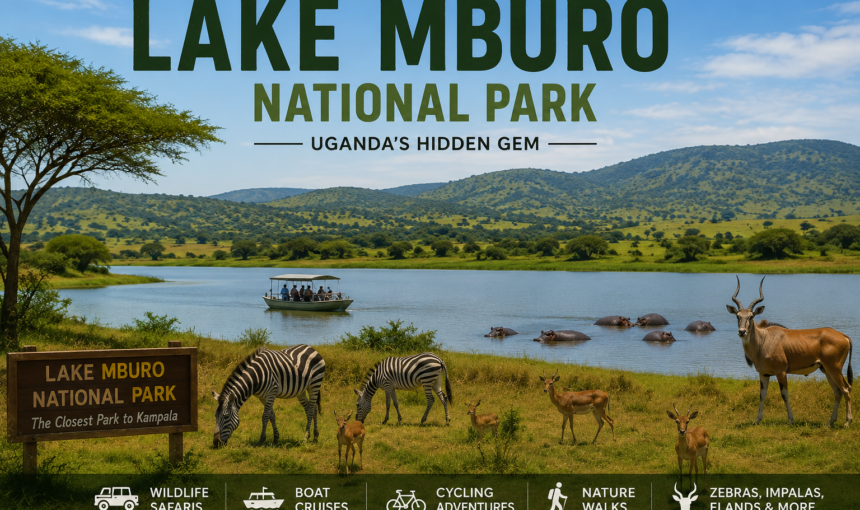
Lake Mburo National Park is Uganda’s smallest savannah national park and one of the most accessible wildlife destinations in the country.
Covering approximately 370 km², it offers a compact yet incredibly diverse ecosystem of acacia woodlands, open savannah grasslands, wetlands, and a series of lakes — most notably Lake Mburo itself.
Located in Kiruhura District in southwestern Uganda, this park serves as a perfect stopover or add-on for travelers combining Uganda gorilla trekking in Bwindi or Mgahinga with classic savannah safari experiences.
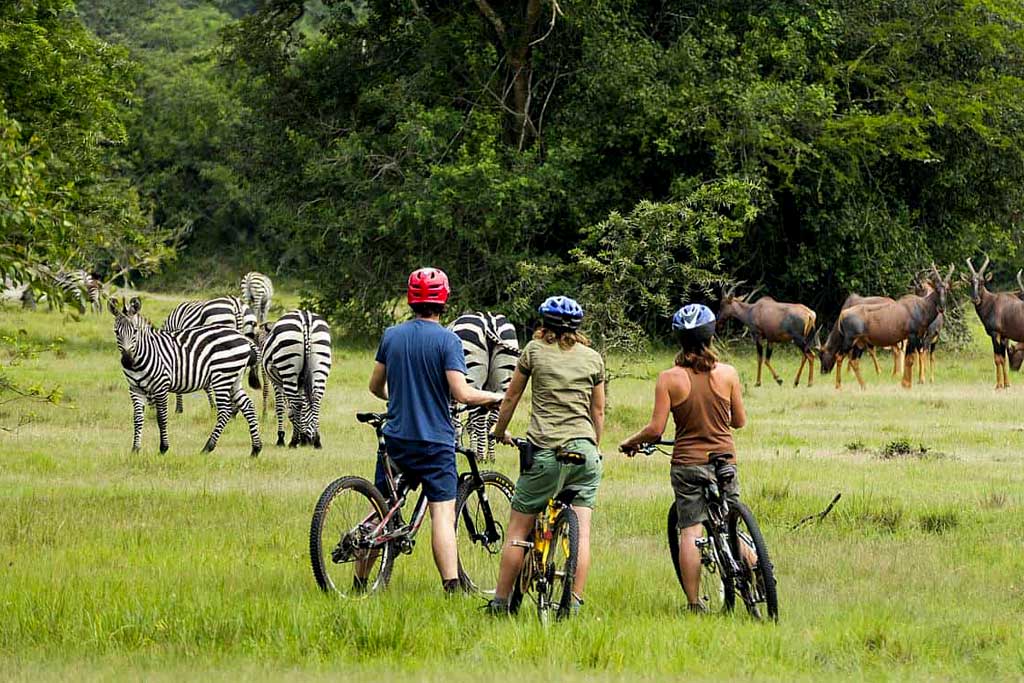
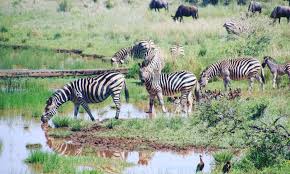
Key highlight: Lake Mburo is the only national park in Uganda where visitors can reliably see plains zebras and the elegant impala.
It is also home to Rothschild’s giraffes, elands (Africa’s largest antelope), buffaloes, hippos, and over 350 bird species.
Unlike larger parks, its small size and absence of elephants and lions make it exceptionally safe and ideal for walking safaris, horseback riding, and intimate wildlife encounters.
Established in 1983, Lake Mburo protects a critical wildlife corridor and supports local Ankole communities through tourism.
For international travelers from the USA, UK, Europe, Canada, Asia, and the Middle East, it delivers a relaxed, rewarding safari experience without long drives or overwhelming crowds.
Game viewing remains excellent year-round, though dry seasons offer clearer advantages.
As expert operators at GoSilverback Gorilla Safaris, we frequently incorporate Lake Mburo into multi-day Uganda safari itineraries.
Its strategic location — just 3–4 hours’ drive from Kampala or Entebbe — makes it an outstanding introduction to Ugandan wildlife or a refreshing contrast after gorilla trekking in the misty forests of Bwindi.
This comprehensive guide covers everything you need to plan an unforgettable visit to Lake Mburo National Park.
Overview of Lake Mburo National Park
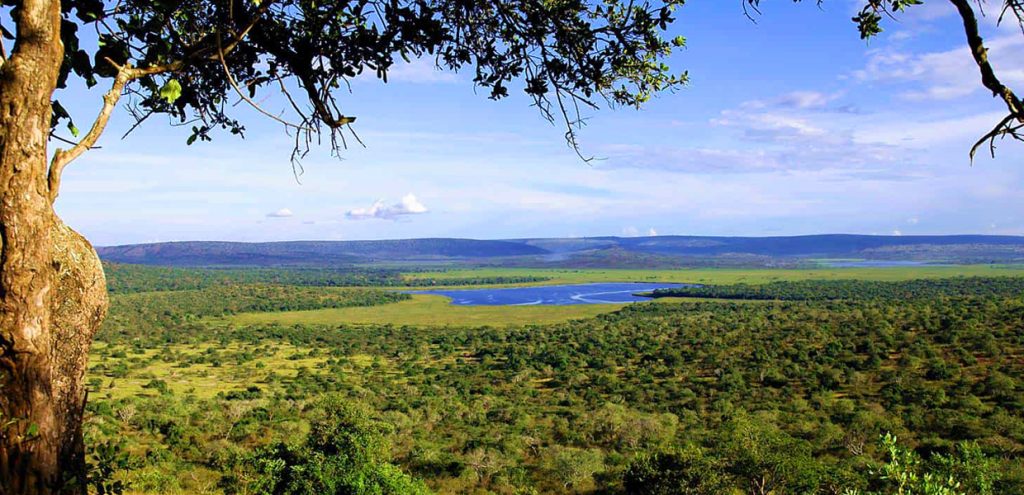
Lake Mburo National Park lies in the heart of Uganda’s cattle-rearing Ankole region, characterized by gently rolling hills, rocky outcrops, and a mosaic of habitats.
The park centers around Lake Mburo and 13 smaller lakes, forming an important wetland system fed by the Rwizi River.
Altitude ranges from 1,220m to 1,828m, creating a pleasant climate that is neither as hot as lower savannahs nor as chilly as highland gorilla parks.
The landscape features open acacia woodlands interspersed with grasslands ideal for grazing herbivores, papyrus-fringed lakes supporting rich birdlife and hippos, and patches of dry forest.
This habitat diversity supports more than 68 mammal species and an impressive avian population.
Historically, the area was used for cattle grazing by the local Bahima people. When gazetted as a national park, it faced initial resistance, but today tourism revenue provides significant benefits to surrounding communities through employment, infrastructure, and conservation awareness.
For safari enthusiasts, Lake Mburo stands out for its accessibility and variety of activities. It serves as an excellent transition park between central Uganda and the western gorilla destinations.
The park’s compact size means you can see a remarkable amount of wildlife in just 1–3 days, making it perfect for time-conscious travelers seeking quality over quantity.
Wildlife Species in Lake Mburo National Park
Lake Mburo National Park boasts an exceptional density and variety of wildlife for its size. The park hosts over 68 mammal species and more than 350 bird species, offering some of Uganda’s most rewarding game viewing.
Iconic Mammals:
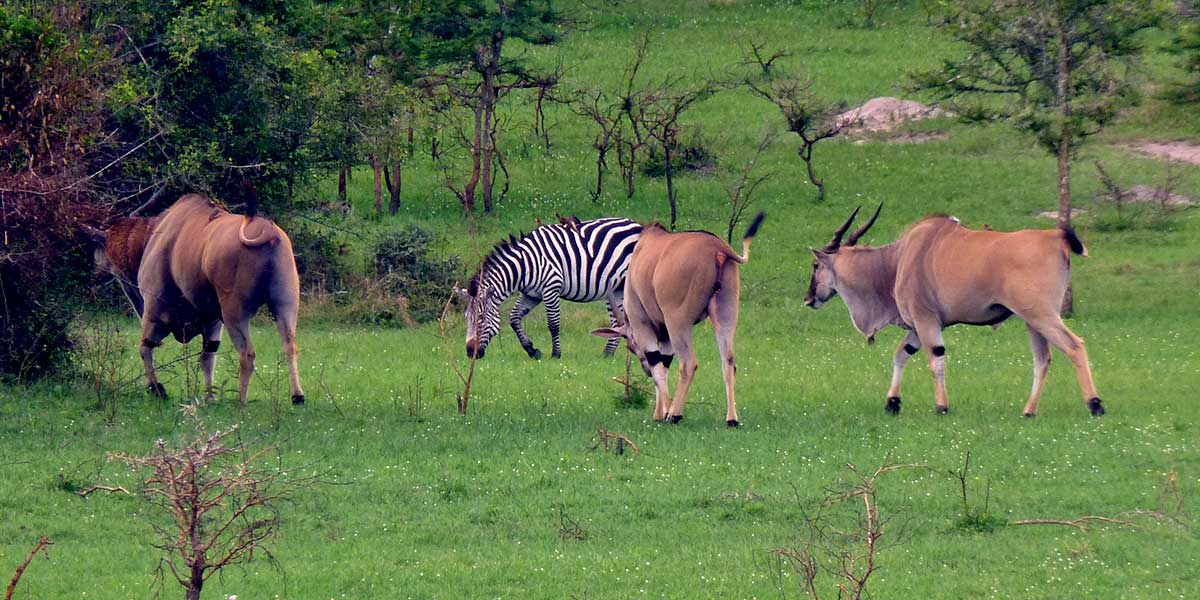
- Plains Zebras: Lake Mburo is one of the best and most reliable places in Uganda to see these striking striped animals grazing on the open plains.
- Impala: The park supports Uganda’s only significant population of these graceful antelopes.
- Eland: Africa’s largest antelope, often seen in small herds.
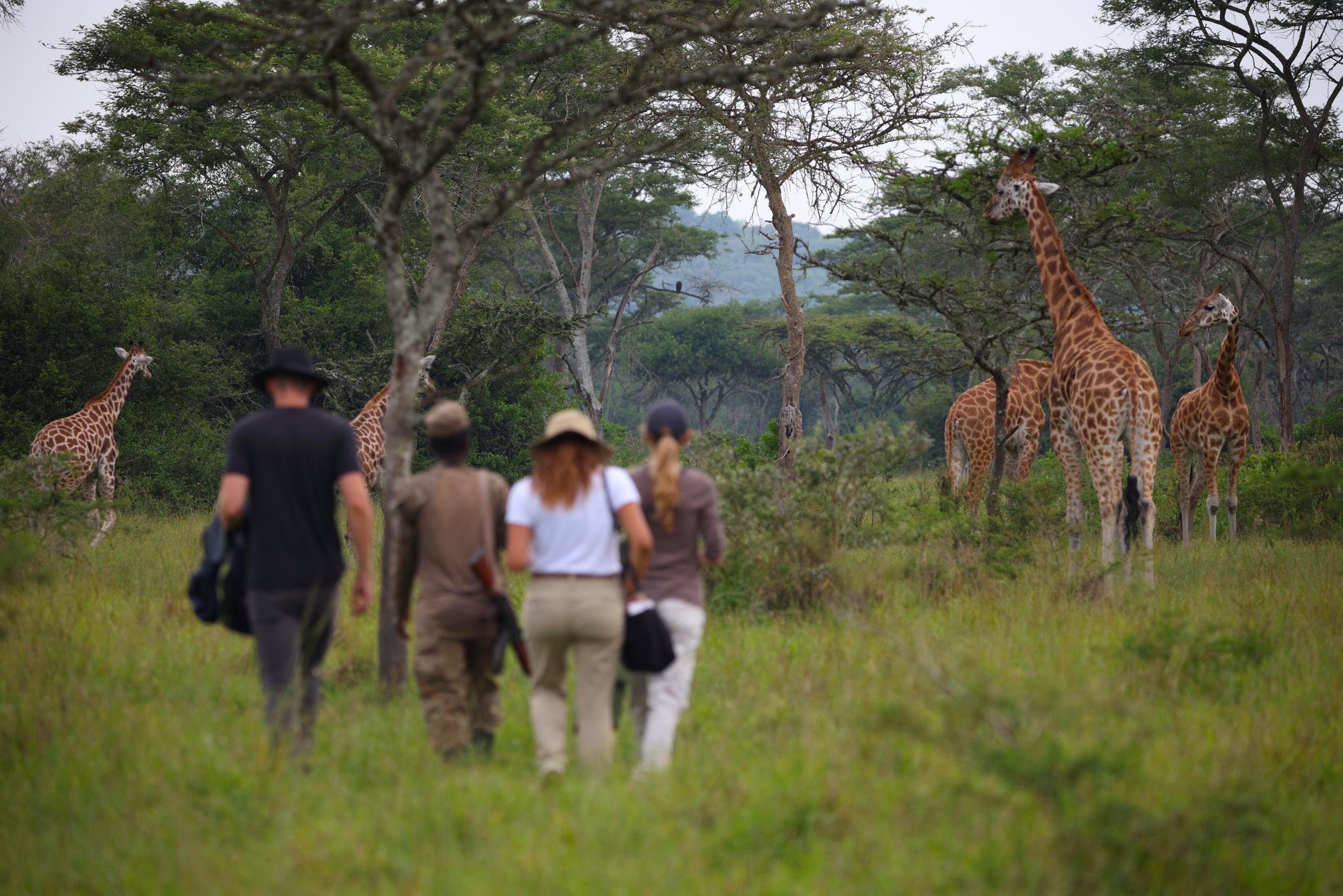
- Rothschild’s Giraffes: Reintroduced and now thriving; their long necks stand out against acacia trees.
- African Buffalo: Large herds are common, especially near water sources.
- Topi, Waterbuck, Bushbuck, Oribi, and Klipspringer: Excellent antelope diversity.
- Hippos and Crocodiles: Abundant in the lakes.
- Predators: Leopard, spotted hyena, jackal, and serval. While lions are absent, the presence of leopards adds thrill to night drives.
Birdlife: Over 350 species include the crested crane (Uganda’s national bird), saddle-billed stork, African finfoot, papyrus gonolek, and various kingfishers, bee-eaters, and raptors. The wetlands attract migratory birds during wet seasons.
The absence of elephants and lions creates a peaceful atmosphere perfect for walking safaris, where you can approach animals more closely under the protection of an armed ranger.
As experienced operators, we emphasize that Lake Mburo delivers consistent, high-quality sightings even on short visits, making it ideal for first-time safari travellers and families.
Pro Tip: Early-morning and late-afternoon game drives yield the best results, as animals are active and light is optimal for photography.
Best Time to Visit Lake Mburo National Park
Lake Mburo National Park can be visited successfully year-round, but the dry seasons (June to September and December to February) are widely regarded as the best time for wildlife viewing.
During these periods, vegetation thins out, water sources become concentrated, and animals gather predictably around lakes and waterholes, improving visibility and photographic opportunities.
Wet seasons (March to May and October to November) bring lush green landscapes, excellent birding with migratory species, and fewer visitors. While trails can be muddier, the scenery is stunning and newborn animals add charm.
For travellers combining Lake Mburo with gorilla trekking in Bwindi, the dry months offer better road conditions and more comfortable trekking overall. Temperatures are generally mild (20–28°C), with cooler evenings.
As safari experts, we recommend June–August and December–February for most international clients seeking classic wildlife experiences. However, shoulder months provide better value and fewer crowds while maintaining strong game viewing.
Lake Mburo National Park Entry Fees, Location & Safari Guide
Altitude – 1,220m – 1,828m above sea level
Park Entry Fees – FNR – USD 40
Park Entry Fees – FR – USD $30
Park Fees – East African – UGX 20,000
Park Size – 370 km2
Park Location – Nyabushozi County, Kiruhura District.
Top Things to Do in Lake Mburo National Park
Lake Mburo offers a wider variety of activities than many larger parks, thanks to its safe environment and diverse terrain.
- Game Drives — Morning, evening, and night drives reveal different species. Night drives are particularly exciting for spotting leopards and other nocturnal animals.
- Boat Safaris — A highlight. Drift on Lake Mburo watching hippos, crocodiles, waterbirds, and animals drinking along the shores. Sunset cruises are especially romantic.
- Walking Safaris — Accompanied by armed rangers, these provide intimate encounters with zebras, giraffes, and antelopes. Ideal for photography and learning about ecology.
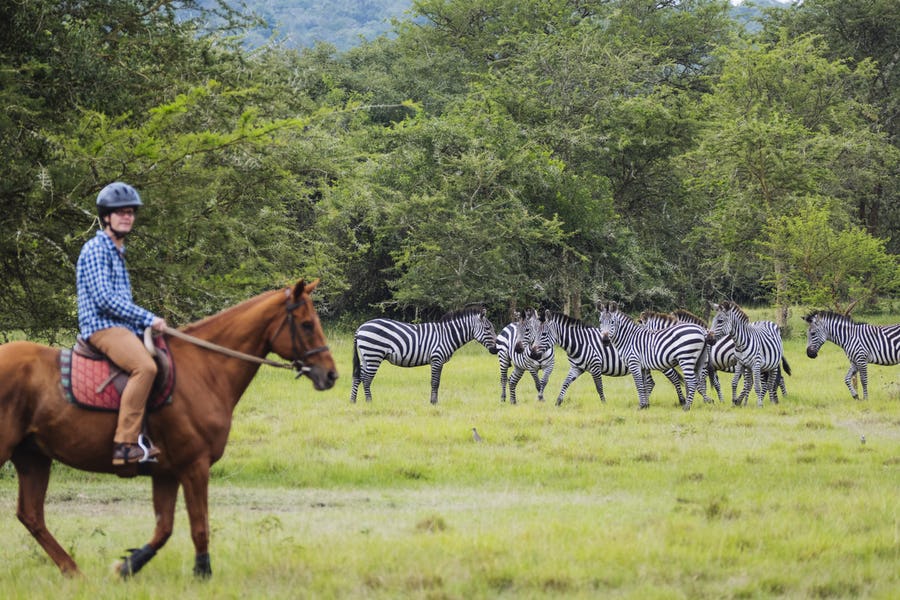
- Horseback Riding Safaris — Unique way to explore the park from a different perspective, often getting very close to wildlife.
- Bird Watching — Excellent throughout the park, with specialist guides available.
- Community and Cultural Visits — Meet the Bahima people and learn about their cattle culture.
- Hiking and Nature Walks — Explore rocky kopjes and forest patches for panoramic views.
These activities make Lake Mburo far more than a transit park — they deliver memorable, multi-dimensional safari experiences.
Lake Mburo Safari Itineraries Sample
5–7 Day Combined Lake Mburo + Bwindi Gorilla Trekking Safari
This is our most popular itinerary, offering the perfect contrast between classic savannah wildlife and misty mountain gorilla forests.
Day 1–2: Lake Mburo National Park Follow the 2-day program above, focusing on zebras, giraffes, boat safaris, and walking experiences.
Day 3: Transfer to Bwindi Impenetrable National Park Scenic drive (approximately 5–6 hours) through beautiful countryside to Buhoma or Nkuringo sector of Bwindi.
Evening briefing on gorilla trekking rules and mountain gorilla diet.
Day 4–5: Gorilla Trekking in Bwindi Enjoy two full-day gorilla trekking experiences (or one trek plus a community/Batwa cultural visit). Track habituated gorilla families and witness their natural behaviors, including foraging on leaves, stems, and bamboo shoots.
Day 6–7: Optional Extension & Departure Add a community visit, forest walk, or transfer to Queen Elizabeth National Park for tree-climbing lions. Return to Entebbe or fly out from Kihihi.
This 5–7 day Uganda safari itinerary provides outstanding contrast — the open landscapes and diverse mammals of Lake Mburo National Park followed by the intimate, emotional experience of mountain gorilla trekking in Bwindi.
It is particularly popular with travelers from the USA, UK, Europe, Canada, Asia, and the Middle East.
All our itineraries include private 4×4 vehicles, experienced English-speaking guides, park fees, meals, and bottled water.
We can customize durations, lodge categories (luxury, mid-range, or budget), and activities to match your preferences and budget.
Ready to create your perfect Lake Mburo safari? Contact GoSilverback Gorilla Safaris today. We will handle your gorilla permits, accommodation, and seamless logistics for a stress-free, unforgettable Ugandan wildlife and gorilla adventure.
Where to Stay in Lake Mburo National Park
Choosing the right accommodation significantly enhances your Lake Mburo National Park safari experience.
With options ranging from luxury tented camps to comfortable mid-range lodges and budget-friendly stays, visitors can find excellent value regardless of budget.
As expert safari operators at GoSilverback Gorilla Safaris, we carefully select and partner with properties that offer prime locations, high service standards, and minimal environmental impact.
1. Luxury Accommodations
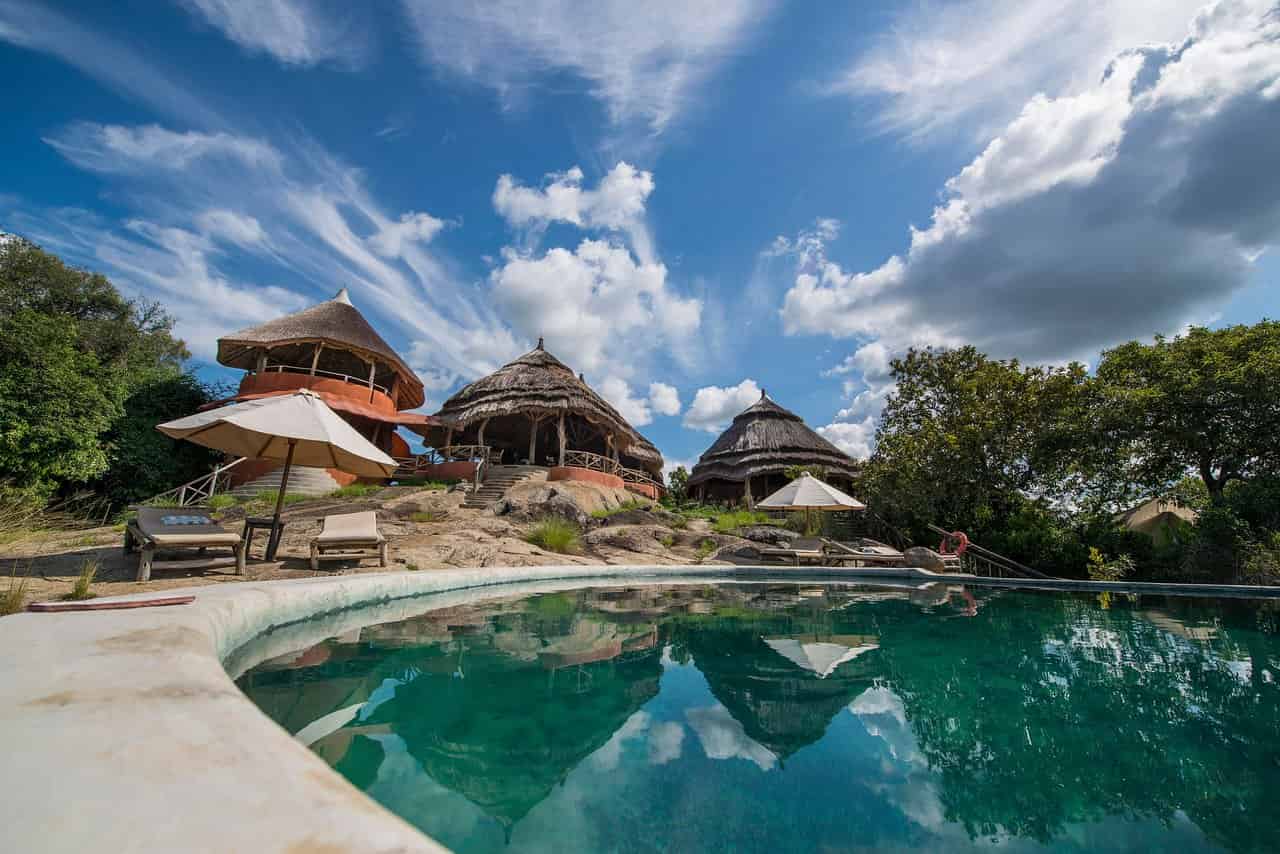
A. Mihingo Lodge stands out as one of the top luxury choices. Perched on a rocky kopje with breathtaking views over the park, this intimate lodge features luxurious safari tents, an infinity pool, and excellent cuisine.
Its elevated position provides natural game viewing, with zebras and impalas frequently grazing nearby.
B. Kigambira Safari Lodge and Mantana Tented Camp also deliver high-end experiences with spacious accommodations, private verandas, and personalized service, ideal for discerning travelers from the USA, UK, Europe, Canada, Asia, and the Middle East seeking romance and exclusivity.
2. Mid-Range Options
A. Rwakobo Rock Lodge is a favorite for its dramatic location on a granite outcrop overlooking the savannah. The stone-and-thatch cottages blend perfectly with the landscape and offer great value with comfortable rooms and fantastic sunrise views.
B. Lake Mburo Safari Lodge and Arcadia Cottages provide reliable mid-range comfort with modern amenities, excellent food, and convenient access to park activities.
These properties strike the perfect balance between comfort and authenticity, making them popular for families and couples combining Lake Mburo with gorilla trekking in Bwindi.
3. Budget and Value Accommodations
A. Mburo Eagle’s Nest Lodge delivers impressive views at accessible rates and is highly recommended for budget-conscious travelers.
Other solid budget options include community-run camps and basic but clean guesthouses near the park gate, which still offer good access to game drives and walking safaris.
All recommended properties support local communities and follow responsible tourism practices.
When booking through GoSilverback Gorilla Safaris, we ensure you receive the best rates, seamless transfers, and packages that combine your Lake Mburo stay with gorilla permits and other Uganda safari highlights.
Our team will match the perfect accommodation to your preferences, travel style, and budget for a memorable and comfortable safari.
How to Get to Lake Mburo National Park
Lake Mburo National Park is one of Uganda’s most accessible safari destinations, making it an ideal addition to any Uganda wildlife or gorilla trekking itinerary.
1. By Road from Kampala and Entebbe
The most popular and convenient way to reach the park is by road. From Kampala, the drive takes approximately 3 to 4 hours (240 km) via the well-maintained Kampala–Masaka–Mbarara highway.
From Entebbe International Airport, the journey is around 3.5 to 4.5 hours, depending on traffic.
The tarmac road is excellent for most of the way, with the final stretch being a good murram (dirt) road leading to the park gates. Private transfers with experienced drivers are highly recommended for comfort and safety.
Self-drive is also possible and popular among travelers from the USA, UK, Europe, Canada, and the Middle East who prefer flexibility, as the route is straightforward and clearly signposted.
2. By Air
For those with limited time, Lake Mburo can be reached by air. Charter flights land at Kihihi Airstrip (near Bwindi) or Mbarara Airstrip, followed by a short 1–1.5 hour road transfer to the park.
Direct charters from Entebbe to Lake Mburo can be arranged, significantly reducing travel time and offering scenic aerial views of the Ugandan countryside.
Getting Around the Park
Once inside the park, most visitors use open 4×4 safari vehicles provided by lodges or operators.
GoSilverback Gorilla Safaris arranges seamless door-to-door transfers, whether you are coming directly from Entebbe, combining with Bwindi Impenetrable National Park, or continuing to Queen Elizabeth National Park.
We advise international travelers to book private transfers in advance for comfort, especially if arriving on long-haul flights.
Conservation Efforts & Responsible Tourism
Conservation in Lake Mburo National Park plays a vital role in protecting Uganda’s unique savannah ecosystem and its rich biodiversity.
As one of the country’s smallest national parks, Lake Mburo faces significant pressure from surrounding agricultural communities, livestock grazing, and habitat fragmentation. However, well-managed tourism has become a powerful force for positive change.
The Uganda Wildlife Authority (UWA) leads conservation efforts through regular anti-poaching patrols, snare removal operations, and habitat restoration programs.
These initiatives have successfully protected key grazing areas for zebras, impalas, and Rothschild’s giraffes while maintaining the delicate balance of the wetland system.
Community conservation programs encourage local Ankole and Bahima people to benefit directly from tourism rather than traditional resource extraction.
Responsible Tourism at Its Best
At GoSilverback Gorilla Safaris, we are deeply committed to eco-friendly and responsible tourism.
We work exclusively with lodges and camps that follow sustainable practices, including solar power, waste management, and water conservation.
Our guides are trained in minimal-impact wildlife viewing, ensuring animals are not disturbed during game drives, walking safaris, or boat trips.
We actively support community development by prioritizing locally owned accommodations, employing local guides and staff, and contributing to education and health projects around the park.
A percentage of every safari booking through our company helps fund conservation activities and community initiatives that protect Lake Mburo National Park for future generations.
Travelers from the USA, UK, Europe, Canada, Asia, and the Middle East who choose responsible operators like GoSilverback directly contribute to the protection of zebras, giraffes, and over 350 bird species.
By visiting Lake Mburo, you become part of a successful model where tourism revenue creates genuine incentives for wildlife and habitat protection.
Responsible travel ensures that the beauty and wildlife you enjoy today will remain for your children and grandchildren to experience tomorrow.
Insider Tips from Safari Experts
As professional safari operators at GoSilverback Gorilla Safaris with years of experience guiding travelers in Lake Mburo National Park, here are our most valuable insider tips to help you maximize your visit.
Packing Essentials
- Pack neutral-colored clothing (khaki, beige, olive) to blend with the savannah. Avoid bright whites and dark blues that attract tsetse flies.
- Bring binoculars (8×42 or 10×42) — essential for spotting birds and distant wildlife during game drives.
- Carry a light rain jacket and layers, as temperatures can drop in the evenings. Sturdy walking shoes are mandatory for walking safaris.
- Don’t forget sunscreen, insect repellent, a wide-brim hat, and a good camera with zoom lens.
What to Expect
Expect a relaxed, intimate safari compared to larger East African parks. Game drives are productive but less crowded.
Walking safaris offer close encounters with zebras, giraffes, and impalas, accompanied by an armed ranger. Boat safaris at sunset are magical but can be breezy on the lake.
Photography & Wildlife Tips
- Best light for photography is during early morning and late afternoon game drives.
- For walking safaris, move slowly and quietly — sudden movements can startle animals.
- Focus on behavior shots: zebras galloping, giraffes silhouetted against acacia trees, or hippos in the water.
- Always follow your guide’s instructions, especially near buffaloes or hippos.
Book activities in advance during peak dry seasons (June–September and December–February). Travelers combining Lake Mburo with gorilla trekking should schedule Lake Mburo either before or after Bwindi for the best contrast in experiences.
These practical tips will ensure your Lake Mburo National Park safari is safe, comfortable, and deeply rewarding.
Lake Mburo National Park Location
Located in western Uganda, Lake Mburo National Park is one of Uganda’s closest savannah parks to Kampala, situated in Nyabushozi County within Kiruhura District.
Covering approximately 370 km², the park lies at an altitude ranging between 1,220 and 1,828 meters above sea level, offering beautiful rolling hills, acacia woodlands, wetlands, and lakes.
Lake Mburo National Park is located about 240 kilometers from Kampala along the Kampala–Mbarara highway, making it a perfect destination for short Uganda safari tours, weekend wildlife trips, and stopovers to western Uganda gorilla trekking safaris.
The park is famous for its zebras, giraffes, impalas, hippos, buffaloes, and boat cruises on Lake Mburo.
Its strategic location near other major safari destinations makes it ideal for travellers seeking authentic wildlife experiences, nature walks, birdwatching, and eco-tourism adventures in Uganda.
Lake Mburo National Park Map
Frequently Asked Questions
Is Lake Mburo worth visiting?
Yes, Lake Mburo National Park is definitely worth visiting. It is one of Uganda’s most accessible and rewarding safari destinations, especially for travelers with limited time. Its compact size, excellent wildlife density, and wide variety of activities (including walking safaris and boat trips) make it highly enjoyable. It serves as a perfect stopover between Kampala and the gorilla parks.
Can you see zebras in Lake Mburo?
Yes, you can reliably see plains zebras in Lake Mburo National Park. In fact, it is the only national park in Uganda where zebras are found. They are common on the open grasslands and frequently spotted during game drives and walking safaris.
Are there lions in Lake Mburo National Park?
No, there are no lions in Lake Mburo National Park. The absence of lions makes the park safer and more relaxing for walking safaris and horseback riding. However, you can still see leopards, spotted hyenas, and other smaller predators.
What animals can you see in Lake Mburo National Park?
Lake Mburo is home to over 68 mammal species, including plains zebras, impalas, elands, Rothschild’s giraffes, African buffaloes, hippos, waterbucks, topi, and oribi. Predators include leopard and hyena. The park also boasts more than 350 bird species.
What is the best time to visit Lake Mburo National Park?
The best time to visit Lake Mburo is during the dry seasons — June to September and December to February. These months offer better wildlife viewing, easier driving conditions, and more pleasant weather. Wet seasons (March–May and October–November) are excellent for birding and lush scenery with fewer crowds.
How many days do you need for Lake Mburo?
Two to three days is ideal for most visitors. This allows time for morning and evening game drives, a boat safari, and at least one walking safari. Many travelers do a 2-night stopover when combining Lake Mburo with gorilla trekking in Bwindi.
Can you do walking safaris in Lake Mburo?
Yes, walking safaris are one of the highlights of Lake Mburo National Park. Because there are no lions or elephants, the park is one of the safest places in Uganda for guided walks. You can get close to zebras, giraffes, and antelopes under the protection of an armed ranger.
Are there elephants in Lake Mburo?
No, there are currently no elephants in Lake Mburo National Park. This contributes to the park’s relaxed atmosphere and makes it especially suitable for walking and horseback safaris.
How much does a Lake Mburo safari cost?
A typical 2-night Lake Mburo safari costs between $800 and $1,800 per person, depending on accommodation level and inclusions. When combined with gorilla trekking, packages become more cost-effective. Contact GoSilverback Gorilla Safaris for current pricing and customized quotes.
Can you combine Lake Mburo with gorilla trekking?
Yes, Lake Mburo combines beautifully with gorilla trekking in Bwindi or Mgahinga. Many travelers visit Lake Mburo either on the way to or from the gorilla parks. The contrast between savannah wildlife and mountain forest experiences is one of the best in Uganda.
Is Lake Mburo National Park safe for families?
Yes, Lake Mburo is one of the safest national parks in Uganda for families. The absence of dangerous predators like lions, good road access, and variety of activities make it ideal for children and multi-generational travelers.
What is the park entrance fee for Lake Mburo?
The current entrance fee is $30 per person per day for foreign non-residents, $15 for foreign residents, and $10 for East African citizens. Children under 5 usually enter free. All fees are paid at the park gate.
Is Lake Mburo worth visiting?
Yes — especially for travelers seeking accessible, varied activities and unique species like zebras and impalas in a compact, beautiful park.
Can you see zebras in Lake Mburo?
Yes, Lake Mburo is one of the best and most reliable places in Uganda to see plains zebras.
Are there lions in Lake Mburo National Park?
No, lions are not present, which makes walking safaris safer and more relaxing.
What is the best time to visit Lake Mburo?
Dry seasons (June–September and December–February) for optimal wildlife viewing.
Conclusion
Lake Mburo National Park may be small in size, but it is immense in beauty, biodiversity, and the quality of experiences it offers. From watching zebras gallop across golden grasslands to drifting past hippos during a magical sunset boat safari, this park captures the soul of Uganda’s wilderness in an intimate and accessible way.
For travelers from around the world, Lake Mburo provides the perfect balance — thrilling wildlife encounters, cultural insights, and peaceful moments in nature — all within easy reach of Entebbe and gorilla destinations.
Ready to experience Lake Mburo National Park as part of your unforgettable Uganda adventure?
Contact GoSilverback Gorilla Safaris today. Let our expert team design your perfect itinerary combining Lake Mburo’s wonders with gorilla trekking in Bwindi Impenetrable National Park.
We handle gorilla permits, accommodations, transfers, and every detail so you can focus on creating lifelong memories.
Book your Uganda safari now and discover why Lake Mburo is the perfect gateway to the Pearl of Africa’s wildlife treasures. Your journey of discovery awaits.