
Gorilla Tools Use Guide: Intelligence, Behavior & Scientific Evidence 2026
Deep in the misty montane forests of Rwanda’s Volcanoes National Park, a silverback gorilla pauses beside a swampy clearing.
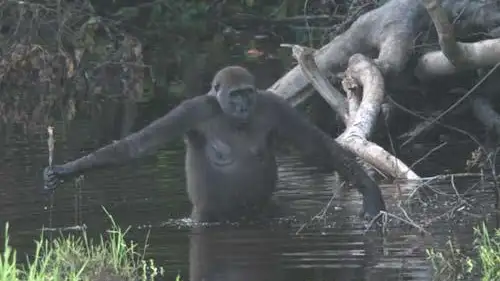
Rather than wading blindly into the murky water, he reaches for a sturdy wooden branch, plants it firmly into the muddy ground, and uses it to gauge the depth before stepping forward.
This single act — deliberate, calculated, and purposeful — speaks volumes about the cognitive intelligence of gorillas and their capacity for gorilla tool use.
For decades, scientists and safari enthusiasts alike have marveled at this behavior, debating its frequency, complexity, and evolutionary significance.
At GoSilverback Safaris, we have guided thousands of local and international travelers from the USA, UK, Europe, Canada, the Middle East, and Asia on gorilla trekking expeditions through the forests of Rwanda, Uganda, and the Democratic Republic of Congo (DRC).
We witness gorilla intelligence firsthand, and we understand how profoundly it moves our guests. This in-depth guide explores everything known about gorilla tool use: the science, the examples, the evolutionary implications, and what it means for conservation — so that when you finally sit ten meters from a gorilla family in the wild, you understand exactly what you are witnessing.
Check this guide to learn about Gorilla Family Hierarchy Explained.
Do Gorillas Use Tools? (Direct Answer)
Yes — gorillas do use tools, though less frequently and with less diversity than their closest relatives, chimpanzees. Wild gorillas have been observed using sticks as depth gauges, branches as walking aids, and logs as platforms.
These behaviors represent genuine, purposeful tool use, as defined by animal behaviorists, and provide compelling evidence for the advanced cognitive intelligence of gorillas.
The first scientifically documented case of wild gorilla tool use was recorded in 2005 by researchers at the Wildlife Conservation Society (WCS) in the Mondika research area in the Republic of Congo.
A Western lowland gorilla named Leah was observed using a stick to test the depth of a swampy pool before crossing it — a breakthrough that rewrote the scientific conversation about great ape cognition and tool use behavior
What Is Tool Use in Animal Behavior?
Before exploring gorilla-specific evidence, it is important to establish what scientists mean when they use the term “tool use” in the context of animal behavior. Not every instance of an animal interacting with an object qualifies as tool use in the scientific sense.
The Scientific Definition of Animal Tool Use
The most widely accepted definition, proposed by Benjamin Beck in 1980, states that tool use involves “the external employment of an unattached environmental object to alter more efficiently the form, position, or condition of another object, another organism, or the user itself.”
Under this definition, the tool must be held or carried by the animal, not simply manipulated in place.
The scientific community distinguishes between several tiers of tool-related behavior:
- Tool use: Manipulating an external object to achieve a goal (e.g., using a stick as a probe).
- Tool manufacture: Modifying an object before using it as a tool (e.g., stripping a twig of leaves to use as a probe).
- Tool sets: Using a sequence of tools in succession to accomplish a task.
- Toolkits: Using multiple different tools for a single task simultaneously.
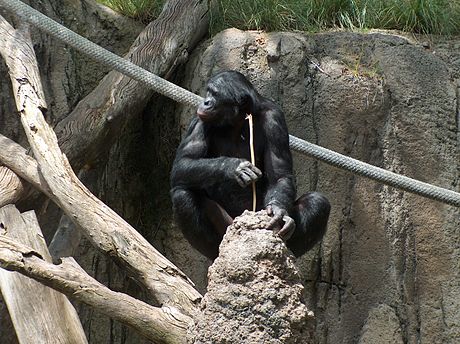
Chimpanzees are known to engage in all four tiers. Gorillas, by contrast, have been documented primarily in the first tier — basic tool use — with limited evidence of the others.
This distinction is critical when interpreting what gorilla tool use behavior tells us about their intelligence and evolutionary history.
Why Object Interaction Alone Does Not Count
It is worth noting that gorillas frequently interact with objects in their environment — breaking branches, stripping bark, throwing vegetation.
These behaviors, while impressive, do not meet the strict definition of tool use unless the object serves as an instrument to achieve a secondary goal. The key criterion is intentionality: does the gorilla deploy the object purposefully, understanding its function?
Scientific Evidence of Gorilla Tool Use
The scientific record on gorilla tool use in the wild is far more limited than equivalent records for chimpanzees, bonobos, or even some bird species.
However, the evidence that does exist is compelling, methodologically rigorous, and grows incrementally with each passing year of field research.
The 2005 WCS Discovery: A Landmark in Gorilla Research
The most significant published study on wild gorilla tool use appeared in the journal PLOS Biology in 2005, authored by Thomas Breuer, Mireille Ndoundou-Hockemba, and Vicki Fishlock of the Wildlife Conservation Society.
The study documented two separate instances of tool use by wild Western lowland gorillas (Gorilla gorilla gorilla) at the Mbeli Bai study site in the Republic of Congo.
The first case involved a female gorilla named Leah, who used a detached trunk from a dead shrub to test the depth of a pool of water.
She stood upright, inserted the stick into the water, and assessed the depth before wading across. This behavior was repeated on subsequent crossings, strongly suggesting intentionality and problem-solving rather than chance.
The second case involved a gorilla named Efi, who was observed detaching a dead tree trunk and positioning it as a stabilizing support while she foraged for aquatic herbs.
These two cases met all criteria in Beck’s definition and provided the first peer-reviewed, photographic evidence of spontaneous tool use in wild gorillas
Captive Gorilla Tool Use Studies
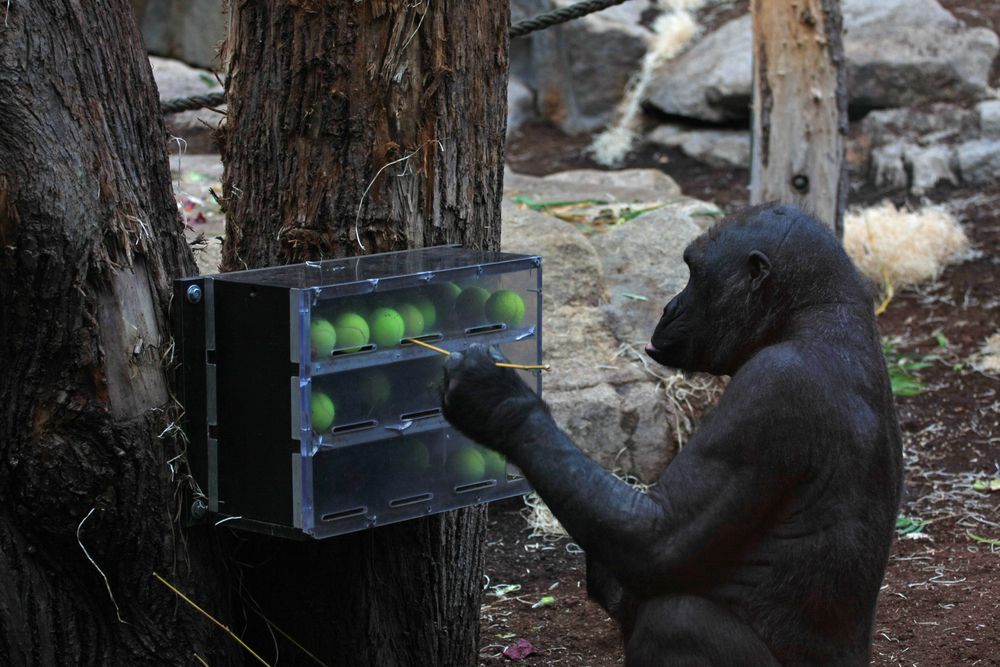
Research in captivity has expanded the evidence base considerably. Gorillas at Zoo Atlanta, the Frankfurt Zoo, and the San Diego Zoo have demonstrated a wide range of tool-using behaviors, including:
- Using sticks to reach food outside their enclosures
- Stacking objects to reach elevated food rewards
- Using cloth as a sponge to soak up water from narrow containers
- Using logs as ladders to explore areas of their enclosure
- Employing rocks to crack open hard-shelled foods in some experimental settings
Captive studies consistently reveal that gorillas possess the cognitive prerequisites for tool use — including understanding object permanence, causal relationships, and means-end reasoning.
The primary question scientists continue to explore is why these abilities are expressed far less frequently in wild settings than in captivity.
The Role of Social Learning and Innovation
One pivotal finding from captive studies is that gorillas can learn tool use behaviors by observing others, including humans.
This capacity for social learning — sometimes called emulation or imitation — is a hallmark of advanced cognition and is considered a precursor to cultural transmission of knowledge.
In wild populations, if tool use is not part of the local gorilla culture, individuals may never have the opportunity to observe and learn from others, suppressing the behavior regardless of their underlying cognitive capacity.
Examples of Tools Used by Gorillas
While the overall frequency of gorilla tool use remains lower than in chimpanzees, the documented examples span several meaningful categories. Here are the key examples confirmed through peer-reviewed research and sustained field observation:
1. Walking Sticks and Depth Gauges
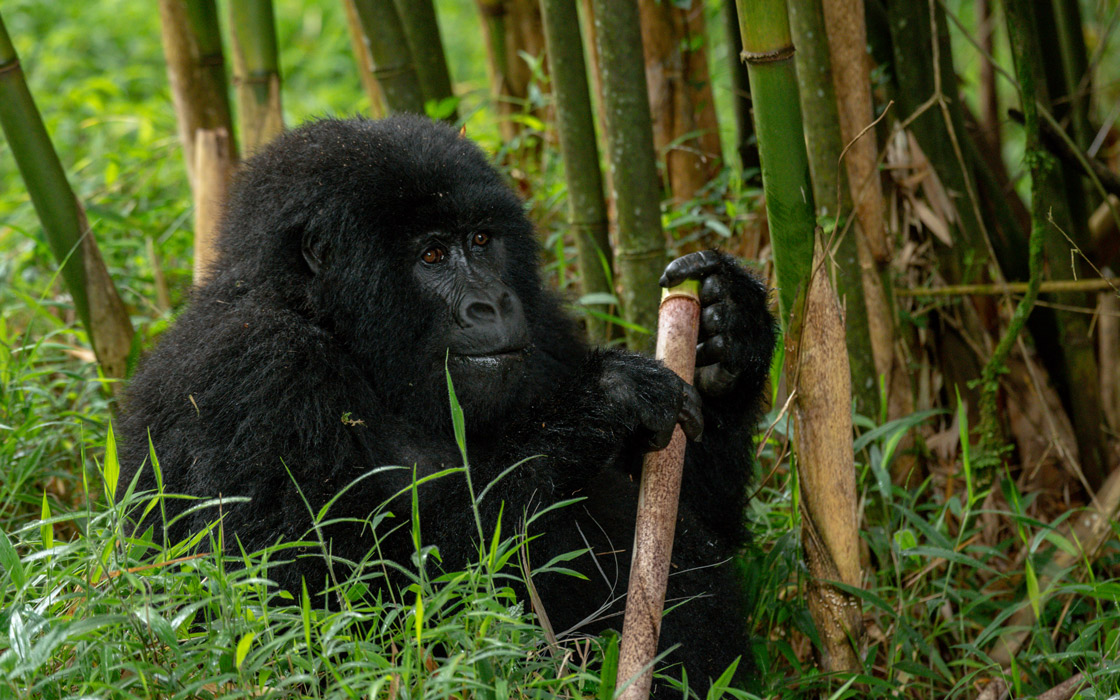
The most iconic example of gorilla tool use in the wild is the use of sticks or branches as walking sticks and water depth probes.
This was documented extensively at Mbeli Bai and has since been reported anecdotally in the Bwindi Impenetrable Forest in Uganda and in the forests of the DRC. Gorillas — particularly females and juveniles — use sturdy branches to:
- Test the depth of swampy or muddy water before crossing
- Provide support while wading through shallow water
- Balance themselves on uneven or slippery terrain
2. Branches as Body-Support Platforms
The WCS-documented case of Efi using a detached trunk as a support structure while foraging represents tool use in a postural, support-seeking context.
Rather than modifying her body position to accommodate the terrain, Efi modified the environment — a meaningful distinction that aligns with higher-order problem solving.
3. Logs and Stumps as Percussion Tools
Both wild and captive gorillas — most notably silverback males — have been documented chest-beating while standing on or striking hollow logs.
While chest-beating itself is a communication behavior, the deliberate selection and use of a resonant log to amplify the sound qualifies as rudimentary percussion tool use.
Research published by Kalan et al. (2019) found that gorilla chest-beat acoustics encode individual identity, body size, and potentially social status — adding a layer of functional complexity to this behavior.
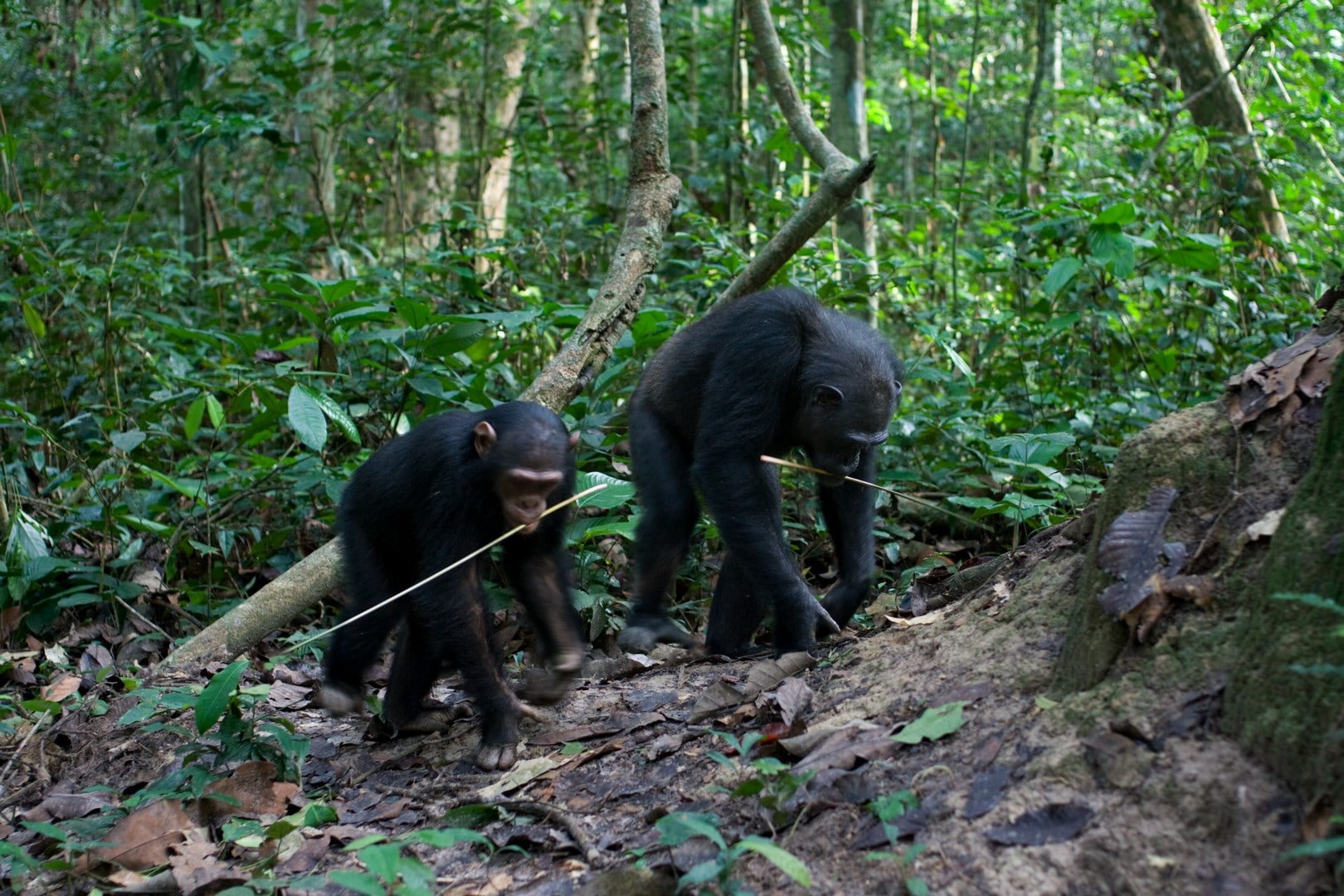
4. Sticks for Insect Foraging (Limited Evidence)
Unlike chimpanzees, who regularly use termite-fishing sticks, gorillas rely primarily on plant material for nutrition and do not exhibit insectivorous tool use at the same frequency.
However, there are limited anecdotal reports of captive gorillas probing surfaces with sticks in contexts that resemble insect foraging, particularly in environments where insects are present. These reports remain scientifically unconfirmed in wild populations.
5. Object Use as Social Signals
In several documented instances, gorillas — particularly juveniles and adult males — have been observed throwing branches, rocks, and vegetation at conspecifics or researchers.
While throwing per se may not meet Beck’s strict definition of tool use, the deliberate selection of projectile objects for social communication purposes represents purposeful object manipulation with a functional goal, and some researchers classify it as a borderline tool-use behavior.
Why Is Gorilla Tool Use Rare Compared to Chimpanzees?
This is one of the most debated questions in great ape cognitive research.
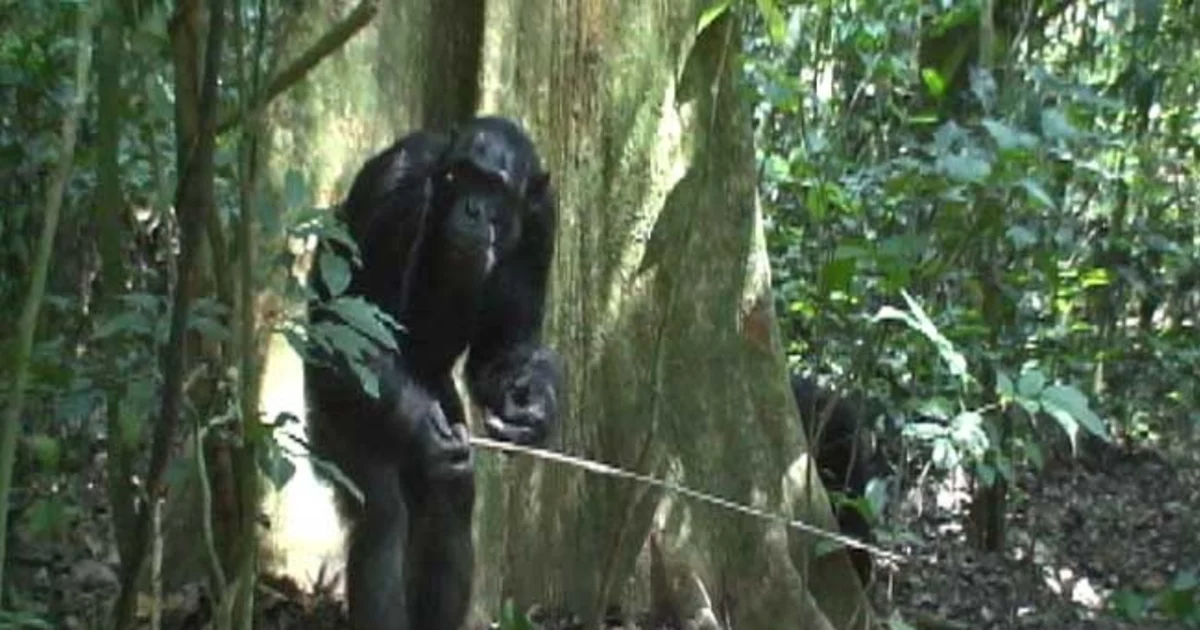
Gorillas and chimpanzees share approximately 98.3% of their DNA with humans, yet tool use in wild chimpanzees is dramatically more frequent, more diverse, and more culturally transmitted than in gorillas.
Understanding why reveals as much about ecology and evolution as it does about intelligence itself.
Dietary Ecology: The Primary Explanation
The most parsimonious explanation is dietary. Gorillas are predominantly herbivores, consuming vast quantities of leaves, stems, bark, fruit, and pith.
Their diet is largely extractable by hand, with no ecological pressure to develop tool-based foraging strategies. Chimpanzees, by contrast, have a more omnivorous diet that includes insects, nuts, and occasionally meat — all of which benefit significantly from tool use.
The “ecological intelligence hypothesis” suggests that species facing greater foraging complexity tend to develop more sophisticated cognitive tools.
Because gorillas can meet their caloric needs without tools, the selective pressure to develop and maintain tool-use behaviors is substantially lower.
Social Structure and Knowledge Transmission
Gorilla social groups are organized around a dominant silverback male and typically consist of 5 to 30 individuals.
While gorillas do observe one another’s behavior, the transmission of learned behaviors through sustained close observation is less systematically documented than in chimpanzee communities, where younger individuals spend extended time watching adults forage.
This limits the cultural propagation of tool-use behaviors across generations.
Opportunity and Habitat
The dense, food-rich forest habitat of mountain and lowland gorillas reduces the urgency of innovative problem-solving.
When high-calorie food is abundant and accessible, the cognitive “investment” required to develop novel tool behaviors may simply not be worthwhile.
Chimpanzees in drier, more resource-variable habitats face greater ecological challenges that may stimulate more frequent tool innovation.
Cognitive Capacity Is Not the Limiting Factor
Critically, most researchers agree that limited gorilla tool use does not reflect a deficit in cognitive capacity.
Captive studies consistently demonstrate that gorillas possess the full cognitive toolkit required for complex tool use — they simply lack the ecological motivation and cultural opportunity to express it regularly in the wild.
As Dr. Tara Stoinski of the Dian Fossey Gorilla Fund has noted, gorilla intelligence operates on multiple dimensions beyond tool use, including social cognition, memory, communication, and self-awareness
Mountain Gorillas vs Lowland Gorillas: Differences in Tool Use
There are four recognized subspecies of gorilla: Eastern mountain gorillas (Gorilla beringei beringei), Eastern lowland gorillas or Grauer’s gorillas (Gorilla beringei graueri), Western lowland gorillas (Gorilla gorilla gorilla), and Cross River gorillas (Gorilla gorilla diehli).
Each subspecies occupies distinct habitats with differing ecological pressures, which influences their tool use behavior.
Western Lowland Gorillas: The Most Documented Tool Users
Virtually all peer-reviewed, wild gorilla tool use evidence comes from Western lowland gorillas at research sites in Gabon, the Republic of Congo, and Cameroon.
The watery swamp-forest habitat of these gorillas — particularly at sites like Mbeli Bai and Bai Hokou — provides the specific ecological context (deep water crossings, aquatic plant foraging) that most reliably elicits tool use.
Their habitat presents more frequent opportunities for water-depth testing, which may explain the concentration of documented cases.
Mountain Gorillas: Rarer Tool Use, Different Context
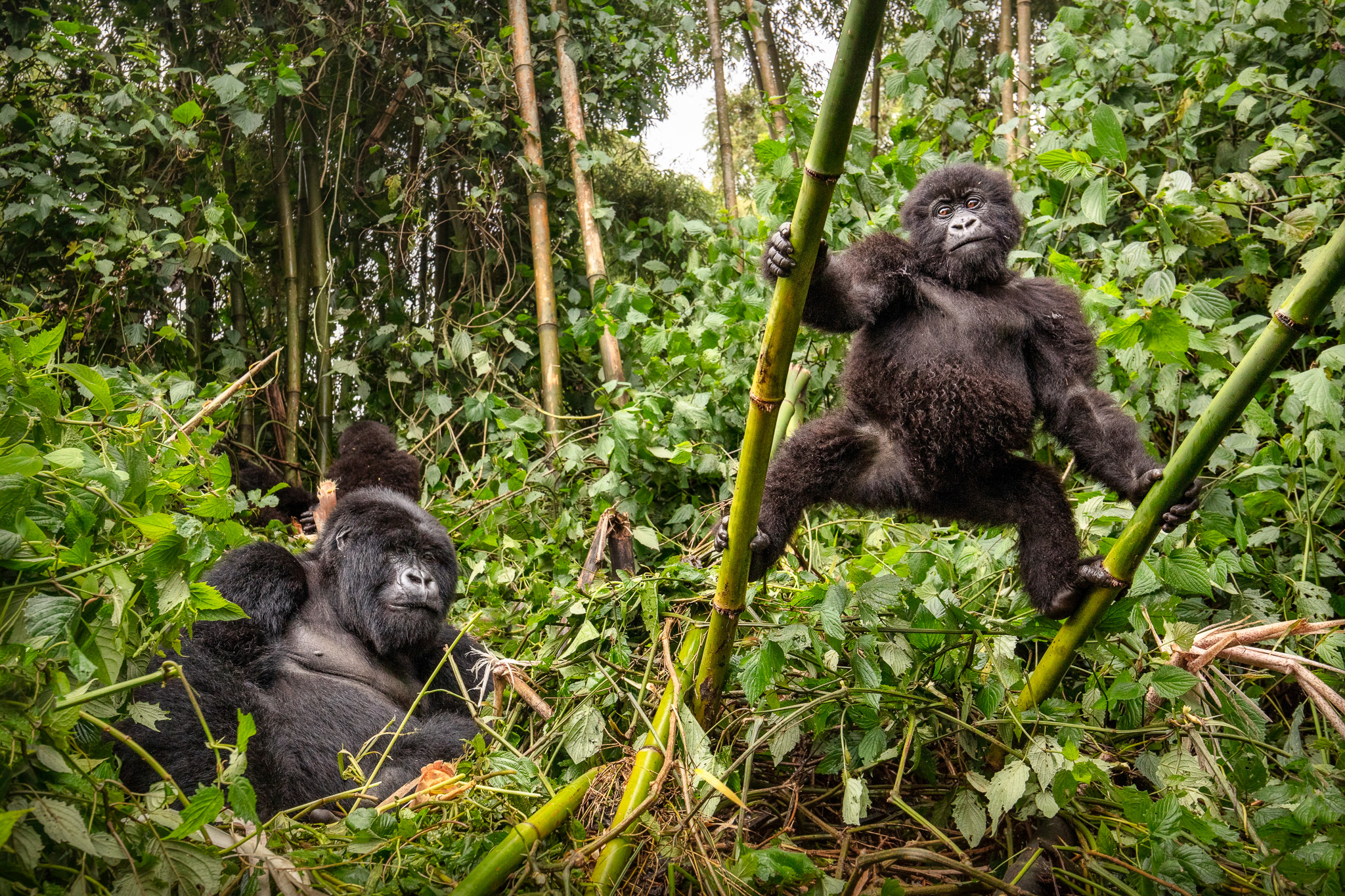
Despite being the most visited gorilla subspecies — tracked daily by rangers in Bwindi Impenetrable National Park (Uganda) and Volcanoes National Park (Rwanda) — mountain gorillas have produced very few confirmed tool use observations.
This is not necessarily because they are less cognitively capable; rather, their high-altitude bamboo and Hagenia forest habitat does not present the same swampy water-crossing challenges that trigger tool use in Western lowland populations.
However, anecdotal reports from habituated mountain gorilla groups — including those studied by the Dian Fossey Gorilla Fund in the Virunga Massif — include instances of gorillas using branches and sticks in exploratory, probe-like ways, suggesting the behavior may occur more frequently than is formally documented.
Grauer’s Gorillas: A Research Gap
The Eastern lowland (Grauer’s) gorilla is the largest gorilla subspecies by body mass and occupies the lowland and montane forests of eastern DRC.
Due to the severe instability caused by ongoing armed conflict in this region, long-term behavioral research on Grauer’s gorillas is extremely limited.
Consequently, tool use data for this subspecies is virtually absent from the scientific literature, representing a significant research gap.
The Intelligence of Gorillas Explained
Tool use is just one narrow window into gorilla cognition. To fully appreciate the intelligence of gorillas, it is necessary to examine the full spectrum of their cognitive abilities, which consistently rank among the most sophisticated in the animal kingdom.
Brain Size and Neural Architecture
Gorillas possess the largest brains of any living non-human primate by absolute volume, averaging approximately 500 cubic centimeters — roughly one-third the size of the human brain.
Their cerebral cortex, particularly the prefrontal regions associated with planning, decision-making, and social cognition, shows significant development relative to body size.
Language and Communication
The most celebrated demonstration of gorilla intelligence remains Koko — a female Western lowland gorilla who learned over 1,000 signs of American Sign Language (ASL) under the guidance of Dr. Francine Patterson at Stanford University.
Koko demonstrated not only vocabulary acquisition but an ability to combine signs to form novel expressions, understand spoken English, and express abstract concepts such as sadness, grief, and humor.
While debates about the depth of language comprehension in apes continue, Koko’s performance fundamentally changed scientific perceptions of non-human primate intelligence.
Self-Recognition and Theory of Mind
Multiple gorillas have passed the mirror self-recognition test, indicating a level of self-awareness previously thought unique to humans and great apes.
This capacity for self-recognition is neurologically linked to theory of mind — the ability to attribute mental states to others — which underpins complex social behavior, strategic deception, and empathy.
Memory and Problem-Solving
Captive gorillas demonstrate excellent long-term episodic memory — they recognize individual humans and other gorillas after separations of years or even decades.
In problem-solving experiments, gorillas frequently outperform other great apes on tasks requiring multi-step planning and inhibitory control (the ability to delay gratification in favor of a better reward), demonstrating a degree of cognitive foresight that aligns closely with human executive function.

Evolutionary Implications of Gorilla Tool Use
The discovery and study of gorilla tool use carries profound implications not just for our understanding of gorillas, but for the evolutionary history of intelligence and technology in the primate lineage, including our own species.
Revisiting the Common Ancestor
Gorillas, chimpanzees, bonobos, and humans share a common ancestor that lived approximately 10 million years ago.
The presence of tool use behavior across all living great ape species — however variable in frequency — suggests that the cognitive architecture for tool use was present in this common ancestor, rather than evolving independently in each lineage.
This has led researchers to push back estimates of when tool use first appeared in the evolutionary record, with some paleoanthropologists arguing it may predate even the earliest known stone tools in the fossil record, dated to approximately 3.3 million years ago in Kenya
The Role of Ecology in Expressed Intelligence
Gorilla tool use provides a critical case study in the distinction between cognitive potential and expressed behavior. The evidence suggests that ecological pressures shape the expression of intelligence, not intelligence itself.
This has important implications for how we interpret the archaeological record of early hominins: the relative scarcity of tool evidence in certain periods may reflect ecological context rather than cognitive limitation.
What Gorillas Tell Us About Human Origins
The parallel evolution of tool use across the great apes — Homo sapiens, chimpanzees, bonobos, orangutans, and gorillas — suggests that the capacity for technology is deeply conserved in primate evolutionary biology.
Studying gorilla tool use helps scientists identify the neurological, social, and ecological conditions under which this capacity is suppressed or amplified — a question that lies at the very heart of understanding what made the human lineage technologically exceptional.
Can Tourists See Gorilla Tool Use in the Wild?
This is one of the most common questions we receive at GoSilverback Safaris. The answer is: it is possible but not guaranteed.
Unlike certain scripted wildlife encounters, gorilla behavior in the wild is authentic and unpredictable — which is precisely what makes gorilla trekking one of the most exhilarating experiences available to travelers anywhere on earth.
Where to Maximize Your Chances
The destinations with the greatest concentration of habituated gorilla groups and the highest density of long-term behavioral research are:
- Bwindi Impenetrable National Park, Uganda— Home to almost half the world’s remaining mountain gorillas and multiple habituated groups studied over decades. Bwindi’s swampy valley floors and dense forest present ideal conditions for observing object manipulation and exploration behavior.
- Volcanoes National Park, Rwanda— The most iconic gorilla destination in the world, offering close-range encounters with habituated groups including the Susa and Amahoro families. Rwanda’s premium trekking infrastructure allows for calm, extended observations.
- Virunga National Park, DRC— The original research site of Dian Fossey, now offering gorilla trekking through specialist operators. Political complexity requires careful logistics, but the experience is extraordinary.
- Mbeli Bai, Republic of Congo— The primary scientific research site for Western lowland gorilla tool use. Not a mainstream tourist destination, but accessible via specialist expedition operators.
What to Realistically Expect During a Gorilla Trek
During a standard gorilla trekking experience, visitors spend one hour in the presence of a habituated gorilla family under the guidance of expert trackers and rangers.
During this hour, guests typically observe:
- Feeding and foraging behavior across diverse vegetation types
- Silverback dominance displays and vocalizations
- Mother-infant interactions and play behavior among juveniles
- Social grooming and rest behavior
- Occasional object manipulation and branch use— particularly among younger, more playful individuals
While gorilla tool use is not an everyday occurrence, the broader behavioral repertoire of a habituated gorilla group is consistently extraordinary.
Many of our guests describe their gorilla trek as the single most profound wildlife experience of their lives — a sentiment echoed across thousands of independent traveler reviews.
Photography and Behavioral Documentation
For guests interested in documenting gorilla behavior for scientific or personal purposes, we recommend longer observation permits where available, bringing a telephoto lens (200–400mm is ideal), and working with an experienced GoSilverback Safaris guide who can anticipate behavioral transitions and position you optimally.
Conservation and Gorilla Intelligence
Understanding gorilla intelligence and tool use is not merely an academic exercise — it has direct and urgent implications for gorilla conservation.
There are fewer than 1,000 mountain gorillas remaining in the wild, and approximately 360,000 Western lowland gorillas — a number that sounds large but represents a species listed as Critically Endangered by the IUCN Red List.
The Ethical Case for Protection
Evidence of tool use, language acquisition, self-awareness, and complex social intelligence places gorillas on the continuum of cognitively sophisticated beings — beings capable of suffering, of social bonds, of grief.
This has led organizations like the Great Ape Project to argue for the extension of basic legal rights to gorillas and other great apes.
From a conservation standpoint, framing gorillas as intelligent, tool-using individuals — rather than simply as wildlife — strengthens the moral and political case for their protection.
How Tourism Funds Conservation
Responsible gorilla tourism is one of the most effective conservation funding mechanisms ever developed. In Rwanda, gorilla permit revenue contributes approximately 10% of gross national park revenue directly to surrounding community development through the Revenue Sharing Program.
In Uganda, the Uganda Wildlife Authority allocates a significant portion of permit fees to anti-poaching patrols, veterinary care for habituated groups, and habitat restoration.
When you book a gorilla trek through GoSilverback Safaris, you are directly contributing to the survival of one of the most cognitively sophisticated species on the planet.
Research and Long-Term Monitoring
Organizations including the Dian Fossey Gorilla Fund, the Wildlife Conservation Society, the Max Planck Institute for Evolutionary Anthropology, and Gorilla Doctors maintain long-term gorilla monitoring programs that are essential for both conservation management and behavioral research.
Their work — including the documentation of gorilla tool use — depends on sustained funding, and responsible ecotourism is a primary revenue stream
FAQs About Gorilla Tool Use
1. Do gorillas use tools in the wild?
Yes. Wild gorillas have been scientifically documented using sticks to gauge water depth and branches as stabilizing supports while foraging. The first peer-reviewed evidence was published in 2005 by the Wildlife Conservation Society. While less frequent than chimpanzee tool use, the behavior is genuine and purposeful, meeting the strict scientific definition of tool use established by behavioral researchers.
2. What tools do gorillas use?
Documented gorilla tools include branches used as walking sticks and water depth gauges, detached trunks used as physical supports during foraging, and resonant logs used during chest-beating displays. In captivity, gorillas have also used sticks to retrieve food, stacked objects to reach elevated rewards, and employed cloth materials as sponges.
3. Are gorillas smarter than chimpanzees?
Intelligence is multidimensional and difficult to rank directly. Gorillas and chimpanzees show different cognitive strengths. Chimpanzees demonstrate more diverse tool use and more advanced foraging strategies. Gorillas, however, show comparable or superior performance on certain memory, inhibitory control, and social cognition tasks. Both species are extraordinarily intelligent relative to most animals.
4. Why do gorillas use tools less than chimps?
The primary reason is dietary ecology. Gorillas are predominantly herbivores whose plant-based diet is easily accessible without tools, reducing the ecological pressure to develop tool-use behaviors. Chimpanzees have more complex, omnivorous diets that reward insect foraging and nut-cracking, creating stronger incentives to develop and culturally transmit tool use.
5. Can gorillas be taught to use tools?
Yes. Captive gorillas readily learn tool-use behaviors through observation and positive reinforcement. Studies at multiple zoos and research facilities have demonstrated that gorillas can use sticks to retrieve food, stack objects to gain height, and use cloth as sponges. This confirms the underlying cognitive capacity exists; wild gorillas simply lack the ecological triggers to express it routinely.
6. Have mountain gorillas ever used tools?
There are no formally peer-reviewed published accounts of mountain gorilla tool use meeting Beck’s strict scientific definition. However, researchers and rangers working with habituated groups in Bwindi and the Virungas have reported anecdotal instances of branch manipulation and stick exploration. The absence of formal documentation likely reflects observational and habitat limitations rather than absence of behavior.
7. What is the most famous example of gorilla tool use?
The most famous documented case is “Leah” the Western lowland gorilla, filmed in 2005 at the Mbeli Bai research site in the Republic of Congo. Leah used a detached wooden stick to probe the depth of a murky pool before crossing it. This behavior was captured on video, met all criteria for tool use, and was published in PLOS Biology, transforming the scientific understanding of gorilla cognition.
8. Are gorillas self-aware?
Multiple gorillas have demonstrated self-recognition in mirror tests, a key indicator of self-awareness. Most famously, Koko — the sign-language gorilla — showed consistent evidence of self-concept through her ASL communication. Self-awareness is neurologically linked to complex cognitive abilities including theory of mind, empathy, and intentional deception.
9. How does gorilla tool use compare to orangutan tool use?
Orangutans, particularly Bornean and Sumatran populations, demonstrate more frequent and culturally varied tool use than gorillas, including using leaves as gloves and umbrellas, sticks to extract insects and seeds, and branches to test the stability of branches before crossing. Their semi-solitary lifestyle and long juvenile dependency period appear to support more extensive individual tool-use learning than is typical in gorilla social structures.
10. Where can I see gorillas using tools?
Your best chances of observing gorilla object manipulation and tool-adjacent behavior are during gorilla trekking experiences in Bwindi Impenetrable National Park (Uganda), Volcanoes National Park (Rwanda), or Virunga National Park (DRC). GoSilverback Safaris specializes in expert-guided treks to habituated gorilla groups, maximizing both sighting quality and behavioral observation time.
11. Does gorilla intelligence mean they should have legal rights?
This is an active philosophical and legal debate. Organizations like the Great Ape Project and the Nonhuman Rights Project argue that cognitive evidence — including tool use, self-awareness, and language capacity — supports extending basic legal personhood to gorillas. Several jurisdictions, including Spain and Argentina, have granted limited legal protections to great apes, though no country has granted full rights equivalent to human rights.
12. How many gorillas are left in the wild?
As of the most recent IUCN assessments, there are approximately 1,063 mountain gorillas in the wild — a number that has increased in recent decades thanks to intensive conservation efforts. Western lowland gorilla populations are estimated at approximately 360,000, but are classified as Critically Endangered due to poaching, habitat destruction, and disease. Cross River gorillas are the most critically endangered, with an estimated fewer than 300 individuals remaining
Conclusion: What Gorilla Tool Use Tells Us About Intelligence
The study of gorilla tool use is, at its core, a study in perspective. It challenges us to reconsider what intelligence means, how it is expressed, and why we have historically underestimated the cognitive lives of our closest evolutionary relatives.
Gorillas do not need to crack nuts with stones or fish termites from mounds to be considered intelligent — their tool use, however rare, is purposeful, contextual, and underpinned by sophisticated cognitive processes that rival our own in important ways.
The 2005 discovery of Leah’s water-depth testing did not simply add a new entry to the behavioral biology literature — it reframed the entire question of great ape cognition.
Since then, each new observation, whether of a silverback using a resonant log to amplify his display or a captive gorilla engineering a step-ladder from objects in his enclosure, has deepened our appreciation of a species that is not merely intelligent by animal standards, but genuinely remarkable by any standard.
For conservation, the implications are unambiguous: we cannot afford to lose gorillas. Not merely as a matter of biodiversity, but as a matter of losing beings whose cognitive lives we are only beginning to understand.
Every gorilla lost to poaching, habitat destruction, or disease represents an irreplaceable mind — a mind capable of using tools, forming deep social bonds, communicating complex ideas, and potentially far more that we have yet to document.
At GoSilverback Safaris, we believe that every traveler who sits with a gorilla family in the ancient forests of Rwanda, Uganda, or the DRC leaves as a more committed advocate for their survival.
There is no documentary, no zoo, no textbook that replicates the experience of watching a silverback — an animal whose ancestors shared a forest with early hominins — use a branch with quiet deliberation, reminding you, without words, that you are not so different after all.
Ready to Witness Gorilla Intelligence in Person?
Book Your Gorilla Permit Through GoSilverback Safaris
Every gorilla trek is a once-in-a-lifetime encounter with one of the planet’s most intelligent beings.
GoSilverback Safaris has arranged gorilla treks for travelers from the USA, UK, Europe, Canada, the Middle East, and across Asia.
We handle your gorilla permits, lodge bookings, airport transfers, and expert guiding — in Rwanda’s Volcanoes National Park, Uganda’s Bwindi Impenetrable Forest, and the DRC’s Virunga National Park.
Gorilla permits are strictly limited and sell months in advance.
Contact our team today.
Your gorilla family is waiting. The forest is calling. Book today.