
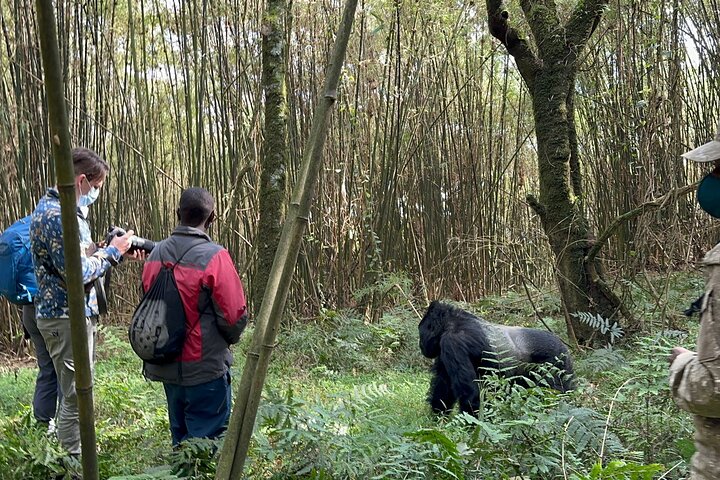
Gorilla-Safe Tourism Guidelines 2026: Official Rules, Trekking Tips & Why They Matter
Official Gorilla-Safe Tourism Guidelines 2026 for Bwindi & Virunga. Learn trekking rules, what to wear, health protocols & how your $800 permit protects gorillas. Book responsibly with GoSilverback Safaris.
Gorilla-Safe Tourism Guidelines are the non-negotiable rules that protect the world’s last 1,063 mountain gorillas while delivering safe, unforgettable encounters for travelers.
Issued jointly by the Uganda Wildlife Authority (UWA) and Rwanda Development Board (RDB) for 2026, these guidelines minimize disease transmission, reduce stress on the apes, and ensure every $800 gorilla permit (Uganda) or $1,500 permit (Rwanda) directly funds conservation.
As expert African safari tour operators at GoSilverback Safaris, we enforce these Gorilla-Safe Tourism Guidelines on every trek in Bwindi Impenetrable National Park, Mgahinga Gorilla National Park, and Volcanoes National Park.
Whether you are an international traveler from the USA, UK, Europe, Canada, Asia, or the Middle East, or a local Ugandan or Rwandan visitor, following them guarantees both your safety and the gorillas’ future.
This definitive 2026 guide answers every practical question, lists the official rules in full, and shows exactly how responsible trekking supports communities and conservation.
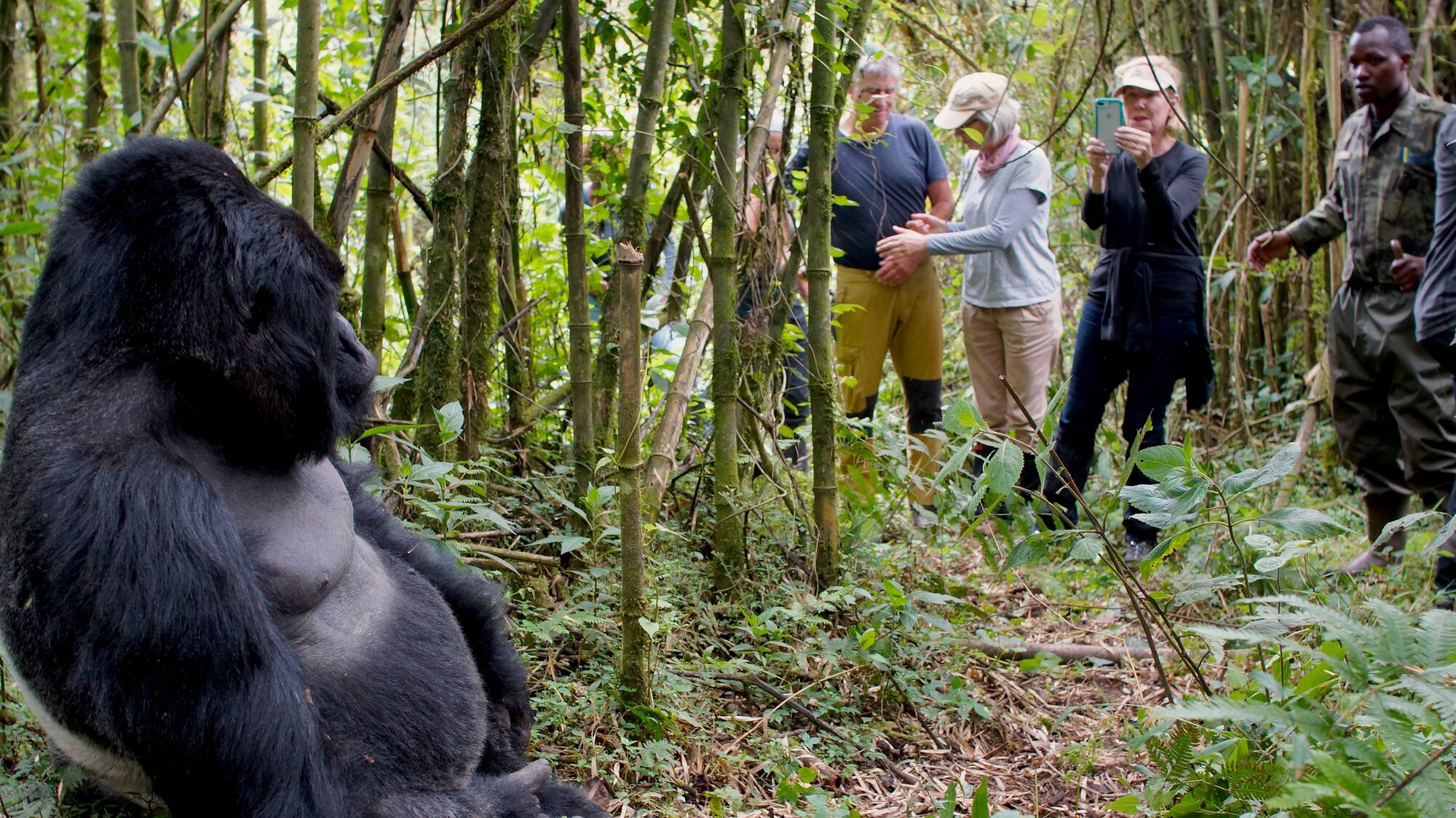
Why Gorilla-Safe Tourism Guidelines Exist
Mountain gorillas share 98% of their DNA with humans, making them extremely vulnerable to our respiratory viruses, measles, and even the common cold.
Habituation—allowing gorillas to tolerate human presence—began in the 1960s and 1970s but only became regulated tourism in the 1990s.
Without strict Gorilla-Safe Tourism Guidelines, disease outbreaks could wipe out entire groups, as seen in past respiratory epidemics that killed up to 25% of habituated families.
The guidelines also limit physical stress. Gorillas are wild animals; overcrowding, noise, or close contact raises cortisol levels, disrupts feeding, and increases infanticide risk.
By capping visitors at eight per group and limiting contact to one hour, UWA and RDB protect natural behavior while generating revenue that has quadrupled the population since the 1980s.
For travelers, these rules create the safest possible experience. They reduce the chance of surprise charges, ensure clear viewing distances for photography, and guarantee that every dollar of your permit supports anti-poaching, habitat protection, and community projects.
In short, Gorilla-Safe Tourism Guidelines are the reason gorilla trekking remains one of Africa’s most ethical and successful conservation models.
Official Gorilla Trekking Rules 2026 (UWA & RDB)
The official Gorilla-Safe Tourism Guidelines 2026 are enforced at every briefing and on every trek.
Here is the complete, up-to-date list:
- Minimum Age Requirement You must be 15 years or older. Children under 15 are not permitted because they are more likely to carry childhood illnesses that gorillas cannot fight.
- Group Size Limit Maximum 8 visitors per habituated gorilla group per day. This applies in both Uganda and Rwanda.
- One-Hour Contact Rule Once the gorillas are located, you have exactly 60 minutes with them. Rangers time this strictly to prevent overstressing the family.
- Distance Rule Maintain at least 10 meters (33 feet) in Uganda and 7 meters (23 feet) in Rwanda at all times. If a gorilla approaches, crouch, look down, and remain calm—never run or scream.
- Health Screening You will not be allowed to trek if you show signs of cold, flu, cough, fever, or any contagious illness. Rangers perform temperature checks and visual screening.
- Face Masks Wear a mask (provided or your own) covering nose and mouth at all times when within viewing distance of gorillas. Change masks if they become wet.
- No Flash Photography Turn off flash and sound on cameras and phones. Speak only in whispers.
- No Eating, Drinking, or Smoking These activities are banned near gorillas to avoid attracting them or leaving contaminants.
- No Spitting or Littering Cover your mouth if you cough or sneeze and turn away. Carry all trash out with you.
- Follow Ranger Instructions Your guide and armed ranger are in charge. Never leave the group or approach gorillas independently.
Permit Prices 2026
- Uganda: $800 foreign non-resident; $700 foreign resident; $500 other Africans; 300,000 UGX East African citizens.
- Rwanda: $1,500 foreign non-resident; $500 foreign/African residents; $200 Rwandan/EAC citizens.
Habituation experiences (4 hours) cost $1,500 in Uganda. Permits are non-transferable and must be paid in full at booking—no 7-day hold option in 2026. Book 3 Days Gorilla habituation in Bwindi.
These rules are not suggestions. Rangers will turn back violators, and your permit is forfeited without refund.
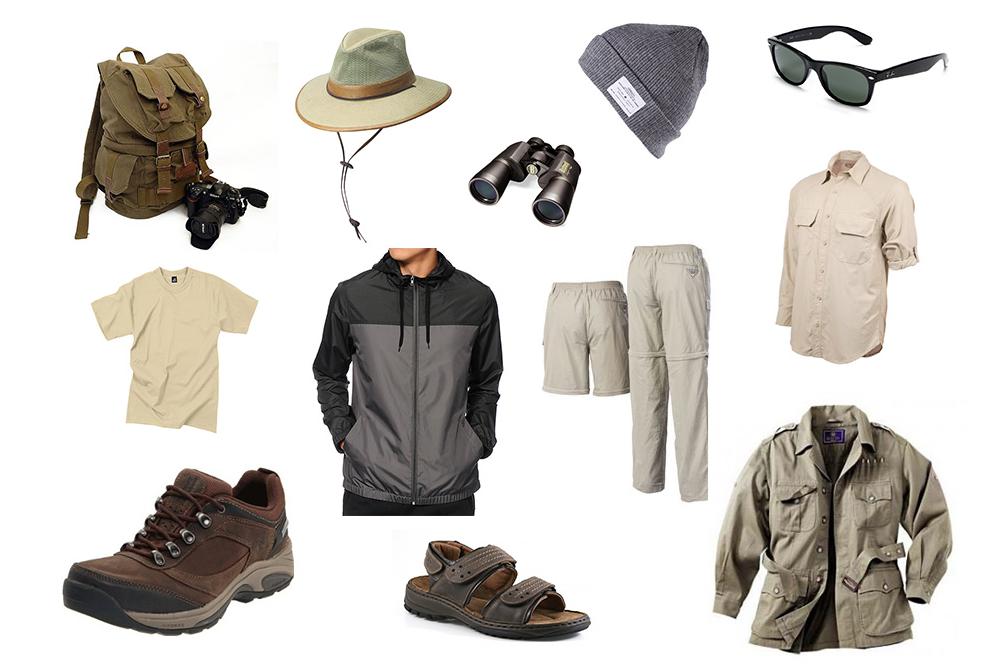
What to Wear & Pack for a Gorilla-Safe Trek
Dressing correctly keeps you comfortable, safe, and invisible to the gorillas.
Follow this Gorilla-Safe Tourism Guidelines packing list:
Clothing
- Long-sleeved shirts and trousers in muted greens, browns, or khaki (avoid bright colors or patterns).
- Sturdy hiking boots with good ankle support and grip for muddy trails.
- Gaiters to keep mud and ants out.
- Rain poncho or lightweight waterproof jacket—rain is possible year-round.
- Gloves for handling vegetation.
Essential Gear
- Binoculars (8×42 or 10×42) for clear distant views.
- Camera with zoom lens (no flash).
- Daypack (20–30 L) with rain cover.
- Reusable water bottle (2 L minimum).
- Headlamp or flashlight with spare batteries.
- Insect repellent (DEET-based).
- Sunscreen and lip balm with SPF.
- Small first-aid kit (blister plasters, painkillers, antidiarrheal).
Luxury vs Budget Tip Luxury lodges often provide ponchos and gaiters; budget travelers should bring their own. Pack light—porters carry only 10–15 kg.
Dress in layers: mornings at 2,000–3,000 m can be chilly, but the trek warms quickly. Change into clean clothes after the trek to avoid carrying forest scents back to your lodge.
Health & Safety Protocols to Protect Gorillas
Gorilla-Safe Tourism Guidelines place gorilla health first. All visitors undergo a pre-trek briefing and health check.
If you feel unwell—even mildly—inform your operator immediately; a replacement trek date can usually be arranged.
Key Health Protocols
- Vaccinations: Yellow fever is mandatory for entry into Uganda and Rwanda. Routine vaccines (measles, tetanus, flu) are strongly recommended.
- Malaria prophylaxis: Essential in lower areas; continue during your stay.
- Altitude awareness: Bwindi and Virunga range 2,000–4,000 m. Acclimatize with a night in Buhoma or Musanze before trekking.
- Hand hygiene: Wash or sanitize hands before and after the trek.
- No close contact: Never touch gorillas, even if they approach.
These measures have kept disease transmission incidents extremely low. GoSilverback Safaris provides surgical masks and conducts temperature checks at every departure.
Real Trekker Stories: Following the Guidelines in 2026
In March 2026, a group from the UK trekking in Buhoma followed the 10-meter rule perfectly. A curious juvenile gorilla approached within 4 meters; the ranger calmly instructed everyone to crouch and look down.
The gorilla passed peacefully, and the group enjoyed 58 minutes of natural behavior without stress.
A Canadian family in Volcanoes National Park in September 2025 reported that wearing masks and speaking only in whispers allowed them to witness a silverback chest-beating display from a safe distance—something guides say rarely happens when rules are broken.
A solo traveler from the Middle East in Ruhija sector noted that hiring a porter not only eased the steep climb but supported a local family, reinforcing the community benefit of Gorilla-Safe Tourism Guidelines.
These real experiences prove the rules create deeper, calmer encounters.
How Gorilla-Safe Tourism Supports Conservation & Communities
Every Gorilla-Safe Tourism Guidelines-compliant trek generates direct conservation revenue. In Uganda, 20% of permit income goes to adjacent communities for schools, health clinics, and alternative livelihoods. Rwanda channels funds into buffer-zone planting and anti-poaching.
This money pays rangers, funds the HuGo conflict-resolution teams, and supports veterinary care through Gorilla Doctors. Communities earning from tourism report 60–70% higher tolerance for gorillas, reducing poaching and encroachment.
By choosing GoSilverback Safaris, you know your permit helps maintain the very trails you walk and the rangers who protect the apes you meet.
Common Mistakes to Avoid on Gorilla Treks
- Arriving unprepared for weather — always carry a poncho.
- Wearing bright clothing — it startles gorillas.
- Ignoring the health screening — honesty protects the animals.
- Trying to get closer for photos — stay at the marked distance.
- Littering or leaving food — it attracts gorillas to human areas.
Avoid these, and your trek will be safe, ethical, and memorable.
Frequently Asked Questions
What are the official Gorilla-Safe Tourism Guidelines?
The Gorilla-Safe Tourism Guidelines include a minimum age of 15, maximum 8 visitors per group, one-hour contact limit, 7–10 meter distance, mandatory masks, and strict health screening to protect gorillas from human diseases.
Do I need a gorilla permit?
Yes. Every visitor must hold a valid permit costing $800 (Uganda foreign non-resident) or $1,500 (Rwanda). Permits are limited and sell out months ahead.
Can children trek gorillas?
No. The minimum age is 15 years. Younger children may carry illnesses or behave unpredictably around gorillas.
What happens if I am sick on trek day?
You will be turned back at the briefing. Your operator will reschedule or refund according to policy—no trekking if you show flu symptoms.
How close can I get to the gorillas?
You must stay at least 10 meters in Uganda and 7 meters in Rwanda. Rangers enforce this strictly.
Is flash photography allowed?
No. Turn off flash and phone sounds. Quiet, natural-light photos are permitted within the time limit.
What should I wear for gorilla trekking?
Long sleeves and trousers in neutral colors, sturdy hiking boots, gaiters, and a rain poncho. Avoid bright colors and jeans.
Are masks required during the trek?
Yes. Wear a face mask covering nose and mouth whenever you are near the gorillas.
How much of my permit fee supports conservation?
20% in Uganda goes directly to community projects; the rest funds park operations, rangers, and anti-poaching.
Can I book a gorilla permit directly?
International travelers should book through licensed operators like GoSilverback Safaris for guaranteed availability and seamless logistics.
Is gorilla trekking safe?
Extremely safe when following Gorilla-Safe Tourism Guidelines. Rangers carry firearms only for emergency wildlife protection and are highly trained.
What is the best time to book a gorilla trek?
Book 6–12 months ahead for peak dry seasons (June–September and December–February). Permits sell out quickly.
Conclusion
Gorilla-Safe Tourism Guidelines are the reason mountain gorilla trekking remains one of the most responsible wildlife experiences on Earth.
They protect the 1,063 remaining gorillas, safeguard your health, and channel millions of dollars into conservation and community development each year.
At GoSilverback Safaris we live these guidelines daily—training our guides, equipping our clients, and ensuring every trek meets the highest UWA and RDB standards. Your journey is not just a holiday; it is a direct contribution to the survival of these magnificent apes.
Secure your gorilla permit today through GoSilverback Safaris. Whether you choose Uganda’s $800 Bwindi experience or Rwanda’s Volcanoes trek, our team guarantees availability, expert guidance, and full compliance with every Gorilla-Safe Tourism Guideline.
Limited permits are released monthly—contact us now to book your private or small-group departure and create memories that matter.
The gorillas are waiting. Trek responsibly, travel with purpose, and join the conservation success story.