Gorilla Trekking Safaris in Uganda, Rwanda & Congo Ultimate Wildlife Adventure Africa 2026
Gorilla trekking safaris in Africa are widely regarded as one of the most transformative wildlife experiences on earth—an encounter so intimate and rare that only a handful of destinations globally make it possible.
Deep in the mist-covered rainforests of Uganda, Rwanda, and the Democratic Republic of Congo (DRC) lives the world’s remaining population of critically endangered mountain gorillas, protected within rugged, ancient volcanic ranges that feel untouched by time.
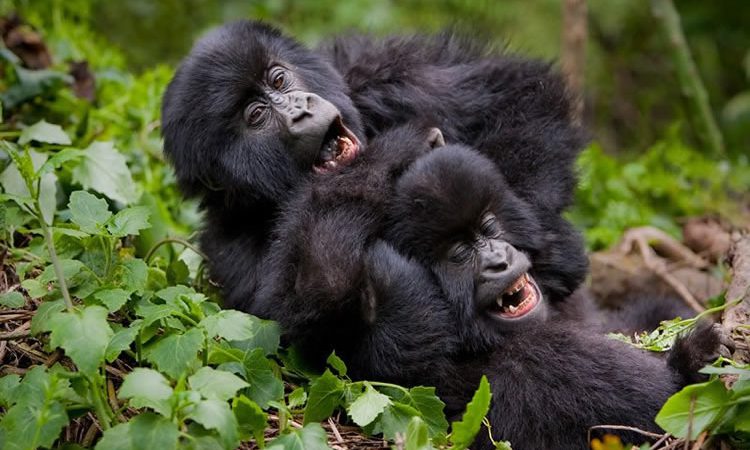
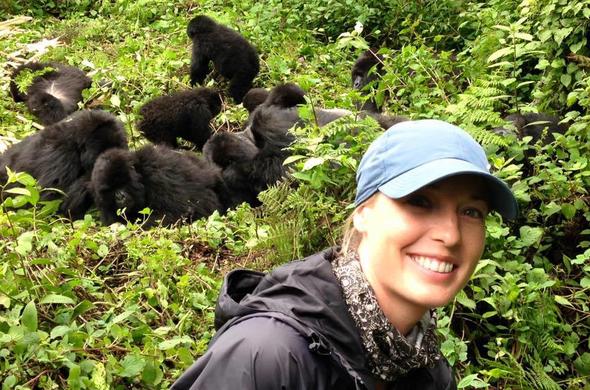
Unlike typical wildlife safaris where animals are observed from a distance, gorilla trekking places you face-to-face with 300–500-pound silverbacks, playful infants, nursing mothers, and entire gorilla families just a few meters away, offering an emotional and eye-opening glimpse into their gentle, intelligent world.
Tourists who choose gorilla trekking Uganda often explore the dense emerald paths of Bwindi Impenetrable National Park and Mgahinga Gorilla National Park, home to the largest number of habituated gorilla families on the continent.
Rwanda gorilla tours center around the legendary Volcanoes National Park, historically tied to Dian Fossey’s conservation mission and famed for offering shorter, more accessible treks.
For the boldest adventurers, Congo gorilla safaris in Virunga National Park deliver raw, dramatic rainforests and fewer crowds, making encounters feel deeply personal and wild.
Over the last decade, gorilla trekking has surged in global popularity, attracting filmmakers, conservationists, photographers, backpackers, and luxury safari travelers alike.
The exclusivity of limited daily permits, emotional wildlife encounters, and conservation-driven tourism has turned gorilla trekking into a bucket-list adventure for anyone who dreams of witnessing primates in their natural sanctuary.
Today, demand continues to rise, boosting eco-tourism, supporting local communities, and strengthening global efforts to protect gorillas from extinction.
For travelers seeking authenticity, heart-pounding adventure, and nature at its most profound, gorilla trekking stands unmatched in Africa and beyond.
Why Choose Gorilla Trekking Safaris?
Choosing gorilla trekking safaris is not just about wildlife viewing—it is about participating in one of the most exclusive, emotional, and conservation-focused wildlife adventures on the planet.
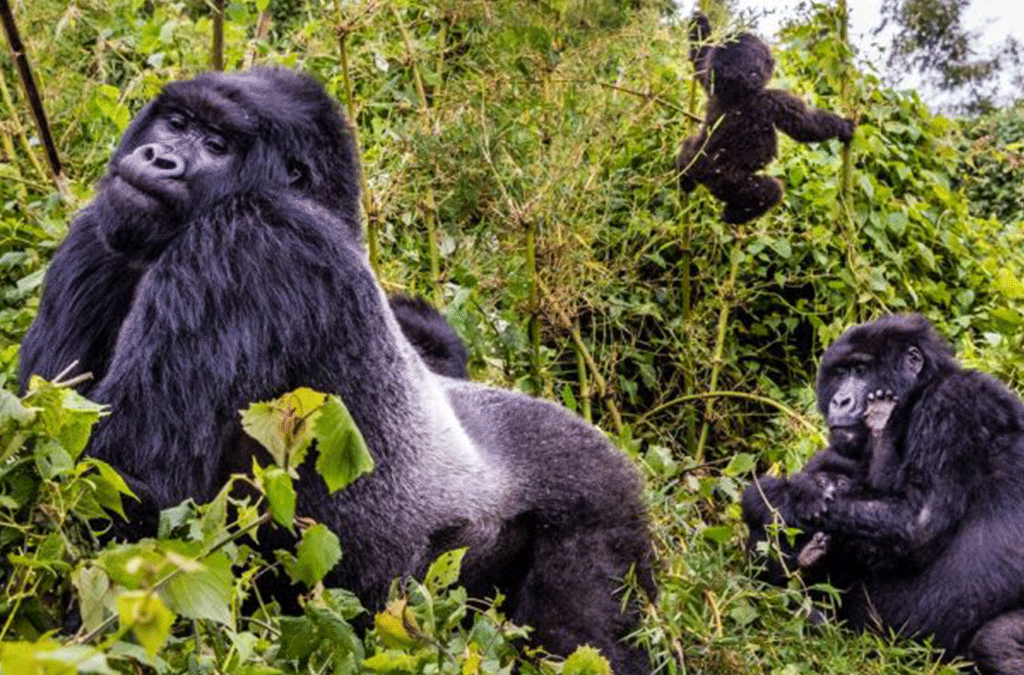
While Africa offers iconic Big Five safaris, nothing compares to the raw, humbling moment when you encounter a 200-kilogram silverback, watch juveniles tumble in play, or see a mother delicately nurse her newborn.
This rare African gorilla experience is found only in Uganda, Rwanda, and DR Congo, making it one of the world’s most limited and highly protected encounters.
Here’s why every traveler should consider gorilla trekking:
1. A Once-in-a-Lifetime Wildlife Encounter
Unlike typical game drives, gorilla trekking brings you within meters of wild gorillas, allowing you to observe their emotions, family hierarchy, behaviors, and striking human-like interactions.
2. Immersive Rainforest Adventure
The journey takes you deep into ancient jungles, bamboo forests, and volcanic slopes. Guided by expert rangers, you trek through misty canopies, mossy trails, and dense vegetation until you reach a habituated gorilla family in their natural sanctuary.
3. Direct Support for Conservation & Communities
Every permit purchased contributes to:
-
Anti-poaching patrols
-
Habitat expansion
-
Mountain gorilla veterinary programs
-
Local community employment & revenue
This makes gorilla trekking one of the strongest forces driving wildlife tourism Africa and species protection.
4. Luxury Meets Wilderness
Travelers can choose between rugged forest expeditions or premium safari experiences featuring helicopter transfers, boutique jungle lodges, spa retreats, and private trackers.
5. More Emotional than Any Other Safari
While lions, elephants, and rhinos offer savannah excitement, gorilla trekking offers profound emotional connection—eye contact, shared curiosity, and the realization of how closely linked we are to these gentle giants.
Best Countries for Gorilla Trekking
Gorilla trekking is a once-in-a-lifetime adventure that can only be experienced in three countries worldwide—Uganda, Rwanda, and the Democratic Republic of Congo.
Each destination offers unique landscapes, habituated gorilla families, trekking styles, and levels of comfort, making them globally top-rated gorilla trekking hubs.
1. Uganda: The World’s Premier Gorilla Trekking Destination
When travelers search for Gorilla trekking Uganda, two iconic parks dominate the experience:
Bwindi Impenetrable National Park
Home to the highest mountain gorilla population on earth, Bwindi offers over 20 habituated gorilla families, including Rushegura, Habinyanja, Mubare, Nkuringo, and Kahungye.
Treks can range from 2 to 6 hours depending on gorilla movement, terrain, and fitness levels. Bwindi’s thick, ancient forest and steep slopes make trekking both challenging and rewarding.
Mgahinga Gorilla National Park
Smaller and quieter than Bwindi, Mgahinga features the Nyakagezi gorilla family, known for stability and ease of tracking. Due to open bamboo vegetation and lighter forest cover, treks here are typically shorter and less strenuous than in Bwindi.
Uganda also offers the exclusive Gorilla Habituation Experience, where visitors spend 4 full hours with gorillas instead of the standard 1 hour—an opportunity unavailable anywhere else in the world.
2. Rwanda: Luxury & Accessibility Combined
Rwanda Volcanoes Park in the Virunga massif is famous for its smooth trekking logistics and scenic volcanic slopes.
The country’s habituated gorilla groups include Titus, Kwitonda, Susa, and Amahoro, known for their calm behavior and photographic appeal.
Rwanda offers the most accessible treks, often lasting 1 to 3 hours, making it ideal for luxury travelers or those with limited time.
Rwanda’s gorilla permits are the most expensive in Africa, but visitors benefit from well-developed infrastructure, luxury lodges, high ranger professionalism, and breathtaking views of volcanic peaks and mist-covered bamboo forests.
Find more about Rwanda and Uganda Gorilla Permits Here.
3. DR Congo: Raw Wilderness & Adventure
For travelers seeking off-the-beaten-path exploration, Virunga gorillas in Virunga National Park provide unmatched adventure and dramatic landscapes.
Congo offers the lowest permit prices among the three nations, but visitors should follow safety advisories, ranger guidance, and travel with registered tour operators.
Trekking here delivers a truly wild feel—steep volcanic jungles, fewer tourists, and deeper immersion.
Discover the best itineraries and prices—explore our Gorilla Safari packages designed for unforgettable gorilla trekking safaris in Uganda and Rwanda.
How Gorilla Trekking Works
Gorilla trekking follows a carefully controlled system designed to protect endangered mountain gorillas and ensure safe, meaningful encounters for visitors.
The adventure begins with securing gorilla trekking permits, which must be reserved in advance due to limited daily slots. Government wildlife authorities—UWA in Uganda, RDB in Rwanda, and ICCN in DR Congo—strictly regulate the number of visitors per gorilla family to avoid stress and overexposure.
Here’s how the trekking process works:
1. Early Morning Briefing
Treks begin at sunrise with a detailed briefing on how to trek gorillas, trail expectations, and safety rules. Rangers, armed escorts, and professional trackers accompany all visitors to ensure both direction and security.
2. Trekking Duration & Physical Demands
Tracking gorilla families can take 1 to 6 hours depending on their movement patterns. The terrain includes:
-
Steep volcanic slopes
-
Dense bamboo and rainforest canopies
-
Muddy or humid jungle trails
Physical fitness is recommended, though porters are available to assist with backpacks and challenging climbs.
3. Rules During Encounters
Once gorillas are located, strict gorilla trekking rules must be followed:
-
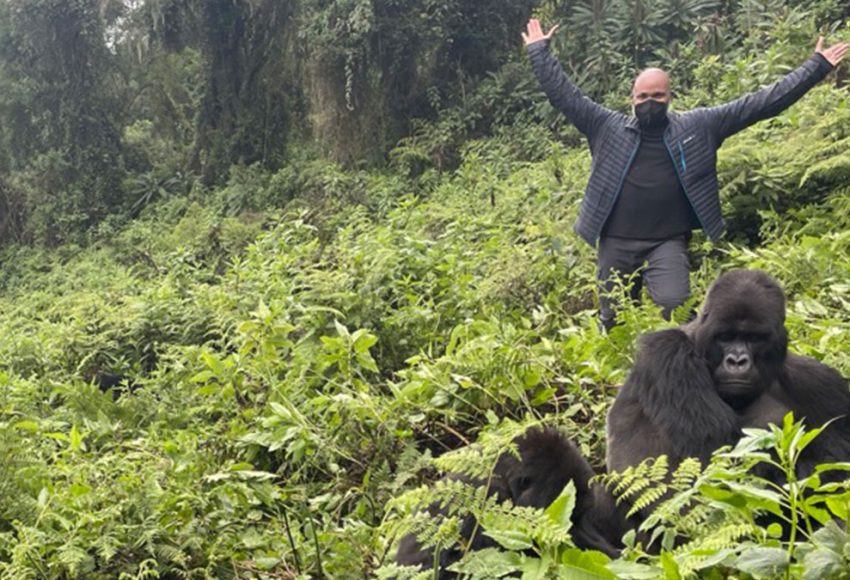
7-meter minimum distance
-
No flash photography
-
No direct eye contact if a silverback charges
-
Voices kept low at all times
-
No eating or drinking near gorillas
The encounter lasts 1 hour maximum, unless you book Uganda’s unique 4-hour Gorilla Habituation Experience.
4. What to Expect During the Encounter
Trekkers may witness:
-
Silverbacks displaying dominance through chest beats
-
Infants clinging to mothers
-
Juveniles somersaulting and playing in vines
-
Gentle grooming and family bonding
The rainforest soundtrack—buzzing insects, echoing calls, dripping canopy mist—makes the experience deeply immersive.
This structured trekking approach ensures safety, ecological balance, and unforgettable emotional connection with the world’s rarest primates.
Gorilla Trekking Safaris: Cost & Budget Guide
Gorilla trekking is a premium African experience, and its pricing reflects conservation commitments, strict permit controls, and limited gorilla access.
As of 2026, gorilla permit prices remain the single biggest cost in planning your safari.
Below is the official fee breakdown:
1. Uganda Gorilla Permits: $800
Uganda offers competitive pricing and the highest number of habituated gorilla families. It’s also the only country providing the 4-hour Gorilla Habituation Experience ($1,500) for a deeper encounter.
2. Rwanda Gorilla Permits: $1,500
Rwanda positions itself as the luxury gorilla trekking destination. Trekking is generally shorter, infrastructure is seamless, and lodges are world-class—ideal for high-end travelers.
3. DR Congo Gorilla Permits: $400–$600
The most affordable gorilla trekking option. Congo appeals to adventurous travelers and photographers seeking remote, uncrowded rainforest experiences.
Gorilla Permit Costs (2026 Official Rates)
| Country | Permit Price (USD) | Local Currency Equivalent | Notes |
|---|---|---|---|
| Uganda | $800 | Approx. UGX 2,971,000 | Best value, most gorilla families |
| Uganda Habituation (4 hrs) | $1,500 | Approx. UGX 5,600,000 | Only offered in Uganda |
| Rwanda | $1,500 | Approx. RWF 1,973,000 | Luxury-focused + short trek distances |
| DR Congo | $400–$600 | Approx. CDF 1,050,000–1,575,000 | Most affordable permits in Africa |
Ready to experience the ultimate adventure? Explore our Gorilla Safari packages and start planning your unforgettable gorilla trekking safari today.
What Determines Gorilla Safari Cost?
Beyond permits, your budget will depend on:
-
Accommodation: Budget guesthouses, mid-range lodges, luxury eco-retreats
-
Transport: 4×4 safari vehicles, border transfers, private drivers
- Border transfers (if trekking Rwanda-Uganda)
-
Guides & trackers: Required for all treks
-
Porters & hiking gear: Strongly recommended to ease trekking difficulty
- Meal & park entrance fees
Many travelers choose gorilla safari packages combining park permits, meals, transport, and lodging for convenience and cost-efficiency.
Tips to Reduce Gorilla Safari Costs
-
Travel in low/shoulder seasons (April–May, October–November)
-
Book group tours to share transport and guide fees
-
Compare tour operators for bundled permit + accommodation offers
-
Stay near the park to avoid extra transfer costs
-
Consider DR Congo if seeking a lower permit alternative
For backpackers, Uganda offers the best value-to-experience ratio. For luxury seekers, Rwanda remains unbeatable for premium lodges, helicopter transfers, and smooth logistics.
A smart gorilla safari budget balances permits with comfortable but practical lodge choices, reliable transport, and guided expertise—maximizing wildlife encounter value without overspending.
Pricing Differences: Foreigners vs Locals / Regional Visitors
Uganda Wildlife Authority (Uganda)
-
For foreigners (non-residents) — latest standard gorilla-trekking permit fee is USD 800.
-
For foreign residents (living in Uganda or with residence/work permit) — permit fee is USD 700.
-
For African citizens (but non–East-African Community) — some sources mention USD 500.
-
For East African Community (EAC) citizens (e.g. Ugandans, Kenyans, Tanzanians, Rwandans etc) — permit fee is much lower: UGX 300,000 (≈ USD 80).
-
For the special 4-hour “Habituation Experience” (offered only in Uganda) the rates are also tiered: foreigners pay more, locals / EAC pay less.
Why the difference? This tiered system reflects efforts to make gorilla trekking more accessible to regional and African tourists while still generating conservation funding from international visitors.
Rwanda Development Board (Rwanda)
-
For international (non-African / non–EAC) visitors: permit cost is USD 1,500 per person — same for all non-residents.
-
For Rwandan citizens — there is a much lower rate: sources indicate a local citizen price (e.g. ~ RWF 30,000 in some mentions).
-
For other African / EAC citizens: there are reduced permit rates compared to non-resident foreigners (for example ~ USD 500 for some foreign residents / African nationals).
Rwanda does not offer the 4-hour habituation experience; all treks are standard 1-hour encounters.
Virunga National Park Authority / DR Congo (DRC)
Fees in DRC tend to be more modest compared with Uganda and Rwanda — often cited around USD 400–600 for standard gorilla trekking for non-residents.
However — publicly available info on discounted rates for locals or African citizens for DRC seems much less reliable or consistent in 2026 sources. Many tourism guides primarily quote the non-resident cost.
Turn your dream into reality—explore our Gorilla Safari packages and secure your spot for an incredible gorilla trekking safari.
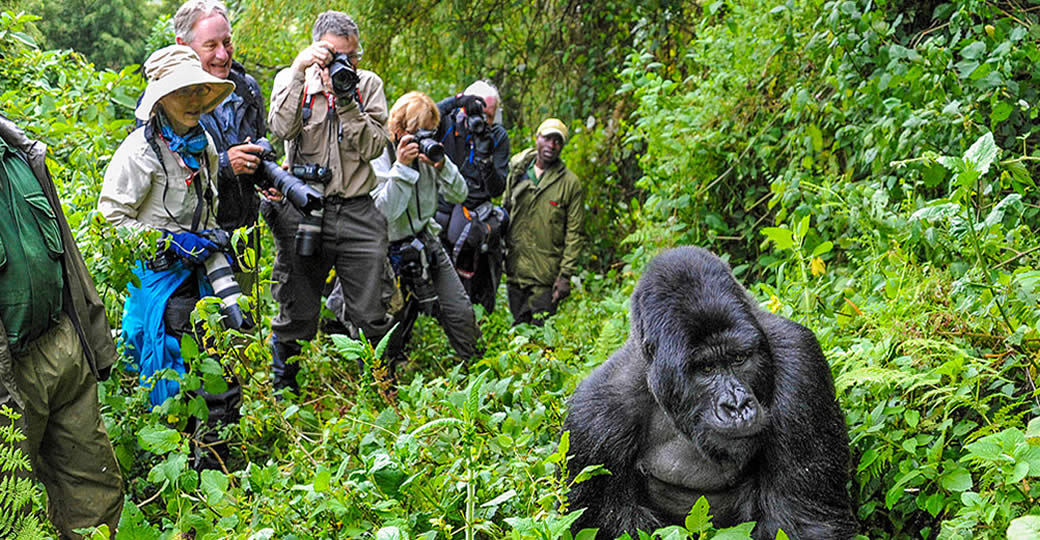
2025–2026 Gorilla Trekking Permit & Tour Cost Comparison
| Country / Park | Visitor Category | Permit Price (2025–26) | What’s Included in Permit | Approx. Full Safari Budget* |
|---|---|---|---|---|
| Uganda (Bwindi / Mgahinga) | Foreign Non-Resident (non-EAC) | US $ 800 | 1-hour gorilla trek, ranger/guide, park entry, conservation fees. | Budget: US $1,200 – 1,550 (shared lodge/transport) Mid-range: $1,800 – 2,900 Luxury: $3,000 – 5,000+ |
| Foreign Resident (with work permit / foreign living in Uganda) | US $ 700 | Same as above | Similar to above, slightly lower depending on accommodation/transport choices | |
| Other African (non-EAC) | US $ 500 | — | Costs lower due to cheaper permit + shared/basic services | |
| East African Community (EAC) Citizens | UGX 300,000 (≈ US $ 80) | — | Ideal low-cost trekking for locals / regional visitors (plus cost of transport/lodging) | |
| Uganda — Habituation Experience (Bwindi only) | Foreign Non-Resident | US $ 1,500 | 4-hour extended encounter with semi-habituated gorillas + ranger services | Mid to high range safari: depends on lodging & extras (likely > $2,500) |
| Foreign Resident | US $ 1,000 | — | Slightly lower total than full foreign non-resident package | |
| East African Citizens | UGX 750,000 | — | Cheapest route to extended gorilla experience for regional visitors | |
| Rwanda (Volcanoes NP) | Foreign Non-Resident | US $ 1,500 | 1-hour gorilla trek, rangers, park entry, conservation fees | Typical 3–day trek budget depends heavily on lodge standard — expect $1,700–2,000 (budget/mid) or $3,500–7,000+ (luxury) depending on accommodation & transport. |
| African (non-EAC) / Foreign Resident | US $ 500 | — | Reduced cost, though lodging & logistics still add up | |
| East African Citizens / Rwandan nationals | US $ 200 | — | Very low-cost permit — good for regional travelers | |
| DR Congo (Virunga NP) | Foreign Non-Resident | US $ 400 (high season) / ≈ $200–250 (low season) depending on date & availability | 1-hour gorilla trek, guides/trackers, park entry | Base permit is cheap — but due to variable infrastructure, travel/transport might raise total cost; expect modest-to-mid-range depending on choices |
| (No widely publicized standard regional / EAC discounts for DRC in 2026) | — | — | Cost-savings uncertain; clarify with operators |
* “Full Safari Budget” includes permit + shared lodging + basic transport/4×4 + meals. Luxury packages with private transport, upscale lodges or extras (porters, domestic flights) will be more expensive.
Looking for the perfect itinerary? Explore our Gorilla Safari packages and find the best options for your gorilla trekking safari experience.
What This Table Shows — and What to Note
-
Huge price differentiation between foreigners vs. East African / regional visitors — particularly in Uganda and Rwanda. This is valuable for local/regional marketing or targeting within East Africa.
-
Permit fee dominates costs. Once permit is paid, the rest of the budget depends heavily on lodging, transport, and extras (porter, meals, tips).
-
Uganda offers the most flexible pricing tiers, making it accessible for a wide range of budgets — from EAC citizens on tight budgets to luxury travelers seeking habituation treks.
-
Rwanda remains the premium option, with high permit cost but superior infrastructure, convenience, and shorter trekking drives.
-
DR Congo offers the cheapest permit, but infrastructure/uncertainty may offset some savings — useful for adventure-oriented, flexible travelers.
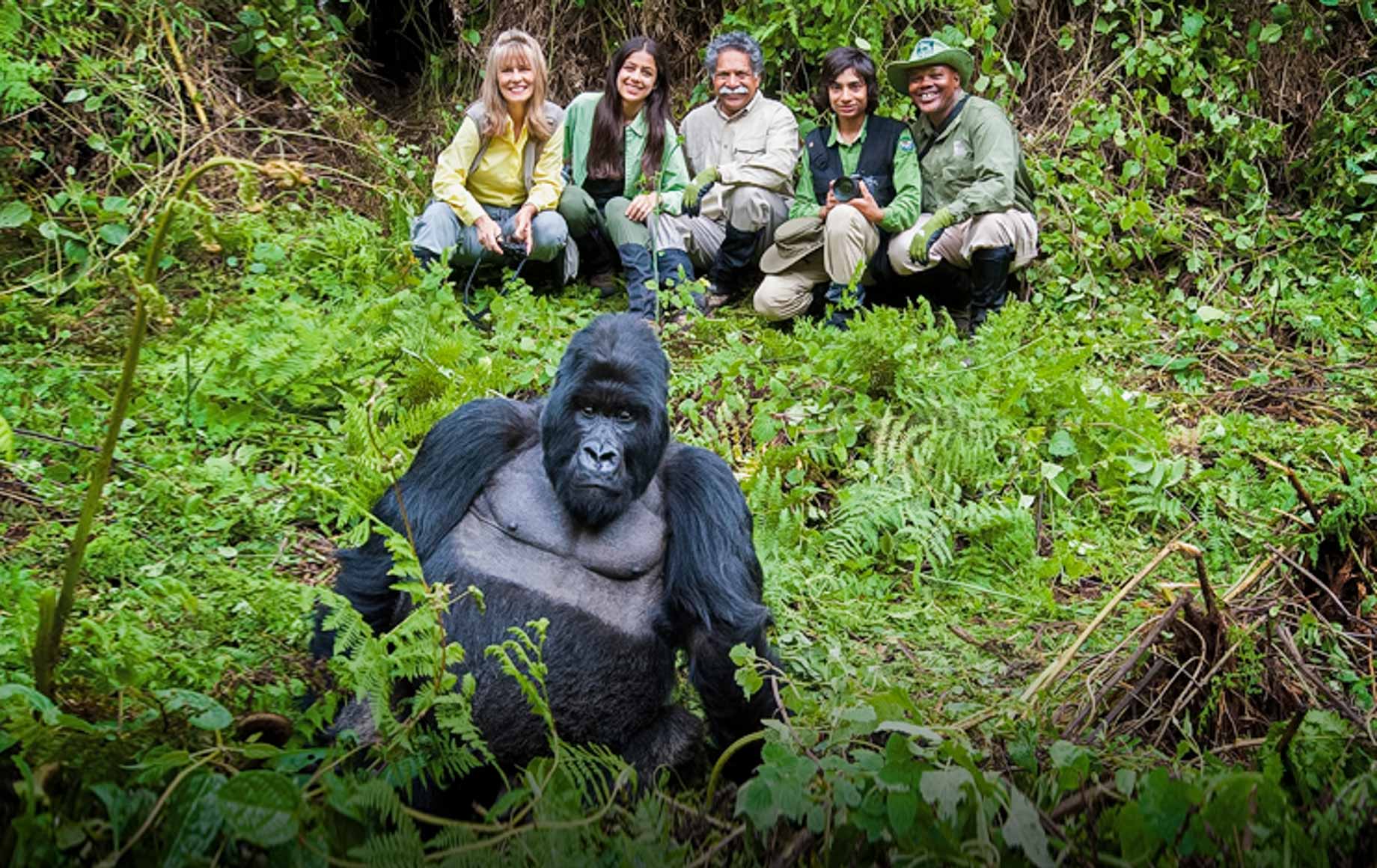
Best Time to Visit Gorilla Trekking Safaris
Timing your gorilla trekking safari is crucial for both comfort and wildlife viewing. Uganda, Rwanda, and DR Congo all have equatorial climates, but slight variations in rainfall and terrain affect trekking conditions and scenery.
1. Dry Seasons: Ideal for Trekking
-
Uganda & Rwanda: December–February and June–September
-
DR Congo (Virunga): June–September and December–February
During these dry periods, trails are less muddy, rivers easier to cross, and gorilla tracking is safer and more comfortable.
Visibility improves, offering excellent conditions for wildlife photography and scenic shots of misty volcanoes, lush bamboo forests, and rolling highland landscapes.
These months also tend to attract more tourists, so permits may sell out quickly.
2. Wet Seasons: Lush Landscapes & Fewer Crowds
-
Uganda & Rwanda: March–May and October–November
-
DR Congo: March–May and September–November
Rainy seasons bring dense greenery, dramatic waterfalls, and vibrant jungle flora—perfect for nature enthusiasts and photographers who prioritize scenic beauty.
Trekking during wet months is more challenging: trails are muddy, and gorilla families may move longer distances.
However, these periods often feature smaller trekking groups, making encounters more private and immersive.
3. Other Considerations
-
Wildlife spotting: Dry seasons make gorillas easier to track, while wet seasons increase chances of spotting birdlife and other rainforest species.
-
Photography: Early morning light combined with dry trails ensures crisp, clear photos, whereas rainy months provide striking mist and lush vegetation backdrops.
-
Booking tips: Secure permits well in advance for peak dry months to avoid disappointment.
In summary: For the best time gorilla trekking, choose the dry months for easier hiking, wildlife visibility, and classic safari photography.
Wet months offer a quieter, greener, and more adventurous experience for intrepid travelers.
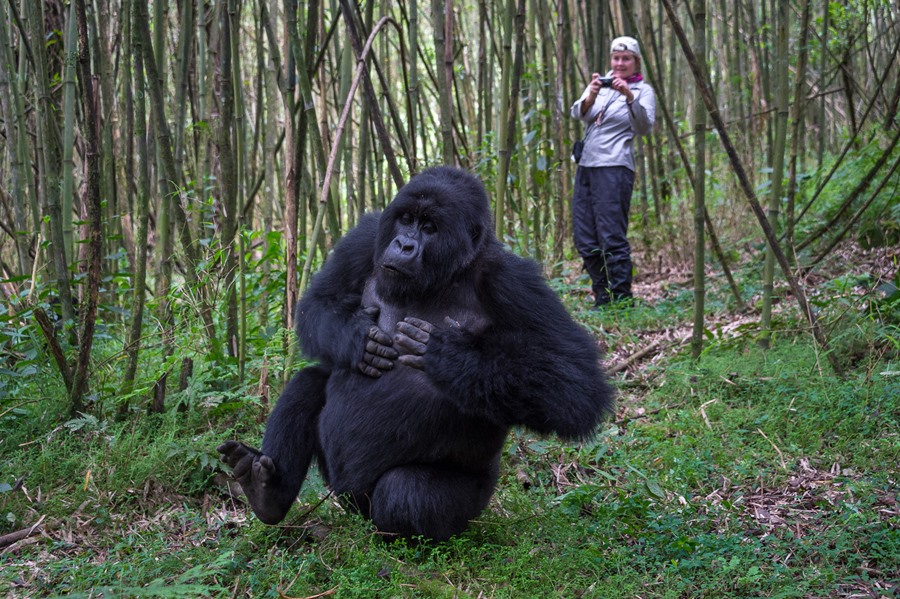
Turn your dream into reality—explore our Gorilla Safari packages and secure your spot for an incredible gorilla trekking safari.
Gorilla Trekking Tours & Packages
Gorilla trekking safaris are offered by a range of professional tour operators across Uganda, Rwanda, and DR Congo, catering to both luxury travelers and budget adventurers.
Choosing the right package ensures a smooth, safe, and memorable encounter with mountain gorillas while supporting conservation and local communities.
1. Top Tour Operators by Country
-
Uganda: Leading operators include Go Silverback Safaris Ltd & Gorilla Nests safaris, and Primate Safaris Uganda. They provide fully guided treks in Bwindi Impenetrable Forest and Mgahinga Gorilla National Park, along with accommodations, park permits, transport, and optional cultural visits to local communities.
-
Rwanda: Popular providers are Volcanoes Safaris, Amahoro Safaris, and Rwanda Eco Tours. They focus on Volcanoes National Park, offering luxury lodges, professional guides, and smooth logistics with early morning starts for optimal gorilla viewing.
-
DR Congo: Operators like Virunga Lodge Tours and Mugogo Safaris cater to adventurous trekkers in Virunga National Park, providing remote trekking experiences with experienced rangers and unique Congo jungle immersion.
2. Luxury vs Budget Packages
-
Luxury Packages: Typically include private guides, high-end lodges or boutique tented camps, helicopter transfers, and gourmet meals. These packages are ideal for travelers seeking comfort while experiencing close encounters with gorillas in Uganda and Rwanda. Average 3-day luxury packages range from $3,500–$7,000 per person.
-
Budget Packages: Focus on shared lodges, group transportation, and standard trekking arrangements. Budget travelers can experience gorilla trekking from $1,200–$2,000 per person in Uganda or $1,700–$2,500 in Rwanda, excluding optional extras. DR Congo often offers the most affordable packages due to lower permit costs.
3. Multi-Day Combined Safaris
Many operators offer combined safari packages that mix gorilla trekking with classic wildlife safaris (lions, elephants, hippos) and cultural experiences (local villages, coffee tours, birdwatching).
For example:
-
Uganda: Gorilla trekking + Queen Elizabeth National Park wildlife safari + cultural Batwa pygmy visits
-
Rwanda: Volcanoes gorilla trek + Akagera National Park safari
-
DR Congo: Virunga gorilla trek + Nyiragongo volcano hike
These multi-day safaris provide a well-rounded adventure for wildlife enthusiasts and photographers.
Call-to-Action
To secure your gorilla trekking experience, book your tour early, especially during peak dry seasons (June–September, December–February).
Explore trusted operators and packages here: Book Your Gorilla Trekking Tour Now — support conservation while creating memories of a lifetime.
From budget to luxury, explore our Gorilla Safari packages and choose the ideal gorilla trekking safari for your adventure.
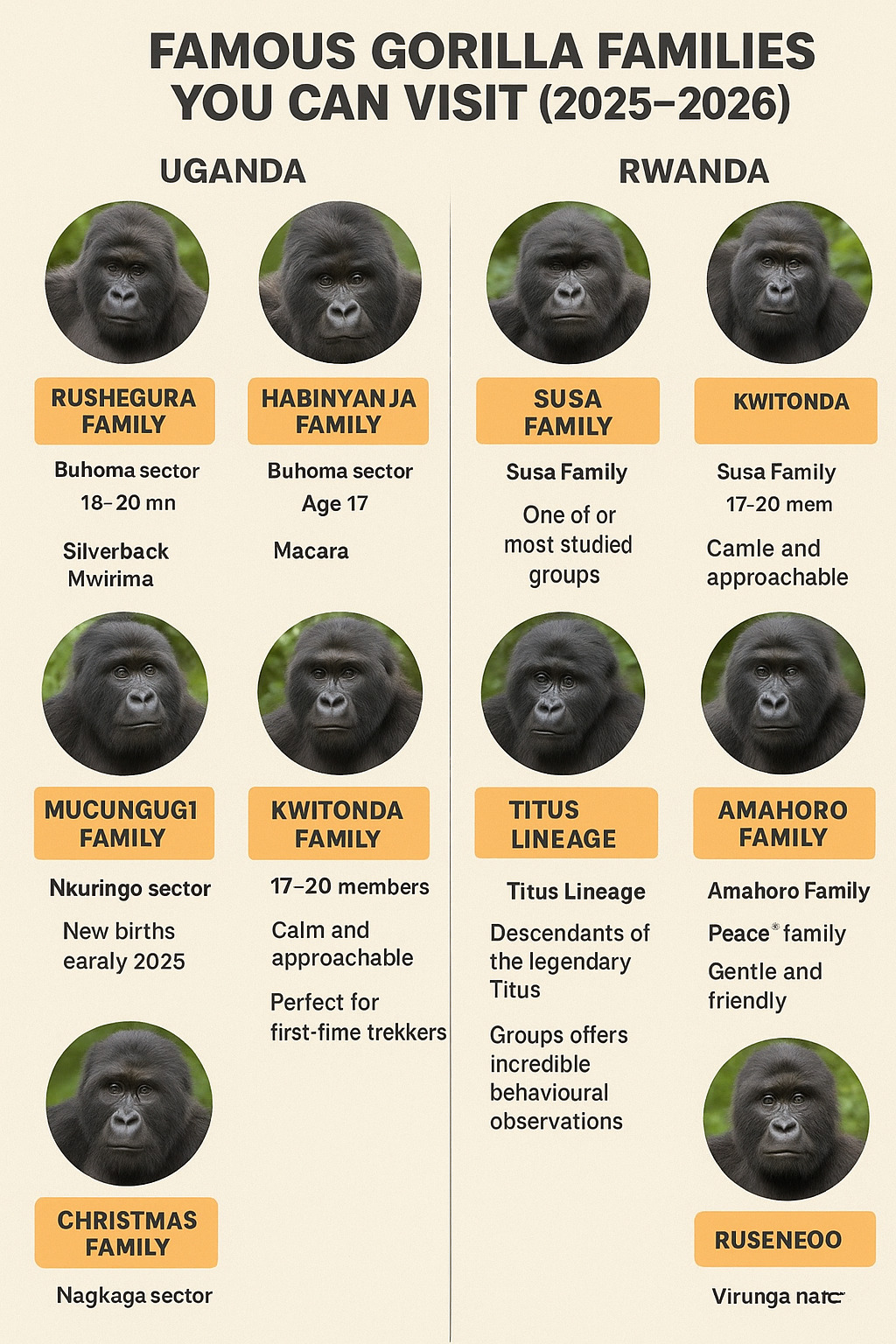
Gorilla Families & Famous Sightings
One of the most rewarding aspects of gorilla trekking safaris is meeting habituated gorilla families that have become famous for their personalities, social behaviors, and memorable sightings.
Both Uganda and Rwanda host gorilla families that are regularly visited by trekkers, offering unforgettable wildlife encounters.
1. Famous Gorilla Families in Uganda
-
Habinyanja: Located in Bwindi Impenetrable Forest, this family is known for its playful juveniles and calm silverback. Recent births have added new infants, delighting visitors and photographers alike.
-
Susa: Also in Bwindi, Susa is one of the largest families, often featuring over 20 gorillas, making it a dynamic group for observing social interactions.
-
Rushegura & Nkuringo: Both families are habituated and offer trekkers excellent opportunities to see gorillas in dense forest habitats, engaging in chest-beating displays and gentle grooming.
2. Famous Gorilla Families in Rwanda
-
Titus: Perhaps the most photographed gorilla in the world, Titus resides in Volcanoes National Park. Known for his calm demeanor and striking silverback features, he is a favorite among photographers.
-
Kwitonda & Amahoro: These families provide reliable sightings and are well-known for their approachable nature, making them ideal for first-time trekkers and professional wildlife photography.
3. Recent Births & Memorable Moments
Both Uganda and Rwanda have seen a rise in gorilla births, a positive sign of conservation success. Infants clinging to their mothers or playing with juveniles often become the highlight of trekking encounters.
Silverbacks performing chest-beating displays or protecting the group are also spectacular, offering dynamic photographic moments.
4. Tips for Wildlife Photographers
-
Use zoom lenses (200–400mm) to capture close-up gorilla expressions without breaching the 7-meter distance rule.
-
Keep ISO and shutter speed high in dense forest lighting.
-
Be patient — gorillas move slowly, and the most memorable shots come from observing natural behaviors.
Tips for a Safe & Enjoyable Gorilla Trek
Gorilla trekking is a thrilling adventure, but preparation is key to ensure safety, comfort, and respect for these endangered primates.
1. Health Precautions & Fitness Tips
-
Vaccinations: Ensure you are up-to-date on yellow fever, tetanus, hepatitis A & B, and typhoid. Some operators may require proof of COVID-19 vaccination.
-
Fitness Level: Treks can last 1–6 hours over steep, muddy, and uneven terrain. Moderate to good physical fitness is recommended. Regular cardio, hiking practice, and leg strengthening exercises help.
-
Medical Kit: Carry personal medications, insect repellent, and anti-malaria prophylaxis if recommended.
2. Gear & Packing Checklist
-
Footwear: Waterproof hiking boots with good ankle support
-
Clothing: Lightweight, breathable, and quick-dry layers; long sleeves and trousers for protection against insects and bamboo scratches
-
Rain Gear: Poncho or waterproof jacket for wet-season treks
-
Accessories: Hat, sunglasses, sunscreen, gloves, trekking poles, backpack
-
Photography: Camera with zoom lens (200–400mm), extra batteries, memory cards
3. Do’s & Don’ts During Gorilla Encounters
Do:
-
Maintain the 7-meter distance at all times
-
Speak softly and avoid sudden movements
-
Follow ranger instructions carefully
-
Keep hands away from gorillas; avoid feeding
Don’t:
-
Touch gorillas or approach infants
-
Use flash photography
-
Consume food or drink near gorillas
-
Panic or run if gorillas move suddenly
By following these gorilla trekking tips, visitors can enjoy a safe gorilla trek, minimize stress to the animals, and capture unforgettable memories in Uganda, Rwanda, or DR Congo.
Conservation & Community Impact
Gorilla trekking safaris play a vital role in gorilla conservation Africa.
Permit fees directly fund anti-poaching patrols, habitat protection, veterinary care, and scientific research, helping secure the survival of the world’s remaining mountain gorillas.
Tourism revenue also supports national parks and enables long-term monitoring of gorilla families, ensuring their habitats remain protected for future generations.
Beyond conservation, gorilla tourism drives community tourism Uganda and regional development.
Local guides, porters, lodge staff, and drivers gain stable employment, while communities benefit from schools, healthcare projects, and small businesses supported by tourism revenue.
Cultural experiences, such as village visits and traditional dance performances, further integrate local communities into the safari economy, creating a sense of ownership and pride.
Tourists can contribute responsibly by choosing eco-conscious operators, respecting park rules, and minimizing environmental impact.
Simple actions—staying on designated trails, avoiding litter, and supporting locally owned lodges or handicrafts—help sustain both gorilla populations and local livelihoods.
By combining adventure with purpose, gorilla trekking ensures that every safari supports eco-tourism impact in Africa, protecting wildlife while uplifting communities, making each visit a meaningful contribution to conservation and sustainable tourism.