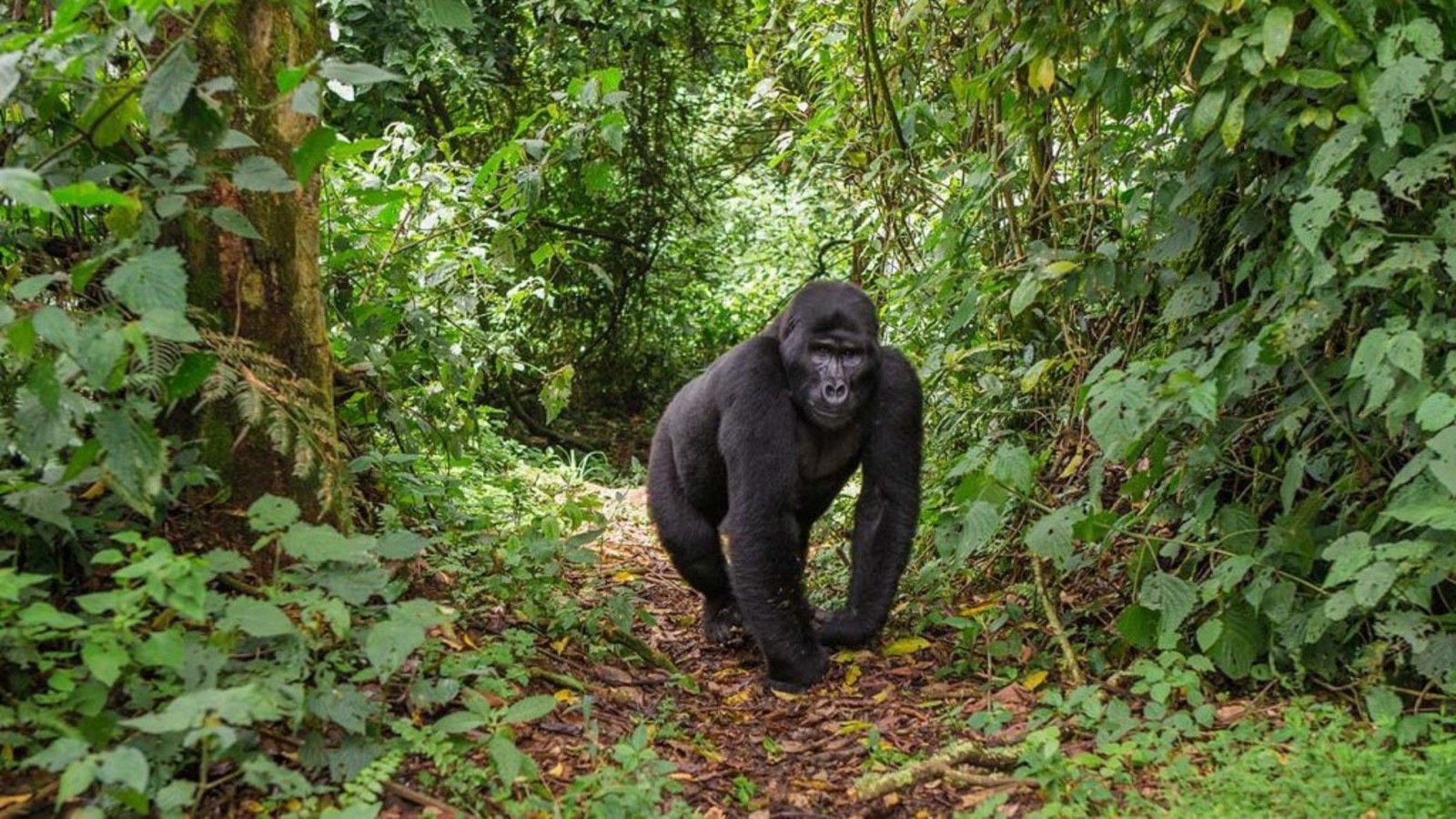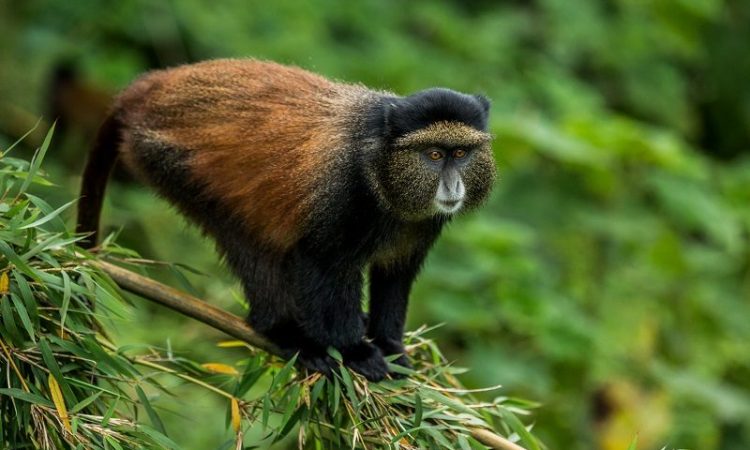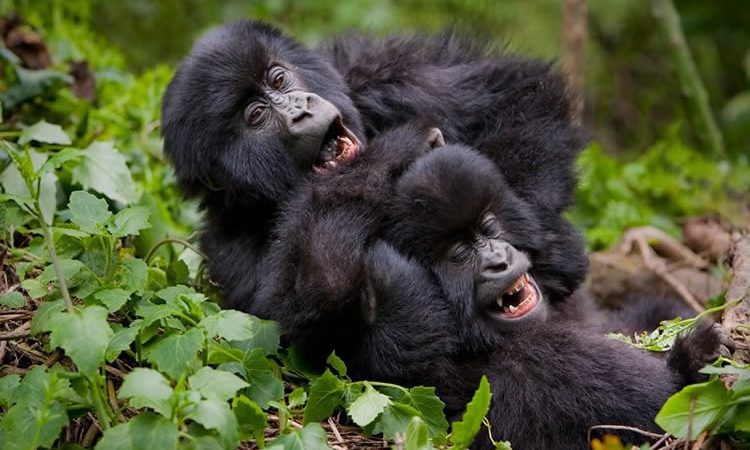
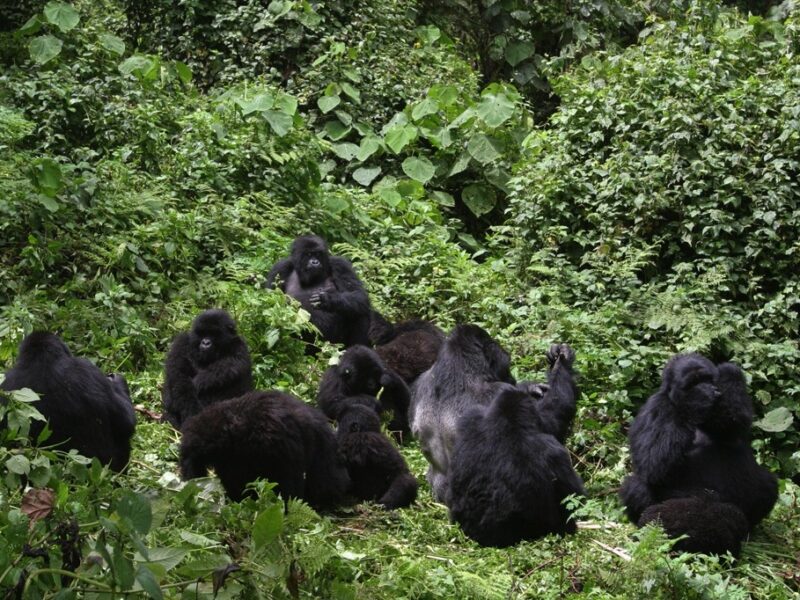
Why Are Mountain Gorillas Endangered? 7 Key Threats Explained 2026 Guide
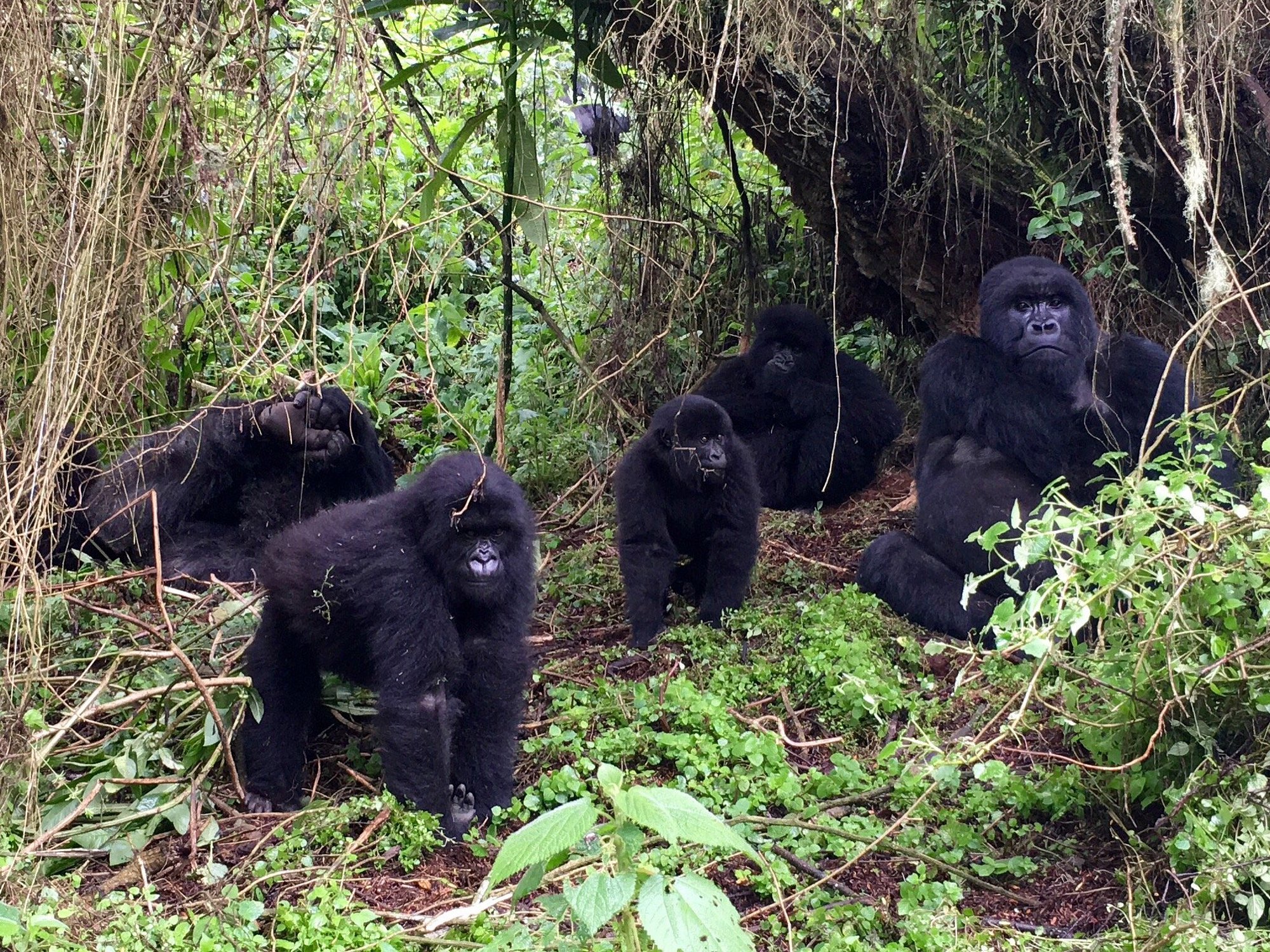
Mountain gorillas are endangered because only about 1,063 individuals remain in the wild, confined to two small, isolated forest populations in Uganda, Rwanda, and the Democratic Republic of Congo.
Their survival is threatened by habitat loss, snares, human disease, civil unrest, climate change, and the risks created by a tiny population.
Mountain gorillas are endangered because their forest habitat is shrinking and fragmented, while poaching snares, human-transmitted diseases, insecurity, climate pressure, and limited genetic diversity leave them vulnerable.
Conservation has helped their numbers rise, but the species still faces a high risk of extinction.
Seeing a mountain gorilla in the misty forests of Bwindi Impenetrable National Park, Volcanoes National Park, Mgahinga Gorilla National Park, or Virunga National Park is one of the world’s greatest wildlife experiences.
But every gorilla trek also supports a fragile conservation economy: responsible tourism helps fund ranger patrols, veterinary care, community projects, and habitat protection.
Ready to see mountain gorillas responsibly? Book your gorilla permit and safari with GoSilverback Gorilla Safaris for expert-led trekking in Uganda and Rwanda.
Are Mountain Gorillas Endangered or Critically Endangered?
Mountain gorillas are classified as Endangered, not Critically Endangered, by the IUCN Red List.
In 2018, the IUCN changed their status from Critically Endangered to Endangered after coordinated conservation efforts helped the population grow from roughly 680 individuals in 2008 to more than 1,000 by 2018.
That improvement is encouraging, but it does not mean mountain gorillas are safe. Endangered still means the subspecies faces a very high risk of extinction in the wild.
The IUCN notes that threats remain high, including poaching, recurring civil unrest, and human-introduced diseases such as respiratory infections and Ebola.
| Factor | Mountain gorillas |
|---|---|
| Scientific name | Gorilla beringei beringei |
| IUCN status | Endangered |
| Former status | Critically Endangered until 2018 |
| Estimated wild population | About 1,063 individuals |
| Main range | Uganda, Rwanda, and the Democratic Republic of Congo |
| Remaining habitat | Two isolated populations: Bwindi-Sarambwe and the Virunga Massif |
| Major threats | Habitat loss, snares, disease, insecurity, climate change, small population size |
| Population trend | Increasing, but fragile |
Support conservation-focused travel: Plan a responsible Uganda or Rwanda gorilla trek with GoSilverback Gorilla Safaris.
How Many Mountain Gorillas Are Left?
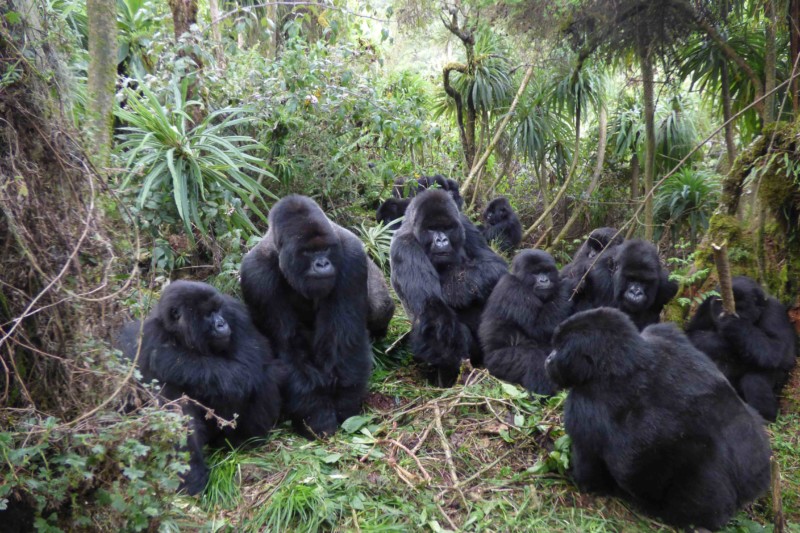
There are approximately 1,063 mountain gorillas left in the world, according to the latest widely cited census results.
This total combines 459 gorillas in Bwindi-Sarambwe and 604 gorillas in the Virunga Massif.
The Bwindi-Sarambwe population was estimated at 459 gorillas in the 2018/19 census, while the Virunga Massif population was estimated at 604 gorillas in the 2015/16 census.
Both figures are minimum estimates because gorillas move through dense forest, cross borders, and are difficult to count with complete precision.
Mountain gorilla population by location
| Population | Location | Estimated gorillas | Census period |
|---|---|---|---|
| Bwindi-Sarambwe | Uganda and bordering DRC area | 459 | 2018/19 |
| Virunga Massif | Uganda, Rwanda, and DRC | 604 | 2015/16 |
| Global total | Uganda, Rwanda, DRC | 1,063 | Latest combined estimates |
Population estimates change because researchers use systematic surveys, ranger monitoring, nest counts, genetic sampling, and field observations.
Births, deaths, group movements, and improved survey methods can all affect the final number. A new Bwindi-Sarambwe mountain gorilla census began in 2025, so travelers and conservation supporters should watch for updated figures.
Want to see where these gorillas live? Explore GoSilverback’s Uganda and Rwanda gorilla trekking packages.
Why Are Mountain Gorillas Endangered? The 7 Main Threats
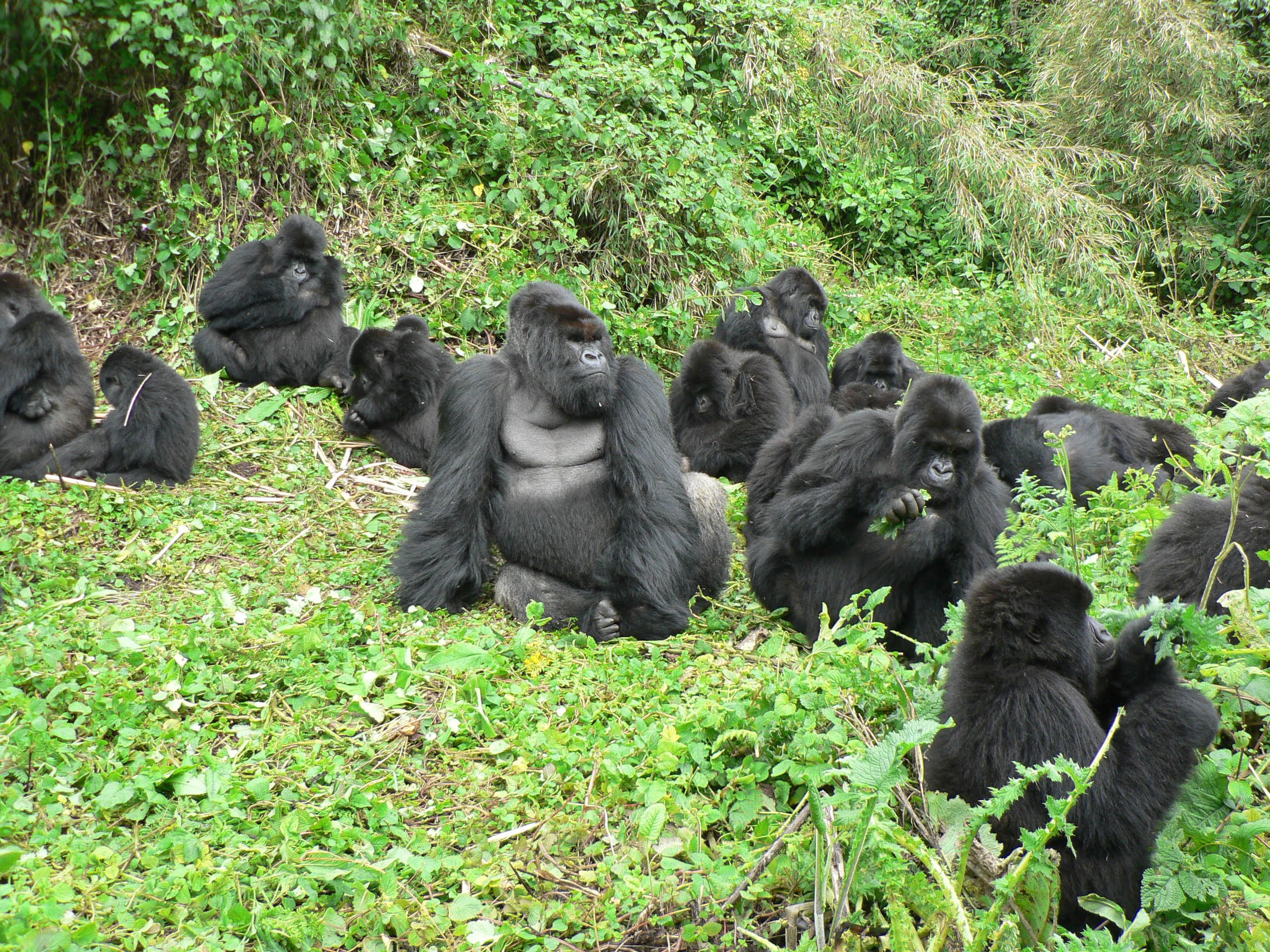
Mountain gorillas are not endangered because of one single cause. Their risk comes from a combination of shrinking habitat, human pressure, disease, insecurity, and biological vulnerability.
Below are the seven most important threats to mountain gorilla survival.
1. Habitat loss and forest degradation
Habitat loss is the biggest long-term threat to mountain gorillas. Their remaining forests cover only about 792 square kilometers across the Virunga Massif and Bwindi-Sarambwe, and these protected areas are surrounded by intensively cultivated farmland and growing human settlements.
Agriculture, settlement expansion, fuelwood collection, charcoal production, illegal mining, and infrastructure development can degrade or fragment gorilla forest.
National Geographic identifies agriculture, illegal mining, and forest destruction for charcoal as major pressures on mountain gorilla habitat.
Fragmentation matters because it reduces the space available for gorilla families to feed, nest, breed, and move. It can also limit genetic exchange between groups, making the population more vulnerable over time.
Why it matters for travelers: Choosing an ethical gorilla trek helps ensure tourism revenue supports forest protection rather than pressure on it.
Book a conservation-conscious gorilla safari with GoSilverback.
2. Snares and poaching
Direct hunting of mountain gorillas for food is now extremely rare, but snares set for antelopes, bush pigs, and other wildlife can seriously injure or kill gorillas.
Gorillas may step into wire snares, causing deep wounds, loss of fingers or limbs, infection, or death.
The IUCN specifically identifies anti-poaching patrols and in-situ veterinary interventions, including snare removal, as important contributors to the mountain gorilla recovery.
Rangers and veterinary teams regularly patrol gorilla habitat, remove snares, monitor injured animals, and intervene when necessary.
This work is expensive, dangerous, and continuous—but it is one of the clearest reasons mountain gorilla numbers have increased.
Your gorilla permit helps fund protection. Reserve your Uganda or Rwanda gorilla permit through GoSilverback Gorilla Safaris.
3. Human diseases
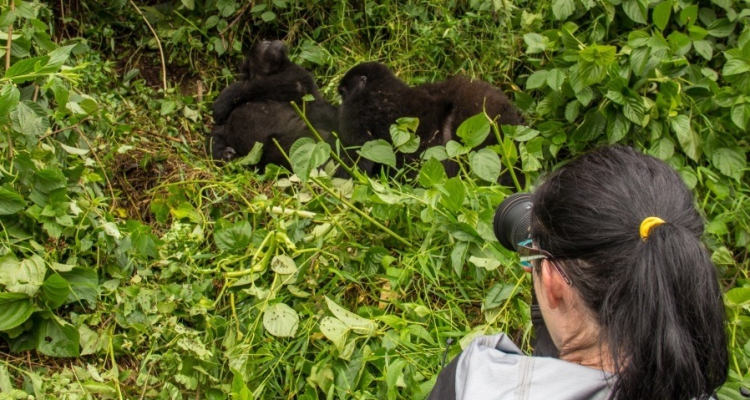
Mountain gorillas are highly vulnerable to human-transmitted diseases, including respiratory infections. Because gorillas are closely related to humans, illnesses that may be mild in people can become severe or fatal in gorillas.
The risk is heightened because many mountain gorilla groups are habituated to human presence for research and tourism.
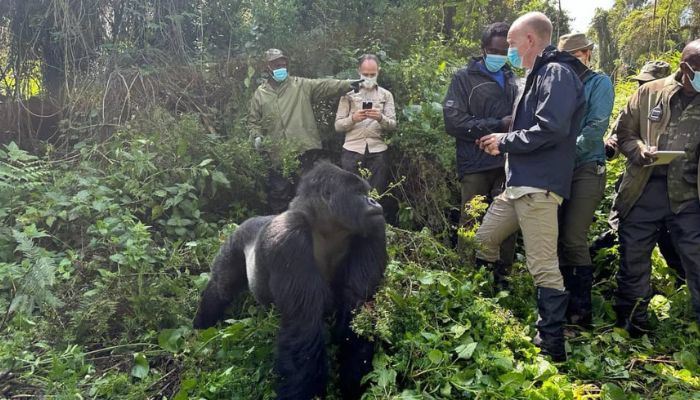
While strict rules prohibit touching gorillas and require controlled visitor numbers, disease can still spread quickly through close contact, coughing, sneezing, or contaminated surfaces.
The International Gorilla Conservation Programme warns that mountain gorillas have low genetic diversity, live in close family groups, and have not evolved immunity to many common human diseases. This makes disease prevention essential to their survival
How travelers can protect gorillas from disease
-
Do not trek if you feel ill, have a fever, cough, cold, or stomach illness.
-
Keep at least 10 meters (33 feet) from gorillas.
-
Follow your guide’s instructions at all times.
-
Wear a mask where required by park authorities.
-
Cover your mouth and nose if you cough or sneeze.
-
Limit your visit to the permitted one hour.
-
Never touch, feed, or chase a gorilla.
-
Clean your gear and dispose of waste properly.
Travel responsibly from the start: Book with GoSilverback Gorilla Safaris, a gorilla-trek specialist committed to responsible travel.
4. Civil unrest and insecurity
Political instability and armed conflict have repeatedly disrupted conservation in parts of the mountain gorilla range. Insecurity can make ranger patrols, tourism, research, veterinary work, and habitat monitoring difficult or impossible.
The IUCN identifies recurring civil unrest as a continuing threat to mountain gorillas. When protection weakens, snares, illegal forest use, and other pressures can increase.
This is why stable ranger funding, cross-border cooperation, and community support are essential. Conservation cannot succeed through fences alone; it requires trained people on the ground every day.
5. Human-wildlife conflict
More than 500,000 people live near mountain gorilla parks, and many depend on subsistence and commercial farming. When wildlife leaves protected areas and damages crops, local families can suffer real economic losses.
Crop raiding by buffaloes and elephants is more common than gorilla crop raiding, but gorillas can also leave the forest and enter farmland. This creates tension between communities and conservation areas.
Effective solutions include:
-
Buffer zones between parks and farmland.
-
Revenue sharing from park entry fees and gorilla permits.
-
Alternative livelihoods such as beekeeping, crafts, mushroom growing, and sustainable agriculture.
-
Rapid-response teams that monitor gorilla movements outside park boundaries.
-
Barriers, trenches, and unpalatable buffer crops that reduce wildlife movement into farms.
Choose travel that benefits local communities: Book a community-focused gorilla safari with GoSilverback Gorilla Safaris.
6. Climate change
Climate change threatens mountain gorillas indirectly but seriously. As temperatures rise, gorillas and the plants they depend on may need to move to higher elevations. Unfortunately, those higher areas are already densely populated and have little forest remaining.
Climate change can also alter rainfall, vegetation, water availability, and disease patterns. These changes can increase pressure on both gorillas and the communities living around protected forests.
Because mountain gorillas cannot easily disperse beyond their isolated habitat, their ability to adapt is limited. Conservation organizations now monitor climate impacts in all four major mountain gorilla national parks to guide future protection strategies.
7. Small population and genetic vulnerability
With only about 1,063 mountain gorillas split between two isolated populations, the species has very little margin for error. A serious disease outbreak, prolonged insecurity, or major habitat loss could quickly reverse decades of conservation progress.
Mountain gorillas also have low genetic diversity and a slow reproductive rate. Females usually give birth to one infant after a pregnancy of nearly nine months, and young gorillas depend on their mothers for years.
This is why conservation is not only about increasing numbers. It is also about protecting habitat connectivity, maintaining healthy family groups, reducing disease risk, and ensuring that gorillas have enough space to survive long term.
Threats vs. Conservation Response
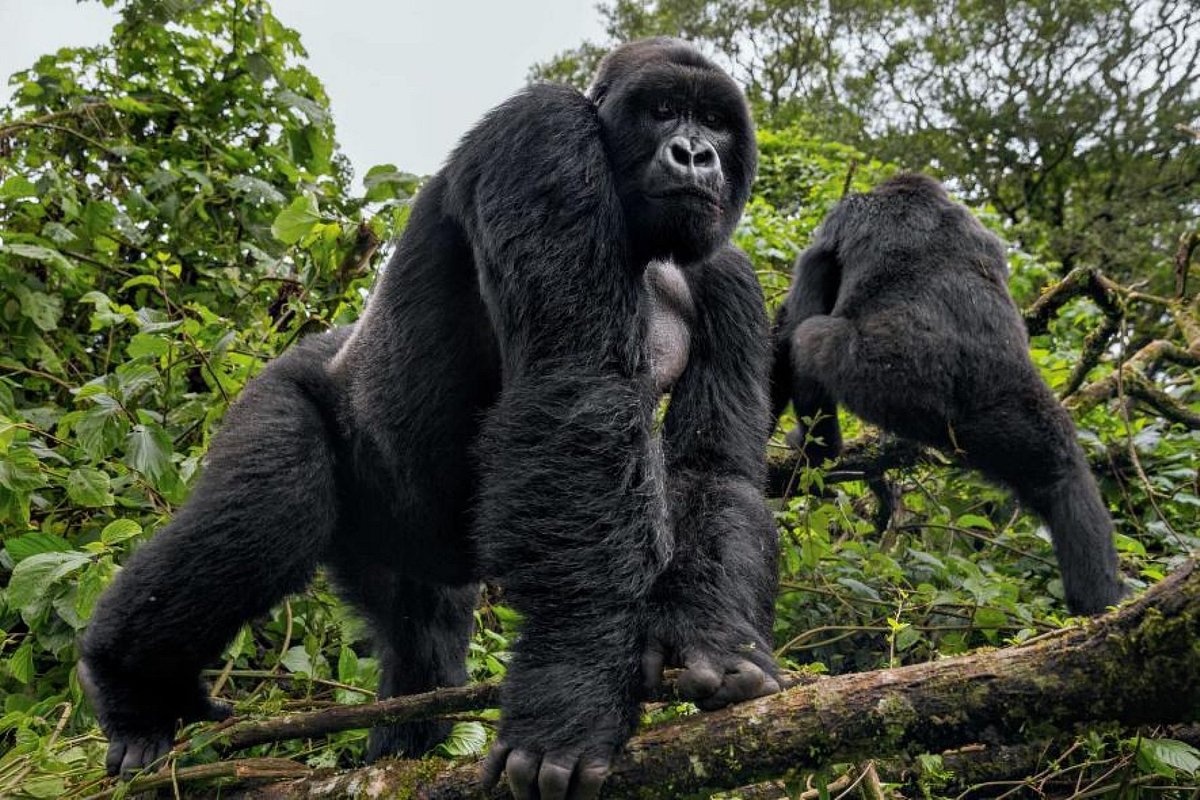
| Threat to mountain gorillas | Conservation response |
|---|---|
| Habitat loss and fragmentation | Protected-area management, buffer zones, habitat restoration, transboundary planning |
| Snares and poaching | Anti-poaching patrols, snare removal, ranger training, veterinary intervention |
| Human disease | Visitor limits, distance rules, masks, health screening, gorilla health monitoring |
| Civil unrest | Cross-border collaboration, ranger support, coordinated protected-area management |
| Human-wildlife conflict | Revenue sharing, community enterprises, buffer crops, conflict-response teams |
| Climate change | Climate monitoring, habitat protection, adaptive conservation planning |
| Small population size | Censuses, genetic research, careful tourism management, long-term monitoring |
Where Do Mountain Gorillas Live?
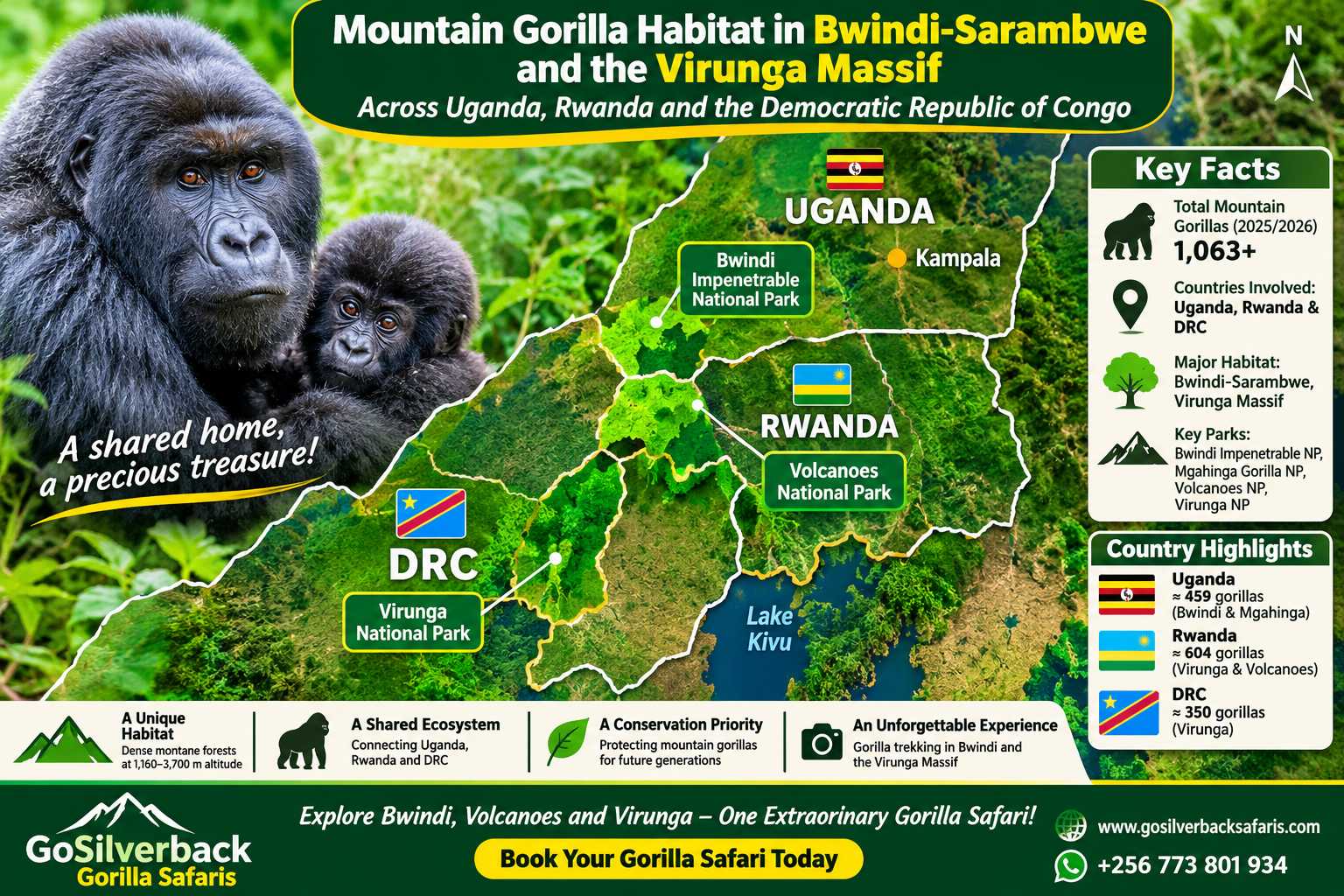
Mountain gorillas live only in high-altitude forests in Uganda, Rwanda, and the Democratic Republic of Congo.
They are found at elevations of roughly 2,500 to 4,000 meters, in two isolated populations: the Virunga Massif and Bwindi-Sarambwe.
1. Virunga Massif
The Virunga Massif includes:
-
Virunga National Park in the Democratic Republic of Congo.
-
Volcanoes National Park in Rwanda.
-
Mgahinga Gorilla National Park in Uganda.
This volcanic mountain region is home to about half of the world’s mountain gorillas and is one of the best places to see habituated gorilla families in the wild.
2. Bwindi-Sarambwe
The Bwindi-Sarambwe population is centered on Bwindi Impenetrable National Park in southwestern Uganda, with the nearby Sarambwe area extending toward the Democratic Republic of Congo.
Bwindi is a UNESCO World Heritage Site and one of Africa’s most important gorilla trekking destinations.
Why their range is so vulnerable
Mountain gorillas occupy a very restricted range. Their habitat is surrounded by farmland and human settlements, leaving limited room for expansion or movement. This isolation makes them especially sensitive to disease, habitat degradation, and climate change.
Planning a gorilla trek? Compare Uganda and Rwanda gorilla trekking options with GoSilverback Gorilla Safaris.
How Conservation Is Helping Mountain Gorillas Recover
The mountain gorilla story is one of the most important conservation success stories in Africa.
Their status improved from Critically Endangered to Endangered in 2018, following sustained anti-poaching work, veterinary care, habitat protection, community engagement, and cross-border cooperation.
1. Anti-poaching patrols and snare removal
Rangers patrol gorilla habitat, remove snares, monitor gorilla families, and respond to threats. The IUCN credits intensive conservation action, including anti-poaching patrols and snare removal, with helping mountain gorilla populations grow.
2. Veterinary monitoring and treatment
Organizations such as Gorilla Doctors monitor gorilla health, treat injuries, and respond to disease risks. The International Gorilla Conservation Programme has supported disease monitoring, laboratory capacity, and health-monitoring systems across the gorilla range.
3. Transboundary conservation
Mountain gorillas do not recognize national borders. The Greater Virunga Transboundary Collaboration brings together protected-area authorities from Uganda, Rwanda, and the DRC to coordinate conservation, monitoring, tourism standards, and habitat management.
4. Community benefit sharing
Conservation succeeds when local people benefit from protecting wildlife.
In Rwanda, 10% of gorilla-permit revenue is allocated to community livelihood projects around Volcanoes National Park.
In Uganda, the Uganda Wildlife Authority shares (UWA) 20% of park entry fees with local governments for community projects.
These programmes fund schools, health initiatives, water systems, local enterprises, and conservation education. They help make gorillas more valuable alive than lost.
5. Responsible gorilla tourism
Tourism generates revenue for conservation, creates jobs, and gives local communities a direct reason to protect gorilla habitat.
In Uganda, annual sales of US$800 gorilla permits increased from 15,000 to 36,000 between 2011 and 2019. In Rwanda, gorilla tourism revenue reached US$164 million in 2021, with 10% allocated to local communities.
But tourism must be carefully managed. Visitor numbers, trek duration, distance rules, and health precautions exist to reduce disturbance and disease transmission.
Be part of the recovery: Book a responsible gorilla permit and safari through GoSilverback Gorilla Safaris.
Is Gorilla Tourism Good or Bad for Mountain Gorillas?
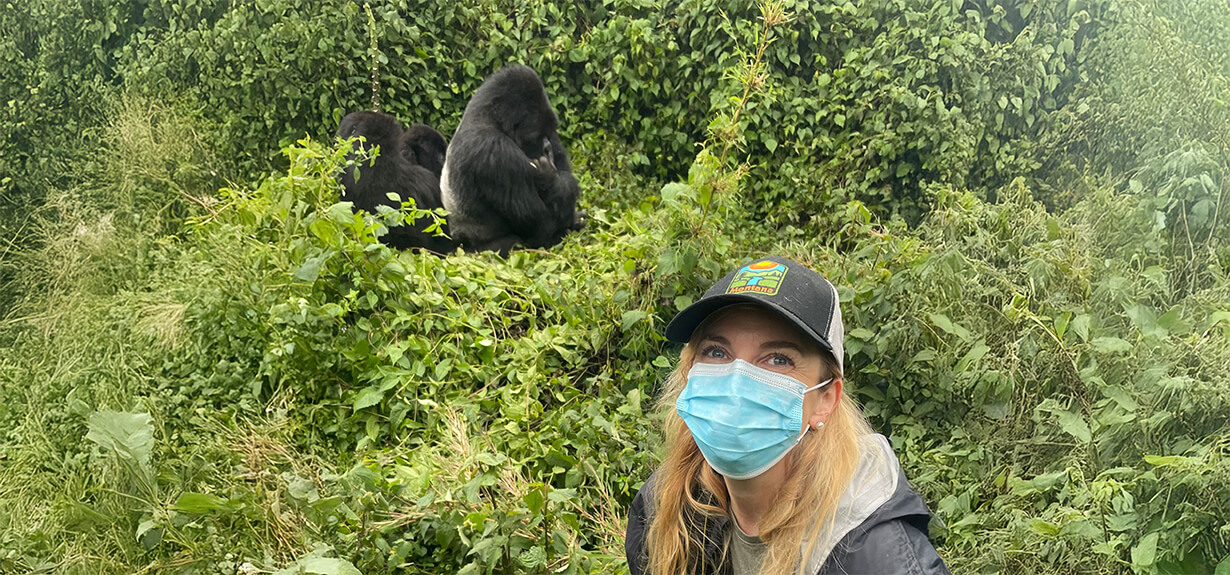
Gorilla tourism is good for mountain gorillas when it is strictly regulated and responsibly managed. It funds rangers, veterinary care, research, habitat protection, and community projects. It also builds political and public support for conservation.
However, poorly managed tourism can increase disease risk and disturb gorilla families. That is why permits are limited, groups are small, visits are timed, and strict rules govern how close visitors may approach.
How to choose an ethical gorilla trek
-
Book through a licensed local operator with experienced guides.
-
Confirm that permits are official and purchased through recognized channels.
-
Choose small-group treks rather than overcrowded tours.
-
Ask about guide training and park rules.
-
Follow all health and distance requirements.
-
Support lodges and community enterprises that employ local people.
-
Avoid operators who promise touching, feeding, or close contact with gorillas.
-
Leave no trace and respect the forest ecosystem.
GoSilverback Gorilla Safaris helps travelers book ethical, well-organized gorilla treks in Uganda and Rwanda. Request your customized gorilla safari itinerary today.
What Can You Do to Help Mountain Gorillas?
You do not need to live in Africa to help protect mountain gorillas. Travelers, students, families, and conservation supporters around the world can make a difference.
-
Book a responsible gorilla trek. Choose a licensed operator and follow every park rule.
-
Buy an official gorilla permit. Permit revenue supports conservation and community programmes.
-
Donate to credible conservation organizations working on ranger protection, veterinary care, and habitat conservation.
-
Support local communities. Buy local crafts, stay in community-owned lodges, and hire local guides.
-
Avoid products linked to deforestation or illegal wildlife trade.
-
Do not visit gorillas if you are sick. Protecting gorillas from human illness is a direct conservation action.
-
Share accurate information. Correcting myths about gorilla conservation helps more people understand the issue.
Take action today: Book your gorilla permit with GoSilverback Gorilla Safaris and travel with a team that puts conservation first.
Why Mountain Gorillas Are Endangered Despite Growing Numbers
This is the question many travelers and conservation supporters misunderstand. Mountain gorilla numbers have increased, but the species remains endangered because its recovery is fragile and dependent on continuous protection.
There are three reasons:
-
The population is still small. About 1,063 gorillas remain worldwide, divided between only two isolated forest populations.
-
The habitat is limited. Mountain gorillas live in less than 800 square kilometers of protected forest, surrounded by farmland and settlements.
-
Threats have not disappeared. Snares, human disease, insecurity, climate change, and human pressure still require daily conservation intervention.
In short, mountain gorillas are recovering, but they are not yet secure. Their future depends on continued funding, responsible tourism, habitat protection, and local community partnership.
Frequently Asked Questions
Why are mountain gorillas endangered?
Mountain gorillas are endangered because of habitat loss, snares, human disease, civil unrest, climate pressure, and their small isolated population. Only about 1,063 remain in the wild.
How many mountain gorillas are left?
There are about 1,063 mountain gorillas left in the wild: 459 in Bwindi-Sarambwe and 604 in the Virunga Massif, based on the latest combined census estimates.
Are mountain gorillas still critically endangered?
No. Mountain gorillas are classified as Endangered, after being downlisted from Critically Endangered in 2018 because their population increased through conservation action.
What is the biggest threat to mountain gorillas?
Habitat loss and degradation are the biggest long-term threats, followed closely by snares, disease, insecurity, and the risks created by a small population.
Can mountain gorillas recover?
Yes. Mountain gorillas are the only great ape species whose population is increasing, but their recovery remains fragile and depends on ongoing protection.
Where can you see mountain gorillas responsibly?
You can see mountain gorillas responsibly in Uganda, Rwanda, and the Democratic Republic of Congo, through regulated gorilla-trekking programmes in Bwindi, Mgahinga, Volcanoes, and Virunga national parks.
Is gorilla trekking worth it?
Yes. A mountain gorilla trek is a once-in-a-lifetime wildlife experience, and when booked responsibly, it directly supports conservation, rangers, local jobs, and community development.
Ready for your own mountain gorilla encounter? Book your gorilla permit and safari with GoSilverback Gorilla Safaris and experience Uganda or Rwanda’s endangered mountain gorillas safely, ethically, and unforgettable.