Where Do Silverback Gorillas Live? Complete 2025 Guide to Their Habitat, Range & Conservation
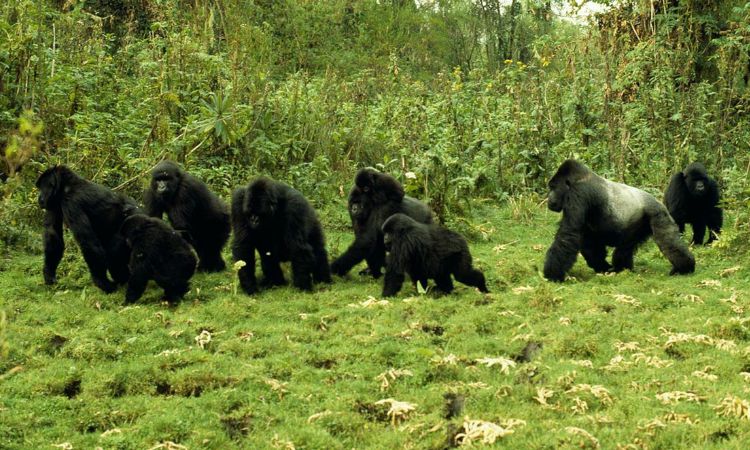
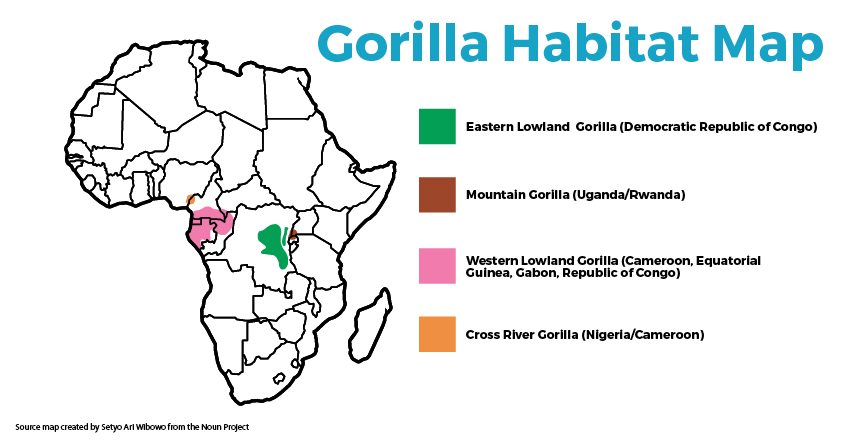
Silverback gorillas live in the forests of central and eastern Africa, mainly in Uganda, Rwanda, and the Democratic Republic of Congo.
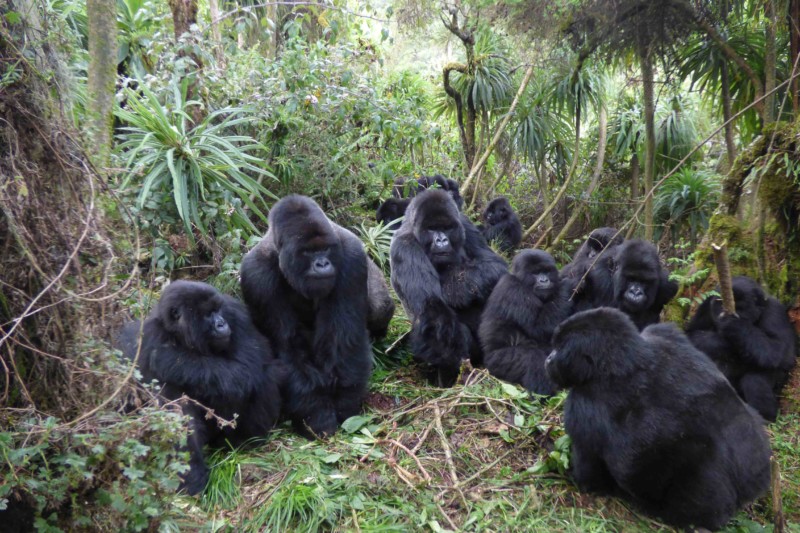
These regions host two subspecies: mountain gorillas, found in the high-altitude rainforests of Uganda’s Bwindi Impenetrable National Park, Mgahinga Gorilla National Park, Rwanda’s Volcanoes National Park, and Congo’s Virunga mountains; and eastern lowland gorillas, which live in the dense tropical forests of DRC’s Kahuzi-Biega National Park.
Silverbacks thrive in montane rainforests, bamboo forests, and lowland jungles between 2,200–4,000 meters, where the climate is cool and vegetation is abundant.
Their habitats are defined by thick foliage, high rainfall, and large feeding zones rich in leaves, stems, fruits, and wild celery.
Today, mountain gorillas survive only in the Virunga Massif and Bwindi Forest, two of the most biologically rich yet critically threatened ecosystems on Earth.
Habitat loss, poaching, and human activity continue to shrink their range, making protected parks essential for their survival.
These unique forests are the only places on the planet where you can see wild silverback gorillas.
What Exactly Is a Silverback Gorilla?
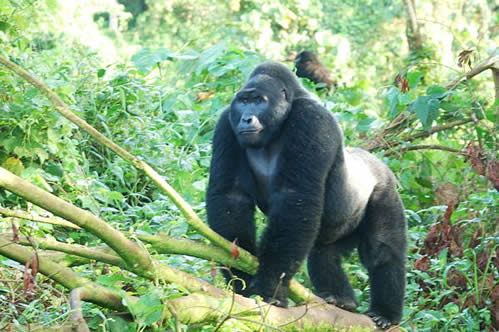
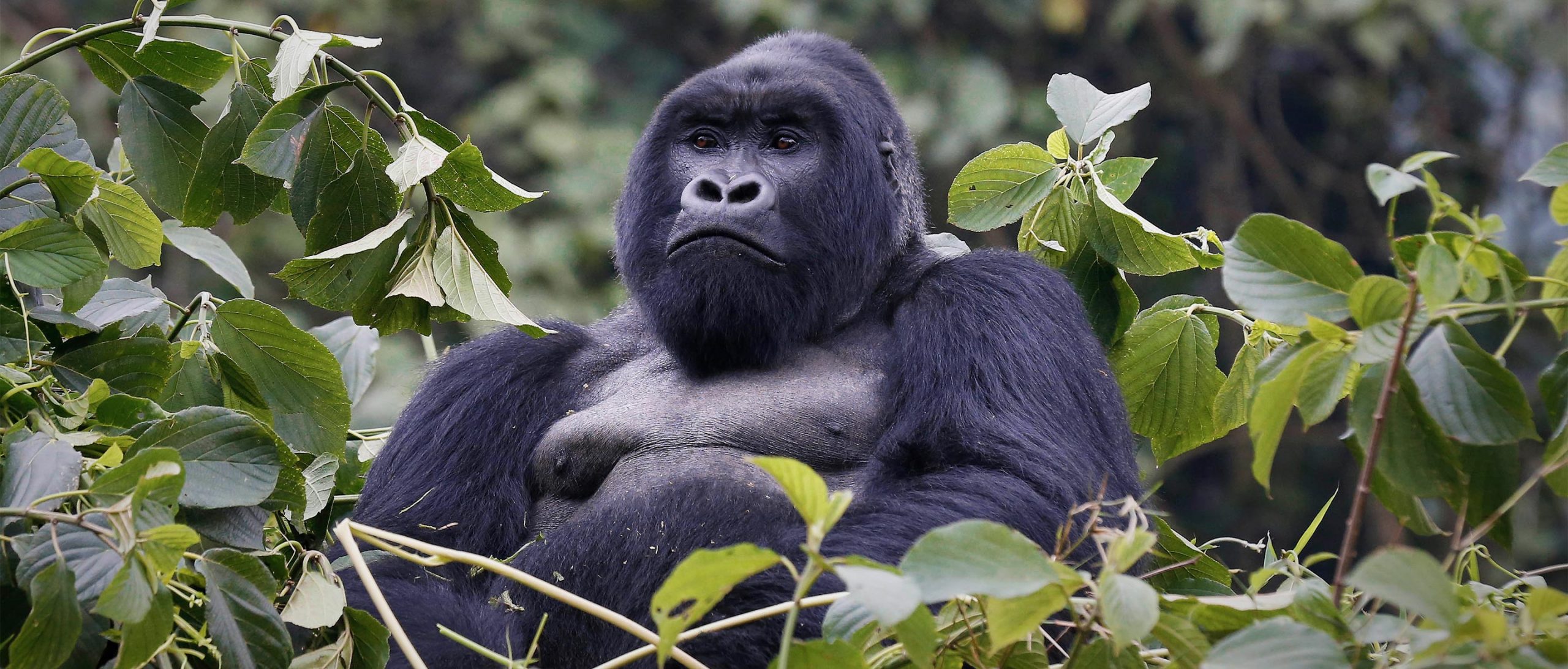
A silverback gorilla is a fully mature adult male gorilla, typically aged 12 years or older, recognized by the distinctive silver or gray saddle of hair that develops across its back and hips.
This physical change signals not only maturity but dominance, strength, and readiness to lead.
The term “silverback” therefore refers specifically to a male’s age and status—not a separate species or subspecies.
Both mountain gorillas and eastern lowland gorillas produce silverbacks once they reach full adulthood.
The Term “Silverback” Explained
The silver coloration appears as males undergo hormonal changes, marking their rise into leadership roles.
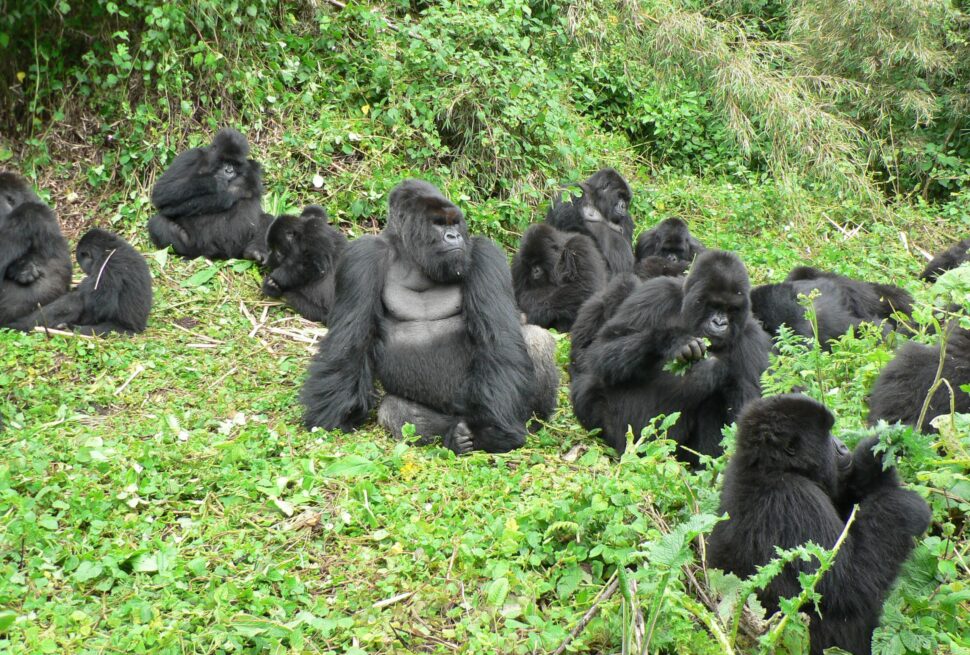
Only one dominant silverback usually leads a gorilla troop, controlling movement, feeding areas, resting locations, and conflict resolution.
Some groups may have several silverbacks, but only one holds primary authority.
Biology, Strength & Social Role
Silverbacks are exceptionally powerful, weighing 350–500 pounds with immense upper-body strength estimated at six to nine times that of an average human.
Their broad chests, long arms, and thick muscle mass enable them to protect their families from predators and rival males.
Beyond physical power, silverbacks display emotional intelligence—nurturing infants, mediating disputes, and maintaining harmony within the troop.
Their leadership ensures stability and safety, making them vital to gorilla social structure.
“Check this guide to learn more about Silverback Gorillas weight.“
Why Habitat Type Is Crucial to Survival
A silverback’s survival depends entirely on access to dense, undisturbed forests that provide ample leaves, stems, fruits, and wild herbs.
Mountain gorillas thrive in cool, high-altitude rainforests, while eastern lowland gorillas need expansive lowland jungles with abundant vegetation.
When habitats shrink due to farming, mining, or deforestation, silverbacks lose food sources, nesting areas, and safe movement corridors.
Protecting these unique ecosystems is essential to ensuring the long-term survival of silverbacks and their families.
Countries Where Silverback Gorillas Live
1. Uganda – Bwindi & Mgahinga National Parks (Mountain Gorillas)
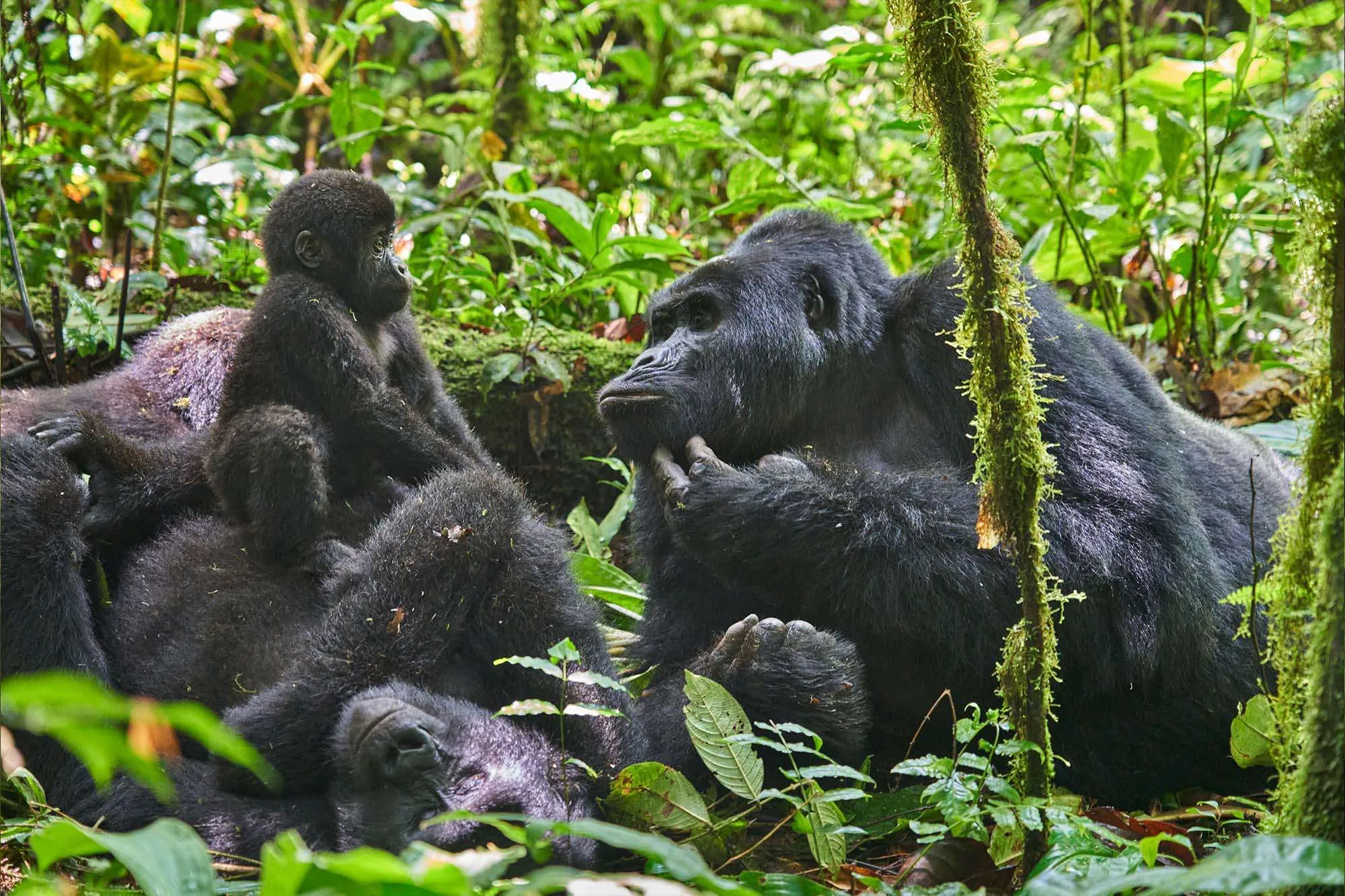
Uganda is home to over half of the world’s remaining mountain gorillas, making it the single most important destination on Earth for anyone seeking a close encounter with a silverback.
The country hosts two major gorilla habitats—Bwindi Impenetrable National Park and Mgahinga Gorilla National Park—both part of the great Albertine Rift, one of the planet’s richest biodiversity zones.
Bwindi’s Dense Rainforest
Bwindi Impenetrable Forest is a UNESCO World Heritage Site known for its ancient, jungle-clad mountains, steep ridges, tangled vines, and thick undergrowth.
This forest is one of the oldest on Earth, estimated to have survived for more than 25,000 years.
Its dense vegetation creates a cool, humid haven ideal for silverbacks and their families, offering constant food availability—leaves, stems, wild celery, and fruits.
Bwindi’s complex ecosystem supports over 120 mammal species, but none more iconic than its 50+ habituated gorilla families.
Altitude Range
Bwindi lies at elevations between 1,160 and 2,607 meters, producing a microclimate that is cool, misty, and perfectly suited to mountain gorillas.
The constant mist that blankets the forest—especially in early mornings—helps maintain the lush vegetation that sustains large gorilla populations.
Gorilla Population Today
According to recent conservation surveys, Uganda hosts approximately 450–460 mountain gorillas, the largest population of this critically endangered species.
This includes major families in both Bwindi and Mgahinga, though Bwindi alone accounts for the majority.
Each family is led by a dominant silverback, with some clans containing up to 20+ members.
Why Uganda Has the Biggest Numbers
Several factors make Uganda the global stronghold for silverbacks:
-
Habitat stability: Bwindi’s forests have remained relatively untouched for decades.
-
Strong conservation policies: Uganda Wildlife Authority (UWA) has invested heavily in anti-poaching patrols and community programs.
-
Community-based tourism: Portions of tourism revenue directly support local communities, reducing human-wildlife conflict.
-
Genetic diversity: Bwindi’s large and dispersed gorilla groups promote healthy breeding populations.
These conservation efforts have allowed Uganda’s gorilla population to grow steadily over the past 20 years.
Gorilla Trekking Experience
Gorilla trekking in Uganda is considered one of the most rewarding wildlife experiences in the world.
Visitors hike through misty jungle trails, climb rugged slopes, and navigate ancient terrain to reach a gorilla family in its natural habitat.
Once found, trekkers spend one magical hour observing the family—watching silverbacks feed, juveniles climb trees, mothers groom infants, and youngsters play.
Uganda offers two types of gorilla experiences:
-
Standard Gorilla Trekking: One hour with a habituated family.
-
Gorilla Habituation Experience (GHE): Up to 4 hours with researchers and gorillas in semi-habituated families—exclusive to Uganda.
Permit Fees & Best Seasons
Uganda’s permits are significantly more affordable than Rwanda’s, making it a top choice for budget-conscious and mid-range travelers.
-
Gorilla Trekking Permit (2025): Approx. $800 per person
-
Gorilla Habituation Permit: Approx. $1,500 per person
Best seasons to trek:
-
June – September (peak season)
-
December – February (dry season)
Dry seasons offer easier tracking due to less mud and clearer trails, though gorilla trekking is excellent year-round.
Why Uganda Is the #1 Choice for Many Travelers
Uganda stands out as the world’s premier silverback destination because it offers:
-
The largest population of mountain gorillas
-
More habituated families than any other country
-
The unique Gorilla Habituation Experience
-
Lower permit costs compared to Rwanda
-
Stunning biodiversity—chimps, tree-climbing lions, and big game safaris
-
High conservation success rates
-
A variety of trekking options for all fitness levels
Additionally, Uganda is known for its warm hospitality and exceptional safari operators, including Go Silverback Safaris Ltd, who tailor gorilla trekking packages to adventure seekers, families, photographers, and conservation travelers.
In short, Uganda is the heartland of silverback gorilla tourism, offering unmatched access, affordability, and authentic rainforest experiences.
2. Rwanda – Volcanoes National Park
Rwanda’s Volcanoes National Park is one of the most iconic silverback gorilla habitats in the world.
Located in the Virunga volcanic ranges, the park features bamboo forests, Hagenia woodlands, alpine meadows, and volcanic slopes that create a diverse and nutrient-rich environment.
This mosaic of habitats supports many legendary gorilla families, including the famous Susa, Amahoro, Agasha, Hirwa, and Kwitonda groups, each led by dominant and charismatic silverbacks.
Rwanda is renowned for its premium gorilla trekking experience, offering well-maintained trails, highly trained guides, and extremely organized tracking operations.
The experience is smoother, shorter, and accessible to a broader range of travelers, making it ideal for those seeking comfort without compromising authenticity.
-
Gorilla Permit Fee (2025): $1,500 per person
This high cost is intentional—Rwanda markets itself as a luxury gorilla trekking destination, offering upscale lodges, helicopter transfers, and exclusive conservation-focused experiences.
Rwanda appeals especially to high-end travelers, celebrities, photographers, and visitors who want a seamless, exclusive safari.
Its safety, infrastructure, and proximity to Kigali (just 2.5 hours from the park) make it one of the most convenient and elite gorilla trekking locations in Africa.
3. Democratic Republic of Congo – Virunga National Park
Virunga National Park is Africa’s oldest national park and one of the continent’s most biodiverse landscapes.
Home to both mountain gorillas and a portion of the eastern lowland gorilla population, the park lies within the dramatic Congo Basin—characterized by dense equatorial forests, lava flows, and active volcanoes like Mount Nyiragongo.
Unlike Uganda and Rwanda, Virunga offers travelers the chance to witness silverbacks in an intensely raw, untouched wilderness.
The forest structure is thick, humid, and teeming with diverse vegetation, providing excellent feeding grounds for gorilla families.
Virunga’s mountain gorillas share similar characteristics with those in Uganda and Rwanda, but the park’s unique location within the Congo Basin allows researchers to study overlapping population dynamics between lowland and montane environments.
Security Updates (2025)
As of 2025, security conditions have improved in several trekking sectors, with guided tourism reopening in controlled regions.
Virunga operates with strict ranger escorts and enhanced protection to ensure visitor safety.
Travelers are encouraged to book through reputable safari companies experienced in DRC operations.
Opportunities for Budget-Friendly Trekking
DRC offers the most affordable mountain gorilla trekking permits in the region:
-
Permit Fee (2025): Approximately $400–$500
This makes DRC an excellent option for adventure seekers and budget travelers looking for an authentic, rugged gorilla experience at a fraction of Rwanda’s cost.
4. DRC – Kahuzi-Biega National Park (Eastern Lowland Gorillas)
Kahuzi-Biega National Park, also located in the Democratic Republic of Congo, is the only place on Earth where you can trek the largest gorilla subspecies — the Eastern Lowland Gorilla (Grauer’s Gorilla).
Unlike mountain gorillas, eastern lowland gorillas are even bigger, with males weighing up to 500–550 pounds, broader chests, and more massive jaws built for chewing thick vegetation.
Habitat: Lowland Tropical Forests
Kahuzi-Biega is dominated by vast lowland tropical forests, swamps, and montane ecosystems that provide diverse food sources such as fruits, shoots, roots, and bamboo.
Its gentle terrain makes trekking easier compared to steep volcanic environments.
Differences from Mountain Gorillas
-
Larger body size and more muscular build
-
Prefer lowland forests instead of high-altitude mountains
-
More terrestrial, spending less time climbing
-
Diet richer in fruits and soft vegetation
-
Their groups can be larger, sometimes over 20 members
These differences offer a unique gorilla trekking experience distinct from Uganda or Rwanda.
Trekking Requirements
Trekking in Kahuzi-Biega is generally less strenuous and more accessible to older or less fit travelers.
Visitors must obtain a gorilla permit, follow ranger guidance, and trek through designated forest zones.
-
Permit Fee (2025): Around $400–$500
Kahuzi-Biega remains one of Africa’s most off-the-beaten-path wildlife destinations, offering exclusivity and the chance to see the world’s largest gorilla species in serene, low-tourist environments.
Types of Habitats Silverback Gorillas Live In
Silverback gorillas survive only in a few highly specialized habitats across central and eastern Africa.
Their environments are defined by dense vegetation, dependable food sources, cool temperatures, and limited human disturbance.
Each habitat supports different behaviors, diets, and adaptations essential for the survival of both mountain and eastern lowland gorillas.
Montane Rainforests
Mountain gorillas thrive in high-altitude montane rainforests found between 2,200 and 3,500 meters above sea level.
These forests, located in Uganda’s Bwindi and the Virunga Mountains, are cool, mist-covered, and exceptionally humid.
Annual temperatures range from 10–20°C, creating a lush environment rich in leaves, shoots, stems, bark, and wild fruits.
The thick undergrowth, combined with towering hardwoods and lianas, provides abundant food and natural shelter.
Montane rainforests are crucial to silverbacks because they offer year-round vegetation, stable nesting sites, and protection from extreme weather.
Bamboo Forests
Bamboo forests occupy mid-elevation zones, particularly in Rwanda’s Volcanoes National Park and the Virunga range.
Growing between 2,500 and 3,000 meters, bamboo forms dense, fast-growing clusters that are a seasonal delicacy for gorillas.
During the bamboo shoot season, silverbacks lead their families to these areas to feed on the nutrient-rich young shoots.
These forests experience cooler temperatures and moderate rainfall, with a mixture of bamboo, ground herbs, and shrubs that create open yet resource-rich feeding grounds.
Virunga Volcanic Slopes
The steep slopes of the Virunga volcanoes provide some of the most unique gorilla habitats on Earth.
Ranging from 2,000 to over 4,000 meters, these volcanic mountains feature layered ecosystems—from bamboo at lower elevations to Hagenia-Hypericum woodlands and alpine moorlands at higher altitudes.
The volcanic soil is extremely fertile, supporting dense vegetation.
Despite the steep terrain and colder temperatures, these slopes offer excellent feeding zones, mineral-rich plants, and secluded nesting areas.
Lowland Tropical Forests
Eastern lowland gorillas live in the vast Congo Basin lowland forests at altitudes of 600–1,500 meters.
These warm, humid ecosystems have temperatures averaging 18–25°C and high rainfall, producing an abundance of fruits, seeds, roots, vines, and shrubs.
The forest canopy is tall and dense, with wide feeding zones that support larger group sizes.
Lowland forests provide more fruit than montane habitats, influencing feeding behavior and physical size—lowland silverbacks grow larger due to richer diets.
Swampy Forest Zones (Rare)
Some gorilla groups occasionally use swampy forest areas, especially in DRC, where waterlogged vegetation grows year-round.
Although rare, these habitats offer constant food availability and fewer human disturbances.
Swamp zones are cooler, shaded, and difficult for predators or poachers to access, making them occasional refuge areas for gorilla families.

How Much Territory Do Silverback Gorillas Need?
Silverback gorillas require large, resource-rich territories to support their families, ensure stable food supplies, and maintain social harmony.
A typical mountain gorilla family occupies a home range of 5–15 square miles (13–40 km²), depending on food availability and habitat type.
Eastern lowland gorillas may use even larger territories due to the wider distribution of fruiting trees and seasonal feeding patterns.
Within these territories, silverbacks lead their families along established feeding routes, moving through key vegetation zones where leaves, stems, bamboo shoots, and fruits are most abundant.
These routes are not random—gorillas remember specific feeding spots, nesting clearings, mineral-rich plants, and safe corridors passed down through generations.
Silverbacks use their exceptional spatial memory to avoid depleted areas and guide the troop efficiently.
Seasonal changes also influence their movements. During bamboo shoot season, families shift toward mid-elevation bamboo forests.
In warmer months, they often climb higher to access cooler habitats and fresh foliage.
Conversely, during fruiting periods, eastern lowland gorillas travel deeper into the lowland forest where fruit is more plentiful.
Despite having defined ranges, gorillas are non-territorial—they do not fight other groups for land.
Instead, home ranges may overlap, and encounters between families are usually peaceful unless a rival silverback challenges for dominance.
The combination of large home ranges, reliable feeding routes, and subtle seasonal movements ensures the long-term survival and stability of gorilla families.
Climate & Geography of Silverback Gorilla Regions
Silverback gorillas live in some of Africa’s most unique climatic and geographic zones, shaped by high rainfall, dramatic elevation changes, volcanic activity, and the powerful forces of the Great Rift Valley.
These factors combine to form the cool, lush, and food-rich environments that gorillas depend on for survival.
Rainfall
Gorilla habitats receive 1,500–2,500 mm of rainfall annually, creating evergreen forests with abundant vegetation.
Frequent rain helps maintain constant plant growth—leaves, shoots, herbs, and fruits—ensuring year-round feeding for silverback-led families.
The moisture-rich environment also forms thick undergrowth and misty canopies essential for nesting and shade.
Elevation
Mountain gorillas inhabit altitudes of 2,200–4,000 meters, giving them access to cool, oxygen-rich highlands.
These elevations create distinct vegetation zones—from bamboo forests to Hagenia woodlands—allowing gorillas to shift feeding areas seasonally.
Eastern lowland gorillas, by contrast, live between 600–1,500 meters, where lowland tropical forests offer more fruits and warmer conditions.
Temperature
Mountain gorilla regions maintain cool temperatures ranging from 10–20°C, while lowland zones average 18–25°C.
These stable temperatures prevent heat stress and support dense vegetation. Mist, cloud cover, and shade keep the forest cool even during warm seasons.
Rift Valley Formation
Much of the gorilla range lies within the Albertine Rift, a branch of the Great Rift Valley formed by tectonic movements millions of years ago.
This rift created steep mountains, deep valleys, fertile volcanic soils, and some of Earth’s richest biodiversity zones—perfect for gorillas.
Volcano Chains
The Virunga volcanic chain, stretching across Uganda, Rwanda, and DRC, shapes the landscape with high-altitude slopes, nutrient-rich soils, and layered vegetation zones.
These volcanoes—like Karisimbi, Bisoke, and Mikeno—produce ideal habitats where silverbacks thrive in mist-covered forests and bamboo belts.
Why Are Silverback Gorillas Found Only in These Regions?
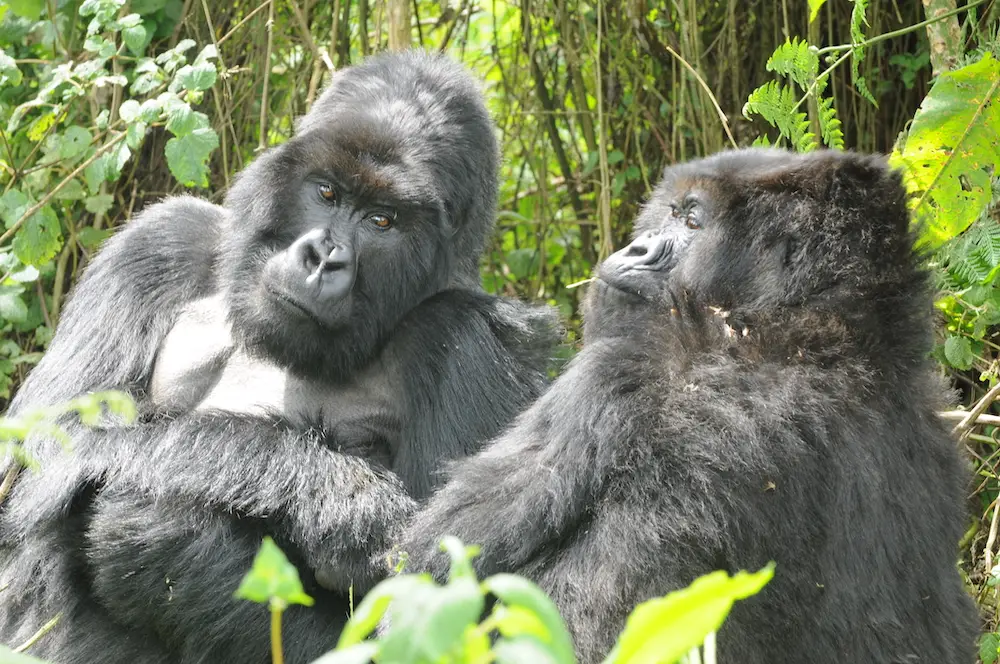
Silverback gorillas exist only in a small section of central and eastern Africa because their evolution, biology, and survival needs are deeply tied to the unique environments formed by the Albertine Rift and Congo Basin.
These regions provide the exact combination of altitude, vegetation, temperature, and forest density that gorillas have adapted to over millions of years.
Historical Evolution
Gorillas evolved in the African rainforest belt, gradually adapting to cooler, higher altitudes in the eastern region as tectonic forces uplifted the Virunga Mountains.
Over time, populations split into mountain gorillas and eastern lowland gorillas, each shaped by their specific ecosystems.
This long evolutionary isolation means they cannot thrive outside these finely tuned habitats.
Food Supply
Silverbacks require large quantities of vegetation daily—up to 40 pounds of leaves, stems, bamboo shoots, fruits, and herbs.
Only the dense, evergreen forests of Bwindi, Virunga, Mgahinga, Kahuzi, and the Congo Basin can sustain such constant food demand.
The nutrient-rich volcanic soils and high rainfall produce year-round plant growth unmatched elsewhere.
DNA Adaptation
Mountain gorillas have evolved thicker fur, stronger jaws, larger digestive systems, and cold-climate physiology suited to high-altitude forests.
Eastern lowland gorillas adapted for fruit-rich lowlands, developing broader chests and greater body mass.
These genetic specializations make relocation or survival outside their natural environments nearly impossible.
Human Encroachment
Human settlement, agriculture, and urban expansion have eliminated much of the gorillas’ ancient range.
Today, they survive only in protected forests where conservation laws prevent encroachment.
Habitat Fragmentation
Roads, farms, and mining activities have fragmented forest corridors, isolating gorilla populations into small regions.
Without connected forests, gorillas cannot migrate, expand territories, or form new breeding groups—restricting them to the few intact ecosystems that remain.
These combined forces explain why silverback gorillas exist only in these rare, irreplaceable habitats.
Where Do Silverbacks Sleep?
Silverback gorillas build nests every night to rest safely and comfortably, showcasing remarkable intelligence and adaptability.
Unlike birds, gorillas construct their own sleeping sites from leaves, branches, and foliage, often adding fresh vegetation each evening.
These nests provide cushioning, insulation, and protection from insects and damp ground conditions.
Most mountain gorillas and eastern lowland gorillas prefer ground nests, especially in dense forests where thick undergrowth offers concealment from predators.
However, some gorillas, particularly juveniles or individuals in swampy or flood-prone areas, may climb small trees or shrubs to build tree nests for added safety.
Silverbacks typically lead their families to secure nesting areas before nightfall. They settle into their nests as the forest cools, maintaining close proximity to the group to monitor any threats.
By nesting nightly, silverbacks conserve energy, maintain social bonds, and ensure the troop is ready for early-morning foraging and long treks through their habitat.
Threats to Silverback Gorilla Habitats
Silverback gorillas face numerous threats that endanger both their survival and the ecosystems they inhabit.
Despite conservation successes, poaching, habitat destruction, and human conflict continue to challenge these majestic primates.
Poaching
Poaching remains a critical threat, driven by demand for bushmeat, traditional medicine, or illegal wildlife trade.
While silverbacks are rarely targeted directly due to their size and protective behavior, younger gorillas and females are often at risk.
Poaching not only reduces population numbers but disrupts social structures, leaving troops vulnerable and stressed.
Deforestation
Agricultural expansion, logging, and fuelwood collection have fragmented forests, shrinking gorilla habitats.
Dense montane and lowland forests are cleared for farms and settlements, forcing gorillas into smaller, isolated ranges.
Reduced habitat size limits food availability, increases competition, and exposes gorillas to human conflict.
Mining
Mining for minerals such as coltan, gold, and tin in the Congo Basin and Virunga region destroys habitats and contaminates water sources.
The heavy machinery, roads, and human presence associated with mining further fragment gorilla territories and disrupt natural feeding and breeding patterns.
Disease
Silverbacks are highly susceptible to human-transmitted diseases, including respiratory infections and viruses like Ebola.
Even minor infections can spread rapidly through gorilla troops due to close social contact, causing significant mortality.
Conflict & Instability
Political instability and armed conflicts in parts of the DRC and surrounding areas pose direct risks to gorillas and rangers alike.
Forests are often invaded by militias, leading to hunting, habitat destruction, and unsafe conditions for tourism and conservation work.
Collectively, these threats make protected areas, community-based conservation, and strict anti-poaching measures vital. Without sustained intervention, the survival of silverback gorillas and their habitats could be seriously compromised.
Conservation Efforts Protecting Their Habitat
The survival of silverback gorillas depends on extensive conservation initiatives that protect their fragile habitats and promote sustainable coexistence with humans.
Across Uganda, Rwanda, and the Democratic Republic of Congo, a combination of NGOs, government programs, and community involvement has helped stabilize and even increase gorilla populations.
NGOs
Non-governmental organizations such as the Dian Fossey Gorilla Fund, WWF, and the Gorilla Doctors play a critical role in research, habitat protection, anti-poaching patrols, and veterinary interventions.
They monitor gorilla health, track troop movements, and implement strategies to reduce human-wildlife conflict, ensuring long-term survival.
Rangers
Trained park rangers form the frontline defense for gorilla conservation.
They patrol forests, prevent poaching, and secure trekking routes, often risking their lives to protect these endangered primates.
Rangers also collect vital ecological data that informs habitat management and conservation policy.
Community Tourism
Community-based tourism programs link local communities to gorilla trekking revenues, providing economic incentives to protect forests rather than exploit them.
Villagers receive training, employment, and income from guiding, lodge operations, and handicraft sales, creating a mutually beneficial relationship between humans and wildlife.
Gorilla Naming Ceremonies
Unique cultural initiatives, such as gorilla naming ceremonies, foster public engagement and conservation awareness.
Tourists and locals participate in naming habituated gorillas, creating emotional bonds that promote protection and advocacy for their habitats.
Revenue-Sharing
A portion of gorilla trekking fees is shared directly with local communities. These funds support schools, health clinics, and infrastructure projects, reinforcing the tangible benefits of conservation.
Revenue-sharing not only reduces illegal activities like poaching or logging but also builds local pride and responsibility for preserving gorilla habitats.
Through these combined efforts—NGOs, rangers, community programs, cultural engagement, and revenue-sharing—silverback gorillas now have a fighting chance to survive and thrive in the wild, ensuring their forests remain intact for future generations.
Best Places to See Silverback Gorillas in the Wild
For wildlife enthusiasts and adventure travelers, witnessing silverback gorillas in their natural habitat is a once-in-a-lifetime experience.
Choosing the right destination can maximize your chances of seeing these majestic primates while enjoying unique landscapes, excellent guides, and unforgettable safari experiences.
Here are the top destinations with strong commercial appeal for travelers seeking gorilla encounters.
Bwindi Impenetrable Forest – Best All-Round Safari
Located in southwestern Uganda, Bwindi is the world’s most famous gorilla destination.
It hosts over 400 mountain gorillas across more than 50 habituated families.
Bwindi offers a balance of adventure and accessibility, with well-maintained trekking trails, expert guides, and diverse wildlife beyond gorillas, including chimpanzees and bird species.
Travelers benefit from mid-range to luxury lodges, making it the best all-round safari option.
Gorilla trekking permits are priced at $800 per person, offering great value for an unforgettable encounter.
Mgahinga National Park – Least Crowded
Also in Uganda, Mgahinga National Park offers a more intimate experience with fewer tourists.
Its smaller habituated gorilla groups provide opportunities for close observation and photography without large crowds.
The park is ideal for travelers seeking tranquil treks, scenic volcanic landscapes, and cultural interactions with local communities.
Rwanda – Luxury Experience
Rwanda’s Volcanoes National Park offers a premium gorilla trekking experience, with meticulously maintained trails, highly trained guides, and upscale lodges.
Famous gorilla families such as Susa and Amahoro attract visitors worldwide.
Trekking permits cost $1,500, positioning Rwanda as the destination for high-end travelers seeking exclusivity, comfort, and conservation-focused tourism.
Virunga – Raw Adventure
The DRC’s Virunga National Park provides a rugged, off-the-beaten-path experience. Visitors encounter silverbacks in dense forests and along volcanic slopes, often accompanied by armed rangers for safety.
With trekking permits around $400–$500, Virunga is perfect for adventurers and budget-conscious travelers seeking authentic, remote wildlife experiences.
Kahuzi-Biega – Eastern Lowland Giants
For a truly unique encounter, Kahuzi-Biega National Park in DRC is home to the largest gorilla subspecies—the eastern lowland gorillas.
Trekking here is less strenuous due to lowland terrain, offering opportunities to see enormous silverbacks and large family groups.
The park is ideal for travelers wanting exclusive wildlife experiences away from crowded tourist circuits, with permits ranging from $400–$500.
Whether you prefer comfort, adventure, or exclusivity, these destinations offer unparalleled access to silverback gorillas while supporting conservation.
Companies like Go Silverback Safaris Ltd can tailor itineraries to match budgets, interests, and fitness levels, ensuring a safe and memorable gorilla trekking adventure.
Gorilla Trekking Permits & Travel Information
Gorilla trekking is a regulated activity designed to protect both gorillas and visitors.
Travelers must obtain official permits, follow strict guidelines, and prepare adequately to ensure a safe and rewarding experience.
Permit Prices by Country
-
Uganda: Gorilla trekking permits cost $800 per person for standard trekking and $1,500 for the Gorilla Habituation Experience.
-
Rwanda: Premium permits are priced at $1,500 per person, reflecting the country’s luxury trekking experience.
-
DRC – Virunga: Trekking permits range from $400–$500, making it the most affordable option for mountain gorilla encounters.
-
DRC – Kahuzi-Biega: Eastern lowland gorilla permits are approximately $400–$500, offering access to the world’s largest gorillas.
Best Months to Visit
Gorilla trekking is possible year-round, but the dry seasons are ideal:
-
Uganda & Rwanda: June–September and December–February
-
DRC: June–September
Dry months offer easier trekking, clearer trails, and better wildlife visibility, while rainy seasons can make paths muddy and challenging.
Fitness Requirements
Trekking difficulty varies by park and terrain. Visitors should be prepared to:
-
Hike 2–8 hours through steep, uneven trails
-
Navigate mud, vines, and occasional river crossings
-
Carry a light daypack with water and snacks
While fitness is recommended, slow-paced treks and ranger support make the experience accessible to most visitors.
Packing List
Essential items include:
-
Sturdy hiking boots and waterproof clothing
-
Long sleeves and pants to protect against insects and scratches
-
Waterproof backpack, gloves, and trekking poles (optional)
-
Camera with extra batteries and memory cards
-
Reusable water bottle and snacks
Proper preparation ensures comfort, safety, and maximum enjoyment while observing silverback gorillas in their natural habitat.
Why Choose Go Silverback Safaris Ltd for Gorilla Trekking?
For travelers seeking a once-in-a-lifetime gorilla trekking experience, Go Silverback Safaris Ltd stands out as a trusted and professional choice.
With years of local expertise, we offers safe, organized, and memorable encounters with silverback gorillas across Uganda, Rwanda, and the Democratic Republic of Congo.
Licensed Local Experts
All tours are led by licensed, knowledgeable guides who are intimately familiar with gorilla behavior, forest trails, and park regulations.
Their expertise ensures both your safety and a high-quality wildlife experience, allowing you to observe silverbacks without disturbing their natural routines.
Affordable Packages
We provides competitive, value-for-money packages suitable for solo travelers, families, and groups.
With flexible options for budget, mid-range, and luxury accommodations, the company ensures every traveler can access world-class gorilla trekking without compromise.
Tailor-Made Safaris
Every itinerary is customizable, allowing visitors to combine gorilla trekking with other wildlife safaris, birding, cultural visits, or luxury lodge stays.
Whether you’re a first-time visitor or an experienced wildlife photographer, your trek is designed to match your interests, fitness, and schedule.
Conservation-Supporting Tours
Booking with Go Silverback Safaris Ltd means supporting local communities and gorilla conservation efforts.
Portions of tour fees go directly to habitat protection, ranger programs, and community initiatives, ensuring your adventure contributes to the long-term survival of these iconic primates.
Book your gorilla trekking adventure today with Go Silverback Safaris Ltd and experience the thrill of observing silverback gorillas in their natural habitat while supporting vital conservation efforts.
Don’t just see wildlife—make a lasting impact.
Frequently Asked Questions
What continent do silverback gorillas live on?
Silverback gorillas are native to Africa, specifically central and eastern regions, including Uganda, Rwanda, and the Democratic Republic of Congo.
Do silverbacks live in zoos?
Yes, some silverbacks live in zoos and sanctuaries worldwide. However, wild behavior, social structures, and natural feeding patterns are best observed in their native forests.
Can silverbacks survive outside Africa?
No. Silverbacks are highly adapted to specific African habitats with dense forests, abundant food, and suitable altitudes. Attempts to relocate them outside their natural range are generally unsuccessful.
Why don’t they live in other forests?
Other forests lack the combination of altitude, climate, vegetation, and low human disturbance that silverbacks require. Their evolutionary adaptations make them dependent on the ecosystems of the Albertine Rift and Congo Basin.
How many silverbacks are left?
As of 2025, there are approximately 1,000–1,200 mountain gorillas, the majority of which are silverbacks, and several hundred eastern lowland gorillas.
While numbers are increasing due to conservation, they remain critically endangered and highly localized.
Bonus:
Silverbacks are rarely found outside protected parks due to habitat loss, poaching, and human encroachment.
Visiting their natural ranges in Uganda, Rwanda, and DRC is the only way to see these majestic primates thriving in the wild.
Final Conclusion
Silverback gorillas are among the most iconic and endangered primates on Earth, living exclusively in the dense forests of Uganda, Rwanda, and the Democratic Republic of Congo.
From mist-covered montane rainforests to lowland tropical jungles, these habitats provide the food, shelter, and social structures essential for silverbacks and their families.
Understanding where they live highlights the critical importance of conservation, as habitat loss, poaching, and human encroachment continue to threaten their survival.
Protecting these magnificent creatures requires support for conservation programs, community-based tourism, and responsible wildlife practices.
Every trekker, donor, and visitor contributes directly to safeguarding forests and gorilla populations for future generations.
Experience these extraordinary primates up close while making a real difference.
Book your gorilla trekking adventure today with Go Silverback Safaris Ltd and witness the power, intelligence, and majesty of silverback gorillas in the wild—an unforgettable journey that supports conservation at every step.
Trek, Explore and Meet the Giants Silverback. Go silver Go safari.