
Western Lowland Gorillas: Facts, Diet, Habitat & Guide
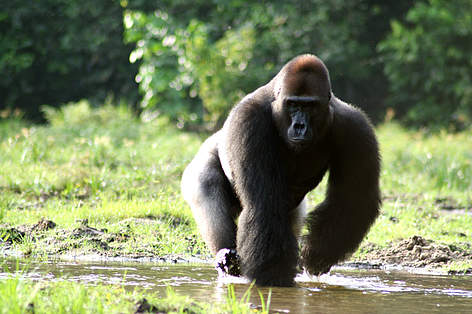
Western Lowland Gorilla is a subspecies of the western gorilla, native to the dense forests of Central Africa.
It is the smallest of the gorilla subspecies but still robust, an adult males averaging 140–200 kg (310–440 lbs).
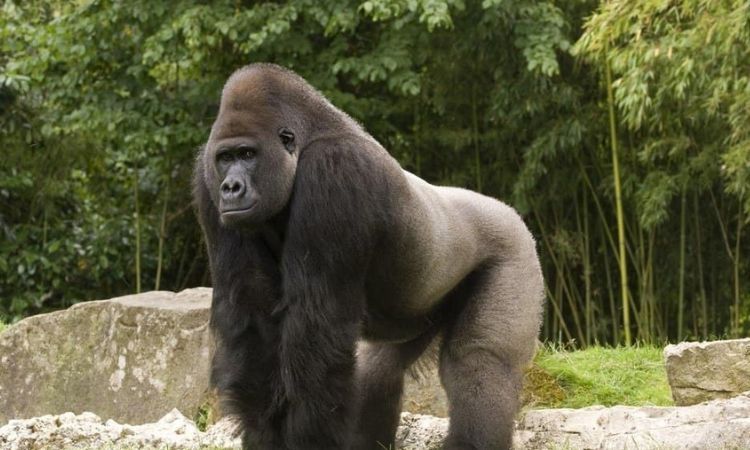
They have a characteristic brown-gray coat, a pronounced brow ridge, and a more pronounced nose with flared nostrils.
Western lowland gorillas live in social troops led by a dominant silverback and are primarily herbivorous, eating leaves, fruits, and stems.
They are Known for intelligence, gentle behavior, and complex communication, they are critically endangered due to poaching, habitat loss, and disease.
A mature Western lowland silverback gorilla, weighing nearly 440 pounds, stands motionless in authority.
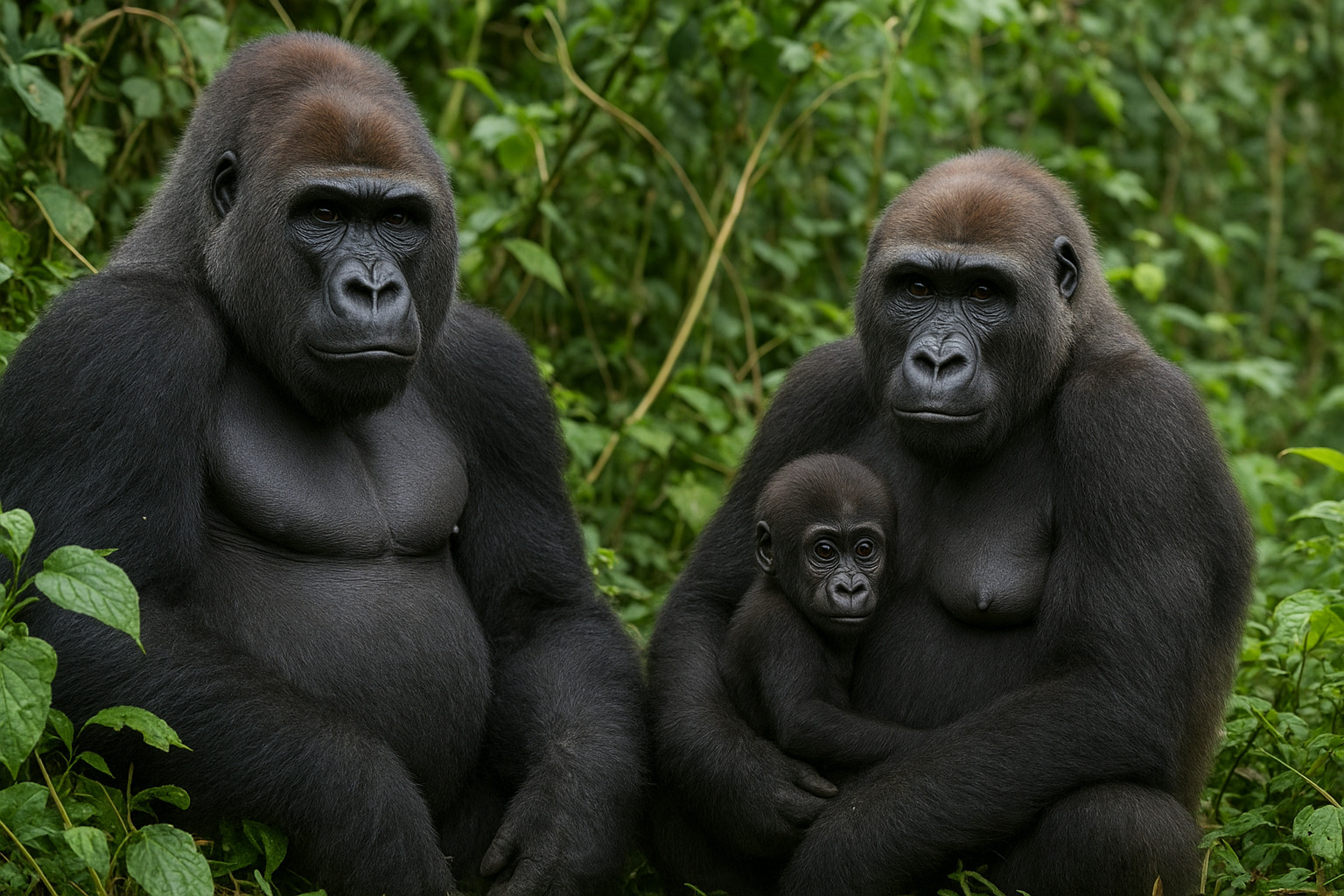
His troop gathers behind him: mothers nursing infants, curious juveniles tumbling in playful chaos, and adolescents learning the silent language of the forest’s most powerful primate.
In that moment, the jungle feels less like wilderness and more like a kingdom, shaped by a ruler who does not roar, but governs through presence, stability, and intelligence.
Lowland gorillas, divided into Western Lowland Gorillas and Eastern Lowland Gorillas, also known as Grauer’s Gorillas represent the planet’s largest primate lineage.
Western lowlands dominate Central African forests and form the bulk of gorillas seen in global zoos, while the rarer Eastern lowlands inhabit remote, conflict-torn regions of eastern DRC.
Both subspecies are now classified as Critically Endangered, facing escalating threats from poaching, Ebola outbreaks, illegal mining expansion, and accelerating deforestation.
Their survival matters far beyond fascination and safari photography.
Gorillas are keystone seed dispersers—silent gardeners who regenerate forests by spreading thousands of seeds every week.
Without them, forest systems collapse, affecting elephants, bird migration, and climate stability due to declining carbon absorption.
At the same time, lowland gorillas fuel ecotourism economies that support ranger salaries, community farms, and anti-poaching units.
This article delivers a complete, in-depth exploration of silverback weight, lowland gorilla biology, social systems, habitat loss, conservation strategies, diet behavior, and intelligence.
If preserving the world’s strongest yet gentlest giants matters to you, join our mission.
Join our conservation newsletter today and help protect the last great apes before silence replaces their forest kingdoms.
Physical Characteristics and Appearance
1. Size and Build
Lowland gorillas display one of the most dramatic examples of sexual dimorphism in the primate world.
A fully mature silverback can weigh 380–440 lbs (172–200 kg) and stand 5.4–5.6 feet (1.65–1.7 m) when fully erect, though they typically move on knuckles with a forward-lowered trunk.
Females, by comparison, are nearly half this mass at 150–245 lbs (68–110 kg) with slimmer frames, smaller skull crests, and reduced muscle density.
The most visually striking dimension is the arm span, stretching as far as 7.5–8.5 feet (2.3–2.6 m)—longer than an adult basketball player’s wingspan and powerful enough to uproot saplings in seconds.
Broad chests, huge deltoid assemblies, and dense forearm musculature support exceptional pulling force, ideal for climbing thick lianas and dragging vegetation.
While silverbacks embody physical dominance, the difference is not just size but authority: their build tells the troop who leads, who protects, and who endures.
2. Coloration and Features
Lowland gorillas wear dense black-to-coffee-brown coats with subtle textural shifts depending on region and age.
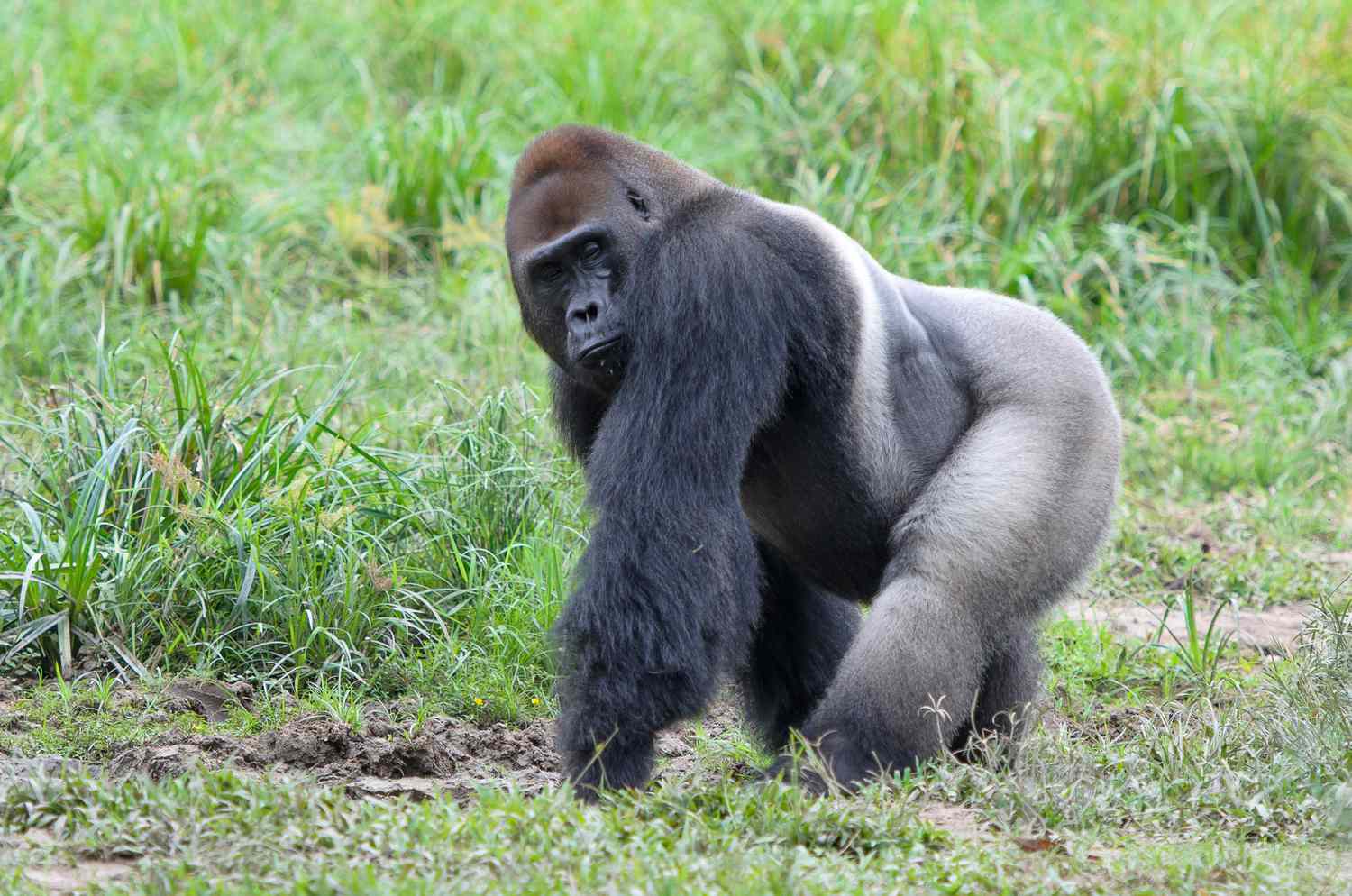
Western lowlands often show auburn-tinted chests or flanks, especially under midday sun, while Eastern lowlands maintain darker, velvet-like pelage.
The defining hallmark of adulthood is the silver saddle, a pale streak that spreads across the back between ages 11–15, marking hormonal maturity.
Distinctive brow ridges shadow forward-set eyes, while ears remain small and tucked, barely visible beneath thick hair.
Most intriguing are their nose prints: a mosaic of ridges and creases unique to each individual, functioning exactly like human fingerprints.
Researchers photograph and catalog these prints instead of tagging or collaring, allowing non-invasive identification.
Every ridge, fold, and wrinkle tells a genetic story—one silverback, one pattern, one legacy.
3. Comparisons to Other Gorillas + Strength Myths & Albinism
Lowlands are generally smaller than mountain gorillas, which can exceed 500+ lbs at peak and possess thicker fur for cold volcanic altitudes.
| Subspecies | Male Weight | Female Weight | Height |
|---|---|---|---|
| Western Lowland | 300–440 lbs | 150–250 lbs | 5.4–5.6 ft |
| Eastern Lowland | 350–485 lbs | 180–280 lbs | 5.6 ft |
| Mountain Gorilla | 350–500+ lbs | 200–320 lbs | 5.5–5.9 ft |
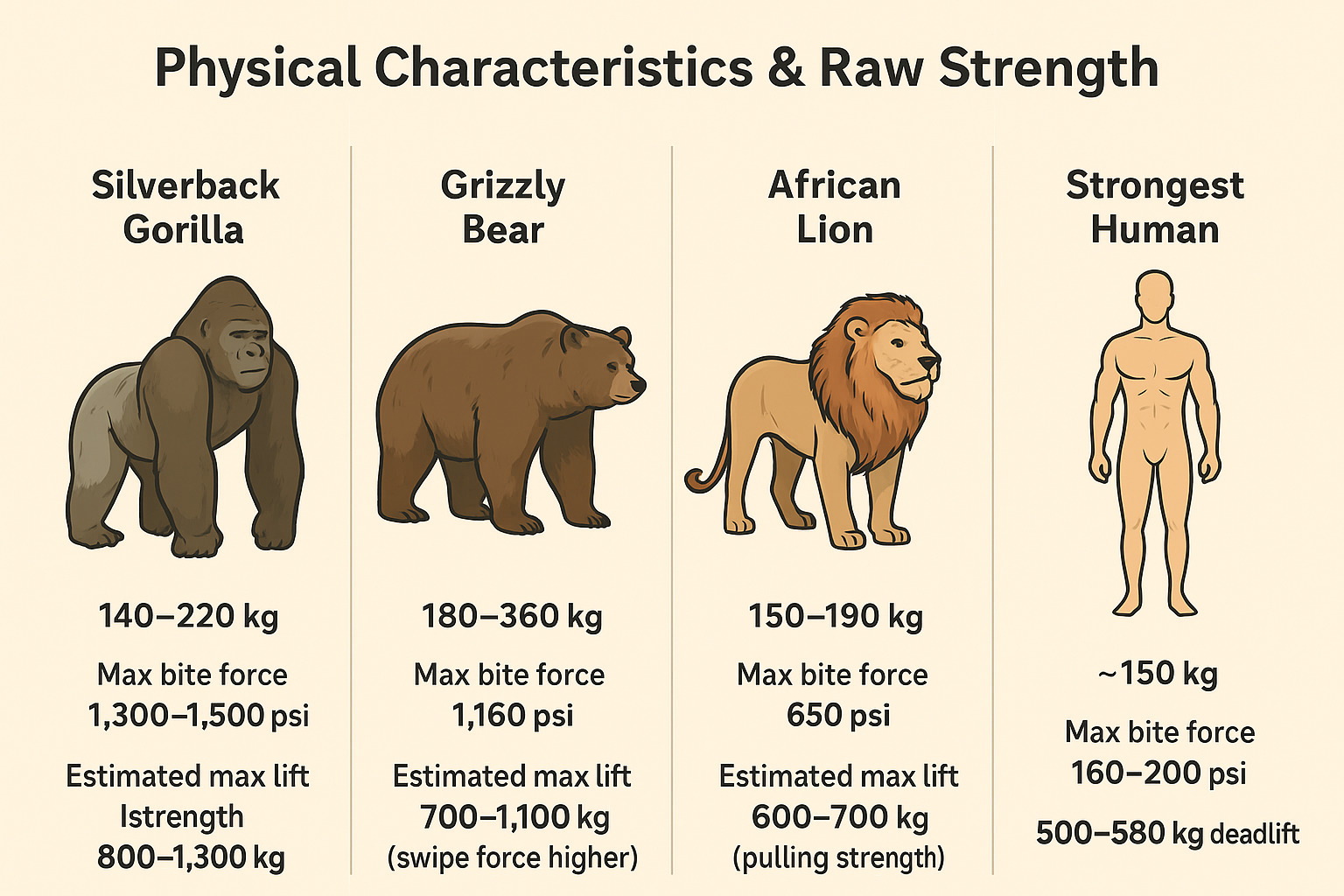
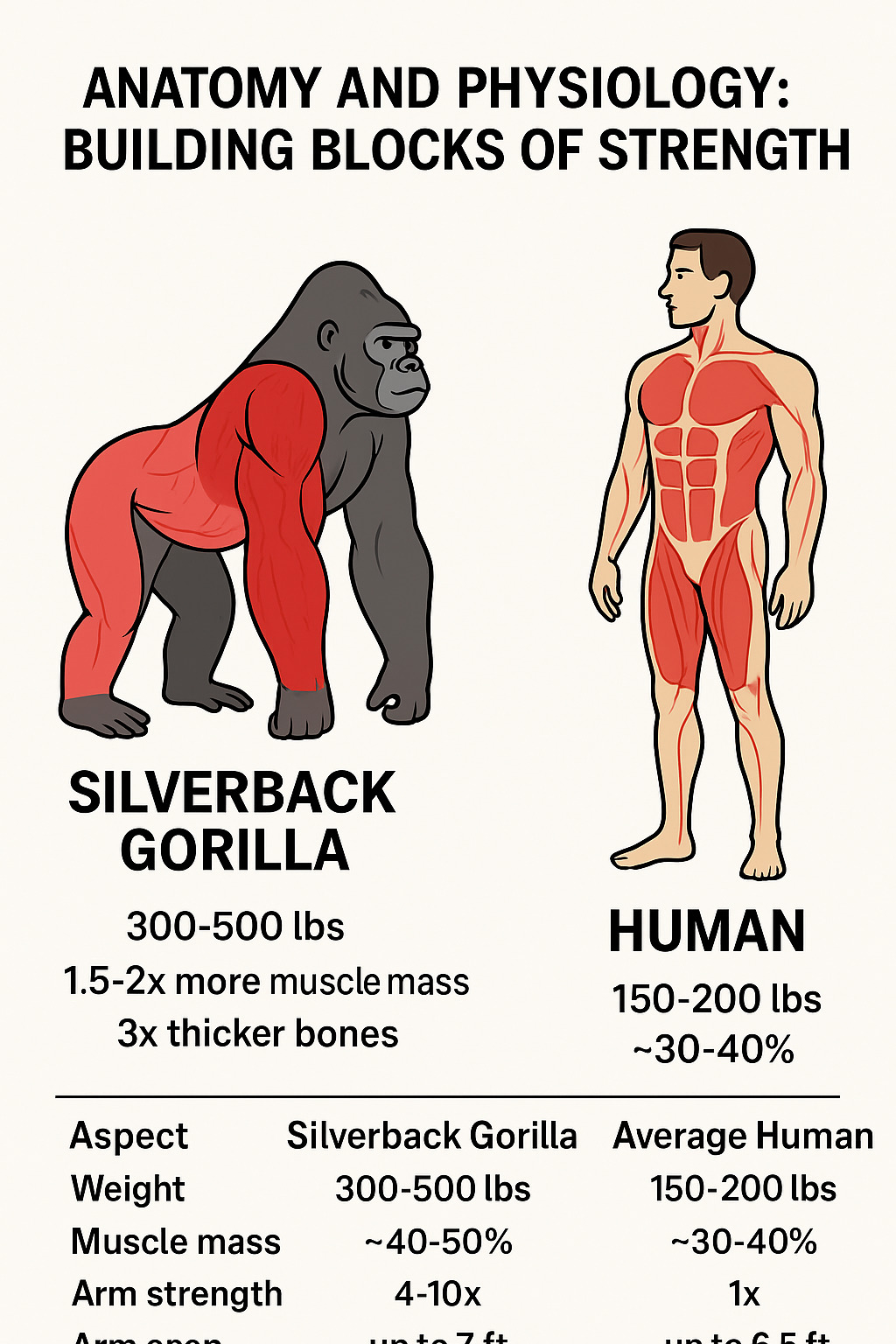
Strength legends exaggerate (not 10× human); realistic calculations show 4–6× human pulling and lifting power.
Albinism is nearly unheard of in gorillas, with Snowflake, Barcelona Zoo’s famed pale-coated male, being the only long-documented case in scientific records.
Habitat and Distribution
1. Geographic Range
Lowland gorillas dominate some of the most biologically rich yet politically fragile forests on Earth.
Their core range spans Central and West Africa, stretching through Cameroon, Gabon, Equatorial Guinea, Angola (Cabinda), Central African Republic, and the vast Republic of Congo forests, with small but critical populations in the Democratic Republic of Congo.
Western lowlands hold the widest geographic spread, occupying swamp forests of the Odzala-Kokoua, peat-dense basins of Ngaga, and gallery forests that weave along river corridors.
Eastern lowland populations, by contrast, are tightly compressed into the Albertine Rift system and mountainous interior forests, where conflict zones and mining concessions reduce viable terrain.
Elevational ranges remain surprisingly broad.
Lowland gorillas thrive from sea level in coastal mangroves to approximately 1,300 meters (4,265 ft) in upland forest plateaus, adapting to thick underbrush, permanently flooded swamps, and monsoon-drenched evergreen corridors.
Dense canopy layers restrict visibility, making their range difficult to survey; thus, new genetic and thermal drone mapping continues to reveal previously unknown clusters.
Range maps and habitat infographics are now essential research tools, illustrating how fragmented forest pockets have become, and how urgently continuous corridors must be restored.
3. Preferred Environments
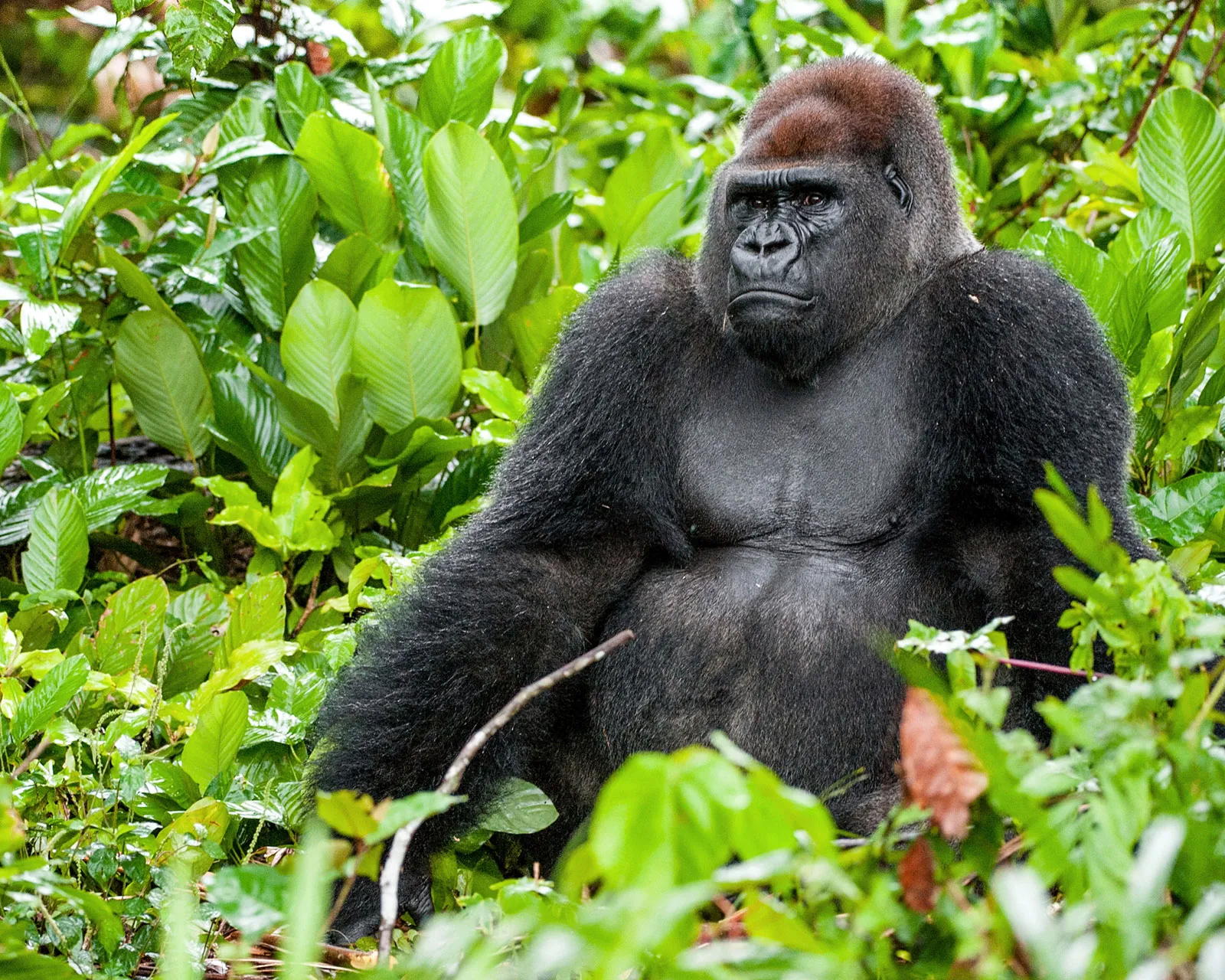
The quintessential lowland gorilla biome is a humid mosaic of primary rainforest, seasonal swamp margins, marantaceae thickets, and treefall clearings rich in fruiting cycles.
Swamp forests—once considered inhospitable to great apes—have emerged as population strongholds because humans struggle to access them, allowing gorillas to forage relatively undisturbed.
These regions offer year-round foliage with towering afromontane trees, abundant herbaceous layers, and mineral-rich sedges used as sodium and protein supplements.
Seasonal shifts dictate movement and resource strategy.
During wet seasons, gorillas expand into fruit-loaded crowns, while dry seasons push them toward bark, roots, and fibrous stems in shaded clearings.
They rarely drink free-standing water, deriving hydration from succulent vegetation and morning dew.
Their habitat use reflects a nuanced blueprint: go where humans rarely go, eat what requires power to harvest, and stay mobile enough to follow fruit calendars yet grounded enough to avoid constant territorial conflict.
4. Human Impacts on Habitat
The lowland gorilla’s forest kingdom is shrinking faster than conservation can respond.
Commercial logging, palm oil expansion, artisanal and industrial mining, and bush road construction have carved the rainforest into isolating fragments.
The numbers are stark: only 22% of remaining gorilla habitat lies inside formal protected reserves, and even those are infiltrated by illegal extraction routes and militia presence.
Fragmentation does more than reduce space—it cuts migration corridors, halts gene flow, and forces gorillas closer to human settlements where bushmeat trade and viral spillover intensify.
Climate shifts layer additional risk. Increased dry-season length reduces fruit peaks, forcing silverbacks to travel farther with larger troops, increasing energy expenditure and conflict exposure.
Yet, gorillas remain surprisingly climate-resilient, capable of dietary fallback shifts and swamp relocations.
What they cannot outpace is bulldozers, gold dredgers, and unregulated timber markets.
True resilience will depend on transboundary habitat corridors, anti-logging enforcement, and carbon-credit forest protection models that value gorillas not as trophies, but as architects of living rainforests.
Diet and Foraging Behavior
1. Daily Intake
Silverback gorillas are primarily herbivorous, consuming a diverse range of plant-based foods to meet their substantial nutritional needs.
Adult males typically consume around 45 pounds (20 kg) of vegetation per day, while females and juveniles eat proportionally less.
Their diet includes leaves, stems, shoots, bark, and fruits, with occasional flowers and small invertebrates like ants or termites providing supplementary protein.
The fibrous leaves and stems supply essential vitamins, minerals, and roughage for their large digestive systems, while fruits contribute natural sugars and energy.
Bark and pith, which are higher in carbohydrates and calcium, become particularly important during periods when fruits are scarce.
By feeding on a wide variety of plant matter, gorillas maintain robust health, support their massive muscle structure, and sustain their energy levels for daily activities, including social interactions, territorial defense, and long-distance foraging.
Find more about What do Silverback Gorillas Eat here.
2. Seasonal Variations
Gorilla diets fluctuate with seasonal availability, reflecting the abundance or scarcity of particular foods.
During the wet seasons, when fruiting trees are plentiful, gorillas favor sweet and energy-dense fruits, often spending significant portions of the day seeking out the ripest options.
Fruits provide essential sugars, antioxidants, and hydration, supporting growth and fat storage for leaner periods.
In contrast, dry seasons or periods of fruit scarcity force gorillas to rely more heavily on leaves, stems, bark, and fibrous vegetation, which, although lower in energy, supply vital nutrients like fiber, calcium, and potassium.
This dietary flexibility allows gorillas to survive fluctuating environmental conditions without compromising overall nutrition.
Such seasonal shifts also influence social behavior, with gorillas traveling greater distances and adjusting group foraging strategies to locate scarce resources while minimizing competition and maximizing energy efficiency.
3. Foraging Techniques
Gorillas employ varied foraging strategies to access both common and hard-to-reach foods.
They are adept tree climbers, often scaling branches to obtain fruits, leaves, and seeds that other ground-dwelling animals cannot reach.
Some gorillas demonstrate simple tool use, such as using sticks to extract ants or termites from logs and mounds, highlighting their intelligence and problem-solving skills.
Their foraging behavior benefits the ecosystem: by dispersing seeds through fecal matter, gorillas contribute to forest regeneration and plant diversity.
This interaction reinforces the ecological balance, ensuring that gorilla habitats remain productive and biodiverse for generations to come.
Social Structure, Behavior, and Communication
1. Group Dynamics
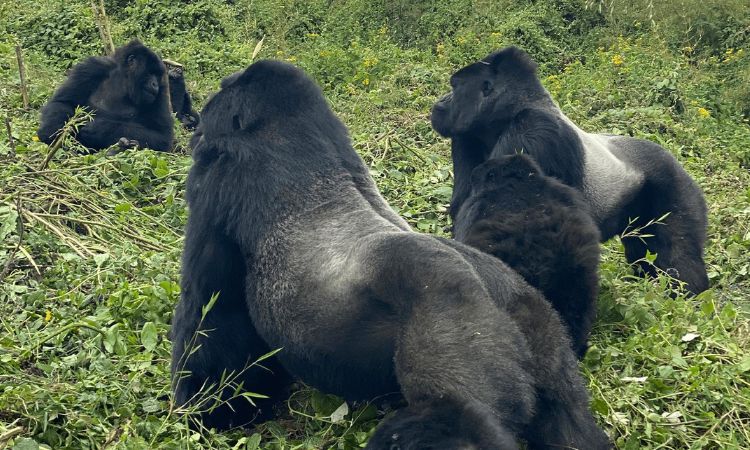
Gorillas live in social groups called troops, typically consisting of 4 to 30 individuals, though smaller or larger groups can occur depending on habitat and resource availability.
Each troop is usually led by a dominant silverback male, who provides protection, resolves conflicts, and makes key decisions regarding group movements and feeding locations.
The silverback’s leadership is crucial for maintaining cohesion, deterring predators, and ensuring access to the best feeding grounds.
Troops typically include multiple adult females, their offspring, and occasionally subordinate males known as blackbacks, who may eventually challenge the silverback for dominance or leave to form their own groups.
Gorilla home ranges vary considerably, spanning 8 to 45 km², influenced by food availability and habitat type.
Troops generally have overlapping ranges but maintain territories for key feeding areas.
Social hierarchies within the group are relatively stable, with the silverback at the apex, followed by adult females and juveniles in a loose pecking order.
Relationships among females and between mothers and offspring are tight-knit, fostering cooperation and nurturing behaviors that strengthen troop cohesion and survival.
2. Daily Life and Activities
Gorilla daily life revolves around feeding, resting, traveling, and social interactions.
Troops spend several hours each day foraging across their home ranges, consuming a mix of leaves, fruits, stems, and occasional insects.
Gorillas exhibit flexible nesting behavior, constructing ground nests most nights but sometimes creating tree nests for added safety or comfort, particularly in wet or predator-prone areas.
Nest-building demonstrates intelligence and planning, with gorillas carefully selecting foliage to create sturdy sleeping platforms.
Play is an essential component of daily life, especially for infants and juveniles.
Young gorillas engage in wrestling, chasing, and mock fighting, which develops physical strength, coordination, and social skills.
Grooming is another vital activity, promoting hygiene and reinforcing social bonds within the troop.
Travel is typically slow and methodical, guided by the silverback, who ensures that movement aligns with food resources and group safety.
Rest periods between foraging sessions allow for digestion, social interactions, and energy conservation, which is crucial given their high daily caloric intake.
Overall, gorilla routines balance survival needs with opportunities for learning, socialization, and bonding.
3. Communication Methods
Gorillas possess complex communication systems, employing over 22 distinct vocalizations ranging from grunts and hoots to chest-beating and roars.
These sounds convey emotional states, alert others to danger, or facilitate coordination during travel and feeding.
Body language is equally important: facial expressions, gestures, and postures signal aggression, submission, or affection.
In captivity, gorillas have demonstrated sign language abilities, revealing advanced cognitive and social intelligence.
Combined, these vocal, visual, and tactile signals allow gorillas to maintain group cohesion, mediate conflicts, nurture young, and interact with humans, highlighting their sophisticated behavioral repertoire and social complexity.
Reproduction and Life Cycle
1. Mating and Gestation
Gorillas do not have a fixed mating season; reproduction can occur year-round, allowing populations to adapt to varying environmental conditions.
Within a troop, dominant silverbacks typically have exclusive breeding rights with the adult females, although subordinate males may occasionally mate when opportunities arise.
Courtship involves gentle touching, grooming, and vocalizations, signaling readiness and social acceptance.
Once conception occurs, the gestation period lasts approximately 8.5 months, similar to humans.
Female gorillas give birth to a single infant, as twins are extremely rare.
Newborns are born helpless and fully dependent, weighing around 4–5 pounds (2 kg).
The low reproductive rate—typically one infant every 4–6 years—means gorilla populations recover slowly from threats such as habitat loss or poaching.
This slow reproductive pace, combined with long infant dependency, makes population stability highly sensitive to environmental pressures and human disturbances.
2. Infant Development
Infants are born with soft, dark fur and a small white tuft on their rump, which may help mothers visually track them within dense foliage.
From birth, the mother-infant bond is extraordinarily strong, with the infant clinging to the mother’s chest or back for warmth, protection, and mobility.
Nursing occurs frequently, providing essential nutrition and antibodies to support early development.
During the first few years, infants gradually begin to explore their surroundings under maternal supervision, learning essential skills such as foraging, social interaction, and play behavior.
Play with siblings and peers strengthens motor skills and establishes social hierarchies.
This dependence period can last up to four years, after which juveniles gain increasing independence but continue to remain closely affiliated with their mother and the troop.
The extended maternal care ensures higher survival rates but also contributes to the species’ low birth rate, emphasizing the importance of each infant to overall population growth.
3. Lifespan and Maturity
Gorillas can live 35 to 50 years, with some individuals in captivity surpassing this range.
Sexual maturity occurs between 8 and 15 years, depending on sex and environmental conditions.
Males develop into blackbacks before becoming silverbacks, while females reach reproductive readiness slightly earlier.
The combination of late maturity, low birth rates, and prolonged infant dependency contributes to their vulnerability, as population growth is slow and recovery from external threats is limited.
Conserving adult females and silverbacks is therefore critical for maintaining stable populations and ensuring the long-term survival of the species.
Threats, Conservation Status, and Efforts
1. Major Threats
Gorillas face multiple threats that have severely impacted their populations over the past decades.
Poaching is a primary danger, with hunters targeting gorillas for bushmeat, traditional medicine, and illegal wildlife trade.
Although hunting is illegal in most range countries, enforcement is inconsistent, leaving gorillas vulnerable.
Disease also poses a critical risk.
Epidemics such as Ebola virus have killed up to one-third of some gorilla populations, particularly in Central Africa, decimating entire troops in a short span.
Gorillas are highly susceptible to human-transmitted illnesses, which can spread quickly due to their social behavior.
Habitat loss further compounds these challenges.
Over the last 25 years, gorilla habitats have declined by more than 60% due to logging, mining, agricultural expansion, and human settlements.
Fragmented forests reduce food availability, force gorillas into dangerous human-dominated areas, and isolate populations, leading to genetic bottlenecks.
Collectively, these pressures threaten gorilla survival, making conservation urgent.
2. Conservation Initiatives
Gorillas are currently classified as Critically Endangered by the IUCN, reflecting the high risk of extinction in the wild. Various conservation programs aim to stabilize and restore populations.
Organizations such as the World Wildlife Fund (WWF) and the Jane Goodall Institute implement anti-poaching patrols, habitat protection, and community education programs to reduce human-gorilla conflict.
Ecotourism initiatives, like those in Dzanga-Sangha National Park, Central African Republic, have proven successful in providing economic incentives to local communities while funding conservation efforts.
Guided gorilla trekking and photography tours generate revenue that supports anti-poaching operations, habitat management, and scientific research.
Conservation success stories demonstrate the positive impact of these efforts.
For example, mountain gorilla populations in Uganda, Rwanda, and the DRC have increased steadily, with the latest estimates suggesting ~1,063 individuals in the wild.
Across all gorilla species, combined population estimates are approaching 361,900, reflecting a growing awareness, protection measures, and international collaboration.
These examples highlight that dedicated conservation efforts can reverse declining trends and offer hope for long-term survival.
How to Help
Individuals can play a crucial role in gorilla conservation through personal actions, donations, and advocacy.
Supporting reputable wildlife organizations financially helps fund anti-poaching patrols, medical interventions, and habitat restoration.
Everyday actions, like reducing deforestation impacts and spreading awareness, contribute to protecting gorilla habitats.
Creative initiatives, such as purchasing gorilla-themed merchandise (e.g., plush toys), can also make a direct impact, with proceeds often supporting conservation projects.
By combining awareness, financial support, and ethical choices, everyone can contribute to ensuring that gorillas not only survive but thrive in the wild for generations to come.
Fun Facts and Comparisons
Fun Facts and Comparisons
-
Strength myths debunked: While incredibly strong, a silverback isn’t literally “8 humans strong”—pound-for-pound strength is 4–9× that of an average human.
-
Vocal range: Gorillas use 22+ vocalizations to communicate, from grunts and hoots to roars and chest beats.
-
Albinism rarity: Occasionally, albino gorillas are born, a striking genetic anomaly.
-
Arm span: Their arms can reach 7–8 feet, longer than most tall humans.
-
Nesting skills: They build ground or tree nests every night, like tiny forest architects.
-
Seed dispersers: By eating fruits, gorillas help replant forests naturally.
What is a Western Lowland Gorilla?
The Western Lowland Gorilla (Gorilla gorilla gorilla) is a subspecies of the western gorilla, native to the dense forests of Central Africa.
It is the smallest of the gorilla subspecies but still robust, with adult males averaging 140–200 kg (310–440 lbs). They have a characteristic brown-gray coat, a pronounced brow ridge, and a more pronounced nose with flared nostrils.
Western lowland gorillas live in social troops led by a dominant silverback and are primarily herbivorous, eating leaves, fruits, and stems.
Known for intelligence, gentle behavior, and complex communication, they are critically endangered due to poaching, habitat loss, and disease.
What happened to the boy who fell in gorilla enclosure in 1996?
In 1996 at the Brookfield Zoo, Chicago, a young boy fell into the gorilla enclosure and was surrounded by a 17-year-old male silverback named Binti Jua.
While bystanders feared an attack, Binti Jua gently cradled the boy and carried him to a zookeeper. The child suffered minor injuries, but the incident became famous as an example of a gorilla’s intelligence, empathy, and protective instincts.
Binti Jua’s actions were widely praised and studied in discussions of primate behavior, illustrating the potential for emotional awareness and nurturing behavior in gorillas toward humans and their own species.
What countries are the Western Lowland Gorilla in?
Western lowland gorillas inhabit tropical and subtropical forests of Central Africa, primarily in countries including Cameroon, Central African Republic, Democratic Republic of Congo (DRC), Equatorial Guinea, Gabon, Republic of Congo, and Angola (Cabinda enclave).
They prefer dense lowland rainforests, swamps, and secondary forests, where food is abundant and human disturbance is minimal.
Their distribution is fragmented due to logging, mining, and agriculture, leading to isolated populations. Protected areas such as national parks and reserves play a critical role in their survival.
Despite these efforts, Western lowland gorillas are considered Critically Endangered by the IUCN.
Are Western Lowland Gorillas Strong?
Yes, Western lowland gorillas are extremely strong, with adult males capable of lifting or breaking objects far beyond human capacity.
Pound-for-pound, they are estimated to have 4–9 times the strength of an average human, particularly in their upper body and arms.
This strength allows them to climb trees, strip bark, and defend their troop from predators or rivals. While myths exaggerate their power—like being “8 humans strong”—their muscular build, long arms, and robust bone structure make them one of the most powerful primates, yet they generally use this strength peacefully, relying on displays rather than aggression.
Frequently Asked Questions:
Are lowland gorillas aggressive?
A: Generally, no. They are peaceful and gentle unless defending their troop or young.
Silverbacks use displays—like chest beating or vocalizations—to deter threats rather than engage in direct attacks.
Understanding their behavior helps humans interact safely and responsibly.
Protect lowland gorillas—donate now or visit our shop for eco-merchandise to make a lasting impact on their survival and the forests they inhabit.
Conclusion and Call to Action
Lowland gorillas are among the most intelligent, social, and ecologically important species on Earth.
Living in complex troops led by silverbacks, they display remarkable behaviors—from tool use and sophisticated communication to nurturing strong family bonds.
Their diets, foraging strategies, and seasonal adaptations illustrate their role as key seed dispersers, maintaining healthy forest ecosystems.
Yet, gorillas remain highly vulnerable due to poaching, disease, and habitat loss, with populations declining dramatically in recent decades.
Conservation efforts—from anti-poaching patrols and habitat protection to ecotourism initiatives—have demonstrated that positive change is possible.
However, continued action is vital.
You can help protect lowland gorillas: donate to reputable organizations here. spread awareness, or support conservation through eco-friendly merchandise.
Every contribution, no matter how small, directly aids anti-poaching, medical care, and forest preservation programs.