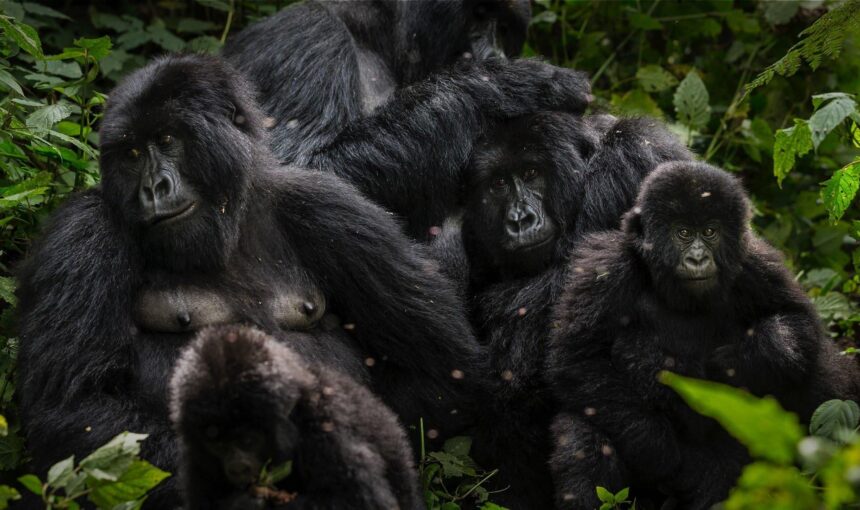
Virunga Massif Gorilla Population | Growth & Conservation, Trends and Data 2026
The Virunga Massif gorilla population represents one of the world’s most remarkable conservation success stories.
Located across Uganda, Rwanda, and the Democratic Republic of Congo, the Virunga Massif is home exclusively to endangered mountain gorillas (Gorilla beringei beringei).
This transboundary ecosystem includes Bwindi Impenetrable National Park, Volcanoes National Park, and Virunga National Park, creating a vital refuge for these great apes.
As of the most recent surveys, the Virunga Massif gorilla population exceeds 600 individuals, accounting for over half of the global mountain gorilla population.
This growth is largely credited to intensive conservation efforts, including anti-poaching patrols, veterinary interventions, community involvement, and regulated gorilla trekking tourism.
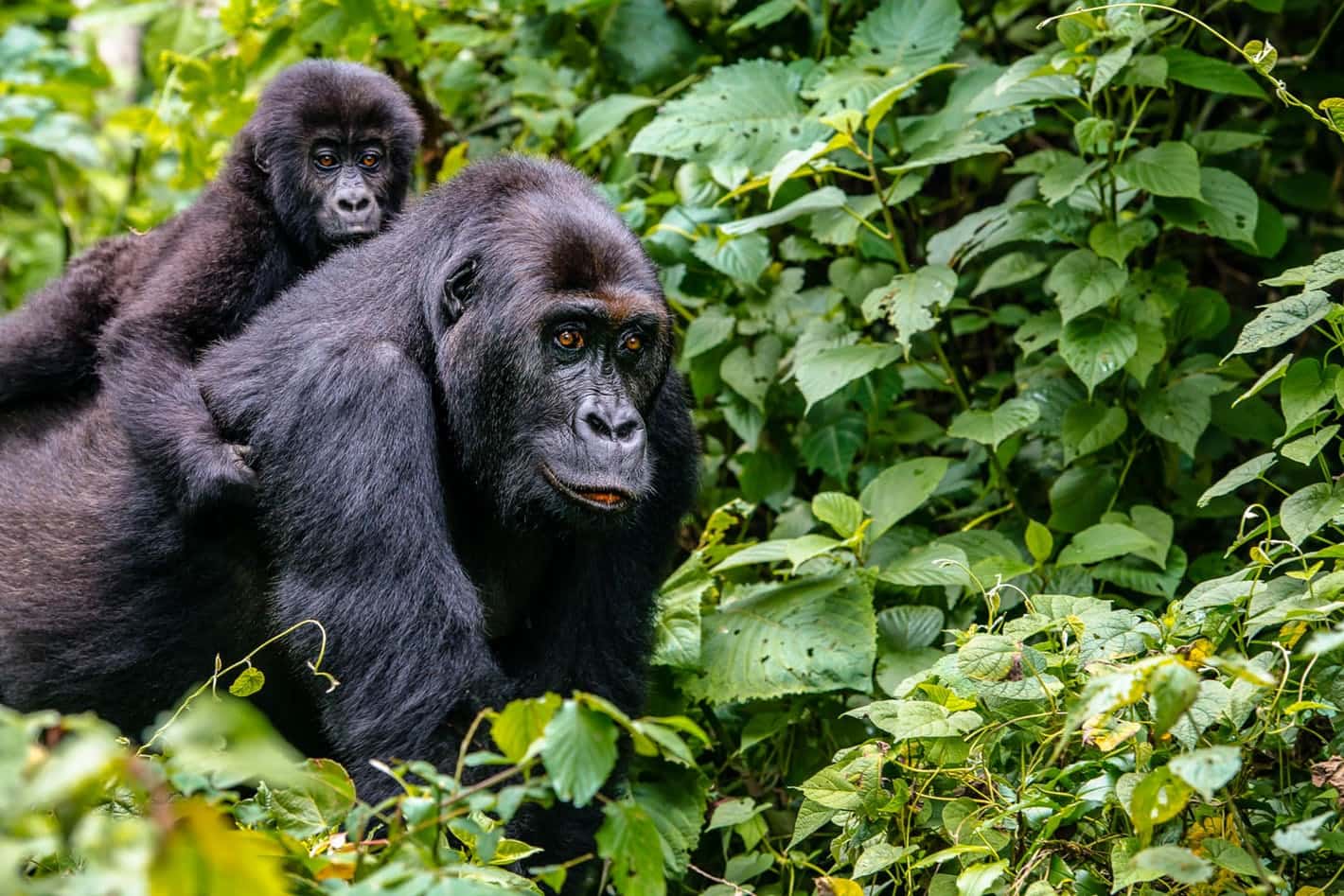
Mountain gorillas in the Virunga Massif live in stable family groups led by dominant silverbacks, with slow reproduction rates—females give birth only once every four to five years.
Despite ongoing threats such as habitat pressure and disease, the Virunga Massif gorilla population continues to rise, proving that long-term conservation, cross-border cooperation, and responsible tourism can successfully protect endangered species for future generations.
The Virunga Massif gorilla population represents a beacon of hope in wildlife conservation.
Straddling the borders of the Democratic Republic of Congo (Virunga National Park), Rwanda (Volcanoes National Park), and Uganda (Mgahinga Gorilla National Park), the Virunga Massif forms a transboundary volcanic mountain range that serves as home to these gentle giants.
Adapted uniquely to high-altitude life (between 2,200 and 4,300 meters), mountain gorillas boast thicker fur than their lowland relatives to withstand chilly nights and frequent rain, along with broader chests and shorter limbs for navigating steep, rugged terrain.
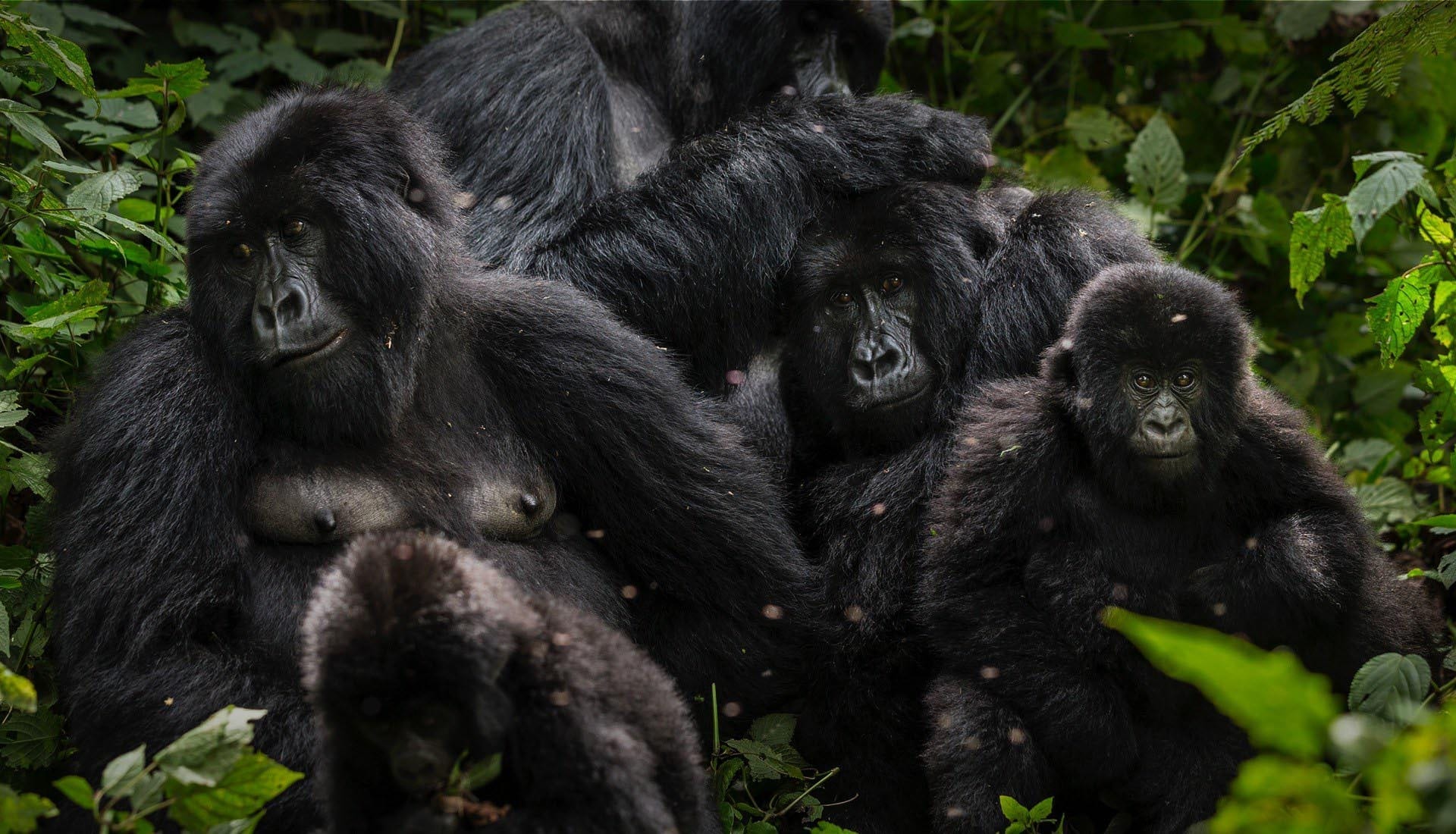
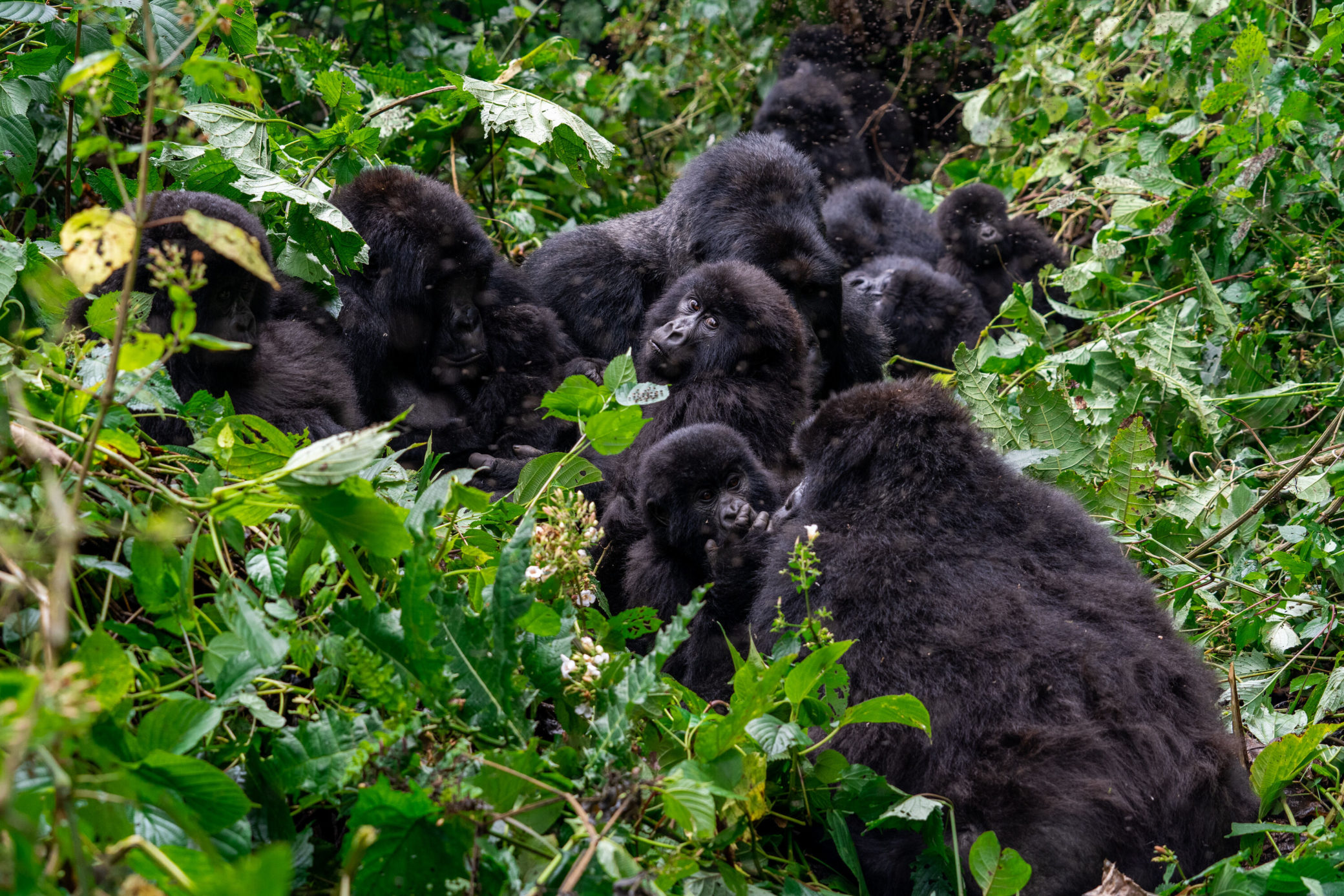
As of the most recent comprehensive data, the global mountain gorilla population stands at approximately 1,063 individuals, with the Virunga Massif hosting around 604 of them—more than half the world’s total.
This marks a remarkable recovery from the brink of extinction in the 1980s, when numbers dipped perilously low due to poaching and habitat loss.
In 2026, amid escalating global challenges like climate change—which threatens to alter bamboo availability and shift vegetation zones upward—this topic is more critical than ever.
Rising temperatures and unpredictable rainfall could fragment their already isolated habitat, while human pressures continue to mount.
Yet, ongoing conservation successes, including new births reported in Virunga National Park and a fresh census underway in the adjacent Bwindi-Sarambwe ecosystem (launched in May 2025, with results expected in 2026), underscore the fragility and triumph of their story.
In this guide, we’ll explore the historical journey from near-extinction to recovery, the latest 2026 population insights, major threats, groundbreaking conservation efforts, the role of eco-tourism, and a hopeful future outlook.
Dive deeper to discover how these majestic primates continue to inspire global action—and how you can contribute to their survival.
Historical Overview: From Near-Extinction to Recovery of the Virunga Massif Gorilla Population
The Virunga Massif gorilla population has endured a dramatic journey from discovery and near-extinction to one of the most celebrated wildlife recoveries in modern conservation history.
These mountain gorillas, found only in the Virunga Mountains spanning Uganda, Rwanda, and the Democratic Republic of Congo, were first introduced to the world in the early 1900s by European explorers and scientists.
Among them, Carl Akeley, an American conservationist, played a pivotal role in drawing attention to their vulnerability.
His advocacy directly influenced the creation of Albert National Park (now Virunga National Park) in 1925, Africa’s first national park.
Despite early protection, the population steadily declined throughout the 20th century. Colonial-era land policies converted forest habitats into farmland, fragmenting gorilla ranges.
By the 1970s and 1980s, the situation became critical. Poaching, illegal wildlife trade, snare injuries, civil wars, and political instability devastated gorilla families.
During this period, the global mountain gorilla population dropped to around 250 individuals, pushing the species to the brink of extinction.
A major turning point came through the work of Dian Fossey, who began her groundbreaking research in the 1960s.
Fossey’s long-term behavioral studies, fierce anti-poaching campaigns, and global advocacy reshaped conservation strategies.
Though her work was controversial and she was tragically murdered in 1985, her legacy laid the foundation for modern gorilla protection, including ranger patrols, community engagement, and scientific monitoring.
The 1994 Rwandan genocide caused another severe setback. Conservation infrastructure collapsed, tourism halted, and armed conflict spilled into protected areas.
However, the post-genocide period marked a remarkable recovery phase.
Governments, conservation NGOs, and international partners strengthened transboundary collaboration, recognizing that gorillas move freely across borders and require unified protection.
By the 2000s, regulated gorilla trekking tourism provided sustainable funding for conservation while benefiting local communities.
Veterinary interventions, such as the Gorilla Doctors program, reduced disease-related deaths.
Regular censuses began documenting steady population growth, signaling a conservation success once thought impossible.
Virunga Massif Gorilla Population Trends
| Decade |
Virunga Massif Population |
Key Events |
| 1970s |
~250 globally |
Poaching peaks, habitat loss |
| 2010 |
480 |
Census confirms recovery |
| 2016 |
604 |
Strong transboundary protection |
| 2025 |
~604+ (projected growth) |
Ongoing monitoring and censuses |
Today, the Virunga Massif gorilla population exceeds 600 individuals, making mountain gorillas one of the few great ape species whose numbers are increasing.
While threats like habitat pressure, disease, and climate change persist, this recovery demonstrates that long-term protection, scientific research, community involvement, and peace can reverse even the most severe wildlife declines.
Current Status: 2026 Population Insights and Demographics
As of January 2026, the Virunga Massif continues to anchor global mountain gorilla conservation, sheltering over half of the world’s remaining population in its volcanic highlands.
The last comprehensive census in 2016 tallied 604 individuals across 41 family groups, a figure that has held steady with incremental growth through natural births and veterinary interventions.
This represents more than one-third of the global total, estimated at 1,063 to 1,080 individuals—a remarkable surge from the 1980s nadir, culminating in the species’ IUCN downgrade from critically endangered to endangered in 2018.
However, the picture is dynamic: A major census in the adjacent Bwindi-Sarambwe ecosystem, launched in May 2025, wrapped its field sweeps by early December, with preliminary analyses underway and full results anticipated in 2026.
This could refine global estimates upward, as Bwindi’s last count in 2018 yielded 459 gorillas, and recent monitoring suggests modest increases.
Population Breakdown by Country
The Virunga Massif’s gorillas roam a tri-national expanse, with distributions reflecting habitat availability and protection efficacy.
In the Democratic Republic of Congo’s Virunga National Park, approximately 200 individuals persist in the largest contiguous block, though political instability has concentrated efforts here.
Rwanda’s Volcanoes National Park hosts the bulk—around 300–350—benefiting from robust tourism revenues and ranger patrols.
Uganda’s Mgahinga Gorilla National Park sustains a smaller contingent of about 20–30, primarily lone males or splinter groups that occasionally cross borders.
These figures, drawn from 2016 extrapolations and 2025 spot-checks, underscore transboundary challenges: Gorillas don’t respect lines on maps, with 10–15% migrating seasonally, complicating counts but fostering collaborative monitoring.
Demographics and Behavior
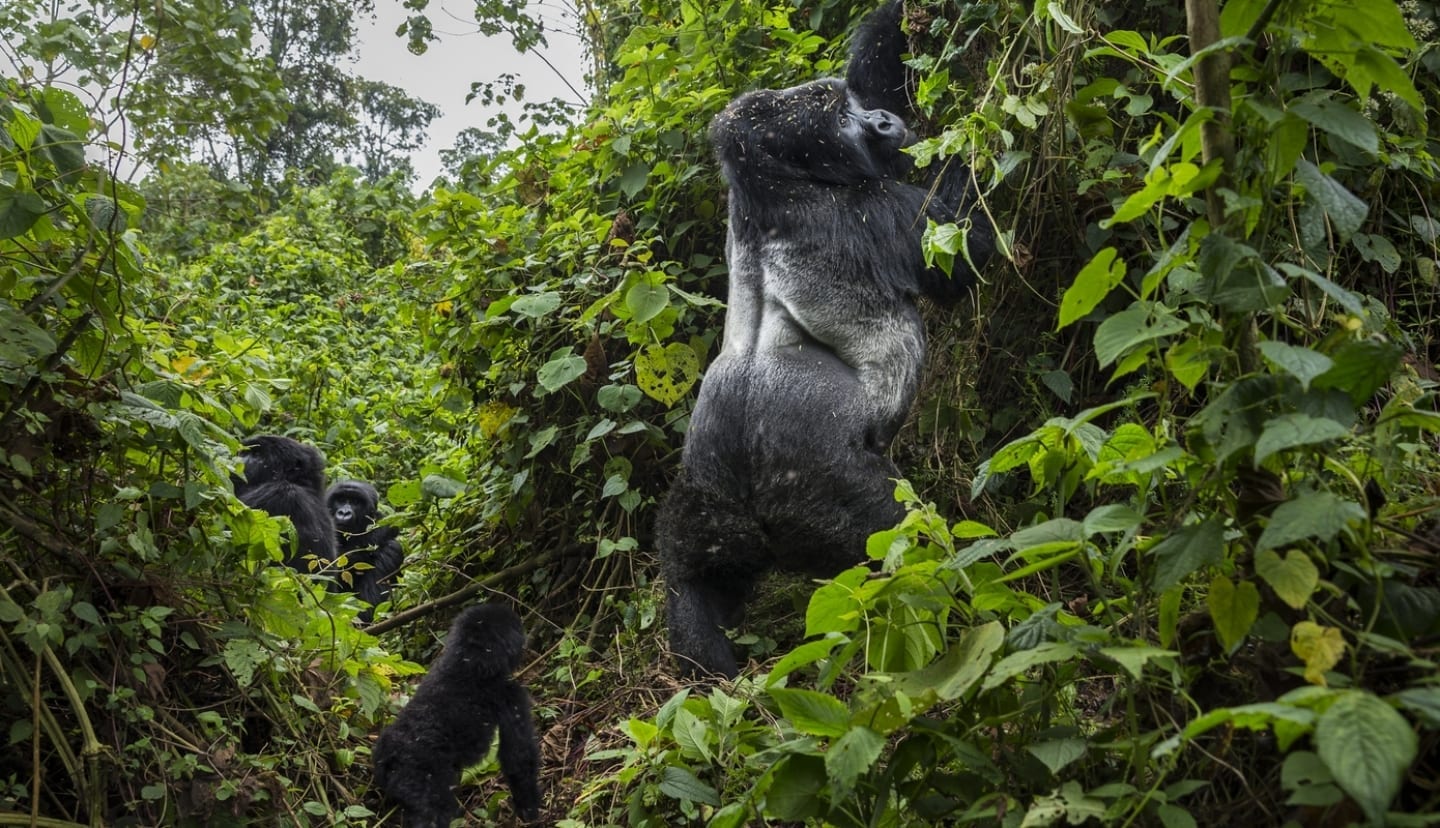
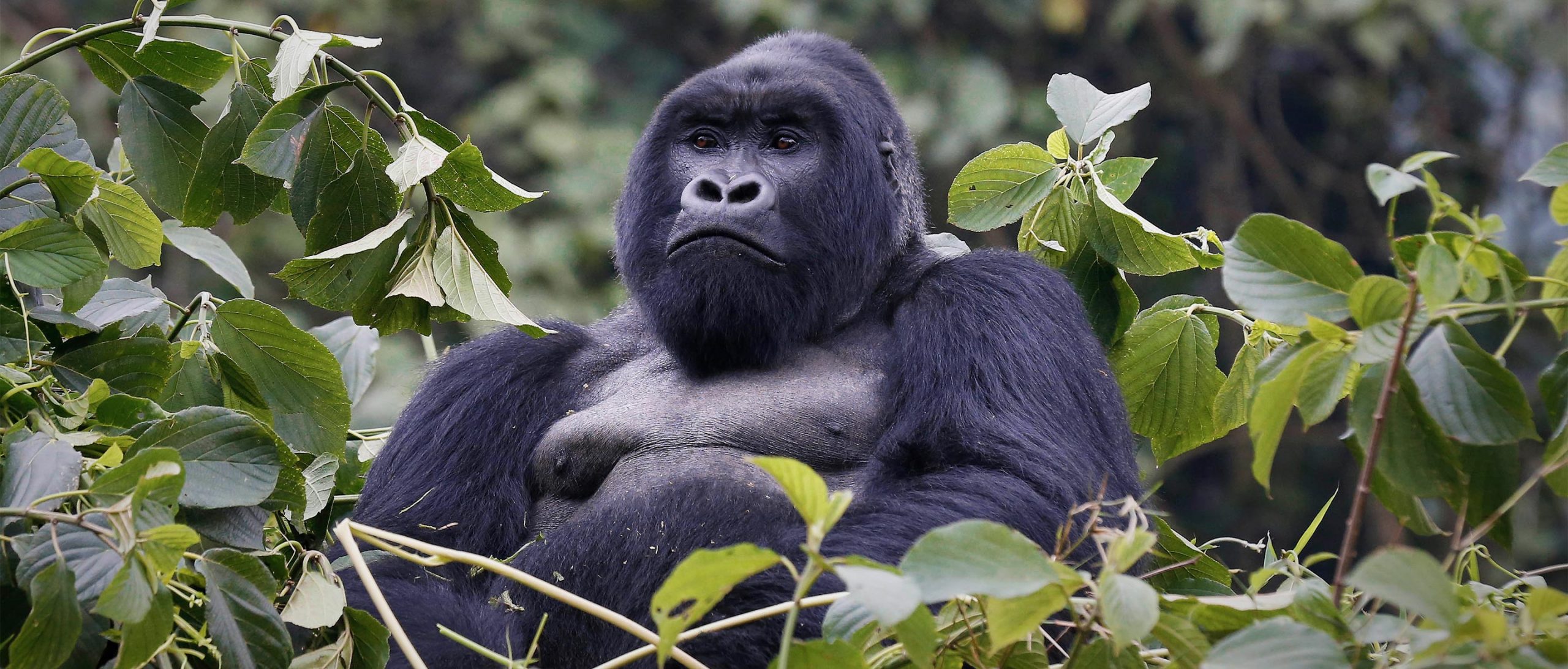
Mountain gorillas in the Virunga exhibit classic primate sociality, organized into cohesive family groups of 5–30 members led by a dominant silverback male, whose silver-tipped back hair signals maturity (typically reached at 13–15 years).
Females, numbering roughly equal to males, mature earlier (around 8 years) and often transfer between groups to avoid inbreeding, birthing one infant every 3–4 years after a 8.5-month gestation.
Recent demographics highlight vitality: Virunga Park (DRC side) welcomed six newborns in 2022 alone, with similar rates persisting into 2025 amid improved health protocols.
Lifespans average 35–40 years in the wild, though up to 50 in protected settings, threatened by respiratory ailments and trauma.
Behaviorally, these herbivores devote 50–60% of daylight to foraging on over 100 plant species—favoring bamboo shoots, wild celery, and thistles—supplementing with insects for protein.
Social bonds are tight: Grooming reinforces hierarchies, chest-beating displays deter rivals, and infants nurse until age 3, fostering group cohesion.
In 2026, habituated groups like Rwanda’s Kwitonda troop (26 members) offer invaluable behavioral data, revealing adaptive shifts, such as increased altitudinal foraging amid warming trends.
Genetics: Navigating Low Diversity Risks
With only ~1,063–1,080 individuals globally, mountain gorillas teeter on a genetic knife-edge.
The Virunga population, isolated for millennia, boasts low allelic diversity—about 70% of that in lowland gorillas—heightening inbreeding depression risks like reduced fertility and weakened immunity.
Studies from fecal DNA sampling (2018–2025) detect elevated homozygosity, with silverbacks siring 40–50% of offspring in closed groups, amplifying vulnerabilities to diseases like scabies outbreaks in 2023.
Conservation countermeasures include managed translocations—two females moved from Bwindi to Virunga in 2019—and genetic corridors via habitat corridors, aiming to boost heterozygosity by 10–15% over decades.
Monitoring Technologies: Eyes in the Canopy
Precision tracking has revolutionized 2026 demographics.
Drones equipped with thermal imaging scan 500+ km² annually, identifying nests and group movements with 95% accuracy, while AI-analyzed camera traps (over 200 deployed) capture 10,000+ images yearly, flagging births and dispersals.
GPS collars on select silverbacks provide real-time data, revealing 5–10 km daily ranges.
These tools, integrated via the IGCP’s dashboard, informed 2026’s Bwindi sweep, ensuring no gorilla is double-counted.
The table below compares Virunga and Bwindi populations:
| Aspect |
Virunga Massif (2026 Est.) |
Bwindi-Sarambwe (2026 Est.) |
| Total Individuals |
~604 (stable since 2016) |
~459+ (2018 base; census pending) |
| Family Groups |
41 |
36 |
| Habitat Area (km²) |
~447 |
~330 |
| Growth Rate (Annual) |
2–3% |
3–4% (preliminary) |
| Key Threats |
Conflict, disease |
Habitat fragmentation |
This snapshot affirms steady progress, but sustained vigilance is essential as climate and human pressures evolve.
| Area |
Approx. 2016–2026 Figure (representative) |
Notes |
| Virunga Massif |
~604 (2016); ~600+ currently |
2016 transboundary census = 604; DRC portion ≈200+. Continued monitoring. |
| Bwindi Impenetrable |
~400 (pre-2026); 2026 census underway |
Bwindi historically accounts for the remainder of global total; 2026 survey may adjust this number. |
Bottom line: mountain gorillas are a rare conservation success story—numbers have risen from a few hundred in the 1970s–80s to just over a thousand today—but the species remains Endangered (IUCN) because of restricted range, low genetic diversity and continuing threats.
Sustained transboundary protection, community stewardship, veterinary care and science-led monitoring will determine whether growth continues through 2026 and beyond.
Major Threats Facing the Virunga Massif Gorillas
Despite their population recovery, Virunga Massif gorillas remain under serious and persistent threat.
Their survival depends on constant protection within one of Africa’s most densely populated and politically complex regions.
Habitat encroachment is the most immediate danger.
Mountain gorillas are confined to a high-altitude forest “island” of roughly 800 km², surrounded by rapidly growing human populations.
Expanding agriculture, settlements, and infrastructure continue to pressure park boundaries.
Conservation experts emphasize the need for effective buffer zones to reduce forest edge degradation and human intrusion, yet land scarcity makes this difficult to implement across Uganda, Rwanda, and the DRC.
Closely linked is human–wildlife conflict. As gorilla groups grow and ranges overlap, they increasingly venture near farmland, leading to crop raiding.
While gorillas are not aggressive toward people, frustrated farmers may retaliate or push for land-use changes that threaten conservation gains.
Community conservation programs have reduced tensions, but conflict remains a daily challenge.
Disease transmission is one of the most dangerous invisible threats. Gorillas share up to 98% of human DNA, making them highly susceptible to human respiratory infections.
Even mild illnesses in humans can be fatal to gorillas.
According to veterinarians working in the region, respiratory disease is now a leading cause of gorilla mortality.
This is why face masks, distance rules, and limited trekking numbers are mandatory for tourists.
Gorilla Doctors consistently warn that increasing tourism must never outpace health safeguards.
Although poaching has declined significantly, it has not disappeared.
Gorillas are rarely targeted directly today, but wire snares set for antelope and bushmeat still injure or kill gorillas—especially juveniles.
Anti-poaching patrols and rapid veterinary response have reduced deaths, yet constant surveillance is required.
Climate change is an emerging long-term threat.
Altered rainfall patterns and rising temperatures are already affecting bamboo forests, a critical seasonal food source for Virunga gorillas.
Conservation scientists note that shifts in vegetation could force gorillas into smaller areas, intensifying competition and stress.
Perhaps the most severe threat in the Democratic Republic of Congo is political instability.
Virunga National Park has endured decades of armed conflict.
More than 220 park rangers have been killed in the line of duty, making it one of the world’s most dangerous conservation posts.
Insecurity disrupts patrols, research, and tourism revenue that funds protection.
Looking toward 2026, conservationists are also monitoring a new challenge: overcrowding.
As gorilla numbers rise within limited habitat, inter-family conflicts and silverback takeovers may increase, potentially leading to injuries or infant mortality.
Experts from the International Gorilla Conservation Programme (IGCP) consistently stress that the Virunga Massif’s success is fragile.
Without sustained funding, political stability, strict health controls, and community support, the very recovery celebrated today could reverse.
Conservation Efforts: Strategies Driving Population Growth in the Virunga Massif
The steady recovery of the Virunga Massif gorilla population is not accidental—it is the result of coordinated, long-term conservation strategies that blend science, community participation, political cooperation, and sustainable tourism.
Once on the brink of extinction, mountain gorillas are now one of the strongest examples of how focused conservation can reverse decline.
Transboundary Collaboration: IGCP at the Core
At the heart of this success is the International Gorilla Conservation Programme (IGCP), a partnership between conservation NGOs and the governments of Uganda, Rwanda, and the Democratic Republic of Congo.
Because gorillas move freely across borders, IGCP pioneered transboundary conservation, ensuring that research, ranger patrols, tourism standards, and health protocols are harmonized across the Virunga landscape.
This cooperation has reduced enforcement gaps, improved data sharing, and created a unified conservation vision for the entire massif.
Veterinary Care: Gorilla Doctors Saving Lives
One of the most impactful interventions comes from Gorilla Doctors, a specialized veterinary team providing direct medical care to habituated gorilla groups.
Their rapid-response treatments—snare removals, respiratory disease management, and trauma care—are credited with preventing more than 50% of potential gorilla deaths in monitored populations.
In a species with slow reproduction, saving even one adult female or infant has population-wide significance.
Continuous health monitoring has also strengthened disease prevention, especially critical in the post-COVID tourism era.
Anti-Poaching & Ranger Protection
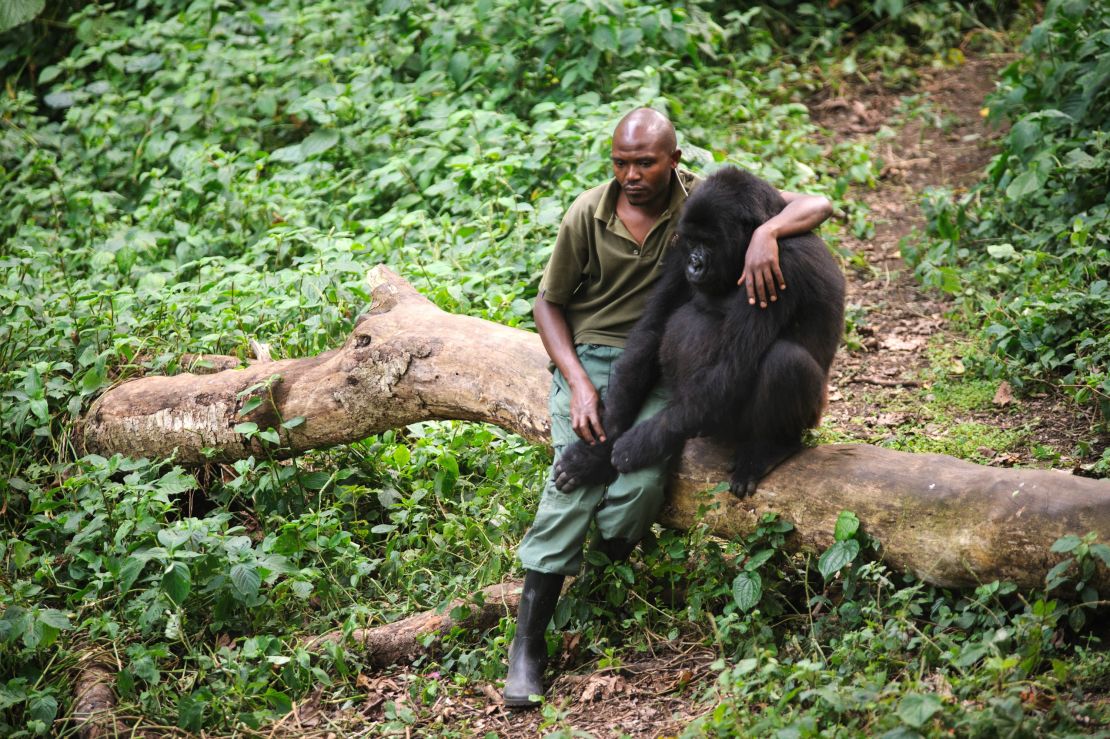
Anti-poaching patrols remain a daily necessity. Highly trained rangers patrol park boundaries, remove snares, monitor gorilla movements, and habituate groups for research and tourism.
Their presence deters illegal activity and allows early detection of threats.
Despite facing extreme risks—especially in eastern DRC—rangers are the backbone of gorilla survival.
Improved equipment, ranger welfare programs, and international support have enhanced patrol effectiveness and morale.
Community Conservation & Revenue Sharing
Local communities are now recognized as conservation partners, not obstacles.
One of the most successful policies is revenue sharing, where up to 20% of gorilla tourism income is reinvested into surrounding communities.
Funds support schools, health centers, clean water projects, and alternative livelihoods.
When communities see tangible benefits, tolerance for wildlife increases and poaching pressure drops dramatically.
Tourism as a Conservation Engine
High-value, low-impact tourism has been transformative.
In Rwanda, gorilla trekking permits priced at USD 1,500 prioritize conservation over volume, funding ranger salaries, veterinary care, and community projects.
Across the region, gorilla tourism revenues contribute significantly to 100% of operational funding for Uganda’s national parks, reducing reliance on external donors.
Strict visitor limits, health rules, and guided treks ensure tourism remains sustainable.
2026 Initiatives Strengthening the Future
Several forward-looking initiatives launched or expanded by 2026 are reinforcing long-term resilience:
-
Rwanda park expansion increased protected habitat by approximately 25%, easing population pressure and reducing conflict.
-
Clean energy and fuel-efficient stove projects are lowering dependence on charcoal, a major driver of illegal forest use.
-
Kwita Izina, Rwanda’s annual gorilla naming ceremony, celebrated 40 newborn gorillas in 2024, raising global awareness and national pride while reinforcing political commitment to conservation.
Education, Research & Monitoring
Ongoing research—using genetic sampling, camera traps, drones, and ranger-based data—guides adaptive management.
Education programs in schools and villages cultivate the next generation of conservation stewards, ensuring local ownership of gorilla protection.
Key Organizations and Their Impact
-
IGCP – Transboundary coordination and policy leadership
-
Gorilla Doctors – Life-saving veterinary care
-
National Park Authorities (UWA, RDB, ICCN) – Law enforcement and tourism management
-
Local Communities – Conservation guardians through benefit sharing
-
International NGOs & Donors – Funding, research, and advocacy
How You Can Contribute
-
Choose ethical gorilla tours that follow health and sustainability rules
-
Donate to organizations like IGCP or Gorilla Doctors
-
Support community-based enterprises near gorilla parks
-
Advocate for conservation through awareness and responsible travel
In summary, the growth of the Virunga Massif gorilla population proves that conservation works when science, communities, governments, and global supporters act together.
Sustaining these efforts beyond 2026 is essential to securing the future of mountain gorillas forever.
Eco-Tourism and Economic Impact: Boosting Local Communities
Eco-tourism has become one of the most powerful tools protecting mountain gorillas in the Virunga Massif and Bwindi Impenetrable Forest.
Carefully managed gorilla trekking tourism generates essential funding for conservation while directly improving the livelihoods of surrounding communities—creating a system where people benefit from keeping gorillas alive.
In 2024, Bwindi Impenetrable National Park welcomed more than 40,000 gorilla-tracking visitors, generating millions of dollars in permit fees, taxes, and tourism services.
These funds support ranger salaries, veterinary care, habitat protection, and scientific monitoring.
Without tourism revenue, many conservation programs—especially anti-poaching patrols and health interventions—would struggle to survive.
Strict ethical tourism guidelines ensure that visitor presence does not harm gorillas.
Treks are limited to one hour per gorilla family, with a mandatory 7-meter distance, small group sizes, and mask use to reduce disease transmission.
Visitors showing signs of illness are not allowed to trek.
These rules protect gorillas while preserving the quality of the experience, making gorilla tourism both responsible and exclusive.
The economic benefits extend far beyond park gates. Gorilla tourism creates thousands of local jobs—guides, porters, trackers, lodge staff, drivers, artisans, and farmers.
Many communities now participate in tea and coffee farming buffer zones, which reduce forest encroachment while providing stable income.
Revenue-sharing programs reinvest tourism profits into schools, clinics, clean water projects, and roads, reinforcing positive attitudes toward conservation.
Perhaps most importantly, eco-tourism has reduced poaching incentives.
When communities see direct financial returns from gorillas, illegal hunting declines.
Former poachers have been retrained as rangers, porters, and conservation educators—turning past threats into protectors.
From a business and digital perspective, ethical affiliate opportunities also support conservation.
Travel platforms, safari operators, and conservation-focused websites can link to responsible gorilla trekking tours, earning commissions while promoting sustainable tourism.
When travelers book through verified operators, their spending directly funds conservation and community development.
In conclusion, eco-tourism is more than travel—it is a lifeline for gorillas and people alike.
By choosing ethical gorilla tours, travelers actively contribute to protecting one of the world’s most endangered species while empowering the communities that share their home.
Future Outlook: Challenges and Hope for Virunga Gorillas
The future of Virunga Massif gorillas sits at a delicate crossroads of hope and risk.
If current conservation strategies remain strong, experts project continued but slow population growth over the coming decades.
Improved veterinary care, strict tourism controls, transboundary cooperation, and community benefit-sharing could allow gorilla numbers to stabilize well above current levels, securing their place as one of conservation’s rare success stories.
However, this optimism is tempered by serious challenges.
The Virunga gorillas remain confined to a small, fragmented habitat, leaving little room for expansion.
As family groups grow, habitat squeeze may increase competition, stress, and inter-group conflict. Disease also remains the greatest existential threat.
Because gorillas share much of our DNA, a single human-borne respiratory outbreak could undo years of progress, particularly if tourism or community health safeguards weaken.
Political instability and climate change add further uncertainty.
Conflict in eastern DRC can disrupt patrols and funding, while shifting climate patterns may alter key food sources like bamboo.
These pressures mean that recovery is not guaranteed—progress must be actively defended.
Yet there is strong reason for hope. The Virunga Massif benefits from global attention, scientific monitoring, and proven conservation models that work.
International campaigns led by organizations such as WWF, IGCP, and Gorilla Doctors continue to mobilize funding, policy support, and public awareness.
Technology—from genetic monitoring to real-time ranger reporting—enhances early warning and rapid response.
The survival of Virunga gorillas ultimately depends on global responsibility.
Supporting trusted conservation organizations, choosing ethical tourism, funding community livelihoods, and advocating for peace and environmental protection all matter.
The story of Virunga gorillas proves that when humanity commits to protecting nature, recovery is possible—and worth fighting for.

Why Choose GoSilverback Safaris Ltd for Your Gorilla Safari
Choosing the right tour operator can transform a gorilla trek from a simple wildlife encounter into a once-in-a-lifetime experience.
GoSilverback Safaris Ltd stands out as a professional, reliable, and ethical safari company dedicated to delivering unforgettable gorilla experiences in Rwanda and Uganda—while actively supporting conservation and local communities.
1. Proven Expertise in Gorilla Safaris
GoSilverback Safaris Ltd specializes in mountain and silverback gorilla safaris, backed by deep regional knowledge and years of hands-on experience.
Our expert guides are highly trained, licensed, and passionate about primates, conservation, and guest safety.
They understand gorilla behavior, trekking protocols, and park regulations, ensuring you enjoy a safe, respectful, and insightful encounter.
2. Professional Planning, Seamless Execution
From your first inquiry to the final farewell, we operates with precision and transparency.
We handle permits, accommodation, transport, park fees, and logistics—so you don’t have to worry.
Our itineraries are carefully crafted, flexible, and tailored to your budget, travel dates, and fitness level.
3. Ethical, Responsible, and Conservation-Focused
We believe tourism should protect wildlife—not harm it.
We follows strict conservation and ethical tourism guidelines, works closely with park authorities, and promotes low-impact trekking.
A portion of your safari supports conservation efforts and community development around gorilla habitats.
4. Comfortable, Safe, and Reliable Safari Vehicles
Travel in well-maintained 4×4 safari vehicles with professional driver-guides who know the terrain and ensure timely, safe transfers—even on remote forest roads.
5. Honest Pricing & Excellent Reviews
No hidden costs. No last-minute surprises.
We offers fair, competitive pricing with clear inclusions.
Our growing list of satisfied travelers and repeat clients speaks for our reliability and service quality.
Personalized Attention
You are not just a booking number.
We provide personalized support, fast communication, and 24/7 assistance during your trip—because your comfort and peace of mind matter.
Book with Confidence
When you book with GoSilverback Safaris Ltd, you’re choosing professionalism, safety, authenticity, and passion.
Let us guide you face-to-face with the world’s last remaining silverback gorillas—responsibly, comfortably, and memorably.
📩 Book your gorilla safari today with GoSilverback Safaris Ltd and experience Africa the right way.
Frequently Asked Questions: Virunga Massif Gorilla Population
How many mountain gorillas are in the Virunga Massif in 2026?
The most recent full census (2016) recorded 604 individuals in the Virunga Massif. This number has remained stable with modest growth from births, and no major declines reported. The global mountain gorilla population is approximately 1,063, with Virunga hosting over half.
What is the total world population of mountain gorillas?
Around 1,063 individuals, split between the Virunga Massif (~604) and the Bwindi-Sarambwe ecosystem (~459 from the 2018 census). A new census for Bwindi-Sarambwe launched in May 2025 is ongoing, with results expected in 2026—no updates available yet as of January 2026.
Where exactly is the Virunga Massif located?
It straddles three countries: Democratic Republic of Congo (Virunga National Park), Rwanda (Volcanoes National Park), and Uganda (Mgahinga Gorilla National Park). This transboundary volcanic range provides the high-altitude habitat these gorillas need.
Are mountain gorillas still endangered?
Yes, classified as Endangered on the IUCN Red List since 2018 (downgraded from Critically Endangered due to conservation successes). Threats like habitat loss, disease, and conflict persist.
How much does a gorilla trekking permit cost?
- Rwanda (Volcanoes NP): $1,500
- Uganda (Bwindi or Mgahinga): $700–$800 (foreign non-residents)
- DRC (Virunga NP): $400–$450 Permits are limited and should be booked months in advance.
What are the rules for gorilla trekking?
- Maximum 1 hour with the gorillas
- Maintain 7–10 meters distance
- Groups of no more than 8 visitors
- No flash photography
- Masks required (to prevent disease transmission)
- Minimum age: 15 years These ethical guidelines protect the gorillas from stress and human illnesses.
Is gorilla trekking safe?
Yes, in all three countries, with armed rangers accompanying groups for protection. Trekking is year-round, but dry seasons (June–September, December–February) are easier due to less mud.
How difficult is the trek?
It varies—treks can last 1–8 hours on steep, muddy terrain at high altitude. Reasonable fitness is required; porters are available to help carry bags.
How can I help conserve Virunga Massif gorillas?
Book ethical tours (revenue funds 70–100% of park budgets), donate to organizations like IGCP, Gorilla Doctors, or WWF, or support community programs. Avoid single-use plastics and spread awareness.
Why is the Virunga Massif population important?
It represents over half the world’s mountain gorillas and is a conservation success story, proving that dedicated efforts (patrols, veterinary care, tourism revenue) can reverse extinction risks.
Conclusion: Why the Virunga Massif Gorilla Population Inspires Us
The Virunga Massif gorilla population stands as one of the most inspiring conservation success stories in the world. From a terrifying low of around 250 mountain gorillas in the 1970s–1980s, their numbers have risen to 600+ individuals in the Virunga Massif and over 1,000 globally—a recovery driven by science, commitment, and international cooperation. Protected across Uganda, Rwanda, and the Democratic Republic of Congo, these great apes now benefit from transboundary conservation, dedicated rangers, life-saving veterinary care, and responsible tourism.
What makes this achievement remarkable is that it happened despite war, population pressure, disease risks, and limited habitat. The Virunga model proves that community involvement, sustainable eco-tourism, and long-term funding can reverse even the steepest wildlife declines. Gorilla conservation has improved local livelihoods, protected forests, and strengthened national pride—showing that protecting nature also supports people.
Yet this success remains fragile. Mountain gorillas are still Endangered, confined to small forest islands and vulnerable to disease and climate change. Their future depends on continued global support.
Now is the time to act.
Plan your visit or donate today to ensure their survival—and help keep the Virunga Massif gorilla population thriving for generations to come.