Silverback Gorilla Weight – Full Scientific Breakdown & Power Comparison
Silverback gorillas weigh 160–270 kg (350–600 lbs) in the wild, with some captive males reaching 300+ kg due to higher food intake and reduced movement.
Their weight is composed mainly of dense upper-body muscle rather than fat, giving them exceptional strength—6 to 9 times stronger than a trained human.
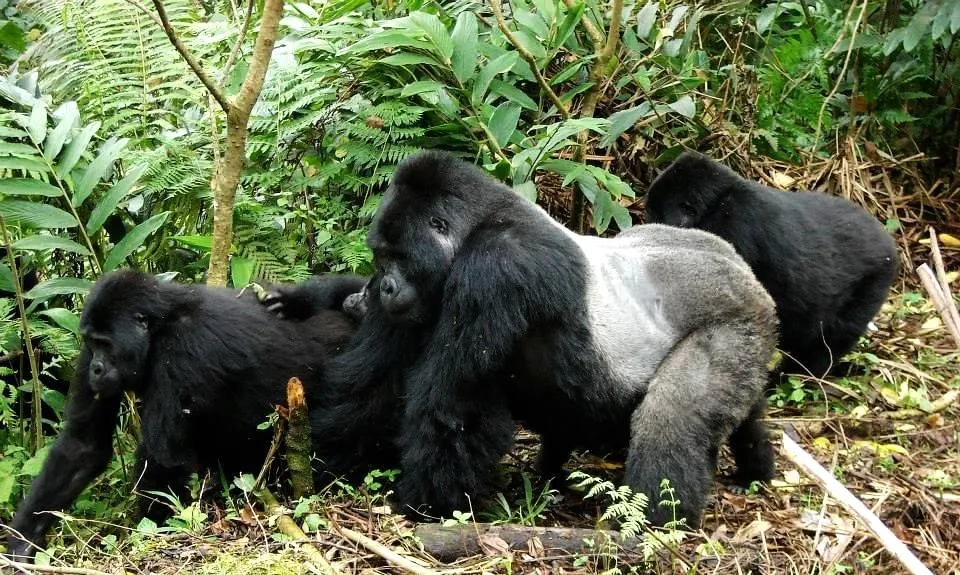
Mountain silverbacks tend to be heavier and stockier, while western lowland silverbacks are slightly leaner.
A silverback’s mass supports dominance, chest-beating resonance, territory defense, and group leadership.
Despite a plant-based diet, they consume up to 30 kg of vegetation daily, fueling their muscular build through efficient gut fermentation.
The weight of a silverback gorilla represents one of the strongest evolutionary expressions of dominance, biological engineering, and raw muscular force in the natural world.
Silverbacks are not merely heavy; they are biomechanically optimized for territorial defense, troop leadership, mating rights, intimidation broadcasting, vertical and horizontal power output, and energy-dense mass conversion from vegetation rather than animal protein.
Their enormous body mass is the central tool through which they command respect, regulate social harmony, and assert reproductive access, since only the largest and strongest male within a troop becomes the alpha silverback.
Weight in gorilla society is far more than physical measurement; it is political ranking, acoustic projection power, muscle leverage, chest-beat resonance, and survival performance coded through millions of years of mountain rainforest evolution.
If strength, hierarchy, and endurance could be visualized in a singular form, it would be the silverback’s dense and towering physicality, which surpasses nearly all terrestrial primates in both muscle density and mass-to-strength ratio.
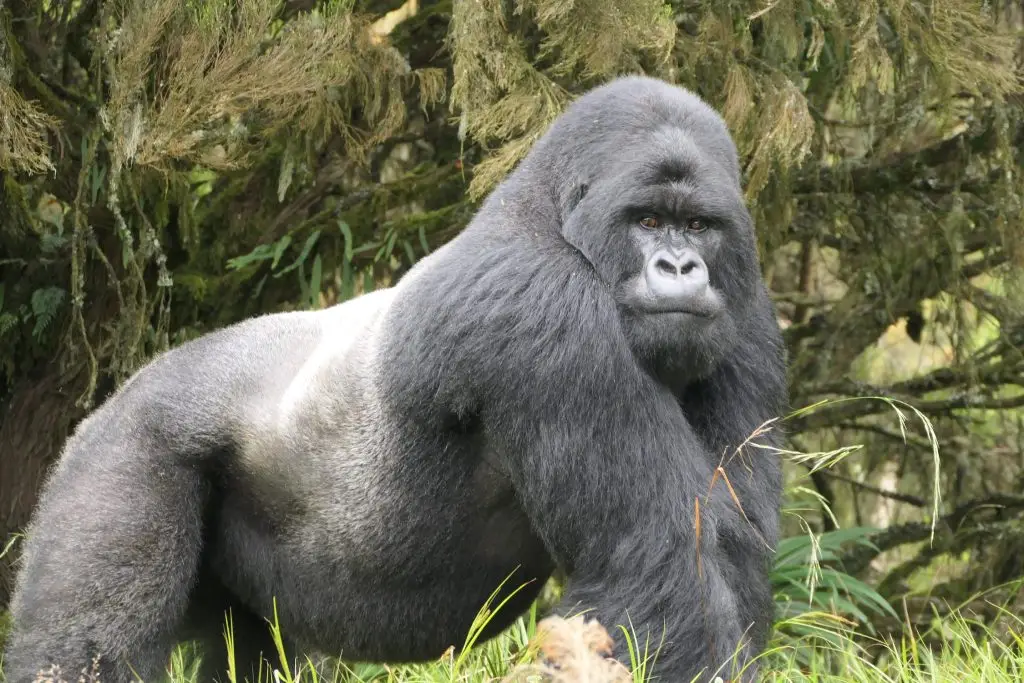
What Is the Average Weight of a Silverback Gorilla?
The average adult silverback weighs between 135–270 kg (300–600 lbs), creating a mass range that defines both biomechanical peak and subspecies divergence.
Wild adult males maintain this mass through constant locomotion, resource guarding and seasonal vegetation fluctuation, all of which contribute to dense musculature rather than stored fat.
The heaviest wild individuals are typically found in elevated cold zones where dense mountain foliage encourages heavier body structure and increased caloric retention.
1. Wild Silverback Weight Standards
Wild silverbacks remain within 160–270 kg (350–600 lbs) due to nonstop movement and competitive feeding routes.
Dominant males often carry heavier chest plates, larger sagittal crests, and wider back musculature developed through daily physical boundary enforcement, troop defense, and forest terrain ascent.
2. Captive Silverback Trends
Captive silverbacks, lacking territorial travel, predator alertness, food scarcity stress, and aggressive breeding showdowns, often exceed 200–310 kg (440–680 lbs).
Larger body fat deposits and muscle hypertrophy accumulate where caloric supply is abundant, movement levels are reduced, and veterinary feeding protocols maintain unlimited access to nutrient-dense vegetation and supplemental feed.
3. Weight Distribution Across Subspecies
Subspecies determine mass variations:
-
Mountain gorillas tend to be shorter but heavier due to fiber-dense diets and cold-climate body thickening.
-
Western lowland gorillas appear leaner and taller because fruit seasonality influences lower long-term muscle saturation.
-
Eastern lowland gorillas sit between the two, maintaining broad skeletal build with moderate height and deep torso musculature.
Silverback Weight Chart (KG vs LBS, Male vs Female, Wild vs Captive)
| Type | KG | LBS | Notes |
|---|---|---|---|
| Wild Adult Silverback | 160–270 | 350–600 | dense upper-body muscle |
| Captive Silverback | 200–310 | 440–680 | low mobility, high calories |
| Adult Female | 70–90 | 150–200 | lighter frame |
| Juvenile Blackback | 90–140 | 200–310 | transitional dominance stage |
The table displays extreme sexual dimorphism, where males weigh 2.5–3× more than females.
Female gorillas hold no dominance obligations and thus evolve lighter frames dedicated to nurturing, troop tracking, and infant transport, while alpha males evolve exclusively toward territorial and reproductive authority, using mass as the ideological and physical currency of power.
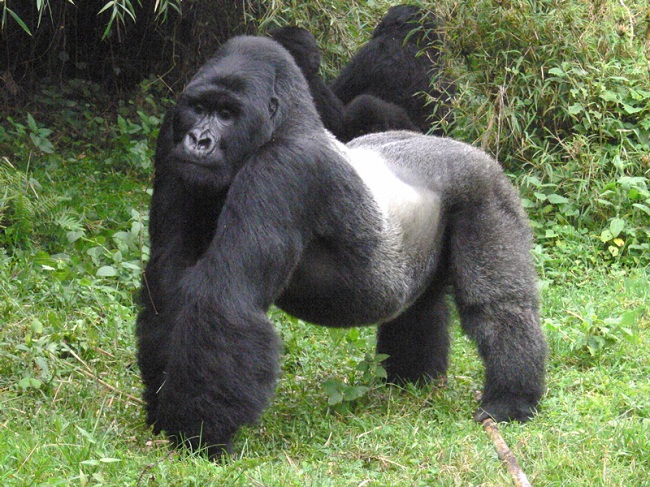
How Do Silverbacks Gain So Much Weight Without Meat?
Despite their size, silverbacks do not consume meat.
Instead, they sustain extraordinary body weight through specialized gut mechanics that break down tough rainforest vegetation into high-value energy and protein conversion.
1. Fermentation Process in the Hindgut
Gorillas possess fermentation-driven digestion chambers where:
-
plant cellulose is converted into essential fatty acids,
-
microbial colonies transform indigestible fiber into protein-usable compounds,
-
nutrient extraction rates far exceed human plant digestion capacity.
2. Massive Calorie Intake
A dominant male consumes 18–34 kg (40–75 lbs) of plant matter daily, supplying upwards of 40,000+ calories, mostly from stems, bamboo shoots, vines, pith, and leaves.
Unlike carnivores who require sharp digestion cycles, gorillas rely on slow microbial breakdown, meaning food quantity over intensity.
3. Protein-Rich Stems and Bamboo
Bamboo and herbaceous stems present unprecedented plant protein density.
Nitrogen-rich compounds aid hypertrophic muscle development, explaining how a herbivore attains a body mass competing with mega-predators without hunting or predation cycles.
Weight vs Strength: How Strong Is a Silverback?
Weight equates directly to strength capacity and force vector application. Silverbacks are recognized as 6–9× stronger than elite trained human males, translating into approximately 1,800–2,200 kg (4,000–4,850 lbs) of lifting capability in dead-pull torque simulations. Find more about silverback vs human strength here.
1. 8× Bodyweight Deadlift Equivalent
Silverbacks can elevate, pull, or break natural obstacles equal to 8× their body mass due to extraordinary muscle fiber density and ligament thickness.
2. Bite Force Power vs Large Predators
-
Silverback: 1,300 PSI
-
Tiger: 1,050 PSI
-
Lion: 650 PSI
Even as non-carnivores, gorillas exhibit bite force capable of crushing bamboo stalks, thick bark and vines, reinforcing mastication evolution rather than predatory aggression.
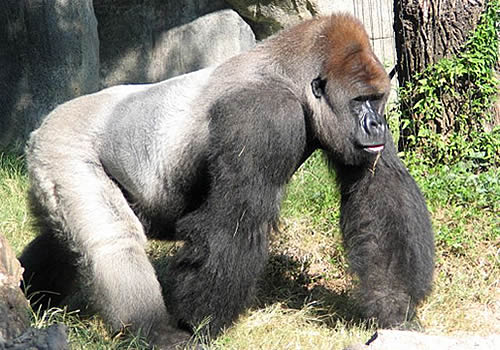
Gorilla Muscle Anatomy Breakdown
Silverbacks maintain an unprecedented 60% upper-body muscle mass composition, channeling structural power into shoulders, back plates, arms, and lat engagement rather than quadriceps-dominant power seen in many terrestrial mammals.
1. Shoulder Span vs Weight Pressure
Wider shoulders create deeper resonance for chest-beats, intimidation displays and long-distance acoustic signals, directly fixing dominance hierarchy across forest range.
2. Arm Reach vs Torque Force
Arm spans average 2.2–2.6 meters (7.2–8.5 feet), meaning their pulling torque exceeds nearly all mammalian leverage forms, including apex carnivores. This reach is essential for confrontation, uprooting, climbing acceleration and troop shielding.
Heaviest Silverbacks Ever Recorded (Scientifically Confirmed)
Several silverbacks reached weight levels challenging recorded biological ceiling estimates.
| Name | Location | Weight | Habitat Notes |
|---|---|---|---|
| Guhonda | Volcanoes National Park | 220–250 kg | longest alpha tenure |
| Senkwekwe | Virunga Park | 240–260 kg | high-density mass |
| Kabirizi Bloodline | DRC | 230–270 kg | altitude-adapted build |
Mountain vs Western Lowland Differences
Mountain climates demand heavy mid-torso insulation and continuous high-fiber intake, developing dense muscle compression unlike western lowland forms that rely more on fruit cycles and maintain elongated physiological profiles.
Weight & Hierarchy: How Body Mass Determines Power
Mass translates into dominance entitlement, troop stability, mating exclusivity and vocal intimidation resonance.
Alpha males require exceptional weight to regulate internal troop disputes, repel bachelor challengers and maintain reproductive security.
1. Alpha Dominance
Only one male earns silverback status through physical magnitude, behavioral calm, reproductive legitimacy and battle victory history.
2. Display Behavior Intimidation Power
Chest-beating, vegetation uprooting, branch snapping and ground percussion all serve as body mass announcements broadcasting threat level and acoustic fear messaging across kilometers of forest canopy.
3. Chest-Beating Resonance
Heavier males beat slower, deeper and louder, sending low-frequency shock signals that determine immediate submission positioning and mate guarding outcomes.
Gorilla Weight by Age (Growth Table)
| Stage | Age | Weight | Notes |
|---|---|---|---|
| Infant | 0–12 months | 2–4.5 kg | extremely rapid post-birth scaling |
| Juvenile | 1–4 years | 10–20 kg | high mobility learning |
| Blackback | 8–12 years | 90–140 kg | pre-dominance muscular maturity |
| Silverback | 12+ years | 160–270 kg | reproductive dominance |
Weight escalation peaks between ages 8–12, when testosterone surge, cranial crest expansion and torso muscle saturation transform young males into power competitors.
Mountain vs Western Lowland Gorilla Weight Differences
Mountain gorillas maintain 180–270 kg average weight but condensed stature to withstand cold altitude climates.
Western lowland gorillas hold 160–230 kg and longer limb ratios, shaped through seasonal fruit dependency and tropical biome fluctuation.
Cold, fiber-intense environments produce shorter, heavier muscle block structures.
Warmer, fruit-abundant regions produce leaner, height-advantaged males with slightly reduced torso compression.
Why Humans Cannot Match Gorilla Weight-to-Strength Ratio
Human athletes can bulk to 130–150 kg, yet they do not replicate gorilla strength because human muscle tissue prioritizes flexibility, adaptability and energy conservation over brute raw fiber output.
1. Muscle Fiber Density Anatomy
Gorillas maintain compact slow-twitch dominance enabling infinite repetition climbing power and food-processing endurance, whereas humans balance fast and slow-twitch fibers for complex locomotion and precision.
2. Slow-Twitch vs Fast-Twitch Dominance
Silverbacks leverage majority slow-twitch muscle groups that resist fatigue while delivering sustained torque output.
Human biomechanics remain limited by oxygen debt accumulation and tendon shear risk.
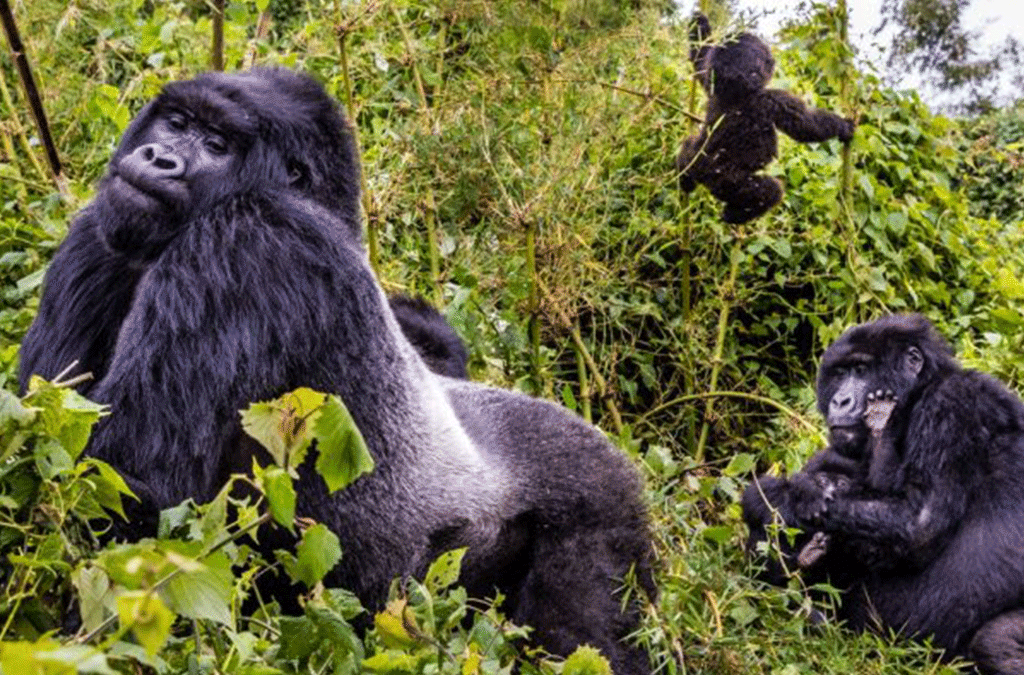
Threats Affecting Weight Loss in Wild Silverbacks
Several external ecological and human disruptions force mass reduction:
1. Habitat Competition
Deforestation and agricultural encroachment reduce feeding ranges, forcing higher energy expenditure with lower caloric intake.
2. Hunting Pressure
Anti-poaching zones still experience illegal hunter infiltration, causing uncertainty stress and territory abandonment, directly impacting feeding cycles.
3. Food Scarcity Zones
Dry seasonal dips in herbaceous density lower available mass accumulation months, often shrinking dominant male frames by 5–10% until rain cycles renew vegetation.
Silverback Weight vs Human, Bear, Lion
| Species | Weight | Strength Comparison | Notes |
|---|---|---|---|
| Silverback Gorilla | 160–270 kg | 6–9× human output | unmatched pulling torque |
| Grizzly Bear | 270–450 kg | claw-assisted overload | predatory design |
| Lion | 150–250 kg | lower grip torque | sprint predator |
| Human Male | 80 kg | baseline | lowest pull force |
Who would win, 100 men or a silverback gorilla?
A single silverback gorilla is incredibly strong, capable of lifting over 1,800 pounds and delivering powerful blows. However, in a hypothetical fight against 100 men, sheer numbers would likely overwhelm it.
Despite its strength, intelligence, and agility, a lone gorilla cannot effectively defend against coordinated human attacks from so many opponents.
Realistically, gorillas are not naturally aggressive toward humans and avoid confrontation. T
his scenario is entirely theoretical; in nature, gorillas rely on intimidation displays, vocalizations, and charging postures rather than fighting multiple humans, emphasizing their intelligence over brute combat.
What’s stronger, a grizzly bear or a gorilla?
Grizzly bears are stronger overall than silverback gorillas when it comes to raw power. An adult male grizzly can weigh up to 600 pounds (272 kg) and exert forces capable of flipping cars or killing large prey.
Gorillas, while extremely strong—6 to 10 times stronger than the average human—are optimized for upper-body strength, climbing, and defense within their troop.
Bears have massive muscle mass and crushing bite strength (up to 1,200 PSI), making them superior in direct physical strength. Gorillas excel in controlled bursts and dexterity, but a grizzly wins in sheer brute force.
What is the heaviest silverback gorilla ever recorded?
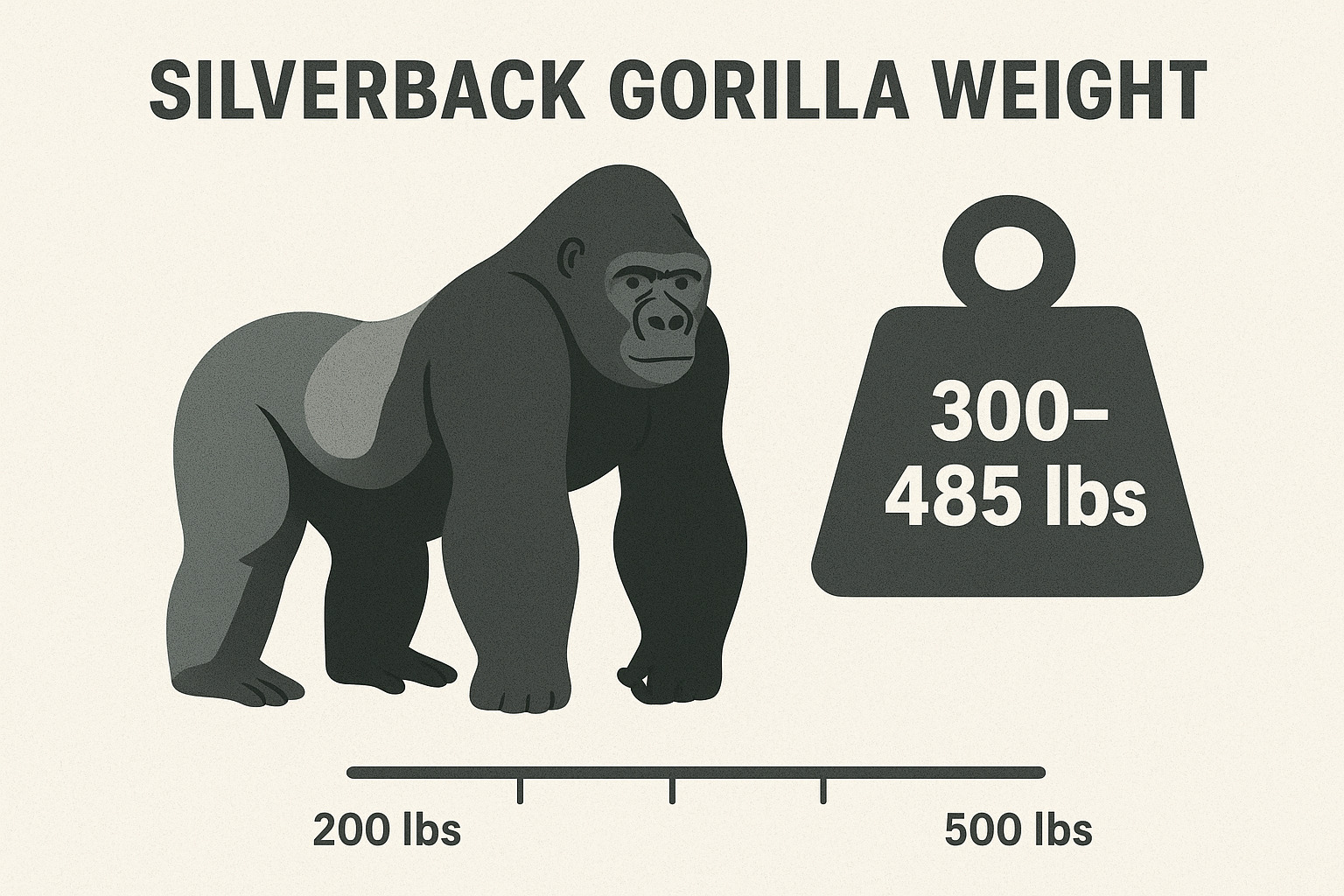
The heaviest silverback gorilla on record weighed approximately 635 pounds (288 kg) in captivity. In the wild, male silverbacks typically weigh between 300 and 485 pounds (135–220 kg).
Captive gorillas often grow larger due to consistent nutrition and reduced activity compared to their wild counterparts. These massive individuals are rare and impressive examples of the species’ potential size.
Despite their bulk, gorillas remain agile climbers and capable of powerful displays. Weight alone doesn’t make them more dangerous, as gorillas rely on social behavior, intelligence, and intimidation to resolve conflicts rather than constant aggression.
Are silverback gorillas aggressive?
Silverback gorillas are generally peaceful and avoid unnecessary conflict. Aggression is mostly reserved for protecting their troop, territory, or resources.
When threatened, a silverback may display intimidation behaviors: chest-beating, vocalizations, charging, or throwing objects. These displays are designed to scare off intruders rather than to injure.
Actual attacks on humans are extremely rare. Within their troop, silverbacks maintain order and prevent disputes, acting as calm leaders.
Understanding their behavior is key for safety during gorilla trekking; keeping distance and remaining calm ensures encounters are safe. Gorillas prefer avoidance over confrontation.
Frequently Asked Questions
How heavy can a silverback get?
Wild silverbacks reach 270 kg (600 lbs) while captive silverbacks occasionally exceed 300 kg (680 lbs).
Can a silverback weigh 300 kg?
Yes, although rare in wild ecosystems where movement demands limit overgrowth. Captive conditions remove caloric struggle and competition, allowing mass beyond natural territorial levels.
Why are gorillas so muscular without protein?
Their digestive fermentation converts cellulose into bioavailable amino acids and fatty acids, supplying muscle development equivalent to animal-protein pathways without consuming meat.
Conclusion: What Silverback Weight Tells Us About Gorilla Evolution
Silverback gorilla weight is the ultimate expression of evolutionary refinement where dominance is earned through mass, discipline, and acoustic command rather than predatory killing.
Their weight is the sum of vertical territorial ecology, vegetation-driven caloric conversion, microbial muscle engineering and inter-troop authority maintenance.
In gorilla society, mass means peace, leadership, reproductive right and group protection, all reinforced by the powerful biological structuring of a body built for stabilization rather than destruction.
Their size symbolizes ancestral adaptation so successful that no natural rival challenges them within their ecosystem.
Silverbacks remain nature’s largest and strongest living primates because everything in their evolutionary past demanded that weight equal survival, and thus their physical presence remains one of Earth’s greatest biological power blueprints.