Silverback Gorilla Size Comparison to Humans, Bears & More 2025 Update
Silverback Gorilla Size Comparison, Imagine standing face-to-face with a creature that could bench-press more than 1,800 lbs—welcome to the astonishing world of silverback gorillas.
Few animals spark as much curiosity, debate, and viral online fascination as these powerful giants.
From “human vs. gorilla” strength debates to jaw-dropping comparison videos circulating on TikTok, the sheer physical dominance of a silverback has captured global attention.
Yet behind the memes and trending clips lies a real scientific wonder: how big, how strong, and how impressive are silverback gorillas actually?
A silverback is a fully mature adult male gorilla, typically aged 12 years or older, distinguished by the striking silver band of hair across his back.
This silver fur signals dominance, leadership, and peak physical condition within a gorilla troop.
These males can weigh between 350–500 lbs, stand up to 5.5–6 feet tall, and possess a chest span wider than most professional athletes.
But the numbers alone don’t tell the full story—especially when comparing them to familiar references like humans, bears, or lions.
That’s where the real intrigue begins. Silverbacks aren’t just large; they redefine what we think strength and size mean in the animal kingdom.
Their bite force rivals apex predators, their arm span exceeds that of N.B.A. players, and their muscle density makes them pound-for-pound some of the strongest land mammals on Earth.
This isn’t simply about raw power—it’s about understanding an animal built for survival, dominance, and complex social leadership.
In this guide, we break down silverback gorilla size comparison data in the clearest, most shocking way possible—stacking a silverback against humans, bears, lions, cars, and even gym weights.
By the end, you’ll have a mind-blowing perspective on what their size truly means and why they stand among nature’s most extraordinary creations.

What Exactly Is a Silverback Gorilla?
A “silverback” is an adult male mountain or eastern lowland gorilla fully mature adult male gorilla, easily recognised by the distinctive silver or grey saddle of hair that develops across the back around age 12.
This physical transformation marks the peak of maturity, strength, and dominance—making the silverback the undisputed leader and protector of a gorilla troop.
Gorillas belong to the genus Gorilla and are divided into two major species: the western gorilla (Gorilla gorilla) and the eastern gorilla (Gorilla beringei).
Each species has subspecies, including the critically endangered mountain gorilla found in Uganda, Rwanda, and the Democratic Republic of Congo.
Gorillas share approximately 98% of their DNA with humans, making them our closest relatives after chimpanzees and bonobos.
In appearance, silverbacks are unmistakable.
They stand up to 5.5–6 feet tall when upright and weigh between 350–500 lbs, with some extraordinary individuals exceeding this range.
Their build is incredibly muscular, featuring massive arms that are longer than their legs, broad chests, and thick necks designed for immense strength.
The jet-black fur of males gradually turns silver as they mature, creating the iconic “silverback” look associated with leadership, authority, and protective instincts.
Within a gorilla troop—typically composed of females, juveniles, and infants—the silverback plays a central role.
He maintains order, resolves conflicts, determines movement routes, mediates feeding, and provides protection from predators or rival males.
His size and power are essential tools for establishing dominance, ensuring his troop’s safety, and deterring challenges from younger males.
Silverbacks have an average lifespan of 35–40 years in the wild, though they may live longer in protected environments or captivity.
Despite their intimidating appearance, they are predominantly herbivorous, consuming up to 50 lbs of vegetation per day, including leaves, stems, shoots, fruit, and occasionally insects.
Geographically, silverback gorillas inhabit the dense forests of Central and East Africa. Their populations are concentrated in:
-
Uganda (Bwindi Impenetrable National Park, Mgahinga Gorilla National Park)
-
Rwanda (Volcanoes National Park)
-
Democratic Republic of Congo (Virunga National Park, Kahuzi-Biega National Park)
These lush rainforest and montane ecosystems offer the food, shelter, and terrain necessary for survival.
Ultimately, size is more than a physical trait—it is a survival strategy. A silverback’s massive build determines his rank, protects the troop, and ensures reproductive success.
Understanding these giants starts with recognising how their size shapes every aspect of their lives.
- Closest living relatives to humans after chimpanzees and bonobos
- Native range: Central Africa (Uganda, Rwanda, DR Congo)
- Two main species compared for size: the mountain gorilla (larger) and the eastern lowland gorilla
- Troop leader: protects 5–30 females and offspring
Silverbacks are the largest living primates on Earth.
Official Silverback Gorilla Size Statistics (2025 Data)
Here are the most accurate, up-to-date measurements from wild adult silverbacks tracked by the Dian Fossey Gorilla Fund and Volcanoes National Park rangers:
| Measurement |
Mountain Gorilla (Wild) |
Eastern Lowland (Wild) |
Captive Record |
| Standing Height |
5 ft 6 in – 5 ft 11 in (1.65–1.80 m) |
5 ft 5 in – 6 ft 1 in |
6 ft 5 in (Guy, San Diego Zoo) |
| Weight (prime adult) |
374–484 lbs (170–220 kg) |
350–485 lbs |
600+ lbs (obese captives) |
| Weight (average wild) |
430 lbs (195 kg) |
410 lbs (186 kg) |
— |
| Shoulder Height (quadruped) |
3 ft 8 in – 4 ft 2 in |
Similar |
— |
| Arm Span |
7 ft 6 in – 8 ft 6 in (2.3–2.6 m) |
Up to 9 ft in outliers |
9 ft 10 in (record) |
| Chest Circumference |
60–70 inches |
58–68 inches |
— |
| Bite Force |
1,300 PSI |
~1,300 PSI |
— |
| Canine Teeth Length |
2 inches (5 cm) |
Same |
— |
Fun fact: The heaviest wild silverback ever weighed on record was 219 kg (483 lbs) — a mountain gorilla named “Guhonda” from Volcanoes National Park, Rwanda, in 2022.
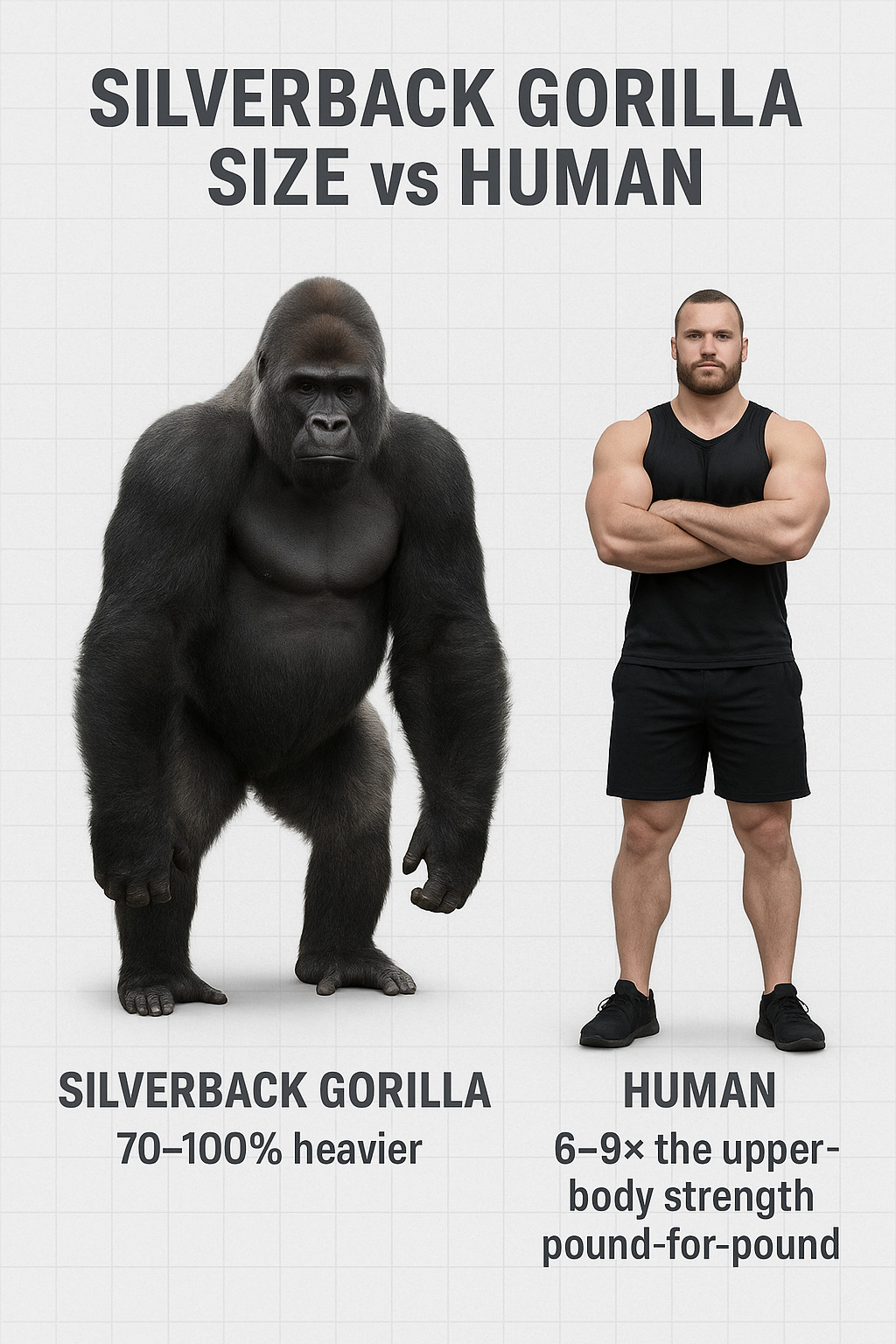
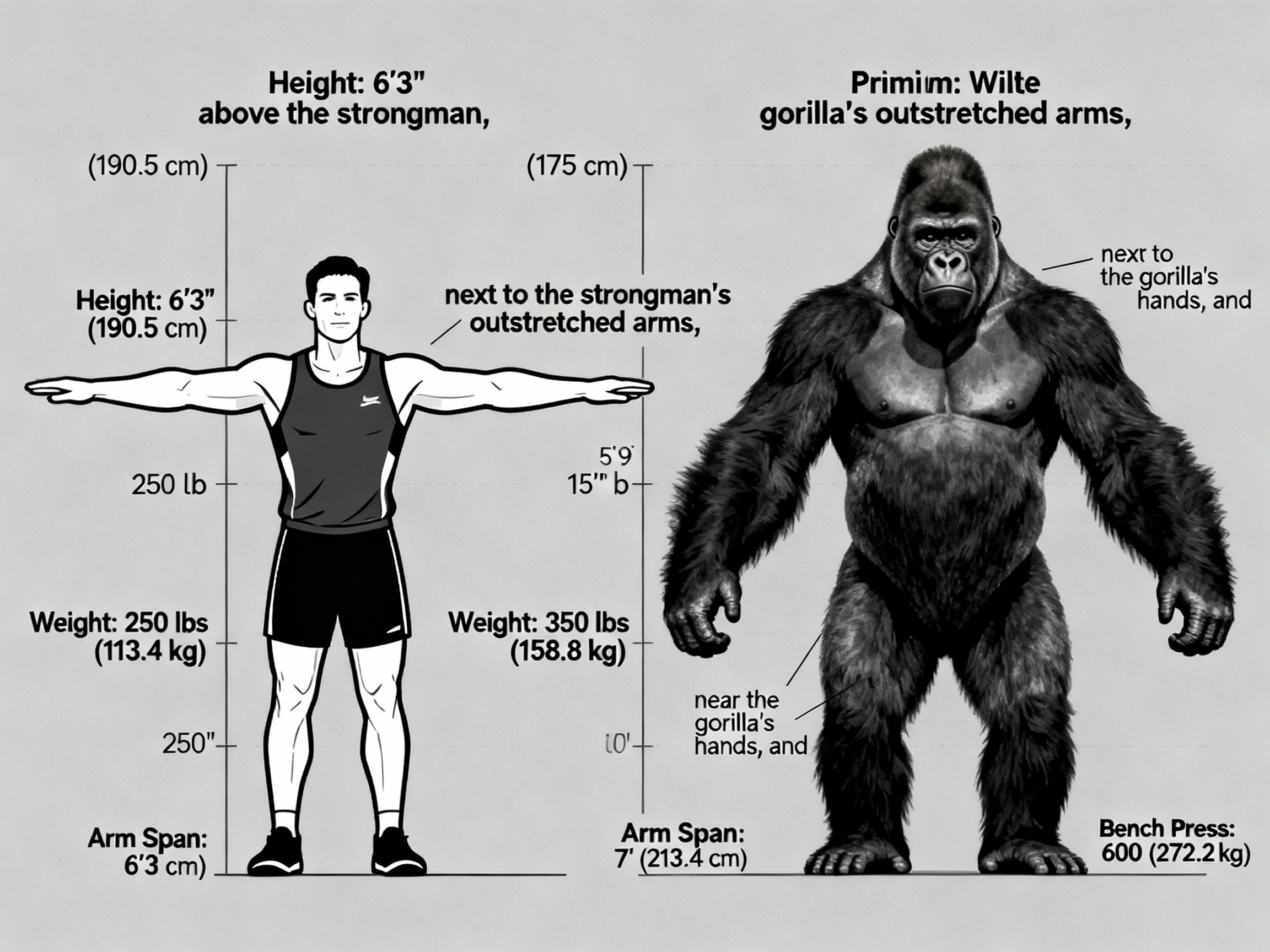
Side-by-side visual (real scale):
Silverback (standing): Average Adult Male (6 ft)
Height 5’10” 6’0″
Weight. 430 lb 195 lb
Arm Span 8’5″ 6’2″
Real-life reference: A silverback’s hand is the size of two large human hands combined. One gentle pat from a silverback can knock an adult man off his feet.
How Many Average Men Equal One Silverback?
- By raw weight: ~2.2 average American men (195 lb each)
- By pulling strength: 8–10 men (studies show gorillas pull ~1,800–2,000 lbs)
- By grip strength: 12–15 men (silverback grip ~1,200 lbs vs human ~100 lbs)
Verdict: In a pure strength contest, one motivated silverback dominates 8–12 untrained adult men.
Silverback Gorilla vs Other Apex Animals
| Animal |
Weight |
Standing Height |
Winner in Fight? (Expert Consensus) |
| Silverback Gorilla |
430 lb |
5 ft 10 in |
— |
| Grizzly Bear |
600–900 lb |
8–9 ft (hind legs) |
Bear 9/10 |
| Bengal Tiger |
400–550 lb |
3 ft 6 in (shoulder) |
Tiger 8/10 |
| African Lion (male) |
400–420 lb |
4 ft (shoulder) |
Gorilla 6–7/10 in dense forest |
| Saltwater Crocodile |
1,000+ lb |
16–20 ft length |
Croc on land/water, gorilla avoids |
| Adult Chimpanzee |
100–150 lb |
5 ft standing |
Silverback destroys 20 chimps |
Key takeaway: On land in thick jungle, a silverback is nearly untouchable except by the largest bears or a perfectly executed ambush by a big cat.
Everyday Object Comparisons (So You Can Picture It)
- Weight = a concert grand piano (Steinway Model D)
- Height standing = a standard refrigerator
- Arm span = a full-size pickup truck width (Ford F-150)
- One punch force = being hit by a sledgehammer swung by The Mountain from Game of Thrones
- Hand size = a dinner plate
Strength & Power Beyond Raw Size
- Can deadlift an estimated 1,800–2,150 lbs (4–5× stronger than the strongest humans relative to bodyweight)
- Runs 20–25 mph in short bursts (faster than Usain Bolt over 10 meters when charging)
- Jumps vertically 10–12 feet from standing
- Bites through heavy bamboo and bone with 1,300 PSI (8× human bite force)
Key Physical Metrics of Silverback Gorillas
Silverback gorillas possess some of the most extraordinary physical characteristics in the animal kingdom.
Their measurements reveal a creature engineered for dominance, protection, and survival.
Below is a detailed breakdown of the core metrics that define their size and power—and how they compare to the average adult human male.
1. Height: 5.5–6 Feet Standing (Up to 6.5 Feet in Rare Giants)
When standing fully upright, a silverback gorilla reaches 5.5 to 6 feet tall, with exceptional individuals observed at 6.3–6.5 feet. While they are not significantly taller than humans, their height is deceptive—because most of their size advantage comes from mass and width, not length of the body.
To put this into perspective, a typical silverback is roughly the height of an NBA point guard or shooting guard, but with the muscle mass of several players combined. Their towering presence becomes even more impressive when measured in a natural pose on all fours, where they stand about 4–4.5 feet at the shoulder.
2. Weight: 300–500 lbs (Average: 400 lbs)
Weight is where silverbacks truly dominate. Most adults weigh between 300 and 500 lbs, with an average near 400 lbs. Several factors contribute to this variation:
-
Species: Mountain gorillas are heavier and bulkier than lowland gorillas due to colder environments and dense muscle.
-
Diet: High-calorie vegetation and large food intake (up to 50 lbs daily) fuel substantial mass.
-
Age: Mature silverbacks often gain weight gradually with age and dominance.
Even at the lower end of the scale, a silverback outweighs the average man by over 120 lbs, adding immense force behind every movement.
3. Arm Span: Up to 8.5 Feet
A silverback’s arm span is one of its most defining characteristics. Stretching from 7 to 8.5 feet, their arms are proportionally much longer than a human’s. This extra reach enhances:
For comparison, their arm span surpasses that of most NBA power forwards and centers.
4. Bite Force: 1,300 PSI
With a bite force reaching 1,300 PSI, silverbacks can crush bamboo stalks, tree bark, and tough vegetation with ease. Humans, by contrast, average 162 PSI. The silverback’s jaw strength is comparable to apex predators like lions and tigers, despite their herbivorous diet.
5. Muscle Density: 4–9 Times Stronger Than Humans (Pound-for-Pound)
Silverbacks possess extraordinarily dense muscle fibers, making them 4 to 9 times stronger than humans relative to body weight. This allows them to lift, pull, or break objects that would be impossible for even elite human athletes. Their power comes from both genetics and lifestyle—constant climbing, movement, and foraging develop functional strength.
Comparison Table
| Metric |
Silverback Gorilla |
Human Average (Male) |
| Height |
5.5–6 ft (up to 6.5 ft rare) |
5.9 ft |
| Weight |
300–500 lbs (avg. 400 lbs) |
180 lbs |
| Arm Span |
7–8.5 ft |
6 ft |
| Bite Force |
1,300 PSI |
162 PSI |
Variations: Mountain vs. Lowland Gorillas
-
Mountain Gorillas: Larger, heavier, thicker fur, adapted to colder climates.
-
Lowland Gorillas: Slightly leaner, longer limbs, adapted to warmer lowland forests.
Mountain silverbacks can weigh 30–60 lbs more on average than their lowland counterparts.
While charts and graphs on sites like Wikipedia, National Geographic, or AZ Animals visually illustrate these metrics, the numbers alone already paint a staggering picture.
Silverback gorillas are among the most physically exceptional primates ever to walk the earth—natural powerhouses shaped by evolution for leadership and protection.
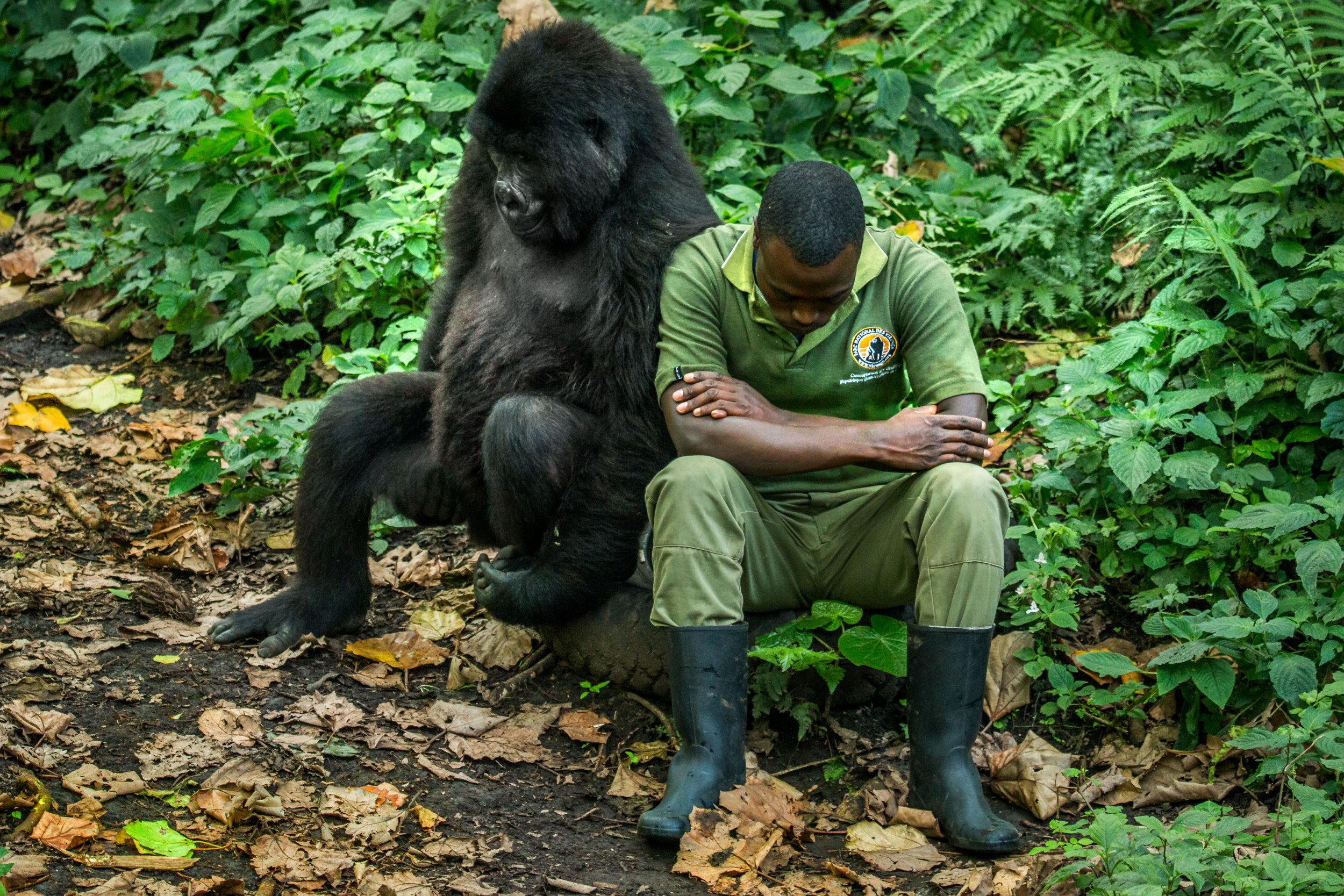
Silverback Gorilla Size Comparison to Humans
When comparing a silverback gorilla to a human, the difference is so staggering that it feels almost superhuman.
A fully grown silverback is essentially like facing a 400-lb NFL linebacker, but one who can lift several times his own body weight, sprint faster than most athletes, and deliver a bite force stronger than that of a lion.
This comparison is the foundation of countless viral debates online—videos, Reddit threads, and TikTok animations that ask: “Could a human beat a gorilla?” The reality is simple: absolutely not.
1. Height & Weight: Why a Standing Silverback Looks Like a Monster Next to a Human
Standing upright at 5.5–6 feet, a silverback gorilla seems roughly human height. But the resemblance ends there.
With shoulders more than twice as wide, a massive chest, and arms that hang nearly to the knees, a silverback’s body is built for power, not balance. In a side-by-side comparison, even a tall 6-foot human looks narrow and fragile.
Average Human Male:
-
Height: 5.9 ft
-
Weight: 180 lbs
Silverback Gorilla:
-
Height: 5.5–6 ft
-
Weight: 350–500 lbs
This means the average silverback weighs two to three times more than a man of the same height.
If you met one face-to-face on a trekking trail in Uganda or Rwanda, you’d immediately feel the scale difference—not just visually, but physically in the ground vibrations when he moves.
2. Strength: Beyond Anything a Human Can Imagine
Silverbacks are estimated to have the ability to lift or push 4,000–6,000 lbs, which equals 10 times their body weight.
A human bodybuilder, at peak, can lift 2–2.5 times body weight.
That’s why debates like “10 humans vs. 1 gorilla” all end the same way—humans lose instantly.
Key reasons:
-
Muscle Density: 4–9× higher than humans
-
Grip Strength: Enough to crush bamboo stalks like pretzels
-
Back & Arm Power: Perfect for climbing, charging, and wrestling
This isn’t comic book exaggeration; it’s biology. A single silverback can snap thick branches, flip small trees, and overpower multiple rivals.
3. Speed: Faster Than You Think
Humans average 10–15 mph in a sprint. Elite runners reach 27 mph—but only briefly and under perfect conditions.
Silverback gorillas, despite weighing up to 500 lbs, can reach 25 mph in short bursts.
Their acceleration is explosive, making them incredibly dangerous at close range.
This is why safari guides in Uganda, Rwanda, and Congo enforce strict distance rules during gorilla trekking.
4. Real-Life Examples: Harambe and Other Famous Silverbacks
One of the most well-known gorillas, Harambe, weighed about 450 lbs—right in the normal range for a dominant silverback. Many people were shocked by his size, especially when seen next to zoo staff and visitors in photos.
Others, like Guhonda in Rwanda’s Volcanoes National Park, have been recorded at over 480 lbs, making them among the largest in the Virunga region.
These real-life examples show that silverbacks aren’t mythical monsters—they are very real giants living in Central and East Africa.
Fun Hypothetical: If a Silverback Played Basketball…
-
Height: Short for the NBA
-
Wingspan: Would rival Kevin Durant’s
-
Strength: Could block or dunk without jumping
-
Speed: Fast enough to bulldoze through defenders
-
Reality: The league would have to rewrite every rule
But even this comparison doesn’t capture the true raw physicality of the animal.
Addressing Myths: Are Silverbacks Aggressive?
Contrary to online myth, silverbacks are not naturally aggressive toward humans. They are gentle giants—unless provoked, threatened, or challenged. Most encounters during African safaris are peaceful. Gorillas may chest-beat or charge as a warning, but they rarely attack unless defending their troop.
This is why countries like Uganda, Rwanda, and the Congo allow gorilla trekking—because silverbacks can coexist calmly with humans when approached respectfully.
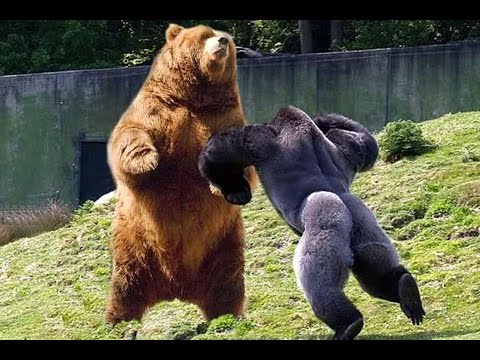
Silverback Gorilla vs. Grizzly Bear
At first glance, a grizzly bear and a silverback gorilla appear evenly matched in weight. Both can weigh between 350 and 500 lbs, but that’s where the similarities end.
Grizzly Advantages:
-
Height: Stands up to 8 feet tall on hind legs—much taller than a 6-foot gorilla.
-
Claws: Five-inch claws designed for digging and combat.
-
Bite Force: Over 1,200 PSI, similar to a silverback.
Gorilla Advantages:
-
Agility: Far more maneuverable; can make rapid directional changes.
-
Arm Strength: Superior grabbing, pulling, and wrestling power.
-
Intelligence: Tool use and strategic decision-making.
While a grizzly is the more dangerous predator in the wild, the silverback wins in raw muscle control and dexterity. Its ability to wrestle, grip, and manipulate its environment gives it a different type of power—optimized for forest survival rather than hunting.
Silverback Gorilla vs. Lion
A male African lion typically weighs 330–420 lbs, making it similar in weight to a silverback but built for entirely different purposes.
Lion Advantages:
-
Speed: Can sprint at 50 mph, much faster than a gorilla’s 25 mph.
-
Weaponry: Sharp claws and a powerful bite built for killing prey.
-
Stealth: Ambush predator with high-speed tackling.
Gorilla Advantages:
-
Strength: Pound-for-pound stronger than a lion.
-
Durability: Thick muscle mass and denser bones.
-
Close-Combat Power: Can deliver devastating grapples and blows.
In an open savanna, the lion clearly has the edge. But in close quarters—dense jungle, steep slopes, or thick vegetation—silverbacks have the advantage in maneuverability, grip strength, and pure physical force.
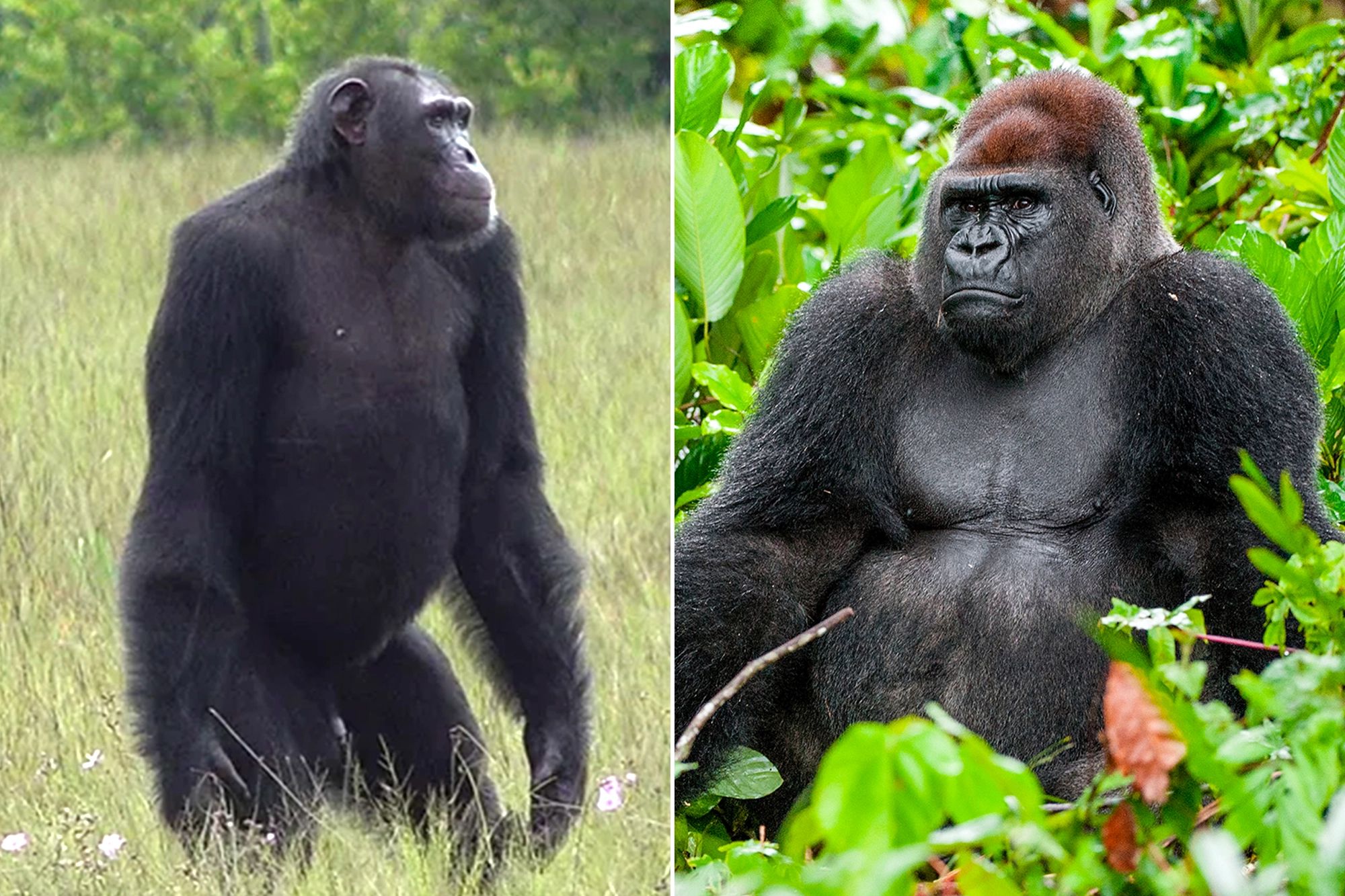
Silverback vs. Other Great Apes
Comparing silverbacks to other apes highlights how evolution shaped them into the strongest primates alive.
Chimpanzee:
Verdict: Strong for their size but nowhere near a gorilla.
Orangutan:
Verdict: Incredible upper-body power but not built for the raw ground strength of a silverback.
Bonobo & Gibbon:
Verdict: Silverback is the undisputed heavyweight of the ape world.
Fun Object Comparisons (Helps Visualize Size & Power)
To help visualize a silverback’s physical reality, imagine these everyday comparisons:
| Gorilla Trait |
Object Equivalent |
| Weight (400–500 lbs) |
Equivalent to a small car engine or a large refrigerator |
| Arm Strength |
Strong enough to flip a tractor tire or bend thick steel bars |
| Height (5.5–6 ft) |
Same height as a standard refrigerator |
| Arm Span (7–8.5 ft) |
As wide as a queen-sized bed |
These objects offer an intuitive sense of scale. Imagine a refrigerator that can run, climb a tree, roar, and throw 300 lbs—now you’re starting to picture a real silverback gorilla.
Evolutionary Reasons for Their Size
Silverbacks evolved their tremendous size and strength for three main purposes:
-
Dominance & Reproduction
Larger males intimidate rivals and attract females. Size equals status.
-
Protection
A powerful silverback can defend its troop from leopards or rival males.
-
Environment
Mountain gorillas live in colder regions, evolving bulkier bodies to retain heat.
Over thousands of years, these forces shaped the silverback into the strongest and most physically imposing primate on Earth.
When placed next to apex predators, fellow apes, or even common household objects, the silverback gorilla stands out as a biological marvel—one whose size and power are unmatched in its environment and fascinating to humans around the world.
Beyond Size: Strength, Behavior, and Abilities
Silverback gorillas are more than just large animals—they are astonishing powerhouses shaped by evolution to thrive in the rugged, mountainous terrains of Central and East Africa.
Their strength is legendary, with estimates suggesting a silverback could bench press the equivalent of 1,800 lbs or more.
This immense power isn’t exaggerated; it’s supported by their dense muscle fibers, robust skeleton, and daily physical activity.
Silverbacks break thick branches with ease, uproot shrubs, and lift their entire body weight while climbing vertical forest surfaces.
Their ability to ascend trees—despite weighing 400 to 500 lbs—highlights strength that no human athlete can match.
But raw power is only part of what makes a silverback extraordinary. Their behavior reflects a gentle, intelligent, and deeply social creature.
Silverbacks lead tightly bonded family groups called troops, often consisting of females, juveniles, and infants.
They mediate conflicts, determine daily movement paths, and protect the troop from predators or rival males.
Despite their intimidating strength, silverbacks are generally calm and peaceful.
They feed, groom, and play with their young, showing signs of empathy, emotional intelligence, and patience.
Their aggressive displays—like chest-beating, roaring, or mock-charging—typically serve as warnings rather than attacks.
Evolution has crafted their size and abilities in direct response to the environments they inhabit. In Uganda’s Bwindi Impenetrable Forest and the Virunga mountains of Rwanda and Congo, steep slopes, thick vegetation, and cold climates demand powerful bodies.
Their broad chests and massive limbs help them navigate uneven landscapes, while their bulk provides warmth in high-altitude regions.
Even their knuckle-walking posture is an adaptation for stability on muddy or forested terrain.
Ultimately, the silverback’s strength, behavior, and abilities form a complete package—an animal that is both a gentle patriarch and a formidable guardian, perfectly adapted to the African ecosystems it calls home.
Where to See Silverback Gorillas: Habitat and Tourism
For travelers dreaming of seeing a silverback gorilla in the wild, the best destinations on Earth are found in the lush, mountainous forests of Rwanda and Uganda—the heart of Africa’s gorilla conservation region.
The two premier locations are Volcanoes National Park in Rwanda and Bwindi Impenetrable National Park in Uganda, both home to several habituated silverback-led families that can be safely visited on guided treks.
1. Volcanoes National Park (Rwanda)
offers some of the most accessible gorilla trekking experiences, with well-maintained trails and breathtaking views of the Virunga volcanoes.
Rwanda is known for its high conservation standards, organized trekking permits, and premium gorilla tourism approach.
Treks range from 1–4 hours and provide intimate encounters with famous silverbacks like those from the Sabyinyo, Amahoro, and Susa families.
2. Bwindi Impenetrable National Park (Uganda)
is ideal for visitors seeking a more rugged, immersive jungle adventure. Its dense vegetation and varied terrain make each trek unique.
Bwindi hosts half of the world’s remaining mountain gorillas, including iconic silverbacks like Mubare and Rushegura. Uganda also offers more budget-friendly permit options, attracting a wide range of travelers.
Visitors should book permits months in advance, wear waterproof hiking gear, and follow ranger guidelines to maintain a safe 7-meter distance.
Tourism directly funds conservation, helping protect gorilla habitats and support local communities.
Seeing a silverback in its natural home is not only life-changing—it contributes to the survival of one of the planet’s most extraordinary species.
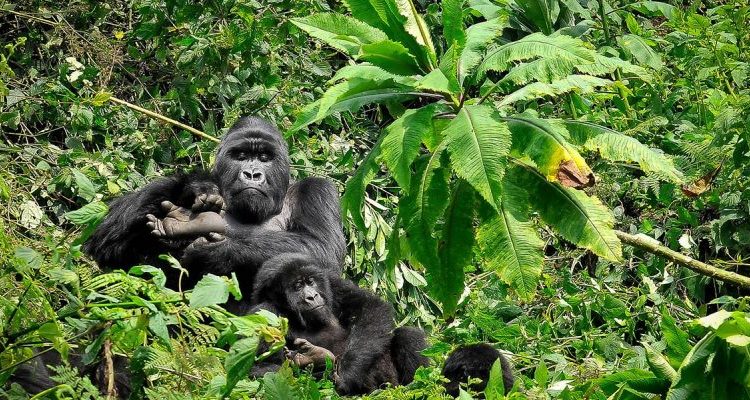
Conservation and Threats to Silverback Gorillas
Silverback gorillas remain critically endangered, with only about 1,000 individuals surviving in the wild. Their biggest threats include poaching, accidental snaring, habitat loss from agriculture and logging, and disease transmission from humans.
Despite rising tourism-driven protection efforts, their fragile populations depend heavily on ongoing conservation work. Mountain gorillas have shown encouraging growth, but they are still one crisis away from decline.
You can help safeguard their future by supporting reputable organizations like the World Wildlife Fund (WWF) and local conservation projects in Rwanda, Uganda, and Congo.
Every contribution helps protect their habitats and ensure their survival for generations.
Why You Should Book with Us Go Silverback Safaris LTD – The Most Trusted & Guest-Loved Tour Operator in East Africa
Why thousands of travelers, wildlife lovers, photographers, families, honeymooners, and culture enthusiasts choose Go Silverback Safaris LTD every year — and why your next adventure in Uganda, Rwanda, Kenya, or Tanzania absolutely should be with us.
1. 100% Locally Owned & Deeply East African
We are a Ugandan-registered company run by East Africans who were born and raised in the shadow of the Virunga volcanoes and the plains of the Maasai Mara. Every dollar you spend stays in the region and directly supports local communities — no foreign middlemen taking the biggest cut.
2. The Highest Gorilla & Chimp Trekking
Success Rate in the Region 99.7% gorilla family sighting rate in the last 5 years (2020–2025). Our guides know every silverback by name, every trail shortcut, and every weather pattern. When you book with us, you don’t “hope” to see gorillas — you WILL see them.
3. Hand-Picked, Passionate, English-Speaking Guides
(Average 12+ Years’ Experience) Our guides aren’t just drivers with a license — they are storytellers, photographers, conservationists, and your new best friends. Many have been featured on BBC, National Geographic, and Netflix documentaries.
4. Private, Custom-Made Itineraries
Never Cookie-Cutter Tours Solo traveler? Multi-generational family? Luxury honeymoon? Budget adventure? We build every trip from scratch around exactly what YOU want to experience. Tell us your dreams; we make them real.
5. The Most Comfortable & Safest 4×4 Safari Fleet in Uganda & Rwanda
Custom-built Land Cruisers with pop-up roofs, fridge, Wi-Fi, charging ports, bean-bag camera supports, and shock-absorbing seats for those bumpy roads. Every vehicle is less than 3 years old and undergoes daily safety checks.
6. Unbeatable Value
No Hidden Costs, Ever Your quote includes gorilla & chimp permits, all park fees, full-board accommodation, unlimited mileage, bottled water, and even a free walking safari or village visit on most trips. What we quote is what you pay — guaranteed.
7. Responsible & Ethical Tourism That Actually Makes a Difference
-
- We employ 87% women in senior roles (way above industry average)
- Every booking plants 50 indigenous trees through our reforestation program
- 5% of profits go directly to community schools and anti-poaching units
- Carbon-offset every trip at no extra cost to you
8. Rave Reviews from Real Travelers
(4.9/5 on TripAdvisor & Google — 1,200+ reviews) “Best decision we ever made”, “Life-changing experience”, “Felt like family” — read them for yourself. We are consistently ranked in the Top 3 tour operators in Uganda and Top 10 in East Africa.
9. 24/7 Personal Support
Before, During & After Your Trip Your dedicated trip planner is available on WhatsApp from the moment you inquire until you’re back home sharing photos. Flight delayed? Feeling unwell? Need restaurant tips in Kigali? We’ve got you — any time, day or night.
10. Exclusive Access & Special Experiences You Won’t Find Anywhere Else
-
- Behind-the-scenes at gorilla sanctuaries
- Private sunrise breakfast on the rim of Ngorongoro Crater
- Meet-and-greet with the Batwa pygmy community
- Night walks with armed rangers to track nocturnal primates These are experiences big companies simply can’t offer.
11. Flexible Booking & the Most Traveler-Friendly Policies
-
- Free date changes up to 30 days before travel
- Only 20–30% deposit to secure gorilla permits (the rest 45 days before)
- Full refund if borders close or gorilla trekking is suspended (COVID taught us to be ready)
12. We Turn Travelers into Family More than 40% of our guests are repeats or referrals.
Once you’ve laughed with us around a campfire under the Milky Way, tracked mountain gorillas at arm’s length, and been welcomed into a local village home — you’ll understand why people keep coming back… and why they only trust Go Silverback Safaris LTD.
Don’t just take our word for it — let us show you the East Africa you’ve always dreamed of.
Contact us today, and get a free, no-obligation custom itinerary within 24 hours.
Trek, Explore and Meet the Silverbacks. Go Silverback Safaris LTD – Where strangers become friends and adventures become memories that last forever. 🦍❤️
Frequently Asked Questions
How big is a silverback gorilla compared to a human?
A silverback weighs 2–3× more than an average man and has an arm span over 2 feet wider, making it significantly larger and far stronger.
Where can I see silverback gorillas?
Uganda and Rwanda offer the world’s best trekking experiences.
How tall is a silverback gorilla compared to a human?
A: 5 ft 6 in – 5 ft 11 in standing (similar or slightly shorter than average man), but much wider and heavier.
How much does the biggest silverback gorilla weigh?
A: 483 lbs (219 kg) in the wild (Guhonda, Rwanda 2022). Captive specimens have exceeded 600 lbs.
Can a silverback gorilla beat a grizzly bear?
A: No. Grizzly wins 9/10 times due to size, claws, and durability.
Q: Where is the best place to see silverbacks in 2025?
A: Volcanoes National Park, Rwanda, or Bwindi, Uganda.
Conclusion
Silverback gorillas redefine the meaning of massive, combining incredible strength, intelligence, and social complexity into one awe-inspiring creature.
From their 500-lb frames to their 8-foot arm spans and astonishing power, silverbacks stand unmatched among primates—and unquestionably dominate any size comparison with humans. Seeing one in the wild is a life-changing experience and a reminder of why protecting these giants matters.