Silverback Gorilla Lifespan Guide – How Long Do They Really Live From Birth to Silverback Age 2025
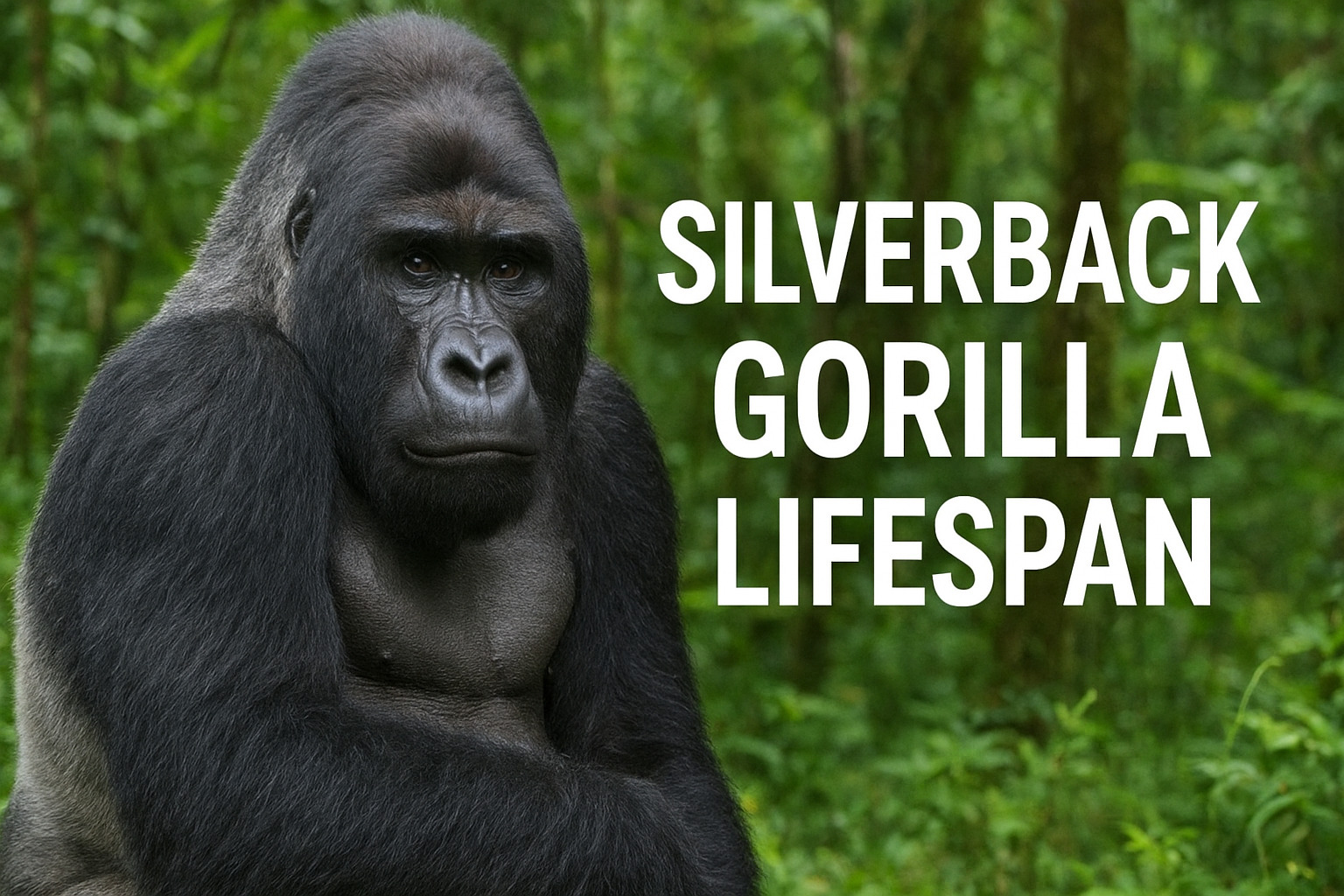
Silverback gorilla lifespan is most vividly understood when you imagine a dominant male standing in the misty volcanic slopes of Virunga National Park, DRC.
The rainforest is heavy with dew, bamboo leaves bend under his weight, and the cold morning air echoes with low grunts of authority.
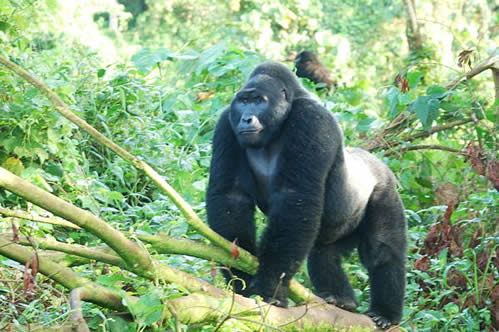
His back, once dark and dense, is now marked by a bold saddle of silvery hair—an unmistakable badge earned only by maturity and dominance.
This transformation typically begins around age 12, signifying not just age but status, responsibility, and power within the troop.
A silverback is not just the strongest male; he is the decision-maker, protector, mediator, and lineage guardian.
In the wild, the average silverback gorilla lifespan ranges between 35–40 years, though exceptional individuals have been documented living slightly longer under stable protection conditions.
In captivity, due to veterinary care and consistent nutrition, some can reach 50–60 years, but this longevity often comes at the cost of natural social dynamics, territorial behavior, and emotional hierarchy roles that define a wild silverback’s identity.
This discussion focuses specifically on mountain gorillas living in the high-altitude forests straddling Uganda (Bwindi & Mgahinga), Rwanda (Volcanoes National Park), and the Democratic Republic of Congo (Virunga National Park).
These regions, though rich in ecology, present formidable challenges: harsh weather, limited feeding ranges, and intensified human encroachment.
Yet they also represent the greatest conservation success story in primate history—where strict protection, tourism regulation, and veterinary interventions have directly influenced gorilla survival and longevity.
In the following sections, we will examine the biological factors that determine how long a silverback lives, the threats that cut life expectancy short, and the massive conservation efforts currently extending lifespan across the tri-border region.
What is a Silverback Gorilla?
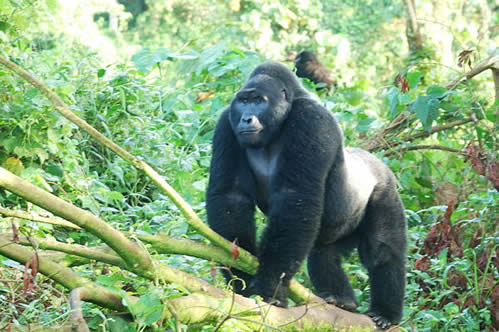
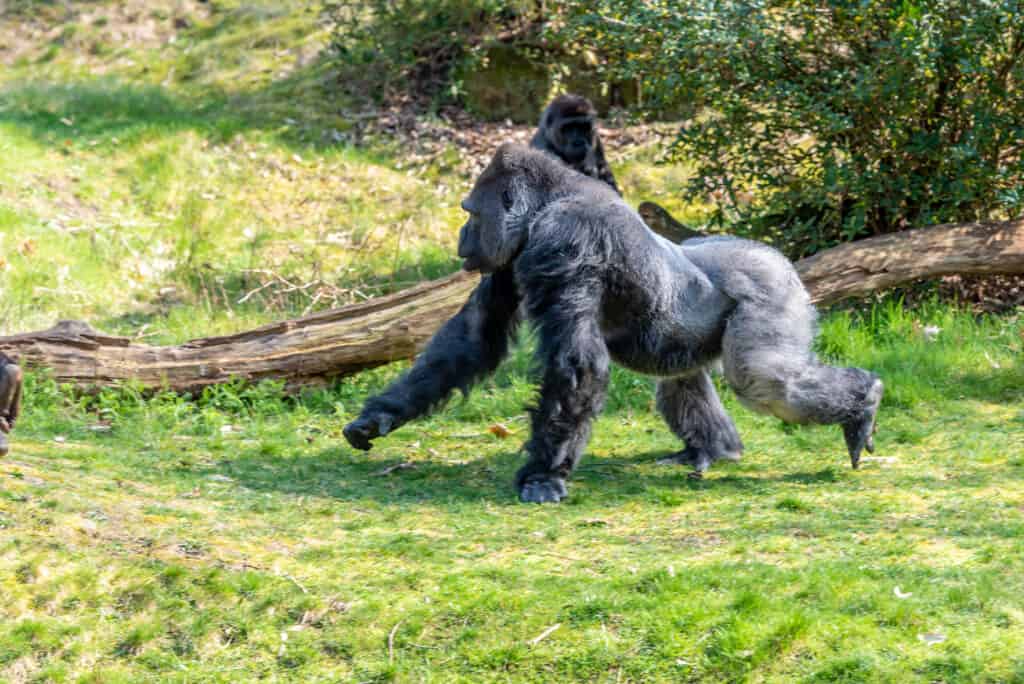
A silverback gorilla is the fully mature adult male of a gorilla group, instantly recognizable by the striking silver-gray saddle that develops across the back.
This transformation occurs between 12–15 years of age, marking not just physical maturity but the rise of a dominant leader responsible for decision-making, troop defense, feeding routes, and reproductive rights.
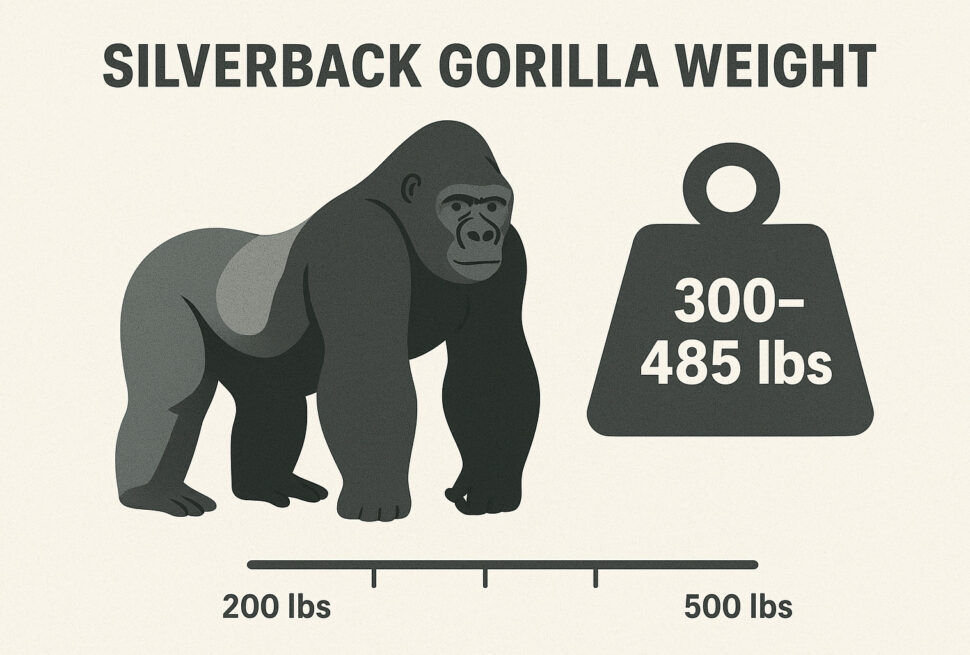
Among all primates, silverbacks are unmatched in physical authority—standing up to 1.7–1.8 meters (5.6–5.9 ft) when upright and weighing approximately 180–200 kilograms (396–440 lbs).
Their muscular density, arm length, and jaw power translate to an estimated strength nearly 9 times greater than an average adult human, enabling them to uproot vegetation, break dense bamboo, and deter rivals with formidable displays.
Silverbacks belong to the broader Gorilla genus, divided into major subspecies:
Eastern gorillas and Western gorillas. The eastern branch includes the critically endangered mountain gorillas of Uganda, Rwanda, and DRC, and the eastern lowland (Grauer’s) found deeper in Congo forests.
Mountain gorillas, the primary focus in the tri-border region, differ from their western relatives by living exclusively in high-altitude ranges of 2,200–4,000 meters with cooler climates, dense mist forests, and nutrient-rich vegetation that shapes slower growth but deeper social bonds.
Gorilla life unfolds in well-defined stages.
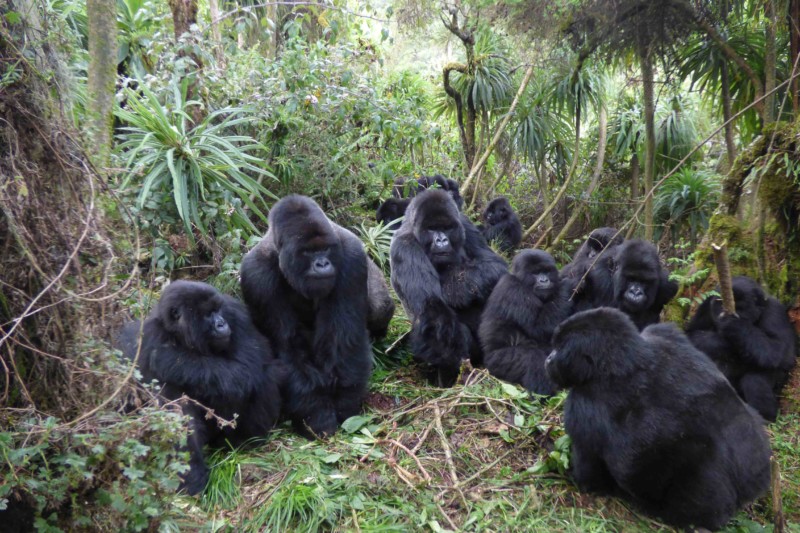
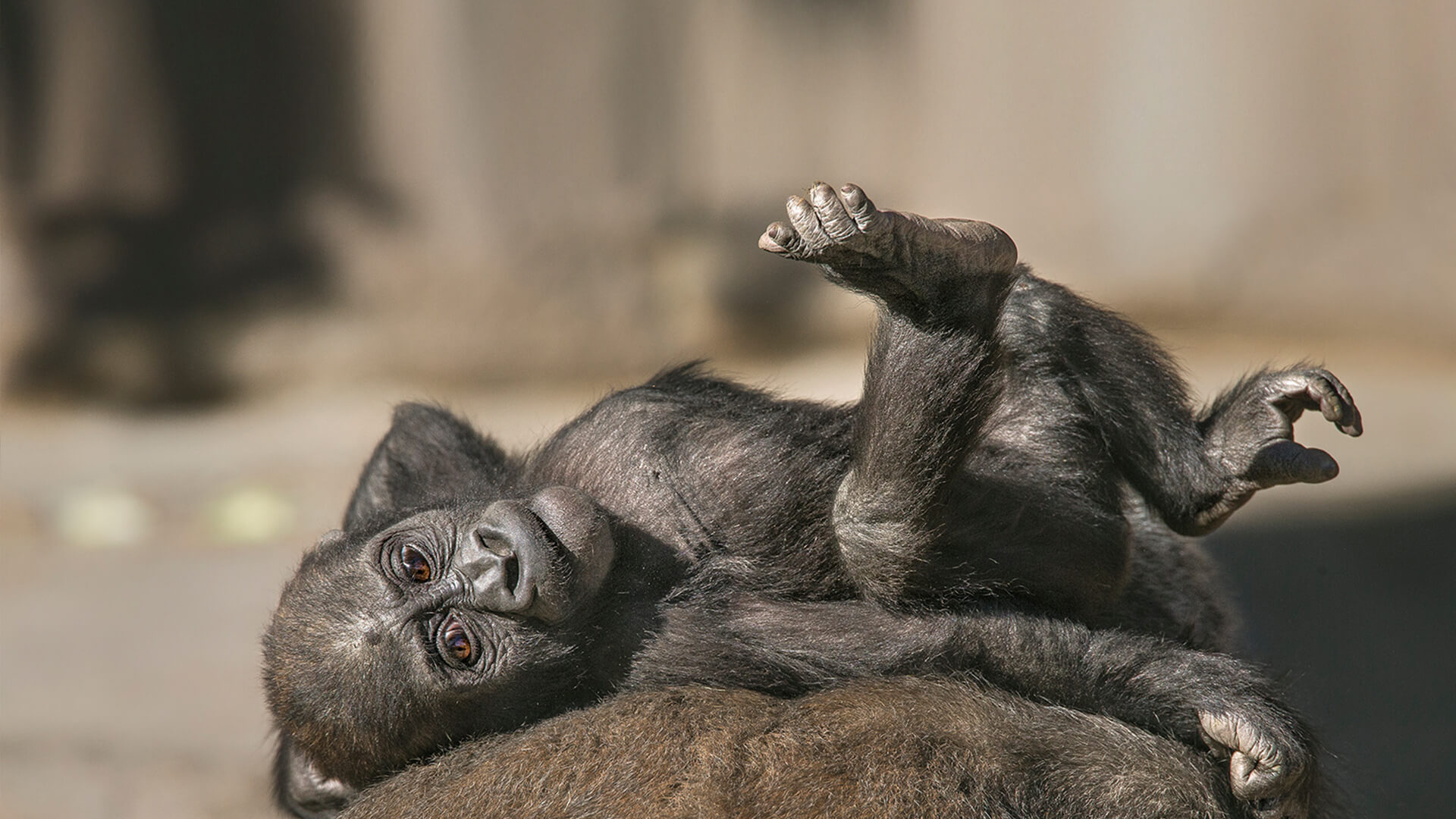
- Infants cling to their mothers from birth until about age three, absorbing every element of troop communication and hierarchy. Juveniles (3–6 years) explore boldly but remain protected by both mothers and the silverback.
- Subadult blackbacks (8–12 years) start to resemble the adult male but lack the silver saddle and dominant rights.
The defining shift to silverback is biological and social: testosterone increases, hair pigmentation changes, skull crests enlarge, and behavior transitions from playful to commanding.
Though multiple males may exist in a troop, only one silverback usually leads unless a coalition is formed.
The authority of a silverback extends beyond physical defense; he controls mating, negotiation during troop disputes, and strategic relocation when food becomes scarce.
In mountain habitats, where territory includes steep ravines, bamboo belts, and volcanic slopes, this leadership can determine survival.
Comparison Table: Silverback vs. Female vs. Juvenile Gorillas
| Trait / Category | Silverback Male | Adult Female | Juvenile |
|---|---|---|---|
| Average Weight | 180–200 kg | 90–115 kg | 20–60 kg |
| Height (Upright) | 1.7–1.8 m | 1.4–1.5 m | 0.8–1.1 m |
| Back Coloration | Distinct silver saddle | No silvering | Dark black |
| Strength Level | ~9× human | ~4–5× human | ~2–3× human |
| Role in Troop | Leader, protector, breeder | Nurturer, maternal backbone | Learning, play, development |
| Maturity Age | 12–15 years | 8–10 years | — |
This hierarchy ensures the longevity, protection, and continuity of gorilla families across the volcanic heartlands of Central Africa.
Average Lifespan of Silverback Gorillas
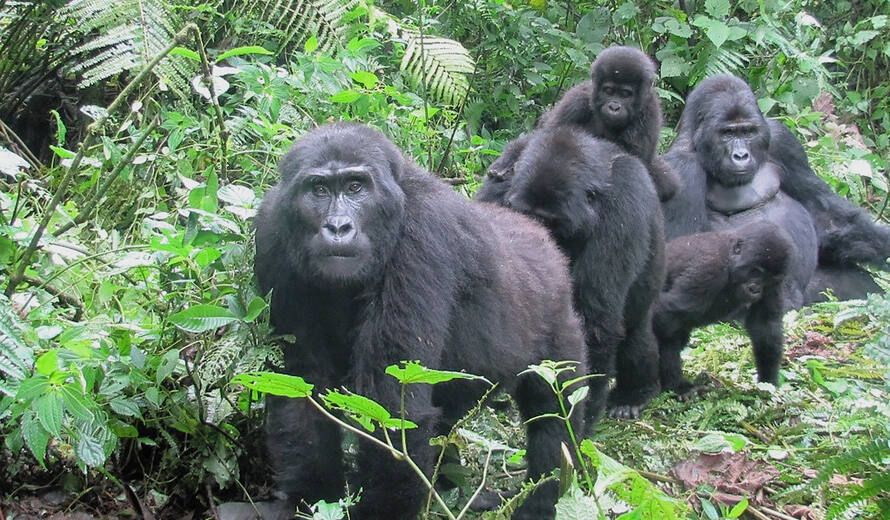
The average lifespan of silverback gorillas varies widely depending on environment, human impact, disease exposure, and diet stability.
In the wild, a dominant male typically lives 35–40 years, while in protected captive settings, silverbacks can live 50–60 years or even longer.
This gap reflects not just medical access but also absence of poaching, conflict, and intense territorial competition.
1. Lifespan in the Wild (35–40 Years)
In mountain ecosystems—Bwindi, Mgahinga, Volcanoes, and Virunga—wild silverbacks experience external pressures that gradually shorten their lifespan:
-
Territorial battles with rival males can lead to crippling injuries.
-
Human encroachment reduces food range and increases stress levels.
-
Respiratory infections spread quickly due to close troop living and occasional human contact during tourism.
-
Predation risk, though rare, occurs with leopards targeting infants, forcing silverbacks into constant defensive readiness.
Despite these natural and human-induced pressures, conservation-backed populations in Uganda and Rwanda show a relatively stable age expectancy.
In Bwindi Impenetrable Forest (Uganda) and Volcanoes National Park (Rwanda), silverbacks typically reach 35–40 years, with some documented living into their early forties.
The oldest recorded wild silverback reached approximately 45 years in Bwindi, thanks to consistent veterinary monitoring and strict anti-poaching enforcement.
2. Lifespan in DRC vs. Uganda/Rwanda
While Uganda and Rwanda’s conservation management has improved silverback survival, DRC’s Virunga National Park presents harsher realities.
Years of militia conflict, snare traps, and habitat invasions have reduced average survival closer to the lower end of the spectrum:
-
Virunga typical lifespan: 30–35 years
-
Bwindi & Volcanoes typical lifespan: 35–40 years
Protected zones in Rwanda and Uganda benefit from regulated trekking permits, gorilla doctors, controlled visitor interaction, and community compensation projects that prevent poaching incentives.
Conversely, in DRC, sporadic instability forces troops into unsafe migration zones where food scarcity and illegal hunting increase mortality.
3. Lifespan in Captivity (50–60 Years)
In controlled environments:
-
Veterinary care is constant
-
Balanced diets prevent malnutrition
-
Parasites, respiratory threats, and violent encounters are minimized
These conditions allow silverbacks to surpass natural limits. The longest-lived captive gorillas have reached 66–67 years, nearly doubling the average wild expectancy.
However, extended lifespan comes with trade-offs—absence of complex troop dynamics, reduced territorial responsibilities, and artificially moderated dominance behaviors.
4. Key Influences on Longevity
-
Genetics: Some lineages naturally live longer.
-
Diet quality: Wild gorillas rely on seasonal bamboo, nettles, celery, and vines; scarcity reduces immune strength.
-
Veterinary support: Mountain gorillas now receive field treatment for snares, pneumonia, and altitude infections.
-
Stress exposure: Conflict zones and tourism mismanagement shorten lifespans.
Silverback Lifespan Timeline
| Life Stage | Age Range | Key Milestones |
|---|---|---|
| Birth | 0 | Full maternal dependency |
| Infant | 0–3 years | Learning vocal cues, constant carrying |
| Juvenile | 3–6 years | Play, troop integration |
| Subadult (Blackback) | 8–12 years | Muscle growth, preparing for authority |
| Silverback Maturity | 12–15 years | Silvering, dominance potential |
| Peak Leadership | 20–30 years | Territorial control, troop stability |
| Senior Silverback | 35–40 years (wild) / 50–60 (captivity) | Reduced mobility, leadership handover |
This lifespan arc illustrates how leadership, habitat conditions, and human conservation dictate the survival and aging journey of the mountain world’s most commanding primate.
Factors Influencing Silverback Gorilla Lifespan
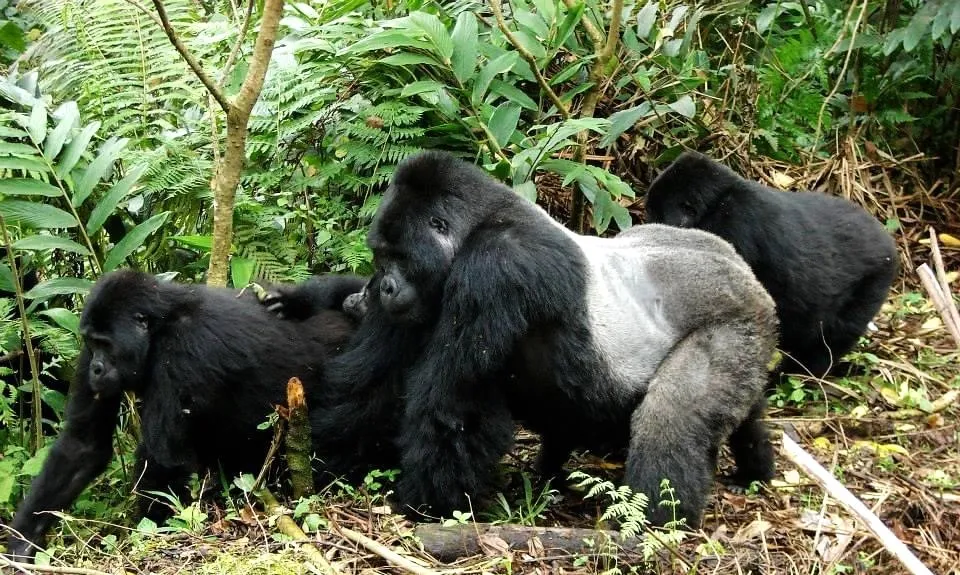
The lifespan of a silverback gorilla is shaped by a tightly interwoven set of biological, social, environmental, and human-driven factors.
While a healthy wild silverback can live 35–40 years in mountain ecosystems, survival beyond that range depends on nutrition stability, social dominance, habitat security, and protected landscape management.
In regions like Bwindi, Mgahinga, Volcanoes, and Virunga, the difference between thriving and declining is often determined by access to intact forests and reduced human interference.
1. Diet and Health
Silverbacks are primarily herbivorous, consuming a plant-loaded diet that includes bamboo shoots, wild celery, nettles, thistles, fruits, and the nutrient-rich foliage found in volcanic highlands.
This vegetation provides essential minerals and high fiber, boosting digestion and muscular growth.
However, seasonal shifts can compress food availability, forcing silverbacks to push deeper into contested feeding zones.
Health threats remain a major limiting factor. Respiratory illnesses—especially pneumonia—spread rapidly in cool mountain climates.
In the DRC’s eastern lowland and Virunga sectors, outbreaks of Ebola have historically devastated gorilla populations, reducing life expectancy by wiping out entire generational lines rather than affecting individuals alone.
Parasites, snare wounds, and altitude-related infections further compromise immune systems, shortening survival when veterinary teams cannot intervene in time.
Find more about What Do Silverback gorillas Eat Here.
2. Social Structure and Dominance Stress
The role of a silverback extends far beyond physical strength. As troop leader, he manages hierarchy, feeding routes, infant protection, mating rights, and conflict mediation.
This position, though prestigious, is energy-intensive. Dominance requires:
-
Constant vigilance against rival males
-
Strategic troop relocation when food cycles shift
-
Direct interventions in infant defense
Younger competing males (blackbacks transitioning to maturity) challenge aging silverbacks, escalating stress levels and increasing injury risk.
Physiologically, chronic stress undermines immune function, accelerates aging, and reduces overall lifespan.
A weakened silverback can lose his troop, leading to isolation and eventual decline.
3. Environmental Pressures
Mountain gorillas live in high-altitude forests spanning 2,200–4,000 meters, environments that face accelerating ecological disruption.
Key pressures include:
-
Habitat loss from agricultural expansion in Uganda-DRC borderlands
-
Charcoal extraction and logging in Virunga
-
Climate change, altering vegetation cycles and pushing troops uphill into colder, less fertile zones
When forest corridors shrink, silverbacks must navigate fragmented terrain, making them more vulnerable to snares, malnutrition, and inter-troop clashes.
The stability seen in Uganda’s Bwindi is directly linked to protected land continuity, whereas conflict zones in Congo destabilize breeding patterns and long-term silverback survival.
4. Human Impacts: Threats and Protection
Human influence on silverback lifespan is paradoxical—both destructive and life-extending.
Negative impacts include:
-
Poaching for bushmeat or accidental snaring along border farmlands
-
Militia incursions in DRC, forcing gorillas into unsafe escape routes
-
Disease transmission from unregulated tourism or local settlements
Positive influences are powerful:
-
Highly controlled tourism permits in Uganda and Rwanda generate revenue that directly funds ranger salaries, veterinary care, and anti-poaching patrols.
-
Gorilla Doctors programs treat respiratory infections, snare injuries, and trauma cases that would otherwise be fatal.
-
Community revenue-sharing agreements reduce poaching incentives by linking gorilla survival to village livelihood.
In places like Volcanoes National Park, such strategies have allowed older silverbacks to reach their natural lifespan ceiling rather than dying prematurely from preventable conflict.
5 Key Lifespan Boosters
-
Protected Habitats: Mgahinga, Bwindi, Volcanoes, and well-guarded Virunga zones ensure stable feeding corridors and safe breeding environments.
-
Veterinary Intervention: Gorilla Doctors’ snare removal and pneumonia treatment dramatically increase survival.
-
Tourism Revenue Protection: Permit funding directly supports anti-poaching units and boundary patrols.
-
Conflict-Free Zones: Buffer communities and cross-border conservation reduce militia intrusion risks.
-
Genetic Stability: Long-established families with experienced silverbacks ensure structured leadership and reduced internal aggression.
Ultimately, a silverback’s lifespan hinges on habitat security, leadership burden, disease exposure, and human stewardship.
Where conservation succeeds, silverbacks thrive into their late thirties and beyond; where forest borders crumble, survival contracts dramatically.
Threats to Silverback Gorillas in Uganda, Rwanda, and Congo
Silverback gorillas — especially Mountain gorilla populations in the tri-border region of Uganda, Rwanda, and the Democratic Republic of the Congo (DRC) — face a complex array of threats.
Below is an overview of major pressures, from poaching to environmental change, plus comparative country-level risks and some regional case trends.
1. Major Threats
Poaching & Conflict
-
In the DRC (particularly around Virunga National Park), armed conflict and militia activity drive increases in poaching, illegal logging, and habitat encroachment. Many gorillas are injured or killed by snares set for other wildlife, even if not targeted directly.
-
In Rwanda and Uganda, direct poaching of gorillas is rarer — but infants have been known to be illegally trafficked (e.g., a 2013 incident involving a baby gorilla found outside Virunga).
-
Political instability in parts of the DRC makes consistent park monitoring difficult, reducing the effectiveness of ranger patrols.
Habitat Destruction and Land Use Change
-
Expansion of agriculture, subsistence farming, and human settlement near forest edges reduces available gorilla habitat. In many areas, once-continuous forests (e.g., between Bwindi and the Virunga region) have been fragmented or lost.
-
Illegal logging, charcoal production, and mining (especially in certain areas of the DRC) degrade forest quality, reduce food supply, and force gorillas into smaller, more contested ranges.
-
Habitat loss also disrupts troop movement, feeding patterns, and breeding success.
Disease Transmission and Climate / Environmental Stress
-
Gorillas are highly susceptible to disease, including human respiratory illnesses. Close contact between humans (tourists, rangers, local communities) and gorillas increases risk of zoonotic transmission.
-
Environmental changes—such as shifting climate patterns—can alter vegetation growth, seasonal fruiting or bamboo shoots, leading to food scarcity. Diminished nutrition weakens immune systems and reduces resilience.
Human–Wildlife Conflict
-
As gorilla habitats shrink, gorillas sometimes venture into nearby farmland in search of food, leading to crop damage. This can provoke retaliatory killings or trap-setting by local farmers.
-
Lack of compensation or alternative livelihoods for communities near parks fuels antagonism.
Instability of Conservation Infrastructure
-
In conflict zones, ranger patrols, veterinary care, and anti-poaching efforts become inconsistent or impossible — greatly raising the risk of mortality from snares, neglect of injuries, or unmonitored poaching.
-
When tourism is disrupted (for example due to regional insecurity or pandemics), funding for conservation wanes — reducing support for habitat protection and community programs.
2. Regional Case Studies: Declines vs. Recovery
-
In the Virunga area (DRC), decades of conflict, logging, agriculture, and poaching once pushed the gorilla population dangerously low — at times as low as ~250 individuals.
-
By contrast, conservation efforts in Uganda’s Bwindi Impenetrable National Park have helped stabilize and increase gorilla numbers. Together with neighboring protected zones, the total global population of mountain gorillas has risen to around 1,000+ individuals in recent censuses.
-
However, renewed conflict and instability in parts of the DRC (e.g., rebel activity in 2024–2025) have led to spikes in poaching and habitat destruction around Virunga — showing how fragile the recovery remains.
Threats by Country / Region — Summary Table
| Region / Country | Key Threats | Recent Trends / Stats (2020–2025) |
|---|---|---|
| DRC — Virunga Region | Poaching (snares, bushmeat), logging/charcoal, refugee-driven agricultural encroachment, militia conflict, disease risk | Poaching intensified again with militia incursions; many traps found (2024–2025), habitat deforestation increasing; conservation patrols struggle in insecure zones. |
| Uganda — Bwindi & Mgahinga | Habitat pressure from farming/settlement expansion, human-gorilla conflict, risk of snares/traps | Gorilla population growth and stability due to strong conservation, tourism revenue, ranger patrols. |
| Rwanda — Volcanoes / Shared Virunga Massif | Forest encroachment, human-wildlife conflict, snares, tourism-related disease transmission | Conservation efforts (park protection, community outreach) have helped maintain numbers, though habitat remains constrained. |
Summary: Why These Threats Matter
-
Mountain gorillas live in small, isolated populations. Even a few deaths — whether by snares, disease, or conflict — can have long-term impacts on troop structure and genetic diversity.
-
Loss of habitat reduces available food and space, increasing competition, stress, and the likelihood that gorillas will move into risky zones (farmland or human settlements).
-
Romance between human economic needs (farming, charcoal, logging) and gorilla survival has proven unstable: when poverty, conflict, or demand for forest resources rise, gorillas pay the price.
-
Even successful recovery is fragile: Conflict or mismanagement in one part of the region (e.g., DRC) can quickly undo decades of conservation gains.
Conservation Efforts and Their Impact on Lifespan
Across Uganda, Rwanda, and the Democratic Republic of Congo (DRC), deliberate conservation efforts — combining veterinary care, protected-area management, law enforcement, tourism, and community engagement — have significantly improved survival prospects for Mountain Gorillas, including silverbacks.
Here’s how these efforts work, and why they matter.
Key Conservation Initiatives
-
Veterinary care and health monitoring
Organizations such as Gorilla Doctors — working in Rwanda and Uganda — treat injuries from snares, respiratory illnesses, and other ailments that might otherwise be fatal. They also monitor gorilla health, giving fragile or wounded individuals a chance to recover. -
Protected area management and law enforcement
In the DRC, the national park authority Institut Congolais pour la Conservation de la Nature (ICCN), together with park rangers, works to patrol and secure habitats, even amid conflict and instability. In regions across the tri-border area, daily patrols, anti-poaching units, and habitat protection shape an “extreme conservation” model that keeps gorillas safer than at any time in recent decades. -
Transboundary cooperation and population monitoring
Through the Greater Virunga Transboundary Collaboration (GVTC) and allied partners, regular censuses and surveys help track gorilla population changes, enabling adaptive conservation strategies. The most recent counts show global wild mountain gorilla numbers rising, a clear sign that protection is translating into real gains.
Role of Tourism & Sustainable Revenue
Responsible gorilla-trekking tourism has become one of the most powerful tools for gorilla conservation:
-
In Uganda’s Bwindi Impenetrable National Park and Mgahinga Gorilla National Park, foreign visitors pay permit fees (for example, about US $800 per foreign non-resident) — a substantial fraction of which goes directly to park management, anti-poaching patrols, veterinary care, and habitat preservation.
-
In Rwanda’s Volcanoes National Park and associated reserves, tourism-generated revenue supports both conservation and community development via profit-sharing schemes, which incentivize local communities to protect gorillas rather than harm them.
-
By making gorillas a sustainable economic asset rather than a resource to exploit, tourism has helped reduce poaching and habitat encroachment.
Because of this model, the population of mountain gorillas has rebounded — a rare success story in global primate conservation. Recent counts place the total wild population of mountain gorillas at about 1,063 individuals, distributed across Uganda, Rwanda, and the DRC.
Impact on Lifespan & Population Stability
-
Longer, healthier lives: Regular veterinary care and rapid intervention when injuries or diseases occur give gorillas a greater chance to reach natural lifespan limits. Rehabilitation of snare wounds, treatment of respiratory infections, and monitoring of vulnerable troops help older silverbacks survive into their 30s–40s or beyond.
-
Population growth and reduced mortality: Conservation and tourism have reversed decades of decline. Mountain gorilla numbers have increased by approximately 73% since 1989.
-
Stable troop structure: With fewer gorillas lost to poaching or disease, family groups remain intact. This social stability supports better survival rates for infants, juveniles, and sub-adults — which helps ensure silverbacks emerge and thrive.
How You, the Reader, Can Help
You don’t have to be a wildlife professional to contribute.
Here’s how individuals can make a difference:
-
Visit responsibly: If you travel to see gorillas, choose certified trekking tours that follow park rules: maintain distance, limit group size, and respect habitat regulations. Your permit fees directly fund conservation.
-
Support conservation organizations: Donate or raise awareness for groups that fund ranger patrols, veterinary teams, habitat protection, and community development around gorilla reserves.
-
Advocate for sustainable tourism and habitat protection: Encourage policies and practices that balance tourism, community livelihoods, and forest preservation — especially important as human populations grow around protected areas.
The recovery of mountain gorillas — rare among great apes — shows how much can be achieved when wildlife protection, community incentives, and sustainable tourism align.
Thanks to these efforts, silverbacks today stand a far better chance of living long, meaningful lives in their natural forests than in any time of the past century.
Why Choose Go Silverback Safaris Ltd.
Your journey, your story, your unforgettable encounter with the wild. Trek, Explore and Meet the Silverbacks.
When it comes to exploring East Africa’s most extraordinary wilderness — the mist-covered mountains of Uganda, Rwanda, and the Democratic Republic of Congo — you deserve more than a ticket and a guide.
You deserve a team that protects what you’ve come to see, understands nature on a soul-deep level, and treats every encounter with gorillas, elephants, golden monkeys, and savannah icons as a privilege.
That’s exactly what Go Silverback Safaris Ltd. stands for.
1. 🦍 A Safari Company Built on Gorilla Expertise
We don’t just guide you to gorillas — we specialize exclusively in gorilla trekking.
Our name itself reflects our commitment: Silverbacks are our identity, our pride, and our mission.
Our guides and trackers have spent years studying gorilla behaviour, family dynamics, nesting patterns, vocal communication, and silverback dominance hierarchies.
When you trek with us, you don’t just see a gorilla — you understand its world.
2. Conservation With Purpose
Every permit, every dollar spent, every trek booked through Go Silverback Safaris helps protect the gorillas you’ve come to meet.
We proudly support:
-
Gorilla doctors & in-field veterinary interventions
-
Ranger patrols and anti-poaching units
-
Community conservation projects in Bwindi, Mgahinga & Virunga regions
-
Local employment and eco-sustainable tourism
Travelling with us means you are directly funding gorilla survival. That’s not charity — that’s legacy.
3. Tailor-Made Journeys, Never Generic
No two travellers are alike — so your itinerary shouldn’t be either.
-
Luxury, mid-range, and budget trekking programs
-
Photographic expeditions with extra time in the wild
-
Fly-in safaris for fast-track adventurers
-
Cross-border gorilla trekking: Uganda ▶ Rwanda ▶ DRC
-
Birding, volcanic hiking, and chimp-tracking add-ons
You decide how deep into the wild you want to go — we make it flawless.
4. Safety. Professionalism. Comfort.
Our safari crew isn’t just trained — they’re certified, experienced, and field-tested in Africa’s toughest terrains.
-
4×4 safari-prepared vehicles
-
Air-conditioned transfers & satellite-guided routing
-
Trek briefing, gear support & altitude guidance
-
Safe handling of high-elevation trekking and mud-track navigation
Your safety isn’t a feature — it’s our foundation.
5. Why Travellers Recommend Us
Tourists, filmmakers, wildlife photographers, honeymooners, and eco-volunteers choose us because:
-
We know gorillas intimately
-
We respect the forest as sacred
-
We deliver emotional, unforgettable wildlife encounters
-
We don’t rush, we don’t crowd, we don’t commercialize the magic
Every guest leaves with more than photos — they leave with transformation.
6. The Go Silverback Promise
You will see the world’s last mountain giants not as animals in a forest — but as powerful, gentle, familial beings with names, histories, alliances and futures worth fighting for.
You won’t just travel.
You won’t just trek.
You will connect.
This is gorilla trekking done right.
This is conservation you can feel.
This is Go Silverback Safaris Ltd.
📩 Book Your Journey
Your seat is waiting in the heart of Africa’s Emerald Kingdom.
Go Silverback Safaris Ltd.
Where every trek protects, every moment matters, and every traveler becomes a guardian of the gorilla kingdom. Contact Us Today.
Frequently Asked Questions
How long do silverback gorillas live in the wild?
Silverback gorillas typically live 35–40 years in the wild. Their survival depends on habitat stability, food availability, and protection from poaching and diseases. Mountain populations in Uganda and Rwanda tend to live slightly longer due to intensive conservation and veterinary care.
How long do silverbacks live in captivity?
With controlled diets, consistent veterinary support, and zero predator threats, captive silverbacks live 50–60 years on average. Some have surpassed 65 years in specialized gorilla care programs and modern zoological environments.
What is the oldest recorded gorilla in Uganda?
In Uganda’s Bwindi region, some monitored silverbacks have reached 45 years, supported by Gorilla Doctors and strict anti-poaching protection. Extended lifespans are largely tied to well-managed trekking zones and close veterinary monitoring.
Why do silverbacks live longer in captivity than in the wild?
Captive gorillas face fewer risks: no poaching, no territorial fights, no scarcity cycles, and immediate medical care. In contrast, wild silverbacks endure disease exposure, leadership battles, climate stress, and habitat threats.
Do silverbacks die younger in Congo?
Yes, DRC silverbacks in Virunga often face reduced lifespans due to conflict zones, poaching pressure, and viral disease threats. Lifespans average slightly below the 35–40 range found in Uganda and Rwanda populations.
What causes early death in silverback gorillas?
Common causes include respiratory diseases, Ebola outbreaks, snares, loss of habitat, climate-driven food stress, and fatal dominance fights. Injured males often weaken, losing troop authority and access to resources.
Does tourism improve gorilla lifespan?
Responsible trekking directly increases lifespans through funding ranger patrols, veterinary interventions, and habitat protection. Countries with strong tourism frameworks—Uganda and Rwanda—consistently report longer silverback survival trends.
Can silverbacks live past 50 in the wild?
Very rarely. Only those in exceptionally stable, medically supported populations might reach early to mid-40s. Past 50 is generally observed only under human care due to reduced risks and advanced medical oversight.
Conclusion
Silverback gorilla lifespan reflects both biological resilience and regional protection efforts, averaging 35–40 years in the wild across Uganda, Rwanda, and DRC, and extending into the 50s under human care. These giants survive longest where tourism funds patrols, veterinary teams, and habitat security, proving that conservation truly shapes destiny.
To keep mountain gorilla populations thriving in Bwindi, Mgahinga, Virunga, and Volcanoes National Park, travelers, photographers, and wildlife enthusiasts are encouraged to visit responsibly.
Every trekking permit purchased becomes direct protection, ensuring silverbacks continue leading families across the mist-covered mountains for generations to come.