Silverback Gorilla Intelligence | Behavior, Leadership, Communication & Social Strategy
Silverback gorillas display remarkable intelligence through strategic leadership, emotional awareness, and problem-solving skills.
They choose safe nesting sites, guide troop migrations, and mediate conflicts using calm behavior rather than aggression.
Their communication system includes over 25 vocalizations, chest-beating signals that travel nearly a kilometer, and expressive facial cues.
Silverbacks also show empathy by comforting distressed members and caring patiently for infants.
They remember past threats, adjust routes to avoid poachers, and learn human boundaries in habituated groups.
Silverback gorilla intelligence reveals a sophisticated mind and offers a living model for understanding primate social evolution.
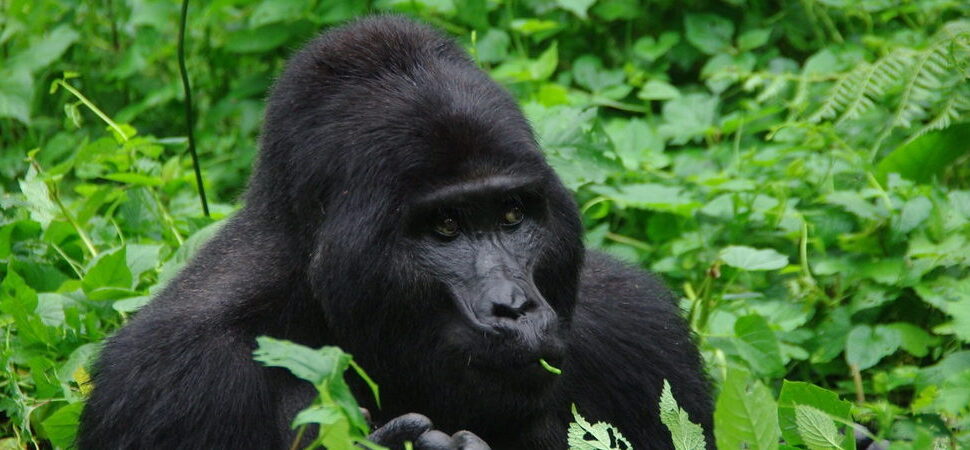
Silverback gorillas are adult male leaders of gorilla troops, typically weighing up to 400 pounds and easily recognized by the distinctive silver patch that runs across their backs.
More than just imposing figures, these leaders serve as protectors, decision-makers, and problem-solvers for their groups.
Their intelligence is multifaceted: they exhibit advanced social reasoning, display empathy toward other troop members, and solve problems in ways that suggest foresight rather than instinct alone.
Studies have shown that they can learn from experience, use tools in captivity, and even demonstrate rudimentary planning abilities—all signs that their minds operate on a level that challenges our assumptions about non-human primates.
Why study silverback gorilla intelligence?
Beyond their sheer physical presence, they are among our closest living relatives, sharing approximately 98% of human DNA.
This genetic closeness makes them invaluable for understanding the evolution of cognition, social behavior, and even emotional depth.
Observing how a silverback navigates conflicts, nurtures relationships, and makes strategic choices offers insights not only into gorilla societies but also into the roots of human intelligence.
Exploring silverback gorilla intelligence reveals mind-blowing cognitive feats that rival other primates.
In this article, we’ll dive into their social strategies, problem-solving abilities, emotional intelligence, and unique communication methods.
We’ll also highlight why protecting these gentle giants is crucial—not just for biodiversity but for the scientific insights they provide.
Discover why these incredible animals deserve our admiration, respect, and protection, and consider supporting conservation efforts to ensure that future generations can witness their brilliance firsthand.

What Makes a Silverback Gorilla? Biology and Habitat
1. Physical Characteristics and Evolution
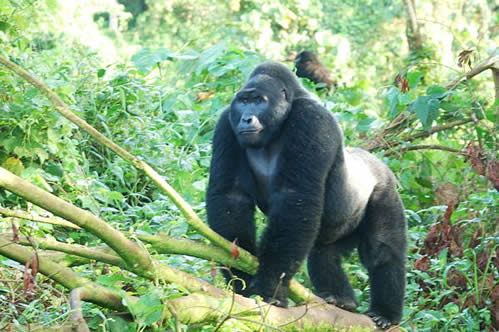
Silverback gorillas are the adult male leaders of gorilla troops, typically reaching full maturity between 12 and 15 years.
At this stage, they develop the iconic silver patch across their back, a symbol of age, strength, and social dominance.
These giants weigh up to 400 pounds (180 kg) and stand about 5.5 to 6 feet tall when upright, with arms disproportionately longer than their legs.
Pound-for-pound, a silverback is estimated to be around 1.75 times stronger than an average human, capable of feats of strength that are both awe-inspiring and intimidating.
Beyond their muscular prowess, silverbacks boast large, complex brains, averaging around 480 grams—significantly larger than that of most other primates.
This substantial brain size supports advanced cognitive abilities such as problem-solving, social strategy, and communication.
Evolutionarily, gorillas diverged from a common ancestor with humans approximately 8–9 million years ago, and their physical adaptations—robust frames, dexterous hands, and keen senses—have enabled them to thrive in the challenging environments of Central Africa.
The combination of strength and intelligence allows silverbacks to lead effectively, resolve conflicts within their troop, and navigate their surroundings with remarkable skill.
2. Natural Habitat and Daily Life
Silverback gorillas inhabit the dense rainforests and volcanic slopes of Rwanda, Uganda, and the Democratic Republic of Congo.
These habitats are rich in vegetation, offering a varied diet of leaves, stems, fruits, and occasionally insects.
On average, gorillas spend 6 to 8 hours daily foraging, moving through the forest in search of the most nutritious plants.
Their environment is more than just a food source—it shapes their cognitive development.
Navigating steep slopes, dense undergrowth, and shifting weather conditions requires exceptional spatial memory, problem-solving skills, and an ability to plan routes to minimize energy expenditure.
Daily life in the forest also demands social intelligence.
Silverbacks must recognize troop members, monitor rival groups, and remember the locations of fruiting trees or hidden water sources.
The ability to process these multiple layers of information simultaneously is a key indicator of their mental sophistication.
Living in such complex terrain has likely honed both their physical and mental agility, making them not only strong but strategically intelligent.
3. Role in the Troop
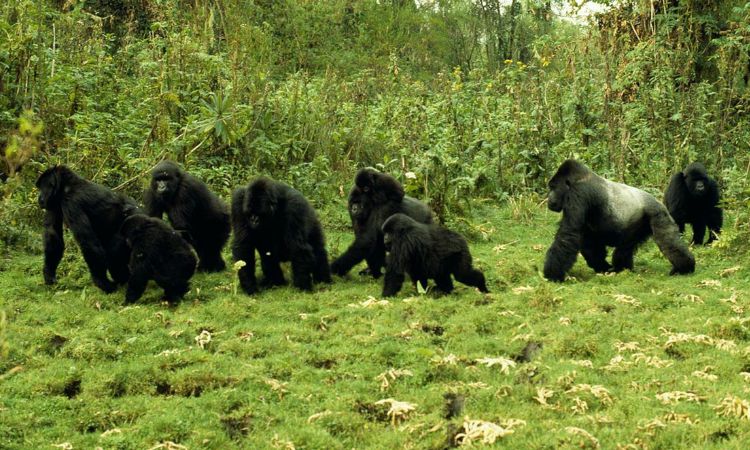
The silverback is the undisputed leader of a troop ranging from 5 to 30 members. He protects the group from threats, mediates disputes, and guides foraging routes.
This leadership role demands not only strength but also keen intelligence, as he must assess risks, anticipate conflicts, and maintain harmony among diverse individuals.
His decisions directly affect the survival and wellbeing of the entire troop, showcasing how intelligence and social structure are inseparable in the life of a silverback.
Measuring Intelligence in Silverback Gorillas
1. Primate Intelligence Metrics
Measuring intelligence in non-human primates is a complex task, but several metrics provide valuable insights.
Silverback gorillas have been estimated to have an IQ roughly equivalent to 70–90 in human terms, though direct comparisons are imperfect.
Mirror self-recognition tests, which gauge self-awareness, have demonstrated that gorillas can recognize themselves, indicating a level of consciousness previously thought unique to humans and some great apes.
Another important metric is the encephalization quotient (EQ), a measure of brain size relative to body size.
Silverbacks often perform impressively on these scales, with large brains that facilitate problem-solving, social reasoning, and memory.
Interestingly, wild silverbacks often outperform their captive counterparts in natural settings, where the demands of foraging, navigation, and troop management stimulate cognitive abilities far more intensely than laboratory conditions.
2. Challenges in Assessment
Despite these insights, accurately measuring gorilla intelligence comes with challenges.
Many cognitive tests are designed around human or chimpanzee behavior, creating potential cultural bias.
Silverbacks are generally more reserved and cautious than chimps, which can make them appear less curious or less responsive in experimental settings.
For example, mirror tests in a 2006 study found that some gorillas required repeated exposure and environmental adjustments before showing self-recognition.
Standardized problem-solving tests may underestimate their intelligence if they do not mimic real-world challenges such as negotiating troop conflicts or navigating dense forests.
Additionally, silverbacks often display subtle cues—like strategic chest-beating or silent observation—that indicate understanding and planning but are easily missed in lab-based evaluations.
3. Silverback-Specific Insights
Leadership and social roles amplify the cognitive demands on silverbacks.
Coordinating troop movements, mediating disputes, and protecting members require strategic thinking, memory, and emotional intelligence.
These behaviors suggest that their intelligence is not just about raw problem-solving ability but is deeply intertwined with social complexity and survival in dynamic environments.
Table: Gorilla Intelligence Metrics vs. Other Apes
| Species | Brain Size (g) | Tool Use Frequency | Mirror Self-Recognition | Notes |
|---|---|---|---|---|
| Silverback Gorilla | 480 | Moderate | Yes | Strategic social behavior |
| Chimpanzee | 400 | High | Yes | Highly curious, exploratory |
| Orangutan | 420 | Moderate-High | Partial | Excellent problem-solving in captivity |
| Bonobo | 385 | Moderate | Yes | Cooperative and socially adept |
Cognitive Abilities: Problem-Solving and Learning
1. Tool Use and Innovation
Silverback gorillas are remarkable innovators in both the wild and captivity.
Observations in the 2005 Congo study documented wild silverbacks using branches as makeshift bridges to cross swampy terrain or as stabilizers while navigating uneven ground.
These behaviors demonstrate advanced problem-solving skills and an ability to manipulate the environment to achieve a goal.
In captivity, silverbacks have been observed using sticks to retrieve food from containers, showing not only the ability to use tools but also to adapt them creatively for new purposes, including defense.
For example, a dominant male may wield a branch to assert dominance or deter intruders, revealing an understanding of cause and effect.
Tool use in silverbacks is not instinctual; it requires observation, practice, and strategic application, reflecting cognitive sophistication that rivals chimpanzees and orangutans.
2. Memory and Spatial Reasoning
Silverbacks exhibit exceptional memory skills, particularly when it comes to episodic memory—the ability to recall specific events and experiences.
In the wild, they optimize foraging routes over several kilometers, remembering the location of fruiting trees, water sources, and seasonal changes in vegetation.
This spatial reasoning allows them to minimize energy expenditure and maximize nutritional intake, critical for sustaining large troops.
Moreover, silverbacks have been shown to remember rival troop territories for years, adjusting their patrols and protective behaviors accordingly.
These memory abilities are tightly linked to survival, social management, and resource acquisition.
Their capacity to recall long-term information and integrate it with current conditions highlights cognitive functions akin to strategic planning in humans.
3. Learning from Experience
Silverbacks also demonstrate learning through observation, both within their troop and in captivity.
Young gorillas watch adults closely, picking up techniques for foraging, tool use, and social interaction.
Adult males often teach juveniles through demonstration, subtly guiding behavior without explicit commands.
In captivity, one silverback was documented solving complex puzzles faster than female troop members, suggesting a combination of observational learning, reasoning, and persistence.
These behaviors indicate that silverbacks are not only capable of individual problem-solving but can transfer knowledge socially, ensuring the continuity of skills and enhancing troop cohesion.
Learning from experience allows silverbacks to adapt to novel challenges, whether negotiating human-altered environments, competing for food, or defending their troop.
Silverbacks’ cognitive abilities—tool use, spatial memory, and observational learning—underscore their intelligence beyond brute strength.
They demonstrate foresight, creativity, and adaptability, revealing minds that think critically about their environment and social interactions.
By studying these behaviors, researchers gain invaluable insights into the evolution of primate intelligence and the parallels between gorilla cognition and human problem-solving.
Social Intelligence: Leadership and Communication
Silverback gorillas are not only physically dominant but also socially intelligent leaders.
Their ability to navigate complex troop dynamics, communicate effectively, and show empathy sets them apart in the animal kingdom.
Understanding their social intelligence provides insight into their survival strategies and strong familial bonds.
1. Troop Dynamics and Decision-Making
Silverbacks serve as both leaders and protectors of their troops, which typically include 5–30 gorillas.
Their leadership involves more than asserting dominance; it requires strategic decision-making to ensure safety and resource access.
For instance, silverbacks select nesting sites that provide concealment from predators, access to food, and proximity to water.
They also guide daily and seasonal migrations, carefully choosing paths that minimize encounters with rival gorillas or human activity.
Conflict resolution is another key aspect of silverback social intelligence.
When disputes arise within the troop, silverbacks often intervene to mediate, using calm postures and non-aggressive gestures.
They comfort injured or distressed members, demonstrating empathy and reinforcing social cohesion.
Juveniles may receive gentle nudges or vocal reassurance, which strengthens trust between the leader and troop members.
Interestingly, silverbacks exhibit a form of situational awareness similar to human problem-solving.
They remember locations of past threats and resources, adjusting troop movements accordingly.
By balancing protective instincts with strategic planning, silverbacks exemplify leadership that combines physical strength with emotional intelligence, ensuring both survival and harmony within the troop.
2. Communication Systems
Silverbacks possess a complex system of communication involving over 25 distinct vocalizations, each serving a specific social or environmental purpose.
Grunts, roars, and hoots convey messages about food, danger, or social intentions.
For example, low grunts may indicate reassurance within the troop, while loud chest-beating displays can assert dominance or warn rivals.
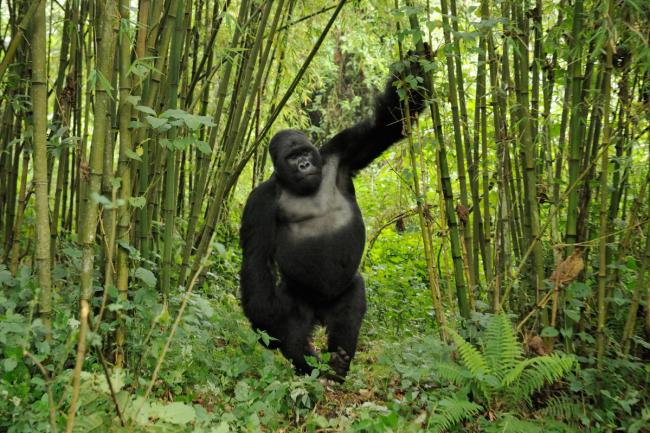
Remarkably, chest-beating sounds can travel up to 1 kilometer through dense forests, acting as both a territorial marker and a deterrent without physical confrontation.
Non-verbal cues are equally vital.
Posture, facial expressions, and gestures allow silverbacks to communicate intentions subtly.
A raised arm, forward-leaning stance, or gentle touch can convey authority, playfulness, or comfort.
These nuanced behaviors enable leaders to maintain order and assert dominance without resorting to aggression.
Silverbacks also adapt their signals based on context.
During predator encounters or human presence, vocalizations may become more urgent, while in relaxed settings, softer signals maintain troop cohesion.
Their communication reflects a sophisticated understanding of social hierarchies and individual relationships, allowing them to manage complex interactions efficiently.
This combination of vocal, visual, and tactile signals demonstrates that silverbacks are highly capable social strategists who rely on intelligence as much as strength to lead their troops.
3. Bonding and Empathy
Silverbacks are deeply invested in the well-being of their troop members, showing empathy that rivals some primates and even humans.
They form strong family bonds and often engage in cooperative behaviors like babysitting infants, grooming, and offering comfort to distressed members.
These actions highlight emotional intelligence, as silverbacks recognize and respond to the needs of others.
Research on captive gorillas like Koko and Michael further supports the idea of gorilla empathy.
These gorillas learned over 1,000 signs of American Sign Language, using them to express emotions, request assistance, or comfort humans and peers.
Such findings underscore that empathy is not merely instinctual but can be expressed through complex, intentional communication.
In the wild, silverbacks’ nurturing behavior reinforces troop stability and survival.
By investing in social bonds, leaders ensure cooperation and reduce conflict, creating a supportive environment for young and vulnerable gorillas.
Empathy and bonding are thus central to the silverback’s leadership style, making them not only protectors but also emotionally aware caretakers.
FAQ: Do Silverback Gorillas Show Empathy?
Answer (snippet-optimized):
Yes, silverback gorillas show empathy through comforting injured or distressed troop members, babysitting infants, and mediating conflicts.
Studies on gorillas like Koko and Michael demonstrate their capacity for emotional understanding and intentional communication, highlighting their strong social intelligence and family bonds.
Emotional and Adaptive Intelligence
Silverback gorillas exhibit remarkable emotional and adaptive intelligence, balancing instinct with nuanced understanding of their environment and troop members.
Their emotional awareness, threat responses, and individual personalities highlight their complex cognitive and social capacities.
1. Recognizing Emotions
Silverbacks are highly attuned to the emotions of their troop members.
They use facial expressions to communicate joy, curiosity, or fear, while gentle vocalizations and touches offer reassurance.
Infants and juveniles are closely monitored, with adults demonstrating patience and guidance as they learn foraging and social behaviors.
Mourning rituals further reveal their emotional depth.
When a troop member dies, silverbacks and other gorillas often stay near the body, groom it, and exhibit subdued behaviors, suggesting recognition of loss and grief.
These behaviors are not instinctive alone—they indicate empathy and social awareness.
Such emotional intelligence ensures that troop members feel secure, supported, and connected, strengthening long-term group cohesion.
2. Adaptation to Threats
Silverbacks demonstrate keen adaptive intelligence when facing threats.
In the wild, they strategically hide or move silently to avoid predators and human poachers.
They are capable of reading environmental cues, such as distant human activity, and adjusting troop movements to minimize risk.
In habituated groups, silverbacks learn to distinguish safe human behavior from potential threats.
They monitor researchers or tourists, adapting their responses based on experience.
Some may approach cautiously for curiosity, while others maintain distance.
This learning highlights their ability to assess risks and modify behavior—a form of problem-solving critical for survival in both wild and human-impacted environments.
3. Individual Personalities
Each silverback displays a unique personality, affecting troop dynamics.
Calm, patient leaders foster cooperative, stable groups, while aggressive or reactive leaders may cause tension but also deter rivals effectively.
These differences influence decision-making, conflict resolution, and overall troop success.
Understanding individual personalities is essential for researchers and conservationists, as it helps predict troop behavior, manage habituation processes, and ensure the safety and well-being of gorillas in both wild and semi-protected environments.
Comparisons: Silverbacks vs. Other Animals and Humans
Silverback gorillas are often measured against other primates and humans to understand their unique combination of cognitive, social, and emotional intelligence.
While not the most inventive among apes, their leadership and social cohesion are unmatched in the wild.
1. Silverback Gorillas Vs. Other Gorillas and Apes
Silverbacks display more pronounced leadership than female gorillas, taking responsibility for troop protection, decision-making, and conflict resolution.
Unlike chimpanzees, which excel in tool innovation and problem-solving, silverbacks prioritize social stability and troop cohesion over inventive behaviors.
Their strength lies in managing complex social networks, ensuring that juveniles are guided, conflicts are mediated, and all members cooperate for survival.
While chimps may develop clever strategies to access food or escape confinement, silverbacks excel at maintaining group harmony and assessing threats to keep the troop safe.
This leadership-oriented intelligence, combined with memory and empathy, ensures the success and survival of their troops across challenging habitats.
2. Silverback Gorillas Vs. Humans
Humans and silverbacks share several traits, such as planning, social learning, and emotional understanding.
Both species navigate hierarchical structures, anticipate the needs of group members, and adapt to environmental challenges.
Silverbacks can remember past threats, adjust migration routes, and comfort distressed individuals, reflecting cognitive parallels with human social behavior.
However, humans surpass gorillas in abstract thinking, symbolic communication, and complex problem-solving.
While silverbacks exhibit empathy and some cultural behaviors (e.g., grooming rituals, tool use in captivity), they do not manipulate symbols or plan far-reaching strategies like humans.
Despite these differences, the 98–99% DNA overlap emphasizes conservation importance.
Protecting gorillas preserves not only a species but also a close reflection of our evolutionary heritage, offering insights into social intelligence, empathy, and leadership that have parallels in human society.
Table Idea: Intelligence Comparison Chart
| Species | Cognition Score (1–10) | Social IQ (1–10) | Notes |
|---|---|---|---|
| Silverback Gorilla | 7 | 9 | Strong leadership, empathy, troop cohesion |
| Chimpanzee | 8 | 7 | High innovation, tool use, problem-solving |
| Bonobo | 7 | 8 | Cooperative, emotionally attuned, playful |
| Human | 10 | 9 | Abstract thinking, complex planning, language |
Conservation and the Role of Intelligence
1. How Smarts Aid Survival
Silverback gorillas use their intelligence to navigate increasingly fragmented habitats.
They adapt foraging routes to seasonal changes, remember safe nesting sites, and detect threats like predators or human traps.
Their ability to read environmental cues, avoid snares, and protect vulnerable troop members demonstrates problem-solving skills critical for survival.
Intelligence also aids in social coordination, ensuring cooperation within the troop when moving through risky areas.
By combining memory, planning, and social awareness, silverbacks increase their chances of survival in forests facing deforestation and human encroachment.
2. Human Impact and Calls to Action
Mountain gorillas are critically endangered, with fewer than 1,000 individuals remaining in the wild.
Human activities, including poaching and habitat destruction, threaten their survival.
Yet their intelligence and emotional depth make them relatable to humans, inspiring empathy and conservation action.
Responsible tourism, such as guided gorilla trekking in Uganda, Rwanda, and DRC, supports local conservation while offering visitors a unique opportunity to observe silverbacks’ social behaviors.
Donations to wildlife organizations further protect habitats and fund anti-poaching efforts.
Engaging with these intelligent creatures helps preserve both their species and our shared natural heritage.
Frequently Asked Questions
What makes silverback gorillas intelligent?
Silverbacks show intelligence through leadership, memory, problem-solving, and social awareness.
They plan troop movements, mediate conflicts, and remember locations of food and threats.
Can silverbacks use tools?
Yes, they use sticks, branches, and other objects for food retrieval, support, or defense.
Tool use is more common in captivity but also observed in the wild.
How do silverbacks communicate intelligently?
They communicate with over 25 vocalizations, gestures, facial expressions, and chest-beating.
These signals convey dominance, reassurance, and warnings without violence.
Do silverbacks show empathy?
Yes, silverbacks comfort injured or distressed troop members, babysit infants, and mediate conflicts, demonstrating emotional intelligence and social bonds.
Are silverbacks better leaders than other gorillas?
Yes, male silverbacks take strategic decisions for nest sites, troop safety, and migration, prioritizing group cohesion and survival over individual gain.
Can silverbacks adapt to human presence?
In habituated groups, they learn human boundaries, adjusting behavior based on risk, curiosity, or experience with tourists and researchers.
How do silverbacks solve problems?
They exhibit situational problem-solving, such as navigating tricky terrain, avoiding predators, or manipulating objects to access food.
Do individual silverbacks have different personalities?
Yes, some are calm and patient leaders, while others are aggressive or assertive.
Personality influences troop dynamics and survival strategies.
How does intelligence aid survival?
Memory, planning, and social coordination allow silverbacks to avoid threats, find resources, and maintain troop stability in changing environments.
How similar is silverback intelligence to humans?
Silverbacks share traits like social learning, planning, and empathy.
While humans excel in abstract thinking, the 98–99% DNA overlap highlights their cognitive and emotional sophistication.
Conclusion
Silverback gorilla intelligence offers a remarkable window into primate evolution, showcasing leadership, social awareness, problem-solving, and emotional depth.
From strategic troop decision-making and nuanced communication to empathy and adaptive skills, silverbacks demonstrate cognitive abilities that parallel aspects of human intelligence.
Their unique personalities and capacity for learning highlight the complexity of primate social structures, reinforcing their value in both scientific study and conservation.
Protecting these intelligent creatures ensures the survival of their species and preserves our connection to the natural world.
Book a gorilla trek or donate to protect these geniuses and experience their extraordinary minds firsthand.
Trek, Explore and Meet the Giant Silverback Today.