Measuring Success: Population Growth and Biodiversity Wins
Mountain gorilla conservation success is best measured through hard data, visible recovery, and lasting ecological impact.
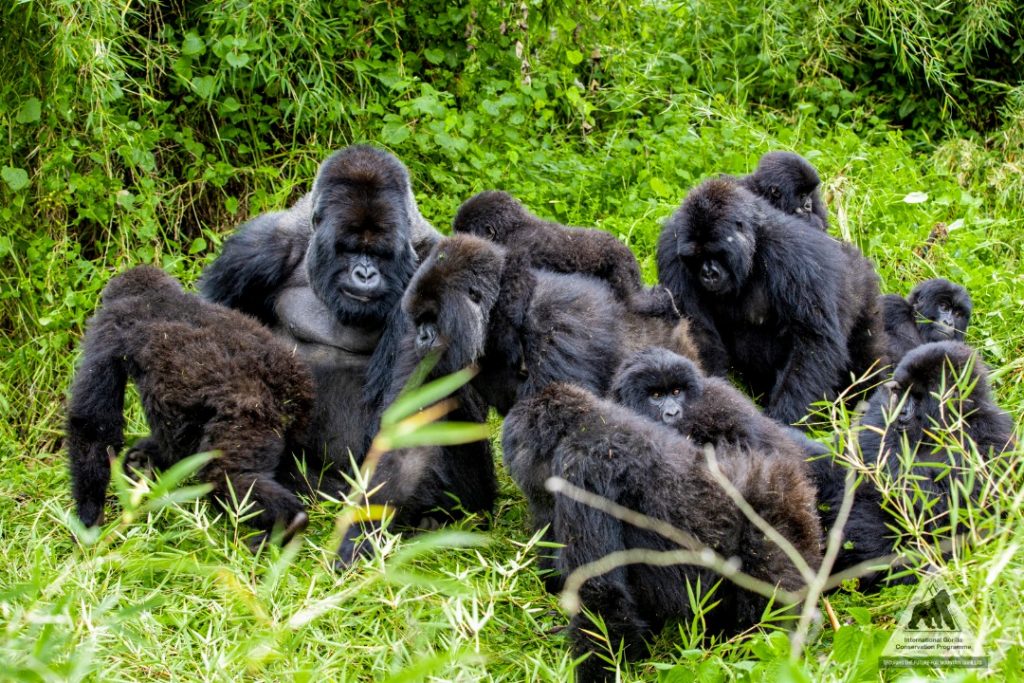
From the edge of extinction, endangered mountain gorillas have become one of Africa’s greatest conservation victories—proving that focused protection, science, and community-led tourism can reverse biodiversity loss.
Population Milestones and Census Data
The most powerful indicator of mountain gorilla conservation success is population growth verified through regular censuses.
In the 1980s, surveys recorded fewer than 260 mountain gorillas remaining in the wild, split between the Virunga Massif (Rwanda, Uganda, DRC) and Bwindi Impenetrable Forest in Uganda.
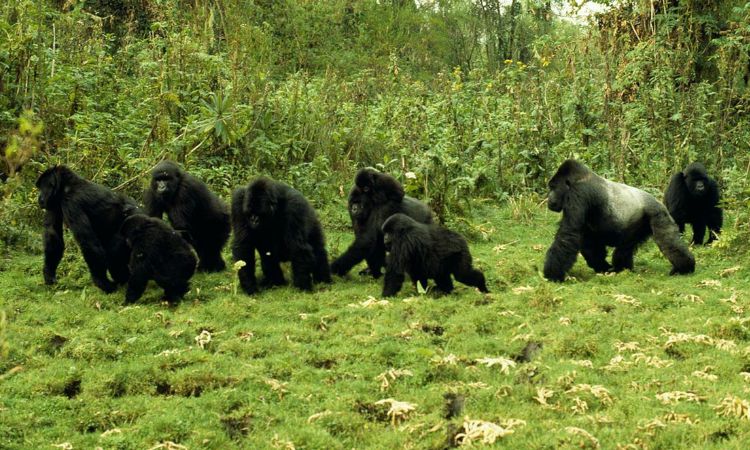
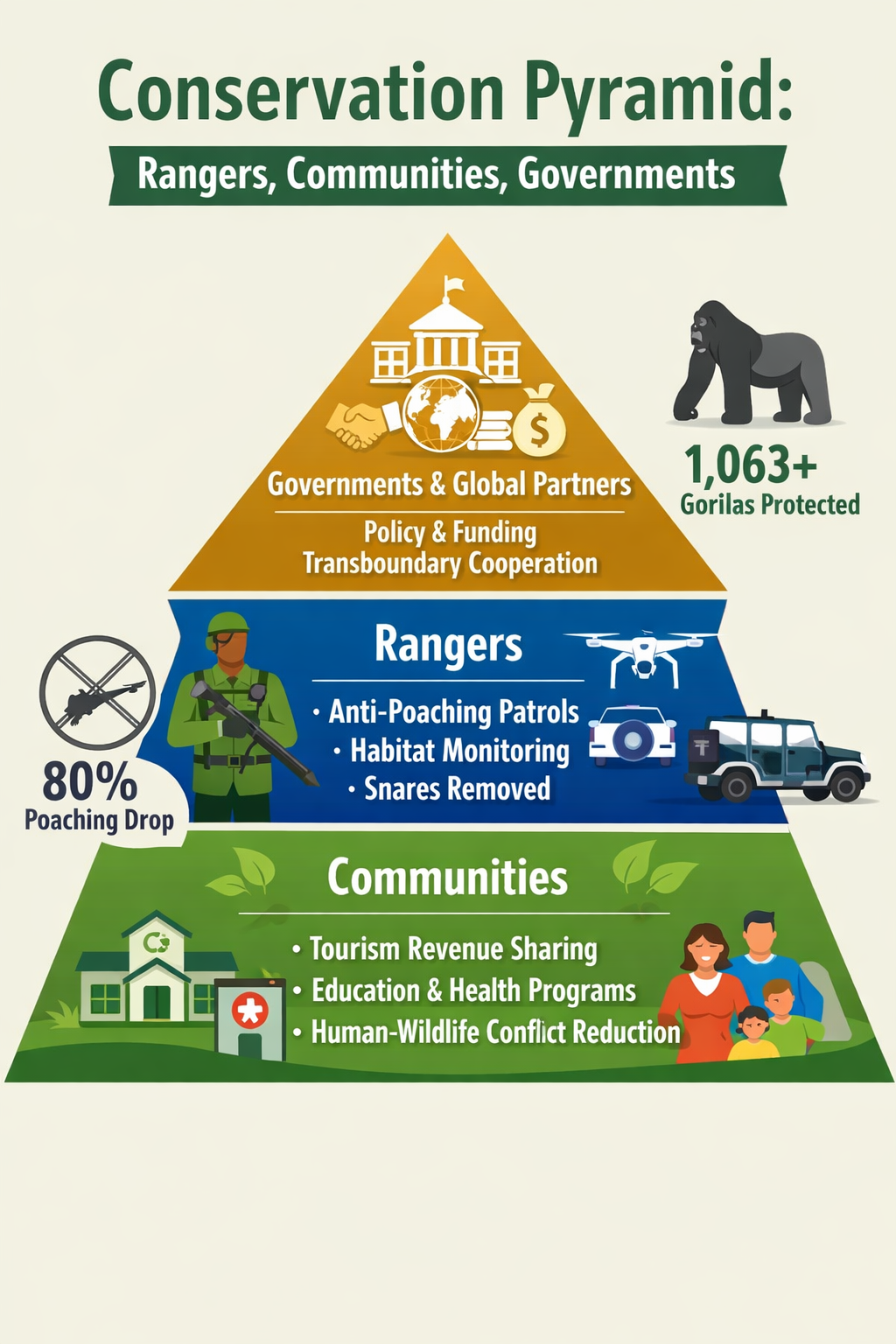
Today, global estimates exceed 1,063 individuals, marking the first great ape species to rebound in modern times.
Bwindi Impenetrable National Park now supports 480+ mountain gorillas, while the Virunga Massif is home to 604+ individuals.
These gains are not accidental—they are the result of decades of anti-poaching patrols, veterinary interventions, habitat protection, and controlled tourism.
In recognition of this progress, the IUCN downgraded mountain gorillas from “Critically Endangered” to “Endangered” in 2018. While still vulnerable, this reclassification reflects a genuine recovery trend unmatched by most large mammals.
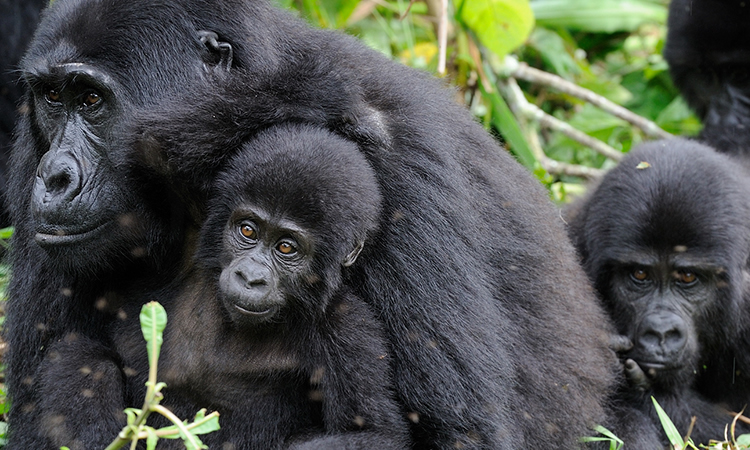
Importantly, growth rates remain slow, as gorillas reproduce gradually, with females giving birth every four to six years. This makes continued protection essential.
Nonetheless, stable upward population trends confirm that conservation strategies are working—and that extinction is no longer inevitable.
Broader Ecosystem Benefits
Protecting mountain gorillas delivers benefits far beyond a single species.
Gorilla conservation safeguards some of Africa’s most biologically rich montane forests, supporting hundreds of bird species, primates, amphibians, and forest elephants.
As keystone species, gorillas help regenerate forests by dispersing seeds across wide areas.
Their survival strengthens ecosystem resilience, improves water catchments, and enhances carbon sequestration, contributing to climate change mitigation.
By preventing deforestation and illegal land use, gorilla-protected areas act as natural carbon sinks while preserving biodiversity corridors across national borders.
In this way, endangered mountain gorillas have become ambassadors for whole-ecosystem conservation—where saving one species helps save many.
Tourism as a Success Driver
Sustainable tourism has transformed mountain gorillas from targets into assets worth protecting.
Carefully regulated gorilla trekking generates millions annually, directly funding conservation and community development.
For example, Rwanda earned over $16 million from gorilla permits in 2016 alone, with strict visitor limits ensuring minimal disturbance.
Revenue-sharing programs fund schools, health centers, and clean water projects, reducing reliance on forest resources.
This economic model aligns livelihoods with conservation outcomes. Communities now see living gorillas as a long-term benefit rather than a threat, dramatically reducing poaching and habitat encroachment.
Tourism has proven that wildlife protection and economic growth can coexist.
Table: Gorilla Conservation Metrics
| Metric |
1980s |
2018 |
2026 Estimate |
| Total Population |
~254 |
1,004 |
1,063+ |
| Bwindi Population |
Unknown |
459 |
480+ |
| Virunga Population |
~254 |
604 |
604+ |
| IUCN Status |
Critically Endangered |
Endangered |
Endangered |
| Annual Tourism Revenue |
Minimal |
$16M+ (Rwanda) |
Increasing |
In summary, mountain gorilla conservation success demonstrates what is possible when science, protection, tourism, and communities work together—offering a rare and hopeful blueprint for saving endangered species worldwide.

Ongoing Challenges: Why the Fight Isn’t Over
Despite remarkable conservation successes, with the mountain gorilla population holding steady at around 1,063 individuals as of late 2025 (based on the most recent comprehensive censuses from 2018-2019, with ongoing surveys in Bwindi-Sarambwe launched in May 2025 yet to release updated figures), the species remains classified as Endangered by the IUCN.
The fight for their survival is far from over, as emerging and persistent threats continue to jeopardize this fragile recovery.
These challenges underscore the need for sustained vigilance, innovative strategies, and international support to ensure long-term viability.
Emerging Threats
Among the most pressing emerging threats are climate change, disease transmission, and illegal resource extraction such as mining and logging.
Climate change is reshaping the high-altitude ecosystems of the Virunga Massif and Bwindi Impenetrable Forest.
Rising temperatures and altered rainfall patterns disrupt vegetation growth, reducing food availability for these vegetarian primates who rely on bamboo, leaves, and fruits. Learn about What do Silverback Gorillas Eat here.
Gorillas may be forced to higher elevations where colder conditions and sparse resources increase stress and mortality risks. WWF studies highlight how these shifts widen disease vectors, exacerbating vulnerabilities in a species with low genetic diversity.
Human-transmitted diseases pose a severe risk due to gorillas’ 98% genetic similarity to humans. Respiratory illnesses like colds, flu, or even past concerns from COVID-19 can be fatal.
Tourism and community proximity, while funding conservation, heighten exposure. Strict protocols—masks, distance rules, and vaccinations for rangers—are essential, but enforcement remains challenging.
Illegal mining (e.g., for coltan) and logging in Virunga National Park, particularly in conflict zones controlled by groups like M23 rebels as of 2026, fragment habitats and introduce pollution.
These activities drive deforestation for charcoal production and displace gorillas, pushing them into human areas. In the DRC side of Virunga, ongoing armed conflicts have intensified poaching and encroachment, with rangers facing heightened dangers.
These threats compound the species’ small population size and slow reproductive rate, making every loss significant.
Human-Wildlife Conflict
Human-wildlife conflict intensifies as growing human populations around protected areas encroach on gorilla habitats, particularly in the Democratic Republic of Congo (DRC).
The DRC hosts about half the world’s mountain gorillas in Virunga National Park, but dense surrounding populations—exacerbated by displacement from ongoing conflicts involving M23 rebels and other militias—drive resource needs into park boundaries.
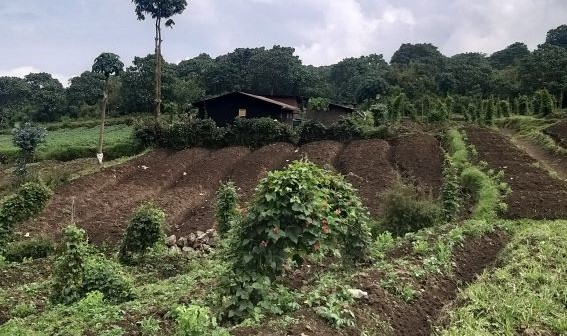
Farmers expand crops closer to forests, leading to crop raiding by gorillas seeking food, which provokes retaliation and snares that injure or kill apes.
Population pressures in eastern DRC, with millions displaced, fuel illegal settlement, firewood collection, and agriculture inside parks.
This not only fragments habitat but increases direct encounters, raising disease transmission risks and poaching incidents. In 2026, reports indicate heightened poaching in rebel-occupied zones, undermining ranger patrols.
The need for buffer zones is critical: community-managed areas with sustainable alternatives like beekeeping, agroforestry, or revenue-sharing from tourism reduce reliance on park resources.
Initiatives like Rwanda’s park expansion (23% increase planned) and community resilience projects offer models, but in volatile DRC regions, implementation lags due to insecurity.
Addressing these conflicts requires integrating local livelihoods—providing education, health support, and economic incentives—to foster coexistence. Without expanded buffers and community buy-in, escalating pressures could reverse decades of gains.
Top 5 Current Challenges for Mountain Gorilla Conservation
- Climate Change — Altering habitats, food sources, and disease patterns.
- Human-Transmitted Diseases — High susceptibility from tourism and proximity.
- Armed Conflict and Political Instability — Especially in DRC, disrupting patrols and enabling poaching.
- Habitat Loss from Illegal Activities — Mining, logging, and charcoal production fragmenting forests.
- Human-Wildlife Conflict and Overcrowding — Crop raiding, snares, and limited space due to population growth.
Future Outlook: Sustaining the Momentum of Mountain Gorilla Conservation
The future of mountain gorilla conservation success is cautiously optimistic—but it depends on sustained innovation, funding, and global commitment.
After decades of recovery, conservationists are now shifting from emergency protection to long-term resilience strategies that can safeguard gorillas for generations.
One promising frontier is technology-driven conservation. AI-powered camera traps, real-time ranger tracking, acoustic sensors, and drone surveillance are already improving patrol efficiency in Virunga and Bwindi.
These tools help rangers detect poaching threats faster, monitor gorilla movements, and respond to emergencies with precision—reducing risks to both wildlife and humans.
Expanded ecotourism remains another pillar of sustainability. Carefully managed gorilla trekking—limited permits, strict health protocols, and high conservation fees—continues to generate vital revenue.
These funds support park management, ranger salaries, veterinary care, and community projects, creating a powerful incentive to protect gorillas rather than exploit forests.
Long-standing partnerships such as the International Gorilla Conservation Programme (IGCP)—with over 30 years of impact—demonstrate how cross-border collaboration between Rwanda, Uganda, and the DRC can succeed even in politically fragile regions.
Continued international funding and policy support will be critical as pressures from climate change and population growth intensify.
If current trends hold, experts project a potential population of 1,200+ mountain gorillas by 2030, a milestone once thought impossible.
However, this outcome is not guaranteed.
Readers play a role too. Choosing ethical gorilla tours, supporting conservation NGOs, respecting park rules, and advocating for wildlife protection all contribute directly to survival outcomes.
Mountain gorillas are living proof that conservation works—when people commit for the long term.
The comeback is real. Keeping it alive is our shared responsibility.
Why Choose GoSilverback Safaris Ltd for Your Gorilla Trekking Tour
Choosing the right tour operator can define your entire gorilla trekking experience—and GoSilverback Safaris Ltd stands out as the trusted choice for travelers seeking authentic, ethical, and expertly guided gorilla adventures in East Africa.
1. Unmatched Gorilla Trekking Expertise
GoSilverback Safaris Ltd specializes exclusively in primate and wildlife safaris, with deep expertise in mountain gorilla trekking across Bwindi Impenetrable National Park, Mgahinga Gorilla National Park, Volcanoes National Park (Rwanda), and Virunga National Park (DRC).
Our team understands gorilla behavior, trekking logistics, and park regulations—ensuring your trek is safe, meaningful, and unforgettable.
2. Experienced Local Guides & Rangers
We work with highly trained, locally based guides who know the forests, trails, and gorilla families intimately.
Their storytelling brings the jungle to life, while their professionalism ensures you get the best possible gorilla encounter, even in challenging terrain.
3. Ethical & Conservation-Driven Travel
By booking with GoSilverback Safaris Ltd, you directly support mountain gorilla conservation success.
We partner with conservation bodies, respect permit regulations, promote low-impact tourism, and support local communities through fair employment and revenue-sharing initiatives.
4. Tailor-Made & Seamless Experiences
Whether you’re a solo traveler, photographer, family, or luxury adventurer, we offer customized gorilla trekking packages—from budget to high-end lodges.
We handle permits, transport, accommodation, border logistics, and pre-trek briefings, so you focus purely on the experience.
5. Trusted Across East Africa
With operations across Uganda, Rwanda, and the DRC, GoSilverback Safaris Ltd is your one-stop expert for cross-border gorilla safaris, wildlife extensions, and cultural experiences—making us one of the most reliable tour operators in East Africa.
6. Real Encounters. Real Impact. Real Memories.
Standing meters away from a silverback gorilla is life-changing. With GoSilverback Safaris Ltd, that moment is guided by passion, professionalism, and purpose.
👉 Book with GoSilverback Safaris Ltd today and experience gorilla trekking the right way—responsible, rewarding, and truly unforgettable.
Frequently Asked Questions
What is mountain gorilla conservation success?
Mountain gorilla conservation success refers to the recovery of mountain gorillas from near extinction to a growing population of over 1,063 individuals, driven by protection, tourism, and community involvement.
How many mountain gorillas are left today?
As of 2026 estimates, there are 1,063+ mountain gorillas living in the Virunga Massif and Bwindi Impenetrable National Park.
Why were mountain gorillas endangered?
Mountain gorillas declined due to poaching, habitat loss, armed conflict, and disease, pushing their numbers as low as 254 individuals in the 1980s.
What helped mountain gorillas recover?
Key drivers include anti-poaching patrols, protected parks, gorilla tourism revenue, veterinary care, and community conservation programs.
Are mountain gorillas still endangered?
Yes. Although their numbers increased, mountain gorillas are still classified as Endangered, meaning continued protection is essential.
How does gorilla tourism support conservation?
Gorilla trekking fees fund park management, ranger salaries, healthcare, and community projects, reducing threats like poaching.
Which countries protect mountain gorillas?
Mountain gorillas are protected in Uganda, Rwanda, and the Democratic Republic of Congo through transboundary conservation efforts.
What role do local communities play?
Communities benefit from revenue-sharing, jobs, education, and healthcare, making them active partners in conservation success.
Who pioneered mountain gorilla conservation?
Dian Fossey played a critical role by researching gorillas, raising awareness, and laying the foundation for modern conservation.
Can mountain gorilla populations keep growing?
Yes. With sustained conservation, experts predict 1,200+ mountain gorillas by 2030 if current efforts continue.
Conclusion: Lessons from Gorilla Conservation for Global Wildlife
The remarkable recovery of mountain gorillas offers one of the most inspiring stories in modern wildlife conservation.
From the brink of extinction in the late 20th century, international collaboration, rigorous anti-poaching measures, habitat protection, and community engagement have transformed the fate of these iconic primates.
Today, populations in Virunga and Bwindi surpass 1,000 individuals, proving that targeted conservation strategies can yield tangible results.
This success extends beyond gorillas. Protecting these great apes safeguards entire ecosystems, supporting countless other species, improving forest health, and contributing to global carbon sequestration efforts.
The model demonstrates how combining science, sustainable tourism, and local community involvement can create a win-win scenario for wildlife and people alike. Lessons learned here can inform conservation approaches for elephants, rhinos, and other endangered species worldwide.
Yet, the fight is far from over. Emerging threats like climate change, disease, and human encroachment require ongoing vigilance.
By supporting responsible tourism, contributing to conservation funds, and raising awareness, individuals can play a role in sustaining this momentum.
Join the conservation effort – explore gorilla trekking options or support funds today.