
Male Vs Female Gorilla Differences: Size, Strength & Behavior Ultimate Guide 2025-2026
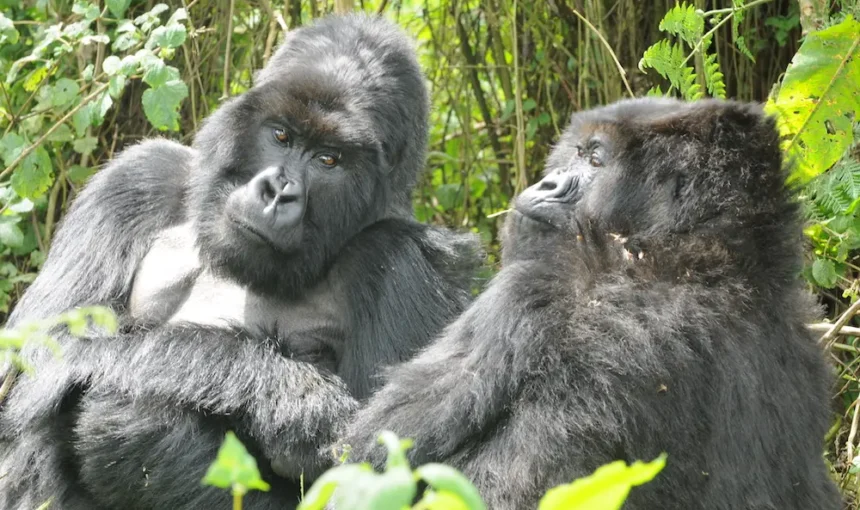
Male vs female gorilla difference begins with understanding sexual dimorphism—a biological term describing how males and females of the same species develop distinct physical size, structure, and behavioral roles.
In gorillas, this dimorphism is one of the most extreme among all primates, with males becoming massive, muscular troop protectors while females evolve as strategic nurturers and stabilizers of social harmony.
Sexual dimorphism in gorillas is not just about size; it affects strength, skull architecture, hormone levels, aggression displays, mating rights, and lifespan dynamics.
A mature male transforms into a silverback with a heavy sagittal crest, immense chest width, and towering shoulder mass, while females remain significantly smaller, leaner, and behaviorally more cooperative rather than confrontational.
The evolutionary drivers behind these male vs female gorilla differences come from intense competition for mating access, dominance ranking, and troop protection responsibilities.
Natural selection favored males who could grow larger, more intimidating, and physically capable of overpowering rivals, deterring predators, and defending females and infants.
Meanwhile, females evolved behavioral intelligence, strong maternal bonding, and subtle power over group stability, influencing mate selection and social cohesion.
In essence, the male vs female gorilla difference reflects an evolutionary blueprint:
-
Males = Size, strength, threat defense, hierarchy establishment
-
Females = Longevity, maternal investment, emotional stability, infant survival
These contrasting biological pathways work together to ensure gorilla troop survival, where one sex dominates external defense and the other secures internal continuity and nurturing success.
Male vs Female Gorilla Physical Differences (Full Breakdown)
1. Body Weight Comparison
Male vs female gorilla difference is most visually striking in body mass.
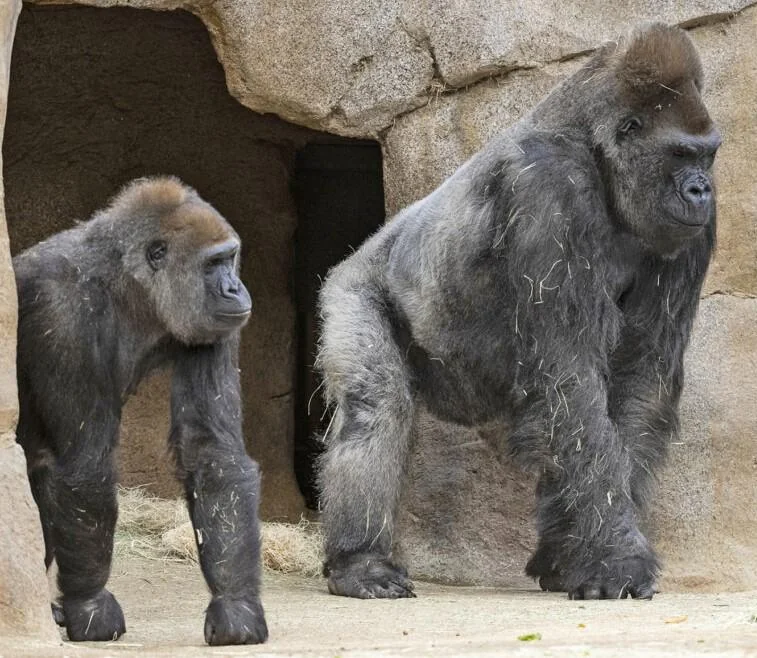
Adult males typically weigh 160–270 kg (350–600 lbs), while adult females average 70–115 kg (154–250 lbs).
This means a silverback male can weigh 2–3 times more than a fully grown female.
Weight disparity becomes even more dramatic in wild vs captive conditions.
-
Wild males maintain dense, functional muscle mass due to constant movement, territorial patrols, and competitive challenges.
-
Captive males may grow larger due to consistent feeding and less physical stress, sometimes exceeding normal wild ranges.
-
Females in captivity also show slight weight gain but rarely approach the massive bulk of male silverbacks.
This extreme size difference isn’t accidental—it reflects evolutionary role separation.
Males evolved as primary defenders, fighters, and dominance competitors, while females evolved for longevity, pregnancy efficiency, and infant caregiving rather than combat build.
Check this Guide here for more about silverback gorilla weight.
2. Height & Arm Span
Another defining male vs female gorilla difference is measured in height and reach.
-
Males stand 1.6–1.85 m (5.2–6.1 ft) tall when fully upright, though they rarely stand bipedally except in threat displays.
-
Females generally reach 1.3–1.5 m (4.2–4.9 ft) in height.
The arm span ratio is even more dramatic:
-
Males can reach up to 2.75 m (9 ft)
-
Females extend up to 2.3 m (7.5 ft)
Silverback arms are built for force generation, tree pulling, combat grappling, and massive vegetation manipulation.
The elongated arms give males a more triangular power silhouette, whereas females display a more balanced, compact body frame.
This expanded reach allows silverbacks to perform dominance gestures—like towering chest beats or branch breaking—which intimidate rivals and protect their troop without needing direct confrontation.
3. Head Crest (Sagittal Crest)
A key anatomical marker in the male vs female gorilla difference is the sagittal crest, a thick, bony ridge running atop the skull.
This structure is pronounced and visible only in males, especially prime silverbacks.
Females either lack it entirely or show only a subtle, undeveloped ridge.
The sagittal crest serves two evolutionary functions:
-
Symbol of power and maturity – A large crest visually signals dominance, reproductive eligibility, and fighting ability.
-
Jaw muscle anchor – The crest supports masseter and temporalis muscles, enabling:
-
A bite force exceeding 1,300 PSI
-
Crushing of fibrous bamboo, wild celery stems, and tough mountain vegetation
-
The crest is one of the clearest dimorphic indicators: a silverback’s skull expands with testosterone over time, creating the signature dome-headed, wide-jawed profile that no female gorilla ever develops.
Together, these anatomical contrasts underline the biological specialization at the core of gorilla societies:
-
Males engineered for combat presence and physical intimidation
-
Females optimized for maternal success, caregiving stamina, and troop continuity
This physical divergence forms the foundation of gorilla hierarchy structure, mating rights, feeding behavior, and survival strategy.
Strength Comparison (Raw Force & Muscle Mass)
1. Bite Force
Male vs female gorilla difference becomes even clearer when examining bite power.
Adult male silverbacks deliver a crushing 1,300 PSI+ bite force, one of the highest measured among terrestrial mammals.
This immense power is supported by the expanded sagittal crest and wider jaw muscle attachment seen only in males.
Females, though still powerful, produce a slightly lower bite force due to smaller skull architecture and reduced crest development.
Their dentition and jaw musculature are adapted more toward efficient vegetation processing than intimidation or dominance display.
Male bite force evolved not only for dietary purposes but for display and combat advantage—the ability to snap bamboo, crack roots, or produce bone-like sounds from tearing branches is a warning signal in gorilla hierarchy.
2. Upper Body Power
Gorillas are built for explosive strength rather than endurance, and the male vs female gorilla difference in upper body mass is among the most extreme in the primate world.
-
Silverbacks are up to 9× stronger than humans, capable of flipping logs, uprooting shrubs, and overpowering rival males.
-
Females reach approximately 4–6× human strength, still formidable but not specialized for dominance combat.
Male muscle fibers concentrate heavily in the pectorals, deltoids, and forelimbs, creating the barrel-chested silhouette typical of a silverback.
Females possess leaner muscle structure, optimized for: check this guide for comparison with human strenght.
-
infant carrying
-
daily foraging endurance
-
long-term stability rather than sudden combat force
Male silverbacks channel their strength toward patrolling territory, breaking vegetation during threat displays, and deterring predators or bachelor males without necessarily fighting.
3. Combat Strength vs Maternal Force
Strength in gorillas isn’t only about raw numbers; it’s tied to social function.
| Role | Male Silverback | Female Gorilla |
|---|---|---|
| Primary Strength Use | Defensive, territorial, dominance | Protective, nurturing, stability |
| Aggression Style | Intimidation displays, chest beats, charges | Controlled, infant-focused |
| Conflict Aim | Repel threats, secure mating rights | Shield offspring, maintain troop harmony |
Males are territorial defenders, using muscle mass and dramatic threat displays to avoid physical conflicts.
Their posture, chest beats, and roaring vocalizations are evolved to intimidate before injury occurs.
Females use strength differently—not for dominance, but for maternal safeguarding.
Their aggression is measured and precise, activated only when:
-
infants are threatened
-
troop stability is at risk
-
resource access conflicts arise
In essence:
-
Male strength prevents danger
-
Female strength responds only when danger reaches the nest
This division of power is nature’s design for troop survival.
Silverbacks handle external threat deterrence, while females ensure internal cohesion and infant success, creating a balanced system where two different kinds of strength keep the gorilla family thriving.
Hormonal & Genetic Differences
1. Testosterone Levels
Male vs female gorilla difference is strongly influenced by hormonal variation, particularly testosterone, which drives the development of male physical and behavioral traits. In males:
-
High testosterone levels stimulate muscle mass growth, broad shoulders, and the development of the sagittal crest, the signature skull ridge of silverbacks.
-
Testosterone also fuels dominance behaviors, including chest-beating, threat displays, and competitive aggression toward rival males.
-
Hormonal surges during adolescence mark the transition from blackback to silverback, signaling readiness for leadership and reproductive rights within the troop.
Females maintain significantly lower testosterone, which explains why they never develop silverback features or engage in prolonged territorial combat.
2. Female Hormonal Cycles
Female gorillas experience hormonal patterns that shape reproductive and social behavior rather than physical dominance:
-
Estrus cycles: Periodic fertility windows influence mating behavior and male selection, giving females subtle control over genetic propagation.
-
Oxytocin release: Known as the “bonding hormone,” oxytocin strengthens maternal-infant attachment, enhances grooming behaviors, and supports social cohesion within the troop.
-
Hormonal fluctuations also impact energy allocation, allowing females to balance pregnancy, lactation, foraging, and infant care efficiently.
This hormonal division underscores the evolutionary strategy: males evolve for competition and dominance, while females evolve for reproduction, nurturing, and social stability, creating a complementary system that ensures troop survival.
Behavioral Differences
1. Leadership Role
Male vs female gorilla difference is most obvious in social leadership and troop management.
-
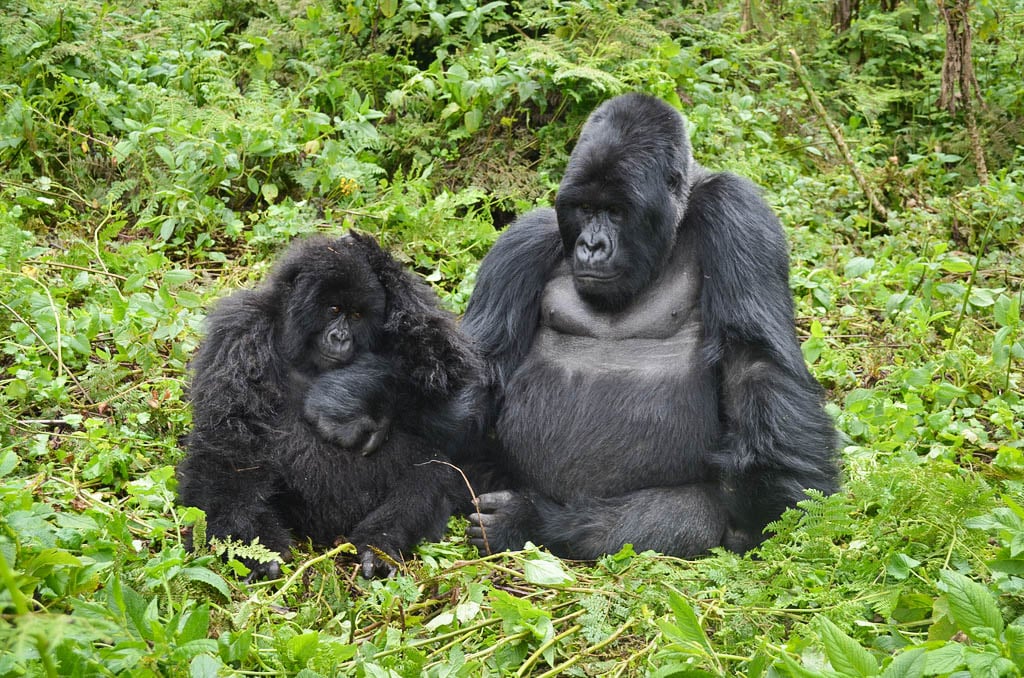
Males take the role of troop leader, protector, and primary decision-maker. A silverback coordinates troop movement, decides when to feed, rest, or flee, and mediates conflicts among younger males. Their authority comes from physical dominance, experience, and strategic intelligence, making them central to the troop’s survival.
-
Females contribute differently: they focus on childcare, grooming, and maintaining social harmony.
-
Female gorillas form strong bonds through grooming, which reduces tension and strengthens alliances.
-
By influencing troop cohesion and guiding infant development, females exert subtle but critical social power.
This division ensures that males manage external threats while females maintain internal stability, a system that balances survival and reproductive success.
2. Aggression & Displays
Aggression patterns differ dramatically between sexes:
-
Males display aggression through chest-beating, ground-slapping, roaring, and mock charges.
-
These behaviors are often bluff tactics to deter rivals or protect the troop without engaging in actual combat.
-
Physical confrontations are rare but can be lethal when dominance is challenged.
-
Females rarely engage in overt aggression. Instead, they rely on vocal reassurance, soft threats, or coalition building to protect infants and maintain peace.
-
Their aggression is measured, targeted, and primarily defensive, demonstrating a maternal strategy rather than dominance-seeking behavior.
The contrasting styles highlight male focus on intimidation and territorial defense, and female focus on protection and social cohesion.
3. Feeding Behavior
Feeding strategies also reflect sexual dimorphism:
-
Males consume larger quantities of fiber-heavy vegetation, such as stems, bamboo shoots, and bark, to sustain their massive body size and muscular energy demands.
-
They prioritize volume over nutrient density.
-
Females, especially when nursing, select nutrient-rich leaves, fruits, and flowers, maximizing calories and micronutrients for both themselves and their infants.
-
Their selective feeding ensures offspring development, lactation health, and troop vitality.
This difference in diet underscores how male and female gorillas are physically and behaviorally specialized, with each sex optimizing survival through complementary strategies.
Social Hierarchy & Family Life
1. What Makes a Silverback a Leader?
Male vs female gorilla difference is vividly reflected in the social hierarchy of gorilla troops, where silverbacks serve as central figures.
A silverback becomes a leader through a combination of:
-
Genetics – Physical potential, strength, and body size inherited from parents set the foundation for dominance.
-
Challenge Wins – Young males compete for rank, and victories in fights or displays cement their authority within the troop.
-
Maturity – Silverbacks reach full leadership potential at 12–15 years, when hormonal surges, muscle mass, and experience converge.
Leadership is not just brute force; it also involves strategic intelligence, troop protection, and conflict resolution, ensuring both male dominance and troop survival.
2. Female Influence
While males lead, females exert subtle yet critical influence over troop dynamics:
-
Mate Selection – Females choose mates based on strength, maturity, and protection abilities, shaping which males dominate the gene pool.
-
Emotional Cohesion – Through grooming and social interaction, females maintain alliances and reduce tension among troop members, stabilizing group structure.
-
Infant Protection and Alliances – Females form coalitions to safeguard offspring from threats, including aggressive males or external predators, reinforcing the troop’s resilience.
This complementary system means males provide external security and leadership, while females manage internal stability, social bonds, and offspring survival, creating a balanced and efficient gorilla society.
Reproductive and Mating Differences
1. Estrus Cycles & Female Choice
Male vs female gorilla difference is critical in reproduction, with females exercising considerable influence through estrus cycles.
Female gorillas display physical and behavioral signs of fertility, allowing them to select dominant males based on strength, protection ability, and genetic fitness.
This selective process ensures that only the strongest and most capable males sire offspring, which reinforces troop stability and enhances the survival of the next generation.
Female choice subtly drives male competition while maintaining overall troop cohesion and genetic quality.
2. Male Competition & Bachelor Groups
Male gorillas compete intensely for mating opportunities. Young males, often called blackbacks, may:
-
Challenge the dominant silverback within their natal troop, risking injury or exclusion.
-
Form bachelor groups with other non-dominant males, practicing social strategies and strength-building exercises until they are ready to establish their own troops.
This competition ensures that only the physically and socially superior males attain leadership, while subordinate males refine their strength, strategy, and survival skills for future dominance.
3. Infanticide Risks
Infanticide is a harsh but common aspect of gorilla reproductive dynamics, highlighting a stark male vs female gorilla difference:
-
New dominant males may kill unweaned infants sired by previous leaders to bring females back into estrus faster, maximizing their own reproductive success.
-
Female counter-strategies include forming alliances with other females, hiding infants, and staying close to protective silverbacks to deter infanticide.
This dynamic emphasizes the evolutionary pressures on both sexes: males maximize reproductive output through dominance, while females develop protective strategies to ensure the survival of their offspring.
Growth Stages Comparison
1. Infant (0–3 years)
Male vs female gorilla difference is minimal during the infant stage.
Both sexes are small, dependent, and rely entirely on their mothers for nutrition, warmth, and protection.
At this stage, growth is primarily focused on basic motor skills, early socialization, and bonding.
Infants of both sexes develop grasping ability, climbing skills, and vocal communication equally, laying the foundation for future physical and social development.
2. Juvenile (3–6 years)
During the juvenile stage, subtle differences begin to appear.
Male gorillas start slower muscle development compared to females, who often show more agility and early social competence.
Young males begin building bone density and preliminary strength, preparing for the upcoming blackback stage, while females maintain leaner bodies suited for mobility and early nurturing skills.
Social hierarchy lessons and peer interactions are critical during this stage for both sexes.
3. Blackback (6–12 years)
The blackback stage marks a significant divergence between males and females.
-
Males begin rapid muscle growth, height increases, and the development of aggression tolerance.
-
They start practicing dominance displays and learn social negotiation within the troop.
-
Females mature physically earlier, stabilizing at adult size while focusing on social bonding, grooming, and reproductive readiness.
-
They rarely engage in overt aggression but start learning maternal behaviors.
This stage sets the foundation for future male silverback dominance and female reproductive and social roles.
4. Silverback Maturity (12–15 years)
Only males transition into the silverback stage, reaching peak strength, size, and leadership capability.
-
They develop the sagittal crest, broad shoulders, barrel chest, and massive arms, fully equipped for troop defense and dominance.
-
Females, having reached full maturity earlier, continue in their adult roles—managing offspring care, social cohesion, and selective mating.
This stark divergence emphasizes the male vs female gorilla difference: males are built for dominance and defense, while females are optimized for reproductive success, troop stability, and infant protection.
Subspecies Comparison: Male vs Female Across Regions
Male vs female gorilla difference also varies depending on the subspecies and habitat, reflecting adaptations to environmental pressures and dietary resources.
Eastern Mountain Gorillas
-
Males: Adult silverbacks weigh 160–220 kg (350–485 lbs), with heights around 1.65–1.85 m (5.4–6.1 ft).
-
Their dense muscle mass supports life in steep, mountainous terrain and the defense of large, cohesive troops.
-
Females: Lighter, 70–110 kg (154–242 lbs), standing 1.3–1.5 m (4.3–4.9 ft) tall. Adapted for endurance in rugged terrain and infant care.
-
Behavioral note: Both sexes exhibit strong social cohesion due to smaller, stable troop sizes in mountain regions.
-
Males are dominant but rely heavily on female alliances for troop stability.
Western Lowland Gorillas
-
Males: Heavier than mountain gorillas in some cases, up to 270 kg (595 lbs), with broad shoulders and long arms. These adaptations help foraging across dense, flat forests.
-
Females: Slightly larger than mountain females, averaging 80–115 kg (176–253 lbs), reflecting higher food abundance in lowland habitats.
-
Behavioral note: Troops tend to be larger, and male displays are often more dramatic due to increased competition from bachelor males.
Cross-Species Strength & Size Variations
-
Strength: Across subspecies, males remain 6–9× stronger than humans, while females are 4–6× stronger.
-
Mountain gorillas may rely more on endurance and climbing strength, whereas lowland gorillas excel in sheer pulling and branch-breaking power.
-
Physical divergence: The male vs female difference is slightly more pronounced in lowland gorillas due to the heavier male mass and larger troop competition.
-
Mountain gorillas show smaller weight gaps, likely due to limited food resources and energy-efficient survival strategies.
-
Behavioral divergence: Regardless of subspecies, males serve as protectors and troop leaders, while females focus on nurturing and maintaining social cohesion.
Understanding these subspecies-specific differences highlights how evolution shapes male and female gorillas differently depending on environmental pressures, food availability, and social structure.
Lifespan & Health Differences
Male vs female gorilla difference is evident in lifespan and overall health, largely shaped by behavioral roles and social pressures.
-
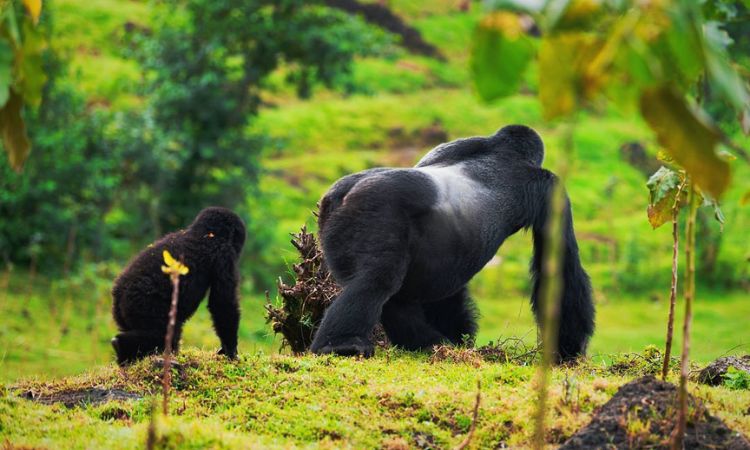
Females generally live longer than males, often exceeding 40 years in the wild.
-
Their lower engagement in lethal combat and more controlled aggression reduces the risk of injury and death.
-
Female longevity is further supported by their social strategies, including alliances with other females and silverbacks, which provide protection and stability.
-
Males face a higher mortality rate, particularly during peak dominance years.
-
Silverbacks are frequently involved in aggressive encounters with rival males or territorial disputes, increasing their risk of injury or death. Even within a troop, challenges from younger blackbacks can lead to serious conflicts.
Health differences also reflect physiological stress: males carry larger body mass and high testosterone levels, which can strain the cardiovascular system, while females maintain lower physical stress levels but face reproductive energy demands from pregnancy and lactation.
Overall, these differences underscore how male gorillas trade longevity for dominance, while females optimize survival and reproductive success, reinforcing the evolutionary balance in gorilla society.
Male vs Female Gorilla Chart (Side-by-Side Data)
For a quick and clear comparison, the male vs female gorilla difference can be summarized in the following table:
| Feature | Male Gorilla | Female Gorilla |
|---|---|---|
| Weight | 160–270 kg | 70–115 kg |
| Height | 1.6–1.85 m | 1.3–1.5 m |
| Strength | 6–9× human | 4–6× human |
| Role | Leader, protector | Caregiver, nurturer |
| Head Crest | Prominent | Absent |
| Aggression | High, territorial | Controlled, maternal |
| Maturity | Silverback at 12–15 | Adult at 8–10 |
Why Males Become Silverbacks but Females Never Do
The male vs female gorilla difference becomes most dramatic in the silverback stage, which is exclusive to males.
Several key factors explain this divergence:
1. Anatomical Triggers
Male gorillas develop larger skeletal frames, broader shoulders, and heavier musculature during adolescence.
These physical traits support the demands of troop leadership and defense, allowing males to perform dominance displays, patrol territories, and engage in combat if necessary.
Females, by contrast, do not grow to this scale, as their anatomy is optimized for agility, maternal care, and long-term survival rather than brute strength.
2. Hormonal Threshold
The transition to silverback is driven by testosterone surges, which trigger muscle growth, the development of the sagittal crest, and behavioral dominance.
Females have significantly lower testosterone, meaning they never undergo the hormonal changes needed to develop silverback features.
Instead, female hormonal cycles focus on fertility, maternal bonding, and social cohesion.
3. Evolutionary Need for Troop Protection
From an evolutionary perspective, silverbacks exist to protect the troop and maintain reproductive dominance.
One or a few males can guard multiple females and infants efficiently due to their size, strength, and aggression capacity.
Females, however, have evolved to optimize reproduction and infant survival, rather than fight for dominance, ensuring that each sex contributes to troop success in complementary ways.
In summary, males become silverbacks to lead, defend, and reproduce, while females focus on nurturing, social stability, and survival, highlighting the profound male vs female gorilla difference in both anatomy and behavior.
Behavioral Case Studies (Wild Trek Observations)
Observing gorillas in the wild highlights the male vs female gorilla difference in action, providing real-world context to their physical and behavioral traits.
1. Group Confrontations
During troop encounters with rival gorillas or intruding males, silverbacks take the lead in defense.
They use chest-beating, branch-slapping, and vocal roaring to intimidate rivals and minimize actual combat.
Females contribute by staying close to infants, forming protective clusters, and using vocalizations to calm the troop.
These observations illustrate how male aggression protects the group externally, while females manage internal stability.
2. Mating Rituals
Courtship emphasizes the male vs female dynamic:
-
Males display dominance through size, posturing, and strength demonstrations to attract females.
-
Females exercise choice, approaching preferred males during estrus cycles and signaling fertility through subtle gestures or proximity.
These rituals ensure that dominant males pass on strong genes, while females influence troop genetics and maintain social cohesion.
3. Infant Rescue Episodes
Infant protection highlights female roles and complementary male support:
-
Females respond first, shielding infants from minor threats, redirecting aggression, and coordinating with other females.
-
Silverbacks intervene in serious threats, using their strength and intimidation to prevent harm from predators or aggressive males.
These interactions show a division of labor in survival strategies, where male gorillas act as protectors and females as caregivers, exemplifying evolutionary male vs female differences in behavior.
Conservation & Human Impact Differences
The male vs female gorilla difference also shapes how human activities impact their populations, highlighting the need for targeted conservation strategies.
1. Poaching Risks Differ for Males vs Females
-
Males are often the primary targets for poachers due to their larger size, impressive head crests, and higher market value for bushmeat or illegal trophies. Killing a silverback can destabilize the entire troop.
-
Females are targeted less frequently, though infant-killing and maternal capture for illegal wildlife trade can have devastating effects.
2. Female Loss = Population Crash
Females are essential for reproduction, and their removal from a troop can quickly reduce offspring production.
Even a few female deaths can threaten the genetic diversity and long-term viability of a gorilla population, making female survival critical for species recovery.
3. Male Loss = Group Fragmentation
While females maintain troop cohesion, loss of a dominant male leads to leadership voids, increased aggression among young males, and troop fragmentation.
New dominant males may commit infanticide to assert control, further endangering the population.
In summary, conservation efforts must recognize the different ecological and social roles of males and females: protecting females ensures reproduction, while safeguarding males maintains troop structure and stability.
Frequently Asked Questions
Why are male gorillas bigger than females?
Male gorillas grow larger due to high testosterone levels, genetic predisposition, and evolutionary pressure for dominance and troop protection. Their mass, strength, and sagittal crest development help defend territory, attract mates, and deter rivals, while females prioritize agility, reproduction, and infant care.
What is a silverback vs a blackback?
A silverback is a mature male gorilla (12–15 years) with a silver-colored back, broad shoulders, and dominant leadership role. A blackback is a younger male (6–12 years), still growing muscle and learning social skills, but not yet leading a troop.
Are female gorillas aggressive?
Females display controlled, situational aggression, primarily for infant protection or troop defense. Unlike males, they rarely engage in dominance fights and rely on alliances and social bonding to maintain safety.
Do females challenge silverbacks?
Typically, females do not challenge silverbacks. They influence troop dynamics through mate choice, social cohesion, and alliances, but direct confrontation is rare because male strength and dominance displays are overwhelming.
Can a female lead a troop?
No. Female gorillas never become silverbacks. Leadership requires size, strength, and testosterone-driven behaviors that only males develop. Females contribute through social influence and infant protection, but troop direction is always male-led.
Conclusion
The male vs female gorilla difference highlights the profound impact of sexual dimorphism on gorilla society.
Males and females are physically, behaviorally, and hormonally specialized, creating a complementary system that ensures survival.
-
Males develop immense strength, size, and dominance traits, becoming silverbacks who lead, protect, and defend the troop against predators and rival males. Their aggressive displays and physical prowess secure mating rights and territorial control.
-
Females, while smaller and less combative, remain the core of troop survival. Through nurturing, social cohesion, and maternal protection, females ensure offspring survival, troop stability, and reproductive success.
Together, these differences maintain a balanced social structure, where the male provides protection and leadership, and the female provides continuity and internal stability, illustrating the evolutionary brilliance of gorilla sexual dimorphism.
Trek, Explore and Meet the Giant Silverbacks yourself