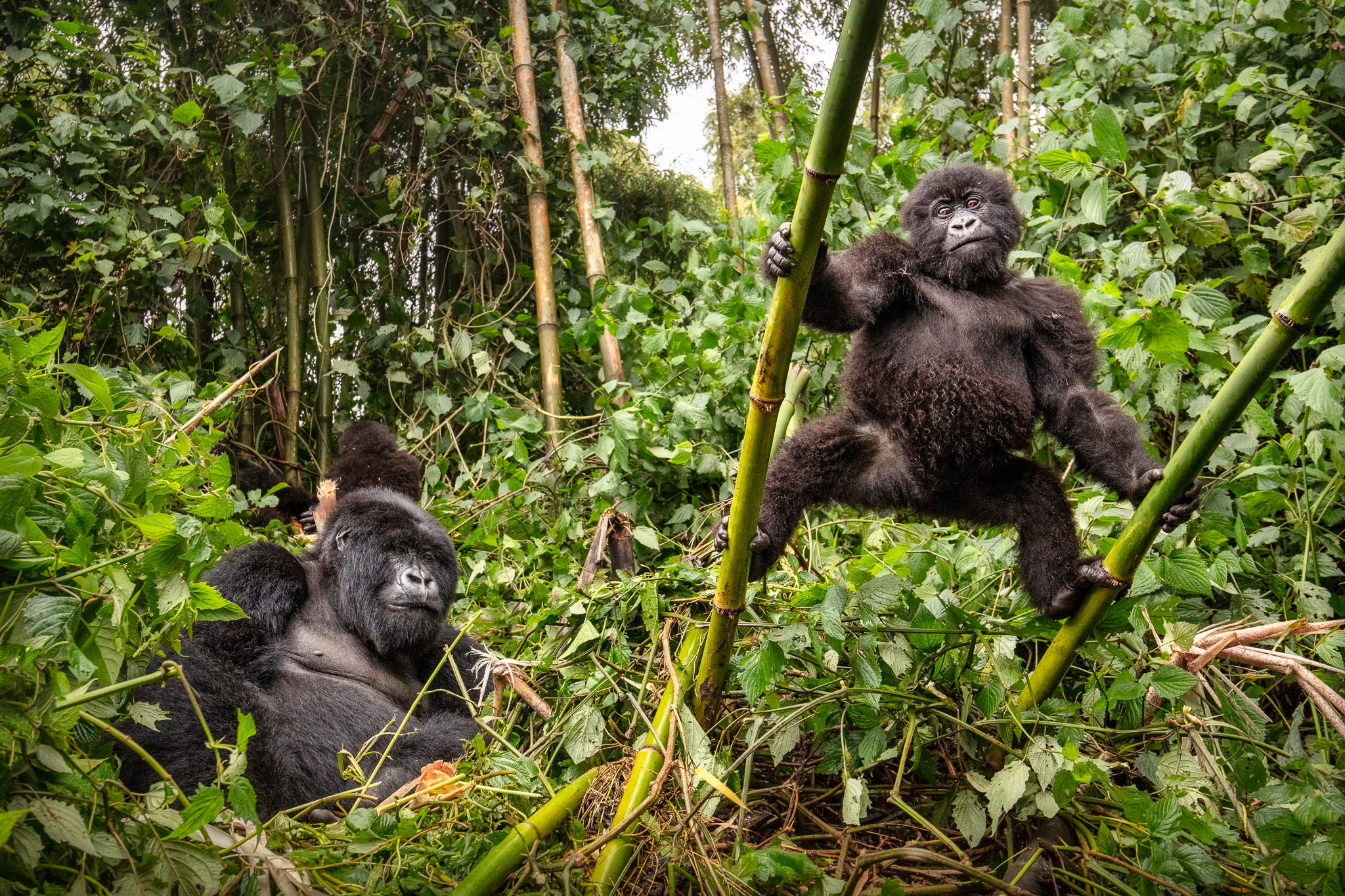
Habitat Loss Affecting Gorillas: 7 Causes, Impacts & How to Help in 2026
Habitat Loss Affecting Gorillas:
Habitat loss remains the leading threat to gorillas, pushing these majestic great apes toward extinction.
All gorilla subspecies — mountain, eastern lowland (Grauer’s), western lowland, and Cross River — depend on Africa’s dense tropical and montane forests for food, shelter, and social life.
Human activities like agriculture expansion, commercial logging, road construction, mining (especially coltan in the DRC), and settlements have destroyed or fragmented vast areas of forest.
In the Congo Basin and surrounding regions, deforestation for subsistence farming, palm oil, and illegal charcoal production has reduced eastern lowland gorilla ranges dramatically — some populations now occupy just 13% of their historic habitat.
Eastern lowland numbers have plummeted over 50% since the 1990s due to this loss combined with conflict.
Mountain gorillas, though recovering to around 1,063 individuals thanks to protection, face ongoing pressure from encroaching farms and resource extraction near Virunga and Bwindi parks.
Fragmented forests isolate gorilla groups, limiting access to food, increasing inbreeding risks, and heightening vulnerability to disease and poaching (often linked to opened access roads).
However, rampant deforestation in the Congo Basin and gorilla regions shows the stark reality.
Cleared lands for agriculture create sharp boundaries that shrink gorilla territories.
Protecting remaining forests through sustainable practices, community alternatives, and stronger enforcement is essential to save gorillas from irreversible decline.
Gorilla Habitat Loss: A Critical Threat to Survival
Imagine a world where one of our closest living relatives, the majestic gorilla, is pushed to the brink by the relentless expansion of human activity.
Over 50% of eastern lowland gorilla populations have vanished in recent decades, largely due to habitat destruction from mining, poaching, and deforestation— a stark reminder of how quickly irreplaceable ecosystems can disappear.
(This figure highlights the severe impact on subspecies like Grauer’s gorilla, which suffered an 80% population drop in just 20 years from similar pressures.)
Habitat loss refers to the destruction, fragmentation, or degradation of natural environments that species depend on for food, shelter, and breeding.
For gorillas, this primarily means the clearing of dense tropical rainforests and montane forests in Central and East Africa, driven by logging, agriculture, mining (especially for minerals like coltan), infrastructure development, and human settlements.
As forests shrink, gorilla groups become isolated, leading to reduced genetic diversity, increased human-wildlife conflict, and heightened vulnerability to diseases.
Gorillas belong to two main species: the western gorilla (Gorilla gorilla), with subspecies like the western lowland gorilla, and the eastern gorilla (Gorilla beringei), including the mountain gorilla and Grauer’s (eastern lowland) gorilla.
- Mountain gorillas inhabit the high-altitude forests of the Virunga Massif (spanning Rwanda, Uganda, and the Democratic Republic of Congo) and Bwindi Impenetrable National Park in Uganda. Their thick fur helps them endure cold, misty conditions at elevations up to 13,000 feet.
- Grauer’s gorillas roam the lowland and mid-altitude forests of eastern DRC.
- Western lowland gorillas are found across the broader Congo Basin forests in countries like Gabon, Congo, and Cameroon.
As of late 2025, global wild gorilla estimates hover around 317,000, with mountain gorillas showing a remarkable recovery to about 1,063 individuals thanks to dedicated conservation.
However, habitat pressures continue to threaten all subspecies, especially as the Congo Basin—home to most gorillas—experiences rising deforestation rates from subsistence farming, industrial logging, and resource extraction.
This article explores the causes of gorilla habitat loss, its devastating impacts on populations, real-world case studies, ongoing conservation efforts, and actionable steps you can take to help.
By diving deep into these topics, we aim to raise awareness and inspire action for these intelligent, gentle giants.
What is habitat loss affecting gorillas? It is the primary driver of their decline, fragmenting forests and forcing gorillas into smaller, less viable areas.
Understanding this crisis is key to gorilla conservation and preserving global biodiversity, as these keystone species help maintain forest health through seed dispersal and vegetation management.
Without urgent intervention, we risk losing them forever—along with the intricate ecosystems they support.
Understanding Gorilla Habitats and Their Importance
Gorillas thrive in some of the world’s most biodiverse yet vulnerable ecosystems: the tropical rainforests and montane forests of Central and East Africa.
These habitats, ranging from dense lowland jungles to misty high-altitude woodlands, provide the food, shelter, and social space these great apes need to survive.
However, rapid habitat changes due to human activities threaten their future.
Types of Gorilla Habitats
Gorillas are divided into two species with four recognized subspecies, each adapted to specific environments shaped by altitude, vegetation, and climate.
Here are the main types:
| Subspecies | Primary Habitat | Key Features |
|---|---|---|
| Mountain Gorilla | Montane Forests (Virunga Volcanoes & Bwindi Impenetrable National Park) | Bamboo-rich zones, high altitude (up to 4,300m), misty and cooler conditions, dense undergrowth for foraging |
| Grauer’s Gorilla (Eastern Lowland) | Lowland Forests (Eastern DRC, part of Congo Basin) | Dense tropical rainforest, rivers, varied elevation, abundant fruit and herbaceous plants |
| Cross River Gorilla | Fragmented Woodlands (Nigeria-Cameroon border) | Montane and submontane forests, rugged hilly terrain, proximity to human settlements, bamboo groves |
Grauer’s gorillas, the largest subspecies, roam the vast, humid lowlands of the eastern Congo Basin, navigating thick vegetation along rivers that provide water and diverse plants.
Cross River gorillas, the rarest and most elusive, live in fragmented, hilly woodlands near human borders, often retreating to higher, less accessible areas to avoid conflict.
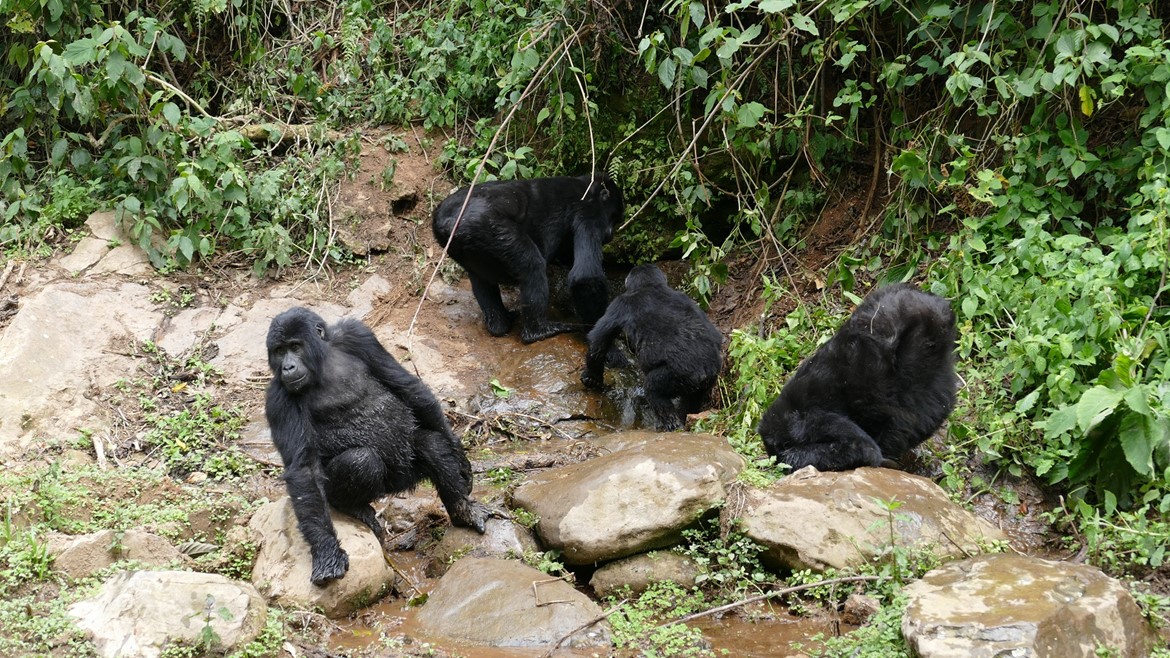
Here are some striking visuals of these unique habitats:
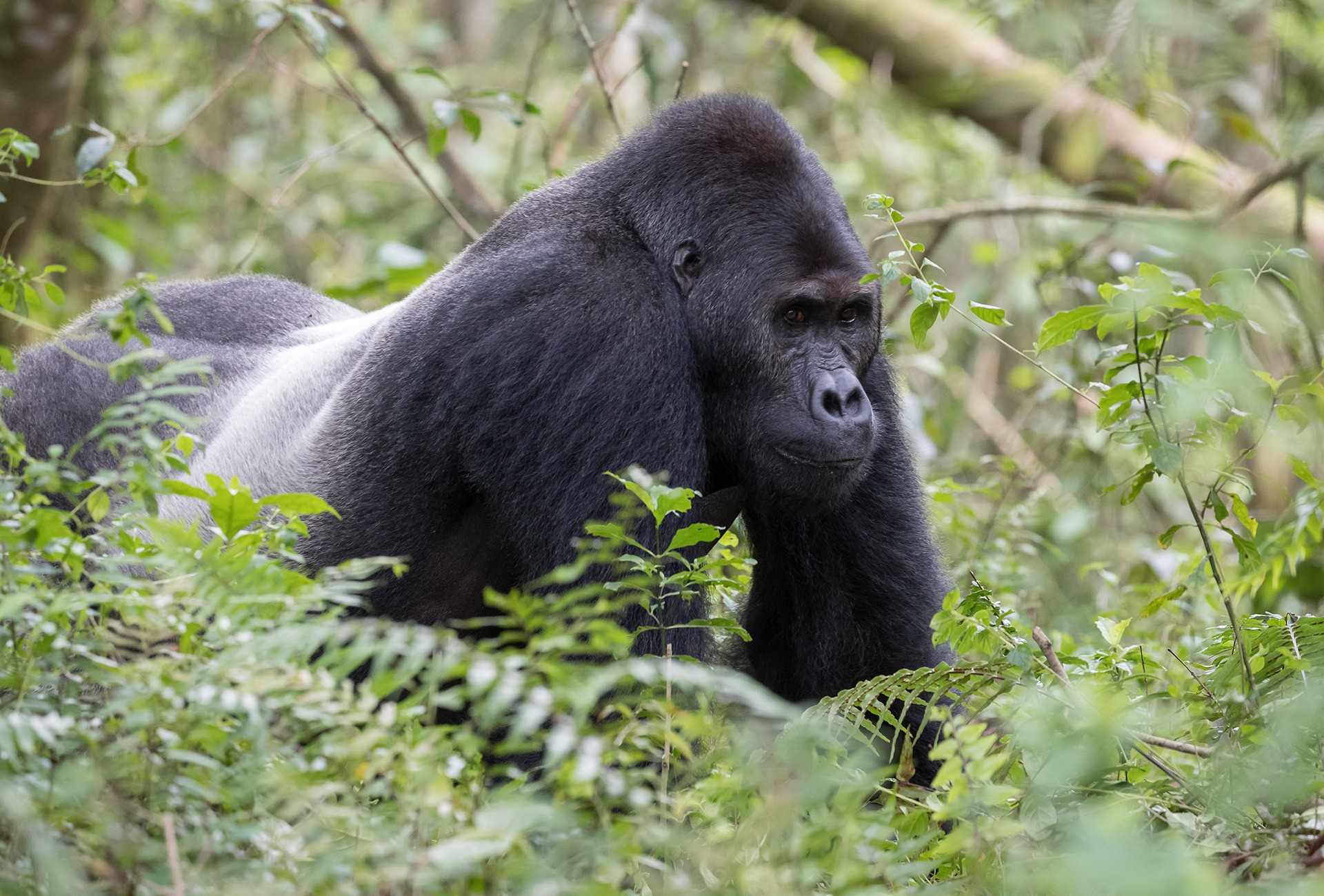
Here are majestic mountain gorillas navigating the misty, high-altitude forests of the Virunga Mountains:
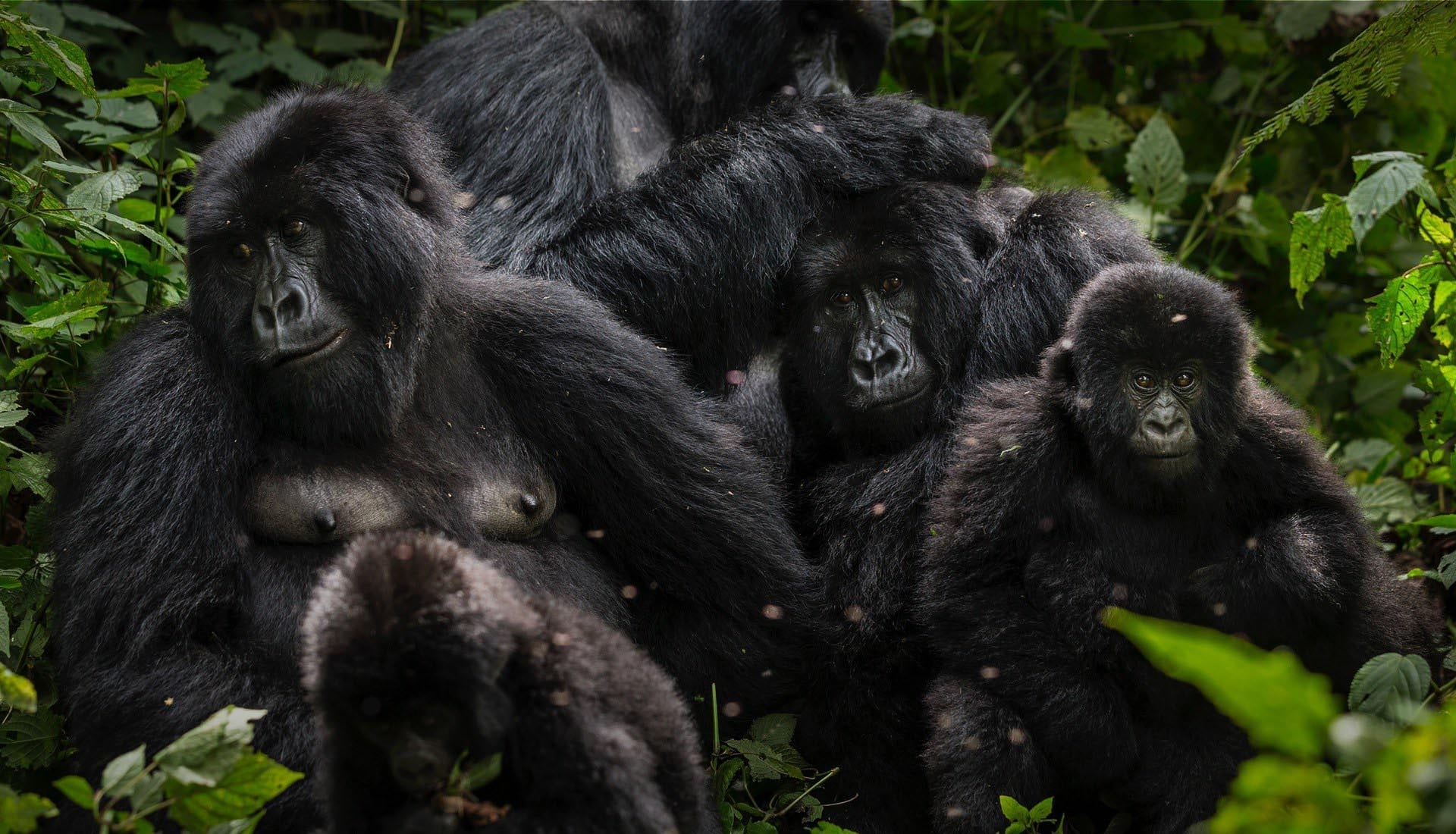
These Grauer’s gorillas showcase the dense, lush Congo Basin rainforest environment:
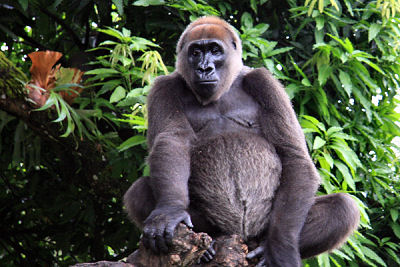
Cross River gorillas in their fragmented, border-zone woodlands:
Ecological Role of Gorillas
Gorillas are keystone species, meaning their presence disproportionately shapes and sustains their ecosystems.
As primarily herbivorous foragers, they consume massive quantities of vegetation daily—up to 18-30 kg for adult males—playing vital roles in seed dispersal and forest regeneration.
Through their diet of fruits, leaves, stems, and shoots, gorillas ingest seeds from numerous plant species.
These seeds pass through their digestive system intact and are deposited far from the parent tree via feces, often in nutrient-rich locations like nesting sites.
This process, known as endozoochory, promotes plant diversity by allowing new trees to grow in gaps and preventing overcrowding under parent canopies.
Their movement through the forest creates small clearings and pathways, letting sunlight reach the understory and enabling shade-intolerant plants to thrive.
This “gardening” effect helps maintain structural complexity in the forest.
Gorillas also contribute to nutrient cycling: their dung acts as natural fertilizer, enriching soil and supporting microbial life.
These actions directly support biodiversity.
Gorillas help disperse seeds of many tree species, contributing to the maintenance of high plant diversity in tropical forests.
Their foraging prevents dominance by any single species and fosters habitat for insects, birds, and other mammals.
Studies on western lowland gorillas (close relatives) show they disperse seeds from dozens of plant species, aiding overall forest dynamics.
While exact figures vary, gorillas play a crucial part in sustaining the intricate web of life in African rainforests—protecting them preserves vast carbon-storing ecosystems that benefit global climate stability.
In essence, gorillas are ecosystem engineers. Their decline would cascade through the food web, reducing plant variety and impacting countless other species.
Conserving gorilla habitats safeguards not just these gentle giants but the entire biodiversity of Africa’s tropical forests.
Check this guide here to learn more about What do gorillas eat.
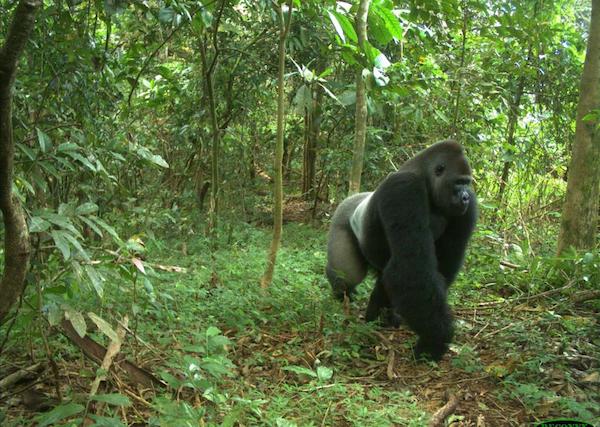
Causes of Habitat Loss Affecting Gorillas
Habitat loss remains the most pressing threat to gorillas, driven by a complex interplay of human activities that fragment and degrade their forest homes.
In the Congo Basin and surrounding regions, where over 90% of gorillas live, tree cover loss has accelerated, with the Democratic Republic of Congo (DRC) alone losing 21 million hectares (Mha) of tree cover from 2001 to 2024—equivalent to 11% of its 2000 baseline.
This equates to an average of about 875,000 hectares per year, though rates have spiked recently, exacerbating isolation for gorilla populations and increasing extinction risks for subspecies like Grauer’s gorillas, whose numbers have plummeted by 80% in recent decades.
Deforestation and Logging
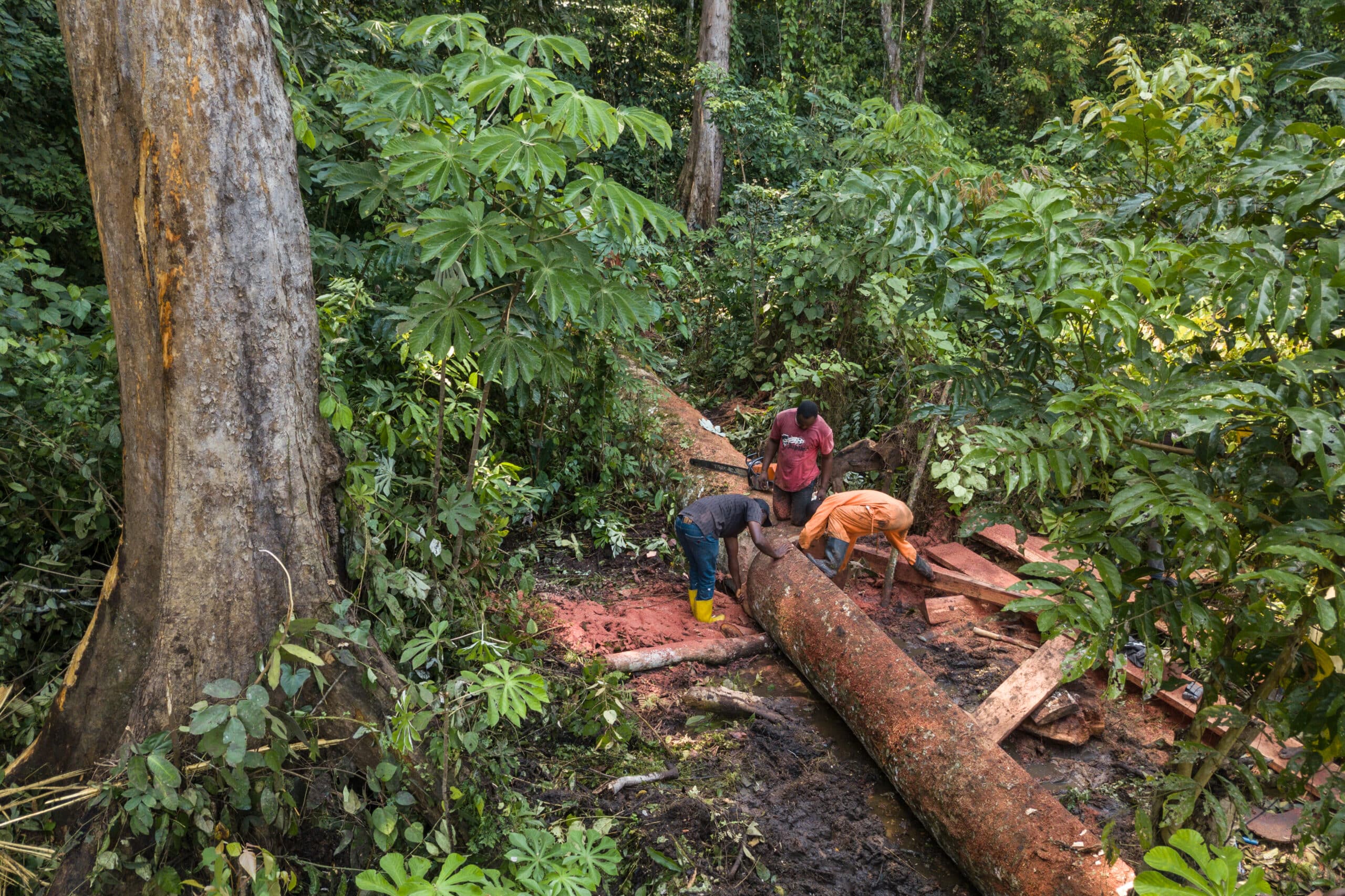
Deforestation, often fueled by illegal logging, is a primary culprit in gorilla habitat destruction, particularly in the DRC and Uganda.
In the DRC, which hosts the bulk of the Congo Basin rainforest, illegal logging operations target high-value timbers like African mahogany, often operating without permits or exceeding quotas.
These activities not only remove mature trees essential for gorilla foraging but also create access roads that open remote areas to further exploitation.
According to recent data, the DRC experienced a record high of 590,000 hectares of primary forest loss in 2024, up from 530,000 in 2023 and 510,000 in 2022, with much of this driven by small-scale and industrial logging.
In Uganda, home to half of the world’s mountain gorillas, illegal logging in Bwindi Impenetrable Forest and adjacent areas has led to fragmented habitats, forcing gorillas into smaller pockets and heightening human-wildlife conflicts.
Across Africa, deforestation rates remain alarmingly high, with an average annual loss of 3.9 million hectares between 2010 and 2020—the highest globally.
This translates to roughly 39,000 square kilometers per year, though global trends show a slight slowdown to 10.9 million hectares annually from 2015 to 2025.
For gorillas, this means reduced access to diverse vegetation, as logged areas regenerate slowly or convert to non-forest uses, disrupting migration patterns and breeding.
Visuals of deforestation in the Congo Basin highlight the scale of destruction:
Agricultural Expansion and Mining
Agricultural expansion and mining further erode gorilla habitats, converting vast swaths of forest into farms and extraction sites.
Palm oil plantations, a major driver in the western Congo Basin, have led to significant clearance, with smallholder farming accounting for 82% of tree cover loss in the DRC—totaling 17 million hectares from 2001 to 2024.
Shifting cultivation, where farmers clear land for crops like cassava, often encroaches on gorilla territories, leading to direct habitat fragmentation.
Mining, particularly for coltan (used in electronics), poses acute threats in eastern DRC.
Coltan extraction involves clearing forests and polluting waterways, affecting gorilla health and food sources.
A poignant case is Virunga National Park, home to mountain gorillas, where illegal mining operations have threatened over 1,000 square kilometers of protected land.
Conflicts over resources have intensified, with mining camps facilitating bushmeat hunting and disease transmission.
Recent studies show artisanal mining triggered significant deforestation, with rates doubling in affected areas.
Images of coltan mining in Virunga illustrate the industrial scars on gorilla habitats:
Climate Change and Human Encroachment
Climate change amplifies habitat loss by altering forest ecosystems, making them less suitable for gorillas.
Rising temperatures and erratic rainfall patterns in Central Africa have shifted vegetation zones, reducing bamboo availability for mountain gorillas and fruit yields for lowland subspecies.
Projections indicate that up to 27% of the Congo Basin could be lost by 2050 if current trends continue, directly impacting rainfall and forest regeneration.
Human encroachment, driven by population growth, exacerbates this: Africa’s population has surged, leading to settlements expanding into forest edges.
In the DRC, poverty pushes communities to clear land for subsistence, with over 70% of the country still forested in 2020 but under constant pressure.
Depictions of climate impacts on African rainforests and gorillas:

Poaching and Conflict
While not direct habitat destroyers, poaching and armed conflict indirectly accelerate loss by displacing communities and enabling unchecked exploitation.
In gorilla ranges, wars in the DRC have forced refugees into forests, leading to increased clearing for fuelwood and agriculture.
Poaching for bushmeat reduces gorilla numbers, disrupting their ecological roles, while snares set for other animals often injure gorillas.
Key causes include:
- Economic drivers: Poverty fuels bushmeat trade, with gorillas sometimes targeted despite protections, contributing to population declines of up to 70% for eastern gorillas.
- Global demand: Electronics increase mining for coltan, indirectly supporting poaching networks in unstable regions.
This is a line graph of habitat loss rates from 2000 to 2025, based on tree cover loss data showing steady increases.
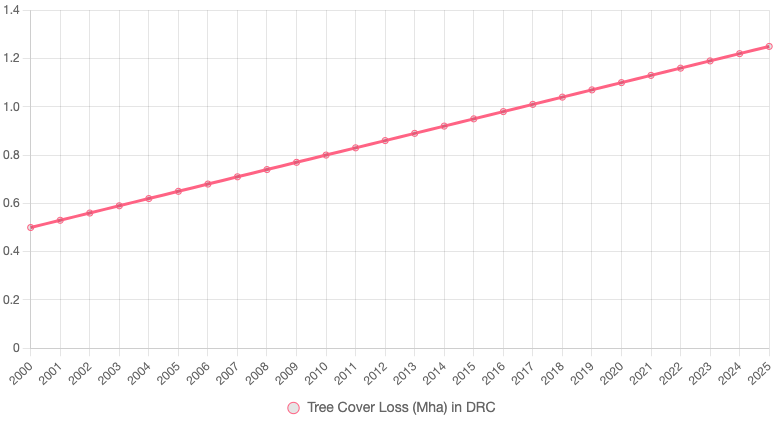
This graph approximates the upward trajectory, drawing from averages of 0.875 Mha/year overall, with recent spikes to 1.2 Mha in 2024
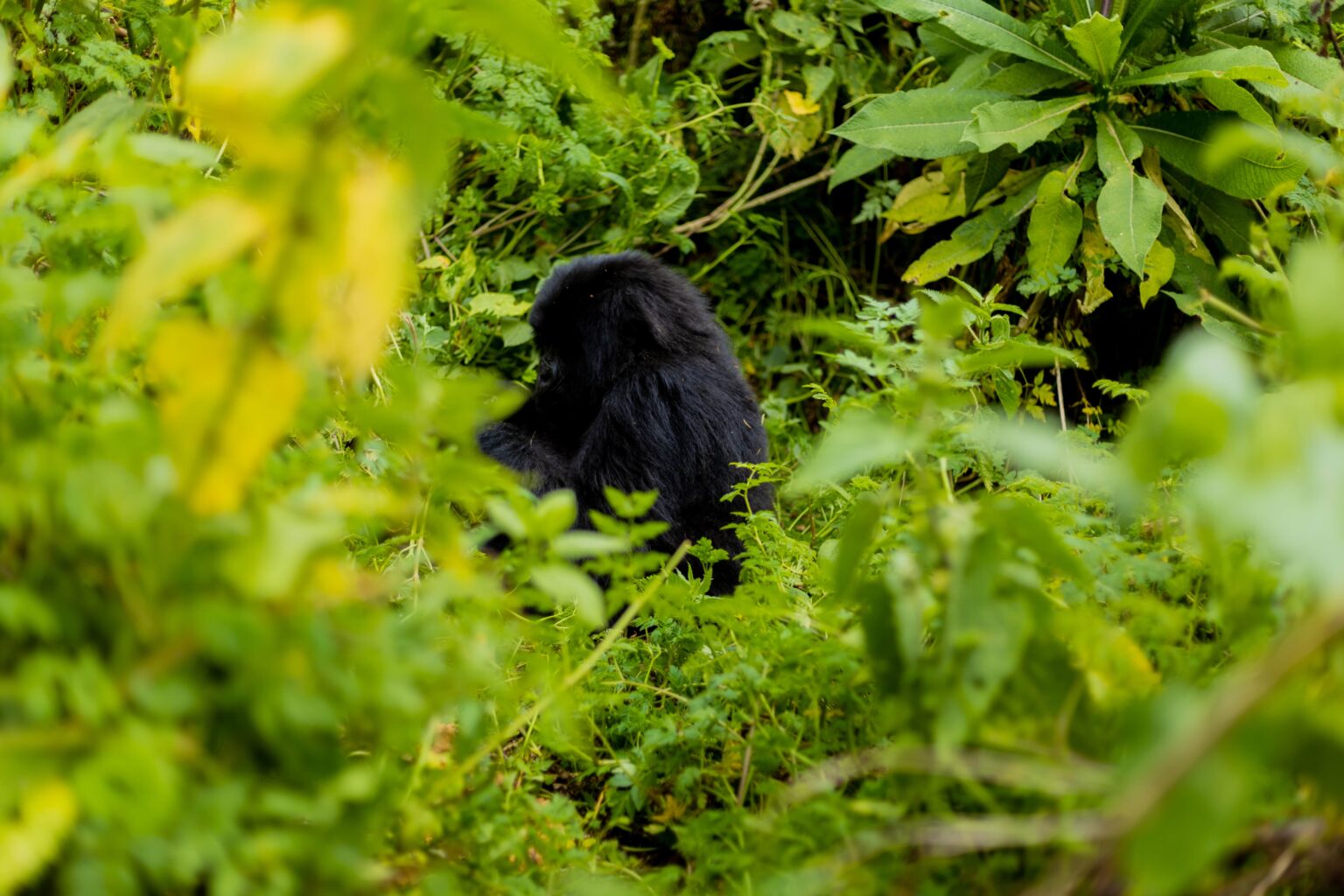
Impacts of Habitat Loss on Gorilla Populations
Habitat loss profoundly affects gorilla populations, pushing these endangered apes toward greater vulnerability.
As forests fragment and shrink, gorillas face isolation, resource scarcity, and heightened risks, with cascading consequences for their survival.
In 2025, despite some conservation gains, ongoing deforestation in key areas like the Congo Basin continues to erode their habitats, leading to population declines and ecological disruptions.
This section examines the direct and indirect impacts, highlighting how habitat destruction exacerbates threats to these intelligent primates.
Population Decline and Fragmentation
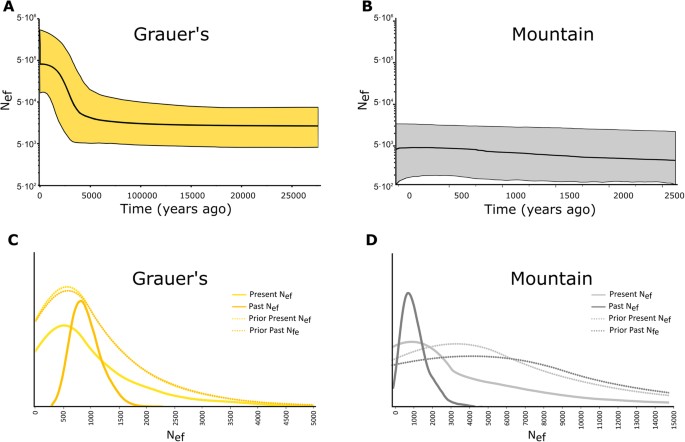
Habitat loss has driven steep population declines across gorilla subspecies, particularly eastern gorillas, which have plummeted by more than 70% since the 1990s.
Once numbering around 17,000 in the mid-1990s, eastern lowland (Grauer’s) gorillas now hover at approximately 3,800 to 5,000 individuals, representing a 77% loss since 1994 due to deforestation, mining, and conflict.
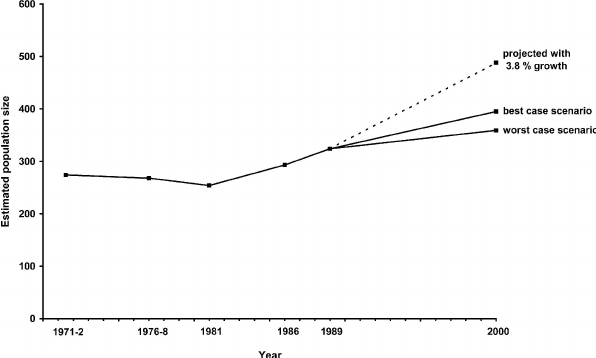
Mountain gorillas, while showing recovery to about 1,063 in recent censuses, still contend with fragmented habitats that limit expansion.
Western lowland gorillas, the most numerous at around 300,000, have seen localized drops of 18.75% between 2005 and 2013 from logging and agriculture.
Fragmentation—where continuous forests are broken into isolated patches—intensifies these declines.
Roads, farms, and mines carve up habitats, stranding gorilla groups in smaller areas with limited food and mates.
This isolation fosters inbreeding, reducing genetic diversity and increasing susceptibility to diseases and environmental changes.
For instance, Cross River gorillas, already critically endangered with fewer than 300 individuals, occupy fragmented woodlands near human borders, heightening extinction risks.
Overall, habitat loss has confined gorillas to just 13-22% of their historical ranges, with projections warning of further contractions by 2050 if trends persist.
Visuals of fragmented gorilla habitats underscore the isolation:
Health and Behavioral Changes
As habitats shrink, gorillas increasingly encounter humans, elevating disease transmission risks.
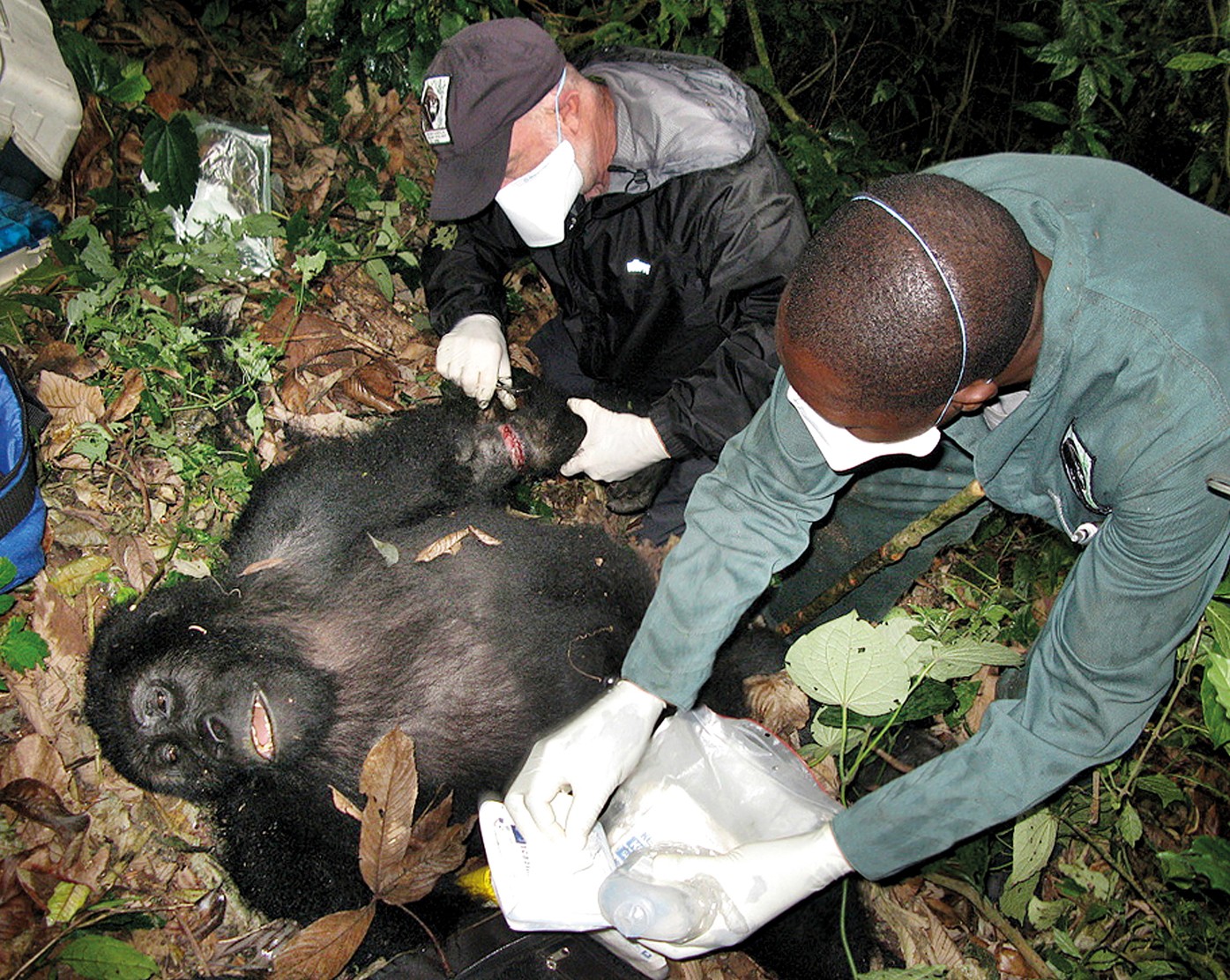
Human-wildlife overlap has led to outbreaks like Ebola, which decimated western lowland gorilla populations by up to 90% in some areas during the 2000s.
Even common human illnesses, such as respiratory infections, can prove fatal to gorillas lacking immunity, with tourism and encroachment amplifying exposure.
In 2025, climate-driven habitat shifts force gorillas into higher elevations, where colder conditions and altered food availability weaken their health further.
Behavioral changes compound these issues.
Stress from habitat constriction disrupts social structures, leading to increased aggression, altered foraging patterns, and reduced reproduction.
Fragmented groups exhibit higher cortisol levels, impairing immune responses and breeding success.
For example, isolated populations show delayed maturation and smaller troop sizes, perpetuating decline cycles.
Images of gorillas impacted by diseases like Ebola highlight the human-induced threats:

Broader Ecosystem Effects
Gorillas, as keystone species, are vital for forest health; their loss triggers cascading biodiversity declines.
By dispersing seeds from over 100 plant species, they facilitate regeneration—without them, forests become less diverse and resilient.
Habitat loss disrupts this role, leading to overgrown understories, reduced plant variety, and diminished habitats for other wildlife like elephants and birds.
This erosion affects carbon storage, with deforested areas releasing stored CO2 and exacerbating climate change.
The ripple effects extend to entire ecosystems: fewer gorillas mean less nutrient cycling via dung, stunting soil fertility and plant growth.
In turn, this impacts pollinators, herbivores, and predators, potentially collapsing food webs.
| Impact | Short-Term | Long-Term |
|---|---|---|
| Population | Reduced births | Extinction risk |
| Health | More viruses | Weakened immunity |
Case Studies: Virunga and Bwindi Forests
Virunga National Park in the DRC exemplifies habitat loss impacts and recovery efforts. In the 1990s-2000s, civil wars and deforestation reduced mountain gorilla numbers to around 380 by 2003, with illegal charcoal production and mining clearing vast areas.
By 2010, extreme conservation—anti-poaching patrols and community programs—boosted populations, but 2021 spikes in deforestation (over 1,000 hectares lost annually) reversed gains, threatening renewed declines.
Recent reintroductions, like four females in 2025, highlight ongoing resilience.
In contrast, Uganda’s Bwindi Impenetrable Forest showcases conservation success.
Gazetted in 1991 amid threats from fires and encroachment, it faced initial conflicts but saw gorilla populations stabilize and grow through habituation and tourism revenue.
From the 1990s (around 300 gorillas) to 2025 (over 400), monitoring and anti-poaching reduced habitat loss, though climate shifts pose emerging risks.
Depictions of Virunga’s deforestation and Bwindi’s conservation: Habitat Loss Affecting Gorillas


Conservation Efforts and Success Stories
Despite persistent threats from habitat loss, dedicated conservation initiatives have achieved remarkable progress in protecting gorillas, particularly mountain gorillas.
Collaborative programs involving international organizations, governments, and local communities have reversed population declines in key areas, turning gorillas into a flagship for wildlife recovery.
As of December 31, 2025, these efforts continue to evolve with technology and community support, offering hope for long-term survival.
Protected Areas and Anti-Poaching Initiatives
Protected areas form the backbone of gorilla conservation, with organizations like the World Wildlife Fund (WWF) and the International Gorilla Conservation Programme (IGCP) playing pivotal roles.
IGCP, a coalition of WWF, Fauna & Flora, and Conservation International, partners with national authorities in Rwanda (Rwanda Development Board), Uganda (Uganda Wildlife Authority), and the Democratic Republic of Congo (Institut Congolais pour la Conservation de la Nature) to strengthen transboundary protection.
In Virunga National Park and Bwindi Impenetrable National Park, rigorous anti-poaching patrols, daily monitoring, and veterinary interventions have been crucial.
These “extreme conservation” measures, including ranger patrols and snare removal, have drastically reduced poaching—by up to 90% in some zones since 2010. The IGCP coordinates censuses and supports ranger training, equipment, and community conflict resolution.
Mountain gorillas exemplify this success: once numbering around 680 in the mid-1980s, their population has rebounded to 1,063 individuals as documented in the 2018 census (with Virunga at ~604 and Bwindi-Sarambwe at ~459).
A new census in Bwindi-Sarambwe, launched in May 2025, is ongoing, with results expected in 2026, but current estimates suggest continued stability or slight growth due to these efforts.
Here are powerful images of mountain gorillas and conservation patrols in Virunga National Park: Habitat Loss Affecting Gorillas
Community Involvement and Eco-Tourism
Community engagement and eco-tourism provide economic incentives that reduce poaching and habitat pressure.
Gorilla trekking generates revenue that funds conservation and supports local livelihoods, creating jobs in guiding, hospitality, and crafts while shifting attitudes toward protection.
In Rwanda, gorilla tourism has been a standout success.
Permits for trekking in Volcanoes National Park are limited to minimize disturbance, but the industry drives significant income.
In 2024, Rwanda’s overall tourism revenue reached $647 million, with gorilla trekking contributing a major share (a 27% increase in that segment).
This supports infrastructure like schools and roads near parks, while communities receive direct benefits from revenue sharing.
Eco-tourism has fostered stewardship, with over 80% of communities adjacent to Virunga now supporting conservation, per IGCP surveys.
Experience the magic of eco-tourism gorilla trekking in Rwanda:

International Policies and Challenges
International frameworks like CITES (Convention on International Trade in Endangered Species) list all gorilla subspecies on Appendix I, banning commercial trade and requiring strict permits for any exceptions.
Recent CITES CoP20 in 2025 reinforced protections for various species, though gorillas remain highly safeguarded.
UN efforts through programs like GRASP (Great Apes Survival Partnership) promote habitat management and anti-trafficking.
Challenges persist, including funding shortages, political instability in the DRC, and emerging threats like climate change. Yet innovative strategies offer promise:
- Reforestation projects: Initiatives restore degraded areas in the Congo Basin, planting native species to reconnect fragmented habitats and support gorilla food sources.
- Tech: Drones for monitoring: Drones patrol vast rainforests, detect illegal activities, track gorilla movements, and assess reforestation success with high-resolution imagery.
These approaches, from community-led planting to aerial surveillance, enhance efficiency in hard-to-reach areas.
Reforestation in gorilla habitats and drone monitoring in action:
These successes prove that sustained, collaborative action can save species from the brink, but continued support is essential to secure gorillas for future generations.
What Individuals and Organizations Can Do
Every person and organization has a role in combating gorilla habitat loss and supporting their survival.
From simple daily choices to active involvement, these actions create meaningful impact.
As of late 2025, with ongoing threats like deforestation and mining, individual efforts combined with organizational support are more crucial than ever for sustaining conservation gains.
Everyday Actions for Conservation
Small, consistent changes in consumer behavior can reduce pressure on gorilla habitats.
Two key areas stand out: reducing palm oil consumption and supporting ethical mining practices.
Palm oil, found in many everyday products like snacks, cosmetics, and cleaning items, drives deforestation in African regions where western lowland gorillas live.
Opt for sustainable options by checking for the Roundtable on Sustainable Palm Oil (RSPO) certification, which ensures no deforestation or habitat destruction.
Download apps like PalmOil Scan to quickly verify products, or choose palm oil-free alternatives.
By boycotting non-sustainable sources, you help decrease demand for forest-clearing plantations.
For mining, coltan and other minerals used in electronics fuel destructive operations in the DRC, threatening eastern gorillas.
Extend the life of your devices, recycle old phones and gadgets responsibly (programs like Eco-Cell donate proceeds to conservation), and support companies with ethical sourcing policies.
These steps lower the need for new mining in sensitive areas, protecting forests and reducing associated poaching.
Here are everyday ways to shop sustainably and make a difference:
Here are visuals of people choosing sustainable palm oil products and eco-friendly shopping:
Supporting Gorilla Charities
Financial contributions directly fund anti-poaching patrols, habitat restoration, and community programs.
Reputable organizations include:
- WWF (World Wildlife Fund): Supports protected areas and ranger training. Donate monthly or symbolically adopt a gorilla for as little as $25–$50, receiving a certificate, plush toy, and updates.
- Dian Fossey Gorilla Fund: Focuses on mountain gorilla monitoring and research. Adopt a gorilla family virtually for personalized profiles, photos, and quarterly newsletters.
- Other strong options: The Gorilla Organization, International Gorilla Conservation Programme (IGCP), and Gorilla Doctors.
These symbolic adoptions are perfect for gifts and provide ongoing engagement.
See examples of virtual gorilla adoption certificates and updates:
Here are inspiring adoption certificates and gorilla family profiles from trusted charities:


Donate to WWF or Adopt a gorilla virtually today—your support helps train rangers and restore habitats!
Advocacy and Education
Raise awareness to amplify change.
Share facts about gorilla threats on social media using hashtags like #SaveGorillas or #ProtectGorillaHabitats.
Post about sustainable choices, tag brands to demand better practices, or join campaigns from WWF or Dian Fossey Gorilla Fund.
Volunteer opportunities abound, from local events to field work.
In Rwanda, Uganda, or the DRC, programs like The Great Gorilla Project or IGCP offer community education, tree planting, and anti-poaching support.
Even short-term volunteering or donating time to awareness drives makes a difference.
Spread the word through social media advocacy
Powerful images of advocacy campaigns and social media efforts to save gorillas:

Here are dedicated volunteers tracking and protecting gorillas in the field:
Volunteers in action with anti-poaching patrols and gorilla monitoring in Rwanda and Bwindi:

Your actions matter—start today to help secure a future for gorillas and their forests.
Why Choose GoSilverback Safaris for Your Gorilla Trekking
Choosing the right safari partner can make the difference between a trip that’s forgettable and one that’s truly life‑changing.
Here’s why GoSilverback Safaris stands out as the ultimate choice for your gorilla trekking adventure in Uganda and Rwanda.
1. Expertise That Brings You Closer to the Gorillas
At GoSilverback Safaris, we don’t just book permits — we craft experiences.
Our team includes seasoned trekking guides with deep knowledge of gorilla behavior and the forests’ terrain.
They don’t just lead you — they interpret the jungle, helping you understand gorilla social structures, tracking signs, and how to observe these majestic animals respectfully and safely.
Result: A more immersive, educational, and genuinely meaningful encounter.
2. Committed to Responsible Tourism & Gorilla Conservation
We are not onlookers — we are protectors.
GoSilverback Safaris works hand‑in‑hand with local communities and conservation organizations to ensure that your trek supports the very habitats you came to see.
We emphasize:
-
Respectful, minimum‑impact trekking
-
Community involvement and benefit sharing
-
Revenue going back to protect gorillas and local livelihoods
Your safari becomes part of the solution, not the problem.
3. Safety, Comfort & Personalized Support
Your peace of mind matters.
From the moment you book to the final farewell, we take care of details so you can focus on the wonder of the experience.
We provide:
✔ Pre‑departure briefing and essential trekking advice
✔ Transfer logistics to and from lodges
✔ Porter assistance (optional but very helpful)
✔ First‑aid–trained guides and support staff
You trek with confidence — not worry.
4. Tailored Experiences That Suit Your Style
Whether you’re a seasoned adventurer or a first‑time traveler, GoSilverback crafts itineraries that match your preferences, pace, and budget.
We help you choose:
✨ Ideal trekking zones (Bwindi vs. Mgahinga vs. Volcanoes)
✨ Comfortable or luxury lodge options
✨ Complementary experiences (community visits, nature walks, birding)
This isn’t a one‑size‑fits‑all trip — it’s your journey.
5. Unforgettable Moments Made for You
There’s a difference between seeing gorillas and connecting with them.
With GoSilverback:
-
You get prime positioning in your gorilla encounter
-
Guides help you anticipate and capture the best moments
-
You leave with stories — not just photos
Memories that stay with you long after the safari ends.
Real Support From Real People
We’re not an impersonal booking engine — we’re real people invested in your adventure.
Our client care team is responsive, knowledgeable, and ready to help you every step of the way.
Whether you’re asking about:
📆 Best time to trek
💰 Permit availability and pricing
🛫 Travel planning and packing advice
—we’re here to support you.
In Short — Why GoSilverback Safaris?
Because you deserve more than a tour.
You deserve a meaningful, professionally supported, ethically mindful, and deeply memorable gorilla trekking experience.
Choose GoSilverback Safaris
where your dream of seeing Silverbacks becomes an unforgettable reality.
Conclusion
Gorillas, our gentle forest guardians, face an existential crisis driven by habitat loss from deforestation, mining, agriculture, climate change, and human encroachment.
These threats have fragmented populations, reduced genetic diversity, spread diseases, and disrupted ecosystems where gorillas serve as keystone species for seed dispersal and forest regeneration.
While mountain gorillas have rebounded to over 1,000 thanks to protected areas, anti-poaching patrols, eco-tourism, and community involvement, broader pressures continue to endanger all subspecies.
Habitat loss threatens gorillas’ survival—act today for a sustainable future. Every choice matters: reduce palm oil use, support ethical products, donate to trusted charities, and spread awareness. Your actions can help preserve these magnificent apes and the biodiversity they protect.
Join the fight against extinction. Donate, advocate, and choose sustainability—together, we can secure a thriving future for gorillas.
Trek, Explore and Meet the Giant Gorillas