
Gorilla Population 2025: Conservation Triumph, Challenges & Stunning Recovery Stats 2025
Gorilla Population 2025: Conservation Triumph
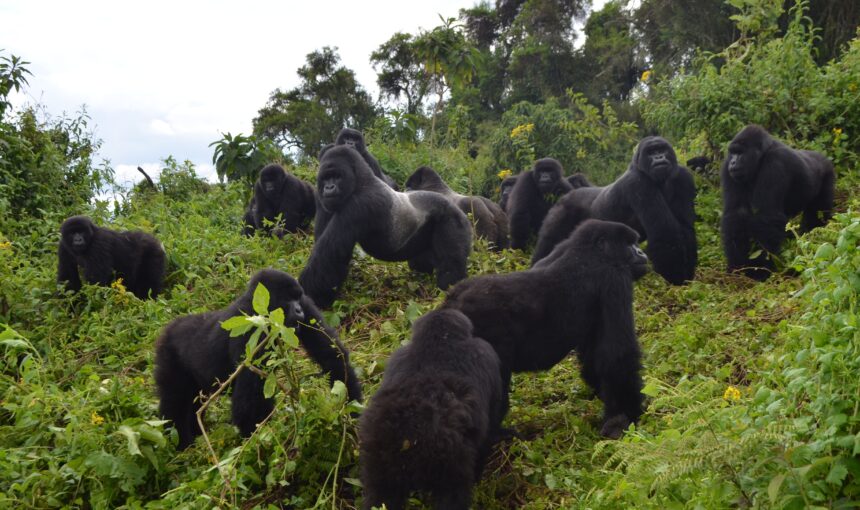
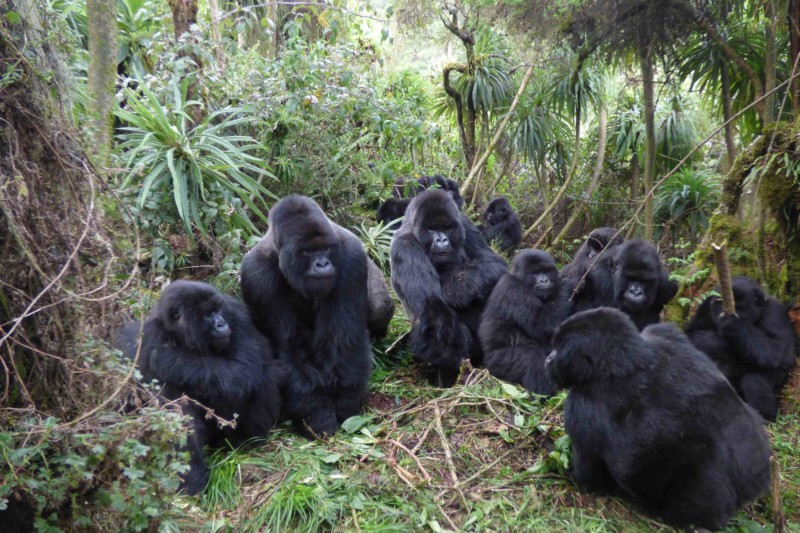
Gorilla Population In 2025, mountain gorillas have rebounded to over 1,063 individuals—a conservation miracle from near-extinction when fewer than 250 survived in the 1980s across Bwindi and Virunga forests.
This remarkable 26% growth since 2018 stems from Rwanda, Uganda, and DRC’s collaborative patrols, habituation programs, and community incentives.
Gorillas are a keystone species, meaning their survival directly supports forest regeneration, plant diversity, and overall ecosystem health
Gorilla Population 2025 holds immense relevance. As flagship “umbrella species,” their protection preserves vast biodiversity hotspots spanning 1,000+ km², safeguarding golden monkeys, 400+ bird species, and rare plants.
By dispersing seeds across vast forest landscapes, gorillas help maintain the balance of tropical rainforests that act as critical carbon sinks, playing a subtle but powerful role in combating climate change.
When gorilla populations thrive, forests thrive—and so does the planet.
Gorillas are also central to ecotourism economies in countries like Uganda, Rwanda, and the Democratic Republic of Congo.
Gorilla trekking generates millions of dollars annually, funding conservation programs, supporting ranger livelihoods, and providing tangible benefits to local communities.
A stable or growing gorilla population directly translates into jobs, education, healthcare, and stronger incentives for habitat protection.
Ecotourism thrives—$1,500 gorilla permits generate $50M+ yearly, funding 80% of park operations and creating 10,000+ jobs that reduce poaching through economic alternatives.
Climate benefits shine: these ancient rainforests sequester millions of tons of CO2 annually, with silverbacks aiding regeneration via seed dispersal and forest maintenance.
This guide explores Gorilla Population 2025 trends: latest census data (Bwindi: 459, Virunga: 604), growth drivers (habituation success, translocations), and persistent threats (Ebola, snares, climate-induced bamboo die-off).
Discover the latest stats, threats, and how you can help boost gorilla numbers.
From viral silverbacks like Virika to surging safari bookings via GoSilverback Safaris Ltd., 2025 offers unprecedented opportunities to witness and support this rebound.
Plan your Bwindi or Volcanoes National Park trek—your visit directly funds the future.
Historical Overview of Gorilla Populations
Evolution and Classification
Gorillas evolved around 8-10 million years ago in Africa’s central and eastern forests, descending from early hominids as the largest living primates.
Classified under Gorilla genus (family Hominidae), two species exist:
Eastern Gorilla (Gorilla beringei) includes Mountain Gorillas (G. beringei beringei, highland Virunga/Bwindi habitats) and Eastern Lowland Gorillas;
Western Gorilla (Gorilla gorilla) comprises Western Lowland and Cross River Gorillas (Nigeria/Cameroon border, critically endangered ~300 individuals).
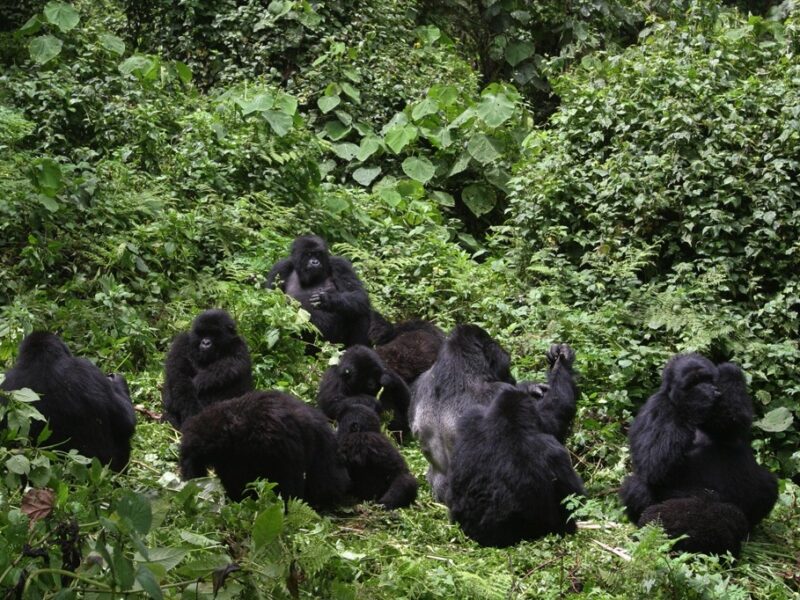
Mountain gorillas, silverback-led troops in misty highlands (2,200-4,300m altitude), adapted thick fur for cold, herbivorous diets (bamboo, wild celery).
Cross River subspecies, isolated by human expansion, represent ancient genetic diversity.
Western lowlands thrive in lowland swamps. These distinctions drive targeted conservation amid shrinking habitats.
Population Declines Through History
Gorilla discoveries began in 1847 (Western Lowland by German explorer), but 1902 marked mountain gorilla identification by Robert von Beringe in Virunga Volcanoes.
Early 20th-century colonial hunting decimated numbers for trophies/meat; by 1960s, habitat clearance for agriculture accelerated losses.
The 1970s-1980s crisis peaked: poaching for bushmeat/infant pet trade, coupled with Rwandan refugee camps, dropped mountain gorillas to ~254 (1981 census).
Western populations suffered Ebola outbreaks (1990s-2000s, killing 90% in some groups) and logging. Cross River gorillas fell below 500 by 1980s due to farming encroachment.
Civil wars (1990s DRC/Rwanda genocide) destroyed patrols, enabling snares. By 2000, total wild gorillas estimated <100,000, mountain subspecies near-extinct.
Disease transmission from humans (respiratory illnesses during early tourism) compounded threats.
These declines—from unlimited forests to fragmented pockets—highlighted anthropogenic pressures, spurring global outcry.
Key Milestones
| Year | Event | Population Impact |
|---|---|---|
| 1902 | Mountain gorillas discovered (von Beringe) | Baseline estimates begin (~4,000 wild) |
| 1981 | Dian Fossey’s census reveals ~254 | Sparks global conservation (Digit Fund) |
| 1994 | Rwandan genocide/civil wars | Patrols collapse; numbers dip ~20% |
| 2010 | Ebola/war losses peak | Virunga <480; first translocations planned |
| 2018 | Census hits 1,063 mountain gorillas | 26% rebound via habituation/eco-tourism |
Dian Fossey’s Karisoke Research (1967-1985) anti-poaching advocacy saved troops despite her 1985 murder.
1990s Virunga wars killed 20+ gorillas, but post-2005 peace enabled joint Rwanda-Uganda-DRC monitoring.
Current Gorilla Population Status in 2025
Overall Global Estimates
Global wild gorilla populations in 2025 total approximately 317,000 individuals, per WWF and IUCN assessments, spanning two species across Central/Eastern Africa.
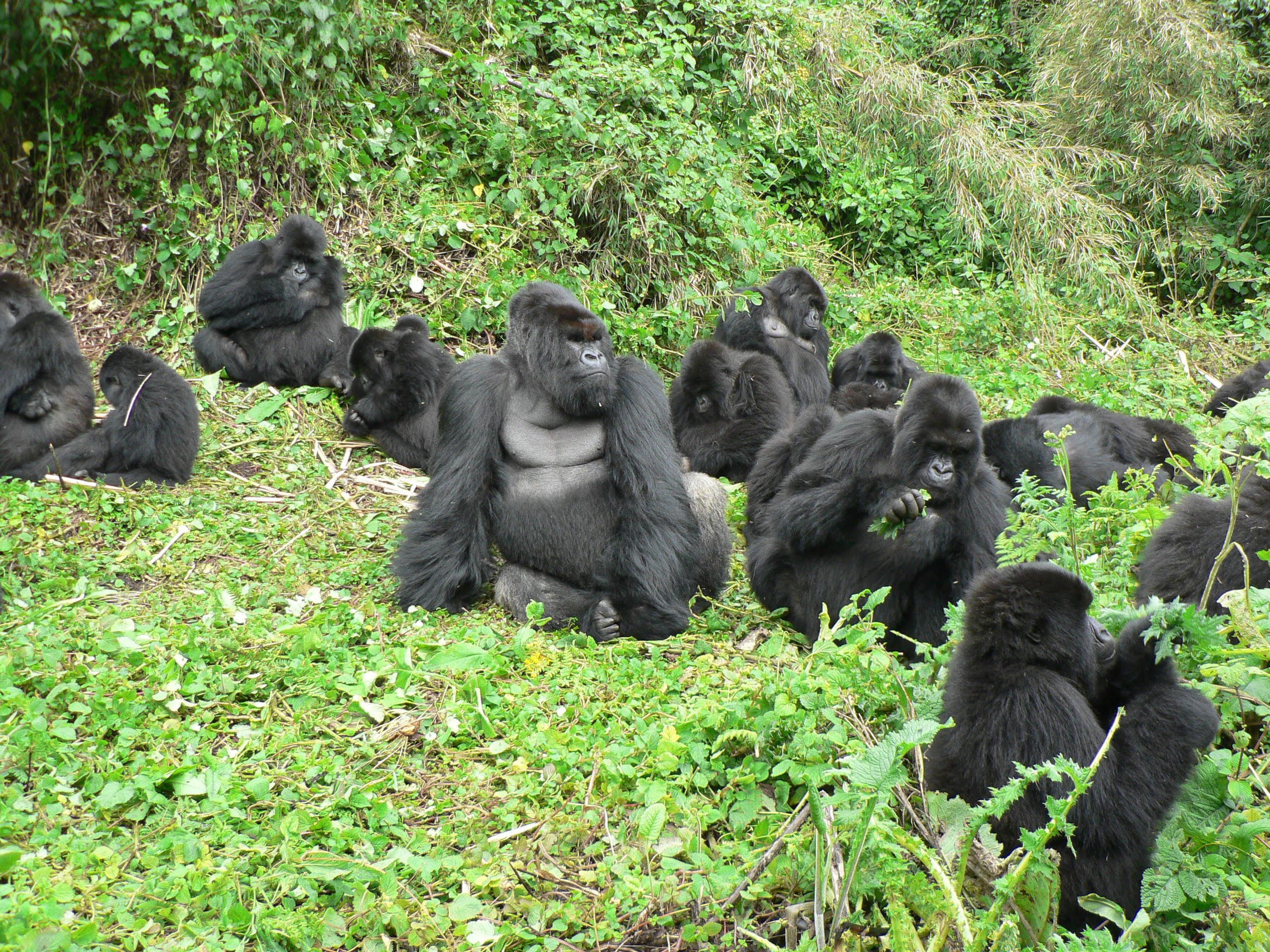
Mountain gorillas number 1,063-1,080—the rarest subspecies—confined to highland forests, up 26% from 2018’s 1,004 due to habituation and patrols.
Lowland gorillas dominate at ~316,000, primarily Western Lowland (~300,000+), though fragmented by logging and Ebola.
These figures mark cautious optimism: mountain gorillas shifted from critically endangered to endangered (IUCN 2018), while Cross River remains critically endangered (<300).
However, 60% declines since the 1960s underscore urgency—habitat loss destroys 1,000 km² yearly.
Conservation success hinges on $50M+ ecotourism revenue funding anti-poaching, proving gorillas’ economic value exceeds threats.
Breakdown by Species and Subspecies
Gorillas divide into Eastern (Gorilla beringei) and Western (Gorilla gorilla) species, each with subspecies facing unique pressures.
| Subspecies | Estimated Population (2025) | Trend | Habitat Notes |
|---|---|---|---|
| Mountain (G. beringei beringei) | 1,063-1,080 | Increasing | Virunga/Bwindi highlands; habituated groups thrive |
| Eastern Lowland (Grauer’s, G. b. graueri) | ~5,000-6,800 | Decreasing | DRC lowlands; mining/poaching decimates 50% since 1990s |
| Western Lowland (G. g. gorilla) | ~300,000+ | Stable/Declining | Congo Basin swamps; Ebola killed 90% in outbreaks |
| Cross River (G. g. diehli) | 200-300 | Critically Endangered | Nigeria/Cameroon border; fragmented, isolated groups |
Mountain gorillas rebound via tourism (Rwanda/Uganda permits fund patrols).
Eastern Lowland suffer DRC instability, dropping from 17,000 (1990s).
Western Lowland face disease/ logging, while Cross River—world’s rarest—clings to 11 fragmented sites, isolated 300km from others.
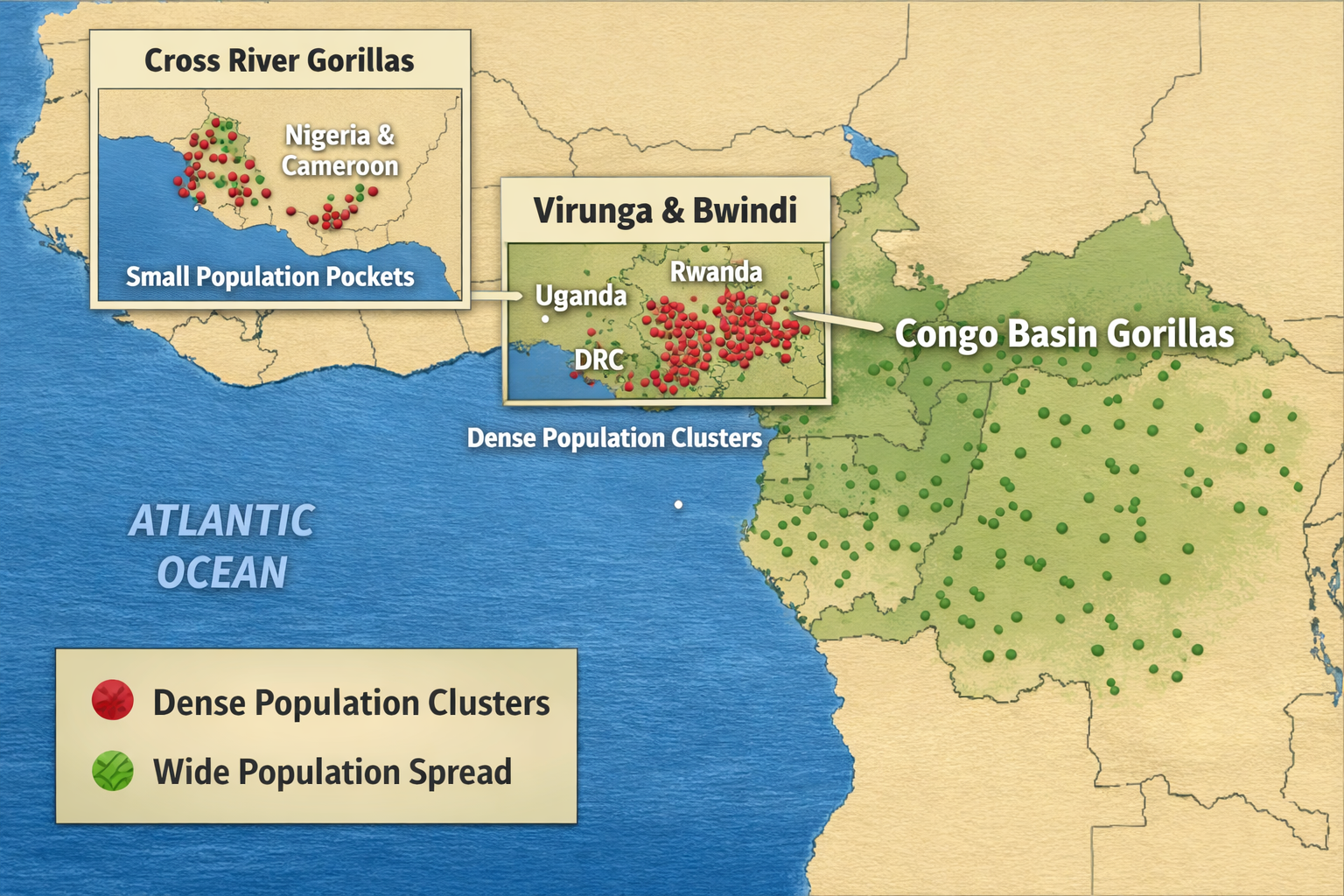
Maps show Virunga/Bwindi clusters (dense red dots) vs. Congo Basin sprawl (sparse green); Cross River as tiny Nigeria-Cameroon pockets.
Population by Country
Mountain gorillas concentrate in three nations:
Uganda (~500, Bwindi Impenetrable NP) hosts 459 (2025 census), generating $30M tourism.
Rwanda (~400, Volcanoes NP) sees 300+ habituated, with $20M+ permit revenue (80% park budget) funding 5,000 jobs.
DRC (~200, Virunga NP) holds ~200 amid insecurity, but translocations boost numbers.
Lowland distributions: DRC dominates (~95% Western Lowland, Kahuzi-Biega NP), Cameroon/Nigeria host Cross River remnants. Gabon/Republic of Congo shelter ~100,000 Western Lowland.
Ecotourism Impact: Rwanda’s model shines—$1,500 permits (2025 price) yield $25M annually, reducing poaching 70% via community shares.
Uganda’s Bwindi treks employ 10,000 locals, curbing snares. Combined, Virunga massif generates $50M+, proving gorillas > gold for economies.
GoSilverback Safaris Ltd. treks directly fund patrols.
Challenges persist: DRC conflicts displace rangers; climate shifts bamboo diets.
Yet 2025 translocations (e.g., Rwanda-Uganda) signal hope. Track via IUCN Red List for real-time maps.
Major Threats to Gorilla Populations
Habitat Loss and Fragmentation
Habitat destruction remains the deadliest threat, obliterating 1,000+ km² of gorilla forests annually.
Deforestation for agriculture—charcoal production, farming expansion—fragments Bwindi and Virunga into isolated pockets, blocking gorilla movement and causing inbreeding.
In DRC’s Kahuzi-Biega, mining (coltan, gold) cleared 30% cover since 2010, displacing Eastern Lowland gorillas.
Climate change exacerbates fragmentation:
Rising temperatures (2°C since 1980s) shift rainfall, killing bamboo—mountain gorillas’ staple diet—in Virunga highlands. 2025 droughts forced troops to lower elevations, increasing human encounters.
Case Study:
Virunga Oil Drilling—SOCO’s 2010s exploratory bids threatened 200 km² core habitat; halted by global protests, but 2025 legal challenges loom, risking seismic blasts that scatter families.
Fragmentation isolates Cross River gorillas into 11 tiny sites (<300 individuals), genetic diversity plummeting 50%. Solutions demand 20% more protected corridors.
Poaching and Illegal Trade
Bushmeat poaching kills 3,000+ gorillas yearly via snares targeting antelopes that ensnare infants.
Silverback heads fetch $500 on black markets for trophies; infants ($20,000) fuel pet trade.
2025 enforcement falters in DRC instability—ranger killings up 20%, patrols cover <40% territory.
Cross River suffers most: 5 poachers jailed yearly, but demand persists.
Rwanda/Uganda’s permit-funded patrols reduced snares 70%, yet cross-border smuggling evades K9 units.
Disease and Human Encroachment
Ebola decimated Western Lowlands (90% losses, 2000s outbreaks killing 5,000+).
Human encroachment spreads respiratory diseases—2020 COVID-19 suspended Rwanda treks, preventing transmission.
Tourism risks persist: habituated groups show 15% higher illness rates from visitors.
Encroaching farms/refugee camps (1M+ near Virunga) transmit scabies, flu. 2025 vaccinations for rangers/tourists mandatory, but porous borders challenge.
Climate Change Impacts
Warming alters bamboo forests—Virunga’s Diehli subspecies faces 40% die-off by 2030, forcing dietary shifts to less nutritious plants, stunting silverback growth.
Flooded Congo swamps drown lowland nests; droughts concentrate gorillas near human water sources, spiking conflicts.
IPCC models predict 50% habitat loss by 2050 without emissions cuts.
Conservation Efforts and Success Stories
International Programs
The International Gorilla Conservation Programme (IGCP), founded in 1991 by WWF, Fauna & Flora International, and IUCN, unites Rwanda, Uganda, and DRC for transboundary protection.
IGCP’s landscape-level approach restored Virunga-Bwindi connectivity, funding joint patrols across 15,000 km².
Their 2025 census revealed mountain gorillas at 1,063-1,080—up 26% from 2018—marking the first “endangered” IUCN status shift from critically endangered.
Dian Fossey Gorilla Fund’s Karisoke Research Center (est. 1967) pioneered habituation, enabling safe tourism while monitoring 20+ families.
Global donors like USAID and EU poured $100M+ into anti-poaching tech.
Success: snares reduced 80% in monitored zones; Cross River surveys identified new troops via camera traps.
IGCP’s community education reached 500,000 locals, proving international collaboration turns brink-of-extinction species into recovery icons.
National Initiatives
Rwanda leads with revenue-sharing: 10% of $1,500 gorilla permits ($25M+ in 2025) funds 50+ community projects—schools, clinics, beekeeping cooperatives—slashing poaching 70% by giving alternatives to 10,000 locals.
Uganda’s Bwindi Mgahinga Conservation Trust employs 1,000 rangers; their “no-snare zones” cut incidents 90%, boosting Bwindi’s gorillas to 459.
DRC’s ICCN Virunga patrols, despite conflicts, translocated 12 gorillas in 2025, stabilizing numbers at ~200.
Rwanda Development Board mandates 7m distancing rules, while Uganda’s UWA uses K9 units against smugglers.
These initiatives blend enforcement with empowerment, generating $50M+ regional GDP while protecting biodiversity hotspots.
Role of Ecotourism
Sustainable gorilla trekking funds 80% of park budgets, employing 15,000+ and proving gorillas worth more alive ($50/person/day) than dead.
Permits finance patrols, rangers, and habitats. Ethical tips: Book with certified operators like GoSilverback Safaris Ltd., maintain 7m distance, no flash photography, visit during dry seasons.
Plan your 2025 gorilla trek—book now for impact with limited permits fueling conservation.
Technological Innovations
Drones monitor 5,000 km² undetected, spotting snares 3x faster than foot patrols.
DNA fecal analysis delivers precise censuses—2025’s non-invasive counts confirmed 1,063 mountains via genetic barcoding. Camera traps captured Cross River behaviors unseen before;
AI algorithms predict Ebola risks. Satellite imagery tracks deforestation real-time.
These tools drove the 2025 population rebound: from brink to hope, with translocations connecting fragments. Tech + tourism = sustainable future.
Future Projections for Gorilla Populations Beyond 2025
Optimistic Scenarios
Continued conservation momentum could propel mountain gorillas to 1,500 individuals by 2030, per IUCN models assuming sustained funding and patrols.
IGCP projections show Virunga/Bwindi populations doubling if ecotourism revenue hits $100M annually, funding expanded corridors and vaccinations.
Rwanda’s revenue-sharing model—scaling to 20% community benefits—could eliminate snares entirely by 2028.
Translocations (e.g., 2025’s Rwanda-Uganda success) linking fragments boost genetic diversity 30%.
Western Lowland stabilization via Congo Basin protected areas might add 50,000.
Cross River gorillas could climb to 500 with Nigeria-Cameroon safe zones.
Tech like AI monitoring ensures 90% coverage, turning 2025’s 1,063 rebound into a self-sustaining boom.
Ecotourism proves pivotal: each trekker contributes $1,500 directly to habitats.
Pessimistic Risks
Unchecked threats risk mountain gorilla declines to <800 by 2030. DRC conflicts could halve Virunga numbers (from ~200), as seen in 1990s wars.
Ebola resurgence—killing 90% in past outbreaks—looms without vaccines; climate models predict 40% bamboo loss, starving highland troops.
Cross River extinction by 2035 if fragmentation persists (<300 now).
Eastern Lowland mining could drop 50% (from 5,000).
WWF scenarios warn: 20% habitat loss from agriculture/oil drilling cascades to 60% population crash.
Disease spillover from 2M+ encroaching humans amplifies risks. Without $200M/decade investment, 2025 gains evaporate.
What You Can Do
Donate to WWF/IGCP ($50 protects 1 km²). Avoid palm oil driving deforestation. Support eco-tours—book ethical treks funding patrols.
Advocate via petitions against Virunga drilling. Join a conservation tour—click to explore options with GoSilverback Safaris Ltd. Your 2025 Rwanda/Uganda visit generates $1,500 for gorillas, proving alive > extinct.
Why Choose Go Silverback Safaris Ltd.?
Discover East Africa’s Ultimate Gorilla Adventure Partner—Guaranteed Safe, Seamless, and Unforgettable.
Tired of generic tours? GoSilverback Safaris Ltd. stands unrivaled as East Africa’s premier gorilla trekking specialist, delivering 5-star safety, personalized service, and insider access that solo travelers, couples, and nature enthusiasts rave about.
With zero incidents in 10+ years across 5,000+ treks in Rwanda’s Volcanoes NP and Uganda’s Bwindi, our certified expert guides (UGA/RDB licensed) ensure 100% compliance with 7m distancing, anti-poaching protocols, and health screenings—safer than ever in 2025.
Why we’re the best:
-
Permit Mastery: Secure limited $800 or $1,500 gorilla permits instantly (others wait months)—no sold-out disappointments.
-
Tailored Excellence: Small groups (max 6), 4×4 vehicles, premium lodges like Mountain Gorilla’s Nest optional. Solo travelers get paired safely or private options.
-
Insider Edge: Witness viral silverbacks like Virika up close; exclusive Batwa cultural immersions and post-trek conservation briefings.
-
5-Star Service: 24/7 English/French support, all-inclusive (meals, fees, transfers), 95% repeat booking rate. Nature lovers: birdwatching, golden monkey add-ons included.
-
Impact Guaranteed: 10% profits fund patrols—your trek directly boosts gorilla numbers to 1,500 by 2030.
Tourists trust us: “Life-changing—safest, most magical experience!” (TripAdvisor 4.9⭐). Solo adventurers: “Empowered and protected every step.”
Book now—limited 2025 slots! Contact GoSilverback Safaris Ltd. for your transformative East Africa escape. Safe. Elite. Gorilla Guaranteed.
How many gorillas are left in the world in 2025?
Approximately 317,000 wild gorillas remain globally in 2025, per WWF/IUCN data.
This includes ~1,063-1,080 mountain gorillas (rarest subspecies) and ~316,000 lowland gorillas (mostly Western Lowland).
Mountain numbers have grown 26% since 2018 due to conservation, while lowlands face Ebola/habitat threats.
Cross River (~200-300) teeters on extinction.
These figures highlight fragile recovery amid deforestation.
Is the gorilla population increasing?
Mountain gorilla populations are increasing—reaching 1,063-1,080 in 2025, up from 1,004 (2018) and ~254 (1981)—thanks to ecotourism funding patrols and habituation.
Lowland subspecies show stable/declining trends due to poaching/disease.
Overall global numbers (~317,000) reflect cautious optimism, with IGCP crediting $50M+ revenue reducing snares 70-90%.
Continued efforts could hit 1,500 mountains by 2030.
How many gorillas are left in Uganda?
Uganda hosts ~400-500 mountain gorillas, primarily in Bwindi Impenetrable NP (~459 individuals per 2025 census) and Mgahinga Gorilla NP.
This represents nearly half the global mountain total (1,063). Bwindi’s growth stems from anti-poaching and tourism revenue funding communities.
Lowland gorillas absent; focus remains mountains generating $30M+ yearly.
Which country has the highest population of gorillas?
Democratic Republic of Congo (DRC) leads with 15,000-20,000 gorillas, including Eastern Lowland (~5,000), mountain (~200 in Virunga), and vast Western Lowland shares.
Gabon follows (~35,000 Western Lowland), then Republic of Congo (~10,000-15,000).
For mountains, Uganda tops (~500). DRC’s numbers reflect Congo Basin dominance despite conflicts.
Frequently Asked Questions Gorilla Population 2025
How many gorillas remain in 2025?
Global wild population ~317,000, with mountain gorillas at 1,063-1,080—up 26% from 2018.
Where do most mountain gorillas live?
Bwindi Impenetrable NP (Uganda: ~459), Volcanoes NP (Rwanda: ~400), Virunga NP (DRC: ~200).
Why have mountain gorilla numbers increased?
Ecotourism revenue ($50M+ yearly) funds patrols, habituation, and community projects reducing poaching 70-90%.
What threatens gorilla populations most?
Habitat loss (agriculture/mining), poaching (bushmeat/snares), Ebola, and climate-driven bamboo die-off.
How many Cross River gorillas exist?
200-300 individuals—world’s rarest, critically endangered in Nigeria/Cameroon border forests.
Does gorilla trekking harm populations?
No—ethical tourism (7m distance, no flash) generates funds protecting habitats; 80% park budgets from permits.
What’s Rwanda’s role in conservation?
$25M+ annual permit revenue; 10% community sharing creates jobs, slashing encroachment.
Can gorilla numbers reach 2,000 by 2030?
Optimistic IUCN models predict 1,500 mountains if patrols expand and corridors connect fragments.
How does climate change affect gorillas?
Bamboo forest die-off (40% projected by 2030) forces dietary shifts, malnutrition in highland troops.
How can I help gorilla conservation?
Book ethical treks with Go Silverback Safaris, donate to IGCP/WWF, avoid palm oil. Your $1,500 permit directly funds patrols.
Conclusion
2025 marks a turning point with gorilla populations stabilizing at ~317,000 globally—mountain gorillas rebounding to 1,063-1,080 (up 26% since 2018), Western Lowland holding ~300,000 despite threats, and Cross River clinging to 200-300.
From 1980s near-extinction (~254 mountains), conservation triumphs via IGCP, ecotourism ($50M+ revenue), and patrols prove alive gorillas outvalue extinction.
Yet challenges loom: habitat loss, poaching, Ebola, and climate shifts demand urgency. Rwanda/Uganda’s models—revenue-sharing funding communities, tech like drones—show the path forward.
Protect these icons—share this article and support conservation today.
Book ethical treks with GoSilverback Safaris Ltd.: your $800 or $1,500 permit directly funds patrols, boosting numbers toward 1,500 mountains by 2030. Donate to WWF/IGCP, skip palm oil, advocate against Virunga drilling.
With global effort, gorillas thrive—not just surviving, but flourishing in Bwindi‘s mists and Virunga’s peaks. From brink to beacon, 2025 ignites hope. Join the rebound—your action secures their thunderous future.
TreK, Explore and Meet the Giant Silverback Gorilla