Ebola Impact on Gorilla Population: How One Outbreak Could Wipe Out 80% of Mountain Gorillas
Ebola impact on gorilla population is catastrophic — up to 98% mortality and less than 20% survival projected. Discover past outbreaks that killed thousands and how responsible tourism helps protect the remaining 1,063 mountain gorillas.
Ebola impact on gorilla population is one of the most devastating threats to great apes in Africa. The deadly Ebola Virus Disease has wiped out up to 90% of gorillas in affected areas, especially in Central Africa.
Species like the Mountain Gorilla and western lowland gorillas are highly vulnerable due to low immunity and close social behavior. Outbreaks have caused massive population declines, disrupted ecosystems, and slowed conservation progress.
However, strict monitoring, protected habitats, and responsible tourism in places like Bwindi Impenetrable National Park are helping support recovery and long-term gorilla survival.
In the dense, mist-shrouded forests of East and Central Africa, the mountain gorilla (Gorilla beringei beringei) stands as a symbol of evolutionary majesty and conservation success.
However, beneath the canopy lies an “invisible hunter” that has historically proven more devastating than any poacher’s snare: the Ebola virus.
While habitat loss and civil unrest often dominate headlines, infectious diseases—specifically viral hemorrhagic fevers—represent a catastrophic risk to primate survival.
For a subspecies that once teetered on the brink of extinction with only 250 individuals, the Ebola impact on gorilla populations is not merely a biological curiosity; it is a fundamental threat to the global heritage of the Albertine Rift.
In 2026, as the world celebrates a total population exceeding 1,063 individuals, the focus has shifted from reactive crisis management to proactive, technology-driven biosecurity.
Understanding this threat is essential for every traveler planning a gorilla trekking safari, as your presence in the forest is part of a sophisticated “human shield” that funds the very science keeping these giants alive.
The Science: Why Ebola is Lethal to Primates
The biological vulnerability of gorillas to the Ebola virus stems from their staggering 98% DNA similarity to humans.
This genetic overlap means that viruses capable of jumping the species barrier—zoonotic diseases—can spread with terrifying efficiency within primate social structures.
1. The Mechanism of Infection
Ebola is a filovirus that causes severe hemorrhagic fever. In gorillas, the virus attacks the endothelial cells lining the blood vessels and the liver.
The resulting systemic failure often leads to a mortality rate of 95% to 98% in untreated wild populations. Unlike humans, gorillas cannot practice “social distancing” or utilize advanced medical intervention once an outbreak begins.
2. The Cost of Sociality
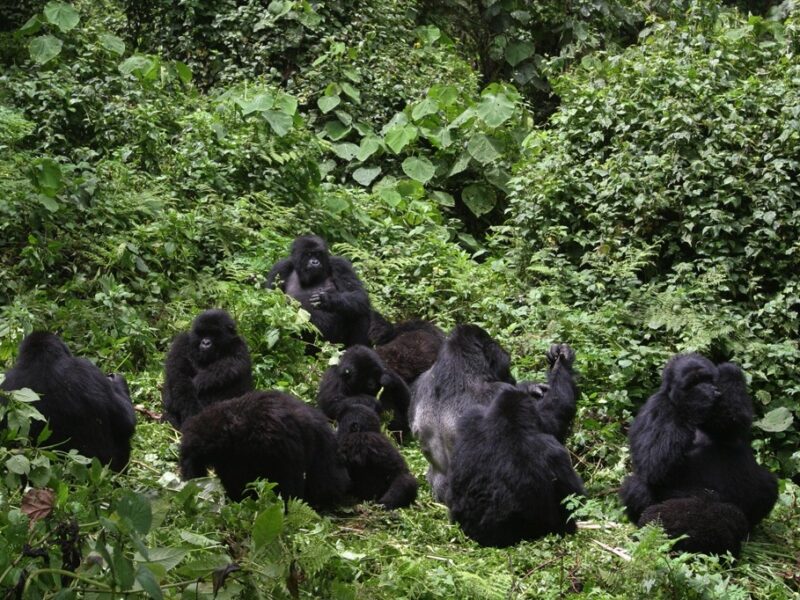
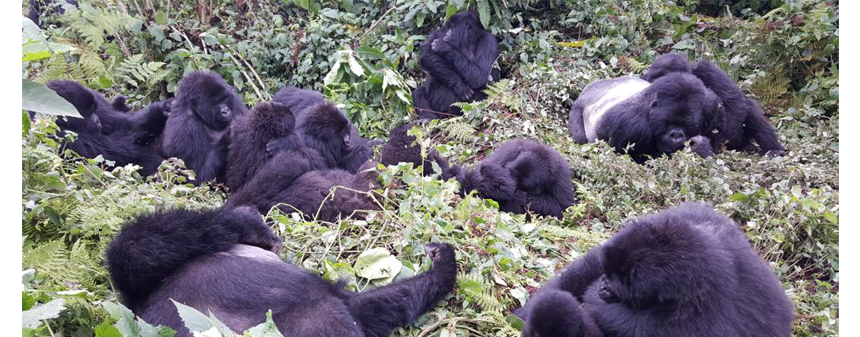
Gorillas are intensely social animals. A typical silverback-led family spends its day in close physical contact—grooming, playing, and huddling for warmth. While these behaviors are the bedrock of gorilla society, they act as “super-spreader” events during a viral outbreak.
Historical data from the 2004 Odzala-Kokoua outbreak in the Republic of Congo showed that entire breeding groups were decimated within weeks, leaving behind fragmented populations that took over a decade to show signs of demographic recovery.
The Geography of Risk: Uganda vs. Rwanda vs. DRC
The risk profile for Ebola varies significantly across the three primary gorilla-hosting nations. As of 2026, geographical isolation and stringent border health protocols have created distinct “safety zones.”
1. Uganda: The Biological Fortress
Bwindi Impenetrable National Park is often referred to as a biological island. Its rugged terrain and lack of direct connectivity to the sprawling lowland forests of the Congo Basin act as a natural buffer.
Uganda’s Ministry of Health has established some of the world’s most advanced Ebola screening centers at border points like Bunagana and Cyanika, ensuring that human-vectored transmission is virtually eliminated.
2. Rwanda: The Gold Standard of Biosecurity
In Volcanoes National Park, the Rwanda Development Board (RDB) maintains a “zero-tolerance” health policy. Travelers are required to undergo rigorous health briefings, and the proximity to high-tech medical hubs in Kigali ensures that any suspected zoonotic event is met with an immediate, data-driven response.
3. Democratic Republic of Congo (DRC): The Frontline
The Virunga National Park remains the most ecologically connected to the lowland areas where Ebola is endemic in fruit bat populations.
However, the ICCN (Institut Congolais pour la Conservation de la Nature) has pioneered “Sentinel Monitoring,” using rangers to track forest health trends in real-time, providing an early warning system that protects the entire Virunga Massif.
2026 Breakthroughs: Vaccination & TinyML Monitoring
The year 2026 marks a turning point in the fight against primate disease. We no longer wait for an outbreak to occur; we predict and prevent it using cutting-edge technology.
1. Primate Vaccination Programs
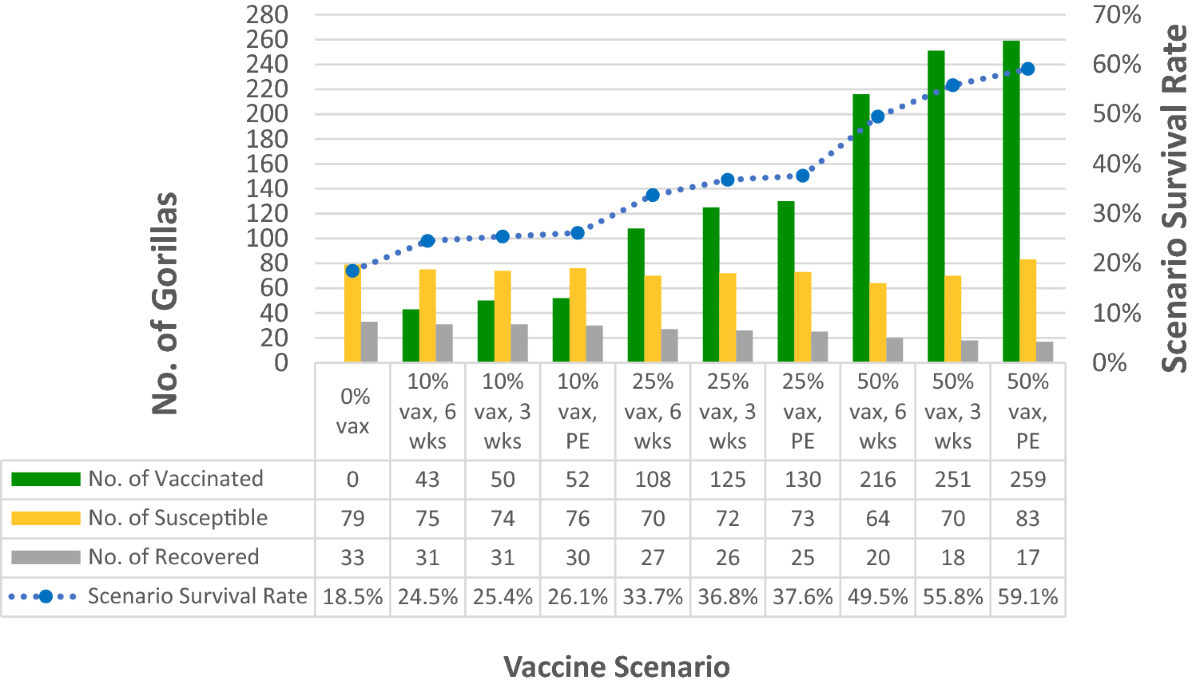
Following the success of human Ebola vaccines (like Ervebo), conservationists have developed oral bait vaccines and dart-delivered immunizations specifically for wild apes.
While vaccinating every wild gorilla is impossible, “Ring Vaccination” of habituated gorilla groups—those visited by tourists—creates a protective barrier that prevents the virus from leaping into the deeper, unhabituated populations.
2. TinyML: The AI Forest Sentinel
One of the most exciting developments is the deployment of TinyML (Tiny Machine Learning) sensors across Mgahinga and Bwindi. These are low-power, AI-driven acoustic and thermal sensors that can:
-
Identify abnormal coughing or respiratory distress within a gorilla group.
-
Detect sudden drops in activity levels that signal illness.
-
Monitor carcass heat signatures, allowing teams to locate and test deceased wildlife before the virus can spread.
The “Tourist Factor”: Risk or Rescue?
A common question among eco-conscious travelers is: “Does my visit put the gorillas at risk?” In 2026, the answer is a resounding no, provided strict protocols are followed. In fact, gorilla trekking is the single greatest tool for primate health.
The 10-Meter Rule & Biosecurity
Every GoSilverback Safaris trek adheres to the following mandatory safety steps:
-
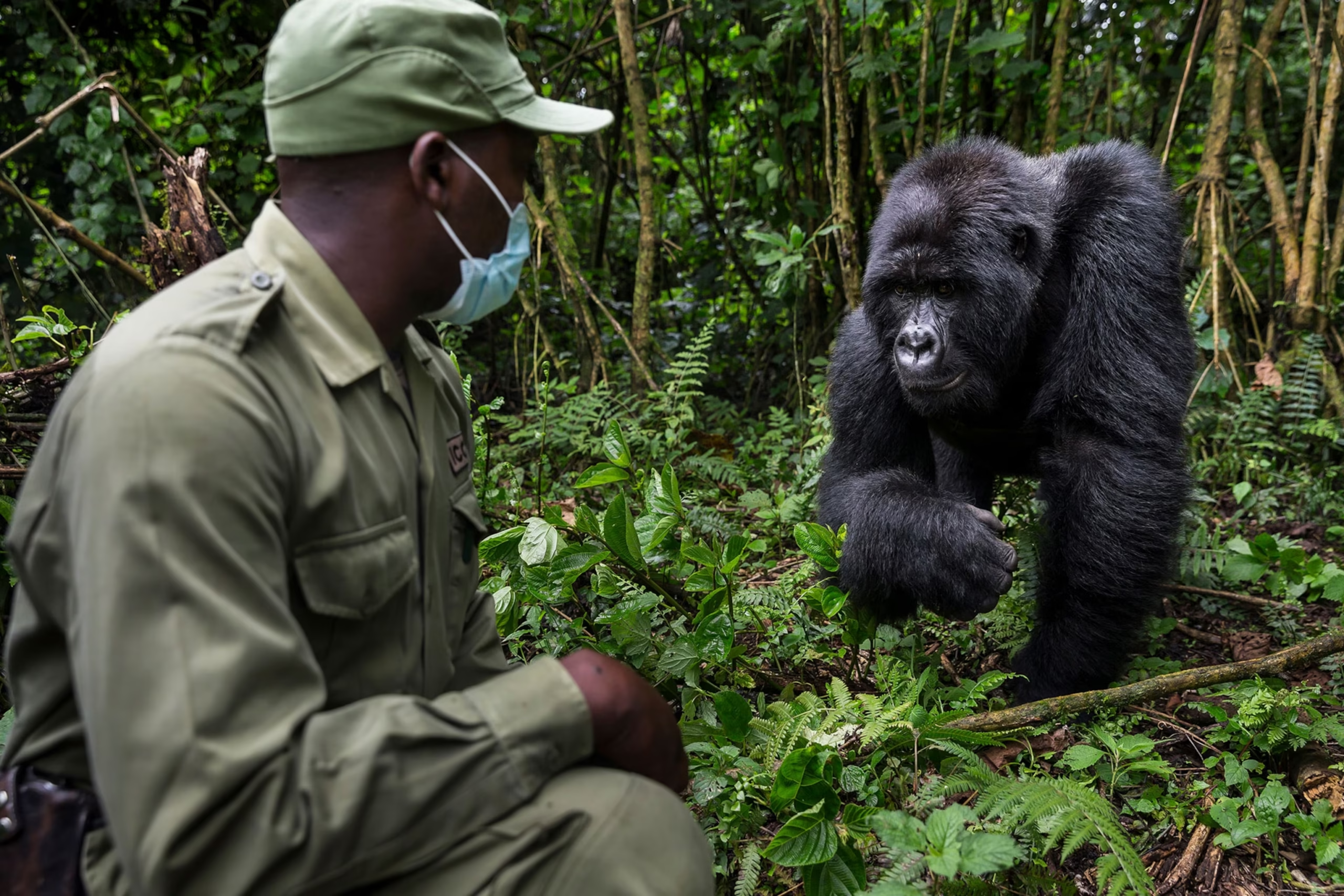
Mandatory Masking: Trekkers must wear N95 or surgical masks when in the presence of the primates.
-
Distance Enforcement: A strict 10-meter (33-foot) distance is maintained to prevent the transmission of aerosolized droplets.
-
Health Screenings: Any guest showing signs of flu, cough, or fever is prohibited from trekking but offered a 100% permit refund or reschedule—a policy that ensures no one feels pressured to trek while ill.
By visiting, you provide the “Eyes in the Forest.” The daily presence of rangers and trackers means that every individual gorilla is checked for health daily. Without tourism, an outbreak could go unnoticed for months.
Economic Impact: Tourism as a Shield
The Ebola impact on gorilla populations is also an economic one. Conservation is expensive, and tourism is the engine that drives it.
-
Permit Revenue: A significant portion of your $800 (Uganda) or $1,500 (Rwanda) permit fee goes directly to the Gorilla Doctors and the International Gorilla Conservation Programme (IGCP).
-
Community Buy-In: By providing jobs to former poachers as porters and guides, tourism makes a live gorilla worth more than a dead one. This reduces the bushmeat trade, which is a primary vector for Ebola entering the human population.
-
Infrastructure: Tourism revenue has funded the construction of local clinics and water sanitation projects, improving human health and reducing the likelihood of a human-to-ape disease spillover.
FAQ & Appendices
Q1: Can humans give Ebola to gorillas?
Yes, due to our 98% genetic similarity, gorillas are highly susceptible to human-borne diseases. However, strict 2026 protocols, including mandatory mask-wearing and a 10-meter distance rule, have effectively eliminated the risk of transmission from tourists to primates in protected national parks.
Q2: Is there an Ebola outbreak in Uganda or Rwanda in 2026?
As of March 2026, there are zero reported cases of Ebola in the gorilla-trekking regions of Uganda or Rwanda. These countries maintain world-class surveillance systems and border health screenings to ensure all “Primate Zones” remain safe for both wildlife and international visitors.
Q3: Are mountain gorillas vaccinated against Ebola?
Selected habituated groups in high-risk zones have undergone “Ring Vaccination” using specially adapted primate vaccines. This creates a biological buffer, protecting the wider population. Research is ongoing in 2026 to expand oral-bait vaccine delivery for unhabituated wild groups in deeper forest sectors.
Q4: What are the symptoms of Ebola in gorillas?
In gorillas, Ebola manifests as extreme lethargy, loss of appetite, and visible respiratory distress, followed by internal and external bleeding. Daily monitoring by park trackers ensures that any individual showing these signs is immediately reported to the Gorilla Doctors for rapid intervention.
Q5: How does my gorilla permit fee help fight Ebola?
A substantial portion of your permit fee funds the Gorilla Doctors, veterinary teams, and “Sentinel” technology like TinyML sensors. These funds provide the necessary resources for daily health checks, laboratory testing, and emergency response infrastructure required to prevent viral outbreaks.
Q6: Why is the 10-meter distance rule so important?
The 10-meter (33-foot) rule is the “Gold Standard” of primate biosecurity. It prevents the transmission of aerosolized pathogens—including Ebola, COVID-19, and the common flu—which can be fatal to gorillas. Rangers strictly enforce this distance to ensure the long-term health of the family.
Conclusion: The Path Forward
The story of the Ebola impact on gorilla populations is shifting from one of tragedy to one of resilience. Through the integration of biotechnology, AI-driven monitoring, and sustainable tourism, we have created a safety net for our closest cousins.
As we look toward the future of African safaris, the goal is “One Health”—the recognition that the health of the gorillas, the local community, and the international traveler are inextricably linked.
When you book a trek, you aren’t just taking a vacation; you are funding a 24/7 medical surveillance network that ensures the “Invisible Hunter” never gains a foothold in these sacred forests again.
Book Your Ethical Gorilla Safari Today
Ready to witness the world’s greatest conservation success story firsthand? Join GoSilverback Safaris for a life-changing encounter that directly supports the health and safety of these incredible primates.
[Contact GoSilverback Safaris to Secure Your 2026 Gorilla Permit].